
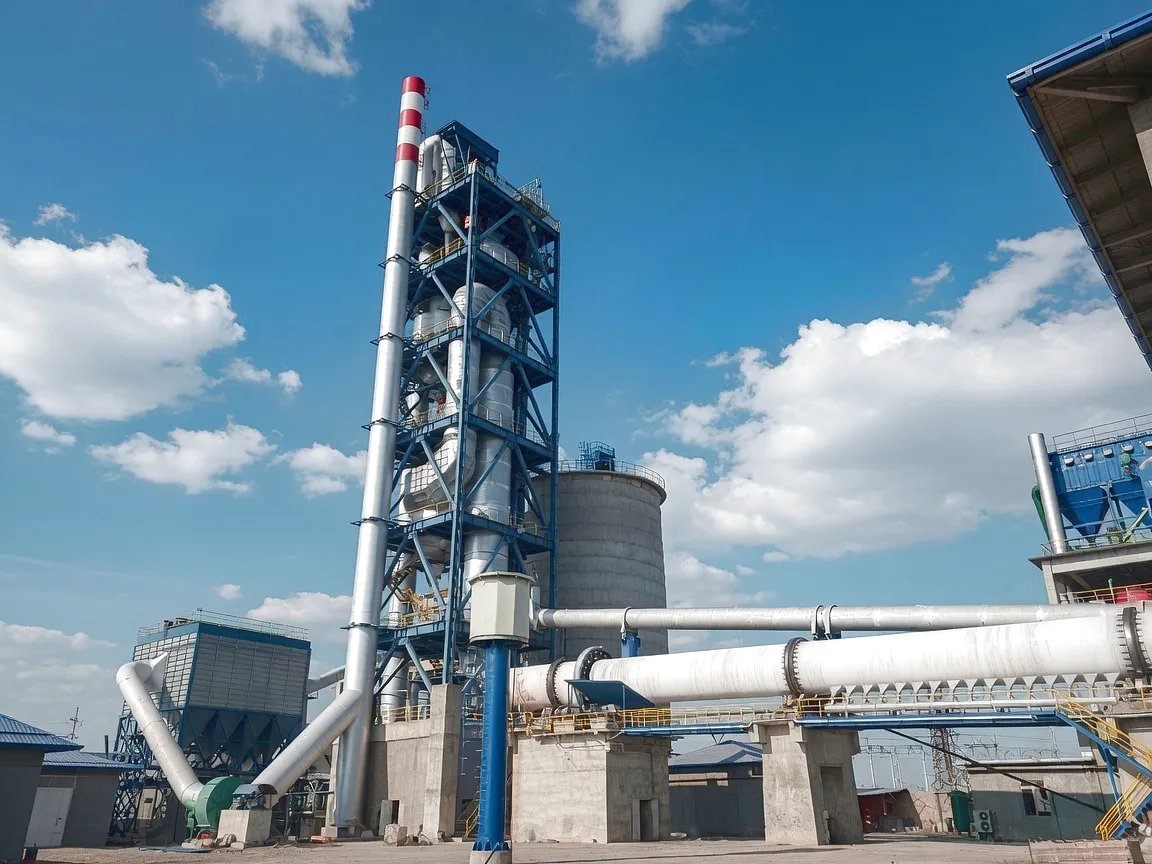
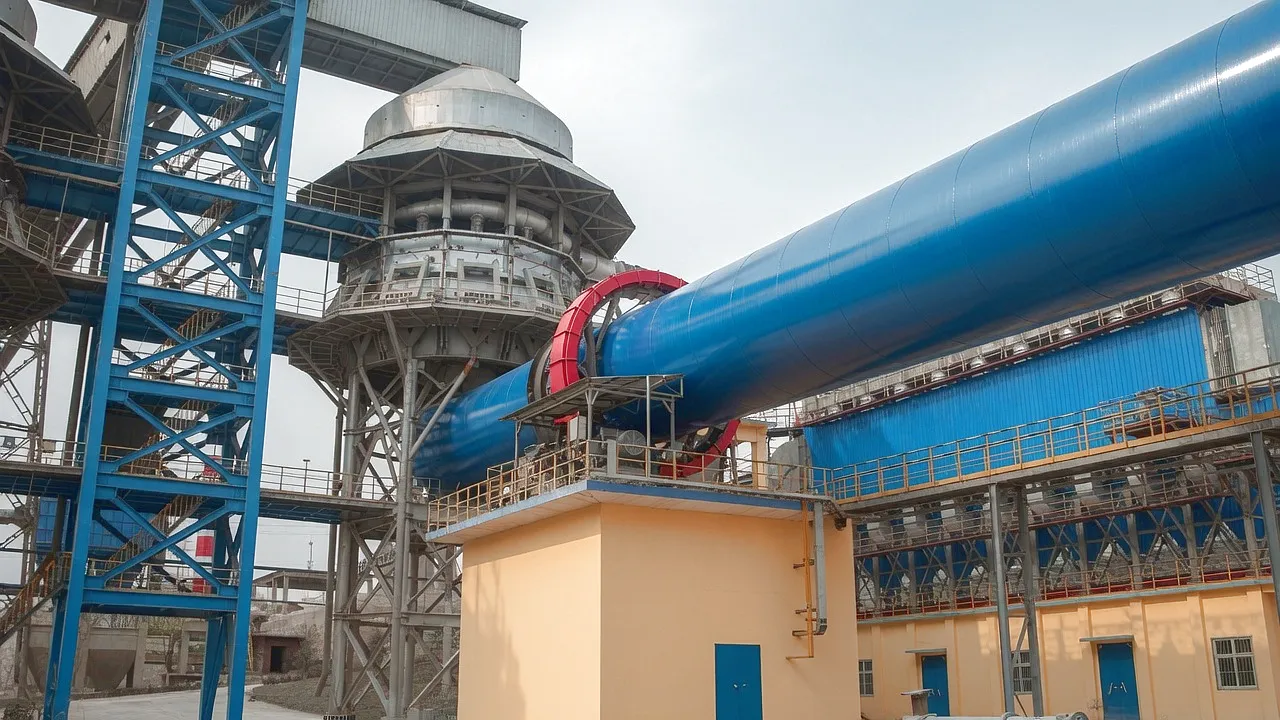
 Inside every cement plant operating across the UK — from the large integrated works in South Wales to the Midlands facilities that supply construction aggregates for HS2 and major infrastructure projects — there is one piece of equipment that stands above all others in terms of mechanical complexity and operational criticality: the rotary kiln. This massive, slowly rotating cylinder, stretching anywhere from 50 to over 200 metres in length and weighing thousands of tonnes when loaded, transforms raw limestone and clay into the clinker that becomes cement. The kiln must rotate continuously, smoothly, and without interruption, day and night, for months at a time between planned shutdowns. The mechanical component responsible for transferring drive power from the motor and gearbox into the kiln itself — bridging shaft misalignment, absorbing shock loads, and surviving an environment of extreme radiated heat, dust, and vibration — is the gear coupling.
Specifically, drum-tooth gear couplings — also known as drum gear couplings or crowned-tooth gear couplings — have become the industry standard for rotary kiln drive applications. Their ability to transmit exceptionally high torques while simultaneously accommodating angular and parallel shaft misalignment makes them uniquely suited to a drive system that must cope with a kiln shell that flexes, deflects, and shifts thermally with every hour of operation. Understanding why gear couplings work so well in this demanding context, what they are made from, how they are selected, and how to specify the right unit for a UK cement plant, is the purpose of this article.
Ready to Upgrade Your Kiln Drive System?
Ever Power manufactures precision drum-tooth gear couplings engineered for the extreme demands of cement plant rotary kilns. Whether you need a direct replacement unit, an upgrade to a higher torque rating, or a fully customised solution for a non-standard kiln drive arrangement, our engineering team is ready to assist UK and international procurement teams.
Response within 24 hours · UK & Global Shipping · Custom Engineering Available
What Makes a Gear Coupling the Right Choice for a Rotary Kiln?
Understanding the operating environment before specifying the coupling type
High Torque Capacity
A rotary kiln in a typical UK cement plant is one of the highest-torque rotating machines in any industry. The kiln shell itself, loaded with raw material and resting on support rollers, creates enormous rotational resistance. Drive torques in the range of 500 kNm to over 3,000 kNm are not uncommon. Gear couplings, by virtue of their involute tooth profiles transmitting force through mechanical engagement rather than friction or elastomeric deformation, are among the highest torque density coupling types available, making them the natural fit for this application.
Misalignment Tolerance
The kiln shell is not a perfectly rigid structure. As it heats up to operating temperature — with internal combustion temperatures reaching 1,450°C and shell surface temperatures still exceeding 250°C at the kiln hood — the entire structure expands thermally. The support roller pads shift slightly, the shell elongates, and the axis of rotation does not stay perfectly straight. The motor and gearbox, sitting on their own separate foundations, can develop angular and offset misalignment relative to the kiln axis. Drum-tooth gear couplings accommodate simultaneous angular misalignment of up to 1.5° per gear mesh and parallel offset, protecting the gearbox and motor bearings from destructive radial loads.
Shock Load Absorption
Cement kilns experience significant torque spikes at start-up, when cold material at the feed end creates high resistance, and during operation when clinker balling or material build-up inside the kiln causes sudden load changes. The crowned tooth geometry of drum-type gear couplings provides a degree of compliance that smooths peak loads being transmitted to the gearbox and motor. This characteristic significantly reduces the frequency of gearbox failures and motor bearing damage in plants that have switched from rigid or disc-type couplings to drum-tooth gear couplings.
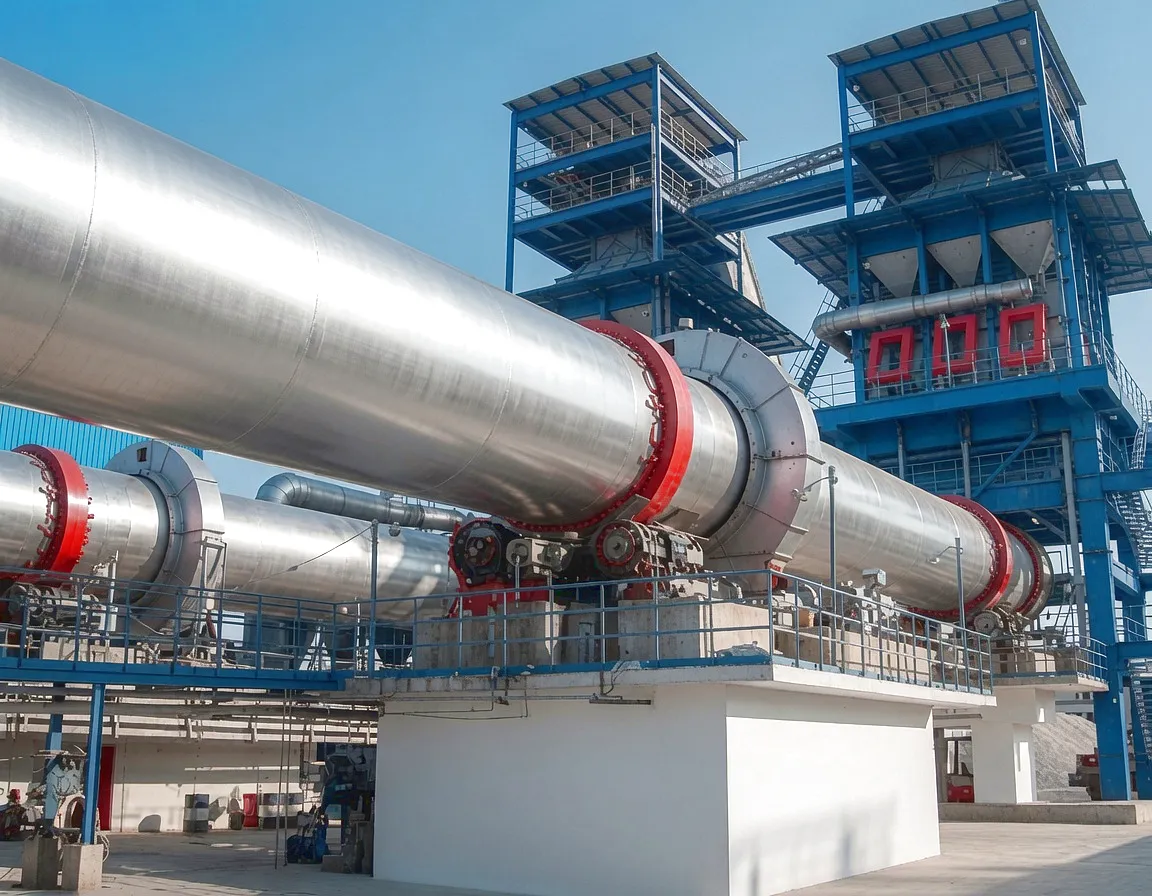
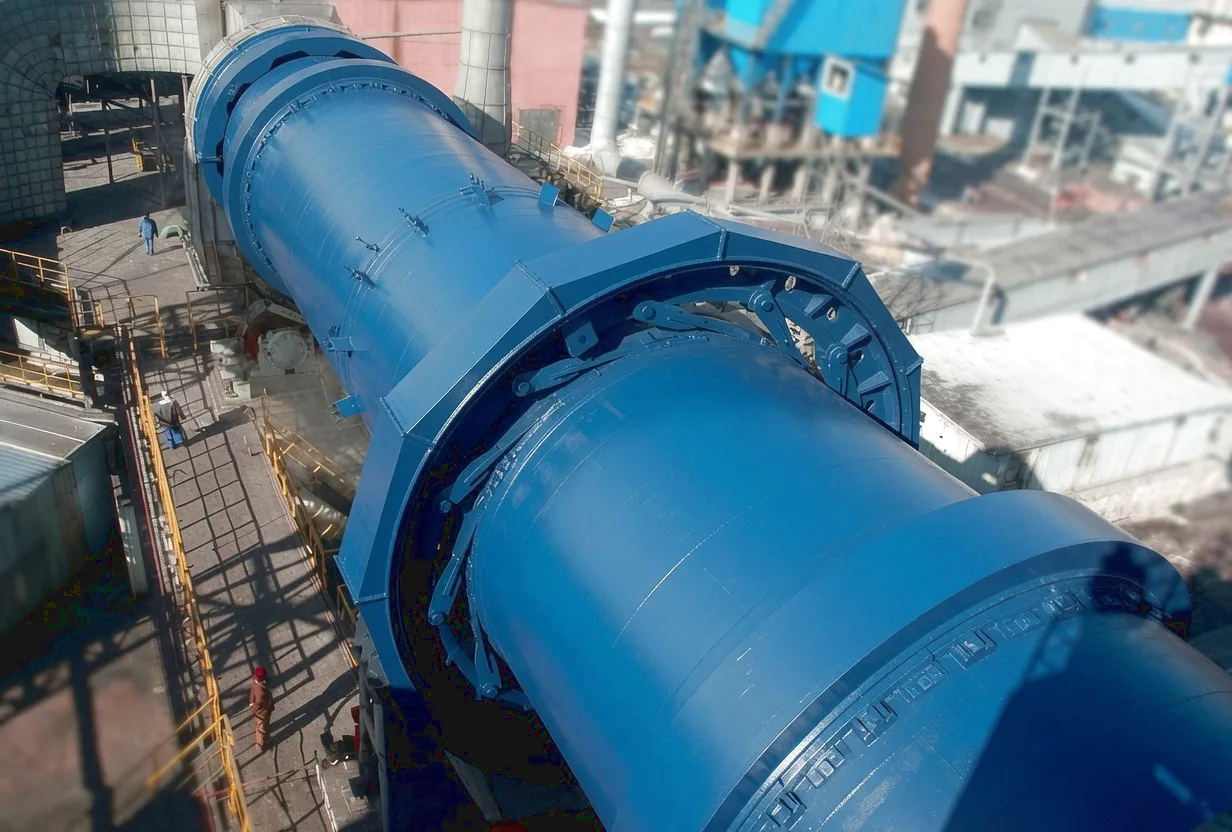
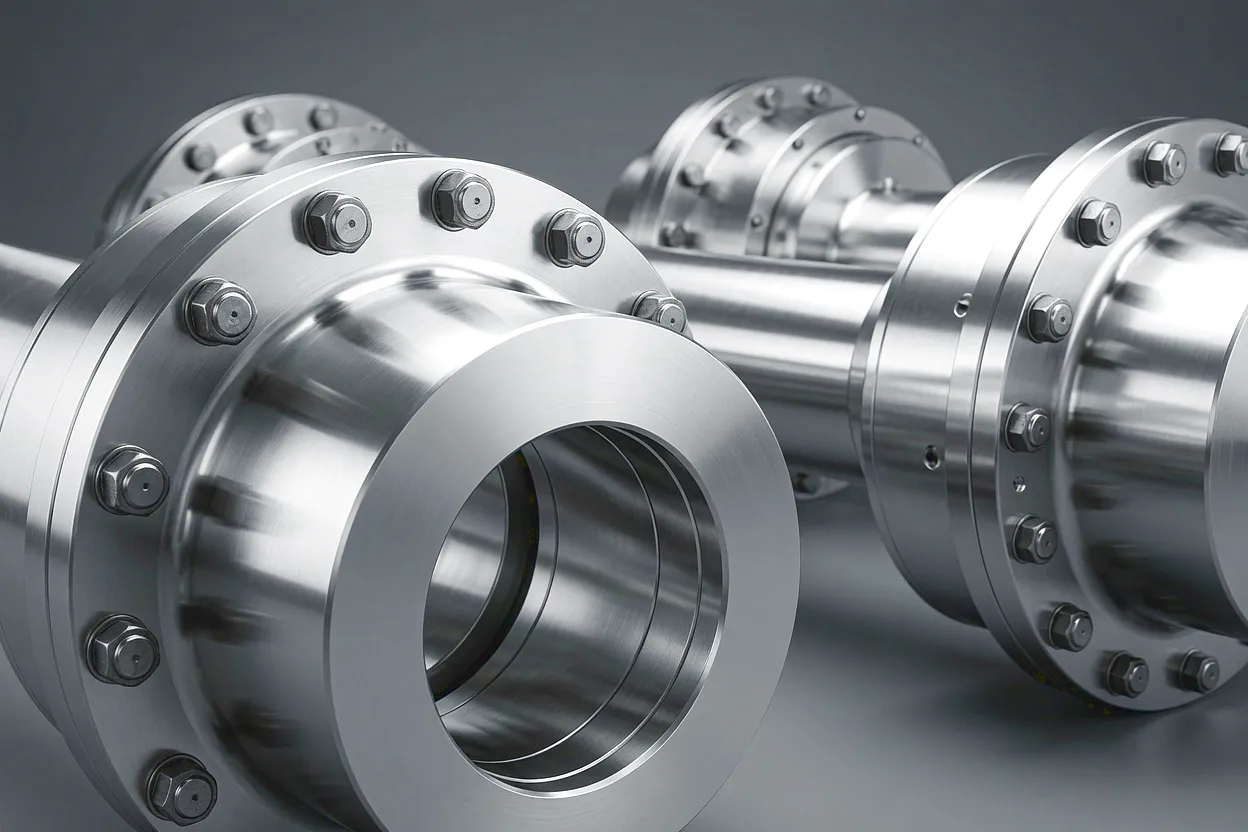
Gear couplings installed in heavy industrial drive systems — cement kilns, steel mills, and mining equipment across the UK and Europe.
How a Drum-Tooth Gear Coupling Actually Works
The mechanics behind outstanding torque density and misalignment capability
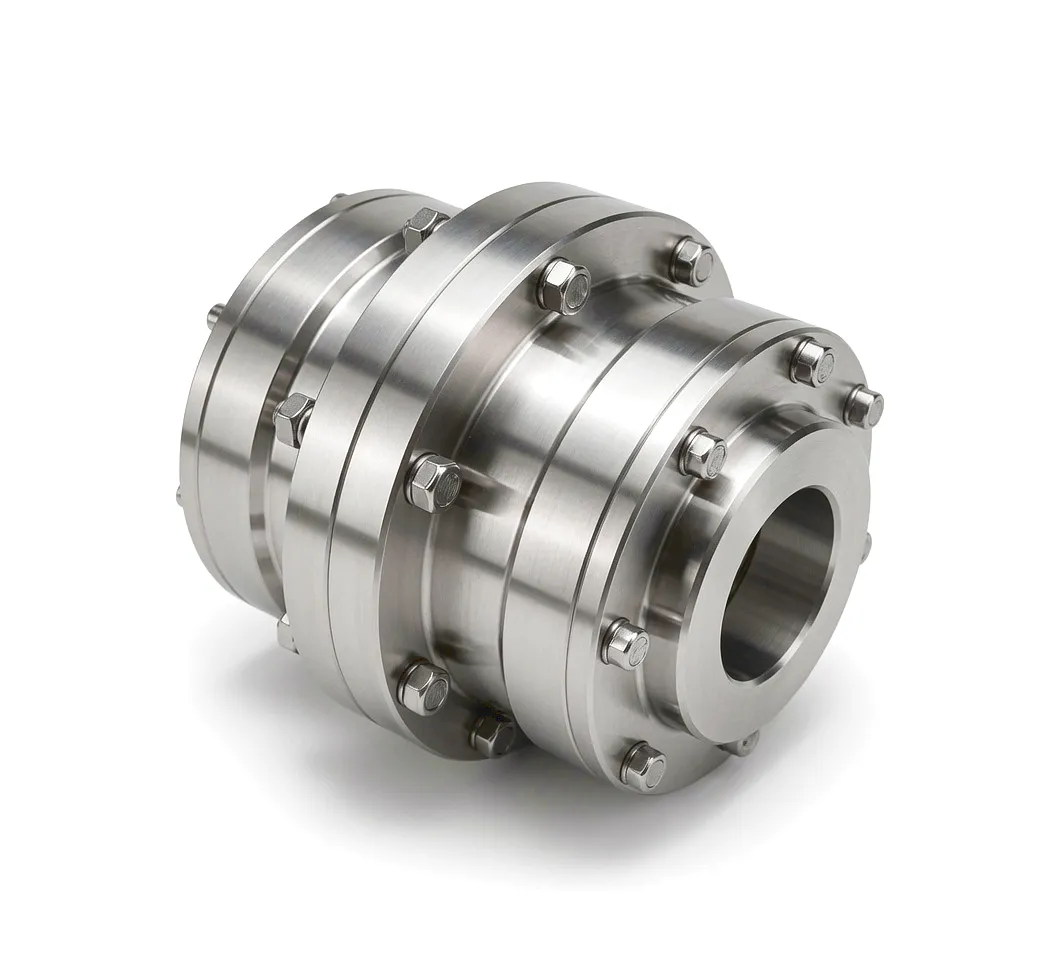
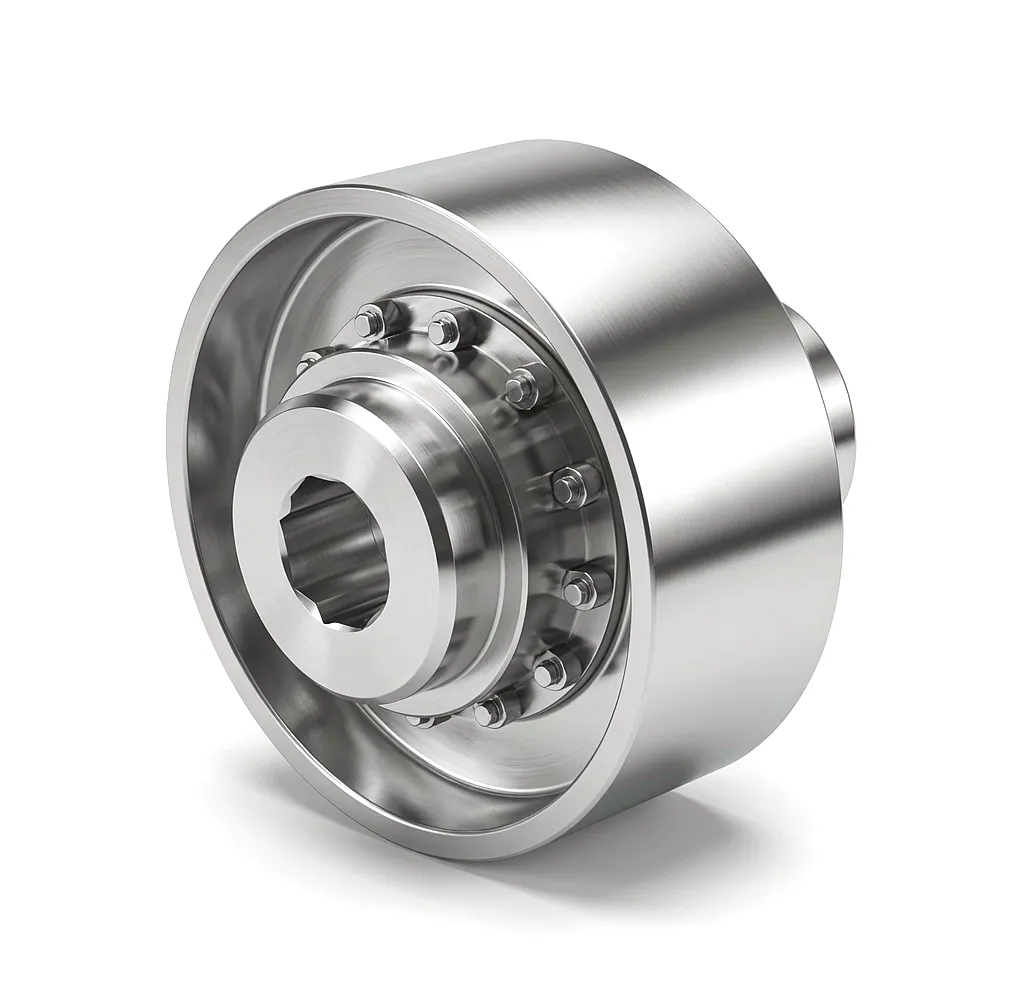
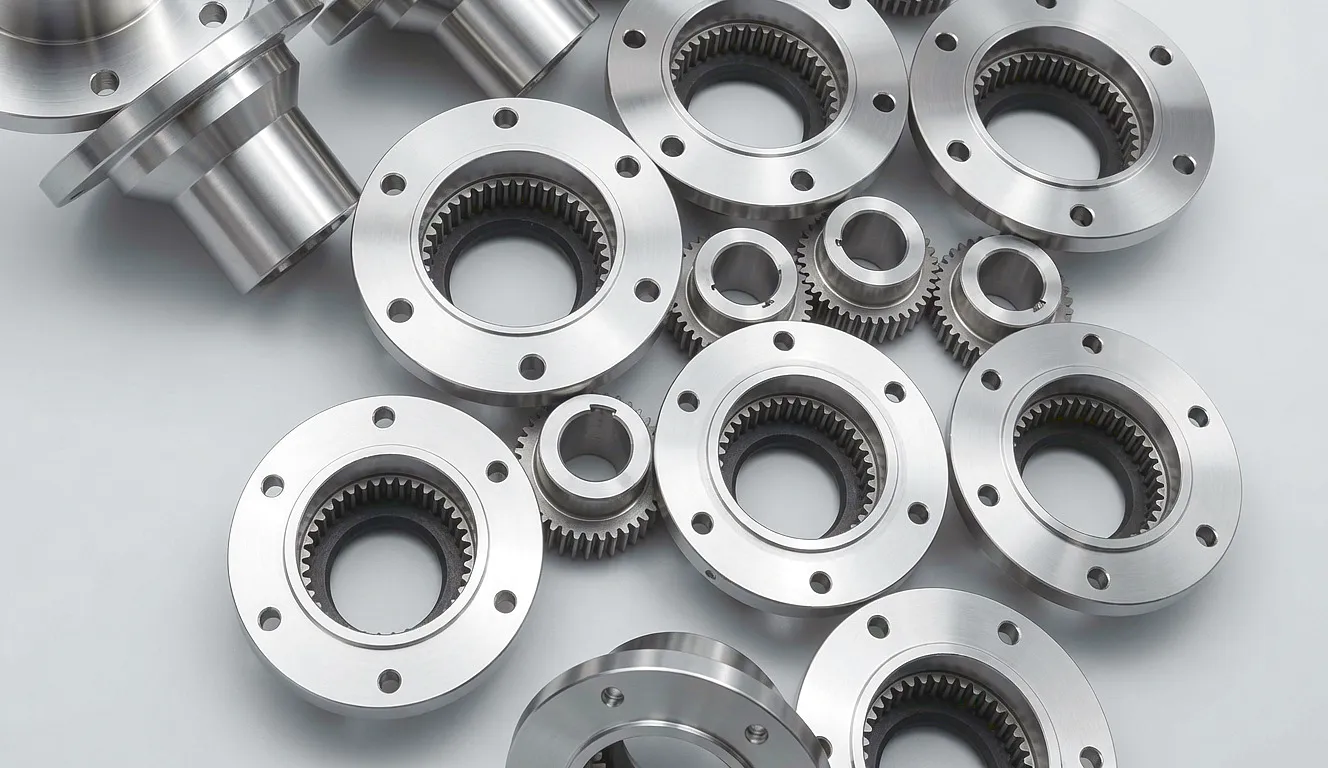
A standard drum-tooth gear coupling consists of two inner hubs, each with external crowned (convex) gear teeth, and two outer sleeves, each with internal straight gear teeth. The hubs are bored and keyed to fit the motor shaft and gearbox input shaft respectively. The sleeves are bolted together in the middle through a flanged connection. Power transmits through the meshing of the crowned external teeth on the hubs with the internal teeth on the sleeves.
The critical design feature is the crowning of the teeth on the hub. Rather than having teeth with a straight, parallel profile, the crowned tooth has a convex barrel shape along its length. When the coupling operates with angular misalignment between the two shafts, the hub tilts slightly within the sleeve, and the crowned profile distributes the contact stress across a broader area rather than concentrating it at the tooth edge. This prevents the catastrophic edge loading and rapid wear that would otherwise occur in a misaligned straight-tooth coupling. The result is a coupling that can sustain continuous angular misalignment while transmitting full rated torque at high efficiency — typically above 98% — without generating significant axial forces on the connected machinery shafts.
Lubrication: The Lifeblood of Gear Coupling Performance
Gear couplings operating in rotary kiln drive systems require adequate lubrication to prevent tooth wear and overheating. Most heavy-duty couplings in this application are grease-lubricated through grease nipples on the sleeves, with the grease contained by lip seals or O-rings. The choice of grease matters considerably: in kiln applications where radiated heat from the kiln shell can raise ambient temperatures to 80°C or above near the coupling, standard NLGI 2 mineral grease may degrade rapidly. High-temperature synthetic greases, typically based on polyurea or lithium complex thickeners with synthetic base oil, rated to 150°C or beyond, are the correct specification. Many UK cement plant maintenance engineers have discovered this the hard way when standard grease-filled couplings near the kiln hood failed prematurely due to grease oxidation and loss of lubrication.
Materials and Construction for Extreme Environments
Hub Material: 42CrMo4 Alloy Steel
The hubs carrying the external crowned teeth are the most highly stressed components in the coupling. For rotary kiln drive gear couplings in the UK and EU market, the standard hub material is 42CrMo4 alloy steel (equivalent to AISI 4140), heat-treated to achieve core hardness of 26–34 HRC and tooth surface hardness of 52–58 HRC through induction hardening or carburising. This combination delivers the toughness needed to resist shock loads at the core while providing the surface hardness required for long tooth life. The heat treatment process is critical: inadequate surface hardness leads to rapid tooth wear in the dusty, contaminated atmosphere of a cement plant, while excessive brittleness risks tooth fracture under shock loading at kiln start-up.
Sleeve Material: Cast Steel or Forged Steel
The outer sleeves carrying the internal gear teeth are manufactured from either cast steel (ZG310-570 or ZG340-640 to Chinese GB standards, or equivalent to EN 10293 grades) for standard to medium duty applications, or forged alloy steel for the most demanding high-torque kiln drives. Forged sleeves offer superior material homogeneity, freedom from casting porosity defects, and better impact resistance compared to cast alternatives. For UK cement plants operating under the BS EN machinery directive, material traceability and mill certificates are often required as part of the procurement specification, and a reputable gear coupling supplier should be able to provide full material documentation on request.
Surface Finishing and Sealing
In the cement plant environment, airborne dust containing calcium oxide, silica, and alkalis is highly abrasive and corrosive to coupling surfaces. The external surfaces of gear couplings in these applications should be shot-blasted and coated with a high-build epoxy primer followed by a polyurethane topcoat, or provided with a zinc phosphate conversion coating as a minimum. The sealing arrangement is equally important: dust ingress through the lip seals will contaminate and abrade the grease, leading to accelerated tooth wear. Quality lip seals in nitrile rubber or FKM (Viton) material should be specified, and the coupling should be designed with a positive grease retention arrangement that prevents grease from migrating out while keeping dust from migrating in.
Technical Performance Parameters
GICL / NGCL Series Drum-Tooth Gear Couplings — Typical Range for Cement Kiln Applications
Why UK Cement Engineers Choose Drum-Tooth Gear Couplings
Extended Service Intervals
In a cement plant environment where planned maintenance windows are precious and unplanned stops cost thousands of pounds per hour, a gear coupling that can run reliably for 12 months or more between inspections is a major operational advantage. Well-maintained drum-tooth gear couplings on kiln main drives routinely achieve 18–24 months between grease replenishment cycles when the correct high-temperature grease is used and the initial shaft alignment is within specification.
Reduced Gearbox Bearing Failures
One of the most compelling arguments for upgrading to a correctly specified drum-tooth gear coupling in a rotary kiln drive is the documented reduction in gearbox bearing replacement frequency. When rigid couplings or worn gear couplings with excessive backlash are used, shaft misalignment creates sustained radial loads on the gearbox output shaft bearings that can be two to four times the design load, cutting bearing life from several years down to a few months. Switching to a properly specified and installed gear coupling typically reduces gearbox bearing failures by 60–80% in documented case studies.
Energy Efficiency at Scale
Cement manufacture is one of the most energy-intensive industries in the UK, with the kiln drive system consuming a substantial portion of total plant electrical load. A drum-tooth gear coupling operating with proper lubrication and alignment transmits over 98% of input torque to the output, with losses manifesting only as gentle heating of the coupling body. In contrast, a misaligned or worn coupling creates internal friction losses and generates heat that represents wasted electrical energy. For a 2,500 kW kiln drive running 8,000 hours per year, even a 0.5% improvement in drive train efficiency translates to meaningful energy savings and reduced carbon footprint.
Where Gear Couplings Are Used Beyond the Kiln
The same product family serves multiple demanding drive applications in UK and European industry
Ball Mill & Raw Mill Drives
Cement plant grinding mills present similar challenges to kilns: high torque, continuous operation, and significant misalignment from thermal expansion. Gear couplings on ball mill drives in UK plants routinely handle torques in the 200 kNm to 1,500 kNm range. The relatively slow rotation speed of the mill shell — typically 14–18 rpm at the pinion — means that even when the drive train is not perfectly aligned, the gear coupling can accommodate the misalignment without generating destructive dynamic loads.
Power Station Fan & Pump Drives
Large induced draught and forced draught fans in UK power generation facilities — including biomass and energy-from-waste plants that are expanding rapidly — use gear couplings to connect high-speed motors to fan shafts through speed-reducing gearboxes. The combination of high rotational speed, significant torque, and the need to accommodate thermal growth between the motor, gearbox, and fan foundation blocks makes gear couplings the standard specification for these duties.
Marine & Port Machinery
Ship propulsion systems, offshore platform drives, and port crane machinery all rely on gear couplings to transmit drive torque through complex mechanical arrangements where perfect shaft alignment is neither achievable nor maintainable over the service life of the equipment. UK ports such as Felixstowe, Southampton, and Tilbury rely on crane and conveyor drive systems that incorporate gear couplings at multiple points in the drive train.
Steel Rolling Mill Drives
Hot rolling mill stands at UK steel producers including those in South Wales and the East Midlands require couplings that can handle massive torque reversals, shock loads from billet entry, and the thermal cycling inherent in a hot mill environment. Drum-tooth gear couplings rated to several hundred kNm are the dominant coupling type on rolling mill main spindles, where the combination of torque capacity and misalignment accommodation in a single compact unit is unmatched by any alternative technology.
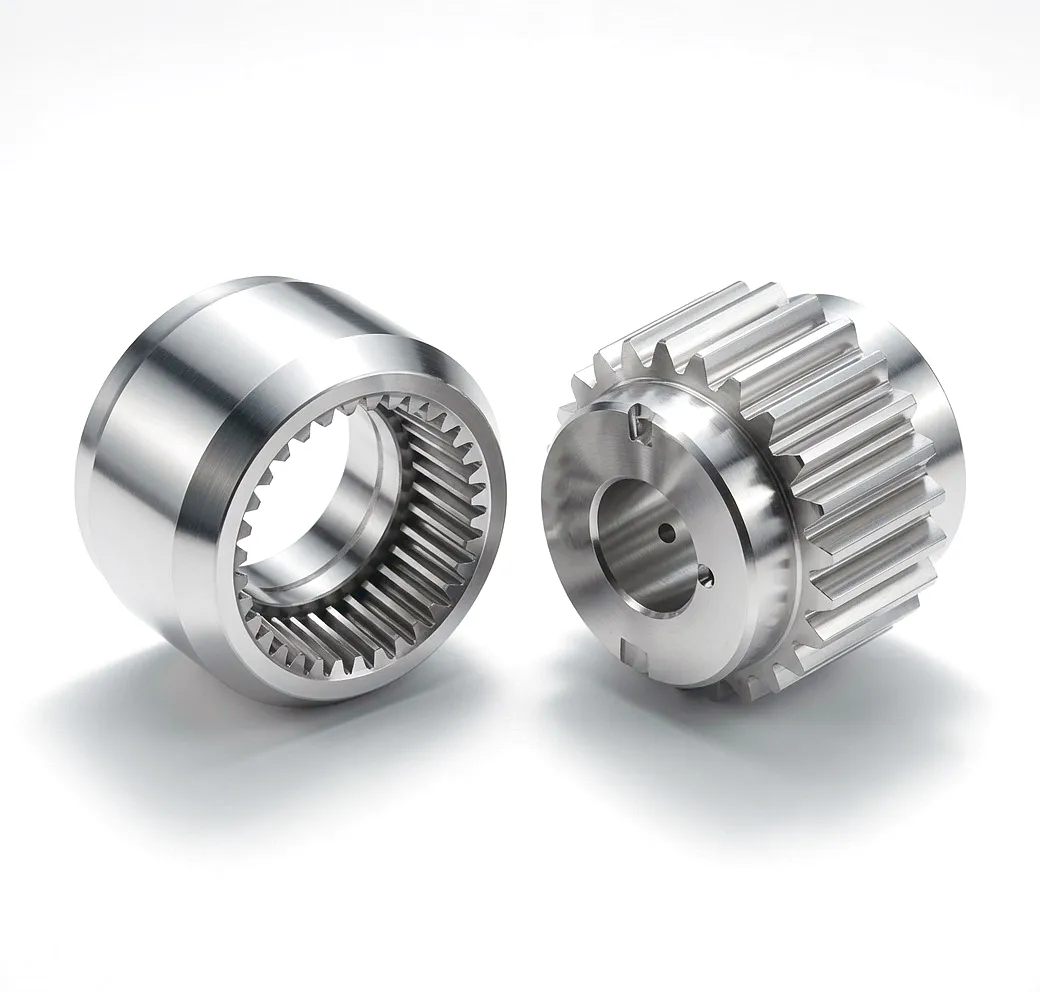
NL Type Nylon Gear Flexible Coupling — Auxiliary Drive Option
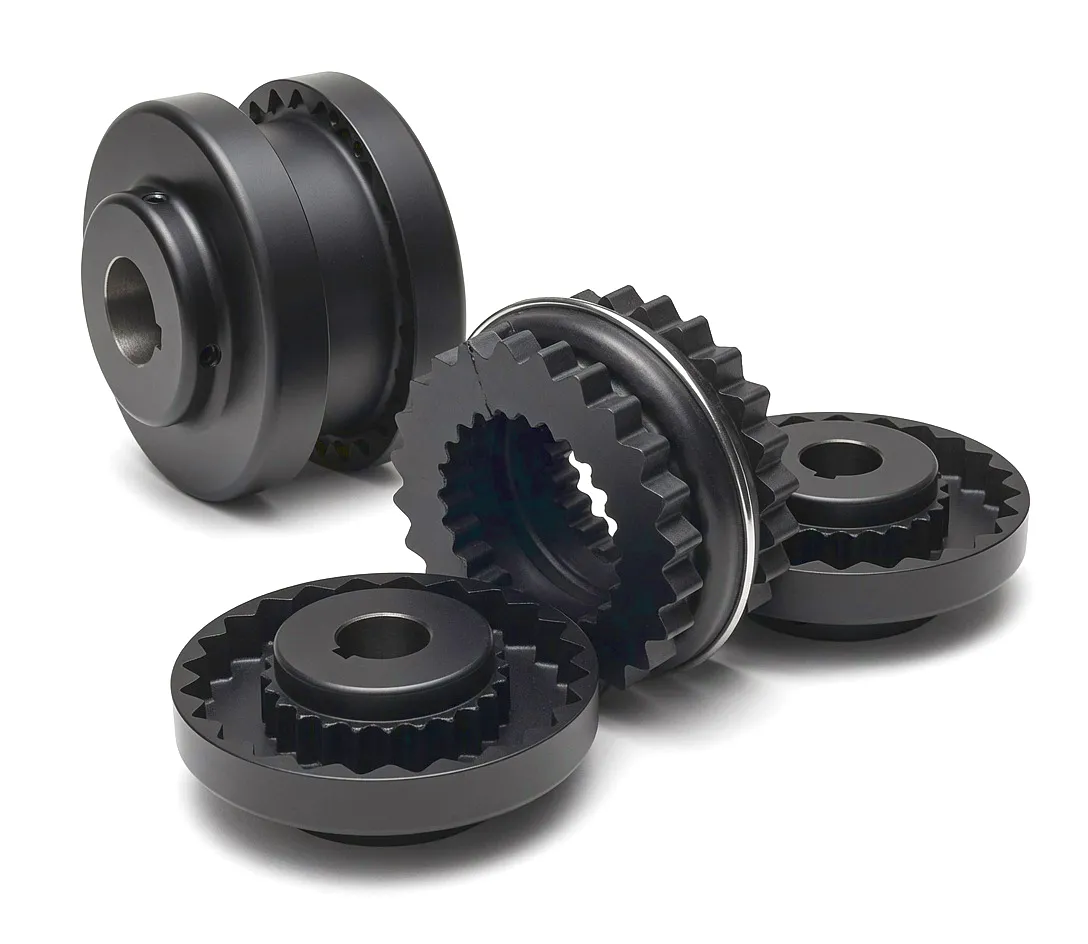
Not every position in a cement plant requires a full steel drum-tooth coupling. For auxiliary drives, conveyor drives, and the auxiliary kiln turning gear — a slow-speed auxiliary motor used to index the kiln shell during maintenance or during cool-down — the NL Type nylon gear flexible coupling offers a cost-effective and low-noise alternative. The nylon sleeve provides a degree of electrical isolation and damping not available in all-steel couplings, which can be advantageous in certain electrical drive applications. Ever Power supplies NL series nylon gear couplings in sizes covering bore diameters from 12 mm to 180 mm, with full dimensional interchangeability with standard Chinese GB and DIN specification couplings.
“The flexibility of specifying from a single supplier — from the small nylon gear couplings on auxiliary conveyors up to the massive drum-tooth units on the kiln main drive — simplifies procurement, spare parts management, and engineering support.”
Case Study: Kiln Drive Reliability Transformed at UK Cement Plant
Challenge: Repeated Gearbox Failures on Kiln No. 2 Main Drive
A mid-sized integrated cement plant in South Wales operating two wet process kilns had been experiencing a recurring pattern of gearbox output shaft bearing failures on their number two kiln, with replacements required every 8–11 months against a designed replacement interval of 36 months. Each bearing failure event required a 4–6 day planned stoppage, resulting in lost production estimated at approximately £120,000 per event. The plant maintenance manager identified that the existing gear coupling between the motor and gearbox, sourced from a low-cost supplier several years prior, had developed significant tooth wear and backlash, and the crowned tooth profile had been ground away by years of operation with contaminated grease.
The plant engineering team contacted Ever Power and provided the existing coupling dimensions and duty parameters. The Ever Power applications team recommended an NGCL series drum-tooth gear coupling in a size two grades larger than the existing unit, to provide additional torque margin, manufactured from 42CrMo4 alloy steel with full induction hardening of the crowned teeth and supplied with a high-temperature synthetic grease pre-charged at the factory. The coupling was manufactured to match the existing shaft dimensions and keyway specifications precisely, enabling direct installation without modifications to the existing drive arrangement during a scheduled 48-hour maintenance window.
Results After 18 Months of Operation
What Our Customers Say
We had been through three coupling suppliers in four years trying to solve the bearing problem on our kiln main drive. Ever Power’s team actually took the time to look at our operating conditions — the ambient temperature near the kiln hood is exceptionally high — and recommended the correct grease specification along with the coupling upgrade. Eighteen months later we haven’t touched it.
Our procurement specification required full material certification to EN standards, which some suppliers struggled to provide. Ever Power sent through complete mill certs and heat treatment records without hesitation. The lead time was 6 weeks from order to delivery, which was well within our shutdown planning window. The coupling has been running on our ball mill for over two years now without any issues.
We needed a non-standard bore with a metric keyway on one end and an imperial keyway on the other — an old installation that had never been standardised. Ever Power’s engineering team didn’t bat an eyelid. They confirmed the drawing within two days and delivered a precision-machined coupling within four weeks. The fit was perfect. Exactly the kind of responsive, no-nonsense supplier we need for critical plant equipment.
Ever Power Manufacturing: Custom Engineering Capability
When standard products aren’t enough, our engineering team delivers bespoke solutions
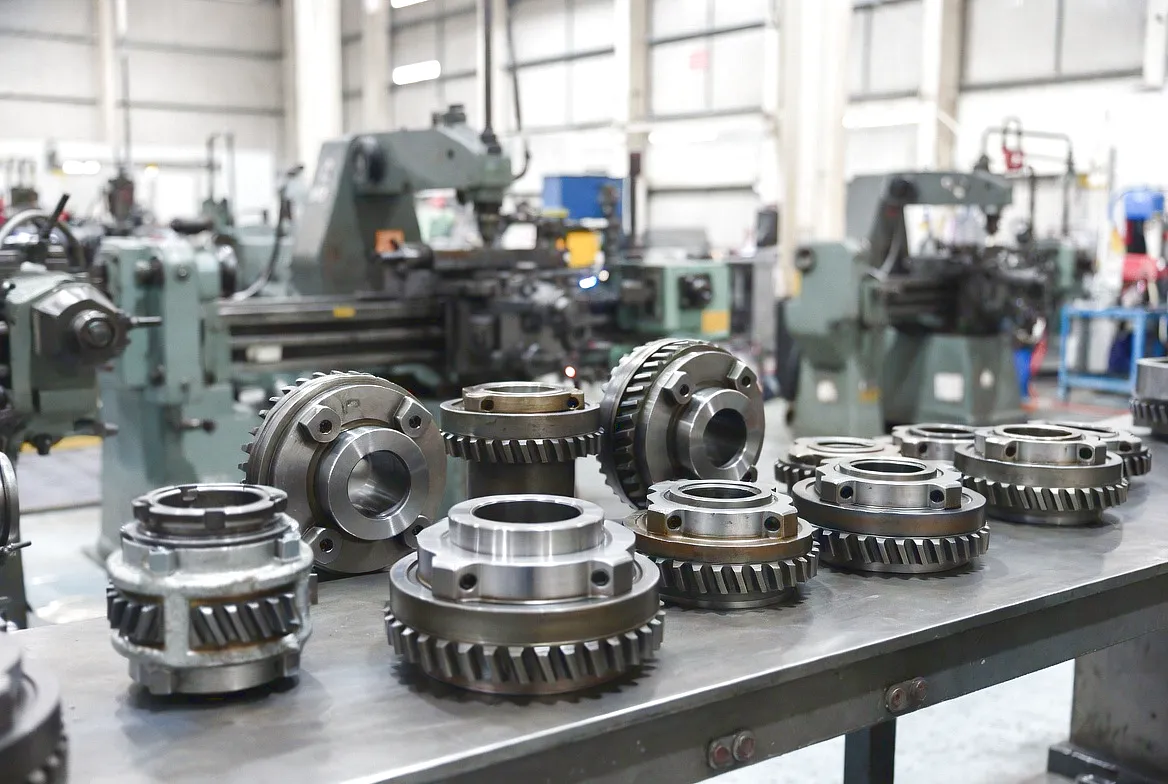
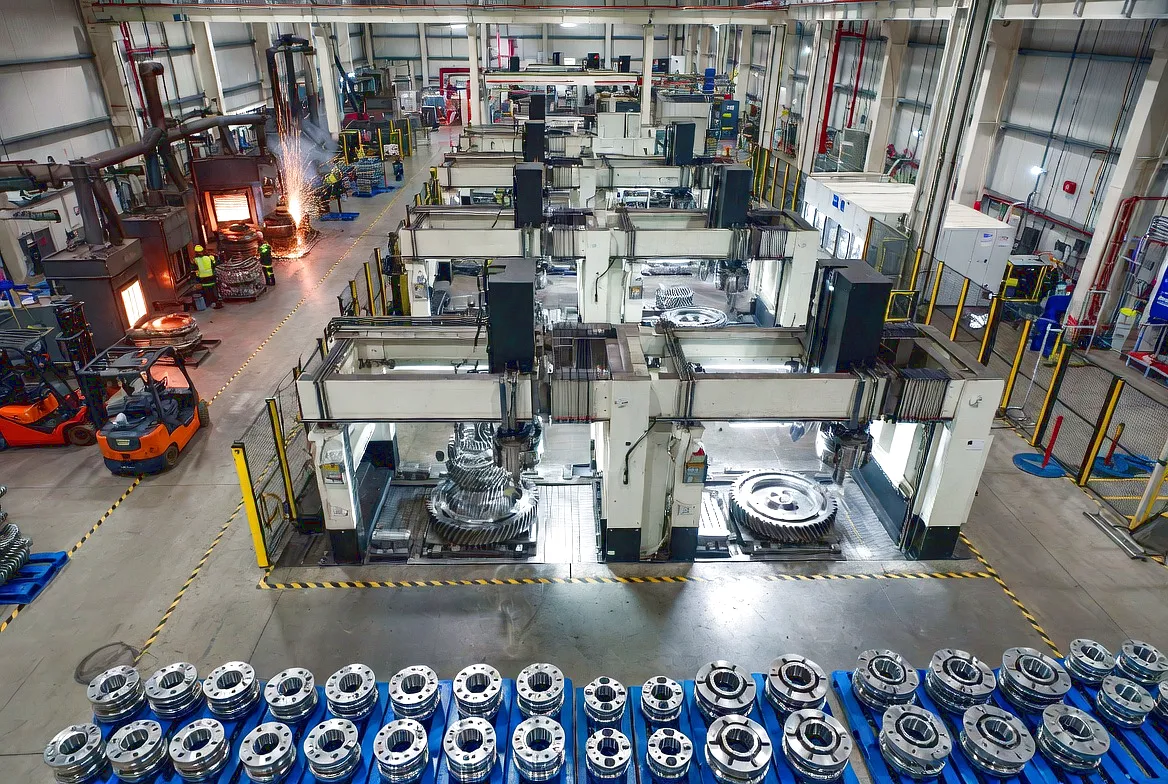
Ever Power’s manufacturing facility operates CNC turning centres, CNC gear hobbing machines, CNC gear grinding machines, and induction hardening equipment capable of producing gear couplings from the smallest standard bore sizes up to shaft diameters of 560 mm and torque ratings exceeding 3,150,000 N·m. This in-house capability, combined with a dedicated applications engineering team with experience across the cement, steel, mining, paper, and marine industries, enables Ever Power to offer a level of customisation that generic catalogue suppliers simply cannot match.
Custom engineering services available to UK cement plant operators and industrial clients include: non-standard bore diameter machining to any shaft size within the housing capacity; non-standard keyway dimensions including parallel, Woodruff, and splined connections; mixed metric/imperial keyway configurations for legacy equipment; special materials including stainless steel or high-alloy versions for corrosive environments; dimensional modifications to match existing coupling envelopes without foundation changes; special surface treatments for high-temperature or chemically aggressive environments; and dynamic balance to specific G-grade requirements for high-speed applications. Every custom coupling is accompanied by a fully traceable material certificate, dimensional inspection report, and, where required, third-party witness test.
Request a Custom Gear Coupling Quote
Send us your shaft dimensions, torque requirements, speed, and operating environment details. Our engineering team will respond within 24 hours with a preliminary design recommendation and indicative price.
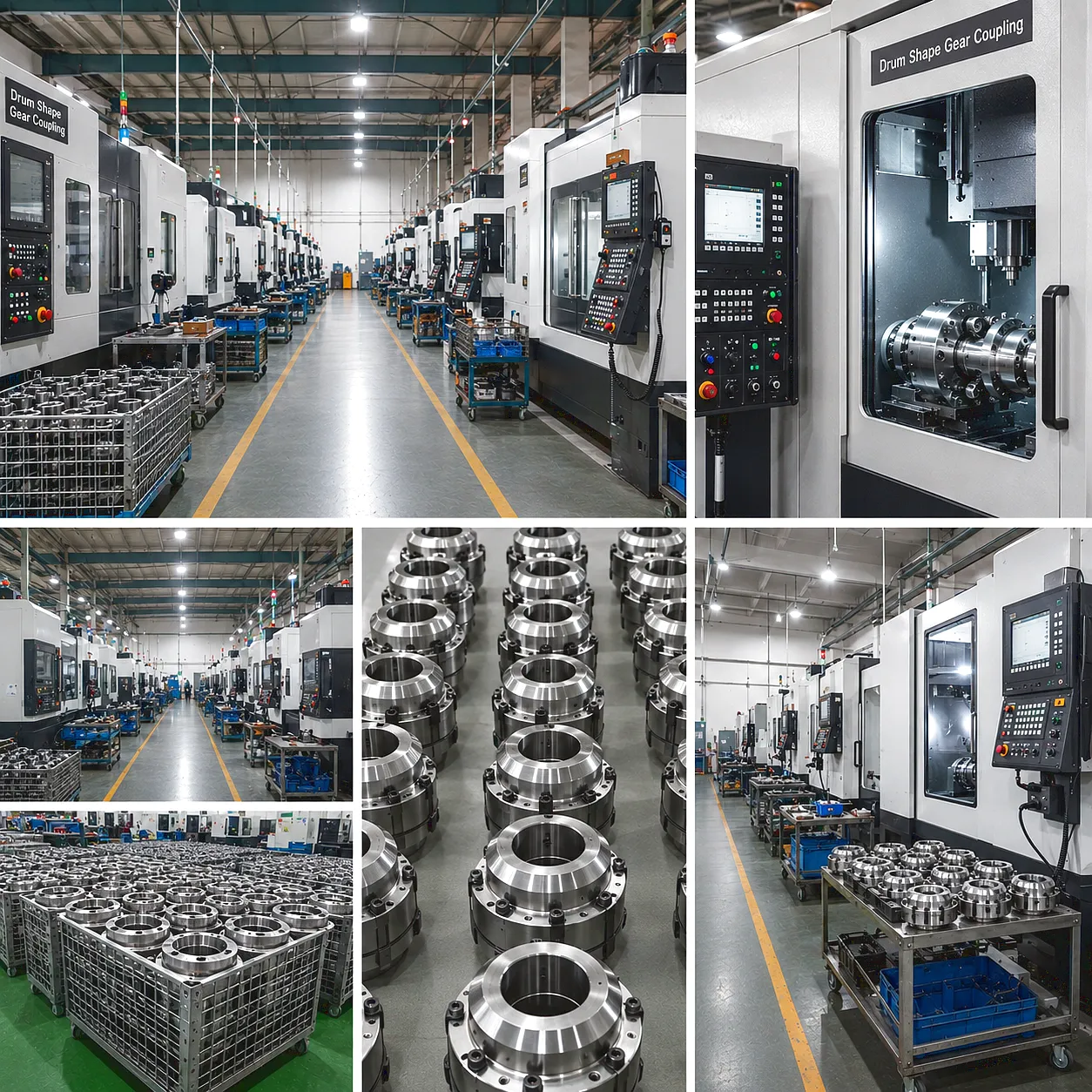
Ever Power manufacturing workshop — precision CNC machining, gear grinding, and induction hardening for the most demanding coupling applications.
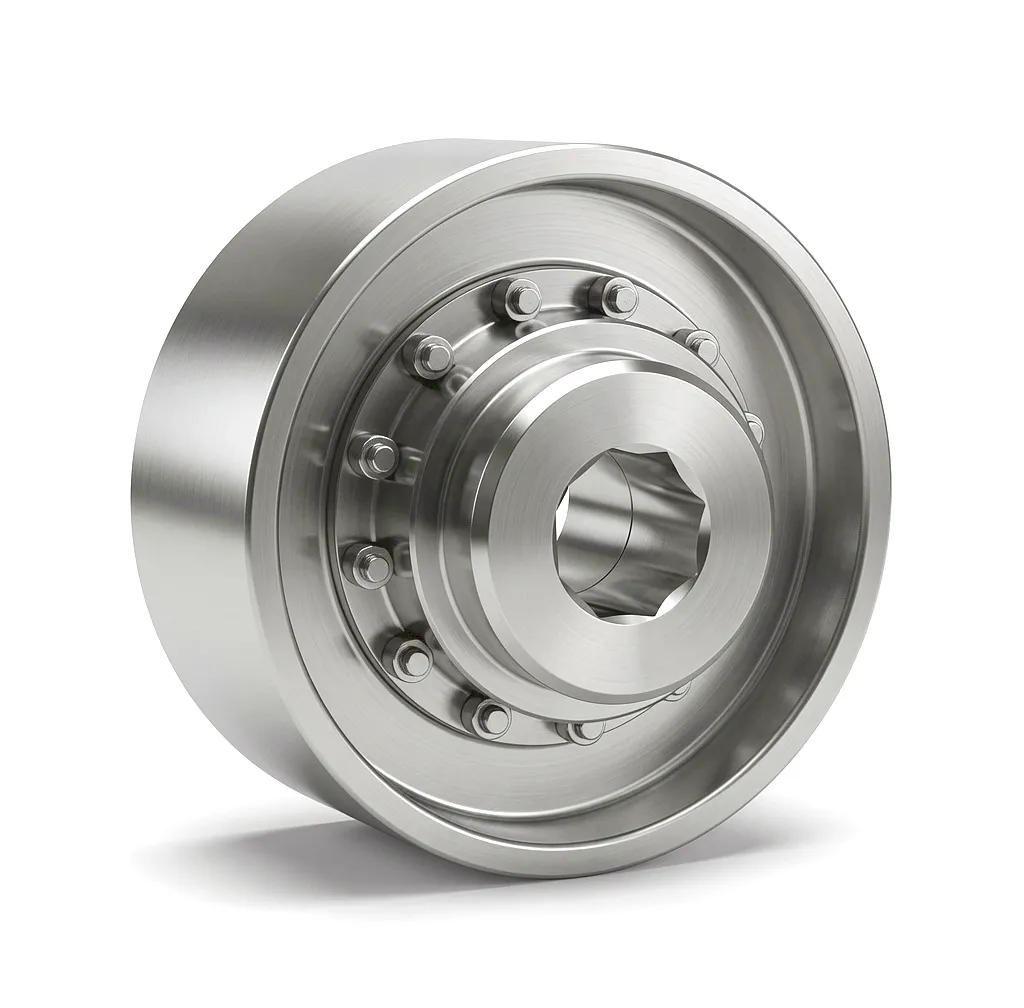
NGCL Series: The Heavy Kiln Drive Standard
The NGCL series drum-shape gear coupling is specifically designed for the highest torque applications in cement plant and heavy industrial drive systems. The series features a two-flange outer sleeve assembly with bolted central connection, allowing disassembly without axial movement of the connected shafts — a critical practical advantage for kiln drives where axial space for maintenance access is limited. Available in sizes from NGCL 1 through NGCL 13, covering nominal torques from 5,600 N·m to over 3,150,000 N·m, the NGCL series spans the entire range of kiln drive requirements found in UK and European cement plants.
- Crowned external teeth on 42CrMo4 alloy steel hubs
- Full induction hardening: 52–58 HRC tooth surface
- Factory-filled with high-temperature synthetic grease
- FKM lip seals for high-temperature and dusty environments
- Full material traceability and dimensional certification available
How to Select the Correct Gear Coupling for Your Kiln Drive
| Selection Step | Parameter Required | Guidance Note |
|---|---|---|
| 1. Calculate Design Torque | Rated motor torque × service factor | Use service factor 2.0–2.5 for kiln drives with high shock and reversing loads |
| 2. Confirm Shaft Sizes | Motor shaft OD, gearbox shaft OD, keyway dimensions | Specify tolerance H7 bore for precision fit; confirm keyway standard (DIN 6885 or BS 4235) |
| 3. Determine Shaft Separation | Distance between shaft ends (DBSE) | NGCL series available with spacer sleeves for extended shaft separation on long drives |
| 4. Specify Operating Environment | Ambient temperature, dust exposure, radiated heat level | Kiln hood proximity requires high-temp synthetic grease and FKM seals as minimum |
| 5. Confirm Certification Needs | Material certs, inspection reports, third-party witness | Ever Power provides EN 10204 3.1 material certs and dimensional reports as standard on request |
Frequently Asked Questions
Real questions from UK cement plant and industrial procurement teams
What is the best type of gear coupling for a cement plant rotary kiln main drive in the UK, and where can I get a reliable supplier?
The drum-tooth gear coupling — specifically the NGCL or GICL series — is the industry standard for rotary kiln main drives in UK and European cement plants. The crowned tooth profile accommodates the shaft misalignment caused by kiln shell thermal expansion while transmitting the high torques required by kiln drives. Ever Power supplies NGCL and GICL series drum-tooth gear couplings with full material certification to UK and EU procurement teams. Enquiries can be sent directly to gear-coupling.top for a same-working-day response from our applications team.
How much does a replacement gear coupling for a cement kiln main drive cost, and what is the typical lead time for delivery to a UK plant?
The price of a drum-tooth gear coupling for a rotary kiln main drive depends on the size (torque rating), material specification, and any custom engineering requirements such as non-standard bores or special coatings. Standard NGCL series couplings in the mid-range kiln drive sizes are typically available as competitively priced units compared to European OEM alternatives, with significant cost savings possible when sourced directly from the manufacturer. Lead time from order to delivery for standard sizes is typically 4–8 weeks to UK addresses; custom-engineered units require 6–10 weeks. Contact gear-coupling.top with your duty parameters for a specific quotation.
Which grease should I use in a drum-tooth gear coupling installed on a kiln drive close to the kiln hood where ambient temperatures are very high?
For gear couplings installed within approximately 5 metres of the kiln hood, where radiated heat can raise ambient temperatures above 80°C, a high-temperature synthetic grease rated to at least 150°C continuous service is essential. Suitable products include polyurea-thickened synthetic base oil greases or lithium complex synthetic greases. Standard mineral-oil NLGI 2 greases are not suitable for this environment as they oxidise and carbonise rapidly, losing lubricating capability and hardening into a paste that accelerates tooth wear. Ever Power can supply couplings pre-charged with the appropriate high-temperature grease when ordering, saving maintenance teams the task of sourcing an approved grease separately.
Can Ever Power supply a gear coupling with non-standard bore sizes and mixed metric and imperial keyways to suit an old kiln drive installation in a UK plant?
Yes. Ever Power’s in-house CNC machining capability allows us to produce custom bore diameters and keyway configurations to any specification. This includes metric keyways to DIN 6885, inch keyways to BS 4235, splined bores, and mixed arrangements where one hub is metric and the other is imperial — a common situation in older UK plant where equipment has been replaced piecemeal over decades. Please provide the shaft diameter, keyway width and depth (or relevant standard designation), and shaft fit tolerance for each end of the coupling. Our engineering team will confirm the drawing for your approval before manufacture begins.
How do I know when a gear coupling on a rotary kiln drive needs to be replaced, and what are the warning signs of imminent failure?
The most common warning signs of a gear coupling nearing the end of its service life on a kiln drive include: vibration levels increasing at the motor and gearbox, particularly at twice the rotational frequency; abnormal temperature rise in the coupling body detectable with an infrared thermometer during a walk-around inspection; grease leaking past the lip seals, often visible as dark brown or black streaks on the coupling body and surrounding guarding; audible clicking or knocking noise at low speed or during start-up; and visual evidence of fretting corrosion or tooth step wear when inspected during a planned stop. Any of these signs should trigger a detailed inspection and tooth wear measurement at the next available opportunity.
Where can UK procurement teams find a reliable gear coupling supplier that provides material certificates and documentation for ATEX or machinery directive compliance?
Ever Power supplies gear couplings with full EN 10204 3.1 material traceability certificates for hub and sleeve materials, dimensional inspection reports produced on calibrated CMM equipment, and hardness test records for heat-treated components. These documentation packages meet the requirements of the EU Machinery Directive 2006/42/EC and satisfy most UK plant quality assurance specifications. For applications requiring ATEX Zone 21 or 22 compliance (dusty environments including cement plant grinders), Ever Power can advise on appropriate coupling design and material selection to meet the directive requirements. Send documentation requirements to gear-coupling.top along with your technical enquiry.
Speak to an Applications Engineer Today
Whether you’re specifying a new kiln drive, replacing a worn coupling during a planned shutdown, or investigating a recurring gearbox failure, Ever Power’s engineering team has the experience and manufacturing capability to deliver the right solution, fast. Send your duty parameters and shaft dimensions to receive a detailed recommendation and competitive quotation within one working day.
📩 Get a Quote — gear-coupling.top
Ever Power · Drum-Tooth Gear Couplings · Custom Engineering · UK & Global Supply · edit by gzl