
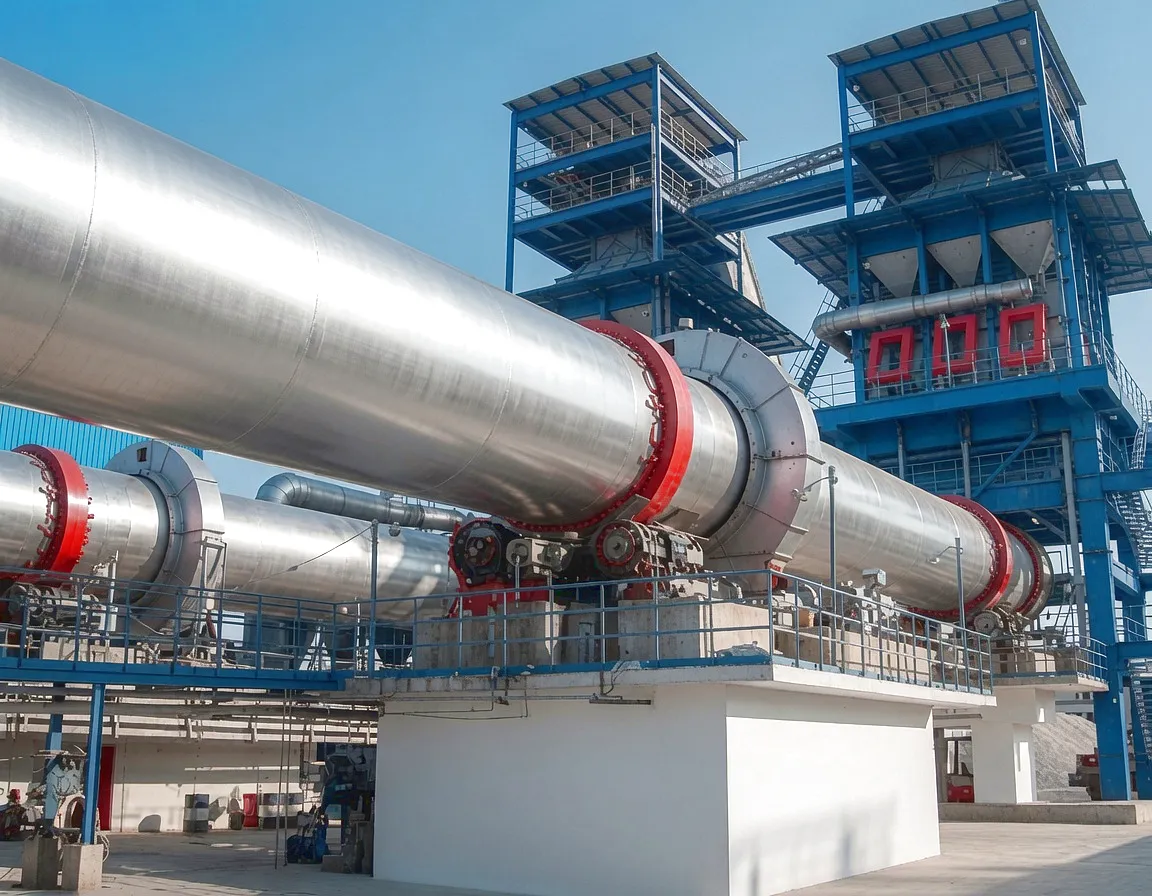
 The rotary kiln sits at the absolute heart of every cement plant. Running around the clock at temperatures above 1,450 °C, it transforms raw meal into the clinker that becomes Portland cement. That single piece of equipment — sometimes stretching 200 metres in length and weighing thousands of tonnes — must rotate continuously, smoothly, and reliably. When it stops unexpectedly, so does everything downstream. Production losses at a modern UK cement works can easily reach £50,000 per hour of unplanned downtime, which is why the engineering of every component in the drive train receives intense scrutiny. The gear coupling connecting the main motor to the primary gearbox is deceptively small relative to the machine it serves, yet it is one of the highest-consequence components in the entire system. Choose incorrectly, and you face shock-induced gearbox damage, cracked shafts, and catastrophic downtime. Choose well, and the coupling quietly absorbs decades of misalignment, vibration, and thermal cycling without complaint.
This article draws on eighteen years of field experience specifying, installing, and troubleshooting gear couplings on rotary kilns across the UK, Europe, and the Middle East. It covers the mechanical demands that make rotary kiln drive systems uniquely challenging, the technical characteristics that define a high-performance gear coupling for this application, material and geometry considerations, and the real-world data that should guide your next procurement decision.
Why Rotary Kilns Destroy Ordinary Couplings
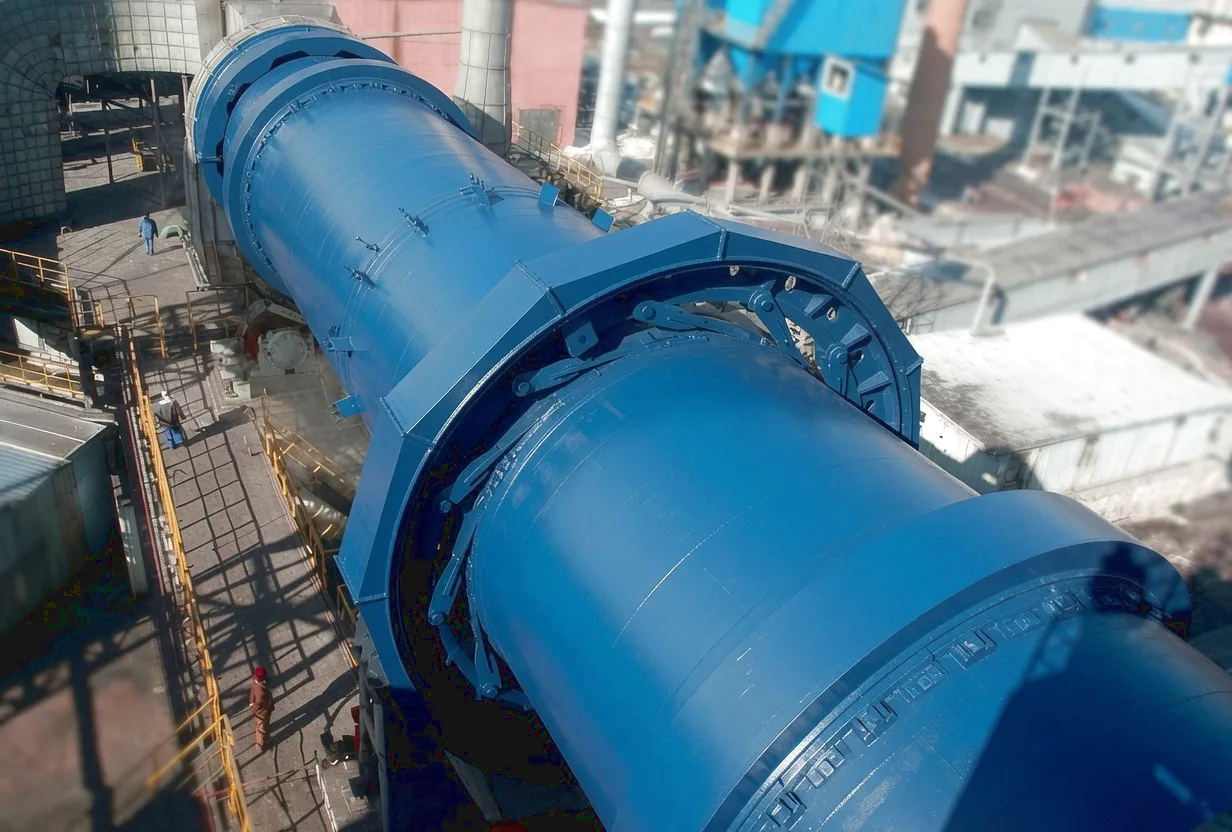
A rotary kiln imposes a combination of mechanical stresses that would rapidly degrade any coupling not specifically designed for the duty. The kiln shell itself is not perfectly rigid — it flexes measurably as it rotates, particularly at the saddle supports. This continuous deflection translates into cyclic bending loads that travel back through the large girth gear, through the pinion shaft, through the gearbox, and ultimately arrive at the coupling as oscillating angular misalignment. On a kiln that has been running for several years, thermal distortion of the foundation and creep in the grouting can introduce additional parallel offset misalignment of several millimetres, which an ordinary rigid or jaw coupling simply cannot tolerate.
Startup events are particularly violent. When the main drive motor energises, the stationary inertia of the kiln shell — representing thousands of tonnes — must be accelerated from rest. The resulting torsional shock can be four to six times the steady running torque. Multiply that by the number of starts over a kiln’s operating life (scheduled maintenance windows alone can mean two to four starts per month), and the fatigue demand on a coupling becomes enormous. Standard elastomeric couplings tend to fail first at the rubber element, which then leaves metal-to-metal contact and cascading damage to the gearbox.
Temperature is the third major factor. The motor end of the drive train sits in a relatively cool environment, but the output shaft of the main gearbox runs close to the kiln body, where radiant heat from the burning zone can raise ambient temperatures to 80 °C or above. Differential thermal expansion between the gearbox shaft and the motor shaft creates axial movement of several millimetres. A gear coupling handles this axial float naturally through the sliding action of the crowned gear teeth — a capability that no disc or jaw coupling can replicate without generating prohibitive reaction forces on the bearings.
Three Forces That Define Kiln Drive Severity
⚡ Torsional Shock at Startup
Peak torques 4–6× rated load during motor energisation; thousands of fatigue cycles across service life.
📈 Continuous Shaft Misalignment
Shell flexure and foundation settlement produce angular and offset displacement; thermal cycling adds axial float.
🔥 Elevated Ambient Temperature
Radiant heat from the burning zone raises ambient temperatures to 80 °C+, demanding heat-resistant lubricants and metallurgy.
How a Drum-Type Gear Coupling Actually Works
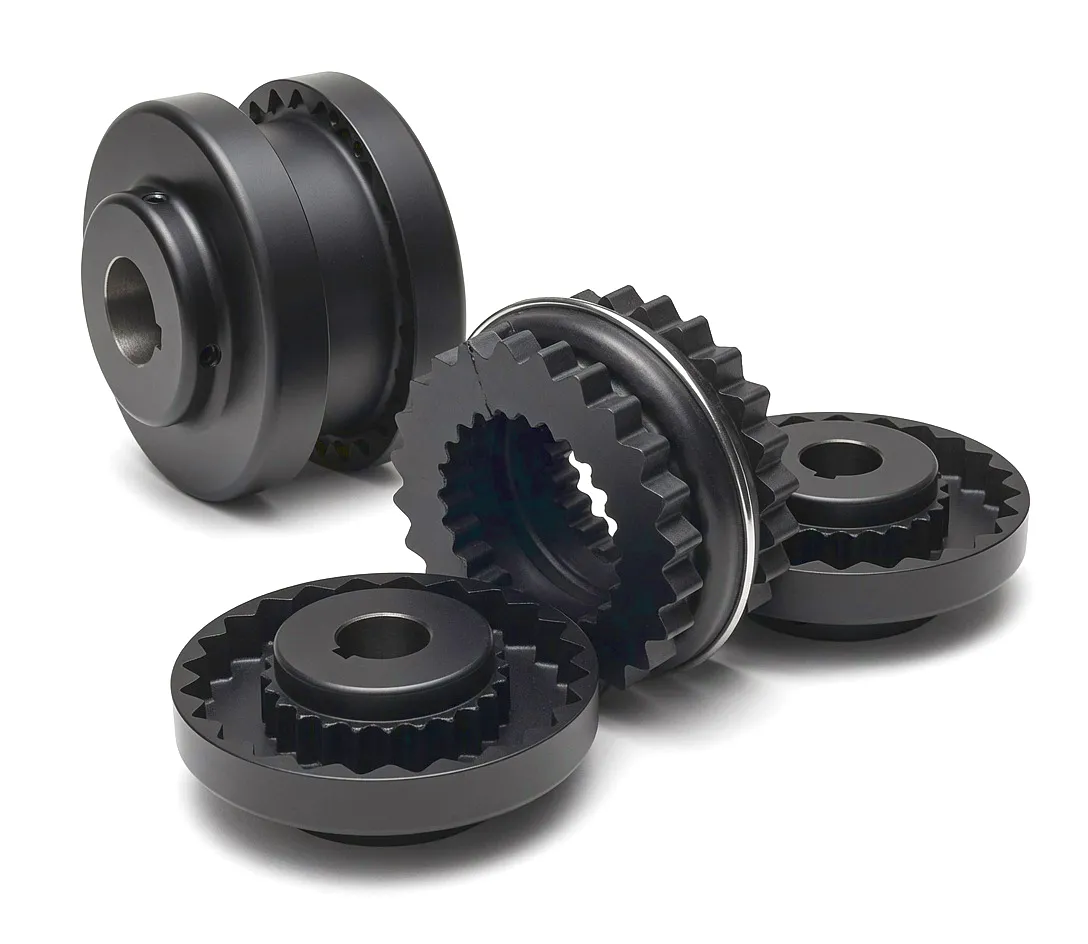
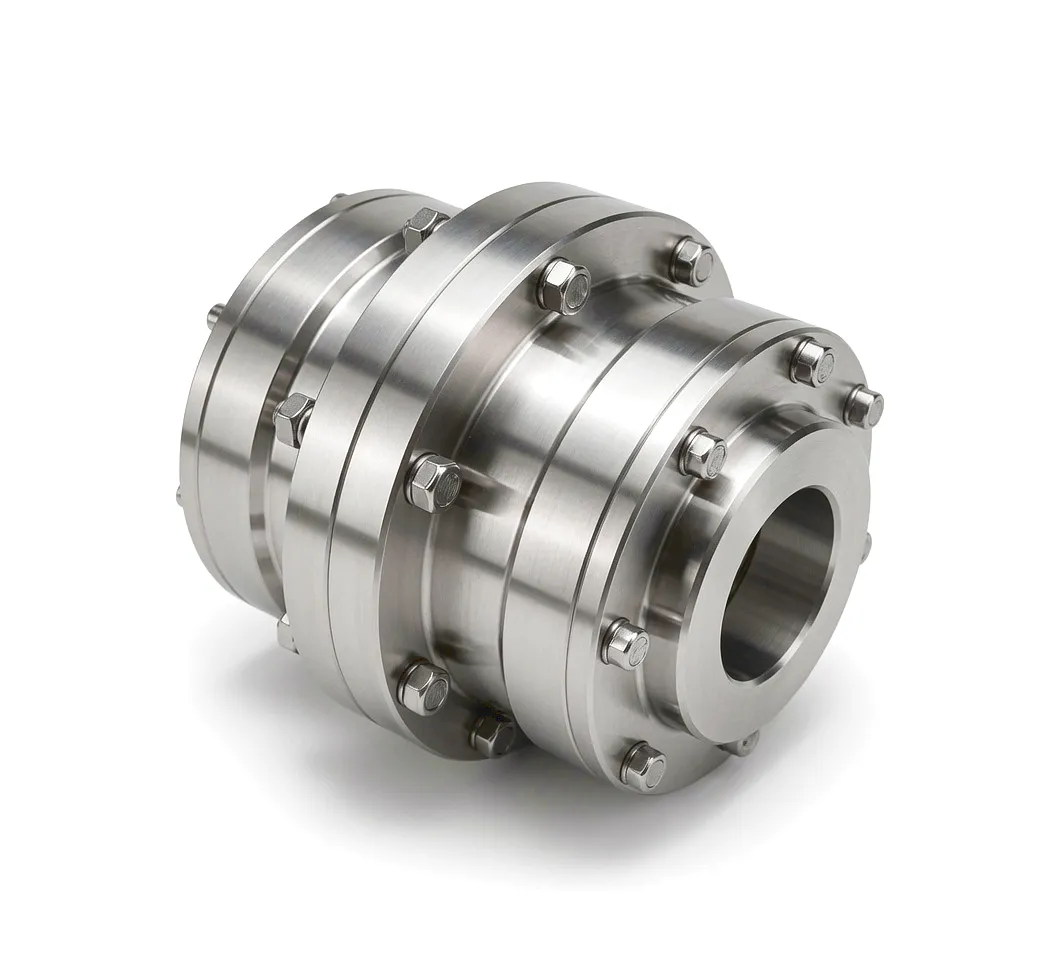
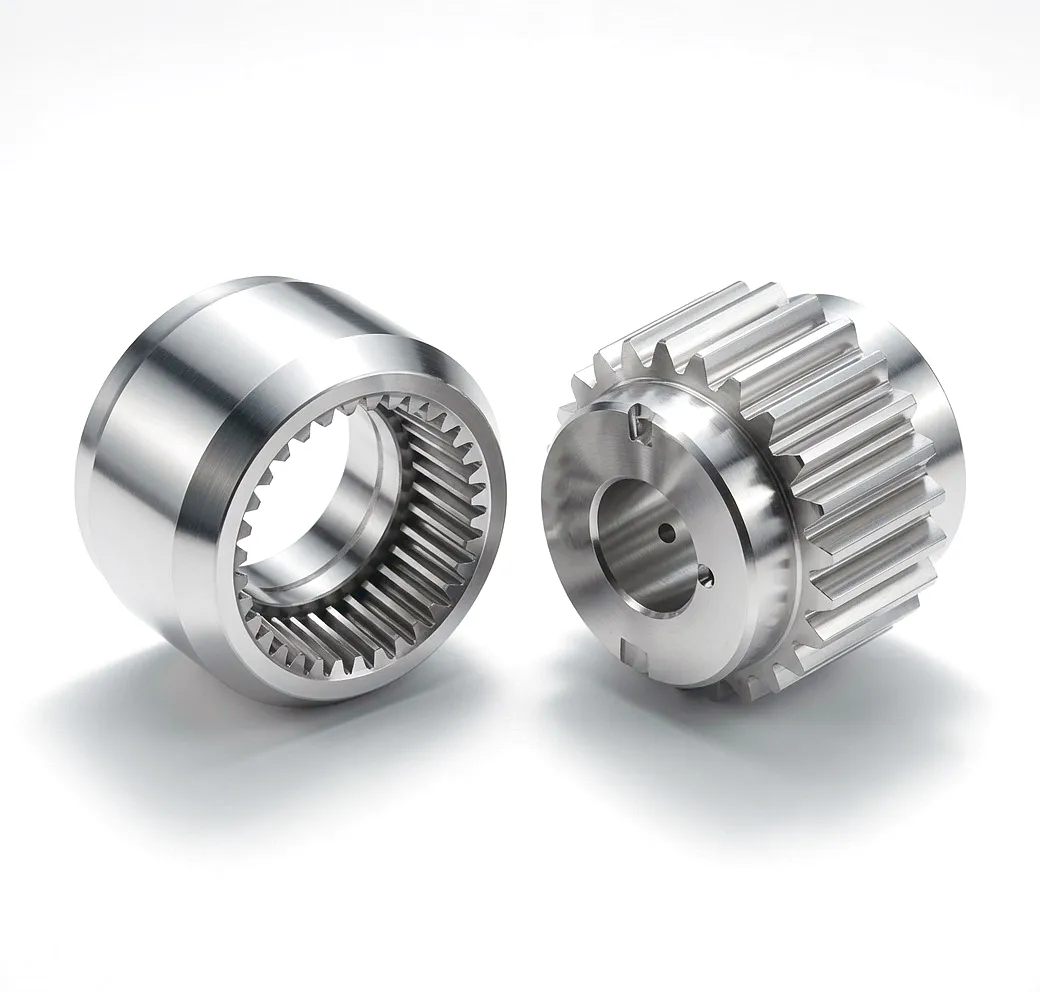
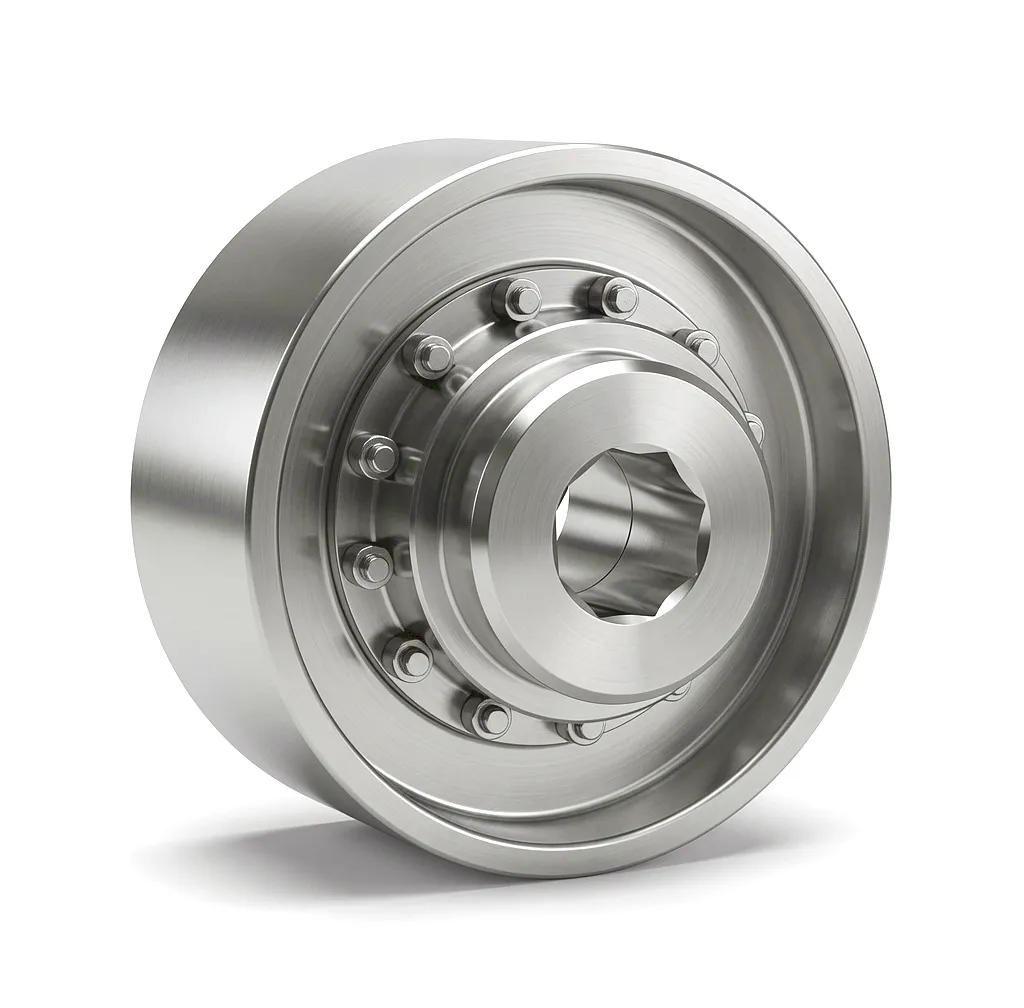
A gear coupling achieves torque transmission through the meshing of external and internal gear teeth. The inner hub carries external involute teeth (the sleeve), while the outer ring carries matching internal teeth. In a drum-type gear coupling — sometimes called a crowned-tooth or spherical gear coupling — the external teeth are machined with a convex crown profile along the tooth length. This geometry is the defining innovation: rather than transmitting load through a line contact (as straight-tooth designs do), the crown allows the contact zone to shift angularly and axially while maintaining full-area load distribution.
The practical result is an ability to accommodate angular misalignment of typically 1° to 2.5° per gear mesh, and axial displacement of several millimetres, without generating bending moments on the connected shafts. For a rotary kiln drive, this means the coupling absorbs the kiln’s natural breathing and movement rather than transmitting it as destructive forces into the gearbox output bearing and the motor shaft bearing — both of which are extremely expensive to replace in situ.
Technical Performance Parameters
| Parameter | GICL Series | NGCL Series | GIICL Series |
|---|---|---|---|
| Nominal Torque Range | 250–400,000 N·m | 500–710,000 N·m | 630–1,000,000 N·m |
| Maximum Speed | Up to 1,500 rpm | Up to 1,000 rpm | Up to 750 rpm |
| Angular Misalignment | ≤ 1.5° per mesh | ≤ 2.0° per mesh | ≤ 2.5° per mesh |
| Axial Displacement | ±2 to ±8 mm | ±3 to ±12 mm | ±4 to ±16 mm |
| Operating Temperature | -20 °C to +100 °C | -20 °C to +120 °C | -20 °C to +120 °C |
| Hub Material | 45# Steel / 40Cr Alloy | 40Cr / 42CrMo Alloy | 42CrMo / Cast Steel |
| Tooth Heat Treatment | Carburising + Quenching | Carburising + Quenching | Carburising + Quenching |
| Tooth Surface Hardness | HRC 54–62 | HRC 58–62 | HRC 58–62 |
* Parameters shown are indicative standard ranges. Custom specifications are available for all series — contact our engineering team for kiln-specific sizing.
Materials, Construction, and Why They Matter
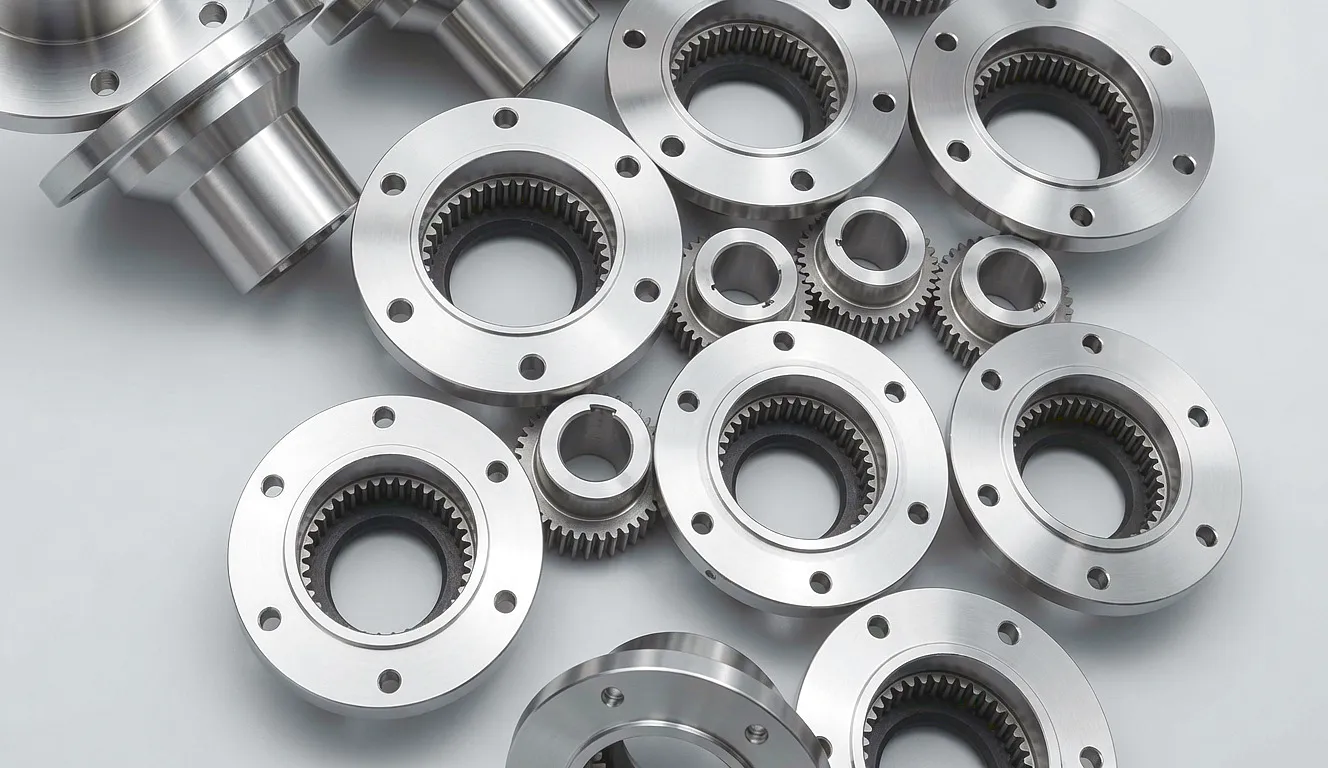
Forged Alloy Steel Hubs
The external-tooth hub is typically forged from 40Cr or 42CrMo alloy steel, providing a core tensile strength exceeding 900 MPa. Forging, rather than casting, eliminates porosity and produces a fine, uniform grain structure that resists fatigue crack initiation under cyclic loading. For the largest kiln drives — those handling torques above 500,000 N·m — 42CrMo is preferred for its superior hardenability and impact toughness at elevated temperatures. Every hub at our facility undergoes ultrasonic testing before gear cutting to detect sub-surface defects that could compromise service life.
Crowned Tooth Geometry
The crown profile is generated by CNC gear-grinding to tolerances within ISO Grade 5 or better. The crown radius is matched to the expected misalignment envelope of the specific kiln drive — a tighter crown for drives with precision-aligned foundations, a more generous crown for older plants where settlement is measurable. Getting this parameter right is the difference between a coupling that lasts twenty years and one that requires sleeve replacement within three. Our engineers calculate the optimal crown geometry using real kiln shaft deflection data provided by the end user, rather than relying on generic catalogue values.
Sealed Grease Retention
The outer sleeve incorporates a labyrinth seal arrangement with nitrile rubber O-rings at both ends. In a cement plant environment — where airborne clinker dust and alkali vapours are constant — a leaking gear coupling can lose its lubricant within weeks, leading to scuffing failure at the tooth flanks. Our kiln-spec couplings use double-lip seals with a grease nipple provision for in-service relubrication without disassembly. The standard lubricant specification is an extreme-pressure (EP) gear grease conforming to NLGI Grade 1, suitable for the operating temperature range encountered in kiln drive rooms.
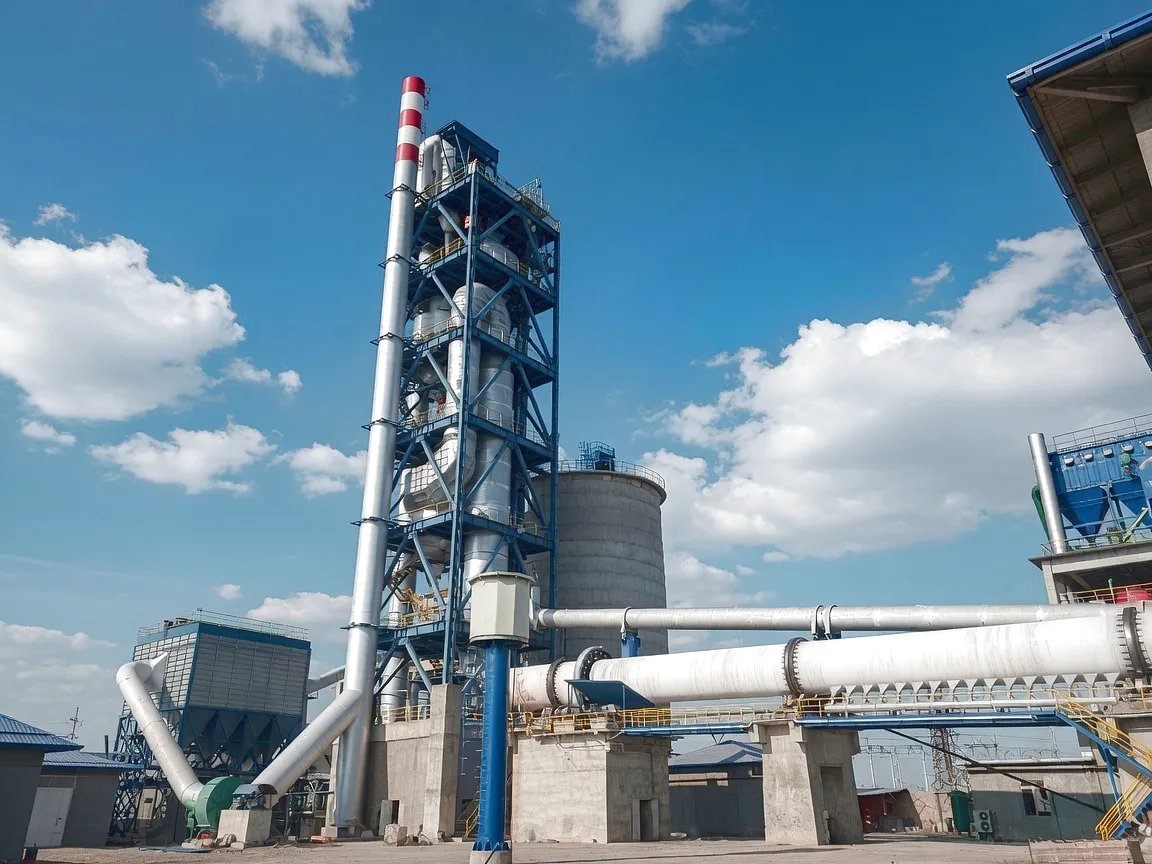
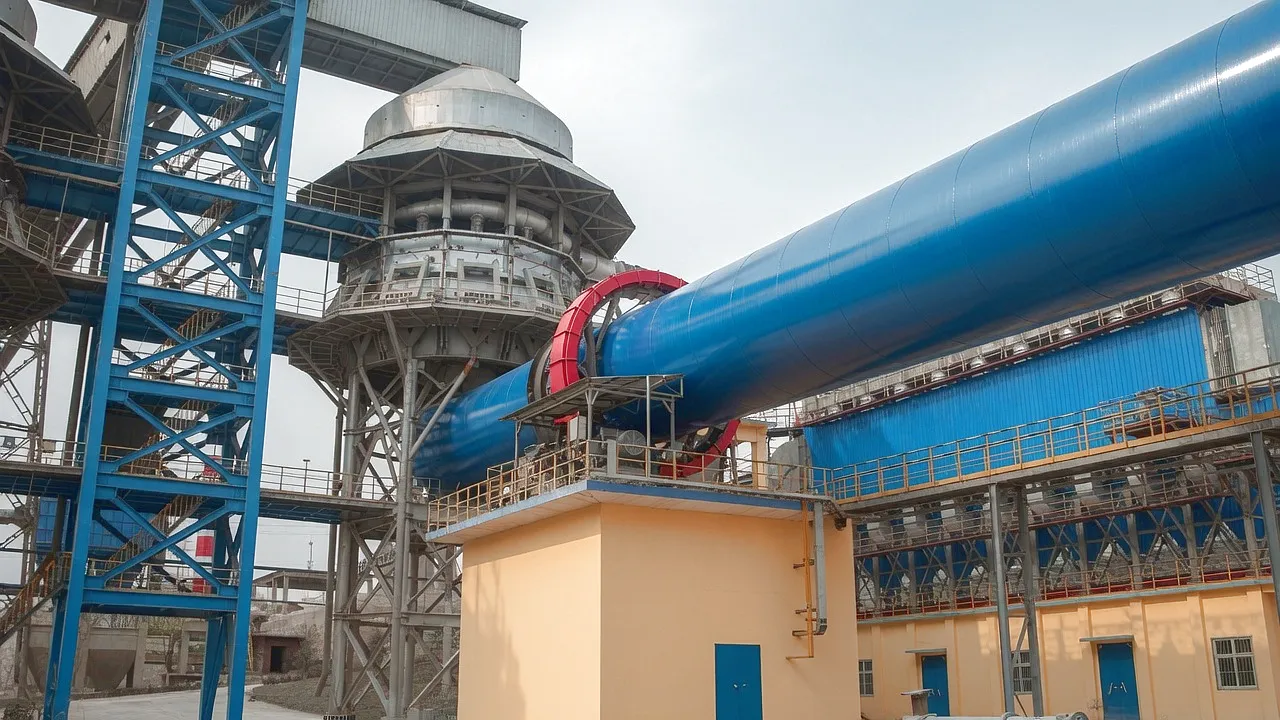
Rotary Kiln Drive System Architecture — Where the Coupling Fits
A typical wet-process or dry-process rotary kiln uses a main drive configuration consisting of a wound-rotor or variable-frequency drive (VFD) induction motor rated between 200 kW and 1,500 kW, connected through a main gearbox (often a two- or three-stage helical unit) to a drive pinion. The pinion meshes with a large-diameter girth gear bolted to the kiln shell. Gear ratios from motor to kiln shell are typically in the range of 100:1 to 400:1, reducing motor speeds of 750–1,500 rpm to kiln shell speeds of 0.5–5 rpm.
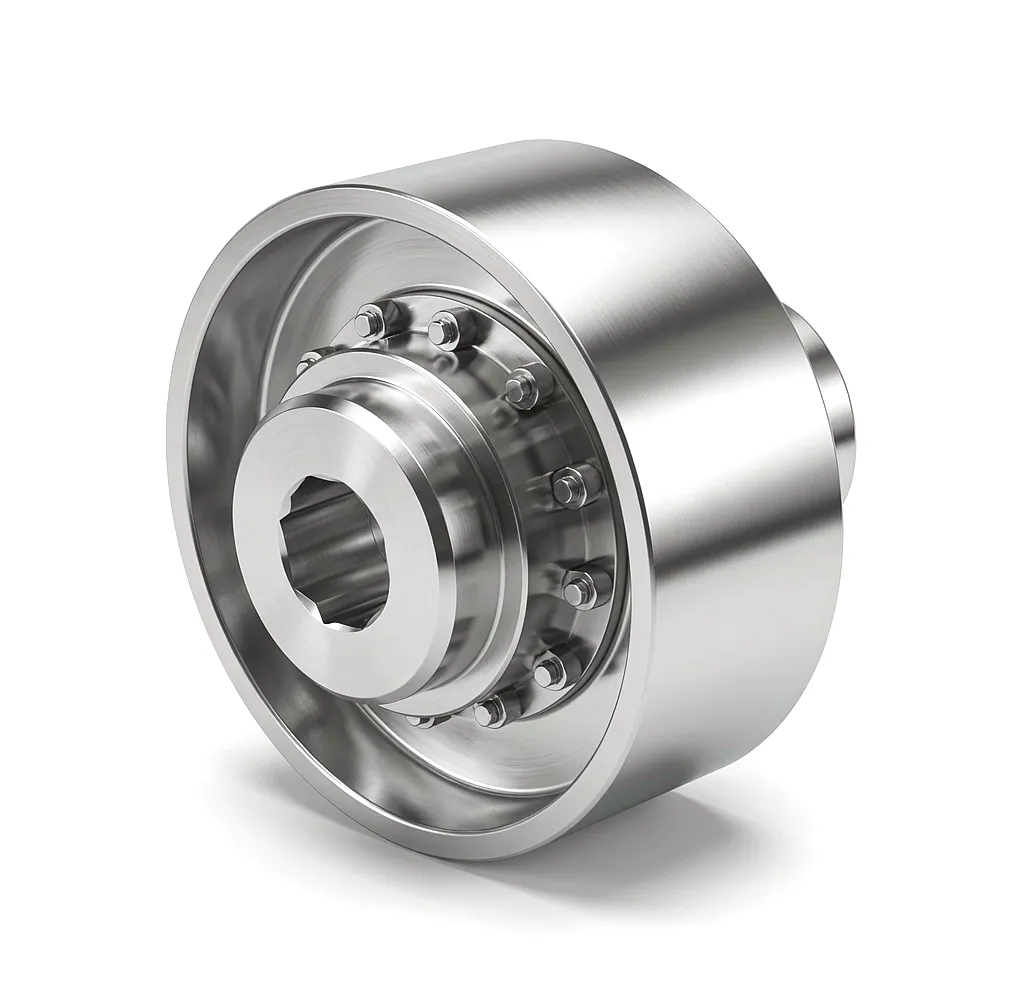
The gear coupling is positioned between the motor output shaft and the gearbox input shaft — occasionally also between the gearbox output shaft and the pinion assembly if a floating pinion arrangement is used. This coupling position places it in the highest-speed portion of the drive train, which has two implications: the transmitted torque at this location is relatively low compared to the output side, but the rotational speed is high (matching motor speed), and any angular or offset misalignment is multiplied in dynamic terms. A coupling installed on the motor-to-gearbox interface on a 1,000 rpm kiln drive must therefore tolerate not just the static misalignment of the foundation but also the vibration generated by the girth-gear-to-pinion mesh frequency, which typically falls in the range of 1–10 Hz for large kilns.
Many UK cement plants also use a secondary or auxiliary drive (barring drive) that rotates the kiln slowly during maintenance or controlled cooling. The auxiliary drive typically connects through a separate gear coupling or through an overrunning clutch arrangement. When specifying the coupling for the main drive, the kiln barring torque requirement — which can sometimes exceed 130% of steady running torque due to cold, stiff clinker bed — must be included in the duty calculation.
Seven Advantages of Specifying a Quality Gear Coupling
Exceptional Torque Density
Gear couplings transmit the highest torque per unit diameter of any flexible coupling type, making them compact and suitable for restricted drive-room layouts.
Three-Axis Misalignment Tolerance
Simultaneously accommodates angular, parallel offset, and axial misalignment — the only coupling type capable of handling all three in a high-torque environment.
Low Restoring Forces on Bearings
The crowned-tooth geometry generates minimal bending moments on motor and gearbox bearings, dramatically extending bearing service life.
High-Temperature Resilience
All-metal construction with EP grease lubrication remains serviceable to 120 °C continuous, far beyond the limits of elastomeric or nylon-element couplings.
Long Maintenance Intervals
With correct initial lubrication, sealed gear couplings on kiln drives routinely operate 18–24 months between inspection intervals, aligned with major kiln maintenance shutdowns.
Shock-Load Absorption
The tooth-contact compliance of a gear coupling provides limited but meaningful torsional damping during startup and upset conditions, protecting gearbox internals.
Custom Bore and Flange Options
Parallel, taper-bore, and flanged-hub configurations match virtually any motor and gearbox shaft interface, including retrofits to existing UK-built drives.
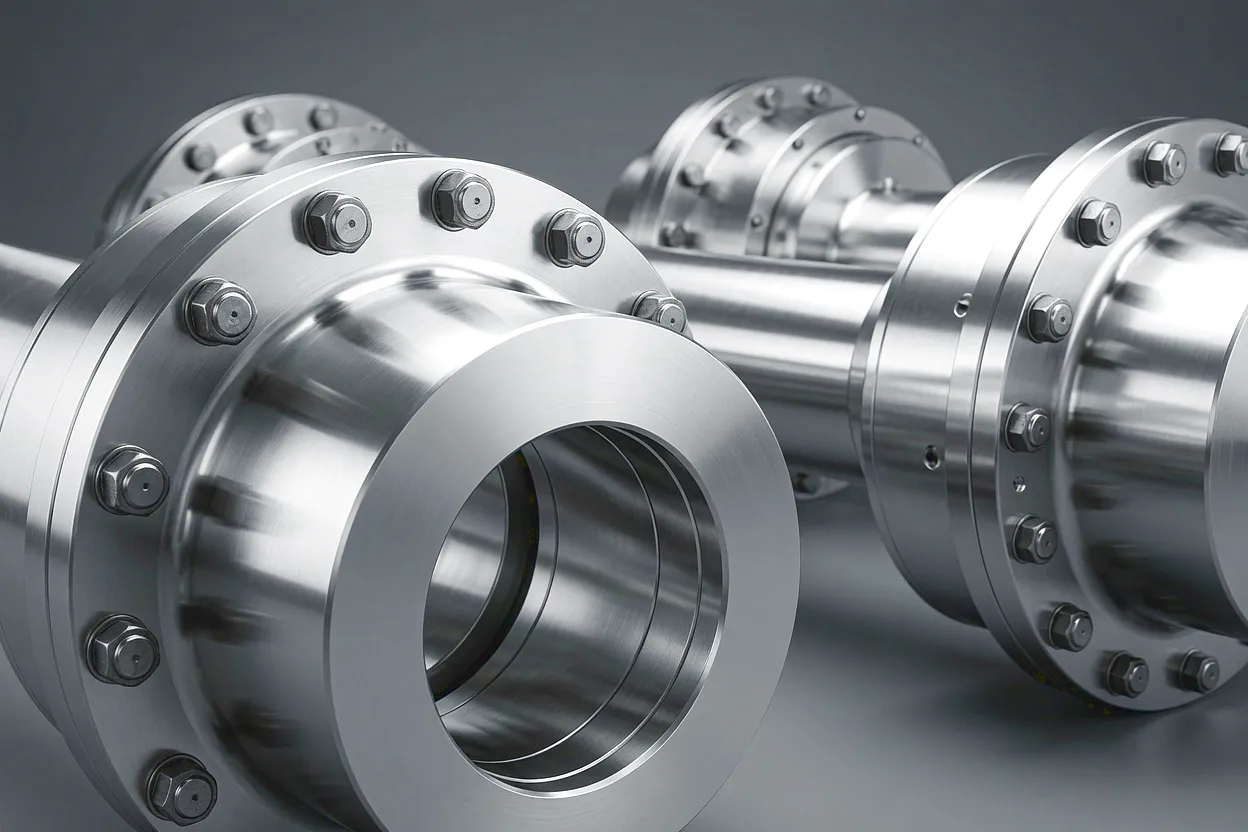
Beyond the Kiln: Other Heavy Industry Applications
The same mechanical requirements that make gear couplings essential on rotary kilns make them the preferred choice across a wide range of heavy industrial drive systems. In steel rolling mills across South Wales and the Midlands, gear couplings connect roughing mill drives handling torques exceeding 2,000,000 N·m, where the sudden engagement of slab against rolls creates shock loads that would shatter any elastomeric element. The crowned-tooth design absorbs this shock without generating bending on the mill stand housings, which can cost ten times the price of the coupling to repair.
In the offshore and onshore oil and gas sector — including platforms in the North Sea and refinery sites across Teesside and Grangemouth — gear couplings connect centrifugal compressor drives where the shaft alignment changes with operating temperature and pressure loads. Marine propulsion systems on vessels sailing UK waters use gear couplings to link main engine output shafts to gearboxes, where the bending of the hull in heavy seas demands an axial float capability that a rigid coupling cannot provide. Mining operations in the north of England and Scotland use gear couplings on ball mill and SAG mill drives, which share the same combination of high torque, continuous service, dusty environment, and thermal cycling that defines the rotary kiln challenge.
| Application | Key Challenge | Recommended Series | UK Industry Location |
|---|---|---|---|
| Cement Rotary Kiln | Shell flex, thermal float, high startup torque | NGCL / GIICL | Clitheroe, Rugby, Padeswood, Westbury |
| Steel Rolling Mill | Impact loading, ultra-high torque, roll chock misalignment | GIICL Heavy | Port Talbot, Scunthorpe, Rotherham |
| Mining Ball Mill | Dusty environment, cyclic torque variation, long service intervals | GICL / NGCL | Cornwall, Yorkshire, Cumbria |
| Centrifugal Compressor | High speed, precision alignment, thermal shaft growth | GICL High-Speed | Grangemouth, Teesside, Aberdeen |
| Marine Propulsion | Hull flexure, salt environment, variable load | Marine-Grade NGCL | Clyde, Tyne, Southampton, Bristol |
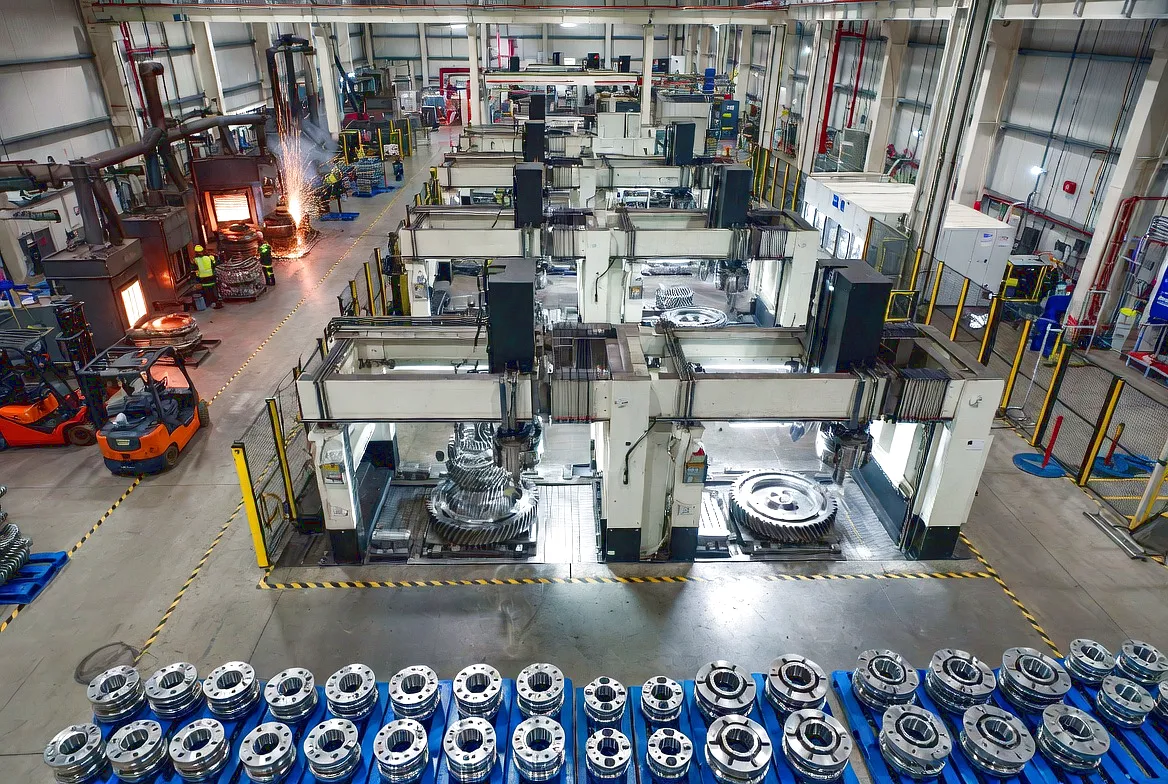
Customer Success: UK Cement Works, Yorkshire
Case Study · 2024 · UK Cement Industry
Eliminating Recurring Gearbox Bearing Failures on a Dual-Drive 5-Day Cement Kiln
A major UK Portland cement producer operating a 4.5 m diameter × 75 m long dry-process kiln in North Yorkshire was experiencing recurring main gearbox input bearing failures at intervals of 8–14 months. The kiln, originally commissioned in the early 1990s, had undergone a main drive upgrade in 2019 that increased motor power from 630 kW to 900 kW. Following the upgrade, bearing consumption more than doubled, and the maintenance team had begun budgeting for annual bearing replacement as an accepted cost — until an independent drivetrain survey identified the root cause as excessive bending load on the gearbox input shaft, generated by an obsolete jaw-type coupling that lacked the angular misalignment capacity needed after the foundation had settled 1.8 mm at the gearbox support point.
Working with our engineering team, the site specified a NGCL-series drum-type gear coupling sized for the upgraded motor torque with a service factor of 2.2 to account for kiln startup transients. The coupling was custom-bored to match the motor’s output shaft and the gearbox input flange — dimensions that had changed slightly when the original gearbox housing was re-machined. The installation was completed during a planned seven-day maintenance shutdown, and the coupling required no realignment beyond what was achievable with the existing anchor bolt arrangement.
Over the following 22 months, the kiln ran without a bearing failure. On the next scheduled inspection, the coupling’s gear teeth showed only normal surface-wear polish with no evidence of edge loading or scuffing. The plant maintenance manager calculated a cost avoidance of approximately £240,000 in bearing parts, crane hire, and lost production over the two-year period. The coupling unit itself cost under £8,000.
“We’ve been through three different coupling suppliers in seven years. Since fitting the NGCL series units on both our kiln drives, we’ve had zero unplanned coupling-related downtime. The engineering support during specification was excellent — they actually understood our kiln’s operating profile.”
David Hargreaves
Maintenance Engineering Manager · UK Cement Works, Yorkshire
“What impressed us most was the custom bore service. Our gearbox has an unusual taper-bore input shaft that most suppliers couldn’t match from stock. The team machined a bespoke hub to our drawing within three weeks, which was critical for our maintenance window.”
Mohammed Al-Rashid
Senior Process Engineer · Steel Plant, Teesside, UK
“We’ve standardised on this gear coupling supplier for our entire cement group across the UK and Germany. Consistent quality, detailed material certificates, and delivery times that actually work with our shutdown planning. Highly recommended for any kiln or mill drive application.”
Ingrid Möller
Procurement Director · Pan-European Cement Group, UK & Germany
Ever Power Manufacturing Capability & Custom Services
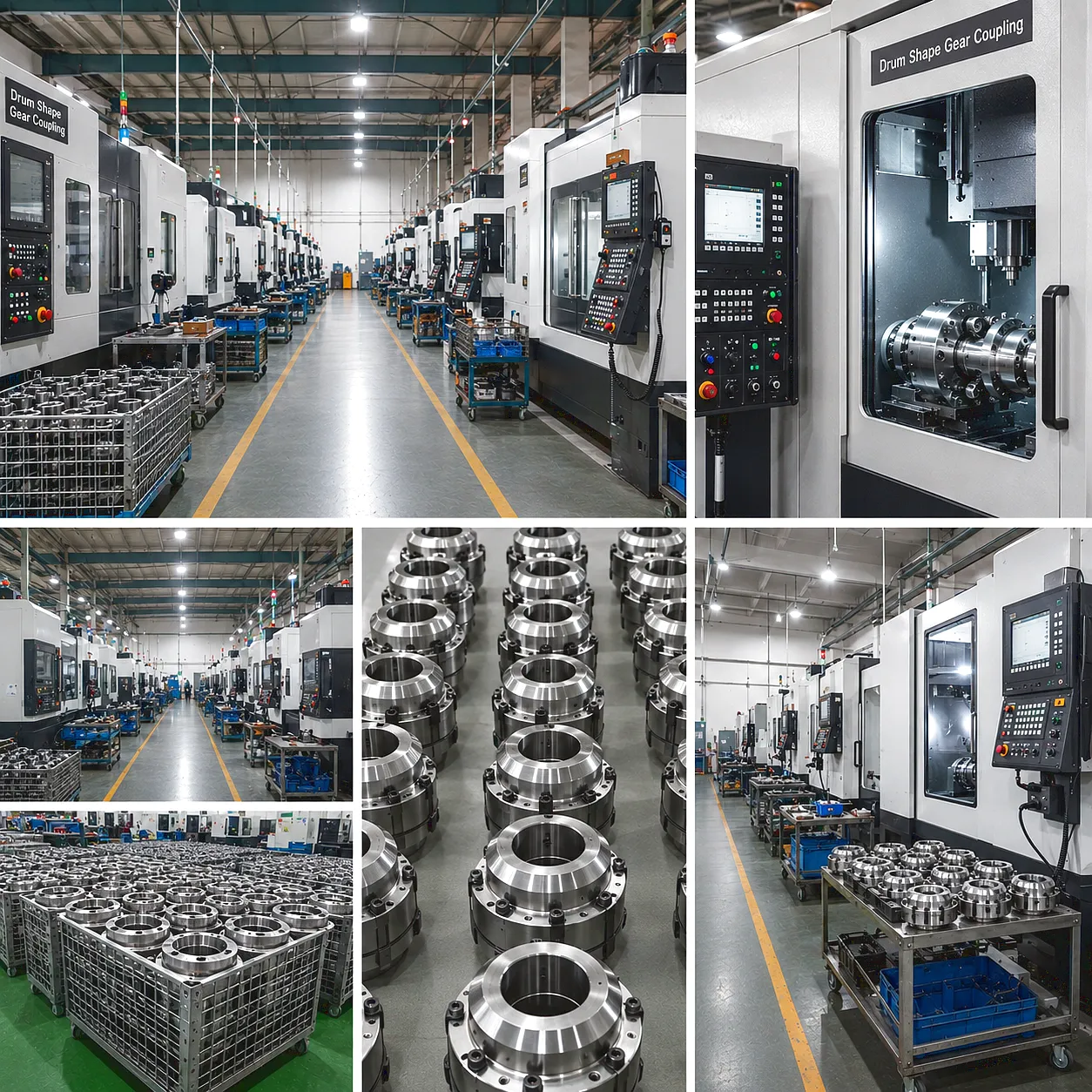
Ever Power’s manufacturing facility operates a dedicated heavy-coupling production line equipped with CNC gear-hobbing, CNC gear-grinding, and five-axis machining centres capable of producing gear couplings with a maximum outer diameter of 1,200 mm and gear face widths up to 320 mm. Every component undergoes in-process dimensional inspection on CMM equipment traceable to national metrology standards, with final assembly balanced to ISO 21940 Grade G6.3 as standard, and G2.5 available for high-speed applications.
Our custom service capability is particularly valued by UK cement and heavy industry customers who need non-standard solutions: split-hub designs for in-situ shaft installation without removing the motor; special bore configurations including metric keyway, inch keyway, and taper-bore to DIN or AGMA standards; extended flanges for drives with large shaft-to-shaft separation; and flanged sleeve designs that integrate directly with gearbox output faces. Material testing certificates (EN 10204 Type 3.1) are provided as standard, and NACE MR0175 material traceability is available for offshore applications.
Selecting the Right Gear Coupling for Your Kiln Drive
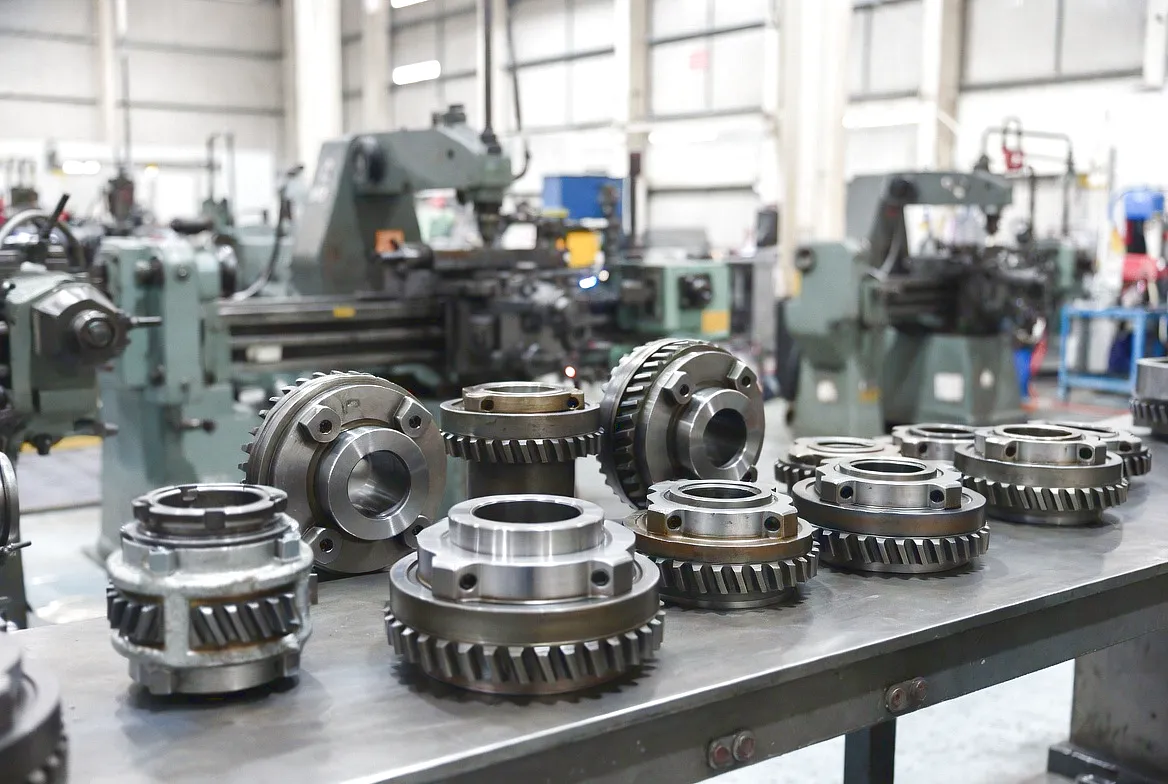
Correct gear coupling selection for a rotary kiln drive is a structured engineering process, not a catalogue exercise. The starting point is always the operating torque: multiply the motor nominal torque by a service factor appropriate for the application. For cement kilns with direct-on-line (DOL) motors, a service factor of 2.0 to 2.5 is typical to accommodate startup transients. For variable-frequency drive (VFD) motor installations, the service factor can often be reduced to 1.5 to 1.8, since the VFD controls the rate of torque application during startup, but must never be set below 1.5 given the inherent variability of kiln feed and bed conditions.
The second key parameter is bore size. Motor shaft diameters on kiln drives typically range from 100 mm to 200 mm depending on motor power rating, while gearbox input shaft diameters may differ. When both shaft ends are known at the time of ordering, we machine both hubs in the same production run to ensure concentricity tolerance consistency. When shaft dimensions are uncertain — as is often the case during a retrofit study before the equipment is delivered — we supply blank hubs (unfinished bore) that can be finish-machined on site or at a local engineering workshop, a service we support with detailed machining drawings specific to the coupling model and shaft interface.
Misalignment capacity should be sized against a realistic survey of shaft displacement, not textbook nominal values. For an existing kiln, this means laser alignment data taken on a running machine. For a new installation, it means foundation settlement predictions from the civil engineering package. Always add a 30% margin to the measured misalignment when selecting the coupling, to account for dynamic movement during operation and the inevitable drift of alignment over time. If the total misalignment requirement exceeds the capacity of a single gear mesh, a floating-shaft (spacer) gear coupling arrangement — with a gear mesh at each end of an intermediate shaft — provides double the angular capacity and is the standard solution for drives where the separation between motor and gearbox exceeds one shaft diameter.
Maintenance Practices That Maximise Service Life
The single greatest cause of premature gear coupling failure on UK cement plant kiln drives is not manufacturing defect or incorrect selection — it is inadequate or incorrect lubrication. A gear coupling’s teeth are in sliding contact during operation; the lubricant film that separates the metal surfaces must be maintained at all times. When the grease degrades through heat, contamination, or oxidation, direct metal contact begins, and the teeth erode rapidly. On a kiln drive operating at 80 °C ambient, standard NLGI Grade 2 grease may harden and lose penetrability within 12 months; a high-temperature NLGI Grade 1 EP grease rated to 150 °C will maintain adequate lubrication for 18–24 months under the same conditions.
Relubrication is most effectively performed during planned maintenance shutdowns using a hand-pump and the grease fitting provided on the sleeve. Pump in fresh grease until clean grease begins to emerge from the overpressure relief port — this ensures complete replacement of the old charge and purging of any accumulated hard deposits. Do not add grease without purging: overpacking compresses the grease into a solid mass that generates excess centrifugal pressure and can blow the seals, creating the very leak-and-contamination scenario that lubrication is intended to prevent.
Annual inspection during shutdown should include visual examination of tooth flanks for pitting, scuffing, or polishing patterns that indicate uneven load distribution; measurement of the sleeve-to-hub radial clearance at four points to detect wear-induced backlash growth; and a check of both seal lips for hardening or cracking. If polishing is concentrated at one end of the tooth face, this indicates that the operating misalignment is exceeding the crown capacity, and the machine alignment should be re-surveyed and corrected before the next campaign. Teeth that are pitting uniformly across the full face indicate adequate crown but potential lubrication failure; those with edge polishing on alternate teeth suggest a torsional vibration issue upstream in the drive train.
Ready to Protect Your Rotary Kiln Drive?
Share your motor and gearbox shaft dimensions, torque requirements, and misalignment data — our engineering team will specify the correct gear coupling and provide a detailed quotation within 48 hours.
Frequently Asked Questions
Ever Power · Gear Coupling Specialists
Supplying gear couplings to UK cement, steel, mining, and power generation industries
GICL · NGCL · GIICL · Custom Design · OEM Replacement · 48-Hour Quotation
edit by gzl