
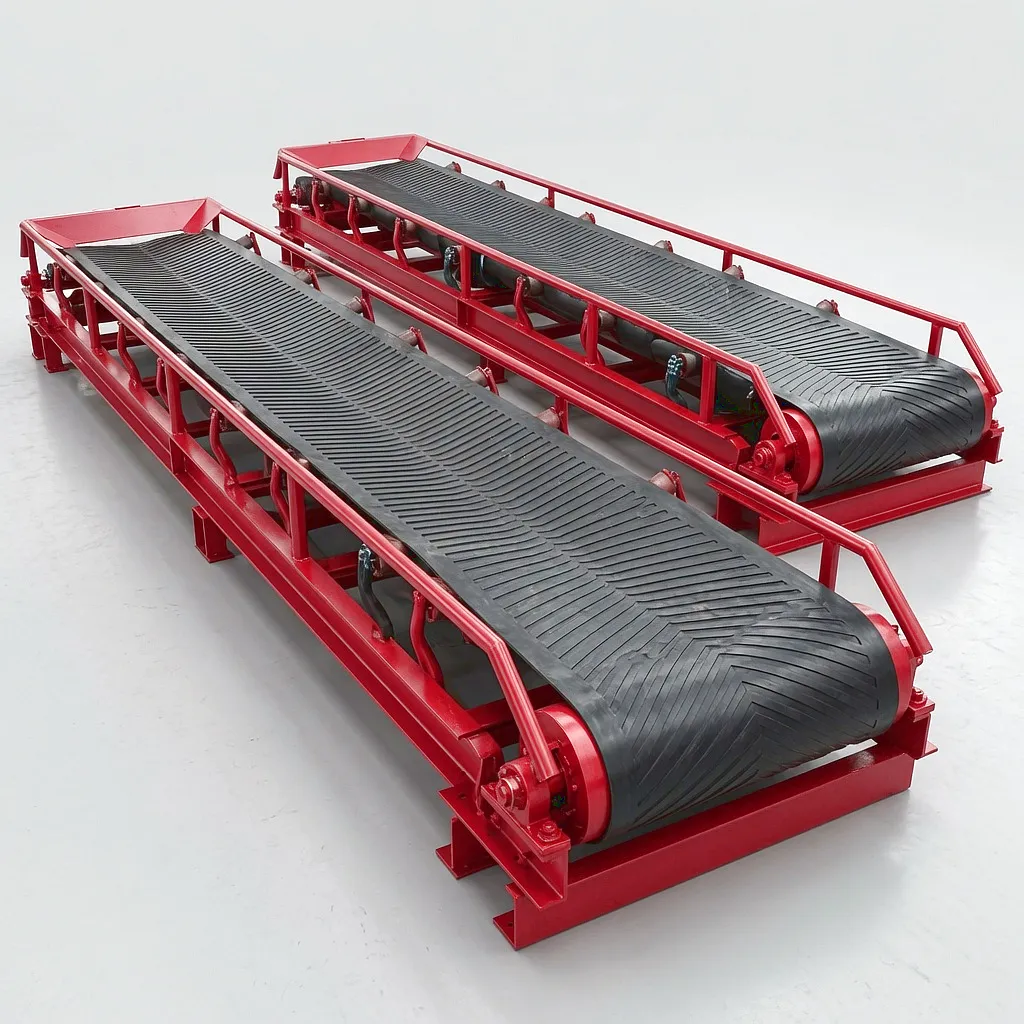
 Belt conveyor systems represent the circulatory system of bulk-material handling industries. In the UK’s North Sea support terminals, Tyne Dock coal terminals, Port of Immingham grain handling facilities, and inland cement works, conveyors run continuously — sometimes 24 hours a day, seven days a week, across distances measured in kilometres. A single drive system may be coupled to motors delivering anywhere from 55 kW to well over 2,000 kW. At these power levels, a badly specified coupling is not a minor inconvenience: it is a production disaster costing tens of thousands of pounds per hour.
The drum-type gear coupling — also referred to as the crowned-tooth gear coupling — has emerged as the dominant solution for belt conveyor drives globally, and its adoption in British industry reflects more than fashion. The design accommodates the angular and radial misalignment that is virtually unavoidable in large industrial installations, transmits extremely high torques within a compact envelope, and tolerates the shock loads and start-stop cycles that would destroy more fragile coupling types within weeks. Understanding why gear couplings are so well suited to belt conveyor applications, and how to specify one correctly for a British industrial environment, is the purpose of this guide.
What Exactly Is a Drum-Type Gear Coupling and How Does It Work?
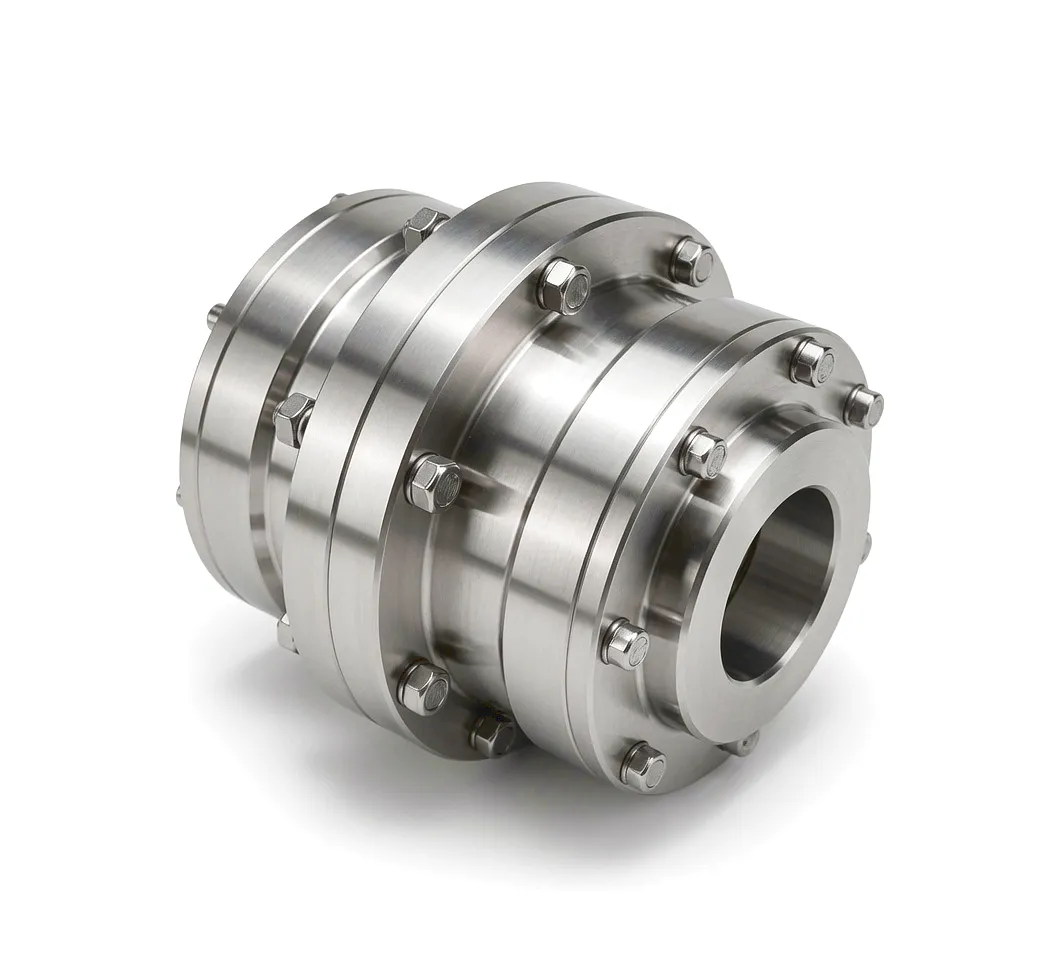
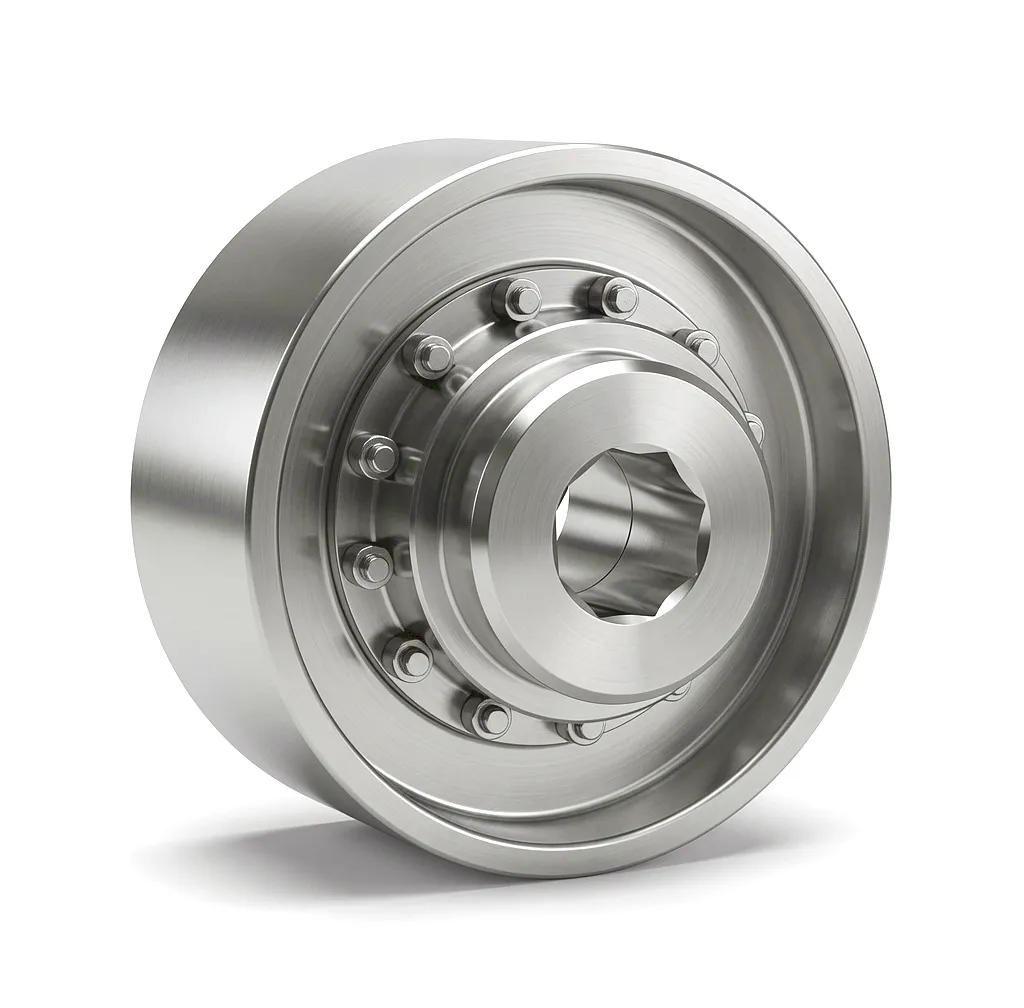
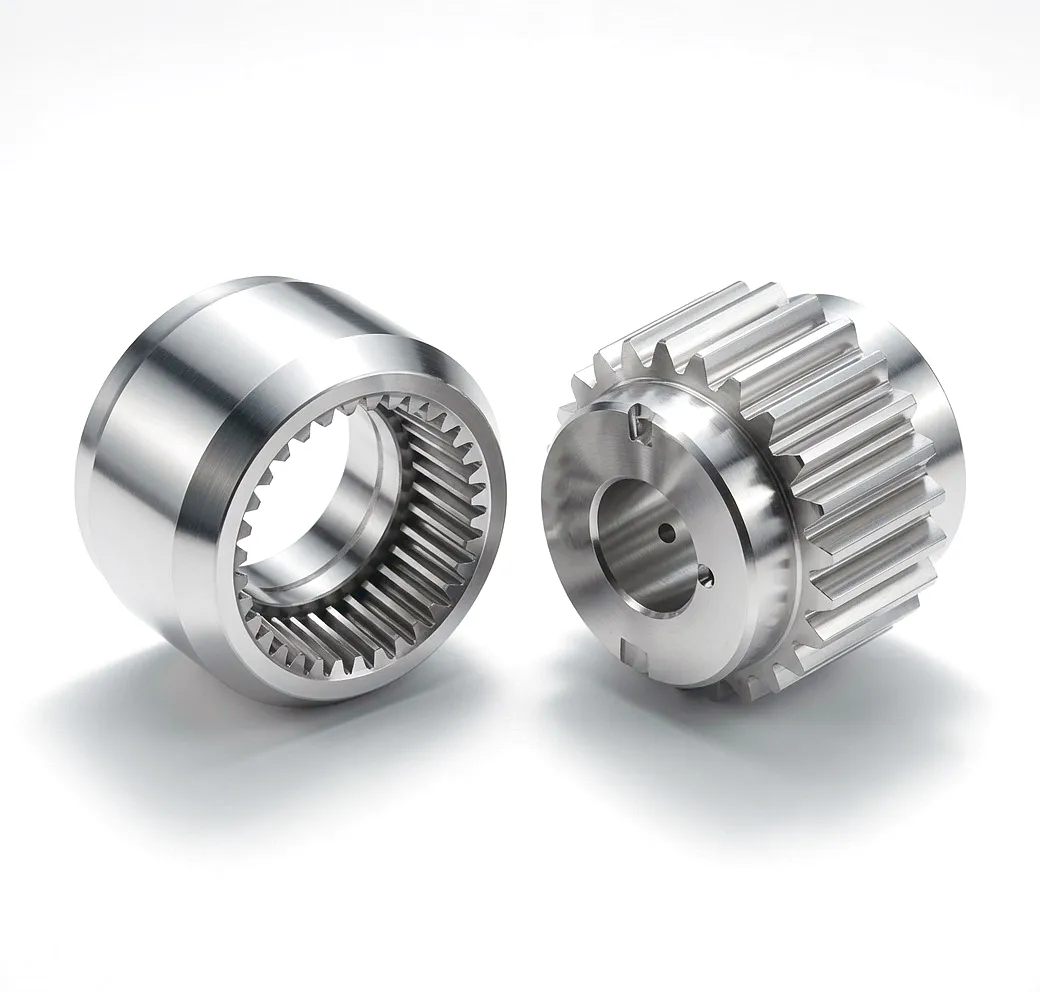
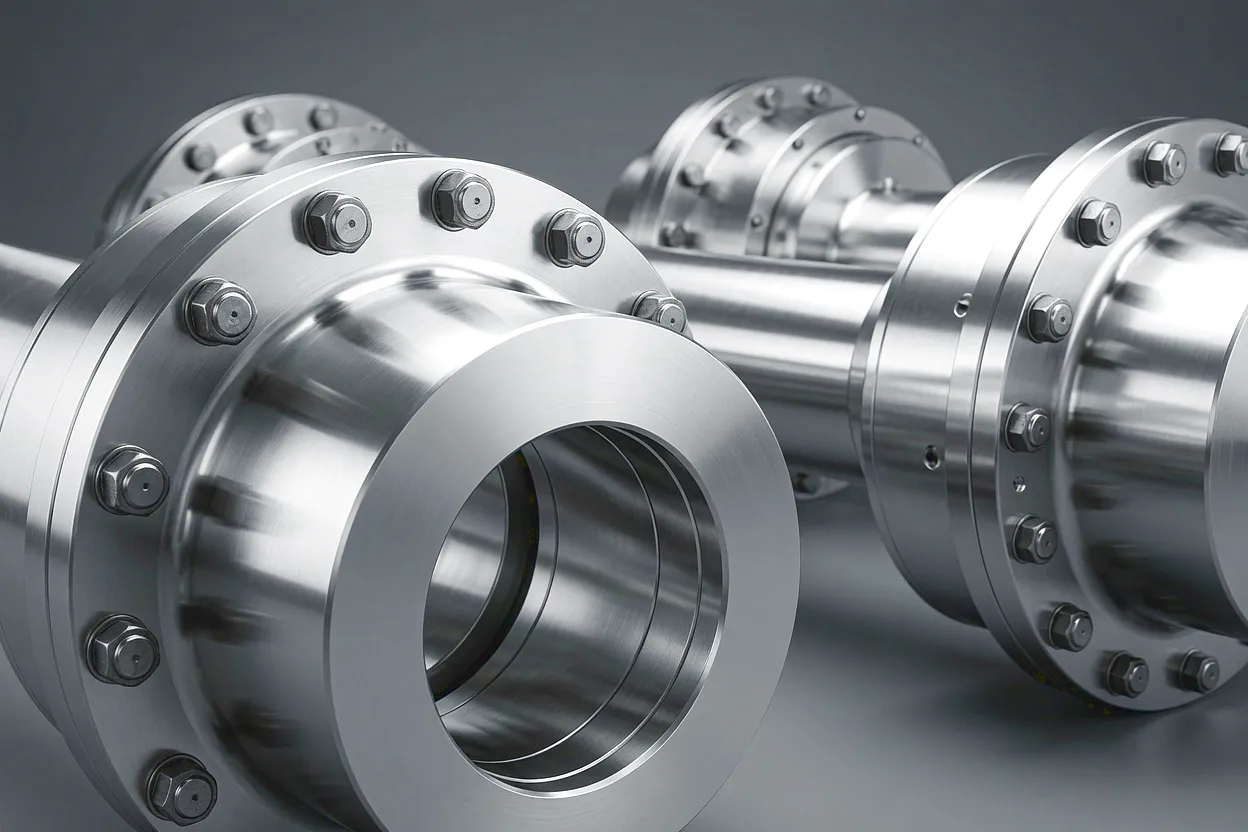
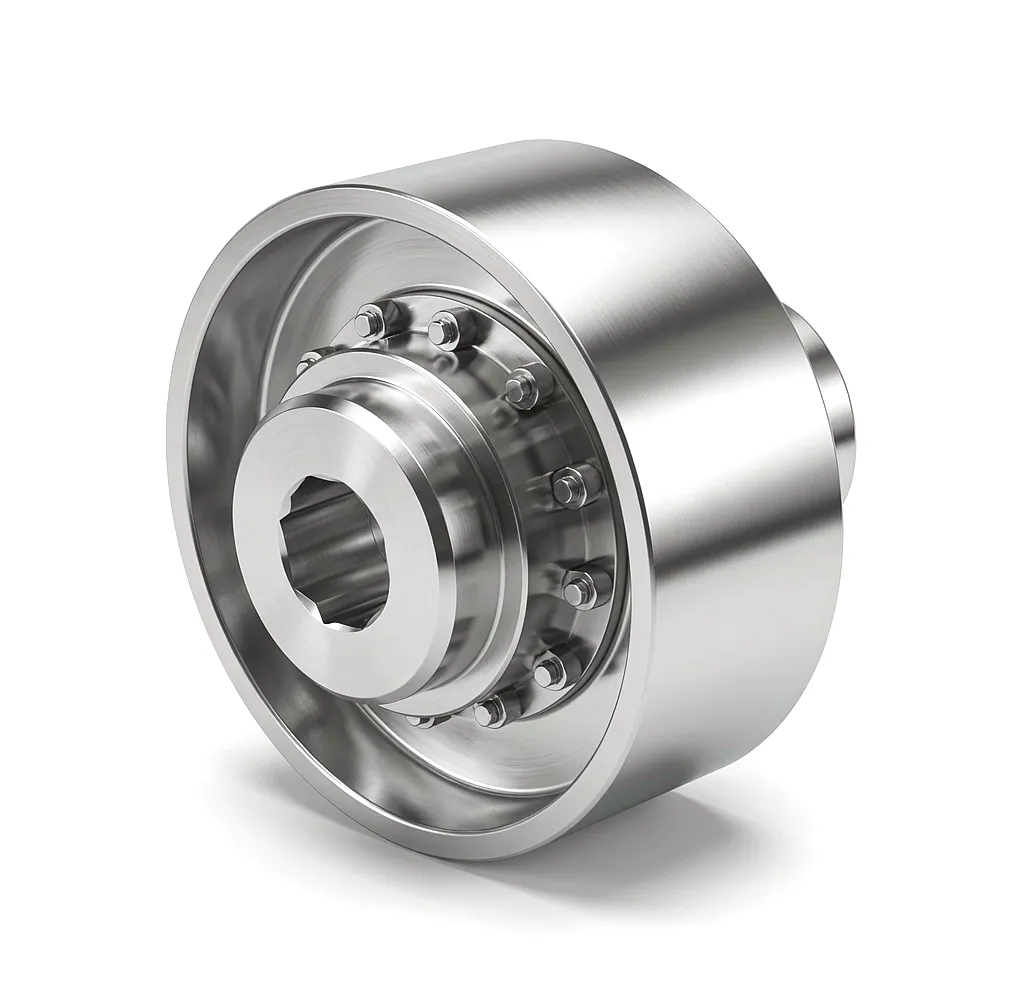 A gear coupling transmits torque through meshing teeth — an inner hub with external teeth that engage with an outer sleeve carrying internal teeth. What makes the drum-type (crowned-tooth) variant special is that the external teeth are machined with a deliberately convex, barrel-shaped profile rather than a straight involute profile. This crown allows the hub to rock slightly within the sleeve, accommodating angular misalignment without generating the enormous bending moments that would occur with straight-tooth designs.
In a typical belt conveyor drive train, the gear coupling appears in two critical positions: between the electric motor and the gearbox input shaft, and between the gearbox output shaft and the drive drum shaft. Both locations experience misalignment — the motor-to-gearbox coupling must handle shaft runout and thermal expansion from the motor, while the gearbox-to-drum coupling contends with the much larger structural deflections of the conveyor frame under load. The gear coupling handles both elegantly, which is precisely why no competing coupling technology has displaced it in heavy conveyor applications despite decades of engineering innovation.
Technical Performance Parameters
Typical specification range for drum-type gear couplings used in belt conveyor drive systems (GICL/NGCL/GIICL series)
| Parameter | Light Duty | Medium Duty | Heavy Duty |
|---|---|---|---|
| Nominal Torque (Nm) | 500 – 5,000 | 5,000 – 50,000 | 50,000 – 500,000+ |
| Max Speed (rpm) | Up to 3,000 | Up to 1,500 | Up to 750 |
| Angular Misalignment | up to 1°30′ | up to 1°30′ | up to 1°30′ |
| Radial Offset (mm) | 0.2 – 0.6 | 0.4 – 1.2 | 0.8 – 2.5 |
| Tooth Material | 45 Steel / 40Cr | 40Cr / 42CrMo | 42CrMo / Alloy |
| Surface Hardness (HRC) | 40 – 45 | 45 – 50 | 50 – 55 |
| Service Factor (Ks) | 1.25 – 1.50 | 1.50 – 1.75 | 1.75 – 2.50 |
| Lubrication | Grease / Oil | Grease / Oil | Forced Oil Feed |
| Operating Temperature (°C) | -20 to +80 | -20 to +80 | -30 to +100 |
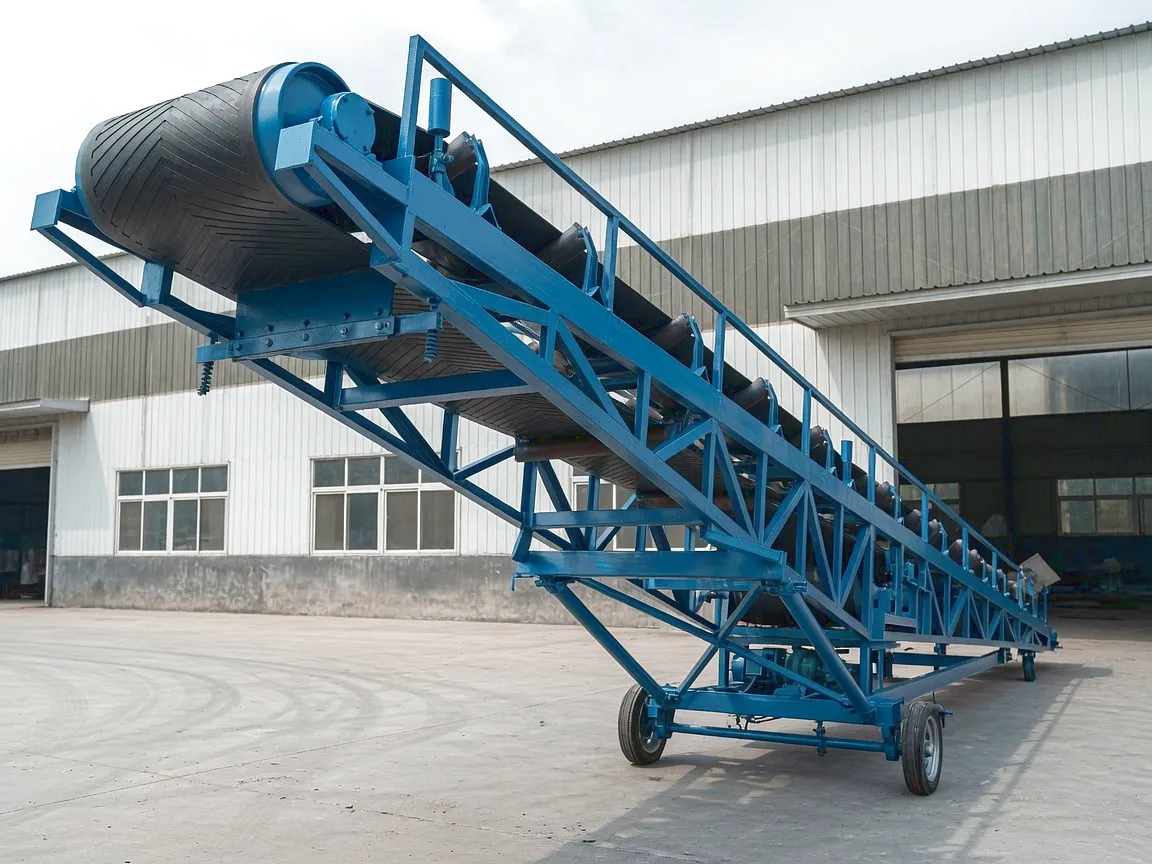
Mining conveyor drive — typical gear coupling installation
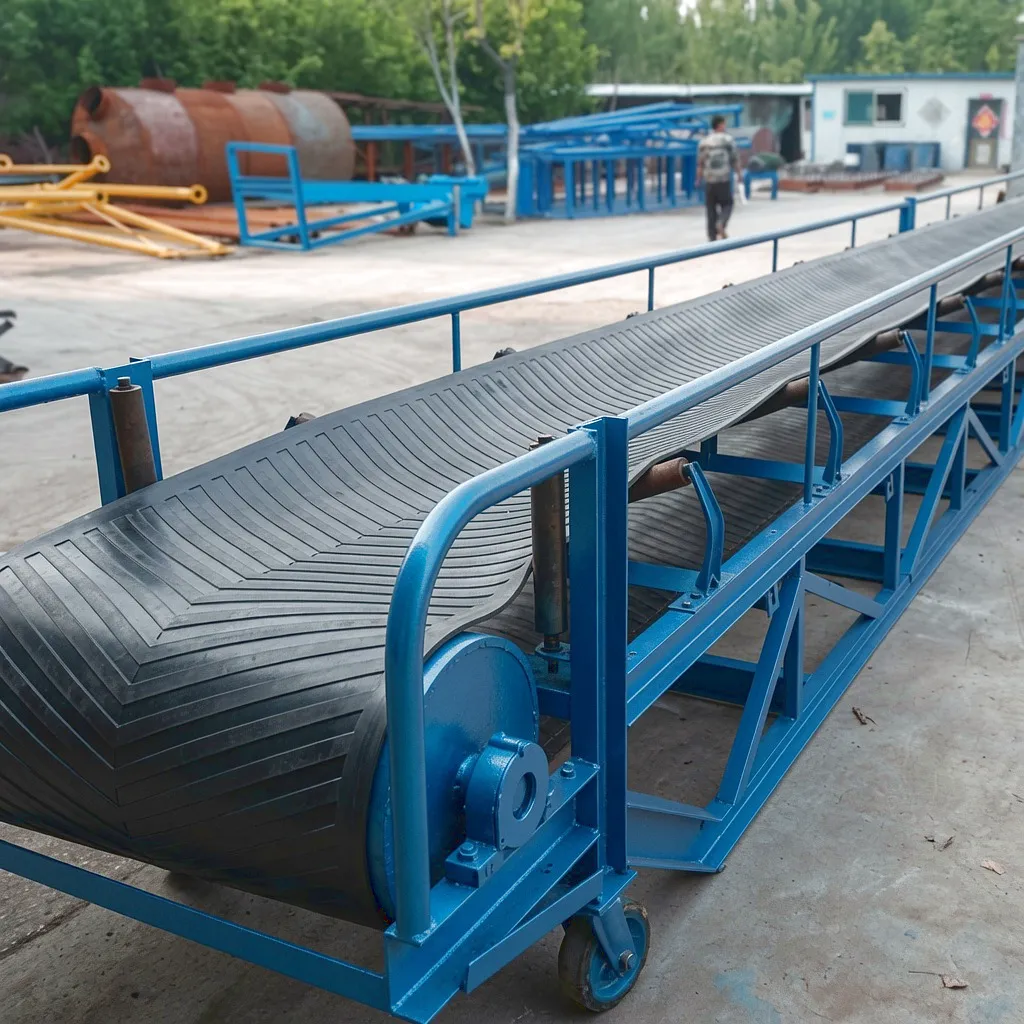
Port bulk handling — heavy-duty conveyor coupling application
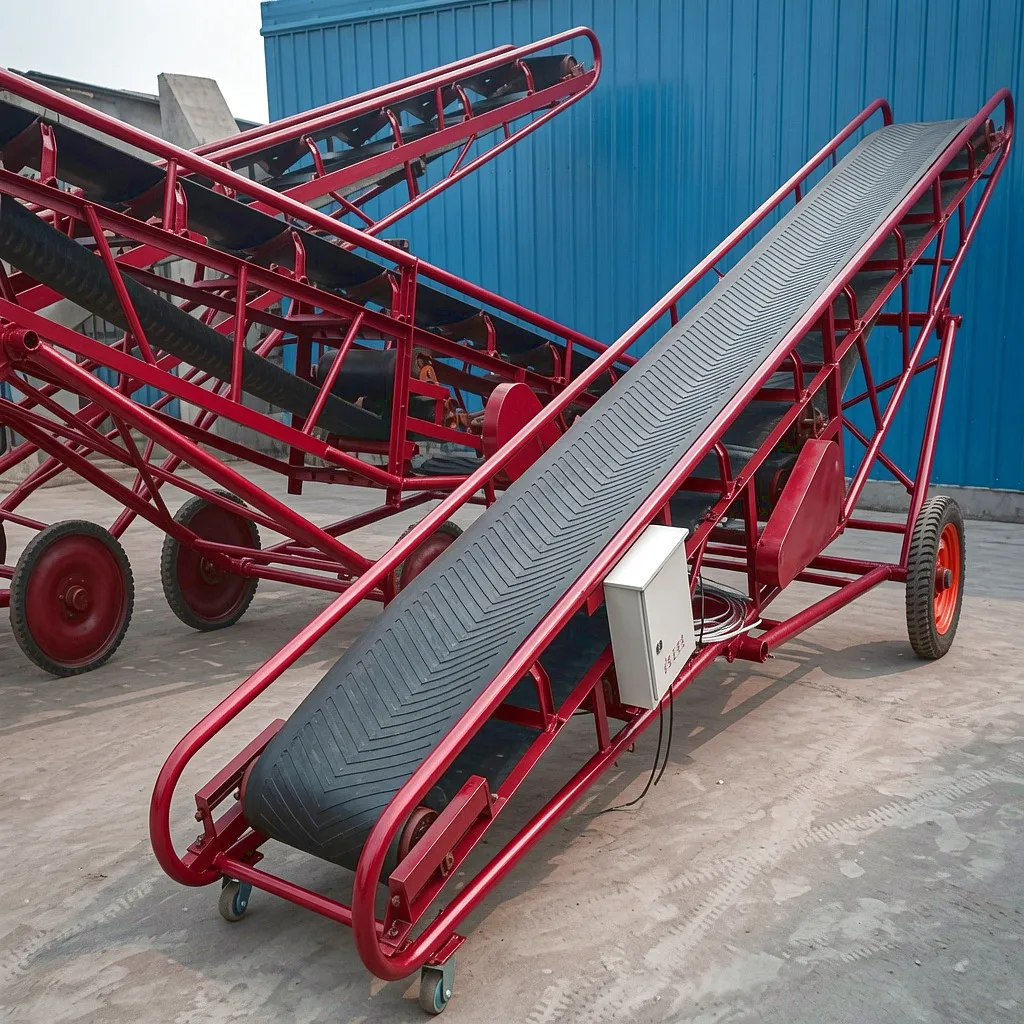
Steel works — high-torque gear coupling for sinter plant conveyor
Why Gear Couplings Are the Default Choice for Belt Conveyor Drives
Exceptional Torque Density
Belt conveyors generate enormous starting torques — typically two to three times the full-load running torque — especially in cold environments or after an emergency stop with a loaded belt. Drum-type gear couplings transmit this torque through multiple teeth in simultaneous contact, spreading the load across a large tooth area. The result is a coupling that can handle peak torques of up to 2.5 times its rated value without permanent deformation, making it inherently suitable for the demanding start-up cycles of conveyor drives. For UK operations working with coal, aggregate, or port cargo in winter conditions, this characteristic is not a luxury — it is a fundamental engineering necessity.
Misalignment Tolerance in Real Structures
No industrial conveyor maintains perfect shaft alignment throughout its service life. Thermal expansion causes motors and gearboxes to shift position; foundation settlement over months and years introduces gradual misalignment; and the conveyor frame itself deflects under varying belt tensions and material loads. Gear couplings with crowned teeth accommodate angular misalignments of up to 1 degree 30 minutes and lateral offsets of up to 2.5 mm without transmitting damaging bending loads back into motor and gearbox bearings. For large conveyor installations at UK port terminals and open-pit mines, this misalignment tolerance directly translates into extended bearing service life and reduced unplanned maintenance costs.
Durability in Harsh Environments
British industrial environments are rarely gentle. Cement works generate alkaline dust that attacks rubber elements; coal handling terminals expose equipment to acidic run-off; offshore loading facilities face salt spray and windborne abrasives. All-metal gear couplings resist these environments far more effectively than elastomeric couplings, which degrade rapidly when exposed to oils, aggressive chemicals, or temperature extremes. With proper lubrication maintenance, a correctly specified drum-type gear coupling will operate reliably for five to ten years in conveyor service — a service life that matches or exceeds the major planned maintenance intervals of the conveyor itself. This makes them the rational economic choice for any facility trying to align coupling replacements with scheduled shutdowns.
Transmission Efficiency
Gear couplings operate at mechanical efficiencies above 99% under normal conditions. When you are driving a conveyor that consumes 1,500 kW continuously — not an unusual figure for a large port installation — even a 0.5% improvement in coupling efficiency saves over 7 kW of electrical power, which across an 8,000-hour annual operating cycle translates into meaningful energy cost reductions. UK industrial operators subject to rising electricity prices and carbon reduction targets have a tangible financial incentive to minimise parasitic drivetrain losses, and the gear coupling’s near-frictionless torque transmission (when properly lubricated) contributes positively to this objective.
Shock Load Absorption
Bulk material loading events — a sudden surge of coal from a reclaimer bucket wheel, or a large lump of rock impacting a conveyor — generate instantaneous load spikes far exceeding the steady-state drive torque. While no mechanical coupling absorbs shock loads as gracefully as a fluid coupling, drum-type gear couplings have sufficient torsional stiffness to dampen these spikes before they reach the motor and gearbox, while their multiple-tooth contact area distributes the impulse across the full gear face width. In mining applications particularly, where lump-size material and irregular feed rates are unavoidable, this characteristic protects motor and gearbox from premature damage and is an important factor in the total cost of ownership calculation.
Compact and Serviceable
Space is rarely abundant in existing conveyor drive houses, particularly in legacy UK industrial facilities built decades ago when equipment footprints were designed around older, larger machinery. Drum-type gear couplings transmit very high torques within a relatively compact axial and radial envelope compared to chain couplings or disc couplings of equivalent torque rating. They also separate cleanly for inspection without requiring shaft axial movement — a significant maintenance advantage on conveyors where motor and gearbox disassembly for shaft removal would take an entire maintenance shift. This maintainability directly reduces planned downtime costs and contributes to the coupling’s long-term economic case.
Gear Coupling Applications Across UK Belt Conveyor Industries
The UK’s bulk material handling industry spans a wide range of sectors, each with its own operational demands, environmental challenges, and regulatory requirements. What follows is a sector-by-sector breakdown of where gear couplings prove their value in British belt conveyor installations — drawing on patterns observed across mining operations in Yorkshire and Wales, port facilities from Tilbury to Teesside, and power generation sites throughout England and Scotland.
Coal & Aggregates Mining
Surface mining operations and quarry processing plants in the UK — from limestone quarries in Derbyshire to aggregates processing in Scotland — depend on belt conveyors that run under extreme load variability. When a belt conveyor at a UK quarry encounters a sudden feed surge from the primary crusher, the drive coupling must absorb that torque spike without transmitting it to the motor windings. GIICL-series gear couplings rated at 3× the nominal running torque are routinely specified for these applications. The all-metal construction is particularly valued in dusty quarry environments where rubber and polyurethane elements deteriorate rapidly in months.
Port & Bulk Terminal Operations
UK port terminals handling bulk cargo — coal, grain, fertiliser, potash, ore — typically operate high-capacity conveyors running at 4 to 6 m/s with capacities of 2,000 to 10,000 tonnes per hour. The combination of salt air corrosion, temperature cycling between winter lows and summer highs, and the continuous duty cycle makes the selection of a coupling with outstanding environmental resistance critical. NGCL-series gear couplings with sealed housing and corrosion-resistant surface treatment have proven reliable at Immingham, Teesside, and Tilbury bulk terminals. The integrated brake drum option in the NGCL series is particularly valued at port operations where belt holding on inclined conveyors is required during stoppages.
Power Generation — Fuel Handling
UK power stations — including biomass plants replacing coal generation — operate coal and biomass fuel handling conveyors that must run continuously for weeks without stopping during peak generation periods. The drive system reliability requirement is absolute: an unplanned coupling failure that stops fuel delivery to the boiler can force a generation unit offline, triggering grid balancing costs and commercial penalties. This sector specifies gear couplings with conservative service factors of 1.75 to 2.0, uses high-grade lubricants compatible with operating temperatures up to 80°C, and often requires ATEX-rated coupling assemblies for locations within the coal dust hazardous zone.
Steel & Metallurgical Plants
Steel works including blast furnace ore handling, sinter plant conveyors, and scrap yard material handling systems impose some of the most severe coupling duty conditions in any industry. At a UK integrated steelworks, a typical sinter plant conveyor drive may involve a 1,000 kW motor, a heavy-duty gearbox, and a conveyor drum shaft running at 30 rpm — all connected by gear couplings operating in an environment with ambient temperatures up to 60°C, iron oxide dust, and periodic high-intensity thermal radiation from nearby furnaces. Alloy steel hub construction with high-temperature grease is standard in this application, and the coupling is typically selected at a service factor of 2.0 to account for the extreme operating conditions.
Cement & Building Materials
Cement production in the UK — with major works in Rugby, Hope Valley, and Westbury — uses belt conveyors extensively for raw material transport, clinker conveying, and finished product handling. Clinker conveyors in particular present a challenging duty: clinker is abrasive, arrives at temperatures of 200 to 400°C from the cooler, and the conveyor belt runs in a hot, dusty environment. At the drive station, gear couplings must handle the variable load generated by irregular clinker discharge from the cooler, while resisting heat conducted through the shaft. Gear couplings rated for higher temperature ranges and lubricated with high-temperature EP grease are the standard solution, typically from the GICL range with appropriate bore and keyway configurations matched to the existing drive shaft geometry.
Grain & Agricultural Handling
Large grain handling facilities at port silos, inland grain stores, and flour mills across the UK use belt conveyors to move grain at rates of hundreds to thousands of tonnes per hour. The coupling challenge in grain applications is different from mining: the drives are smaller (typically 15 to 250 kW), but the requirement for food-safe lubrication in facilities handling grain for human consumption, combined with the need for absolute reliability during harvest periods when delays are commercially catastrophic, defines the specification. NL-series nylon gear couplings or appropriately rated GICL units with food-safe grease options are typically selected, balancing cost, reliability, and contamination risk management in these applications.
Cement plant conveyor drive — GICL gear coupling in dusty high-temperature environment
How to Select the Right Gear Coupling for Your Belt Conveyor Drive
Selecting a gear coupling for a belt conveyor application is more nuanced than simply matching bore diameter and choosing the nearest catalogue torque rating. The sequence of steps below reflects the methodology used by experienced power transmission engineers across the UK’s bulk material handling sector, and covers the key decision points that determine whether a coupling will deliver years of trouble-free service or fail prematurely.
| Selection Step | Key Parameter | Typical Value / Action |
|---|---|---|
| 1. Establish Design Torque | Rated power × service factor × peak factor | T_design = 9550 × P(kW) / n(rpm) × Ks × Kp |
| 2. Choose Service Factor | Based on start frequency and load type | Light: 1.25 / Medium: 1.5 / Heavy: 1.75–2.5 |
| 3. Verify Speed Rating | Motor / gearbox output speed | Coupling rated rpm must exceed operating speed by ≥15% |
| 4. Confirm Bore Requirement | Shaft diameters at both connection points | Match standard bore or specify custom machining |
| 5. Assess Misalignment | Measured or estimated angular + radial offset | Verify within coupling allowable; add safety margin |
| 6. Environment Check | Temperature, dust, moisture, chemical exposure | Select sealing, surface treatment, lubricant grade |
| 7. Confirm Brake Requirement | Incline angle, loaded-belt holding requirement | NGCL with integrated brake drum if required |
A calculation note that experienced UK engineers often overlook in practice: the service factor for a belt conveyor drive is not fixed — it varies based on the number of daily starts, whether a fluid coupling or soft-starter is used, and whether the conveyor operates fully loaded or partially loaded at start-up. A conveyor with direct-on-line motor starting under a loaded belt can generate starting torques of 2 to 3 times full-load torque. If the gear coupling is selected purely on running torque with a nominal service factor, this starting condition can cause progressive tooth pitting and eventually failure within 18 months — a pattern seen more often than manufacturers would prefer in legacy UK installations where coupling upgrades followed motor upgrades without re-engineering the coupling specification.
Custom Gear Coupling Manufacturing — Built to Your Specification
Standard catalogue gear couplings solve 80% of conveyor coupling challenges. The remaining 20% — legacy shaft configurations, unusual bore combinations, extreme torque requirements, dual-flange arrangements, or non-standard keyway geometry — is where Ever Power’s custom engineering capability becomes decisive. Our manufacturing facility operates with full CNC turning and gear-cutting capability, enabling us to produce custom gear couplings from detailed drawings or from reverse-engineered measurements of worn originals.
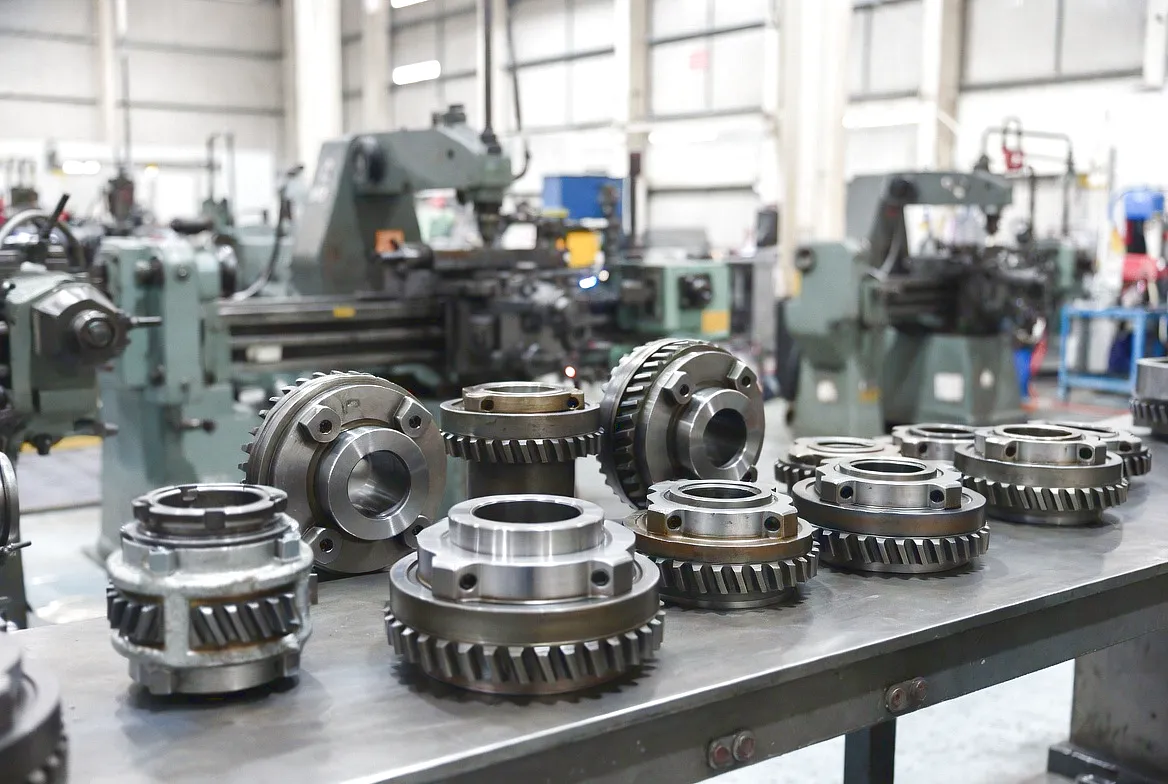
CNC precision machining — custom gear coupling hub production
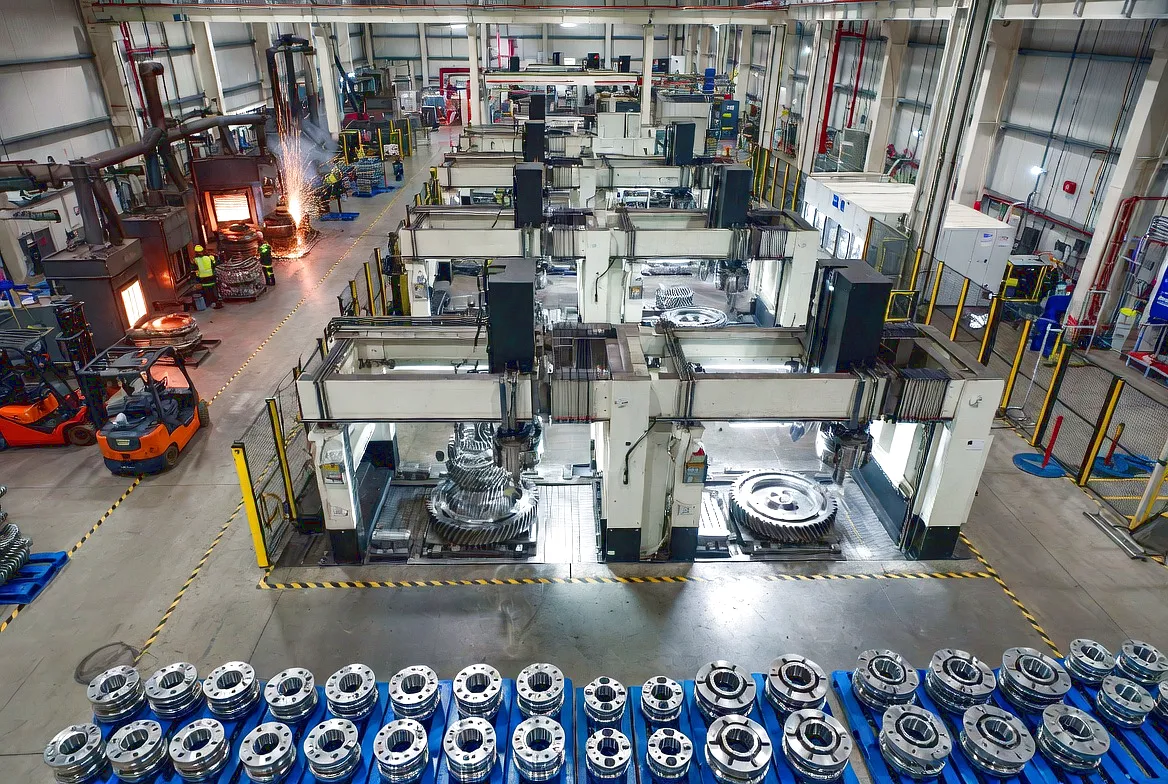
Quality control — dimensional inspection of gear coupling sleeve
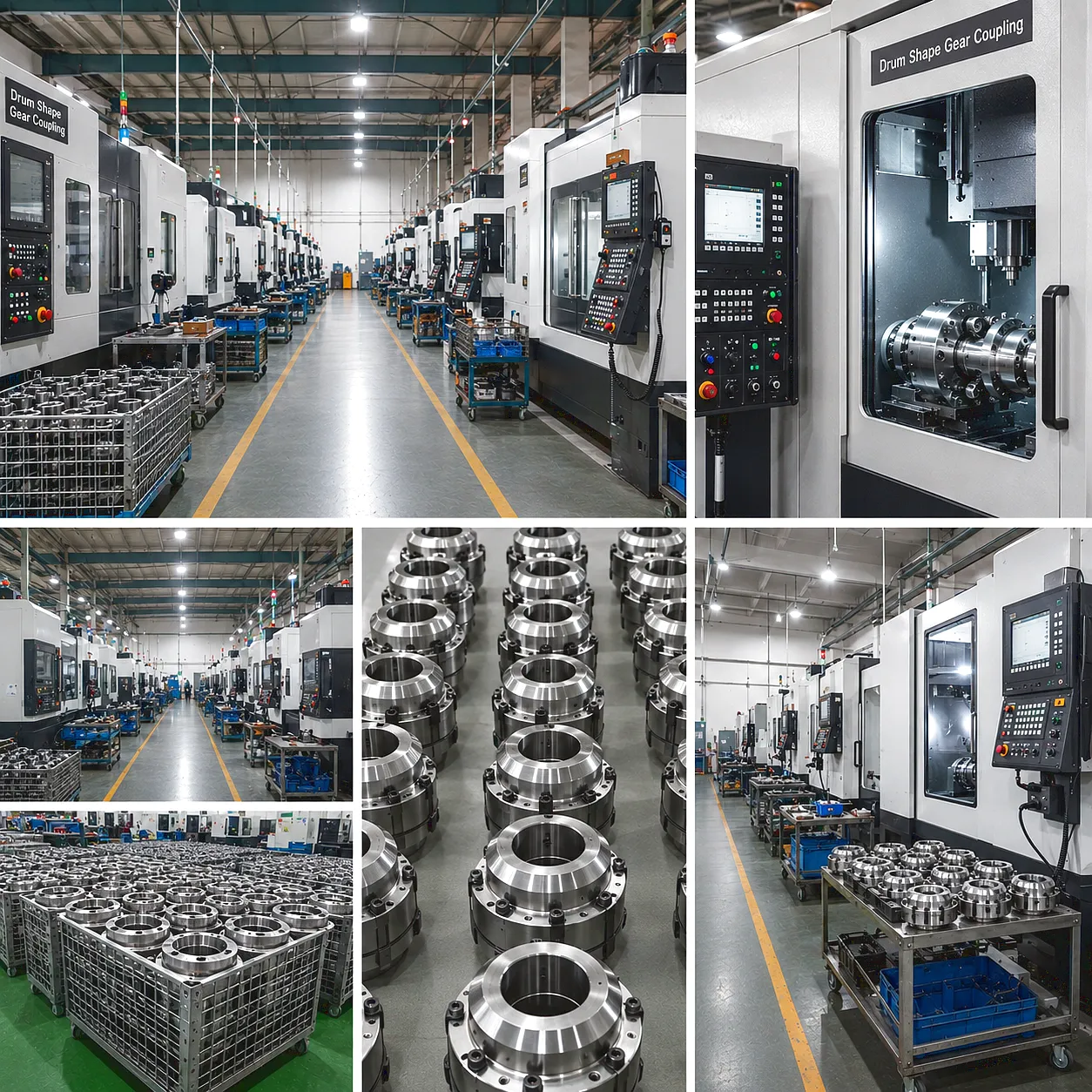
Assembly workshop — large-bore gear couplings for mining conveyor applications
18+
Years of gear coupling application engineering experience
500+
Standard & custom configurations available
30+
Countries supplied — UK, Germany, Australia, Canada and more
15 Days
Typical lead time for custom-machined gear couplings
Custom Engineering Capabilities
Dual bore configurations
Metric & imperial keyways
Corrosion-resistant coatings
ATEX-rated assemblies
High-temperature EP grease fill
Integrated brake drum flange
Reverse-engineering from worn originals
Stainless steel components
Customer Success: Solving Conveyor Downtime at a UK Port Terminal
Case Study · Teesside Bulk Terminal · UK Ports Industry
Eliminating Unplanned Coupling Failures on a 1,200 kW Coal Export Conveyor
Background: A Teesside bulk terminal operating a 1,200 m long overland coal conveyor rated at 6,000 tonnes per hour had been experiencing recurring failures of the original-equipment disc couplings at the motor-to-gearbox position — three failures in 18 months, each causing 14 to 22 hours of unplanned downtime during peak export periods. The root cause investigation identified that the disc pack was unable to tolerate the angular misalignment introduced by thermal differential between the 1,100 kW drive motor and the gearbox housing during cold winter start-ups.
Solution: Ever Power supplied GICL-series drum-type gear couplings rated at 45,000 Nm nominal torque, with a service factor of 1.75 applied against the 32,000 Nm running torque. The crowned-tooth design accommodated the measured 0.8° angular misalignment during cold start without generating bending moments at the motor bearing. Custom bore sizing and keyway machining ensured a direct fit to the existing shaft configuration without modification to the drive train structure.
Result: 27 months of continuous operation without coupling-related downtime following installation. Terminal maintenance engineers estimate the saving in avoided downtime and emergency labour costs exceeded £180,000 over the period — representing approximately 14× the cost of the coupling procurement and installation. The couplings required one lubrication service at the 12-month mark and showed no measurable tooth wear at the 24-month inspection.
Key Outcome Metrics
✅ 27 months failure-free operation
✅ 0 unplanned stoppages
✅ £180,000+ downtime savings
✅ 14× return on coupling investment
What Our Customers Say
“We had two conveyor drives at our Yorkshire quarry that were going through couplings every eight to ten months. Since switching to Ever Power’s GICL units and asking their engineers to recalculate the service factor properly, we haven’t had a failure in three years. The price per unit was competitive with what we were buying before, and the quality difference was immediately apparent when we opened the packaging.”
James Whitfield
Maintenance Manager · Aggregate Quarry Operations · Yorkshire, UK
“Our cement plant in the Midlands required a replacement coupling for a clinker conveyor that had an unusual shaft diameter — not a standard metric size. Ever Power came back with a solution in 48 hours and had the custom-machined coupling with us within two weeks. The installation went in during a planned weekend shutdown and the conveyor has been running without any issues since. Excellent supplier for anyone in the UK cement industry.”
Sarah Beech
Senior Mechanical Engineer · Cement Manufacturing · West Midlands, UK
“We operate a biomass fuel handling conveyor at our power station in Scotland that runs around the clock during winter peak demand. Reliability is non-negotiable for us. Ever Power’s NGCL gear couplings with the integrated brake drum were exactly what we needed for the inclined section. Their technical team provided calculation support and a full drawing pack, which made our HAZOP review straightforward. Very professional throughout.”
Alistair Ross
Plant Engineer · Biomass Power Generation · Scotland, UK
Materials, Construction, and Working Principle
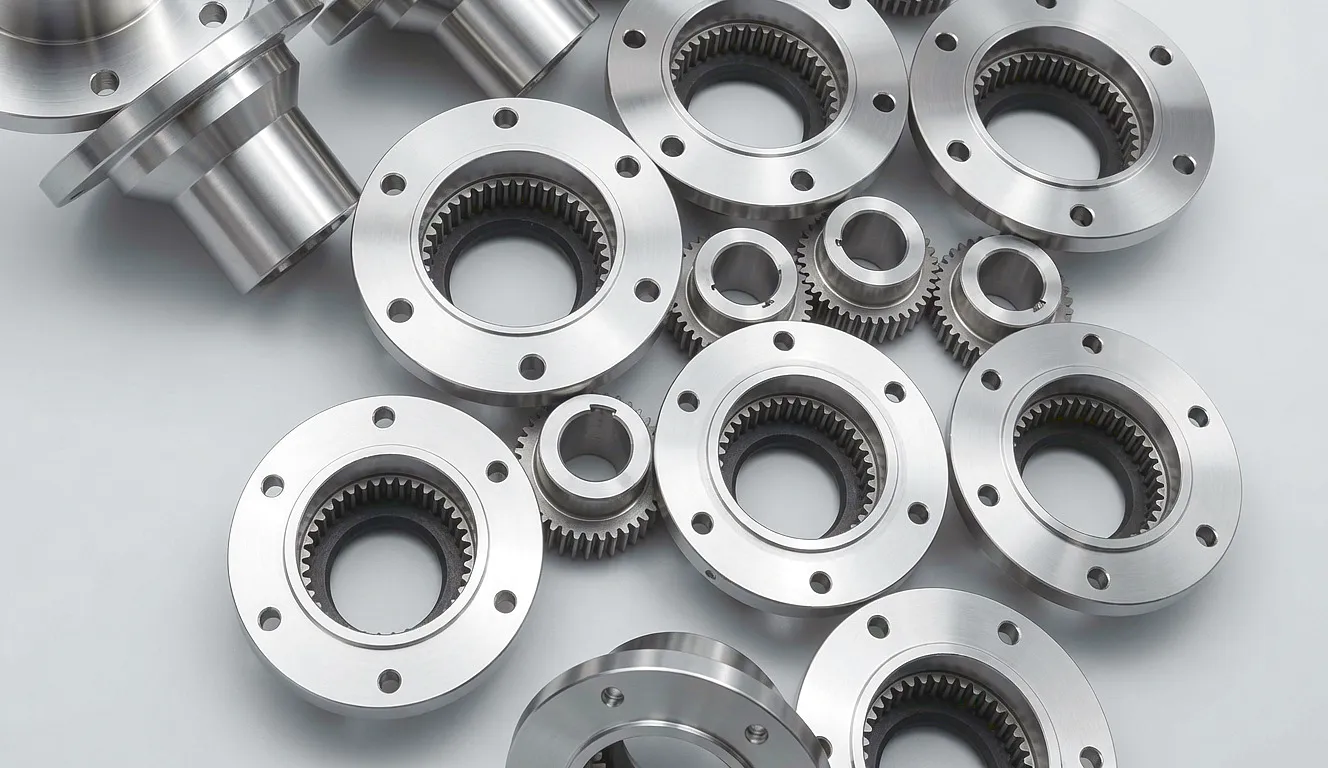
The internal hub of a drum-type gear coupling is typically manufactured from medium-carbon alloy steel — 40Cr or 42CrMo are the most common grades in heavy-duty belt conveyor applications. The external teeth are carburised and case-hardened to a surface hardness of HRC 48 to 55, while maintaining a ductile core to resist impact loading. The crowned tooth profile is generated by a dedicated CNC gear-hobbing process, and the tooth geometry is typically to GB/T 5272 or equivalent international standard.
The outer sleeve — which carries the internal teeth — is most commonly manufactured from spheroidal graphite cast iron (ductile iron, grade QT600-3 or equivalent) for standard duty, or forged alloy steel for the highest torque grades. The sleeve halves bolt together at the flanged joint, creating a sealed internal cavity that retains the grease lubricant. Sealing is achieved through O-ring grooves and labyrinth seals machined into the hub-to-sleeve interface, preventing ingress of external contamination while retaining the lubricant under centrifugal loading during rotation.
Lubrication is the single most important maintenance factor for gear coupling service life. For belt conveyor applications operating at the motor shaft (high speed), an ISO VG 220 gear oil or equivalent high-consistency lithium complex grease is typically specified. For low-speed gearbox output shaft applications, higher-viscosity or semi-fluid grease prevents centrifugal separation. Lubrication intervals depend on speed, temperature, and operating duty — typically 6 to 12 months for conveyor applications — and extending beyond this interval is the most common cause of premature tooth wear in UK industrial installations.
Key Material Summary
Hub: 40Cr / 42CrMo alloy steel
Sleeve: QT600-3 ductile iron / forged steel
Surface hardness: HRC 48 – 55 (teeth)
Tooth profile: Crowned involute (drum type)
Sealing: O-ring + labyrinth seal
Lubricant: EP grease / ISO VG 220 oil
Maintenance Best Practices for Conveyor Gear Couplings in UK Operations
A gear coupling’s service life is almost entirely determined by maintenance quality. Two correctly installed and properly lubricated gear couplings from the same production batch, one maintained to schedule and one neglected, will typically show a service life difference of 3 to 4 times. For UK conveyor operators working within planned maintenance regimes, the following practices define the difference between a coupling that runs for eight years and one that fails inside two.
| Maintenance Task | Interval | Key Checks |
|---|---|---|
| Visual inspection (running) | Monthly | Grease leakage, vibration, noise, oil seal condition |
| Alignment check | 6 months / after any bearing change | Laser alignment or dial gauge — correct to within 0.05 mm TIR |
| Relubrication | 6 – 12 months | Purge old grease, fill with correct grade to 70% cavity volume |
| Tooth wear inspection | Annually or at major shutdown | Measure tooth thickness — replace at 20% wear from nominal |
| Seal replacement | Every 3 – 5 years | Replace O-rings and labyrinth seal elements regardless of apparent condition |
Ready to solve your belt conveyor coupling challenge?
Send us your shaft diameters, motor power, and operating speed — we’ll recommend the right gear coupling and provide a quotation within 24 hours.
Frequently Asked Questions
Answers to the questions UK engineers ask most often about gear couplings for belt conveyor applications
What is the best type of gear coupling to use for a heavy-duty belt conveyor in a UK mining or quarrying application where the drive motor is 500 kW or more?
How much does a replacement gear coupling cost for a belt conveyor drive system, and where can I get a competitive supplier price or quote in the UK?
Which gear coupling series should I specify when replacing a failed disc coupling or jaw coupling on a belt conveyor drive at a UK port terminal?
How do I calculate the correct gear coupling size for my belt conveyor motor, and what service factor should I apply for a coal or aggregate handling application in England?
What is the typical gear coupling replacement lead time for a standard or custom belt conveyor coupling from a supplier serving the UK market?
How often do gear couplings on belt conveyor drives need to be relubricated, and what grease is recommended for a UK industrial application running in cold or outdoor conditions?
Can Ever Power supply a gear coupling with a non-standard bore or unusual keyway configuration to match an existing belt conveyor shaft at a UK cement plant or power station?
Ever Power — Gear Coupling Specialists
Supplying drum-type gear couplings to the UK’s bulk material handling, mining, power generation, steel, cement, and port industries. From standard catalogue selections to fully engineered custom units, our application engineers support your specification, selection, and commissioning needs.
Whether you’re a maintenance engineer sourcing an emergency replacement, a project engineer specifying a new conveyor drive system, or a procurement manager comparing gear coupling suppliers and prices, Ever Power offers the technical depth and manufacturing capability to support your requirements.
edit by gzl