
Ever Power GICL / NGCL Series — Built for the Wind
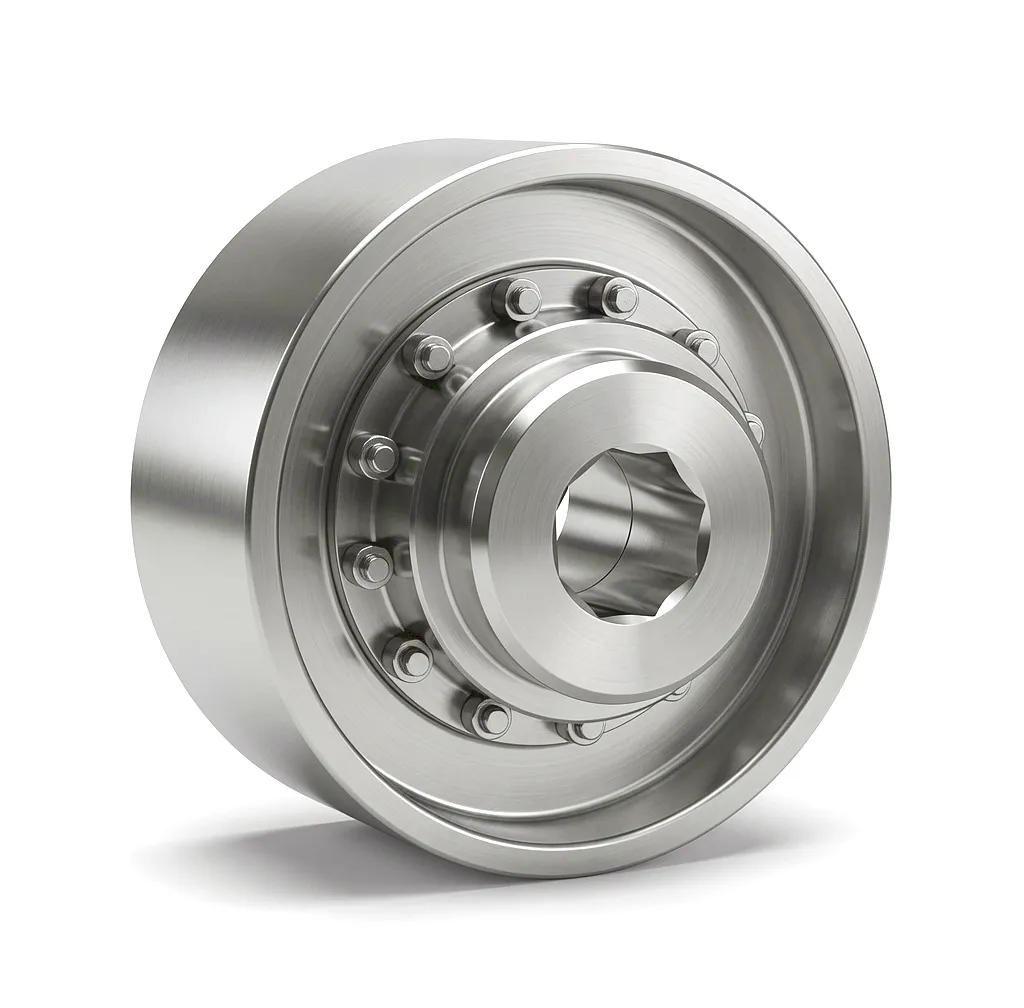
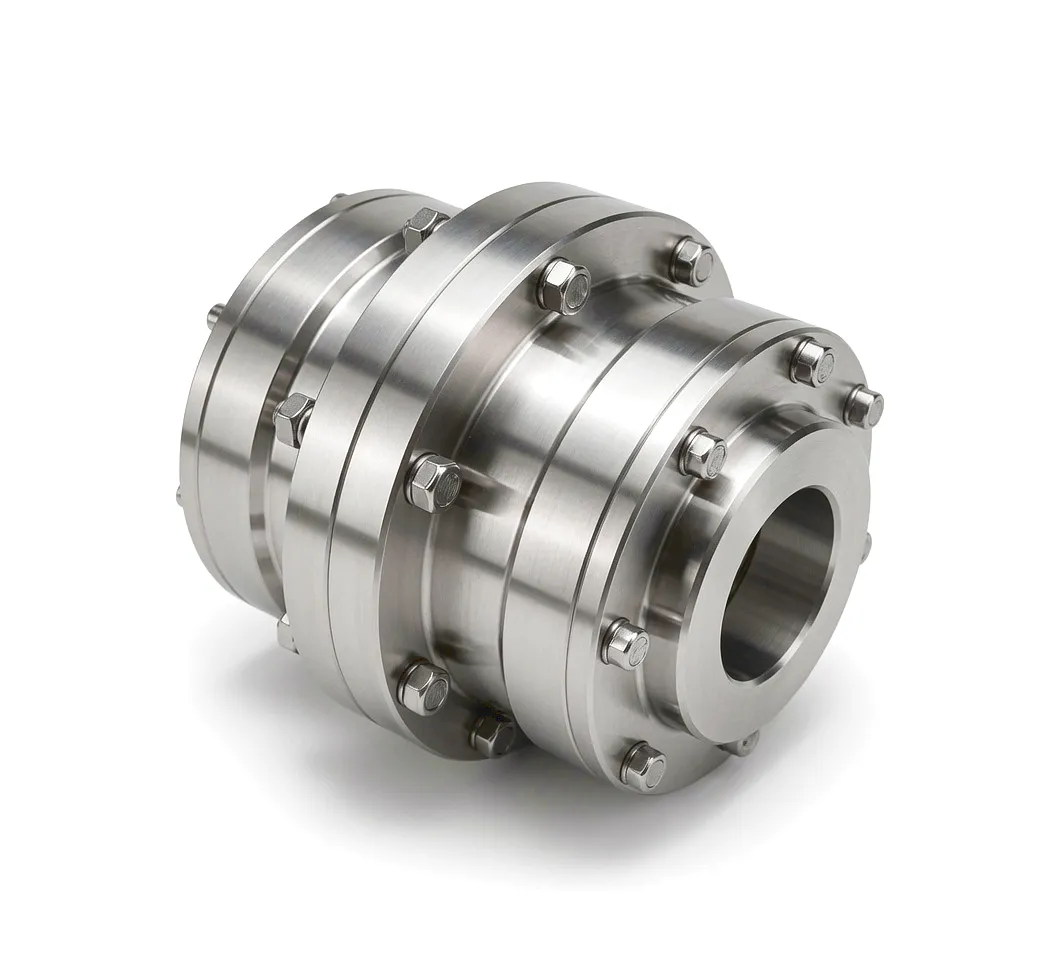 Ever Power has engineered gear couplings for heavy industrial and renewable energy applications for over two decades. Our drum-tooth designs are rated for continuous operation in offshore and onshore wind conditions, with bore sizes from 25 mm to 560 mm and torque capacity up to 4,500 kN·m. Every unit is precision-machined at our ISO-certified facility and can be customised to exact OEM or retrofit specifications — including flange drilling patterns, shaft keyway geometry, and corrosion-resistant surface treatments.
Mechanical Fundamentals
What Makes a Gear Coupling the Right Choice for Wind Turbine Drivetrains?
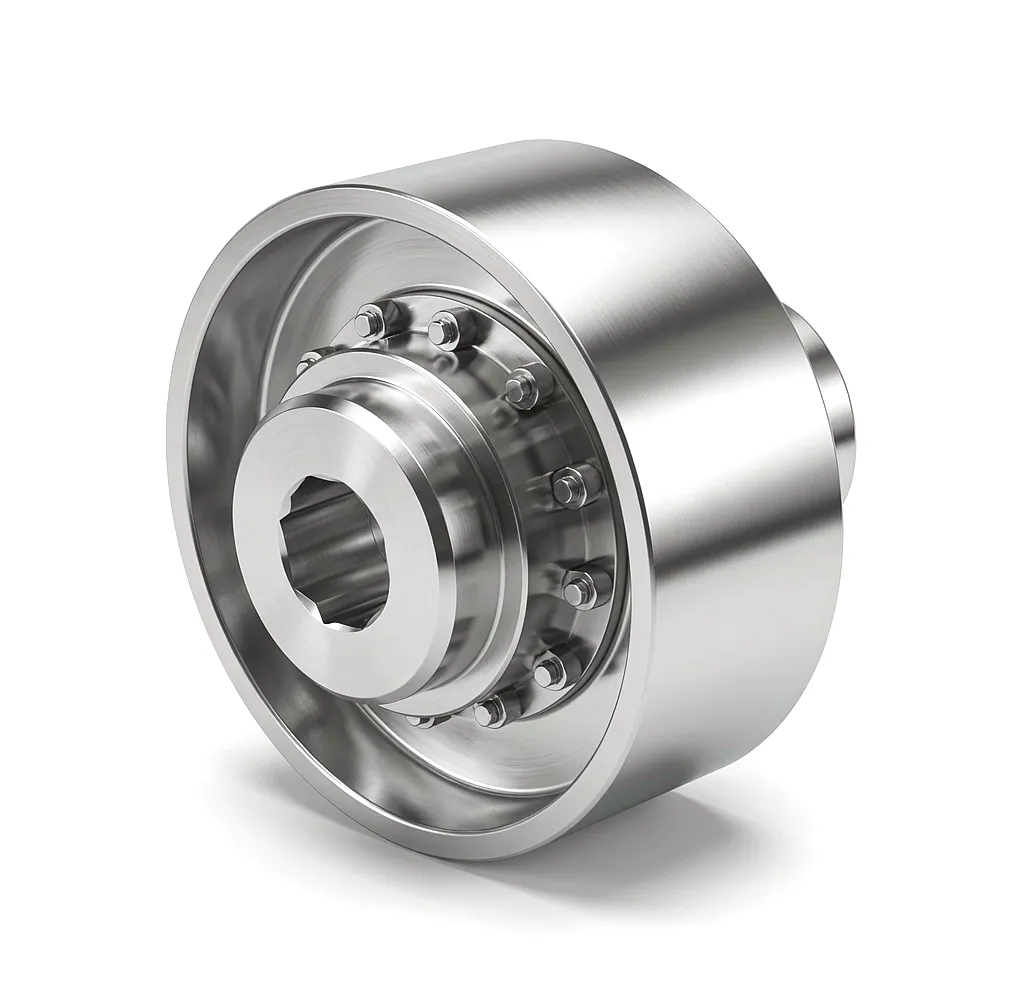 A gear coupling is a mechanical device that connects two rotating shafts to transmit torque while simultaneously accommodating angular, radial, and axial misalignments between those shafts. Unlike rigid couplings, which demand near-perfect shaft alignment, a gear coupling achieves flexibility through the meshing action of external-tooth hubs engaging with internal-tooth sleeves. Each gear tooth pair can rock slightly within its mating profile, absorbing the continuous micro-misalignments that thermal expansion, structural deflection, and dynamic loading introduce over a turbine’s operational life.
In a doubly-fed induction generator (DFIG) wind turbine — the configuration that dominates the UK’s onshore and offshore fleet — the drivetrain runs from the low-speed main shaft through a multi-stage planetary gearbox and on to the high-speed generator shaft. Gear couplings appear at the critical high-speed shaft coupling point between gearbox output and generator input, where they handle elevated rotational speeds (typically 1,200–1,800 rpm on the generator side), significant transmitted torque, and the mechanical shock loads produced when gusty wind events rapidly change blade pitch and torque delivery. Without a well-specified gear coupling at this interface, misalignment-induced bearing loads propagate into expensive generator windings and gearbox pinion bearings alike.
The drum-tooth gear coupling — also called a barrel-tooth or crowned-tooth coupling — is the variant of choice for wind turbines because the convex crowning of each external tooth distributes contact stress across a broader face width, reduces edge loading under angular misalignment, and extends lubrication intervals. Ever Power’s GICL and NGCL series are fully drum-tooth designs manufactured to GB/T 5901 and ISO 14691 standards, with tooth profiles optimised by finite element analysis (FEA) for the cyclic loading spectra typical of variable-speed wind turbines.
Drivetrain Architecture
How Wind Turbine Generator Systems Use Gear Couplings
Gearbox-to-Generator Interface
The high-speed shaft coupling between gearbox output and generator input is the primary application site. Gear couplings here must transmit rated torque continuously while absorbing angular misalignment of up to 1.5° and handling torsional shock loads that can spike to 2–3× nominal torque during grid fault events or emergency braking.
Yaw & Pitch Drive Systems
Smaller gear couplings also appear in yaw drives (the system that rotates the nacelle to face the wind) and individual blade pitch actuator drives. These lower-torque applications demand compact, lightweight coupling designs with reliable backlash control to ensure accurate blade angle positioning and fast dynamic response.
Offshore Environmental Demands
Offshore turbines — Hornsea, Dogger Bank, and the growing ScotWind pipeline — operate in saline mist, cyclic temperature swings from -20°C to +50°C, and nacelle vibration profiles very different from onshore sites. Gear couplings for these environments require sealed grease pockets, zinc-nickel or hot-dip galvanised fasteners, and housing materials proven against BS EN ISO 9227 salt-spray testing.
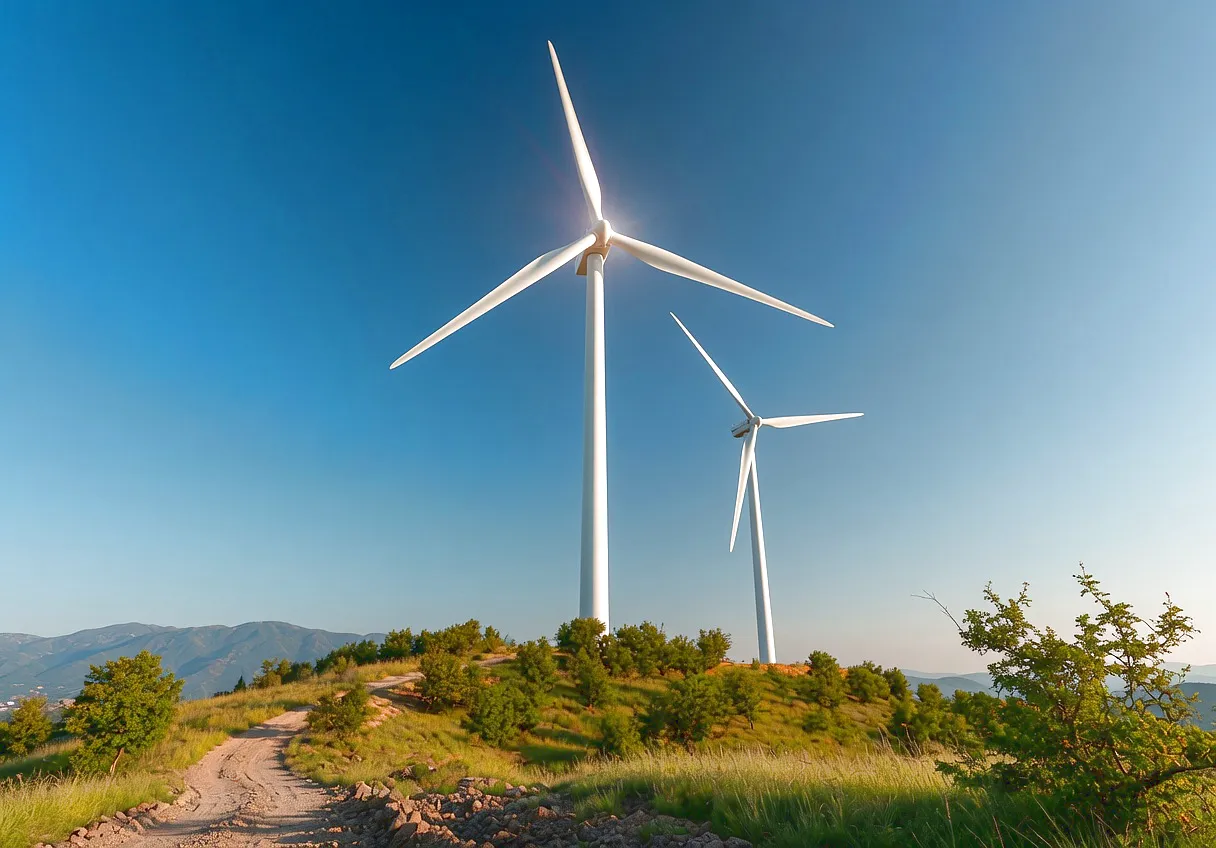
Wind turbine OEMs and independent power producers across England, Scotland, and Wales face a consistent operational challenge: the nacelle is a confined, high-altitude environment where maintenance access is expensive and logistically complex. A gear coupling that fails at sea requires a vessel, a crane, and a service window that may cost tens of thousands of pounds per day. This stark economic reality drives specifiers toward premium, long-life coupling designs with extended relubrication intervals and predictable wear patterns.
Direct-drive turbines eliminate the gearbox entirely, but the DFIG and semi-direct concepts — which remain the UK market majority by installed capacity — continue to depend on reliable gear couplings. Some newer platforms use elastomeric flexible couplings at the gearbox-generator interface, but these tend to exhibit higher maintenance frequency in high-speed, high-torque offshore conditions compared to all-metal drum-tooth gear couplings with proper lubrication management.
Why Choose Ever Power
Seven Engineering Advantages That Define Our Wind-Rated Gear Couplings
▸ Drum-Tooth Crowning Technology
Each external tooth is machined with a convex crown profile. Under angular misalignment, contact stress redistributes across the full tooth face rather than concentrating at tooth edges. This directly extends fatigue life under the variable loading spectra of wind — where torque fluctuates every few seconds with every gust event.
▸ Alloy Steel Core, Surface-Hardened
Hubs and sleeves are forged from 42CrMo4 alloy steel, then carburised and quenched to surface hardness HRC 58–62. The hard case resists abrasion and fretting corrosion while the tougher core below absorbs impact loads without brittle fracture — critical when turbine control systems trip during grid faults.
▸ High Torque Density
Our NGCL Series achieves a torque-to-weight ratio up to 30% better than conventional spur-tooth designs at equivalent bore size, enabling nacelle designers to save mass at elevation — directly reducing tower head loads and foundation steel requirements across a wind farm.
▸ Sealed Grease Lubrication
Factory-filled with NLGI Grade 2 lithium-complex grease rated for continuous operation from -30°C to +120°C. Dual-lip seals retain lubricant against centrifugal force at high speed while excluding salt mist and condensation — enabling relubrication intervals of 8,000–12,000 operating hours in normal service.
▸ Dynamic Balancing to G2.5
All units above 315 mm outside diameter are dynamically balanced to ISO 1940-1 Grade G2.5 as standard. At generator-side speeds of 1,500–1,800 rpm, residual imbalance generates bearing loads that grow with the square of speed — precision balancing eliminates this vibration source before it reaches sensitive generator bearings.
▸ Modular Sleeve Design
Our split-sleeve construction allows the outer sleeve to be replaced without disturbing shaft fits. On a nacelle 80 m above the North Sea, the ability to swap the wear component without removing hub bore interference fits can reduce a coupling maintenance event from a two-day crane job to a four-hour technician task.
▸ Full Dimensional Customisation
Whether you need a non-standard bore diameter, a specific pilot register fit for a generator flange, a particular axial length constraint, or a custom tooth module to match an existing hub, Ever Power’s engineering team works from customer drawings. Lead times for bespoke units start at 3–4 weeks with fast-track options available for urgent retrofit projects.
Technical Specifications
GICL / NGCL Series — Wind-Rated Performance Parameters
The following table covers the primary performance and dimensional envelope for the product families most commonly specified for wind turbine generator applications. Values represent standard catalogue grades; contact our engineering team for out-of-range or customised requirements.
| Parameter | GICL Series | NGCL Series | NGCLZ Series | Notes |
|---|---|---|---|---|
| Rated Torque (kN·m) | 0.16 – 1,800 | 0.25 – 4,500 | 0.40 – 2,200 | Continuous rating; peak to 2× nominal |
| Bore Range (mm) | 25 – 320 | 25 – 560 | 30 – 480 | Keyway, spline, or interference fits |
| Max Speed (rpm) | Up to 3,600 | Up to 2,500 | Up to 3,000 | Dependent on balancing grade selected |
| Angular Misalignment | ± 1.0° | ± 1.5° | ± 1.5° | Per coupling half; simultaneous misalignment reduces values |
| Radial Misalignment (mm) | Up to 0.8 | Up to 1.2 | Up to 1.0 | At rated torque; increases with reduced torque |
| Operating Temperature (°C) | -30 to +120 | -30 to +120 | -30 to +120 | Governed by grease specification; Arctic grades available |
| Hub Material | 42CrMo4 Alloy Steel | 42CrMo4 Alloy Steel | 42CrMo4 / 40Cr | Case carburised; core HRC 30–38 |
| Surface Hardness (HRC) | 58 – 62 | 58 – 62 | 56 – 62 | Tooth flanks after carburising and quenching |
| Balancing Grade (ISO 1940) | G6.3 standard / G2.5 option | G6.3 standard / G2.5 option | G2.5 standard | G2.5 recommended ≥1,200 rpm |
| Applicable Standards | GB/T 5901, ISO 14691 | GB/T 5901, ISO 14691 | GB/T 5901, ISO 14691 | CE documentation available on request |
Engineering Principles
How a Drum-Tooth Gear Coupling Works — and Why Materials Matter
The operating principle of a gear coupling is elegantly straightforward: two hubs — each carrying a set of external gear teeth on their outer cylindrical surface — are enclosed within a common outer sleeve that carries matching internal teeth. Torque flows from the driving shaft, through its hub’s external teeth, across the tooth mesh to the sleeve’s internal teeth, and out through the second hub to the driven shaft. The mechanical advantage of this arrangement lies not in speed or force multiplication (gear couplings are 1:1 ratio devices) but in the sheer number of teeth simultaneously sharing the load. A typical wind-rated gear coupling may have 24–40 teeth in mesh at any instant, and because torque is distributed across all of them, each individual tooth carries only a fraction of the total load.
The “drum” or “crowned” variation adds a convex radius — the crown — to each external tooth in the axial direction. When the shaft axes are perfectly aligned, the teeth engage symmetrically. When angular misalignment develops (as it inevitably does under thermal growth and structural flex), the crowned profile allows the tooth pair to rock on that convex surface rather than pivoting about a sharp edge. The resultant contact patch shifts slightly but remains distributed, and peak Hertzian contact stress stays well within material limits even at the coupling’s full misalignment rating.
Material selection is inseparable from this geometry. 42CrMo4 (equivalent to BS EN 10083-3 grade) is chosen for its combination of hardenability, toughness, and machinability. The chromium content deepens the carburised case and improves corrosion resistance relative to plain carbon steels; the molybdenum addition refines grain structure and increases high-temperature strength — relevant at the elevated operating temperatures that can develop in a sealed, high-speed nacelle during summer operation. After final machining, each hub undergoes shot peening to introduce compressive residual stresses in the surface layer, directly counteracting the tensile bending stresses that develop at the tooth root under load and under reverse torque transients.
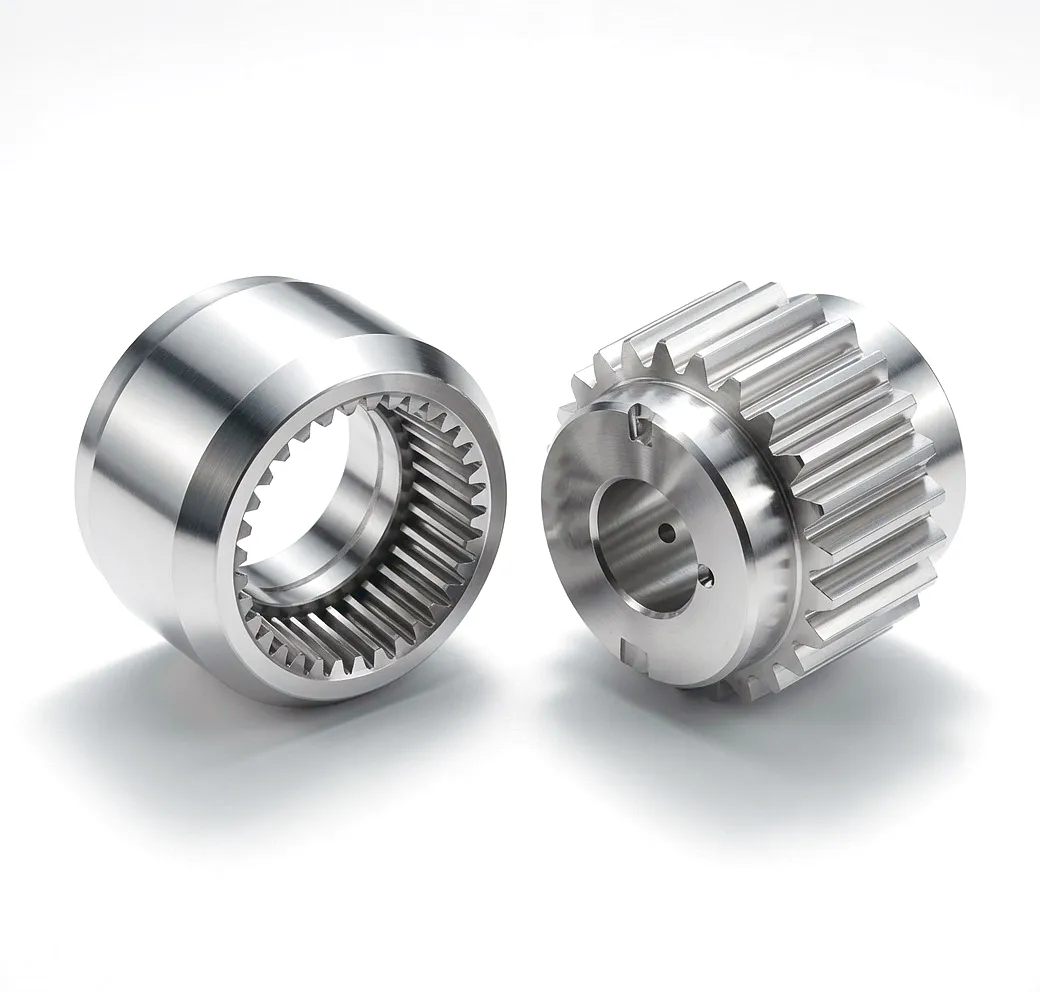
Material Stack at a Glance
🔧 Hub & Sleeve: 42CrMo4 forged alloy steel
⚡ Tooth Surface: Carburised case, HRC 58–62
🛡 Seals: Dual-lip NBR, optional FKM offshore
🔩 Fasteners: Grade 12.9 alloy steel, Zn-Ni coated
💧 Lubricant: NLGI 2 Li-complex, -30°C to +120°C
Application Scenarios
Where Gear Couplings Operate Within Wind Energy Systems
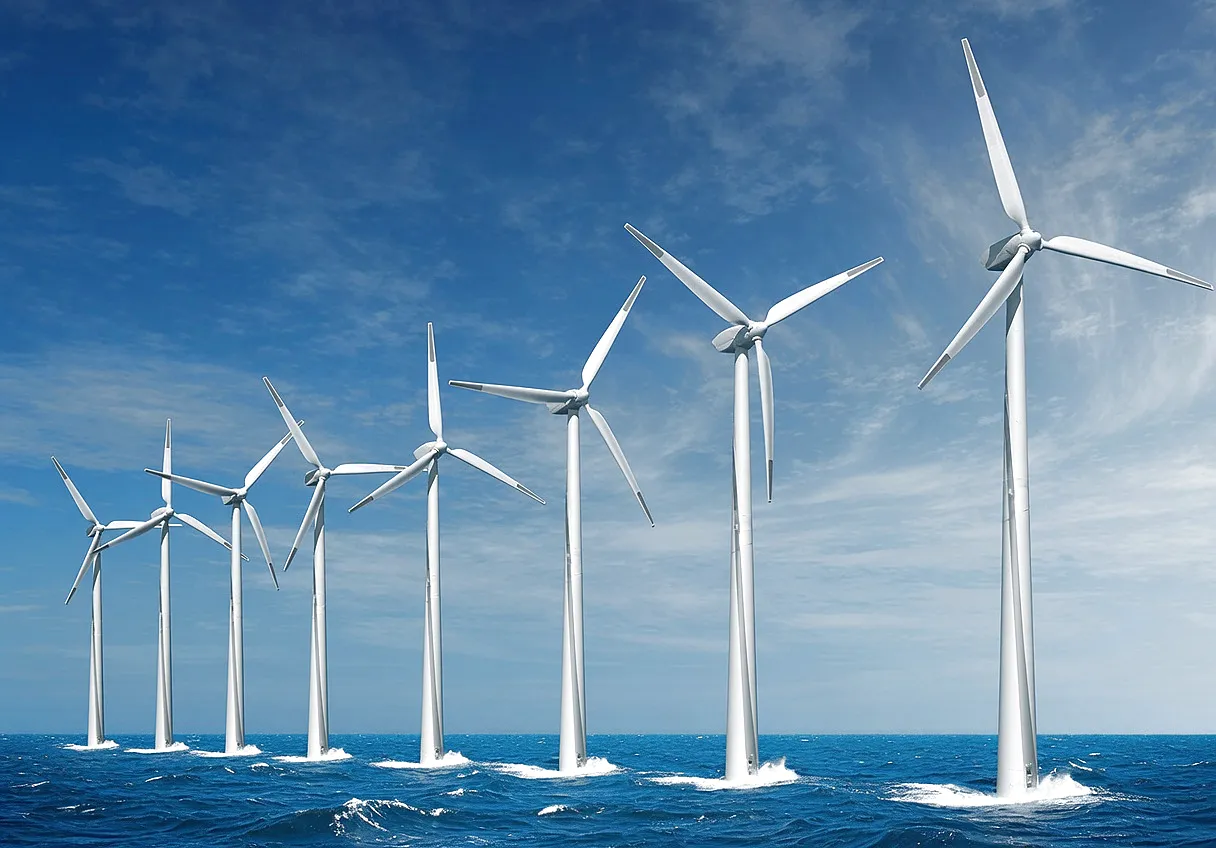
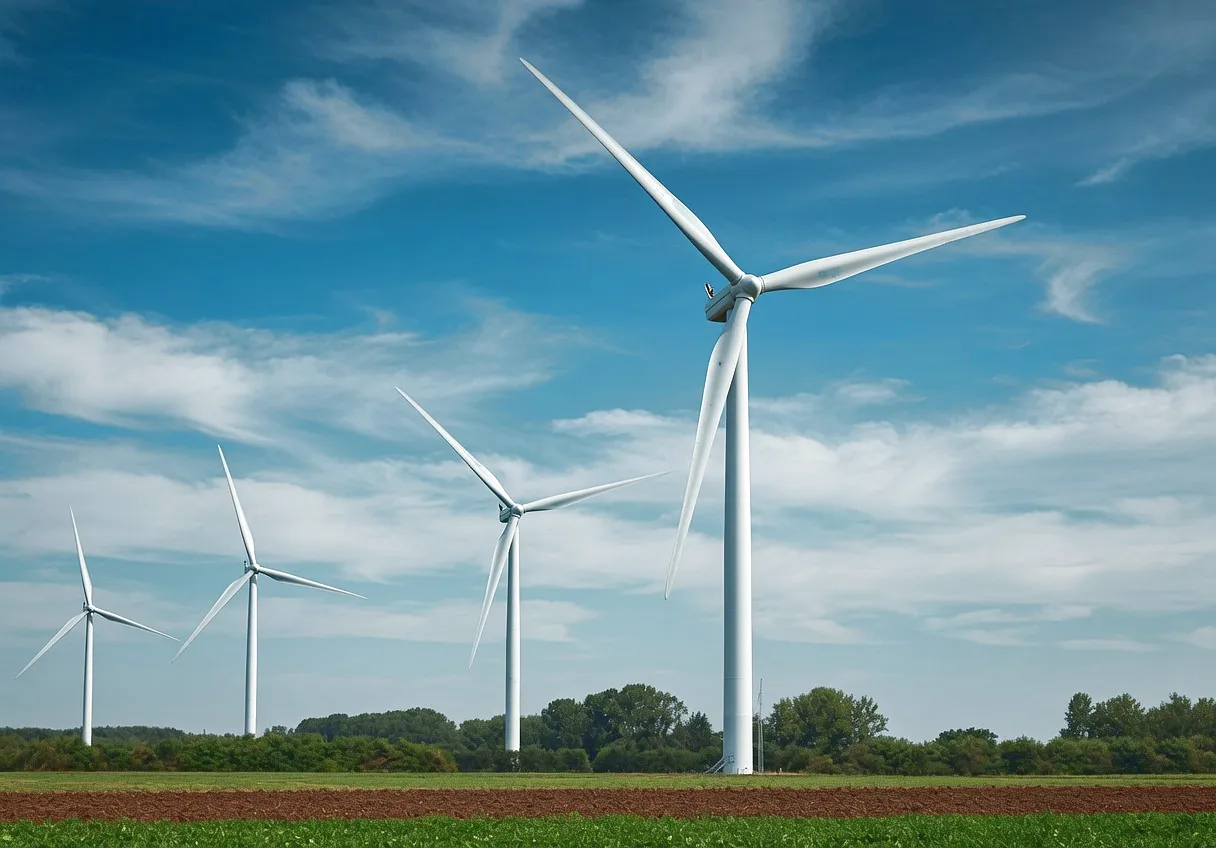

Beyond the turbine nacelle itself, gear couplings appear throughout the wind energy value chain. Test bed facilities at centres like the Offshore Renewable Energy (ORE) Catapult in Blyth, Northumberland, use large gear couplings on their drivetrain test rigs to simulate operational loads during turbine development programmes. Port-side assembly facilities — at facilities in Hull, Lowestoft, and Methil — use gear couplings in their component handling and commissioning equipment. Across the entire UK wind sector, from Shetland to Somerset, the demand for reliable, accurately specified gear couplings continues to grow with every new project that receives a Contracts for Difference (CfD) allocation.
Customer Success
Real Results From the UK Wind Sector
ScotWind Offshore Repowering — North Sea, Scotland
Operator: Independent Power Producer | Turbines: 48 × 3.6 MW DFIG
Reducing Unplanned Downtime by 74% on a 48-Turbine Scottish Offshore Site
An independent renewable energy operator running a 48-turbine offshore wind farm approximately 18 km off the Aberdeenshire coast was experiencing repeat coupling failures at the gearbox-to-generator interface. The original elastomeric element couplings were failing at roughly 14-month intervals, requiring costly marine vessel mobilisations averaging £28,000 per event. Over a three-year period this translated to an unplanned maintenance expenditure of over £1.1 million against an original equipment cost of under £80,000 — a stark demonstration of total cost of ownership versus purchase price.
The operator’s drivetrain engineer contacted Ever Power with a full set of nacelle dimensional drawings and a failure history report. Our application engineers proposed a fleet-wide upgrade to NGCL-type drum-tooth gear couplings with FKM double-lip seals, zinc-nickel coated fasteners, and an extended grease pocket volume designed for 10,000-hour service intervals. The engineering review and drawing approval process took four weeks; first article units were delivered to the port of Montrose within six weeks of order confirmation.
Following installation during a planned maintenance window, the site ran for 27 months without a single coupling-related unplanned stoppage. The operator reported a 74% reduction in drivetrain-related unplanned downtime across the fleet and estimated a net present value improvement of over £940,000 against the upgrade investment — achieved while adding less than 4 kg per coupling position to the nacelle head mass.
Key Outcomes
📉 74% fewer unplanned stops
💷 £940K+ NPV improvement
⏱ 27 months zero coupling failures
🔧 10,000 hr service intervals
“
We switched our Yorkshire onshore fleet of 22 turbines to Ever Power’s GICL couplings during the 2023 scheduled maintenance season. The dimensional match to our original OEM parts was exact, installation took no longer than a standard coupling swap, and we’ve had no vibration issues in over 18 months of operation. The technical support team was straightforward to deal with and the delivery came in on time.
James T., Senior Maintenance Engineer
Wind Energy Operator, Yorkshire, England
“
As an independent service provider carrying out drivetrain overhauls on multiple UK offshore sites, we regularly specify Ever Power gear couplings as direct replacements. The NGCL range covers virtually every high-speed shaft coupling application we encounter. Pricing is competitive against equivalent European brands, and the availability of custom bore sizes means we rarely need to machine adapters.
Mark R., Technical Director
Offshore Wind Drivetrain Services, Aberdeen, Scotland
“
We commissioned Ever Power to manufacture a set of 16 bespoke gear couplings for a semi-direct drive turbine prototype programme. They worked from our engineering sketches, managed all tolerancing queries professionally, and delivered first articles for prototype build within the agreed four-week leadtime. The FEA fatigue reports they provided were genuinely useful during our certification process with a UK-based certification body.
Dr. Sarah L., Principal Mechanical Engineer
Wind Turbine R&D, Bristol, England
Manufacturing & Customisation
Our Production Facility: Where Custom Engineering Meets Volume Capability
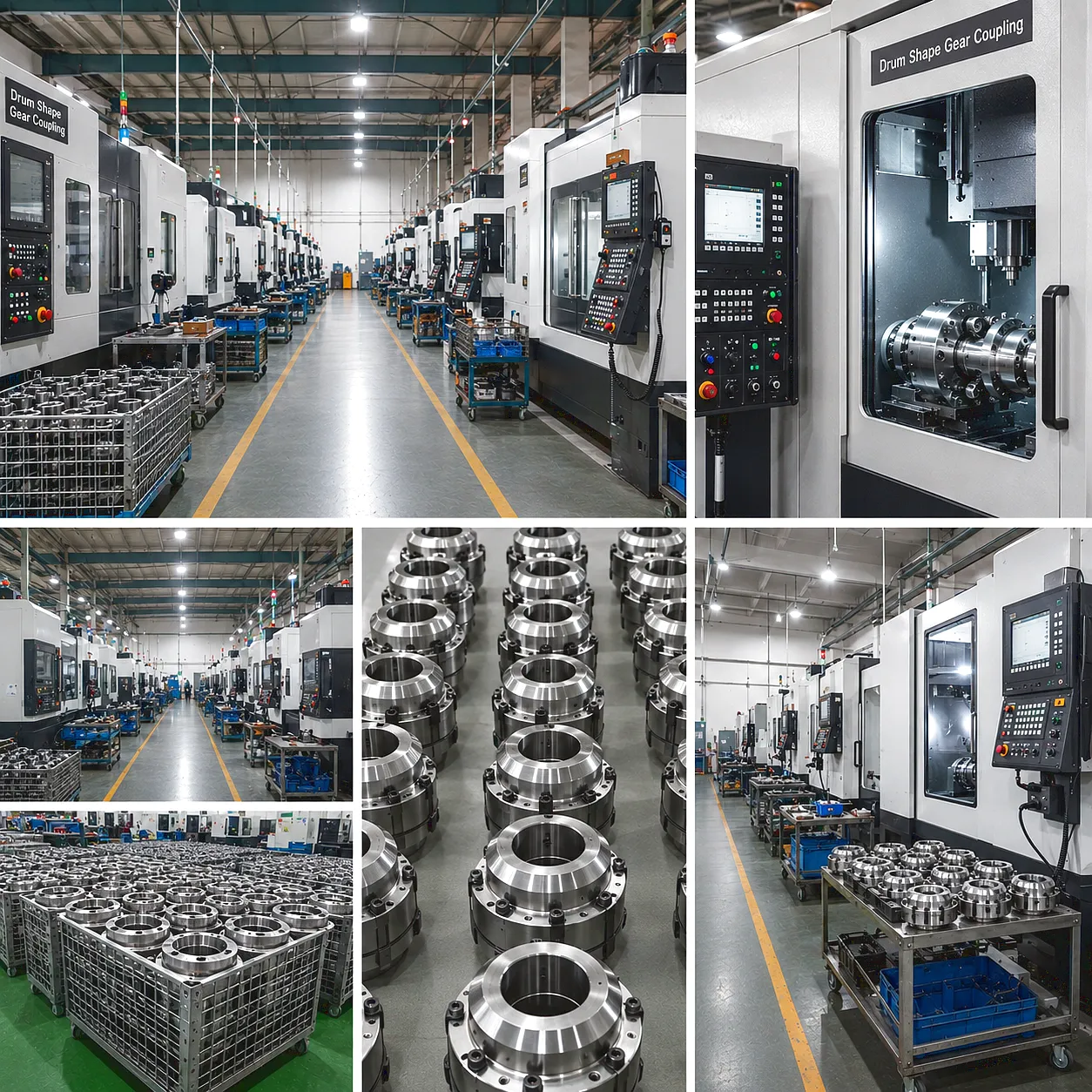
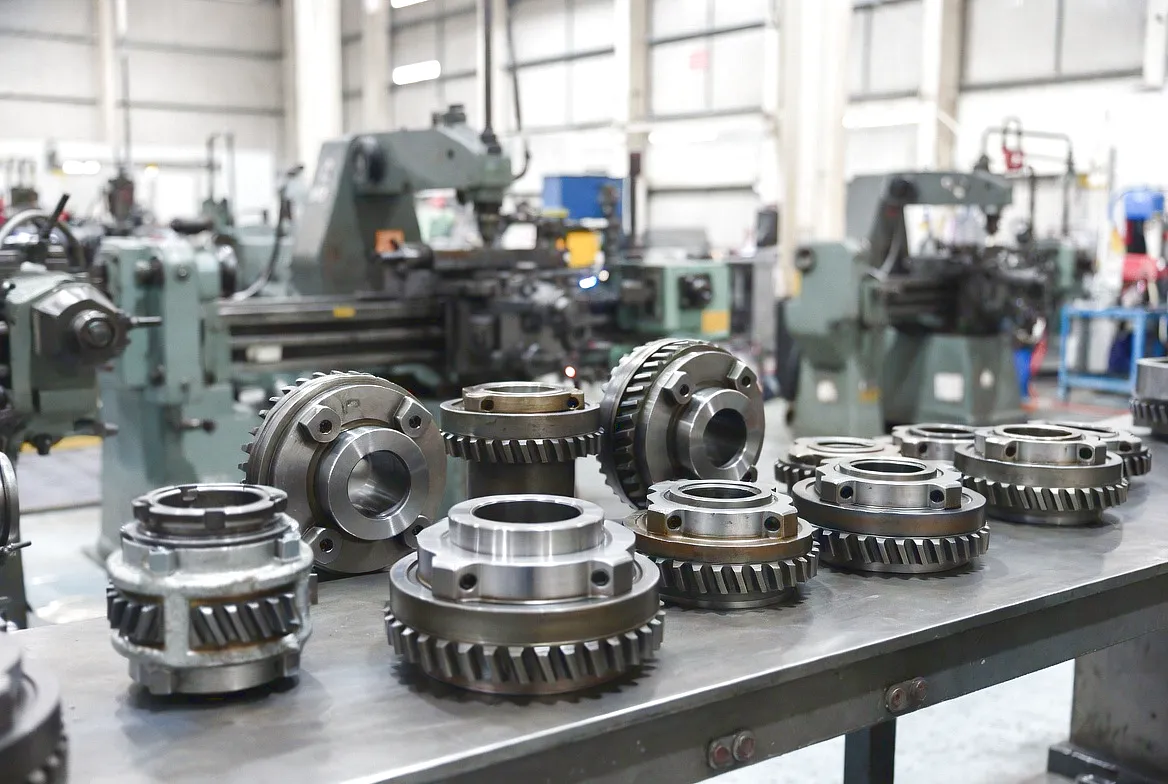 Ever Power’s ISO 9001-certified manufacturing facility operates across 28,000 m² of covered production and inspection floor space. Our gear-cutting department runs a fleet of CNC hobbing and gear-grinding machines capable of achieving AGMA Quality Class 11 tooth profiles up to 1,200 mm diameter — covering the full torque range from compact yaw-drive couplings to the largest main-shaft gear couplings installed in multi-megawatt wind turbines. Heat treatment is performed in-house using a controlled-atmosphere carburising line, ensuring batch-consistent case depth and surface hardness across every production run.
What distinguishes our facility for wind energy customers is the depth of our product customisation service. Many gear coupling suppliers offer a standard range with limited bore options. Ever Power goes further: we accept bespoke bore dimensions with tolerance specifications down to H6/k6 interference fits, custom keyway profiles (including Woodruff keys and DIN 6885 metric splines), non-standard flange pilot diameters to match OEM-specific generator register fits, and special tooth module selections to achieve a specific duty cycle life target. Every custom unit ships with a material certificate, gear-tooth inspection report, balancing certificate (where applicable), and a dimensional inspection sheet traceable to our calibrated CMM coordinate measuring machine.
For UK wind energy procurement teams, we understand that supply chain resilience has become a priority following recent global logistics disruptions. We maintain a strategic buffer stock of common bore sizes in the GICL and NGCL series, enabling same-week despatch for standard units. For bespoke custom orders, our standard manufacturing leadtime is 3–4 weeks from drawing approval, with a premium fast-track service available at 10–12 business days for urgent site recovery situations.
28K m²
Production Area
ISO 9001
Quality Certified
3–4 Wks
Custom Lead Time
AGMA 11
Gear Quality Class
20+ Yrs
Wind Sector Experience
Quality Control You Can Trace to the Original Billet
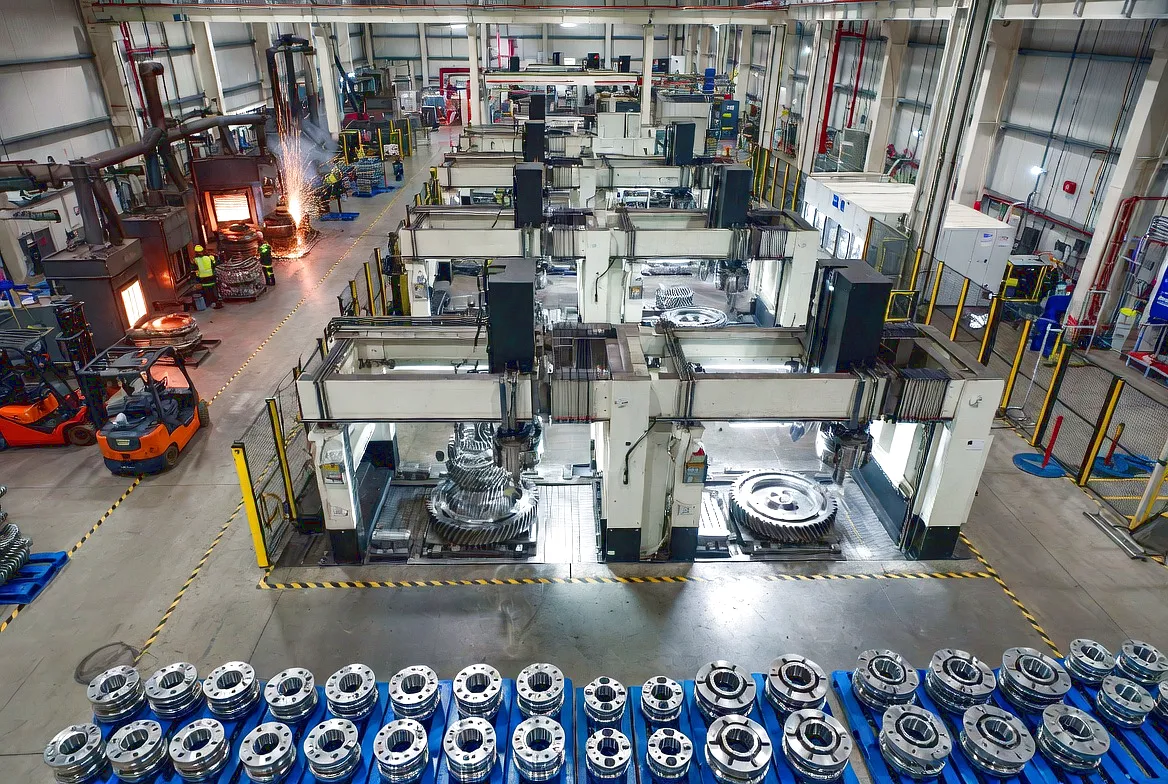 Every gear coupling leaving our facility carries full material traceability from mill certificate to finished unit. Our quality department performs incoming material verification by optical emission spectrometry (OES), in-process dimensional checks at each machining stage, final gear tooth profile measurement on a Zeiss GearPro CMM, and pre-despatch inspection against a documented acceptance criteria checklist. For wind energy customers requiring third-party inspection, we have established working relationships with Bureau Veritas, SGS, and Lloyd’s Register, and can arrange witnessed factory acceptance testing on request.
UK procurement engineers will find our documentation package — CE Declaration of Conformity, material certificates, heat treatment records, dimensional reports, balancing certificates — structured to support both BS EN and IEC regulatory frameworks common across UK and wider European wind project certification requirements.
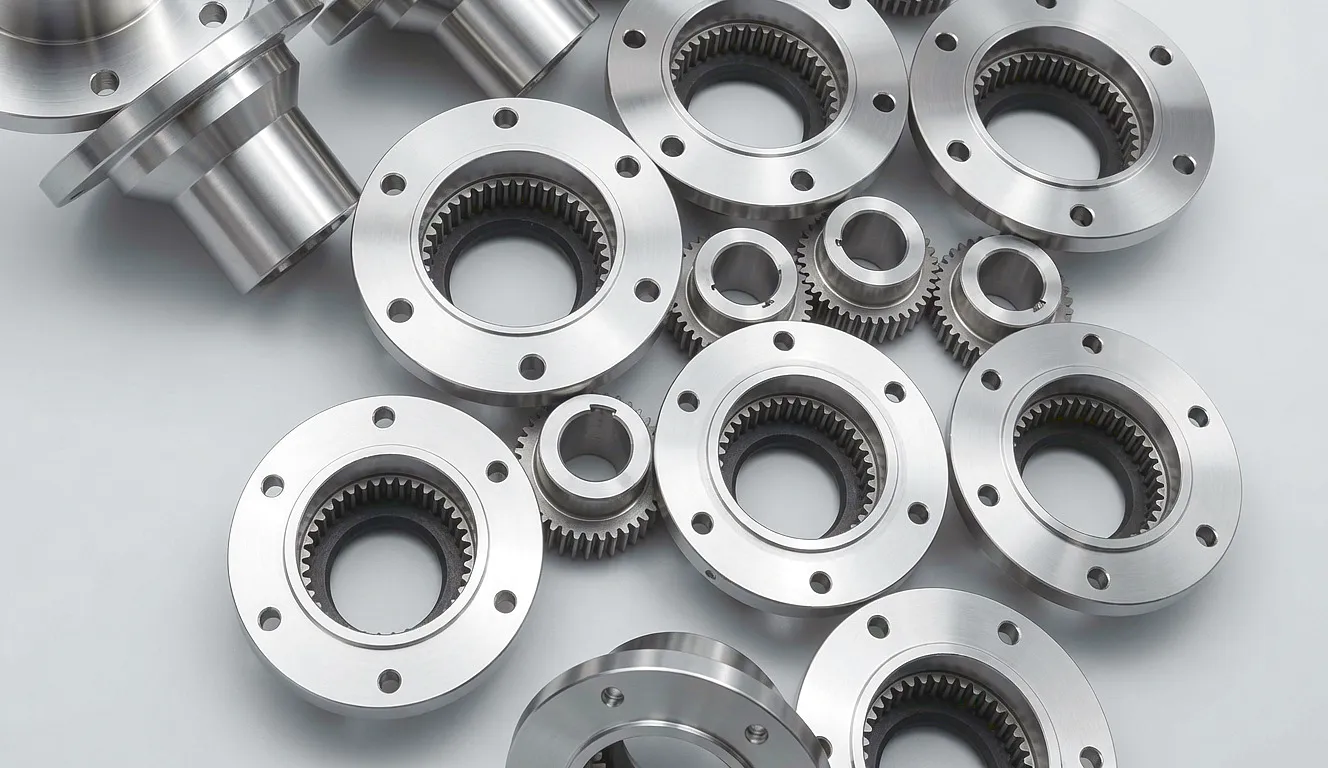
Product Gallery
Frequently Asked Questions
Your Wind Turbine Gear Coupling Questions, Answered
© Ever Power Gear Coupling — UK Wind Energy Supplier | ISO 9001 Certified | All specifications subject to engineering review | edit by gzl