
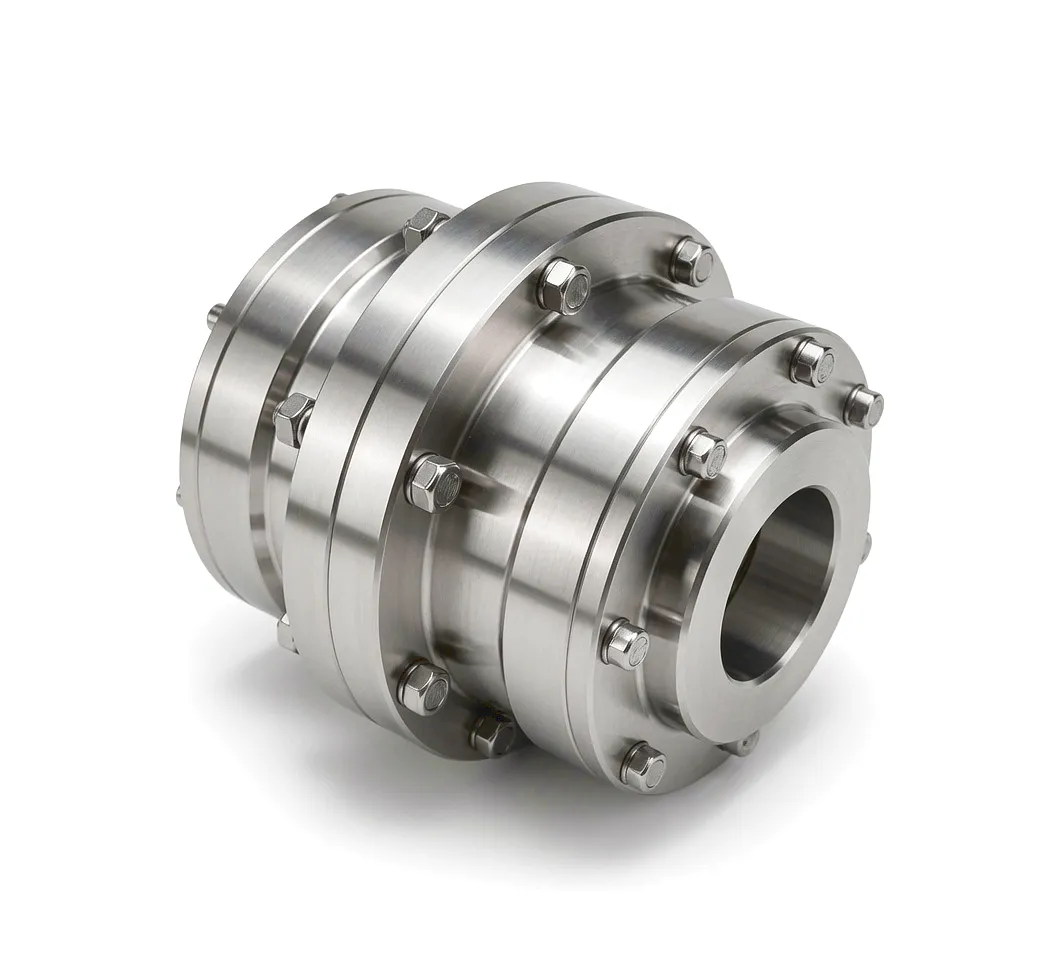
 Wind energy accounts for a significant and growing portion of Britain’s electricity generation. With offshore wind farms stretching across the North Sea and onshore installations spread throughout Scotland, Wales, and northern England, the mechanical components inside each turbine are under relentless scrutiny. A wind turbine is not simply a machine that rotates — it is a precision power converter operating in one of the harshest environments imaginable: cyclic loading from gusts, salt-laden air, sub-zero temperatures, and vibration profiles that vary unpredictably with every shift in the wind. Within this demanding context, the gear coupling is arguably the component most responsible for whether a drivetrain holds together across decades of operation or begins showing fatigue much sooner than the design life suggests.
A gear coupling in this context is not interchangeable with a simple jaw or disc coupling. The specific demands of turbine gearbox input connections — high torque density, tolerance for angular and radial misalignment, shock absorption capability, and resistance to fretting wear — point directly to drum-tooth gear couplings as the preferred solution for medium and large turbine classes. Understanding why this is the case, how the component works, and what distinguishes a quality gear coupling from a generic one is essential knowledge for procurement engineers, turbine OEMs, and maintenance managers across the UK wind sector.
Ever Power Gear Couplings
Engineered for the punishing duty cycles of wind turbine drivetrains. Custom configurations available for GICL, NGCL, and NL-type series — with full technical support for UK and European wind projects.
How a Gear Coupling Works Inside a Wind Turbine Drivetrain
The mechanical logic behind drum-tooth gear couplings in gearbox-driven turbines
Wind Rotor to Main Shaft
The rotor hub captures kinetic energy from wind and transfers it as low-speed, high-torque rotation into the main shaft — typically running at 10–20 RPM in modern multi-megawatt turbines. This shaft carries enormous bending and torsional loads that the downstream coupling must accommodate without transmitting harmful forces into the gearbox.
Gear Coupling at the Gearbox Input
The gear coupling bridges the main shaft and the gearbox input flange. Its crown-tooth geometry allows angular misalignment (typically ±1.5°) and axial float, which is critical because the main shaft deflects under asymmetric rotor loading. Without this articulation, the gearbox planet carrier bearings would be subjected to severe radial loads they were never designed to sustain.
Gearbox Speed Increase to Generator
The gearbox accelerates rotation from ~15 RPM to ~1500–1800 RPM through a series of planetary and helical stages. The high-speed shaft then drives either an induction generator (DFIG configuration) or a permanent magnet generator. A secondary gear coupling or flexible disc coupling is often used at the high-speed shaft output, though the gearbox input coupling remains the most highly loaded connection in the drivetrain.
Why Drum-Tooth Geometry Matters
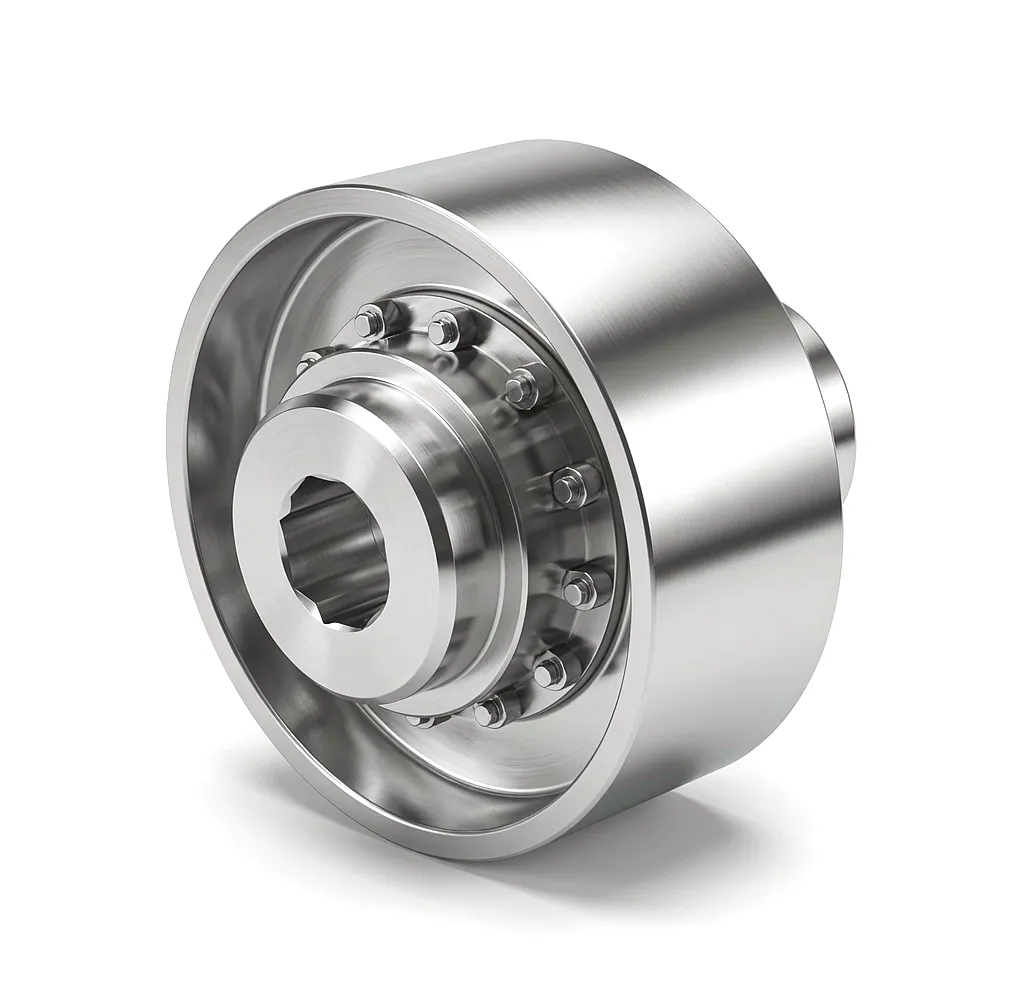
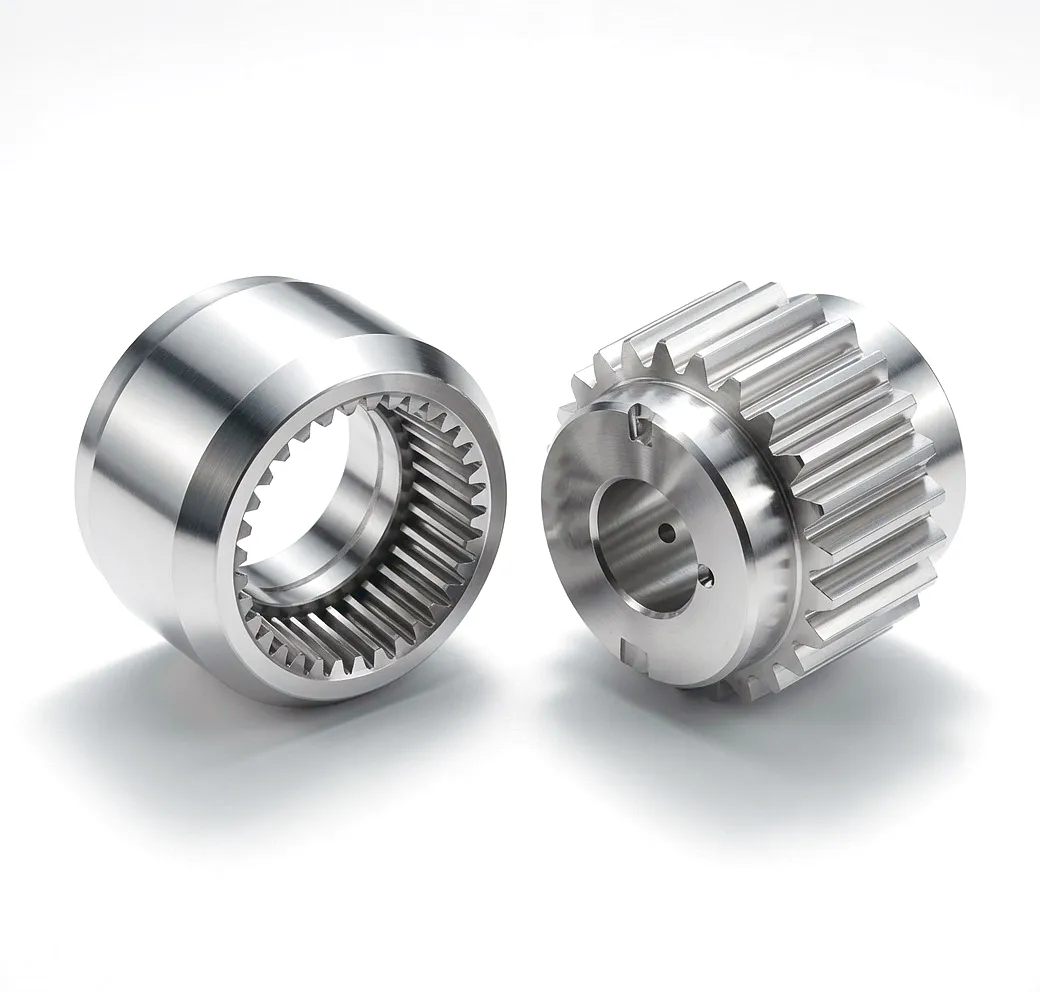
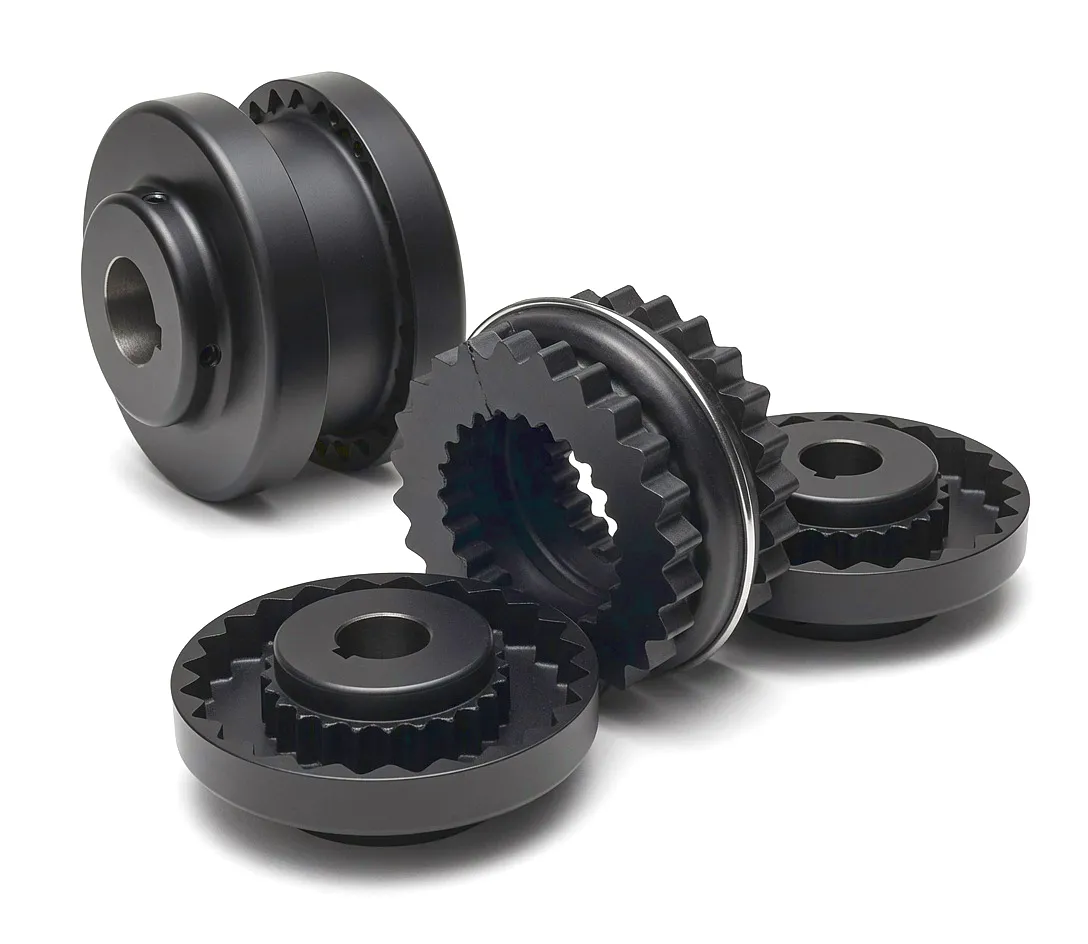
The defining feature of a gear coupling for wind turbine use is the barrel-crowned or drum-shaped tooth profile on the outer sleeve. Unlike straight-cut teeth, the convex crown allows the inner hub teeth to rock angularly inside the outer sleeve teeth without generating edge-loading stress concentrations. This is not a marginal improvement — it is the fundamental mechanism that prevents fretting corrosion and tooth breakage during the continuous misalignment that occurs under real operational conditions inside a turbine nacelle.
When a wind squall passes through a rotor disc, the torque input can spike to 2–3 times the rated value within fractions of a second. The gear coupling’s tooth contact geometry distributes this peak load across a broad face width, limiting contact stress and fatigue damage per cycle. Over a 20-year design life, this distributes to hundreds of millions of load cycles — each managed by the geometry of teeth that are sometimes less than a centimetre in width.
Technical Specifications & Performance Parameters
Ever Power NGCL / GICL Series — Wind Turbine Grade
| Parameter | GICL Series | NGCL Series | NL Nylon Series |
|---|---|---|---|
| Torque Range | 400 – 2,500,000 N·m | 630 – 3,150,000 N·m | 160 – 630,000 N·m |
| Max Speed (RPM) | Up to 4,500 | Up to 4,000 | Up to 3,000 |
| Angular Misalignment | Up to 1.5° | Up to 1.5° | Up to 1.0° |
| Radial Offset | Dependent on size/angle | Dependent on size/angle | Limited |
| Hub Material | 42CrMo / 40Cr Alloy Steel | 42CrMo / 40Cr Alloy Steel | Carbon Steel + Nylon Insert |
| Sleeve Material | Cast Iron / Steel (size dependent) | Cast Iron / Ductile Iron | Steel |
| Surface Treatment | Carburising + Quenching | Carburising + Quenching | Zinc Phosphate |
| Lubrication | Grease-packed (sealed) | Grease-packed (sealed) | Dry (nylon element) |
Why Engineers Specify Drum-Tooth Gear Couplings for Turbine Applications
Exceptional Torque Density
The gear tooth engagement pattern distributes load across a large contact area, giving gear couplings one of the highest torque-to-diameter ratios of any flexible coupling type. In a nacelle where every kilogram matters and space is constrained by the tower diameter, this matters enormously for large turbine designs above 3 MW.
Multi-Axis Misalignment Tolerance
Real wind turbine shafts are never perfectly aligned. Tower deflection, thermal expansion, bedplate flexure, and rotor overhang bending moments all introduce misalignment that changes dynamically during operation. A properly sized gear coupling absorbs angular, radial, and axial misalignment simultaneously without transmitting parasitic bearing loads into the gearbox — this is the single most important functional benefit for drivetrain health.
Shock Load Attenuation
Grid fault events, emergency braking, and rapid gust changes generate torsional impulses that can multiply torque transiently by a factor of three or more. The distributed tooth contact in a gear coupling spreads this impulse load, reducing peak stress at any single tooth root. This prevents the kind of fatigue crack initiation in gear teeth and splines that leads to sudden catastrophic failures inside the gearbox — failures that can cost upward of £200,000 to repair including crane hire.
Long Service Life
With the correct lubrication regime and properly specified crown geometry, a gear coupling in a turbine application is designed to reach and exceed the nominal 20-year turbine design life. The sealed, grease-lubricated construction of the NGCL and GICL series protects tooth flanks from the moisture and salt contamination that would otherwise accelerate fretting and corrosion in a North Sea or coastal UK environment.
Application Scenarios Across the Wind Turbine Drivetrain
Where gear couplings are used — and why each position has distinct requirements


Gearbox Input Coupling (Low-Speed Shaft)
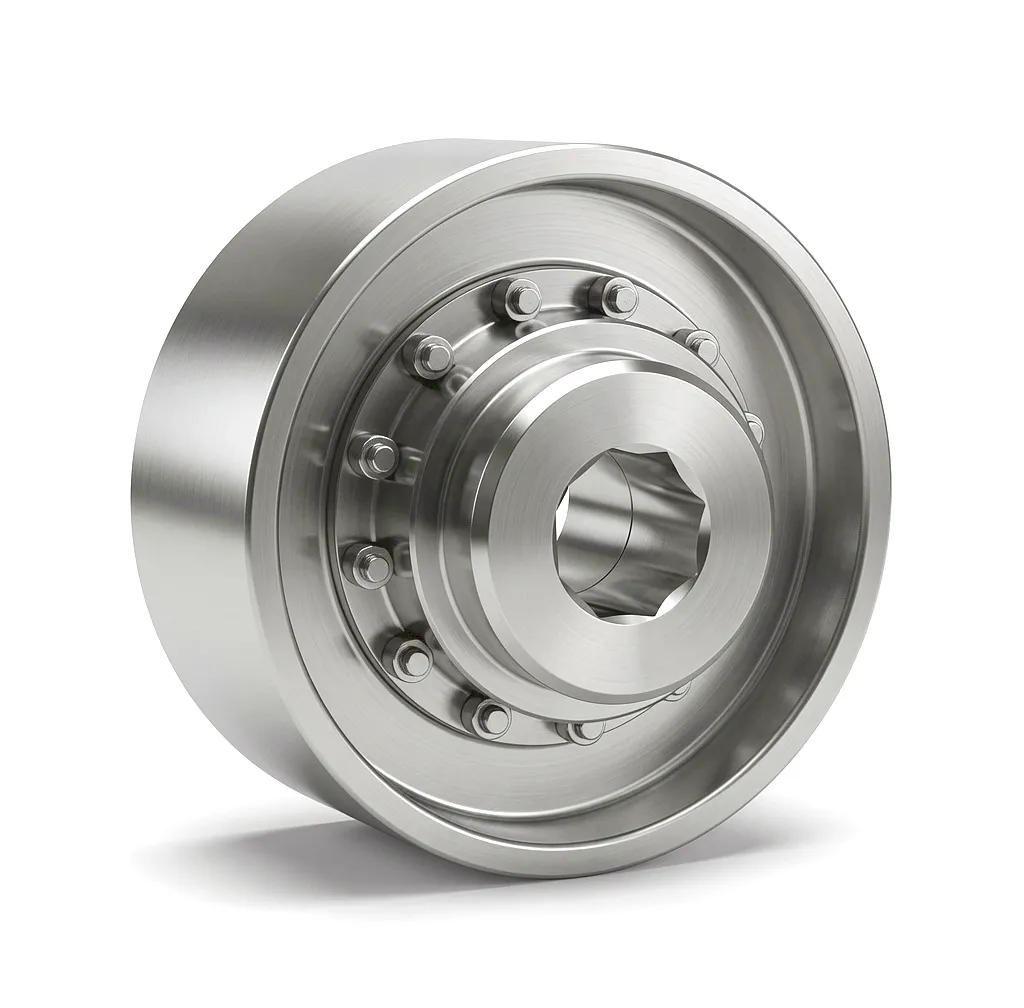
This is the highest-torque, most demanding position in the drivetrain. The coupling must handle peak torque during gust events and grid transients while simultaneously compensating for main shaft deflection. NGCL and GICL drum-tooth couplings in sizes up to GICL25 are used here, with bore diameters ranging from 85 mm to over 400 mm depending on turbine capacity. Correct interference fit on the shaft and precise crown radius specification are critical at this position.
Intermediate Shaft Connections (Multi-Stage Gearboxes)
In three-stage gearbox designs common on 2–5 MW platforms, intermediate shaft connections between planetary and helical stages sometimes incorporate compact gear couplings or splined connections with crowned teeth. These intermediate couplings carry moderate torque but operate at higher speeds, making centrifugal balance and tooth profile accuracy critical. Even small imbalance at 500–1000 RPM generates bearing loads that accumulate over years of operation.
High-Speed Shaft to Generator
The high-speed shaft output (1,500–1,800 RPM in 50 Hz grid-connected turbines) connects the gearbox output flange to the induction generator. Here torque is lower but rotational speed is high, and torsional vibration damping becomes important to prevent resonance between the drivetrain torsional natural frequency and periodic excitations from gearbox meshing. NL-type nylon gear couplings are sometimes selected here specifically for their electrical isolation and vibration damping properties.

Yaw System Drive Connections
The yaw system rotates the entire nacelle to face into the wind, driven by multiple electric motors through planetary gearboxes. Each motor-to-gearbox connection benefits from a compact gear coupling that accommodates minor shaft misalignment during installation and provides damping during the abrupt start-stop cycles characteristic of yaw drive operation. Misaligned yaw drive couplings are a known contributor to premature yaw bearing wear in UK offshore wind fleets — a problem that adds disproportionately to operating costs given the vessel costs required for offshore maintenance access.
Pitch control systems, which adjust blade angle to regulate power output and provide aerodynamic braking, use similar motor and gearbox drive architecture to yaw systems. The couplings in pitch drives must function reliably across temperature ranges from approximately -30°C to +50°C and survive vibration from blade edgewise loading — requirements that strongly favour the robust, sealed design of drum-tooth gear couplings over elastomeric alternatives that degrade at temperature extremes.
Materials Engineering: What Goes Into a Wind-Grade Gear Coupling
The tooth flanks in a GICL or NGCL gear coupling are machined from carburised and quench-hardened alloy steel, typically 42CrMo or 40Cr grade. These materials, once heat treated, achieve surface hardness of HRC 58–62 while maintaining a tough, ductile core. The combination prevents surface pitting (which initiates from contact stress cycles) while the tough core resists the crack propagation that would otherwise result from the shock impulses described above. This heat treatment sequence is not optional — gear couplings made from through-hardened or unhardened steel fail much sooner under the cyclic loading conditions present in wind turbine drivetrains.
The crown geometry itself — the specific barrel radius applied to the tooth tip — is a key design variable. Insufficient crown leads to edge loading when angular misalignment occurs; excessive crown reduces the load-bearing contact area unnecessarily, increasing contact stress. Proper crown radius specification requires knowledge of the expected misalignment range, the module and pressure angle of the tooth form, and the material’s allowable hertzian contact stress. This is engineering work, not catalogue selection, and it is where eighteen years of application experience makes a genuine difference to product performance in service.
Sealing integrity is equally important in wind turbine gear couplings. The grease retention seals must function across the full operating temperature range, survive the centrifugal forces generated at operating speed, and prevent contaminant ingress in coastal and offshore environments where salt-laden air is a constant threat. EPDM and Nitrile elastomer seal materials are selected based on the specific operating temperature and chemical environment at each installation site.
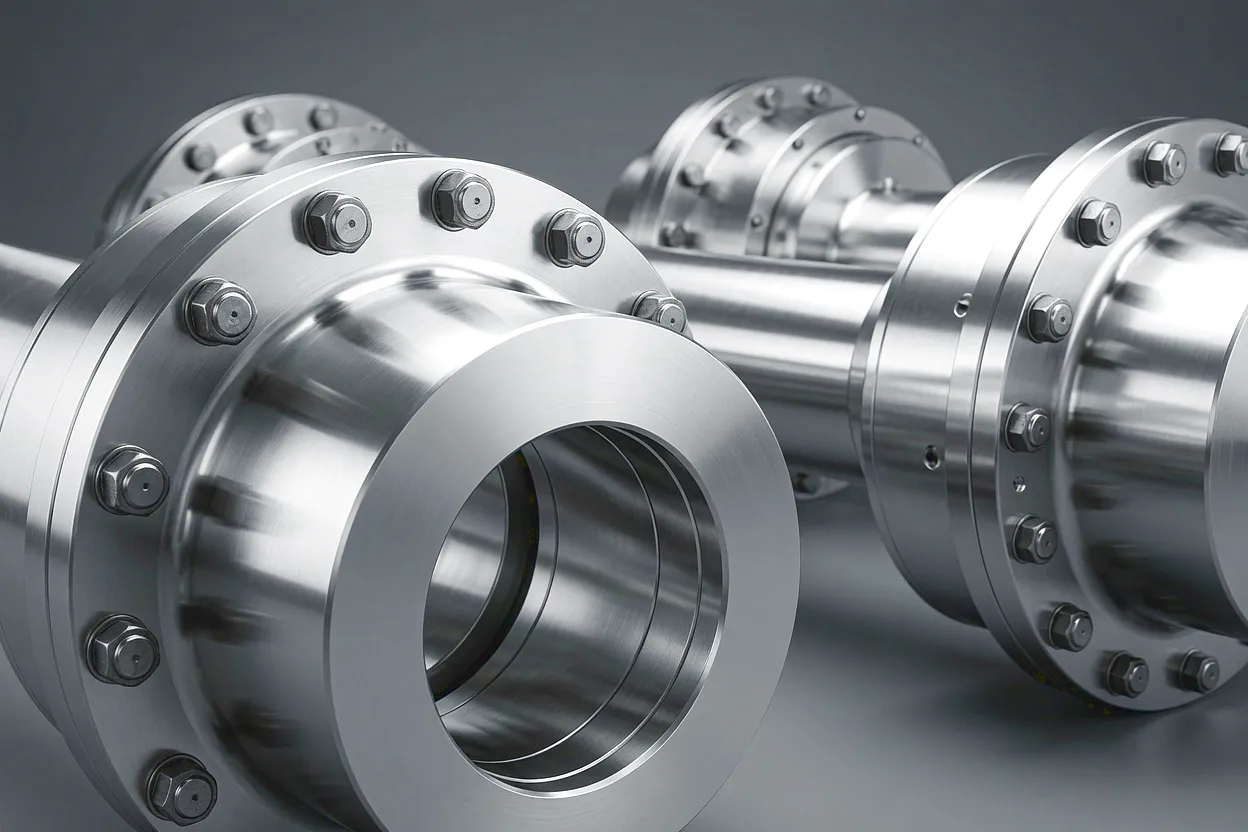
Material Selection Summary
| Hub alloy steel | 42CrMo / 40Cr |
| Surface hardness | HRC 58–62 |
| Core hardness | HRC 30–38 |
| Sleeve casting | GG25 / GGG40 |
| Seal material | NBR / EPDM |
| Lubrication | Lithium grease EP2 |
Ever Power Manufacturing & Custom Engineering Capability
Where precision manufacturing meets bespoke engineering for demanding applications
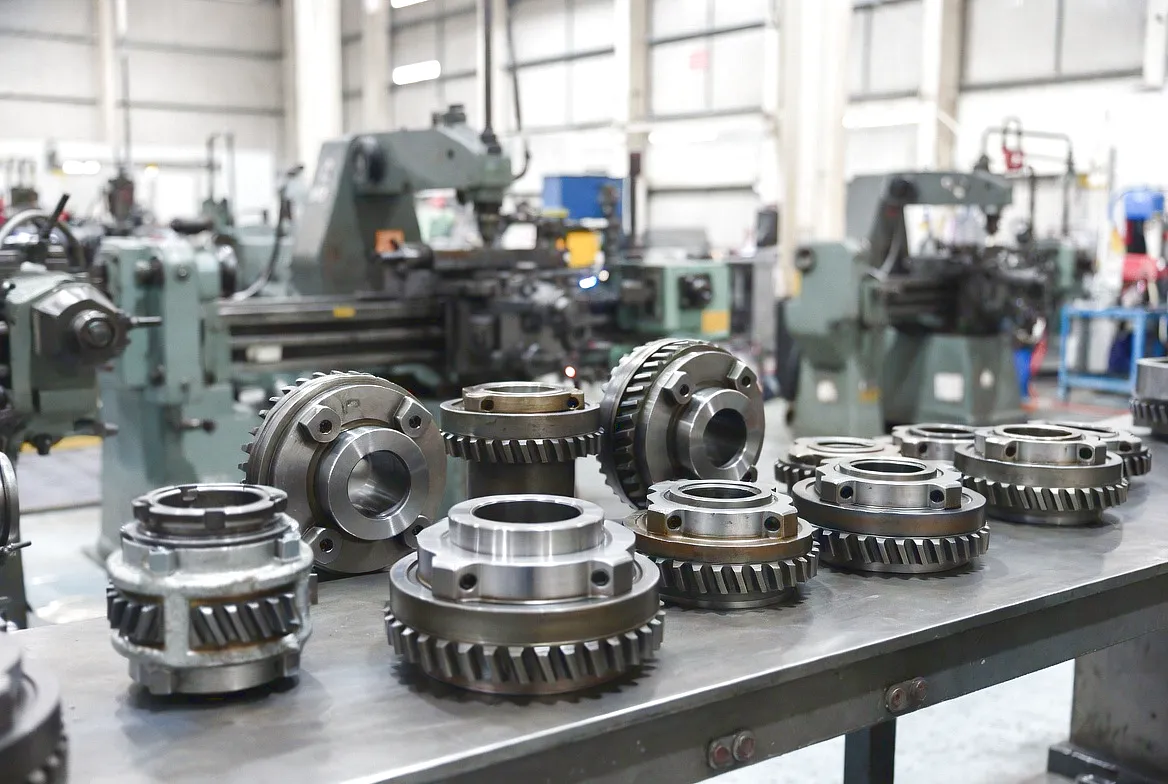
🏭 Full Custom Design Service
Our engineering team does not simply select from a standard catalogue when a wind energy client brings a challenging specification. We perform full application analysis — including torque load profiling, misalignment assessment, dynamic factor calculation, and crown radius optimisation — before issuing a drawing for approval. Custom bore diameters, keyway configurations (parallel key, woodruff key, splined bore), flange bolt patterns, shaft-end pilot fits, and non-standard hub lengths are all within our design scope. For UK clients supplying turbine OEM projects, we can produce coupling assemblies with full CMM inspection reports, material test certificates, and traceability documentation aligned with ISO 9001 requirements.
We work directly with drivetrain engineers at turbine manufacturers, independent service companies maintaining UK wind farms, and procurement teams at energy developers sourcing replacement parts for ageing assets. Our response time from RFQ to technical proposal is typically 24–48 hours for standard queries, with detailed engineering proposals for custom designs delivered within 5 working days.
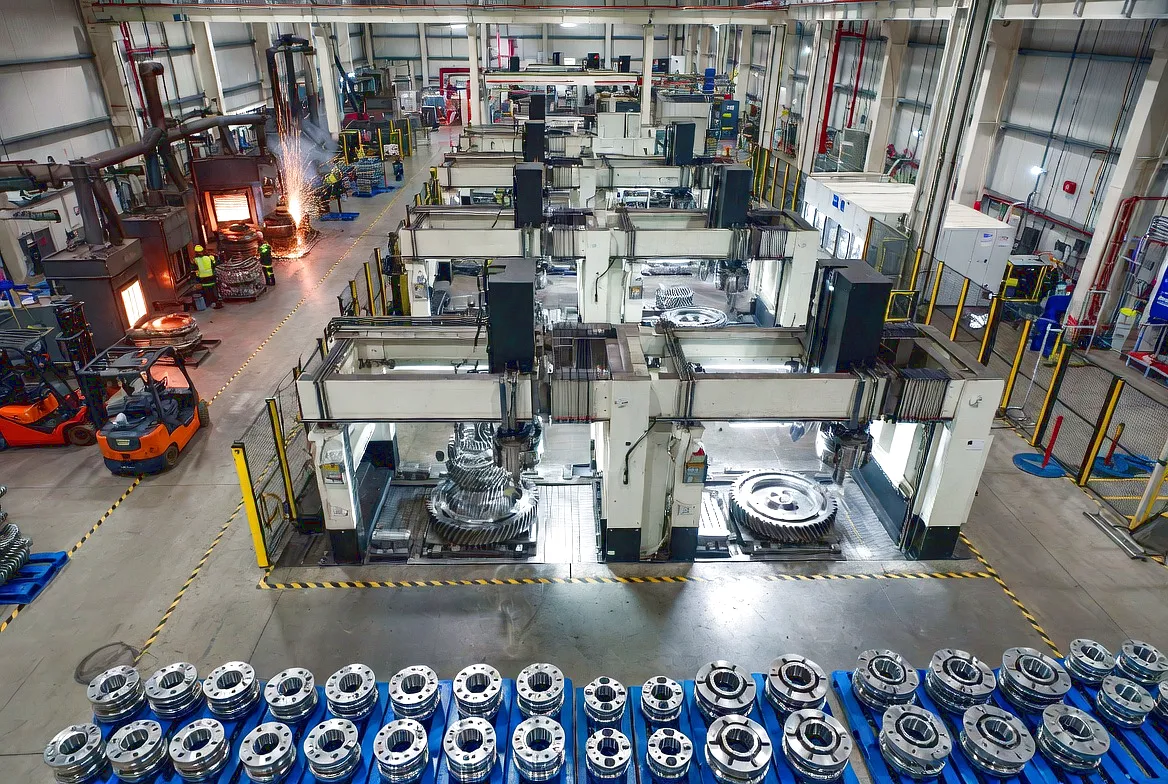
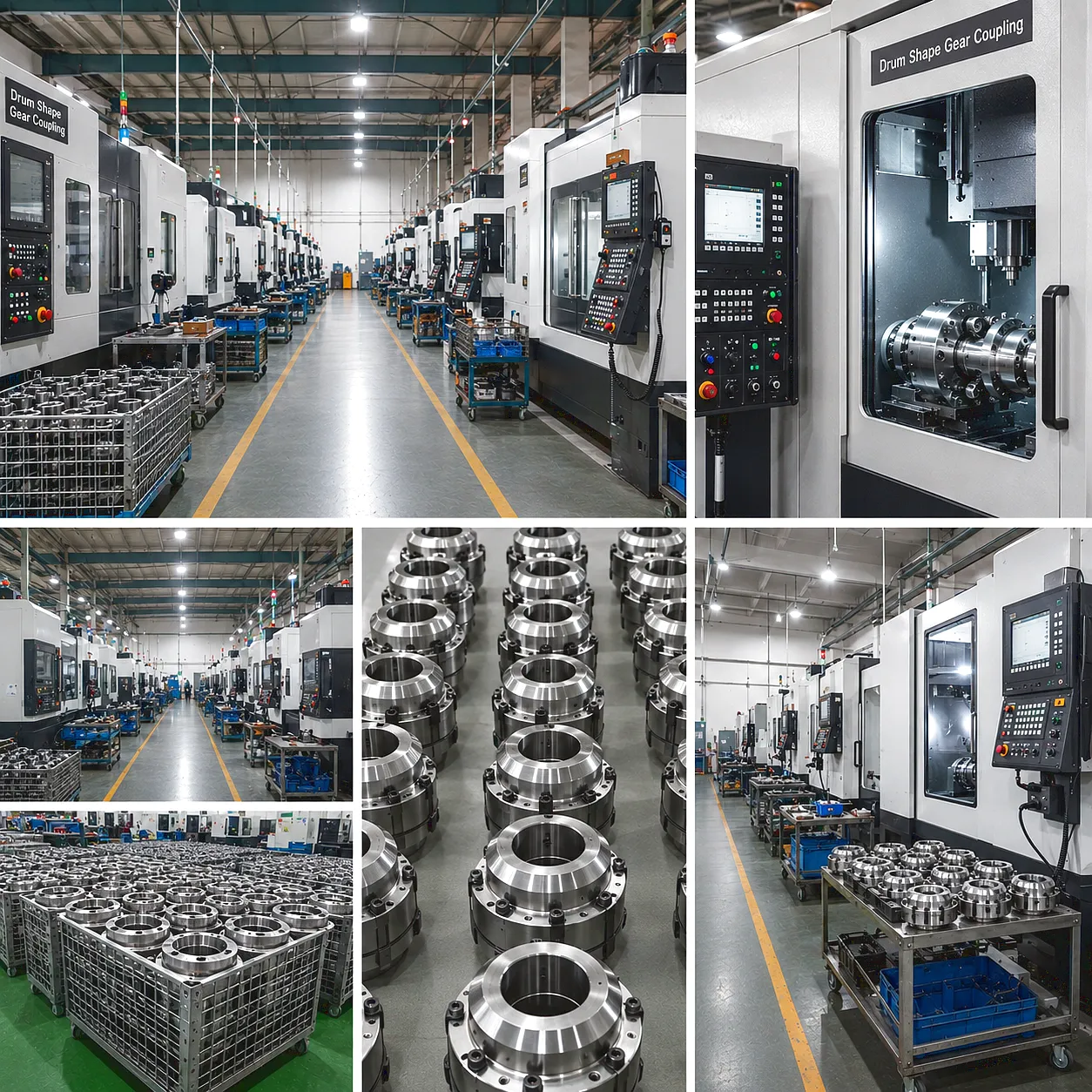
Precision CNC Machining
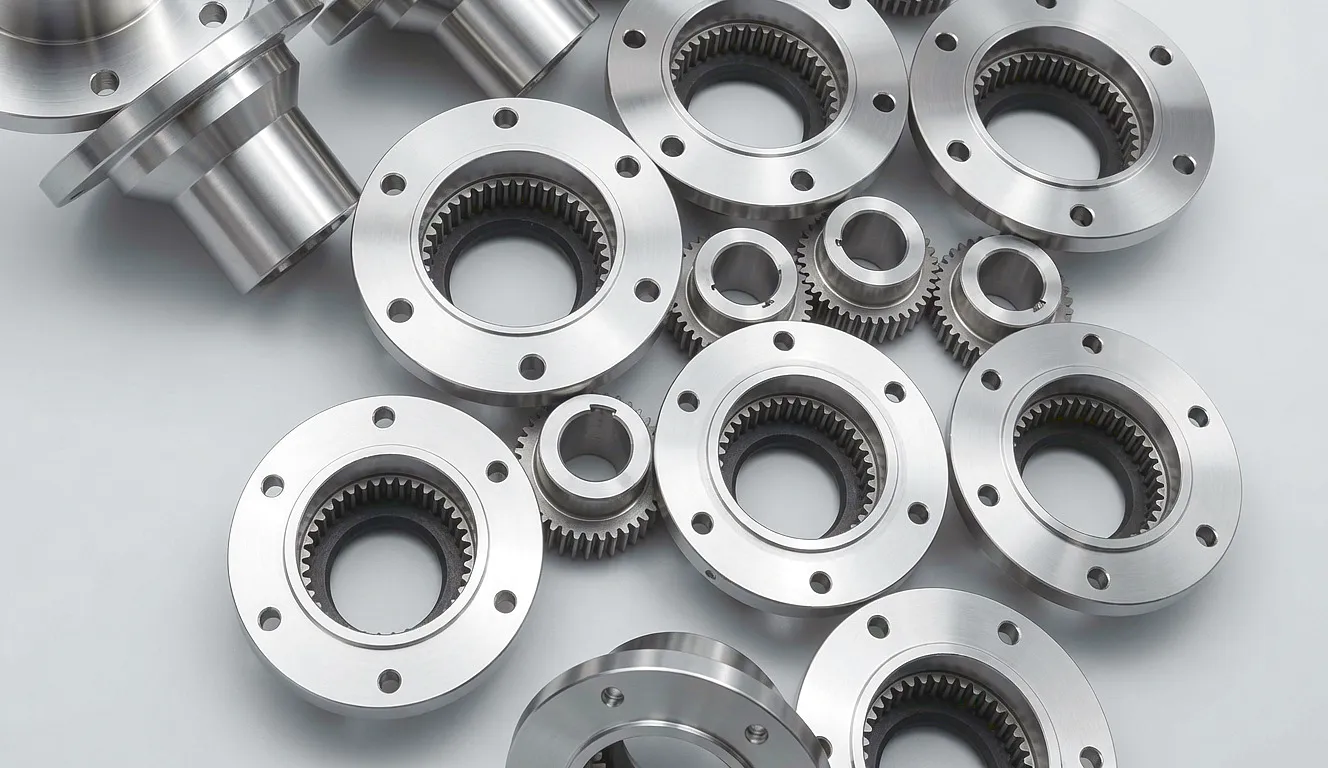
Hobbing, grinding, and inspection to DIN 3960 tooth geometry tolerances. Gear tooth profiles are verified with CMM coordinate measurement at final inspection.
In-House Heat Treatment
Controlled atmosphere carburising and quench-tempering lines. Hardness depth profiles verified by cross-section metallographic analysis on production batch samples.
Fast UK Delivery
Standard-range GICL and NGCL sizes from stock. Custom and large-bore sizes manufactured to order with lead times from 2–6 weeks depending on complexity and size.
Customer Success Case: Scottish Offshore Wind Fleet Refurbishment
Background: A UK-based independent power producer operating a 42-turbine offshore wind farm in the Moray Firth region of Scotland came to Ever Power in 2022 following a pattern of premature gearbox bearing failures that had been recurring across 11 of their 2.1 MW turbines over a four-year period. The turbines, originally commissioned in 2009, were using generic gear couplings that had been replaced during a gearbox overhaul programme using non-OEM components sourced from a European distributor at lower cost.
Problem Identified: After reviewing the original coupling drawings and the replacement components, our engineers identified that the replacement gear couplings had been manufactured with insufficient crown radius on the outer sleeve teeth — 35% less crown than the original specification. Under the misalignment conditions generated by rotor overhang bending in the Moray Firth’s characteristically severe wave and current loading environment, these understated crowns were generating edge contact, rapidly accelerating fretting corrosion and micropitting on the tooth flanks. The resulting vibration was transmitting into the gearbox planet carrier bearings, causing spalling failures within 18–24 months of gearbox overhaul — far short of the 5-year target life.
Solution and Outcome: Ever Power supplied 42 custom NGCL-series couplings with crown radius recalculated specifically for the Moray Firth site’s measured misalignment envelope, using site-specific rotor bending moment data provided by the operator. Material was upgraded to 42CrMo with a full case-hardening specification. Seals were specified in EPDM for compatibility with the turbine’s nacelle temperature range. The complete coupling batch was delivered within four weeks, with CMM inspection reports and full material traceability. Over the subsequent three years, not a single coupling-related gearbox bearing failure has been recorded across the 42-turbine fleet.
What Our Customers Say
“We’ve been sourcing NGCL couplings from Ever Power for three years now. The quality is consistently excellent and their engineering team genuinely understands wind turbine drivetrain requirements — they’re not just selling standard parts. When we needed a non-standard bore diameter for a retrofit project, they turned around the custom drawing in 48 hours. That responsiveness matters enormously when a turbine is offline.”
Senior Mechanical Engineer, Renewable Energy Services Ltd — Aberdeen, Scotland
“We were sourcing gear couplings from three different suppliers before we found Ever Power. The inconsistency in tooth quality was causing us real headaches on incoming inspection. Since switching to Ever Power exclusively, our rejection rate dropped to essentially zero. The material certs and inspection data they provide give our QA team confidence and they’re fully aligned with what we need for ISO documentation.”
Procurement Manager, Northern Wind Operations — Hull, England
“Our team specified Ever Power GICL couplings for the main shaft connections on our 3.6 MW prototype drivetrain test rig at the National Renewable Energy Centre in Blyth. The couplings have been performing under peak torque conditions and endurance fatigue testing for over 18 months without any issue. The dimensional accuracy was outstanding — everything bolted up first time without shimming. I’ll be specifying them again.”
Principal Drivetrain Engineer, Offshore Wind Test Consortium — Northumberland, England
Serving the UK Wind Industry: Onshore and Offshore
The United Kingdom holds the world’s largest installed base of offshore wind capacity, with major clusters in the North Sea, Irish Sea, and along the east coast of England. The operational and maintenance challenges for this fleet are distinct from those facing onshore projects. Accessibility by crew transfer vessel or helicopter creates strong pressure to extend maintenance intervals and maximise component life between planned service events. A failed gear coupling that requires an unplanned nacelle crane lift offshore can cost far more in vessel day-rates and lost energy production than the coupling itself is worth.
Onshore wind farms across Scotland, northern England, Wales, and the Welsh borders face a different set of operational pressures: lower wind resource predictability, grid curtailment in constrained areas, and tighter maintenance budgets from community and co-operative ownership structures. For onshore operators, the value of a gear coupling that reaches its design life without intervention is measured directly in reduced planned maintenance costs and better availability figures, which translate to higher returns against the project’s CfD strike price or legacy ROC revenue.
We supply gear couplings to wind farm operators, independent service companies, drivetrain overhaul specialists, and turbine OEM aftermarket teams across England, Scotland, Wales, and Northern Ireland. Our familiarity with the specific turbine models commonly found in the UK fleet — including Vestas V80/V90/V112, Siemens SWT-3.6, GE 1.5/2.5/3.2, and Enercon E-82/E-115 variants — means we understand the dimensional constraints and torque profiles associated with each drivetrain. We can often cross-reference existing part numbers to confirm coupling equivalence or propose upgrades where the original specification was inadequate.

UK Wind Industry Presence
Frequently Asked Questions
Common questions from UK wind energy engineers and procurement teams
What type of gear coupling is best for connecting the main shaft to the gearbox input on a 3 MW offshore wind turbine operating in the North Sea?
For a 3 MW offshore application, you need a drum-tooth gear coupling — specifically an NGCL or GICL series unit — sized for the nominal torque with a service factor that accounts for the dynamic load amplification from gust events and grid fault torques, typically a factor of 2.5–3.5 on the rated torque. The crown geometry must be calculated for the expected main shaft angular deflection under design-load rotor overhang bending, which typically sits between 0.4° and 1.1° depending on the bearing support arrangement. Salt-resistant seals and a verified lubricant specification compatible with the nacelle operating temperature range are essential for North Sea service. We strongly recommend requesting full CMM inspection documentation and material traceability certificates for any coupling used in this application.
How much does a replacement gear coupling cost for a 2.1 MW wind turbine gearbox input shaft, and can I get a quote for a UK wind farm refurbishment project?
Pricing depends on the coupling size, bore configuration, material specification, and any customisation required. For standard-range NGCL and GICL couplings suitable for 2–3 MW class turbine gearbox input applications, pricing is competitive with European OEM alternatives, often significantly lower for equivalent or superior quality. Fleet quantities attract additional pricing considerations. You can request a formal quotation by emailing us directly with the coupling size reference, bore diameter, keyway details, and quantity required. We typically respond to UK wind farm RFQs within 24 hours with pricing and lead time confirmation.
How do I know if a gear coupling failure is causing premature gearbox bearing damage on my Scottish wind farm?
The most reliable indication is a pattern of planet carrier bearing failures or gearbox input bearing spalling that recurs within 18–30 months of overhaul — much shorter than the typical 5-year target life. If vibration monitoring data shows elevated 1× and 2× running frequency vibration at the gearbox input, this strongly suggests misalignment-induced coupling edge contact transmitting radial loads into the gearbox. Visual inspection of the removed coupling at the next overhaul should show fretting corrosion marks (reddish-brown oxide staining) on the tooth flanks, concentrated at the tooth tips rather than distributed evenly. If you see this pattern, the coupling crown radius is likely undersized for your operating misalignment and the specification needs to be corrected, not simply repeated.
Which gear coupling supplier in the UK offers custom bore sizes and fast delivery for emergency wind turbine drivetrain repairs?
Ever Power supplies custom-bore GICL and NGCL gear couplings to wind sector clients in England, Scotland, and Wales, with engineering drawings typically available within 2–3 working days for non-standard bore configurations. For genuine emergency situations where a turbine is offline awaiting a coupling, we assess each case individually and can sometimes accelerate production scheduling. The key information to provide immediately is the coupling series reference (or OEM part number if known), the exact bore diameter required, keyway dimensions, and the required quantity. The sooner we receive this information, the faster we can confirm what’s achievable.
What is the expected service life of a drum-tooth gear coupling used in a wind turbine gearbox input position under offshore UK conditions?
A correctly specified and installed drum-tooth gear coupling should reach the full turbine design life of 20 years, provided the lubrication is maintained at the manufacturer’s recommended interval (typically every 3–5 years for sealed grease-packed designs), the crown geometry was correctly specified for the actual operating misalignment, and the hub interference fit on the shaft was applied within tolerance. In practice, couplings that reach 10–12 years without issues in offshore UK conditions should complete the turbine design life without replacement. Premature failures — those occurring inside 5 years — almost always trace back to specification errors (undersized crown, incorrect service factor) or installation errors (inadequate interference fit, incorrect lubricant grade).
Where can I find a reliable gear coupling supplier for a wind energy project in Wales or northern England with technical support and documentation?
Ever Power provides full technical support — including application engineering consultation, drawing approval, material certification, and inspection documentation — to wind energy clients across the UK, including active project support for installations in Wales and northern England. We are familiar with the specific turbine models common in both regions and can apply local knowledge of site conditions when specifying coupling parameters. Our documentation package is designed to meet ISO 9001 quality assurance requirements, making compliance straightforward for clients with formal supplier qualification processes.