
The global shift toward renewable energy has placed enormous technical demands on wind turbine drivetrains. A modern 5 MW onshore turbine — and an offshore 15 MW unit even more so — must handle peak torque spikes during gusts, absorb persistent angular misalignment between the rotor shaft and gearbox input, and survive decades of cyclical fatigue loading without requiring excessive maintenance. In this environment, the gear coupling serves a role that goes far beyond simple torque transmission. It is a precision mechanical interface that decouples structural deflection from shaft stress, protects the gearbox from shock loads, and keeps the entire powertrain aligned under variable wind conditions. Britain’s wind sector — with over 14 GW of installed onshore capacity and a rapidly expanding offshore fleet — demands components that hold their performance standard from the cold North Sea gusts of Aberdeenshire to the tidal wind corridors of Cornwall.
At Ever Power, our engineering team has spent years refining drum-tooth gear coupling geometry specifically for wind turbine generator applications. The crowned tooth profile — the signature feature of the GICL and NGCL series — is not a styling choice; it is a geometrically derived solution to the angular deflection and parallel offset that develops as turbine towers flex and nacelle frames thermally expand. Understanding why these couplings outperform rigid and elastomeric alternatives requires a look at both the physics of wind turbine operation and the metallurgy that makes a coupling last for 25-year service intervals.
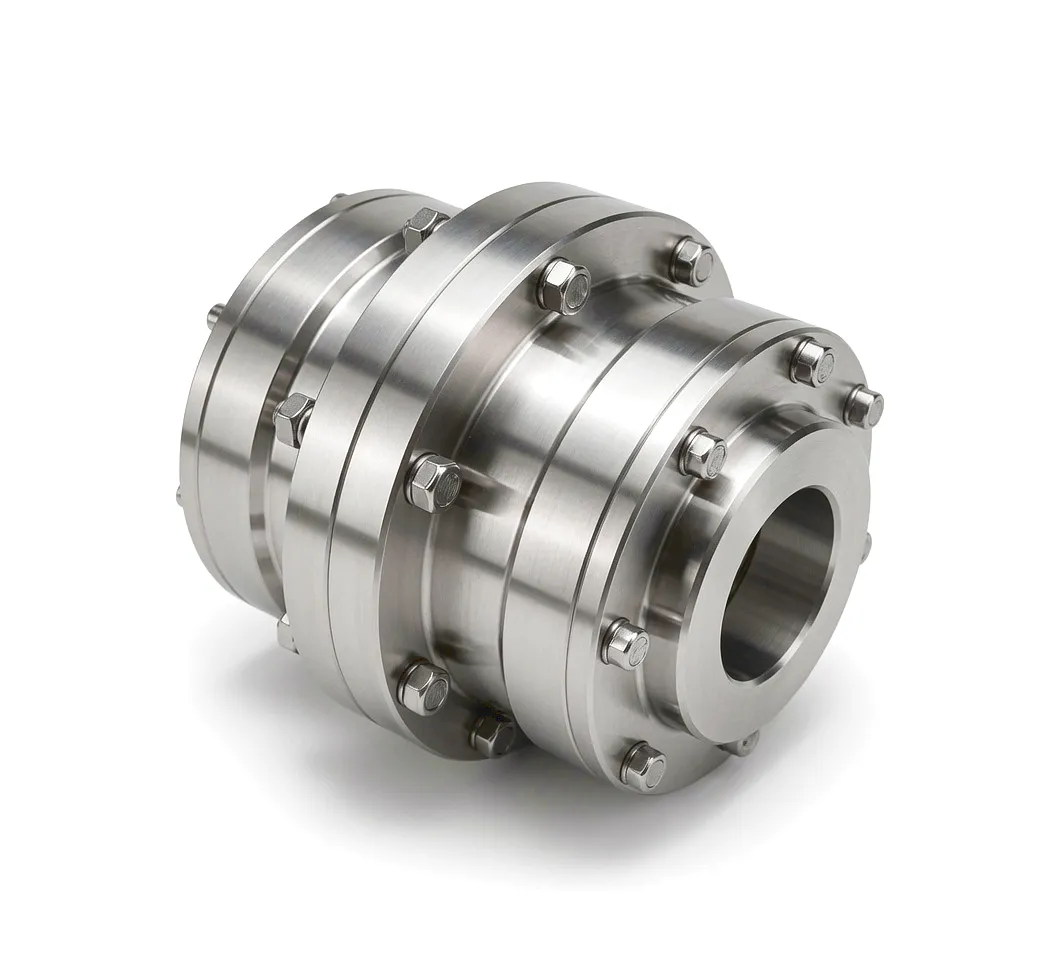
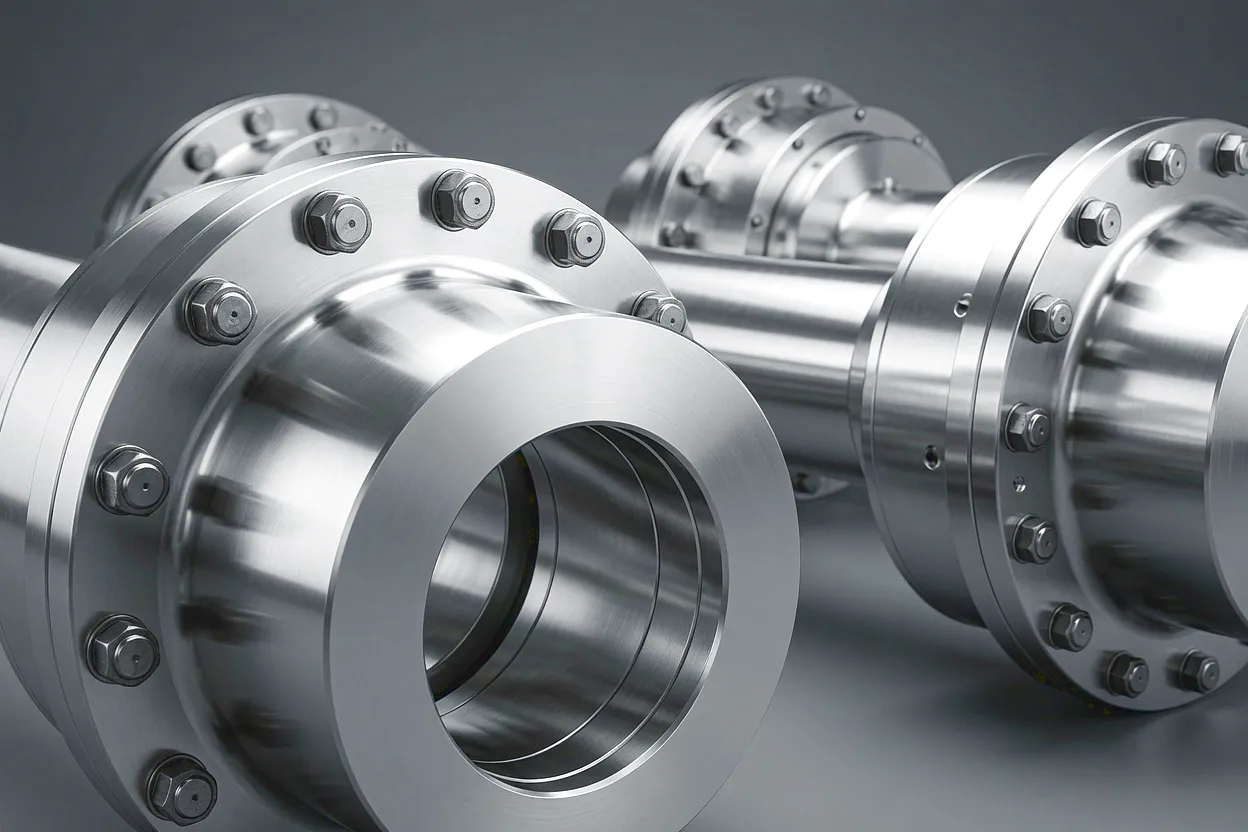
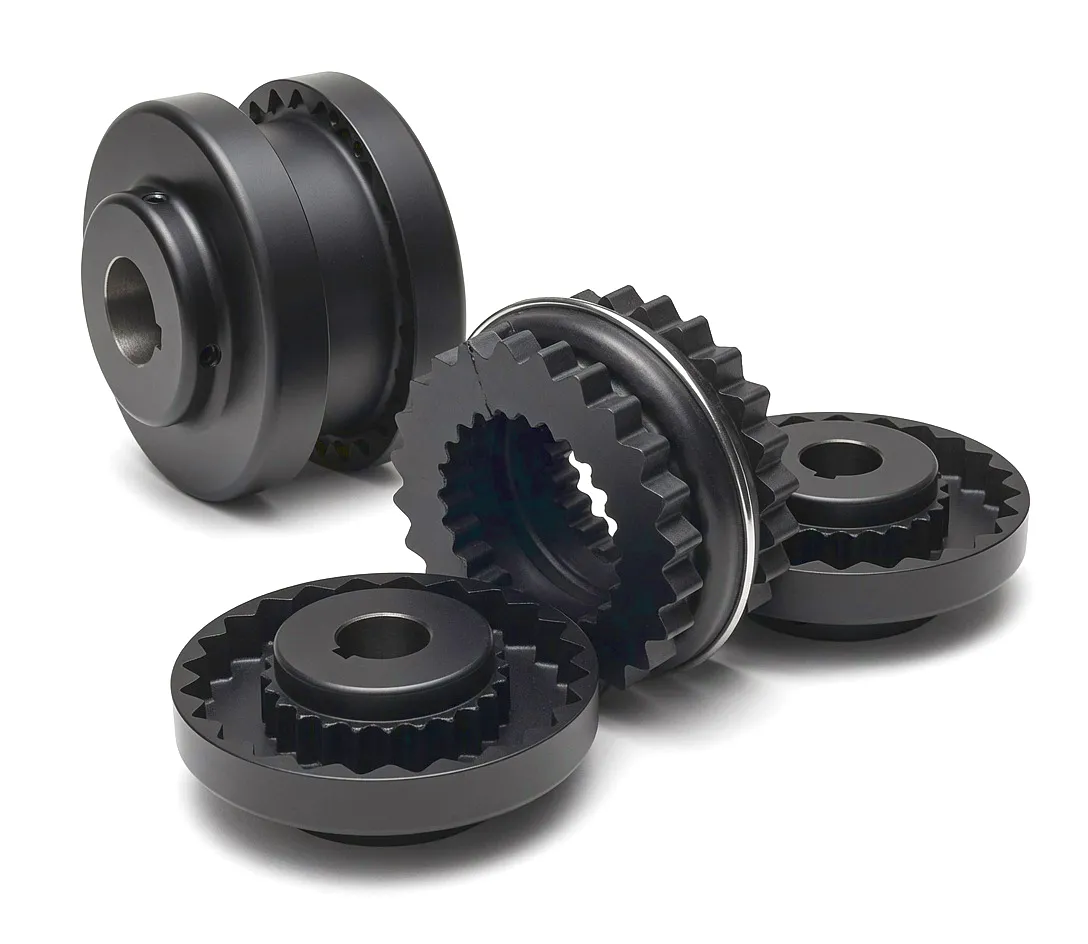
GICL Series Drum-Shape Gear Coupling — Wind Turbine Gearbox Interface
How a Gear Coupling Works Inside a Wind Turbine Drivetrain
Operating principle · Drum-tooth geometry · Misalignment tolerance
Torque Transmission Path
In a doubly-fed induction generator (DFIG) wind turbine, wind energy captured by the rotor blades travels along the main shaft into the gearbox input flange. The gear coupling bolted between the low-speed shaft and gearbox input sleeve transmits this torque through meshing crowned teeth, allowing the assembly to flex slightly with each gust without binding the shaft bearings. The internal and external gear rings mate with a thin lubricant film that distributes contact stress over a wide tooth face, preventing fretting damage even at variable torque levels.
Crowned (Drum) Tooth Profile
The defining feature of GICL and NGCL series couplings is the barrel-shaped (crowned) tooth. Unlike a straight-tooth coupling, which contacts only at a line when misaligned, the crowned tooth maintains a surface contact patch even when the two shaft axes deviate by up to 1.5°. This is not a minor detail for wind turbines: nacelle frames routinely flex by fractions of a degree under asymmetric rotor loading, and without crowned teeth, straight coupling teeth would edge-load catastrophically, wearing within months. The geometry also provides a small but important degree of axial compliance, absorbing thermal expansion of the drive shaft and the generator rotor shaft simultaneously.
Misalignment Accommodation
A drum gear coupling for wind turbines is engineered to accept angular misalignment typically up to 1°–1.5° per coupling end and parallel offset up to 0.5 mm, depending on hub diameter and tooth module. In offshore applications, where the nacelle bedplate experiences wave-induced rocking, the ability to absorb dynamic misalignment without transmitting bending moments into the gearbox input bearings is critical. Without this compliance, gearbox bearing life falls sharply — which in a remote offshore location means unplanned vessel-access maintenance costs that can dwarf the component cost by orders of magnitude.
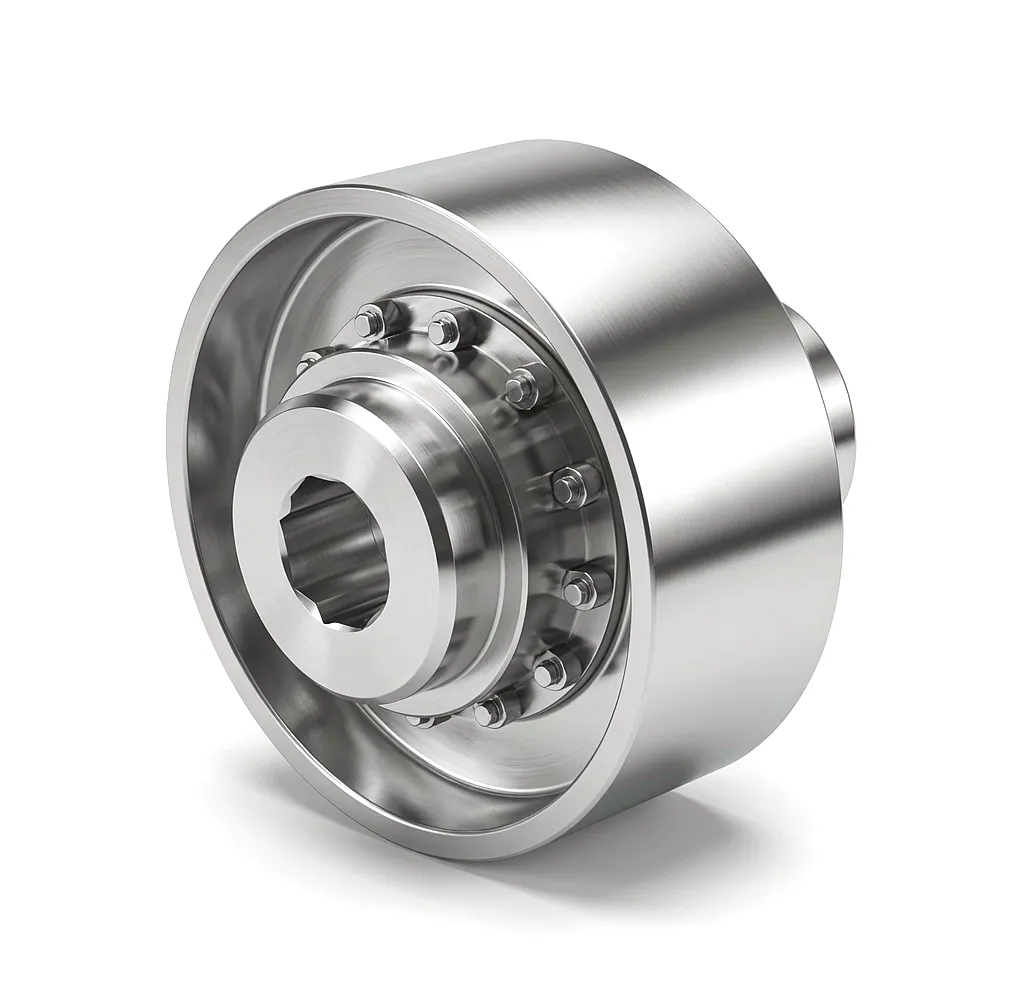
The two main configurations used in wind turbine drivetrains are the GICL series (intermediate-shaft type with a floating sleeve) and the NGCL series (with integrated brake disc flanges). Both use the same crowned-tooth geometry but differ in how they integrate with the surrounding structure. The NGCL’s brake disc flange is particularly well suited to direct-drive and semi-direct-drive (medium-speed) turbines where the brake is mounted between rotor and generator, since the coupling and brake disc form a single compact assembly that reduces both axial length and overall nacelle weight.
The NL nylon series, by contrast, finds its place in smaller wind turbines and auxiliary yaw drive systems, where the self-damping property of nylon teeth absorbs the sudden engagement shock when the yaw motor starts and stops. Nylon’s inherent electrical insulation also prevents stray currents from tracking between the yaw motor shaft and the nacelle frame — a failure mode that is surprisingly common in older turbine designs that relied on metal couplings in this location.
Materials, Construction & Technical Performance
Alloy steel teeth · Case hardening · Rated torque specifications
The demanding operating environment of a wind turbine — temperature swings from -30°C in winter operation to +80°C inside the nacelle, combined with continuous vibration and potential ingress of moisture-laden salt air — means that material selection for gear couplings is not a commodity decision. Ever Power manufactures wind turbine gear coupling hubs and sleeves from 42CrMo4 alloy steel (equivalent to BS EN ISO 683-2 grade), a chrome-molybdenum material that combines high yield strength (typically above 900 MPa after heat treatment) with excellent fatigue resistance. The tooth flanks are case-hardened to 58–62 HRC using controlled gas carburizing, which creates a hard surface layer of approximately 1.2–1.8 mm depth while retaining a tough core. This dual-zone microstructure is precisely what prevents tooth root fatigue cracking under the bending stress reversals caused by wind turbulence.
The outer sleeve (for GICL/NGCL series) is precision-bored to H7 tolerance and bolted with high-tensile grade 10.9 fasteners torqued to prescribed values. The entire assembly is sealed with labyrinth-type grease retainers to maintain the correct NLGI 2 semi-fluid grease fill even under the centrifugal force of high-speed operation. For offshore applications, additional corrosion protection is applied via zinc phosphate pre-treatment plus fluoropolymer topcoat on all external surfaces.
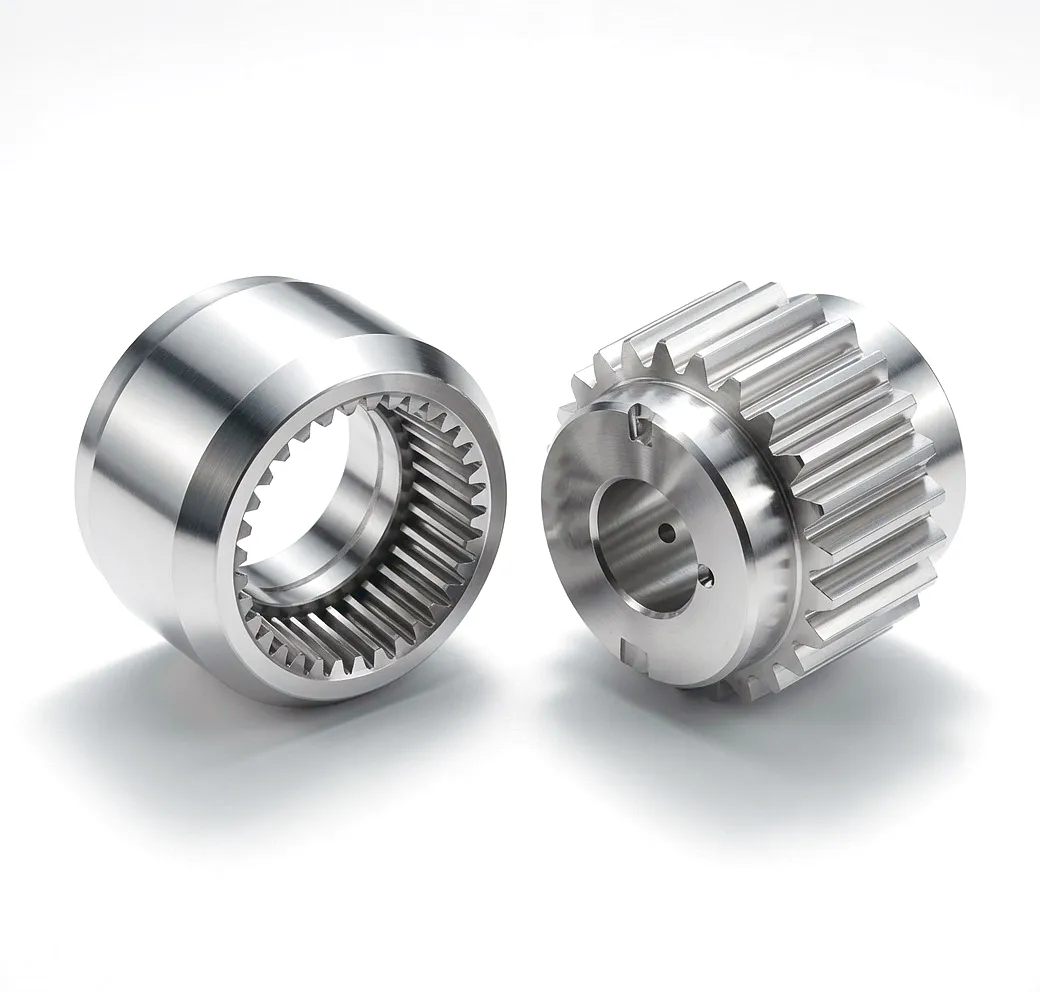
NL Nylon Gear Coupling — Yaw Drive & Auxiliary Applications
| Parameter | GICL Series | NGCL Series | NL Nylon Series |
|---|---|---|---|
| Rated Torque Range (Nm) | 400 – 2,800,000 | 630 – 3,150,000 | 25 – 16,000 |
| Max Angular Misalignment | ≤ 1.5° | ≤ 1.5° | ≤ 2° |
| Axial Displacement (mm) | ±2 – ±14 | ±2 – ±14 | ±1 – ±6 |
| Max Bore Diameter (mm) | up to 950 | up to 1,050 | up to 180 |
| Hub Material | 42CrMo4 alloy steel | 42CrMo4 alloy steel | Steel hub + nylon ring |
| Tooth Surface Hardness | 58–62 HRC | 58–62 HRC | PA66 nylon (moulded) |
| Operating Temperature Range | -30°C to +80°C | -30°C to +80°C | -20°C to +70°C |
| Balance Grade (ISO 1940) | G6.3 / G2.5 optional | G6.3 / G2.5 optional | G6.3 |
| Typical Wind Turbine Application | Main shaft / gearbox input (DFIG & semi-direct drive) | Generator–gearbox output with integrated brake disc | Yaw drives, pitch drives, auxiliary systems |
Why Wind Turbine Operators Choose Drum-Tooth Gear Couplings
Key technical advantages · Cost of ownership · Longevity
High Torque Density
Crowned-tooth gear couplings transmit rated torque at a much smaller envelope than chain or jaw couplings of equivalent rating. In nacelle space — where every kilogram and every centimetre of axial length represents real structural cost — this compactness is commercially significant. A 1.5 MW GICL coupling can weigh under 180 kg while handling torques that would require a rubber-jaw coupling three times the diameter.
Extended Service Life
With the correct grease type and relubrication interval — typically every 3–5 years for onshore wind, or synchronized with major nacelle service intervals for offshore — a properly specified drum-tooth gear coupling can last the full 20–25 year design life of the turbine. The carburized tooth profile maintains its geometry even after decades of cyclical loading, provided the misalignment is within design limits and the lubricant is not contaminated. This longevity dramatically reduces lifetime cost of ownership compared to rubber-element couplings, which typically require element replacement every 3–5 years.
Offshore Corrosion Resistance
UK offshore wind sites — from the Hornsea complex in the North Sea to the large arrays off the East Anglia coast — expose drivetrain components to chloride-rich salt spray, persistent humidity, and wide temperature cycling. Ever Power offshore-rated gear couplings are finished with zinc phosphate conversion coating plus an epoxy primer and fluoropolymer topcoat, giving a corrosion protection rating equivalent to ISO 12944 category C5-M. All bolt threads are protected with phosphate-and-oil treatment, and the grease seals are rated for the marine environment.
Custom Engineering Fit
Every wind turbine OEM — from Siemens Gamesa and Vestas to smaller UK-developed turbines — has its own gearbox and generator flange geometry. Ever Power’s in-house machining capability means we can manufacture to exact customer interface drawings, including customer-specified pilot bore dimensions, keyway profiles, shrink-fit tolerances, and flange bolt patterns. No compromising on standard catalogue bore sizes when your drivetrain requires a precisely matched coupling.
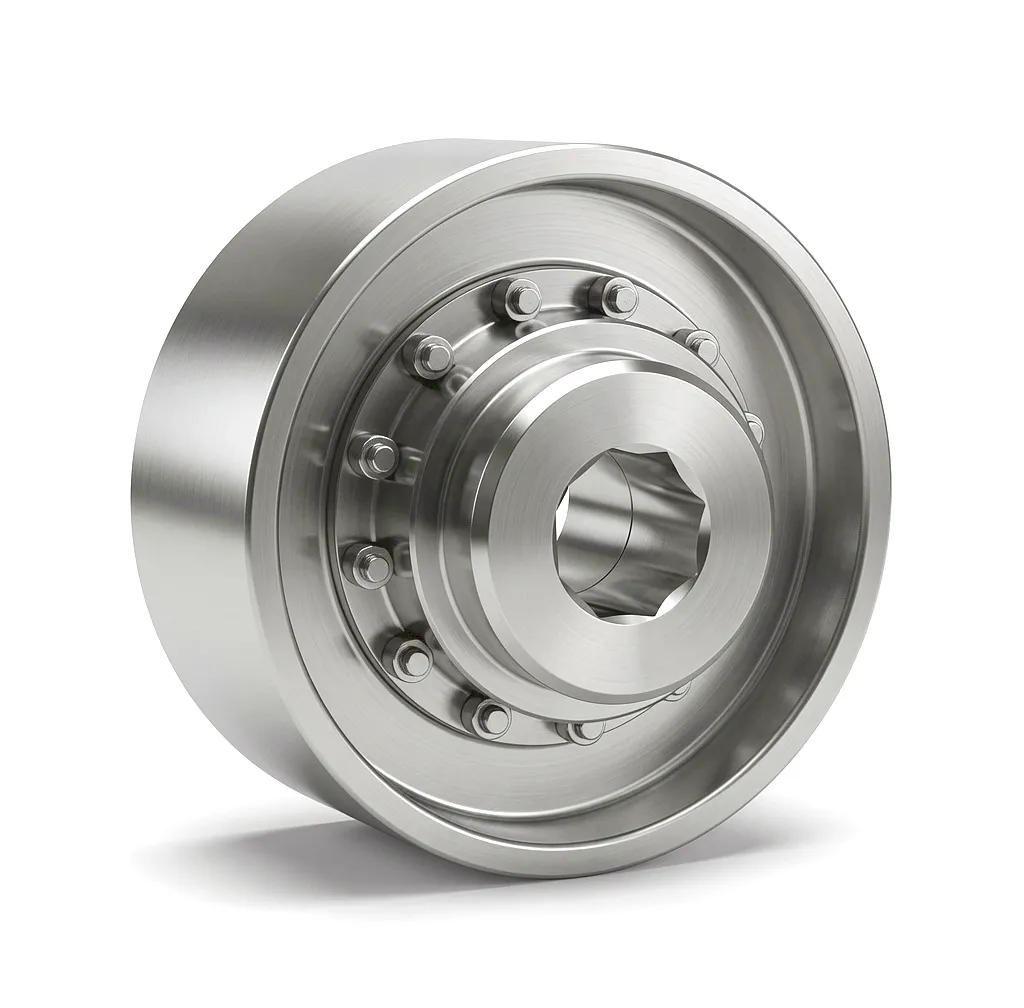
Zero-Backlash Precision and Load Sharing
One underappreciated advantage of drum-tooth gear couplings in wind turbines is the multi-tooth load sharing geometry. Unlike a bolted flange coupling where each bolt carries a discrete share of the torque, the gear coupling distributes load across all meshing teeth simultaneously. With typical tooth counts of 20–40 per coupling hub, the load per tooth remains low even at peak torque. This multi-tooth sharing is also why gear couplings can absorb significant shock loads — the kinetic energy of a sudden wind gust is spread across the entire tooth mesh rather than concentrated at a single bolt or rubber element.
The consistent backlash-free transmission under bidirectional torque (which occurs during wind reversal and generator braking events) also protects the gearbox from the ratcheting damage that can occur with flexible-jaw and disc pack couplings under conditions of rapid torque reversal. In the UK’s highly variable wind resource — where gusting is frequent and wind direction can shift 180° within minutes — this bidirectional stability is a genuine operational advantage.
Application Scenarios in Wind Turbine Drivetrains
Main shaft · Gearbox–generator interface · Yaw & pitch drives · UK wind park examples




Low-Speed Main Shaft (LSS) Coupling
The rotor shaft of a modern multi-megawatt turbine rotates at 5–20 RPM and carries torques in the range of 1 to 12 MNm depending on turbine rating. The gear coupling at the main shaft–gearbox interface must be large enough to transmit this enormous low-speed torque, yet compact enough to fit within the bedplate structure. Ever Power GICL large-series couplings satisfy both requirements, with rated torques up to 2.8 MNm in standard form and custom designs available beyond this. The crowned tooth geometry also accommodates the 3–5 mm axial growth of the steel main shaft under rated thermal load, preventing the build-up of axial force that would otherwise load the main bearing and gearbox input bearing simultaneously.
High-Speed Shaft (HSS) Generator Coupling
After the gearbox has multiplied speed from approximately 15 RPM up to 1,500 RPM (for a 50 Hz four-pole generator), the high-speed shaft gear coupling faces a very different set of challenges. At high rotational speed, balance quality becomes critical — any residual unbalance generates centrifugal forces that increase with the square of speed, creating vibration that shortens bearing life in both the gearbox high-speed bearing and the generator front bearing. The NGCL series couplings for high-speed shaft applications are dynamically balanced to G2.5 grade as standard and can be supplied to G1.0 on request. The integrated brake disc option (NGCL-TH type) is widely used in 1.5 MW and 2 MW turbines in the UK’s extensive onshore fleet, where the rotor brake must be accessible for periodic inspection and pad replacement.
Semi-Direct Drive and Medium-Speed Turbines
The growing popularity of semi-direct drive (or “medium-speed”) turbine architectures — where a single-stage or two-stage gearbox connects the rotor to a medium-speed permanent magnet generator running at 100–400 RPM — creates an interesting coupling specification challenge. The medium-speed shaft requires a coupling that bridges the gap in specification between a traditional LSS and HSS coupling: moderate to high torque, moderate to high speed, and with the balancing precision of a high-speed design. The NGCL series in medium bore sizes (200–500 mm) serves this niche well, and has been supplied for several medium-speed turbine OEM programmes in the UK and mainland Europe.
Yaw Drive, Pitch Drive and Hydraulic Pump Systems
Beyond the main drivetrain, a wind turbine contains a cluster of auxiliary drives — yaw motors that rotate the entire nacelle to track wind direction, pitch actuator motors that control blade angle, and hydraulic pump drives for the pitch control circuit. These drives operate at much lower torques but demand coupling types that can absorb motor start/stop shock and protect the driven gear ring from electrical pitting. The NL nylon gear coupling, with its electrically insulating nylon tooth ring, is the standard solution here. The nylon ring absorbs starting shock, prevents bearing electrolytic erosion in the driven unit, and can be replaced on-site by a technician in under 30 minutes without disturbing the shaft alignment — a significant maintenance advantage in the confined space of a wind turbine nacelle.
Customer Success: Hornsea Offshore Wind Operator, East Yorkshire
UK offshore wind · Drivetrain upgrade programme · Cost per MWh reduction
The Challenge
A UK-based independent power producer (IPP) operating 48 × 2.3 MW offshore turbines in the East Yorkshire wind energy zone reported premature wear on the high-speed shaft couplings of several turbines during their Year 8 inspection campaign. The original OEM couplings — a rubber-element disc pack type — had experienced element fatigue cracking in 14 of the 48 units, attributed to a combination of salt spray ingress into the disc pack stack and higher-than-design angular misalignment caused by bedplate deflection under North Sea wave loading. Replacing the entire element sets across the affected fleet with OEM replacement parts was quoted at a combined cost of over £220,000, with a lead time of 22 weeks.
The Ever Power Solution
The operator’s drivetrain engineering team contacted Ever Power’s UK technical sales team to explore a conversion to drum-tooth gear couplings for the HSS position on all 48 turbines. Ever Power’s engineers produced custom interface drawings to match the existing gearbox HSS flange and generator D-end flange geometry, providing NGCL-series drum-tooth couplings with integrated brake disc flanges to G2.5 balance specification and full offshore corrosion protection coating. The custom coupling set was manufactured, inspected and dispatched within 11 weeks. Installation was completed during a planned summer vessel campaign, with technicians reporting that the installation procedure was significantly faster than the original disc pack element replacement due to the coupling’s split-sleeve design allowing fitment without disturbing the shaft end-float setting. All 14 initially affected turbines and a further 12 that were showing early-stage wear were converted in a single campaign.
Outcome
What Our Customers Say
“We converted 26 high-speed shaft positions across our North Sea portfolio from disc-pack elements to Ever Power NGCL drum-tooth couplings during last summer’s campaign. The fit quality was exceptional — every coupling installed to the dimensional drawings without any rework. We’ve had zero coupling-related downtime in the 14 months since installation. The cost and lead-time saving versus our original OEM quote was substantial.”
“As an O&M contractor serving multiple onshore wind clients across Scotland and Northern England, we often need non-standard bore sizes and keyway dimensions that catalogue couplings simply don’t cover. Ever Power’s custom machining service has consistently delivered components to our dimensional drawings within agreed tolerances, with the material certificates and test reports we need for our turbine operator clients. Their technical support team also genuinely understands wind turbine drivetrains, which is rare in the coupling supply market.”
“We contacted Ever Power for NL nylon couplings for the yaw drive system on a batch of 3 MW turbines going through mid-life refurbishment in East Anglia. The product arrived with full dimensional inspection reports and matching certificate of conformity. The nylon rings fit perfectly, and the electrical insulation property has resolved the bearing pitting issue we were seeing on the yaw gearbox. Competitive price and fast delivery to our Norfolk service base — we’ll be ordering again.”
Ever Power Manufacturing & Custom Engineering Capability
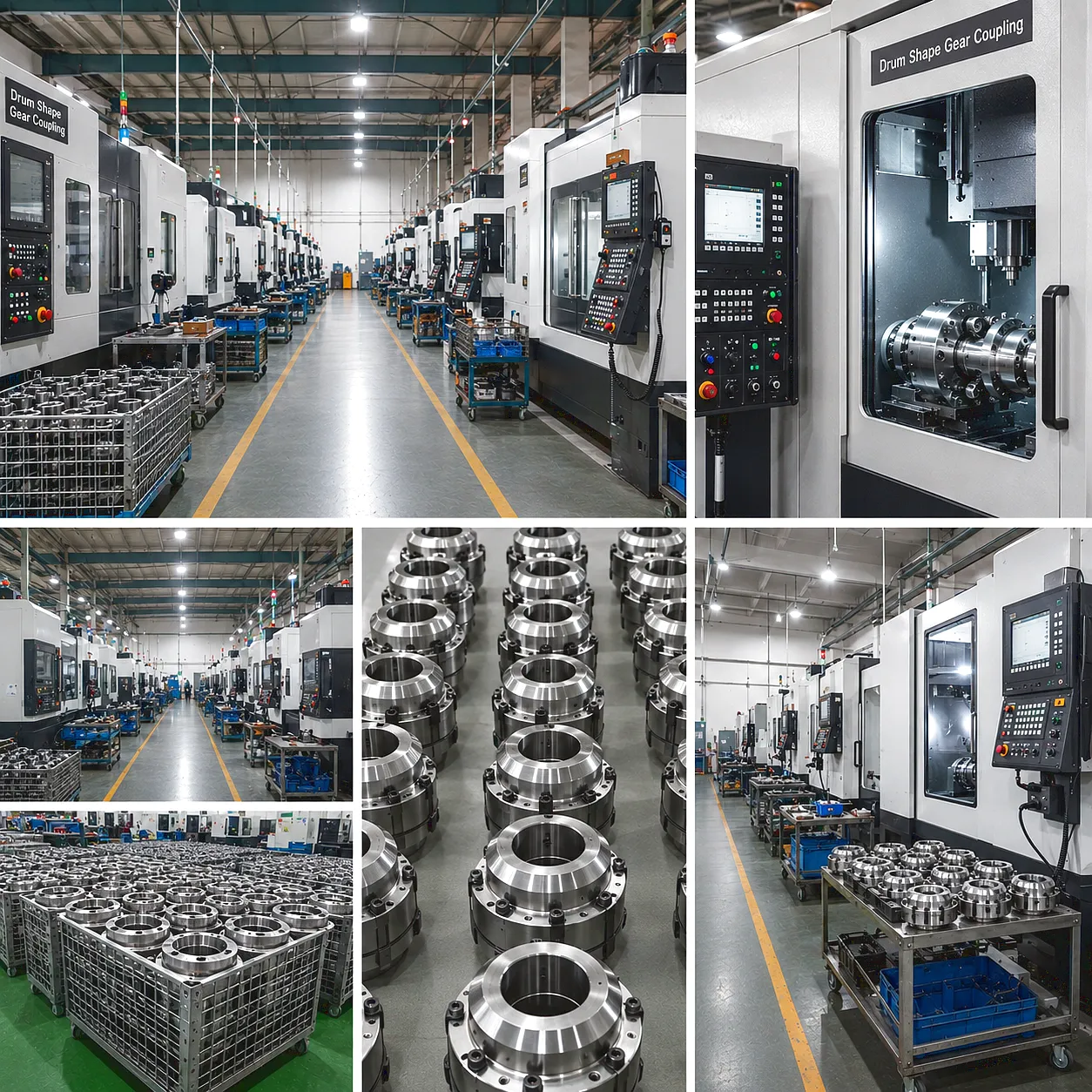
Factory overview · CNC precision machining · Bespoke coupling design for wind OEMs
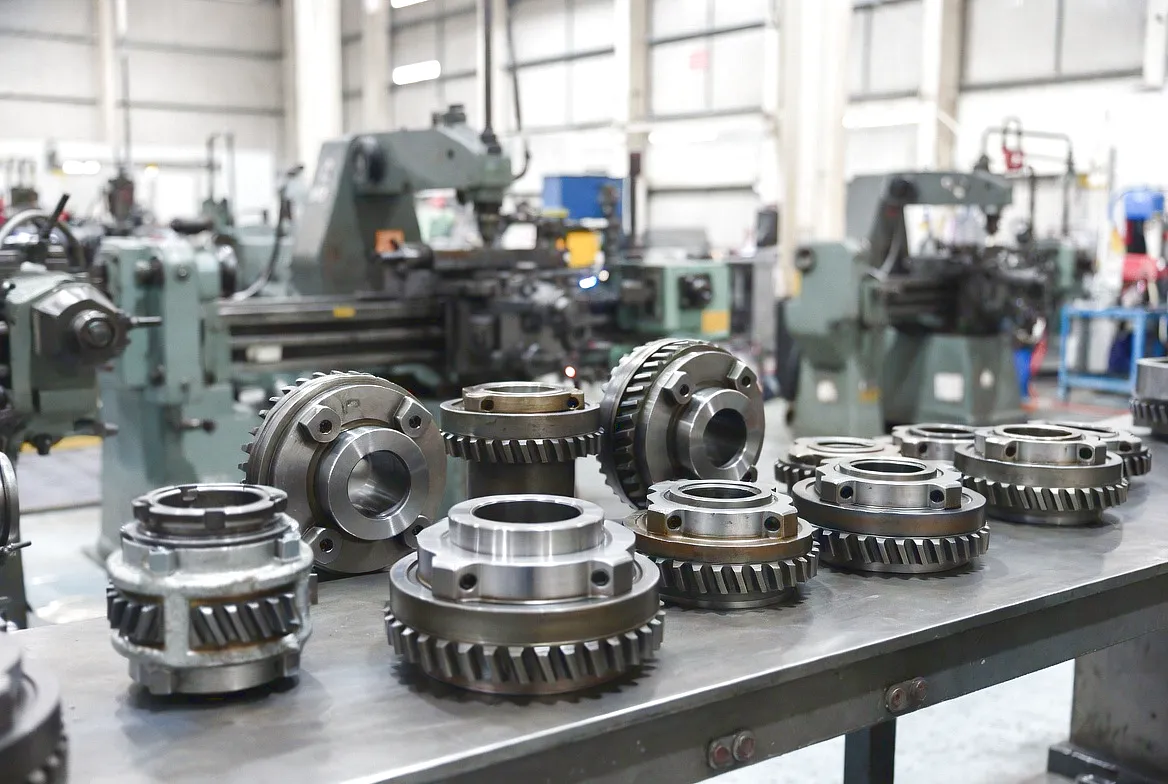
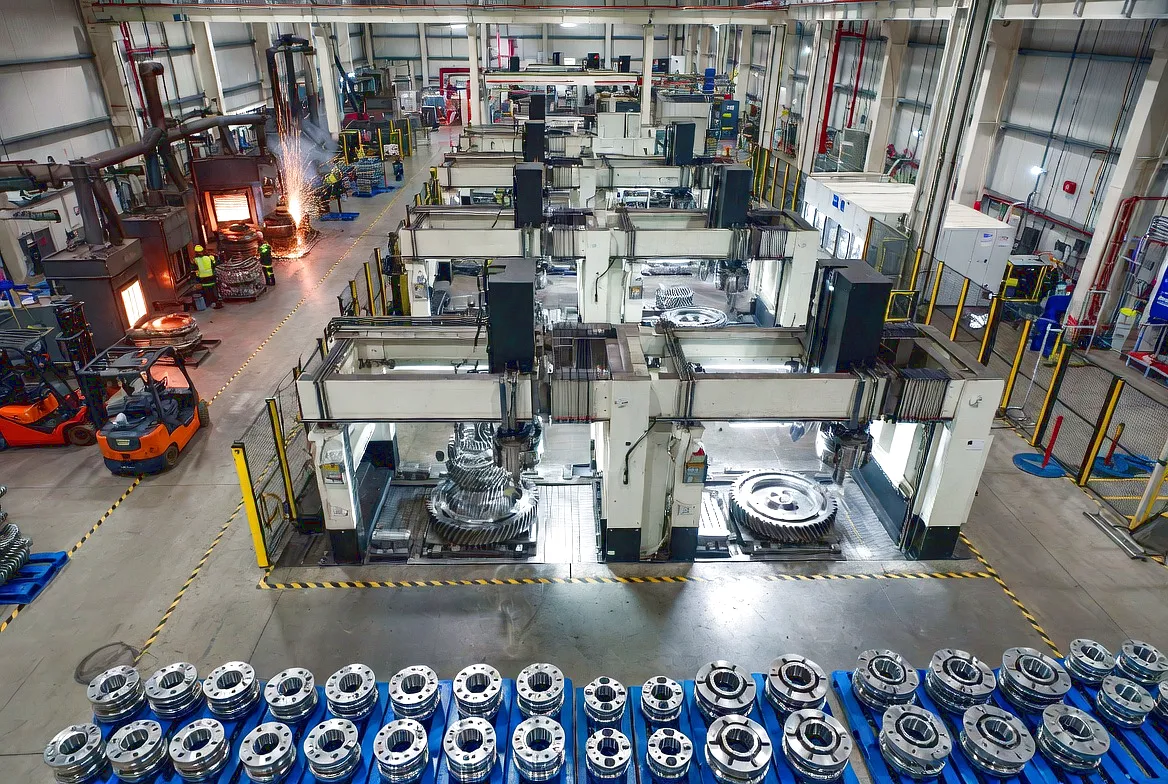
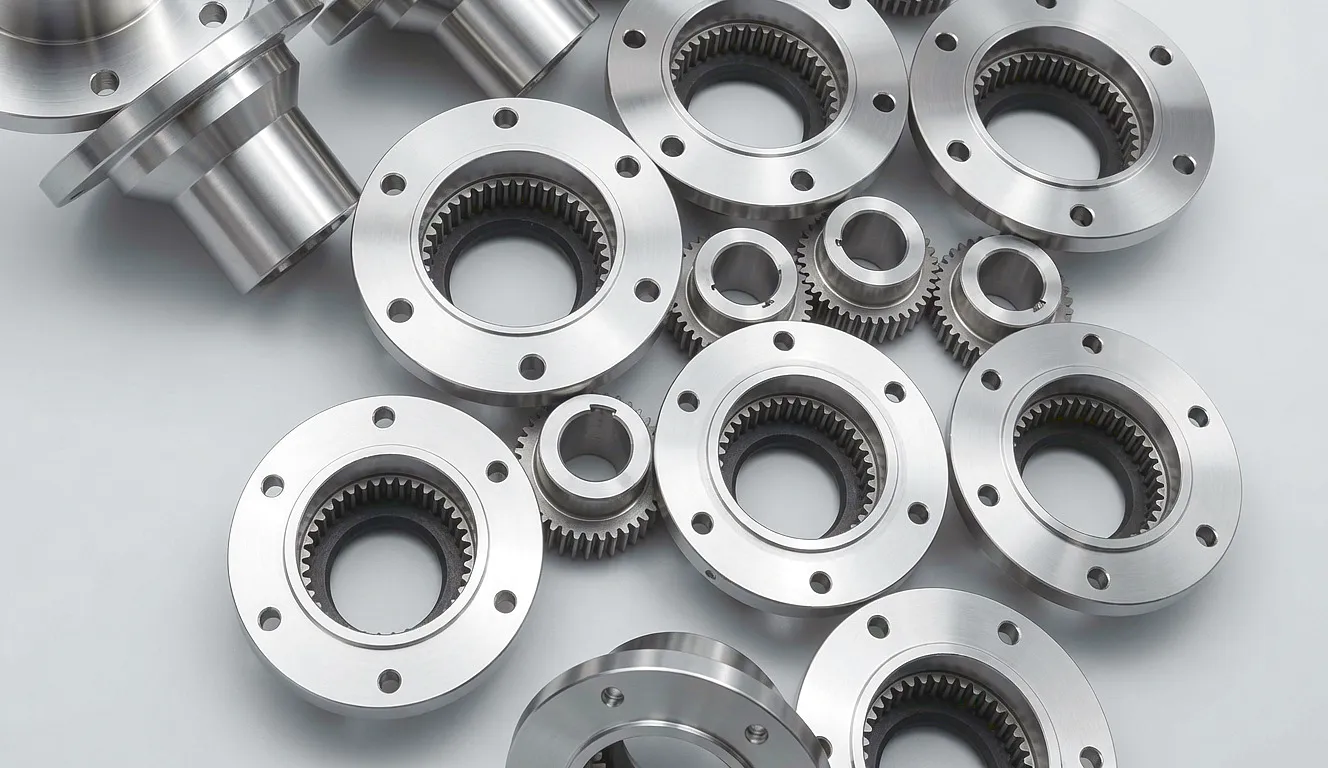
Ever Power’s manufacturing facility is equipped with large-format CNC turning centres capable of machining coupling hubs up to 1,200 mm outer diameter, CNC gear hobbing and shaping machines dedicated to crowned-tooth profile cutting, and a coordinate measuring machine (CMM) inspection room that provides dimensional traceability on every finished component. This integrated production capability — from raw material receipt through heat treatment, machining, tooth profile inspection and final assembly — means that the quality of a custom coupling is controlled at every stage by our own engineering team rather than outsourced across a fragmented supply chain.
For wind energy customers, our custom engineering service covers a broad scope of modifications. We can machine any bore diameter and bore tolerance to your shaft specification (H7, K7 or interference fit as required), cut any standard or non-standard keyway profile, machine split-taper bush bores for interference-fit installation without heating, match any existing flange bolt pattern (SAE, DIN or customer-specific PCD), add non-standard balance port or lubrication port positions, and coat or plate the external surfaces to customer-specified corrosion protection standards including hot-dip galvanising, sherardising, or marine-grade epoxy paint systems.
Supplying the UK Wind Energy Industry — From Scotland’s Onshore Farms to the North Sea
UK wind market · Onshore Scotland & Wales · Offshore East Anglia & Yorkshire · O&M supply chains
The United Kingdom maintains one of the world’s most significant wind energy industries. The Scottish Highlands and Southern Uplands host dense concentrations of onshore wind farms serviced by O&M contractors based in Glasgow, Inverness and Edinburgh. Yorkshire, Lancashire, Cumbria and Wales each contain substantial onshore capacity, while the offshore sector — particularly the Hornsea, Dogger Bank, East Anglia Array, and Triton Knoll projects in the North Sea and East Irish Sea — represents some of the largest individual wind project investments in the world. Each of these projects requires a reliable, domestically-accessible supply chain for drivetrain components including gear couplings.
UK wind turbine operators and O&M contractors frequently encounter the challenge of sourcing non-standard coupling replacements at short notice, particularly for older turbine fleets where the original OEM parts supply has been discontinued or carries long lead times at premium cost. Ever Power’s ability to manufacture custom-dimensioned couplings from engineering drawings — rather than requiring customers to select from a fixed catalogue — makes us a practical supply partner for both planned maintenance campaigns and unplanned breakdown events. Our logistics partners provide expedited airfreight delivery to UK-based ports and wind energy service centres when delivery speed is critical.
The UK’s commitment to reaching 50 GW of offshore wind capacity by 2030 under the government’s energy security strategy means that the pace of new turbine installations, repowering projects, and mid-life major component exchanges will only accelerate. Procurement teams at wind farm operators, turbine OEM service divisions, and specialist O&M contractors across England, Scotland and Wales can rely on Ever Power as a technically capable and cost-competitive source for all gear coupling requirements in wind turbine drivetrains.
UK Wind Regions We Serve
How to Select the Right Gear Coupling for Your Wind Turbine Application
Selection criteria · Comparison of coupling types · Ordering guidance
Selecting the correct gear coupling for a wind turbine drivetrain position requires matching the coupling’s rated torque, bore range, misalignment capacity and environmental rating to the specific shaft position. The table below summarises the key selection criteria for the most common wind turbine drivetrain positions and identifies the recommended Ever Power coupling series for each. When in doubt, contacting Ever Power’s technical team with your shaft diameter, rated torque, operating speed and any known misalignment values will allow us to provide a specific coupling designation and dimensional drawing within 24–48 hours for standard enquiries.
| Turbine Position | Typical Speed (RPM) | Key Challenge | Recommended Series | Balance Grade |
|---|---|---|---|---|
| Main shaft (LSS) — main bearing to gearbox input | 5–20 | Extreme torque, axial growth, angular misalignment | GICL Large Series | G6.3 |
| Gearbox output (HSS) to generator — without brake disc | 1,000–1,800 | High speed, balance, salt environment | GICL Medium–Large Series | G2.5 or G1.0 |
| Gearbox output (HSS) to generator — with rotor brake disc | 1,000–1,800 | Integrated brake, compact nacelle space | NGCL-TH Series | G2.5 or G1.0 |
| Medium-speed shaft (semi-direct drive) | 100–400 | Bridging LSS & HSS demands | NGCL Medium Series | G2.5 |
| Yaw drive motor to yaw gearbox | 300–1,500 | Shock absorption, electrical insulation | NL Nylon Series | G6.3 |
| Pitch actuator motor drive | 300–1,800 | Damping, small envelope, easy maintenance | NL Nylon Series (small bore) | G6.3 |
If you are sourcing replacement gear couplings for an existing turbine fleet, the fastest route to a specification is to provide us with the existing coupling’s dimensional drawing or part number, along with the gearbox and generator model numbers. Our team can identify the correct interface geometry and provide a matched coupling drawing for your approval before production begins. For new turbine OEM programmes or upgrade projects involving non-standard interfaces, we recommend an early technical discussion so that our engineers can review your drivetrain loads and propose the most appropriate coupling series and size before your design is finalised.
UK O&M procurement teams working to scheduled maintenance windows — particularly those preparing for summer offshore vessel campaigns — should note that our standard production lead times for documented repeat orders are typically 2–4 weeks for small series and 4–8 weeks for large-bore custom pieces. Early placement of orders aligned with your O&M planning schedule avoids the cost premium of expedited manufacturing.
Frequently Asked Questions
Gear coupling selection, pricing, supply and maintenance — answered for UK wind energy buyers
QWhat is the typical price range and lead time for a custom drum-tooth gear coupling for an offshore wind turbine high-speed shaft application in the UK?
Custom NGCL-series drum-tooth gear couplings for offshore wind HSS positions typically vary in price depending on bore diameter, torque rating, balance specification, and corrosion protection requirements. As a general guide, a standard-bore NGCL coupling for a 1.5–2 MW turbine will fall in the range of a few hundred to several thousand pounds per unit depending on size, with offshore corrosion coating adding a modest premium. Custom bore machining, G1.0 balance, and brake disc integration add to the base price. Lead times for custom pieces are typically 8–12 weeks from receipt of approved drawings. Contacting us with your shaft data and quantity requirement via our quote form is the fastest way to receive a detailed price — we aim to respond to UK wind energy enquiries within one business day.
QHow do I know which gear coupling type — GICL, NGCL, or NL nylon — is the right choice for my wind turbine drivetrain position in Scotland?
The choice comes down to three factors: operating speed, whether a rotor brake disc needs to be integrated, and whether electrical insulation is required. For the low-speed main shaft, GICL large-bore series is the standard solution. For the high-speed shaft without a brake disc, GICL medium-to-large series. Where the rotor brake disc is integrated with the coupling flange (common in 1.5 MW and 2 MW turbines onshore in Scotland, England and Wales), the NGCL-TH series is the correct choice. For yaw and pitch drives — where motor starting shock and electrical insulation between motor and gearbox are both concerns — the NL nylon series is ideal. If you share your turbine model and position with us, our team will confirm the right series within 24 hours.
QWhere can I find a reliable gear coupling supplier for offshore wind turbine maintenance work based in or shipping to the UK?
Ever Power is a specialist manufacturer supplying gear couplings directly to UK-based wind turbine O&M contractors, independent power producers and engineering consultancies. We ship via established logistics partners to UK mainland ports, offshore supply bases, and engineering service centres including those in Aberdeen, Hull, Great Yarmouth, Lowestoft, and other key wind energy service hubs. For time-sensitive unplanned maintenance, we can arrange expedited airfreight delivery. You can reach our UK-facing technical sales team directly via the Get a Quote contact on this page.
QHow often should drum-tooth gear couplings in wind turbines be regreased, and what grease type is recommended for harsh UK winter operating conditions?
For onshore UK wind turbines, drum-tooth gear couplings on the main shaft and HSS positions are typically regreased every 3–5 years, aligned with the turbine’s scheduled major service interval. The recommended grease is NLGI 2 grade lithium-complex or polyurea-based grease with a dropping point above 200°C and good water washout resistance — the latter being particularly relevant for both offshore applications and onshore sites in exposed Scottish Highland or coastal locations. We recommend against general-purpose EP greases that contain corrosive extreme-pressure additives (sulphur-phosphorus type), as these can accelerate corrosion of the carburized tooth surface. For offshore applications, a synthetic grease with additional corrosion inhibitor package is advisable, and we can specify a compatible product on request.
QCan Ever Power supply a replacement gear coupling to match the original OEM dimensions of a discontinued part for an ageing wind turbine fleet in England?
Yes — this is one of the most common requests we handle from UK wind energy customers. When an OEM part has been discontinued or carries an unacceptable lead time and price, our engineering team can work from a dimensional drawing, an existing coupling sample, or — in some cases — from gearbox and generator interface drawings to produce a dimensionally equivalent replacement in the GICL or NGCL series. We supply full dimensional inspection documentation with every coupling so that your engineering team can verify conformance before installation. The process typically begins with a drawing review call, followed by a manufacturing drawing for your approval, and then production. Contact us with your turbine model, gearbox type, and any reference dimensions you have.
QWhat is the difference between a drum-tooth gear coupling and a disc pack coupling for wind turbines, and when would I choose one over the other?
Disc pack couplings (also called disc couplings or laminar disc couplings) use a stack of thin metallic discs to transmit torque and accommodate angular misalignment through elastic deflection of the disc pack. They offer zero-maintenance torque transmission as long as the discs remain undamaged, and they are torsionally stiff which suits applications where precise speed synchronisation is required. Drum-tooth gear couplings, by contrast, tolerate larger misalignments, have higher torque density, and are more tolerant of moisture, dust, and corrosive environments — all of which favour their use in exposed offshore wind drivetrain positions. Disc packs are more sensitive to moisture ingress, corrosion on the disc laminate, and edge-loading from excessive misalignment. For high-speed shaft positions on modern turbines in the UK’s offshore environment, the drum-tooth gear coupling’s greater environmental tolerance typically makes it the lower-risk choice over a 20+ year asset life.
Ready to Source Gear Couplings for Your Wind Turbine Project in the UK?
Share your shaft dimensions, torque data, and application details. Our engineers will propose the right coupling series and provide a dimensional drawing and cost estimate — typically within 24–48 hours for standard enquiries.
Get a Quote — gear-coupling.top
Ever Power · Specialist gear coupling manufacturer · UK wind energy supply