
High-Precision Gear Couplings for Shore Bridge Cranes: Comprehensive Engineering Guide
How heavy-duty drum-type gear couplings keep container terminals running — covering drive system mechanics, torque ratings, material specs, and real-world installation data from UK port projects.
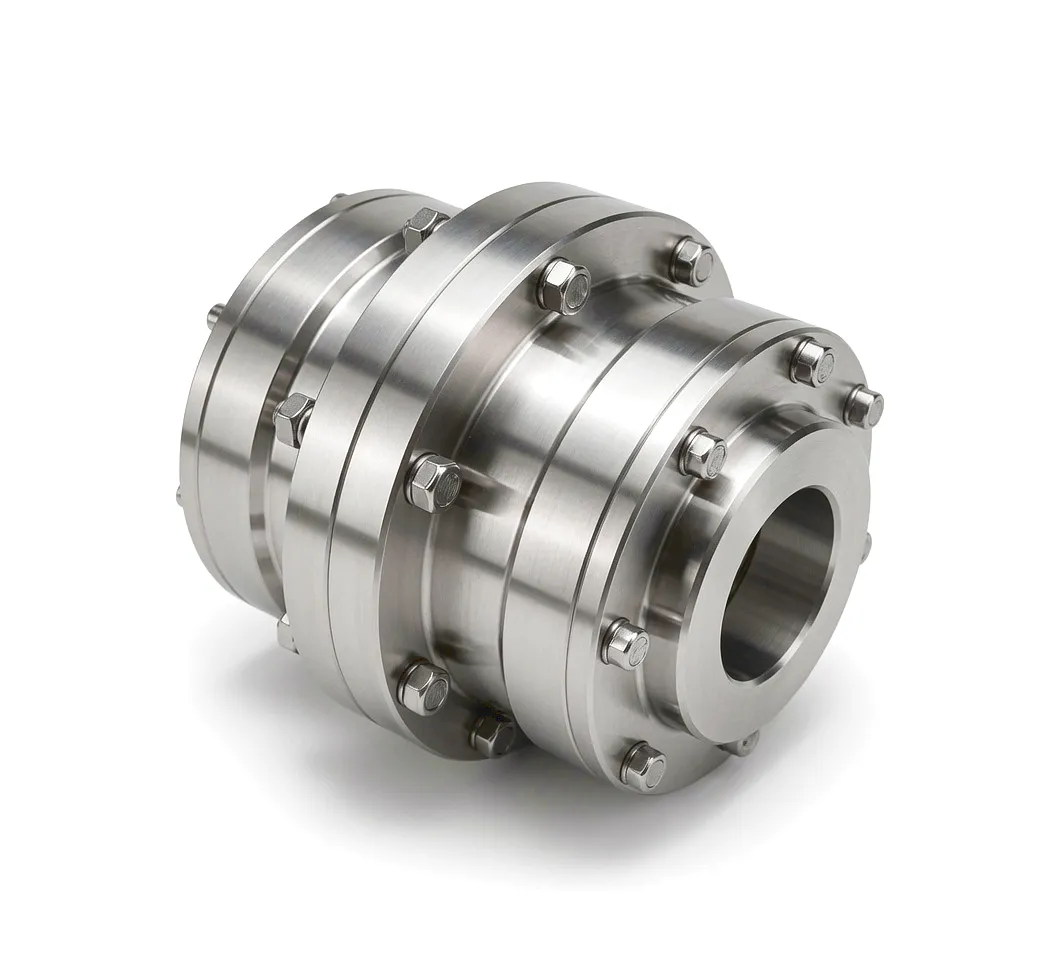 Shore bridges — those towering quayside container cranes that define the skyline of every major UK port from Felixstowe to Southampton — represent some of the most demanding mechanical environments in the world. A single Panamax-class shore bridge can weigh over 1,500 tonnes, lift spreader loads beyond 65 tonnes, and run three or four independent drive systems simultaneously, twenty-four hours a day. Under each of those drive systems sits a gear coupling, quietly absorbing misalignment, cushioning shock loads, and transmitting torques that regularly exceed 50,000 N·m.
Selecting the right gear coupling for shore bridge service is not a catalogue exercise. It demands an understanding of how hoist, trolley, and gantry mechanisms behave under load cycles, what misalignment tolerances look like after years of structural deflection, and why a coupling that works perfectly in a steel mill can fail prematurely in a salt-laden port environment. This guide draws on over 18 years of field experience with port equipment drives and provides the technical depth that procurement engineers, maintenance supervisors, and OEM designers need before they specify a single part.
Shore Bridge Drive Systems: Why Couplings Matter
Hoist Mechanism
The hoist drive lifts and lowers spreaders and containers at operating speeds up to 180 m/min. Motors in the 250–800 kW range connect to planetary or parallel-shaft gearboxes via drum-type gear couplings. Shock loads at pick-up can reach 2.5× the rated running torque, demanding couplings with high momentary overload capacity.
Trolley Travel
Trolley drives move the spreader horizontally along the boom at speeds up to 240 m/min. Constant acceleration and deceleration cycles generate torsional impulses that a rigid coupling cannot absorb. Gear couplings accommodate the angular and radial misalignment that results from boom deflection under load, preventing premature bearing and gearbox wear.
Gantry Travel
Gantry drives move the entire crane along quayside rails, covering distances of several hundred metres between operational positions. Multi-motor drives require flexible couplings that tolerate slight rail unevenness and structural frame deflection. In UK port environments, salt spray and temperature cycling from -10°C in winter to 35°C in summer add further demands on coupling material and lubrication.
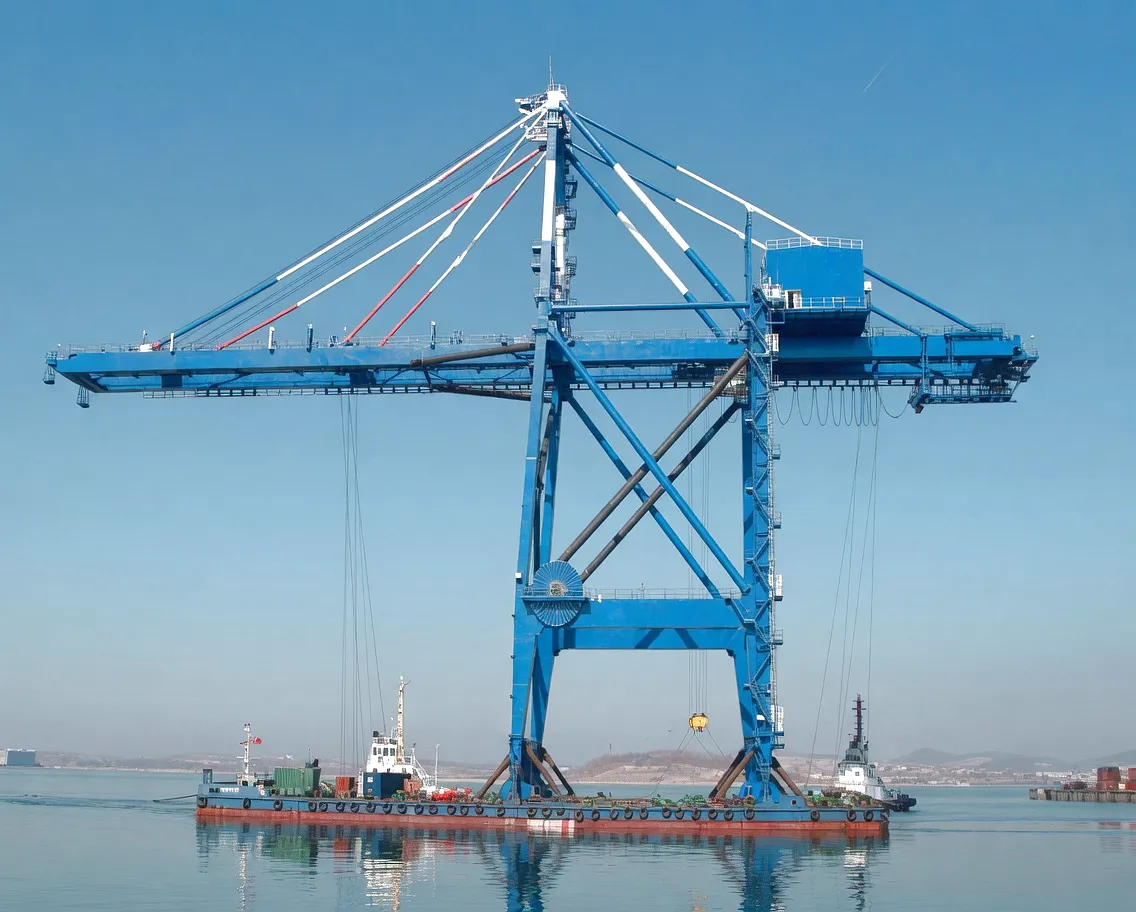
Gear coupling installation in a large port crane drive system — hoist mechanism coupling point
Why Drum-Type Gear Couplings Are the Industry Standard for Shore Bridges
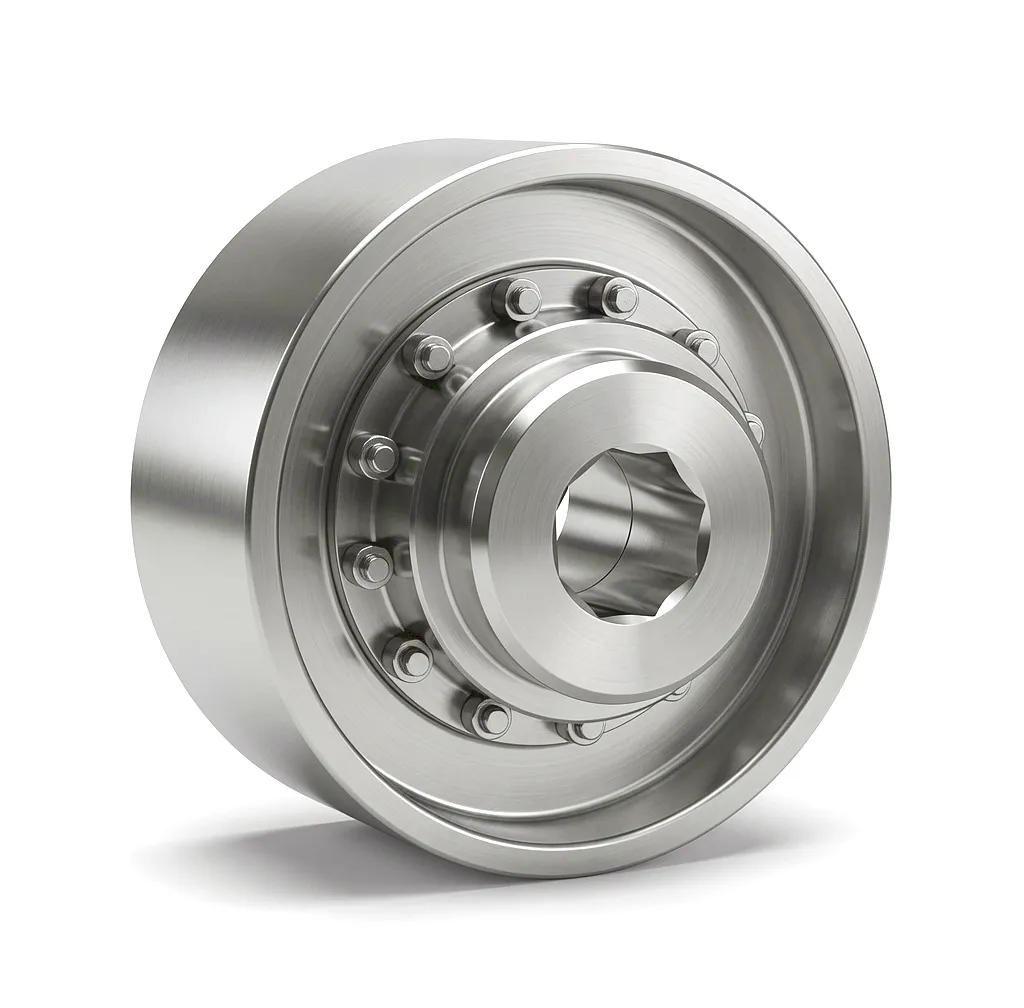
The drum-type (barrel-tooth or crowned-tooth) gear coupling has been the preferred choice for heavy crane drives for decades, and with good reason. Unlike straight-tooth designs, the crowned tooth profile on the inner sleeve distributes contact stress evenly across the tooth face even when shaft misalignment is present. This is critical in shore bridge applications because structural deflection under rated load routinely introduces angular misalignment of 0.5° to 1.5° at coupling points throughout the hoist and trolley drive trains.
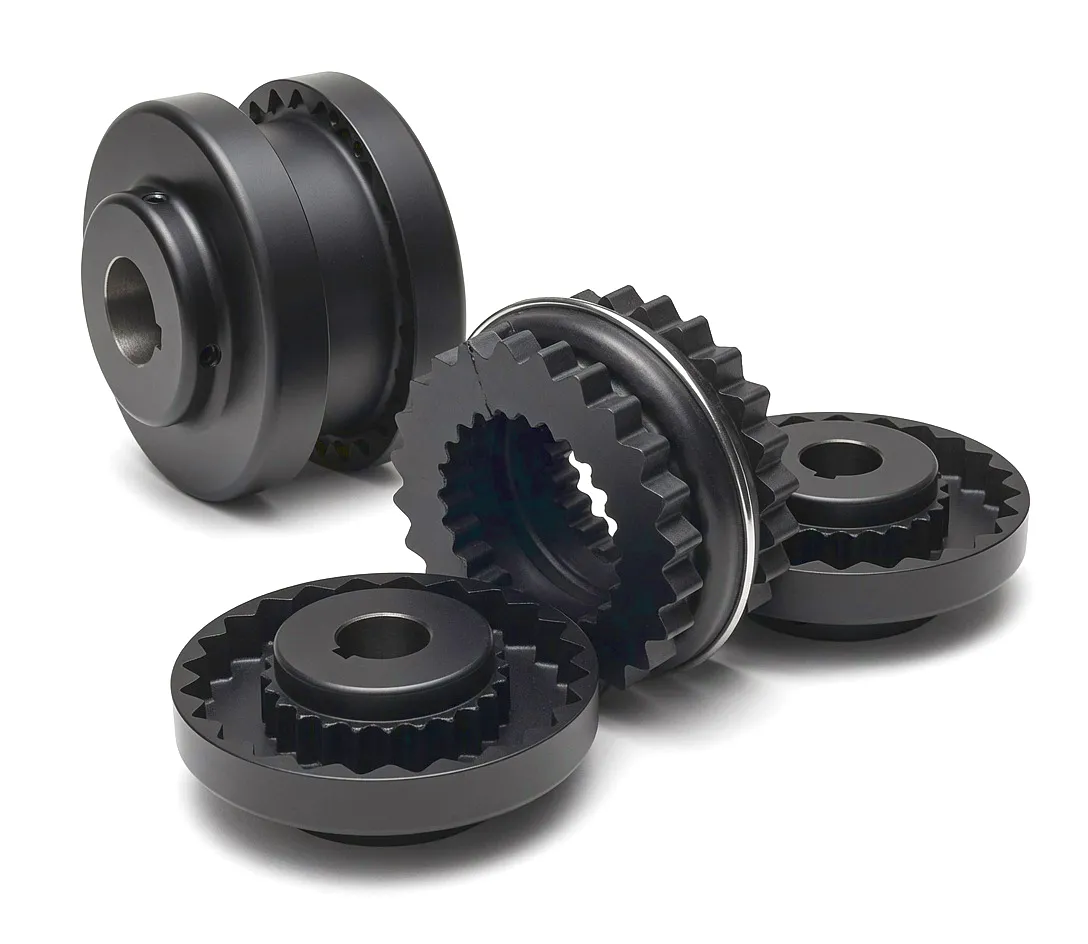
A drum-type gear coupling works by transmitting torque through meshing internal and external teeth, where the external teeth on the hub have a convex (barrel) profile ground into them. This crowned geometry creates a rolling contact as misalignment occurs, rather than an edge-loading condition that would concentrate stress at one end of the tooth. The result is dramatically lower tooth-face pressure, reduced fretting wear, and a substantially longer service life even at continuous high torques.
For a shore bridge hoist motor rated at 400 kW running at 750 rpm, the output shaft torque is approximately 5,093 N·m. After passing through a typical 1:50 gearbox ratio, the coupling on the drum-side drive shaft sees torques approaching 250,000 N·m. Selecting a coupling with a minimum service factor of 1.5 and an appropriate peak overload rating is a basic engineering requirement, not an option — and drum-type gear couplings are the only flexible coupling type that routinely delivers this performance in a compact, maintainable package.
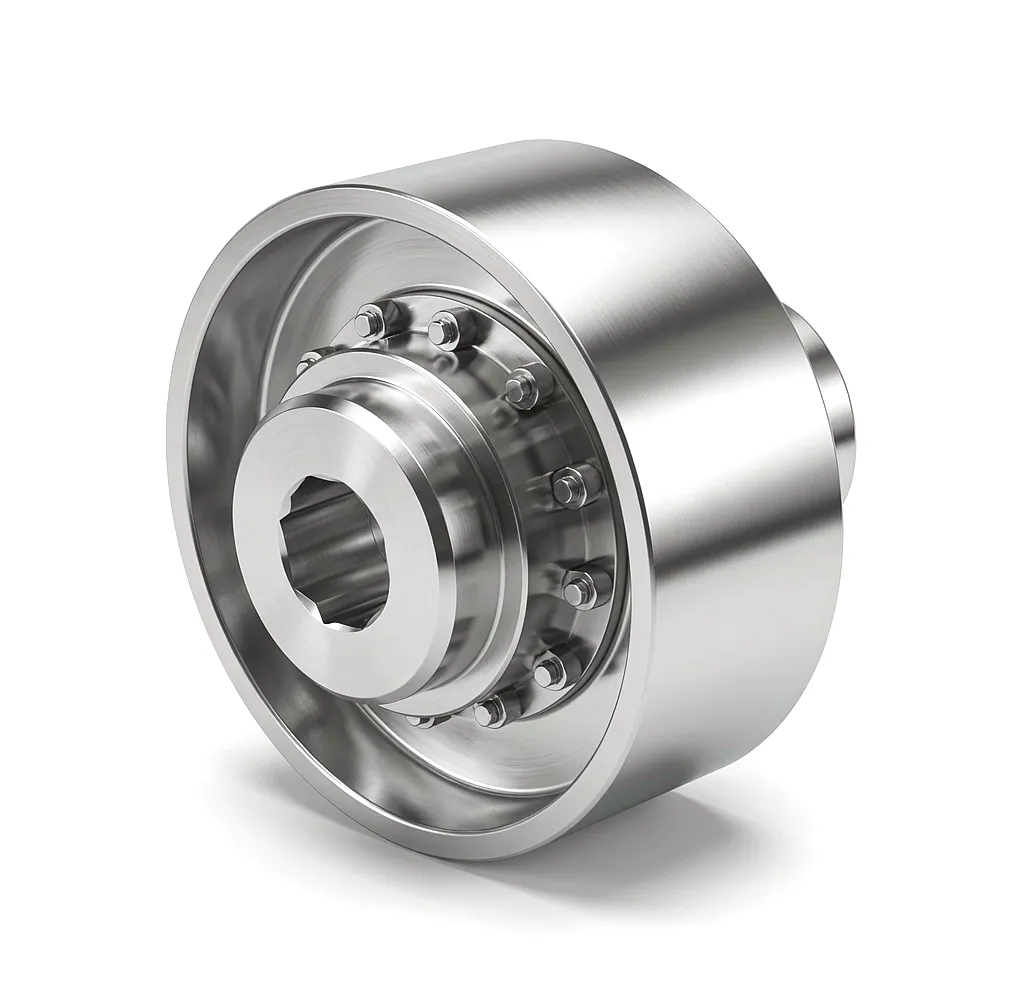
NGCL Series drum-shape gear coupling — engineered for heavy crane drive duty
Technical Performance Parameters — Shore Bridge Gear Couplings
| Parameter | GICL Series | NGCL Series | GIICL Series | Unit |
|---|---|---|---|---|
| Nominal Torque Range | 250 – 630,000 | 400 – 800,000 | 500 – 1,000,000 | N·m |
| Max. Allowable Speed | up to 3,600 | up to 4,000 | up to 2,800 | rpm |
| Angular Misalignment | up to 1.5° | up to 1.5° | up to 2.0° | degrees |
| Radial Misalignment | 0.2 – 2.5 | 0.3 – 3.0 | 0.4 – 3.5 | mm |
| Axial Float | ±3 – ±15 | ±4 – ±20 | ±5 – ±25 | mm |
| Hub Material | 45# Steel / 42CrMo | 42CrMo4 | 42CrMo4 / 40Cr | — |
| Sleeve Material | 40Cr / Cast Steel | ZG310-570 | ZG340-640 | — |
| Tooth Surface Hardness | HRC 40 – 50 | HRC 42 – 52 | HRC 42 – 55 | Rockwell |
| Operating Temperature | -30 to +80 | -30 to +80 | -40 to +100 | °C |
| IP Protection (with cover) | IP54 | IP55 | IP56 | IEC 60529 |
All data subject to specific model selection. Custom ratings available on request. Contact Ever Power for shore bridge-specific sizing calculations.
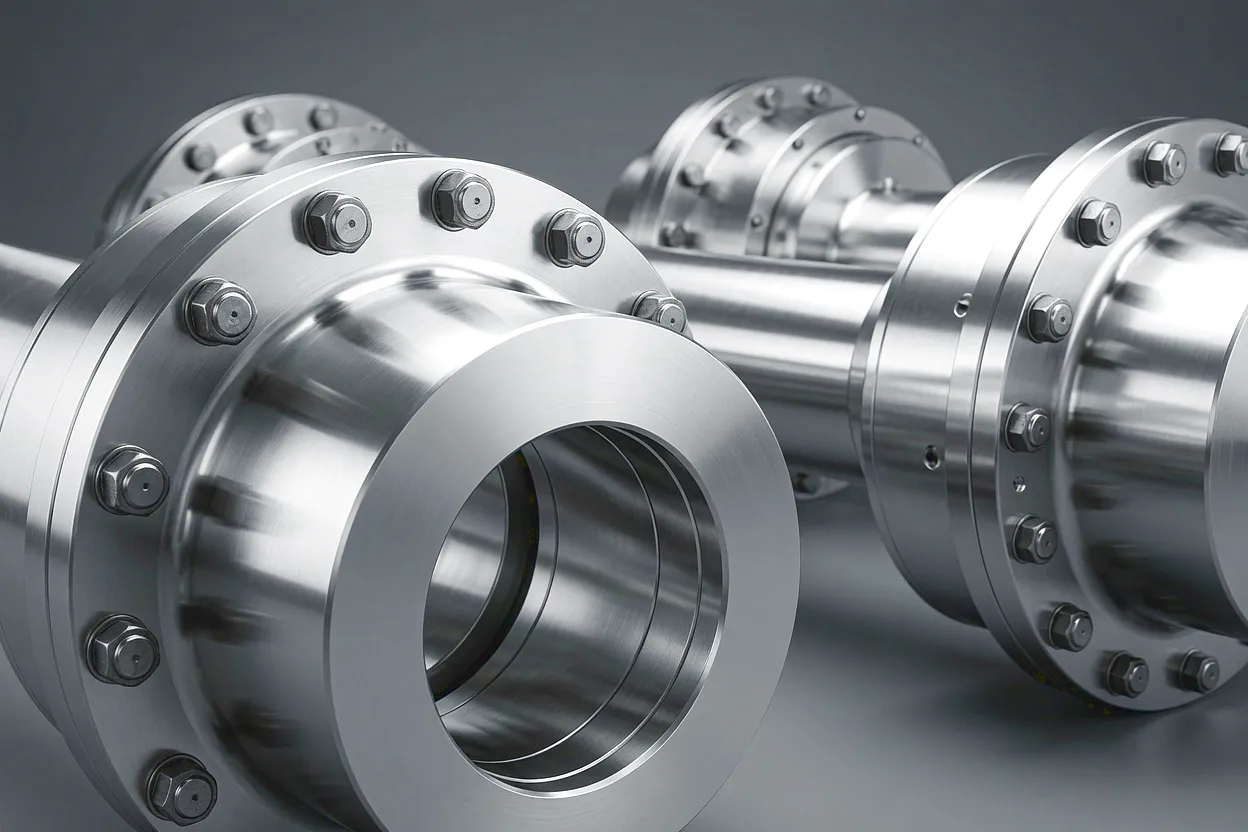
Materials, Construction, and Design Principles
Hub: 42CrMo4 Alloy Steel
The forged alloy steel hub is heat-treated to achieve a core tensile strength exceeding 900 MPa, with case-hardened teeth at HRC 42–52. This combination provides high fatigue resistance under the cyclic torque reversals that characterise crane hoist drives, where the drive direction reverses hundreds of times per shift. The bore is machined to H7 tolerance for an interference fit with the motor or gearbox shaft, and keyways are broached to DIN 6885-A standards as standard, with splined bores available for large-bore configurations.
Outer Sleeve: Cast Steel ZG340-640
The outer sleeve is cast from ZG340-640 grade steel and normalised to ensure consistent mechanical properties throughout the section. The internal tooth form is precision-hobbed after heat treatment, holding profile tolerances to AGMA 10 or better. An integrated O-ring seal groove at each end face retains the grease charge while preventing salt water and sand ingress — a detail that proves its worth in the corrosive coastal environments of ports such as Immingham, Bristol, and Tilbury in the UK.
Surface Treatment for Port Environments
External surfaces of couplings intended for shore bridge service receive either a hot-dip zinc-phosphate primer plus two-coat epoxy paint system to a minimum 120 µm DFT, or in particularly exposed locations a zinc thermal spray coating. All fasteners are stainless steel (A4-80) or high-tensile cadmium-plated. The internal tooth mesh is packed with NLGI Grade 1 or Grade 2 lithium-complex grease with a corrosion inhibitor additive that resists salt water contamination and maintains a lubricant film at temperatures as low as -30°C.
Crowned Tooth Geometry
The barrel-crown radius applied to the external (hub) teeth is calculated specifically for each torque and misalignment combination. A crown that is too small concentrates edge loading as misalignment increases; one that is too large reduces the effective tooth contact area and lowers the torque rating. Ever Power’s in-house design team uses FEA modelling to optimise the crown radius for each shore bridge application, ensuring the coupling handles both rated running loads and the peak loads seen during emergency stops or hook slippage events.
How a Drum Gear Coupling Handles Shore Bridge Shock Loads
 When a shore bridge hoist picks up a 65-tonne container from a vessel that is rolling in swell, the dynamic load on the hoist drive system can spike well above 1.5 times the static load. This instantaneous torque surge propagates through the drive train and reaches the gear coupling in microseconds. A drum-type gear coupling dissipates part of this energy through the micro-sliding motion of the crowned teeth within the sleeve — a process sometimes called “frictional damping” in coupling engineering literature.
The key metric here is the peak torque multiplier, or Ks factor, which Ever Power specifies as a minimum of 3.0 for all shore bridge hoist couplings. This means a coupling rated for a nominal 50,000 N·m can sustain momentary peaks of 150,000 N·m without permanent deformation of the teeth or sleeve. In practice, shore bridge operators in the UK report that peak overload events at leading container terminals can generate torque excursions of 2.2–2.8× rated torque — safely within the Ks 3.0 envelope.
Key Advantages of Ever Power Gear Couplings in Shore Bridge Service
High Torque Density
Compact outer diameter for a given torque rating, enabling retrofit into existing crane drive envelopes without gearbox repositioning or foundation modifications.
In-Situ Maintenance
Split-sleeve designs and grease nipple provisions allow lubrication servicing without removing the motor or gearbox, reducing planned maintenance windows from 8 hours to under 90 minutes.
Marine-Grade Corrosion Resistance
Zinc-phosphate plus epoxy coating and stainless fasteners protect against salt spray chloride levels typical of UK east coast and south coast port locations.
Full Custom Bore & Flange Options
Bore diameters from 20 mm to 560 mm, keyway profiles to ISO 773, and custom flange patterns matching OEM crane builder drawings available with lead times from 3 weeks.
Full Material Certification
EN 10204 3.1 material certificates, CMM dimensional reports, and hardness test certificates available as standard. Third-party inspection (SGS, BV, Lloyd’s) accommodated at no surcharge.
Long Service Intervals
When correctly sized, installed, and lubricated, Ever Power drum gear couplings on shore bridge hoist drives routinely achieve 40,000–60,000 operating hours between inspections under FEM group M7 duty classification.
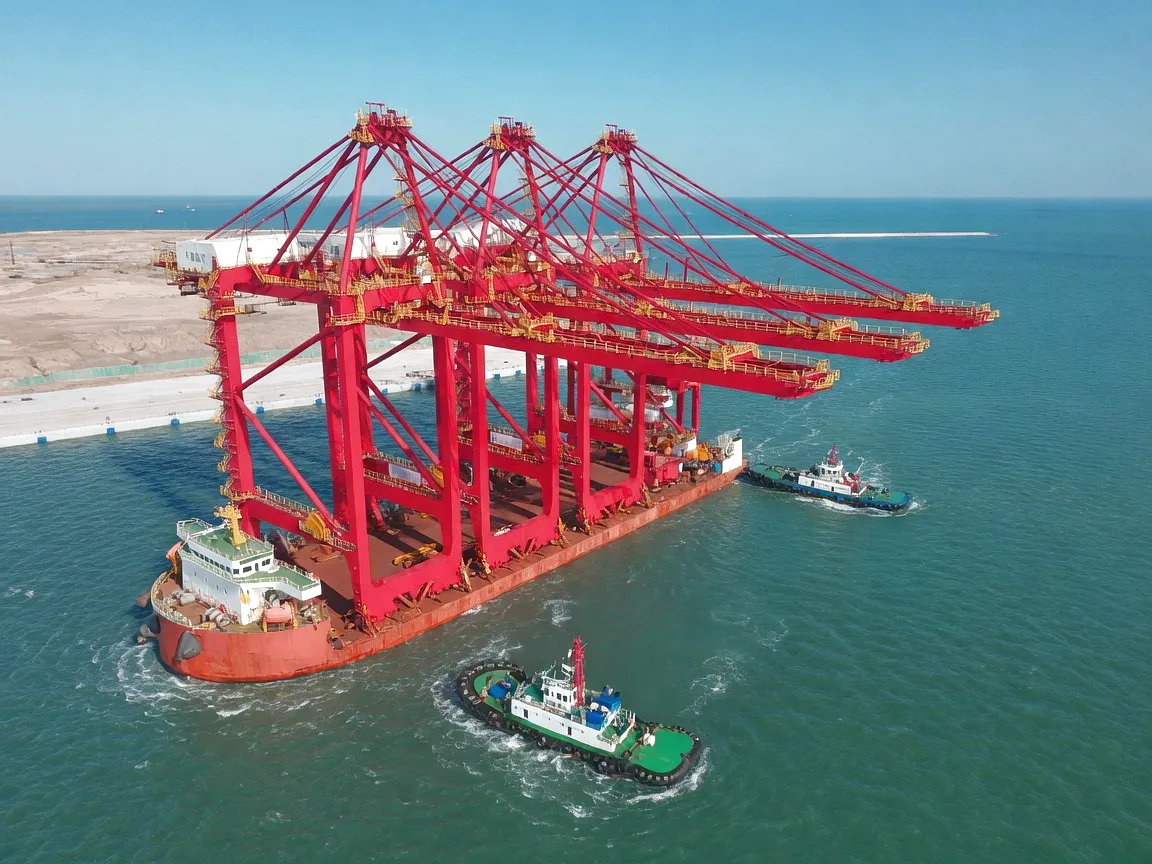
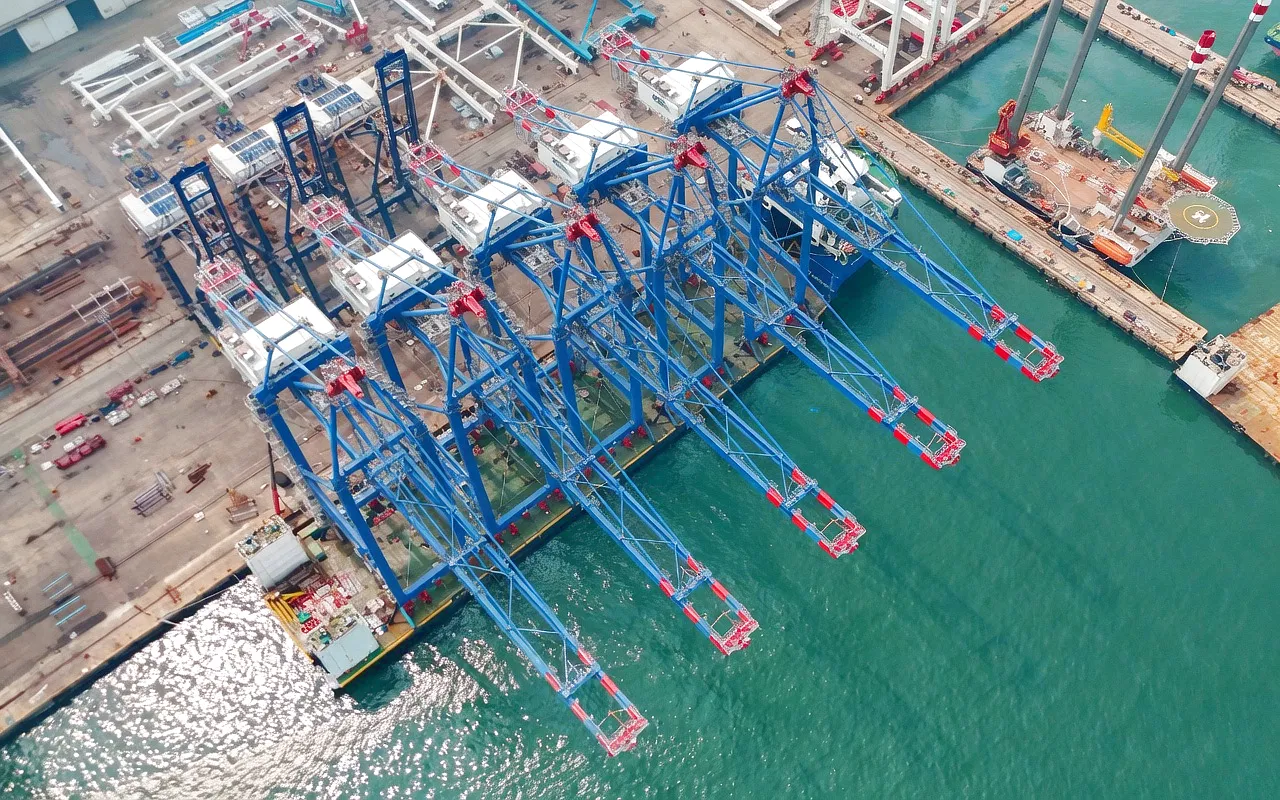
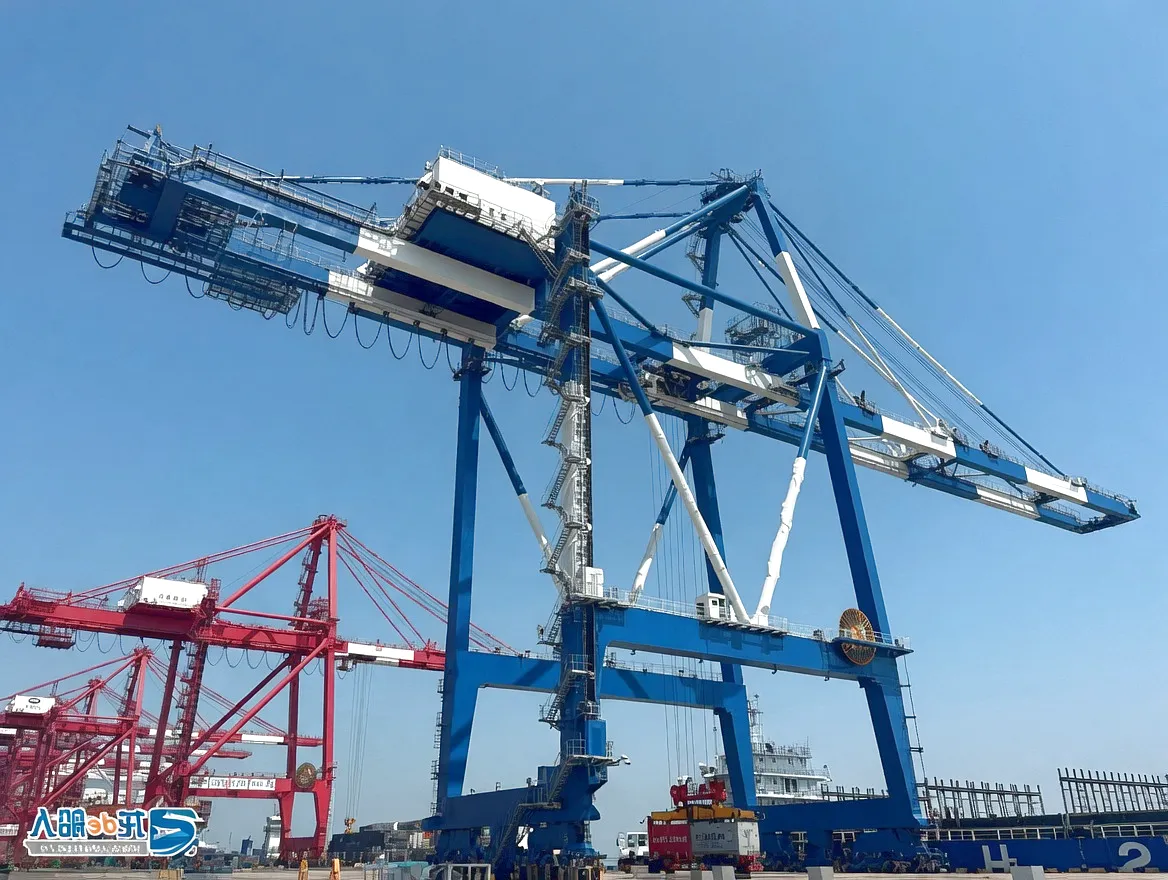
Gear Coupling Application Scenarios in Shore Bridge Equipment
The same fundamental coupling design — a crowned external-tooth hub meshing with an internal-tooth sleeve — serves each of the three main shore bridge mechanisms, but the selection criteria differ meaningfully between them. Understanding how operating duty, speed, and misalignment tolerance vary across the hoist, trolley, and gantry drives allows maintenance engineers to specify couplings that deliver the optimal balance of service life, cost, and maintenance convenience for each position in the drive train.
| Drive Position | Typical Motor Power | Speed at Coupling | Dominant Load Type | Recommended Series |
|---|---|---|---|---|
| Hoist Motor–Gearbox Input | 250–800 kW | 750–1500 rpm | Shock + reversal | GIICL, NGCL (Ks ≥ 3.0) |
| Hoist Gearbox–Drum | — | 15–60 rpm | High torque, slow speed | GICL (large bore, high Tn) |
| Trolley Motor–Gearbox | 37–200 kW | 960–1500 rpm | Angular misalignment | NGCL, GICL (flexible) |
| Gantry Motor–Gearbox | 45–315 kW per motor | 750–1200 rpm | Load sharing, thermal | GICL, NGCL (balanced set) |
| Boom Hoist | 75–250 kW | 480–750 rpm | Infrequent, high peak | GIICL (high Ks, sealed) |
| Auxiliary Winch | 18–90 kW | 960–1450 rpm | Moderate, frequent | NL Nylon or GICL mid-size |
Nylon Gear Couplings for Auxiliary and Low-Load Positions
Not every coupling position on a shore bridge carries extreme torques. Auxiliary winch drives, jib luffing systems, and certain hydraulic pump drives operate at lower power levels where the NL (Nylon) Type flexible gear coupling offers a cost-effective, vibration-damping alternative to all-steel designs. The nylon gear sleeve absorbs torsional vibration before it can propagate into gearbox and motor bearings — a practical benefit on auxiliary systems that might not justify the complexity of a full drum-type coupling.
Ever Power’s NL-type nylon gear coupling uses a PA6 or PA66 nylon sleeve with a glass-fibre reinforcement option for increased torque capacity. The sleeve is interchangeable and can be replaced in the field without removing either shaft hub, making it particularly suited to the tight maintenance schedules of 24/7 port operations. Torque ratings span 25 N·m to 12,500 N·m, covering the full auxiliary drive range found on shore bridges from the post-Panamax class down to smaller feeder vessel terminals.
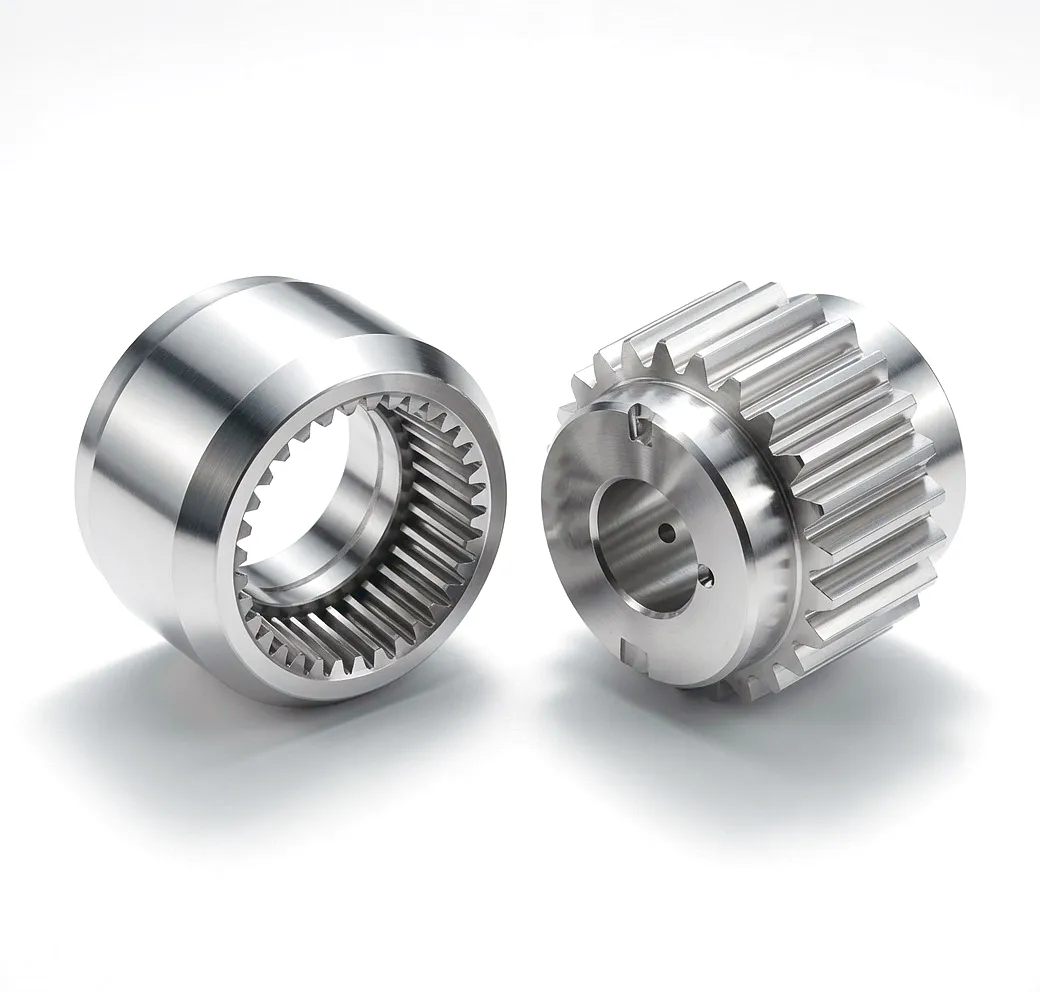
NL-Type Nylon Gear Coupling — ideal for auxiliary shore bridge systems
Ever Power Manufacturing & Custom Engineering Capability
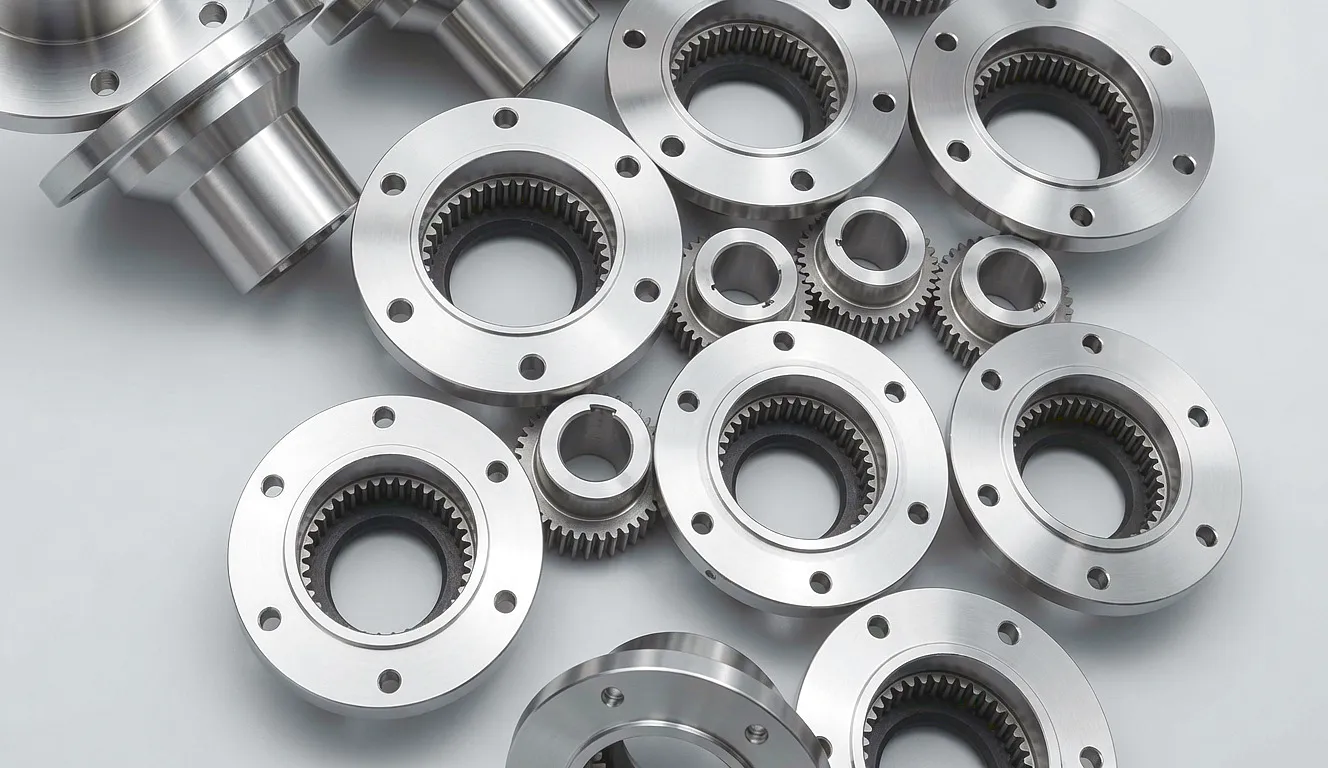
Shore bridge procurement engineers frequently find that catalogue couplings do not precisely match the dimensional requirements left by original equipment that has gone out of production, or by crane builder drawings that specify non-standard bore and keyway combinations. This is where Ever Power’s engineering and manufacturing capability makes a measurable commercial difference. The factory operates CNC lathes, hobbing machines, and gear grinding centres that can produce custom hub and sleeve geometries from drawings or from CMM scan data of worn originals.
Custom service capabilities include: non-standard bore diameters (including metric and imperial in the same coupling), non-standard keyway profiles (Woodruff, splined, interference press-fit), flange drilling patterns matching CMAA, DIN, or customer-specific bolt circles, coupling half-lengths adjusted to suit existing shaft spacing without spacer shaft modifications, and special material grades for extreme environments (stainless steel 316L hubs for tropical port applications, or nickel-aluminium bronze for seawater-splash zones). All custom work is backed by full dimensional inspection reports and material test certificates.
The factory also offers a rapid replacement service for emergency breakdowns at UK ports. When a coupling fails unexpectedly during a busy vessel turnaround — a situation no terminal operator wants to face — Ever Power can manufacture and ship a like-for-like replacement coupling within 5–10 working days for standard sizes, or 15–20 days for heavily customised configurations. This service has been used by maintenance teams at ports across England and Scotland to minimise crane downtime during emergency refits.
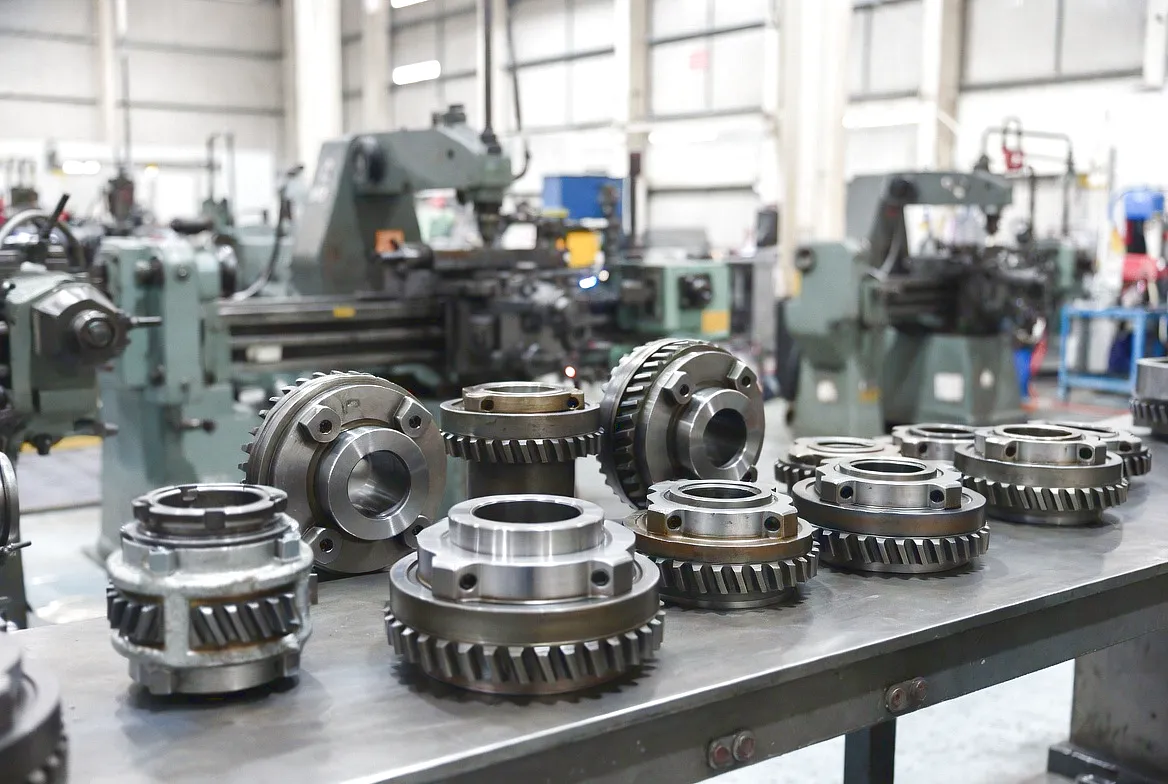
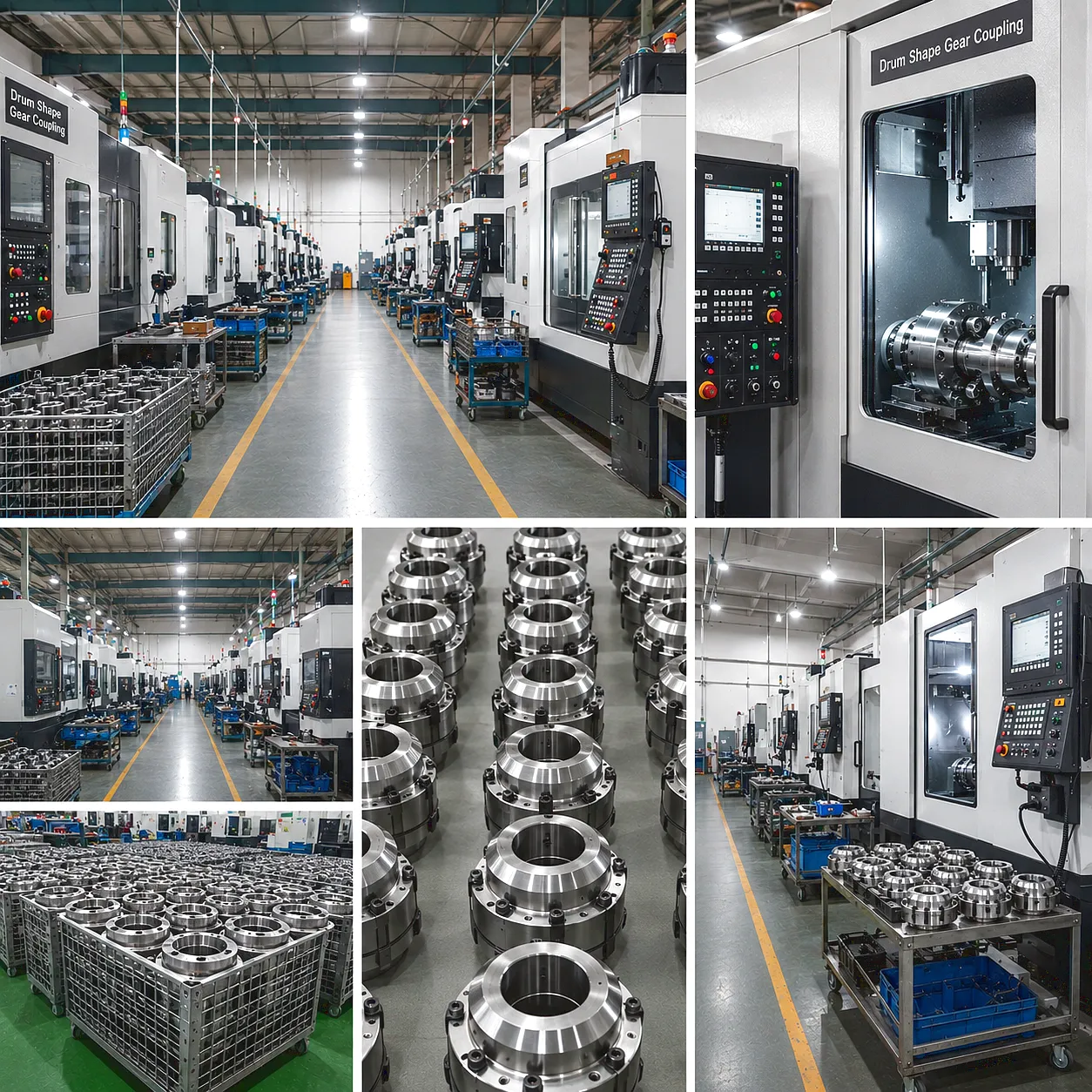
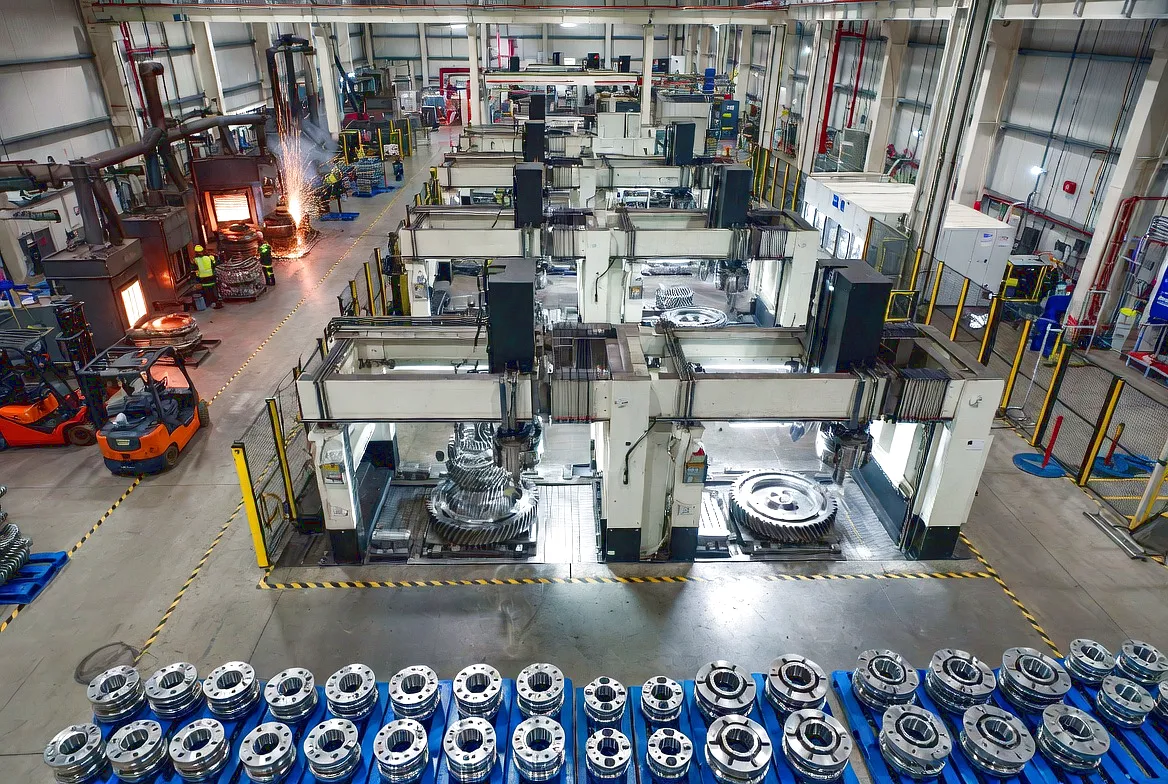
Ever Power’s gear coupling inspection and quality assurance department — EN 10204 3.1 certification as standard
Customer Success Case: Port of Felixstowe, United Kingdom
Client: Container Terminal Operations (UK) Ltd | Location: Port of Felixstowe, Suffolk, England | Project: Coupling overhaul programme, 6 × post-Panamax shore bridges
The Challenge
 The terminal had been operating six post-Panamax cranes for eleven years without a systematic coupling replacement programme. Maintenance records showed increasing vibration levels at the hoist motor–gearbox coupling points on four of the six cranes, with two cranes requiring unplanned downtime of 6–12 hours per incident over the preceding eighteen months. A survey identified tooth-face wear, fretting corrosion on hub bores, and seal failure allowing salt water contamination of the grease charge as the primary failure modes. The OEM coupling supplier had ceased production of the original part number, and the crane manufacturer quoted a 16-week lead time for replacement couplings through their spares channel.
The Solution
Ever Power’s engineering team received CMM scan data and drawings of the original couplings and completed a like-for-like design within 5 working days. Several improvements were incorporated: the tooth crown radius was recalculated for the actual operating misalignment measured during live crane operation (0.8° average at the hoist coupling point, significantly above the 0.3° the original design assumed); the grease seal was upgraded from a plain rubber lip to a double-lip PTFE-laminate seal with integrated wiper ring; and the hub bore was redesigned to accept a keyed interference fit rather than the original clearance fit that had contributed to fretting corrosion. Material upgraded from the original cast iron sleeve to ZG310-570 steel throughout.
All 24 hoist couplings (four per crane) were manufactured and delivered to Felixstowe within 18 days. Installation was completed in four planned maintenance windows over six weeks, with two cranes done per window. The terminal’s maintenance team noted that the split-sleeve design allowed hub-to-hub alignment checks during installation, a process that took 20 minutes per coupling compared to 90 minutes with the original press-fit sleeve design.
Results at 24-Month Follow-Up
What Our Customers Say
“We had been struggling with recurring hoist coupling failures on our oldest quay cranes for over two years before we approached Ever Power. The engineering team did not simply sell us a standard catalogue item — they reviewed our operating data, identified the root cause of the premature wear, and delivered a redesigned coupling that addressed it directly. Eighteen months later, we have had no further coupling-related breakdowns on those cranes.”
“Lead time and documentation were the two things that concerned us most when looking at alternatives to the OEM supplier chain. Ever Power delivered on both counts — couplings in 15 working days with full EN 10204 3.1 certs and a dimensional inspection report. The couplings fitted first time without shimming. We now use them across all three of our facilities.”
“Our challenge was sourcing replacements for gantry drive couplings on cranes originally built to a non-standard drawing. Ever Power’s custom manufacturing team reproduced the parts from a worn sample and an old drawing scan — the finished product was dimensionally perfect. Technical support throughout the project was excellent, and the price was very competitive compared to other specialist suppliers.”
Installation and Maintenance Best Practices for Shore Bridge Applications
A correctly specified gear coupling will not deliver its full service life potential if installation quality is poor. Shore bridge maintenance teams that follow a structured installation protocol consistently achieve longer coupling service intervals than those that treat the coupling as a plug-and-play component. The following practices are drawn from field installation experience across multiple UK port projects.
Shaft Alignment Before Hub Fitting
Use a laser alignment tool to check motor and gearbox shaft alignment before fitting hubs. Target angular misalignment below 0.1° and radial offset below 0.05 mm for initial installation. The coupling’s misalignment tolerance is its operational reserve, not a target alignment value.
Hub Fitting: Induction Heating
For interference-fit hubs above 80 mm bore diameter, use an induction heater to bring the hub bore to 120–160°C before fitting. Avoid open-flame heating — temperature gradients cause oval bore distortion. Never hammer a hub onto a shaft; this risks brinnelling the bearing races in the gearbox or motor.
Initial Grease Charge
Fill the coupling cavity to approximately 60–70% capacity with the specified NLGI Grade 1 or Grade 2 lithium-complex grease. Overfilling causes elevated operating temperature and seal leakage. Pack grease into the tooth mesh area directly before assembling the sleeve, not just into the cavity through the grease nipple after assembly.
Inspection Intervals at UK Ports
Under FEM M7 duty typical of a busy UK container terminal, schedule a visual external inspection and seal check every 1,000 operating hours, a grease replenishment every 2,500 hours, and a full internal inspection (sleeve removal, tooth measurement) every 10,000 hours or annually, whichever comes sooner. In sea-facing locations, reduce grease intervals to 1,500 hours.
How to Select the Right Gear Coupling for Your Shore Bridge: A Practical Checklist
Coupling selection for shore bridge drives should be a structured engineering process, not a price-led search for the nearest catalogue standard. The following checklist represents the minimum information needed to arrive at a technically correct selection. Providing this data to Ever Power’s engineering team will enable a full sizing calculation to be returned within 24 hours.
| # | Selection Parameter | Where to Find It | Typical Range (Shore Bridge) |
|---|---|---|---|
| 1 | Rated power of drive motor | Motor nameplate / PLC data | 37–800 kW |
| 2 | Rated speed at coupling point | Motor nameplate / gearbox ratio | 15–1500 rpm |
| 3 | Application duty type (FEM/ISO class) | Crane design documentation | M6–M8 |
| 4 | Hub bore diameters (motor side / gearbox side) | Shaft diameter on motor/gearbox drawings | 40–320 mm |
| 5 | Shaft-to-shaft distance (coupling gap) | Site measurement or OEM drawing | 30–300 mm |
| 6 | Maximum angular misalignment | Site laser alignment survey | 0.3°–1.5° |
| 7 | Operating environment (temperature, salt spray, IP) | Port location and installation position | -10°C to +45°C, IP54+ |
| 8 | Certification requirements | Client specification / inspection body | EN 10204 3.1, SGS, BV, Lloyd’s |
Frequently Asked Questions
Ready to Specify a Gear Coupling for Your Shore Bridge?
Our engineering team provides free torque calculations, coupling sizing, and dimensional checks for all shore bridge drive positions. UK port operators receive priority response and dedicated logistics coordination.
Serving UK container terminals, bulk cargo ports, and offshore marine facilities. EN 10204 3.1 documentation as standard.
edit by gzl