
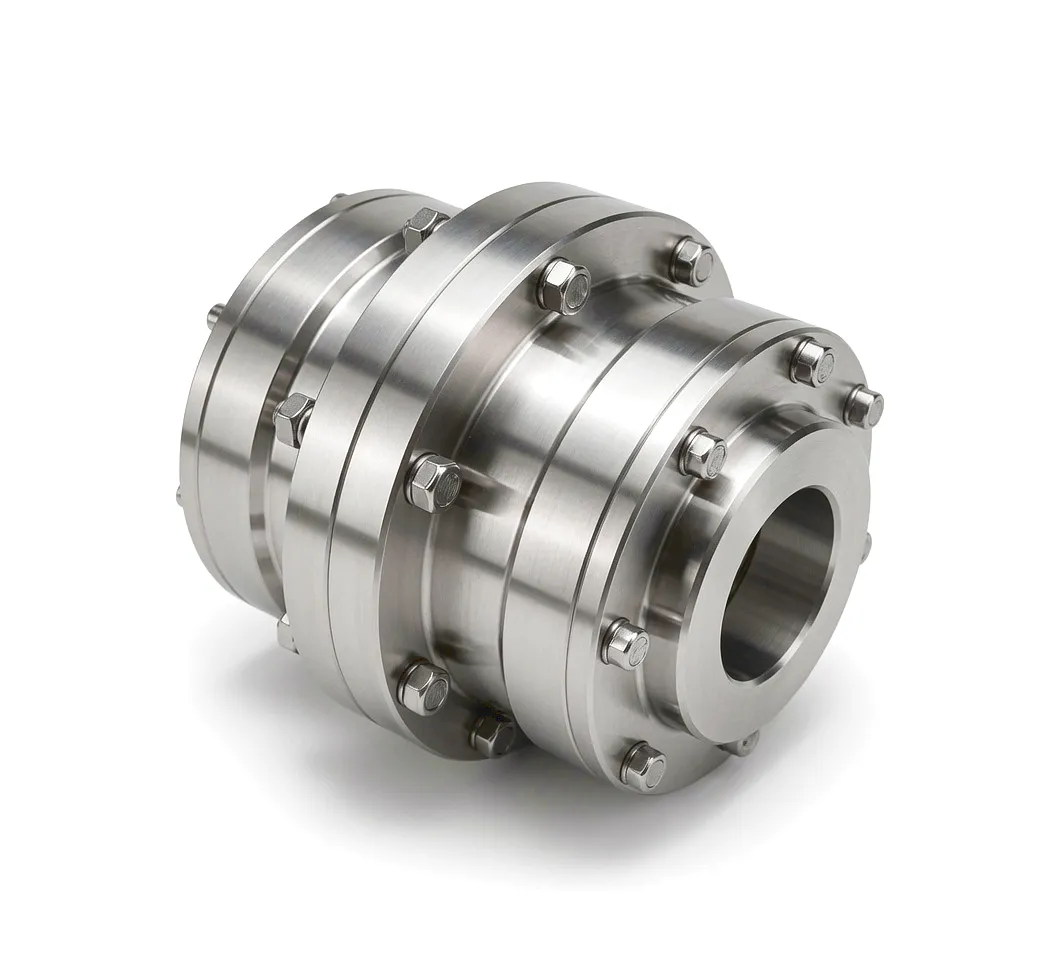
Ever Power — Precision Gear Couplings for Wind Energy
Ever Power manufactures drum-type gear couplings engineered specifically for wind turbine generator drivetrains. With decades of application experience, our couplings are trusted in multi-megawatt turbines across onshore parks in Scotland, offshore arrays in the North Sea, and across the wider UK renewable energy sector.
Why the Drivetrain Coupling Is the Most Demanding Component in Any Wind Turbine
Inside a modern wind turbine, the drivetrain runs under conditions that would destroy a poorly designed coupling within weeks. Wind loads are irregular and constantly shifting; a turbine rated at 3 MW may experience torque spikes of two to three times the nominal value during gusts, emergency stops, or grid faults. The coupling sitting between the gearbox output shaft and the generator input flange must absorb all of that — misalignment, torsional shock, axial movement, and continuous thermal cycling — while operating unattended, often 100 metres above the sea, for 25 years without intervention.
That is why drum-type gear couplings have become the preferred choice for gearbox-equipped wind turbine drivetrains worldwide. Unlike elastomeric or disc-pack couplings, a properly specified gear coupling offers a combination of high torque density, angular and radial misalignment compensation, proven long-service life, and the ability to be relubricated in situ during scheduled maintenance visits. For UK wind farm developers and operators working under tight capex budgets and even tighter availability targets, choosing the right gear coupling is a decision that directly affects the project’s 20-year return on investment.
Offshore Severity
Salt-laden air, humidity cycling, and corrosive spray make every sealed surface on a coupling critical for offshore UK installations.
Torque Shock Loads
Grid fault events can generate instantaneous torque peaks three times rated value, demanding a coupling that absorbs rather than transmits that shock.
Continuous Misalignment
Nacelle flex under load, thermal expansion, and gearbox torque arm movement all create live shaft misalignment that a gear coupling handles without generating harmful side loads.

Gear coupling drivetrain installation — wind power generation application
The Engineering Principle Behind Drum-Type Gear Couplings
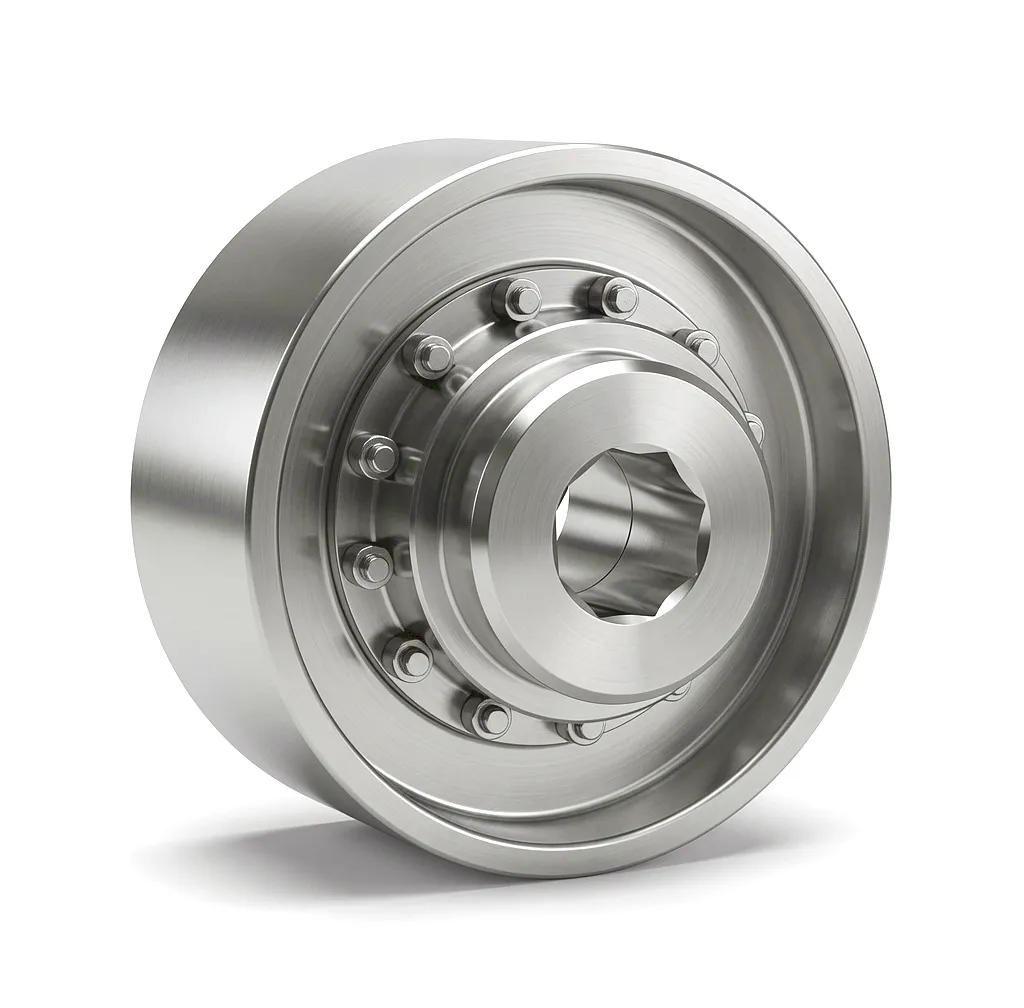
A drum-type gear coupling — often written as a barrel or crowned-tooth gear coupling — transmits torque through a pair of internal-external gear mesh contacts rather than a rigid bolted flange. The outer sleeve carries a straight internal gear ring, and the inner hub carries a crowned (barrel-shaped) external gear. The crowning is the key: instead of sharp-edged tooth contact, the convex profile of the external tooth rides against the flat internal tooth face, creating a contact patch that tolerates angular misalignment up to approximately 1.5° per gear mesh without generating bending moments on the connected shafts.
In a wind turbine drivetrain, this misalignment tolerance is not a nice-to-have — it is essential. As wind loading shifts and the nacelle structure flexes under torque, the centrelines of the gearbox output shaft and the generator input shaft move relative to each other. A rigid coupling would translate that movement directly into shaft bending stress and bearing side loads. The drum-type gear coupling absorbs it silently at the tooth interface, protecting both the high-speed shaft bearings in the gearbox and the generator’s drive-end bearing from fatigue damage that shortens their service life dramatically.
Lubrication is retained inside a sealed sleeve by elastomeric lip seals at each end, which also act as the first line of defence against moisture ingress in offshore environments. In standard wind turbine maintenance schedules, coupling relubrication coincides with gearbox oil changes — typically every three to five years — making the gear coupling one of the lowest-maintenance drivetrain components in the nacelle.
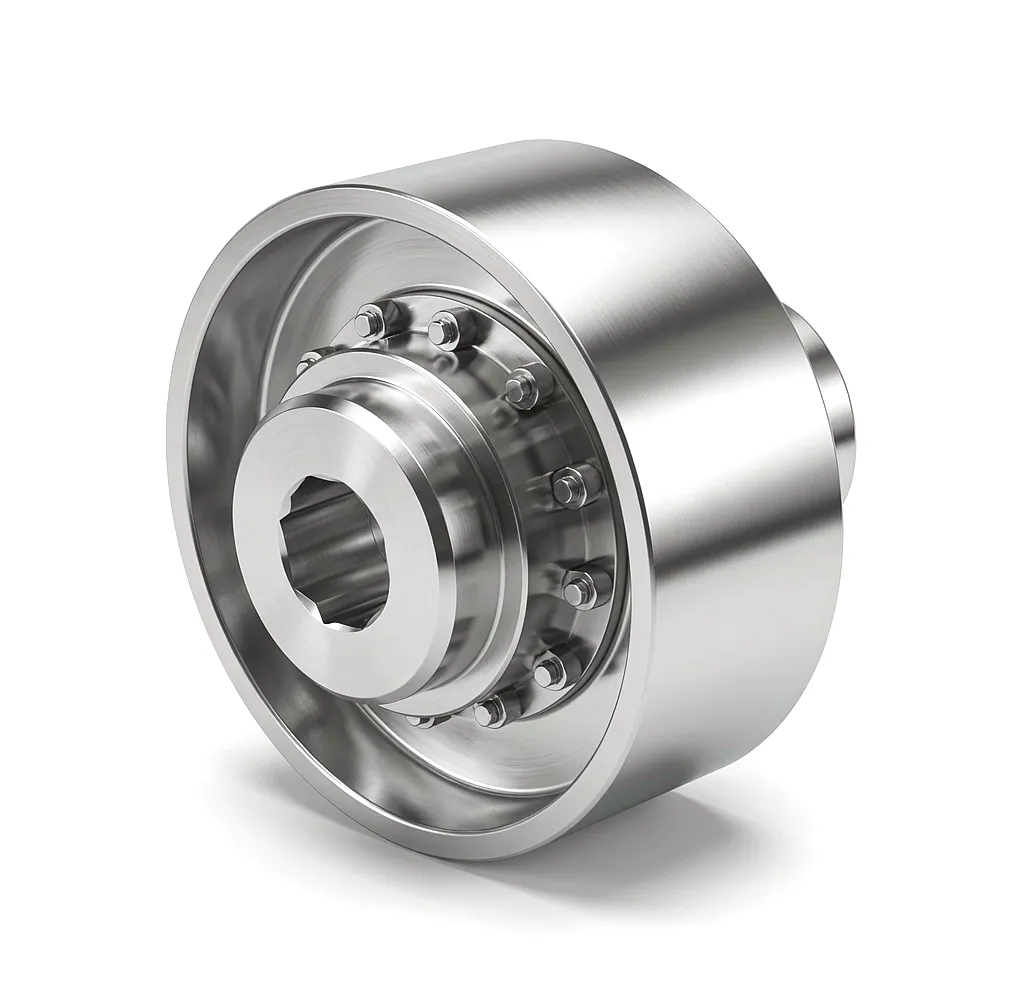
NGCL drum-type gear coupling
Materials and Manufacturing: Built for Two Decades of Service
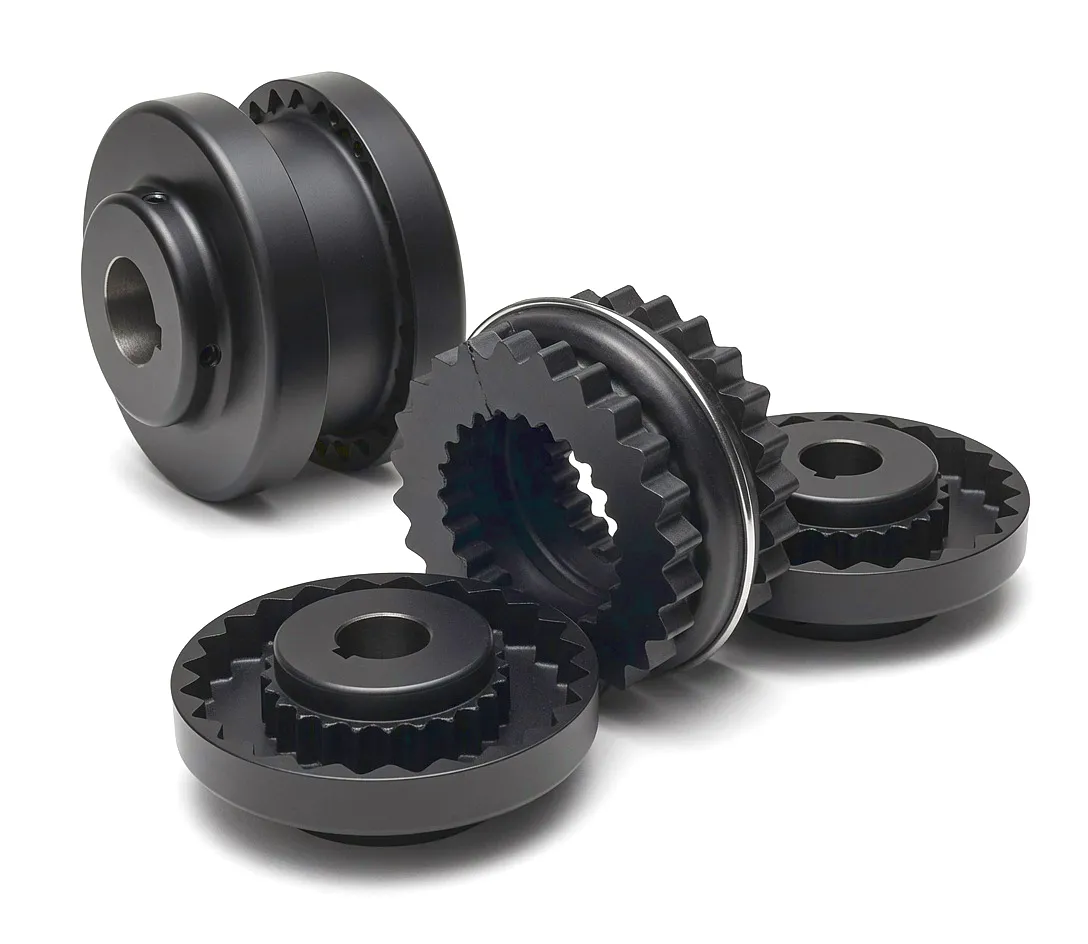 The material selection for a wind turbine gear coupling is not a standard catalogue decision. At Ever Power, our engineering team starts with the torque, speed, and misalignment envelope provided by the OEM or operator, then works backwards to determine the appropriate steel grade, heat treatment, and surface finish for both hub and sleeve components.
Hubs are typically produced from medium-carbon alloy steel — commonly 42CrMo4 or equivalent EN 10083 grades — which is then subjected to normalising, quench-and-temper heat treatment, and surface induction hardening on the tooth profile to achieve a case hardness of 54–60 HRC. The sleeve is manufactured from grade 45 steel with carburising where contact stresses demand it. For offshore projects in the UK, we apply a zinc-nickel or hot-dip galvanised coating on non-mating surfaces, with phosphate treatment on tooth flanks to reduce initial run-in wear. The lip seals are formulated in nitrile or fluorocarbon elastomer, selected for compatibility with the synthetic gear oil used in the coupling cavity.
Hub Material
42CrMo4 Alloy Steel
Quenched & tempered, induction hardened tooth profile
Sleeve Material
Grade 45 Carbon Steel
Carburised internal gear, precision hobbed
Seals
NBR / FKM Lip Seals
Rated to -40°C, compatible with ISO VG 320 gear oil
Surface Protection
Zinc-Nickel / Hot-Dip Galv
Offshore-rated corrosion protection per BS EN ISO 12944
Technical Performance Parameters
The following table summarises the performance envelope for Ever Power’s GICL and NGCL series drum-type gear couplings as applied in wind turbine drivetrains. Custom configurations beyond these ranges are available upon request, including integral brake disc flanges, high-speed balancing to G2.5, and hollow shaft designs for shaft-through generator layouts.
| Parameter | GICL Series | NGCL Series | Notes |
|---|---|---|---|
| Nominal Torque (Tn) | 500 – 3,150 kN·m | 800 – 6,300 kN·m | Peak torque = 2× Tn |
| Maximum Speed (nmax) | 1,500 rpm | 1,800 rpm | ISO G2.5 balance optional |
| Angular Misalignment | up to 1°30′ | up to 1°30′ | Per gear mesh |
| Radial Offset | 0.3 – 2.5 mm | 0.3 – 3.0 mm | Static + dynamic combined |
| Operating Temperature | -40°C to +100°C | -40°C to +120°C | FKM seals for upper range |
| Tooth Module Range | 4 – 12 mm | 6 – 16 mm | ISO 6336 calculation basis |
| Bore Range | 50 – 360 mm | 80 – 450 mm | Keyway or shrink disc options |
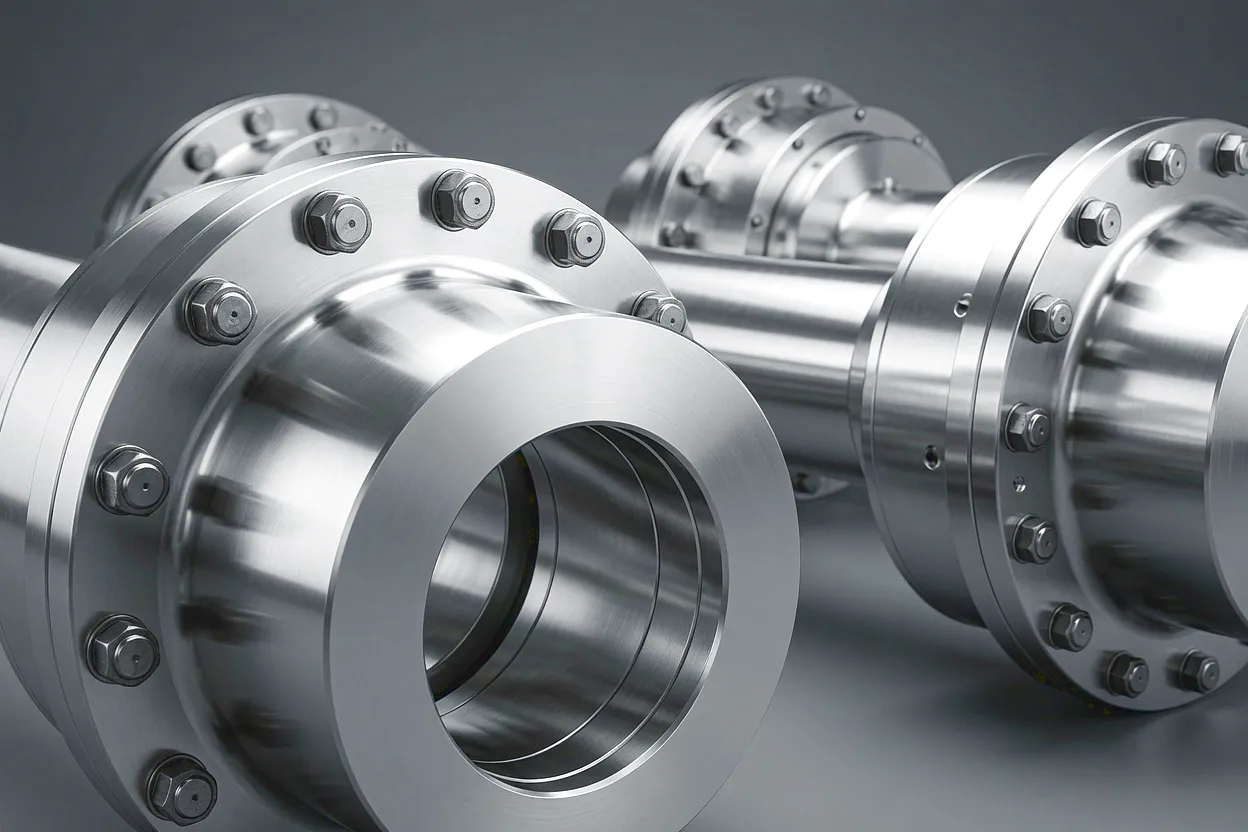
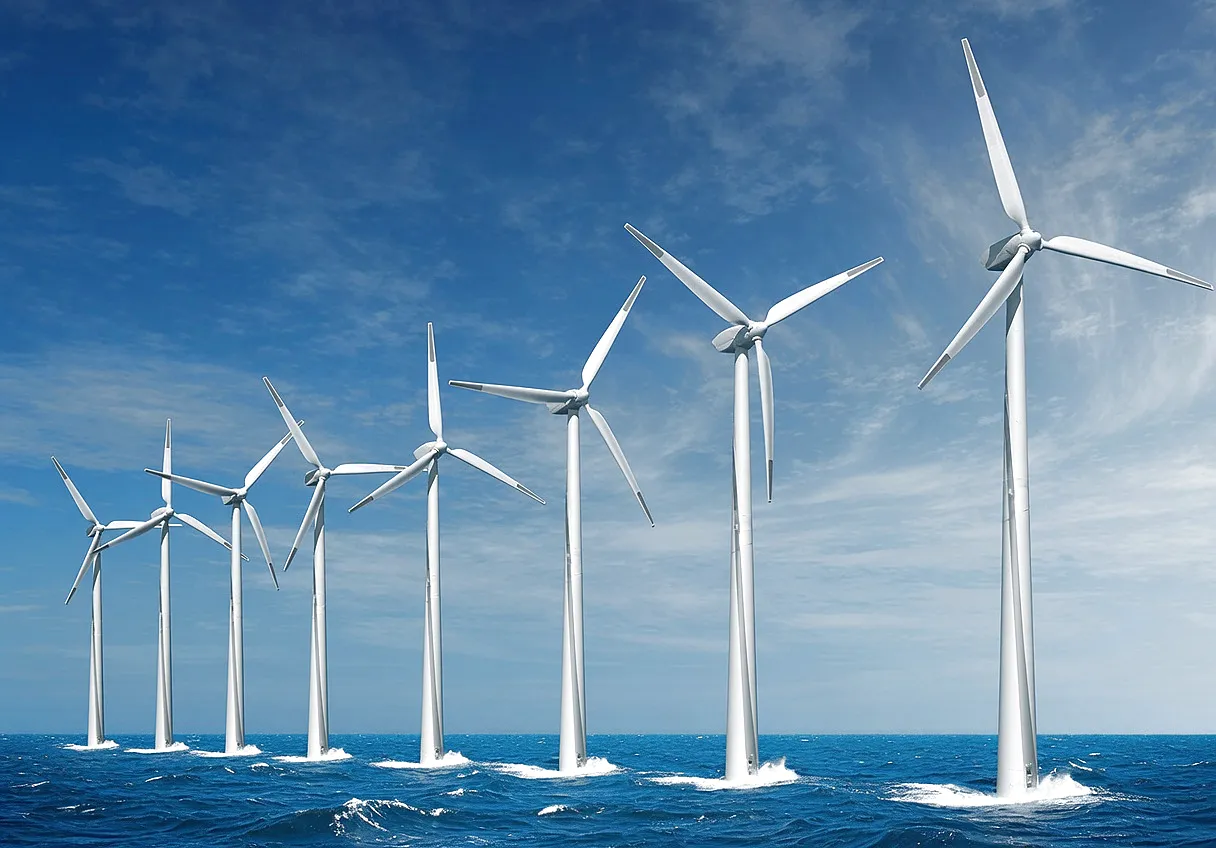
Where Gear Couplings Sit in the Wind Turbine Drivetrain
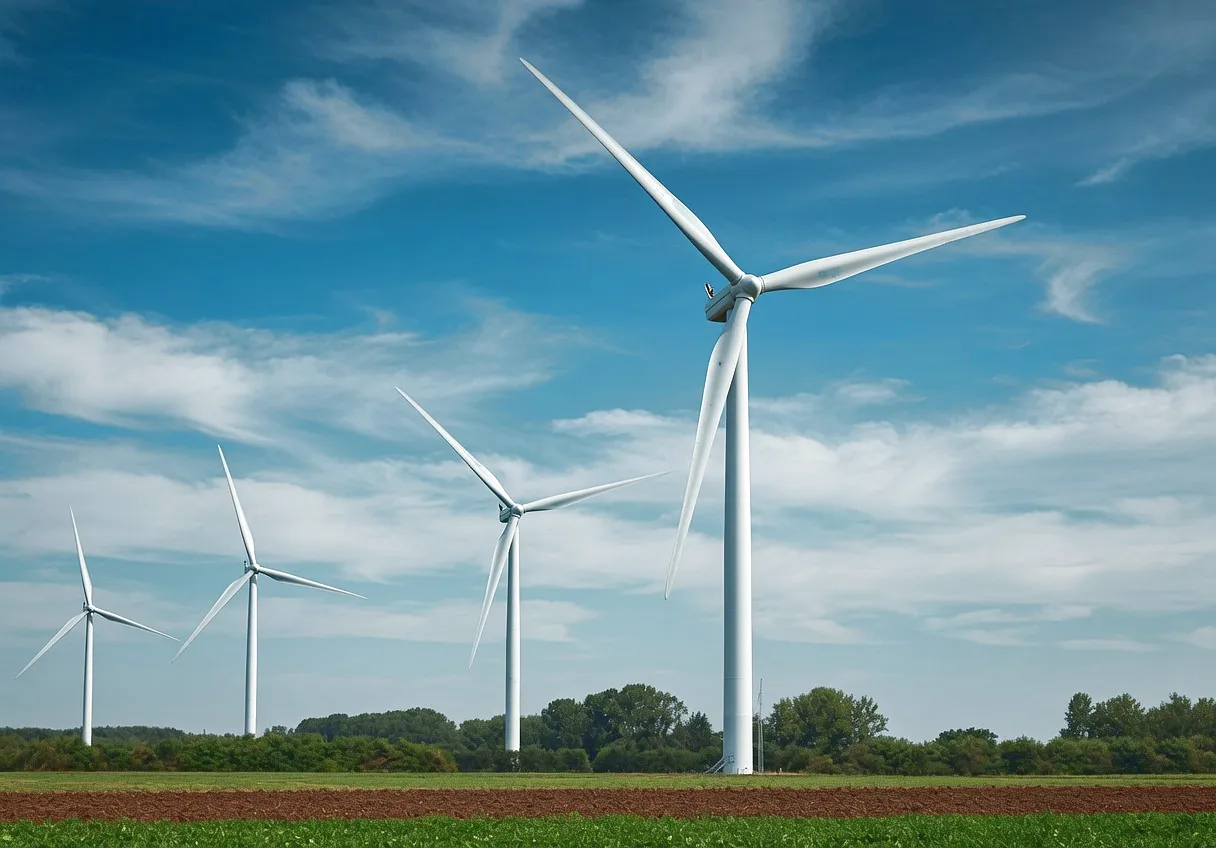 In the dominant double-fed induction generator (DFIG) configuration used across UK wind parks — from Dogger Bank in the North Sea to Whitelee in Scotland — the drivetrain follows a clear mechanical path. The rotor blades capture kinetic energy from the wind and transmit it through the main shaft to the gearbox. The gearbox steps up the low rotational speed of the main shaft (typically 10–20 rpm for a large rotor) to the speed required by the generator, usually between 1,000 and 1,800 rpm.
A drum-type gear coupling is installed at the high-speed shaft — the connection point between the gearbox output and the generator input. This is the highest-speed, and often highest-vibration, location in the entire drivetrain. The coupling serves three simultaneous roles at this interface: torque transmission, misalignment compensation, and vibration isolation. Without it, any residual misalignment from manufacturing tolerance or in-service deflection would create cyclic bending loads on both the gearbox high-speed shaft bearing and the generator drive-end bearing.
Some larger turbine architectures — particularly those in the 5 MW+ class used in UK offshore arrays — also specify gear couplings at the intermediate shaft between the first and second gear stages in a three-stage gearbox. In these applications the coupling must also handle significant axial thermal growth, which the tooth profile accommodates through controlled sliding at the mesh, keeping generated heat and tooth wear within acceptable limits for the service life.
Seven Reasons UK Wind Energy Engineers Specify Ever Power Gear Couplings
High Torque-to-Weight Ratio
Gear couplings transmit more torque per unit mass than any other flexible coupling type, which matters when every kilogram in a nacelle 80 metres off the ground adds cost to the crane and the tower design.
Tolerance to Combined Misalignment
The crowned tooth geometry accommodates angular, radial, and axial displacement simultaneously, making the coupling self-adjusting as the nacelle flexes under changing loads throughout the day.
Extended Service Intervals
Proper lubrication and sealed design allow 3–5 year maintenance cycles aligned with standard gearbox service visits, keeping technician access time — and its associated costs — to the minimum.
Shock Load Absorption
The tooth mesh acts as a mechanical damper during grid faults and emergency stops, reducing peak loads transmitted to the gearbox high-speed shaft by 15–30% compared to rigid flanged connections.
Corrosion Resistance for Offshore
Multi-layer corrosion protection complying with BS EN ISO 12944 C5-M category ensures a 25-year design life even in the harsh saltwater environment of North Sea offshore wind projects.
In-Situ Replaceability
Modular half-coupling construction means the outer sleeve or inner hub can be replaced independently during a service visit without removing the generator or gearbox from the nacelle, saving significant downtime costs.
Full Custom Engineering Service
Ever Power’s engineering team works from OEM drawings or customer-supplied dimensional requirements to produce exact-fit couplings, including integrated brake disc flanges, hollow shaft variants, and non-standard PCD bolt circles.
Specific Application Scenarios in Wind Power Generation
The gear coupling’s role in a wind turbine is not limited to a single connection point. Across the full range of wind turbine configurations deployed in the UK’s growing renewable energy sector, drum-type gear couplings appear in multiple drivetrain locations, each with its own specific requirements and challenges.
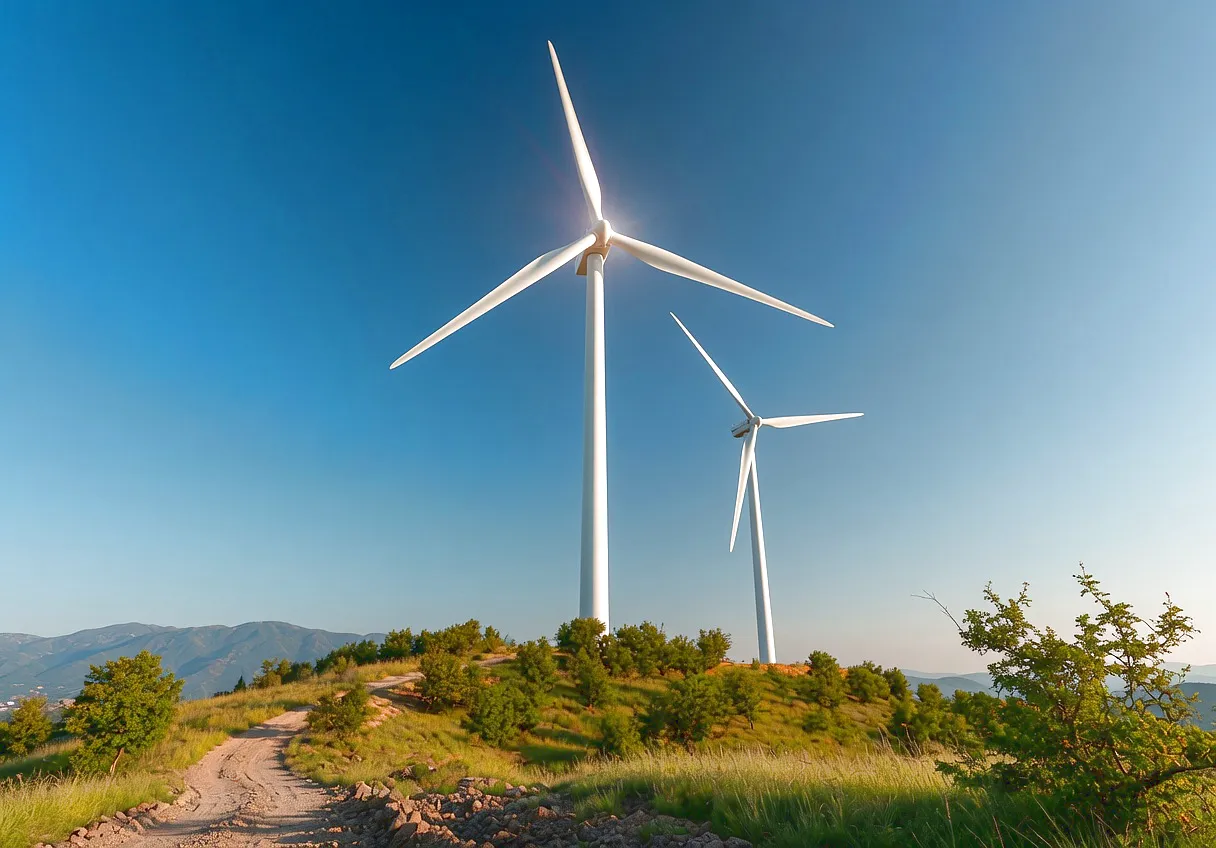
NL-Type Nylon Gear Coupling: The Right Tool for Auxiliary Wind Turbine Drives
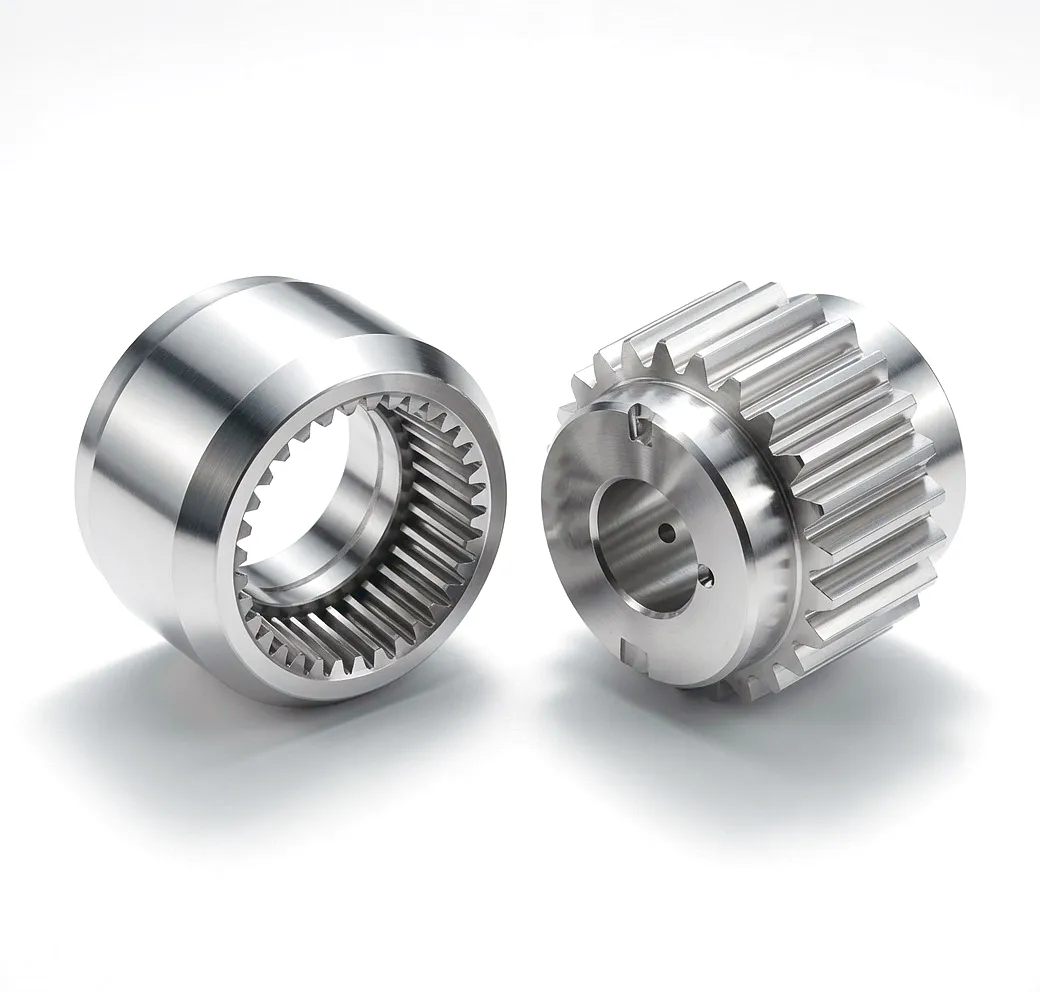 Where the main drivetrain gear coupling is a precision steel component running at high torque and speed, the NL-type nylon gear coupling serves a completely different role in wind turbine auxiliary circuits. The outer sleeve is manufactured from a precision-moulded glass-filled polyamide, giving the coupling inherent electrical isolation — an important feature in wind turbines where generator stray currents can cause electrical erosion in bearings if a current path exists through the drivetrain.
NL couplings are grease-free by design: the nylon sleeve runs dry against the steel hub teeth, relying on the low-friction properties of the material to maintain acceptable wear rates. In yaw motor drives, pitch motor drives, and ancillary hydraulic pump connections within the nacelle, this eliminates the grease contamination risk that can affect electrical components nearby. The self-lubricating property also removes one maintenance task from the technician’s service checklist, contributing to improved availability metrics across a wind farm.
Ever Power manufactures NL-type nylon gear couplings in bore ranges from 10 mm to 80 mm, with nominal torque capacity from 10 N·m to 2,000 N·m and speed ratings to 5,000 rpm. Custom hub and sleeve combinations are available, and the nylon grade can be specified for operating temperatures down to -50°C where nacelle heating is limited in remote Scottish onshore sites.
Ever Power Manufacturing: Custom Gear Couplings for UK Wind Projects
Ever Power’s manufacturing facility operates a fully integrated production chain for gear coupling components, from raw material incoming inspection through CNC hobbing, heat treatment, grinding, coating, assembly, and final dimensional and balance verification. The breadth of this vertical integration is the foundation of our custom engineering service, which is particularly valued by UK wind energy developers who need a coupling to an exact OEM specification rather than a standard catalogue number.
Our engineering team can reverse-engineer a worn or obsolete coupling from a worn sample or a dimensional drawing supplied by the customer, producing a dimensionally interchangeable replacement. For new project specifications, we work from the customer’s torque, speed, misalignment, and envelope dimensions to generate a coupling design calculation report verifying the selection against ISO 6336 gear tooth stress limits and ISO 9283 torsional fatigue criteria — the documentation format that most UK wind turbine OEM procurement teams require.
Prototype and small-batch lead times for custom wind coupling designs are typically eight to twelve weeks from drawing approval, and standard series items are held in semi-finished stock for rapid conversion. For wind farm operators with scheduled maintenance windows, we can work to an agreed delivery schedule that ensures couplings arrive at the UK port of entry with sufficient time for receiving inspection before the offshore installation vessel mobilises.
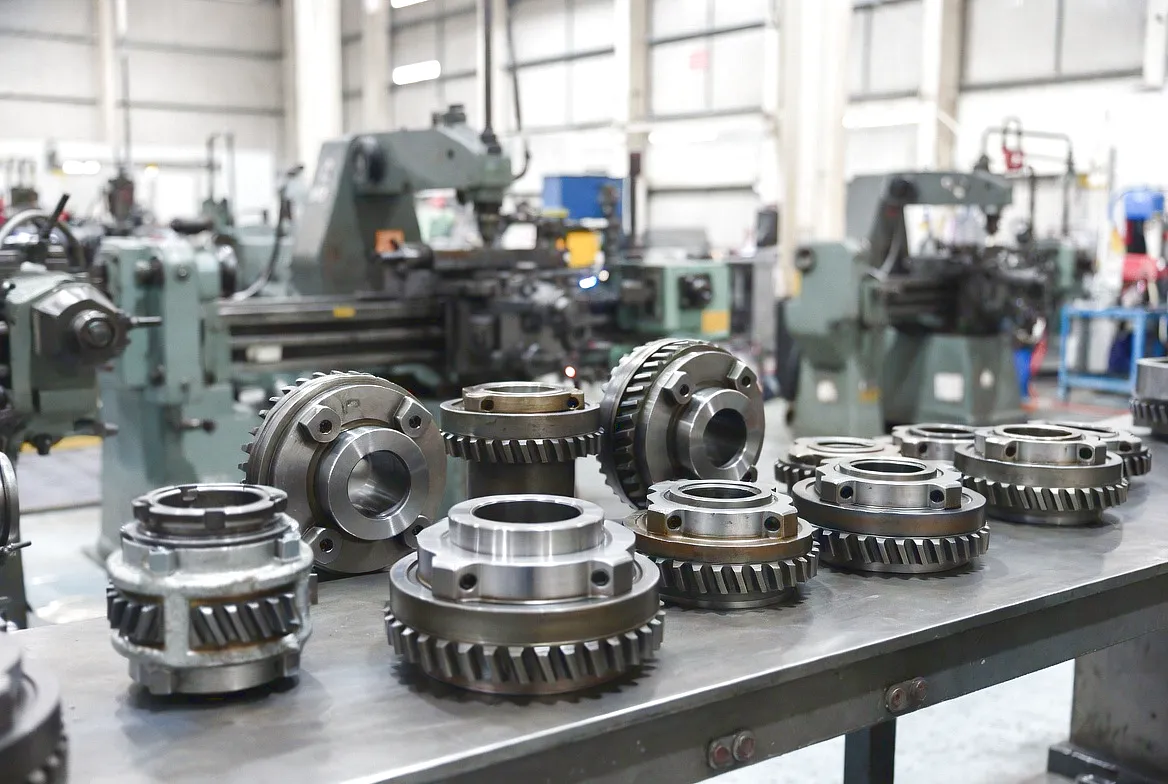
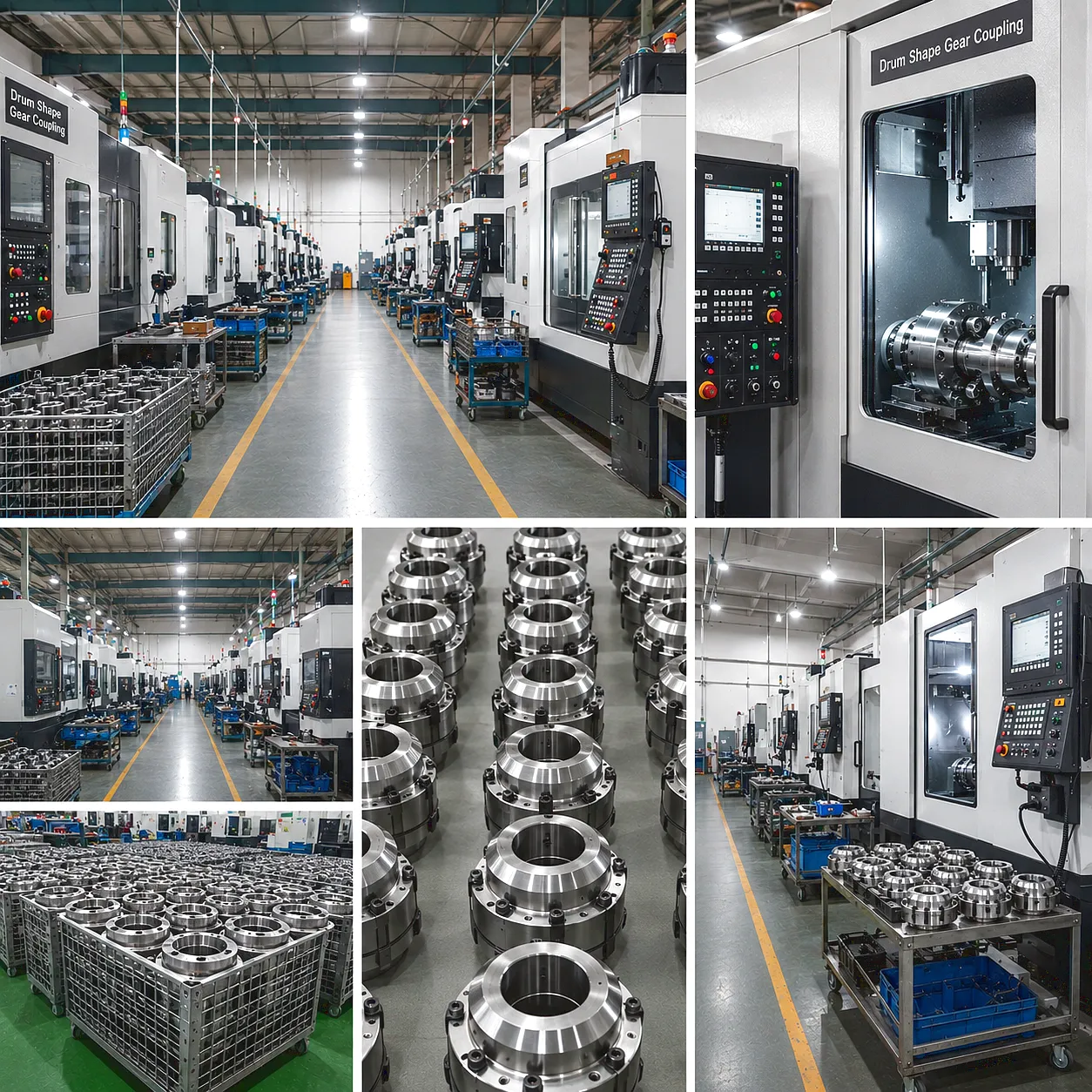
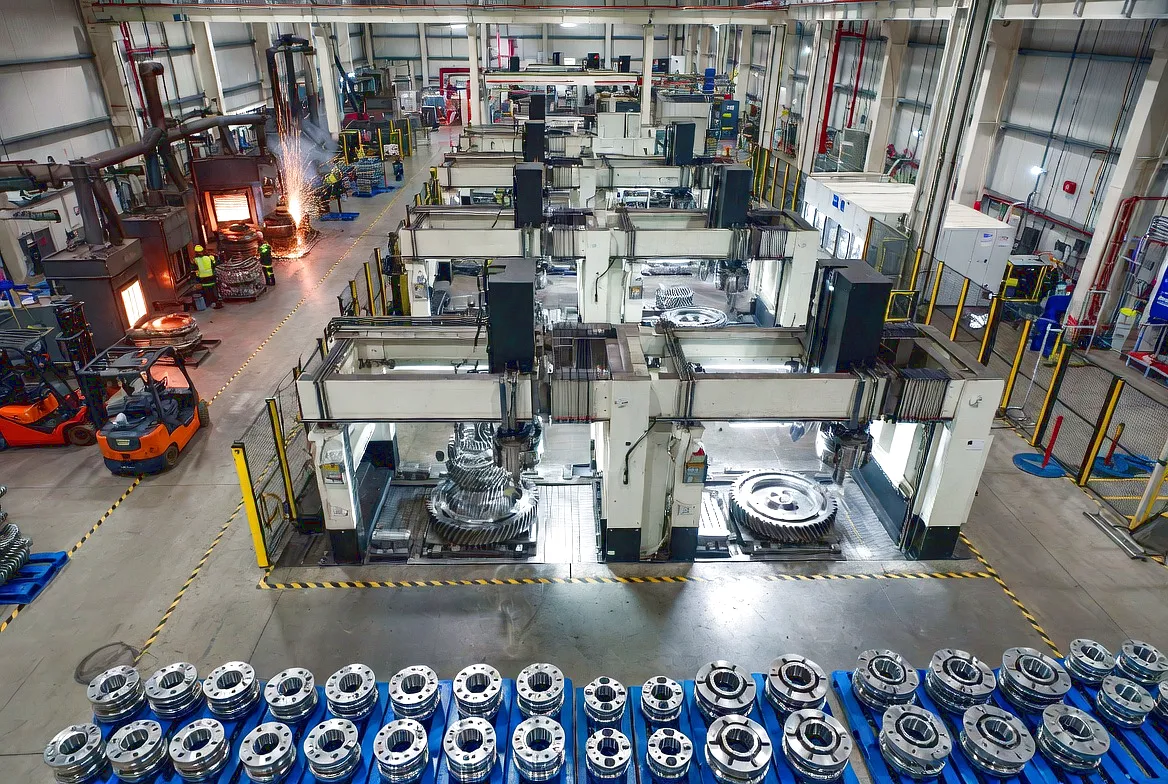
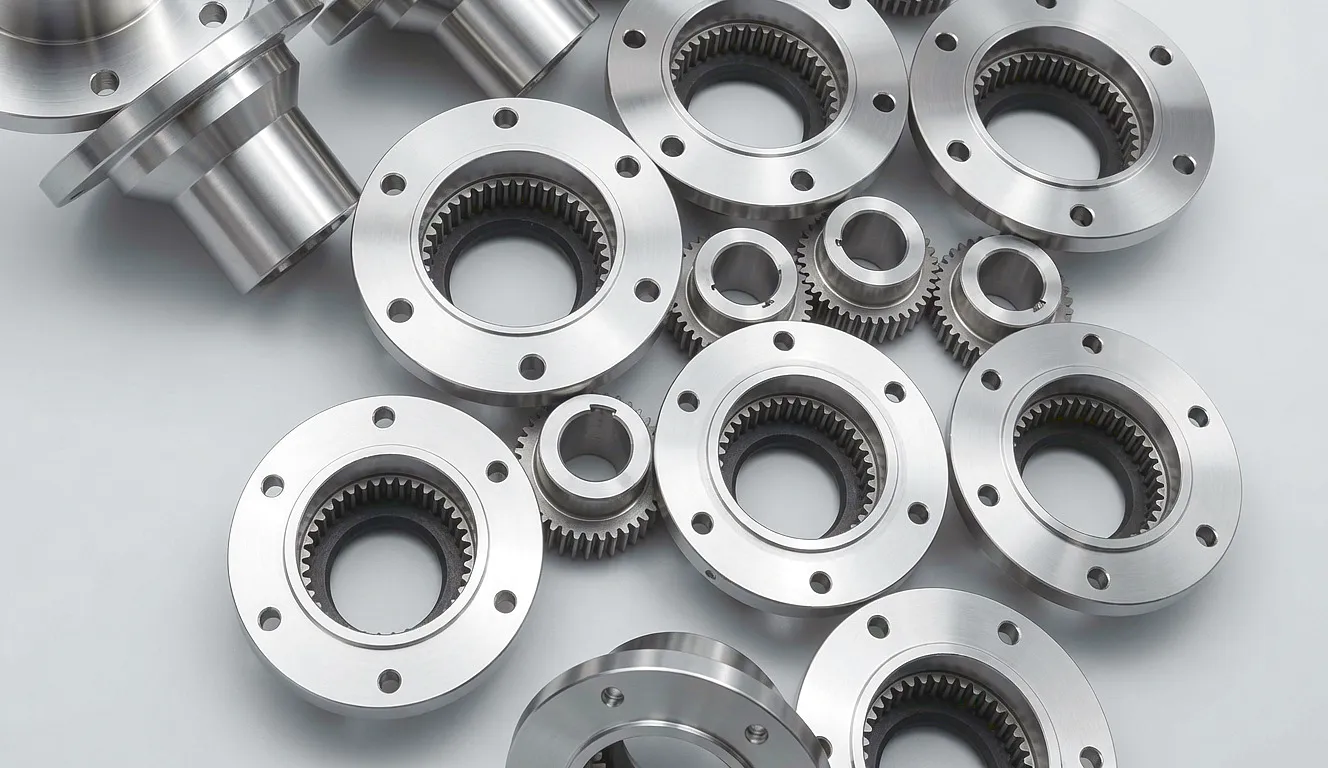
Ever Power quality inspection and precision manufacturing for wind energy applications
Supplying the UK Wind Energy Sector: From Scottish Onshore Parks to North Sea Arrays
The United Kingdom’s wind energy capacity has grown to make it one of the world’s leading wind power markets, with over 25 GW of installed capacity at the time of writing and a government commitment to reach 50 GW of offshore wind alone by 2030. The maintenance and refurbishment of the existing turbine fleet — much of which was installed between 2005 and 2015 and is now entering its replacement parts cycle — represents a substantial and growing demand for precision drivetrain components including gear couplings.
Wind farm operators managing assets across Scotland, Yorkshire, Wales, the East Anglian coast, and offshore in the North Sea regularly reach out to international suppliers for replacement gear couplings, particularly when the original OEM supply chain has become slow, expensive, or discontinued. Ever Power offers UK wind energy operators an alternative supply route that combines the engineering capability to match original coupling dimensions and performance specifications with the commercial flexibility to support both emergency replacement and planned maintenance orders.
Documentation for UK customs and technical compliance — including material certificates to EN 10204 3.1, dimensional inspection reports, balance certificates, and coating inspection records — is supplied as standard with every order, supporting the traceability requirements of UK wind turbine operators under their asset management programmes. Shipping is arranged via our standard logistics routes to UK ports including Grimsby, Aberdeen, and Hull, which serve the major offshore wind installation and maintenance hubs.
North Sea Offshore
Corrosion-spec couplings for Dogger Bank, Hornsea, East Anglia One, and Beatrice offshore arrays
Scottish Onshore
Low-temperature rated couplings for highland sites including Whitelee, Clyde, and Kilbraur wind farms
Wales & South West
Replacement and upgrade couplings for ageing turbine fleets in Wales, Somerset, and Lincolnshire
Yorkshire & Humber
Port logistics via Grimsby and Hull; fast turnaround for scheduled outage windows in the Humber estuary area
Scottish Offshore Wind Operator: Eliminating Gearbox HSS Bearing Failures
23
Turbines Upgraded
3.2 MW
Turbine Rating
0
HSS Bearing Failures Post-Upgrade
18 mo
Monitoring Period
 A Scottish wind energy operator managing a 23-turbine offshore array in the Moray Firth was experiencing a pattern of premature high-speed shaft bearing failures, with gearbox HSS bearings averaging just 18 months between replacements against a design life of over 5 years. The root cause analysis conducted by their drivetrain specialist identified the installed couplings — a non-crowned sleeve gear type sourced from the original equipment manufacturer — as the primary contributor. The couplings were generating residual bending moments that amplified during yaw events, creating a cyclic bending fatigue load on the HSS bearing inner races.
The operator approached Ever Power for a replacement coupling specification, providing the OEM dimensional envelope and the gearbox manufacturer’s shaft interface drawing. Our engineering team performed a torsional analysis using the turbine’s measured load spectrum data and specified NGCL series couplings with a modified crowning radius optimised for the dynamic misalignment range of this turbine type. The replacement couplings were manufactured to match the OEM bolt PCD and generator shaft bore exactly, allowing installation during scheduled service visits without any gearbox modification.
Over the 18 months following the coupling upgrade across all 23 turbines, the operator recorded zero high-speed shaft bearing failures compared to an average of 14 bearing replacements in the same period the previous year. The estimated saving in bearing replacement, crane hire, and lost generation revenue exceeded £1.2 million across the fleet — a return achieved at a coupling supply cost that represented less than 4% of that saving. The operator has since extended the coupling specification to a second Scottish wind farm under the same management.
What Wind Energy Engineers Say
We had struggled to source replacement gear couplings for our Vestas V90 fleet for over six months. Ever Power reverse-engineered the coupling from our worn sample and delivered matched-dimension replacements in ten weeks with full material certificates. The couplings have been running without issue for two years now.
James Hartley
Senior Drivetrain Engineer, Renewables O&M Ltd, Aberdeen, Scotland
The price point for the NGCL series couplings was significantly more competitive than going back to the OEM, and the delivery to Grimsby was well within our maintenance window schedule. Documentation package met all our asset management requirements straight away.
Sarah Patel
Procurement Manager, North Sea Wind Services, Hull, England
We specified Ever Power couplings for a 35-turbine repowering project in Lincolnshire. The custom flange configuration for our semi-direct drive generators was handled quickly, and their torsional analysis report satisfied our structural review board. Good communication throughout.
Callum Forsyth
Project Engineer, Wind Capital Projects, Lincolnshire, England
Ready to Specify a Gear Coupling for Your Wind Energy Project?
Our engineers respond within 24 hours with a technical recommendation and indicative price. Send us your turbine model, shaft dimensions, and torque requirements — we’ll handle the rest.
© Ever Power | Drum-Type Gear Couplings for Wind Turbine Generator Drivetrains | UK Wind Energy Supply | gear-coupling.top | edit by gzl