Industrial Power Transmission • Application Engineering Guide
Gear Coupling for Cement Plant Rotary Kiln Drive Systems: Engineering Reliable Torque Transmission Under Extreme Conditions
A field-tested engineering perspective on selecting, sizing, and maintaining gear couplings in one of the most demanding rotating-equipment environments on earth — the cement rotary kiln.
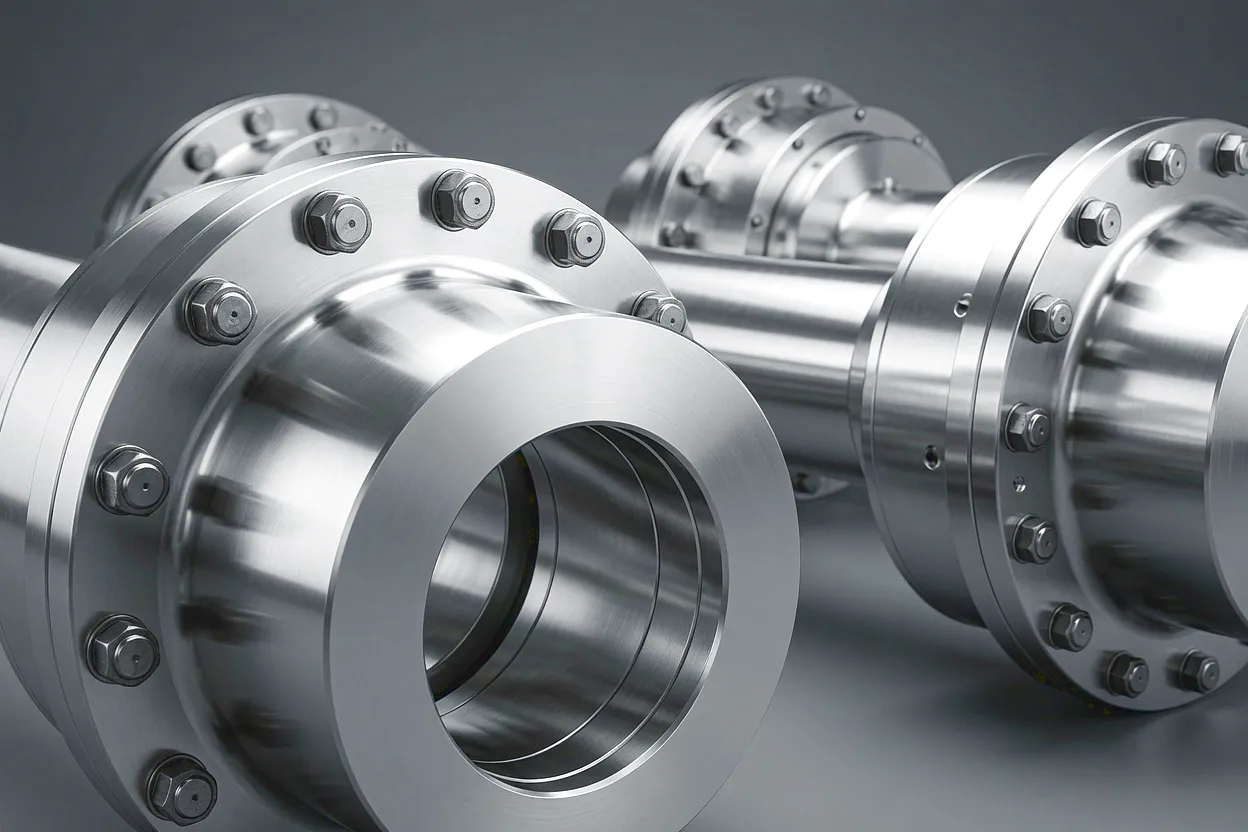 Cement production is one of those industries where a single hour of unplanned downtime can erase tens of thousands of pounds in lost output. At the heart of every cement works sits the rotary kiln — a massive, slowly turning cylinder that transforms raw limestone meal into clinker at temperatures above 1,400 °C. Keeping that cylinder turning reliably around the clock demands a drive train designed for extraordinary loads and punishing conditions. The gear coupling that links the main motor to the primary reducer is, by any reasonable measure, the most mechanically critical flexible connection in the entire drive chain. Get it right and the kiln runs year after year with nothing more than routine lubrication. Get it wrong and you face premature gearbox bearing failures, unexpected shutdowns, and repair bills that dwarf the original coupling cost many times over. This guide draws on almost two decades of hands-on application work to walk through why gear couplings remain the preferred technology for kiln drives, what to look for when specifying one, and how Ever Power’s engineering and manufacturing capability supports cement operators across the United Kingdom and far beyond.
Need a kiln-grade gear coupling?
Our engineers can size and quote a coupling matched to your exact drive arrangement — motor frame, reducer input shaft, and kiln duty profile.
Inside the Rotary Kiln Drive Train
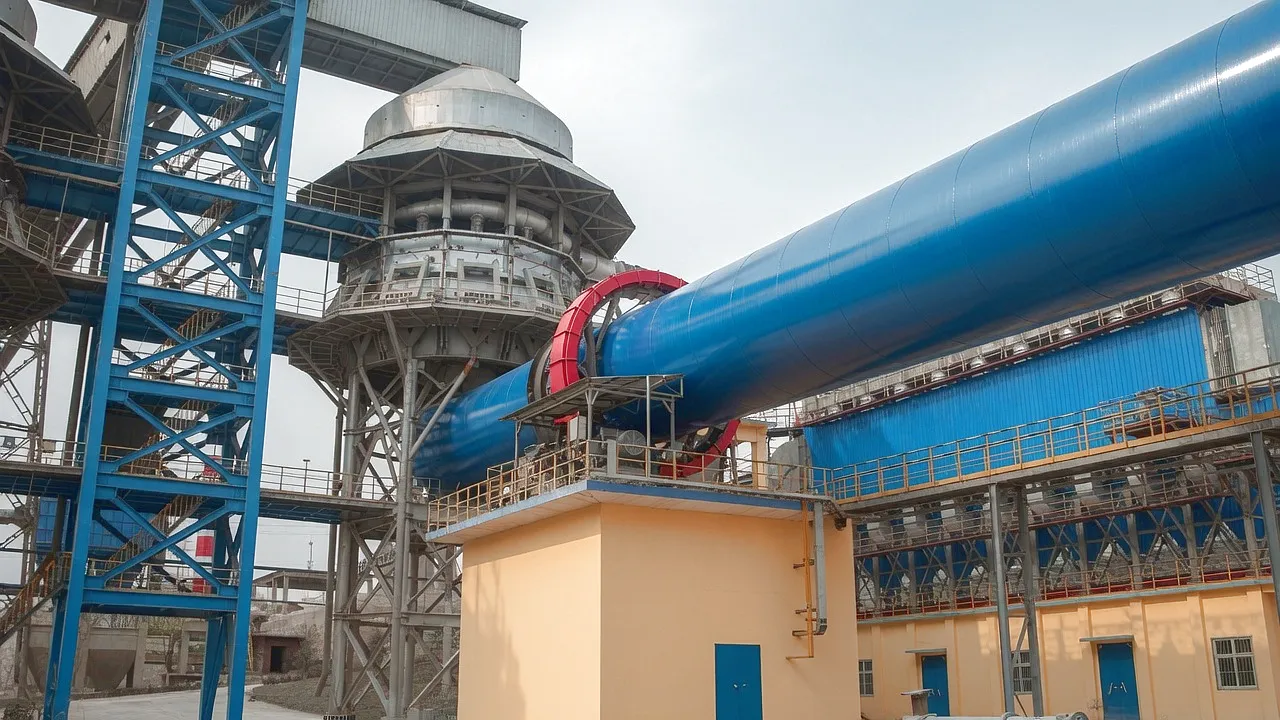
A rotary kiln can stretch anywhere from 50 metres to well over 100 metres in length, with shell diameters reaching 6 metres on the largest installations. The cylinder is inclined at a gentle 3 to 4 percent slope and rotates at just 1 to 5 revolutions per minute, depending on capacity and process requirements. Raw meal enters at the upper, cooler end and travels slowly toward the burner flame at the lower end, undergoing drying, calcination, and sintering along the way. By the time it emerges as clinker, the material has reached temperatures that would soften mild steel.
The drive train responsible for turning this enormous mass generally consists of a main electric motor — typically rated between 250 kW and 1,500 kW — connected through a gear coupling to a heavy-duty primary reducer. The reducer output shaft drives a pinion that meshes with a girth gear ring bolted around the kiln shell. An auxiliary drive, usually with its own smaller motor and coupling, provides low-speed turning for maintenance and controlled cool-down. The gear coupling between motor and reducer absorbs unavoidable shaft misalignment, compensates for thermal growth of foundations and casings, and damps torsional shock when the kiln is started under partial load.
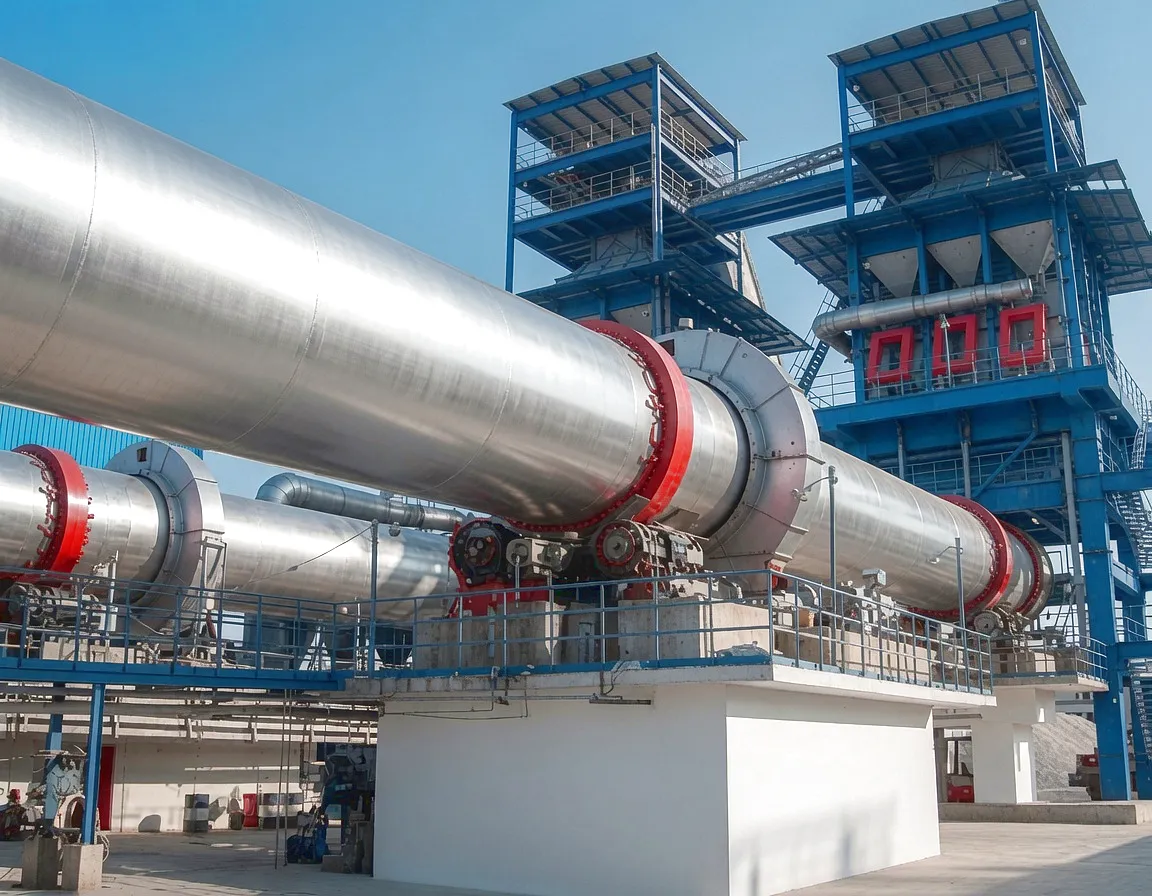
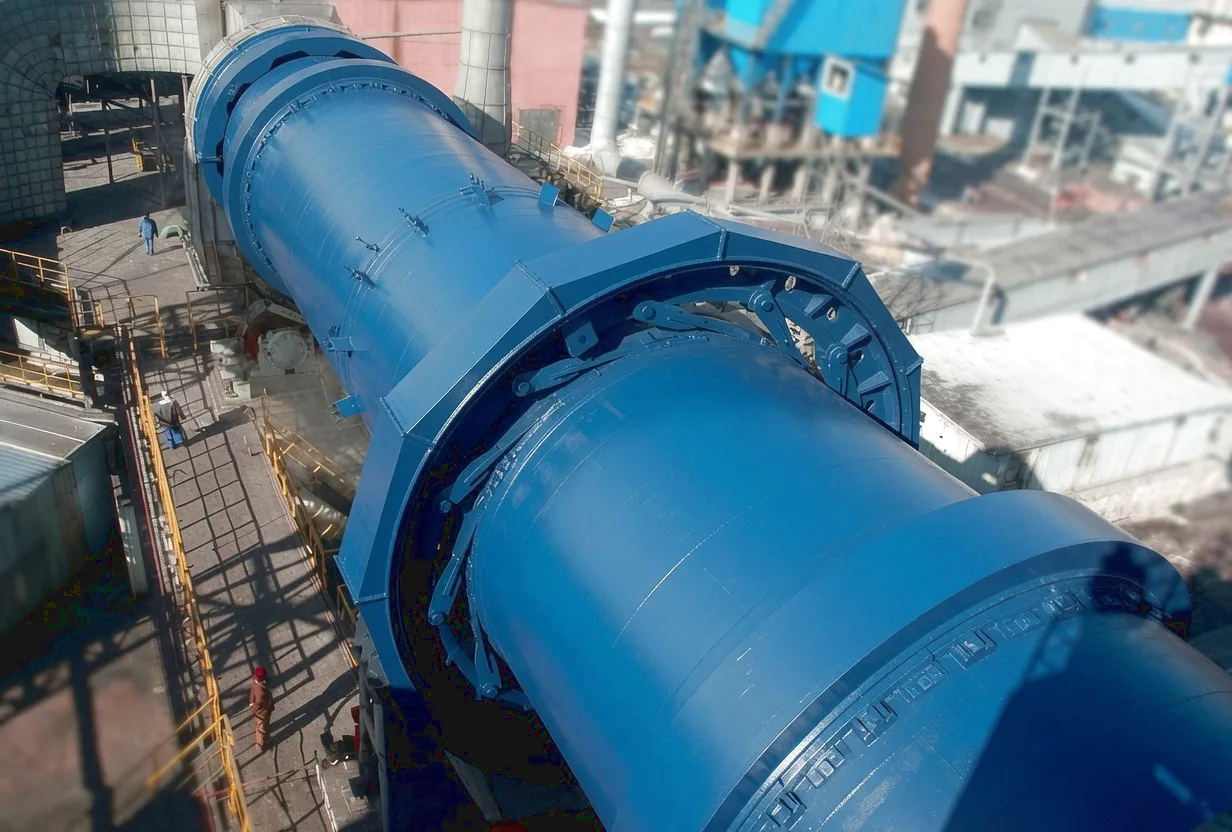
Rotary kiln in operation — the coupling sits between motor and main reducer
Why a Gear Coupling — and Not Something Else?
 Engineers sometimes ask whether a disc coupling or an elastomeric jaw coupling could do the same job for less money. In low-torque, high-speed pump or fan applications, those alternatives often make perfect sense. A kiln drive, however, presents a combination of challenges that plays directly to the strengths of the gear coupling: enormous transmitted torque at very low speed, angular and parallel misalignment that fluctuates with thermal cycles, heavy radial loads from the girth gear mesh, and an operating environment saturated with calcium-oxide dust and radiant heat. Elastomeric elements would degrade rapidly in kiln-house temperatures, and disc packs — while excellent in clean, well-aligned machinery — lack the axial float needed to accommodate the centimetres of thermal growth a kiln drive train experiences between cold start-up and steady-state operation.
A well-designed gear coupling handles all of these demands in a single, compact package. The crowned-tooth geometry permits angular misalignment of up to 1.5 degrees per mesh while sustaining full rated torque. Axial sliding between hub and sleeve accommodates foundation settlement and thermal expansion without transmitting thrust to gearbox bearings. And because the torque path runs through hardened alloy-steel teeth rather than through a flexible element, the coupling’s rated capacity is virtually unaffected by ambient temperature, dust ingress, or vibration — conditions that would shorten the life of almost any non-metallic alternative.
Performance Advantages That Matter on the Kiln Floor
Engineered for the realities of continuous cement production
⚙ Extreme Torque Density
Kiln drives routinely demand continuous torque ratings above 100,000 N·m, with peak start-up loads two to three times that figure. The tooth-to-tooth load path in a gear coupling transmits these forces through hardened alloy steel, giving the coupling a torque-to-weight ratio that no elastomeric design can match. A GICL-series drum-type unit rated at 160,000 N·m weighs under half as much as an equivalent-rated pin-bush coupling and occupies substantially less axial space in the drive train.
⇅ Multi-Axis Misalignment Tolerance
Cement-plant foundations settle unevenly, motor feet shift as grout ages, and thermal growth changes shaft centrelines by measurable amounts every time the kiln goes through a heating cycle. A gear coupling’s crowned-tooth profile accommodates angular offsets, parallel offsets, and combined misalignment simultaneously. That built-in compliance protects the reducer input bearings from parasitic loads that would otherwise slash bearing life by half — or worse.
⚙ Axial Float for Thermal Growth
During warm-up, the kiln shell elongates and every element in the drive train shifts position by some amount. A gear coupling provides controlled axial slide between the inner hub teeth and the outer sleeve, absorbing millimetres of expansion without generating thrust. This is not a luxury — it is essential. Thrust loads transmitted into a reducer designed for radial duty can wipe out a bearing set in a matter of weeks rather than years.
🔧 Simple, Predictable Maintenance
There are no rubber blocks to age-harden, no disc packs to fatigue-crack, and no grid springs to fret-corrode. Maintenance on a gear coupling is straightforward: inspect the tooth wear pattern, check the grease condition, re-lubricate on schedule, and verify alignment. A well-maintained unit will run 80,000 hours or more before the teeth need attention. That aligns perfectly with the multi-year overhaul intervals typical of large kiln drives — meaning the coupling can be inspected during a planned clinker-cooler shutdown rather than forcing an additional stop.
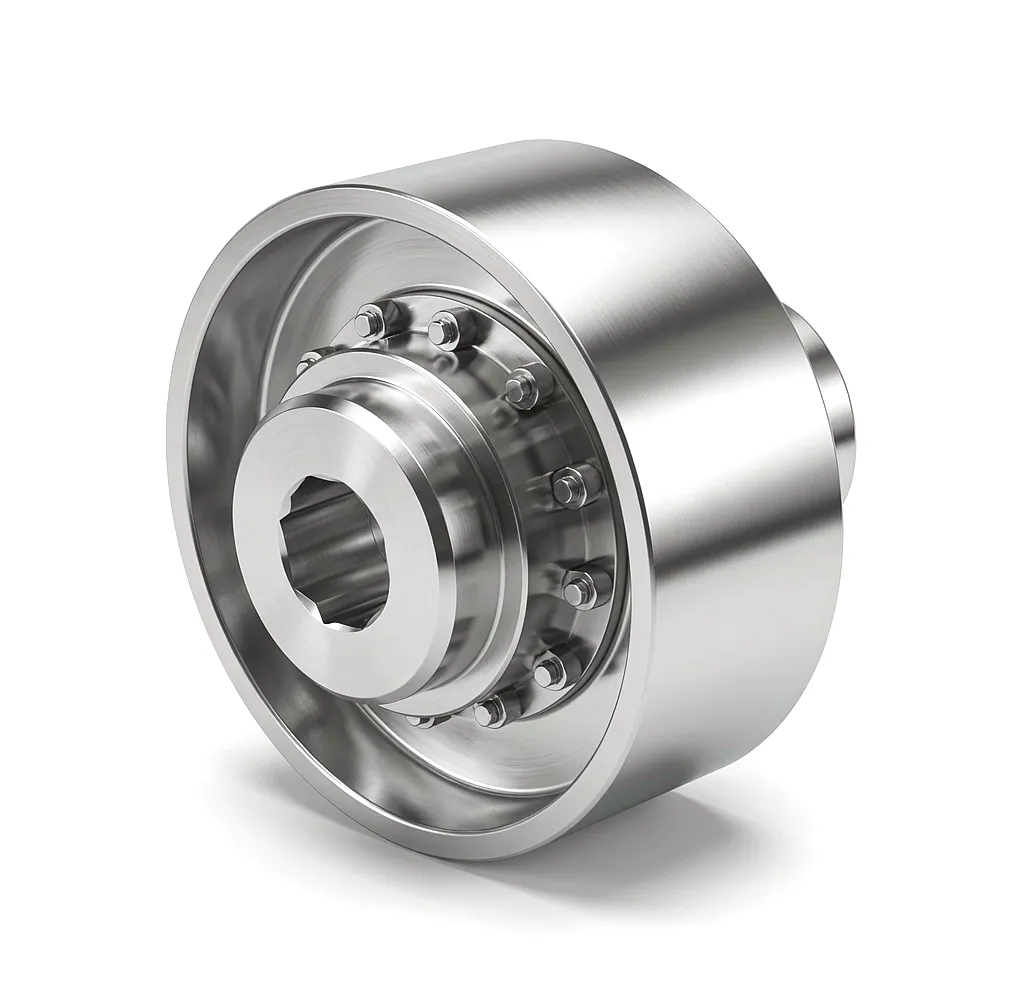
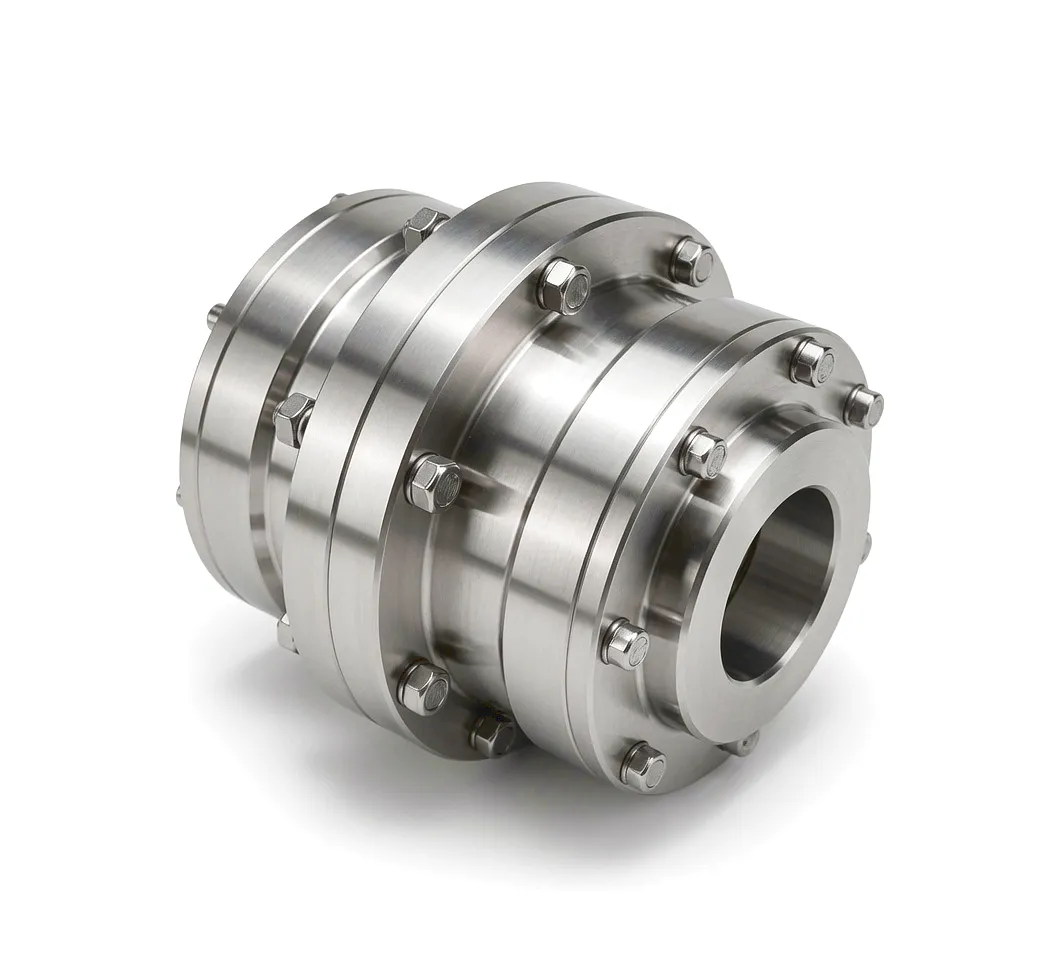
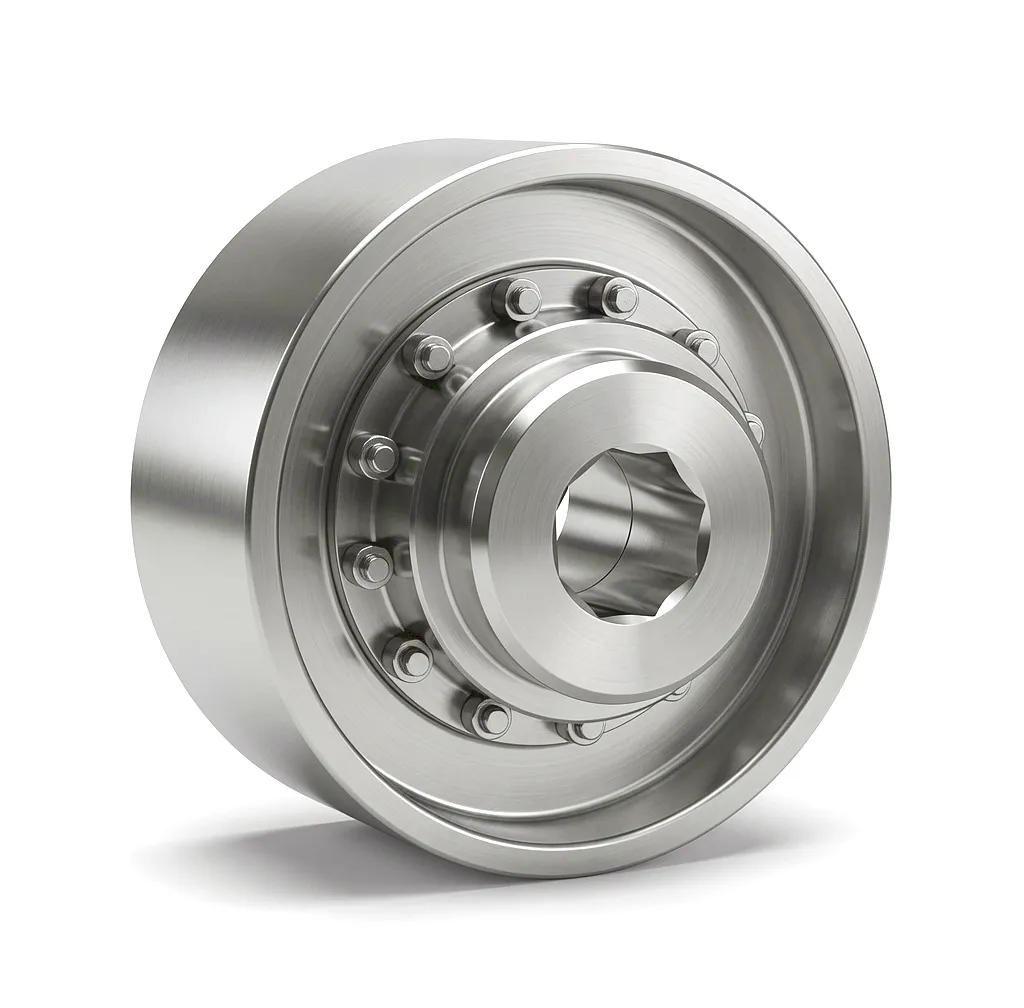
NGCL-series drum-shape gear coupling — crowned teeth visible on the inner hub
Technical Specifications — Kiln-Grade Gear Coupling Range
The table below summarises key performance data for the coupling models most commonly deployed in cement rotary kiln drive trains. These figures reflect continuous-duty ratings; peak-start factors and service factors should be applied in accordance with the coupling selection procedure described later in this article.
| Model | Nominal Torque (N·m) | Peak Torque (N·m) | Max Speed (rpm) | Angular Misalignment (deg) | Axial Float (mm) | Bore Range (mm) |
|---|---|---|---|---|---|---|
| GICL5 | 25,000 | 62,500 | 4,000 | 1.5 | +/- 5 | 55 – 100 |
| GICL10 | 63,000 | 157,500 | 3,150 | 1.5 | +/- 8 | 90 – 160 |
| GICL16 | 125,000 | 312,500 | 2,500 | 1.5 | +/- 10 | 130 – 220 |
| GICL22 | 200,000 | 500,000 | 2,000 | 1.5 | +/- 12 | 200 – 320 |
| GICL28 | 355,000 | 887,500 | 1,600 | 1.5 | +/- 14 | 280 – 420 |
| NGCL8 | 40,000 | 100,000 | 3,600 | 1.5 | +/- 6 | 70 – 130 |
Service factor for rotary kiln duty: 1.5 – 2.0 depending on start-up frequency and driven-machine inertia. Consult Ever Power engineering for confirmed selection.
How a Gear Coupling Transmits Torque — Principle, Materials, and Construction
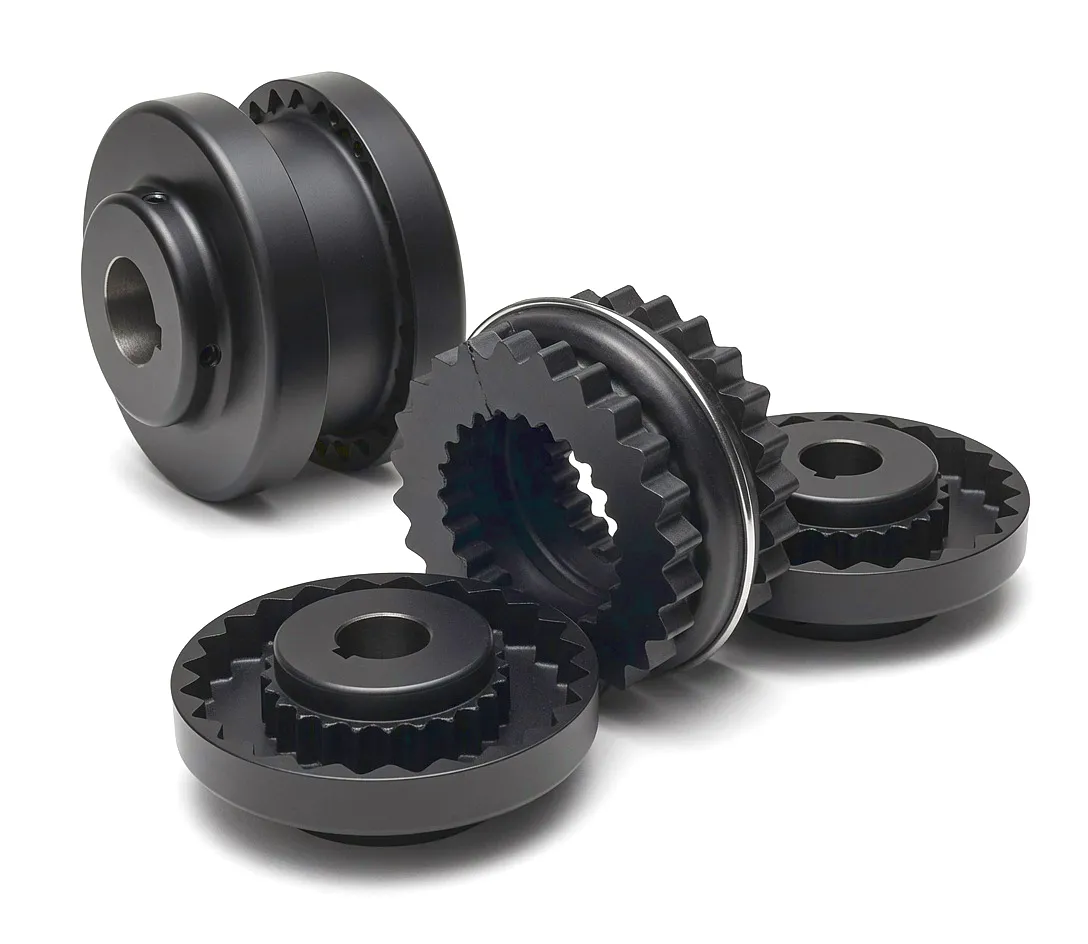 Strip a gear coupling down to its basics and you have two hubs and one (or two) outer sleeves. Each hub is bored and keyed to fit its respective shaft — the motor output on one side, the reducer input on the other. External teeth are cut around the outside of each hub, and the sleeve carries matching internal teeth. When the two halves are assembled and the sleeve bolted together, torque flows from the driving hub, through the meshing teeth, into the sleeve, and across to the teeth of the driven hub. The entire load path is metal-on-metal, with no polymer or elastomer in the chain.
The “drum-shape” or crowned-tooth design used in kiln-duty couplings modifies the standard spur-tooth profile by giving each hub tooth a barrel-shaped crown. This crown allows the tooth to pivot slightly within the sleeve, providing angular misalignment capacity without generating edge-loading on the tooth flanks. The result is smoother load distribution, lower contact stress, and significantly longer tooth life compared with straight-sided teeth operating under misalignment.
Material selection is driven by the torque and fatigue demands of the application. Hubs and sleeves for kiln-class couplings are typically forged from 42CrMo4 or equivalent medium-carbon alloy steel, then quenched and tempered to achieve a core hardness of 250 – 300 HB. The tooth flanks receive additional surface hardening — carburising to 58 – 62 HRC or nitriding to 55 – 60 HRC — which resists wear and micropitting while the tough core absorbs shock loads. Flange bolts are high-tensile Grade 10.9 or 12.9 to maintain clamping force under cyclic loading.
| Component | Material | Treatment | Hardness |
|---|---|---|---|
| Hub body | 42CrMo4 / AISI 4140 | Quench & temper | 250 – 300 HB |
| Tooth flanks | Same as hub | Carburise or nitride | 58 – 62 HRC |
| Sleeve | ZG45 cast steel or forged 42CrMo4 | Normalise + temper | 200 – 260 HB |
| Flange bolts | Grade 10.9 / 12.9 | Black oxide | — |
| Seals | NBR or FKM (Viton) | — | — |
Beyond the Kiln — Where Else Gear Couplings Prove Indispensable
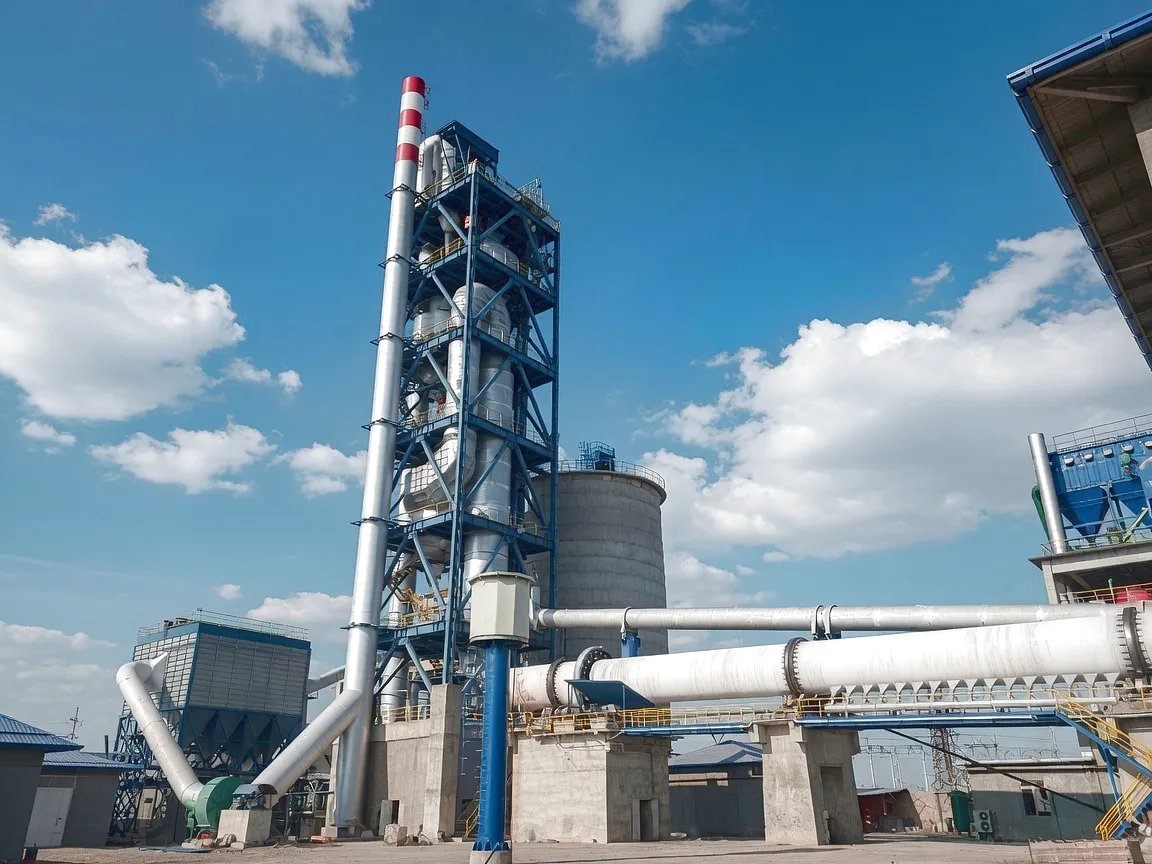
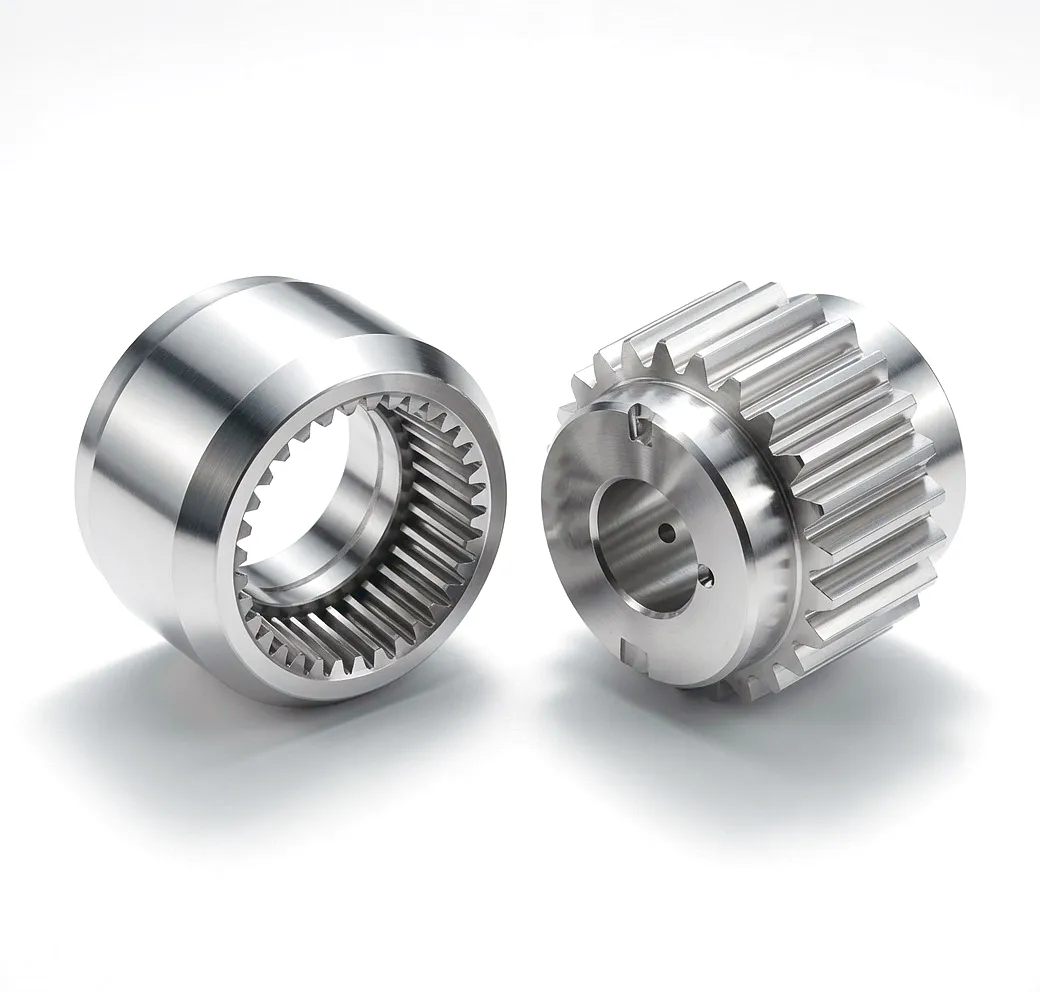 The same characteristics that make a gear coupling ideal for a rotary kiln — high torque, misalignment tolerance, axial float, and long service life in harsh environments — apply across a broad range of heavy industry. Steel rolling mills rely on gear couplings to connect main drive motors to roll stands, where torque reversals and impact loads occur with every pass of the billet. In power generation, both fossil-fuel and waste-to-energy plants use gear couplings on boiler-feed pump drives and induced-draught fan shafts where reliability directly affects grid capacity. Mining and minerals processing presents another natural application: ball mills, SAG mills, and vertical roller mills all share the kiln’s combination of high torque, low speed, heavy overhung loads, and dust-laden atmospheres.
Marine propulsion and offshore platforms utilise gear couplings to handle the torsional dynamics of diesel-engine power take-offs, where the coupling must damp firing-frequency excitations while transmitting full propulsive torque. Paper and pulp machinery — particularly headbox drives and reel-drum connections — demands couplings that can maintain precise angular velocity uniformity under fluctuating loads. Across all of these sectors, the gear coupling’s fundamental strength remains the same: it is the only flexible coupling type that combines metal-on-metal torque capacity with multi-axis misalignment compensation and meaningful axial float in a single, maintainable package.
Real-World Results — Client Case Studies
Performance verified across three continents
Case Study — United Kingdom
Yorkshire Cement Works — Kiln No. 3 Drive Rehabilitation
 A well-established cement producer operating three kilns near Ferrybridge, West Yorkshire, experienced repeated gearbox bearing failures on their largest kiln line, a 5.2-metre-diameter, 76-metre-long unit rated at 4,200 tonnes per day. Vibration analysis pointed to excessive axial thrust transmitted through the existing pin-bush coupling, which had lost its designed clearance after years of dust contamination and inadequate lubrication. Ever Power’s application team carried out an on-site survey, laser-measured both shafts, and proposed a GICL22 drum-type gear coupling with custom bore dimensions to match the existing motor and reducer shafts — eliminating the need for any shaft modification. The replacement was installed during a planned clinker-cooler shutdown. Within the following 14 months of continuous operation, gearbox vibration fell by 38 percent and there were zero unplanned stops attributable to the drive coupling. The plant maintenance manager noted that the new coupling’s grease-service interval was double that of the previous unit.
★★★★★
“We had been fighting bearing failures for two years. Within three months of installing the Ever Power gear coupling, the vibration trend dropped to levels we hadn’t seen since commissioning. Worth every penny.”
— D. Marsden, Maintenance Manager
Cement works, West Yorkshire, UK
★★★★★
“Turnaround was impressive — bespoke bore, keyway, and flange drilling delivered in under four weeks. The coupling dropped straight in with zero rework. That kind of precision saves us real money during a shutdown window.”
— Ing. K. Hoffmann, Project Engineer
Steel rolling mill, North Rhine-Westphalia, Germany
★★★★☆
“We operate two ball mills in 50 °C ambient. Previous couplings failed every 18 months. The Ever Power NGCL units have now been running for over 30 months without any tooth wear beyond normal polishing. Very good value.”
— A. Al-Rashidi, Rotating Equipment Lead
Phosphate processing plant, Al-Jalamid, Saudi Arabia
Selecting and Sizing a Gear Coupling for Kiln Duty
Picking the right gear coupling is not simply a matter of matching the catalogue torque rating to the motor nameplate. Kiln drives impose transient loads that can exceed steady-state torque by a wide margin. A cold kiln start with a heavy clinker bed can generate a breakaway torque spike two to three times the running figure, and the coupling must withstand that spike repeatedly over its lifetime without tooth deformation. The accepted approach uses a service factor — typically 1.5 for a standard kiln with soft-start motor control, rising to 2.0 or above for direct-on-line starts or kilns with frequent stop/start cycles. Multiply the motor’s continuous rated torque by the service factor, and the resulting figure becomes the minimum nominal coupling torque rating.
Bore sizing is equally important. The coupling hub must provide a rigid interference fit on both motor and reducer shafts. For kiln duty, a taper-lock or hydraulic shrink-fit arrangement is preferred over a straight-key fit, because it eliminates keyway stress concentrations and allows higher torque transmission through friction alone. Ever Power’s engineering team provides full bore-machining to customer shaft drawings, including keyways, tapers, and spline profiles, so the coupling arrives ready to install with no field machining required.
Lubrication deserves attention at the selection stage as well. Standard mineral-oil-based gear grease works well in ambient temperatures up to about 80 °C. Kiln environments routinely push local casing temperatures higher, particularly on the reducer side nearest the kiln shell. In those cases, Ever Power can supply couplings pre-filled with a high-temperature synthetic grease rated for continuous duty at 120 °C, extending the re-lubrication interval and reducing the risk of grease degradation between service windows.
Built to Your Specification — Ever Power’s Manufacturing Facility
Precision CNC machining, rigorous heat treatment, and full in-house quality control
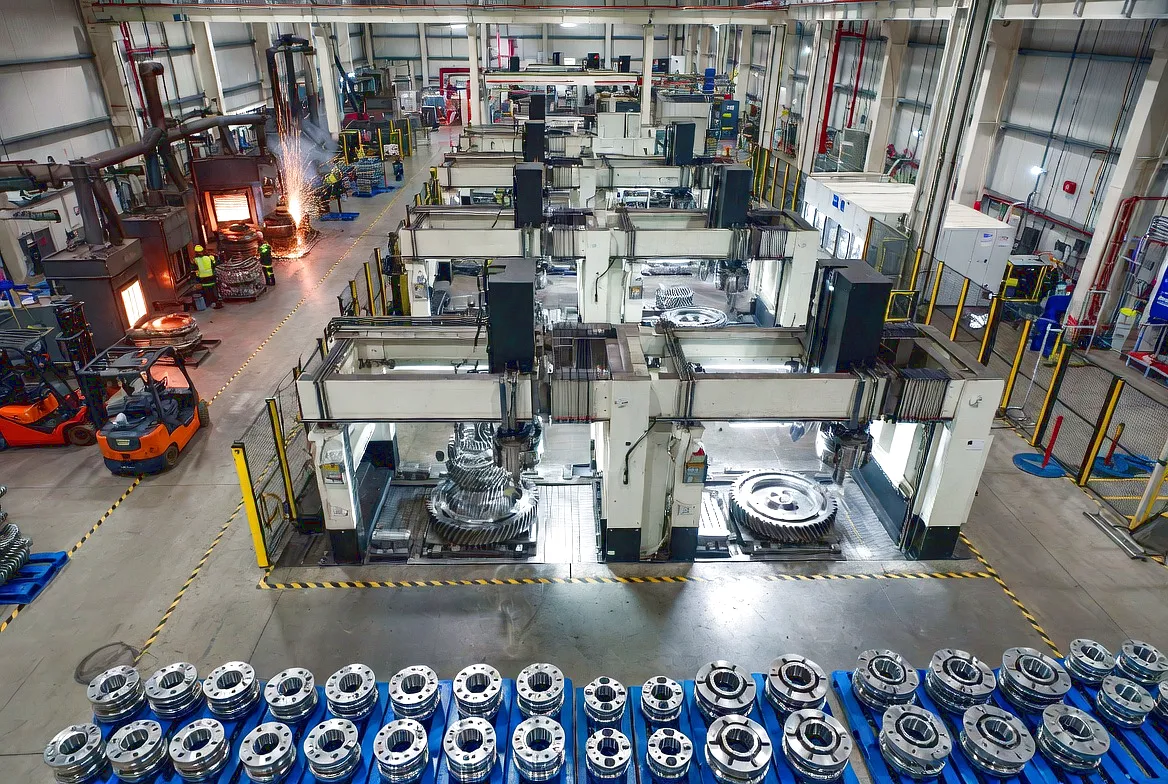
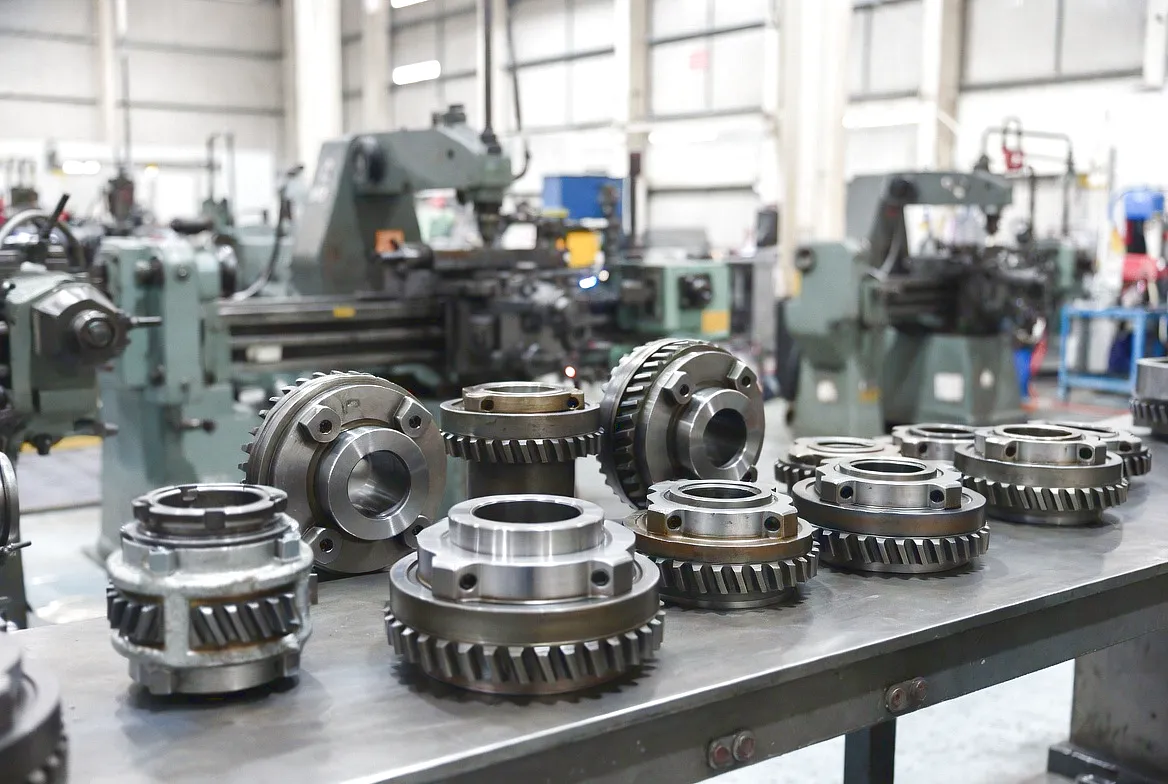 Ever Power operates a dedicated coupling production facility equipped with CNC hobbing machines, CNC lathes up to 2-metre swing diameter, induction hardening lines, and a fully instrumented heat-treatment shop. Every gear coupling hub is finish-machined from certified forging stock, and each batch of tooth-hardened parts goes through Rockwell hardness verification, magnetic particle inspection for surface cracks, and dimensional CMM checks against the customer’s drawing before it is cleared for assembly. That level of process control means the coupling you receive is not a “standard size, drill-to-suit” product — it is built from the forging up to match your exact shaft dimensions, keyway geometry, flange bolt pattern, and torque requirement.
Customisation extends beyond bore machining. Ever Power can modify tooth count, tooth module, crown radius, and axial-float range to suit non-standard drive arrangements. If you are replacing a legacy coupling from another manufacturer and the original drawings are no longer available, our engineers can reverse-engineer the interface dimensions from your shaft sketches or a site survey, ensuring a drop-in fit with no civil or mechanical rework on your existing foundations or guard structures.
Get a Quote — Custom Gear Coupling
Response within 24 hours • Free engineering consultation • Worldwide delivery
Supporting Cement and Heavy Industry Across the United Kingdom
The UK cement sector currently operates around a dozen active kiln lines spread from the Hope Valley in Derbyshire to the Medway towns in Kent, with additional capacity in South Wales, the Scottish Lowlands, and County Durham. Ever Power supplies gear couplings to maintenance and capital-project teams at facilities across all of these regions, backed by engineering support that understands the particular challenges of British sites — including the tight plant footprints common in facilities that date back decades, the preference for metric-bore British Standard shafting, and the procurement structures of UK-based global operators who need standardised documentation, material test certificates to EN 10204 3.1, and delivery scheduled around planned outage windows.
Beyond cement, Ever Power gear couplings are operating in steel mills in Sheffield and Scunthorpe, water-treatment works across the Thames and Severn regions, waste-to-energy plants in the Midlands, quarry crushers on the Welsh borders, and paper mills in Scotland. The company maintains stock of the most common GICL and NGCL frame sizes at its European logistics hub, enabling two-to-five-day delivery to any UK mainland address for standard models. Bespoke units follow a confirmed lead time agreed at order stage, with expedite options available for genuine emergency replacements.
Keeping Your Gear Coupling in Peak Condition
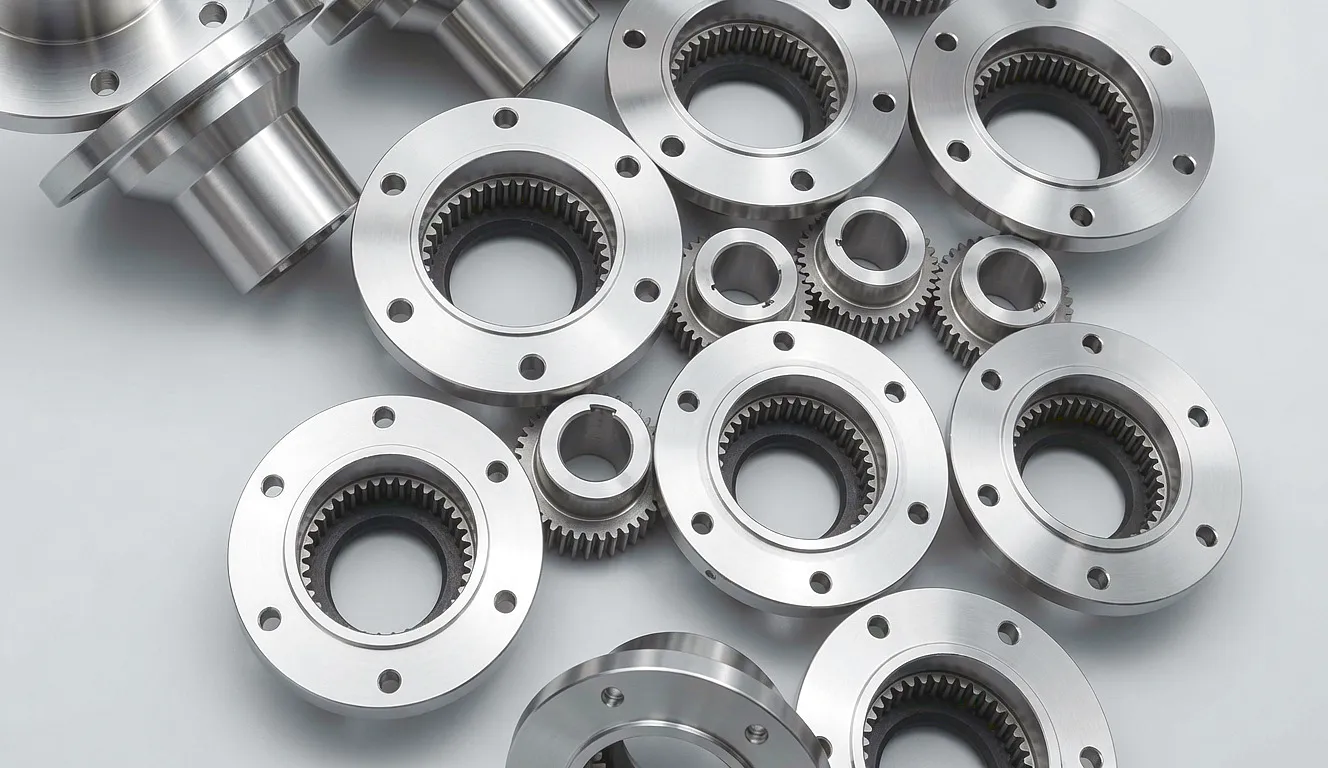 A gear coupling earns its reputation for longevity only when basic maintenance discipline is respected. The most common failure mode is not tooth breakage — it is lubricant starvation caused by grease degradation or seal failure, leading to adhesive wear and eventual tooth-profile loss. Establishing a grease analysis programme, where a small sample is drawn from the coupling during each planned inspection and tested for metal particle content, viscosity change, and oxidation level, gives early warning of wear long before it becomes visible. Think of it as a blood test for the coupling: inexpensive to do, and the data trends it generates can justify extending or shortening the service interval with confidence rather than guesswork.
Alignment checks should be part of every major outage scope. Even a coupling that tolerates misalignment will live longer — and generate less parasitic load on adjacent bearings — when it operates close to its nominal centreline. Laser alignment is standard practice on kiln drives, and a full angular-and-offset measurement takes less than an hour with modern equipment. Recording the alignment condition at each outage builds a historical trend that can reveal foundation movement, grout deterioration, or thermal-growth patterns specific to your kiln.
Frequently Asked Questions
Answers to the questions our engineering team hears most often
What size gear coupling do I need for a cement rotary kiln drive system in the UK?
The coupling size depends on the motor’s continuous torque output multiplied by an appropriate service factor — typically 1.5 to 2.0 for kiln duty. A 5,000-tonne-per-day kiln with a 1,200 kW motor driving through a single-reduction gearbox will usually need a gear coupling rated at 200,000 N·m or above. Bore dimensions, flange configuration, and shaft-end details all affect the final selection. Ever Power’s application engineers can carry out the full sizing exercise free of charge — just provide the motor datasheet and reducer arrangement drawing.
How much does a custom gear coupling for a rotary kiln cost from a UK supplier?
Pricing varies with torque rating, material specification, bore machining complexity, and delivery urgency. Standard-range drum-type couplings suitable for smaller auxiliary drives start from several hundred pounds. Large, fully customised units for main kiln drives with bespoke bore, keyway, and hardening specifications can reach several thousand pounds. Contact Ever Power for a detailed quotation — we include full engineering review in every quote at no extra charge.
Where can I find a reliable gear coupling supplier for cement plants near Manchester?
Ever Power delivers gear couplings to cement works, quarries, and heavy industrial sites throughout the North West of England, including the greater Manchester area. Our European logistics centre holds popular frame sizes in stock for rapid dispatch, and our engineering team is available for on-site surveys and alignment checks at client facilities across Lancashire, Cheshire, and the wider Pennine region.
Which type of gear coupling is best suited for high-torque kiln applications?
Drum-shaped (crowned-tooth) gear couplings — such as the GICL and NGCL series — are the industry-standard choice. The crowned-tooth profile distributes load evenly across the tooth face under misalignment, giving the coupling significantly higher fatigue life than a straight-tooth design operating under the same angular and parallel offset conditions that kiln drives impose.
How often should gear couplings on a cement kiln drive be inspected and relubricated?
A reasonable baseline is a visual inspection every three to six months, checking for grease leakage, seal condition, and bolt tightness, combined with a full re-lubrication every twelve months. If the coupling operates in an environment with elevated ambient temperatures, heavy dust, or high humidity, shorten both intervals by roughly 30 percent. Grease sampling for metal content and oxidation level is the most cost-effective way to tailor the interval to your specific conditions.
Can Ever Power supply a replacement gear coupling for an older kiln drive system?
Absolutely. Many UK cement plants run kiln drives designed twenty or thirty years ago, and original coupling drawings are frequently lost. Ever Power’s engineering team routinely reverse-engineers replacement couplings from field measurements or shaft sketches, matching the original bore, keyway, flange bolt circle, and overall envelope to provide a drop-in replacement with no modification to the existing drive train.
What is the typical lead time for a bespoke kiln gear coupling delivered to the UK?
Standard frame sizes held in stock typically ship within two to three weeks, including bore machining to your dimensions. Fully bespoke units — non-standard bore, special material grade, or modified tooth profile — generally require four to six weeks from order confirmation. Emergency expedite manufacturing is available for unplanned breakdowns; discuss your situation with our sales desk and we will do everything we can to compress the schedule.
How does thermal expansion in a rotary kiln affect gear coupling selection?
A kiln shell grows several centimetres axially as it heats from ambient to operating temperature, and this growth propagates back through the girth gear, support rollers, and drive train foundation. The gear coupling must provide enough axial float to absorb the net displacement at the coupling plane without transmitting axial thrust into the reducer. Under-specifying axial float is one of the most common selection errors and a frequent root cause of premature gearbox bearing damage.
Ready to Solve Your Kiln Drive Coupling Challenge?
Whether you need a drop-in replacement, a fully bespoke design, or simply an expert second opinion on your current coupling specification — Ever Power’s engineering team is here to help.
Ever Power • Precision Gear Couplings • Engineered for Heavy Industry · edit by gzl