
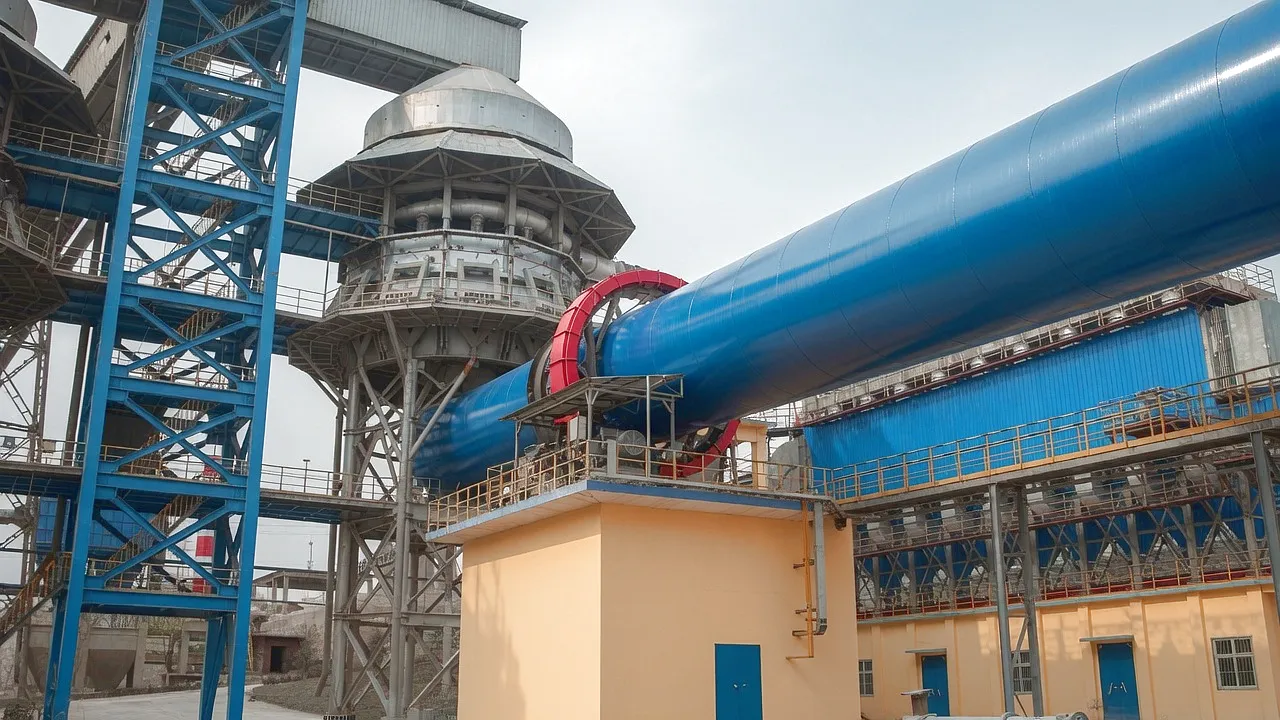
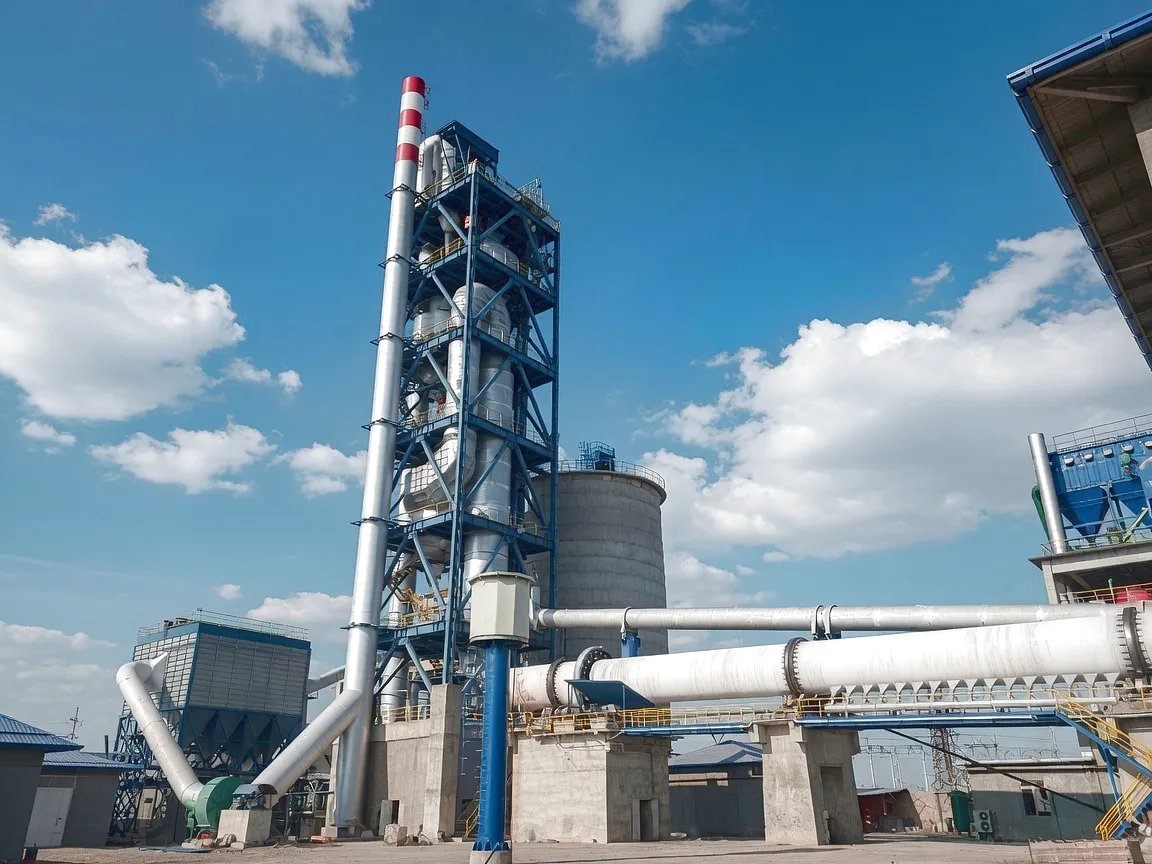
 Anyone who has spent time on the floor of a cement works knows the rotary kiln is the beating heart of the entire operation. This massive rotating cylinder — often spanning 60 to 100 metres in length and several metres in diameter — runs around the clock, converting raw limestone and clay into clinker at temperatures exceeding 1,400 °C. Keeping that kiln spinning smoothly depends on every component in the drive train working in concert, and among those components, the gear coupling between the main motor and the primary gearbox is one of the most mechanically demanding connections in any industrial plant.
A gear coupling in this position must transmit enormous torque while absorbing angular, radial, and axial misalignment caused by thermal expansion, foundation settlement, and the sheer mass of the rotating assembly. Get the coupling selection wrong and you face unplanned kiln shutdowns — each one costing UK cement producers upward of £30,000 per hour in lost output. Get it right, and the coupling becomes an invisible workhorse that runs for years between planned inspections. This guide draws on practical field experience to walk you through the engineering behind gear couplings for rotary kiln drive systems, covering material choices, performance parameters, installation considerations, and lessons learned from cement plants across the United Kingdom and beyond.
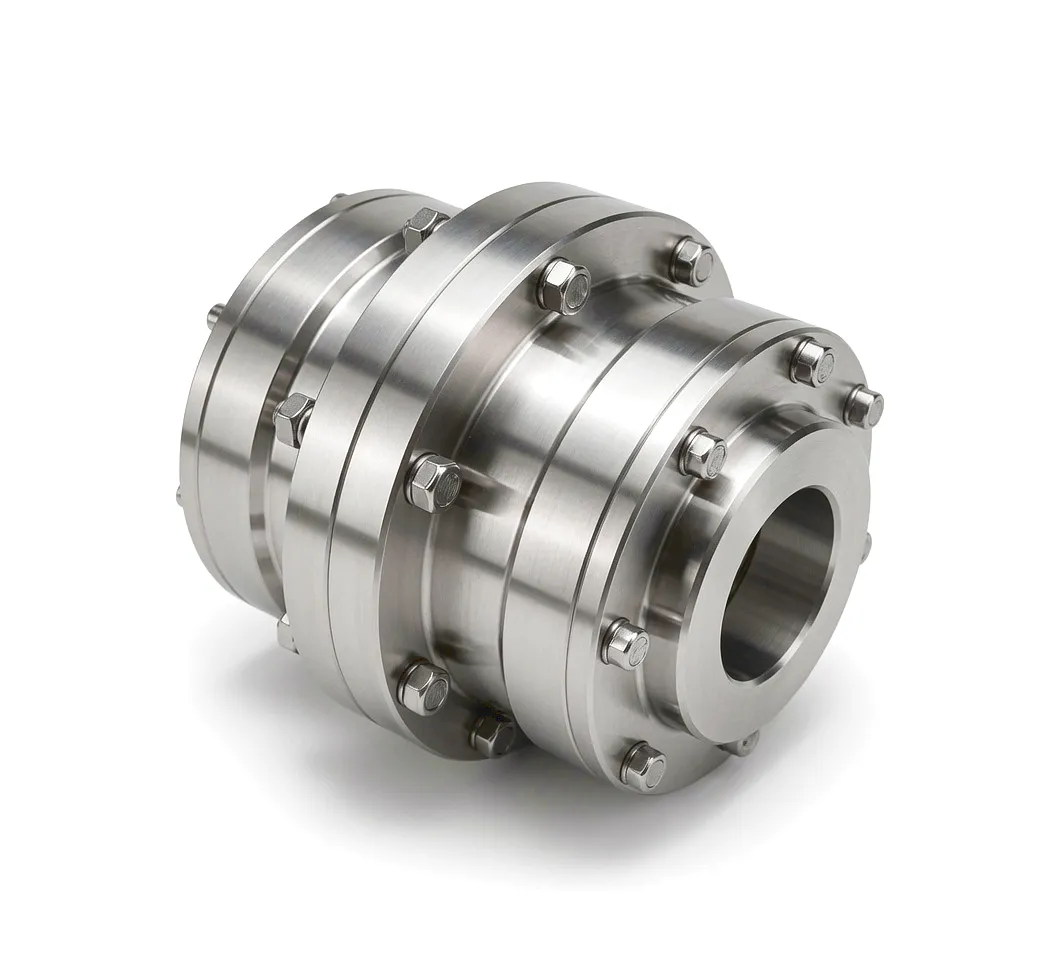
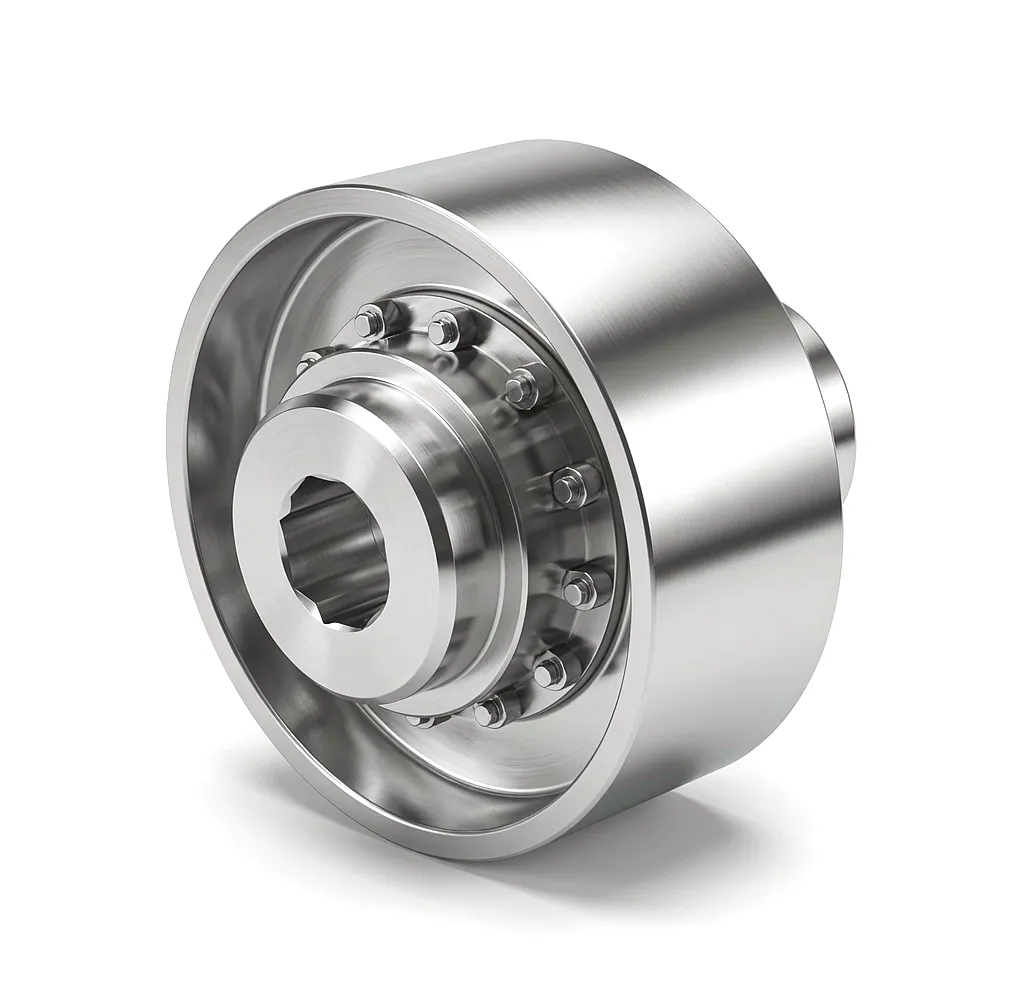
GICL drum-shape gear coupling — a common choice for heavy-duty kiln applications.
The Rotary Kiln — Understanding the Machine Your Coupling Must Serve
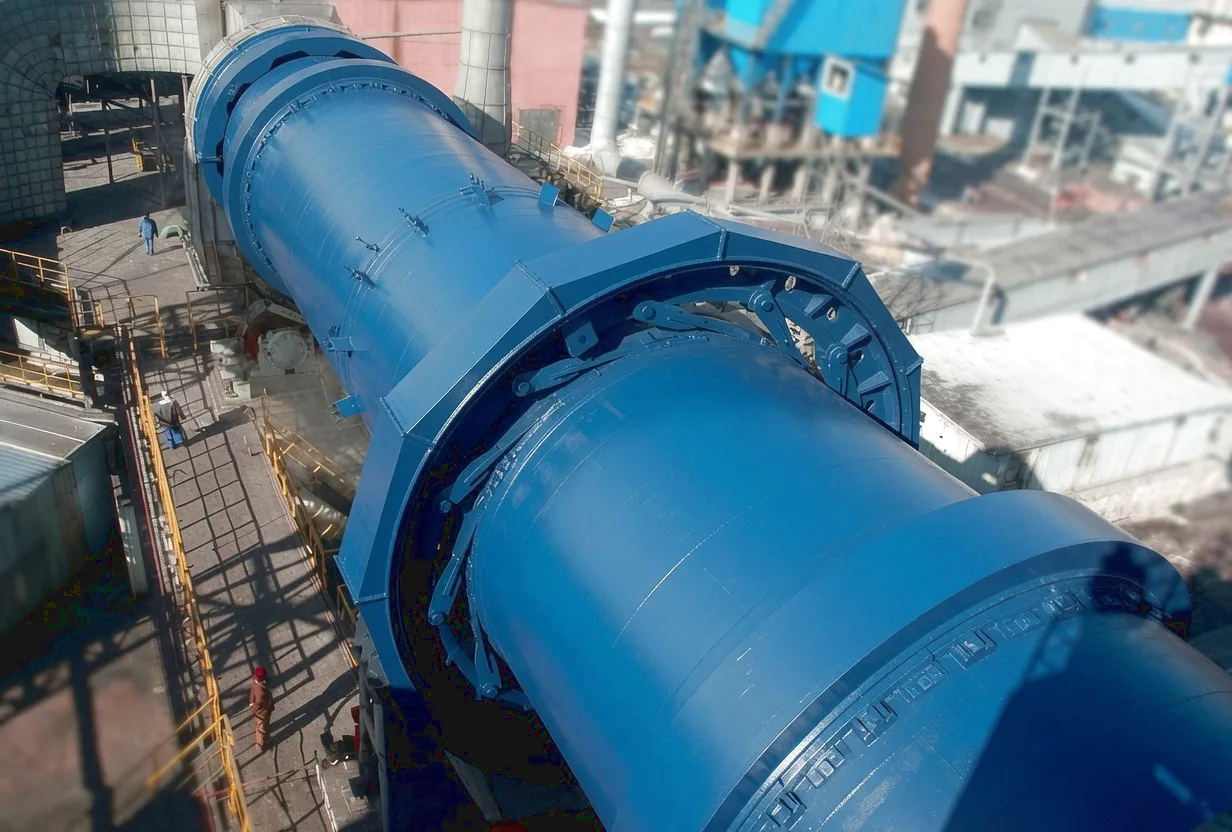
A rotary kiln is essentially a long, inclined tube that rotates at between 1 and 5 rpm. Raw meal enters at the elevated tail end and travels slowly toward the discharge end under the combined effect of gravity and kiln rotation. Along the way, the material passes through distinct thermal zones — drying, preheating, calcining, and sintering — before emerging as red-hot clinker that will later be ground into finished cement. The entire process is continuous; a modern dry-process kiln in the UK typically runs campaigns of 12 to 18 months between cold shutdowns.
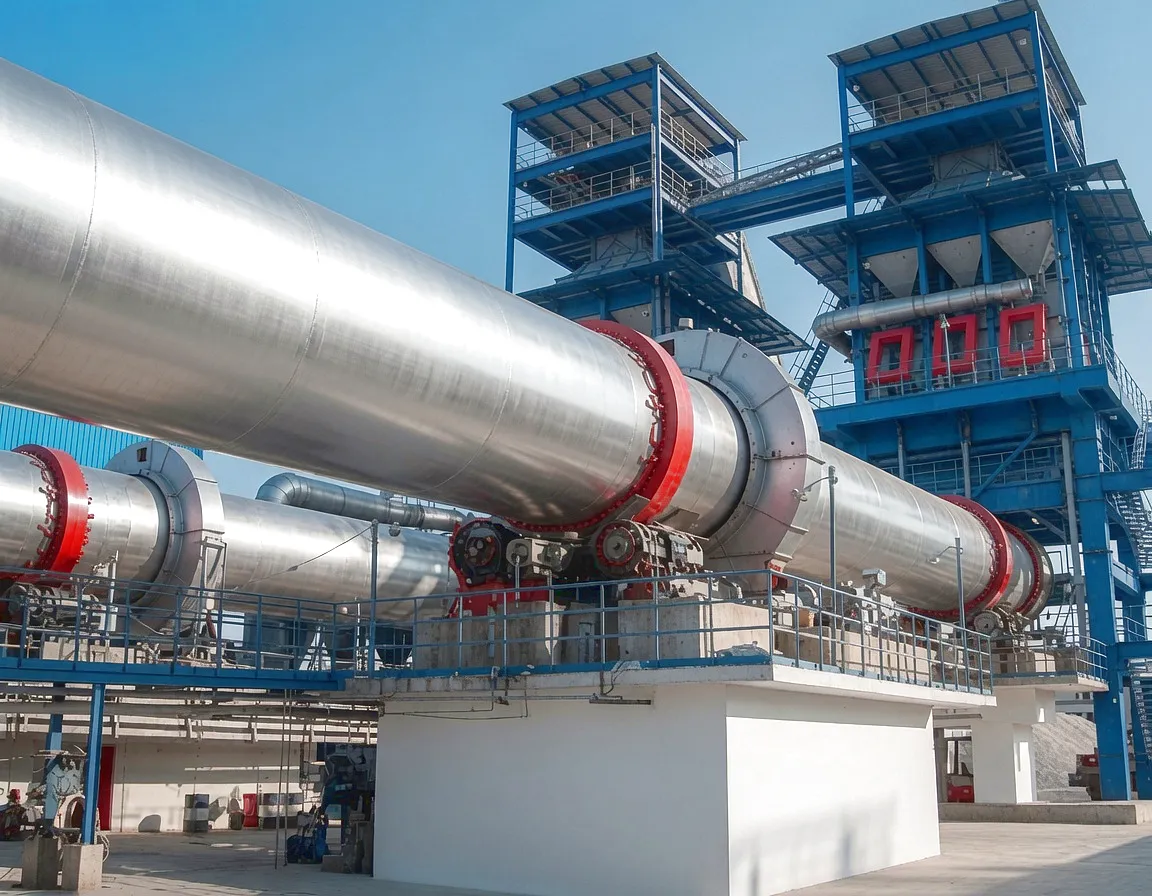 From a mechanical standpoint, the kiln shell rides on support rollers spaced along its length, and a large girth gear (also called the ring gear or bull gear) encircles the shell at roughly its midpoint. A pinion driven by the main gearbox meshes with this girth gear to provide rotational motion. Because the shell diameter is enormous and the speed is very low, the torque demand at the girth gear interface is immense — commonly between 200 kNm and 1,500 kNm depending on kiln size. That torque has to travel from the electric motor, through the gear coupling, into the gearbox, and out to the pinion without a weak link anywhere in the chain.
Drive System Architecture and the Role of the Gear Coupling
A standard rotary kiln drive layout in UK cement plants typically comprises a main AC motor rated between 250 kW and 2,500 kW, a heavy-duty helical or planetary gearbox providing the necessary speed reduction, and an open girth gear set on the kiln shell. An auxiliary drive — a smaller motor with its own gear coupling and gearbox — is also fitted to allow slow rotation of the kiln during warm-up, cool-down, or maintenance to prevent thermal sagging of the shell. The gear coupling appears at two critical points in this architecture: between the main motor and the main gearbox, and between the auxiliary motor and the auxiliary gearbox.
Why a gear coupling rather than another coupling type? The answer comes down to torque density. Gear couplings deliver more torque per unit of installed weight than any competing design — disc couplings, grid couplings, or elastomeric types simply cannot match a gear coupling when you need to pass 500 kNm through a package that fits inside the existing drive housing. The toothed sleeve-and-hub interface of a gear coupling creates a load path distributed across dozens or even hundreds of crowned teeth, each one sharing the transmitted torque. That distributed load path is precisely what rotary kiln drive trains demand.
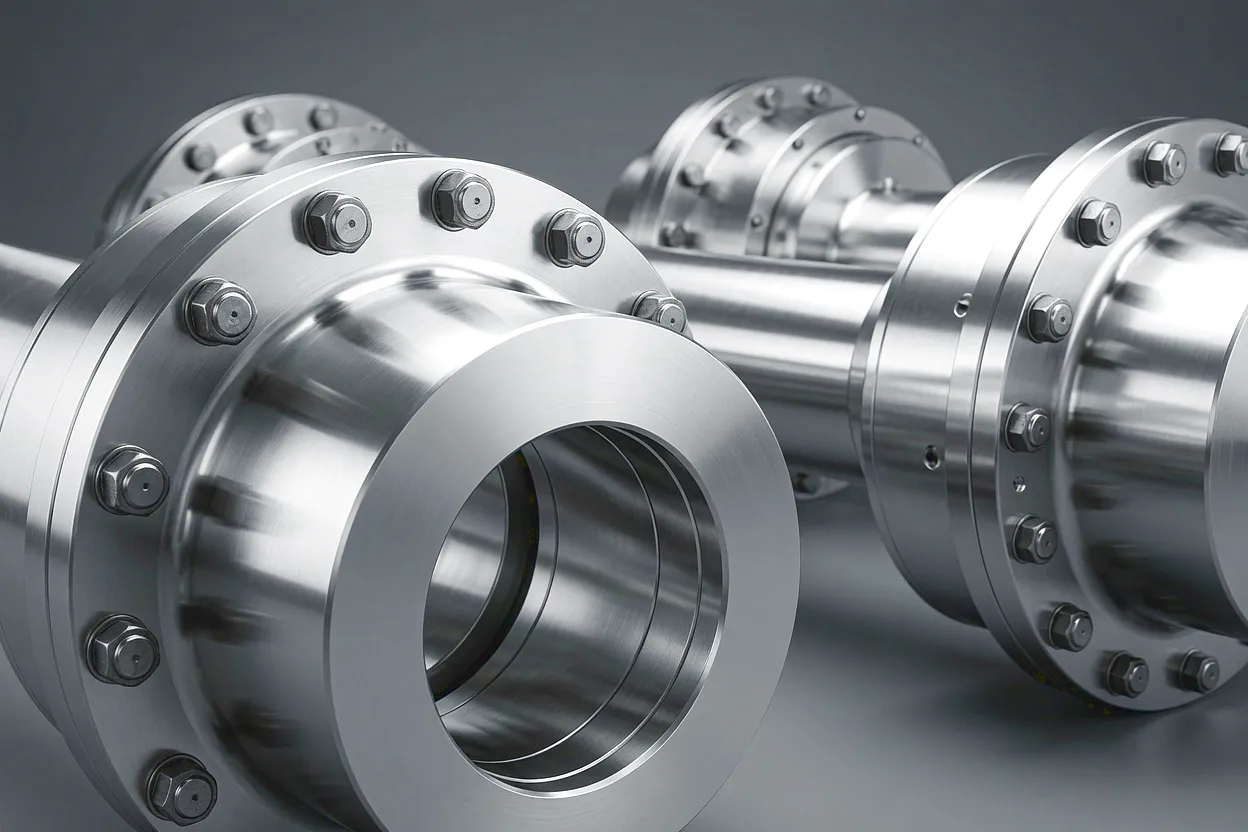
Left: heavy-duty gear coupling. Right: NGCL series drum-shape model rated for high-torque kiln drives.
Why Gear Couplings Are the Preferred Solution for Rotary Kiln Drives
Cement kiln drive trains present a uniquely hostile combination of operating conditions. The environment around the kiln is dusty, hot, and subject to constant vibration. Foundations can shift over time as concrete cures unevenly or soil compacts beneath the plant. Thermal growth of the motor shaft alone can cause axial displacement of several millimetres as the winding heats up from ambient to operating temperature. A gear coupling handles all of these conditions through the sliding action of its crowned external teeth against the straight internal teeth of its sleeve. That sliding interface simultaneously accommodates angular misalignment (typically up to 1.5 degrees per mesh), parallel offset, and axial movement — all within a compact, robust steel housing.
Compared to flexible-element couplings, a gear coupling has no elastomeric insert to degrade in kiln-area temperatures that routinely exceed 50 °C at the coupling location. Compared to metallic disc couplings, a gear coupling tolerates larger misalignment angles without inducing cyclic bending fatigue in thin flex elements. And compared to universal joints, a gear coupling introduces no significant velocity variation at the driven shaft — an important consideration when steady kiln rotation speed protects refractory lining integrity. For plant engineers in the UK cement industry, the gear coupling remains the default coupling choice on drives above about 150 kW, and virtually the only practical choice above 500 kW.
Performance Advantages of Gear Couplings in Kiln Service
Each benefit below translates directly to fewer stops and lower maintenance spend on your rotary kiln line.
Exceptional Torque Capacity
A single gear coupling can transmit torques from 10 kNm to well over 2,000 kNm without needing an oversized housing. The full-face tooth contact distributes loading evenly, making gear couplings the lightest and most compact high-torque transmission option available for kiln drive shafts.
Multi-Axis Misalignment Tolerance
Crowned tooth geometry allows a gear coupling to absorb angular misalignment up to 1.5° per engagement, axial float of several millimetres, and parallel offset — all simultaneously. In a kiln environment where thermal growth and foundation movement are inevitable, this adaptability is indispensable.
Resilience in Harsh Conditions
With no rubber or polymer elements to degrade, a steel gear coupling operates reliably in the elevated ambient temperatures, dust loads, and vibration levels found around a cement kiln. The all-metal construction means temperature swings between seasonal shutdowns and full production have no effect on coupling integrity.
Field-Serviceable Design
The split-sleeve construction used in most kiln-duty gear couplings permits inspection and tooth replacement without removing the motor or gearbox from its foundation — a significant advantage when you consider that moving a 2-tonne motor costs days of crane time and production loss on a busy cement line.
Long Operational Life
With correct lubrication and alignment, a well-specified gear coupling in kiln service routinely achieves 8 to 12 years of continuous operation before tooth wear necessitates refurbishment. That predictability makes maintenance scheduling far more straightforward for UK plant managers working to strict production targets.
Cost-Effective Total Ownership
The combination of long service life, low spare-part cost, and field-serviceable construction gives gear couplings a total cost of ownership that competing technologies struggle to beat — particularly on large drives where the upfront price difference between coupling types is marginal relative to the overall drive investment.
Technical Specifications — Gear Couplings for Kiln Duty
The table below reflects typical performance ranges for Ever Power gear couplings deployed on rotary kiln main drives and auxiliary drives across UK cement plants. Exact values depend on coupling model and bore configuration.
Materials, Tooth Geometry, and Engineering Principles
The operating principle of a gear coupling is straightforward: two toothed hubs, each keyed to a shaft, engage with a common sleeve (or pair of sleeves bolted together at a flange). Torque transmits through the mesh of external teeth on the hubs with internal teeth on the sleeve. The external teeth are crowned — given a barrel-shaped profile — so that as misalignment occurs, the contact patch shifts smoothly along the tooth face without edge loading. This crowning is what separates a gear coupling from a simple splined joint and is the detail that makes reliable operation under misalignment possible.
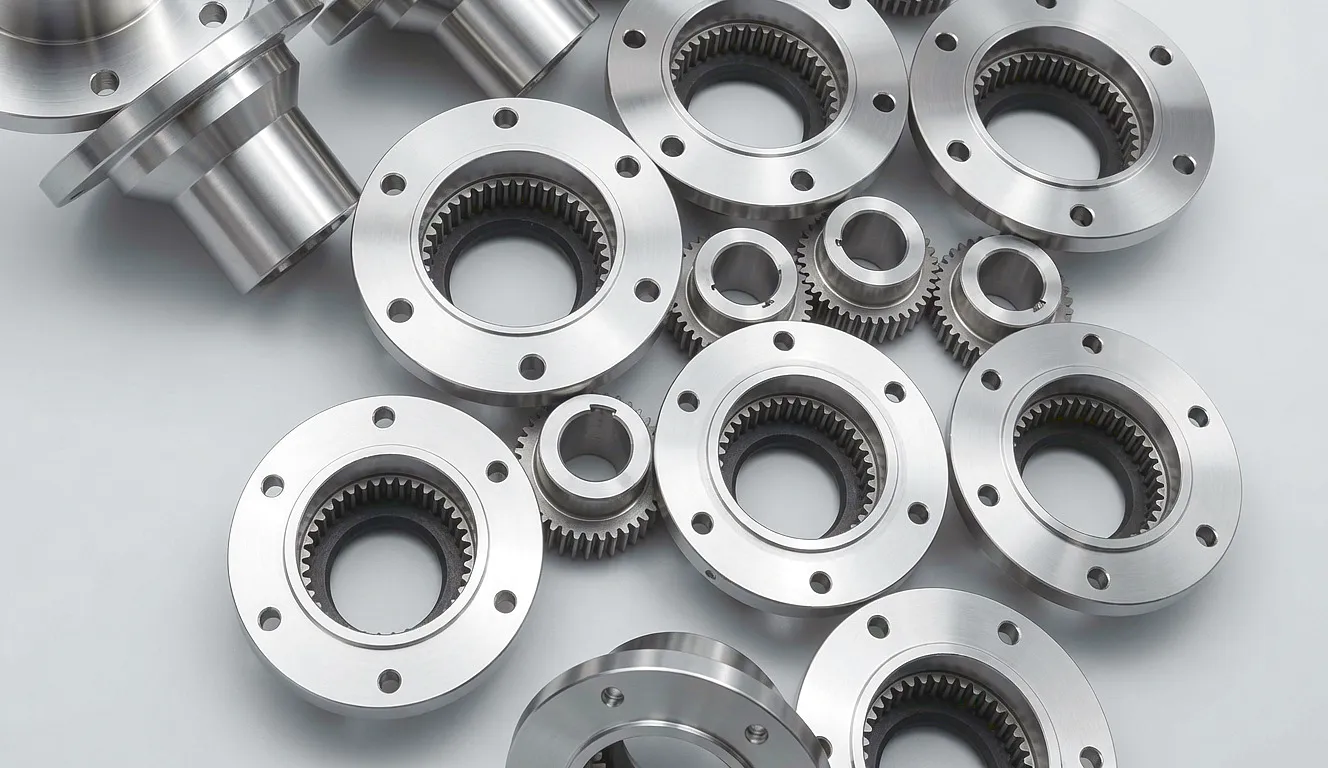
For kiln-duty gear couplings, Ever Power specifies 42CrMo alloy steel for the hub forgings. This chromium-molybdenum steel offers a yield strength above 750 MPa in the quenched and tempered condition, providing the core toughness needed to absorb shock loads during kiln start-up when the static friction of refractory and clinker bed creates a momentary torque spike well above steady-state levels. The tooth flanks are then case-carburised to a depth of 1.2 to 1.8 mm and hardened to HRC 58–62, producing a wear-resistant surface backed by a tough, ductile core — the ideal metallurgical combination for a component subject to rolling and sliding contact under heavy load.
Sleeve material follows a similar logic. Many kiln couplings use 20CrMnTi alloy steel for the sleeve, carburised and ground to provide the internal tooth surface with matching hardness. Seals are typically labyrinth or lip-type, chosen to retain lubricant while excluding the clinker dust and moisture that pervade the kiln area. Lubrication is either a high-EP (extreme-pressure) grease packed at assembly and replenished at scheduled intervals, or a continuous oil bath fed by the gearbox lubrication circuit.
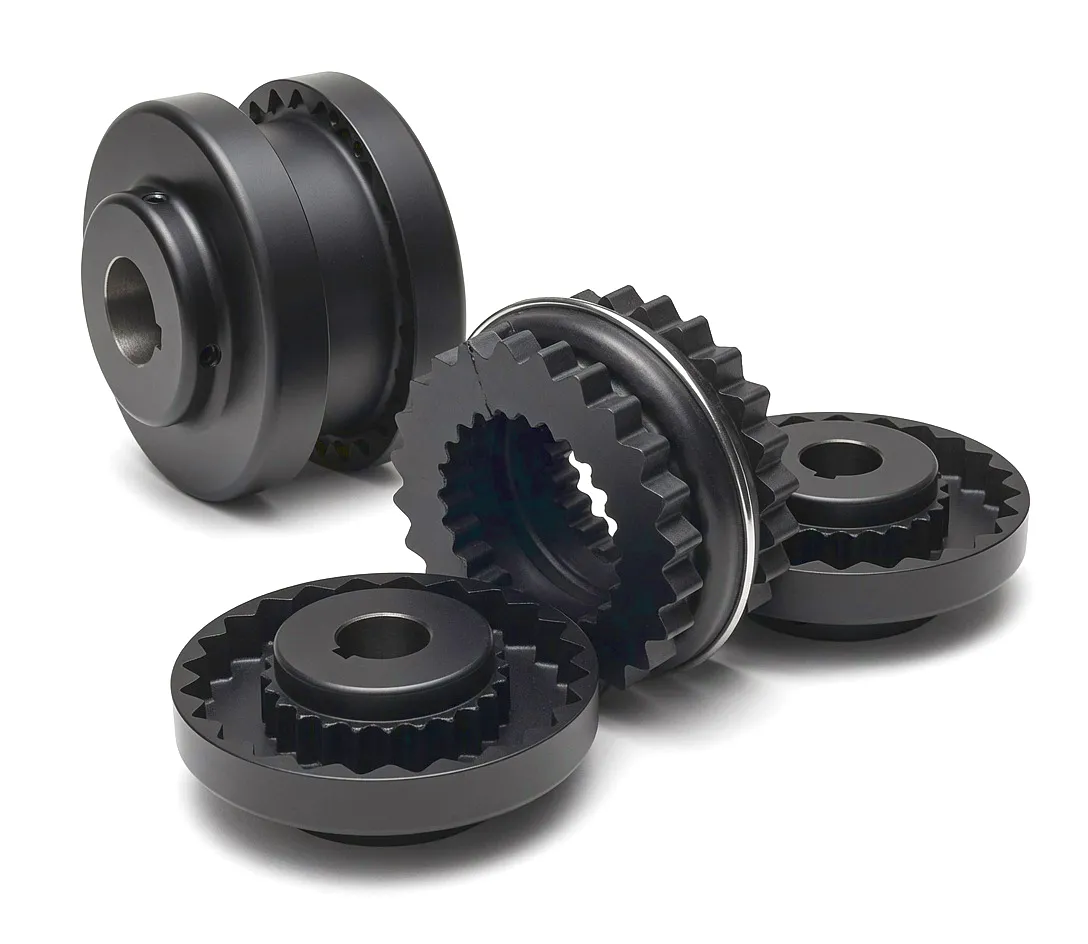
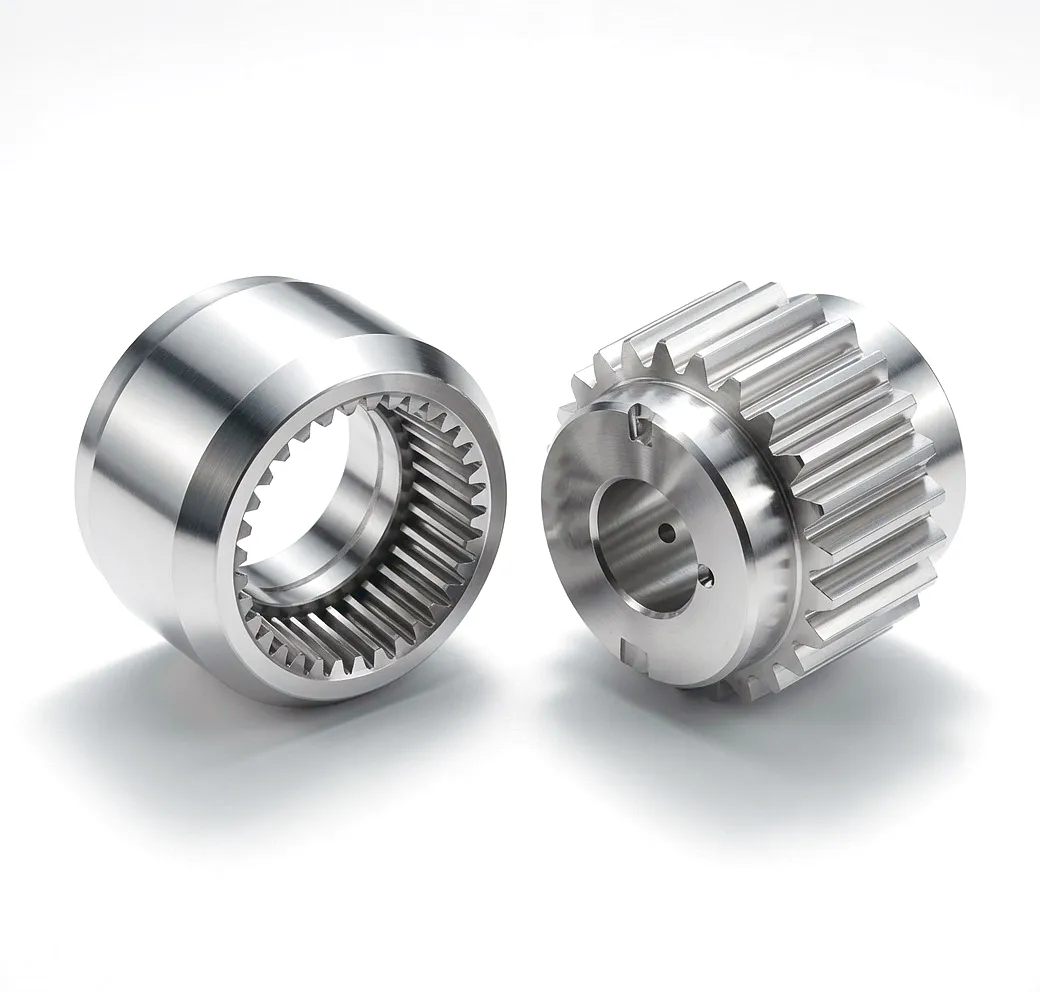
Top: alloy steel gear coupling hub. Bottom: NL-type nylon gear flexible coupling for lighter auxiliary applications.
Application Scenarios — Where Gear Couplings Work Across the Cement Plant
While the rotary kiln main drive is the most demanding application, gear couplings serve throughout a modern cement facility. Understanding where else they appear helps illustrate the versatility of this coupling type and why stocking a common range makes practical sense for UK plant stores.
Field Results — A Customer Case from the UK Cement Industry
Real performance data from a gear coupling retrofit on an operating kiln in northern England.
Yorkshire, UK
Replacing a Failed Disc Coupling on a 4.2 m x 62 m Rotary Kiln
 A major cement producer operating a dry-process plant in Yorkshire experienced repeated disc coupling failures on their Kiln 2 main drive. The 1,800 kW motor connected to a two-stage helical gearbox through a large metallic disc coupling that had been specified at original construction. Over a three-year period, two disc pack failures caused unplanned shutdowns totalling 11 days of lost production — roughly £7.9 million in foregone output. Root-cause analysis indicated that foundation differential settlement of 0.8 mm combined with thermal shaft growth of 2.1 mm was creating angular and axial displacement beyond the disc coupling’s rated capacity.
Ever Power’s applications engineering team conducted a site survey, took laser alignment measurements, and recommended a GICL-28 drum-shape gear coupling rated for 1,200 kNm continuous torque with an angular misalignment allowance of 1.5° per mesh and axial float of +/- 12 mm. The coupling was manufactured with a custom bore to match the existing shaft diameters (280 mm motor side, 320 mm gearbox side) and delivered within 5 weeks. Installation was completed during a planned refractory shutdown without requiring any modification to the motor or gearbox foundations.
In the 30 months since installation, the gear coupling has operated without incident. Vibration data from the quarterly condition monitoring programme shows bearing housing velocity readings at the coupling location have dropped from 4.8 mm/s to 2.1 mm/s — a 56% reduction that the plant’s reliability engineer attributes to the superior misalignment handling of the gear coupling compared with the previous disc type. Lubricant analysis at the last grease replenishment showed no abnormal wear metals, confirming that tooth wear is proceeding well within expected parameters.
| Metric | Before (Disc Coupling) | After (Gear Coupling) |
|---|---|---|
| Unplanned Stops (3 yr) | 2 events / 11 days | 0 events |
| Vibration at Coupling | 4.8 mm/s | 2.1 mm/s |
| Lubrication Interval | N/A (dry coupling) | 12 months |
| Estimated Annual Saving | — | £2.6 million |
What Our Customers Say
“We had been nursing that disc coupling for two years before admitting the design was wrong for our alignment conditions. The Ever Power gear coupling arrived on time, fitted our existing shaft dimensions perfectly, and has not missed a beat in over two years of continuous service. The vibration reduction alone justified the investment.”
— David Hargreaves, Maintenance Manager
Cement Works, Yorkshire, UK
“What surprised me most was the turnaround time. We sent shaft drawings on a Monday, received the finished coupling three weeks later, and had it installed during our scheduled kiln stop the following weekend. The custom bore and keyway were machined exactly to our tolerances.”
— Klaus Berger, Project Engineer
Cement Producer, North Rhine-Westphalia, Germany
“We standardised on Ever Power gear couplings across all three of our kiln lines after testing one unit on Kiln 1. Spare part commonality has simplified our stores management, and the fact that sleeves can be replaced without moving the motor saves us roughly two days of crane hire per maintenance window.”
— Sarah Livingston, Reliability Lead
Integrated Cement Plant, Derbyshire, UK
Ever Power Manufacturing — Custom Gear Coupling Production
Every rotary kiln installation has its own shaft sizes, keyway standards, axial gap requirements, and torque profile. Off-the-shelf catalogue couplings sometimes fit, but more often than not, a kiln drive gear coupling needs bore modifications, non-standard flange drilling, or a special overall length to match the motor-to-gearbox distance. That is where Ever Power’s in-house manufacturing capability becomes a genuine advantage for UK cement plant engineers.
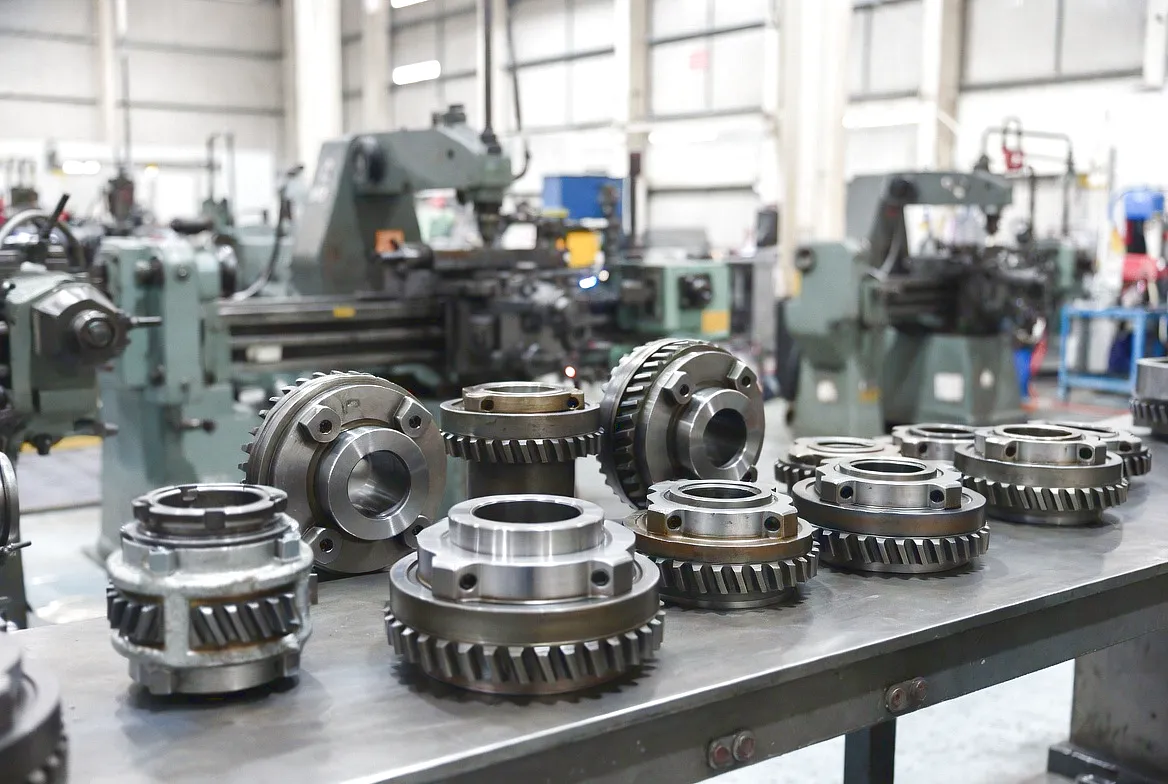
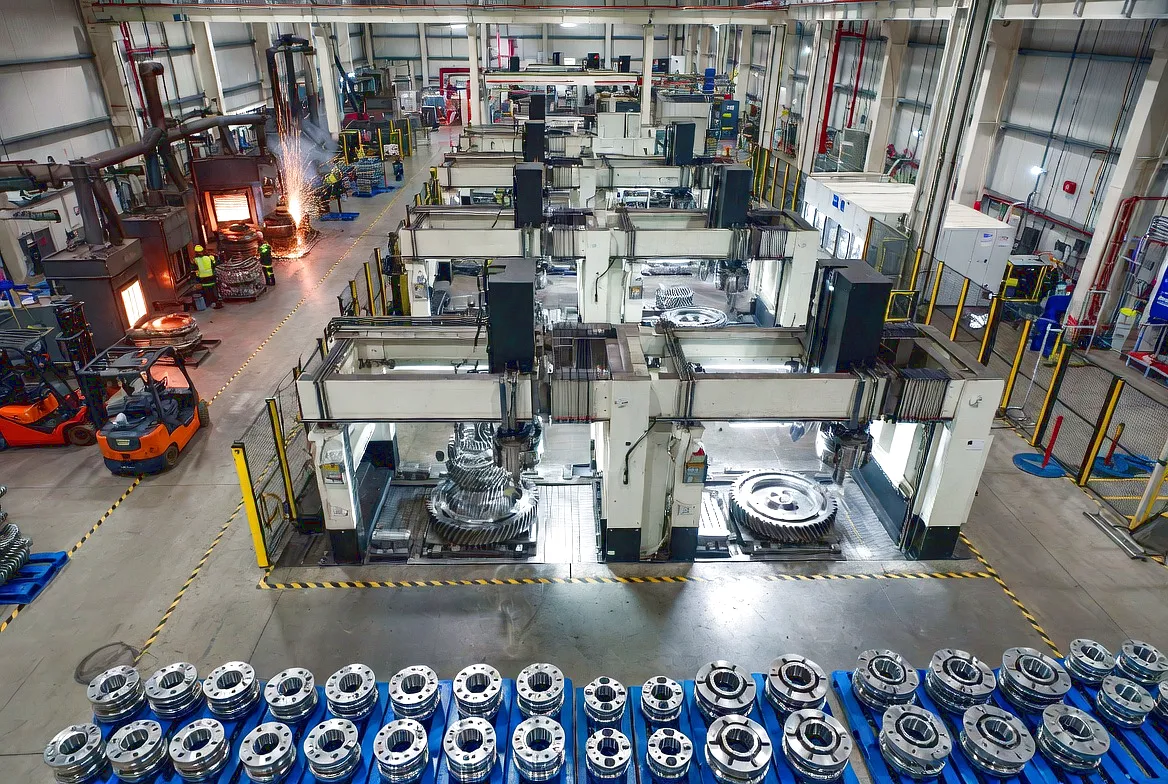
Our production facility houses CNC hobbing machines capable of cutting gear teeth up to module 16, CNC lathes that handle workpieces up to 1,200 mm in diameter, and a dedicated heat treatment line with carburising furnaces, quench tanks, and tempering ovens — all under one roof. This vertical integration means we control every step from raw forging to finished coupling, eliminating the quality risks and lead-time uncertainty that come with outsourcing critical processes. When a cement plant in the Midlands or South Wales needs a gear coupling with a non-standard 340 mm bore and DIN keyway rather than BS keyway, we machine it to order and deliver within 3 to 5 weeks — often faster on emergency requests.
Balancing is performed to ISO 1940 G6.3 or better, and each coupling ships with a material test certificate, dimensional report, and hardness verification. For customers who require it, we can supply to ATEX standards for use in areas with combustible dust exposure — an increasingly relevant consideration in UK cement plants using alternative fuels.
Installation and Maintenance — Practical Guidance
Proper installation of a gear coupling on a rotary kiln drive begins with laser alignment of the motor and gearbox shafts. While the coupling itself tolerates misalignment, starting from a well-aligned baseline extends tooth life considerably and reduces the cyclic forces transmitted into the gearbox bearings. Industry practice in UK cement plants is to align the shaft centres to within 0.05 mm parallel offset and 0.02 mm/100 mm angular — tighter than the coupling strictly requires, but it pays dividends over the long term.
Hub mounting is typically a shrink fit. The hub bore is heated to 120–150 °C using an induction heater and then slid onto the shaft, keyed, and allowed to cool to form an interference fit of 0.0005 to 0.001 times the bore diameter. Once both hubs are in place, the sleeves are positioned over the hubs and the flange bolts torqued to specification — always in a cross-pattern sequence and always using calibrated tooling. Bolt preload is critical; under-torqued bolts allow the flange faces to separate under torque reversal during kiln start-up, leading to fretting and eventual bolt failure.
Lubrication management is the single most impactful maintenance activity for gear coupling longevity. For grease-lubricated couplings, the recommendation is to replenish with an NLGI Grade 1 EP grease at intervals of 6 to 12 months depending on operating temperature. During replenishment, the old grease should be purged rather than simply topped up, because degraded grease accumulates metallic wear debris that accelerates tooth surface deterioration. Some UK plants have adopted automatic greasing systems connected to the plant’s centralised lubrication network — a sensible investment when the coupling is located at height or in a position difficult to access safely while the kiln is running.
Periodic inspection during planned shutdowns should include a visual check of the tooth surfaces for pitting, scuffing, or abnormal wear patterns, measurement of tooth backlash to detect progressive wear, and verification of bolt torque values. Any sudden change in vibration signature at the coupling location between shutdowns warrants an early inspection, as it may indicate a lubrication failure, seal leak, or developing tooth defect.
Serving the United Kingdom Cement and Heavy Industry Sectors
The UK cement industry operates around a dozen active clinker-producing plants, concentrated in areas with accessible limestone deposits — the Pennines, the East Midlands, Kent, South Wales, and parts of Scotland. Each plant runs at least one rotary kiln, and many run two or three. That installed base represents a steady demand for gear coupling supply, replacement, and refurbishment services. Ever Power supports UK customers with direct technical consultation, site surveys where required, and delivery to any location across England, Scotland, Wales, and Northern Ireland.
Beyond cement, gear couplings from our range serve UK operations in steel processing, power generation, mining, water treatment, and marine propulsion. The engineering logic is the same across all of these sectors: wherever a drive train demands high torque, compact installation, and tolerance of real-world misalignment, a gear coupling is the natural solution. Our engineering team works with plant maintenance departments, consulting engineers, and original equipment manufacturers throughout Britain to specify the correct coupling for each application, drawing on a product range that spans from small GICL-1 units for 10 kNm drives up to large GICL-30 assemblies exceeding 2,000 kNm.
Spare parts — including replacement sleeves, seal kits, and fastener sets — are stocked for the most common sizes and can be shipped to UK addresses within days. For less common sizes or non-standard configurations, our manufacturing facility produces parts to order with the lead times outlined above. We also offer a coupling refurbishment service for plants that prefer to overhaul worn units rather than replace them outright, which can be a cost-effective approach for large, expensive couplings where only the tooth surfaces need restoration.
Frequently Asked Questions About Gear Couplings for Cement Kilns
Answers to the questions UK plant engineers ask most often about gear coupling selection, pricing, and supply.
Where can I find a reliable gear coupling supplier for cement plant rotary kilns in the United Kingdom?
Ever Power supplies gear couplings directly to cement plants across the UK, from Yorkshire and the East Midlands to South Wales and Scotland. Our engineering team provides application support, custom bore machining, and delivery to any UK postcode. You can request a quotation by contacting us at gear-coupling.top, and a coupling specialist will respond within one working day with sizing recommendations specific to your kiln drive arrangement.
How much does a custom gear coupling cost for a rotary kiln main drive in England?
Pricing depends on the coupling size, bore configuration, material grade, and required certifications. A main drive gear coupling for a typical UK cement kiln — rated between 400 kNm and 1,200 kNm — generally falls in a range that represents a small fraction of the total drive train investment. Contact our team with your shaft dimensions and torque requirements for a detailed quotation, and we will provide a competitive price along with a delivery schedule.
What type of gear coupling is best for heavy-duty cement kiln drives operating in high-temperature environments?
For rotary kiln main drives, a drum-shape (crowned-tooth) gear coupling in carburised alloy steel offers the best combination of torque capacity, misalignment tolerance, and heat resistance. The GICL series is our most widely installed model on kiln drives in the UK and Europe. Its all-steel construction withstands ambient temperatures up to 120 °C at the coupling location, and the crowned tooth geometry accommodates the thermal growth and foundation movement inherent to kiln installations.
How quickly can Ever Power deliver a replacement gear coupling to a cement factory in the UK?
Standard custom manufacturing lead time is 3 to 5 weeks from order confirmation. For genuine emergencies — such as an unplanned kiln shutdown — we can expedite production and delivery to as little as 10 to 15 working days depending on the coupling size and complexity. Spare sleeves and seal kits for common models are stocked and can ship to UK addresses within 2 to 3 working days.
What maintenance schedule should I follow for a gear coupling on a cement rotary kiln in the Midlands?
The recommended maintenance cycle for a grease-lubricated gear coupling in kiln service includes grease replenishment every 6 to 12 months (purge and refill rather than top-up), a visual tooth inspection and backlash measurement during every planned kiln shutdown, and quarterly vibration monitoring at the coupling bearing locations. Following this schedule consistently, UK plants typically achieve 8 to 12 years of uninterrupted service from each gear coupling before tooth refurbishment is needed.
Can Ever Power supply GICL drum-shape gear couplings with custom bore sizes and British Standard keyways?
Yes. All of our gear couplings are manufactured to order with custom bore machining as a standard service. We machine bores to BS, DIN, ANSI, or any customer-specified standard, including taper-bore configurations with locking assemblies. Provide your shaft drawing or dimensional sketch and we will confirm bore, keyway, and overall length at the quotation stage.
Which industries beyond cement manufacturing use heavy-duty gear couplings supplied by Ever Power across Britain?
Our gear couplings serve steel mills, power stations, water treatment facilities, mining operations, paper mills, and marine propulsion systems throughout Britain. The same design principles — high torque density, crowned-tooth misalignment handling, and all-metal construction — apply across all of these sectors, and standardising on a common coupling platform from one manufacturer simplifies spares management for multi-site operators.
Ready to Specify a Gear Coupling for Your Kiln?
Send us your shaft dimensions, torque requirements, and operating conditions. Our engineering team will respond within one working day with a technical proposal and competitive quotation.