
Selecting and Maintaining Gear Couplings for Cement Kiln Drive Systems: An Engineering Guide
How heavy-duty drum-type gear couplings solve the toughest torque, misalignment, and thermal challenges in cement manufacturing — with technical guidance from engineers who have spent decades in the field.
|
⏱ 12 min read
|
🌍 UK & Global B2B
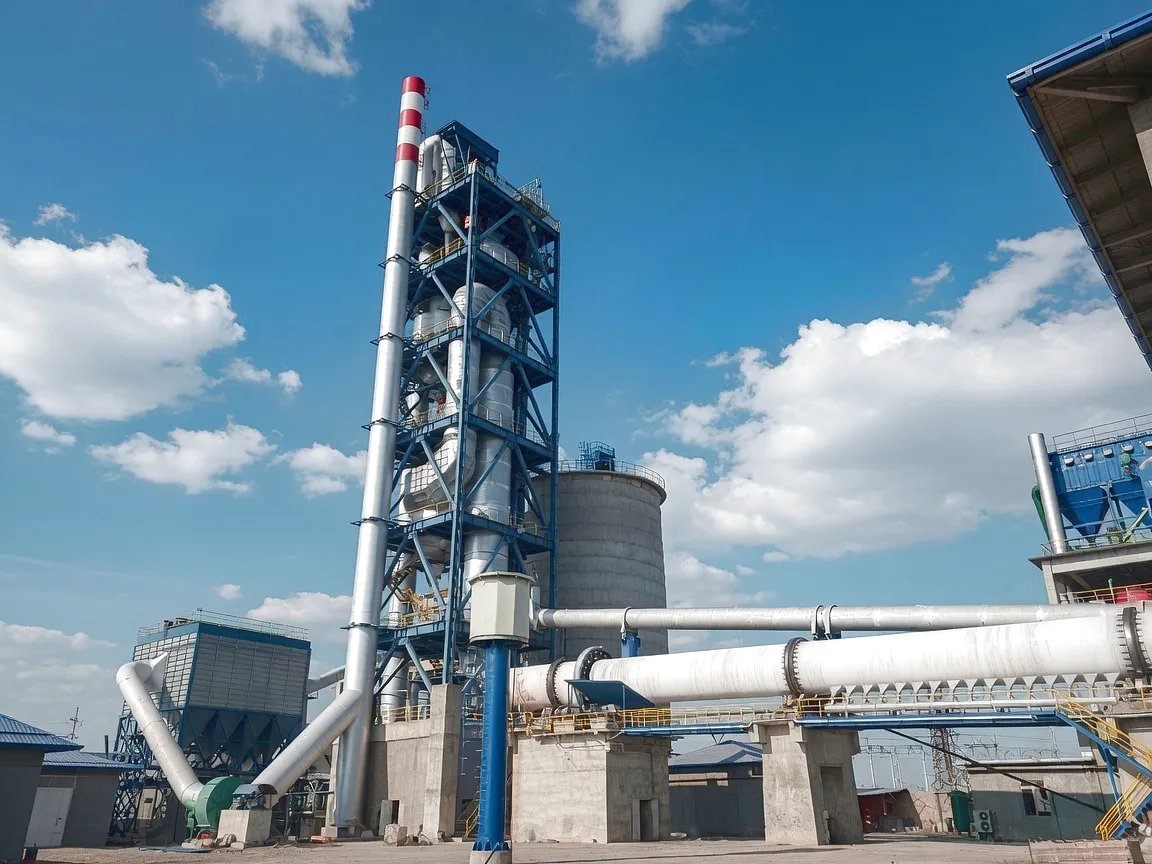
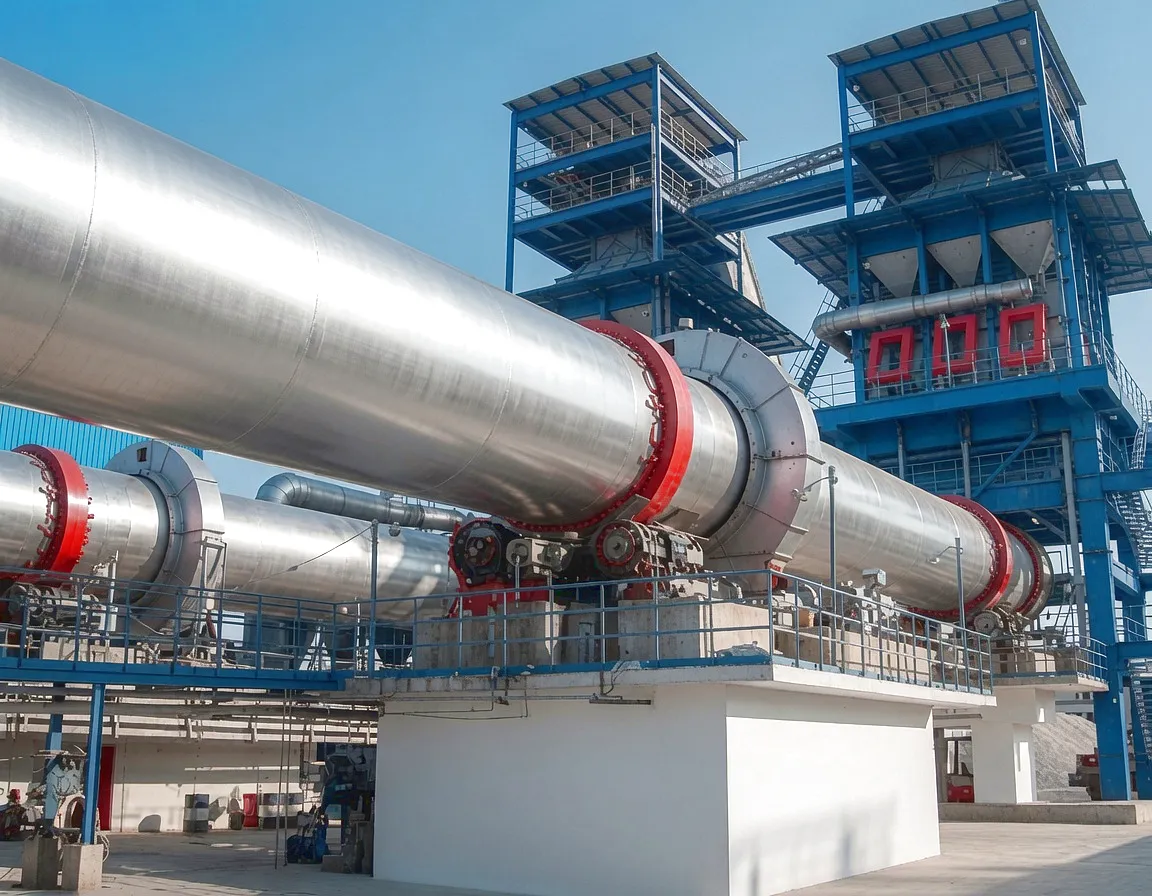 Walk into any cement plant in the United Kingdom — from the Portland works on the Isle of Portland to the Hope Construction site in Derbyshire — and you will find the same beating heart at the centre of the operation: the rotary kiln. These enormous steel cylinders, sometimes exceeding 80 metres in length and 6 metres in diameter, rotate continuously, day and night, transforming raw limestone and clay into the clinker that ultimately becomes cement. The forces involved are enormous. The thermal gradients are unforgiving. And the mechanical connections between the driving motors and the kiln body must never, under any circumstances, fail.
That is precisely where gear coupling becomes not merely a component, but a critical engineering decision. A correctly specified gear coupling absorbs shaft misalignment caused by thermal expansion, cushions shock loads during kiln start-up, transmits torque values that can exceed 500,000 Nm, and does all of this for years or even decades without demanding constant attention. Choose the wrong coupling — or install a sub-standard one — and the consequences range from costly unplanned downtime to catastrophic gearbox failure.
This article examines the engineering reality of rotary kiln drive systems in cement manufacturing, explains precisely why drum-type gear coupling is the preferred solution among plant engineers, and provides the technical detail procurement teams and reliability engineers in the UK need to make confident sourcing decisions.
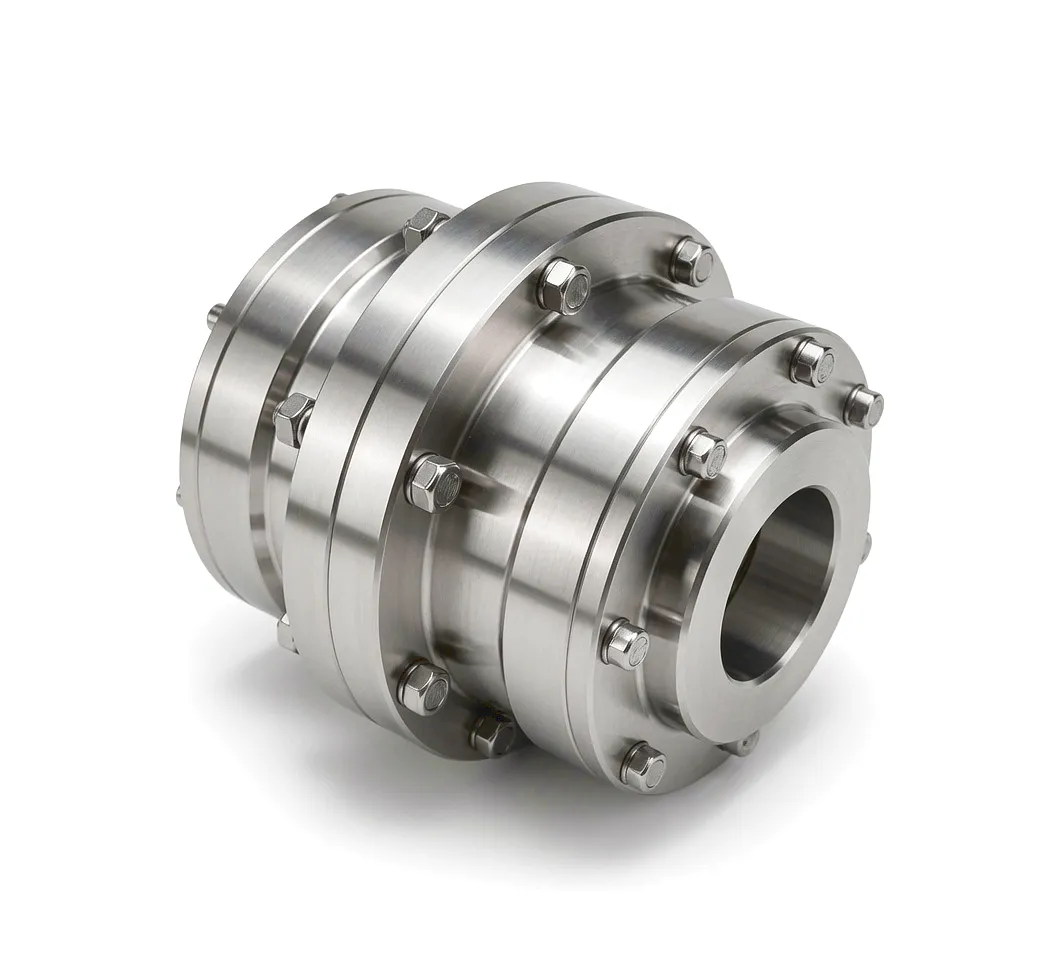
Ever Power — UK & Global Supply
Need a Gear Coupling for Your Rotary Kiln?
We manufacture and supply drum-type gear couplings to cement plants and industrial facilities across the UK and worldwide. Custom sizes, metallurgical upgrades, and fast delivery available.
Inside the Rotary Kiln Drive: Why This Machine Is So Mechanically Demanding
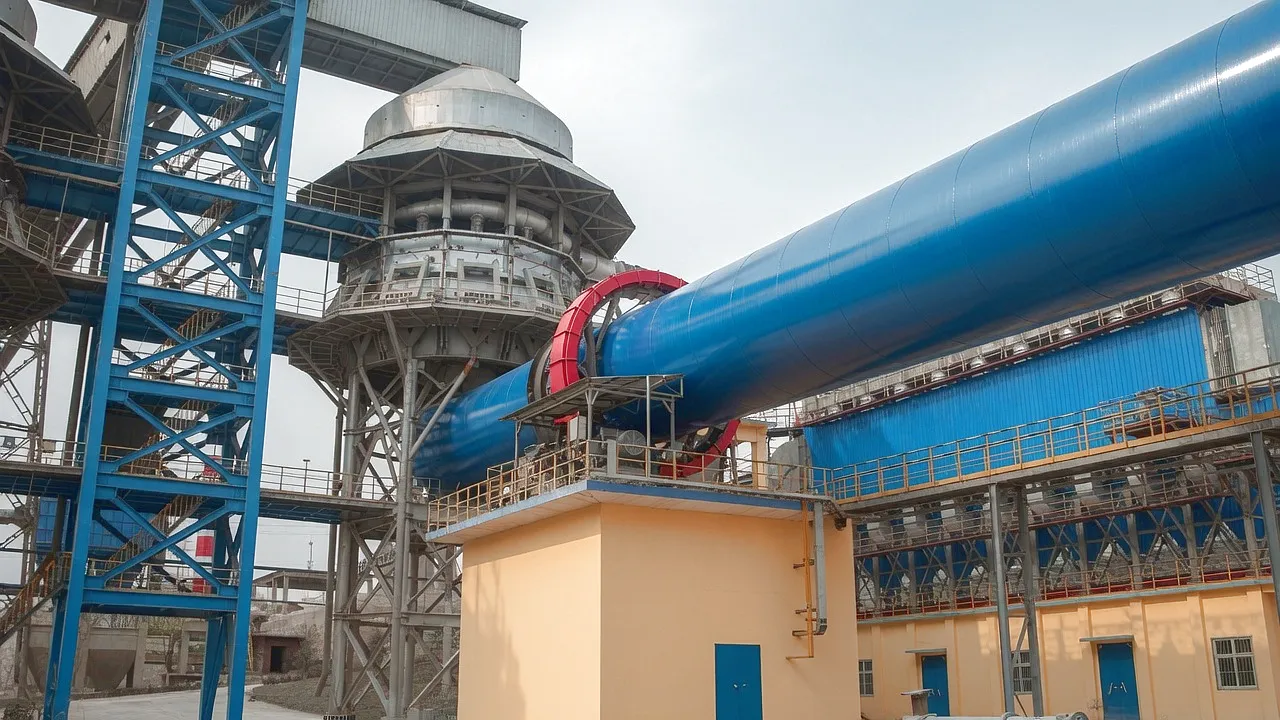
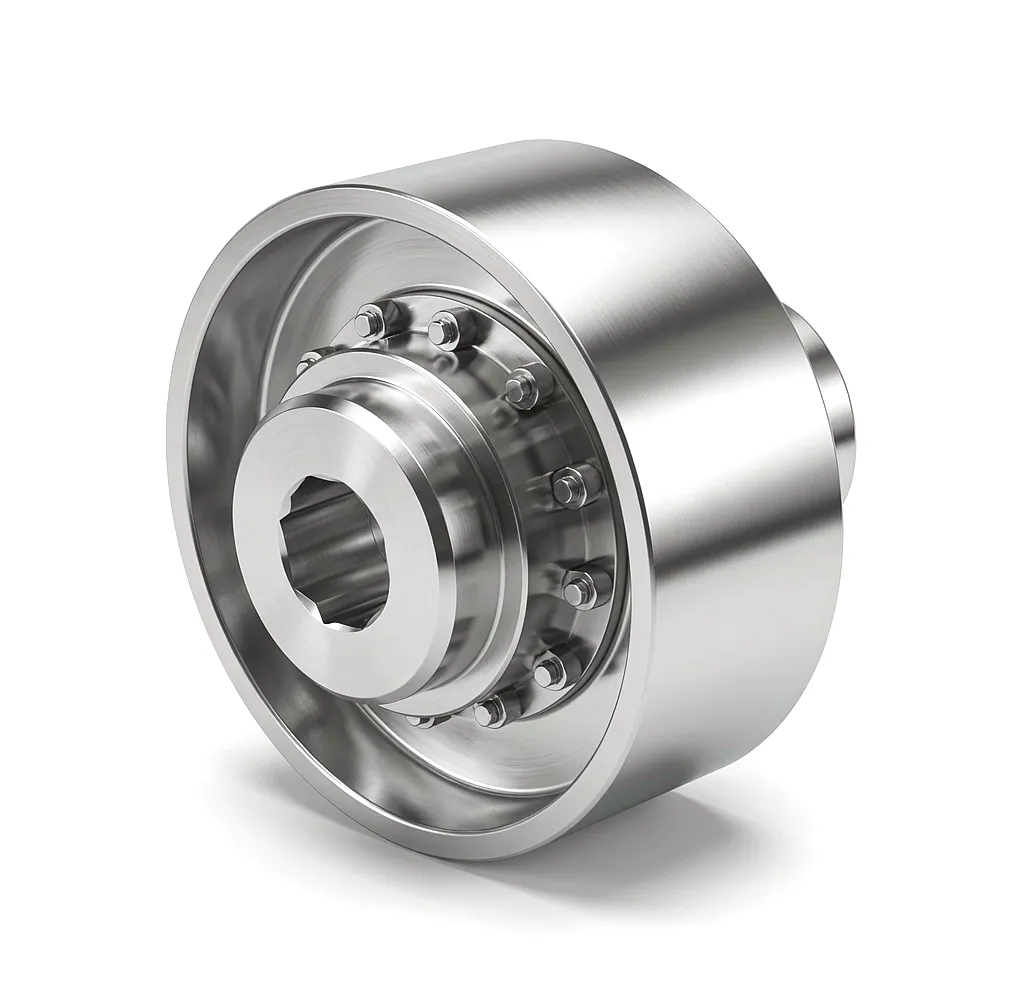 A rotary kiln in a cement manufacturing facility is one of the most mechanically demanding pieces of equipment on the planet. The kiln shell is a massive steel cylinder installed on a slight longitudinal gradient — typically between 2% and 4% — which allows raw meal to migrate from the elevated feed end towards the discharge end under the combined influence of gravity and rotation. The kiln rotates at between 0.5 and 5 revolutions per minute depending on the process stage and material feed rate, and temperatures inside can climb above 1,450 °C at the burning zone.
The drive system responsible for turning this behemoth typically consists of one or two main drive motors, a primary reduction gearbox, a secondary open gear stage (the kiln ring gear and pinion), and an auxiliary creep drive used for maintenance and alignment. The gear coupling sits in arguably the most critical position in the entire drivetrain: directly between the output shaft of the main motor and the input shaft of the reduction gearbox. At this coupling point, the full rated motor torque is transmitted — and in the event of jam starts, brick falls, or process upsets, shock torque multiples of three to five times the rated value can be briefly experienced.
There is another challenge specific to cement plants that sets rotary kiln drives apart from many other industrial applications: thermal growth. The kiln shell itself expands and contracts by hundreds of millimetres over its length as it heats and cools. The motor and gearbox foundations, while massive, are not entirely immune to thermal and settlement movement. Over weeks and months of operation, the shaft centrelines of the motor and gearbox drift out of alignment in both the angular and parallel planes. A rigid coupling would transmit these misalignments directly into the shaft and bearing loads, eventually destroying the very components it is meant to protect. A gear coupling, by contrast, accommodates both angular misalignment (typically ±1.5° per gear mesh) and parallel offset, while maintaining smooth torque transmission throughout.
High Starting Torque
Cold kiln starts can generate shock torques 3–5× the rated design load, requiring couplings with high peak torque capacity.
Thermal Expansion
Shaft misalignment of several millimetres develops over time due to kiln thermal expansion and foundation settlement.
Continuous 24/7 Operation
Kiln campaigns run for months between scheduled outages. Coupling reliability must match this demanding duty cycle.
Dusty Environment
Cement dust penetrates seals and degrades lubricants. The coupling must contain its own grease effectively.
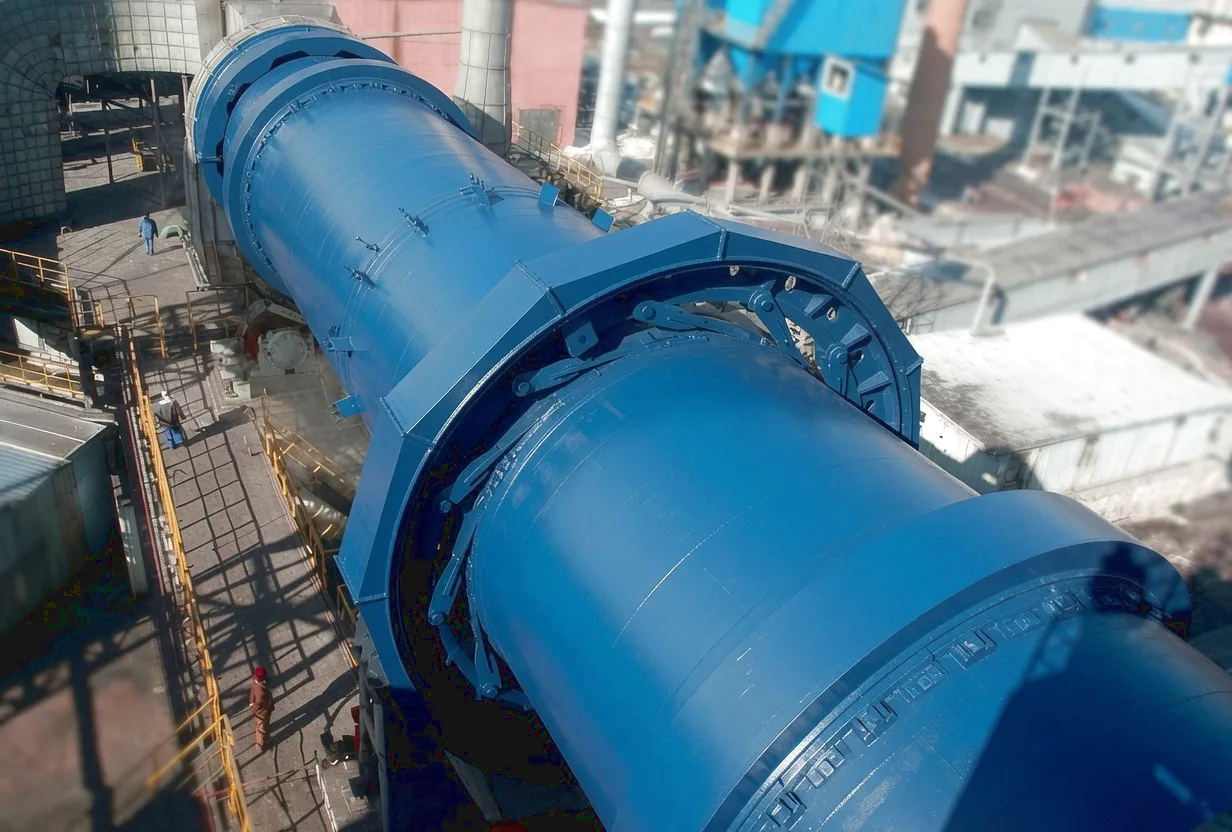
The Engineering Principle Behind Drum-Type Gear Coupling
The drum-type gear coupling — sometimes written as the crowned-tooth gear coupling — represents the most refined evolution of gear coupling technology and is the configuration most widely specified for cement kiln main drives. To understand why, it helps to understand the basic operating principle.
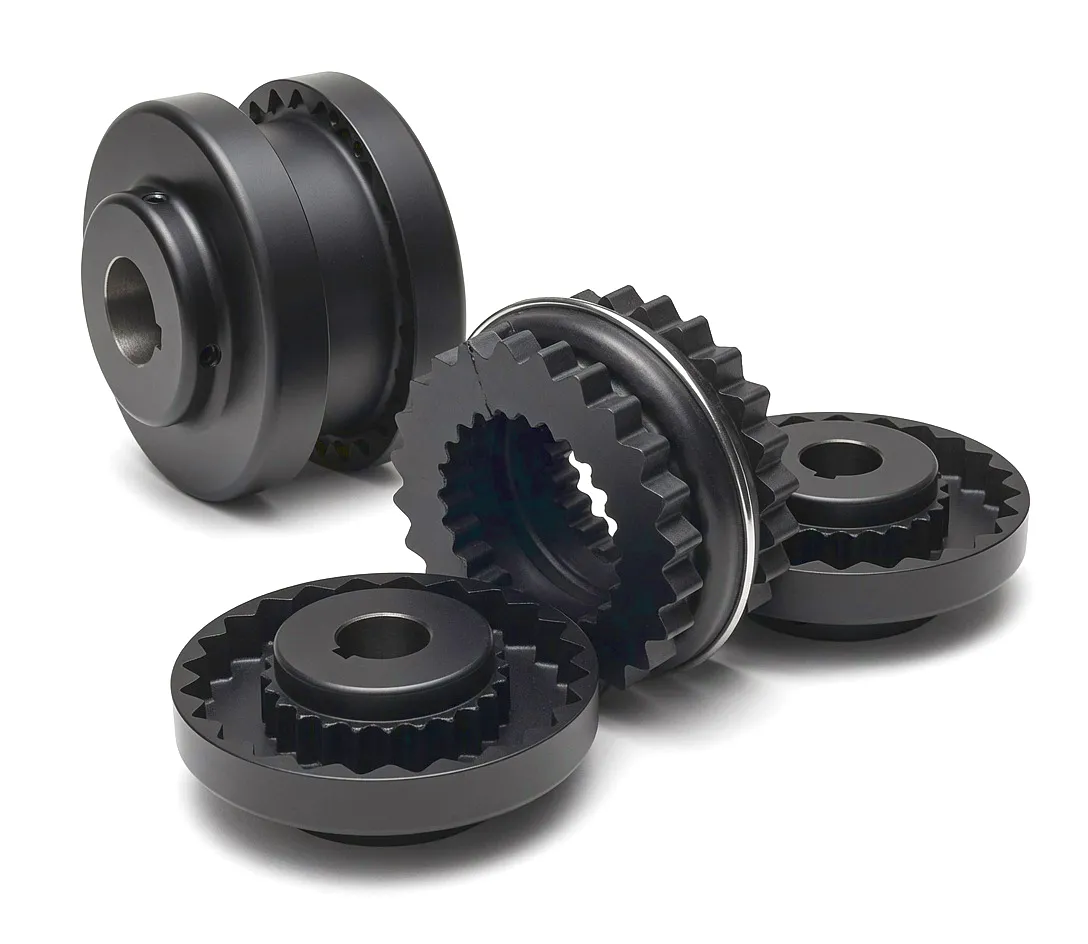
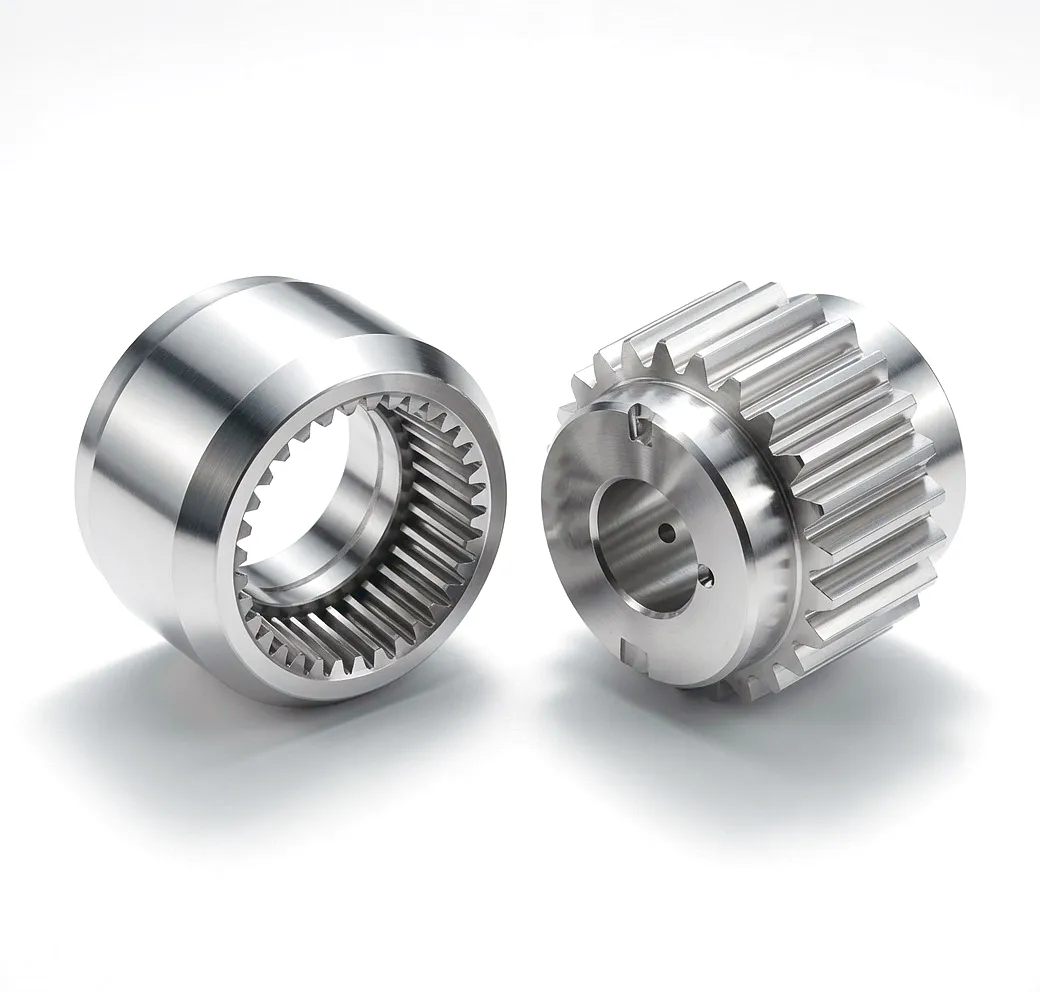
A gear coupling in its simplest form consists of two identical hubs, each fitted with external teeth, and a sleeve (or outer ring) with matching internal teeth. Torque passes from one shaft to the sleeve through tooth engagement on the input hub, across the sleeve, and out through tooth engagement on the output hub. The clearances between the teeth permit limited angular rotation between hub and sleeve — and it is this angular freedom that allows the coupling to accommodate shaft misalignment. In a standard spur-tooth gear coupling, however, this freedom is limited, and high edge-loading on the tooth flanks occurs when misalignment is present.
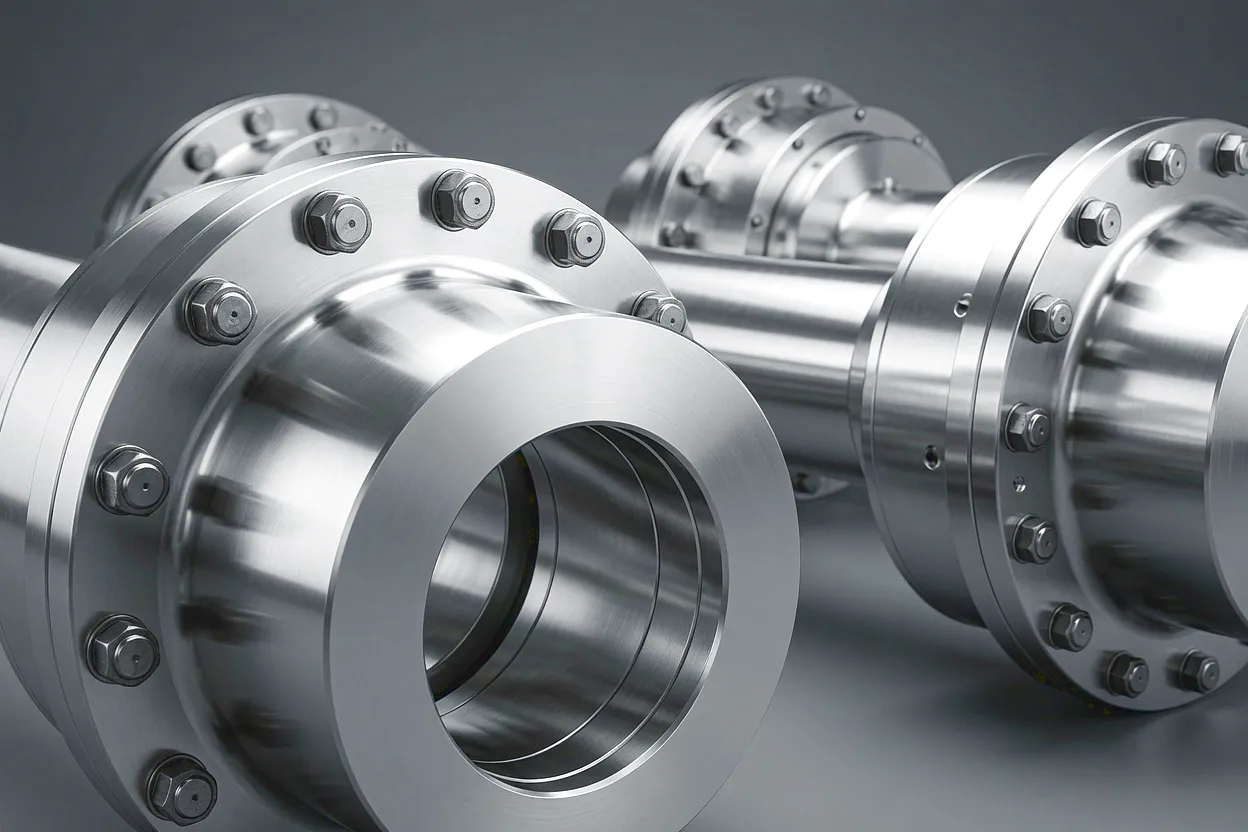
The drum-type design solves this by giving the external teeth of each hub a crowned (convex barrel) profile. Rather than flat-flanked spur teeth, each tooth has a carefully engineered curvature along its face. When angular misalignment occurs, the crowned teeth rock smoothly within the internal teeth of the sleeve, distributing the contact load evenly across a wider tooth area rather than concentrating it at the edges. This dramatically reduces internal stress, allows greater misalignment capacity (typically up to 1.5° angular per mesh element), and extends service life substantially. For a rotary kiln that runs continuously and whose shaft alignment shifts over thermal cycles, the drum-type design is not a premium option — it is the practical necessity.
Key Feature
Crowned Tooth Profile
The convex tooth shape distributes contact loads uniformly even under angular misalignment up to ±1.5° per mesh.
Key Feature
Sealed Grease Lubrication
Precision-machined end covers and O-ring seals contain the grease charge for 2–4 years between re-lubrication intervals.
Key Feature
Torsional Rigidity
Unlike rubber-element flexible couplings, gear couplings are essentially torsionally rigid — no energy is lost to elastomer deformation at high torque.
Key Feature
Split Sleeve Design
The diametrically split outer sleeve enables removal without moving connected machinery — a significant maintenance advantage on large kiln drives.
Materials and Construction Quality That Cement Plant Conditions Demand
 The material specification of a gear coupling for rotary kiln service is not a catalogue decision to be made lightly. Cement plants subject drivetrain components to conditions that expose any metallurgical weakness quickly. Ambient temperatures in the drive house area frequently exceed 40–50 °C in summer. The dust burden is exceptionally high. Vibration from the kiln and associated ancillary equipment is continuous. Under these conditions, only well-chosen, properly heat-treated alloy steels deliver the fatigue life that plant operators require.
The gear hubs — the most critically loaded components — are typically manufactured from medium-carbon alloy steels such as 42CrMo4 (equivalent to AISI 4140 in US nomenclature). This grade combines high tensile strength, excellent toughness, and good case-hardenability. Tooth flanks are cut to DIN 6 or ISO grade 6 quality using gear hobbing or shaping, then case-hardened by carburising or nitriding to achieve surface hardness values of 58–62 HRC. This hardened case provides resistance to tooth flank wear and pitting — the two primary wear mechanisms in a gear coupling operating under high cyclic loading. The core material beneath the hardened case retains sufficient toughness to resist impact fracture during shock load events.
The outer sleeves are typically manufactured from cast steel or high-strength ductile iron, balancing manufacturing economy with the structural integrity needed to contain the substantial torque path. For the most demanding applications — particularly where moment loads are high — forged steel sleeves may be specified. All bore tolerances are machined to H7 fit as standard, with keyway geometries conforming to DIN 6885 for straightforward interchangeability with standard motor and gearbox shaft keyways.
Technical Performance Parameters — GICL / NGCL Series Drum-Type Gear Coupling
The table below summarises the key performance parameters for our GICL and NGCL series drum-type gear couplings, which are the configurations most commonly applied to rotary kiln main drives in cement manufacturing. Parameters are given as typical values; exact values depend on size designation and material specification.
| Parameter | GICL Series | NGCL Series | Unit / Notes |
|---|---|---|---|
| Nominal Torque Range | 250 – 2,000,000 N·m | 630 – 3,150,000 N·m | Rated continuous torque |
| Max. Angular Misalignment | ±1.5° | ±1.5° | Per gear mesh element |
| Max. Parallel Offset | 0.6 – 3.0 mm | 0.8 – 4.5 mm | Size-dependent |
| Maximum Speed | up to 3,000 RPM | up to 2,400 RPM | Balanced as standard |
| Hub Material | 42CrMo4 alloy steel | 42CrMo4 alloy steel | Case-hardened teeth |
| Tooth Surface Hardness | 58 – 62 HRC | 58 – 62 HRC | Carburised & quenched |
| Tooth Accuracy Grade | ISO Grade 6 | ISO Grade 6 | Grade 5 available on request |
| Bore Tolerances | H7 standard | H7 standard | Custom tolerances available |
| Lubrication Method | Grease-packed, sealed | Grease-packed, sealed | 2–4 year re-lube interval |
| Service Temperature | -20°C to +80°C | -20°C to +80°C | Extended range available |
Why Engineers in Cement Plants Across the UK Specify Drum-Type Gear Coupling
There is a reason the drum-type gear coupling has remained the preferred choice on cement kiln drives for decades despite the availability of newer coupling technologies. It is not inertia — cement plant engineers are rigorous and pragmatic. The product simply delivers a combination of advantages that alternative coupling types cannot match at the torque densities and operational temperatures involved.
Exceptional Torque Density
Gear couplings transmit more torque per unit of outer diameter than any other flexible coupling type. On large kiln drives where space in the drivetrain is constrained, this density advantage translates directly into a more compact, lower-mass drivetrain arrangement that simplifies baseplate and alignment engineering.
No Elastomeric Deterioration
Jaw couplings and tyre-type flexible couplings rely on rubber or polyurethane elements that degrade under heat, ozone exposure, and high cyclic stress. In the drive house of a cement kiln, these conditions are ever-present. An all-steel gear coupling has no elastomeric element to deteriorate — its performance is entirely governed by tooth geometry and lubrication quality.
Predictable Maintenance Schedule
A correctly specified and initially well-lubricated gear coupling on a kiln drive will typically require nothing more than a grease replenishment every 2–4 years, coinciding with planned kiln outages. There are no wearing rubber inserts or fabric disc packs to monitor between overhauls. For a plant operating on tight maintenance windows, this predictability has real commercial value.
Split-Sleeve Maintainability
The diametrically split outer sleeve of the NGCL and GICL series couplings can be removed without axially displacing either connected machine. On a kiln drive where the motor and gearbox are massive, anchored items, this feature alone can reduce coupling replacement time from a two-day rigging exercise to a four-hour maintenance job — a difference worth many thousands of pounds in production value.
Wide Speed and Torque Range
From auxiliary creep drives operating at a few RPM to main drives running at motor speed, gear coupling covers the full speed range encountered in kiln drive systems. The same coupling type can be used throughout the drivetrain — from motor to gearbox, and in some configurations, from gearbox to pinion shaft — simplifying spare parts inventory and standardising maintenance procedures across the plant.
Cost-Effective Over the Asset Life
The initial purchase price of a quality drum-type gear coupling may be higher than a simple elastomeric coupling. Over a 15-to-20-year kiln campaign, however, the absence of consumable insert replacements, the reduced bearing wear due to misalignment accommodation, and the minimised unplanned downtime deliver a total cost of ownership that consistently favours the gear coupling selection.
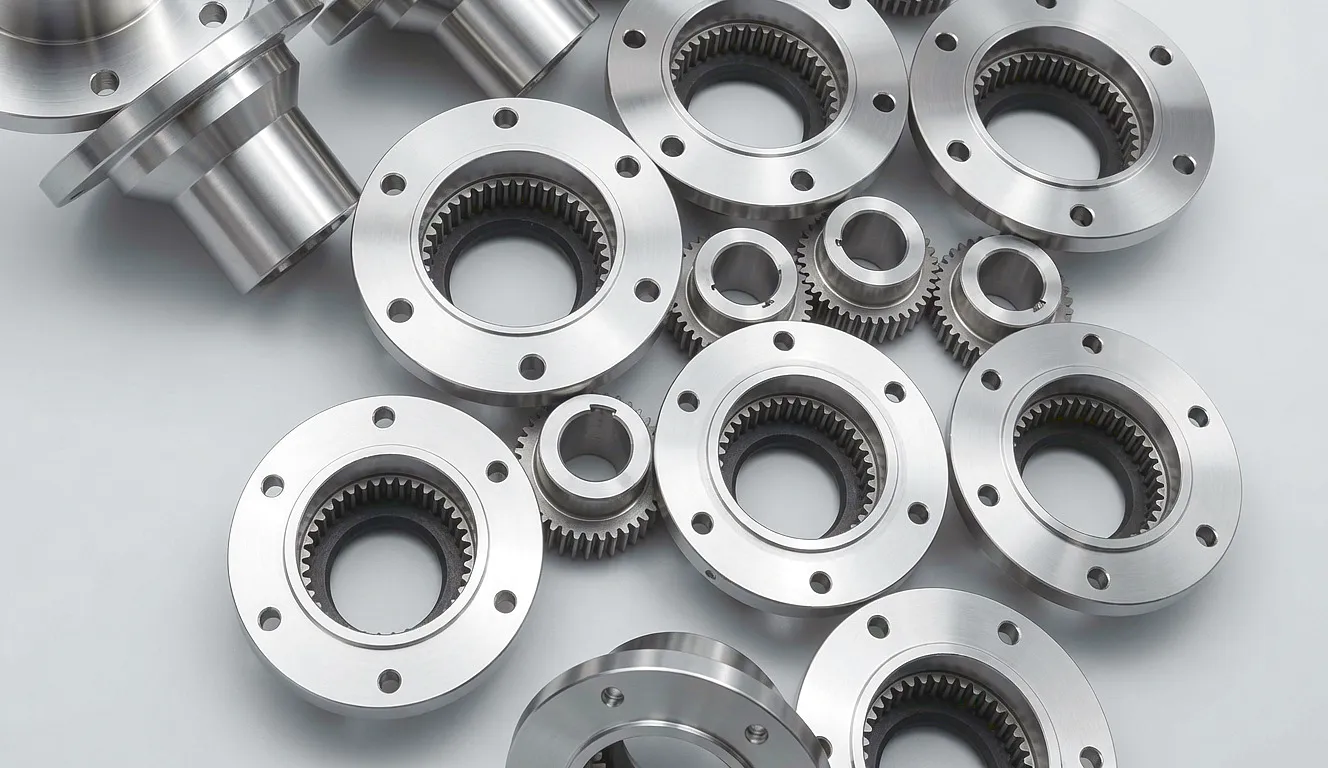
Where in the Cement Plant Is Gear Coupling Applied?
The rotary kiln main drive is the headline application for large drum-type gear coupling in cement manufacturing, but it is far from the only one. Once the engineering case for gear coupling in the kiln drive is understood, procurement teams typically find that the same product family — in different size designations — solves transmission challenges at multiple points throughout the plant.
| Application Point | Coupling Type | Primary Challenge Addressed |
|---|---|---|
| Kiln main drive — motor to gearbox | GICL / NGCL drum gear coupling | High torque, thermal misalignment, shock loads |
| Kiln auxiliary (creep) drive | Medium-range gear coupling | Low-speed high-torque service, easy clutch-in |
| Raw mill main drive | GICL drum gear coupling | High start torque, continuous dust exposure |
| Cement mill (ball mill) drive | NGCL drum gear coupling | Heavy shock from grinding media, high torque |
| Preheater fan drive | Drum gear coupling (mid-range) | High temperature ambient, vibration isolation |
| Cooler grate drive | Compact gear coupling | Reciprocating load, heat proximity |
This breadth of application within a single cement plant means that engineering teams who establish a working relationship with a single quality gear coupling supplier — and take advantage of that supplier’s custom sizing capability — can realise significant value through standardised parts inventory, consistent maintenance procedures, and volume purchasing arrangements. For plants operated by major UK cement producers, this kind of supply chain simplification has tangible cost implications across the entire maintenance budget.
Ever Power Manufacturing: Custom Gear Coupling Solutions for Demanding Industrial Applications
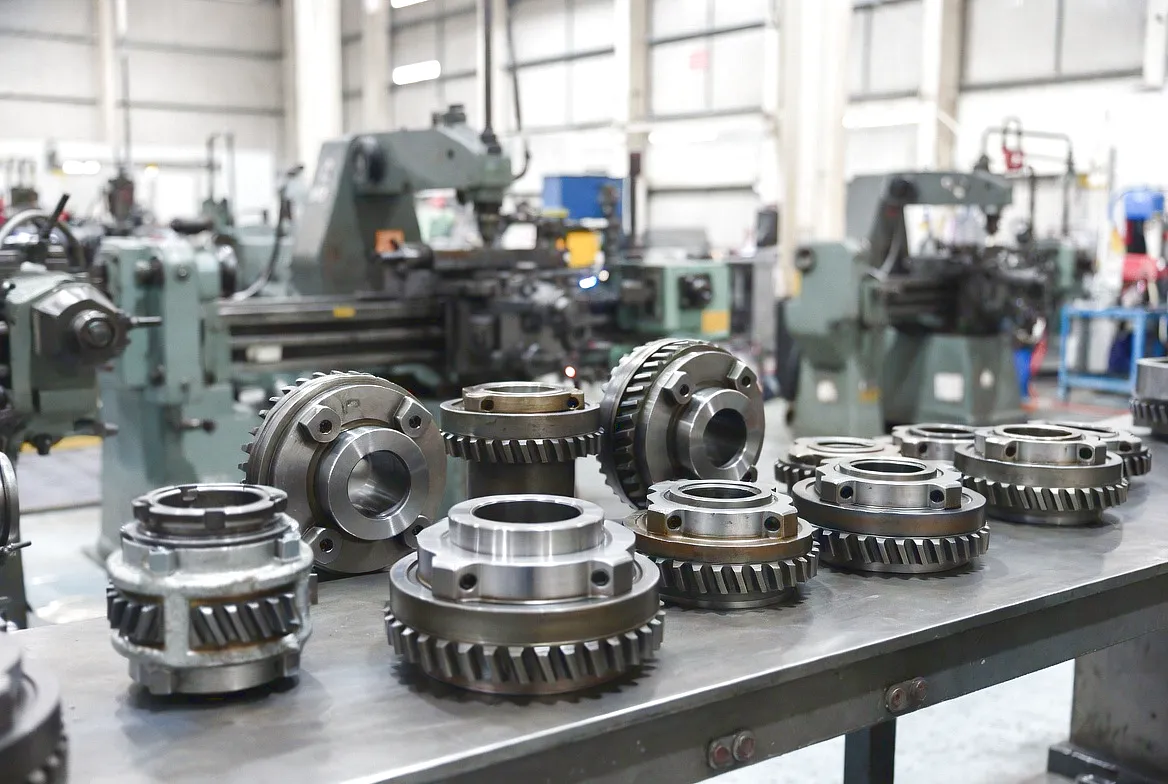
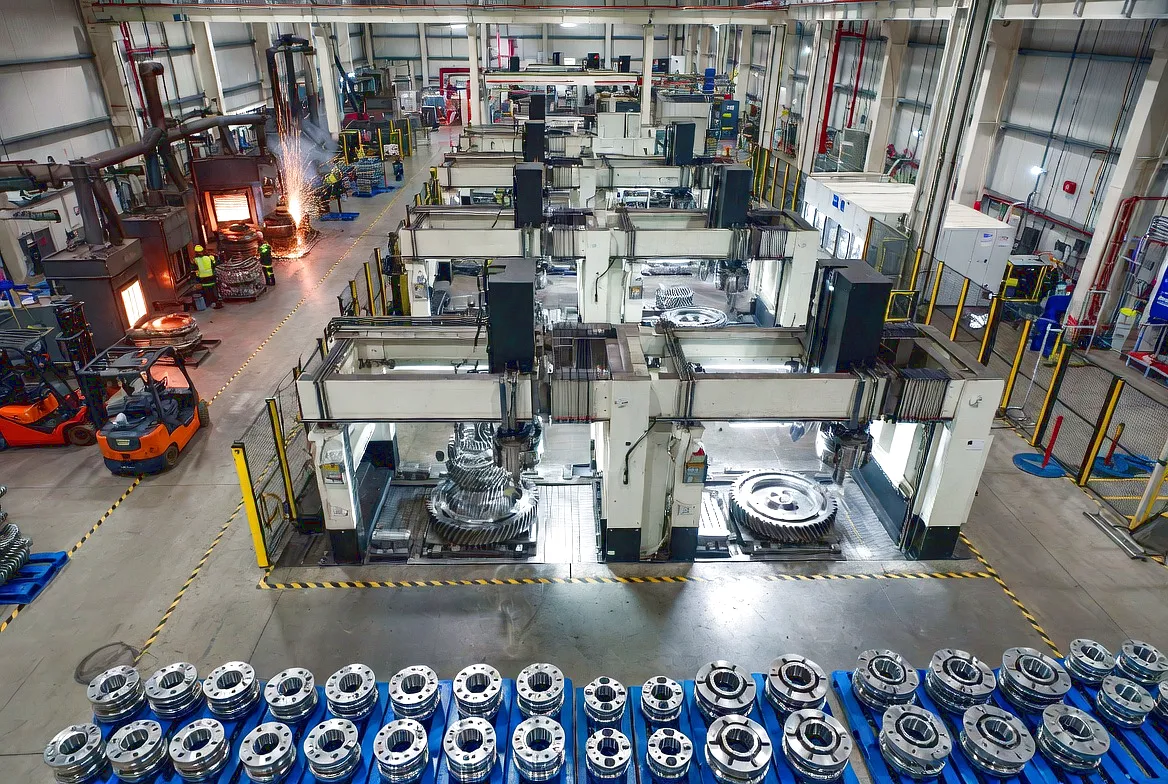
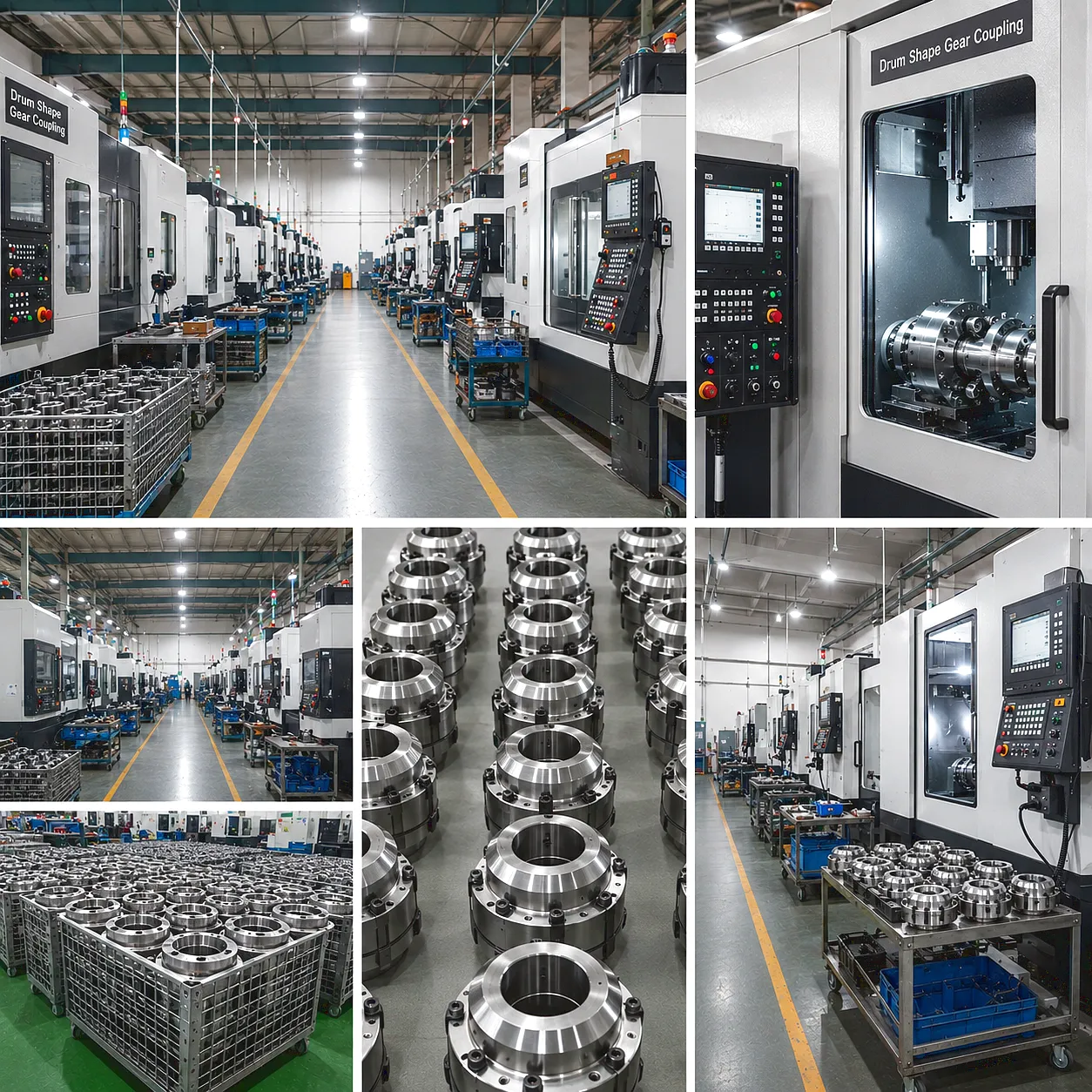
Ever Power is a specialist industrial coupling manufacturer with over 18 years of focused experience in drum-type gear coupling design, manufacturing, and application engineering. Our production facility operates CNC gear hobbing centres, CNC turning and milling centres, coordinate measuring machines (CMM), and in-house heat treatment equipment. We do not outsource any critical manufacturing processes. Every gear tooth is cut, heat treated, and inspected in-house under our own quality management system.
What sets us apart for UK cement plant procurement teams is our custom engineering capability. We understand that rotary kiln drives are not catalogue applications. Shaft diameters, keyway geometries, required bore lengths, flange bolt patterns, and even the coupling’s centre distance can all depart from standard dimensions on older or extensively refurbished kiln drives. Our engineering team can work from your existing coupling drawings, your shaft certification data, or even from measurements taken directly on-site by our technical partners in the UK. Custom couplings — from one-off replacements for legacy drives to small batch orders for plant standardisation programmes — are within our core capability, not a specialist exception service.
Customer Success: Tees Valley Cement, North East England
Plant
Tees Valley Cement Ltd.
Location
Stockton-on-Tees, North East England
Application
Rotary Kiln No.2 — Main Drive
Coupling Supplied
NGCL-25 Custom Drum Gear Coupling
The Challenge
Kiln No.2 at the Tees Valley plant had been experiencing recurring premature wear on the main drive coupling at intervals of 18–24 months. The original equipment coupling was a standard-range spur-tooth gear coupling from a European supplier that was no longer stocking that specific size. Repeated re-ordering of custom replacements had become both expensive and unreliable in lead time. Additionally, vibration monitoring on the main gearbox input had begun to show elevated bearing temperatures consistent with excessive transmitted radial loads — a classic symptom of misalignment not being adequately accommodated by the coupling in service.
The Solution
Ever Power’s application engineering team conducted a detailed review of the drivetrain geometry and duty cycle data provided by the Tees Valley maintenance team. A custom NGCL-25 drum-type gear coupling was specified with a modified centre distance to match the existing motor-gearbox shaft spacing, a 180 mm bore on the motor hub, and a 195 mm bore on the gearbox hub — both non-standard dimensions for the size 25 designation. The crowned tooth profile was engineered to accommodate a calculated maximum angular misalignment of 0.9° to provide comfortable headroom against the observed 0.6° installation drift. Material specification was upgraded to 42CrMo4 with a minimum core tensile strength of 1,000 MPa.
The Outcome
Following installation during a scheduled 72-hour maintenance shutdown, vibration monitoring data at the gearbox input bearing returned to baseline levels within the first week of resumed operation. The coupling has now been in continuous service for 38 months without any maintenance intervention beyond an initial grease top-up at the 12-month mark. The Tees Valley maintenance team has placed a standing order for two spare coupling sleeves to maintain on-site inventory, eliminating lead-time risk for future planned replacements.
What Industrial Buyers Say
“We had been struggling to source a replacement coupling for our legacy kiln drive for months. Ever Power came back with a fully dimensioned custom proposal within three working days. Delivery followed eight weeks later. The installation went in during our summer shutdown without any issues. That was 30 months ago and we haven’t had to touch it since.”
Maintenance Manager, Cement Manufacturer, West Yorkshire, UK
“The price is competitive — particularly when you factor in the extended service intervals compared to what we were previously running. The technical support during selection was genuinely useful, not just a catalogue exercise. They understood our kiln drive application from the first call and knew exactly what questions to ask.”
Procurement Lead, Building Materials Group, Hamburg, Germany
“We ordered three GICL-series couplings for a plant expansion project in the East Midlands. Ever Power supplied the complete material certification pack, dimensional inspection reports, and balancing certificates without us having to chase. For an ISO-certified facility that’s a basic expectation, but in practice many suppliers fall short. These didn’t.”
Plant Engineer, Industrial Minerals Producer, East Midlands, UK
Also Available
NL Series Nylon Gear Flexible Coupling
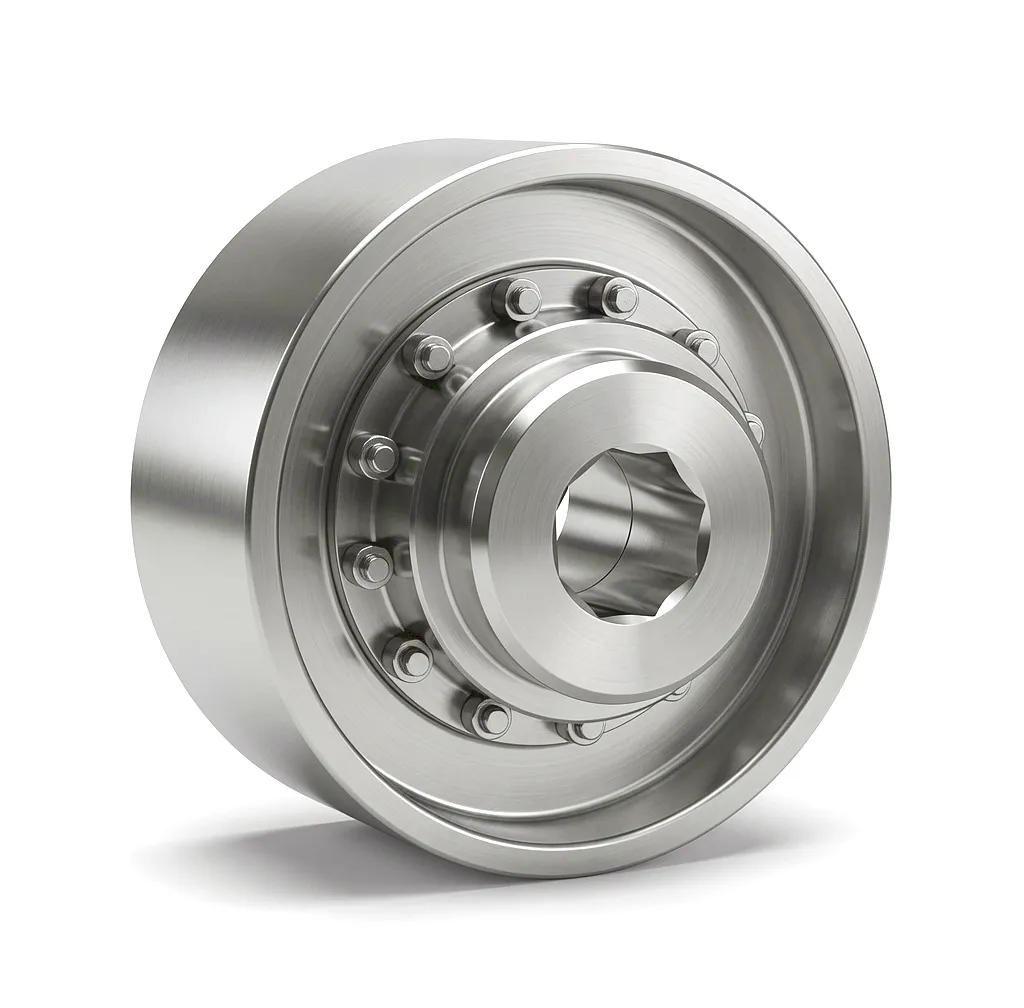
For auxiliary and ancillary drive positions in cement plants where moderate misalignment tolerance and some degree of vibration damping is beneficial — such as conveyor drives, bucket elevator drives, and blower connections — our NL series nylon gear flexible coupling offers an economical all-in-one solution. The nylon sleeve element provides a degree of torsional cushioning while still delivering reliable torque transmission.
How to Specify a Replacement Gear Coupling for a Rotary Kiln Main Drive
For UK cement plant maintenance teams and procurement engineers approaching a coupling replacement for the first time — or revisiting a replacement after a previous supplier relationship has broken down — the following data points are the minimum required for an accurate quotation. Providing complete data at the outset avoids the back-and-forth that delays custom manufacturing timelines.
Motor shaft diameter and bore depth
Including keyway width and depth or spline specification if applicable.
Gearbox input shaft diameter and bore depth
Including keyway width and depth. Note any taper or interference fit requirements.
Motor rated power and speed
In kW and RPM. Note starting method (DOL, soft starter, or VFD).
Coupling centre distance (shaft face to shaft face)
The gap between motor shaft end and gearbox shaft end in the installed condition.
Service factor / application type
Continuous, frequent starts, or high-shock loading. For kiln drives, a service factor of 1.5–2.0 is typical.
Existing coupling model reference
If available, the OEM model number or a dimensional drawing of the existing coupling greatly accelerates the quotation process.
Even without all of these data points, our engineering team can work with what you have. Many replacement enquiries from UK plant teams come in initially with only the motor nameplate data and a rough sketch of the coupling dimensions — which is enough to provide a preliminary size recommendation and indicative price. The key message is: do not delay the enquiry because your data is incomplete. Contact us with what you have and we will guide the process from there.
Frequently Asked Questions
What is the best type of gear coupling for a cement rotary kiln main drive in the UK, and where can I get a competitive price quote?
The drum-type gear coupling — also known as the crowned-tooth gear coupling — is the industry-standard choice for cement kiln main drives in the UK and worldwide. Specifically, the GICL or NGCL series drum-type gear coupling in a split-sleeve configuration provides the combination of high torque capacity, angular misalignment tolerance, and long service life that kiln drives require. For a competitive price quote tailored to your shaft dimensions and motor data, contact Ever Power at gear-coupling.top. Our application engineers will review your drivetrain data and provide a detailed proposal, typically within three working days.
How often does a gear coupling on a rotary kiln need to be replaced, and what is the typical maintenance schedule for a cement plant in the United Kingdom?
A correctly specified and properly lubricated drum-type gear coupling on a UK cement kiln main drive can remain in service for 8 to 15 years or longer before requiring replacement. The primary maintenance requirement is a grease replenishment every 2 to 4 years, which should ideally coincide with planned kiln shutdown periods. Premature coupling wear is almost always associated with one of three causes: insufficient initial lubrication, operating misalignment exceeding the coupling’s rated capacity, or an undersized coupling that is running above its rated torque. If your current coupling requires replacement more frequently than every five years, it is worth conducting a root cause analysis before ordering a like-for-like replacement.
Can I get a custom-sized gear coupling for a legacy cement kiln drive where the original supplier no longer stocks the required dimensions?
Yes — custom-dimensioned gear couplings are a core part of Ever Power’s manufacturing service, not a specialist exception. We regularly supply replacement couplings for legacy kiln drives where the original OEM is no longer active or no longer stocks that size. Custom bore diameters, non-standard centre distances, modified keyway geometries, and non-standard flange bolt patterns can all be accommodated. Provide us with your existing coupling drawings or measured dimensions and we will engineer a replacement that installs directly into the existing drive without modification. Custom orders typically have a manufacturing lead time of 4 to 8 weeks depending on size and specification.
What causes gear coupling failure on heavy industrial drives and how can cement plant engineers in England prevent unplanned kiln downtime caused by coupling breakdown?
The most common causes of gear coupling failure on cement kiln and heavy industrial drives are lubricant degradation or loss (leading to tooth surface wear and pitting), chronic operating misalignment beyond the coupling’s rated capacity (leading to tooth edge loading and fatigue), and undersizing relative to actual service torque including shock factors. Prevention centres on three practices: first, ensure the coupling is correctly rated for the actual service torque with an appropriate service factor of at least 1.5 applied; second, verify and correct shaft alignment at installation and after any thermal cycle; third, maintain the specified re-lubrication schedule using an appropriate high-viscosity gear coupling grease and do not allow the grease charge to dry out between overhauls. Maintaining a spare sleeve assembly on-site eliminates lead-time risk if urgent replacement is needed.
Which gear coupling supplier in the UK can provide fully certified drum-type gear couplings for cement manufacturing applications with material test certificates and dimensional inspection reports?
Ever Power supplies gear couplings to UK cement plants and industrial facilities with full documentation packages as standard, including material test certificates (EN 10204 3.1 mill certificates), dimensional inspection reports (traceable to calibrated CMM equipment), heat treatment records, and balancing reports to ISO 1940 G6.3 or better. For projects requiring additional third-party witness inspection or specific customer hold points, these can be arranged. Our ISO 9001 quality management system covers the complete manufacturing process from raw material procurement through final inspection. Contact us at gear-coupling.top to discuss your specific documentation requirements alongside your technical enquiry.
How does a drum-type gear coupling differ from a standard spur-tooth gear coupling, and why does the difference matter for rotary kiln applications in heavy industry?
A standard spur-tooth gear coupling has straight, flat-flanked external teeth on the hubs. Under angular misalignment, the contact zone shifts to the tooth edges, concentrating stress and accelerating wear. A drum-type (crowned-tooth) gear coupling has external teeth with a convex, barrel-shaped profile along the tooth face. This crown distributes the contact load over a wider tooth area even when angular misalignment is present, dramatically reducing peak contact stress. For rotary kiln applications — where thermal growth and foundation settlement mean that some degree of angular misalignment is essentially unavoidable during normal operation — the crowned tooth profile is not a luxury; it is the engineering solution that makes long service intervals achievable. The difference in service life between a correctly crowned coupling and a straight-tooth coupling in kiln service can be a factor of three to five times.
Ready to Source a Gear Coupling for Your Rotary Kiln Drive?
Whether you need a standard GICL or NGCL series coupling or a fully custom-engineered solution for a legacy kiln drive, Ever Power has the manufacturing capability and application knowledge to deliver. UK and worldwide supply. Full documentation as standard.