
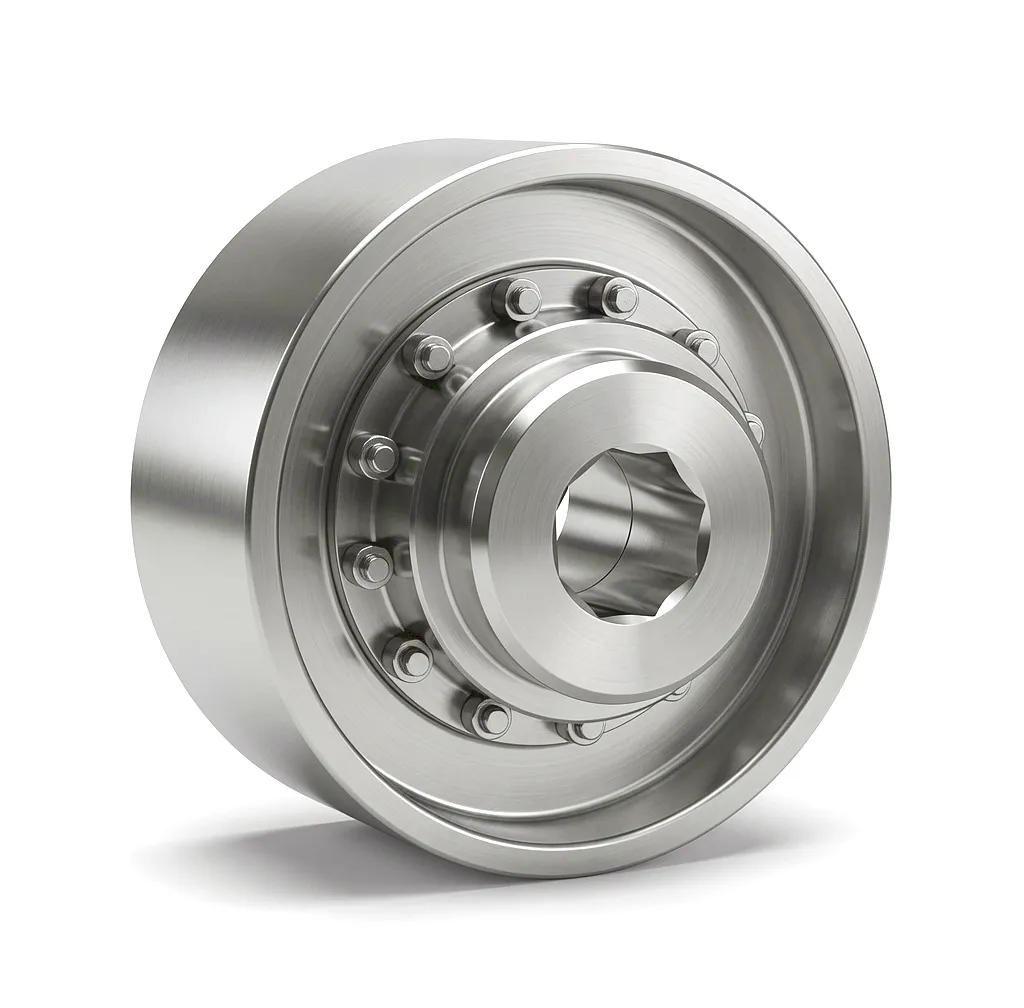
 A rotary kiln is one of the most punishing mechanical environments on the planet. Inside a cement plant, the kiln rotates twenty-four hours a day, seven days a week, at temperatures that push neighbouring steelwork well past 250 °C while simultaneously generating shaft torques measured in hundreds of kilonewton-metres. The coupling that connects the main drive motor to the primary reduction gearbox is not simply a connector — it is the component that absorbs every surge, every thermal expansion, and every alignment drift between two enormous pieces of machinery. Choosing the wrong coupling here translates directly into unplanned downtime, emergency maintenance costs, and — in the worst cases — catastrophic gearbox or motor shaft failure.
Drum-shaped gear couplings have been the industry-preferred solution for rotary kiln drive systems for decades, and the reasoning is straightforward: they combine a high torque capacity with the ability to accommodate angular, radial, and axial misalignment simultaneously. At Ever Power, we have spent more than eighteen years engineering and supplying gear couplings to heavy-industry clients across the United Kingdom, continental Europe, and beyond. This article walks through why gear couplings are the right choice for your cement plant’s rotary kiln, what the key selection parameters are, and how specifying the correct series can reduce your total cost of ownership significantly.
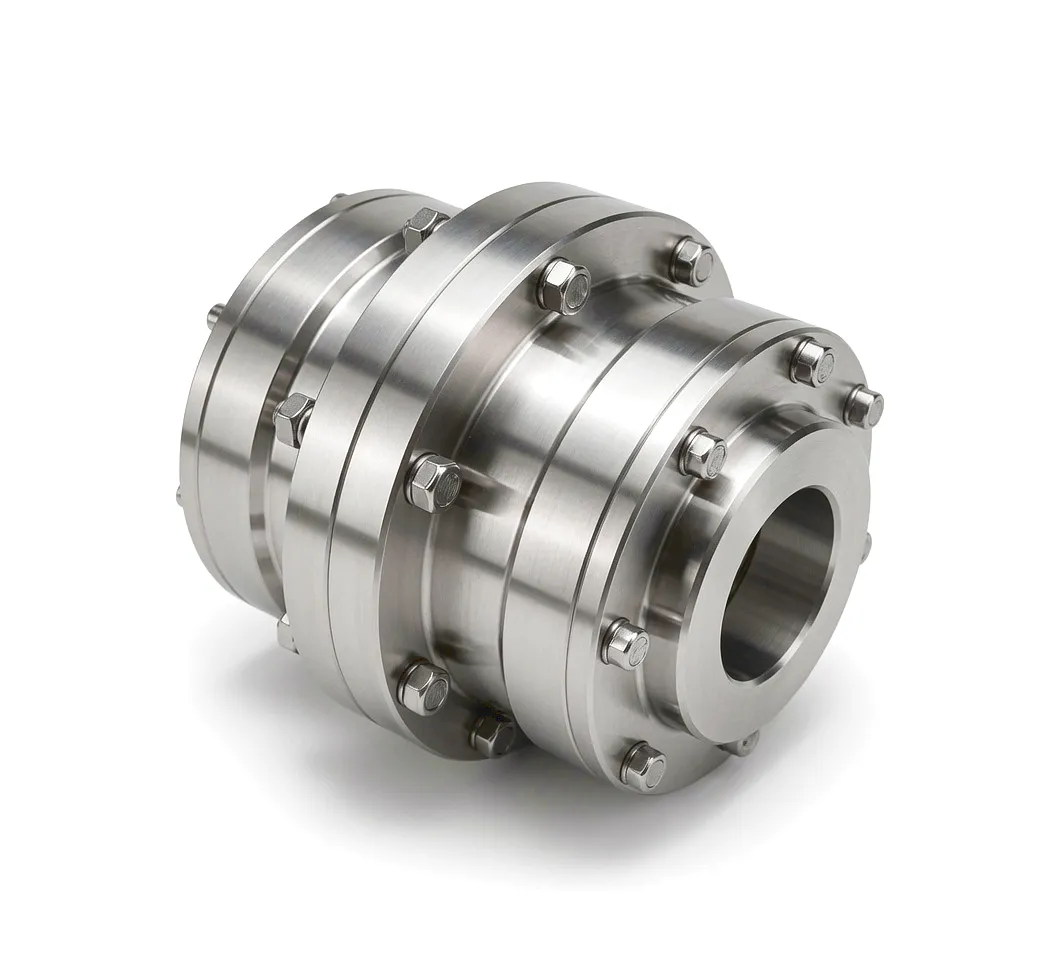
GICL & NGCL Drum-Shaped Gear Couplings
Designed specifically for the low-speed, high-torque conditions of cement kiln drive trains. Full drum-tooth profile, case-hardened alloy steel, and customisable bore/keyway specifications to match any UK-standard or DIN reduction gearbox output shaft.
Understanding the Rotary Kiln Drive Environment
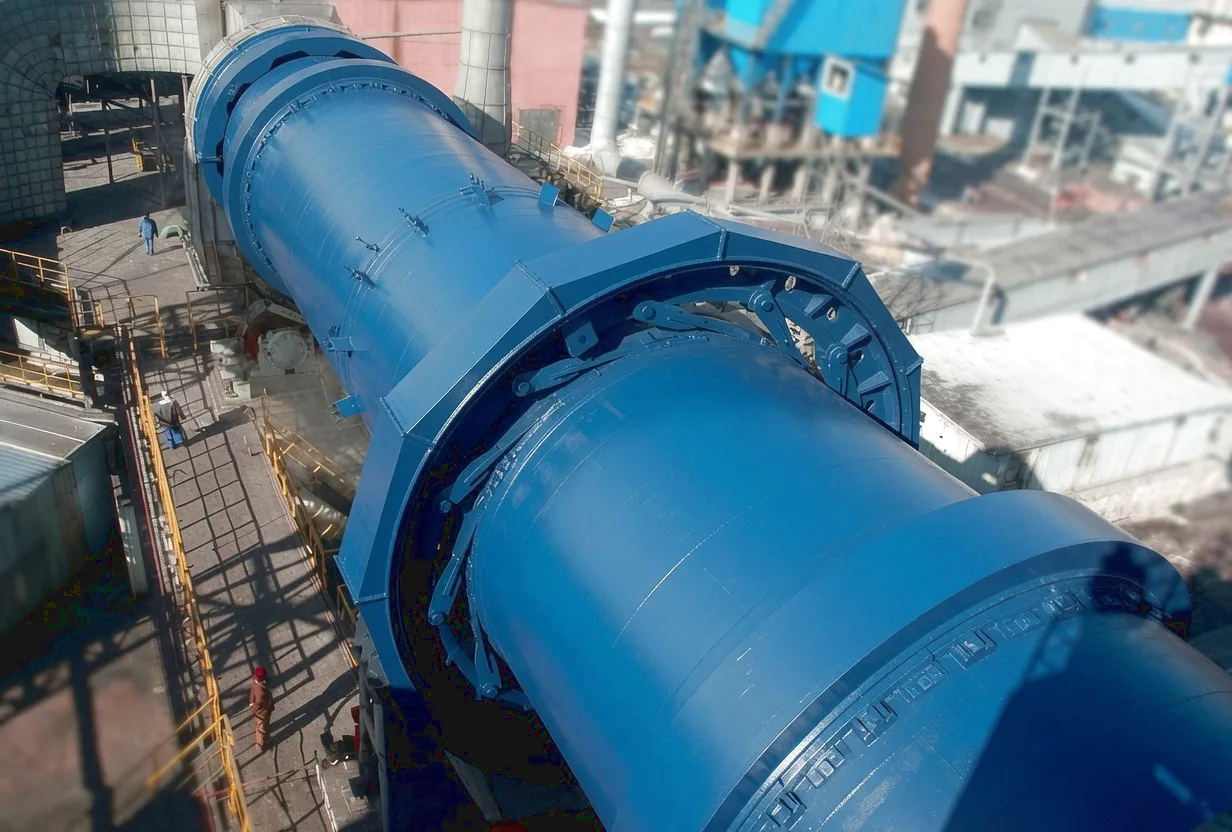
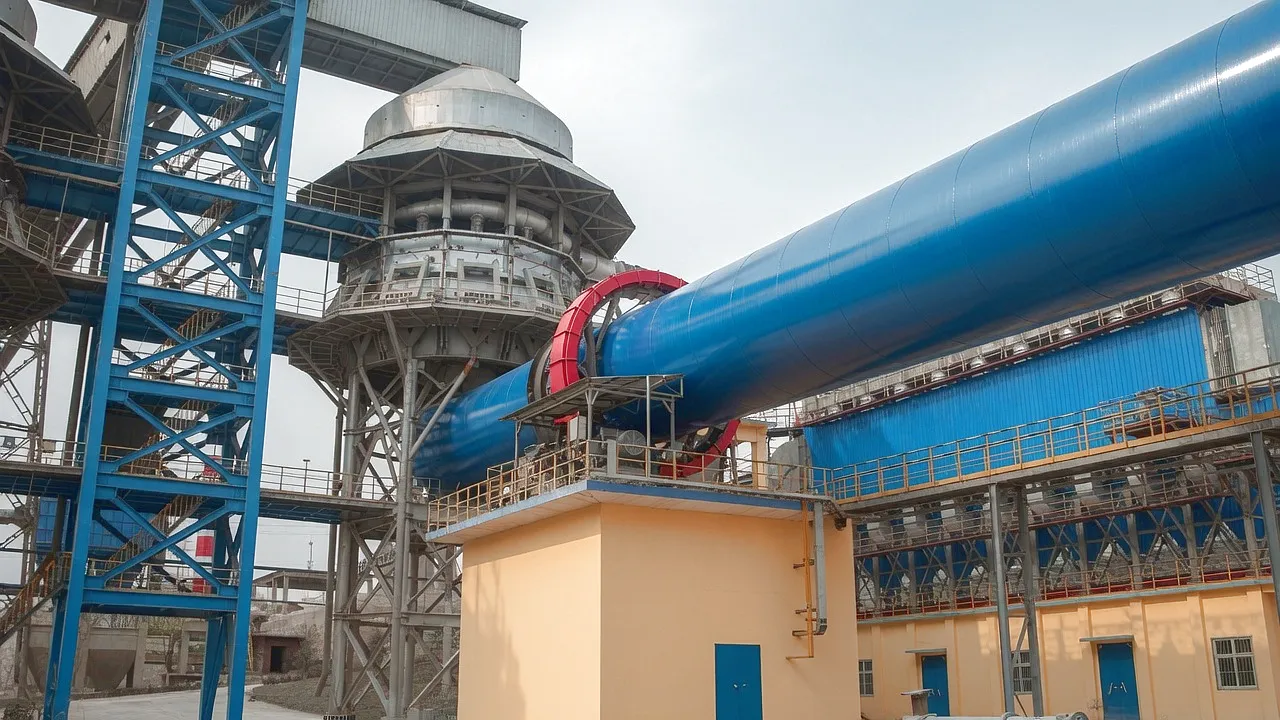
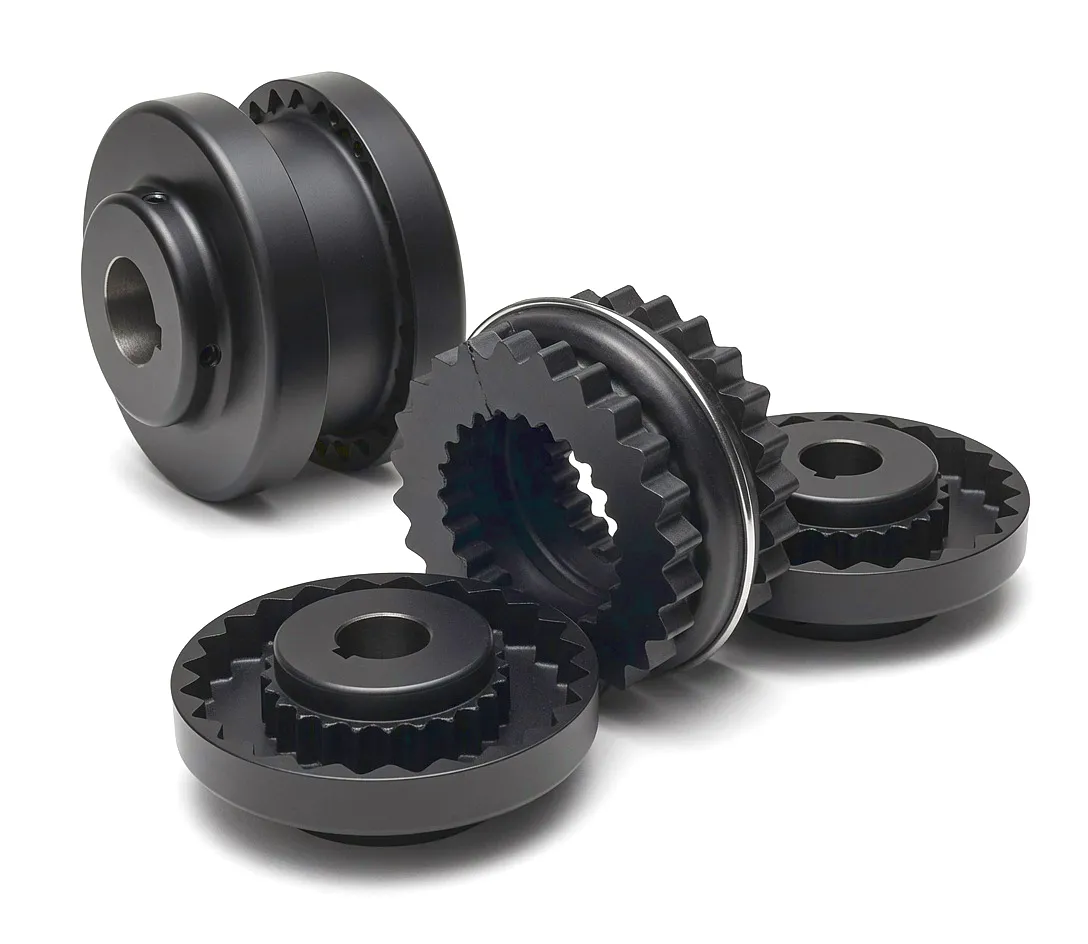 A rotary kiln in a cement facility is essentially a steel tube — sometimes exceeding 90 metres in length and six metres in diameter — inclined at a shallow angle of around 3–4° and rotating at between 0.5 and 5 rpm. Everything about it is heavy, hot, and slow. The raw meal enters at the elevated end and takes between 30 and 40 minutes to travel the length of the kiln under gravity while being progressively heated to a clinkering temperature of approximately 1450 °C inside the burning zone. The shell itself runs at surface temperatures around 250–350 °C. During startup, shutdown, or fuel fluctuation, the torque profile is highly dynamic.
The drive system typically consists of a main motor (often a slip-ring induction or DC motor, 200–1500 kW), a multi-stage planetary or helical reduction gearbox, and a final open pinion-and-girth-gear arrangement on the kiln shell. Between the motor and the primary gearbox, or between cascaded gearboxes, the gear coupling performs three simultaneous roles: transmitting rated torque reliably, compensating for thermal and structural misalignment that shifts constantly with operating temperature, and cushioning shock loads generated during start-up, feed changes, or mechanical upset in the kiln.
Concrete UK cement plants — including those operating in the South East, the Midlands, and Northern England — face an additional complication: many kilns were installed in the 1970s and 1980s, meaning shafts may have measurable wear-induced runout and ageing concrete foundations exhibit settlement creep. This creates permanent angular and parallel offset that a rigid coupling simply cannot survive. The gear coupling’s ability to operate continuously with angular misalignment up to 1.5° and axial displacement up to several millimetres is not a theoretical advantage in this context — it is an operational necessity.
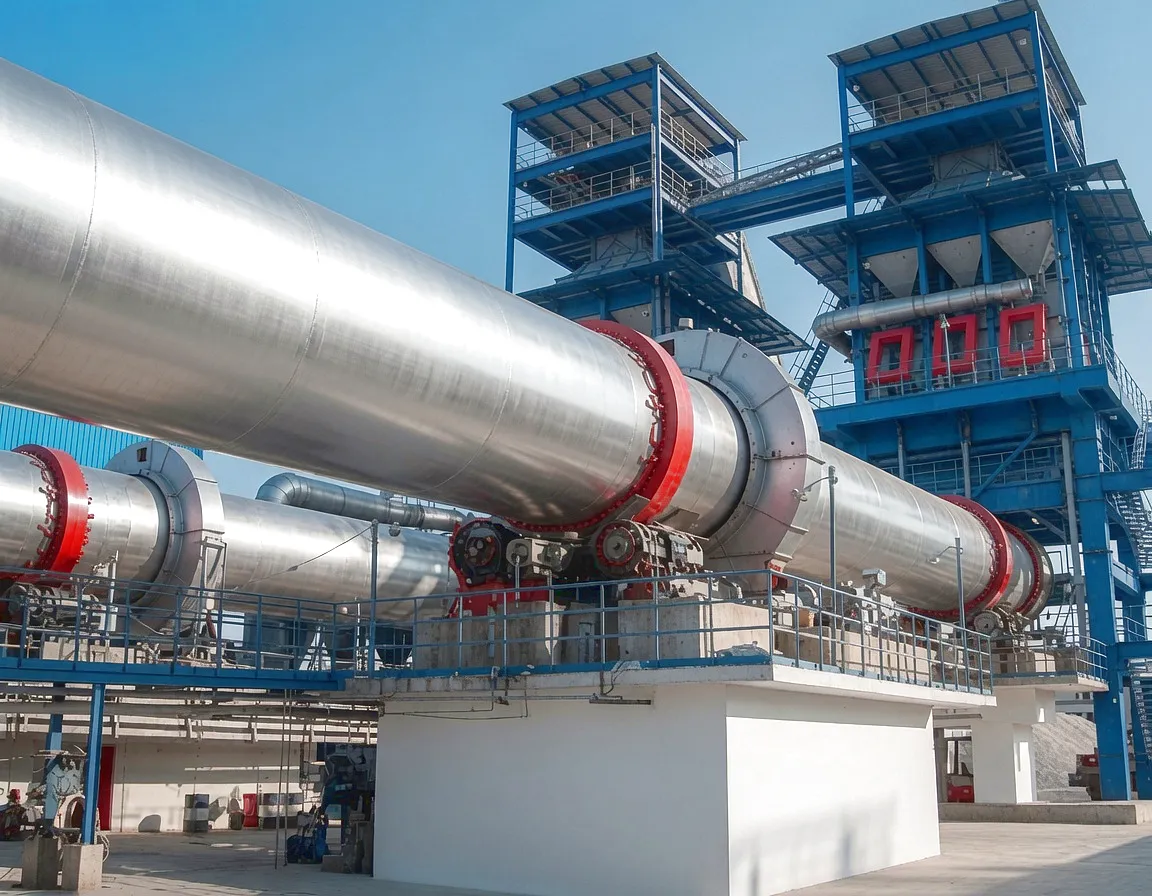
Cement Plant Kiln Drive
Heavy Industry Application
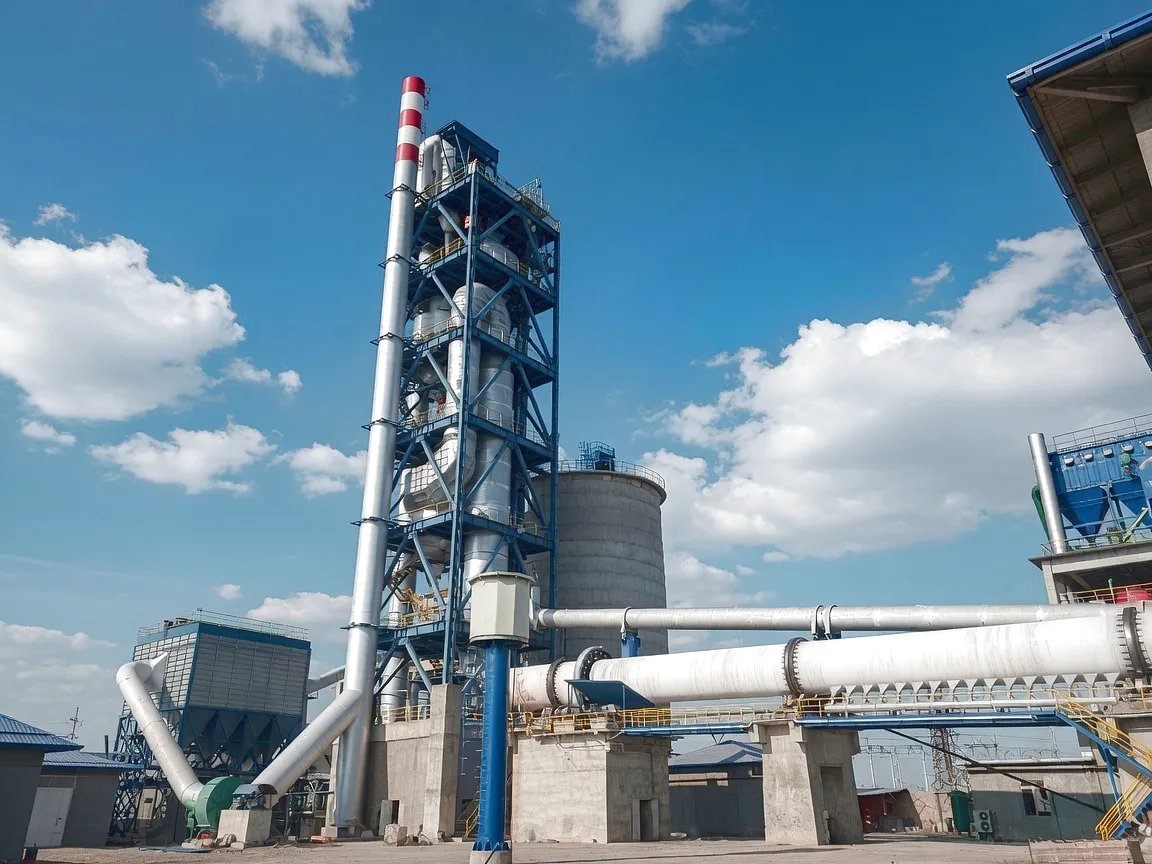
Mining & Processing
How a Drum-Shaped Gear Coupling Actually Works
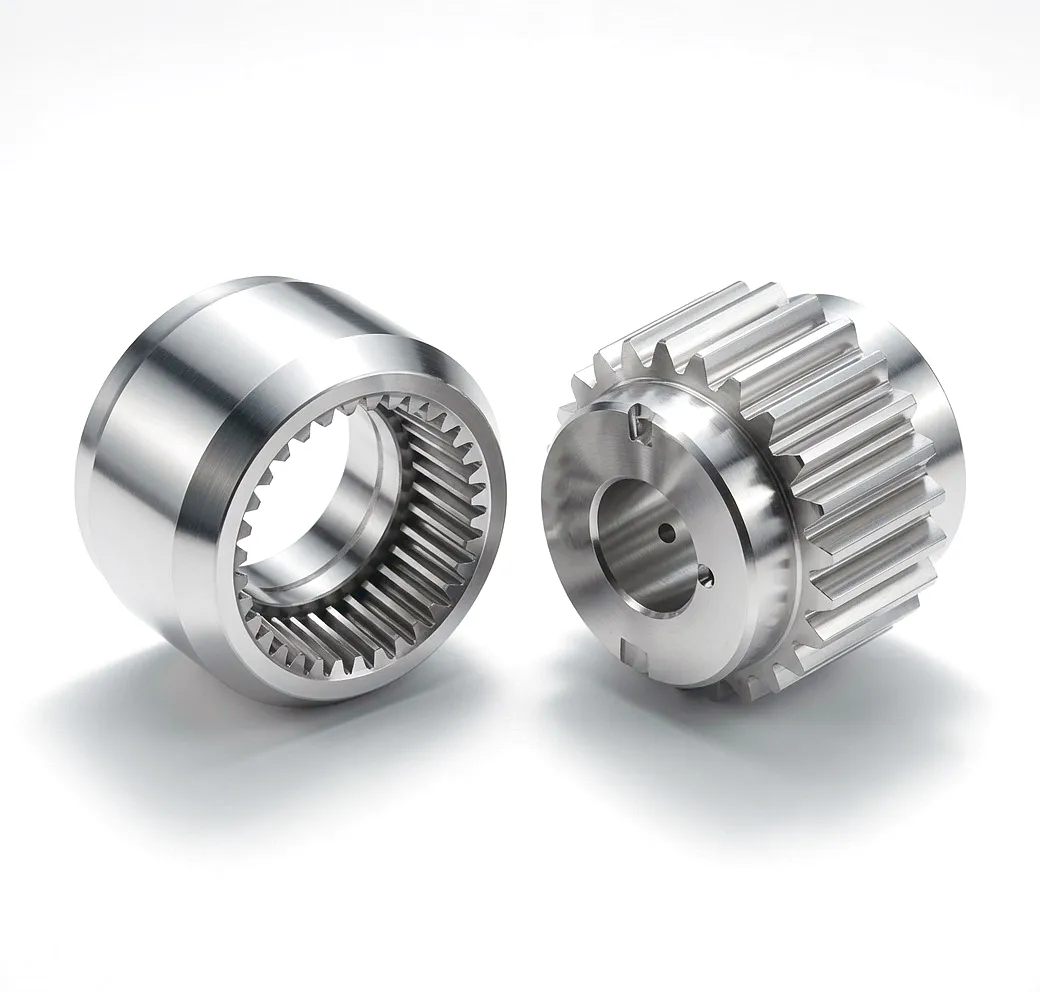
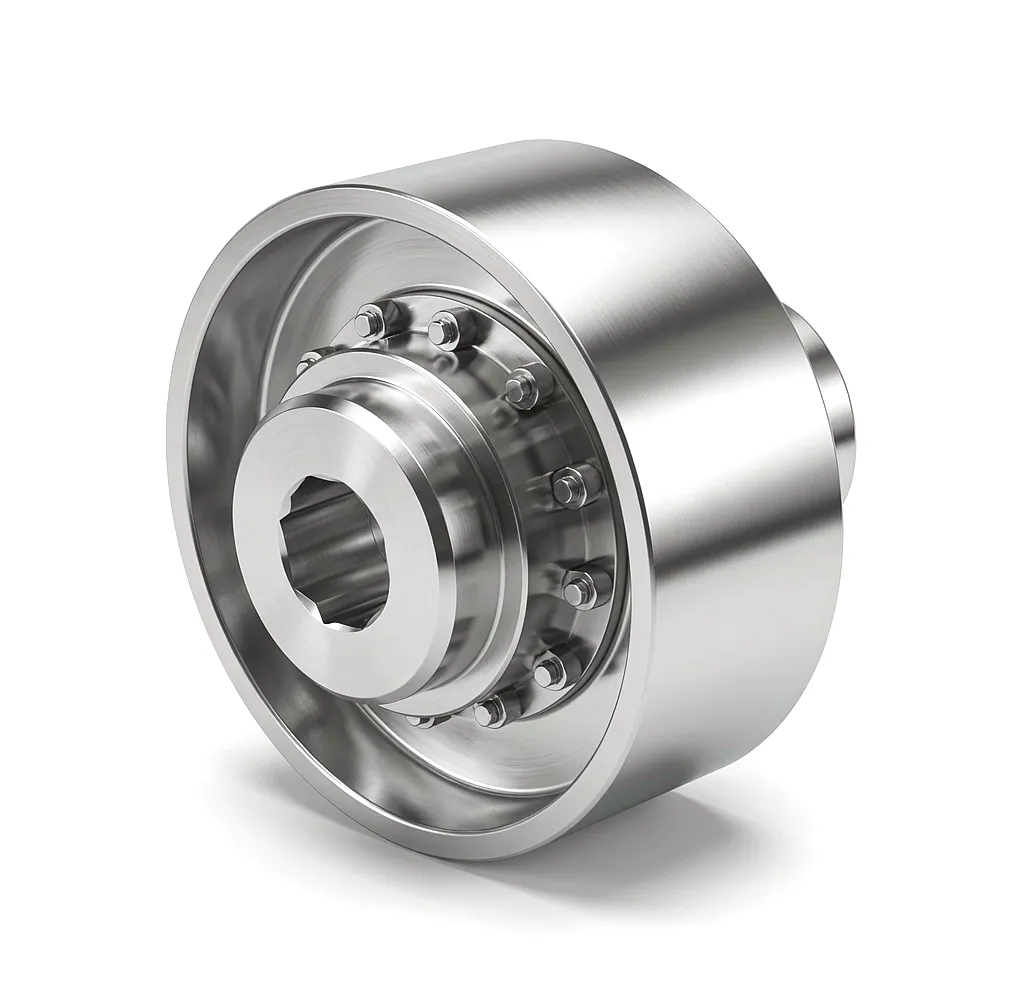 The basic architecture of a gear coupling consists of two inner hubs with external gear teeth, and two outer sleeves with internal mating teeth. Each hub is keyed or interference-fitted to its respective shaft. The outer sleeves interlock at the centre through a flanged bolted joint. Torque travels from one shaft, through the inner hub teeth, into the sleeve teeth, across the centre flange connection, and back out through the second sleeve-hub pair to the driven shaft.
The drum-tooth profile is the critical differentiator. Unlike older straight-cut gear couplings, drum-type teeth are crowned — they have a convex profile in the axial direction that allows the teeth to rock slightly in their mating sleeve teeth when misalignment is present. This rocking motion is accommodated without creating significant edge loading or stress concentration on the tooth flanks. Grease fills the tooth contact zone and is retained by lip seals or O-ring assemblies; the grease film both lubricates the sliding motion during misalignment compensation and provides corrosion protection.
Technical Specifications — GICL / NGCL Gear Couplings
Representative parameters for standard series supplied by Ever Power. Custom specifications available on request.
Why Gear Couplings Outperform the Alternatives in Kiln Drive Trains
Plant engineers often face a choice between gear couplings, flexible disc couplings, elastomeric jaw couplings, or even fluid couplings for the kiln drive position. Each has its place. In the specific role of connecting the primary drive motor to the reduction gearbox on a cement kiln, gear couplings consistently deliver advantages that others cannot match across the combined requirements of torque density, misalignment tolerance, temperature resistance, and service life.
Exceptional Torque Density
The all-steel construction and gear-tooth load distribution allow gear couplings to transmit torques that would fracture or fatigue any comparable elastomeric design at a fraction of the outer diameter. For large kilns requiring 500 kN·m and above, there is no practical alternative at equivalent compactness.
Simultaneous Misalignment Tolerance
Angular, radial, and axial displacement can all coexist within a single gear coupling installation without inducing bending moments into connected shafts or bearings. This multi-axis flexibility is especially valuable as kiln foundations settle and motor-gearbox alignment drifts over the years between planned overhauls.
All-Metal Heat Resistance
No polymer elements to soften, creep, or degrade. With appropriate high-temperature EP grease, gear couplings remain fully functional in ambient temperatures up to 150 °C — well above what any elastomeric element can survive in continuous service near a kiln shell. The all-steel design means no progressive stiffness loss with temperature.
Long Service Life & Repairability
Case-hardened gear teeth with re-greasing points every 2,000 hours of operation typically last three to five years before requiring any maintenance inspection. Unlike elastomeric couplings where element replacement is essential, worn gear coupling teeth can often be assessed and re-greased during a planned kiln stop, extending the mechanical service life to eight years or more in typical cement plant conditions.
Compact Envelope for Tight Installations
On older UK cement plants where the drive house footprint is constrained, the short overall length of a gear coupling — relative to fluid couplings or disc-pack designs of equivalent torque rating — means retrofitting is viable without significant civil modification. This has been a decisive factor for several engineering projects at kilns originally commissioned before 1990.
Standardised Bore & Keyway Options
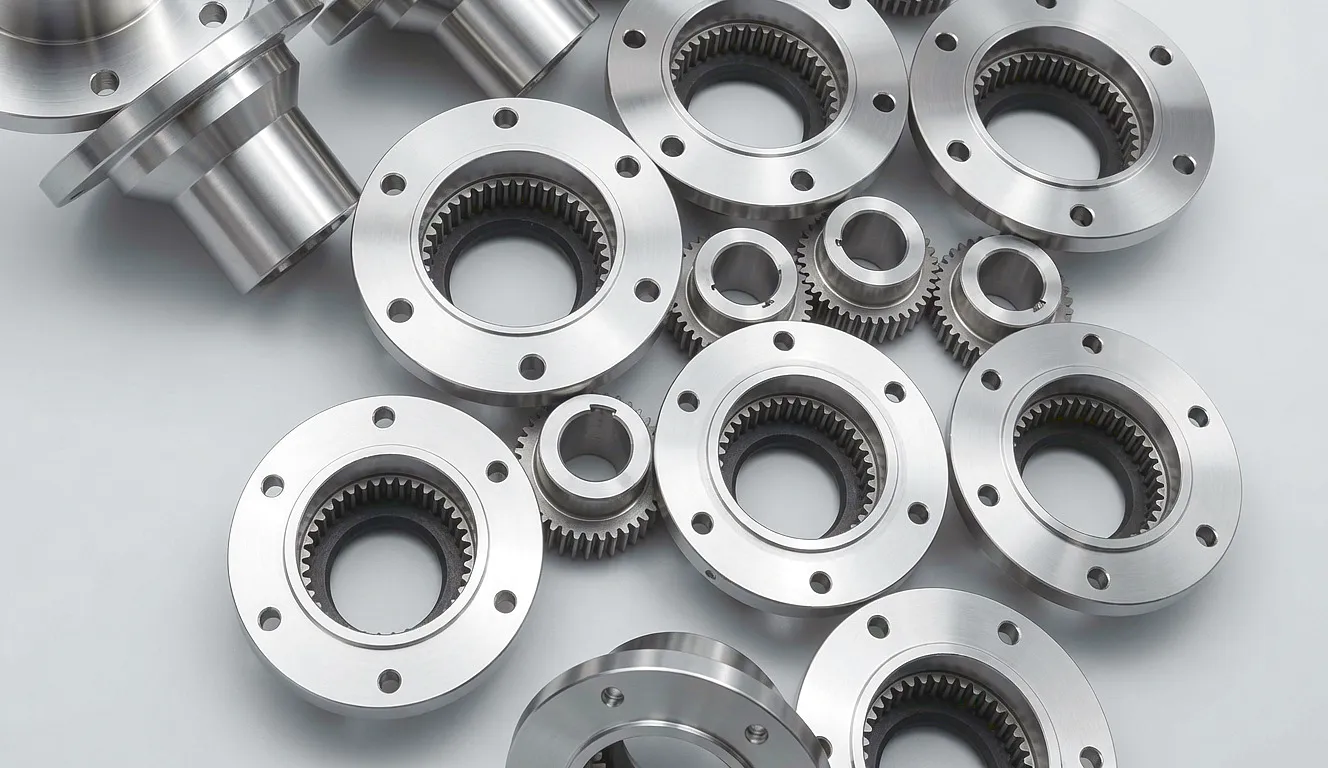
Standard GICL and NGCL series hubs are available with cylindrical or tapered bores, single or double keyways, and tolerance fits to DIN or GB standards as standard stock. Ever Power also machines custom interference-fit bores and taper-lock hub configurations to customer drawings — critical for direct shaft replacements where interchangeability with legacy couplings is required.
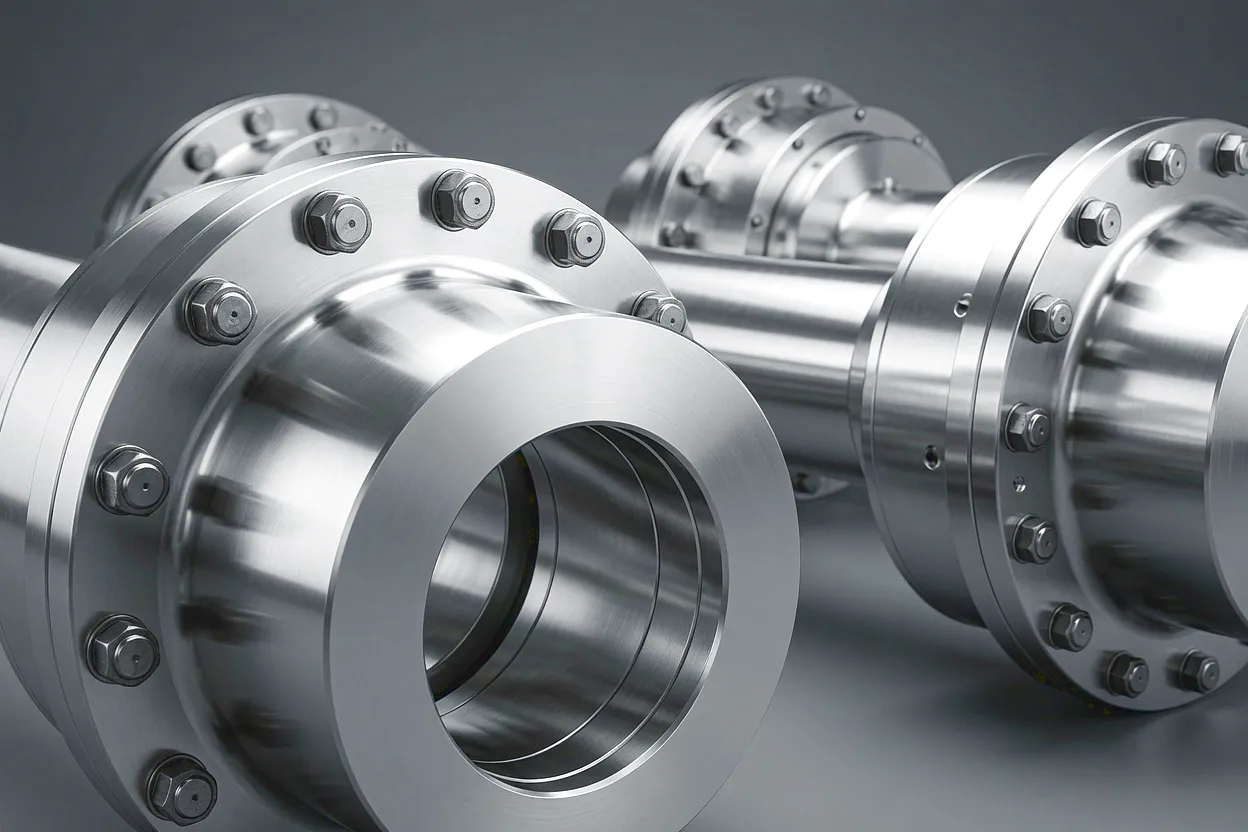
Application Scenarios: Where Gear Couplings Are Used in Cement Plants
Gear couplings are not limited to the main kiln drive position. Across a typical integrated cement manufacturing facility — from quarry to packing line — there are numerous drive positions where their misalignment tolerance and torque capacity make them the appropriate specification. Understanding all the potential installation points helps procurement engineers consolidate to a single supplier and simplify spare parts inventory.
Main Rotary Kiln Drive
Primary motor-to-gearbox coupling. NGCL with brake disc is common here, allowing braking function integration. Torque range typically 50,000–800,000 N·m depending on kiln diameter and length.
Raw Mill & Cement Mill Drives
Ball mills and vertical roller mills require high-torque flexible couplings between the motor and gearbox. Vibration generated by grinding media impacts makes misalignment compensation critical in these positions.
Clinker Cooler Fan Drives
High-temperature fans at the kiln head require couplings that tolerate heat soak from radiated energy. Gear couplings outperform polyurethane elements significantly in this location.
Bucket Elevator & Conveyor Drives
Elevator and conveyor drive positions handle variable loads from material surges. The gear coupling’s capacity to absorb inertial shock during start-up without transferring bending moments to the head shaft protects bearings and increases their operational intervals.
Preheater & Cyclone Tower Fans
Induced draft and primary air fans on the preheater tower deal with elevated gas temperatures and heavy dust loading. The sealed grease lubrication of gear couplings handles dusty environments significantly better than open disc packs or jaw couplings.
Auxiliary Kiln Drive
Barring drives and low-speed turning gears used for hot alignment and maintenance rotation require compact couplings. GICL series in smaller sizes are widely used here, tolerating the low-speed creep operation that forms part of the standard hot kiln stop procedure.
Ever Power Manufacturing: Customisation at Scale
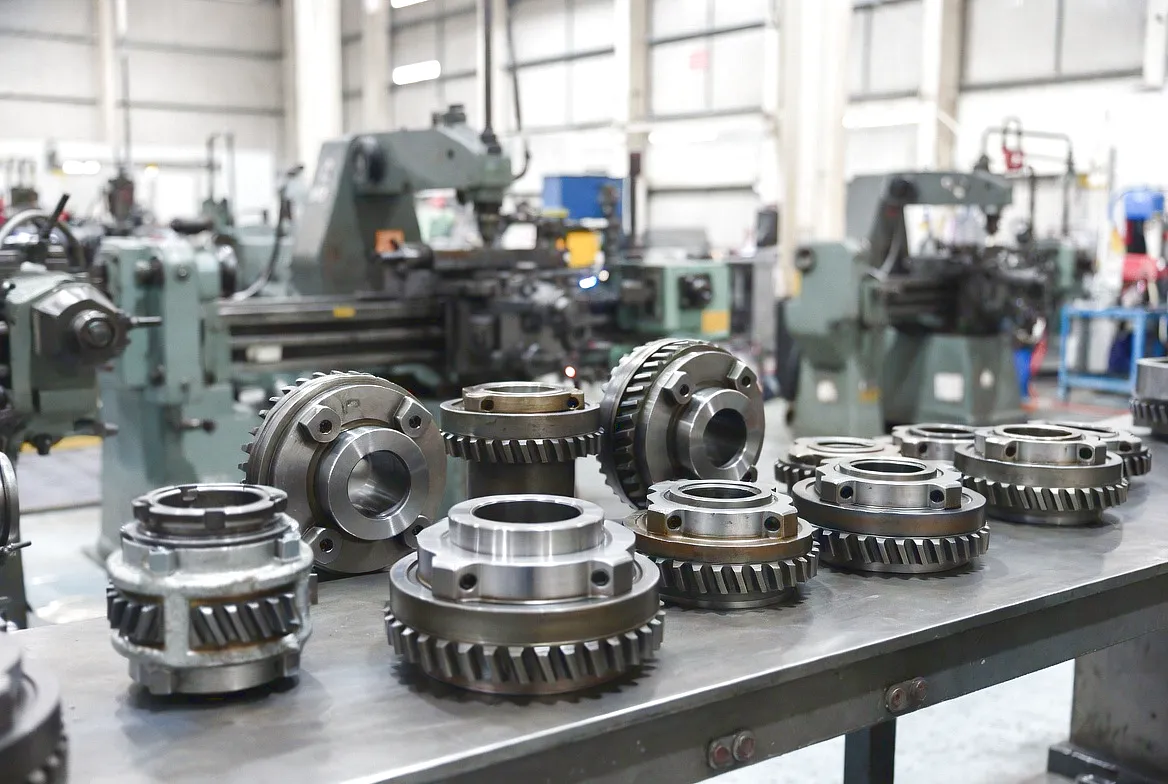
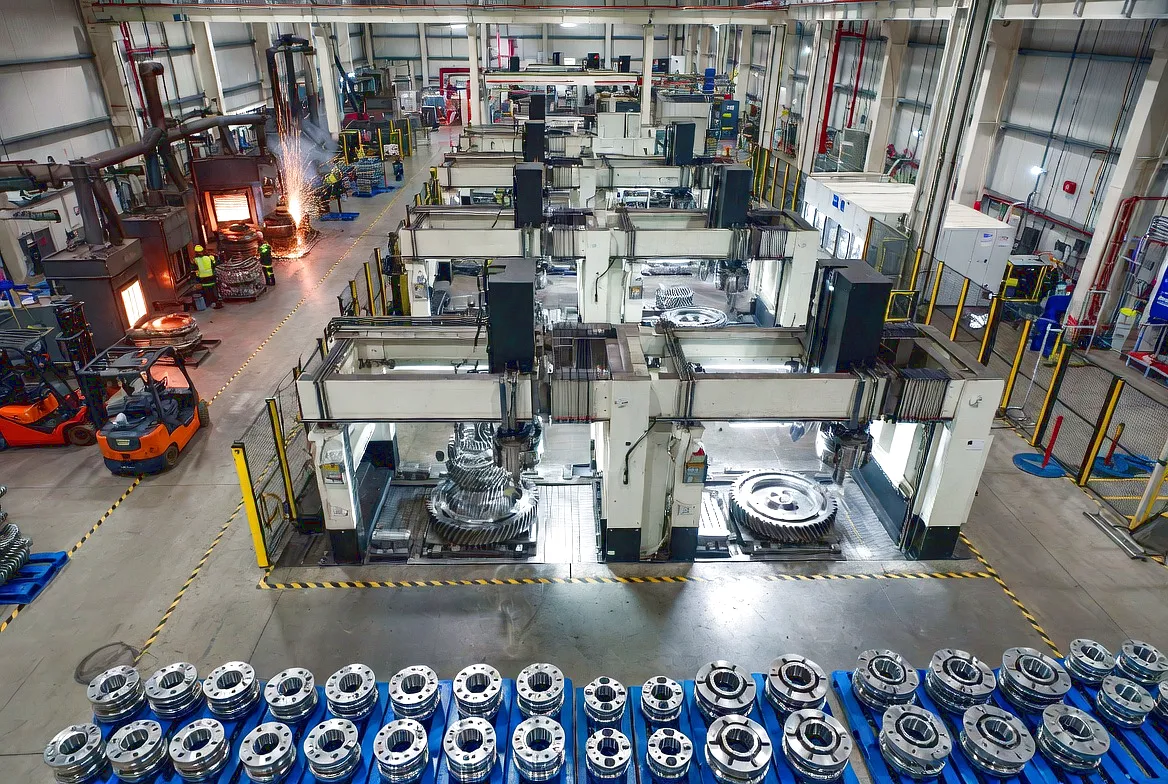
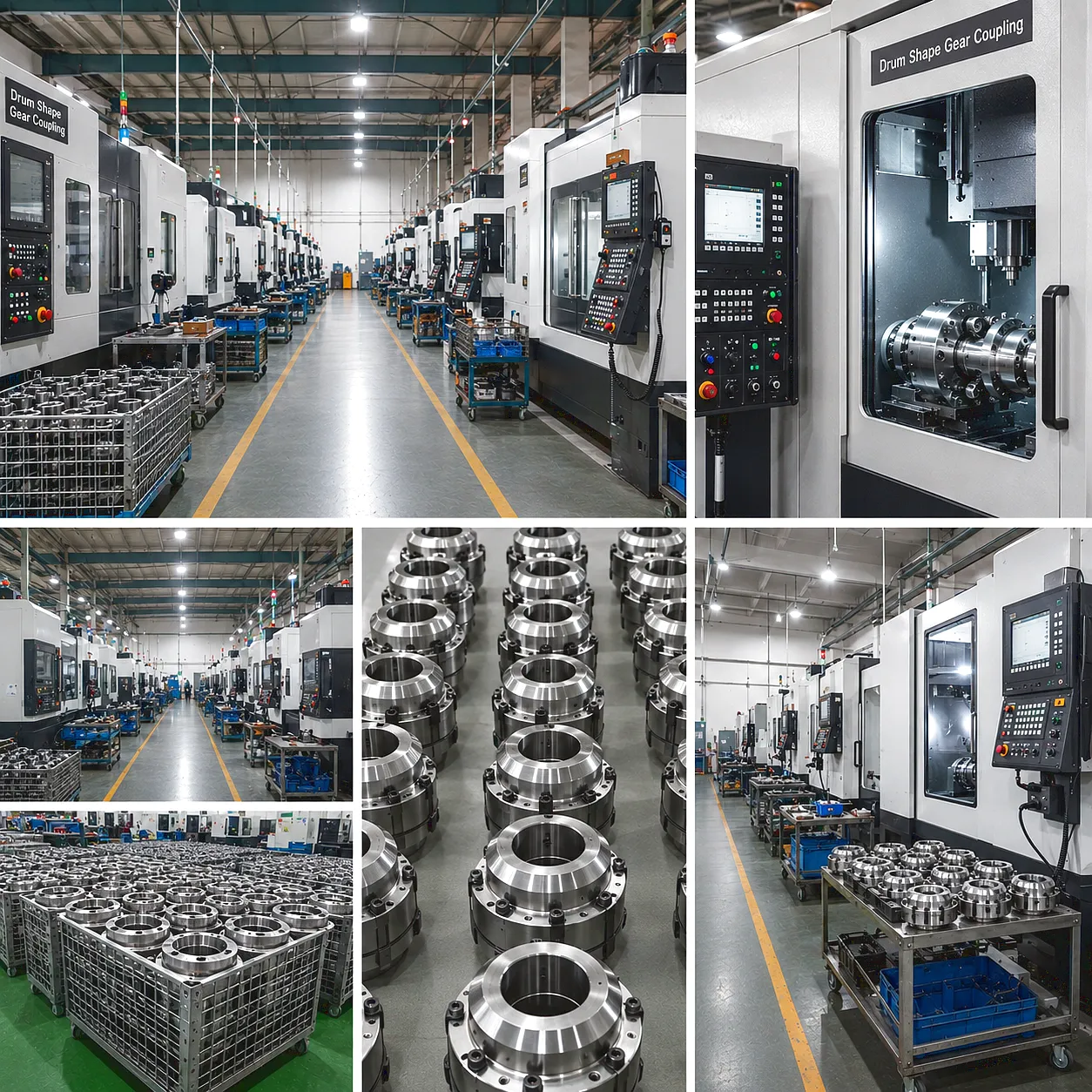
Our factory operates a full in-house manufacturing cycle for gear couplings from raw billet to finished, tested component. This end-to-end capability means we are not constrained by catalogue sizes or standard bore dimensions. If your kiln drive shaft demands a non-standard bore diameter, an asymmetric coupling to bridge two different shaft sizes, a special flange bolt pattern, or a half-coupling with an integrated brake drum — we machine it to your drawing, in the material grade you specify, with the surface treatment your environment requires.
50,000 m² Factory Floor
Dedicated CNC turning, gear hobbing, grinding, and heat treatment lines for coupling components.
In-House QC Laboratory
Material certificates, hardness testing, dimensional CMM inspection, and static torque testing all performed on-site.
Global Export Experience
Regular shipments to UK, Germany, Poland, Australia, and the Middle East. Export documentation and packing for sea freight as standard.
Full Custom Engineering
Non-standard bores, special flanges, integrated brake drums, corrosion-resistant coatings — all available to customer drawings or specifications.
Steel & Rolling Mill Drives
How to Select the Right Gear Coupling for Your Kiln Drive
Selecting a gear coupling for a rotary kiln is not a case of matching the rated motor power to a catalogue torque figure. The process requires accounting for the service factor of the drive, the starting torque multiplier of the motor, the precise shaft dimensions on both connected machines, and the environmental conditions of the installation position. Here is the standard selection workflow our application engineers use when supporting UK cement plant projects.
Client Success Story: Hope Cement Works, Derbyshire, UK
Project Overview
A long-established dry-process cement plant in the Peak District, UK, was experiencing repeated premature failure of the OEM gear coupling on Kiln No. 2 — a 4.4 m diameter × 74 m long kiln producing approximately 2,800 tonnes of clinker per day. The original coupling was a straight-tooth design that had been specified in the 1986 installation. By 2022, the kiln foundation had settled asymmetrically by an estimated 8 mm over the gearbox support, creating a permanent angular misalignment the straight-tooth coupling could not sustain. Sleeve tooth fractures were occurring every 18 months on average, each requiring a costly emergency strip-down of the coupling house during an unplanned kiln stop.
Solution Implemented
Our applications team reviewed the as-built shaft drawings and the current measured alignment report. We specified a NGCL-type drum-profile gear coupling in 42CrMo alloy steel with a custom bore to accommodate the 280 mm motor shaft on the drive end and 310 mm gearbox input shaft on the driven end — both non-standard dimensions. The coupling was supplied with high-temperature EP grease pre-packed and an extended grease nipple extension tube to allow re-greasing from outside the coupling guard during operation. Delivery was achieved within 14 working days of order confirmation.
Results After 24 Months
What the Plant Engineer Said
We had been chasing this failure mode for years. Switching to a drum-tooth design with the right misalignment capacity simply solved it. The custom bore turned around faster than I expected from an overseas supplier. We now carry one spare as insurance.
— Mechanical Maintenance Engineer, Peak District Cement Plant
What Our Customers Say
“We ordered a replacement NGCL coupling for our kiln main drive during an emergency stop. Ever Power shipped within a week with all the certification documents our maintenance system requires. The fit-up was perfect first time — saved us from extending the shutdown further.”
— Reliability Engineer, Cauldon Cement Plant, Staffordshire, UK
“We’ve been specifying Ever Power GICL-series couplings on our raw mill and kiln feed systems for three years now. The quality is consistent and pricing is very competitive against European alternatives. The customised bore service makes direct replacement straightforward for our older equipment.”
— Procurement Manager, Cement & Lime Producer, Yorkshire, UK
“As a drives and transmission distributor supplying UK industry, we added Ever Power gear couplings to our stock range in 2021. The dimensional accuracy on every batch has been excellent, and the lead times for large-bore custom orders are far shorter than anything comparable we have sourced from within the EU.”
— Director, Industrial Drives Distributor, West Midlands, UK
Supplying Gear Couplings to UK Cement & Heavy Industry
 The UK cement industry operates a relatively small number of large-scale integrated plants — the most significant being located at Hope in Derbyshire, Cauldon in Staffordshire, Ketton in Rutland, Westbury in Wiltshire, Dunbar in Scotland, and Rugby in Warwickshire. Each of these sites operates one or more rotary kilns and associated grinding circuits, all of which incorporate multiple gear coupling positions throughout the drive train. Beyond cement specifically, UK industries including steel rolling, power generation, mining and quarrying, and marine propulsion all represent active markets for the sizes and types of gear coupling described in this article.
Ever Power supplies directly to UK end users, engineering contractors, and authorised distributors. Standard series couplings from our UK-stocked range can be dispatched within 3–5 working days from order. Custom-machined couplings to specific bore and flange dimensions typically ship within 10–18 working days depending on size. Sea freight container shipments from our factory to UK major ports (Felixstowe, Southampton, Tilbury) transit in approximately 28–35 days under normal conditions, making forward planning for scheduled plant shutdowns straightforward. We are happy to support your maintenance planning team with lead time estimates and price comparisons well in advance of your next planned kiln stop.
For UK procurement teams comparing gear coupling suppliers — whether evaluating total cost of ownership, delivery reliability, or the depth of customisation available — we encourage a direct conversation. Send us your shaft drawings and operating data, and we will return a written technical recommendation and firm price within 24 hours.
Frequently Asked Questions
Questions from plant engineers, procurement teams, and distributors across the UK and beyond.
Ready to Specify a Gear Coupling for Your Rotary Kiln?
Send us your shaft dimensions, operating data, or an existing coupling part number. Our applications engineers will return a written technical recommendation and firm price within 24 hours — for standard or fully custom specifications.
Ever Power · gear-coupling.top · Supplying UK & Global Cement Industry
edit by gzl