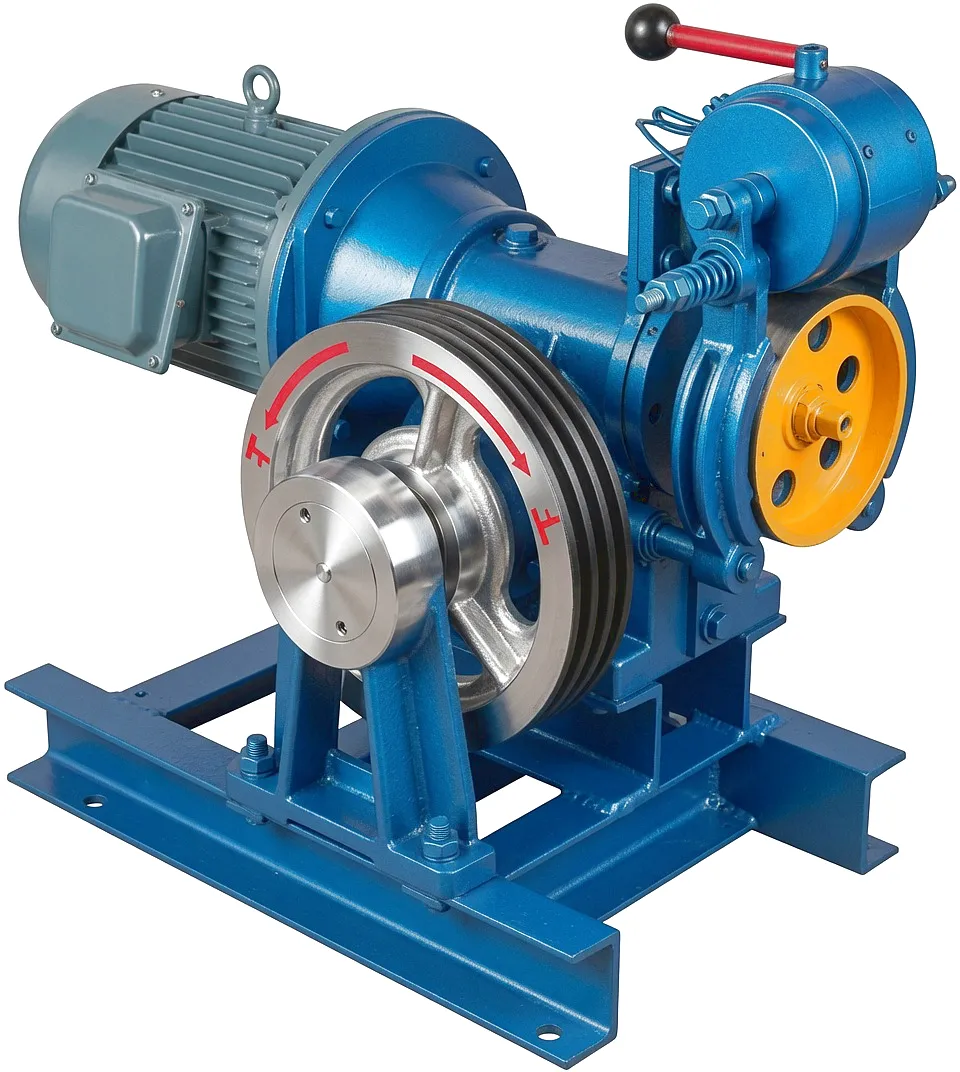
 Elevator traction machines represent some of the most demanding rotary power transmission environments in modern construction. A gear coupling sitting at the interface between an electric motor shaft and the traction wheel gearbox must tolerate continuous cyclic loading, occasional shock loads during start-stop sequences, and the vibration inherent in worm-gear or planetary reduction units — all while fitting within the compact envelope of a machine room or machine-roomless (MRL) installation. The engineering tolerances are unforgiving, and a coupling failure does not merely mean downtime; in a vertical transport context it can trigger a safety trip, strand passengers, and expose building operators to regulatory liability under the UK Lifts Regulations 2016. Specifying the right gear coupling is therefore not a commodity decision but a safety-critical engineering one.
Ever Power has supplied gear couplings to elevator OEMs and maintenance contractors across England, Scotland, and Wales for over eighteen years. Our production facility operates to ISO 9001:2015 quality management standards, and every coupling batch undergoes torque-rated load testing before despatch. The knowledge built up across thousands of traction machine installations informs every product line we manufacture — and it is that knowledge we share in detail throughout this article.
What Is a Gear Coupling and Why Does It Matter in Traction Machines?
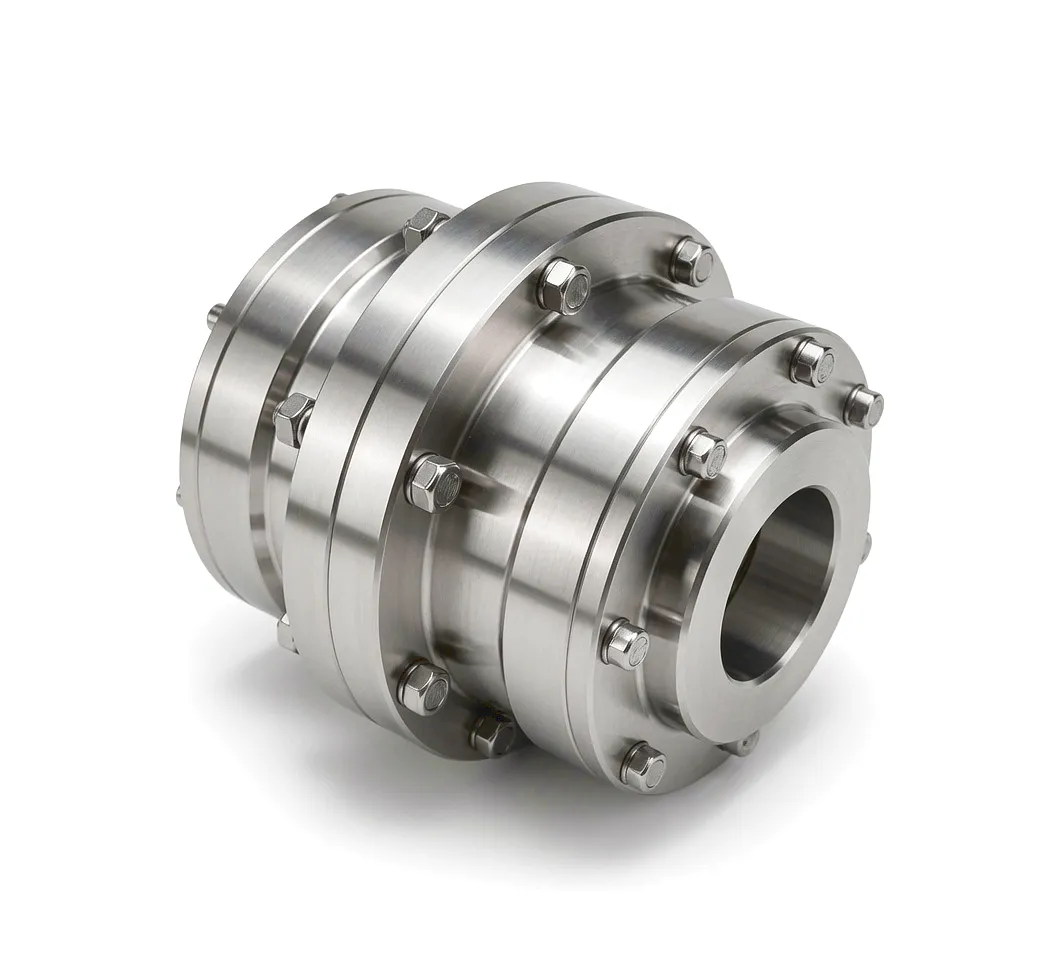
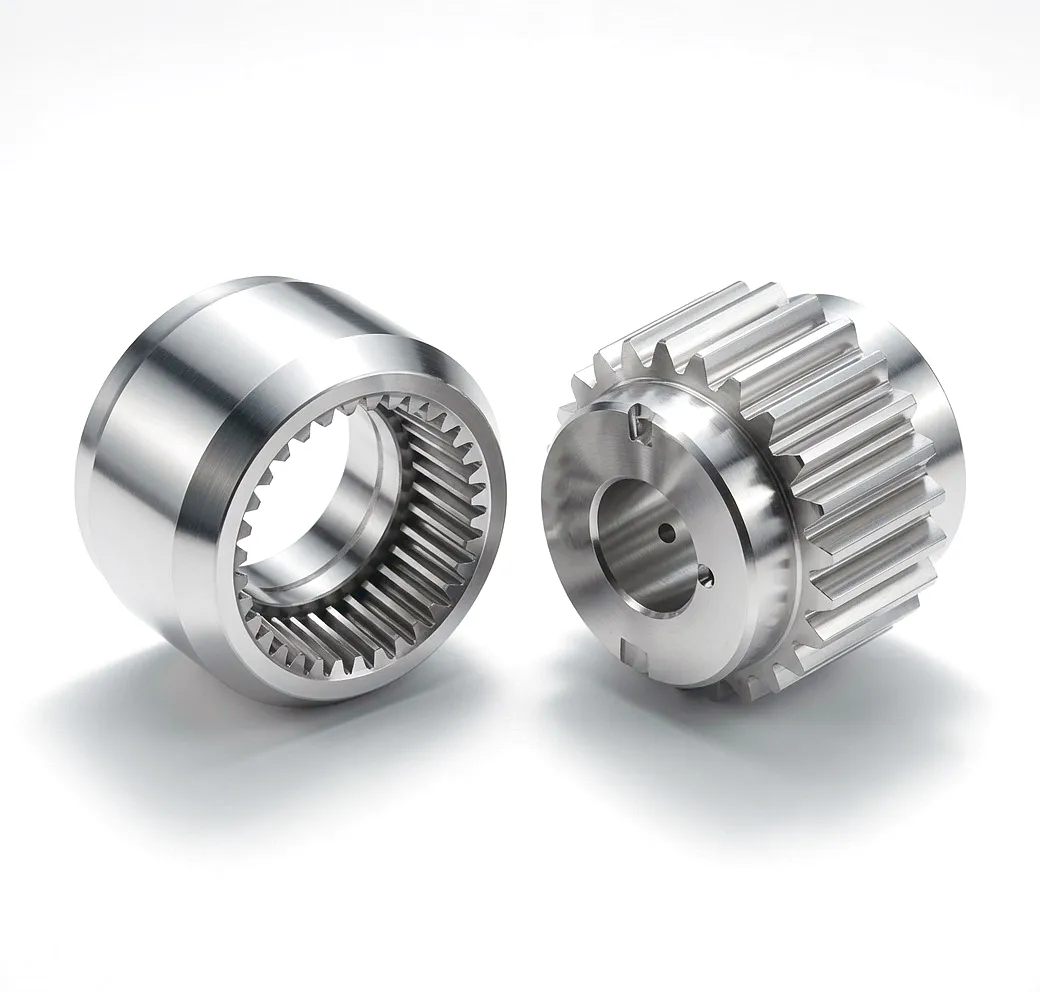
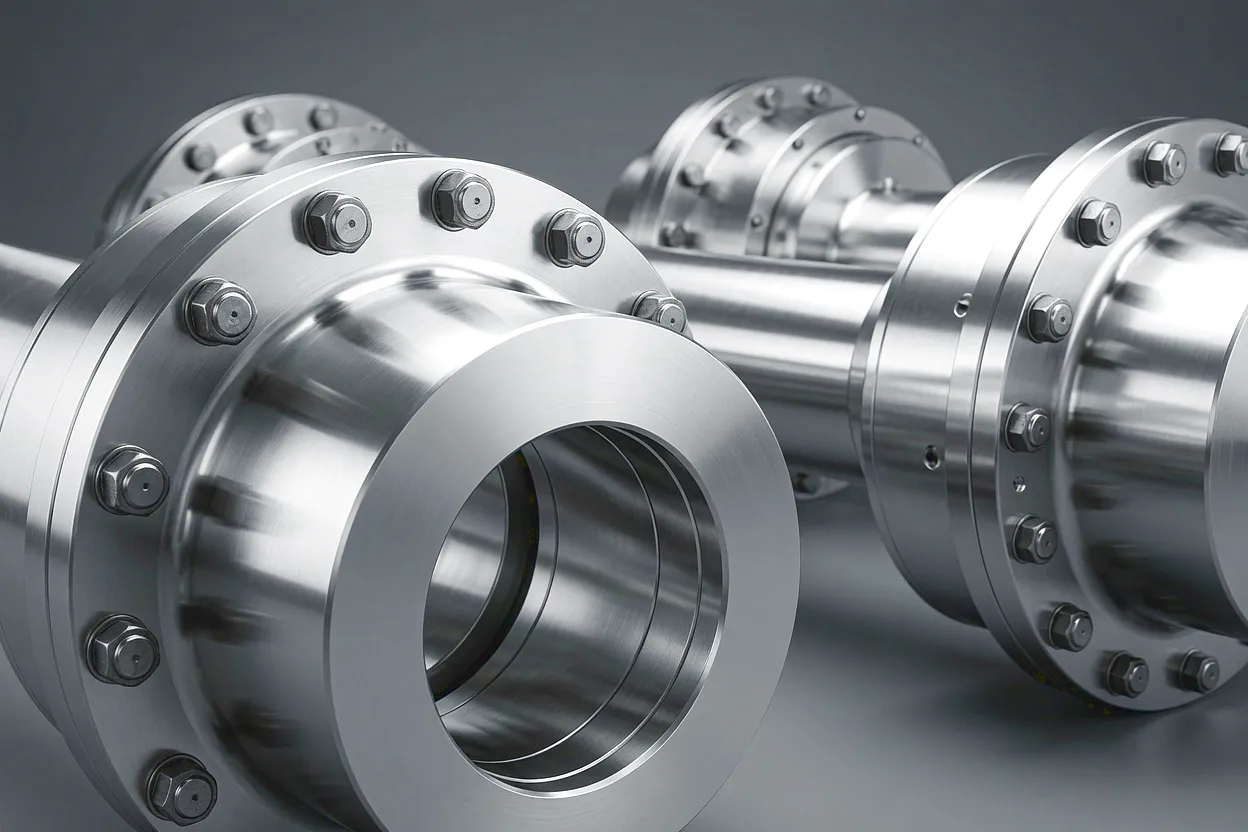
A gear coupling is a mechanical device that transmits torque between two shafts while accommodating minor angular misalignment, parallel offset, and axial displacement. It consists of two externally toothed hubs — each bolted or interference-fitted onto a shaft — and one or two internally toothed sleeves that mesh with the hub teeth and are bolted together at a central flange. The involute tooth profile on both hub and sleeve allows relative rocking motion, making the coupling inherently flexible without sacrificing torque capacity.
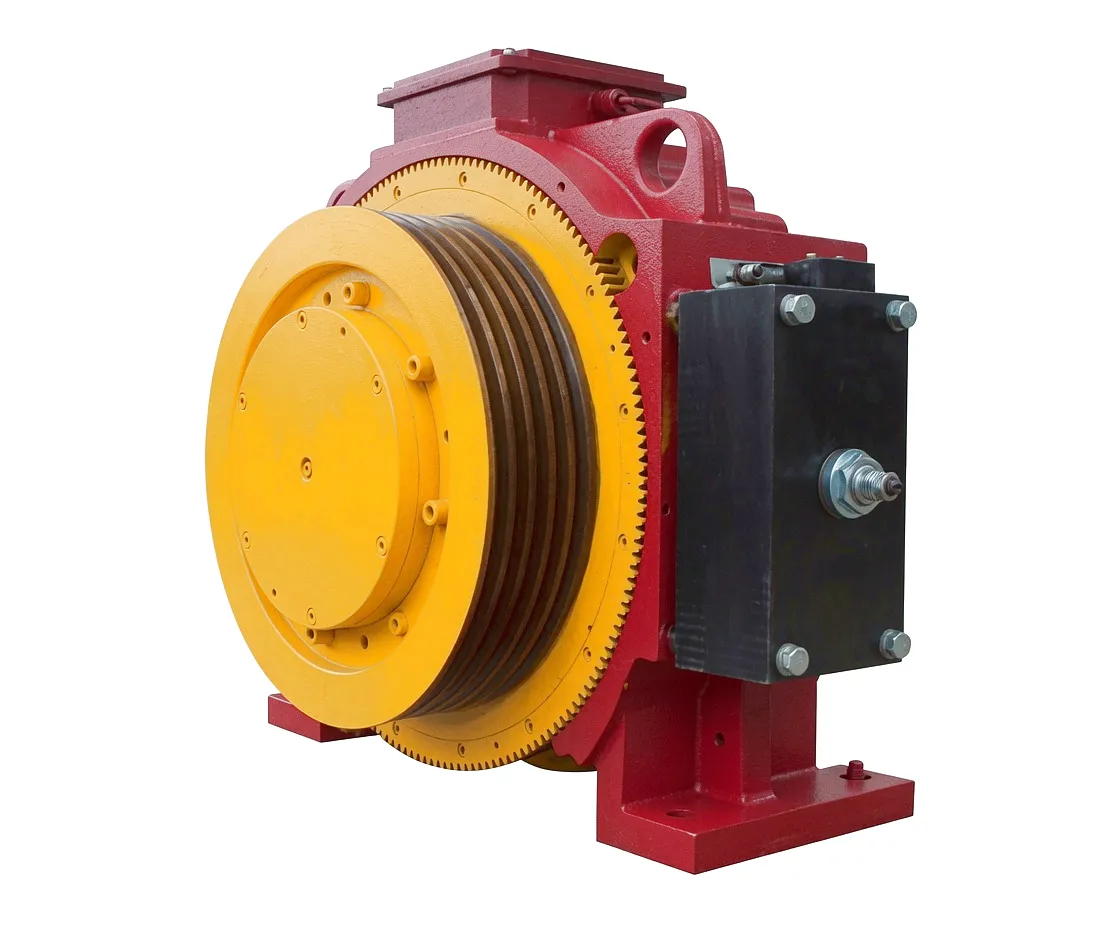 In an elevator traction machine, this flexibility is indispensable. Even the most precisely aligned motor-gearbox assembly will develop some shaft misalignment over time as mounting bolts settle, thermal expansion cycles occur between summer and winter operation, and the machine frame deforms slightly under load. A rigid coupling would transfer these misalignment forces directly into shaft bearings, accelerating wear and ultimately causing premature bearing failure. A gear coupling absorbs them silently, protecting the motor, gearbox, and traction sheave bearings throughout the service life of the elevator — which in the UK market typically spans 20 to 30 years between major overhauls.
Geared vs. Gearless Traction Machines: Coupling Requirements
The two dominant traction machine architectures each impose distinct requirements on the gear coupling selected. Understanding the differences allows engineers to avoid over- or under-specifying the coupling — both errors carry cost and risk implications.
Worm-Gear Traction Machines
Traditional worm-gear machines run high-speed induction motors at 1400–2800 rpm, stepped down through a worm-and-wheel reduction. The motor output shaft connects to the worm shaft via a gear coupling that must handle high input torque, angular misalignment up to 1.5°, and the torsional shock of direct-on-line starts. Crowned tooth profiles and generous lubricant reservoirs are non-negotiable in this service class.
Planetary-Gear Traction Machines
Planetary reduction units are more compact and more efficient than worm gear sets, but they generate distinctly different vibration signatures. The multiple planet gears create harmonic excitation at frequencies proportional to the planet count multiplied by shaft speed. A gear coupling in this application must therefore have sufficient torsional stiffness to avoid resonance while still accommodating the angular and parallel misalignment accumulated over years of operation.
Gearless PMSM Machines
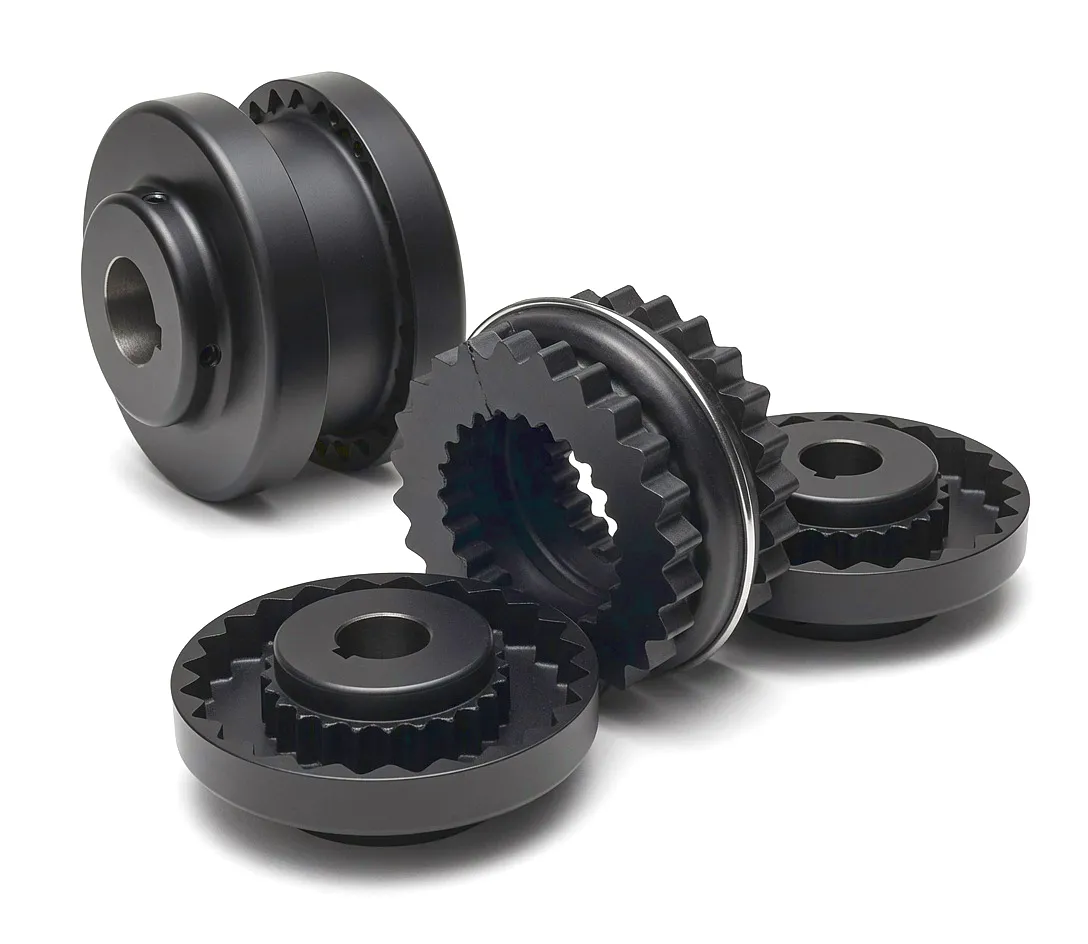
Permanent magnet synchronous motors driving the traction sheave directly eliminate the intermediate gearbox, which dramatically reduces mechanical losses and noise. Yet they still require a coupling between the motor and the brake drum or encoder assembly. In this role, a nylon-sleeved or elastomeric gear coupling absorbs encoder shock loads and prevents stray eddy currents in the motor shaft from reaching sensitive encoder circuitry — a detail that is frequently overlooked until encoder failures start recurring.
Why Ever Power Gear Couplings Outperform in Elevator Duty
Our gear couplings are not off-the-shelf catalogue items adapted to elevator duty as an afterthought. They are engineered specifically for the cyclic, safety-critical demands of vertical transport. Here is what that means in practice, broken down into the performance characteristics that matter most to mechanical engineers, lift consultants, and maintenance teams across the UK.
🏆
Crowned Tooth Geometry
Barrel-crowned tooth flanks distribute contact stress uniformly even under angular misalignment up to 1.5°, preventing edge loading that shortens tooth life. The crowned profile is precision-ground to DIN 5480 tolerances, ensuring smooth torque transfer without the micro-slip that causes fretting corrosion.
⚡
High Torque Density
Our GICL series achieves a rated torque of up to 2,500,000 N·m in larger bore sizes. For typical elevator traction machines in the 11–90 kW range, the coupling transmits rated torque continuously at a safety factor of 1.5× minimum, with peak allowances of 2.0× for start-stop transients — in line with EN 81-20 elevator machinery requirements.
🔧
Split-Sleeve Servicing
In machine-room installations with limited headroom, removing a conventional coupling sleeve for inspection requires axial shaft movement — which means disconnecting the motor or gearbox. Our split-sleeve design allows the sleeve to be removed radially with no shaft movement, cutting maintenance time from hours to minutes and reducing the risk of re-alignment errors on reassembly.
🛡️
Material Grade Selection
Hubs are machined from 42CrMo4 alloy steel, heat-treated to 260–310 HB, and through-hardened. Sleeves are manufactured from 40Cr or ductile cast iron depending on service class. All tooth flanks receive EP grease packing before assembly, and sealed designs are available for MRL machine rooms where periodic re-lubrication is impractical.
🌡️
Wide Operating Temperature
Gear couplings lubricated with our standard EP grease remain operational from -30 °C to +80 °C, covering the full range of machine-room environments from unheated rooftop plant rooms in Scottish winters to basement machine rooms in urban buildings where ambient temperatures can reach 55 °C during peak summer periods.
📐
Customised Bore & Keyway
Every coupling hub can be precision-bored and keyway-broached to customer-supplied shaft drawings. Interference fits, clearance fits, and splined bores are all available. For retrofit projects where an OEM coupling is no longer available, our engineers will reverse-engineer from the existing hardware and deliver a dimensionally compatible replacement — a service particularly valued by lift maintenance companies managing aging UK building stock.
Technical Performance Parameters — GICL / NGCL Series (Elevator Grade)
Data based on standard catalogue values. Custom-engineered variants are available — contact our team for application-specific calculations.
| Parameter | GICL Light | GICL Medium | NGCL Heavy | NL Nylon Flex |
|---|---|---|---|---|
| Rated Torque (N·m) | 40 – 2,500 | 2,500 – 25,000 | 25,000 – 2,500,000 | 10 – 1,200 |
| Max Speed (rpm) | 4,500 | 3,600 | 2,200 | 3,000 |
| Angular Misalignment | Up to 1.0° | Up to 1.5° | Up to 1.5° | Up to 2.0° |
| Radial Offset (mm) | 0.25 | 0.40 | 0.50 | 0.60 |
| Hub Material | 42CrMo4 | 42CrMo4 | 42CrMo4 | 45# Steel / Nylon |
| Sleeve Material | 40Cr Steel | 40Cr Steel | Ductile Cast Iron | PA66 Nylon |
| Lubrication | EP Grease | EP Grease | EP Grease | None (dry) |
| Operating Temp (°C) | -30 to +80 | -30 to +80 | -30 to +80 | -40 to +100 |
| Balancing Grade | G6.3 | G6.3 | G6.3 / G2.5 | G6.3 |
Application Scenarios: Where Gear Couplings Are Fitted in the Elevator Drivetrain
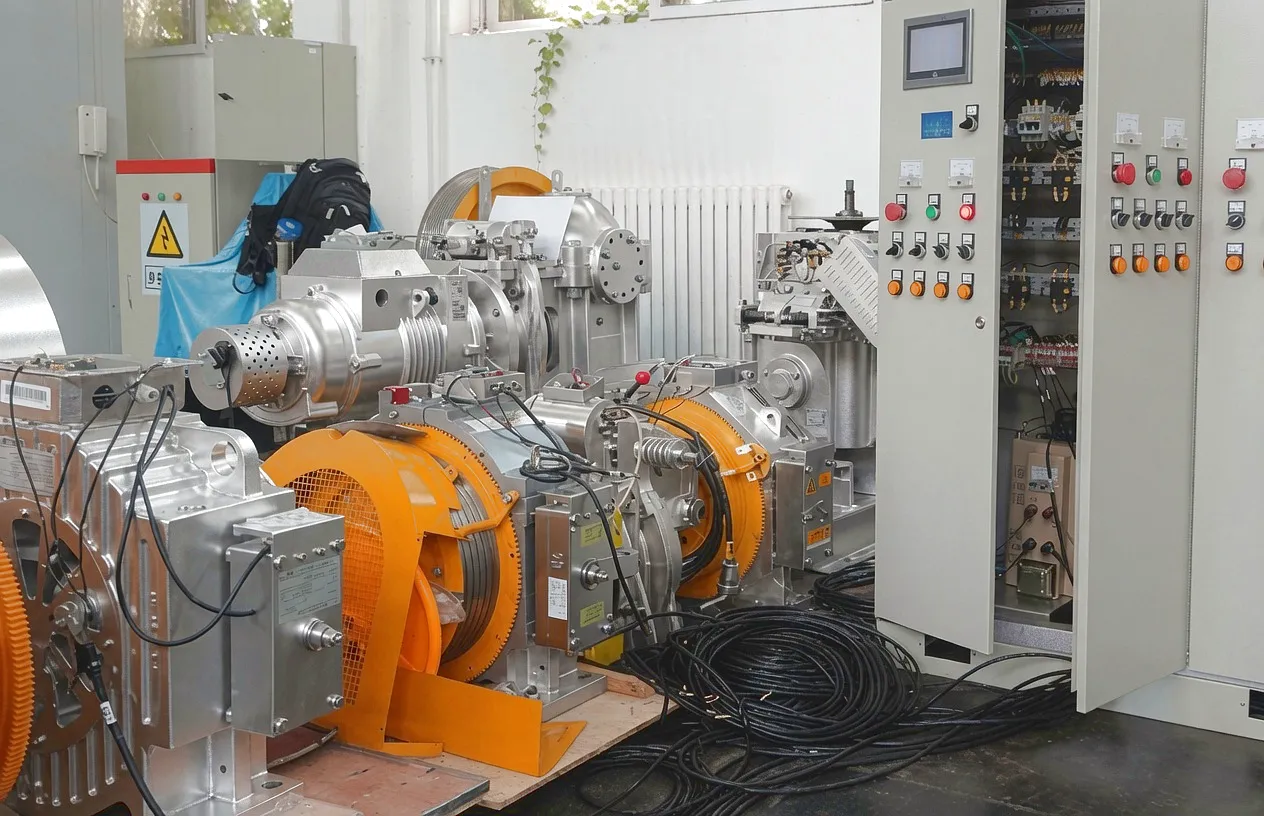
The term “elevator traction machine” covers a family of drivetrain configurations, and a single lift installation may use more than one gear coupling in different locations. Recognising all the coupling positions — not just the main motor-to-gearbox joint — is what separates an experienced lift engineer from one who will overlook a chronic failure point.
Motor-to-Gearbox Connection
The primary torque transmission joint, this coupling must handle full-load rated torque plus a transient peak of 200–220% during direct-on-line starts of induction motors. Drum-type GICL couplings with long barrel-crowned teeth are the preferred specification here due to their ability to absorb angular and parallel misalignment simultaneously without generating radial bearing loads.
Brake Drum or Brake Disc Shaft
EN 81-20 requires the safety brake to act on a rotating element positively connected to the traction sheave. Where the brake drum is on a secondary shaft connected via coupling, a rigid or semi-rigid gear coupling ensures the brake torque is transmitted without slip. Any backlash in the coupling here directly translates to roping slip during emergency stopping — a safety-critical parameter that regulatory inspectors verify during annual thorough examination.
Speed Governor Drive
Overspeed governors are typically driven by a separate rope from the car, but in some modern designs a shaft encoder or tachometer is driven via a small flexible coupling from the main traction shaft. This coupling must transmit speed accurately with minimal backlash while isolating the encoder from vibration and shock — conditions where NL-type nylon gear flexible couplings are well-suited.
Hydraulic Pump Drive (Hydraulic Lifts)
Hydraulic elevator power units use a gear coupling between the electric motor and hydraulic pump. The misalignment tolerance of a drum gear coupling is especially beneficial here because hydraulic pump shafts react to system pressure with a small bending moment that translates into shaft deflection — effectively creating continuous angular misalignment throughout the hydraulic pressure cycle.
Principle of Operation and Material Science
The operating principle of a gear coupling is elegantly simple, but the engineering behind it is anything but. Each hub carries an external set of involute teeth, while the sleeve carries a matching internal set. Torque is transmitted through the meshing tooth flanks; misalignment is accommodated by the rocking motion of the crowned hub teeth within the sleeve teeth — the same mechanism that allows a ball-and-socket joint to rotate in multiple planes simultaneously.
The critical material property that governs coupling longevity in elevator duty is surface hardness of the tooth flanks. Soft teeth wear rapidly under the combined action of contact stress and micro-slip during misalignment accommodation. Our hubs are carburised and case-hardened to 58–62 HRC at the tooth surface, with a tough 42CrMo4 core maintained at 260–310 HB to resist bending fatigue. This combination of hard case and tough core is the same principle used in aerospace gearbox teeth — applied here to an elevator-specific geometry.
The lubricant film between hub and sleeve teeth is equally important. EP (extreme pressure) grease with MoS2 additives forms a chemical boundary layer on the tooth flanks under high contact pressure, preventing adhesive wear even when micro-slip velocities are high during start transients. For sealed gear couplings — our preferred recommendation for MRL installations — this grease charge must last for the entire maintenance interval, which is why we specify grease quantity and NLGI grade to match the specific operating torque and speed of each application, rather than applying a generic fill.
Material Specification at a Glance
Manufacturing Facility & Custom Engineering Capability
Ever Power — Serving lift OEMs, consultants, and maintenance contractors across England, Scotland, and Wales
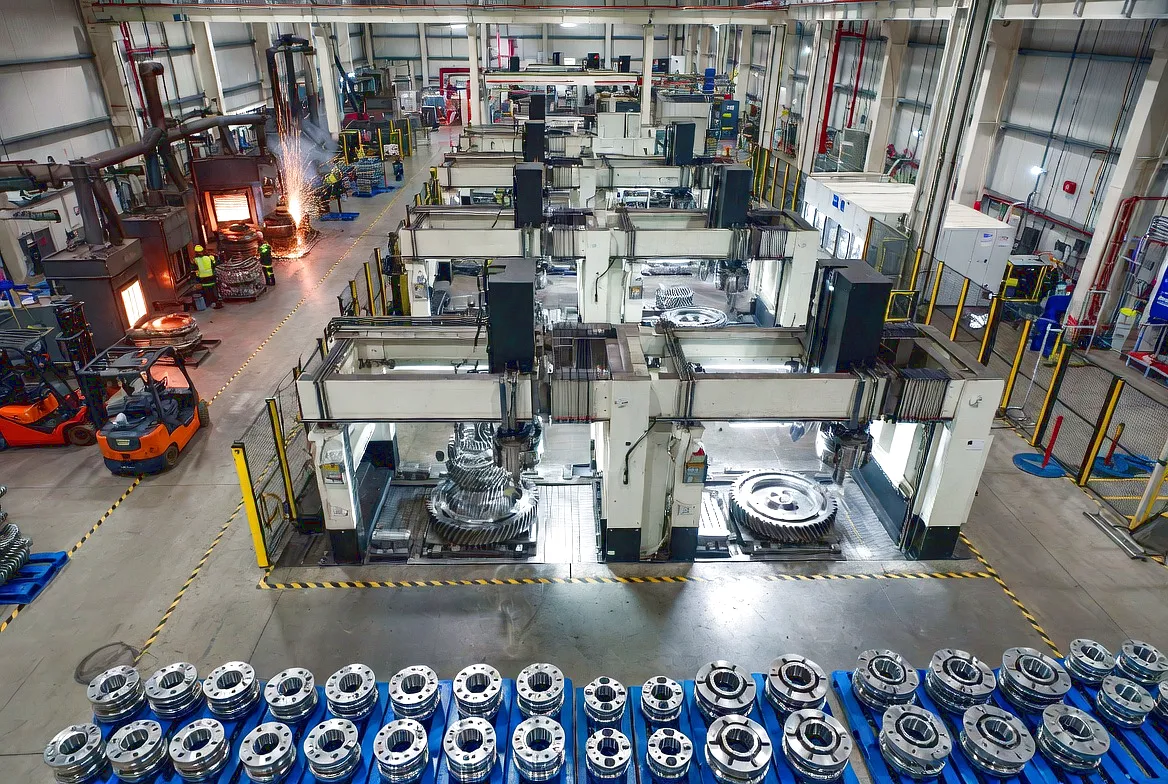
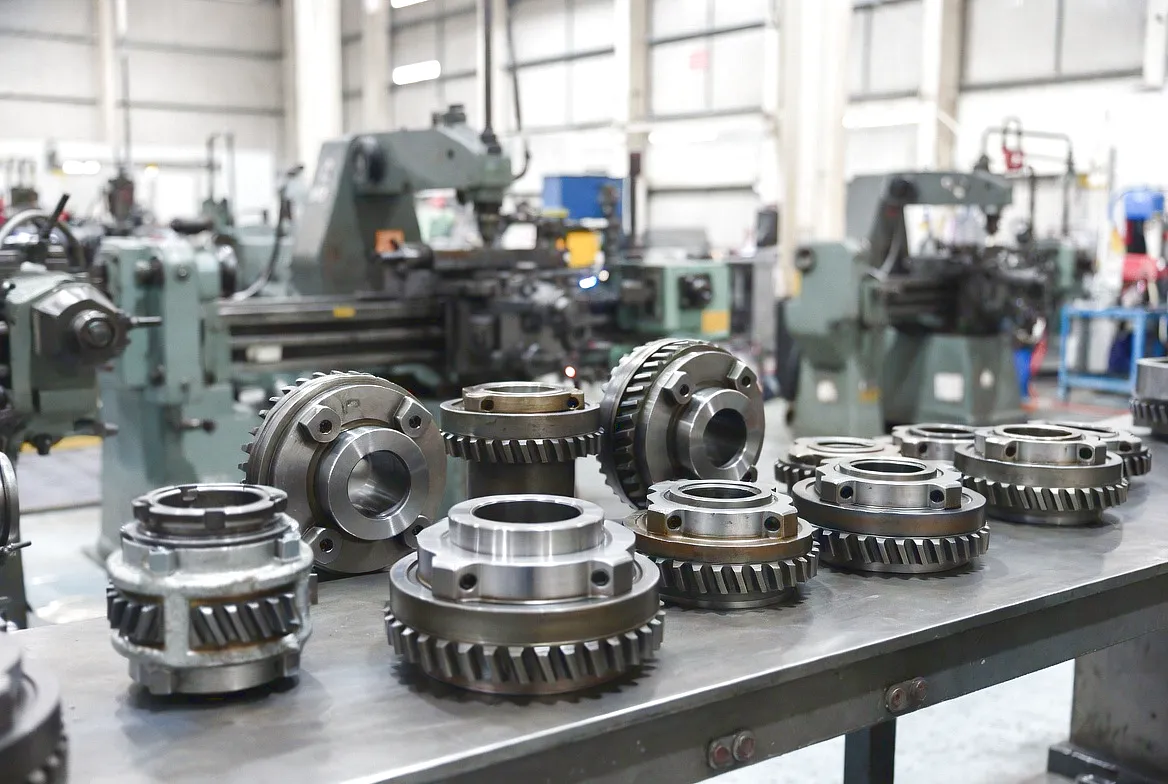 Our production facility houses over 60 CNC turning centres, gear hobbing machines, and grinding lines dedicated exclusively to coupling manufacture. The factory operates on a continuous production basis with a typical lead time of 7–14 working days for standard catalogue items and 3–6 weeks for custom-engineered designs. For UK lift projects where procurement timescales are tight, we maintain a stocked buffer of the most common elevator-grade bore and hub configurations, enabling same-week dispatch in many cases.
Custom engineering is not a sideline — it is central to what we do. Our application engineering team can work from customer shaft drawings, from worn or damaged original coupling samples, or from motor and gearbox nameplate data to specify the correct coupling geometry. We offer bespoke bore machining, non-standard keyway profiles, hydraulic interference fits, and special tooth modules for applications outside the standard catalogue range. Customers supplying to UK BS EN 81-20 and BS EN 81-50 standards can request material certification and dimensional inspection reports as part of the delivery documentation.
Custom Service Capabilities
Non-standard Keyways
Hydraulic Interference Fits
Dimensional Certification
OEM Retrofit Engineering
Special Tooth Modules
Split-Sleeve Designs
Material Traceability
Customer Success: West Midlands Mixed-Use Tower Modernisation
A real-world case from the UK lift modernisation market
14
Lifts Modernised
6 Weeks
Total Project Duration
Zero
Coupling Failures in 24 Months
EN 81-20
Compliant Delivery Documentation
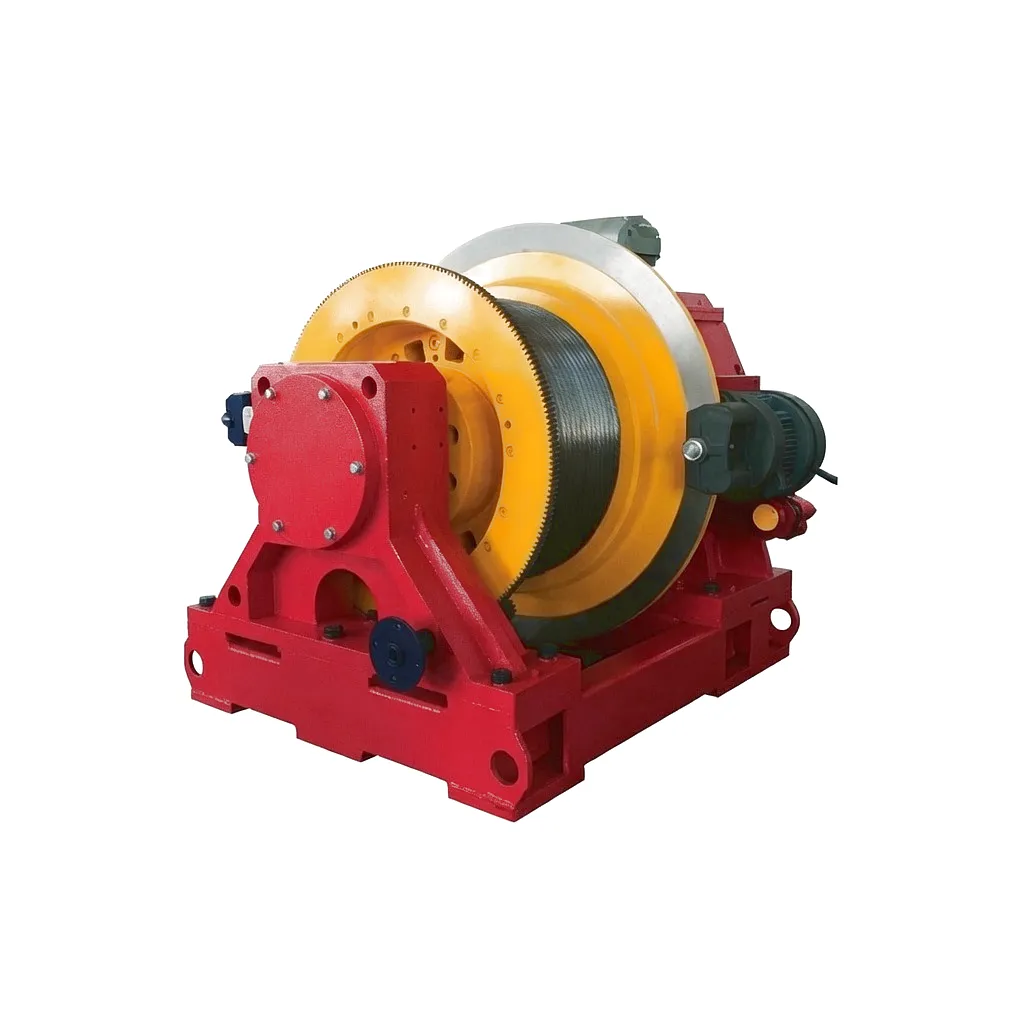 A Birmingham-based lift engineering contractor — Midland Vertical Solutions Ltd — was awarded a contract to modernise 14 passenger lifts in a 1980s mixed-use development in Wolverhampton. The original worm-gear traction machines had reached the end of their serviceable life, and the building owner required a phased replacement programme that would keep a minimum of ten lifts operational throughout the works. The replacement machines were sourced from three different European suppliers, resulting in three distinct motor-gearbox shaft configurations, none of which matched the original OEM coupling bores.
Ever Power’s application engineering team reviewed the shaft drawings for all three machine variants and produced custom-bored GICL medium-series couplings for each configuration within a standard 14-day delivery schedule. All couplings were supplied with dimensional inspection reports and material certificates traceable to individual heat numbers — documentation required by the building’s insurer. Twenty-four months post-installation, all 14 machines are in continuous service with zero coupling-related service calls recorded. The maintenance manager reported that elimination of the original coupling vibration issues also extended motor bearing life beyond prior projections.
What UK Engineers Say About Ever Power
“
We’ve been specifying Ever Power gear couplings for modernisation projects across the North West for four years. The custom bore service is the real differentiator — no more waiting six weeks for OEM spares. Documentation for EN 81-20 purposes is always complete on first delivery. Our engineers trust the product.
— James R., Senior Lift Engineer, Manchester
“
The split-sleeve GICL couplings made a significant difference on a recent hospital lift refurbishment project in Leeds. MRL machine rooms give you almost no axial working space, but the split sleeve meant we could pull the coupling apart without disturbing the motor or the gearbox. Saved us a full day’s labour per lift on a contract with thirteen units.
— Sarah T., Project Manager, Leeds
“
As a procurement manager sourcing for multiple UK construction projects, price is important but availability and reliability matter more. Ever Power’s 7-day stock response on standard elevator-grade couplings has pulled us out of programme delays on two occasions. The technical data sheets match the actual delivered dimensions — which should be obvious, but it isn’t universal in this market.
— David K., Procurement Manager, London
Ready to Specify the Right Gear Coupling for Your Elevator Project?
Whether you are designing a new installation, modernising an existing traction machine, or sourcing a replacement for a discontinued OEM coupling, our application engineering team is ready to support your project. We work directly with lift contractors, consulting engineers, and building owners across the United Kingdom.
Frequently Asked Questions
Answers to the questions UK lift engineers and procurement teams ask us most often
Ever Power Gear Couplings — UK B2B Supply
Specify with Confidence. Deliver on Schedule.
From standard catalogue couplings to fully custom-engineered elevator-grade assemblies, Ever Power has the product range, the application knowledge, and the delivery capability to support lift projects throughout the United Kingdom.
Get a Quote — gear-coupling.top
edit by gzl