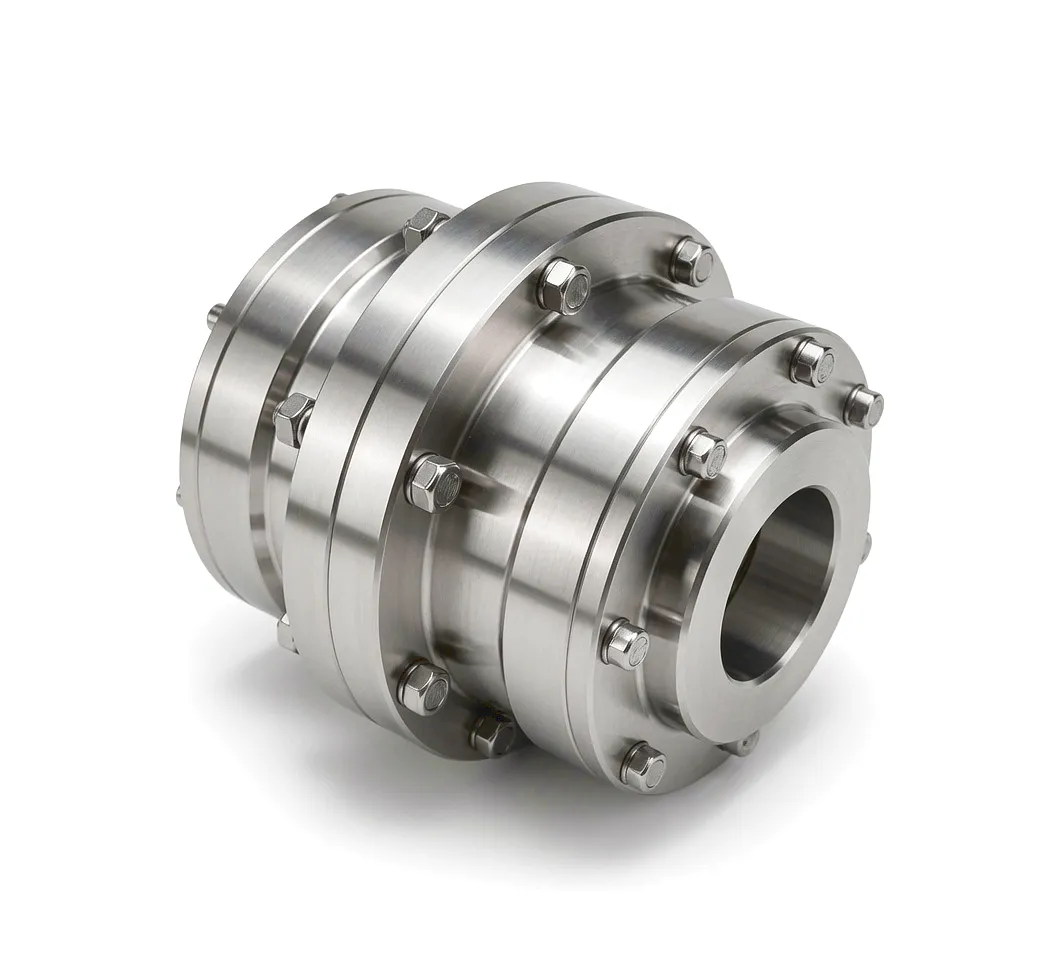
 Walk into any modern commercial building in London, Manchester, or Birmingham — the moment the lift doors close and the cab accelerates smoothly upwards, you are experiencing the result of hundreds of precision-engineered components working in concert. At the heart of that mechanical chain sits the elevator traction machine. And connecting its motor shaft to the drive sheave, quietly absorbing misalignment and torsional shock every single duty cycle, is a gear coupling that most people will never see, but whose failure would stop everything.
Gear couplings are not a new invention, but the demands placed on them inside modern traction machine assemblies have changed dramatically over the past two decades. The shift from classic worm-gear geared machines to high-speed permanent magnet synchronous motor (PMSM) drives, combined with ever-tighter EN 81-20 and EN 81-50 safety regulations in the United Kingdom, means that engineers and procurement teams now need a much deeper understanding of what a gear coupling actually does inside a traction machine — and why the specification matters far more than price.
How a Gear Coupling Works Inside an Elevator Traction Machine
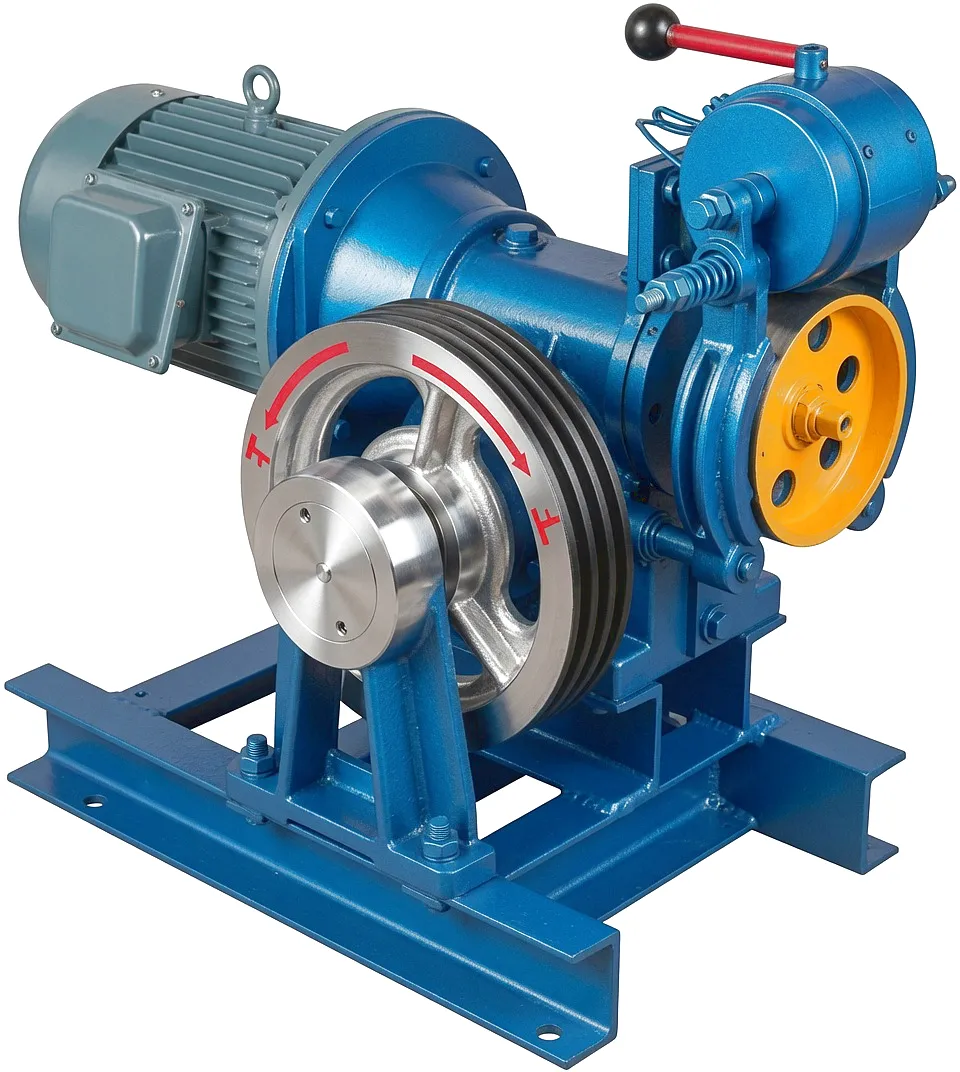
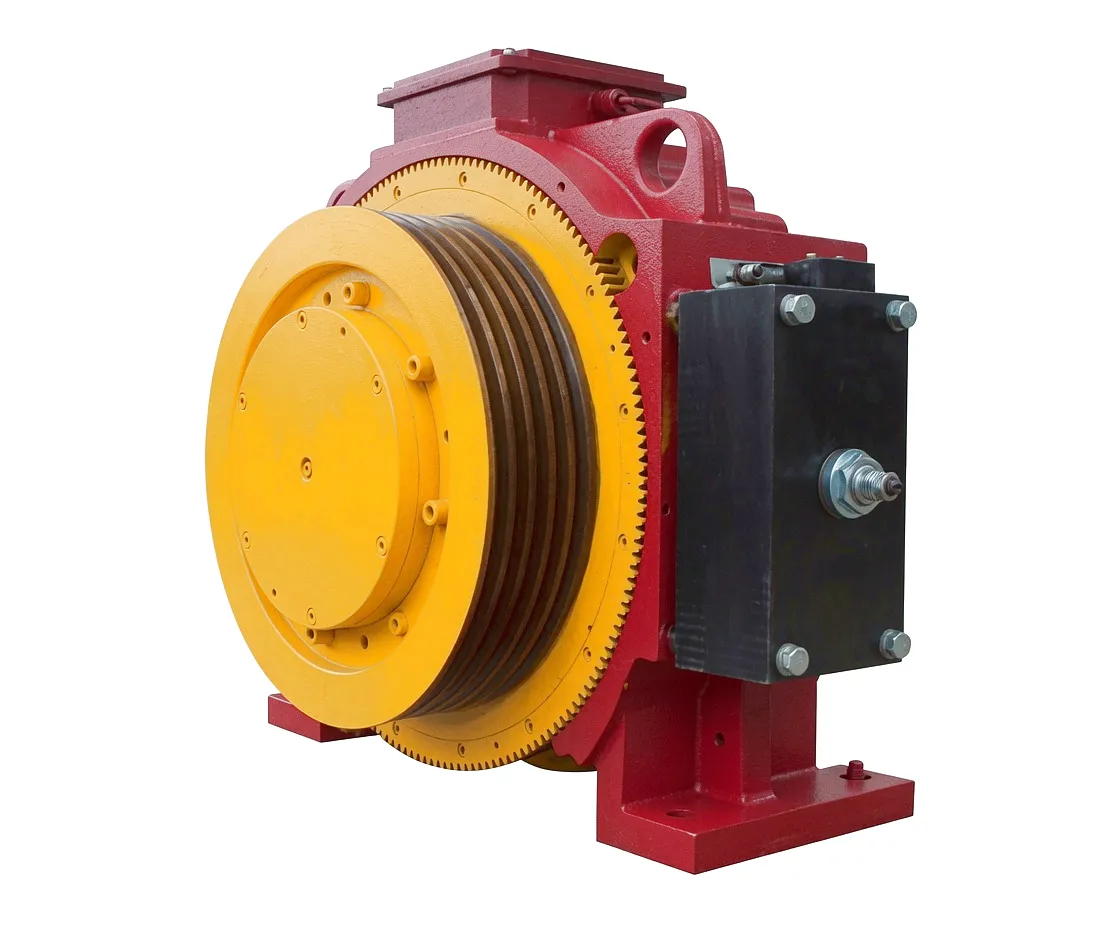
A traction machine works by friction — the steel wire ropes or polyurethane-coated flat belts wrap around a grooved sheave, and when the sheave rotates, the ropes move, raising or lowering the car. The electric motor — either a high-speed AC induction motor paired with a worm or helical gearbox, or a low-speed PMSM coupled directly to the sheave — must transfer its torque through a power-transmission interface that is almost never perfectly aligned. Shaft centrelines deviate due to manufacturing tolerances, thermal expansion during continuous duty, and foundation settlement over a building’s service life.
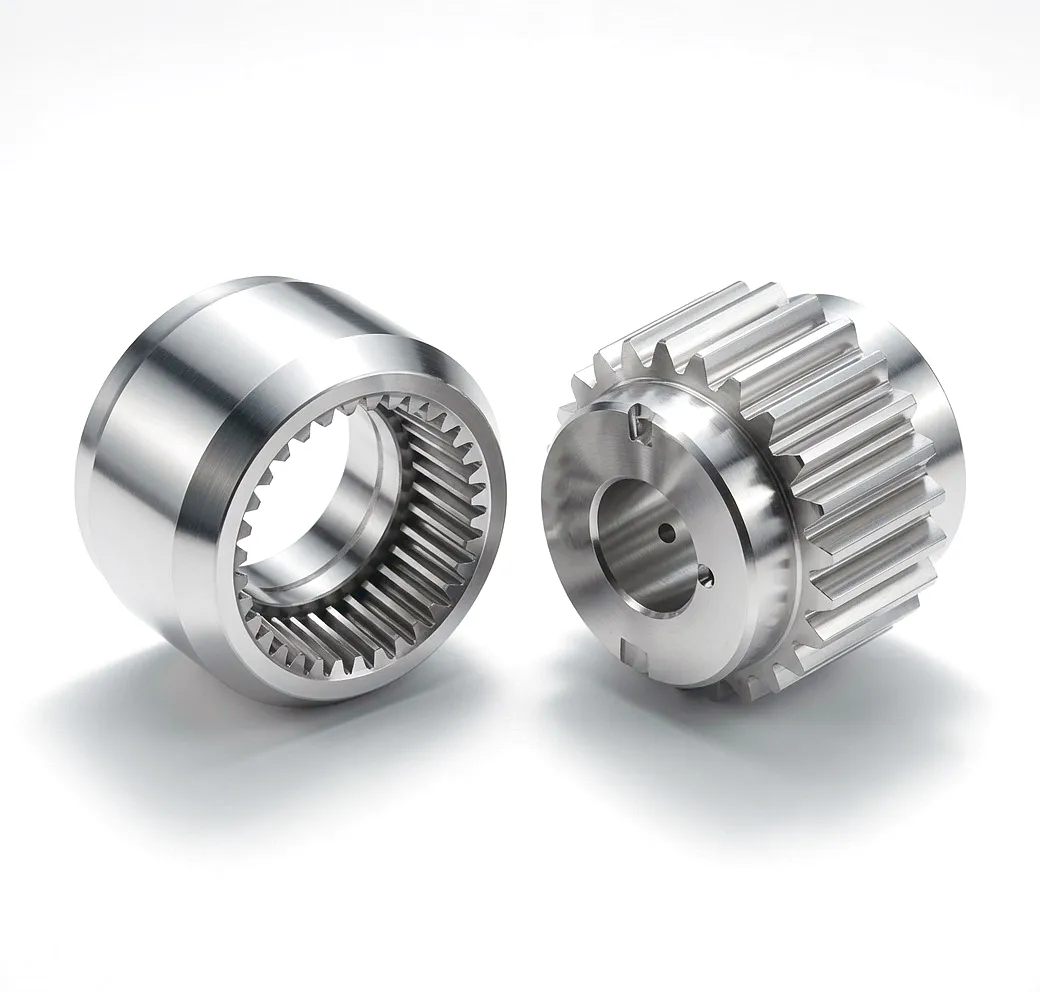
A drum-tooth gear coupling addresses all three misalignment types simultaneously: angular, parallel (radial), and axial. The inner hub teeth are cut with a crowned, barrel-shaped profile — hence the name “drum-tooth” — which allows the outer sleeve to rock slightly without generating the brutal edge-loading that a straight-tooth design would create. The result is a coupling that transmits full rated torque even when the motor and gearbox (or sheave) shafts are not perfectly colinear, which in practice they never are.
In a geared traction machine, the gear coupling typically sits between the motor output shaft and the worm gear or helical gear input, at the high-speed side of the drivetrain. This is actually the most demanding position in the whole assembly, because the torque may be relatively low but the speed is high — sometimes 1500 rpm or above — and any vibration amplification there gets magnified through the reduction ratio before it reaches the sheave and, ultimately, the passengers.
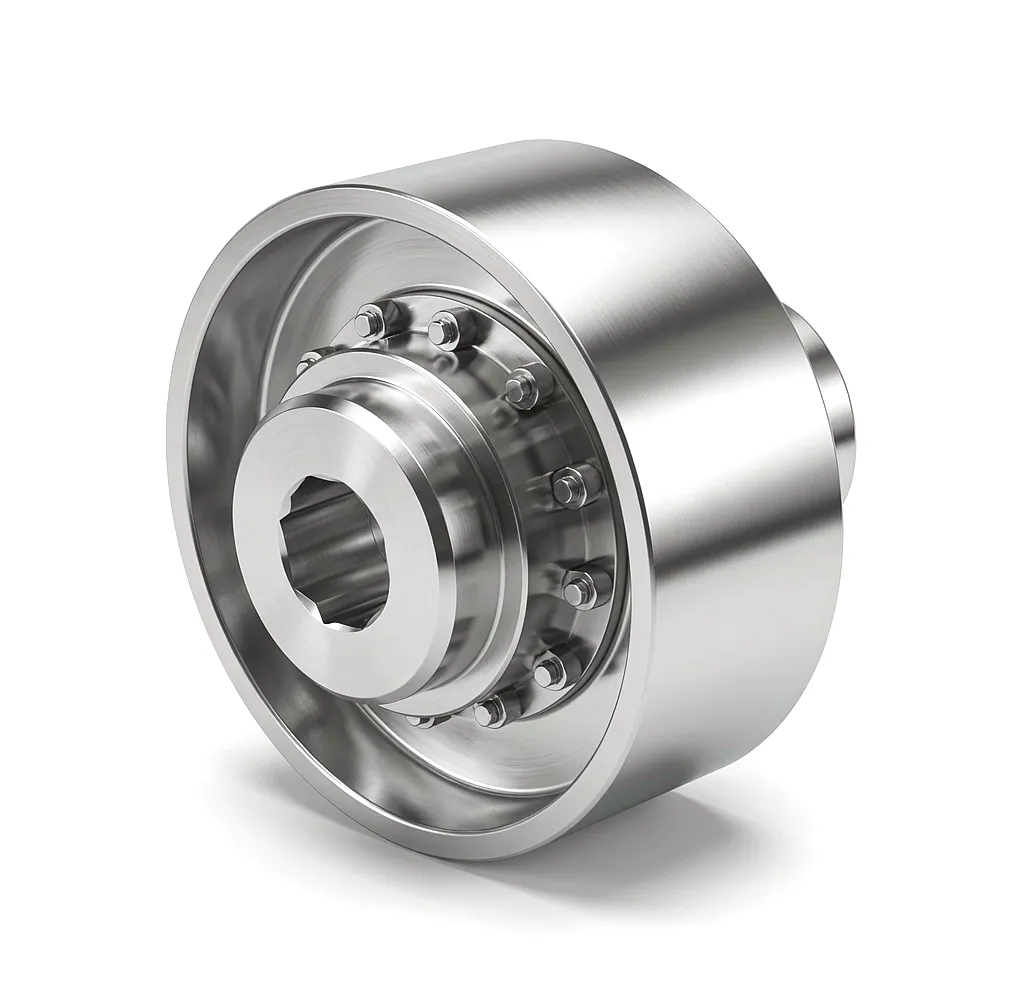
Key insight: The crowned tooth profile of a drum-tooth gear coupling reduces contact stress by up to 40% compared with a spur-tooth design under the same misalignment angle, extending seal and lubricant life by 2–3× in real-world traction machine environments.
Technical Performance Parameters — Drum-Tooth Gear Coupling for Elevator Traction
| Parameter | GICL Series | NGCL Series | NL Nylon Series |
|---|---|---|---|
| Rated Torque (N·m) | 250 – 500,000 | 630 – 710,000 | 25 – 5,000 |
| Max Speed (rpm) | 4,500 | 4,000 | 3,000 |
| Angular Misalignment | up to 1.5° | up to 1.5° | up to 1° |
| Radial Misalignment | up to 1.5 mm | up to 2.0 mm | up to 1.0 mm |
| Hub Material | 45# Steel / 40Cr | 45# Steel / Cast Iron | 45# Steel |
| Sleeve Material | 40Cr / 35SiMn | ZG310-570 Cast Steel | Engineering Nylon (PA6) |
| Tooth Hardness (HRC) | 40 – 50 | 38 – 48 | N/A (nylon element) |
| Lubrication | Grease (sealed) | Grease (sealed) | Lubrication-free |
| Operating Temperature | -30°C to +80°C | -30°C to +80°C | -20°C to +70°C |
| Typical Traction Application | High-rise / Industrial | Commercial / Mid-rise | Low-rise / Residential |
All values represent standard catalogue grades. Custom specifications — including non-standard bore sizes, keyway configurations, and surface treatments — are available on request.
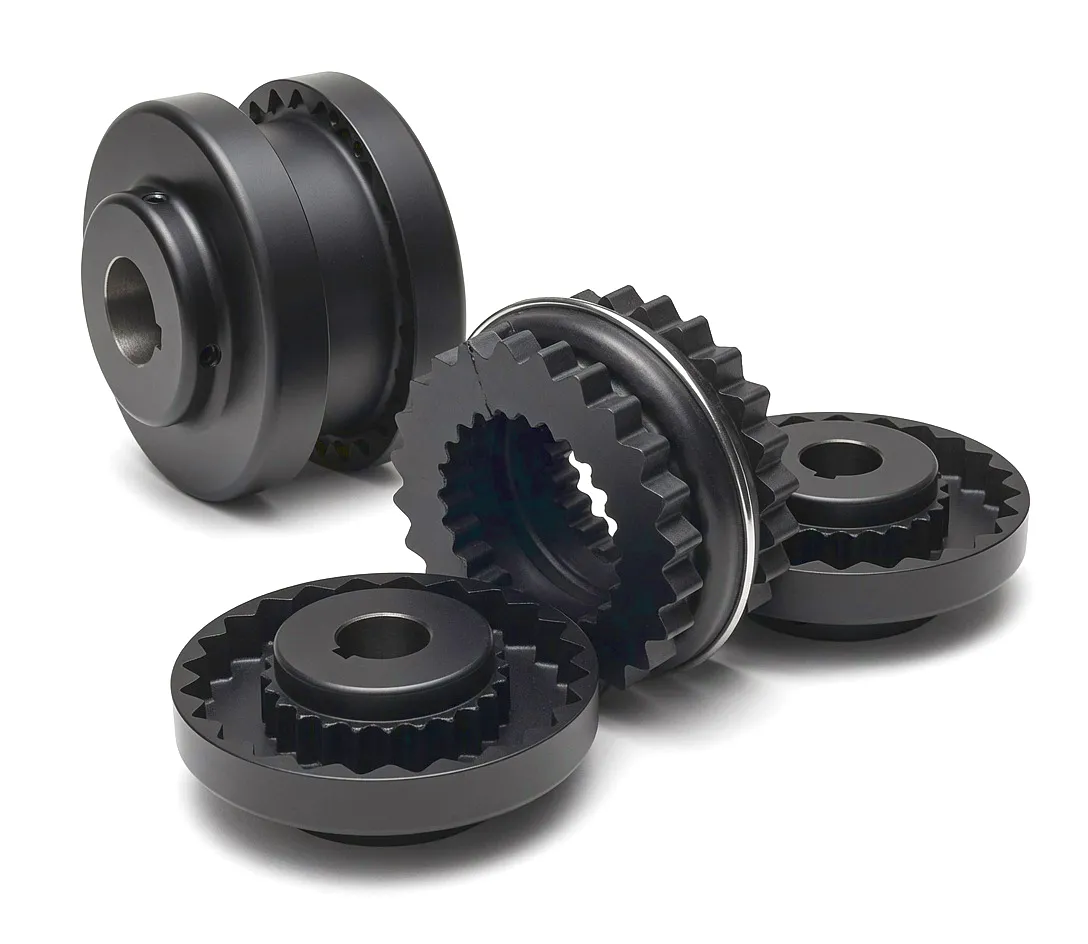
NL Nylon Gear Flexible Coupling
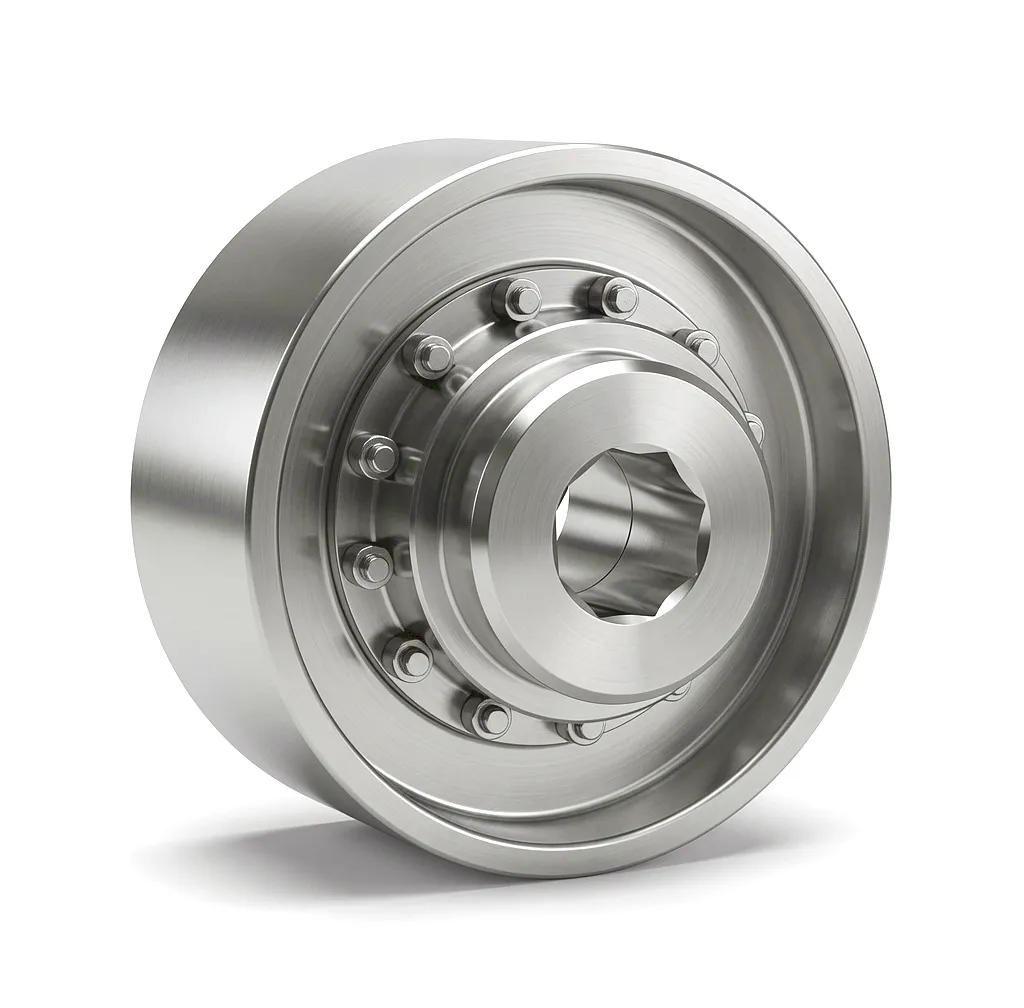
NGCL Series Drum-Shape Gear Coupling
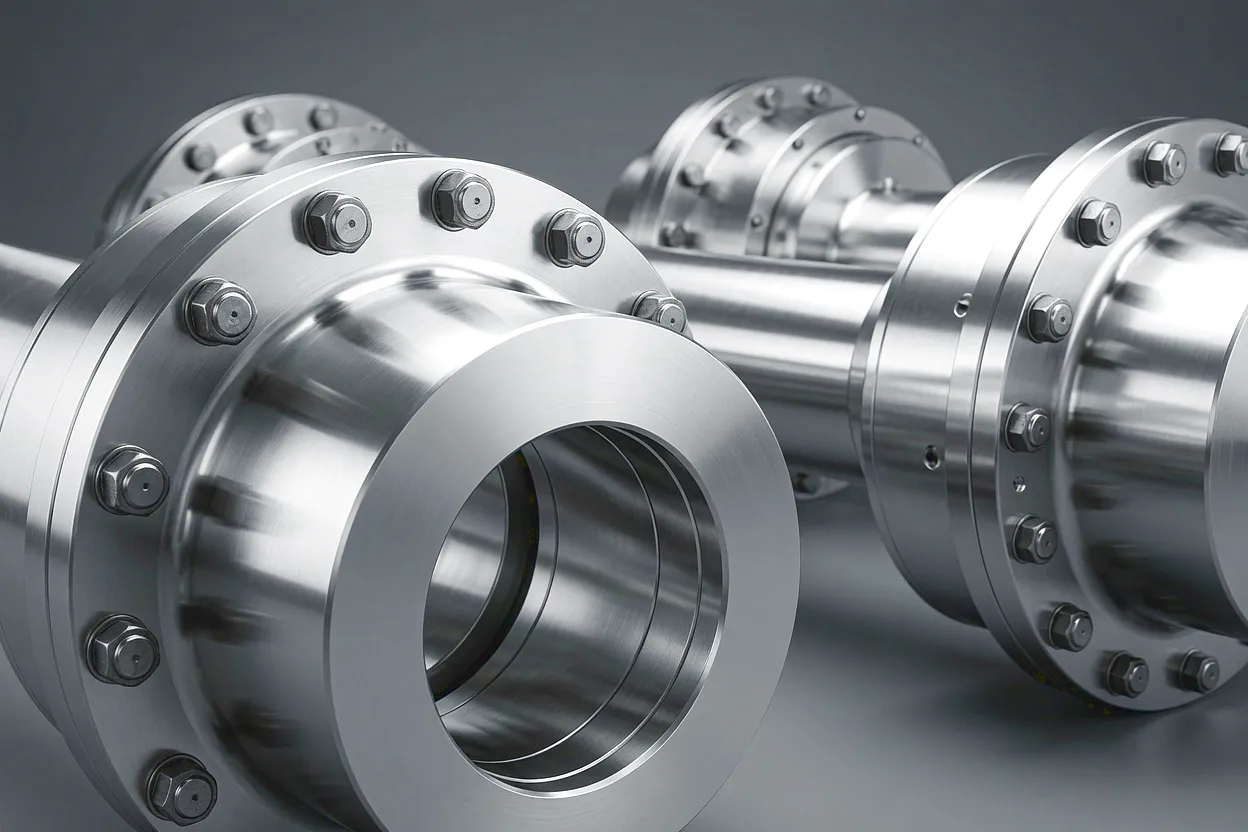
Precision Gear Coupling — Traction Series
Why Gear Coupling Choice is a Safety-Critical Decision in Elevator Engineering
The UK Lifting Operations and Lifting Equipment Regulations 1998 (LOLER) and the ongoing application of the Machinery Directive demand that every power-transmission component in a passenger lift is designed with an appropriate safety factor and be demonstrably maintained. When a gear coupling inside a traction machine fails — whether by tooth fracture, seal blowout, or lubricant starvation — the consequences are not confined to downtime. A sudden loss of coupling integrity can transmit catastrophic shock loads to the adjacent gearbox or brake assembly, potentially compromising the entire stopping mechanism.
Specifying a drum-tooth gear coupling with the correct torque rating, appropriate misalignment capacity, and verified material traceability is therefore an act of risk management as much as it is a mechanical engineering decision. Ever Power’s traction-machine grade gear couplings are manufactured to DIN 740 / GB/T 5272 standards and come with full material certificates and dimensional inspection reports, supporting both CE marking documentation for OEM elevator builders and spares-procurement audit trails for maintenance contractors working under BS EN 13015.
Torsional Damping
Crowned tooth geometry provides inherent torsional compliance, dampening the impulsive torque spikes generated at motor start-up and during regenerative braking in Variable Frequency Drive (VFD) controlled traction machines — reducing drivetrain fatigue by up to 35%.
Zero Backlash at Nominal Load
Under normal loaded conditions, the tooth flanks maintain full-width contact, delivering effectively zero lost motion. This is critical for elevator positioning accuracy, especially in floor-levelling systems where cab stopping errors of more than ±10 mm are unacceptable by UK building codes.
High Overload Tolerance
Short-duration overloads of 2× to 3× rated torque are routinely handled without permanent deformation, thanks to the large contact area across all engaged teeth simultaneously. This protects the gearbox from peak loads during emergency braking events — a common cause of costly drivetrain damage in ageing lift installations.
Low Noise & Vibration
Ground and hardened gear teeth, combined with precision dynamic balancing (G6.3 standard or better on request), keep airborne noise contributions below 65 dB(A) at 1500 rpm — consistent with the EN 12015 / EN 12016 electromagnetic compatibility and acoustic standards referenced in UK elevator specifications.
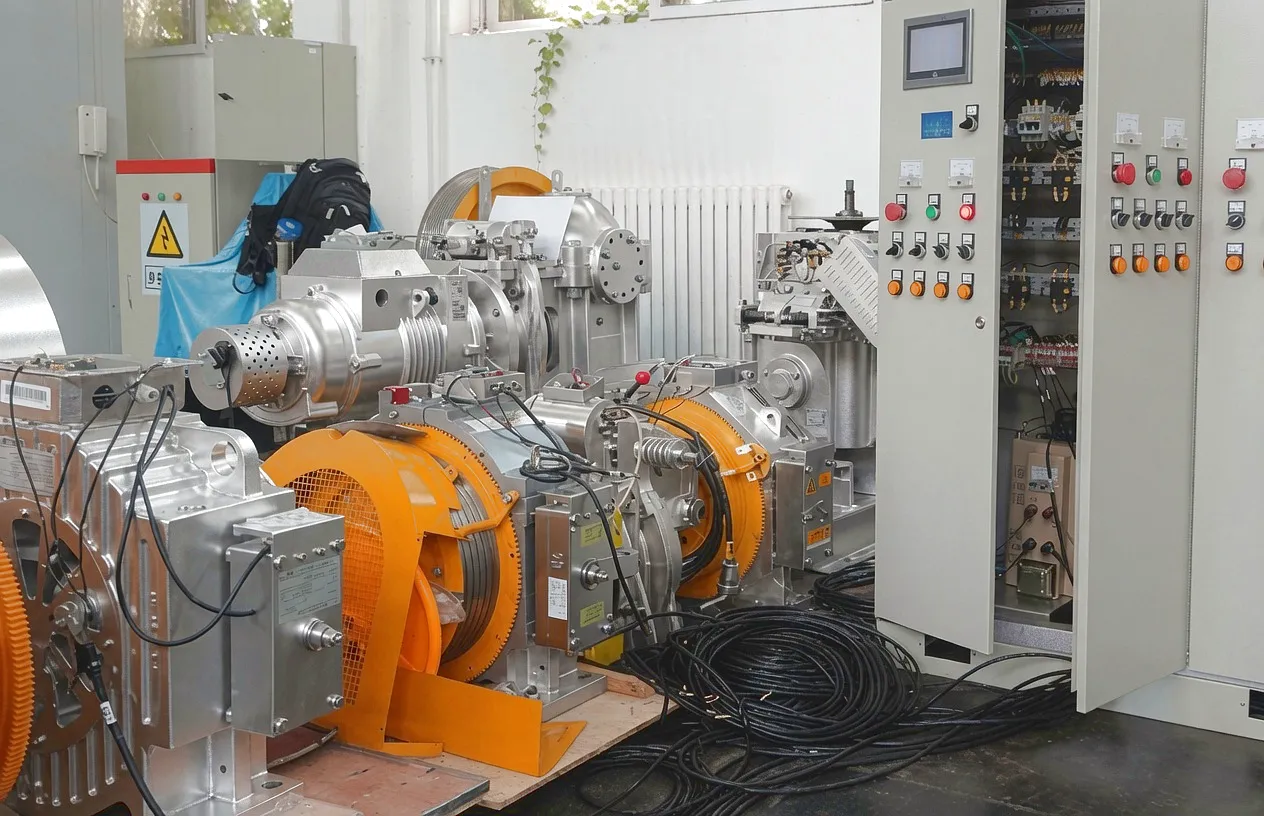
Geared vs. Gearless Traction Machines: Choosing the Right Gear Coupling
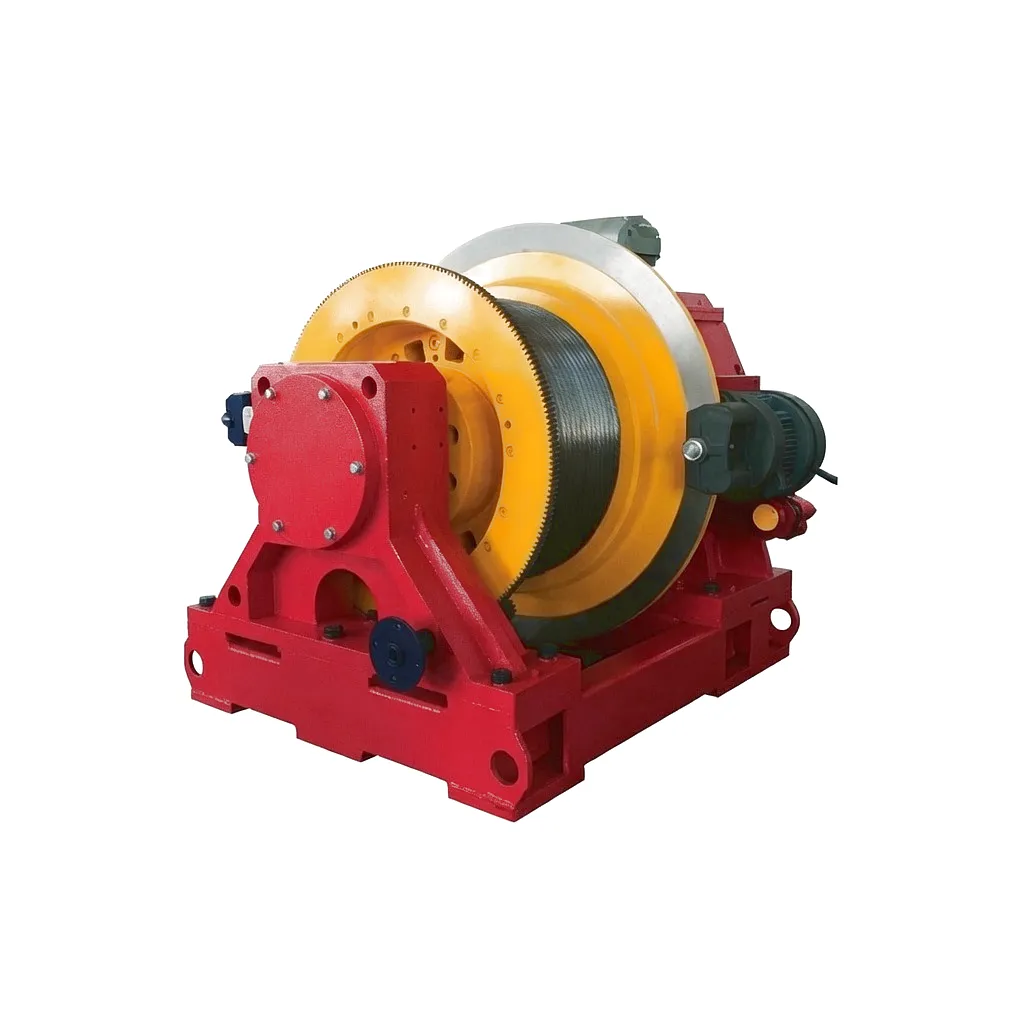
 The two main elevator traction architectures call for different coupling philosophies. In a geared machine — where a high-speed motor (typically 1000–1500 rpm) drives a worm gear or helical planetary gearbox — the coupling must handle relatively high speeds, moderate torques, and the duty-cycle shock loading associated with frequent starts and stops in multi-storey residential or commercial buildings. A GICL or NGCL drum-tooth gear coupling is the standard choice here, offering a combination of high speed rating and robust misalignment accommodation.
A gearless machine using a permanent magnet synchronous motor operates at very low shaft speeds — often 50–200 rpm — but must transmit substantially higher torques directly to the sheave. The coupling here is frequently less about speed and more about torsional stiffness and positional accuracy, since the PMSM’s encoder feedback loop depends on accurate torque transmission without wind-up. In retrofit or legacy gearless drives, a precision gear coupling with tight tooth tolerances and minimal backlash at zero load is specified to keep position error within the drive control’s compensation bandwidth.
| Criterion | Geared Traction Machine | Gearless PMSM Machine |
|---|---|---|
| Motor Speed Range | 800 – 1,500 rpm | 30 – 200 rpm |
| Coupling Priority | Speed + misalignment tolerance | Torque density + positional accuracy |
| Recommended Coupling | GICL / NGCL Drum-Tooth | Precision NGCL / Custom Low-Backlash |
| Lubrication Interval | 12 – 24 months | 24 – 36 months |
| Installation Context (UK) | Pre-2000 high-rise refurb, industrial | New build commercial & residential |
Materials, Heat Treatment, and Surface Finish
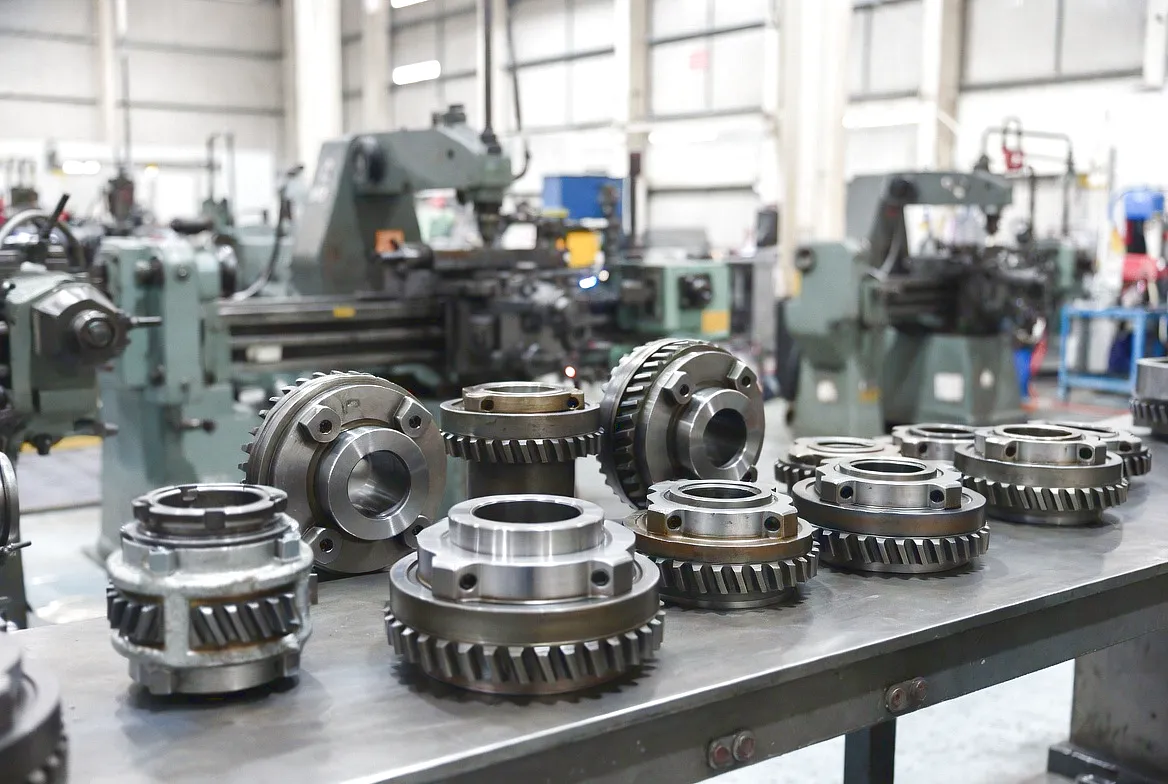
The performance ceiling of any gear coupling is set by its materials and how they are processed. For traction machine applications — where the coupling lives inside a machine room environment subject to occasional grease splash, varying humidity, and the temperature cycles of a motor that starts and stops hundreds of times per day — material selection is not trivial. Ever Power uses 45# carbon steel hubs for standard grades, with 40Cr alloy steel available for premium and high-cycle traction variants. Both grades undergo a normalisation and quench-and-temper cycle to achieve consistent core toughness before the gear teeth are hobbed and shaved.
The tooth flanks receive induction hardening to 40–50 HRC to a controlled case depth of 1.5–3.0 mm, with a ductile unhardened core retained to absorb shock. This case-hardened profile is what allows a gear coupling to handle both the fatigue loading of continuous duty cycles and the instantaneous overload peaks of a passenger car hitting an obstruction or an emergency stop. The outer sleeves for GICL and NGCL series are manufactured from ZG310-570 cast steel or forged 40Cr, with machined register fits to ensure coaxial assembly and minimise the residual imbalance that contributes to vibration in the machine room.
For installations where noise is a primary concern — premium residential blocks in London, for instance, where acoustic separation between the machine room and occupied floors is limited — Ever Power offers ground and lapped tooth finishes that reduce transmission error and associated noise by a measured 4–7 dB(A) compared with standard hobbed-only teeth. This is not a marketing claim; it reflects the physics of gear contact: smoother flanks produce less periodic excitation force and therefore less structure-borne noise propagated into the building fabric.
45# Carbon Steel Hubs
Good machinability, cost-effective, suitable for standard traction duty cycles up to 300,000 load reversals.
40Cr Alloy Steel
Superior fatigue resistance and depth hardenability. Specified for high-rise, high-frequency stop/start, and retrofit applications demanding L10 service life >80,000 hours.
PA6 Engineering Nylon
Used in NL-series for lighter-duty residential lifts. Self-lubricating, electrically isolating, and maintenance-free — ideal where grease contamination of a machine-room-less (MRL) shaft is unacceptable.
Elevator Traction Machine Applications Across the UK Built Environment
From the City of London’s commercial towers to industrial facilities across the Midlands — where each installation type demands a different coupling configuration.
Ever Power Manufacturing Capability & Custom Engineering Service
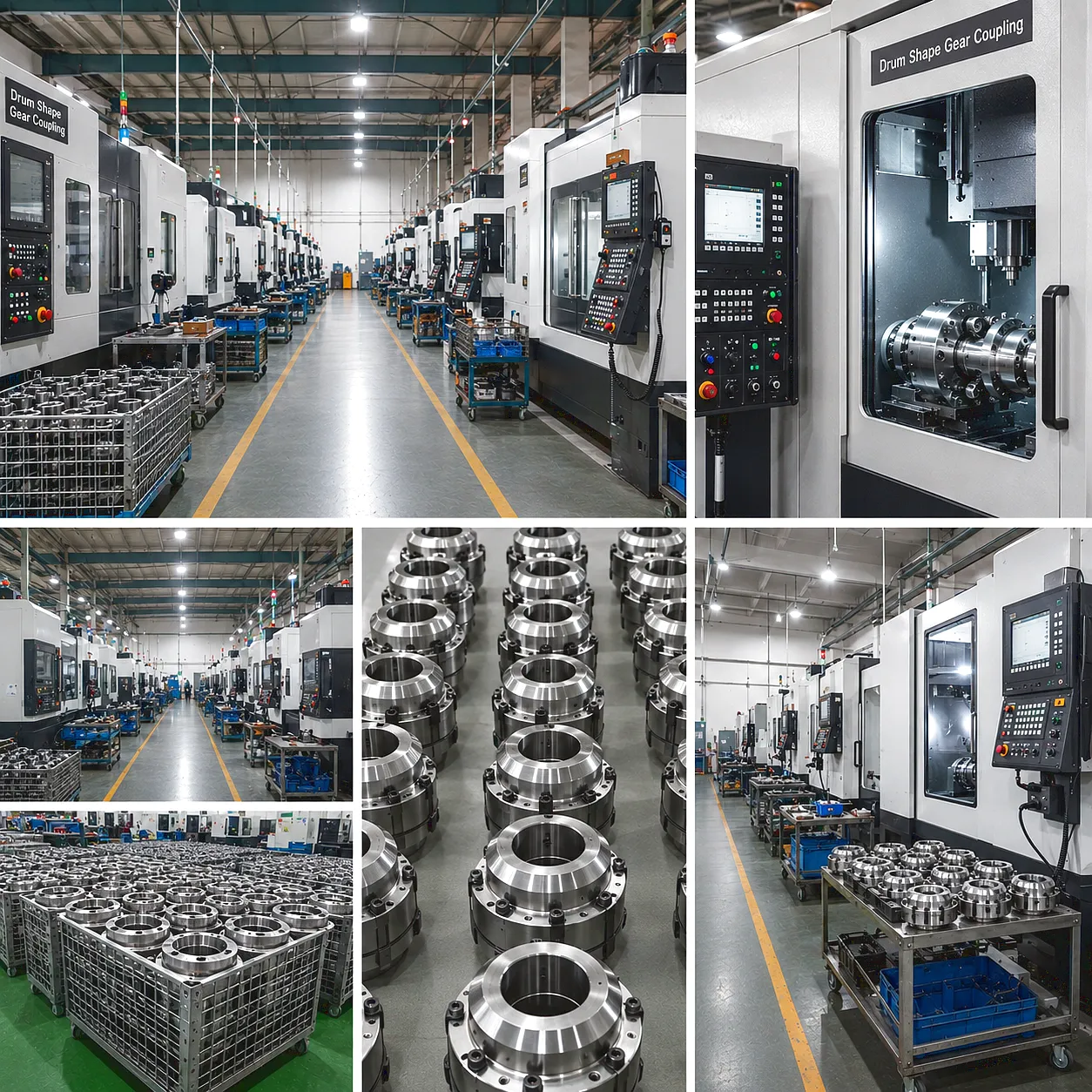
No two elevator installations are identical. The wide variety of motor flange configurations, gearbox input shaft diameters, and bore-keyway combinations across the installed base of traction machines in the United Kingdom means that off-the-shelf catalogue dimensions are a starting point, not an endpoint. Ever Power’s engineering team — drawing on 18 years of specialised gear coupling design and manufacture — offers a full bespoke machining service that covers non-standard bore and keyway profiles, custom flange bolt circles, modified outer sleeve lengths for tight axial envelopes, and special surface coatings (Ni-P plating, phosphate, or zinc-rich primer) for corrosive machine room environments in coastal UK installations.
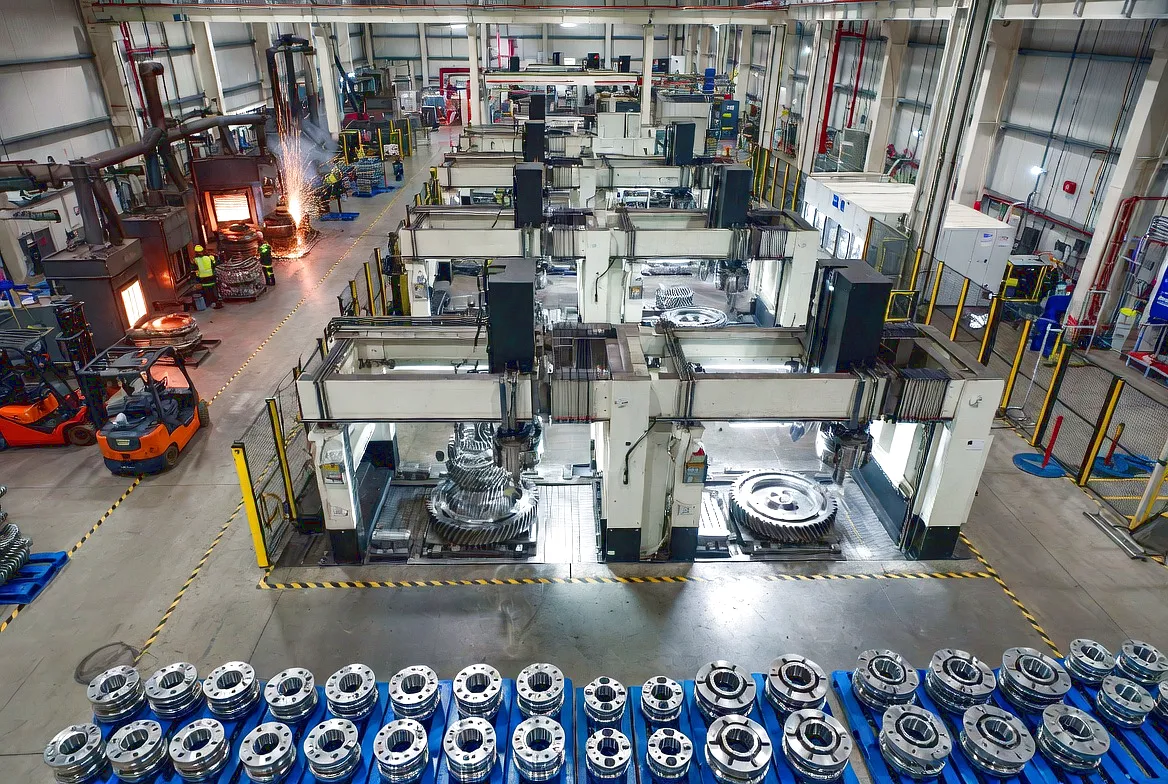
The factory operates five CNC turning centres, three gear-hobbing machines with gear-grinding capability, dedicated induction hardening cells with real-time case-depth monitoring, and a coordinate measuring machine (CMM) inspection bay. This vertical integration — from raw bar stock to finished, certified coupling — means lead times from drawing approval to shipment can be as short as 10 working days for small batches, with volume production for OEM elevator manufacturers or national maintenance contractors in 3–6 weeks.
Custom documentation packages, including material test certificates (EN 10204 3.1), dimensional inspection reports, gear-tooth measurement charts, and CE declaration of incorporation, are standard inclusions with every OEM or project order. For UK buyers under post-Brexit Conformity Assessed (UKCA) marking requirements, equivalent UK-format technical files are available on request.
Custom Capabilities at a Glance
Need a Custom Gear Coupling for Your Traction Machine Project?
Send your shaft dimensions, torque requirements, and installation drawings. Our application engineers will respond with a full technical proposal within 24 hours.
Customer Success — Canary Wharf Tower Refurbishment, London
 Background: A major London-based lift maintenance contractor was awarded a full drivetrain modernisation contract for a 32-storey commercial tower in the EC2 postcode, housing multiple financial services tenants. The existing traction machines — 12 units dating from the mid-1990s — used obsolete worm-gear drives with worn couplings that were generating audible clicking noise and vibrating at floor levels 3–8, directly above the machine room. Tenant noise complaints were threatening lease renewals.
What Our Clients Say
“We’ve been specifying Ever Power NGCL couplings on heavy freight lift refurbishments across the North West for four years. The lead time, documentation, and — most importantly — the service life are consistently excellent. No failures, no callbacks.”
James Hartley
Senior Engineer — Mechanical Services, Manchester-Based Lift OEM
“We needed custom-bore GICL couplings with split hubs for an in-situ replacement in a hospital bed-lift shaft where there was no way to remove the motor. Ever Power machined split-hub versions within two weeks and provided the UKCA documentation we needed to satisfy NHS Estates. Very impressive service.”
Rachel Patel
Procurement Manager — Healthcare Facilities Engineering, Birmingham NHS Trust Supplier
“Our residential development in Edinburgh had MRL gearless machines with noise issues traced back to direct metallic transmission at the motor-sheave interface. Switching to Ever Power’s NL nylon gear coupling eliminated the vibration signature completely and has been maintenance-free for 18 months since commissioning.”
Alistair McGregor
M&E Project Director — Edinburgh Residential Developer
Seven Reasons to Specify Ever Power Gear Couplings for Elevator Traction
1 Fully Traceable Materials
Every coupling ships with EN 10204 3.1 mill certificates covering chemical composition and mechanical properties — essential for UKCA-marked elevator assemblies and LOLER equipment records.
2 Long Maintenance Intervals
Sealed grease chambers with high-performance lithium-complex or synthetic grease retain lubrication for 24–36 months in normal elevator duty, reducing maintenance cost per lift per year by an average of 18% versus competitive designs.
3 Fast Custom Turnaround
Non-standard bores, split-hub configurations, and special coatings available with typical drawing-to-despatch times of 10–15 working days — critical for project schedules where a machine room sits offline and building operations are disrupted.
4 Competitive OEM Pricing
Direct-from-manufacturer supply eliminates distribution markups. UK buyers consistently report landed-cost savings of 20–35% versus European-branded equivalents, with no compromise on quality or documentation. Volume pricing available for fleet and framework contracts.
5 Noise Reduction Engineering
Ground-and-lapped tooth finish option reduces transmission error by up to 60% versus standard hobbed teeth, delivering measurable noise reductions in residential and hotel buildings where acoustic comfort is a key tenant or guest requirement.
6 Wide Torque Range
From compact NL nylon couplings for 400 kg residential MRL machines right through to heavy NGCL units for 10,000 kg car park and goods hoists — the full product range covers every traction machine size commonly encountered in the UK lift market.
7 Technical Application Support
Free pre-order coupling selection service: submit your motor power, rated speed, service factor, and shaft diameters and our engineers will confirm the correct series, size, and grade — reducing specification errors that result in costly returns and project delays.
Frequently Asked Questions
Real questions from UK lift engineers, OEM procurement teams, and building services professionals.
Ready to Source Gear Couplings for Your Elevator Traction Machine Project in the UK?
Whether you need standard catalogue units for a fast turnaround, custom-bore sizes for a specific motor-gearbox combination, or technical support selecting the right coupling series — Ever Power’s application engineering team is ready to help. Email us your specification today.
Get a Quote — gear-coupling.top
24-hour quotation response · Custom bores 10–15 working days · UKCA/CE documentation included · UK freight from stock
© Ever Power Gear Coupling · Specialist Supplier to the UK Elevator & Lift Industry · gear-coupling.top
edit by gzl