
 Walk into any UK steel plant, container terminal or major construction site and you will hear it before you see it — the low rumble of overhead cranes shifting multi-tonne loads with steady, mechanical certainty. What most visitors never notice is the compact cylindrical component buried deep inside each drive unit: the gear coupling. Without it, no amount of motor power translates reliably into hoist movement. Yet despite sitting at the very heart of crane drivetrains, the gear coupling is frequently overlooked until something goes wrong. This guide changes that.
Drawing on over 18 years of hands-on application engineering across bridging cranes, gantry cranes, tower cranes and marine-grade floating cranes, this article walks through exactly why a quality drum-type gear coupling is indispensable, how it works under extreme loading cycles, and what specifications matter most when you are sourcing replacements or designing new drivetrain assemblies for UK and international crane projects.
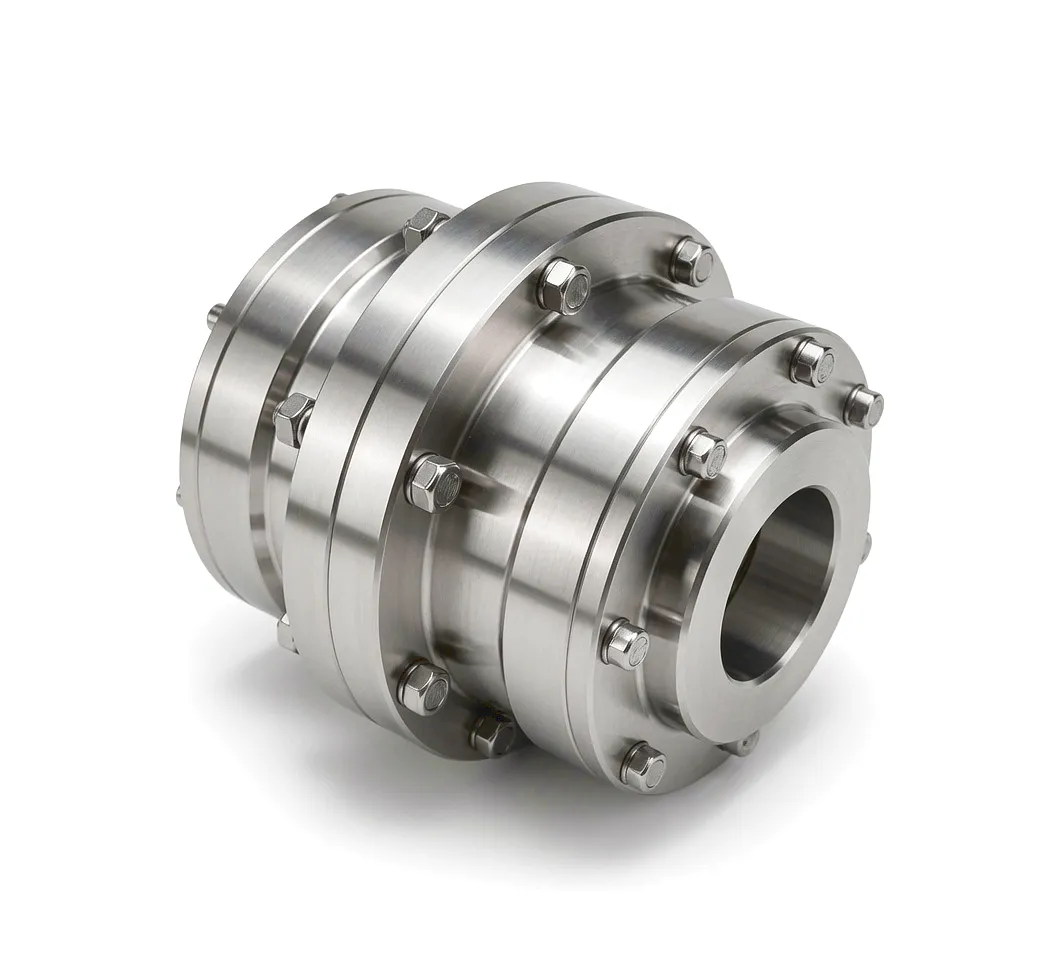
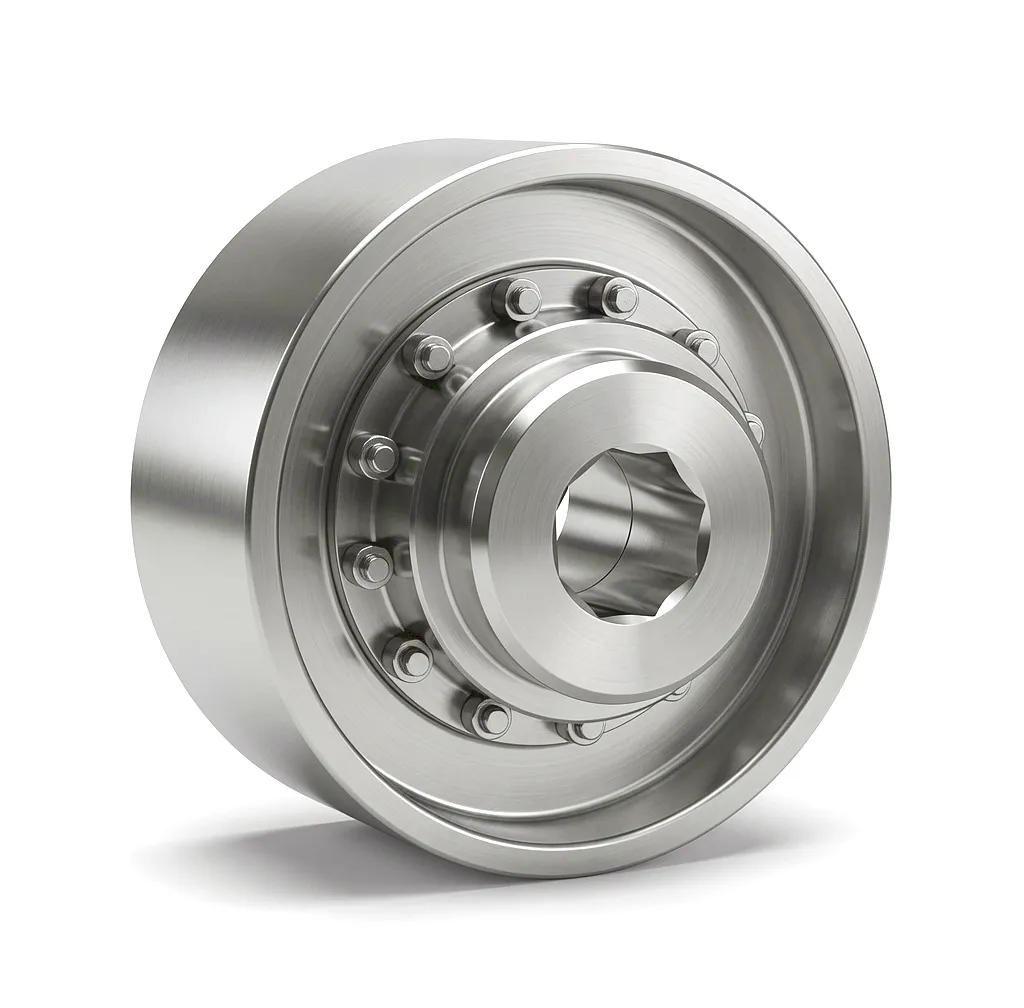
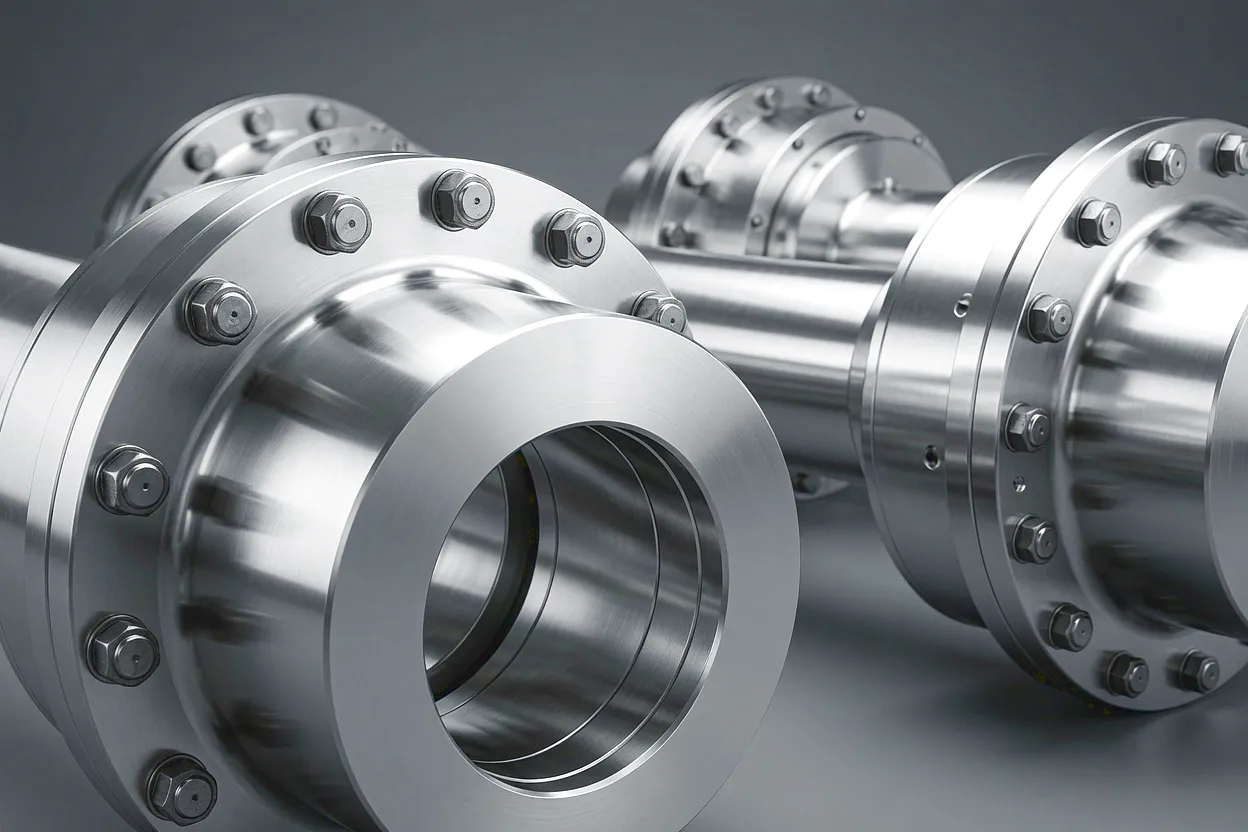
GICL Series Drum-Shape Gear Coupling — designed for high-torque crane hoist and travel mechanisms
What a Gear Coupling Actually Does in a Crane Drivetrain
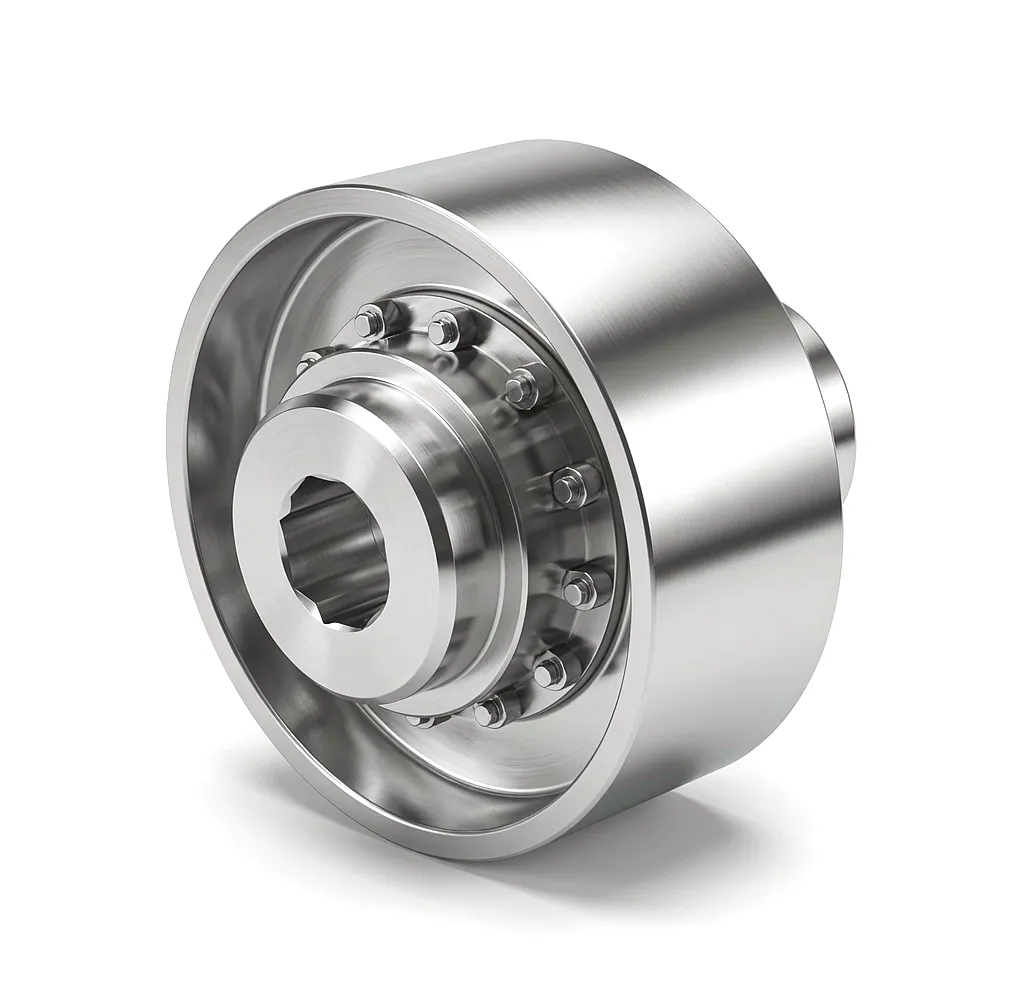 A gear coupling connects two rotating shafts — typically the output shaft of an electric motor to the input shaft of a gearbox reducer — and transmits torque while accommodating a degree of radial, angular and axial misalignment between those shafts. In a crane context, that misalignment is not theoretical. Structural deflection under load, thermal expansion of the crane bridge girder in a hot rolling mill environment, and incremental wear in journal bearings all guarantee that perfect shaft alignment cannot be maintained throughout a crane’s service life. The gear coupling absorbs these deviations without transmitting bending moments back into the motor or gearbox bearings.
The drum-type (crowned-tooth) design is the dominant choice for crane applications. Unlike straight-toothed gear couplings, the teeth in a drum coupling have a convex, barrel-shaped profile — which is where the “drum” name originates. This crowning allows the outer sleeve to articulate freely around the inner hub at angles up to 1.5°–2° per mesh without producing sharp stress concentrations at the tooth edges. In a bridging overhead crane making hundreds of start-stop cycles per shift, that rotational freedom is the difference between a coupling that lasts a decade and one that fails in months.
Three Mechanisms Working Together
The coupling achieves its function through three simultaneous mechanisms. Torque transmission occurs through the meshed teeth of the inner hub and outer sleeve, with contact stress distributed along the crowned tooth face. Misalignment absorption happens as the crowned teeth allow the sleeve to pivot relative to the hub. Axial float, often overlooked but critical in long bridge-girder cranes where thermal expansion can shift shaft positions by several millimetres, is accommodated by axial sliding within the engagement zone.
On large gantry cranes operating in UK port environments — where salt-laden marine air accelerates surface corrosion — the housing material and sealing arrangement become equally important performance parameters, not just the tooth geometry.
Four Crane Mechanisms Where Gear Couplings Are Mission-Critical
Every crane — whether it is a 10-tonne overhead bridge crane in a Scottish fabrication workshop or a 200-tonne portal crane at the Port of Felixstowe — relies on combinations of four fundamental drive mechanisms. Each mechanism places distinct demands on the couplings within it, and understanding those demands is essential for correct product selection.
Hoist Mechanism
The hoist mechanism raises and lowers the load via a drum and wire rope assembly. Coupling duty is the hardest here: shock loads at lift-off can be 2–3× rated torque. Drum-type gear couplings with high dynamic load capacity and rated for M5–M8 duty classes (ISO 4301) are standard practice on UK industrial cranes handling steel coils or precast concrete elements.
Long Travel (Bridge Travel)
The long-travel mechanism drives the whole crane bridge along the runway rails. Misalignment is the dominant concern — a 40-metre bridge girder flexes measurably under load, and the driven-end and non-driven-end wheels must track identical rail heads that may not be perfectly level. Angular misalignment tolerance up to 1.5° per coupling mesh is the design baseline.
Cross Travel (Trolley Travel)
The crab trolley traverses across the bridge girder. Cycle frequency is high — in automated warehouse cranes and steel-processing lines, trolley travel makes thousands of positioning moves per shift. Compact coupling dimensions and low added inertia are priorities alongside reliable torque transmission, because every gram of rotating inertia affects positioning accuracy and motor energy draw.
Slewing Mechanism
Jib cranes, tower cranes and floating cranes rotate their upper structure through slewing rings. Slewing drive trains generate large centrifugal forces and encounter significant torsional reversals each time rotation direction changes. A gear coupling here must be rated for bidirectional torque, and the teeth must be lubricated in a configuration that maintains film thickness even when operating at shallow angular velocities for extended periods.
Gear Coupling Performance Specifications for Crane Applications
The table below summarises key performance parameters for Ever Power’s GICL and NGCL series drum-type gear couplings as applied to crane drive systems. Specifications reflect standard catalogue values; custom configurations are available for projects with non-standard torque, bore, or environmental requirements — contact our engineering team for a tailored data sheet.
| Parameter | GICL Series | NGCL Series | Unit |
|---|---|---|---|
| Rated Torque (Tn) | 630 – 1,000,000 | 630 – 1,600,000 | N·m |
| Max Shaft Bore | Up to Ø300 | Up to Ø360 | mm |
| Max Speed (n) | up to 3000 | up to 2500 | rpm |
| Angular Misalignment | ≤ 1.5° | ≤ 1.5° | deg / mesh |
| Radial Misalignment | ≤ 1.5 mm | ≤ 1.5 mm | mm |
| Tooth Profile | Crowned (drum) | Crowned (drum) | — |
| Hub Material | 45# / 40Cr Alloy Steel | 45# / 40Cr Alloy Steel | — |
| Surface Treatment | Quenching & Tempering | Quenching & Tempering | — |
| Tooth Hardness | HB 241 – 286 | HB 241 – 286 | Brinell |
| Working Temperature | -20°C to +70°C | -20°C to +70°C | °C |
* All values are indicative. Custom high-temperature, corrosion-resistant, or explosion-proof variants are available on request.
What Goes Into a Crane-Grade Gear Coupling
Hub & Sleeve: Alloy Steel
The inner hubs and outer sleeves are machined from 45# or 40Cr alloy steel bar stock, then subjected to quenching and tempering heat treatment to achieve a final Brinell hardness of 241–286 HB. This combination gives the material adequate toughness to absorb the shock loads generated when a crane picks up a dangling load off the workshop floor — without the brittleness that comes with higher hardness grades that would crack under cyclic impact.
Crowned Tooth Geometry
The gear tooth crown radius is precision-ground using CNC gear-grinding machines, holding a tooth profile accuracy of AGMA Class 8 or better. This is not merely a manufacturing checkpoint — the consistency of the crown radius across every tooth directly controls how evenly load is distributed under misalignment conditions. Uneven load sharing leads to premature pitting on a small number of overloaded teeth, which is the root cause of most in-service gear coupling failures in crane hoists.
Sealing & Lubrication
Lubricant retention is managed through a cast-iron housing with precision O-ring grooves and, on larger sizes, labyrinth seals that prevent grease leakage under centrifugal action. For UK port and offshore environments, optional nitrile or Viton seals are available to resist contamination from salt water and hydraulic fluid. The lubrication cavity is sized to hold enough high-viscosity gear grease (NLGI 1 or 2) to service the teeth for intervals up to 6,000 operating hours under normal crane duty.
 Why a Floating Shaft Version Matters
On long-span overhead crane bridge drives — where the motor and gearbox may be separated by a substantial distance — a floating intermediate shaft with gear couplings at both ends eliminates the need for precision alignment between the two machines. The system accommodates parallel offset arising from thermal growth or structural deflection without generating radial bearing forces that would otherwise cause premature bearing failure. This arrangement is standard practice on UK steel works overhead cranes where the driving-end motor temperature in the summer can push ambient conditions to 50°C and structural thermal expansion is significant.
Six Reasons Crane Engineers Specify Drum-Type Gear Couplings
After years of specifying and replacing drive couplings across port handling equipment, steel-plant overhead cranes, and offshore floating cranes, these are the performance attributes that consistently determine field success:
High Torque-to-Size Ratio
Because the drive surface is an external gear mesh rather than a friction interface or elastomeric element, gear couplings transmit very high torques from a compact envelope. A 250 mm outside-diameter gear coupling can handle rated torques that would require a much bulkier jaw or grid coupling to achieve.
Zero Elastomeric Degradation
Unlike rubber-insert couplings, there is no elastic element to harden, crack, or creep under sustained thermal or chemical exposure. In steel plant environments where ambient heat is high and oil mist is present, this is a decisive advantage — the coupling performance is stable and predictable from installation to overhaul.
Excellent Shock Absorption
The multiple tooth contacts sharing load simultaneously give the gear coupling a high momentary overload capacity — typically 2–2.5 times rated torque for brief peaks. On a hoist mechanism, the inertia of a suddenly-arrested load or an abrupt emergency stop produces exactly this kind of torque spike, and the coupling must survive it without plastic deformation.
Misalignment Tolerance
Angular misalignment up to 1.5° per mesh and radial offset up to 1.5 mm are accommodated without generating significant restorative forces. This loosens the alignment tolerances the installation team must achieve, reducing commissioning time and extending service intervals on installations where perfect alignment is impractical to maintain.
Bi-Directional Performance
All crane drive mechanisms require bidirectional rotation for normal operation. Drum gear couplings transmit equal rated torque in both directions without any modification, making them the natural selection for bridge travel, trolley travel and slewing mechanisms that reverse repeatedly throughout the working day.
Long Service Life
With adequate lubrication maintenance intervals — typically every 6,000 to 8,000 operating hours for crane duty — a correctly specified drum gear coupling routinely achieves service lives exceeding 10 years in overhead crane hoists. This reduces total life-cycle cost substantially compared with elastomeric couplings that must be replaced every 2–4 years.
Crane Types That Rely on Gear Couplings Across the UK and Beyond
From traditional fabrication shop overhead cranes to modern automated high-bay warehouse systems, gear couplings appear in virtually every crane type encountered in UK industrial practice. Here is how the requirements vary by crane category and what that means for coupling selection:
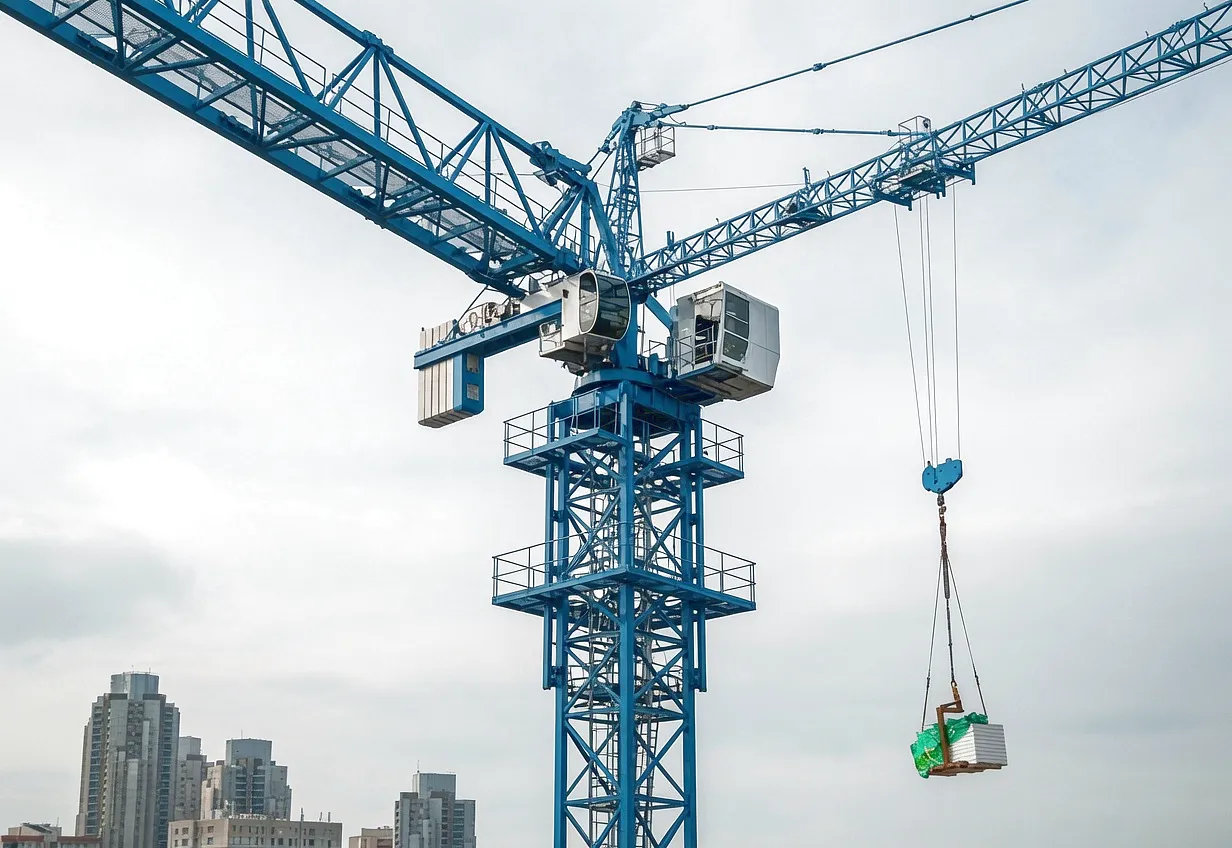
Tower Cranes — UK Construction Sites
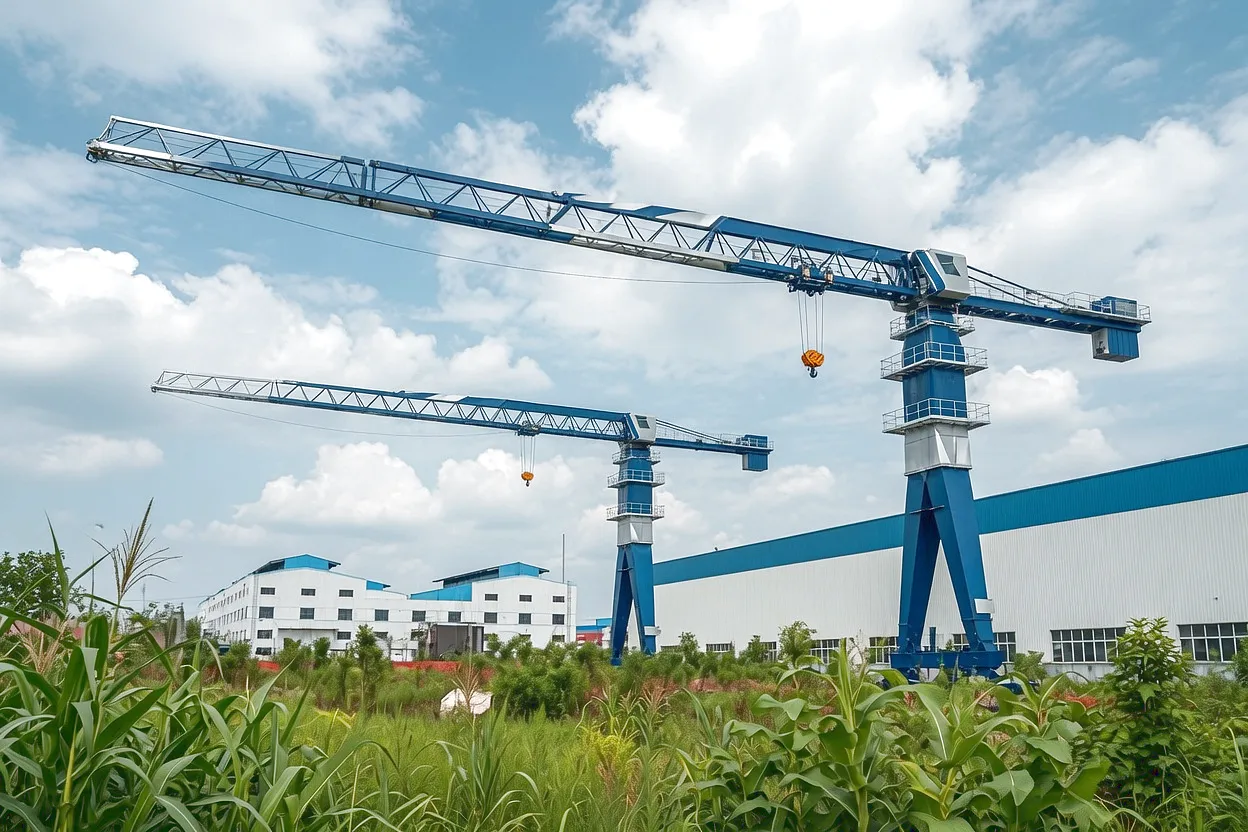
Tower cranes on major UK infrastructure and residential development projects — from HS2 works to central London residential towers — are notable for the environmental exposure they endure. At height, wind loads add dynamic bending forces to the slewing mechanism, and the slewing drive gear coupling must accommodate the resulting angular variations in shaft alignment without transmitting bending moments into the slewing ring gear. The combination of variable loading from wind, high-cycle slewing reversals, and exposure to rain and humidity makes the sealing specification and tooth surface hardness particularly important on tower crane applications. Our drum-type gear couplings are routinely supplied with external paint protection and sealed to IP54 equivalent standards to handle this environment.
Mobile & Crawler Cranes — Civil Engineering
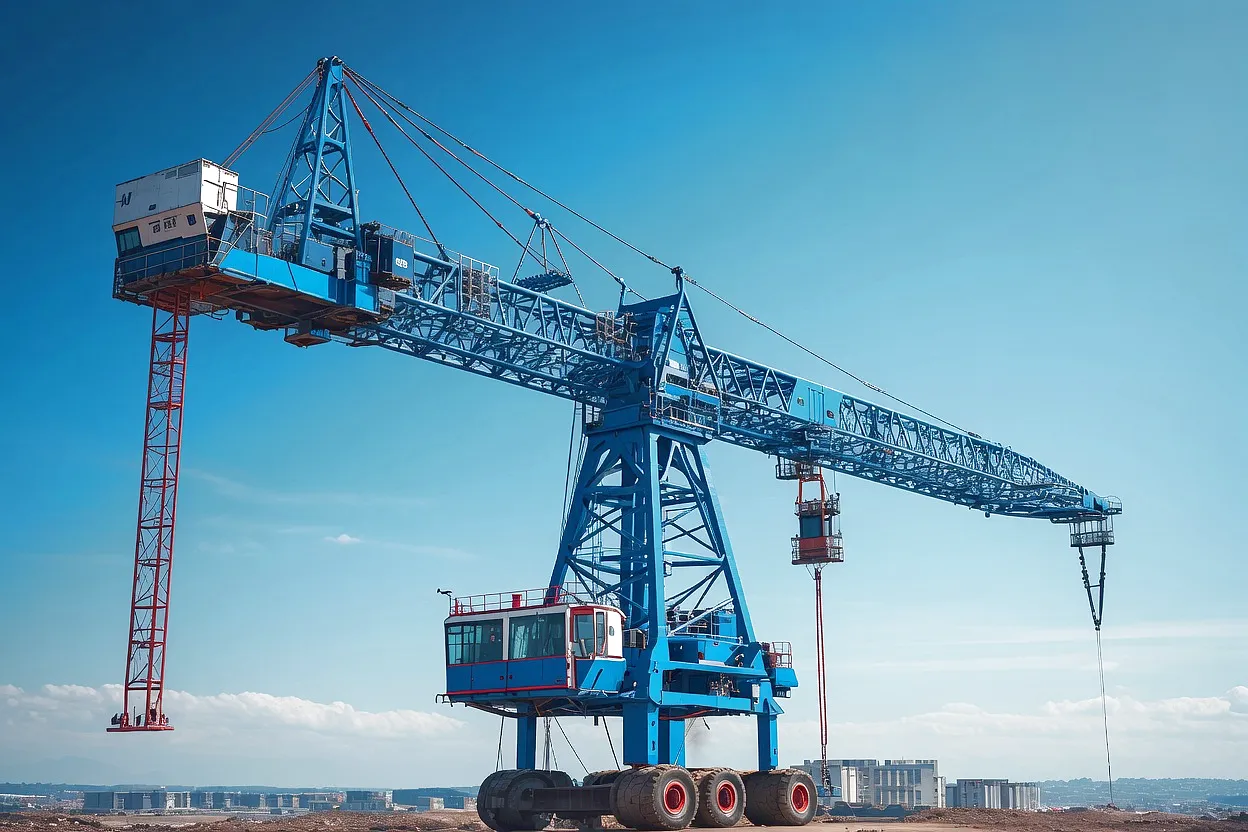
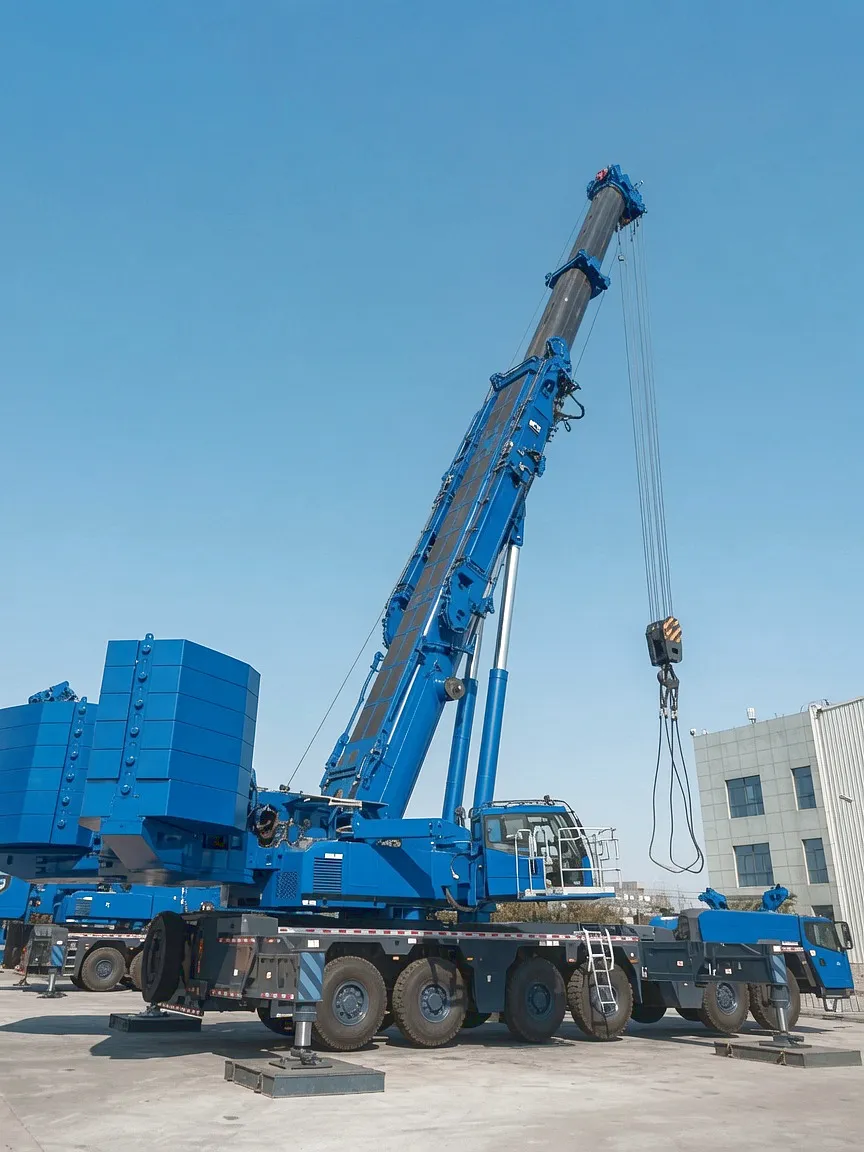
Mobile and crawler cranes present a unique challenge: the drivetrain must remain functional across the widest range of operating angles, temperature conditions, and ground-induced vibration. A crawler crane lifting precast segments for a UK bridge project, or positioning a bridge deck section overnight on a motorway, has essentially zero tolerance for drivetrain failure. In these applications, the gear coupling is often the component that distinguishes a crane that completes its critical-path lift from one that causes a programme-threatening shutdown. Compact GICL-series couplings with flanged hubs for easy on-site replacement are the practical choice for mobile crane drive systems where maintenance access is limited.
Ever Power: Custom Gear Coupling Manufacturing for Crane Applications
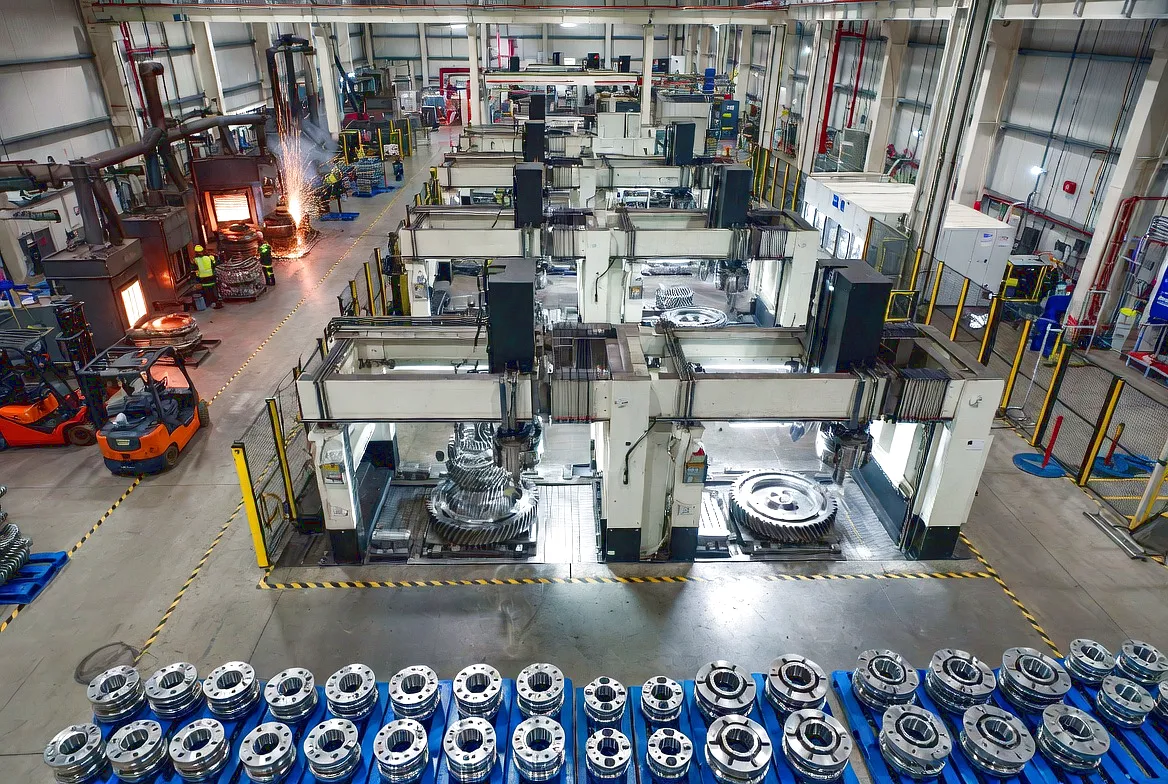
Standard catalogue sizes solve the majority of crane coupling applications. But crane drivetrains are not always standard — and that is where Ever Power’s in-house customisation capability makes a genuine difference to UK crane builders and end users.
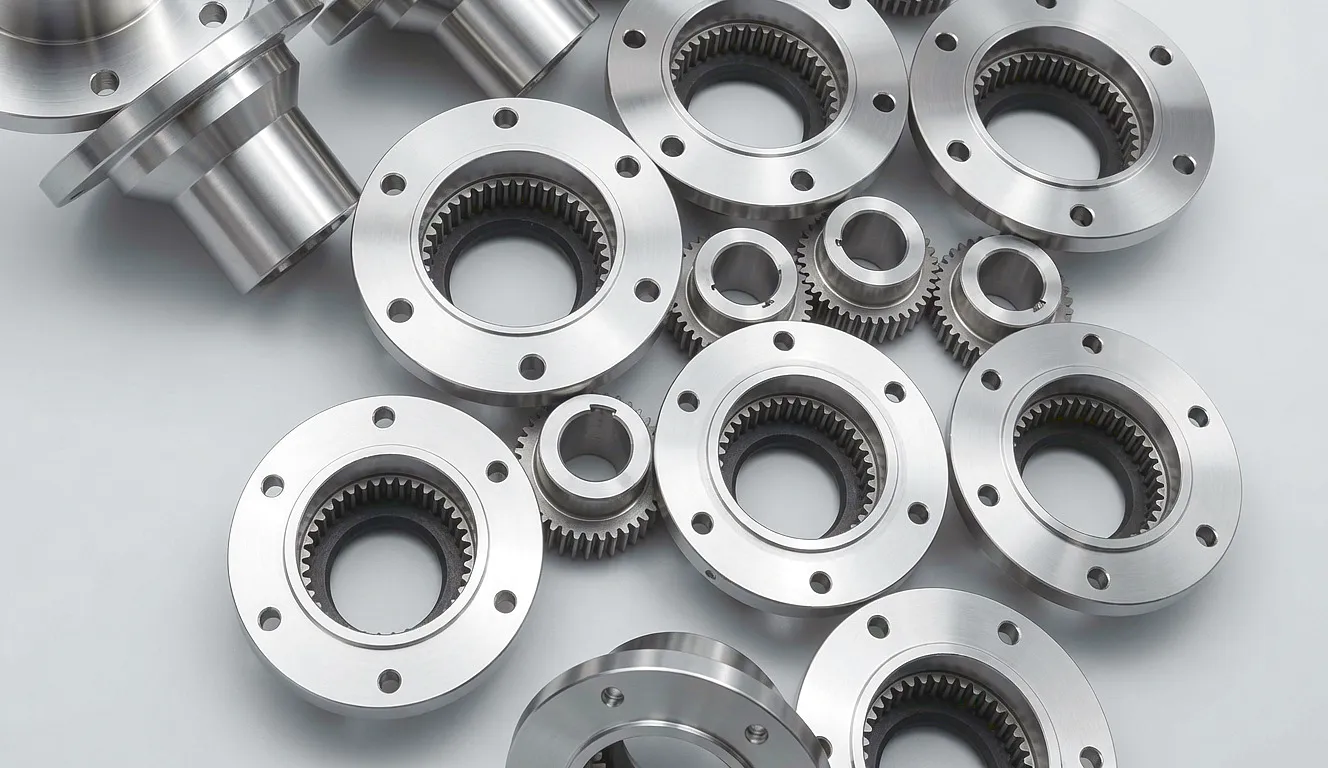
Custom shaft bore diameters, keyway depths and tolerance fits (H7/h6 to H6/g5) are machined to order. Metric and imperial bore options are both available to support UK crane operators working with mixed equipment fleets.
For applications with elevated corrosion requirements — offshore wind installation vessels, chemical plant cranes, food-grade facilities — stainless steel hub and sleeve materials or high-specification surface coatings (Geomet, zinc-nickel) can be applied to order.
When replacing a coupling on an existing crane, the new unit must match the motor flange or gearbox flange exactly. Ever Power produces custom-flanged couplings dimensionally matched to legacy designs from major crane builders including Demag, Konecranes, and Abus installations.
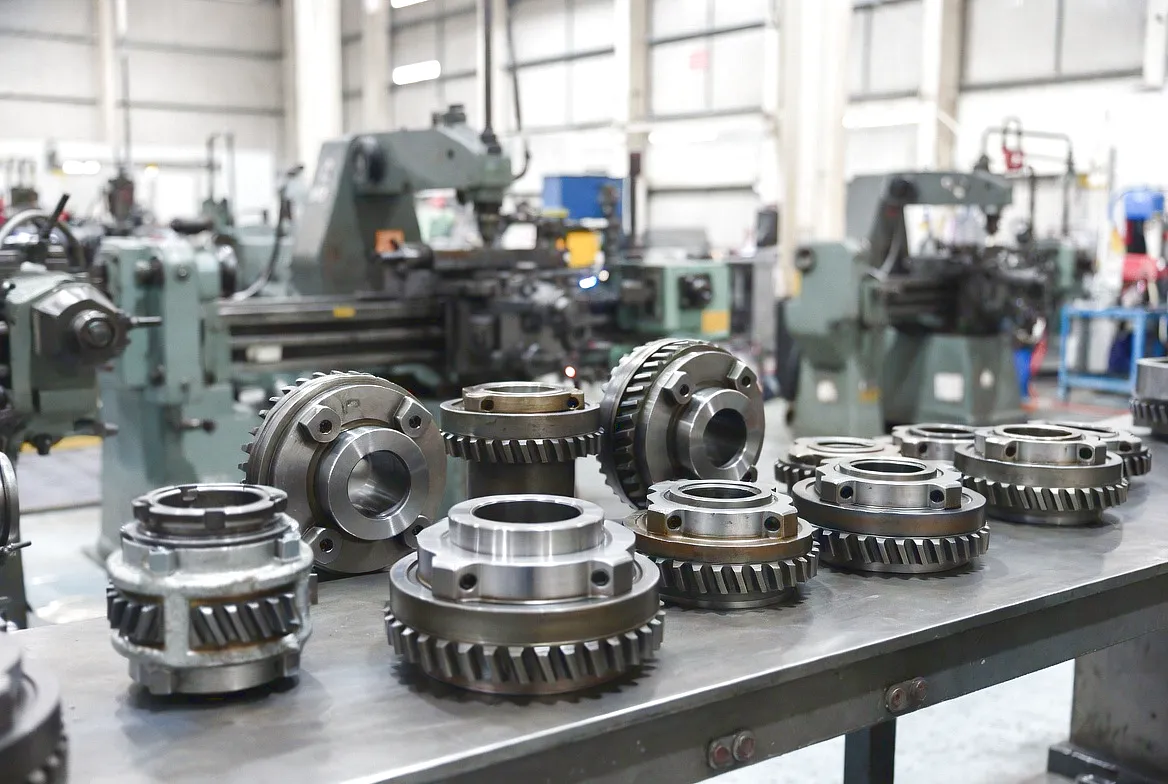
Every custom order ships with full dimensional drawings, material certificates (EN 10204 3.1 where specified), inspection reports and torque-test records. UK buyers working to EN ISO 9001:2015 quality management frameworks will find our documentation package complete and auditable.
Looking for a gear coupling that fits your exact crane specification? Send us your shaft dimensions, required torque, duty class and any special requirements — our engineering team will return a detailed proposal within 48 hours.
How a Yorkshire Steel Mill Cut Crane Downtime by 60%
What Our Customers Say
“We’d been dealing with repeated hoist coupling failures on our 20-tonne crane for two years. After switching to Ever Power’s NGCL series, we’ve had zero issues across the past 18 months. The custom bore matching was spot-on — it dropped straight in with minimal shimming required.”
“We operate RTG cranes at a major southern UK port. Marine environments destroy standard couplings fast. The sealed housing version from Ever Power has held up exceptionally well — 14 months in and the tooth condition looks like new. Lead time was also very reasonable for our urgent replacement order.”
“We needed a replacement coupling for a legacy 1990s German-manufactured bridge crane — a difficult dimensional match that most suppliers declined. Ever Power came back within a day with a matched custom design, pricing, and a clear delivery timeline. The unit fitted perfectly. Good supplier to have in your network.”
How the Drum Gear Coupling Transmits Torque Under Misalignment
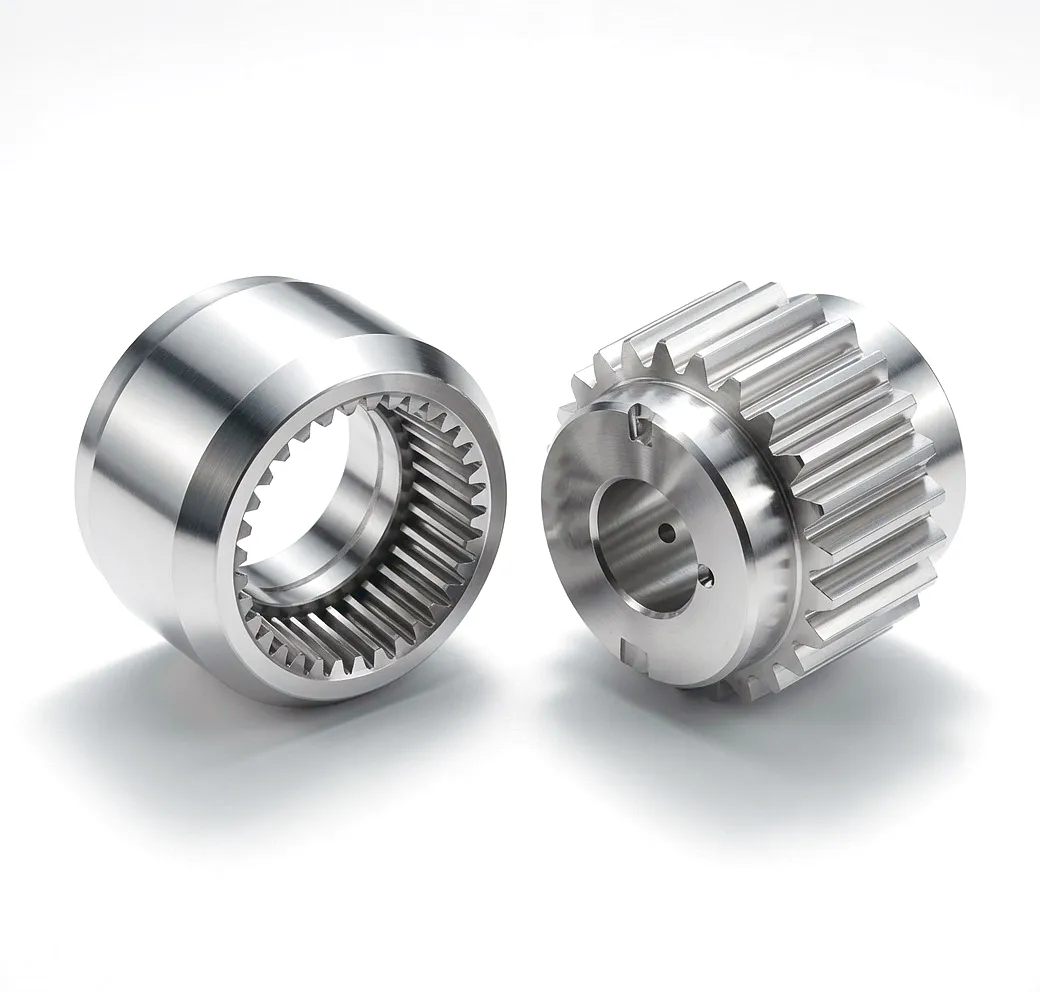
The operating principle of the drum gear coupling rests on a mesh between an external gear cut on the inner hub and an internal gear machined in the outer sleeve. The critical geometric detail is the crowning of the external teeth: instead of straight flanks that run parallel to the shaft axis, each tooth has a barrel profile — widest at the pitch line and tapering toward both ends. The crown radius, typically 1.5–3.5 times the tooth module, controls how much angular deflection the coupling can sustain before the contact stress rises to a harmful level.
When the driving shaft rotates, the torque passes through the keyway or shrink-fit connection into the hub, then transfers across the tooth mesh into the sleeve, and out through the connecting flange bolts to the driven shaft. Under perfect alignment conditions, all teeth carry roughly equal load. As shaft misalignment increases, the contact ellipse migrates toward one end of the tooth face — and the crowned profile ensures that even at maximum rated misalignment, the contact remains within the face width rather than concentrating on the tooth edge.
Key Operating Parameters
• Hertz contact stress on teeth: 900–1,400 MPa
• Lubrication film regime: EHL (elastohydrodynamic)
• Tooth sliding velocity: 0.05–0.5 m/s at rated speed
• Fatigue life target: 10^8 load cycles at rated torque
Gear Coupling vs Other Coupling Types: Crane Application Comparison
Crane drive engineers sometimes consider flexible jaw couplings, grid couplings, or disc-pack couplings as alternatives. The table below sets out the key practical differences across the parameters that matter in crane drivetrain design:
| Parameter | Drum Gear Coupling | Jaw / Spider | Grid Coupling | Disc Pack |
|---|---|---|---|---|
| Max Torque Capacity | Very High ✓✓✓ | Medium | High | High |
| Angular Misalignment Tolerance | Up to 1.5° ✓✓ | Up to 1° | Up to 0.5° | Up to 0.5° |
| Shock Load Resistance | Excellent ✓✓✓ | Good (elastic element) | Very Good | Fair |
| Service Life (crane duty) | 8–15 years ✓✓✓ | 2–4 years | 5–10 years | 6–12 years |
| Maintenance Requirement | Grease every 6,000 h | Spider replacement | Grease + grid check | Disc inspection |
| High-Temp Suitability | Excellent (no elastomer) | Limited (rubber spider) | Good | Good |
Serving UK Crane Operators: What Makes the British Industrial Market Distinct
 The United Kingdom has one of Europe’s most demanding industrial maintenance cultures. UK crane operators — particularly those working to LOLER (Lifting Operations and Lifting Equipment Regulations 1998), PUWER (Provision and Use of Work Equipment Regulations 1998), and BS EN 13001 series — need coupling suppliers who understand not only the mechanical product but also the documentation, traceability and quality frameworks that UK health and safety compliance demands.
Ever Power provides material test certificates, dimension inspection reports and torque verification records as standard on commercial orders, making it straightforward to demonstrate that replacement components were correctly specified and tested — a critical audit requirement under a LOLER thorough examination regime. UK buyers also benefit from the fact that our standard coupling dimensions comply with DIN 740 and ISO 10441 reference standards, which are referenced in many UK-market crane OEM documentation packages.
For UK maintenance buyers managing multi-site crane fleets — from automotive assembly plants in the Midlands to aerospace component manufacturers in the South West — we can supply coupling programmes covering standardised stock items for same-week dispatch alongside custom engineered solutions for non-standard legacy machinery. Our UK freight partners typically achieve 10–14 day delivery for standard items and 4–6 weeks for custom-machined bores, competitive with European and domestic sources.
Frequently Asked Questions About Gear Couplings for Crane Drives
Ready to Solve Your Crane Coupling Challenge?
Whether you need a direct catalogue replacement, a fully custom-bored coupling matched to your legacy crane, or application engineering support for a new crane design, Ever Power’s team is ready. Share your shaft dimensions, torque requirements and duty class — and we will come back with a complete solution.
Engineering response within 48 hours · Custom bores available · UK delivery