
Ever Power · Industrial Drivetrain Solutions
Gear Coupling for Offshore Oil Drilling Platforms: Engineering Reliability Where Failure Is Not an Option
An in-depth technical guide covering drum-type gear coupling selection, performance specifications, and proven applications across jack-up rigs, semi-submersibles, and drillships operating in UK North Sea and global offshore environments.
High Torque Transmission
Corrosion Resistant
BS/EN Certified
Why Gear Couplings Are Critical on Offshore Drilling Platforms
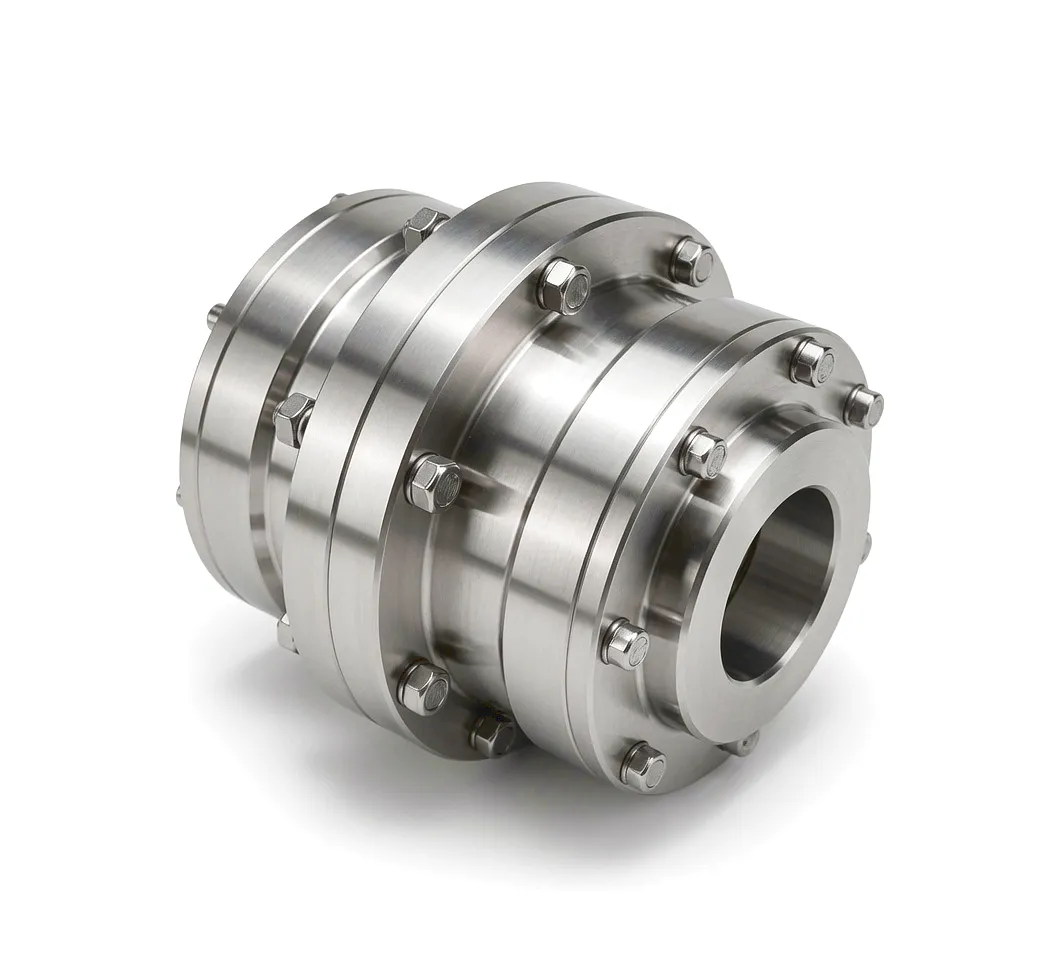 Offshore oil and gas drilling platforms rank among the most mechanically demanding environments ever conceived by engineers. Whether you are looking at a jack-up rig in the southern North Sea, a semi-submersible operating off the west coast of Shetland, or a dynamically positioned drillship working in deepwater Atlantic fields, the common thread running through all of them is an unrelenting appetite for rotary power transmission — and an equally unrelenting hostility to mechanical failure. Salt-laden air at 95% relative humidity, deck accelerations that can reach 0.3g during storm conditions, temperature swings between sub-zero winters and warm-engine heat, and the ever-present vibration from diesel generator sets and high-horsepower mud pumps — these are the conditions that separate a competent coupling from one that will prematurely fail and cost an operator hundreds of thousands of pounds per day in lost rig time.
A gear coupling — particularly the drum-tooth (crowned-tooth) variant that has become the standard for heavy offshore machinery — addresses all of these challenges through a deceptively elegant mechanical principle: involute spline teeth that allow angular, parallel, and axial misalignment while transmitting torques that can exceed 2,000,000 N·m in the largest sizes. For drilling equipment engineers and procurement specialists sourcing components for UK Continental Shelf (UKCS) operations, understanding exactly how these couplings work, what materials they must be made from, and how to specify them correctly is not an academic exercise — it directly determines whether your drillstring keeps turning.
Sourcing gear couplings for your offshore drilling project? Our engineering team provides same-day technical assessments.
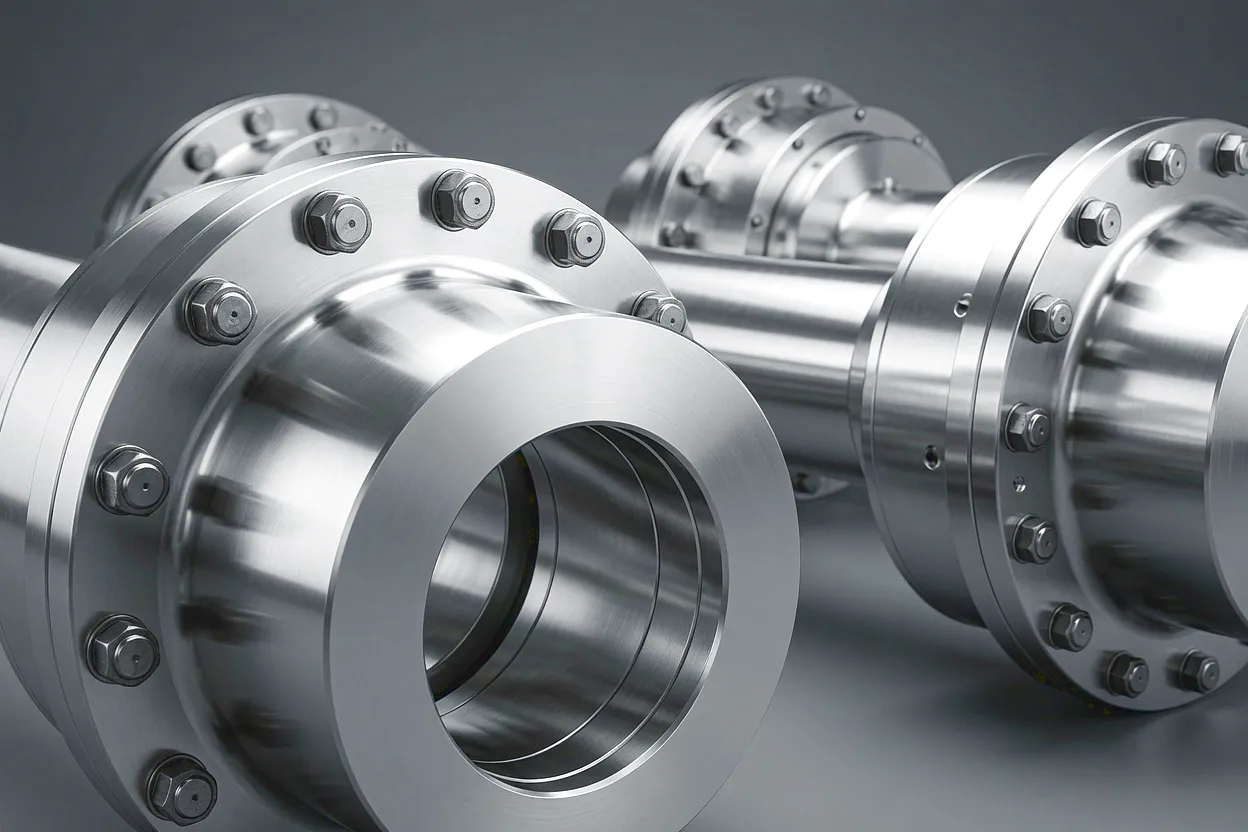
The Mechanical Principle Behind Drum-Tooth Gear Couplings
Crowned Tooth Geometry
The defining feature of the drum-tooth design is the convex (crowned) profile on the outer sleeve teeth. Unlike straight-tooth couplings where tooth contact is concentrated at the edges under misalignment — generating fretting wear and stress concentrations — the crowned profile allows the contact zone to migrate smoothly along the tooth face. This distributes load across a broader area, reduces contact stress by up to 40%, and permits angular misalignment of 1.5° to 2.5° per gear mesh (3° to 5° total for a double-flex configuration) without degrading the service life of the coupling. On a drillship pitching in 4-metre swells, that misalignment accommodation is not a luxury — it is a fundamental requirement.
Inner Hub & Outer Sleeve Assembly
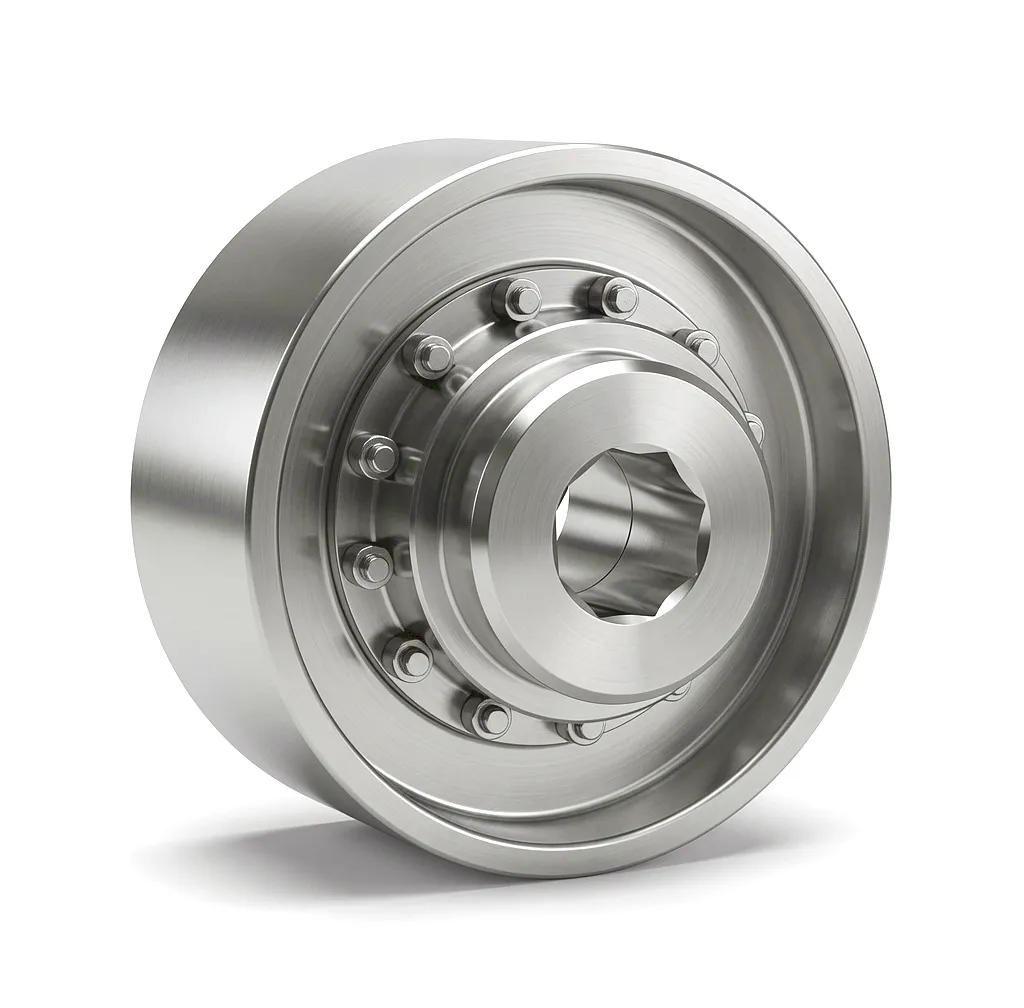
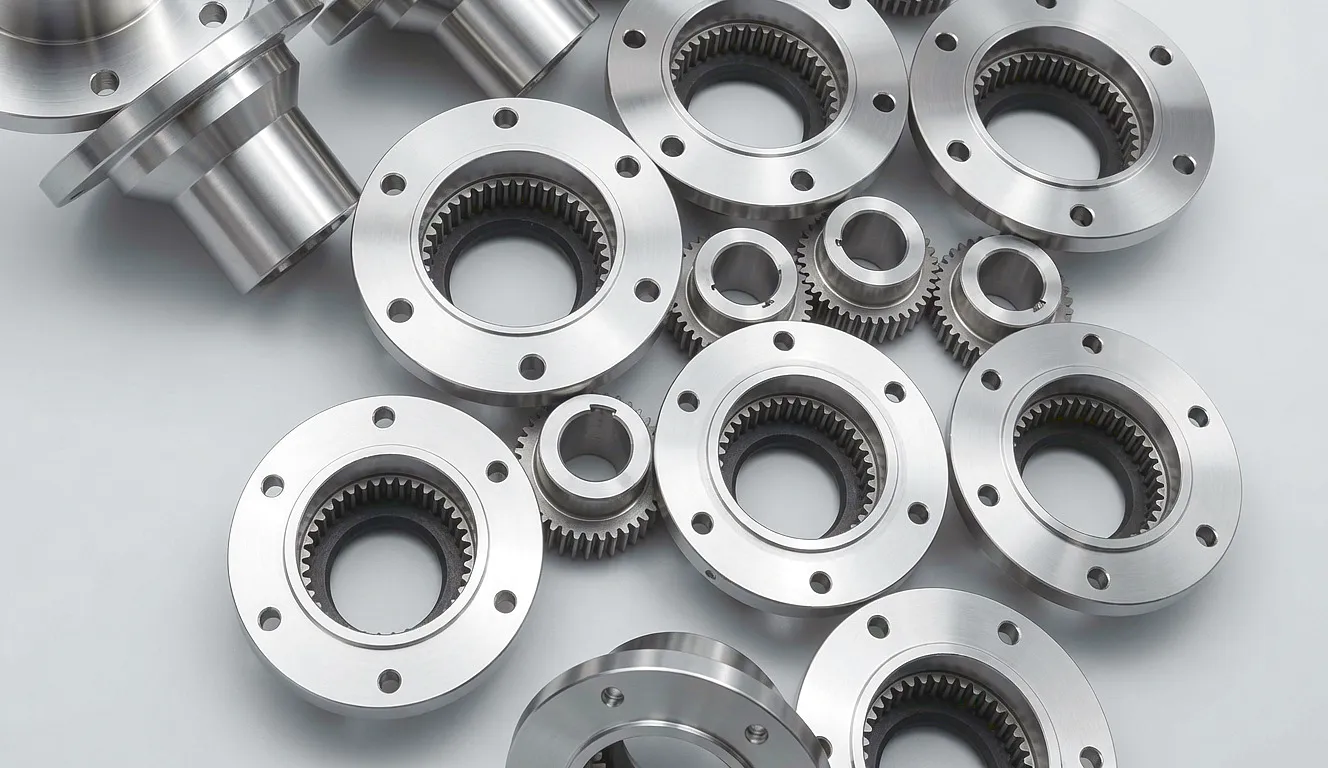
A standard gear coupling consists of two inner hubs — each bore-mounted to a shaft — and one or two outer sleeves that bridge them. The hub teeth are external and engage with the internal teeth of the sleeve. Torque is transmitted through tooth contact, while the crowned geometry accommodates misalignment. In the NGCL configuration commonly used on offshore mud pumps, one end integrates a brake disc or flywheel interface, allowing the coupling to serve dual roles in the drivetrain. The GICL variant adds intermediate flanged spacers, enabling in-situ shaft removal without disturbing bearing housings — a significant maintenance advantage on space-constrained drill floors.
Lubrication in Marine Environments
Offshore gear couplings operate in a sealed, grease-lubricated environment. The tooth mesh is packed with NLGI Grade 1 or 2 lithium-complex or calcium-sulphonate grease specifically formulated for high-centrifugal loads and marine temperatures. Labyrinth or O-ring seals prevent contamination by salt water and drilling mud while retaining the lubricant under centrifugal action. The sealed design eliminates periodic oil changes and dramatically reduces the risk of lubricant-related failures — a critical advantage when the nearest onshore maintenance facility may be 200 kilometres away in the North Sea. Some premium configurations add grease fittings with pressure-relief ports, enabling topside re-lubrication without coupling removal.
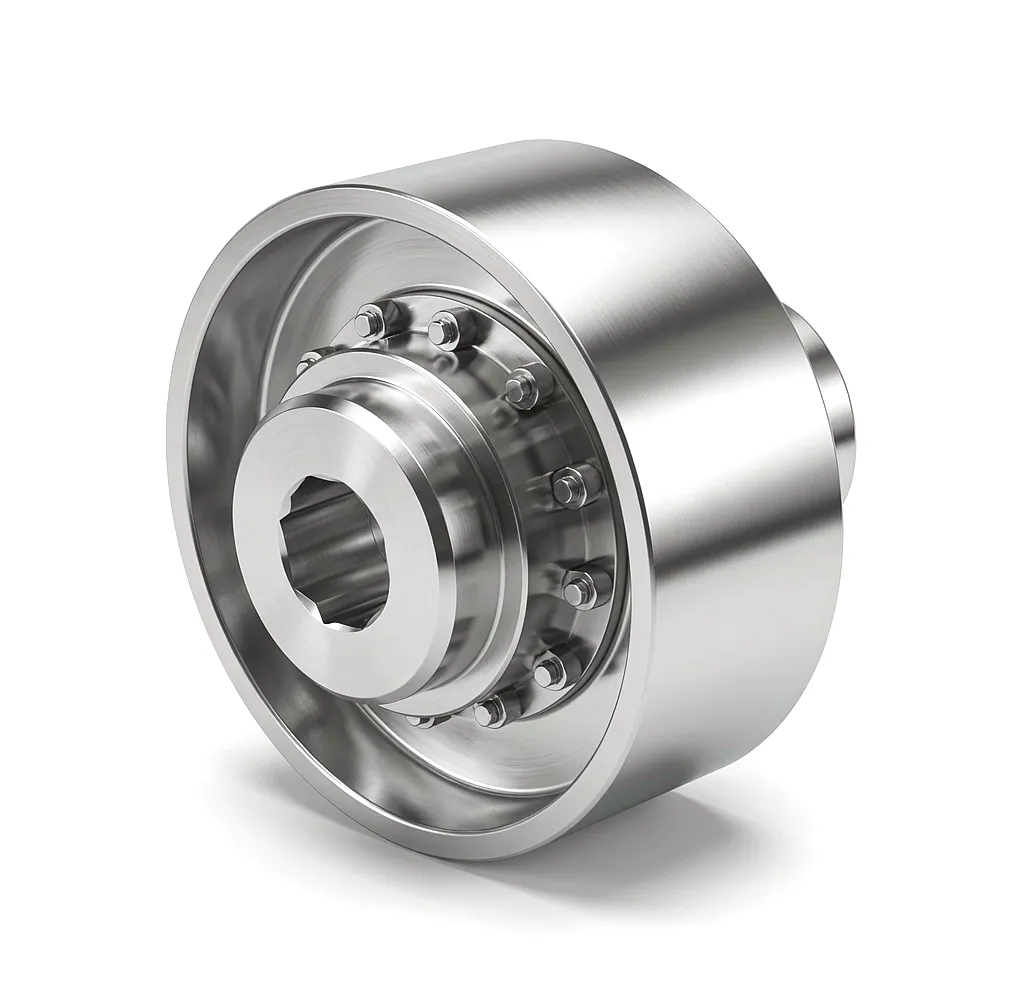
NGCL Series — Brake Disc Integration for Mud Pump Drives
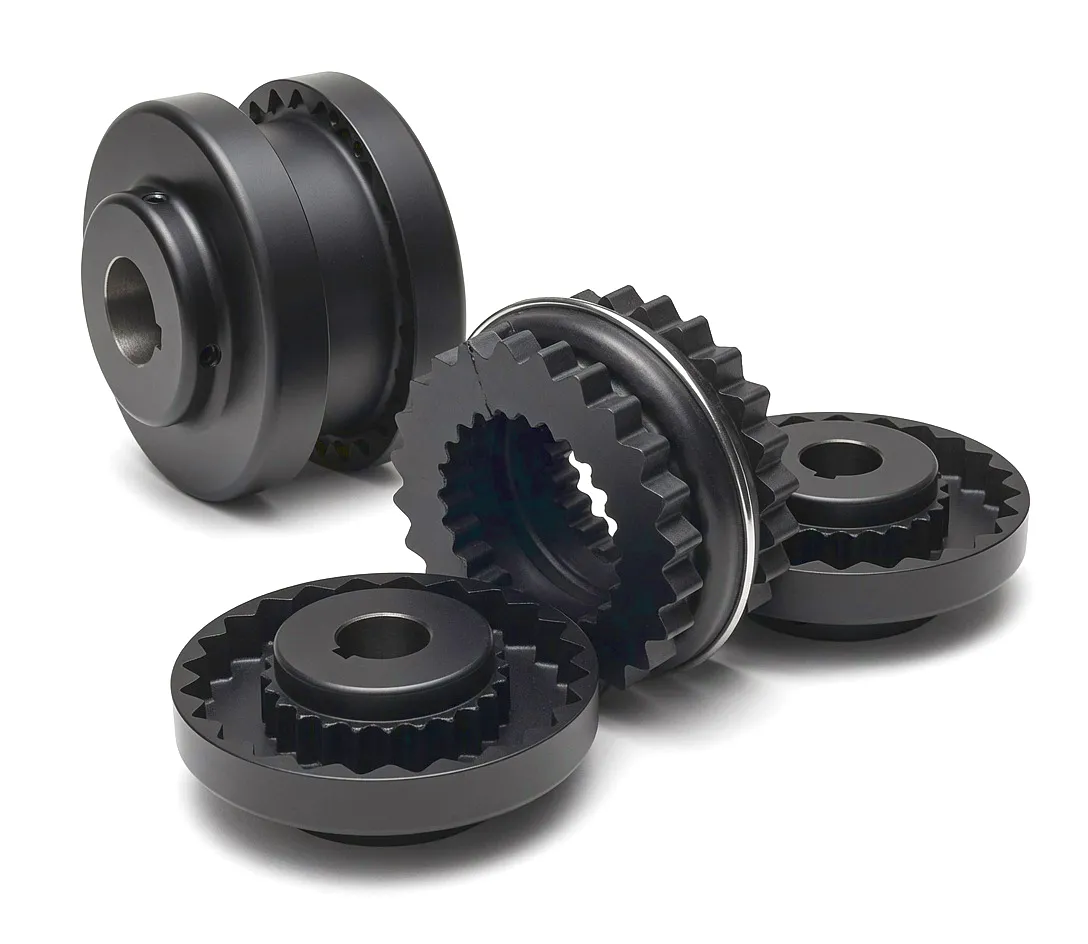
Corrosion-Resistant Finish — Certified for Marine Zone Installations
Materials Engineering: What Goes Into an Offshore-Grade Coupling
The material selection for offshore gear couplings is governed by a hierarchy of competing demands: maximum fatigue strength to resist cyclic torque loading from pulsating pumps, sufficient ductility to survive shock loads from drillstring jarring operations, and outstanding corrosion resistance against an electrolyte (seawater) that corrodes plain carbon steels at rates exceeding 0.1 mm per year when left unprotected. The industry-standard solution is to use alloy steel for the structural members — primarily 42CrMo4 (EN19) or 34CrNiMo6 — with surface treatments that create a hard, wear-resistant tooth surface over a tough core that resists brittle fracture.
42CrMo4 is the workhorse material for offshore coupling hubs. After forging and rough machining, the blanks are quenched and tempered to a core hardness of approximately 260–320 HB, delivering a tensile strength of 900–1100 MPa combined with 16% minimum elongation. The gear teeth are then finish-hobbed and profile-shaved before case hardening — typically gas carburising followed by case quenching to achieve a surface hardness of 58–62 HRC on the crowned tooth flanks. This hardened case depth of 0.8–1.5 mm provides the wear resistance that allows the coupling to accumulate hundreds of thousands of operating hours in a grease-lubricated mesh without detectable tooth wear.
External surfaces of both hubs and sleeves are protected with high-build epoxy primer followed by polyurethane topcoat compliant with ISO 12944-6 Category C5-M (offshore marine), achieving a dry film thickness of at least 250 μm. For applications in the splash zone — closer to water level on jacket structures and floating production systems — additional galvanic protection using zinc-rich primer undercoats or sacrificial zinc spraying can be specified. Sealing rings are manufactured from Nitrile (NBR) or Fluoroelastomer (FKM) compounds, depending on the lubricant compatibility requirements and operating temperature range, which can span from -20°C in winter North Sea conditions to +90°C in high-speed generator couplings.
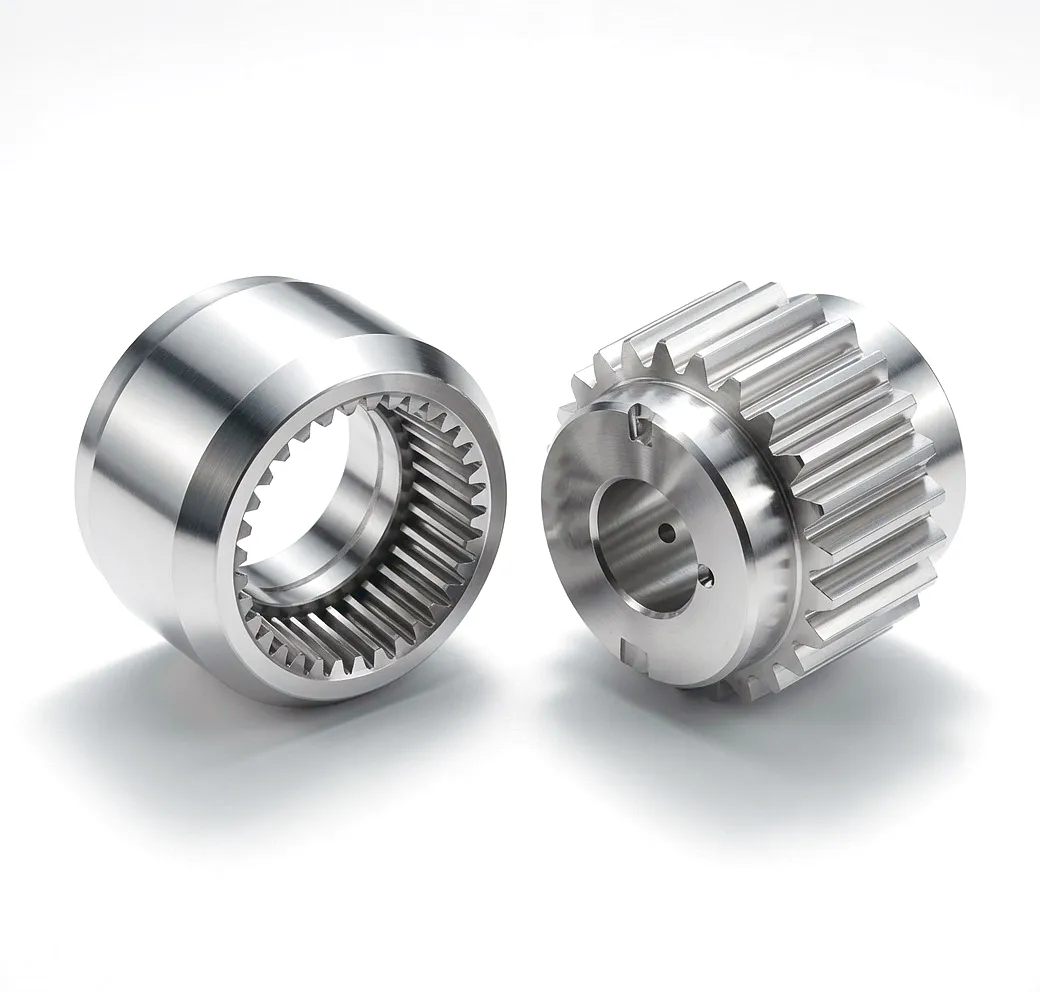
Material at a Glance
Hub: 42CrMo4 / 34CrNiMo6 alloy steel
Tooth Hardness: 58–62 HRC surface
Core Hardness: 260–320 HB
Sleeve: 35CrMo / grey cast iron (CI)
Coating: ISO 12944-6 C5-M rated
Seals: NBR / FKM, -20°C to +120°C
Technical Performance Specifications — GICL / NGCL Offshore Series
| Parameter | GICL-5 | GICL-10 | NGCL-8 | NGCL-16 | NGCL-25 |
|---|---|---|---|---|---|
| Rated Torque (N·m) | 5,000 | 50,000 | 80,000 | 160,000 | 250,000 |
| Peak Torque Factor | 2.5x | 2.5x | 2.5x | 2.5x | 2.5x |
| Max Speed (rpm) | 4,500 | 3,000 | 2,000 | 1,500 | 1,200 |
| Angular Misalign. (°) | ±1.5 | ±1.5 | ±1.5 | ±1.5 | ±1.5 |
| Axial Displacement (mm) | ±2 | ±3 | ±4 | ±5 | ±6 |
| Temp. Range (°C) | -20 to +100 | -20 to +100 | -20 to +100 | -20 to +100 | -20 to +100 |
| Dynamic Balance Grade | G6.3 / G2.5 | G6.3 / G2.5 | G6.3 | G6.3 | G6.3 |
| Certification | ISO/CE | ISO/CE | ISO/CE/DNV | ISO/CE/DNV | ISO/CE/DNV |
*Custom sizes, bore configurations, and non-standard keyway arrangements available on request. DNV GL Type Approval available for larger offshore series.
Application Scenarios on the Drill Floor and Below
Gear couplings appear at virtually every power transmission point on a modern drilling platform
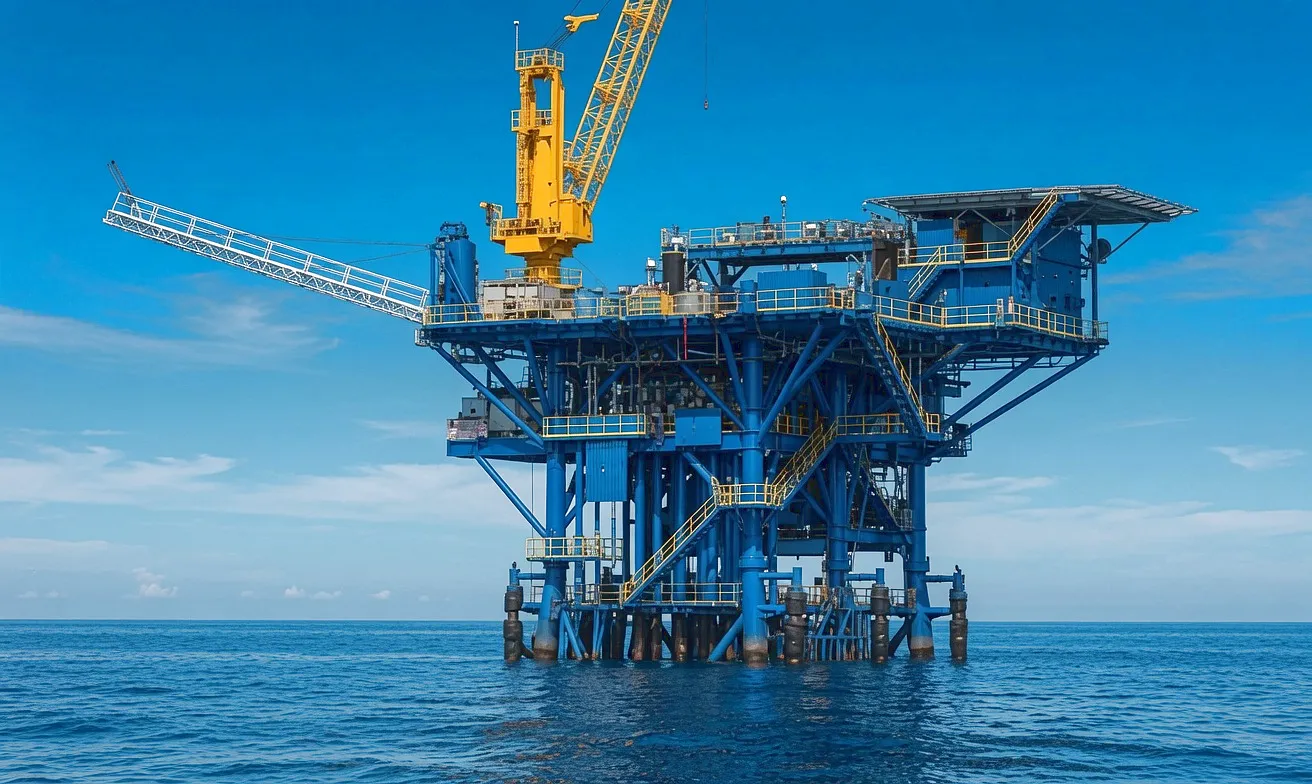
Rotary Table Drive
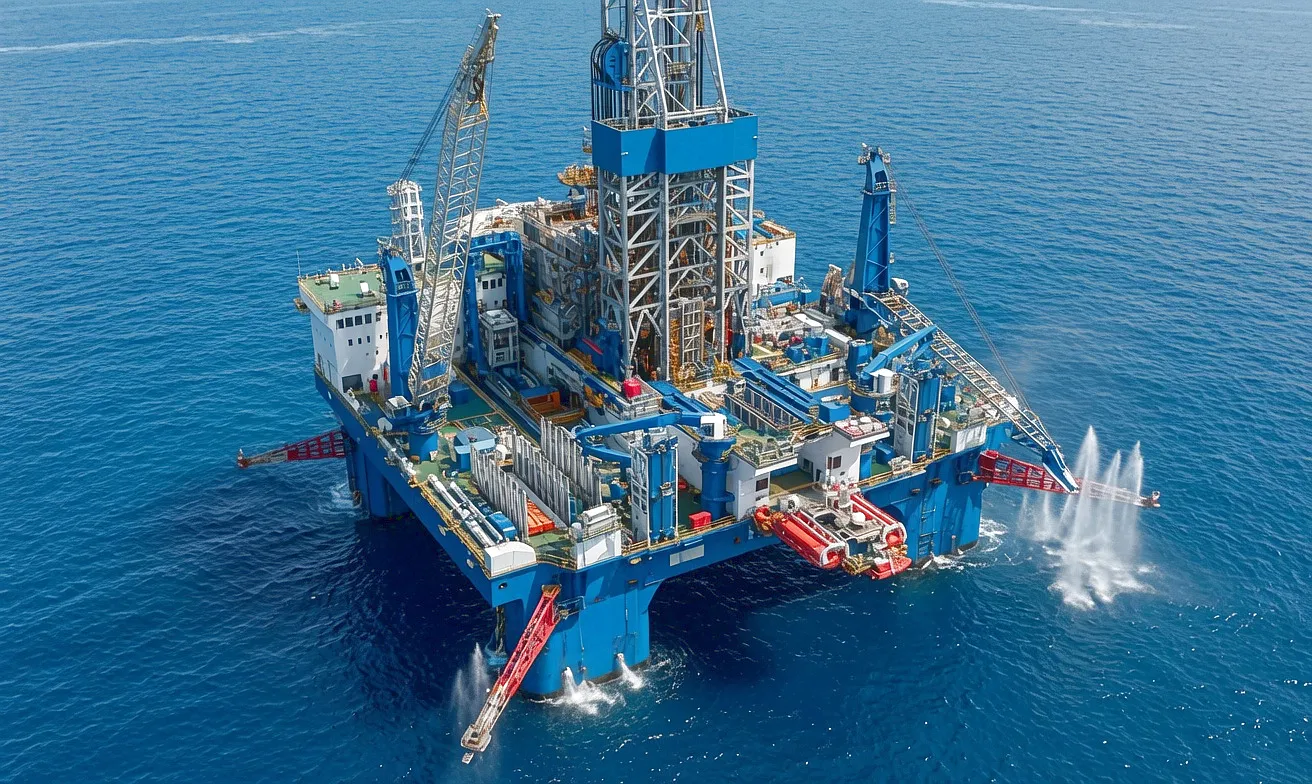
Triplex Mud Pump Drive
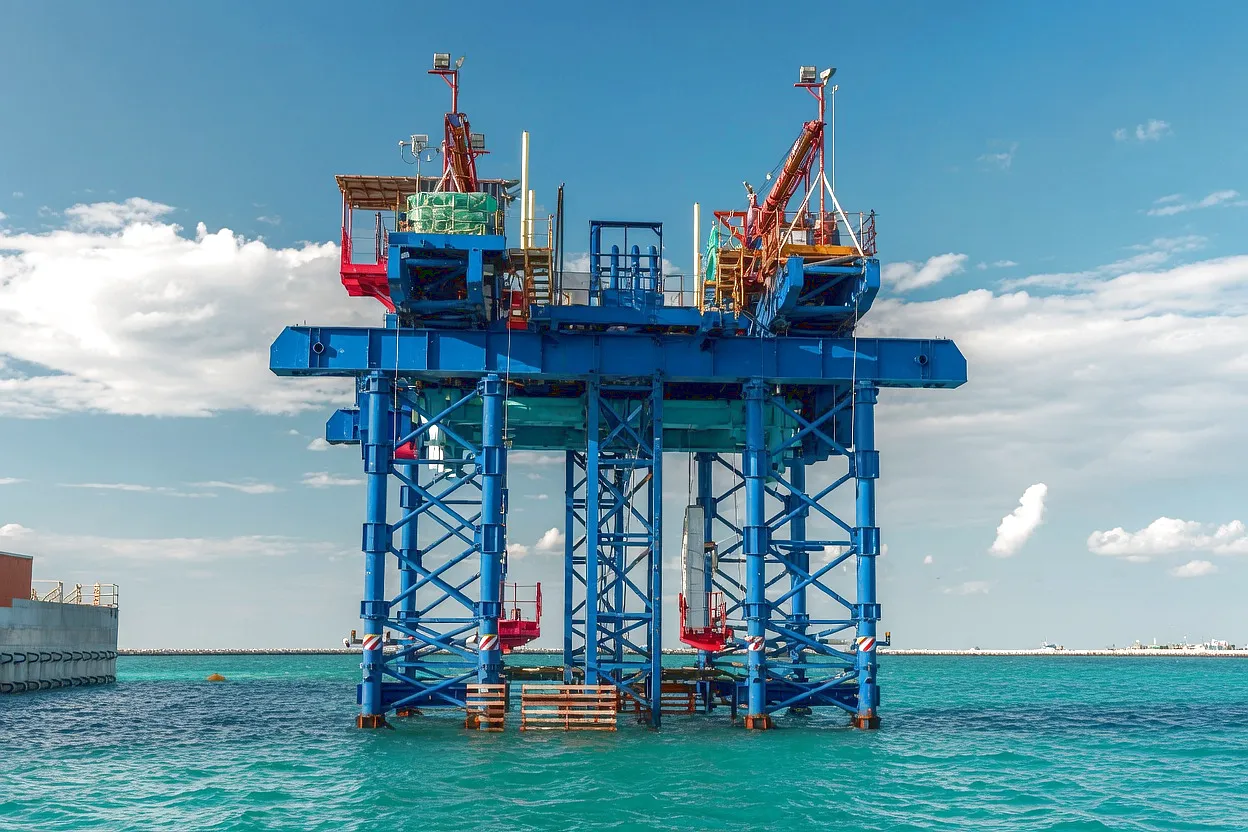
Platform Crane Hoisting Drive

Gas Compressor Drive Train
Triplex Mud Pumps
The triplex mud pump is arguably the most torque-demanding and shock-loaded application on any drilling rig. These pumps — typically driven by 1,600 to 2,200 kW motors — must maintain 100% discharge pressure availability at all times during drilling operations. The crankshaft of the pump is subject to severe cyclic loading from three pistons firing in sequence, generating a torque ripple that can exceed 30% of the mean torque value. The gear coupling on the motor-to-gearbox and gearbox-to-crankshaft interfaces must absorb this ripple elastically enough to protect motor bearings from overload, while remaining rigid enough to maintain precise valve timing. An NGCL-series large-bore coupling with rated torque of 160,000 to 250,000 N·m is the standard selection for 2,200 kW pump drives in North Sea rig configurations. The integrated brake disc feature of the NGCL type also provides emergency stopping capability, adding another layer of operational safety to this critical piece of drilling infrastructure.
Rotary Table & Top Drive Systems
Whether the rig uses a traditional kelly drive with a mechanical rotary table or a modern electric top-drive system, gear couplings are present throughout the drivetrain. In rotary table configurations, the coupling connects the DC or AC motor to the chain-drive sprocket shaft, accommodating the inevitable thermal misalignment that develops between cold startup and full operational temperature after several hours of running. In top-drive systems, the vertical shaft carrying the drillstring rotation torque — which can reach 100,000 N·m or more during tough formations or string-stuck events — passes through at least two gear coupling interfaces. The ability to accommodate angular misalignment is particularly important here, because the top drive travels vertically on guide rails that cannot realistically maintain perfect parallelism with the Kelly bushing over the full 40-metre stroke of some derrick systems. Proper coupling selection, verified by a torsional analysis of the full drivetrain, is essential before commissioning any top-drive upgrade project on a UKCS-operated rig.
Diesel Generator Sets
Offshore drilling platforms run entirely on diesel-generated electricity. A typical semi-submersible or jack-up carries between four and six main generator sets, each producing 2 to 5 MW, with additional emergency and auxiliary generators that must start reliably within 30 seconds of main power failure under IMO A.689 requirements. Every one of these generators — whether Caterpillar, MAN Energy Solutions, Wärtsilä or Bergen engines — has a gear coupling (or elastomeric-insert coupling for smaller units) connecting the engine flywheel housing to the alternator shaft. The gear coupling used on the main generators must handle the engine’s cyclic torque irregularity at start-up when the engine is below governed speed, survive the shock of load-shedding events, and remain serviceable for intervals of at least 20,000 operating hours between overhauls. The double-flex GICL spacer coupling is widely used here because it allows alternator extraction without disturbing the engine — a significant saving in confined engine room spaces.
Thrusters & DP Propulsion
Dynamically positioned drillships and semi-submersibles maintain station using azimuthing thrusters or fixed tunnel thrusters driven by variable-frequency electric motors. The gearbox-to-thruster shaft interface is one of the most demanding coupling applications in the entire vessel: it must handle the full propeller torque during crash-start manoeuvres, survive the impact torque when the propeller strikes a piece of debris or a large wave, and allow for the thermal expansion of the gearbox shaft relative to the thruster shaft. Large gear couplings rated at 500,000 to 2,000,000 N·m are used in the propulsion drives of drillships operating in deepwater fields. Certification to DNV class notation for dynamic positioning is required, meaning each coupling must be accompanied by a verified material certificate, dimensional inspection report, and — for critical equipment — a witnessed factory acceptance test (FAT) witnessed by a classification society surveyor.
Drawworks & Crown Block Systems
The drawworks is the primary hoisting machine of any drilling rig, lifting and lowering the drillstring and casing strings that can weigh in excess of 500 tonnes on deep wells. The multi-motor drives used on modern AC drawworks — often paralleling two or four electric motors of 1,000 to 1,500 kW each on a common gearbox input shaft — require precise torque-sharing between motors, and the gear coupling on each motor shaft plays a key role in this. An oversized or misaligned gear coupling introduces a torque imbalance between the parallel motor drives, causing one motor to carry a disproportionate share of the load and leading to premature overload trips or motor winding failures during critical pipe-tripping operations. Correct coupling specification, followed by precise laser alignment during installation, is therefore a prerequisite for achieving the rated hoisting capacity of modern AC drawworks systems.
Seawater Lift Pumps & Firewater Systems
Safety-critical utility systems on offshore platforms — seawater cooling, firewater ring mains, bilge pumping, and ballast systems — rely on gear-coupled centrifugal or mixed-flow pump sets that must deliver full rated flow within seconds of demand. Because these pumps are often mounted on anti-vibration mounts to reduce structure-borne noise and vibration transmission into accommodation areas, the flexible misalignment accommodation of the gear coupling is essential. Angular misalignment of 0.5° to 1.0° is common between motor and pump shafts when flexible mountings are used, and without a properly selected gear coupling, this misalignment would be transmitted as a cyclic radial load into the pump bearings, dramatically shortening their service life. Class-required firewater pump systems on UKCS platforms must demonstrate operability within 30 seconds of activation, and any coupling failure in these systems carries immediate regulatory consequences.
Why Ever Power Gear Couplings Outperform the Alternatives
Procurement engineers evaluating gear couplings for UKCS and global offshore operations have several options — elastomeric jaw couplings, disc-pack couplings, and fluid couplings all compete in various torque ranges and application types. For the high-torque, high-shock, space-constrained environments found on drilling platforms, however, the drum-tooth gear coupling consistently wins the lifecycle cost comparison for three fundamental reasons.
✓ Torque Density
Steel tooth geometry transmits 3–5x more torque per unit diameter than elastomeric equivalents, reducing overall coupling package diameter — critical where rig floor space is at a premium.
✓ Shock Tolerance
Metal-to-metal tooth contact with high face load capacity absorbs instantaneous torque spikes from formation kick events, stuck-pipe jarring, and generator load-shedding without permanent deformation.
✓ Long Service Life
Properly selected and maintained gear couplings on mud pumps and generator sets routinely achieve 30,000+ operating hours, compared with 8,000–15,000 hours for elastomeric alternatives under the same loading conditions.
✓ Temperature Resilience
All-steel construction with grease lubrication maintains rated performance from Arctic North Sea winter conditions (-20°C) through the elevated operating temperatures generated by 24/7 continuous duty cycles.
✓ DNV / ABS Certifiable
Full material traceability, dimensional inspection reports, and classification society witnessed FAT available — meeting the documentation requirements of UKCS PFEER regulations and international class rules.
✓ Interchangeable Bore
Standard outer sleeve dimensions, with custom bore and keyway machining, allow direct drop-in replacement for worn couplings on competitor-branded equipment, reducing emergency procurement lead times.
Customer Success: North Sea Jackup Operator Reduces Downtime by 73%
A real-world outcome from a UKCS contract awarded in Q3
Case Study
UK Offshore Drilling Contractor — Southern North Sea Jack-Up Operations
 A mid-tier UK-based offshore drilling contractor operating two jack-up rigs on UKCS licences in the Southern Gas Basin approached Ever Power following a series of premature coupling failures on their National 12-P-160 triplex mud pumps. The original couplings — a competing European brand — were experiencing fretting corrosion and surface fatigue on the inner hub teeth, requiring replacement every 9,000 to 11,000 operating hours. At a rig day rate of approximately £85,000 per day and an average coupling change time of 18 hours per pump (with three pumps per rig), the direct downtime cost was running at over £170,000 per coupling replacement event.
Ever Power’s application engineering team conducted a full drivetrain analysis, including torsional vibration assessment using measured pump pressure pulsation data from the rig’s SCADA historian. The analysis identified that the original coupling had been sized purely on rated torque, without applying the AGMA service factor for heavy shock loads — resulting in a calculation torque that was only 1.4x the nominal, against a recommended minimum of 2.0x for this duty. Ever Power supplied NGCL-16 couplings with an applied service factor of 2.2x, upgraded to 42CrMo4 hubs with ion-nitriding surface treatment for enhanced fretting resistance, and provided installation training for the rig’s mechanical crew. The first set of replacement couplings was shipped from our UK distribution centre in Rotherham within 72 hours of order confirmation — meeting the rig’s emergency procurement timeline.
After 28,500 operating hours across both rigs — approximately 30 months of 24/7 drilling operations — none of the replacement couplings had required unplanned replacement. The contractor’s maintenance manager reported a 73% reduction in coupling-related unplanned downtime and estimated total cost savings of over £1.1 million across the fleet, net of the higher unit cost of the upgraded couplings. Both rigs subsequently specified Ever Power NGCL and GICL couplings as their standard procurement item for all future orders and spares inventory.
73%
Reduction in coupling downtime events
£1.1M
Net cost saving over 30 months
28.5K
Hours achieved without unplanned coupling change
72h
Emergency delivery from UK distribution
“
We had been through three sets of couplings in two years on Pump No. 2. After switching to Ever Power’s NGCL series, we have not touched them in two-and-a-half years of continuous drilling. The torsional analysis they provided convinced our chief engineer in about ten minutes.
— Rig Maintenance Manager
Jack-Up Drilling Contractor, Aberdeen
“
Getting couplings that match obsolete flanged-spacer designs from the 1990s is always a headache. Ever Power reversed our worn coupling and manufactured a direct drop-in replacement with upgraded tooth geometry. Lead time was four weeks, including DNV material cert. Excellent service.
— Procurement Engineer
FPSO Operations Company, London
“
We specified Ever Power gear couplings for our new-build semi-submersible rig’s thruster drives — a demanding application with 750 kN·m peak load capability required. Their team provided full torsional calculations, material certificates, and DNV witness testing without any schedule delays. Highly recommended for critical offshore drivetrain work.
— Senior Mechanical Engineer
Rig Newbuild Project, South Korea / UK Operator
Ever Power Manufacturing & Custom Engineering Capability
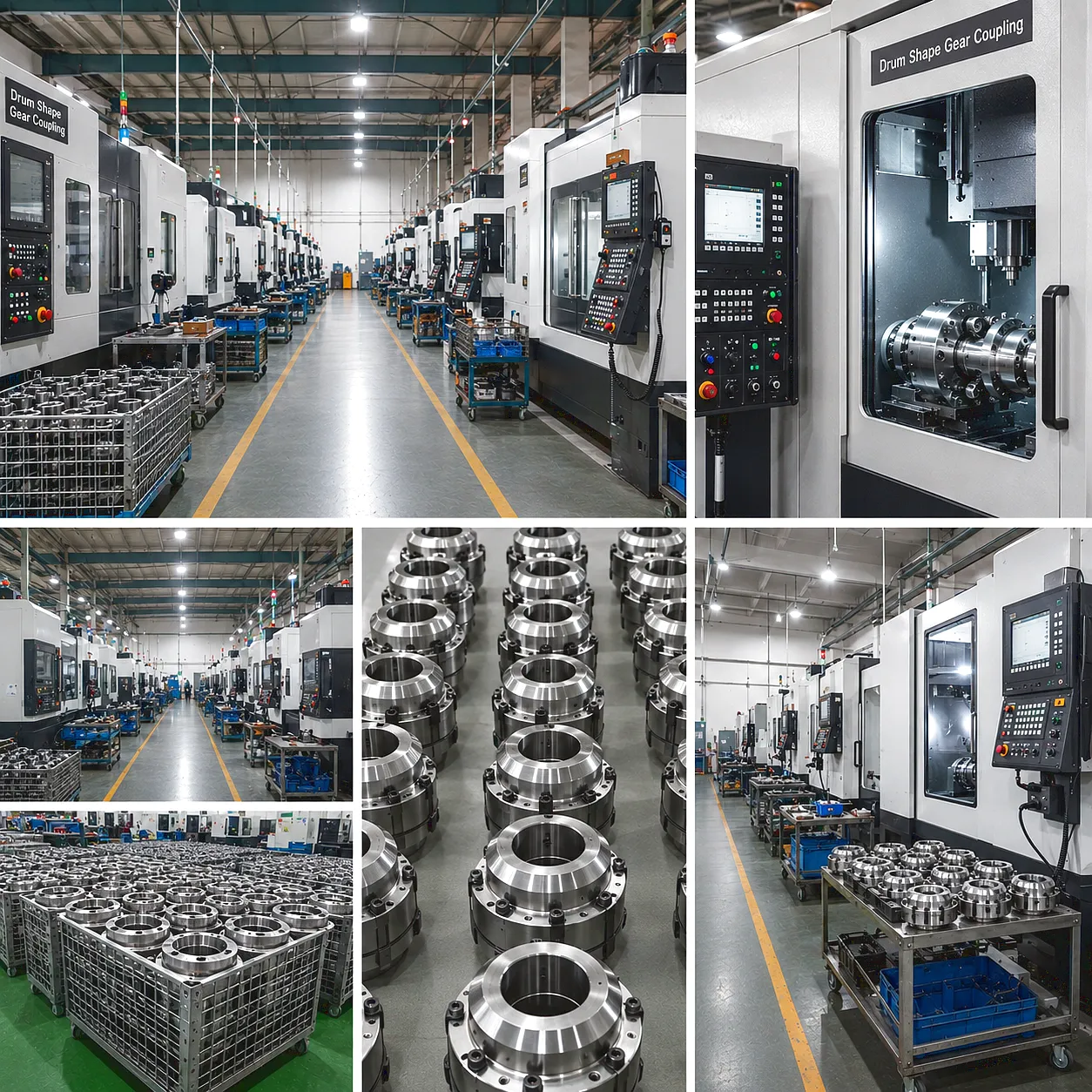 Ever Power’s manufacturing facility combines over 18 years of gear coupling application engineering with a vertically integrated production capability that gives us complete control over every step of the manufacturing process — from raw material selection and forging through precision gear hobbing, heat treatment, and final surface finishing. This depth of in-house capability is what enables us to deliver non-standard offshore couplings that other suppliers simply cannot produce on any commercially viable timescale.
Our CNC gear hobbing centres can produce module 2 through module 20 external and internal helical and spur gears with tooth profile accuracies to ISO grade 5, supporting gear coupling bore diameters from 25 mm up to 1,400 mm in a single run. In-house heat treatment furnaces handle batch gas carburising and vacuum case hardening, with full process control records supplied with each batch. Our coordinate measuring machines (CMM) equipped with scanning probes provide 100% dimensional verification of critical features on offshore-critical couplings, and all inspection data is archived against the coupling serial number for the lifetime of the equipment.
⚙
Reverse Engineering
Send us a worn or damaged coupling for dimensional survey. We manufacture a functionally identical or dimensionally improved replacement, regardless of original manufacturer.
📈
Torsional Analysis
Free torsional vibration analysis for any drivetrain when you purchase four or more couplings. Includes natural frequency map, service factor recommendation, and written technical report.
📜
Full Cert Packages
EN 10204 3.1 or 3.2 material certificates, heat treatment records, CMM reports, dynamic balance certificates, and DNV/ABS/LR Type Approval — all supplied as standard on offshore-class orders.
🚚
UK Stock & Distribution
Strategically stocked inventory at our UK distribution partner facility in Rotherham, enabling same-day despatch on standard sizes and 48–72 hour emergency delivery to Aberdeen, Inverness, and other North Sea logistics hubs.
🔧
Custom Bore & Key
Any bore diameter from 25 to 1,400 mm, metric or imperial keys, keyless hydraulic fit, taper bore, or disc attachment flanges can be machined to customer drawings with tolerances to H7/h6 or tighter on request.
Ready to discuss your offshore coupling project? Our application engineers are available Monday–Friday, 08:00–18:00 GMT.
Selecting the Right Coupling for Your Platform Equipment
 Selection of the correct gear coupling for an offshore drilling application requires more than looking up a rated torque in a catalogue. The application service factor — which accounts for the type of prime mover, the type of driven machine, the number of start/stop cycles per day, and the presence of shock loading — can multiply the nominal torque by a factor of 1.5 to 3.5 before comparison with the coupling’s rated capacity. On triplex mud pumps driven by synchronous AC motors, a service factor of at least 2.0 is mandatory; for diesel engine drives with a single-cylinder engine (common on auxiliary pumps), service factors of 2.5 to 3.0 may be required.
Beyond torque capacity, the coupling selection must verify shaft bore diameter and length, the required bore tolerance and surface finish for the shaft-hub interface, the maximum continuous and intermittent speed, the maximum permissible offset and angular misalignment at the operating temperature, and whether the coupling is part of the torsional natural frequency chain that could amplify cyclic excitation from the prime mover into the driven equipment. Ever Power provides a free selection assistance service for all offshore coupling enquiries — contact us with your equipment data sheet and we will return a complete coupling recommendation with justification within one working day.
Serving the UK North Sea Industry: From Aberdeen to Offshore
The United Kingdom’s offshore oil and gas sector, centred on Aberdeen and the UKCS, represents one of the world’s most technically demanding and mature drilling markets. Operators on the UKCS are bound by the Offshore Installations and Wells (Design and Construction, etc.) Regulations 1996, the Prevention of Fire, Explosion and Emergency Response (PFEER) Regulations 1995, and HSE’s own guidance on mechanical integrity of safety-critical equipment. Every gear coupling installed in a safety-critical or safety-related application on a UKCS installation must form part of a documented mechanical integrity scheme, with defined inspection intervals, acceptance criteria, and maintenance procedures consistent with the equipment’s criticality classification.
🇧🇷
Aberdeen & Rotherham Stocking
UK domestic inventory for fast turnaround on UKCS emergencies
📄
PFEER & MI Compliance Documentation
Full paperwork packages aligned with UK regulations
🍵
DNV / ABS / Lloyd’s Register
Classification society approvals for critical equipment
📍
North Sea Coverage
Aberdeen, Peterhead, Great Yarmouth, Lowestoft — full UKCS logistics support
Frequently Asked Questions
Answers for engineers, procurement managers and maintenance teams across the UK offshore sector
Ready to Spec Your Offshore Gear Coupling?
Send us your equipment data sheet, shaft dimensions, and operating conditions. Our application engineers will return a complete coupling recommendation with service factor justification, material specification, and price indication within one working day.
★ Serving UKCS operators, Aberdeen-based contractors, and global offshore OEMs since 2006
edit by gzl