
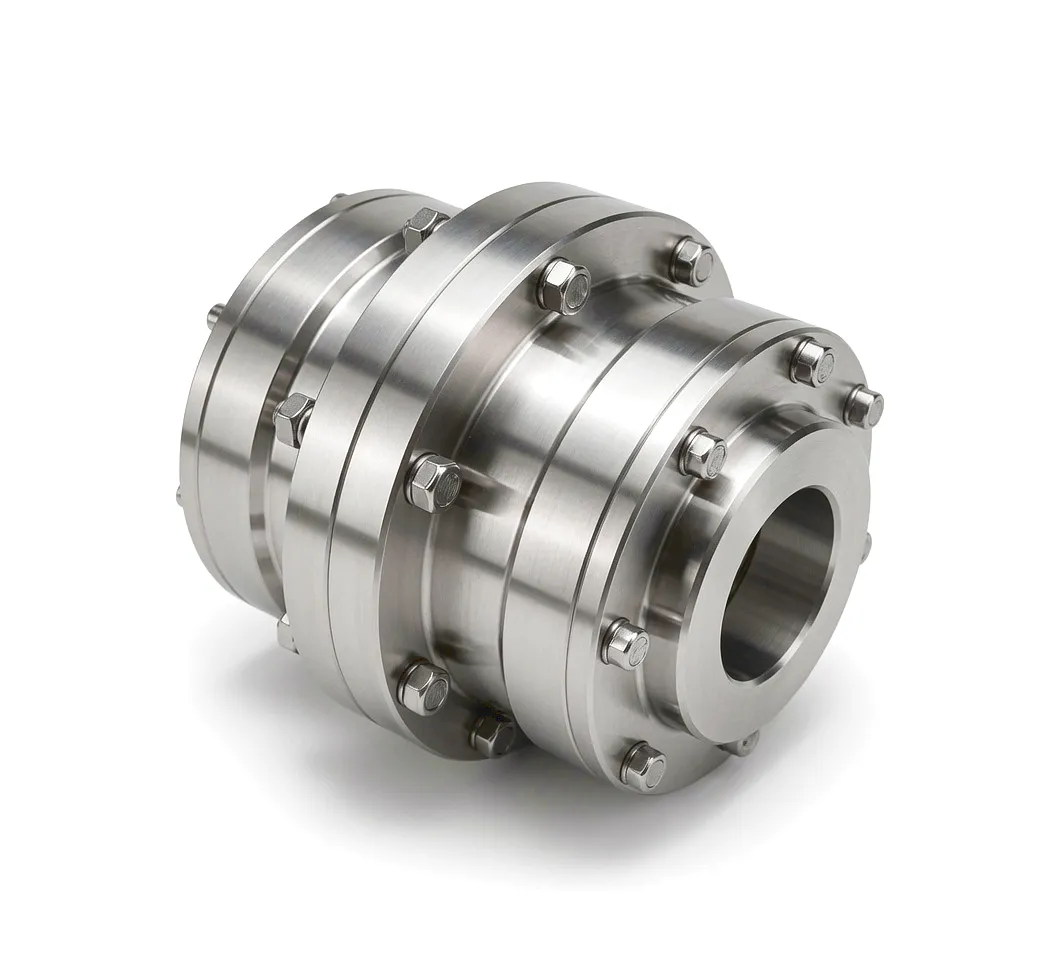
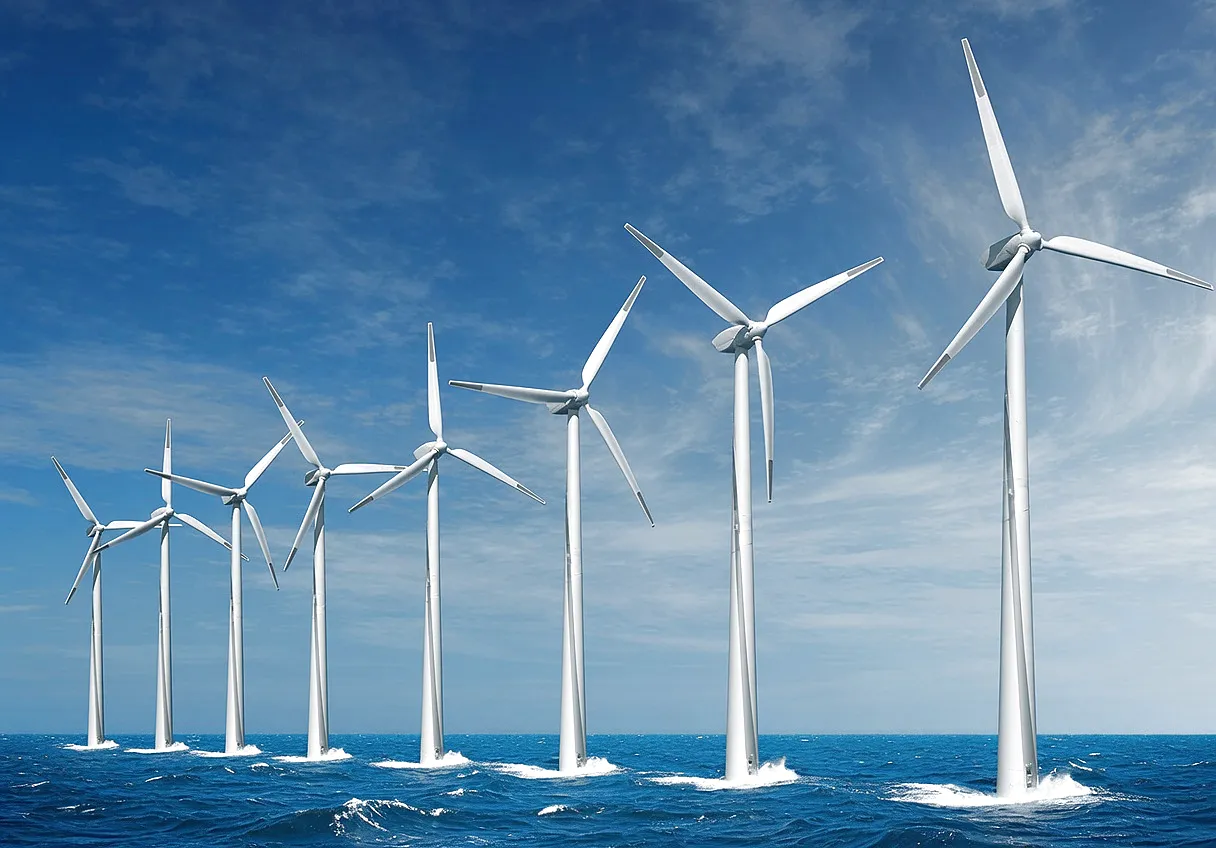
 Wind energy is no longer a marginal technology. Across the United Kingdom — from the North Sea’s offshore arrays to the upland sites of Scotland and Wales — utility-scale wind turbines are producing a substantial share of national electricity. Each of those turbines is a precision machine in which the drivetrain is arguably the most mechanically demanding sub-assembly. Get the power transmission wrong, and the consequences range from unscheduled downtime to catastrophic gearbox failure at heights exceeding 100 metres.
The gear coupling sits at the mechanical interface between the main shaft or gearbox output shaft and the generator. Its job sounds straightforward: transmit torque. In practice it must do far more — accommodate angular, radial and axial misalignment caused by rotor weight, thermal expansion and dynamic loading; absorb shock loads generated by turbulent gusts; and survive maintenance intervals measured in years rather than months, all while requiring minimal lubrication attention inside a sealed nacelle. This is an environment that rewards engineering precision, and where the wrong coupling choice carries real financial penalties.
Inside the Nacelle: How the Drivetrain Works
Mechanical Power Flow & Coupling Position
Modern grid-scale wind turbines follow one of three principal drivetrain architectures. The most widely deployed in the UK market remains the doubly-fed induction generator (DFIG) arrangement, in which a three-stage planetary/helical gearbox steps the rotor speed from roughly 5–20 rpm up to approximately 1,500 rpm for the generator. A second approach — the medium-speed or “semi-direct” drivetrain — uses a compact two-stage gearbox, reducing mechanical complexity while still permitting a smaller, lighter generator. In both configurations, the shaft connecting the gearbox high-speed output to the generator input shaft must accommodate the reality of imperfect alignment, and that is precisely where a drum-tooth gear coupling earns its place.
The third architecture — direct drive — eliminates the gearbox entirely, coupling the rotor hub directly to a large-diameter permanent magnet generator running at rotor speed. While this removes one source of mechanical loss, it creates an even greater need for a flexible connection at the generator mounting flange, because the structural deformation of the mainframe under rotor loads must be absorbed without inducing bending stress into the generator shaft or stator housing. Gear couplings are used here too, particularly in the intermediate shaft assemblies of semi-direct drive trains.
The physics here is unforgiving. A 3 MW offshore turbine generates peak shaft torques exceeding 2,000 kN·m at the main shaft, and even at the high-speed output coupling the torque levels — combined with dynamic overload factors of 2.0 to 2.5 during grid faults or emergency stops — demand a coupling with genuine torque reserve, not a safety factor borrowed from the catalogue of a lighter application. Getting the selection right requires understanding both the steady-state and transient loading envelope, something that drives engineers at sites across Aberdeen, the Humber Estuary and the Bristol Channel to engage closely with coupling suppliers at the specification stage.

Key Fact
A single unplanned nacelle access on an offshore wind turbine in the UK can cost between £50,000 and £200,000 in vessel hire, crane time and lost generation. Coupling reliability is a direct commercial variable.
Why Drum-Tooth Gear Couplings Outperform Alternatives in Wind Applications
Technical Rationale & Comparative Advantage
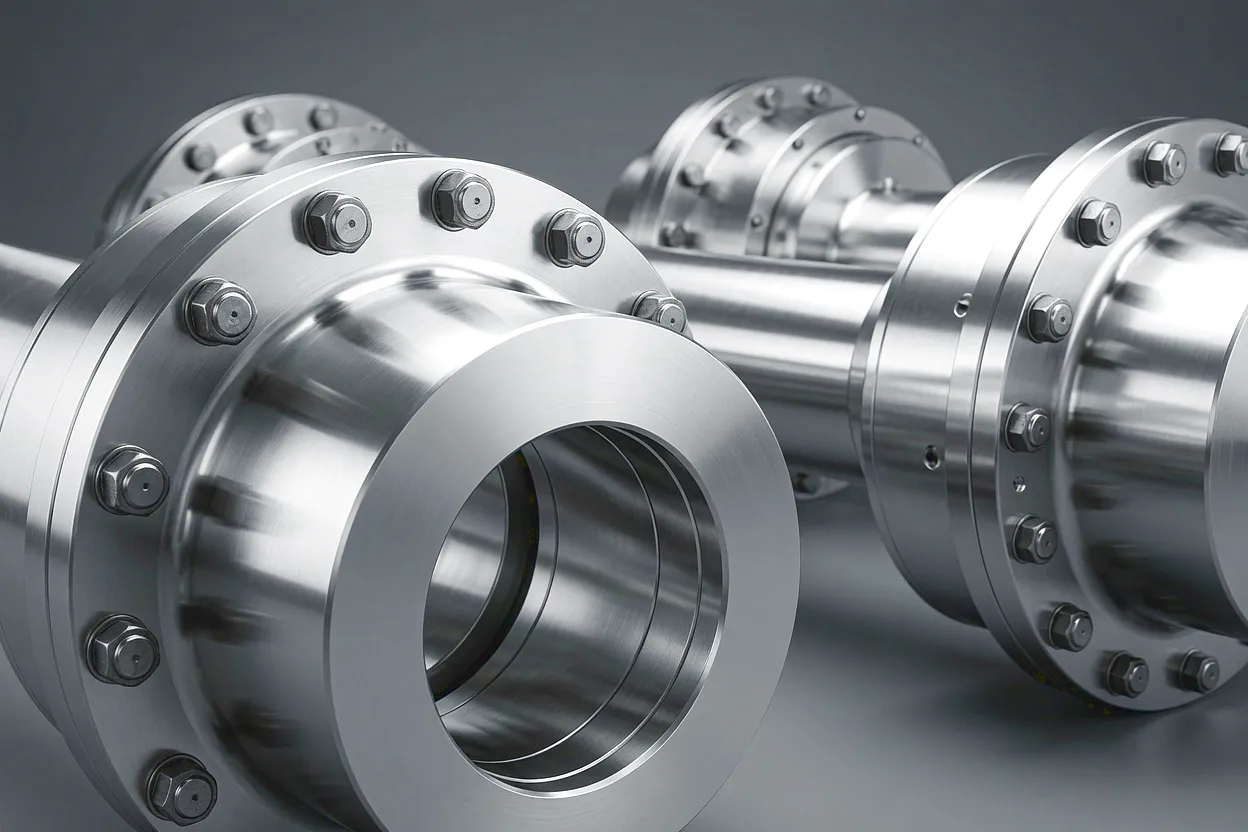
Engineers responsible for wind turbine procurement across the UK — whether at original equipment manufacturer level or at the independent service provider level — regularly compare gear couplings against disc (diaphragm) couplings and jaw/elastomeric couplings. Each technology has its merits, but for the specific combination of high torque density, multi-directional misalignment tolerance and long service life in an inaccessible installation, the drum-tooth gear coupling has a clear engineering argument in its favour.
High Torque Density
The crowned tooth geometry distributes load across the full tooth flank, allowing a compact envelope to carry torques that would require a much larger elastomeric unit. For nacelles where weight and space budgets are tight, this matters considerably.
Tri-Directional Misalignment
Angular misalignment up to 1.5°, radial offset and simultaneous axial displacement are all accommodated within one assembly — without generating the bending moments that rigid flanged connections would impose on shaft bearings.
Shock Load Tolerance
During emergency braking events or grid reconnection transients, torque spikes can reach multiples of nominal load. The steel-on-steel crowned tooth design absorbs these peaks without the fatigue degradation that affects polymer-element couplings over time.
Extended Service Intervals
With lifetime-lubricated sealed designs, drum-tooth gear couplings can match five-year major service intervals now becoming standard across UK offshore wind contracts, significantly reducing the number of technician nacelle climbs required.
Disc couplings compete on zero-backlash precision, which matters in servo and positioning applications, but in a wind turbine the small amount of clearance inherent in a gear coupling actually helps by preventing the transmission of bending moments during mainframe deflection. Jaw couplings, while cheap and simple, lack the torque rating and thermal range demanded by nacelle environments where temperatures swing from -20°C to +60°C and beyond in some operating regions. The drum-tooth gear coupling, with its metallurgical robustness and mechanical geometry, simply covers a wider band of the operating envelope than either alternative.
Technical Performance Parameters
Drum-Tooth Gear Coupling Series — Wind & Heavy Industrial Grade
| Parameter | GICL Series | NGCL Series | Heavy-Duty Wind Grade |
|---|---|---|---|
| Nominal Torque Range | 250 – 45,000 N·m | 500 – 160,000 N·m | Custom to 2,000 kN·m |
| Max Speed (rpm) | Up to 6,000 | Up to 4,500 | Application-specific |
| Angular Misalignment | ≤ 1.5° | ≤ 1.5° | ≤ 2.0° (crowned) |
| Radial Offset | Compensated via angular flex | Compensated via angular flex | Up to 3.0 mm |
| Hub Material | 42CrMo4 alloy steel | 42CrMo4 alloy steel | Forged 42CrMo4 / 34CrNiMo6 |
| Sleeve Material | Cast or forged steel | Forged steel | Forged alloy steel + carburising |
| Operating Temp | -25°C to +80°C | -30°C to +80°C | -40°C to +100°C |
| Lubrication | Grease-packed, sealed | Grease-packed, sealed | Lifetime-lube sealed / Re-greasing port optional |
| Bore Fitting | Keyed bore, interference fit | Keyed bore, interference fit | Hydraulic shrink disc / custom spline |
* Custom ratings and dimensions available on request. Contact our engineering team with full drivetrain data for accurate selection.
Materials, Geometry and Manufacturing Process
What Makes the Difference at Component Level
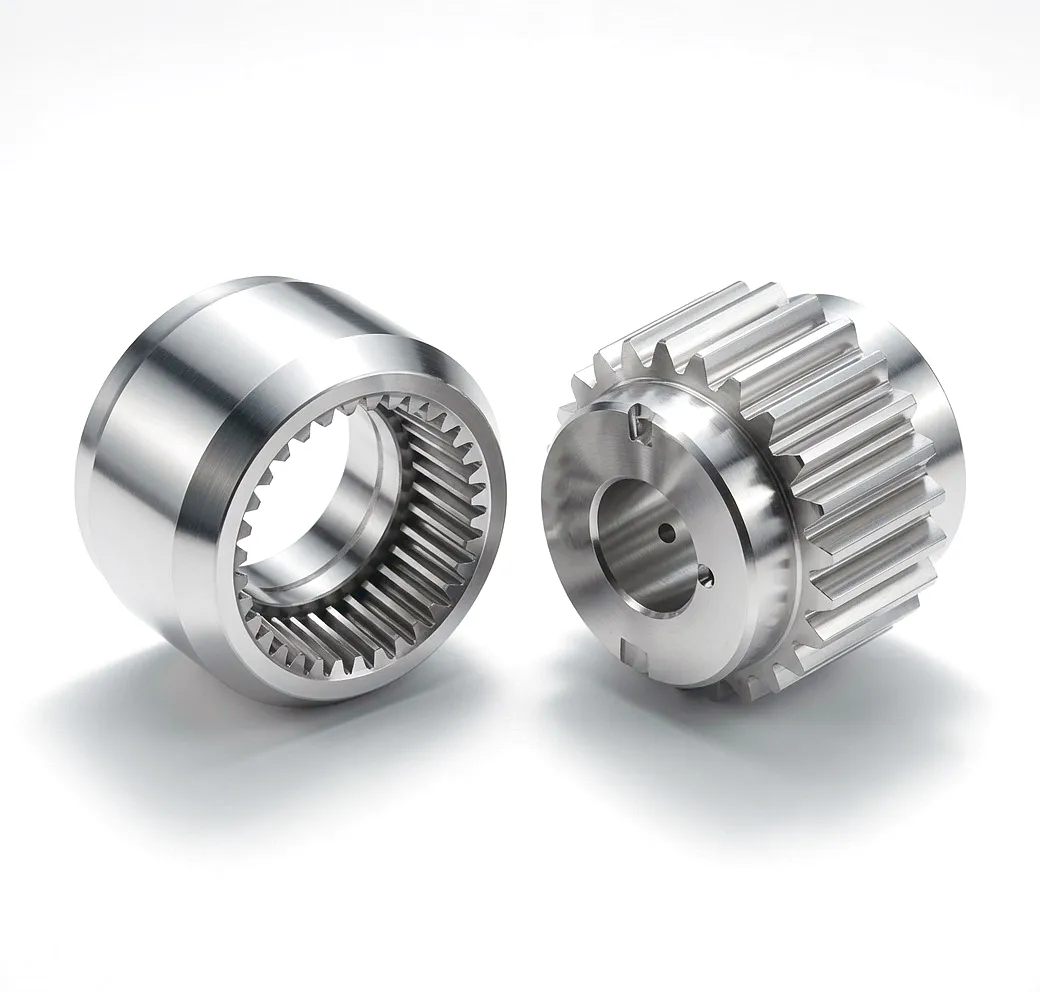
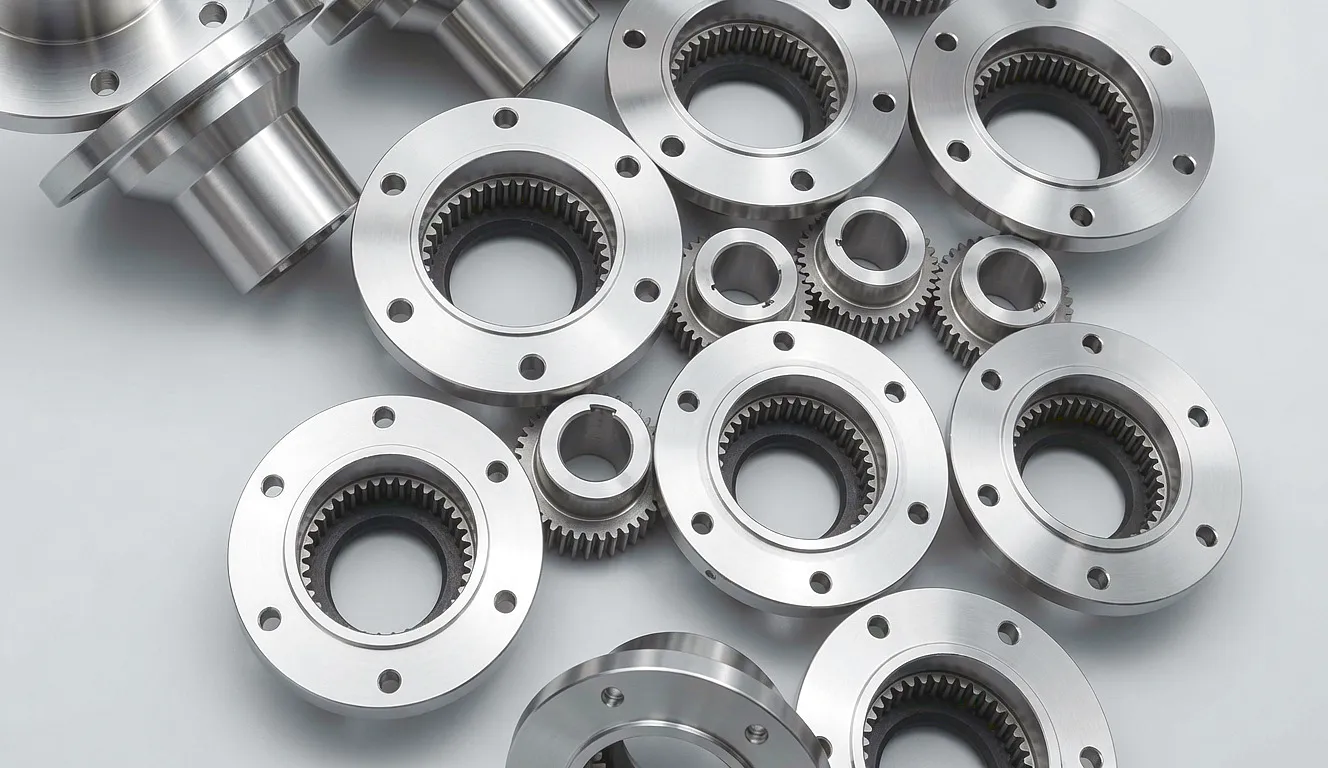
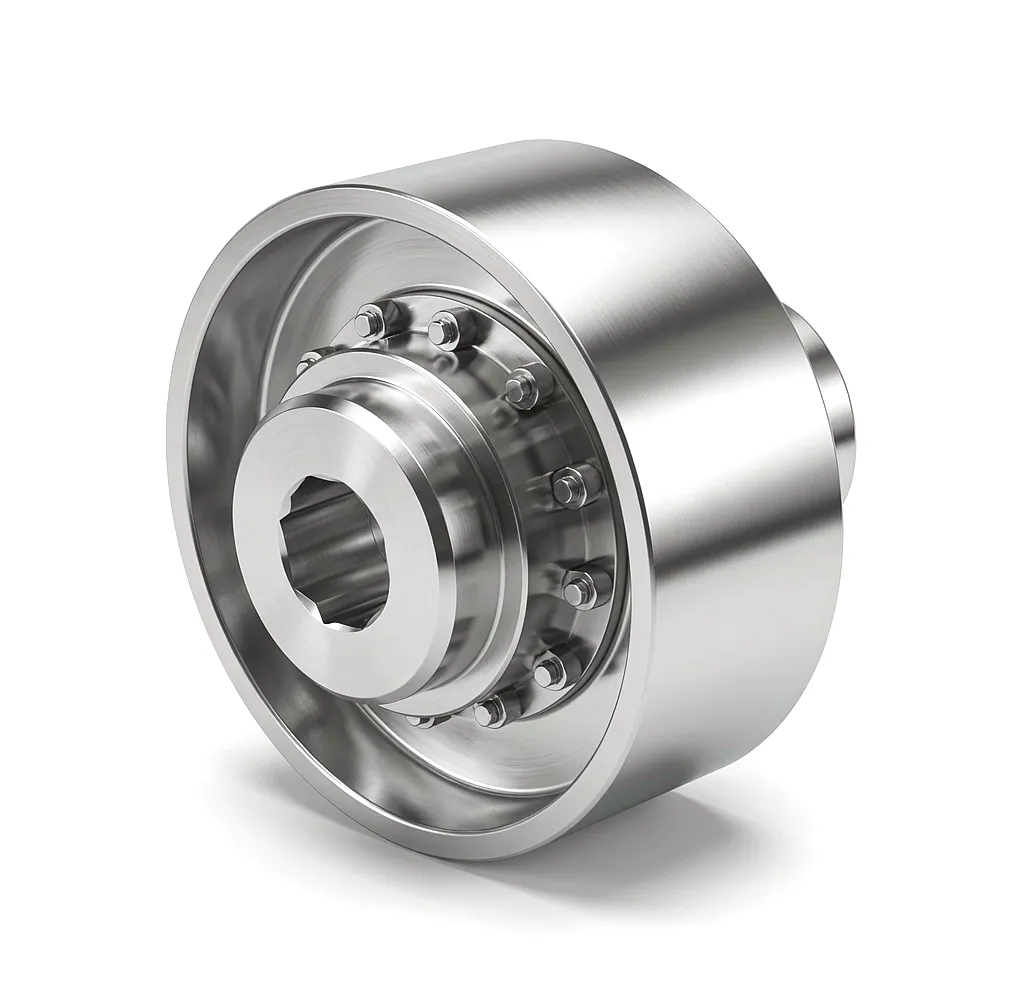
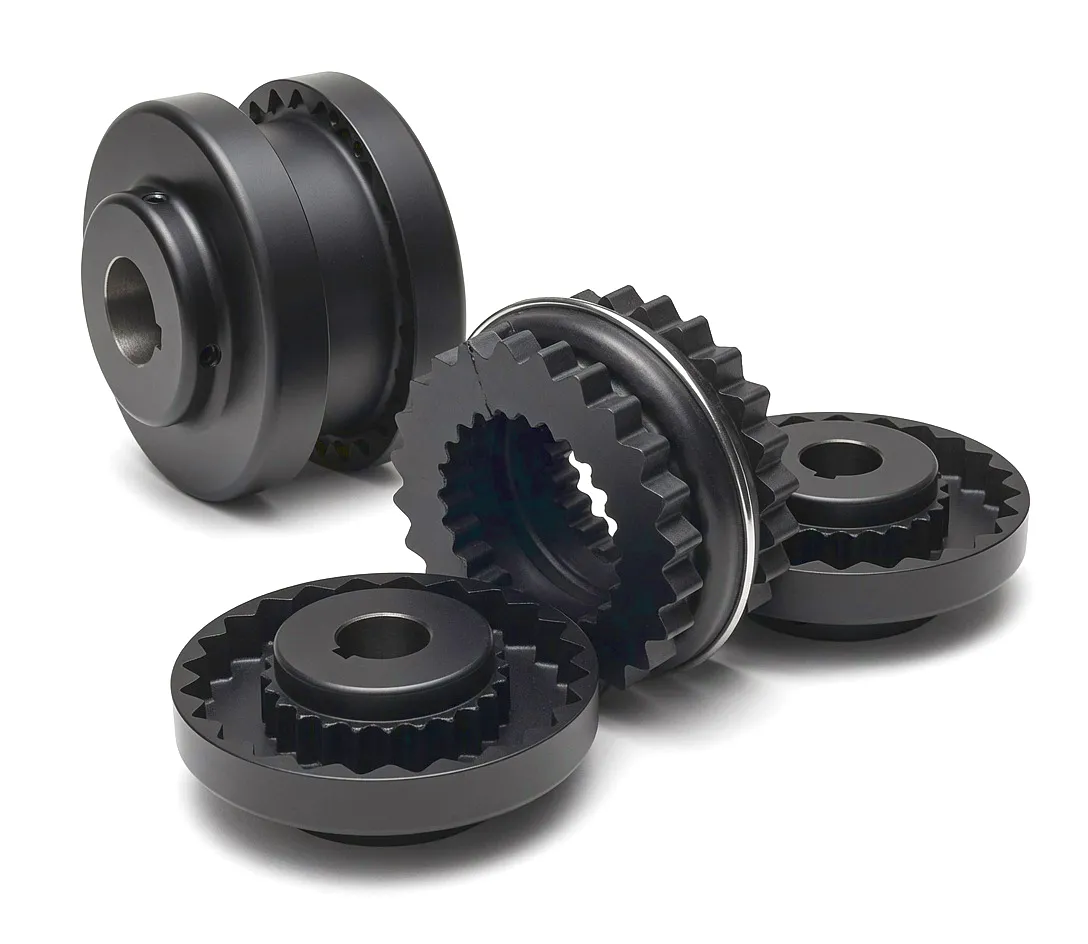 The defining geometric feature of a drum-tooth (barrel-tooth) gear coupling is the crowned profile on the outer teeth of the hub. Unlike a straight-tooth coupling, where misalignment concentrates load at the tooth edges and causes rapid wear and fretting, the crowned profile rolls the contact zone smoothly across the tooth face as the coupling deflects. This geometry distributes the load intelligently across the tooth width regardless of angular position, preventing the edge loading that initiates fatigue cracks.
Hub material in the wind-grade product line is 42CrMo4 or 34CrNiMo6 alloy steel, forged rather than cast to ensure the homogeneous grain structure and impact toughness that cold, wet, salt-laden nacelle environments demand. Gear tooth flanks are carburised to a case depth of 0.8–1.2 mm and hardened to 58–62 HRC, combining a tough core with a wear-resistant surface that resists the fretting corrosion common to oscillating contact surfaces in lightly loaded conditions at partial wind speeds.
Sealing is provided by precision-machined O-ring grooves in the sleeve flanges, retaining a lithium-complex grease (NLGI Grade 1 or 2 for low-temperature performance) that provides film lubrication across the full speed range from stand-still through maximum generation. The grease specification is typically confirmed at the turbine OEM level, but standard fills meet or exceed the requirements of ISO VG 220 gear oil equivalence. Corrosion protection on external surfaces — critical for offshore UK deployment — is achieved through electroless nickel or zinc-phosphate-plus-two-pack-epoxy systems to BS EN ISO 12944 C5-M classification.
Application Positions Within a Wind Turbine
Where Gear Couplings Are Installed in the Drivetrain
Gearbox HSS-to-Generator Coupling
The highest-speed, most thermally sensitive position in a DFIG drivetrain. The coupling must handle 1,000–1,800 rpm while accommodating the thermal growth differential between the warm gearbox casing and the cooler generator housing, which in a large turbine can displace shaft centres by 0.5–1.0 mm radially. A drum-tooth coupling manages this without generating the restoration forces that would load main bearings.
Main Shaft Intermediate Coupling (Semi-Direct)
In medium-speed semi-direct drivetrains, a coupling connects the main shaft to the compact 1- or 2-stage gearbox input. Here, torques are high and speeds are moderate (15–80 rpm). The coupling must absorb the rotor’s gyroscopic moments and the cyclic bending loads produced by the three-per-revolution gravity effect on the blades — a fatigue environment requiring a high-service-life design with carefully controlled tooth backlash.
Yaw Drive & Pitch Drive Systems
While not in the primary power path, the yaw drive motors — which keep the nacelle facing into the wind — and pitch actuator drives use smaller gear couplings to connect servo motors to planetary gearboxes. Misalignment here is a product of nacelle structural flexure and manufacturing tolerance stack-up. Compact drum-tooth units or nylon-element flexible couplings are used depending on the torque and dynamic cycle frequency involved.


Eight Reasons to Specify Ever Power Gear Couplings
Product Advantages for Wind & Heavy Industrial Users
✦
Forged Alloy Steel Construction
Forged rather than cast hubs provide consistent tensile strength above 900 MPa and impact toughness values suitable for sub-zero nacelle environments. Every batch is traceability-stamped with heat number and material certificate to ISO 10474 3.1.
✦
Precision CNC Gear Grinding
Tooth profiles are finish-ground on gear grinding centres to DIN 5480 Grade 7 or better, ensuring the tight pitch and involute accuracy that minimises dynamic load amplification at high rotational speeds.
✦
Full Dynamic Balancing
Assembled couplings are dynamically balanced to ISO 21940-11 G2.5 for high-speed applications, preventing vibration-induced fatigue at generator shaft bearings. Balancing certificates are supplied with each unit on request.
✦
Salt-Spray Resistant Sealing
Double-lip seals in NBR or FKM resist the saline mist environment of UK offshore sites, maintaining grease integrity through 1,000-hour salt-spray tests per ISO 9227. Seal replacement is possible during scheduled maintenance without removing the coupling from the shaft.
✦
Documented Fatigue Life
Load spectrum testing on representative product samples validates published L10 fatigue lives equivalent to 20-year turbine design life at specified load cycles. Test data is available to OEM customers under NDA for design basis validation.
✦
Rapid Retrofit Bore Options
For the UK’s substantial base of operating turbines requiring coupling replacement, hubs are stocked with a range of pre-bored and keyway-machined options, plus unbored blanks for on-site or workshop machining. Most standard replacements ship within five working days.
✦
Third-Party Inspection Ready
Production is open to Lloyds Register, Bureau Veritas and DNV inspection at witness point stages, meeting the requirements of offshore certification bodies for wind energy components. EN 10204 3.2 material certificates can be provided.
✦
Competitive Lead Times to UK
Air freight and sea freight consolidation options keep delivery times to UK ports competitive with European suppliers. Urgent requirements for North Sea operations can be fulfilled with 7–10 working day airfreight lead times on standard sizes.
Manufacturing & Custom Engineering Capability
Ever Power — Precision Coupling Manufacturer
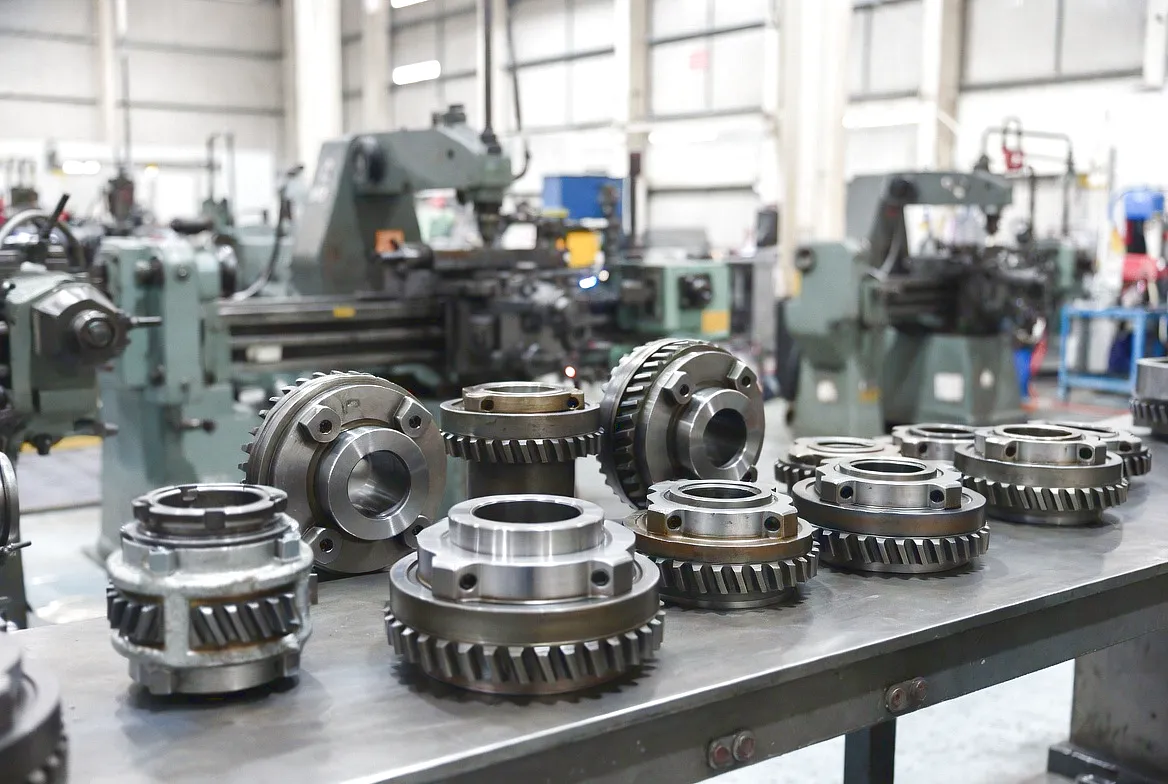
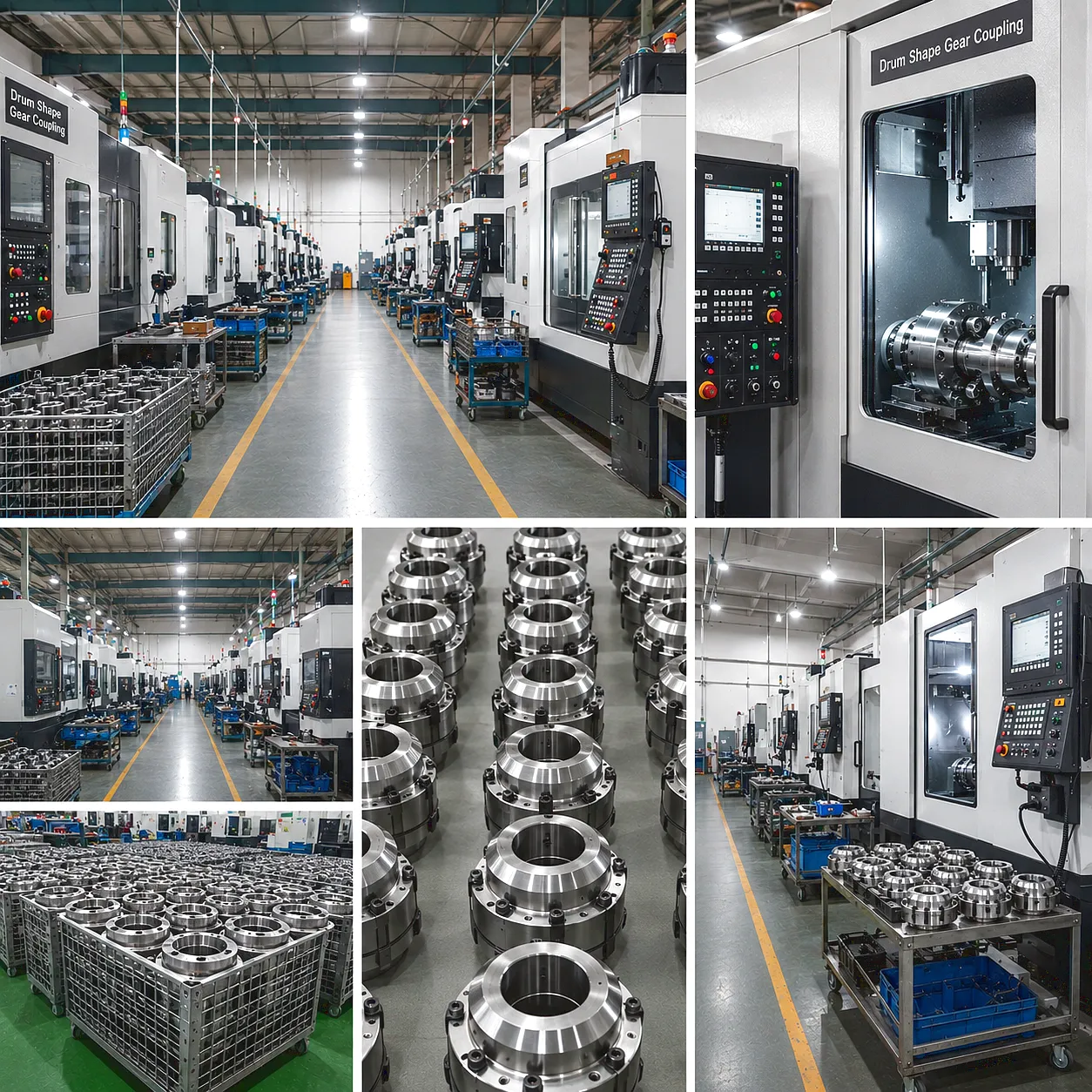
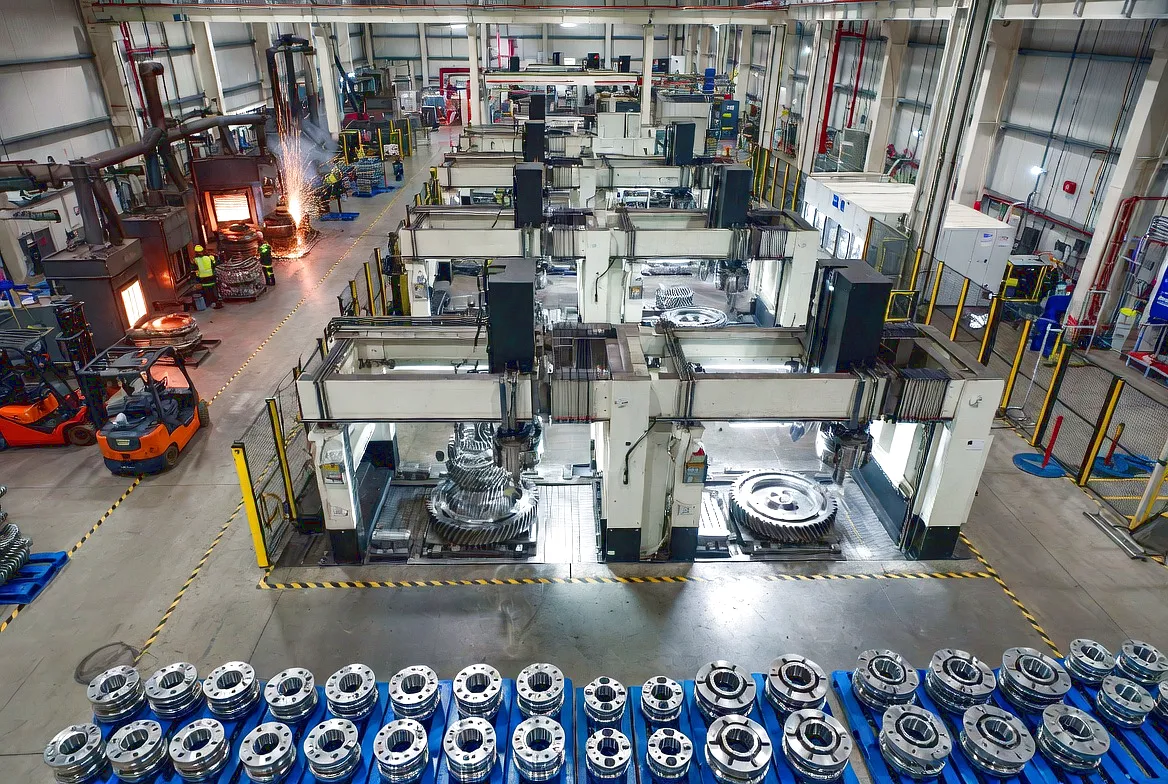
Ever Power’s coupling manufacturing facility operates a purpose-built production line dedicated to gear couplings for power generation and heavy industrial applications. The factory floor runs three shifts across CNC turning centres, gear hobbing machines, gear grinding centres and coordinate measuring machines, with each production stage subject to in-process quality checks documented through a full traceability system. Capacity planning supports both standard catalogue production and the bespoke engineering runs that wind energy customers regularly require.
Custom design work is handled by an in-house engineering team experienced in specifying couplings against IEC 61400-4 (wind turbine gearbox standard) and AGMA 9000-series coupling specifications. The team will review customer drivetrain load data — including torque time histories from aeroelastic simulation codes such as FAST or HAWC2 — and size the coupling to achieve the target design life, accounting for actual load spectrum rather than simply applying catalogue service factors. This level of engineering engagement is unusual in the standard components market and represents a real differentiator for UK project managers procuring for large offshore programmes.
Customisation options span bore sizes and configurations (cylindrical keyed, conical, splined, hydraulic shrink disc interfaces), flange geometry (SAE, DIN, custom bolt-circle), tooth module and number, crown profile, seal type and material, surface treatment and corrosion protection system. For retrofit customers, reverse engineering from worn coupling samples or drawings is offered — particularly valuable when original OEM drawings are unavailable for ageing UK wind farm fleets.
Customer Success: North Sea Offshore Wind Retrofit Programme
Real-World Performance Evidence
Scottish Power Renewables — Beatrice Offshore Wind Farm Area
North Sea, Scotland, UK · 2022–2024
Challenge: During a scheduled five-year major service campaign on a fleet of 2.3 MW DFIG turbines, the operations team identified excessive wear on the original high-speed shaft couplings — a straight-tooth design that had been experiencing fretting corrosion at the tooth contact, contributing to a measurable increase in vibration signatures picked up by the SCADA condition monitoring system. Three turbines had already experienced unplanned nacelle access events related to coupling-induced shaft bearing wear, at an estimated total cost of £280,000 including vessel time and lost generation.
Solution: The service contractor, working with Ever Power’s UK technical sales representative, selected the NGCL-series drum-tooth gear coupling sized to the same shaft envelope as the original unit but with the crowned tooth profile that the original lacked. Hub bores were custom-machined to match the existing shaft dimensions and keyway specifications, eliminating the need to modify generator or gearbox shafts during the already-short maintenance window. Delivery of 18 units was completed within 12 working days, including air freight from the factory.
Outcome: Following installation, SCADA vibration data for the retrofitted turbines showed a 40% reduction in high-frequency vibration amplitude at generator bearing housings. Eighteen months post-installation, no unplanned coupling-related maintenance events have been recorded. The projected five-year maintenance interval is now considered achievable with the new coupling design. The client has since approved a further 24-unit procurement for the next service wave.
−40%
12 days
24 ordered
What Our Customers Say
We’ve been sourcing gear couplings for our North Sea service work for over a decade, and the level of engineering support from Ever Power has been genuinely different. They came back with a properly sized proposal within 48 hours of receiving our drivetrain data, and the lead time was faster than anything we’ve seen from European catalogue suppliers.
James Holroyd
Senior Mechanical Engineer, Offshore Wind O&M, Scotland
The custom bore machining saved us significant time on site. We didn’t have to disturb the gearbox or generator shaft, which on an offshore turbine is a real cost saving. The NGCL units have now been running for 22 months with zero issues. The SCADA trends look clean — we’re very happy with the outcome.
Rachel Pemberton
Procurement Lead, Renewable Energy Services, Hull, East Riding
We specified Ever Power gear couplings for a 40 MW onshore wind repowering project in Wales. The project team needed documentation to DNV GL acceptance standards, and Ever Power had the test reports and material certs ready to go. Pricing was very competitive against established European brands, and technical quality was comparable. Would use again without hesitation.
Aled Morgan
Project Engineer, Wind Repowering, Wales
Serving the UK Wind Energy Supply Chain
From the Humber to the Moray Firth
 The United Kingdom has the world’s largest operational offshore wind capacity, with projects spanning waters from the Thames Estuary to the waters off the Orkney Islands. The supply chain serving this industry is increasingly sourcing components from global manufacturers who can combine technical quality with competitive pricing and responsive service. Ever Power’s gear coupling range addresses this need directly — offering the engineering rigour expected by OEMs working to IEC, AGMA and DNV standards alongside the commercial flexibility that independent service operators and repowering contractors require.
Our technical sales team maintains close working relationships with procurement departments at wind farm operation centres in Aberdeen, Edinburgh, Hull, Grimsby and Bristol — cities at the centre of the UK’s offshore and onshore wind operations. Enquiries from UK customers receive a response within one working day, with preliminary coupling selection recommendations provided at no charge based on drivetrain load data or nameplate specifications.
The UK Government’s target of 50 GW of offshore wind by 2030 represents a substantial pipeline of new installations, all of which will eventually require drivetrain maintenance and coupling replacement. Ever Power is already engaged with Tier 1 contractors and procurement teams planning for Dogger Bank, Hornsea Four and Moray West service contracts, and we welcome enquiries from operators, OEM service divisions and independent MRO suppliers at any stage of project planning.
📍 Aberdeen
North Sea offshore wind O&M hub. Fast-delivery stock for scheduled service campaigns.
📍 Hull & Grimsby
Humber Estuary offshore wind cluster. Hornsea, Triton Knoll and Lincs operations.
📍 Scotland & Wales
Onshore repowering and offshore development. Documentation to DNV & GL standards.
📍 South Coast & Bristol Channel
Rampion, Westermost Rough and prospective Severn operations supported.
Frequently Asked Questions
Gear Couplings for Wind Turbines — UK Buyers
What is the best type of gear coupling to use for replacing a worn high-speed shaft coupling on a 2 MW DFIG wind turbine operating offshore in the UK?
For a 2 MW DFIG high-speed shaft application in an offshore environment, the NGCL-series drum-tooth gear coupling is the recommended choice. The crowned tooth geometry tolerates the angular misalignment generated by gearbox-generator thermal differential, while the sealed, lifetime-lubricated design minimises nacelle access requirements. Specify FKM shaft seals for salt-mist resistance and request EN 10204 3.1 material certification to satisfy offshore wind certification body requirements.
How much does a custom gear coupling for a wind turbine drivetrain typically cost when ordering from a supplier in the UK market?
Pricing for wind turbine gear couplings varies significantly based on torque rating, bore configuration and certification requirements. Standard NGCL units for DFIG high-speed shaft applications typically range from £800 to £3,500 per unit depending on size. Custom-bored units with offshore certification documentation (3.1 material certs, balancing certificate) carry a modest premium. Contact our team with your drivetrain data for an accurate quote — preliminary pricing is usually provided within 24 hours.
Where can I find a reliable gear coupling supplier for offshore wind turbine maintenance projects based in or serving the Aberdeen area of Scotland?
Ever Power supplies gear couplings to wind energy operations teams based in Aberdeen and across the North Sea corridor. We maintain stock of the most frequently specified sizes for rapid dispatch, and our UK technical sales contact can arrange next-day courier delivery to Aberdeen port or a local O&M facility. Email [email protected] with your turbine model and coupling dimension requirements for same-day response.
How long do gear couplings typically last in a wind turbine gearbox drivetrain before they need to be replaced?
A correctly specified and installed drum-tooth gear coupling in a wind turbine application should achieve service lives of 15–20 years when properly lubricated and operating within its rated load envelope. Premature failure is almost always attributable to one of four causes: incorrect selection (underrating), misalignment exceeding design tolerance, inadequate lubrication replenishment, or corrosion of seals allowing contamination ingress. The move to lifetime-sealed units with corrosion-resistant seal materials has substantially extended observed service lives in UK offshore conditions.
Which gear coupling series should I specify when I need to match an existing shaft bore and keyway during a wind turbine drivetrain retrofit programme in the United Kingdom?
For retrofit applications where shaft modification is not possible, Ever Power can machine custom bore diameters and keyway dimensions into both GICL and NGCL series hubs. Provide the shaft diameter (mm), keyway width and depth (to BS 4235 or DIN 6885 standard, or custom dimensions), any interference or transition fit tolerance requirements, and the overall length constraint. We can also reverse-engineer from worn coupling samples if original drawings are unavailable. Turnaround for custom bored units is typically 7–10 working days.
When should I consider upgrading from a straight-tooth gear coupling to a drum-tooth (crowned tooth) design on an onshore wind turbine in Wales or Scotland?
Upgrade to a crowned drum-tooth coupling if your SCADA system is showing elevated vibration trends at generator bearing positions, if you are observing fretting marks or metallic debris in the nacelle, or if the coupling is being replaced ahead of its expected life. Straight-tooth couplings were used in earlier turbine generations but are now largely obsolete for drivetrain applications because they concentrate load at tooth edges under any misalignment condition. The cost difference at point of purchase is modest compared with the maintenance saving from a longer service interval.
What documentation and quality certifications should I request when purchasing a gear coupling for an offshore wind turbine project requiring DNV or Bureau Veritas acceptance?
For offshore projects requiring DNV GL or Bureau Veritas certification, request the following as a minimum: EN 10204 3.1 material test certificates for hubs and sleeves (certifying chemical composition and mechanical properties); hardness test records for carburised tooth surfaces; dimensional inspection report (DIN/ISO tolerance verification); dynamic balancing certificate to ISO 21940-11 G2.5; and a grease specification sheet for the factory-fill lubricant. Where third-party witness inspection is required, Ever Power can accommodate DNV, BV or Lloyd’s Register witness at key production stages by prior arrangement.