
Gear Coupling for Scraper Conveyor Drive Systems in Underground Coal Mining
When total installed power tops 3,000 kW and the working face is hundreds of metres underground, there is no second chance. Drum-type gear couplings have become the component of choice for longwall scraper conveyor drive trains — and this article explains exactly why, how they work, and what UK mining engineers must know before specifying one.
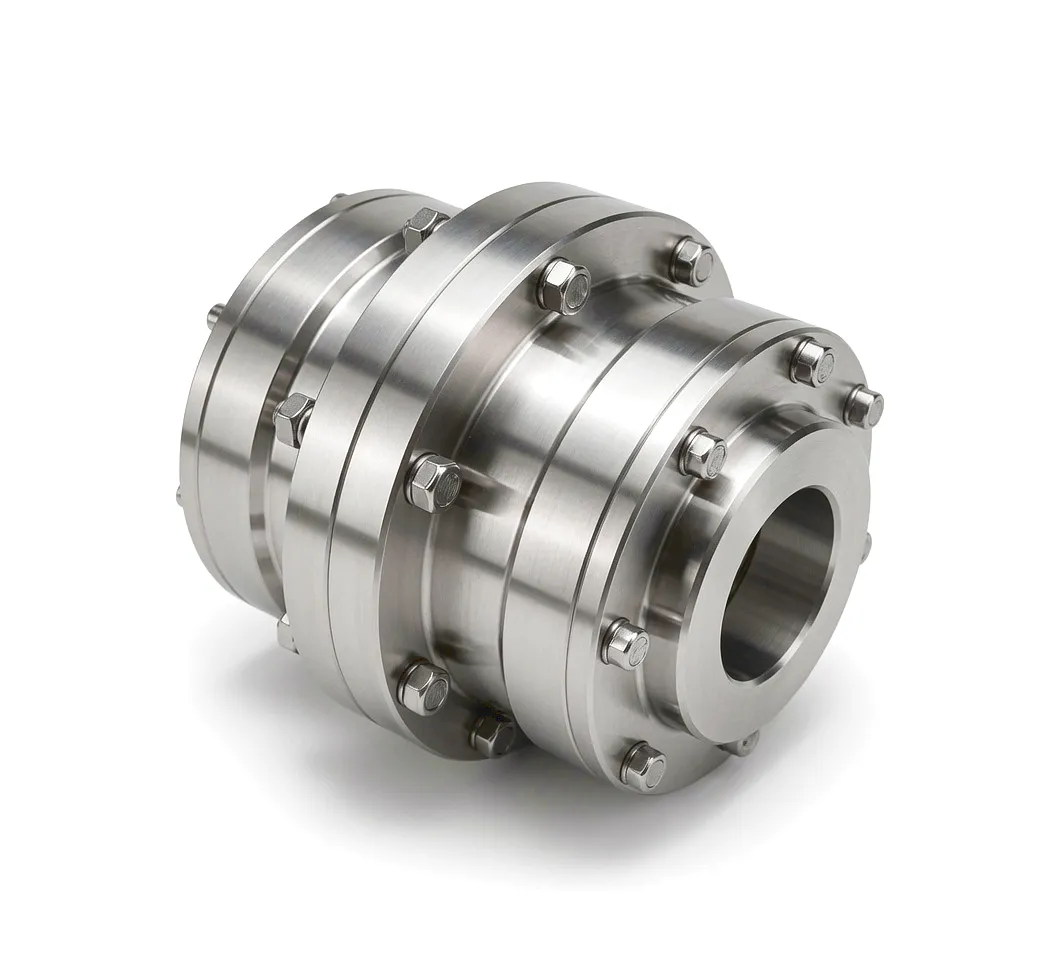
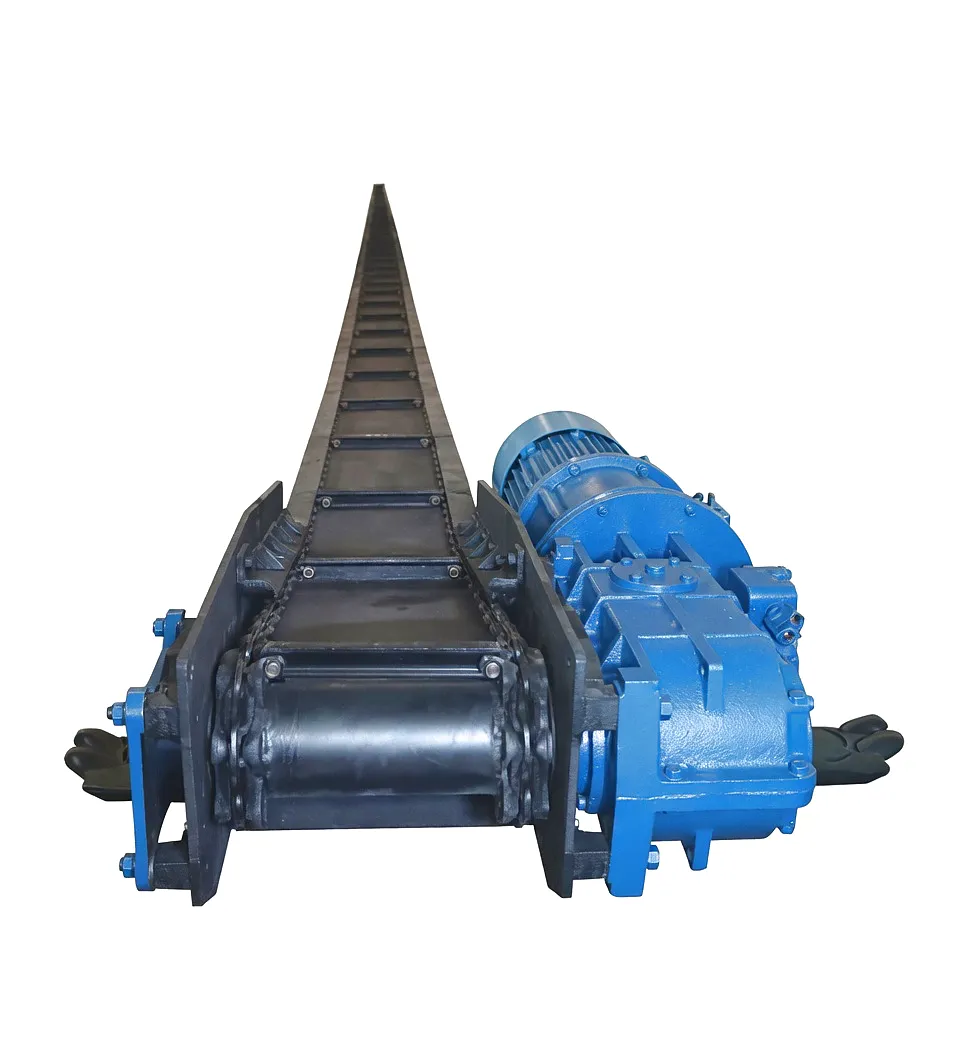 Underground coal mining in the United Kingdom operates under some of the harshest mechanical conditions imaginable. A modern longwall face can stretch 300 metres or more, and the scraper conveyor — locally called the armoured face conveyor or AFC — runs continuously throughout every production shift, dragging hundreds of tonnes of freshly cut coal towards the gate-end crusher. The drive train powering this machine typically consists of high-voltage electric motors, fluid couplings or variable-speed drives, heavy planetary gearboxes, and the mechanical link that joins them all together: the gear coupling.
What distinguishes a scraper conveyor from nearly every other industrial conveyor is the sheer violence of its operating cycle. A shearer drum biting into a hard sandstone band can send a torque spike of three to five times nominal load slamming through the drivetrain in a fraction of a second. If the coupling cannot absorb that spike, the gearbox casing cracks or the motor shaft shears — both catastrophic outcomes when the working face is 600 metres below the surface. This is precisely the environment where a properly rated drum-type gear coupling proves its worth, combining angular and axial misalignment tolerance with genuine peak-torque capacity that rigid alternatives simply cannot match.
Ever Power has supplied gear couplings to mining operations across the United Kingdom, continental Europe, and beyond for over two decades. The following guide draws on that accumulated field experience to walk through the engineering case for gear couplings on scraper conveyors, the relevant standards, and the specification criteria that separate a reliable installation from a costly failure.
Need a Custom Gear Coupling for Your Conveyor Drive?
Ever Power manufactures drum-type and standard gear couplings to order, with full engineering support for torque rating, bore sizing, and material selection. UK mining engineers welcome.
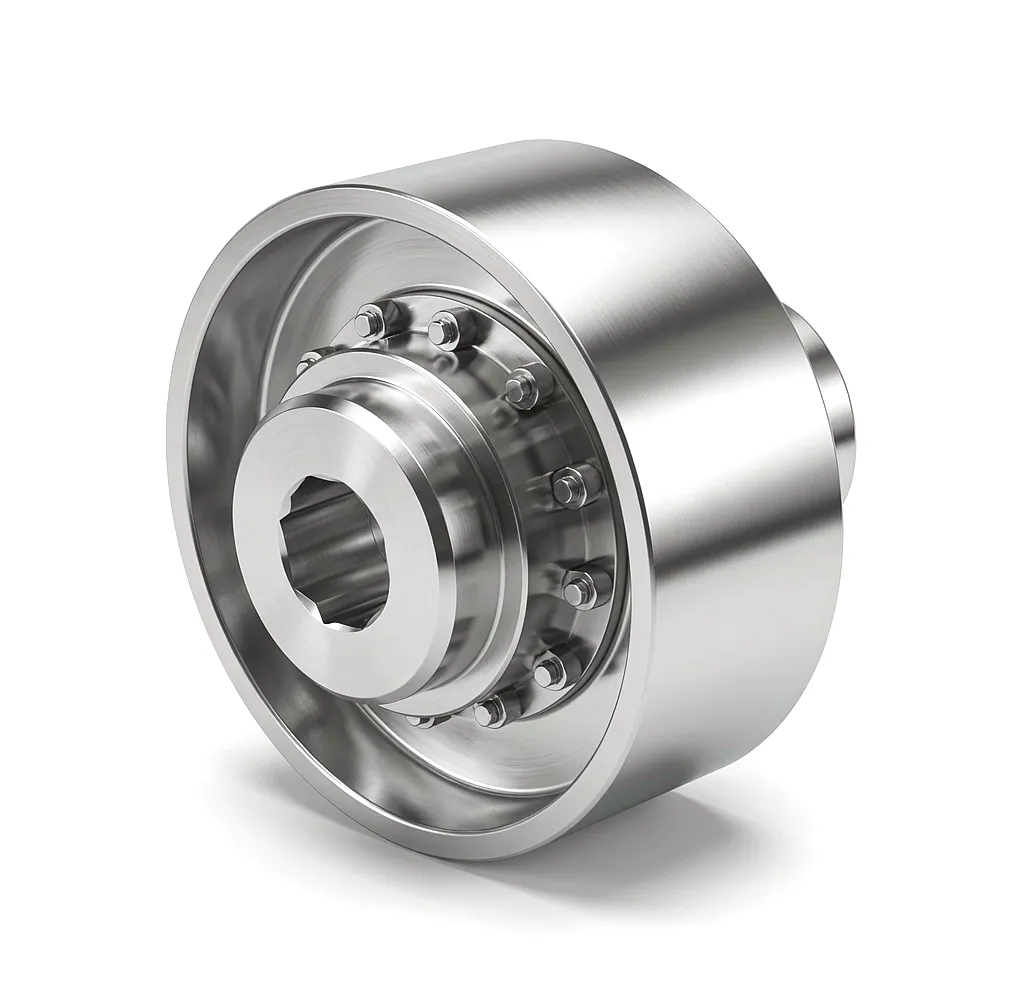
What Exactly Is a Scraper Conveyor — and Why Does It Stress Couplings So Hard?
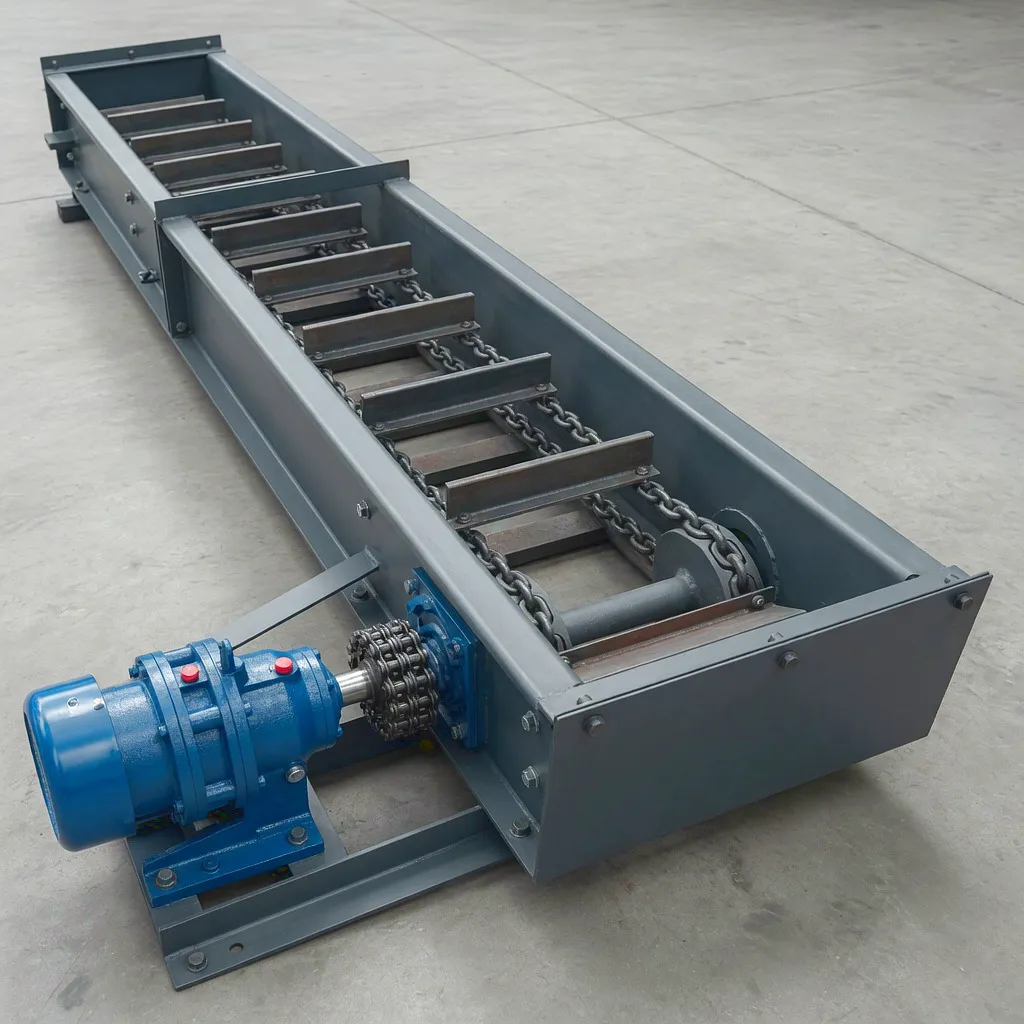
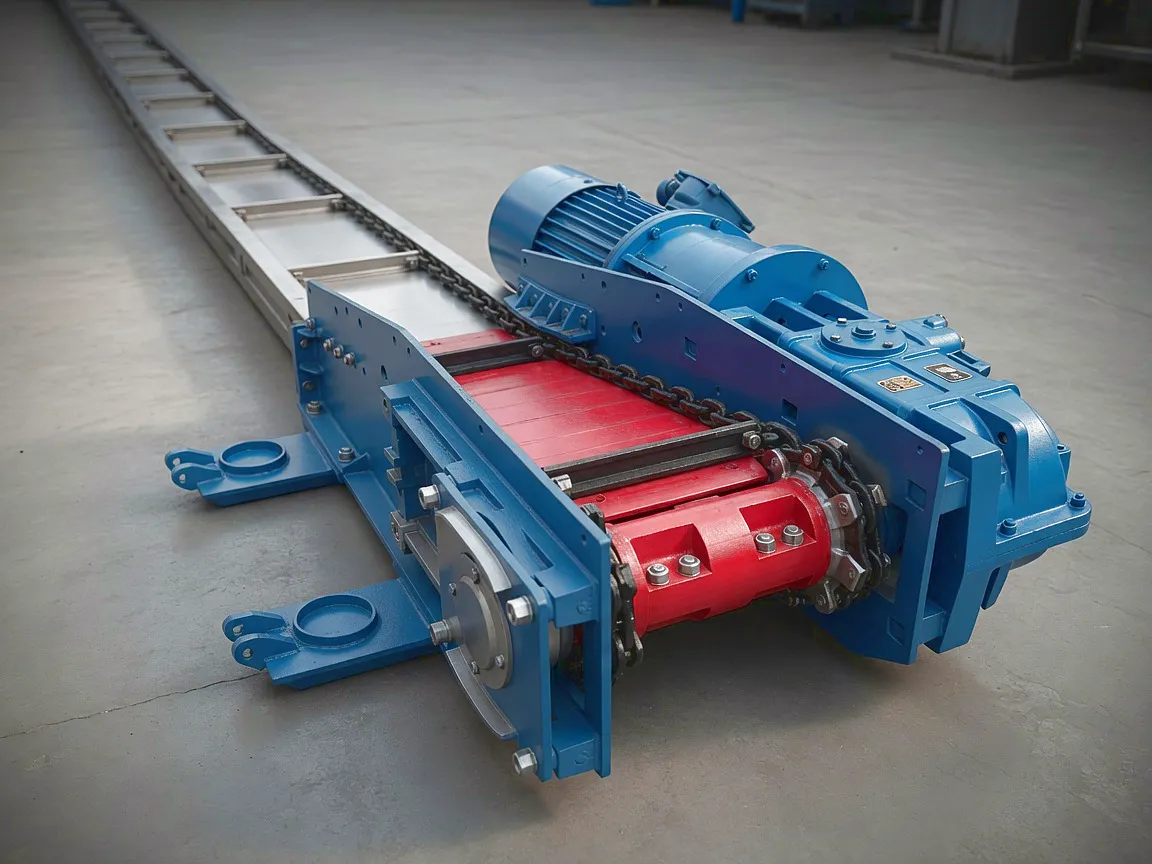 A scraper conveyor — in the UK mining vocabulary, most commonly referred to as an armoured face conveyor — consists of a machine-head drive assembly, a tail-end drive assembly, a central pan line of armoured steel troughs, and one or two continuous loop chains with attached flight bars, also called scraper bars, that sweep coal along the pan floor towards the discharge point. The head drive and tail drive each carry one or more electric motors, often rated between 400 kW and 1,000 kW per motor, coupled to a heavy planetary or helical-bevel gearbox.
The total installed power on a fully equipped longwall AFC in a high-output UK colliery can exceed 2,000 to 3,000 kW. That figure alone puts the scraper conveyor in the same power class as small rolling mills and heavy marine propulsion systems — machines that industrial engineers would never dream of running without high-quality shaft couplings. Yet underground conditions add complications that surface installations do not face: space is severely constrained, temperatures are elevated, the atmosphere is frequently wet with mine water, and coal dust penetrates every enclosure that is not perfectly sealed.
Load fluctuation is the defining mechanical challenge. When the shearer machine traverses a zone of hard stone bands interspersed in the coal seam, the resistance on the flight chain can jump from baseline to peak in milliseconds. If the gearbox output shaft and the chain sprocket shaft are connected by a rigid flange coupling, that spike transmits as a pure impulse into the gear teeth — and something breaks. A drum-type gear coupling with its inherent capacity for angular and axial movement acts as a mechanical low-pass filter, spreading the impulse across a brief angular displacement before the gearbox has to absorb it.
The Mechanics of a Drum-Type Gear Coupling: How It Handles Misalignment and Shock
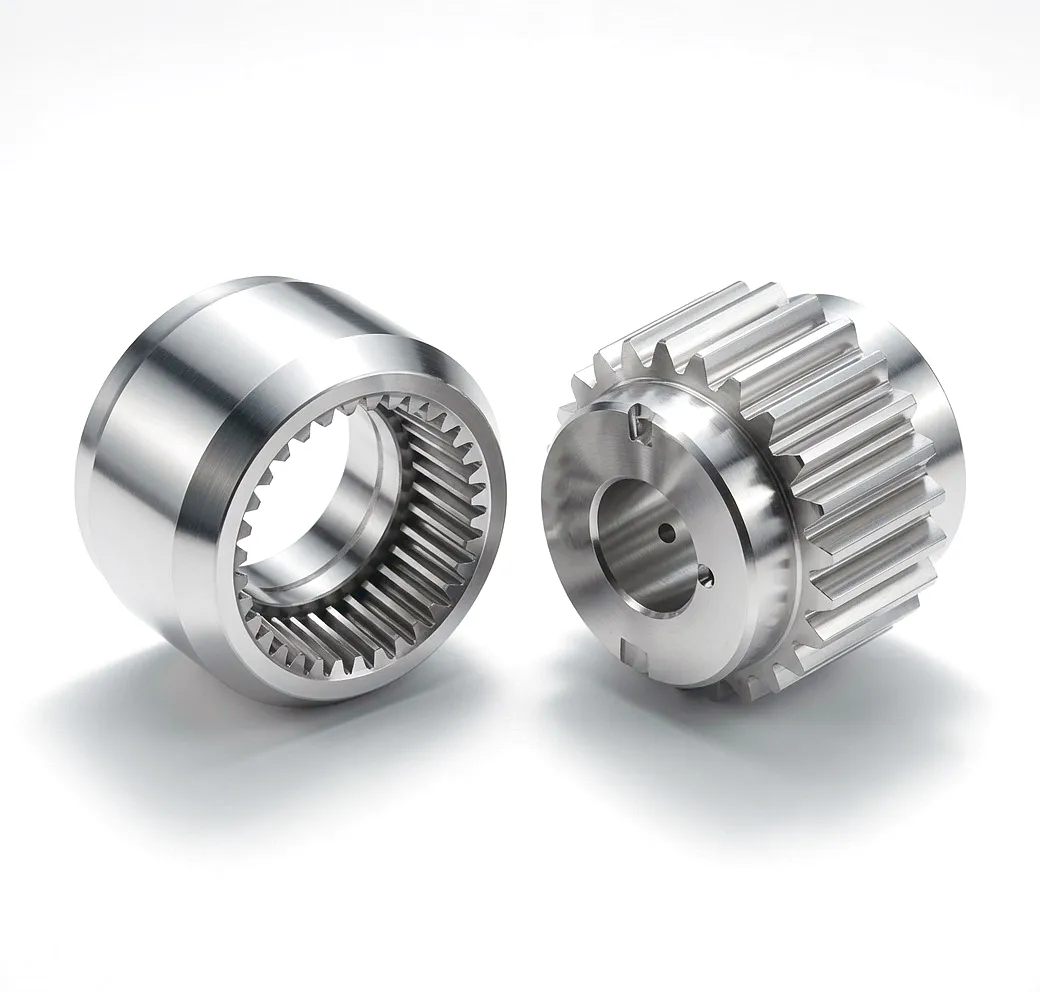
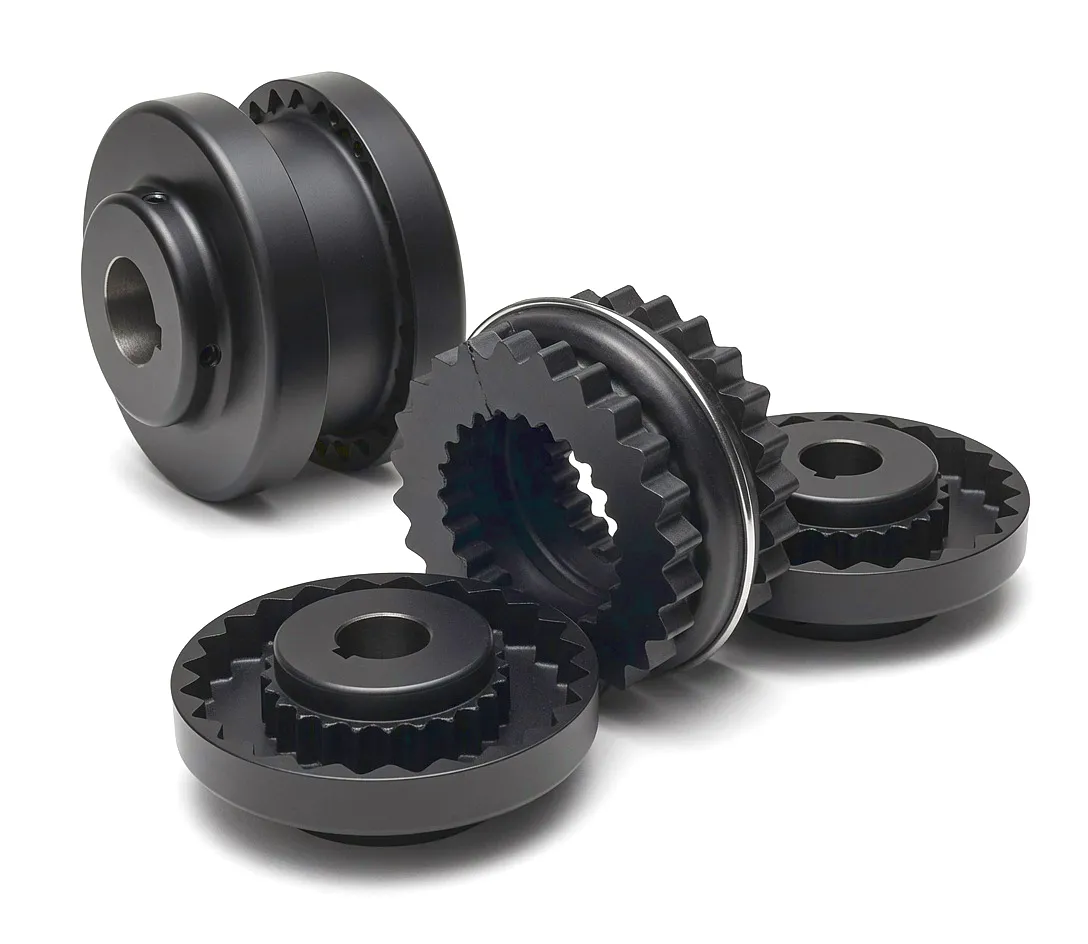
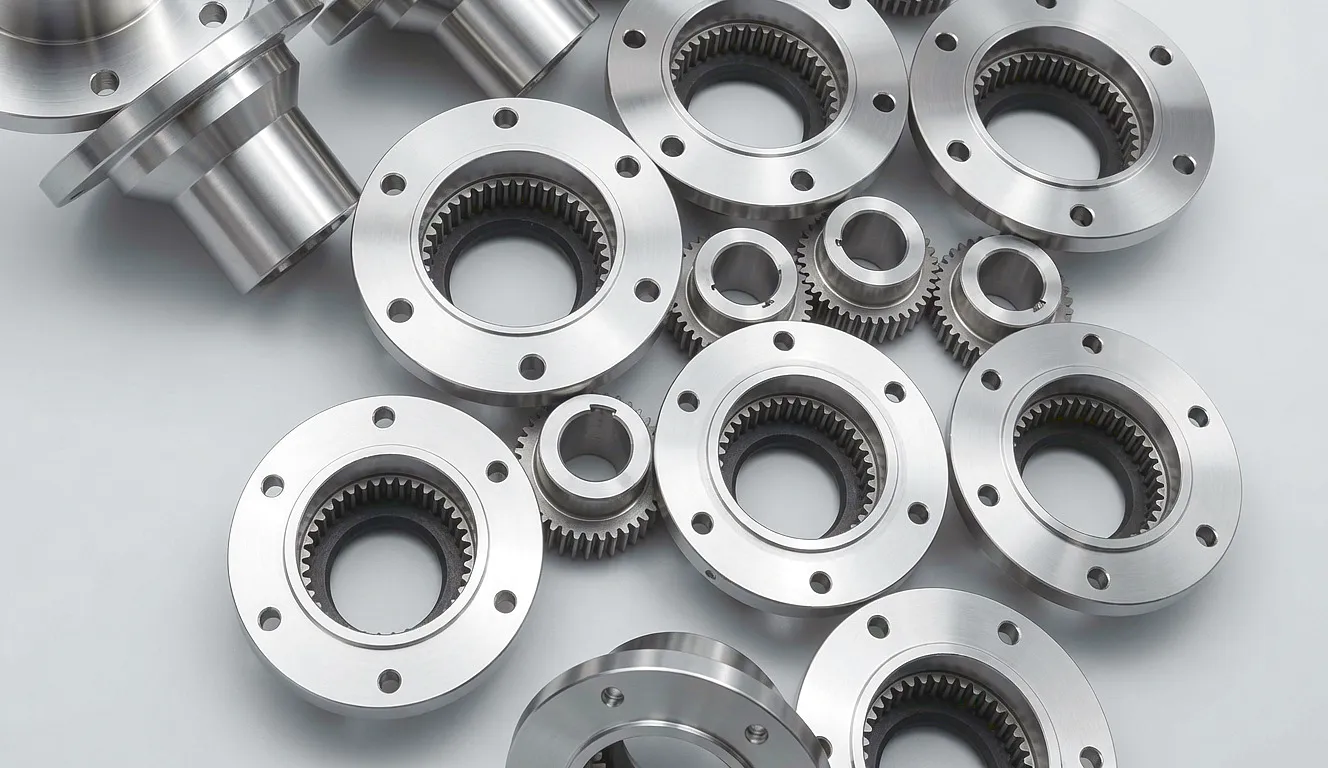
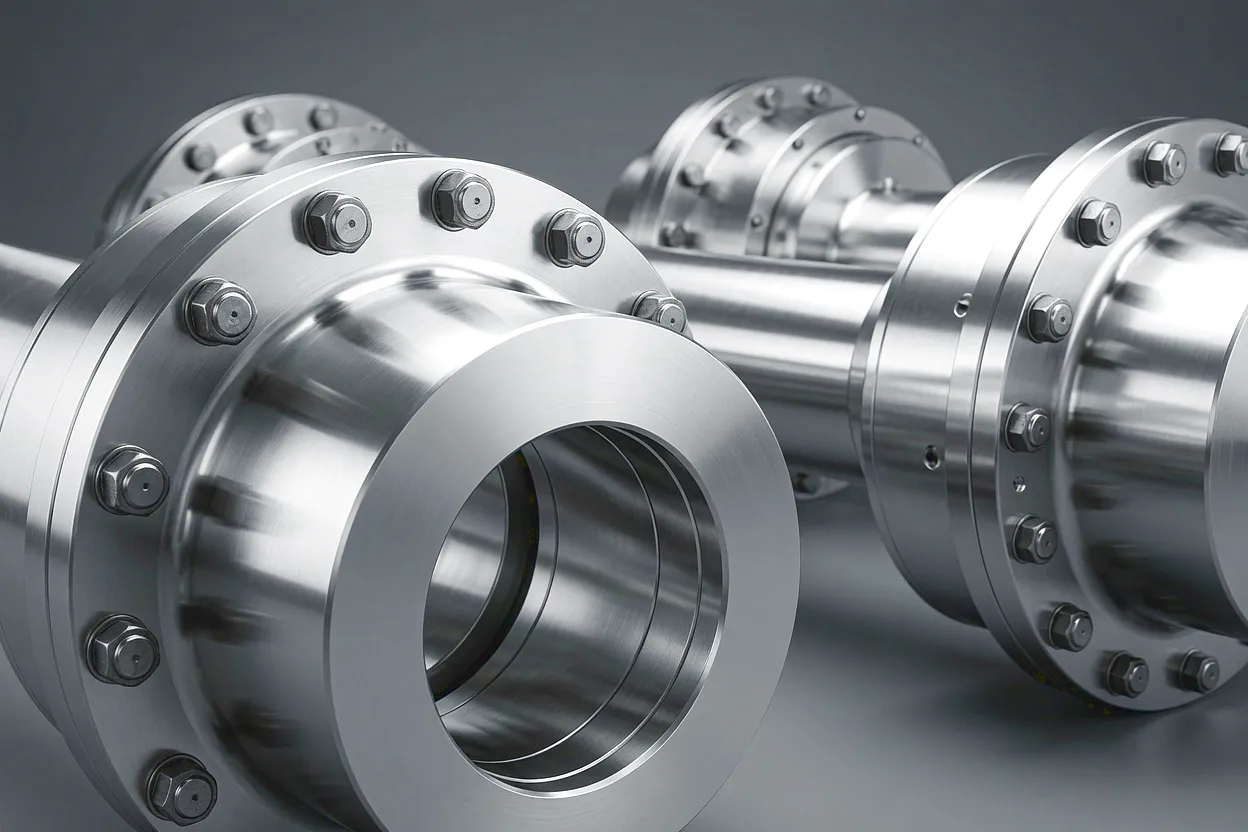 A standard drum gear coupling — the GICL/NGCL series being the most widely used form in heavy mining applications — comprises two inner hubs machined with crowned external teeth and two outer sleeves carrying matching internal teeth. The crucial feature is the crowning radius applied to the external teeth, which converts the straight-sided tooth profile into a barrel or drum shape. Because the contact surface is curved rather than flat, the hub can tilt relative to the sleeve by up to 1.5 degrees (some designs up to 3 degrees) without developing a concentrated edge-load stress on the tooth face. This is angular misalignment accommodation in its most mechanically elegant form.
For a scraper conveyor installation, angular misalignment matters because the gearbox and the chain sprocket shaft will never be in perfect alignment. Settlement of the steel pan structure, thermal expansion of the motor frame, replacement of worn pans with slightly different geometry — any of these routine events will push the two shafts out of ideal collinearity. A rigid coupling would transmit this misalignment as a continuous bending moment into both bearing sets; the drum gear coupling absorbs it through the crowned tooth geometry, extending bearing and seal life significantly.
Axial float — the ability of the coupling to accommodate shaft movement in the longitudinal direction — is equally important in this context. As the scraper conveyor warms up during operation, the gearbox shaft extends thermally. If the coupling has no axial freedom, it develops an end-thrust force that loads the motor and gearbox bearings. Well-engineered drum gear couplings provide several millimetres of axial float by allowing relative sliding between hub teeth and sleeve teeth, with the lubrication film maintaining the load-carrying film even during this sliding motion.
Crowned Tooth Geometry
Barrel-shaped external teeth distribute tooth-face load evenly during angular displacement up to 1.5°, preventing edge-loading and premature wear.
Torque Shock Damping
Momentary angular displacement of the hub-sleeve system dissipates kinetic energy from torque spikes before they reach the gearbox, reducing peak stress by 30–50%.
Axial Float
Longitudinal sliding within the tooth engagement zone accommodates thermal expansion without generating bearing end-thrust forces.
Sealed Grease Packing
Nitrile or fluorocarbon O-ring seals retain high-pressure grease in the tooth mesh zone, providing continuous lubrication even in flooded mine roadways.
Technical Parameters: GICL / NGCL Drum Gear Couplings for Scraper Conveyor Drive
The following table covers the indicative performance envelope of our standard GICL and NGCL series drum-type gear couplings. Custom bore sizes, keyway profiles, and surface treatments are available — contact Ever Power for specific sizing to your AFC drive specification.
| Parameter | GICL Series | NGCL Series | Notes |
|---|---|---|---|
| Nominal Torque Range | 160 – 710,000 N·m | 250 – 2,500,000 N·m | Per GB/T 5272 |
| Max Bore Diameter | Up to 480 mm | Up to 620 mm | Custom available |
| Max Speed (rpm) | 4,500 | 3,600 | At rated torque |
| Angular Misalignment | ±1.5° | ±1.5° | Crowned tooth design |
| Axial Displacement | ±2 – ±6 mm | ±3 – ±8 mm | Size-dependent |
| Hub Material | 42CrMo / 40Cr steel | 42CrMo alloy steel | Heat-treated |
| Sleeve Material | 45# steel / cast steel | ZG310-570 cast steel | Normalised & tempered |
| Tooth Surface Hardness | HRC 40 – 50 | HRC 40 – 50 | Induction hardened |
| Operating Temp Range | -20°C to +70°C | -20°C to +70°C | Standard grease |
| Balancing Grade | G6.3 standard | G6.3 standard | G2.5 available |
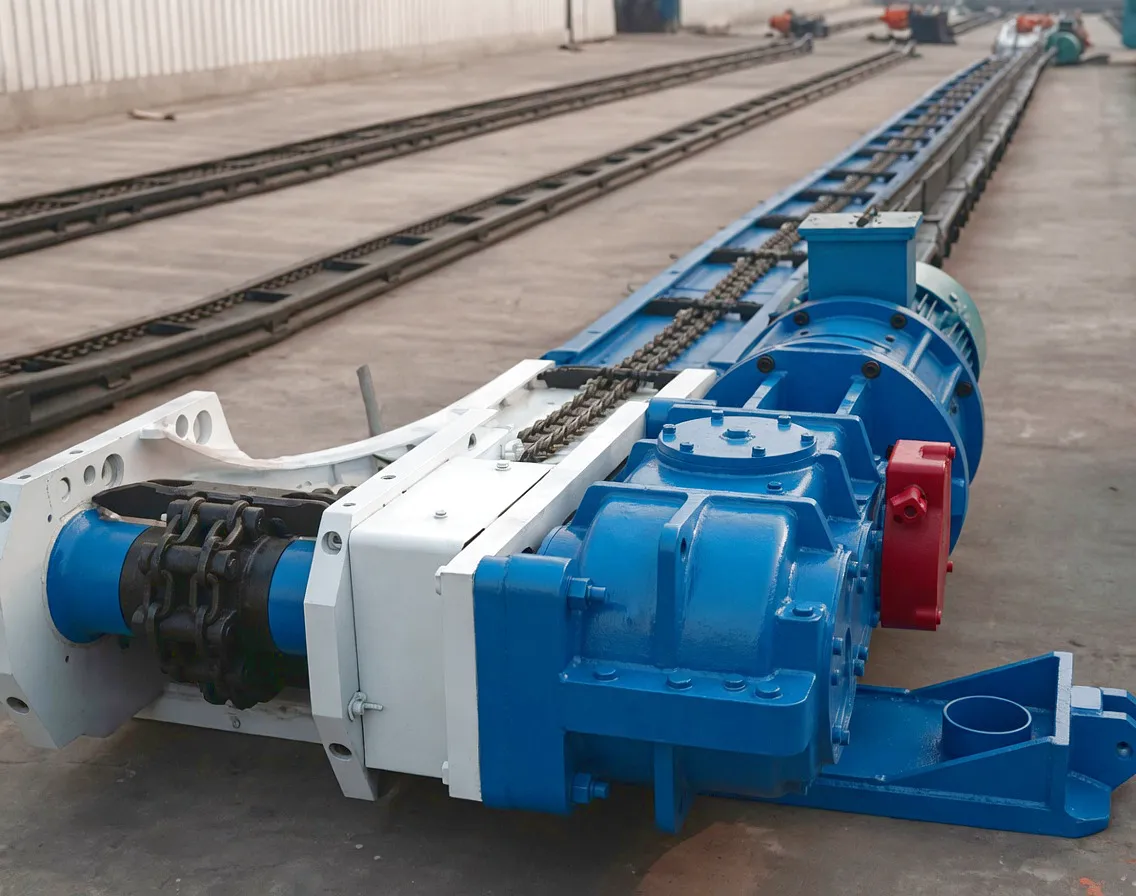
Materials, Construction & Principle: Why 42CrMo Steel and Crowned Teeth Dominate Mining Couplings
The material selection for underground mining gear couplings is non-negotiable territory. The hub assembly — the inner element that carries the external crowned teeth and transmits torque between bore and tooth profile — must withstand both the steady torsional stress of continuous operation and the superimposed bending stress introduced by angular misalignment. Standard-grade carbon steels do not offer the fatigue endurance required in this service regime. Ever Power specifies 42CrMo (equivalent to AISI 4140 in the UK market) for all mining-rated hubs. After forging and rough turning, hubs undergo quench-and-temper heat treatment to achieve a core hardness of approximately 280–320 HB, followed by induction hardening of the tooth flanks to HRC 40–50. This produces a hard, wear-resistant surface on a tough, impact-absorbing core — exactly the profile that mining conditions demand.
The outer sleeves in the NGCL series are produced from ZG310-570 cast steel, a grade that offers both castability into complex cross-sectional geometries and good toughness at elevated temperature. Cast-steel sleeves are dimensionally stable during operation because they have lower thermal conductivity than forged alternatives, which is beneficial in the warm, poorly-ventilated environment of an underground roadway where ambient temperatures can reach 30–40°C during peak production.
Sealing integrity is the third material pillar. In a wet, dusty mine environment, the coupling must retain its grease fill over a maintenance interval of typically 3 to 6 months without significant contamination ingress. Ever Power uses multi-lip nitrile rubber O-rings as primary seals, backed by metallic retaining rings that prevent seal extrusion under the centrifugal pressure generated at operating speed. Where mine water is particularly aggressive (high chloride content is not unusual in Yorkshire and Nottinghamshire coalfields), fluorocarbon (FKM) seals are available as a direct material upgrade with no dimensional changes to the assembly.
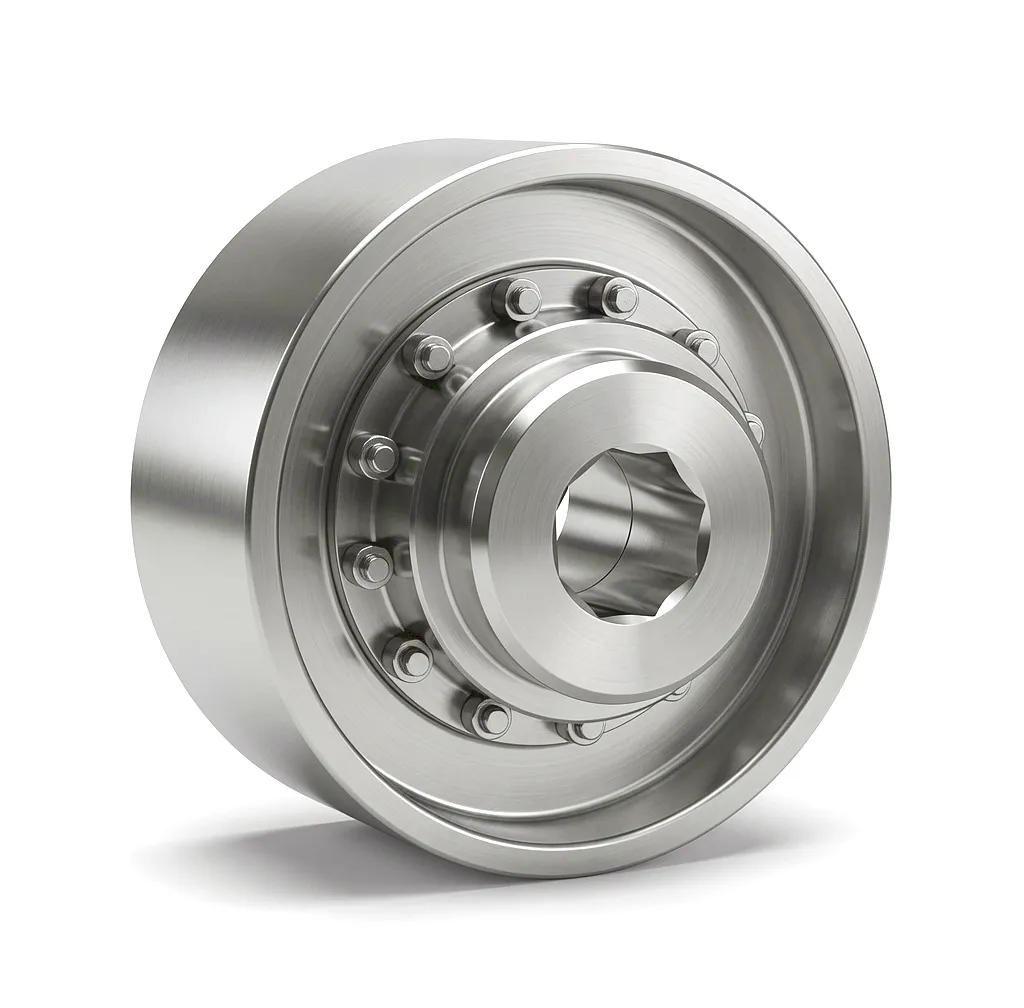
Six Reasons Mining Engineers Across the UK Specify Drum Gear Couplings on AFC Drives
Exceptional Shock Absorption
When a shearer drum strikes a hard stone band, torque spikes can reach 3–5× nominal rated load in under 50 milliseconds. The gear coupling’s crowned tooth geometry and slight angular play absorb much of this energy, protecting gearbox planetary stages from catastrophic tooth fracture. Field data from UK longwall operations consistently shows longer gearbox life when drum gear couplings replace rigid flanged alternatives.
Misalignment Tolerance
AFC pan-line structures are rarely perfectly level or perfectly aligned after installation — the working face advances daily, and the pans settle. A gear coupling rated to ±1.5° angular misalignment eliminates the need for laser-precise shaft alignment at installation time, saving several hours of rigging effort per face move and preventing the gradual bearing-overload failure that misaligned rigid couplings cause.
High Torque Density
Drum gear couplings achieve a torque-to-mass ratio that jaw or disc-pack couplings cannot approach at the same bore diameter. For a compact 500 kW / 30 rpm AFC tail drive — exactly the type of installation where space is most constrained — the NGCL series can transmit the full rated torque while fitting within a radial envelope small enough to clear the conveyor side-plate structure.
Long Service Intervals
With proper initial grease packing and sealed O-ring retention, drum gear couplings in underground service routinely achieve 6–12 month maintenance intervals. In a mine environment where every maintenance task underground requires careful planning and certified explosionproof procedures, extending the coupling service interval from 3 to 9 months represents a substantial operational cost saving across a fleet of 10–20 AFC drives.
Wide Temperature Tolerance
Mine faces in deep collieries — particularly in the UK’s remaining working coal operations in Yorkshire and the Midlands — can reach ambient temperatures of 35–40°C during production. Drum gear couplings rated to +70°C (with high-temperature grease, to +120°C) continue to operate reliably through this envelope, unlike elastomeric couplings whose rubber elements soften and lose torque capacity above 60°C.
Simple Overhaul
The split-sleeve construction of most drum gear couplings means that a worn sleeve can be replaced without removing the motor or gearbox from its mounting — a significant advantage in a confined roadway header where lifting equipment cannot be deployed freely. The hub remains on the shaft, the worn sleeve halves are unbolted, fresh parts are slid over, and greasing is completed in under an hour by a trained fitter.
Ever Power Manufacturing: Custom Gear Coupling Solutions for UK Mining & Heavy Industry
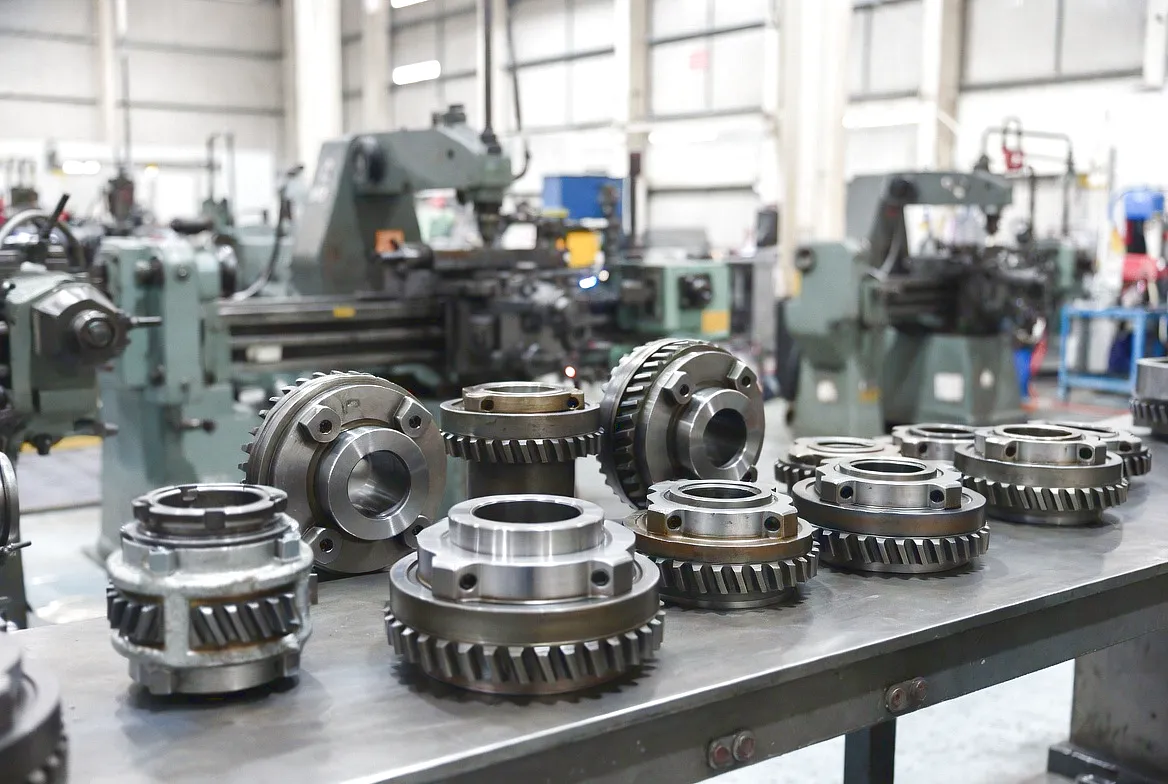
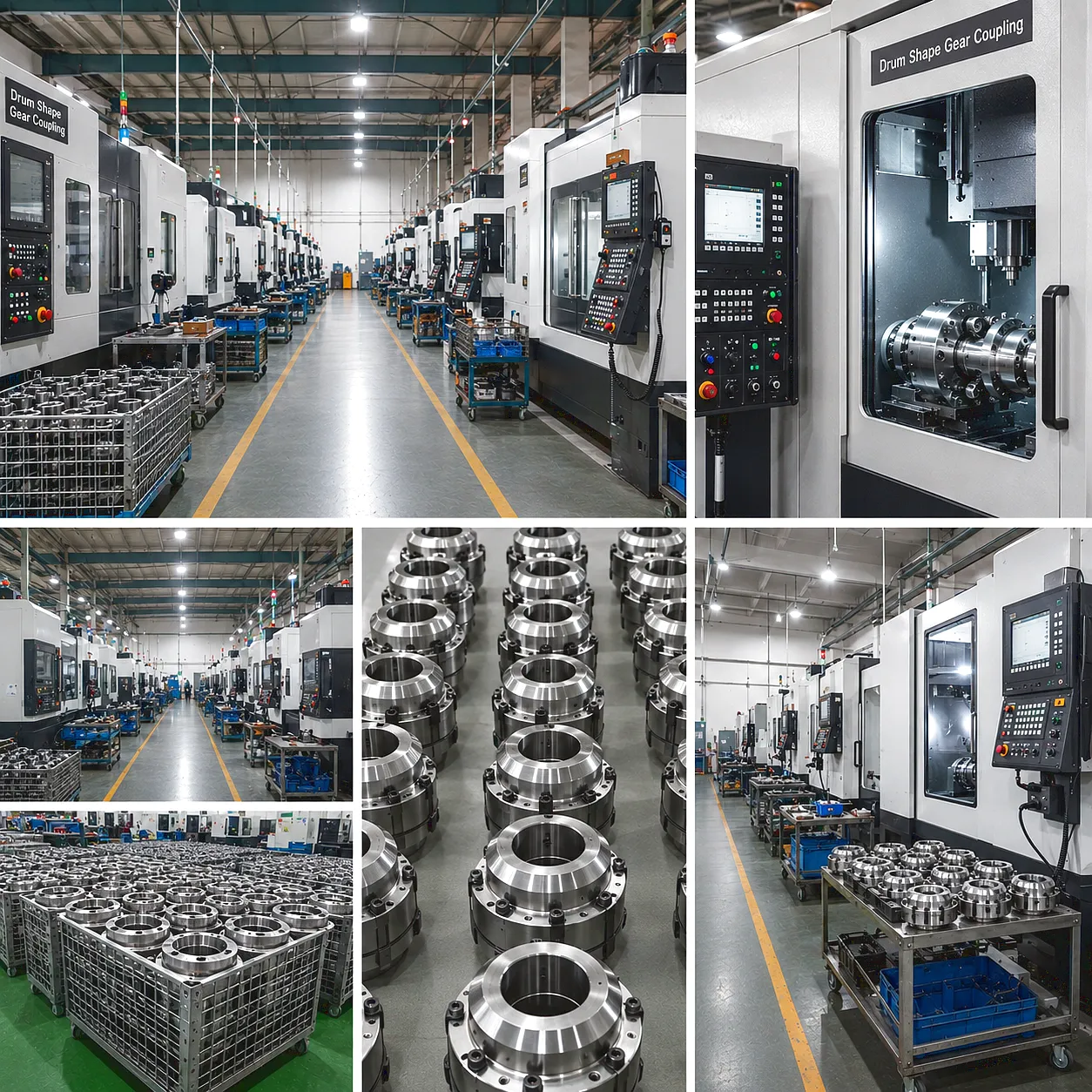
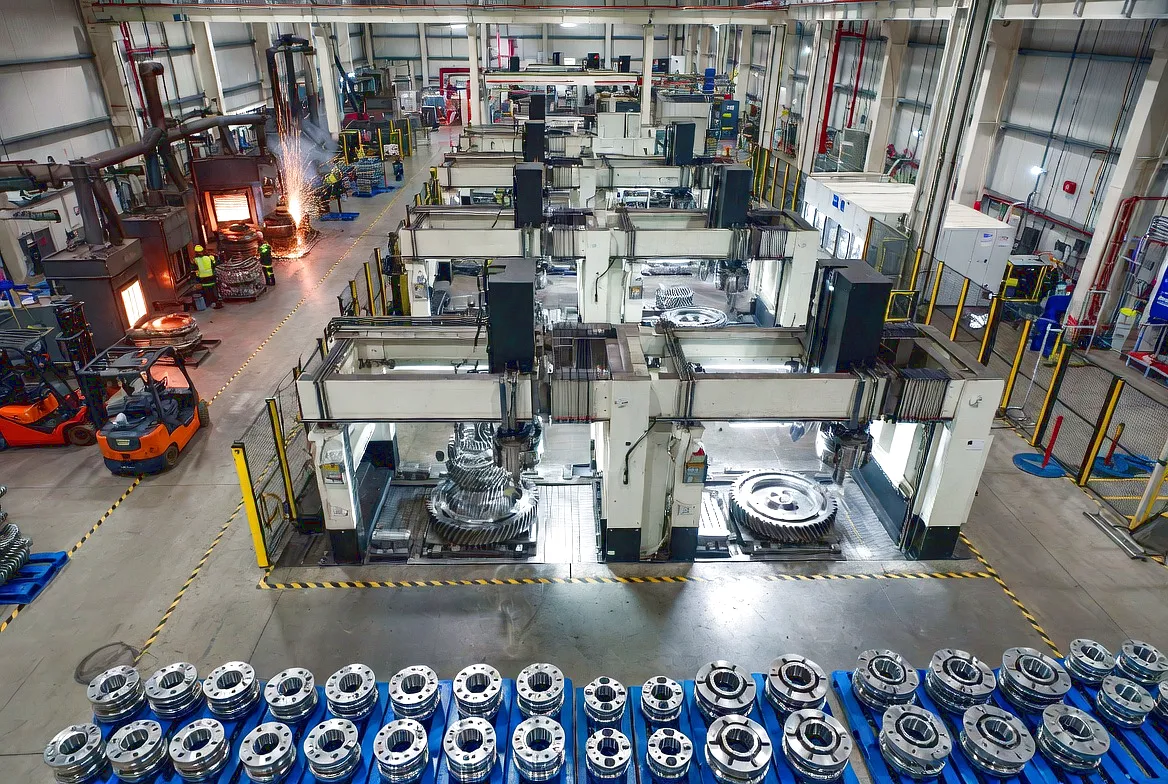
Ever Power’s manufacturing facility operates CNC gear hobbing machines, precision grinders, and dedicated induction hardening lines for tooth surface treatment. The combination allows us to produce drum gear couplings with tooth-profile tolerances held to ISO Class 6 accuracy — a level of precision that is important for couplings operating at the higher-speed input shafts of AFC drive trains, typically in the range of 500–1,500 rpm between motor and gearbox input.
Our product customisation capability goes well beyond simply boring a shaft to a non-standard diameter. For UK mining customers, we regularly supply gear couplings with the following bespoke features: modified keyway profiles to match legacy gearbox shafts; extended pilot bores for interference-fit assemblies on high-torque drives; non-standard overall length to bridge drive-train spacer requirements; upgraded seals rated for specific mine-water chemistry; and special corrosion-protection coatings including hot-dip zinc treatment for surface storage or offshore deployment. Our engineering team will review your drive train drawing, confirm the service factor calculation, and issue a certified data sheet before manufacture begins — providing the documented engineering chain that modern quality-management systems in the UK mining sector require.
Where Gear Couplings Serve: Applications Beyond the Scraper Conveyor in UK Industry
Although this article is focused specifically on scraper conveyor drives in underground coal mining, drum gear couplings manufactured to the same design principles have found productive service in a wide range of UK industrial contexts. Ever Power supplies gear couplings to customers across Yorkshire, Nottinghamshire, South Wales, County Durham, and Scotland — regions where heavy manufacturing, power generation, and materials processing have deep roots. Below is a summary of the key sectors where gear coupling performance makes a quantifiable difference to plant uptime.
Underground Mining — Yorkshire & Midlands
AFC drives, stage loader conveyors, and belt-feeder drum drives. High shock load and wet environment demand sealed drum couplings with FKM seal upgrades for saline mine water.
Power Generation — Pump & Fan Drives
Feed water pump and induced-draught fan drives in UK power stations require couplings rated for continuous high-speed operation — up to 3,600 rpm — with minimal vibration transmission to avoid cracking boiler feed pipework.
Steel & Metals Processing
Rolling mill main drives in Scunthorpe and South Wales use large-bore NGCL couplings to connect motors to mill spindles. The gear coupling’s axial freedom prevents thermal growth from loading roll bearings during rolling campaigns.
Port Handling — Bulk Terminal Conveyors
UK bulk handling terminals at ports including Immingham, Teesport, and Port Talbot run high-capacity belt and scraper conveyors around the clock. Marine-atmosphere corrosion protection and large-bore flexibility are key selection criteria.
Cement & Aggregates
Kiln drive gear couplings and ball mill coupling spools must tolerate extremely high dust concentrations and occasional hard material jam-ups. The toughened steel construction of drum gear couplings handles momentary overload far better than elastomeric alternatives.
Water & Wastewater Treatment
Large-volume pump drives in UK water treatment works benefit from gear couplings’ ability to accommodate pipe-induced shaft misalignment without generating bearing side-loads that would otherwise shorten pump seal life.
Customer Success: Extending AFC Gearbox Life at a Yorkshire Longwall Operation
Challenge: Repeated Gearbox Failure on 800 kW AFC Head Drive
A major UK longwall coal producer operating in West Yorkshire was experiencing planetary gearbox failures at an average interval of 9 months on their primary AFC head drives, each rated at 800 kW. Post-failure inspection consistently revealed fatigue cracks at the root of planet gear teeth — the signature of repeated shock-torque overload rather than sustained overloading. The operation was running 22-inch diameter shearers on a seam with frequent hard sandstone bands, and the existing rigid flanged couplings were transmitting every torque spike directly into the gearbox housing.
After an engineering review with the Ever Power applications team, the decision was taken to replace the rigid flanged units with custom-sized NGCL-series drum gear couplings, rated at 120% of the gearbox nominal output torque, with service factor 2.0 applied for the actual shock-load environment and FKM seals specified for the site’s slightly acidic mine water chemistry.
Over the following 24-month monitoring period, not a single planetary gearbox failure was recorded on the upgraded drives. The operation’s maintenance team reported that the gear couplings themselves showed minimal wear at the 12-month inspection point, with the original grease charge still in good condition. The calculated saving in avoided gearbox replacements alone, each priced at approximately £45,000 including underground lifting and alignment labour, exceeded the coupling replacement cost by a factor of eight.
What Our Customers Say
“We switched three of our AFC head drives to Ever Power NGCL couplings 18 months ago. The gearbox inspection cycles have gone from quarterly concerns to a yearly formality. The difference in drivetrain noise alone tells you something fundamental has changed.”
“The Ever Power applications team was genuinely helpful during the selection process — they checked our gearbox data sheet and recommended the correct series and service factor without us having to push. Delivery was on time and the bore finish was excellent.”
“We operate a rolling mill with a very demanding thermal cycle. The previous coupling supplier’s product was giving us bearing end-thrust problems every summer when the mill heated up. The Ever Power NGCL coupling’s axial float has completely solved that issue.”
Choosing the Right Coupling Type for Scraper Conveyor Drives: A Comparison
Mining engineers evaluating coupling options for an AFC drive train are often comparing drum gear couplings against jaw-type flexible couplings, disc-pack couplings, and rigid flanged couplings. The table below summarises key performance characteristics across each type for the underground scraper conveyor service environment.
| Characteristic | Drum Gear Coupling | Jaw / Elastomeric | Disc Pack | Rigid Flanged |
|---|---|---|---|---|
| Torque Shock Damping | Excellent | Good (rubber) | Low | None |
| Angular Misalignment | ±1.5° | ±1° | ±0.5° | Near-zero |
| Torque-to-Size Ratio | Very High | Moderate | High | High |
| Suitable for Wet / Dusty Mine | Yes (sealed) | Partial | No | Partial |
| Maintenance Interval | 6 – 12 months | 3 – 6 months | 12 months | 12+ months |
| Operating Temp (max) | +70°C (+120°C opt.) | +60°C | +120°C | +150°C |
| Relative Installed Cost | Medium | Low – Medium | High | Low |
Ready to Specify a Gear Coupling for Your Scraper Conveyor Drive?
Send us your drive shaft dimensions, gearbox torque rating, and operating environment details. Ever Power’s engineering team will provide a full coupling selection recommendation with service factor confirmation — at no charge.
Frequently Asked Questions
What is the best type of gear coupling for a scraper conveyor drive in a UK underground coal mine?
For underground AFC drives in UK collieries, the NGCL drum-type gear coupling is the most widely specified choice. Its crowned tooth geometry tolerates the angular and axial misalignment typical of compressed-space underground installations, its 42CrMo alloy steel construction handles the torque shock loads produced when shearer drums encounter hard stone inclusions, and its sealed O-ring design retains grease fill in the wet, dusty mine atmosphere. Service factors of 1.75 to 2.25 are normally applied on top of the gearbox nominal output torque when sizing the coupling.
How much does a custom gear coupling for an 800 kW armoured face conveyor drive typically cost, and where can I get a quote in the UK?
Pricing for custom mining-rated gear couplings depends on bore diameter, overall length, material specification, and surface treatment. A correctly rated NGCL coupling for an 800 kW AFC head drive typically falls in the range of £800 to £2,500 per unit including custom bore machining, though specific pricing requires a technical review of your drive shaft dimensions and operating conditions. Ever Power offers a no-charge engineering quotation — email gear-coupling.top with your gearbox data sheet and required bore size, and we will return a full specification and price within 48 hours.
Which gear coupling series should I choose between GICL and NGCL when specifying for a longwall scraper conveyor in Yorkshire or Nottinghamshire?
For the high-torque, high-shock environment of a longwall AFC drive in Yorkshire or Nottinghamshire, the NGCL series is generally the preferred choice because its larger sleeves (ZG310-570 cast steel) and heavier tooth modules provide greater torque reserve and improved fatigue life under cyclic peak loading. The GICL series is appropriate for lower-power AFC drives and stage loaders up to approximately 400 kW, or for surface installations where the environmental severity rating is lower. Our applications team will confirm the correct series and size based on your specific site conditions.
How often does a drum gear coupling on an underground scraper conveyor need to be serviced, and what does the service procedure involve?
Under normal underground AFC drive operating conditions in a UK coal mine, drum gear coupling service intervals of 6 to 9 months are achievable with correctly specified grease fill and intact O-ring seals. Service involves removing the outer sleeve halves (the split-sleeve design allows this without disturbing the motor or gearbox), inspecting the crowned tooth flanks for wear or pitting, cleaning and repacking the tooth mesh zone with approved mining-grade grease (typically an EP2 or EP3 lithium-complex grease), and replacing O-ring seals as a routine matter. Total service time for a trained fitter is typically 45 to 90 minutes per coupling.
Can Ever Power supply gear couplings with non-standard bores and keyways to match legacy AFC gearboxes that are no longer in production?
Yes — custom bore and keyway machining to match non-standard legacy shaft dimensions is one of our most common requests from UK mining maintenance teams. Whether your gearbox output shaft is imperial-dimensioned from an older Anderson Strathclyde or Dosco installation, or metric but with a non-standard keyway depth, Ever Power can machine both bore halves of the coupling to your measured shaft dimensions. We need the shaft diameter tolerance, keyway width and depth (or spline specification), and required interference-fit or clearance-fit condition. Send the measurements to gear-coupling.top and we will confirm feasibility within 24 hours.
Where in the UK can I find a reliable gear coupling supplier for heavy mining and industrial conveyor applications?
Ever Power supplies drum-type gear couplings directly to end-users and maintenance contractors throughout the United Kingdom, with particular experience serving industries in Yorkshire, Nottinghamshire, South Wales, County Durham, and Scotland. We ship ex-works from our manufacturing facility, with standard delivery times of 3 to 6 weeks for custom-bored items and shorter lead times for stock sizes. Our engineering support team can assist with selection, service factor calculation, and installation guidance — contact us at gear-coupling.top to discuss your application.
What is the difference between a standard gear coupling and a drum gear coupling, and why does the drum design outperform standard designs on high-torque shock-load applications like conveyors?
A standard spur-tooth gear coupling uses straight-sided external teeth on the hub mating with straight internal teeth in the sleeve. When the two shafts are even slightly misaligned, the tooth contact concentrates at one edge of the tooth face, producing a rapidly escalating edge-load stress that causes accelerated wear and early fatigue failure. A drum gear coupling — also called a barrel gear coupling — uses a crowned (curved in the longitudinal direction) external tooth profile that redistributes the contact load across the full tooth face even when the hub is tilted relative to the sleeve. The result is substantially longer tooth life, lower operating temperatures, and genuine tolerance of the angular and axial misalignments that are unavoidable in real-world heavy industrial installations such as scraper conveyor drives.
For enquiries regarding gear coupling selection, pricing, or custom manufacturing for UK mining and heavy industry applications:
Contact Ever Power → gear-coupling.top
edit by gzl