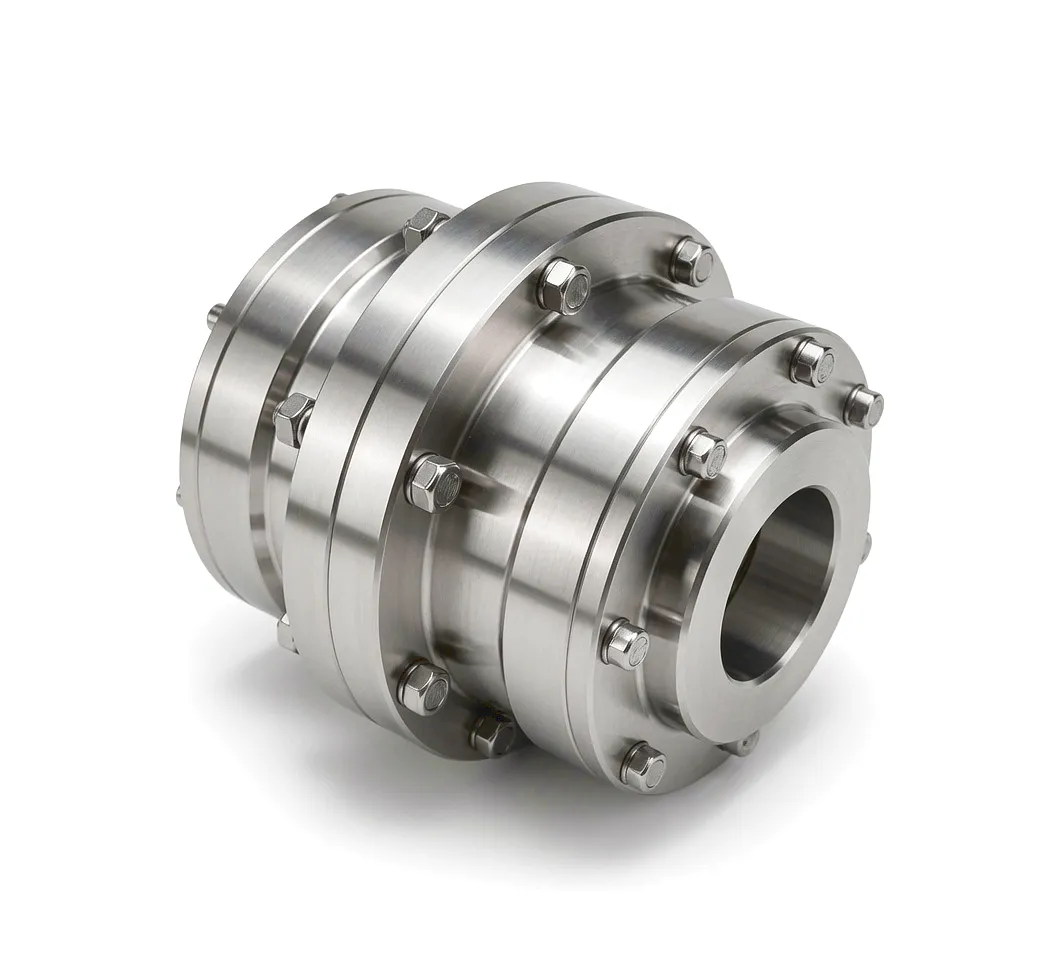
 Walk into any steelworks, container terminal, or construction site in the UK and you will find one constant: cranes doing the heavy work, every shift, often in punishing conditions. What you will rarely see — because it is buried deep inside the drivetrain — is the coupling that makes the whole system possible. The gear coupling connecting motor to gearbox, or gearbox to drum, is a small component with an outsized responsibility. When it fails, the crane stops. When it is correctly specified, it quietly absorbs shock loads, tolerates shaft misalignment, transmits hundreds of kilonewton-metres of torque, and outlasts nearly every other wear item in the machine.
This guide has been written to give crane OEM engineers, maintenance managers, and procurement specialists a thorough technical foundation — covering why gear couplings are specified for crane drivetrains in the first place, which design variants perform best in each crane type, what the key installation and maintenance considerations look like in practice, and how to evaluate suppliers. All technical data reflect real-world crane service conditions rather than catalogue best-case numbers.
Sourcing gear couplings for a crane project in the UK?
Ever Power supplies custom and standard gear couplings to UK crane manufacturers and MRO teams with short lead times.
Why Crane Drivetrains Demand Gear Couplings
Engineering rationale · shock tolerance · misalignment capacity
High Starting Torque & Shock Loads
Crane hoists and travel drives start under load regularly. The instantaneous torque at motor start can be 3–6× the rated running torque. Gear couplings handle this comfortably because the crown-tooth profile distributes load across multiple contact zones simultaneously, preventing point stress concentration. No elastomeric element is needed, and there is no progressive fatigue failure mode triggered by cyclic peak loads of this magnitude — making the gear coupling the dominant choice over jaw or disc couplings in this power range.
Shaft Misalignment Tolerance
Crane bridge girders flex under load. Gantry structures settle on rail foundations over years. Tower crane mast sections accumulate tolerance stack-ups at every joint. The result is that the shafts connecting motor to gearbox are virtually never in perfect alignment during operation — they shift in real time. A properly crowned drum-tooth gear coupling tolerates angular misalignment up to 1.5° and parallel offset up to several millimetres without transmitting bending forces back into the bearings, protecting both the motor and the gearbox from premature wear.
Compact Power Density
The space envelope inside a crane end carriage, hoist drum housing, or slewing ring mechanism is tightly constrained. Gear couplings deliver very high torque capacity relative to their outer diameter — typically 20–40% more torque per unit diameter than a comparable disc or jaw coupling. This power density advantage translates directly into lighter crane bridge cross-sections, lower dead loads, and reduced structural steel costs — factors that matter enormously to UK crane manufacturers competing on both performance and total installed cost.
Crane Drivetrain Architecture: Where Gear Couplings Fit
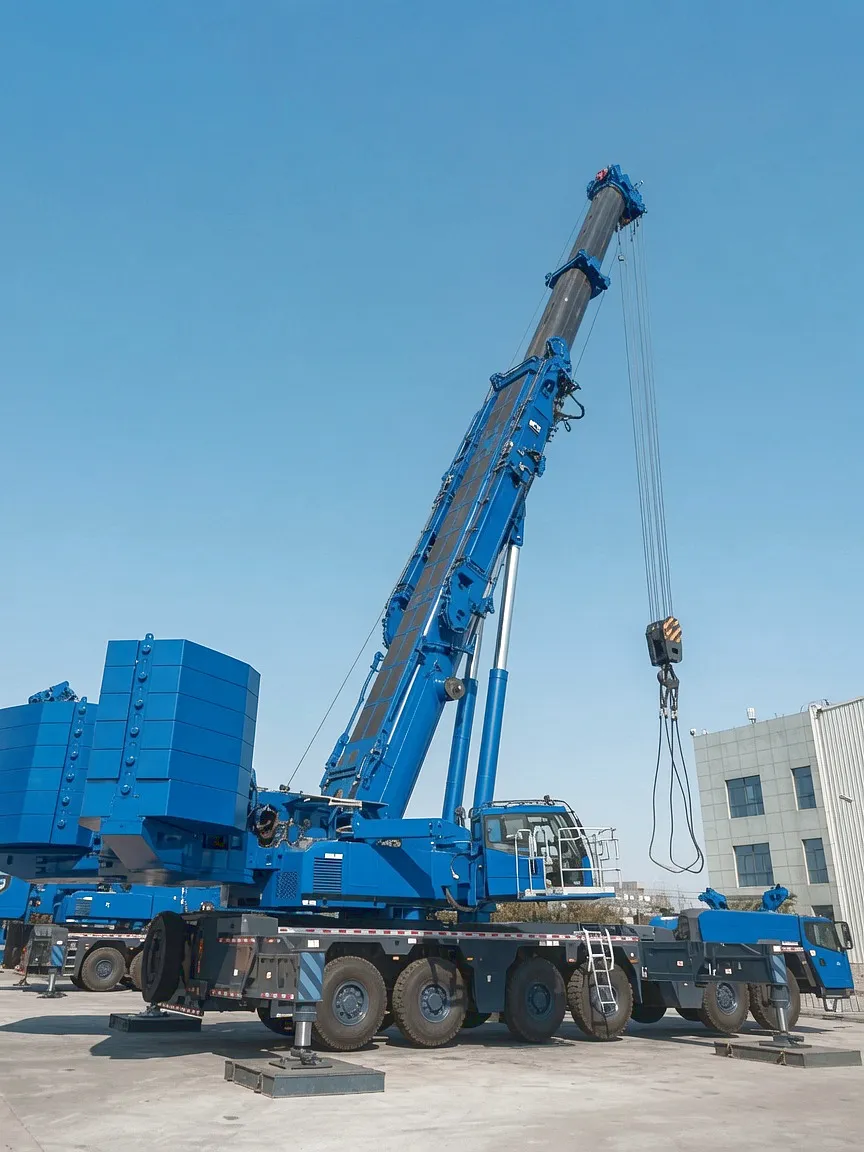 A crane drivetrain is not a single mechanism — it is three or four distinct power paths, each doing a different job, each placing different demands on the couplings within it. Understanding where gear couplings sit in each path is essential before you can specify the right variant. In every overhead travelling crane — whether a single-girder workshop crane at a manufacturing facility in the Midlands or a double-girder steelworks crane at a plant in Sheffield — the drivetrain breaks into a hoist mechanism, a cross-travel mechanism, and a long-travel mechanism.
The hoist mechanism is the most demanding. The motor drives a gearbox whose output shaft turns the rope drum. Torque loads are high, duty cycles can be intense (ISO M5–M8 class cranes run tens of thousands of load cycles per year), and any structural flex in the crane bridge manifests as angular misalignment at the coupling. Gear couplings rated at service factors of 1.5–2.5 are standard here, with GICL or NGCL drum-type designs being widely adopted.
The cross-travel (crab travel) mechanism drives the trolley along the bridge girder. Speeds are typically moderate, but frequent starts and stops mean inertial shocks are a regular occurrence. The long-travel mechanism moves the entire crane bridge along the runway rails, often driven by multiple end-carriage motors that must be synchronised. Misalignment here is primarily angular, caused by rail tolerance and end-carriage thermal growth during operation. Gear couplings with generous angular capacity — and sometimes with a floating shaft element to bridge the distance between paired motors — handle this application reliably.
🔺 Hoist Mechanism
Motor → Gearbox → Drum. Angular + parallel misalignment. Service factor 1.5–2.5. GICL, NGCL drum type.
↔ Cross-Travel (Crab)
Motor → Gearbox → Drive wheel. High inertial shock. Moderate speed. Drum or NL nylon type.
⟶ Long-Travel Bridge
Paired motors → Gearboxes → Rail wheels. Angular misalignment dominant. Floating-shaft drum type.
🔄 Slewing (Tower/Mobile)
Motor → Slewing gearbox → Ring gear. Low speed, high torque. NGCL heavy-duty drum type preferred.
Ever Power Gear Coupling Range: Technical Specifications
All series are available with custom bore sizes, custom flange patterns, and surface treatments for UK market requirements.
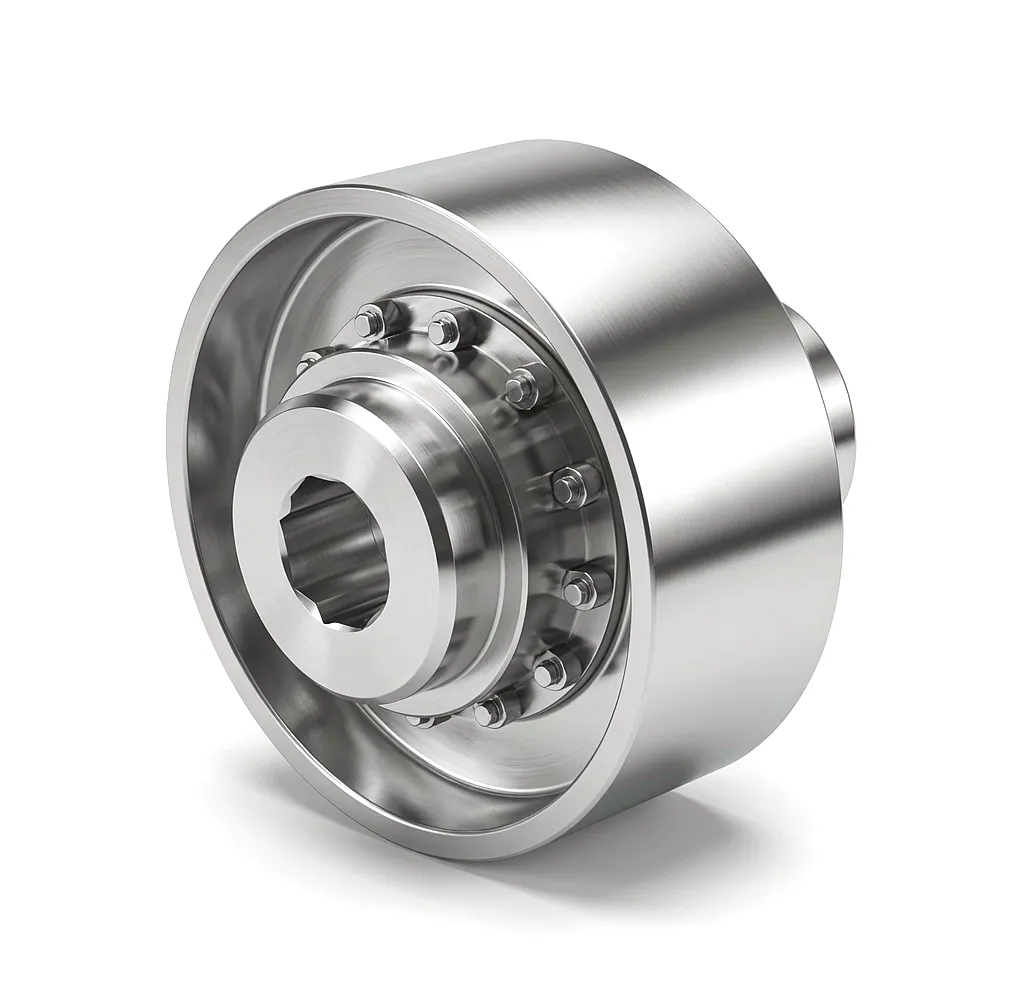
| Series | Torque Range | Bore Range (mm) | Angular Misalign. | Max Speed (rpm) | Material | Crane Application |
|---|---|---|---|---|---|---|
| GICL | 160–1,600 kN·m | 30–440 | ±1.5° | 1,500–3,600 | 42CrMo / 45# steel | Bridge, gantry hoist & travel |
| NGCL | 315–3,550 kN·m | 40–500 | ±1.5° | 1,000–3,000 | 42CrMo + brake drum | Hoist with integral brake |
| NL Nylon | 25–710 N·m | 12–120 | ±1.0° | 5,000+ | Nylon PA6 + steel hub | Auxiliary/travel damping |
| GIICL (Long) | 160–1,000 kN·m | 30–380 | ±1.5° | 1,500–3,600 | 42CrMo steel, floating shaft | Long-travel multi-motor sync |
| CL / CLZ | 200–2,000 kN·m | 35–480 | ±0.5° | 1,200–4,500 | Cast steel / forged steel | Slewing, tower crane slew ring |
Materials, Design Principles, and How the Drum Tooth Works
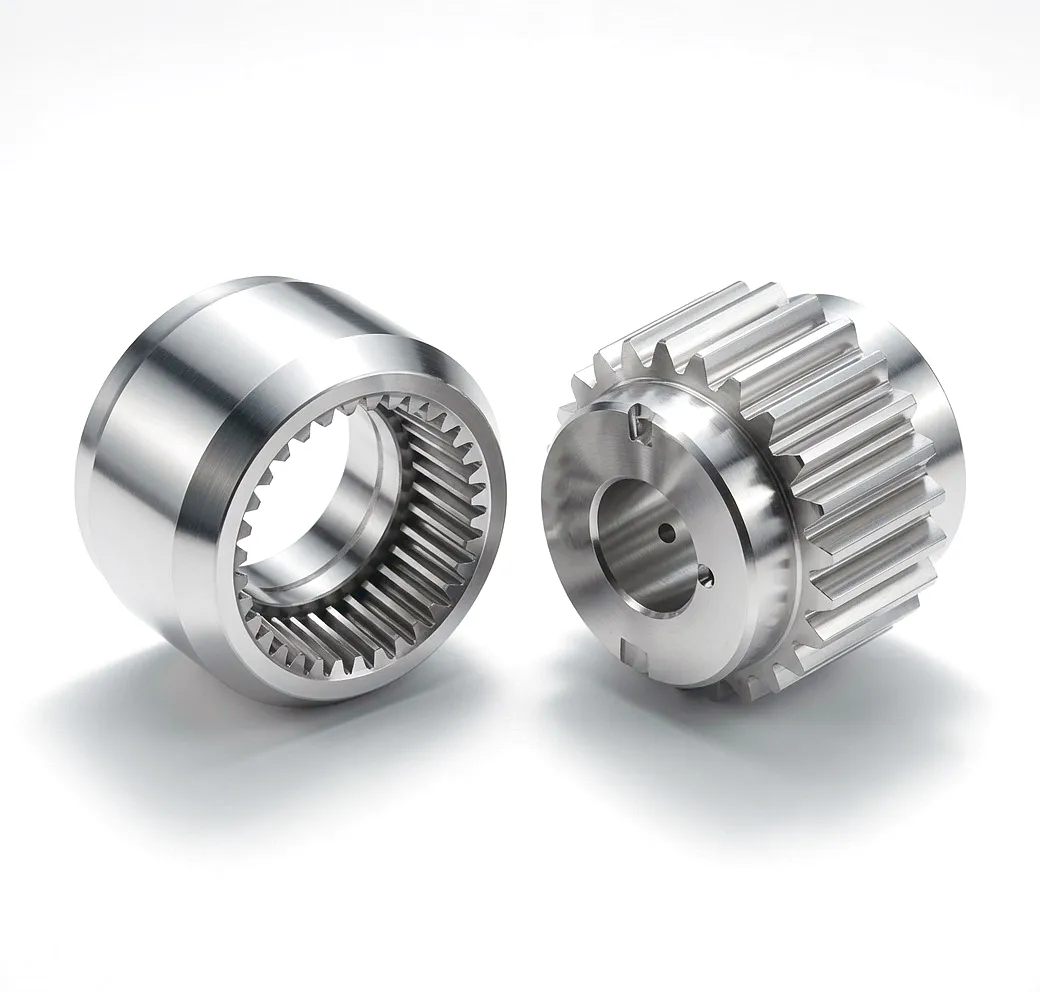
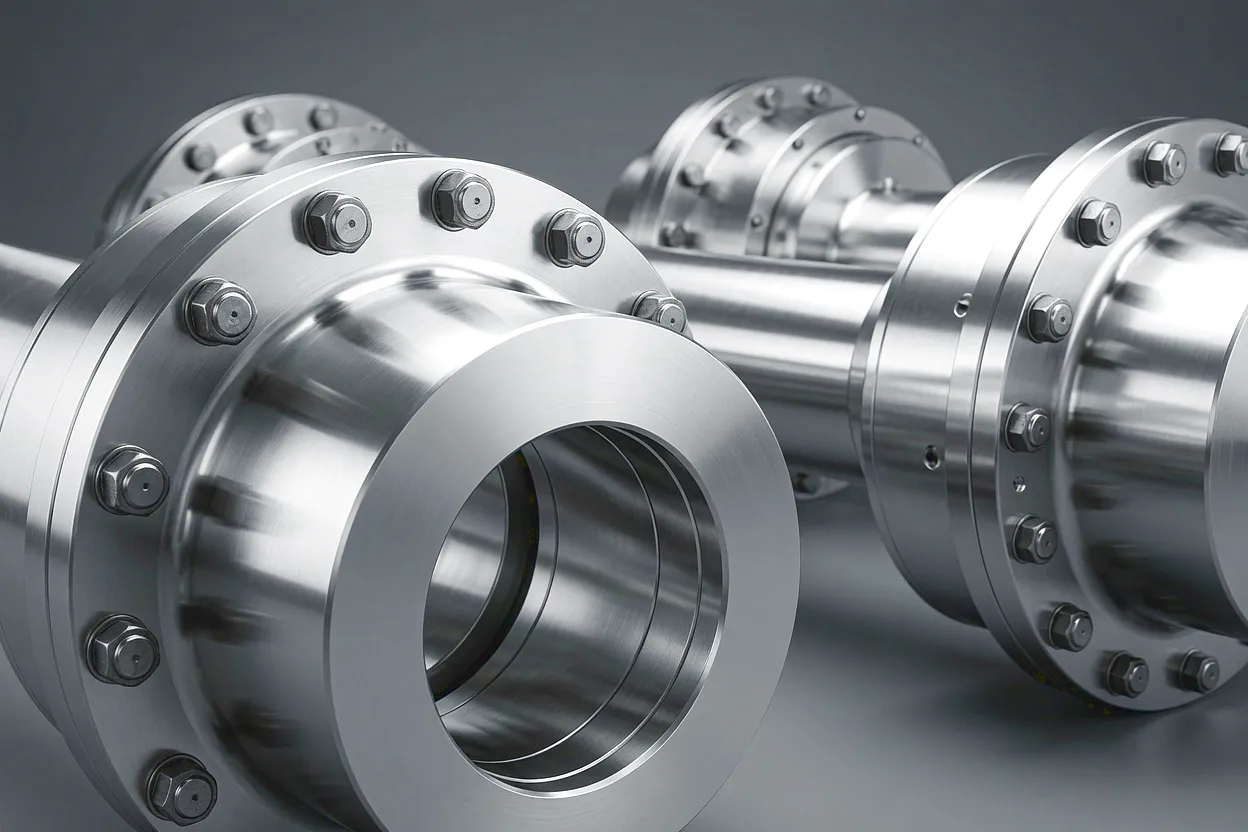
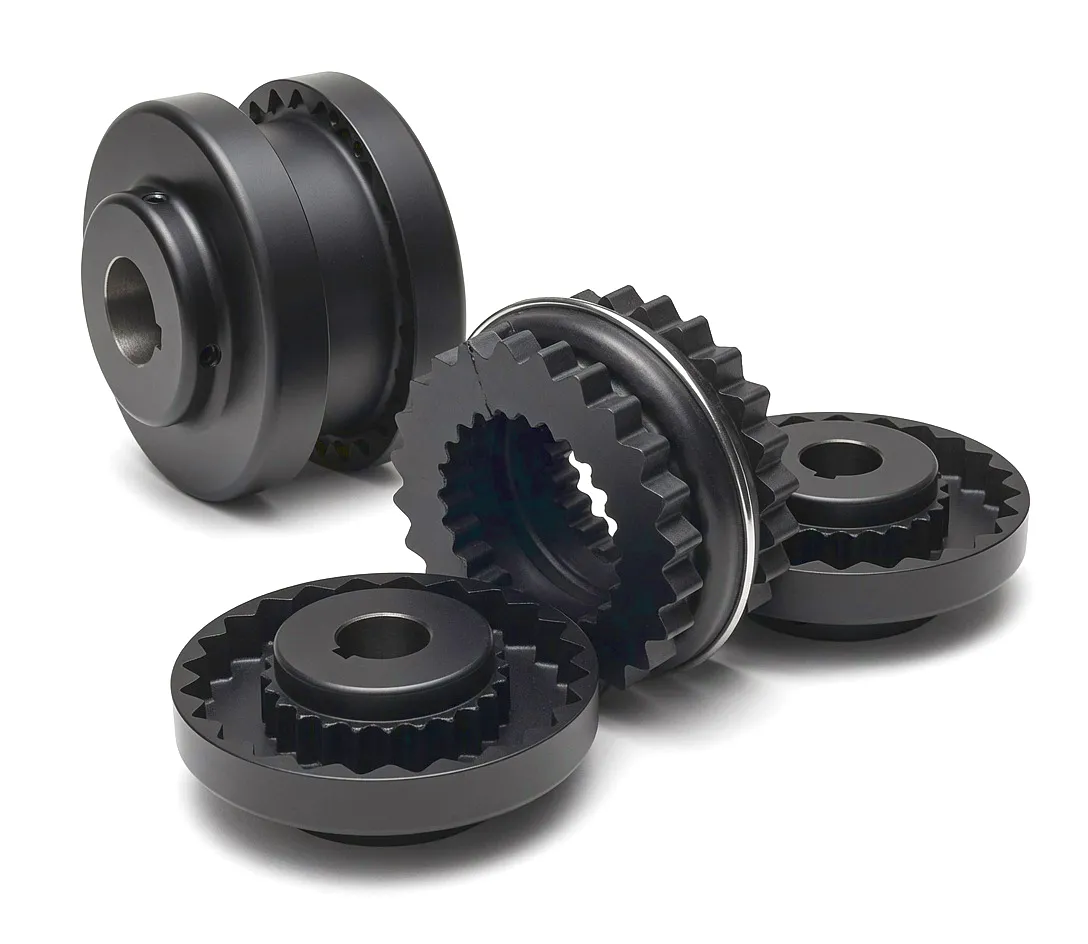
The defining feature of every gear coupling used in crane service is the drum-shaped (crowned) tooth geometry on the outer sleeve’s internal gear. Unlike a spur-tooth coupling — where tooth contact is a straight line across the face width — a drum tooth is convex along its length. When the inner hub displaces angularly relative to the outer sleeve under misalignment, the crowned tooth rolls smoothly rather than digging in at its ends. This rolling action prevents edge loading, reduces Hertzian contact stress by 30–50% compared to straight teeth at equivalent misalignment, and is the primary reason drum-type gear couplings outlast straight-tooth designs by a significant margin in crane duty.
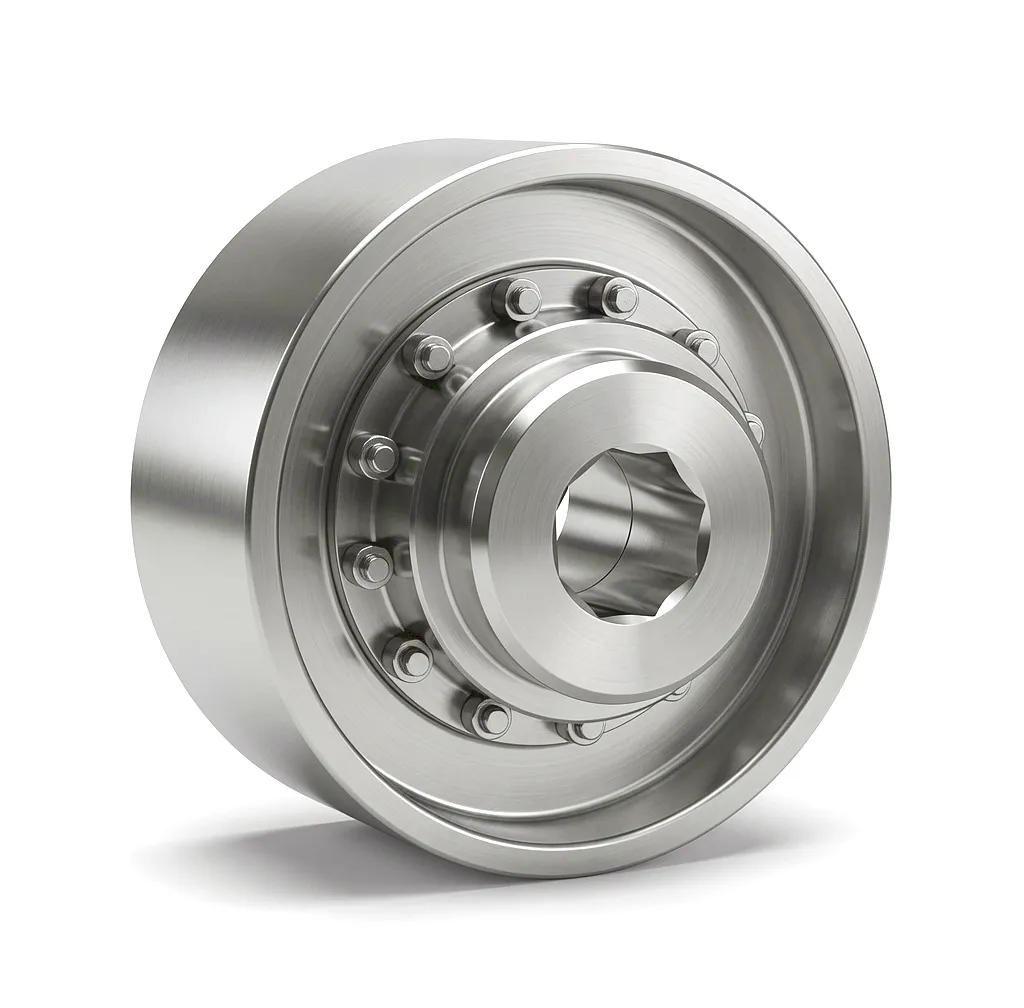
Ever Power manufactures the gear elements from 42CrMo alloy steel, quenched and tempered to 28–32 HRC at the core, then carburised and surface-hardened to 58–62 HRC on the tooth flanks. This dual treatment gives a hard wear-resistant surface combined with a tough ductile core that absorbs shock without brittle fracture — exactly what crane duty demands. Intermediate sleeve and hub bodies are manufactured from 45# medium-carbon steel or ductile iron (QT450-10) depending on rated torque, with flanges precision-machined to DIN tolerances for interchangeability.
Lubrication is one of the most commonly mismanaged aspects of gear coupling maintenance in crane applications. The tooth mesh operates in a partially starved condition — the coupling rotates and centrifugal force throws lubricant outward — which means the grease must have sufficient tenacity to adhere to the tooth flanks throughout the operating cycle. Ever Power specifies NLGI Grade 2 lithium-complex grease with EP additives for standard crane duty, and a calcium-sulphonate complex grease for cranes operating in high-humidity or washdown environments (port cranes, foundry cranes). Re-greasing intervals are typically 1,000–2,000 operating hours depending on ambient temperature and contamination level.
Key Material Properties
Surface HRC 58–62
Core HRC 28–32
DIN tolerance flanges
EP-grease lubricated
QT450-10 ductile iron option
Application Scenarios: Gear Coupling Selection by Crane Type
Overhead bridge · gantry · tower · mobile · port
Overhead Bridge Cranes (EOT Cranes)
 Overhead electric travelling (EOT) cranes are the workhorse of UK manufacturing and engineering facilities — from automotive body plants in the West Midlands to precision engineering workshops in Yorkshire. The hoist mechanism on an EOT crane typically uses an NGCL or GICL drum-type gear coupling between the motor and the double-reduction gearbox, and a second coupling between the gearbox output and the rope drum shaft. Both positions demand high torque capacity, angular misalignment tolerance (the bridge girder deflects under the lifted load, displacing the motor relative to the gearbox), and a long service life measured in millions of load cycles rather than thousands.
A specific advantage of the NGCL series in this application is its integral brake drum, which eliminates the separate brake drum assembly that would otherwise occupy additional axial space. For EOT cranes operating in the M5–M7 duty class range — covering the vast majority of heavy manufacturing environments — this integration reduces the total drivetrain length by 80–120 mm, simplifying the hoist structure and reducing the unlifted dead weight.
Gantry Cranes (Portal and Semi-Portal)
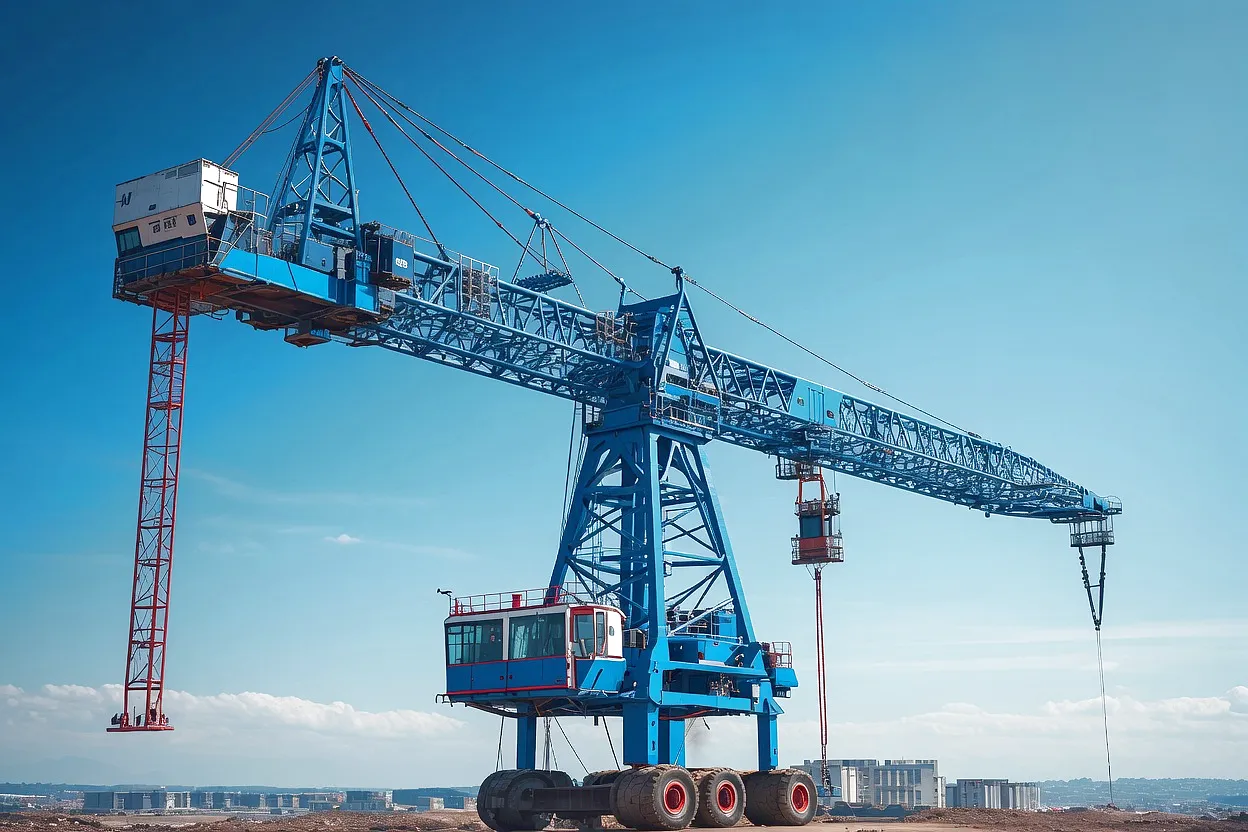
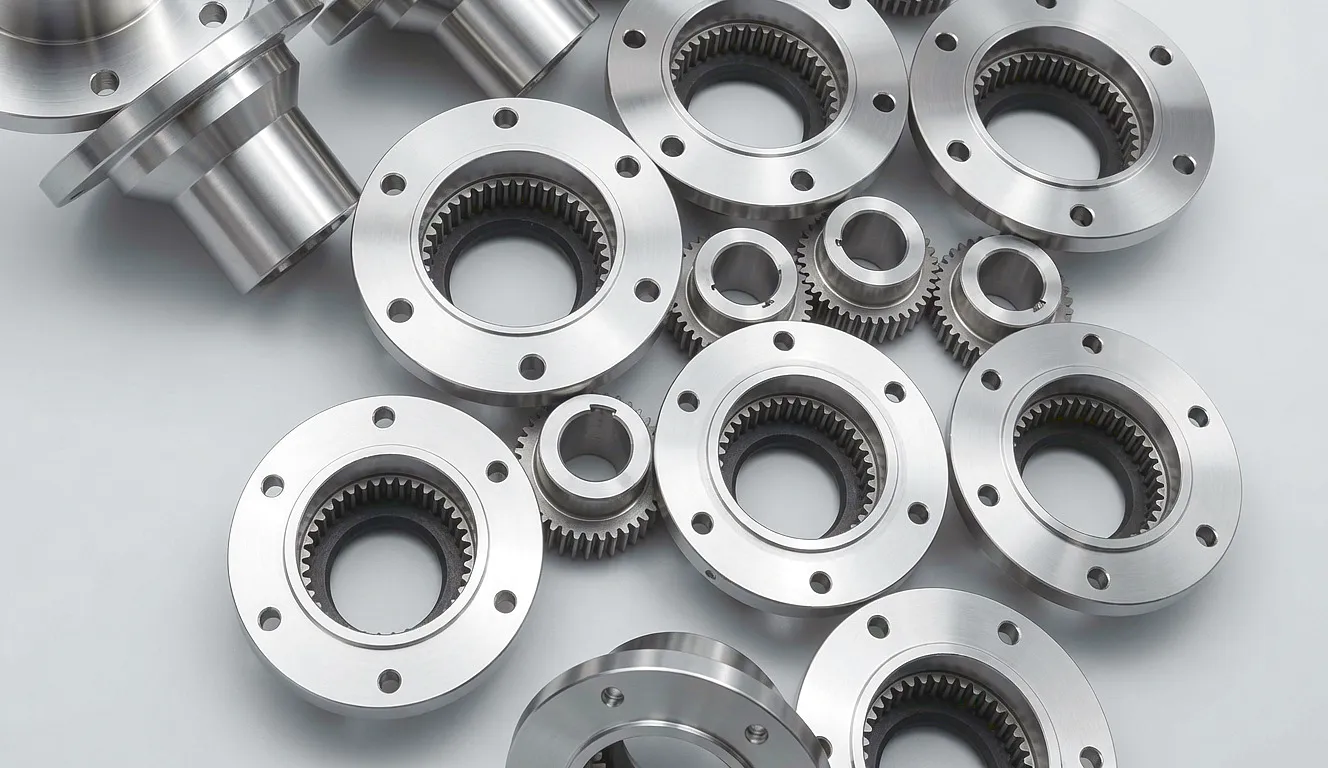 Gantry cranes — both portal (full gantry) and semi-portal types — are found extensively at UK container ports, steel stockholders, precast concrete yards, and outdoor rail maintenance facilities. Because the gantry travels on rails at ground level and supports considerable structural mass, the travel drive motors and gearboxes experience significant misalignment from rail foundation settlement, thermal growth in the legs, and accumulated tolerance in the rail installation. GIICL floating-shaft gear couplings — with a central floating tube bridging the gap between paired motor-gearbox units — are standard in this application across the UK and European gantry crane market.
The hoist mechanism of a gantry crane, carrying loads from 5 t to 250 t depending on the facility, uses the same NGCL or GICL series as the EOT crane. For port gantry cranes operating in salt-air marine environments — common at Felixstowe, Southampton, and other UK coastal ports — zinc-phosphate and heavy oil coating is specified as standard for the coupling bodies, with stainless steel hardware for the flange bolts to prevent galvanic corrosion between dissimilar metals.
Tower Cranes (Luffing Jib and Flat-Top)
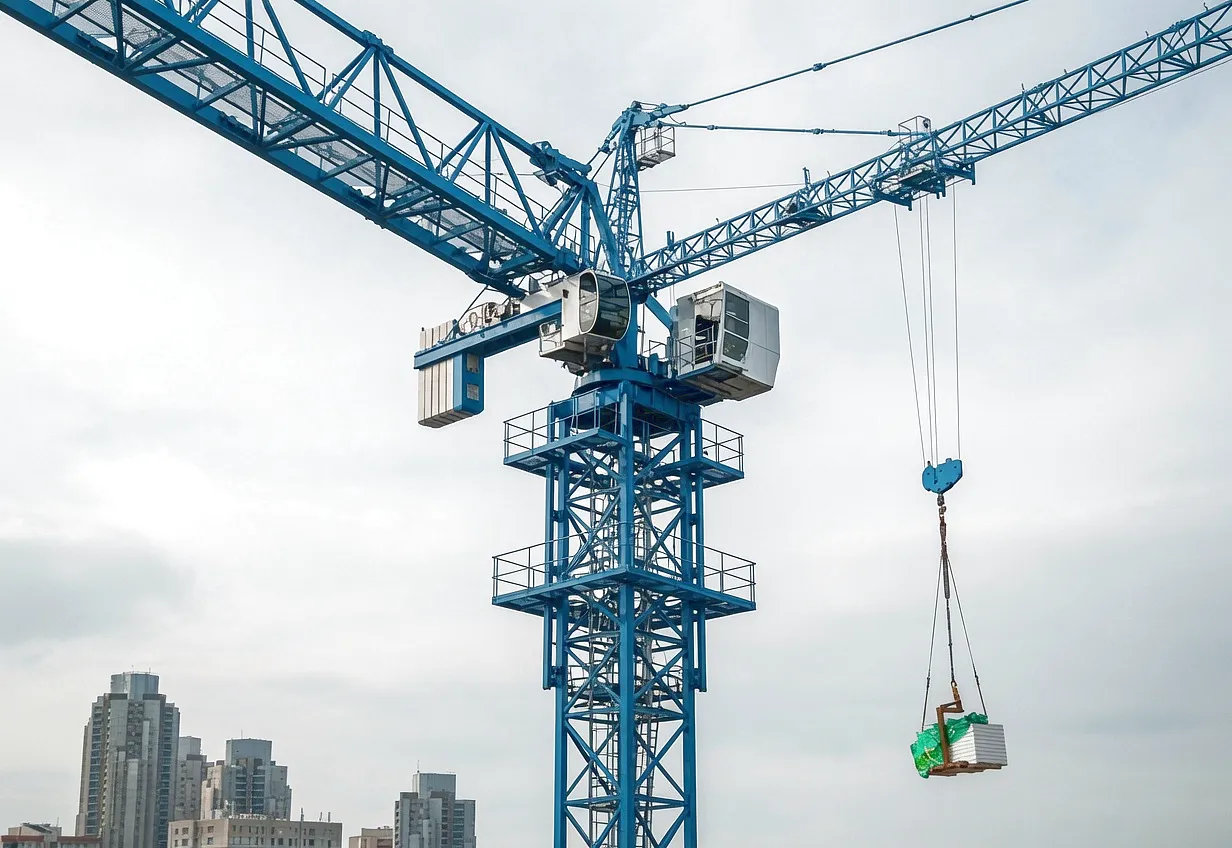
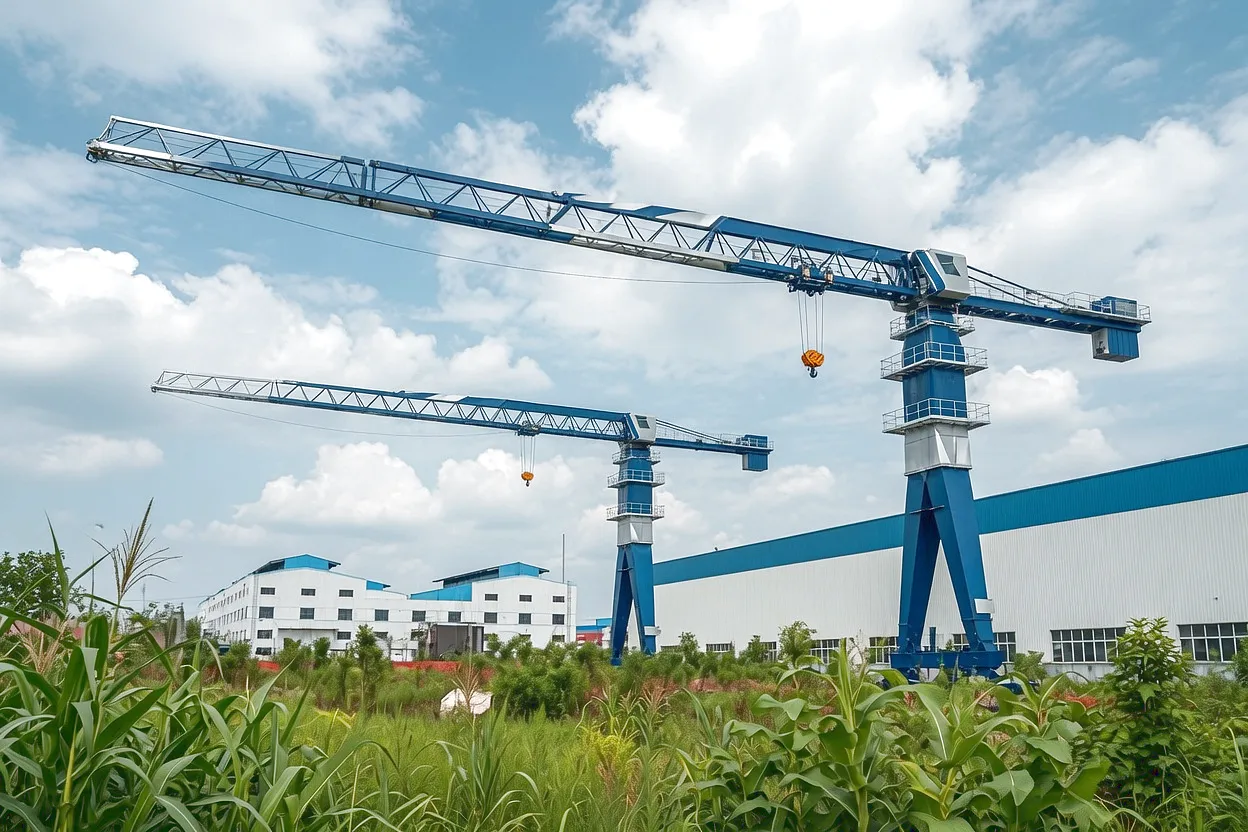
 Tower cranes dominate the construction skyline across London, Manchester, Birmingham, and every major UK city where residential and commercial development is active. The drivetrain architecture of a tower crane involves three coupling-intensive zones: the hoist drum drive, the luffing/distribution trolley drive, and the slewing mechanism. The slewing drive is particularly demanding — the coupling between slewing motor and planetary gearbox must handle extremely high instantaneous torque when the crane slews against wind load, combined with angular misalignment from mast deflection under jib load.
CL or CLZ series gear couplings are typically specified for the slewing drive, selected for their ability to accommodate both angular and axial displacement simultaneously — the mast sections rack against each other under wind loading, creating combined misalignment states that simpler coupling designs cannot handle without transmitting damaging reaction forces into the slewing gearbox. For tower crane hoist mechanisms, the same compact GICL series used in EOT cranes applies, though with an additional corrosion protection requirement for cranes operating at coastal or riverside construction sites.
Six Reasons UK Crane Engineers Choose Ever Power Gear Couplings
Crown-Tooth Precision Grinding
Every drum tooth is ground to ISO Class 6 accuracy after heat treatment, ensuring the crown radius is consistent across the full tooth face width. This level of precision dramatically extends service life in crane duty by maintaining even load distribution regardless of misalignment state.
Full Customisation Capability
Ever Power’s engineering team supports custom bore tolerances, keyway profiles, flange bolt patterns, shaft interference fits, and special surface coatings — meaning you can replace a worn coupling from any OEM without redesigning the surrounding drivetrain or ordering from a monopoly supplier.
Short Lead Times to UK
Standard sizes ship within 5–7 working days to UK addresses. Custom-manufactured couplings typically deliver in 15–25 working days, substantially faster than European-sourced alternatives. Ever Power maintains export documentation for CE marking and material certification to BS EN ISO 9001:2015 standards.
Full Material & Test Certification
Material certificates (mill certs), hardness test reports, dimensional inspection reports, and dynamic balance reports are all available on request. For crane OEMs supplying into regulated sectors — nuclear, offshore, rail — these documents are a standard deliverable, not an optional extra.
Interchangeable with Major OEM Designs
Ever Power couplings are dimensioned to be interchangeable with the major European and Asian crane OEM coupling standards. UK maintenance teams can replace like-for-like without modifying shaft ends, re-aligning motor positions, or sourcing matched pairs — reducing planned maintenance shutdown time significantly.
High Safety Factor Design
All crane-duty gear couplings are designed to a minimum static safety factor of 1.5 against rated torque with the service factor applied. For lifting applications under the Lifting Operations and Lifting Equipment Regulations 1998 (LOLER) in the UK, this means the coupling itself is never the limiting element in the drivetrain safety case.
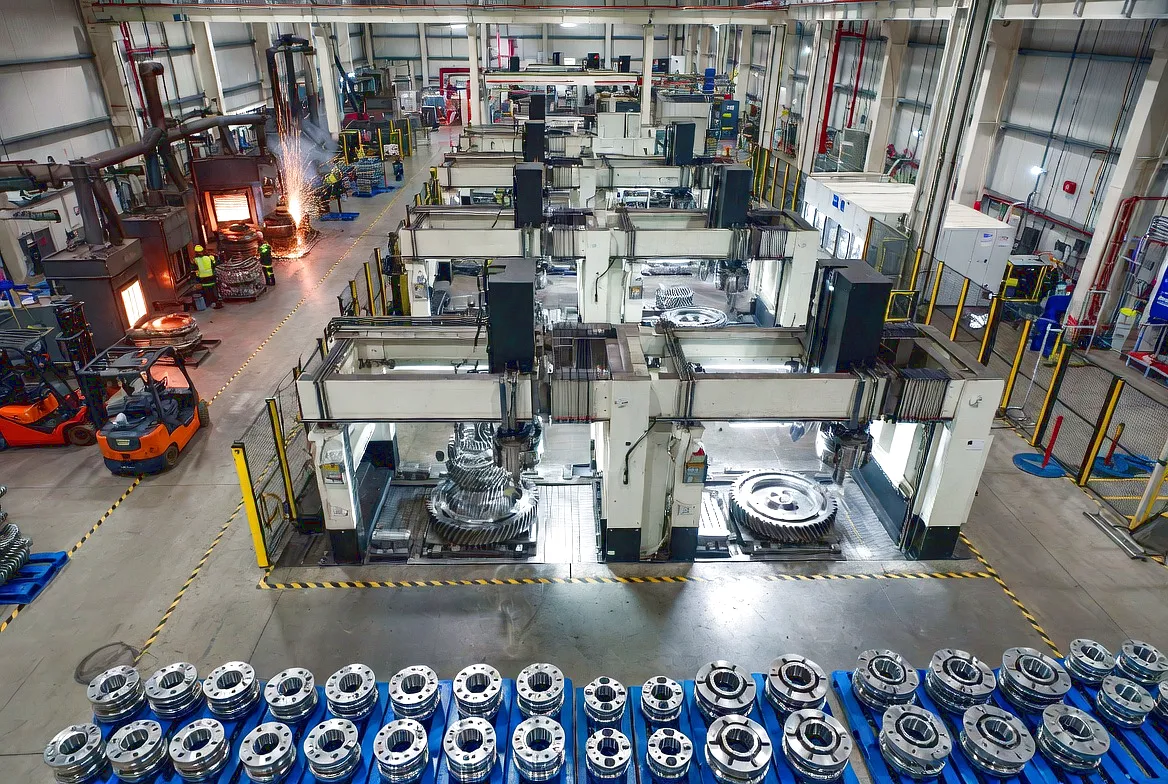
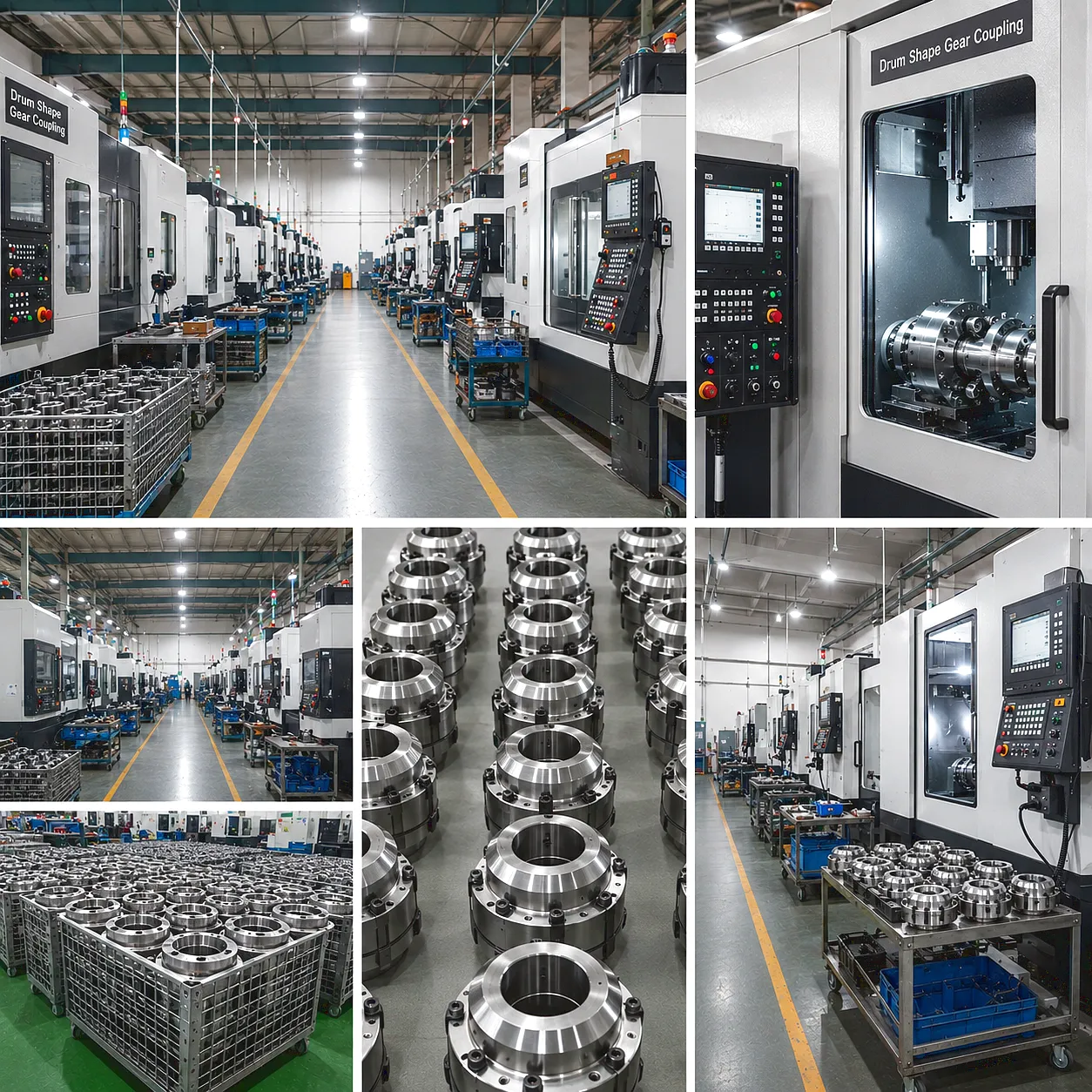
Inside the Ever Power Manufacturing Facility
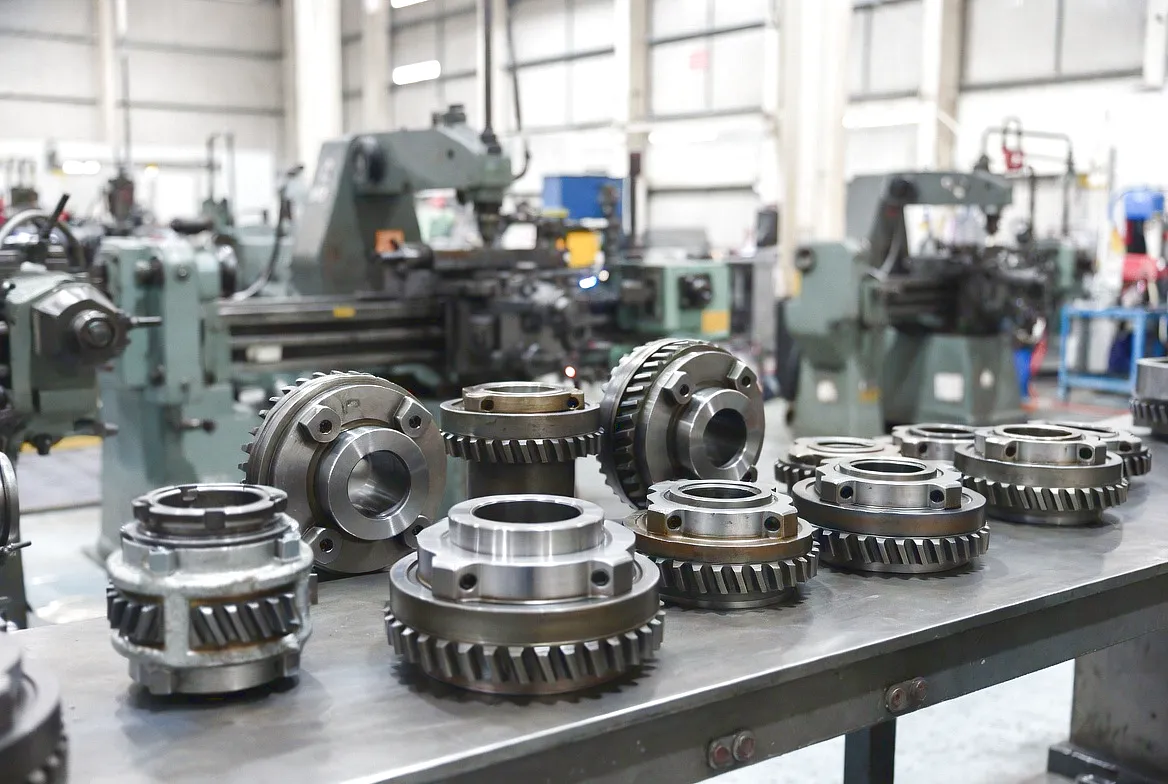
Precision gear-cutting, heat treatment, and quality control — all under one roof.
Custom Engineering Service — Built Around Your Crane Project
Ever Power’s engineering team handles custom gear coupling projects that fall outside standard catalogue ranges — and crane applications regularly require this. Whether you need a coupling with a non-standard bore diameter and keyway pattern to fit a legacy gearbox, a special outside diameter to clear an existing housing, a modified flange bolt circle to match an existing counterpart, or a coupling rated for an unusually high service factor because the crane operates in a particularly arduous duty cycle (steel coil handling, ladle cranes, magnet cranes), Ever Power can design and manufacture to your drawings or to a technical specification provided by your crane OEM or engineering consultancy.
The factory operates CNC gear hobbing, CNC internal gear grinding, CNC turning centres, and dedicated carburising and through-hardening heat treatment furnaces — all on a single site. This integrated production chain means dimensional tolerances, material properties, and surface finishes are controlled end-to-end, without the quality-consistency risks that arise from outsourcing tooth-cutting or heat treatment to subcontractors. For UK crane OEMs that carry ISO 9001 certification and need supply chain transparency, this matters.
Customer Success: Reducing Crane Downtime in a UK Steel Service Centre
Midlands Steel Service Centre — Double-Girder Bridge Crane Overhaul
A steel service centre in the West Midlands operating three 32-tonne double-girder overhead cranes was experiencing repeated gear coupling failures in the hoist mechanisms, averaging one replacement every 14 months across the three cranes. The cranes operate in an M6 duty class, handling steel coils continuously across two shifts per day. The original couplings — straight-tooth design from a European supplier — were being replaced at a cost of approximately £2,200 per coupling including labour and scheduled downtime.
The maintenance engineering team contacted Ever Power’s UK technical support in early 2023. Following a drivetrain audit — during which angular misalignment in the hoist drives was measured at 0.9–1.2° under load, compared to the 0.5° maximum tolerance of the original straight-tooth couplings — Ever Power recommended replacing all hoist couplings with NGCL series drum-type gear couplings rated for ±1.5° angular misalignment. Custom bore dimensions were required to match the existing gearbox output shafts without modification.
The NGCL couplings were delivered within 18 working days including custom machining. All three cranes have now been running for over 26 months without a single coupling replacement or related unscheduled downtime. The estimated saving compared to the previous replacement cycle exceeds £19,500 across the three cranes over this period.
Key Outcomes
14 months
26+ months
Zero
>£19,500
What Our Customers Say
“
We spec’d Ever Power GICL couplings on a new batch of 20-tonne EOT cranes for an automotive stamping plant in Sunderland. The crown-tooth design handles the misalignment from the stamping press vibration far better than anything we’d used before. Lead time to the UK was genuinely faster than sourcing from our previous European supplier.
Senior Mechanical Engineer, Crane OEM — North East England
“
Our maintenance budget for the port gantry cranes at Felixstowe dropped noticeably after switching to Ever Power NGCL series. The material certification was exactly what we needed for our in-house audit trail. Custom bore was done to drawing with no back-and-forth, first time correct.
Engineering Manager, Port Logistics — Suffolk, UK
“
We used Ever Power for a tower crane slewing drive replacement on a London residential development project. The CLZ coupling arrived with full dimensional reports and the technical support when fitting was exactly what a smaller subcontractor like us needs. Will be using them again on the next site.
Director, Specialist Lifting Services — London, UK
Installation, Alignment, and Maintenance: Getting It Right
Even the best gear coupling will fail prematurely if it is installed with excessive initial misalignment, inadequately tightened flange bolts, or using the wrong lubricant. For crane applications, where access to the drivetrain after installation may be difficult or require a certified lifting operation to remove the hoist, getting installation right the first time pays dividends across the entire service life. The following guidance is drawn from Ever Power’s field service experience with UK and European crane installations.
1 Initial Alignment
Align the motor and gearbox shafts as closely as possible before installation — the gear coupling tolerates misalignment in service, but initial alignment minimises dynamic load on the tooth mesh and extends grease service life. For GICL/NGCL sizes above 200 mm bore, laser alignment tools should be used. Target angular misalignment at installation: <0.3° at cold static conditions.
2 Interference Fits & Keyways
Hubs should be fitted to shafts with an H7/r6 or H7/s6 interference fit for hoist duty. Cold pressing or oil injection methods are both acceptable; heating the hub in an oven at 180–220 °C for 30–40 minutes and fitting while hot is practical for site installation. Never flame-heat a ground bore hub — thermal gradients can induce bore distortion that prevents correct assembly.
3 Lubrication at Assembly
Pack the tooth mesh cavity with the specified EP grease to approximately 70–80% fill volume before fitting the outer sleeve. Leave headspace for thermal expansion of the grease. Check the grease nipple is clean and clear before sealing the coupling halves. Do not mix different grease types — incompatible base oils can cause the thickener system to break down and lose EP performance rapidly.
4 Periodic Inspection Schedule
For M5–M6 duty class cranes, inspect and regrease at 1,000 operating hour intervals. For M7–M8 duty, tighten the interval to 750 hours. At each inspection: check for grease leakage past the lip seals (indicates seal wear or over-temperature), check flange bolt torque to specification, and listen for any unusual noise that would indicate tooth wear. Ultrasonic grease analysis is increasingly used by larger UK crane operators to extend regrease intervals intelligently rather than using fixed time intervals.
Gear Coupling vs Other Types for Crane Service: At a Glance
| Property | Gear Coupling ✓ | Disc Coupling | Jaw / Elastomeric | Rigid Flange |
|---|---|---|---|---|
| High torque density | ●●●●● | ●●●● | ●● | ●●● |
| Angular misalignment tolerance | ●●●●● | ●●● | ●●● | ● |
| Shock load / peak torque tolerance | ●●●●● | ●●●● | ●●● | ●●●● |
| Zero-backlash precision | ●● | ●●●●● | ●●● | ●●●●● |
| Service life in crane M6 duty | ●●●●● | ●●●● | ●● | ●●● |
| Maintenance requirement | Periodic regrease | Near-zero | Element replacement | Alignment critical |
Frequently Asked Questions
Real questions from crane engineers, maintenance managers, and procurement teams across the UK.
Ready to Specify or Source a Gear Coupling for Your Crane?
Send us your shaft dimensions, motor power, operating speed, and crane duty class. Ever Power’s application engineering team will respond within 24 hours with a coupling recommendation, sizing calculation, and indicative price. Custom sizes, special coatings, and full certification documentation are all available.
or email us directly at gear-coupling.top · UK crane MRO enquiries welcome
edit by gzl