
Product Description
Product Description
Steel flexible joint is also called clamp, open expansion joint, steel flexible pipe joint. Steel flexible joint is a kind of pipe connection, reliable performance, easy to install products. At low pressure, by the elastic deformation of the sealing ring, to achieve the purpose of sealing; When the pressure increases, the medium acts on the sealing ring to play the role of self-sealing, and there is a gap between the pipe ends to compensate for the displacement and deflection of the pipe caused by thermal expansion and cold contraction.
The working temperature of the clamp joint is generally -30ºC-+130ºC. The medium property is weak acid, weak alkali and lubricating oil range can be applied. If beyond the above range can also provide our company with the nature of the medium parameters or optional parameters or optional specified rubber ring material. In addition to the connection function, the joint can also provide compensation, withstand axial force, provide Angle, reduce vibration wave, adapt to the change of foundation.
The advantages of clamp joint:
1 Clamp joint has good continuity, will not produce distortion, easy to achieve the ideal laying state.
2 Clamp pipe joint in a free state, do not bear the weight of the pipe, not subjected to external shear, especially DN200 pipe diameter, more must consider the weight of the pipe.
3. It is easy to keep the coaxial position when installing the clamp joint to ensure the uneven distribution of the radial clearance between the inner diameter of the pipe clamp and the outer diameter of the pipe. The rubber ring will be deformed under high pressure due to the large local clearance, which will affect the sealing effect and even destroy the rubber ring.
4. It is suitable for the application in the subsidence zone, which can reduce the Angle between the pipe segments caused by the subsidence of the support pier.
5 is conducive to pipeline maintenance. Turn the pipe, save labor and effort when changing the pipe.
Detailed Photos
Product Parameters
PN1.6/2.5/4.0/6.4MPa KRHD
| DN(mm) | Dw(mm) | Allowable Angle Φ | Installation length L (mm) | Maximal length (mm) | Fitting bolt d×L (mm) |
| 80 | 89 | 17.90 | 100 | 110 | M12*60 |
| 100 | 108 | 15.06 | 100 | 110 | M14*60 |
| 125 | 133 | 13.05 | 105 | 115 | M14*60 |
| 150 | 159 | 12.09 | 110 | 120 | M14*60 |
| 175 | 194 | 10.51 | 110 | 120 | M16*60 |
| 200 | 219 | 9.33 | 116 | 126 | M16*75 |
| 225 | 245 | 8.36 | 122 | 132 | M16*80 |
| 250 | 273 | 7.51 | 127 | 137 | M18*90 |
| 300 | 325 | 6.32 | 130 | 140 | M18*100 |
| 350 | 377 | 5.45 | 135 | 145 | M18*100 |
| 400 | 426 | 4.80 | 140 | 150 | M18*110 |
| 450 | 480 | 4.28 | 145 | 155 | M18*110 |
| 500 | 530 | 3.88 | 150 | 160 | M18*120 |
| 600 | 630 | 3.27 | 155 | 165 | M18*120 |
| 700 | 720 | 2.86 | 160 | 170 | M20*120 |
| 800 | 820 | 2.51 | 165 | 175 | M20*130 |
| 900 | 920 | 2.24 | 170 | 180 | M20*130 |
| 1000 | 1571 | 2.02 | 175 | 185 | M20*130 |
| 1200 | 1220 | 1.69 | 180 | 190 | M22*140 |
| 1400 | 1420 | 1.45 | 185 | 195 | M22*140 |
| 1600 | 1620 | 1.27 | 190 | 200 | M22*140 |
| 1800 | 1820 | 1.13 | 195 | 205 | M22*150 |
| 2000 | 2571 | 1.01 | 200 | 210 | M24*150 |
| 2200 | 2571 | 1.01 | 205 | 215 | M24*150 |
| 2400 | 2420 | 1.01 | 210 | 220 | M24*150 |
| 2600 | 2620 | 1.01 | 215 | 225 | M24*160 |
| 2800 | 2830 | 1.01 | 220 | 230 | M27*160 |
| 3000 | 3571 | 1.01 | 225 | 230 | M27*160 |
| 3200 | 3220 | 1.01 | 230 | 240 | M27*180 |
Datas above are only for reference,if you want to know more details, please click here to contact us.
Installation Instructions
1. Prepare groove pipe sections, fittings and accessories that meet the requirements.
2. Check whether the rubber sealing ring is damaged and put it on the end of a steel pipe.
3. There should be a certain gap between the end and both ends of the steel pipe close to the end and both ends of the pipe which has been covered with rubber sealing ring. The clearance shall meet the standard requirements.
4. Put the rubber seal ring on the end of another steel pipe, make the rubber seal ring in the middle of the interface, and apply lubricant on the same side.
5. Check the axis of the pipe.
6. Install upper and lower clamps on the outer side of rubber seal-ing ring at the interface position, and clip the collar convex edge into the groove.
7. Press the upper and lower clamp ears with hand force, tighten the collar of the clamp with a wooden hammer, and tighten the upper and lower clamps tightly.
8. At the clamp screw hole position, put on the studs and tighten the nuts evenly to prevent the rubber sealing ring from wrin-kling.
9. check and comfirm that the collar convex edge is clamped into the groove.
products application
Company Profile
HangZhou Ruixuan pipeline equipment factory was founded in 1996.It is an excellent enterprise specializing in manufacturing and selling pipe fittings.It’s located in Xicun village ,HangZhou city,ZheJiang province ,the concentrated area of pipeline equipment industry in China.The company factory is located in Xicun town pipeline equipment industrial park.It covered an area of20000 square meters.
At present, the company has the production capacity of pipeline equipment with a maximum diameter of 4000mm, and its main products are: Steel expansion joint, flexible waterproof sleeve, large diameter flange, double flange force transfer expansion joint, large deflection loose sleeve compensation joint, spherical compensation joint, sleeve compensator, bellows compensator, non-metallic compensator, rubber expansion joint, DC medium no thrust sleeve compensator, flexible expansion pipe and other pipeline equipment. The annual production capacity is 30 million sets.
The flexible telescopic pipe equipment is mainly used in the pipeline crossing different geological structures under different conditions and the application of pipe installation drop, reduce or avoid the impact of geological settlement and crustal activity on the pipeline, so that the construction unit can save more than 50% of the cost when purchasing the equipment. The rubber expansion joint series products of the company, the maximum production diameter of 3600mm, have been applied in millions of units of thermal power projects in China for many times, and have been praised by the users.
The company passed ISO9001:2008 quality management system certification in 2009 and ISO14000:2004 environmental management system certification in 2009. The company has a strict quality control system, standard production process, standard factory inspection hand section, to ensure that every product meets the national standards and customer requirements.
Business philosophy: responsible production of products, return the trust of customers; To build a community with a sense of belonging and appreciate employees’ contributions; Make a contribution to the society of enterprises, give back to the good times. HangZhou Ruixuan pipeline equipment factory is willing to work with friends from all walks of life hand in hand, mutual support, create a better future!
Certifications
FAQ
Q:Can you make the product as per client’s requirement?
A:Yes, we can make it with your exact requirement.
Q:What are your payment terms?
A:T/T (30% as deposit, the rest 70% will be paid before delivery), L/C at sight.
Q:Where is your nearest loading port?
A:ZheJiang , HangZhou or ZheJiang , China.
Q:How can you guarantee the quality or any warranty?
A:If any quality problems during use, all the products can be returned or according to consumer’s requests.
Q:Do you accept small quantity order?
A:Of course we do.
Q:And what is your shipment and delivery time?
A:By sea or air. Normally 7 to 14 Days for delivery, according to your order quantity.
| Shipping Cost: Estimated freight per unit. | To be negotiated |
|---|
| Application: | Fire Fighting |
|---|---|
| Feature: | Corrosion Resistant |
| Material: | Ductile Iron |
| Samples: | US$ 6.5/Piece 1 Piece(Min.Order) | Order Sample |
|---|
| Customization: | Available | Customized Request |
|---|
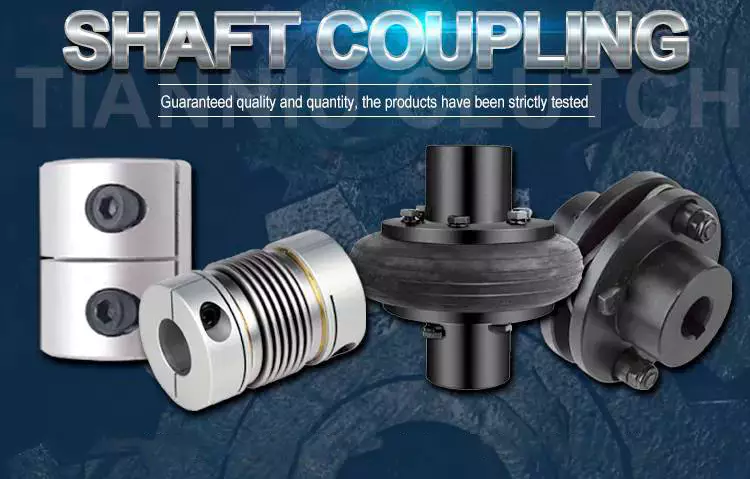
Types of Couplings
A coupling is a device that connects two shafts together. It transmits power from one end to another and is used for joining rotating equipment. A coupling is flexible and can accommodate a certain amount of end movement and misalignment. This allows for more flexibility in applications. Various types of couplings are available, and each one serves a specific purpose.
Shaft couplings
There are many types of shaft couplings, and they are used in a wide range of applications. The type you need depends on the torque, speed, and horsepower you need, as well as the size of the shaft and its spatial limitations. You may also need to consider whether the coupling will accommodate misalignment.
Some shaft couplings are flexible, while others are rigid. Flexible couplings can accommodate up to two degrees of misalignment. They are available in different materials, including aluminum, stainless steel, and titanium. They can also be known by different names, depending on the industry. Some couplings can also be used in a single or multiple-shaft application.
The first type of shaft coupling is a rigid coupling, which consists of two parts that fit together tightly around the shafts. These couplings are designed to have more flexibility than sleeved models, and they can be used on fixed shafts as well. The flanged coupling, on the other hand, is designed for heavy loads and is made of two perpendicular flanges. The flanges are large enough to accommodate screws and are generally used with heavy-duty applications.
CZPT shaft couplings are a great choice if you’re looking for a shaft coupling that delivers high performance, durability, and low cost. These metal disc-style couplings provide low backlash and high torsional stiffness. Their high misalignment tolerance reduces reaction loads on connected components, which makes them ideal for high-speed precision applications. Available in single and double-disc models, they have torque ratings of up to 2,200 in-lbs. (250N) and are available in fourteen sizes.
When using shaft couplings, it is important to choose the right type for your application. Backlash can cause a shaft coupling to break or become unusable. In order to prevent this from happening, you should replace worn or loose parts, and ensure that the hub and key are evenly positioned with the shaft. If you’re using a shaft coupling in a motion-control system, it is important to keep the torque level consistent.
Flexible couplings
Flexible couplings are a type of coupling used to connect two shafts. They are made of rubber or plastic and allow for axial movement of the connected equipment. They do not require lubrication and are resistant to fatigue failure. Flexible couplings are useful for a number of applications. A common type of flexible coupling is the gear coupling, which has gear teeth inside its sleeve. Another type of flexible coupling is the metallic membrane coupling. A metallic membrane coupling is flexible due to flexing metallic discs.
One major disadvantage of flexible couplings is their inability to fit certain types of pipe. This is because most couplings need to be stretched to fit the pipe. This problem is often the result of a change in pipe technology. Traditionally, drain and soil pipe is made of ductile iron or cast iron. Today, most pipes are made of PVC, which has a larger outside diameter than either cast or ductile iron. Because of these changes in pipe technology, many coupling manufacturers have not updated their mold sizing.
Flexible couplings can be either metallic, elastomeric, or a combination of the three. While there are some common characteristics of each type, you should always consider the tradeoffs of each type before choosing one. Generally, the most important considerations when selecting a flexible coupling are torque, misalignment, and ease of assembly and maintenance.
Flexible couplings are used in a wide range of industries. They are useful for connecting two pipes to ensure torque transfer. Although the types available are different, these are the most adaptable couplings in the market. They can withstand movement, vibration, and bending without causing any damage to the piping.
Clutch couplings
A clutch coupling connects two rotating shafts by friction. The clutch engages power when the engine is running, disengaging power when the brake is applied. Clutch couplings are used in applications where the speed of a machine is variable or where continuous service is required. The clutch can transmit power, torque, and axial force.
Clutch couplings come in a variety of styles and configurations. Some couplings are flexible, while others are rigid. Flexible couplings are available in a variety of materials, including stainless steel and aluminum. Some couplings also have a non-backlash design, which helps compensate for misalignment.
Clutch couplings may be synchronous or asynchronous. Synchronous couplings engage and disengage automatically when the driven machine exceeds its output speed. These couplings are synchronized by a synchronizing mechanism. When the output speed is exceeded, the synchronizing mechanism initiates the engagement process. The synchronizing mechanism does not engage or disengage when the output speed drops.
High speed clutches are available from a variety of manufacturers. Some manufacturers offer OEM assembly, repair services, and third-party logistics. These manufacturers serve the automotive, chemical, food, and wood industries, as well as the oilfield and material handling industries. Custom clutches can be manufactured for specific applications and can be fitted with additional features, such as precision machined teeth or keyway slots and grooves.
Couplings are available in PCE, C/T, and metric bores. Typically, the size of the input and output shafts will determine which type of coupling is needed. In addition, clutches may be configured for intermediate or high speeds, depending on the required torque.
Clamped couplings
Clamped couplings are commonly used in a variety of industries. They can be used in medical equipment, dental equipment, military equipment, laboratory equipment, and in precision industrial controls. They are available in a wide variety of sizes and keyways. This type of coupling offers a number of advantages, including ease of installation and quick and easy replacement.
A clamp coupling connects two parts by compressing them together. The clamping elements can be formed in a variety of ways, but they all have a gap between their surfaces. This friction squeezes the two parts together, much like pulling two rubber gloves apart. This type of coupling is also useful for joining two hoses or piping units.
Clamped couplings are designed with a single or double clamping shaft. The clamping parts are mounted in two halves and are held together by eight socket head cap screws. They offer high torque capacity and require little installation space. Their high rigidity ensures good positioning accuracy, making them ideal for dynamic drives. In addition, they are wear-free and offer simple radial assembly.
The invention relates to a method and system for clamping pipes to a tank vessel. This invention also relates to a method of loading and unloading tank vessels. The method can be used in oil production platforms and other platforms. A single point mooring method is also used in oil production platforms.
Clamped couplings can also be flexible. They can join two shafts together while allowing a small amount of end movement and misalignment. These couplings may also be used in the assembly of motors and gearboxes.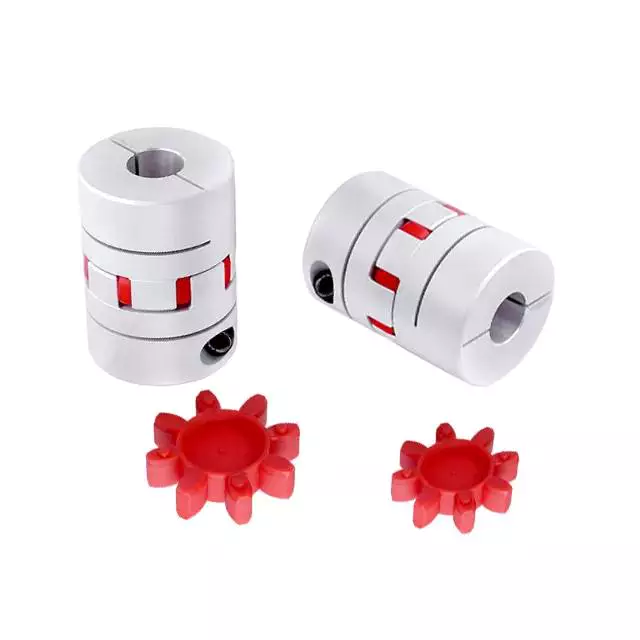
CZPT’s coupling
CZPT couplings are designed to be flexible, allowing them to accommodate misaligned shafts and transmit torque in either direction. They are made with three discs, two hubs, and a center that are arranged with grooves and fins. These features allow for two degrees of freedom during assembly, and can accommodate misalignment of up to 5% of the shaft diameter.
CZPT couplings have many uses. For example, they can be used to join two parallel coaxial rotating shafts. Their ability to transmit torque at the same rotation mechanism and speed makes them ideal for applications where electrical currents may be a problem. Because the couplings are not made of metal, they are electrically isolated. Designers should test their couplings during the prototype stage to ensure they are working properly.
The CZPT coupling consists of two hubs with one slot on each. An intermediate disk is located between the two hubs. The discs are used to reduce or prevent wear on other machine parts. CZPT couplings are inexpensive and easy to replace. They also have electrical insulation, which makes them easy to repair or replace.
CZPT couplings are a popular choice for stepper motor-driven positioning stages. The plastic center disc offers electrical isolation and absorbs shocks from frequent start/stops. These couplings are available in through-hub and blind-bore styles and can be installed in many applications.
CZPT couplings also allow for small degrees of shaft misalignment. This allows them to function in systems where shaft access is limited. They are easily removed without tools.

editor by CX 2023-07-13