
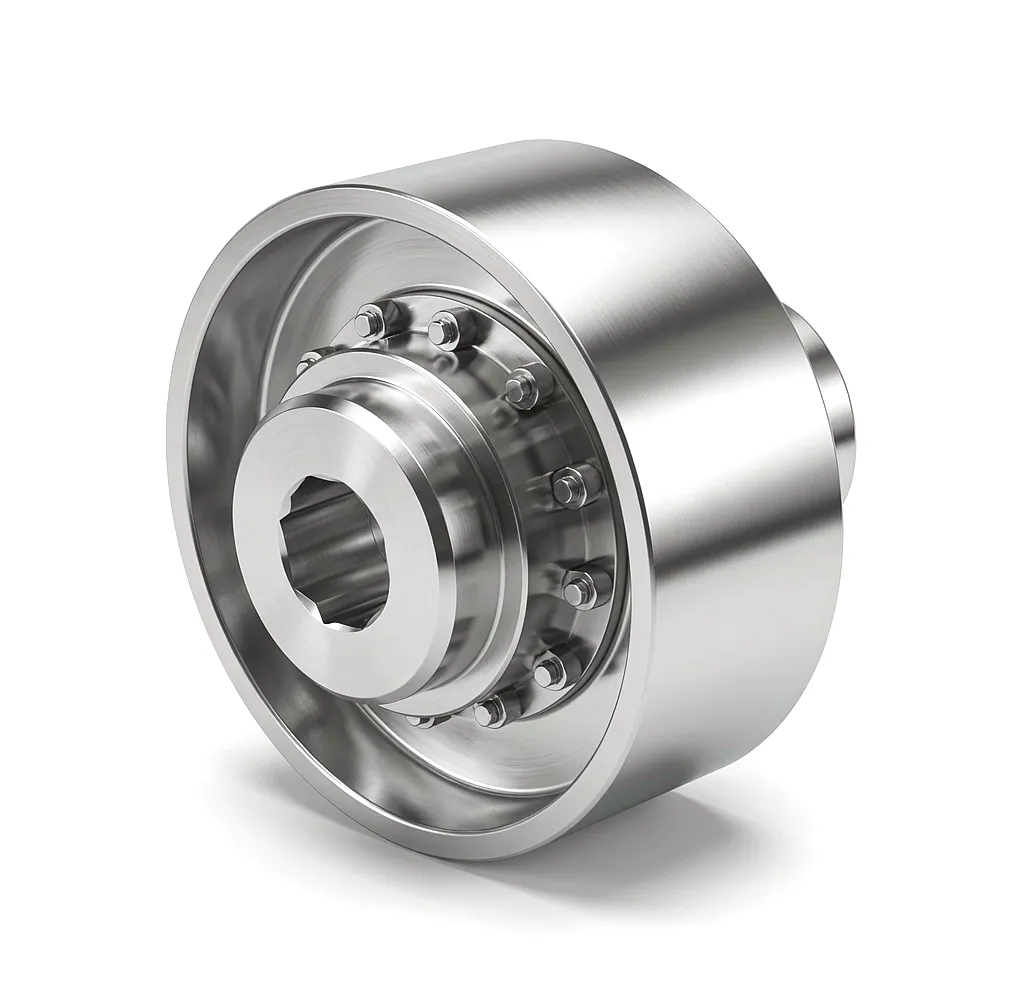
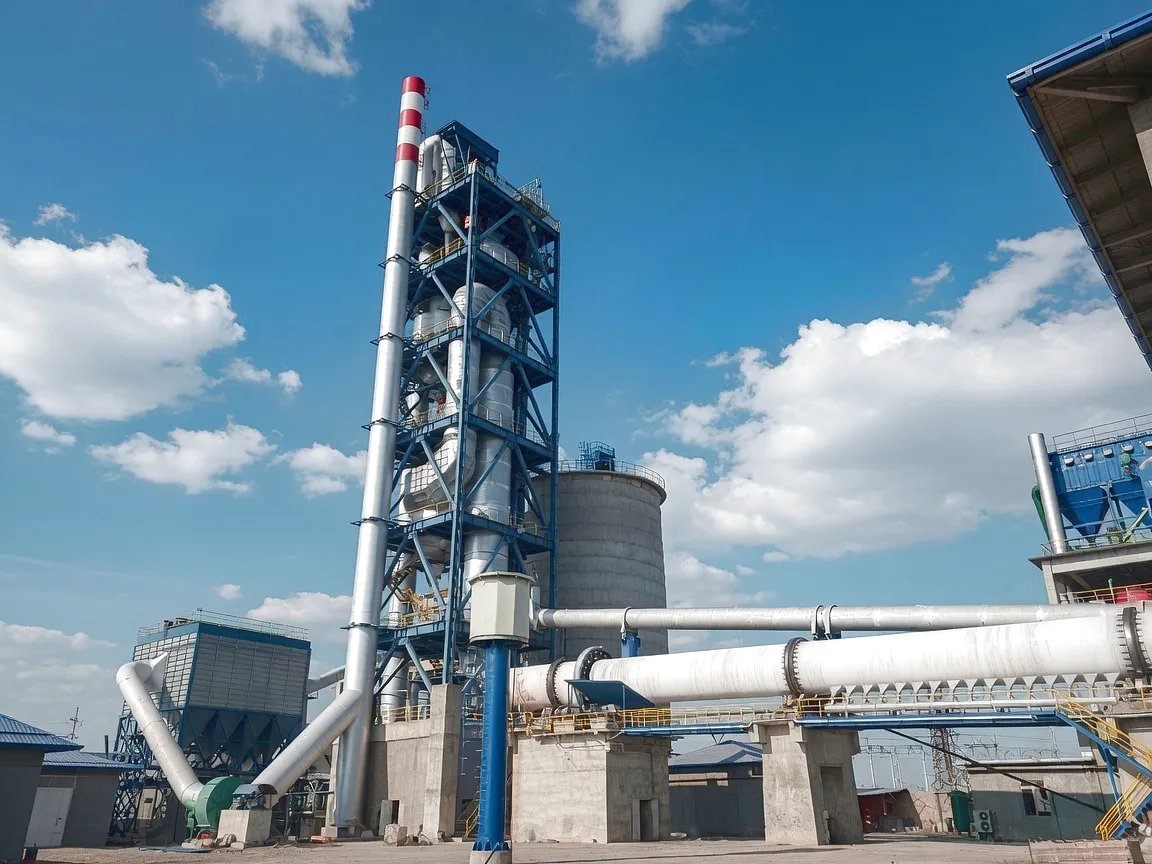
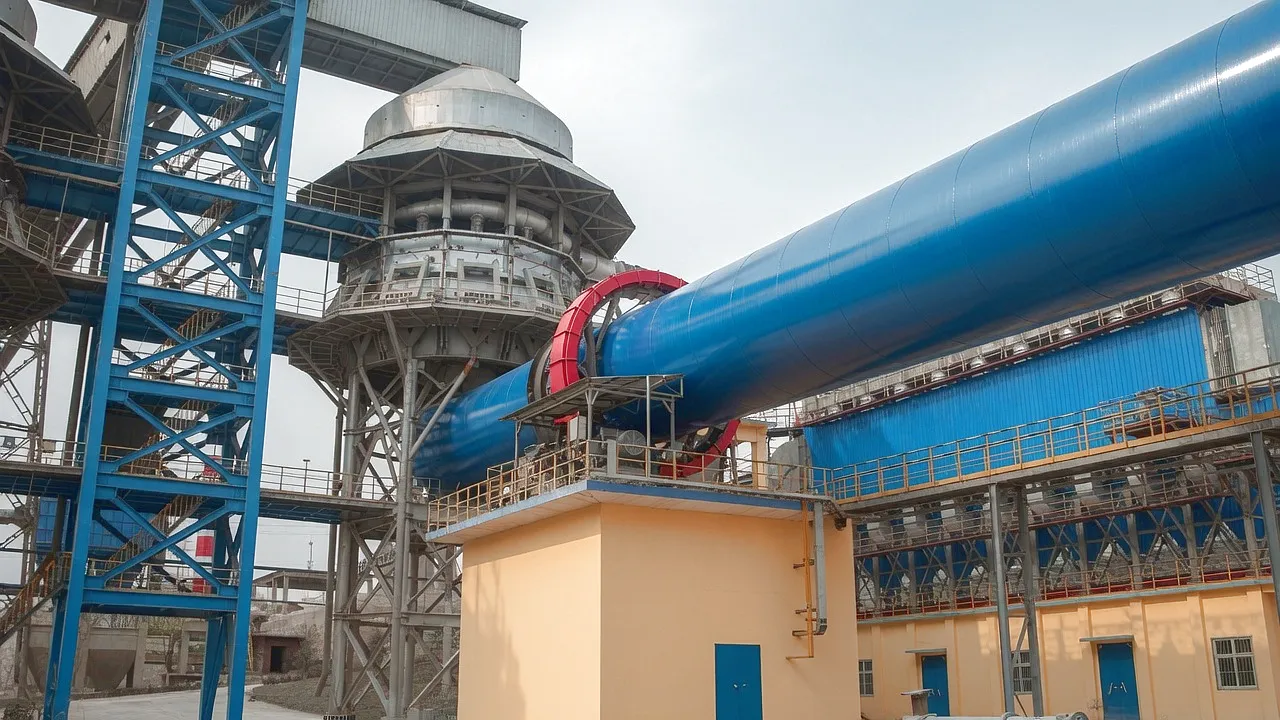
 Inside every cement plant operating across the United Kingdom — from the large integrated works in Derbyshire to the grinding terminals along the Thames Estuary — the rotary kiln stands as the single most energy-intensive and mechanically demanding piece of equipment on site. It is a massive rotating cylinder, commonly between 60 and 120 metres in length and 4 to 6 metres in diameter, inclined at a slight angle and driven continuously at somewhere between 0.5 and 4 RPM. The raw meal enters at the elevated feed end, travels the full length under gravity and rotation, and exits at the discharge end as clinker at temperatures approaching 1,450 °C. Nothing in a cement plant runs harder or longer without stopping.
The drive system that keeps the kiln turning is itself a precision engineering challenge. A main motor — typically a high-power AC or DC unit rated anywhere from 200 kW to well above 1,000 kW — feeds into a primary gearbox, which in turn drives a pinion shaft that meshes with the large bull gear bolted to the kiln shell. Between the motor output flange and the gearbox input shaft sits a component that most process engineers and maintenance managers overlook until something goes wrong: the gear coupling. This is exactly where a correctly specified drum-type gear coupling earns its keep every single shift, quietly absorbing misalignment, damping start-up shock, and transmitting rated torque without complaint for years at a time.
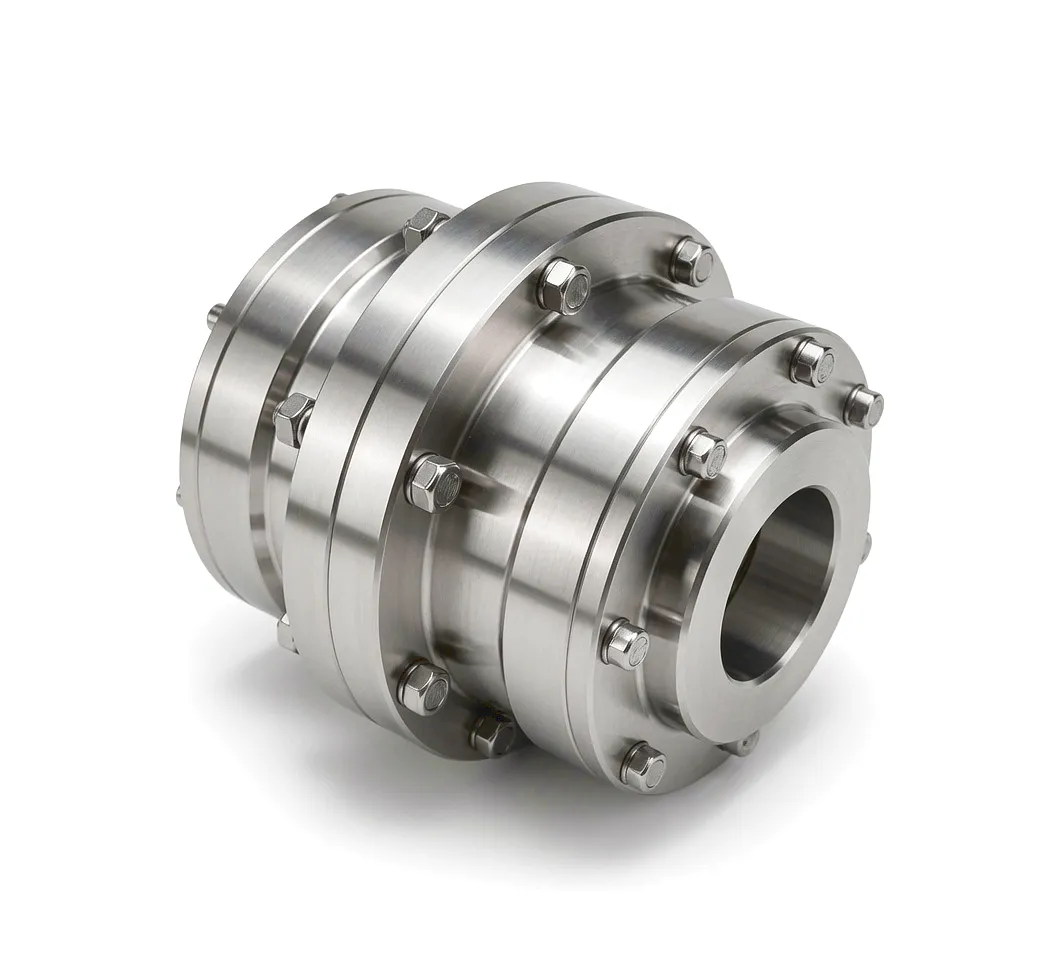
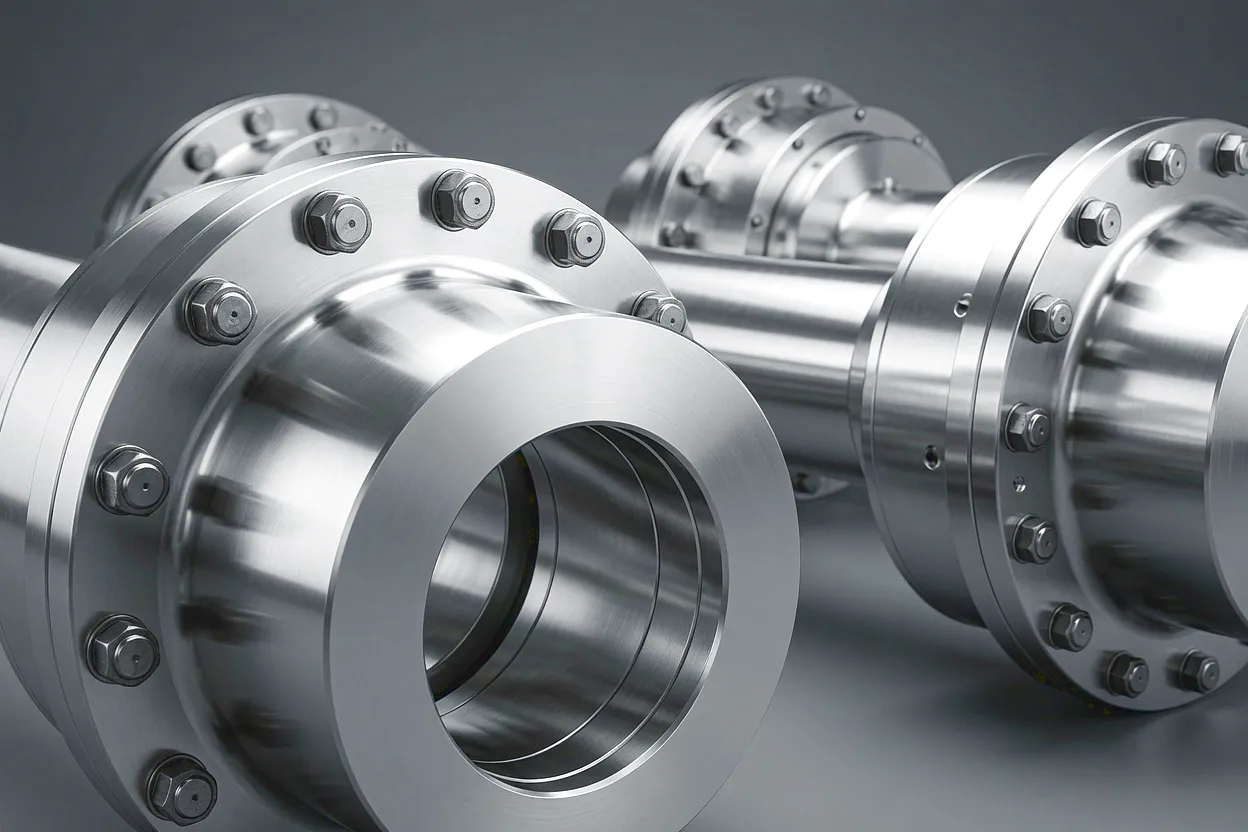
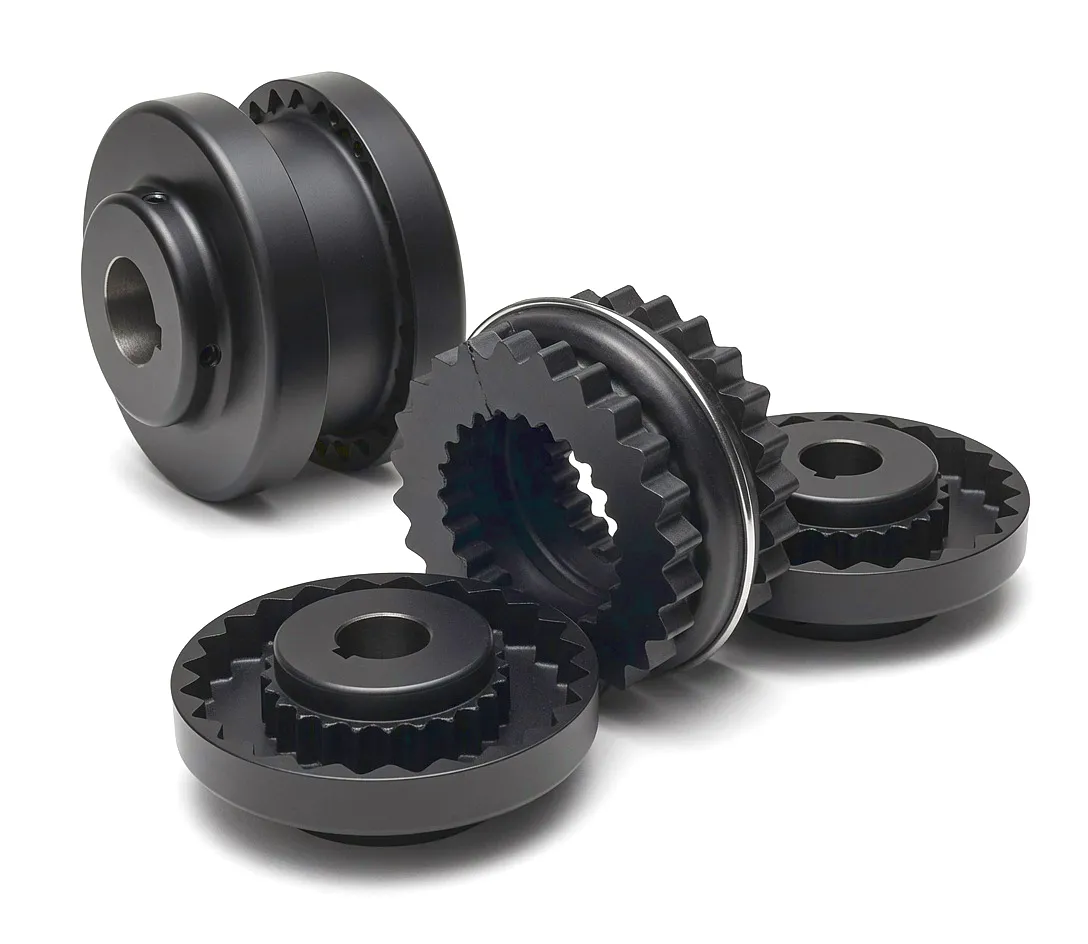
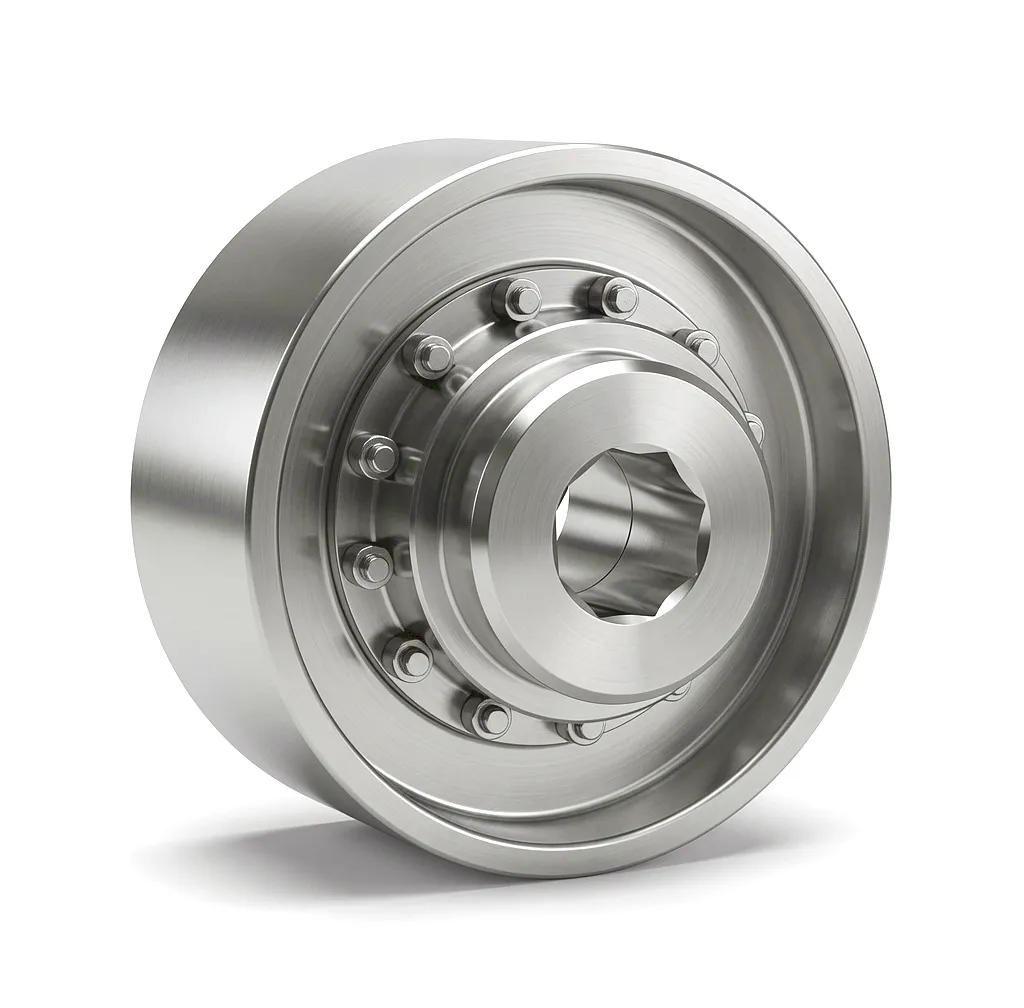
GICL / NGCL Series Drum Gear Coupling
Engineered for continuous high-torque transmission between motor and gearbox in rotary kiln drive trains. Crowned gear teeth, hardened tooth flanks, and sealed lubrication chambers deliver reliable service in high-vibration, thermally stressed environments.
What Actually Happens Inside a Gear Coupling
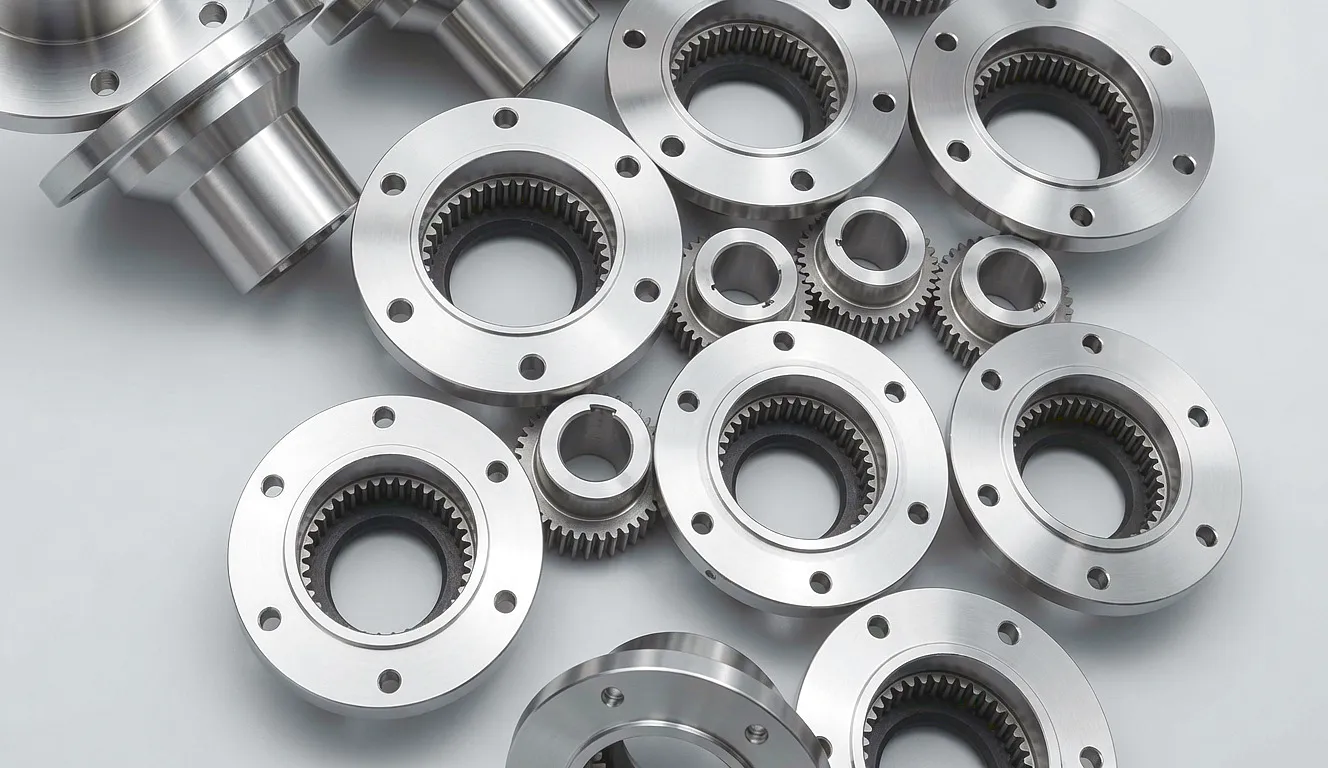
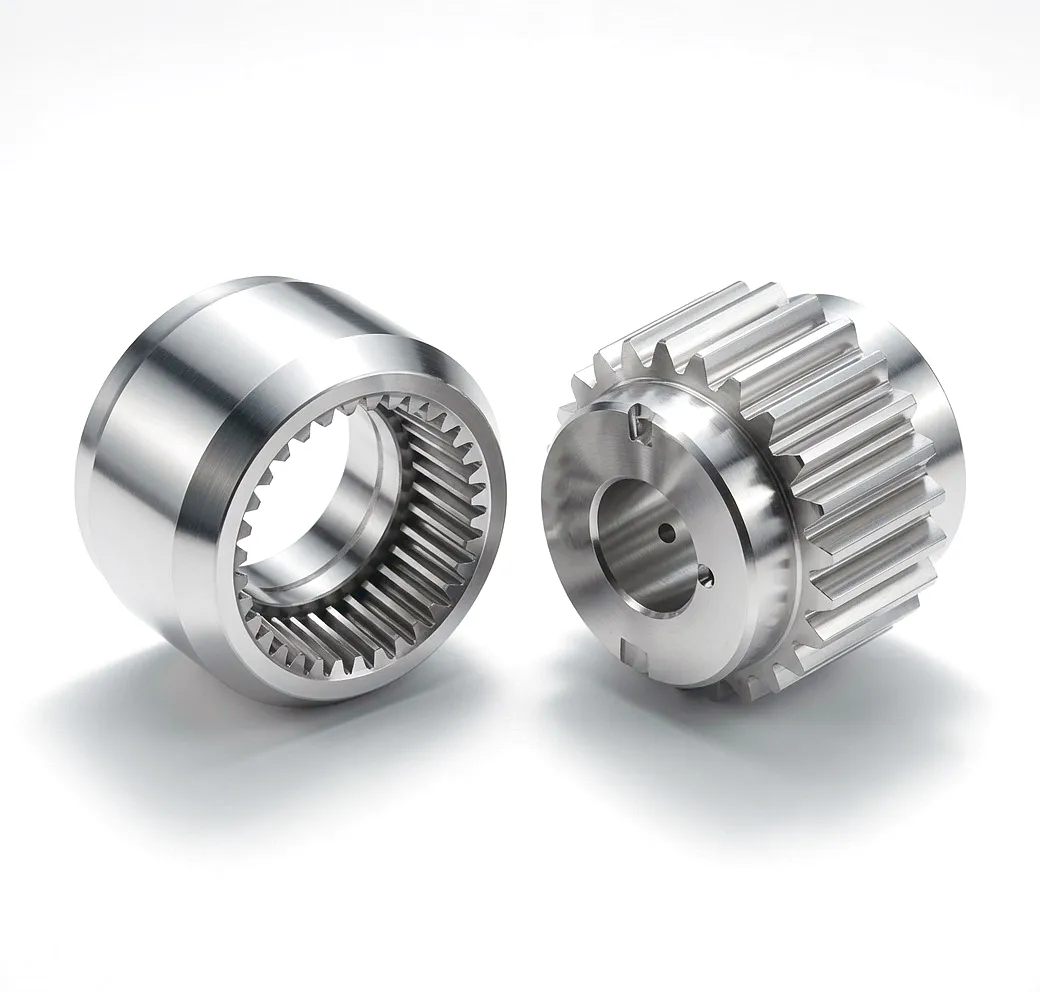
A gear coupling consists of two hubs, each carrying external gear teeth machined directly onto the hub body, and an outer sleeve assembly — either a single-piece flanged sleeve or two half-sleeves bolted together — carrying matching internal gear teeth. Torque is transmitted by the engagement of the external hub teeth against the internal sleeve teeth. What makes a drum-type (crowned-tooth) gear coupling fundamentally different from a simple spur-gear mesh is the geometry of the tooth profile: each external tooth is machined with a slight convex crown along its length, so that contact shifts along the tooth face rather than concentrating at one edge when angular misalignment is present.
In a rotary kiln drive, this crowned geometry is not a luxury — it is a necessity. The motor sits on a concrete pad isolated from the kiln structure, the gearbox is bolted to a separate steel skid, and both foundations settle and thermally expand at different rates throughout the working day. Shaft misalignment between motor and gearbox is therefore a permanent condition that changes continuously, and the gear coupling must absorb it without generating side loads that would destroy motor and gearbox bearings within months.
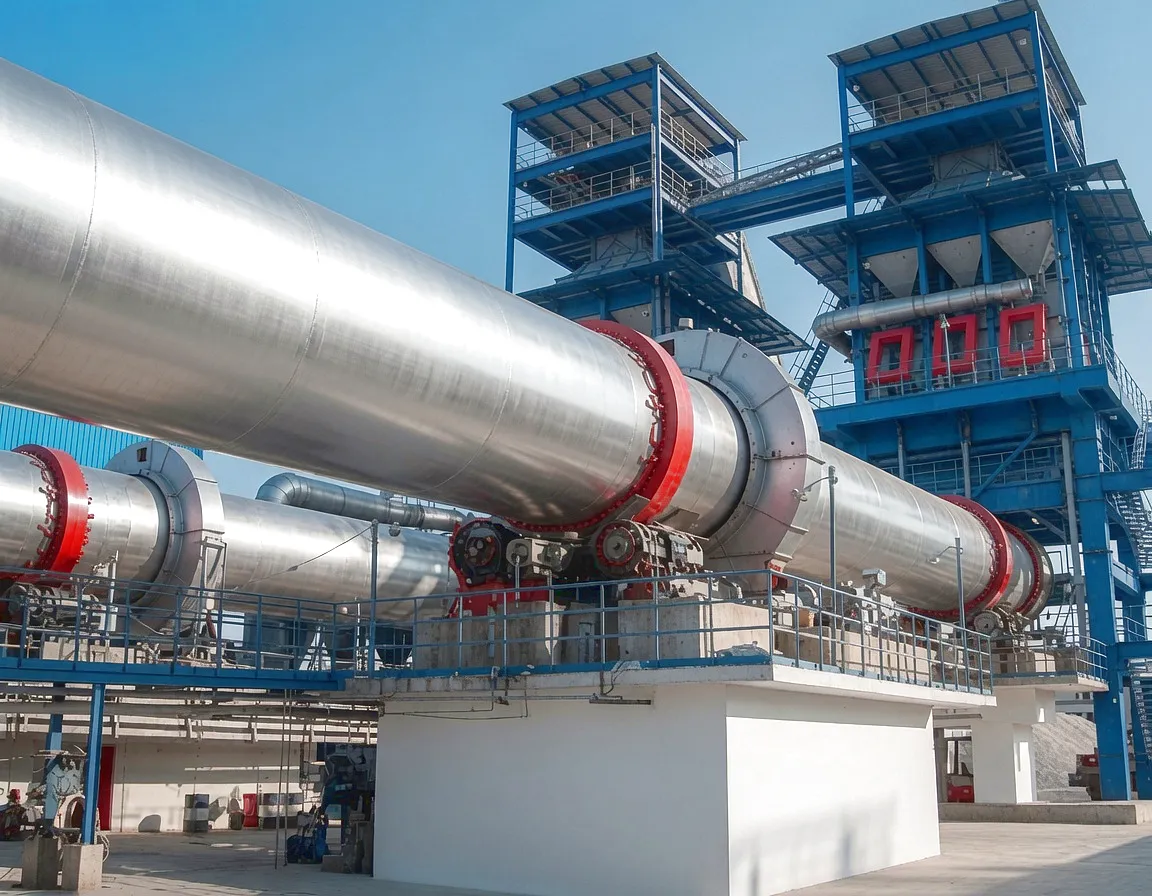
Gear coupling in cement kiln drive train
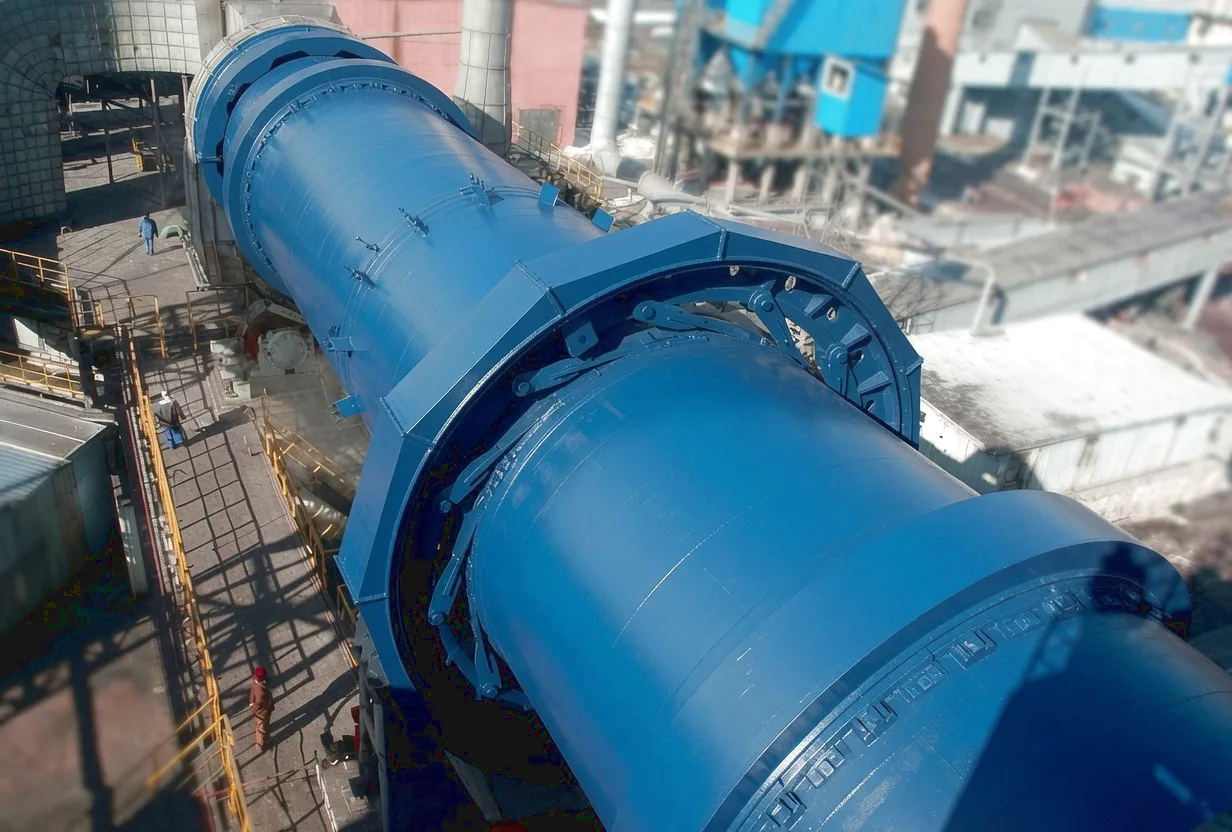
Heavy-duty industrial drive coupling
Motor-to-gearbox connection point
Why Rotary Kiln Drives Push Gear Couplings to Their Limits
Cement plant rotary kilns are not like pumps or fans, where steady-state operation is the norm and transient events are rare. The kiln drive system contends with at least five distinct mechanical challenges simultaneously, and any coupling that cannot handle all five at once will fail — sometimes catastrophically, often at the worst possible moment.
Enormous Start-Up Torque
A laden kiln can weigh 500 tonnes or more. Breaking it away from rest demands a torque spike several times the rated running torque. The coupling must absorb this shock without tooth breakage or sleeve cracking.
Continuous Shaft Misalignment
Differential thermal expansion, foundation settlement, and gearbox torque reaction all create angular and radial offsets between motor and gearbox shafts that shift throughout the production cycle.
Radiated Thermal Load
The kiln shell radiates intense heat across the drive bay. Gear coupling materials and lubricants must maintain integrity at elevated ambient temperatures without degradation of the grease film or softening of the hub bore.
Dust and Cement Particle Ingress
Fine cement dust permeates every corner of the drive bay. The coupling seals must prevent contamination of the tooth mesh and internal lubricant, because cement slurry inside the coupling quickly becomes an abrasive grinding compound.
Low-Speed, High-Torque Regime
The motor typically runs at 750 to 1,500 RPM while the kiln needs only 1 to 4 RPM. The gearbox provides the reduction, and the coupling sees the full motor speed with the full rated torque — a combination that demands excellent dynamic balance and robust fatigue resistance.
Understanding these five simultaneous stressors makes it clear why an engineering team specifying a gear coupling for rotary kiln service cannot simply select the cheapest unit that fits the shaft diameter. The coupling needs to be sized with appropriate service factors, the tooth geometry needs to match the expected misalignment envelope, and the sealing system needs to be appropriate for the particulate environment. Getting this specification right is what separates a coupling that runs for three to five years between planned maintenance intervals from one that fails in three months.
Technical Performance Parameters — GICL / NGCL Series Gear Couplings
The table below presents representative performance data for the GICL and NGCL drum-type gear couplings most commonly selected for rotary kiln drive service. Exact values vary by size designation; contact our engineering team for confirmed parameters for a specific shaft size and torque requirement.
| Parameter | GICL Series | NGCL Series | Significance for Kiln Drives |
|---|---|---|---|
| Nominal Torque Range | 1,600 – 2,500,000 N·m | 4,000 – 4,000,000 N·m | Covers full range from auxiliary to main kiln drives |
| Max Allowable Speed | Up to 3,600 RPM (size-dependent) | Up to 3,000 RPM (size-dependent) | Motor shaft speeds comfortably within range |
| Angular Misalignment Tolerance | Up to 1.5° | Up to 1.5° | Absorbs differential settlement and thermal drift |
| Radial (Parallel) Offset | See size table | See size table | Accommodates installation and operational offset |
| Tooth Material (Hub) | 42CrMo4 alloy steel, carburised and hardened 55–62 HRC | 42CrMo4 alloy steel, carburised and hardened 55–62 HRC | Resists wear and impact fatigue under shock loading |
| Sleeve Material | Cast iron GG25 or steel ZG310-570 | Ductile iron or cast steel | Balances mass economy with structural integrity |
| Peak (Start-Up) Torque Capacity | 2.0 × rated (standard); higher on request | 2.0 × rated (standard); higher on request | Critical for laden kiln cold-start events |
| Lubrication | Grease-filled (sealed); EP2 or high-temp EP grease | Grease-filled (sealed); EP2 or high-temp EP grease | Long service intervals; resists contamination |
| Operating Temperature Range | -20 °C to +80 °C (standard grease) | -20 °C to +80 °C (standard grease) | High-temp grease option available for hot environments |
| Bore Tolerance (Hub) | H7 standard; custom tolerance on request | H7 standard; custom tolerance on request | Ensures correct interference with motor/gearbox shaft |
| Balance Grade | G6.3 standard; G2.5 available | G6.3 standard; G2.5 available | Minimises vibration at motor running speed |
All data indicative; confirm with Ever Power engineering team for your specific application. Values comply with GB/T 7507 and GB/T 3852 standards.
Materials, Design Geometry, and Why They Matter for Cement Kilns
The tooth geometry of a drum-type gear coupling deserves more attention than it typically receives in procurement discussions. The crowned tooth profile is not simply a manufacturing detail — it is the single feature that transforms a rigid gear mesh into a flexible torque joint. When two shafts are perfectly aligned, the full tooth face contacts the mating sleeve tooth and load is distributed evenly. As angular misalignment develops, the curved tooth face rocks against the internal tooth, maintaining a reasonable contact patch and preventing the catastrophic edge loading that would quickly score and crack a straight-cut tooth.
The crown radius and module (tooth pitch) are selected according to the expected misalignment angle and the torque to be transmitted. In rotary kiln service, where misalignment can reach 0.5° to 1° in normal operation and higher during emergency conditions, the tooth geometry parameters are non-trivial design inputs. Our engineering team uses verified calculation methods drawn from GB/T 7507, ISO 10441, and our own accumulated field data from kiln drive installations to establish the correct parameters before manufacture.
Material Specification Summary
Hub Body & Teeth
42CrMo4 alloy steel — case hardened to 55–62 HRC on tooth flanks and roots; core remains tough (28–32 HRC) to resist impact fracture
Outer Sleeve
GG25 grey cast iron (smaller sizes) or ZG310-570 cast steel (larger sizes & high-shock applications); inner teeth precision-hobbed
Seals
Neoprene O-ring or lip seal (standard); fluoroelastomer (FKM/Viton) upgrade available for high-temperature ambient conditions above 60 °C
Lubrication
Lithium-complex EP2 grease (standard); high-temperature EP grease (Mobilith SHC 460 or equivalent) for kiln drive bay environments
Selecting the Right Series for Your Kiln Drive
The GICL series is the workhorse of the range — a rigid-flanged, gear-tooth coupling covering the bulk of cement kiln auxiliary and secondary drive applications where shaft sizes run from 50 mm to around 300 mm. Its compact envelope, straightforward installation, and wide availability of spare sleeves make it the go-to recommendation for UK cement plant maintenance engineers who want minimum downtime when a replacement is needed.
For larger primary kiln drives — typically any motor above 400 kW, where shaft diameters run from 200 mm upward and torques climb into the millions of newton-metres — the NGCL series brings a heavier cross-section sleeve, larger bore capacity, and the option of intermediate spacer shafts that simplify in-situ maintenance by allowing sleeve removal without disturbing either the motor or the gearbox. This is a significant advantage in a cement plant where motor and gearbox realignment is a multi-shift job.
Six Reasons Plant Engineers Choose Our Gear Couplings for Kiln Service
01
Long Service Life Under Continuous Load
Case-hardened tooth flanks with a surface hardness of 55–62 HRC deliver dramatically lower wear rates than through-hardened alternatives. In documented kiln drive installations, the coupling typically outlasts the primary gearbox oil service interval by a significant margin, allowing both to be inspected on the same planned shutdown.
02
Superior Misalignment Compensation
Drum-tooth crowning allows angular misalignment up to 1.5° while maintaining full torque transmission and generating only minimal restoring forces on the connected machine bearings. This is the feature that makes rotary kiln service viable — no rigid coupling could survive the daily misalignment cycle these drives experience.
03
Compact Torque Density
Gear couplings transmit the highest torque per unit of envelope size of any flexible coupling type. In a cement plant drive bay where headroom and radial clearance around the drive train are always constrained, this compact cross-section allows the same torque duty in a smaller diameter than elastomeric or disk-pack alternatives.
04
Effective Shock and Peak-Load Damping
The gear tooth mesh provides a degree of torsional compliance that absorbs the high-amplitude torque spikes generated during cold starts, material bridging incidents, or sudden braking events. While a gear coupling is not a torsional damper in the elastomeric sense, its tooth surface compliance and lubricant film together reduce transmitted peak torque to a level the gearbox and motor bearings can survive.
05
Sealed Lubrication for Dusty Environments
The sealed grease cavity means the tooth mesh is permanently lubricated without requiring external oil piping or recirculation systems. The sealing arrangement prevents cement dust ingress, which is one of the most common causes of accelerated coupling wear in kiln drive bays. Our fluoroelastomer seal upgrade is recommended for installations where ambient temperatures near the coupling regularly exceed 60 °C.
06
Ready for UK Cement Plant Operating Conditions
Manufactured and quality-inspected to GB/T 7507, with documentation packages that include material certification, dimensional inspection reports, and dynamic balance certificates suitable for use in a PSSR (Pressure Systems Safety Regulations) or machinery directive compliance file. We supply with metric fasteners and SI units throughout, consistent with UK engineering practice.
Ever Power — Custom Gear Coupling Manufacturing for UK Industry
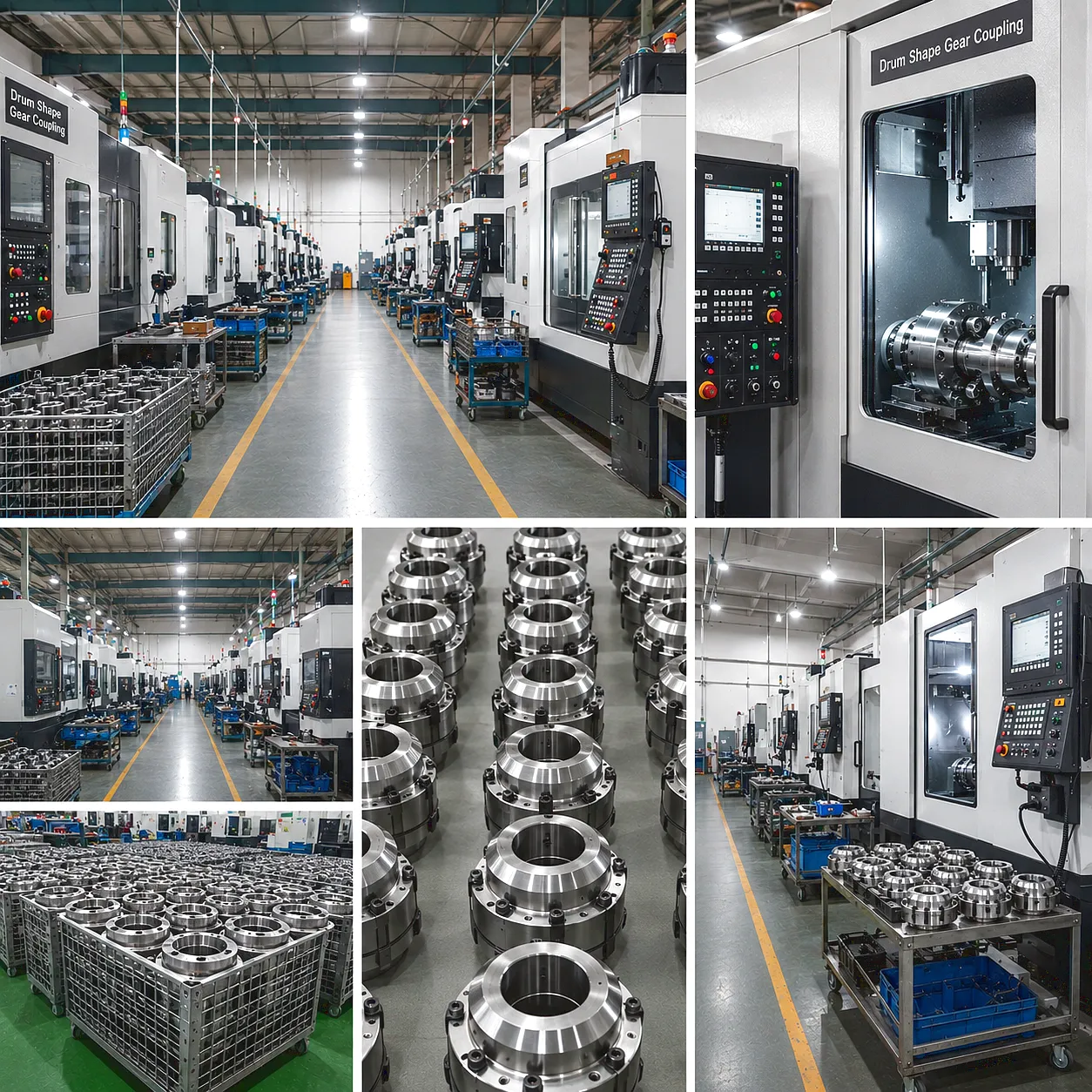
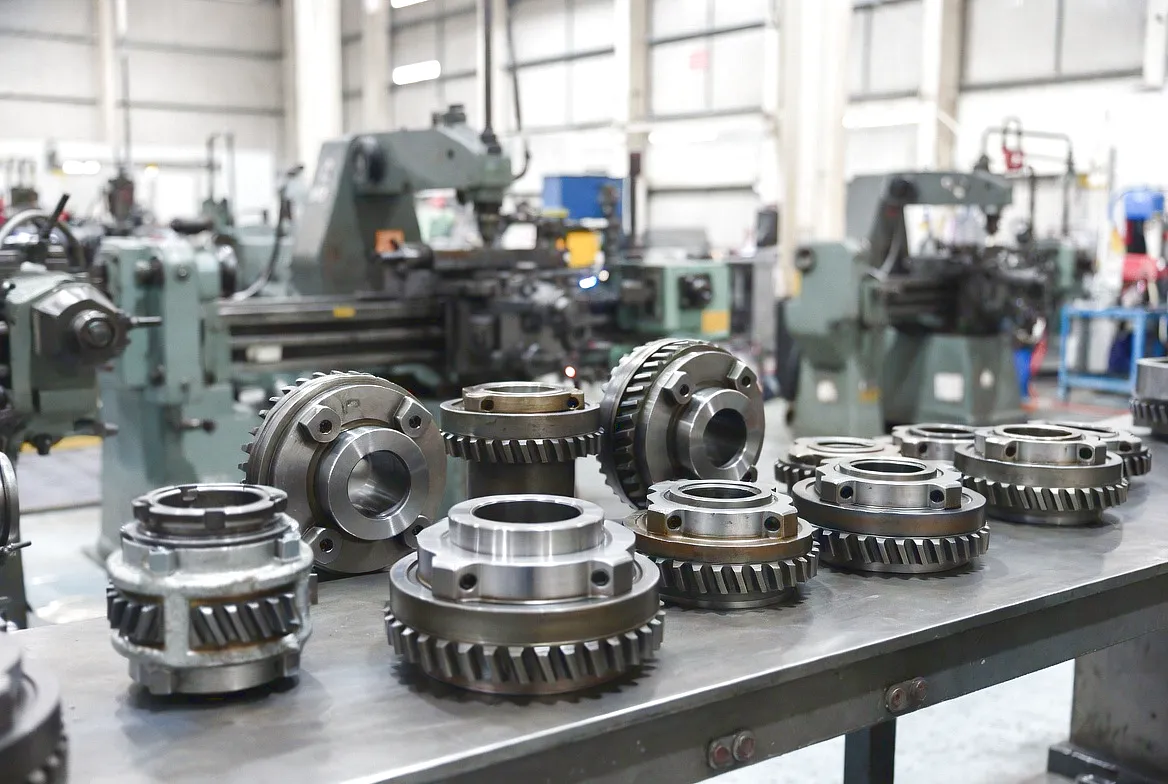
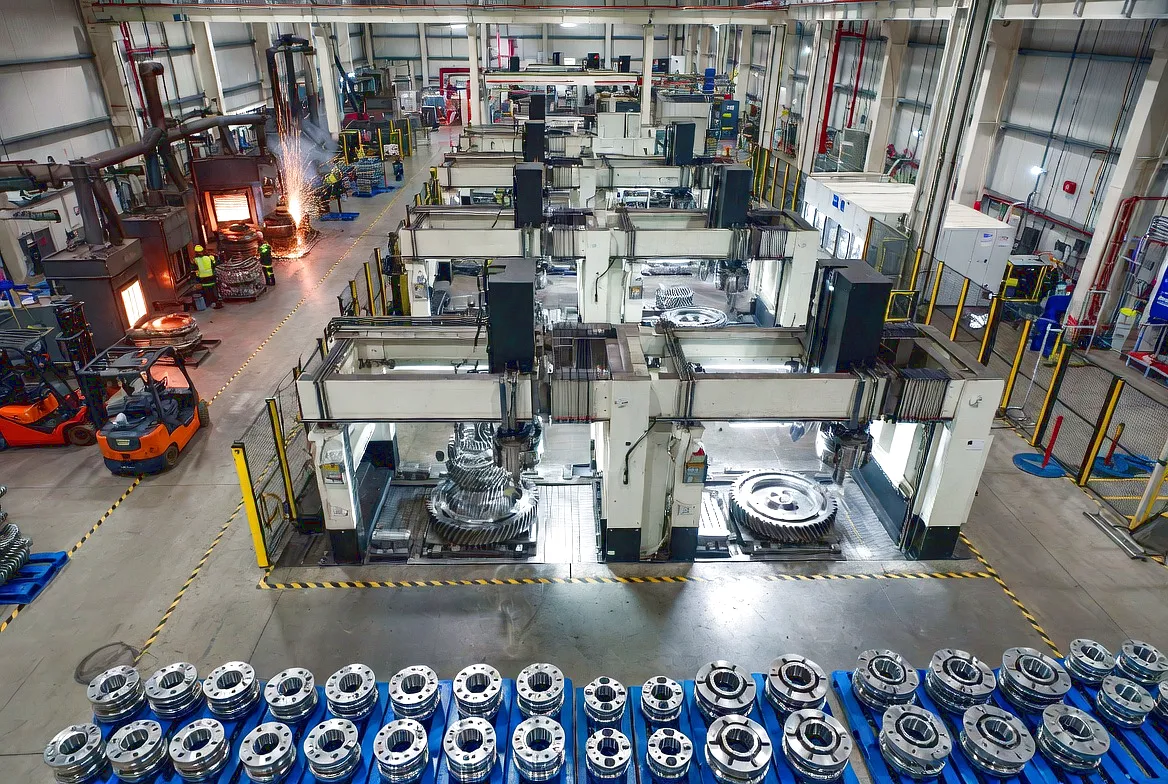
Ever Power operates a dedicated gear coupling manufacturing facility with CNC tooth hobbing centres, heat treatment furnaces capable of case-carburising large hub forgings, and a metrology lab equipped with CMM (coordinate measuring machine) verification for tooth profile, bore diameter, and runout. The facility works to ISO 9001 quality management procedures, and every kiln drive coupling leaves the plant with a traceable inspection report covering material batch, tooth geometry verification, bore tolerance, and dynamic balance grade.
Our product customisation capability goes considerably beyond standard catalogue sizes. We regularly supply non-standard bores, non-standard keyway configurations (including double keyways and spline bores), custom spacer lengths for specific drive train geometries, and special surface treatments such as phosphate coating or Molykote dry-film lubrication for extreme-environment applications. For UK cement plant operators who have inherited legacy equipment with non-metric or unusual shaft sizes — not uncommon in older works in the Midlands and the North of England — our ability to machine to the exact shaft dimensions rather than requiring the customer to re-shaft the gearbox represents a significant cost saving.
Lead times for standard sizes run from stock or short production runs. Custom configurations are quoted case by case, but our experience shows that straightforward custom bore or keyway work adds only a few working days to standard lead time. For urgent breakdowns in UK cement plants, we offer a dedicated fast-track service — contact our UK sales team with your shaft dimensions and we will confirm stock or production availability within 24 hours.
Also Available — Auxiliary Drive Applications
NL Series Nylon Gear Coupling for Auxiliary Kiln Drives
For auxiliary and barring drive applications on rotary kilns — where the objective is to rotate the kiln slowly during shutdowns and warm-up cycles to prevent shell ovality — the NL series nylon-element gear coupling provides adequate torque capacity at significantly lower noise levels than all-steel units. The nylon gear element also provides a degree of electrical isolation useful in some drive configurations, and its self-lubricating nature eliminates the grease replenishment requirement. Rated from 40 N·m to 2,500 N·m, the NL series covers a wide range of auxiliary drive motor sizes.
Where Gear Couplings Fit in the Cement Plant — Beyond the Kiln
While the rotary kiln drive is the most demanding application, gear couplings appear throughout a modern integrated cement plant in the UK. The table below maps the most common installations by equipment type, coupling series recommendation, and the primary performance characteristic that drives the selection.
| Equipment | Typical Power | Recommended Series | Primary Selection Driver |
|---|---|---|---|
| Rotary kiln main drive (motor–gearbox) | 400 – 1,500+ kW | NGCL series | Ultra-high torque, misalignment tolerance, spacer design |
| Rotary kiln auxiliary/barring drive | 7.5 – 45 kW | NL or GICL series | Low noise, self-lubrication, ease of installation |
| Raw mill drive (ball mill or VRM) | 1,000 – 5,000 kW | NGCL series | Shock load from grinding media, high start-up torque |
| Cement mill drive | 1,500 – 6,000 kW | NGCL series | Very high torque density, dust sealing |
| Preheater fan drive | 200 – 800 kW | GICL series | Angular misalignment, moderate shock, compact size |
| Belt conveyor drive (clinker transport) | 30 – 200 kW | GICL series | Moderate torque, easy maintenance, economy |
| Bucket elevator drive | 15 – 75 kW | GICL series | Reversing loads, jam-stop shock, tight space |
| Packing machine drive | 2.2 – 22 kW | NL or GICL (small) | Low noise, easy replacement, standard shaft sizes |
Customer Success — Derbyshire Integrated Cement Works, United Kingdom
Case study | Main kiln drive gear coupling replacement programme | 2023–2024
 Background
A major integrated cement works in Derbyshire, UK, operating two 4.5 × 72 m wet-process kilns was experiencing recurring gear coupling failures on its primary kiln drive every 14 to 18 months. The original European-sourced couplings, both on Kiln 1 and Kiln 2, were showing accelerated tooth wear attributed to continuous angular misalignment caused by differential settlement of the motor plinth and gearbox pedestal — a problem made worse by the plant’s proximity to old shallow coal workings, which caused gradual ground movement. Each coupling failure required a 36-hour unplanned shutdown, costing the plant approximately £180,000 in lost production per event.
Solution
Ever Power’s UK technical team carried out on-site laser alignment measurements during a planned maintenance window, establishing that angular misalignment at the motor-to-gearbox coupling point was varying between 0.3° and 0.9° during normal operation, with peaks of 1.2° under full load. The team recommended replacing both existing couplings with NGCL-series drum-type gear couplings upgraded with a high-temperature fluoroelastomer sealing system and high-temperature EP grease fill. Custom bore diameters were machined to match the existing motor and gearbox shaft sizes precisely, with both hubs supplied with taper-lock shrink disc arrangements to improve disassembly time during future planned inspections.
Outcome
Both kilns ran for 26 continuous months before the first planned coupling inspection, at which point the tooth profile showed wear within acceptable limits and both couplings were returned to service with fresh grease. The 26-month run is the longest uninterrupted production period both kilns have achieved in over a decade. Estimated saving in avoided unplanned shutdowns over the 26-month period: in excess of £500,000.
★★★★★
“We’ve been fighting kiln drive coupling failures for years. The Ever Power NGCL units with the FKM seals have been running for over two years without a single issue. The tooth wear at inspection was negligible. We’ve already ordered the couplings for our third kiln.”
James Whitfield
Reliability Engineer, Derbyshire Cement Works, UK
★★★★★
“We needed a non-standard bore size and a specific keyway arrangement to match our gearbox input shaft. Ever Power machined both hubs to our exact drawing within a week. The documentation package was exactly what we needed for our machinery compliance file. Very professional operation.”
Sandra McAllister
Mechanical Engineering Manager, North Wales Cement Ltd, UK
★★★★★
“We compared three suppliers when specifying replacements for our raw mill and kiln drives. Ever Power came out ahead on tooth hardness specification, documentation quality, and price. The GICL units on our auxiliary kiln drives are now on their third year without any maintenance intervention beyond a routine grease check.”
Thomas Hargreaves
Plant Maintenance Director, Yorkshire Clinker & Cement Group, UK
Installation, Alignment, and Maintenance Recommendations for Kiln Drive Service
 Even the best-specified gear coupling will not deliver its rated service life if it is installed poorly or maintained infrequently. In our experience working with cement plant maintenance teams across the UK — including sites in England, Scotland, and Wales — the single most common cause of premature coupling wear is inadequate initial alignment. An angular offset of 0.8° at installation that the coupling can theoretically tolerate is not the same as running at 0.8° continuously: the grease migration pattern under dynamic misalignment means that tooth flanks that are perpetually loaded at one edge will wear faster than those carrying a centrally distributed load. Laser alignment to below 0.1 mm/100 mm radial offset and below 0.05 mm/100 mm angular offset at installation gives the coupling the best possible starting point before operational drift adds to the misalignment envelope.
Grease replenishment intervals depend on operating temperature, operating speed, and the effectiveness of the dust sealing. As a conservative starting point for kiln drive service at the motor shaft speed range of 750 to 1,500 RPM in a warm environment, we recommend a grease inspection at 6,000 operating hours and a full grease replacement at 12,000 operating hours or during any planned shutdown where the coupling can be accessed — whichever occurs sooner. If the plant operates in a region of the UK where the drive bay ambient temperature regularly exceeds 40 °C in summer — unlikely in most UK locations but worth noting for kilns in sheltered indoor enclosures — the interval should be shortened to 8,000 hours for the grease replacement.
When a coupling is removed for inspection or replacement, the hub bore, shaft diameter, and keyway should all be checked for fretting corrosion before reassembly. Fretting at the hub bore is particularly common on kiln drives where the shock-load level is high, and a shaft that shows fretting damage should be repaired or replaced before a new coupling is fitted. Fitting a new coupling on a damaged shaft simply transfers the problem and reduces the life of the replacement unit.
🇬🇧 Serving UK Cement & Process Industries
Ever Power supplies gear couplings to cement plants, lime kilns, aggregates processing facilities, and heavy process industries throughout England, Scotland, Wales, and Northern Ireland. Our documentation conforms to UK Post-Brexit standards including UKCA certification requirements where applicable, and our material certifications follow EN 10204 Type 3.1 standards widely used by UK plant engineering teams.
UK delivery is available from our UK-based distribution partner, with same-day dispatch on standard stock items and dedicated freight arrangements for large or urgent orders. Technical support is available from our engineering team by email throughout UK business hours, and for planned major projects a site visit can be arranged.
Documentation & Compliance Standards
✓
GB/T 7507 gear coupling design standard
✓
ISO 10441 industrial flexible couplings
✓
EN 10204 Type 3.1 material certificates (on request)
✓
Dynamic balance certificate to ISO 1940-1 (G6.3 standard, G2.5 available)
✓
Dimensional inspection report (bore, keyway, tooth profile)
✓
ISO 9001 quality management system
Frequently Asked Questions
Common questions from cement plant engineers and procurement teams across the United Kingdom
Ready to Specify Your Kiln Drive Coupling?
Get a Custom Gear Coupling Quote for Your UK Plant
Send us your motor power, shaft diameter, and operating speed. We will return a full technical recommendation and commercial quotation within 24 hours.
edit by gzl