
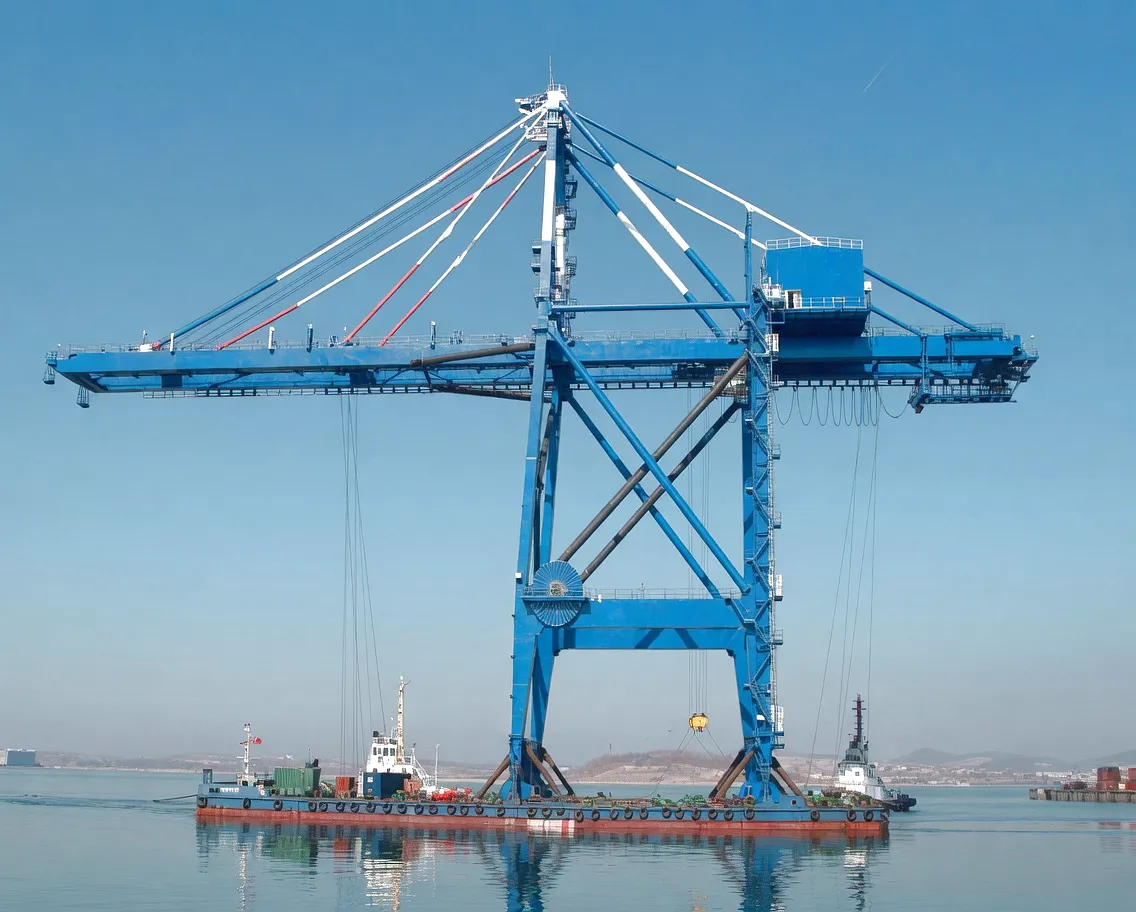
 Shore bridge cranes — known in the industry as ship-to-shore (STS) cranes — are the beating heart of every major container port. From Felixstowe and Southampton to Tilbury on the Thames, these towering structures lift boxes weighing up to 65 tonnes, cycling continuously, often 24 hours a day. Inside each of the three primary drive trains — the hoist mechanism, trolley travel mechanism, and gantry travel mechanism — a gear coupling is responsible for transmitting enormous torque from the motor through the gearbox to the drum or wheel. Get that coupling wrong, and you don’t just lose productivity; you risk catastrophic failure in a safety-critical environment.
This is precisely the environment where a properly specified gear coupling proves its worth. Unlike flexible elastomeric designs that degrade under sustained high-cycle loading, a drum-tooth gear coupling handles peak torque spikes, angular misalignment, and axial displacement simultaneously — all without transmitting harmful bending loads back into the motor or gearbox shaft. At Ever Power, our engineering team has spent nearly two decades refining the tooth profile geometry, surface hardening processes, and lubricant retention systems specifically for heavy port machinery, giving UK and global procurement teams a genuinely fit-for-purpose solution rather than an off-the-shelf compromise.
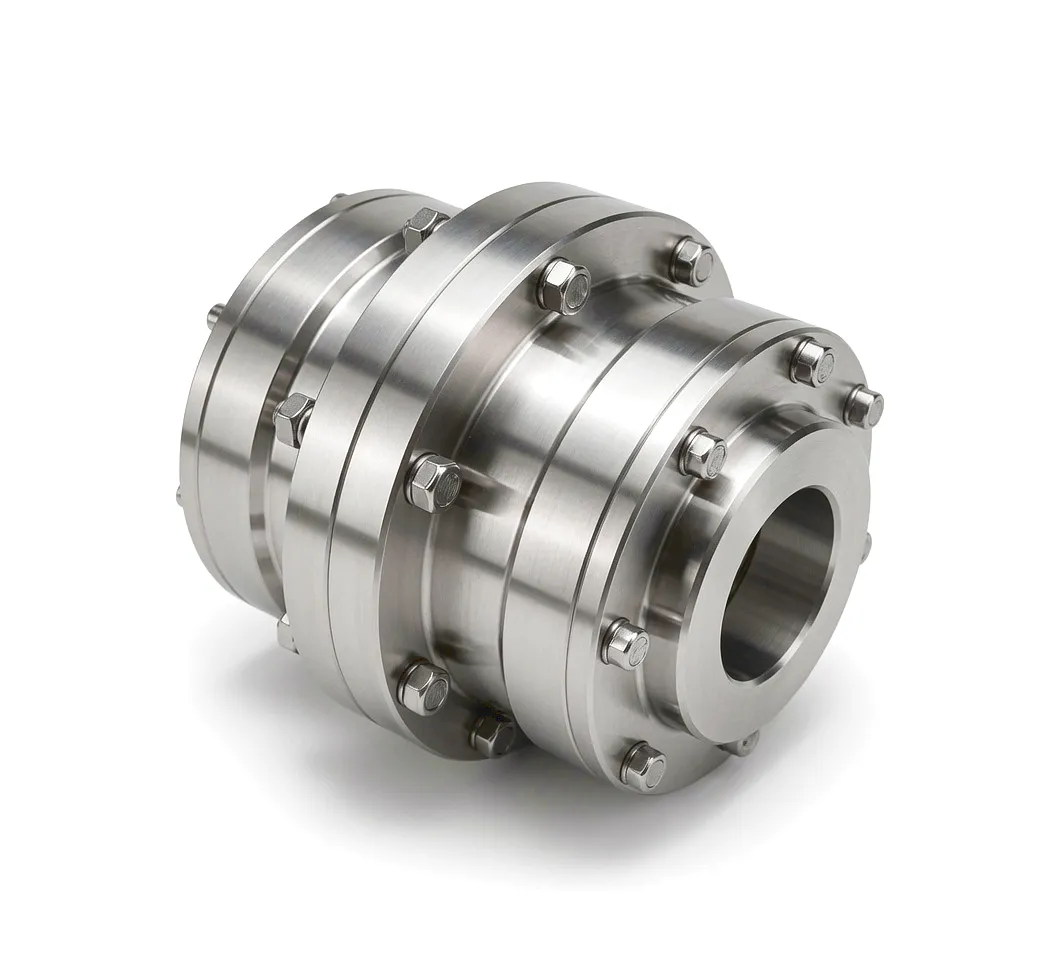
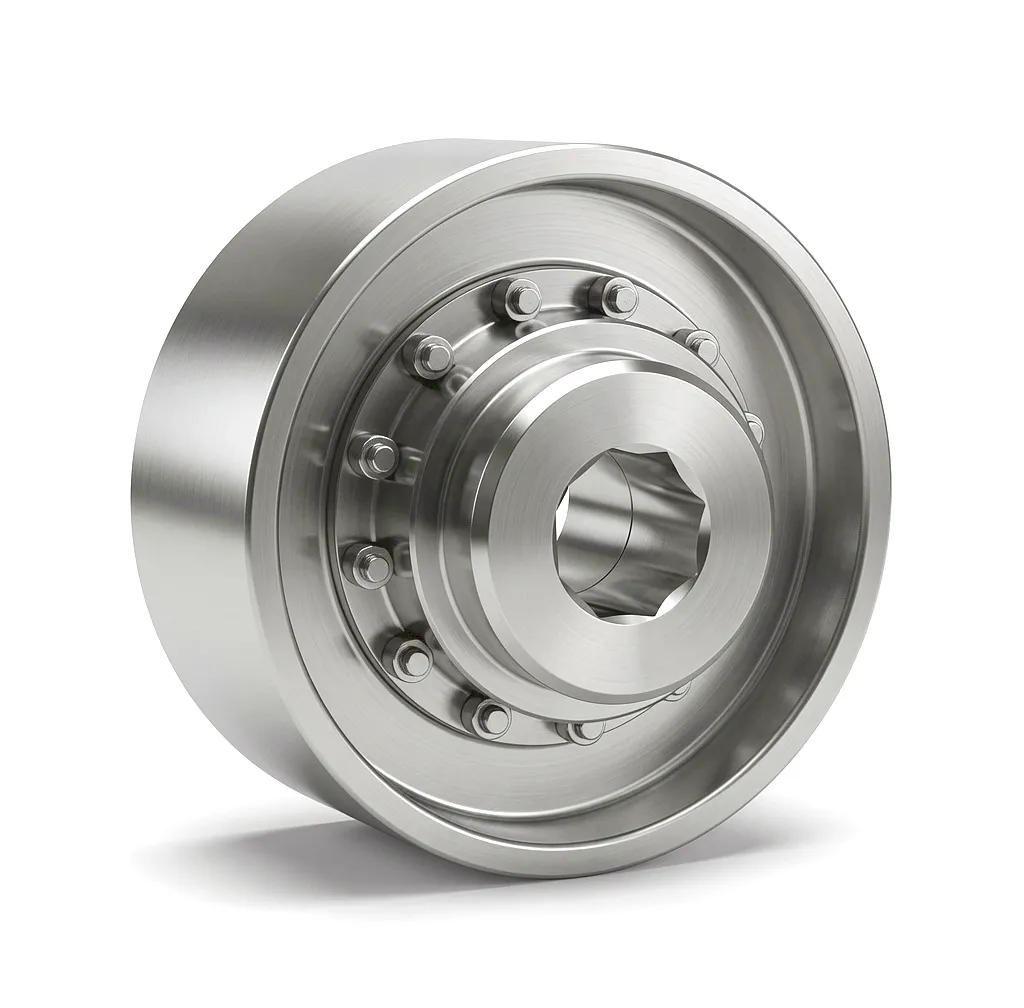
Ever Power Drum-Tooth Gear Couplings
Engineered for the most demanding port crane applications, our GICL and NGCL series gear couplings deliver consistent torque transmission under continuous duty cycles. Every unit leaves our factory after rigorous dimensional inspection and hardness verification — because shore bridge applications simply cannot tolerate a warranty return.
Whether you are upgrading an existing STS crane at a UK port, commissioning new dock equipment, or sourcing a replacement for an OEM unit, our team can advise on specification, supply certified documentation, and arrange UK delivery within your project schedule.
The Mechanics Behind Shore Bridge Drive Trains
Understanding why gear couplings are the preferred choice for STS crane engineers
Hoist Mechanism
The hoist drum raises and lowers the spreader and container load. Motor power — typically 400–1000 kW on a modern STS crane — is transmitted through a helical gearbox to the drum shaft. A gear coupling at the gearbox output absorbs the shaft misalignment that develops from thermal expansion during continuous operation and accommodates the axial float needed when the drum shifts under load. Without it, bearing failures on the gearbox output shaft become a weekly maintenance headache.
Trolley Travel Mechanism
The trolley traverses horizontally across the boom, carrying the spreader to position over the vessel hold or the quay. Drive motors in this mechanism start and stop hundreds of times per shift, generating significant torsional shock at each acceleration. A drum-tooth gear coupling cushions these shock loads through the crowned tooth profile — the slight barrel shape of each tooth allows rocking under angular misalignment while distributing load across the full tooth width rather than concentrating stress at one edge.
Gantry Travel Mechanism
The gantry moves the entire crane structure along the quay rails to align with different vessel bays. This mechanism uses multiple drive bogies, each with its own motor-gearbox-wheel set. Parallelism errors between the two sets of rails — common at older UK port installations — create misalignment at the wheel drive shaft. A gear coupling in each bogie drive absorbs this without locking the drive train, preventing rail damage and prolonging the entire bogie assembly’s service life.
Selecting the Right Gear Coupling Series
Ever Power’s port-rated coupling range — matched to shore bridge application requirements
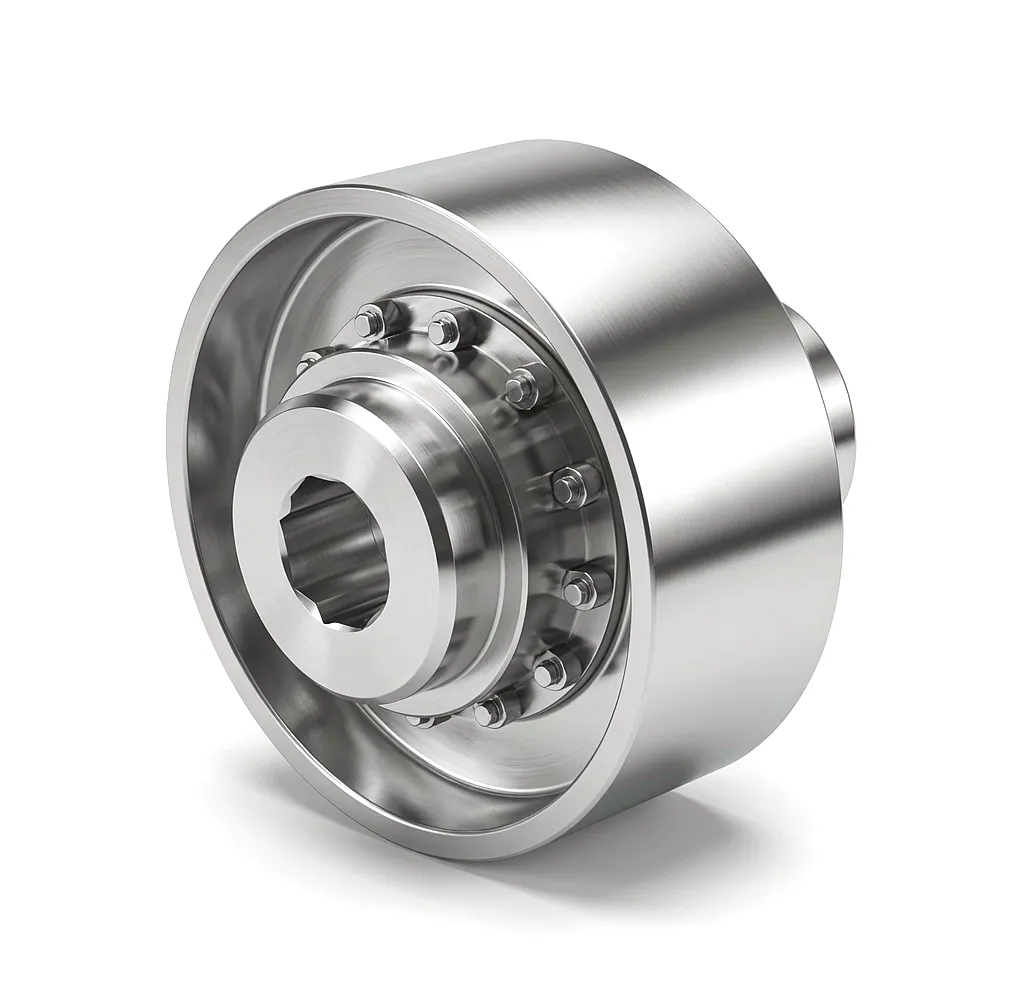
NGCL Series — Drum-Tooth with Brake Disc
The NGCL series integrates a brake wheel or disc directly into the coupling hub, making it the preferred choice for hoist mechanisms where emergency braking torque must pass through the coupling. The compact, combined design reduces shaft overhang compared to separate coupling + brake arrangements, improving bearing load distribution in the hoist gearbox. Case-hardened tooth flanks to HRC 58–62 and precision-ground tooth profiles ensure rated torque capacity across the full operating temperature range from -20°C to +80°C — critical for cranes exposed to the UK’s coastal climate.
GICL Series — Standard Drum-Tooth
Where brake integration is handled separately, the GICL series provides a clean, high-efficiency torque path. The crowned external tooth sleeve meshes with an internal-toothed hub, accommodating up to 1.5° angular misalignment and ±3 mm axial displacement simultaneously. This makes it an excellent fit for trolley travel and gantry travel drives on shore bridge cranes, where structural deflection under load constantly shifts shaft centrelines. Grease-retaining seals and O-ring face seals at the sleeve ends minimise re-greasing frequency — an important maintenance consideration at elevated crane heights.
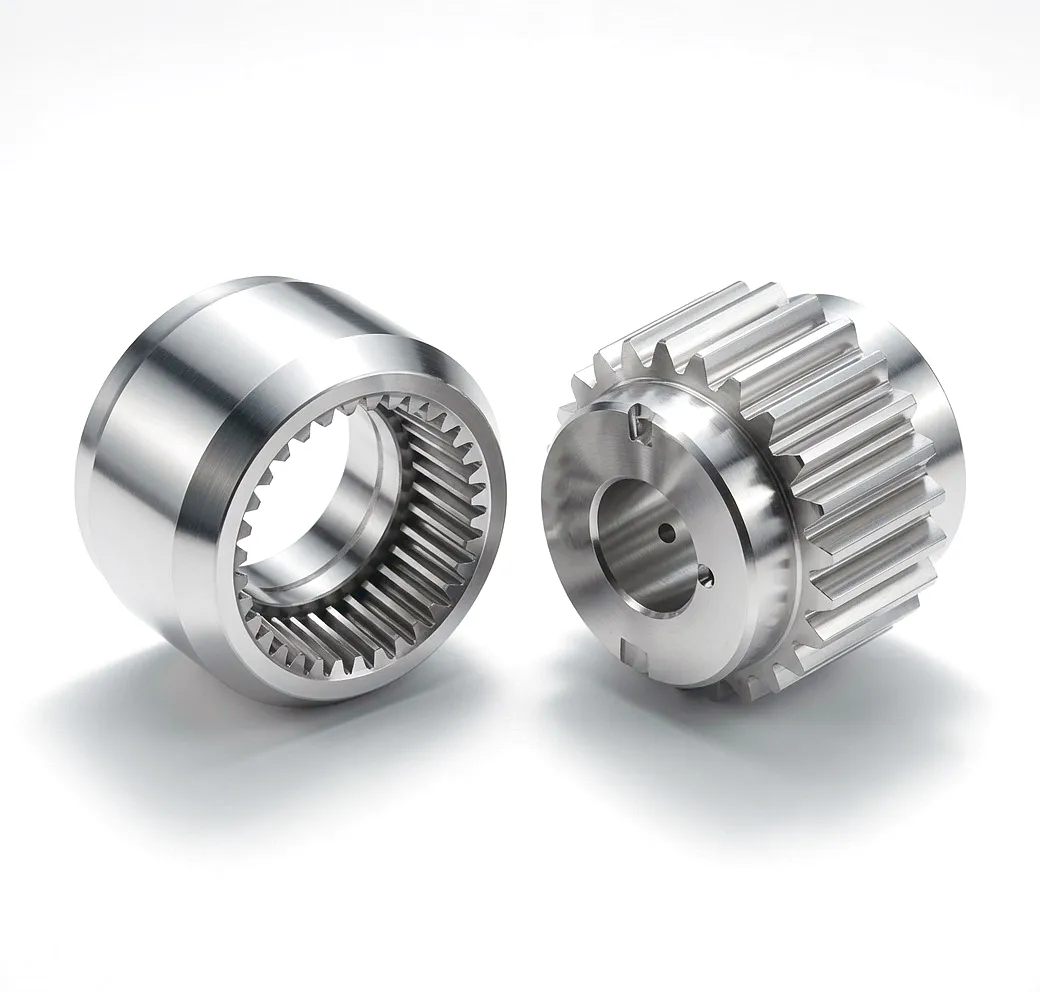
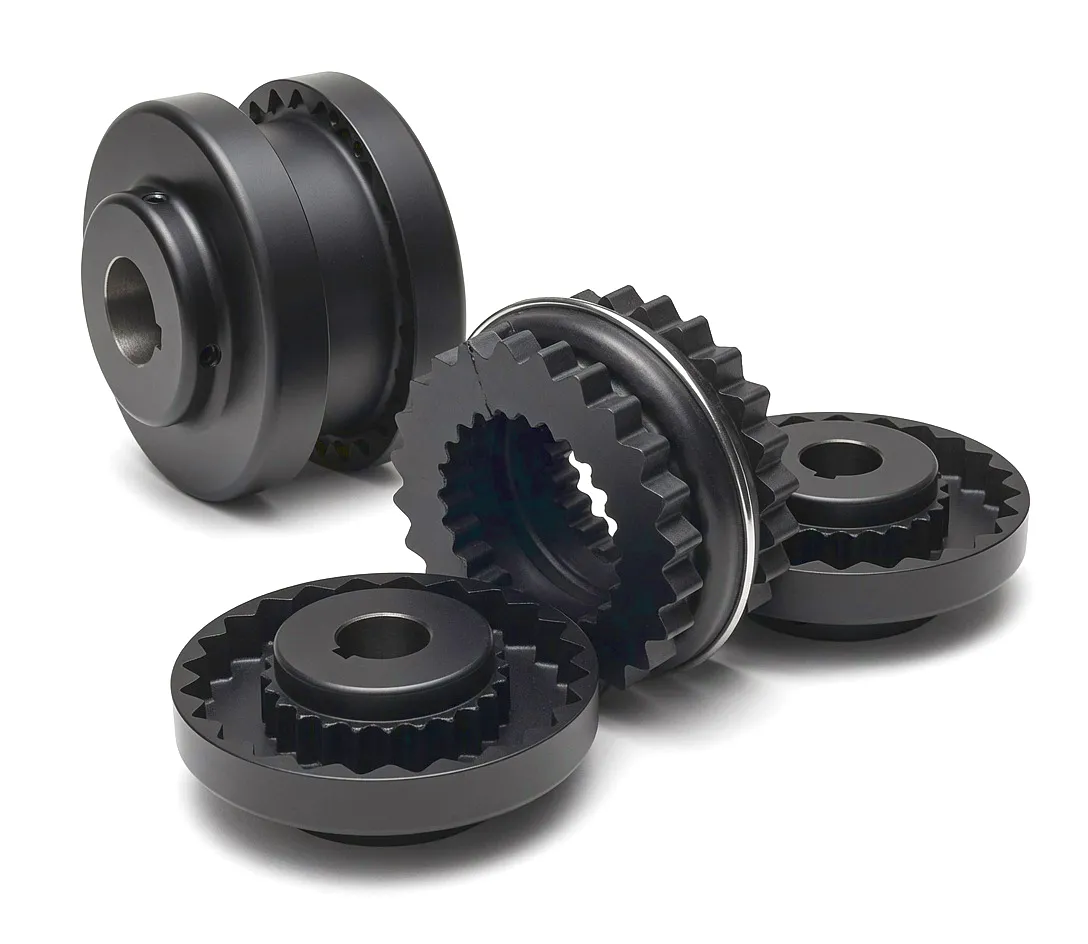
NL Series — Nylon Gear Flexible Coupling
In auxiliary systems such as cable reel drives, storm lock drives, and boom luffing auxiliary circuits, the NL nylon gear coupling delivers vibration damping and electrical isolation simultaneously. The nylon gear element acts as a dielectric barrier — preventing stray currents from VFDs from tracking through the drivetrain into steelwork and instrumentation. This is an increasingly important specification point as modern shore bridges migrate to IGBT-based variable frequency drives where common-mode voltage can reach several hundred volts. The NL series requires no lubrication, which further simplifies maintenance in sealed accessory drive enclosures.
Technical Performance Parameters
Key specifications for shore bridge crane gear coupling selection
| Parameter | GICL Series | NGCL Series | NL Series |
|---|---|---|---|
| Nominal Torque Range | 160 – 1 000 000 N·m | 250 – 2 500 000 N·m | 25 – 25 000 N·m |
| Max Angular Misalignment | ≤ 1.5° | ≤ 1.5° | ≤ 1° |
| Axial Displacement (mm) | ±3 | ±3 | ±2 |
| Max Speed (RPM) | Up to 1 500 | Up to 1 500 | Up to 3 000 |
| Tooth Material | 20CrMnTi (case-hardened) | 20CrMnTi (case-hardened) | PA66 nylon gear element |
| Surface Hardness (tooth flank) | HRC 58–62 | HRC 58–62 | N/A (polymer) |
| Operating Temperature | -20°C to +80°C | -20°C to +80°C | -30°C to +100°C |
| Lubrication | Grease (sealed O-ring) | Grease (sealed O-ring) | None required |
| Standard Compliance | GB/T 5272, ISO 14691 | GB/T 5272, ISO 14691 | GB/T 5272 |
| Custom Bore / Keyway | Available | Available | Available |
Shore Bridge Application Environments in the UK
Real-world operating conditions that drive gear coupling specification choices
The United Kingdom’s major container ports — Felixstowe handling roughly 4 million TEU annually, Southampton feeding the South Coast distribution network, Tilbury serving Greater London, and the rapidly expanding Liverpool2 terminal on the Mersey — all share a common characteristic: continuous heavy-cycle crane operation with minimal planned maintenance windows. These facilities operate STS cranes with hoist capacities of 40–100 tonnes in environments where salt-laden air, fluctuating ambient temperatures, and wind loading on the structure conspire to increase dynamic misalignment at every drive shaft connection throughout the crane’s working life.
In this context, the specification of a gear coupling is not a commodity procurement decision. Crane operators and port engineers across the UK recognise that a coupling specified purely on catalogue torque rating without considering the service factor, the misalignment envelope, the regreasing interval relative to maintenance access constraints, and the ability to source replacement parts on short notice, will underperform or fail long before the rated service life. Ever Power’s application engineers work directly with UK procurement and maintenance teams to build these factors into the selection from day one.
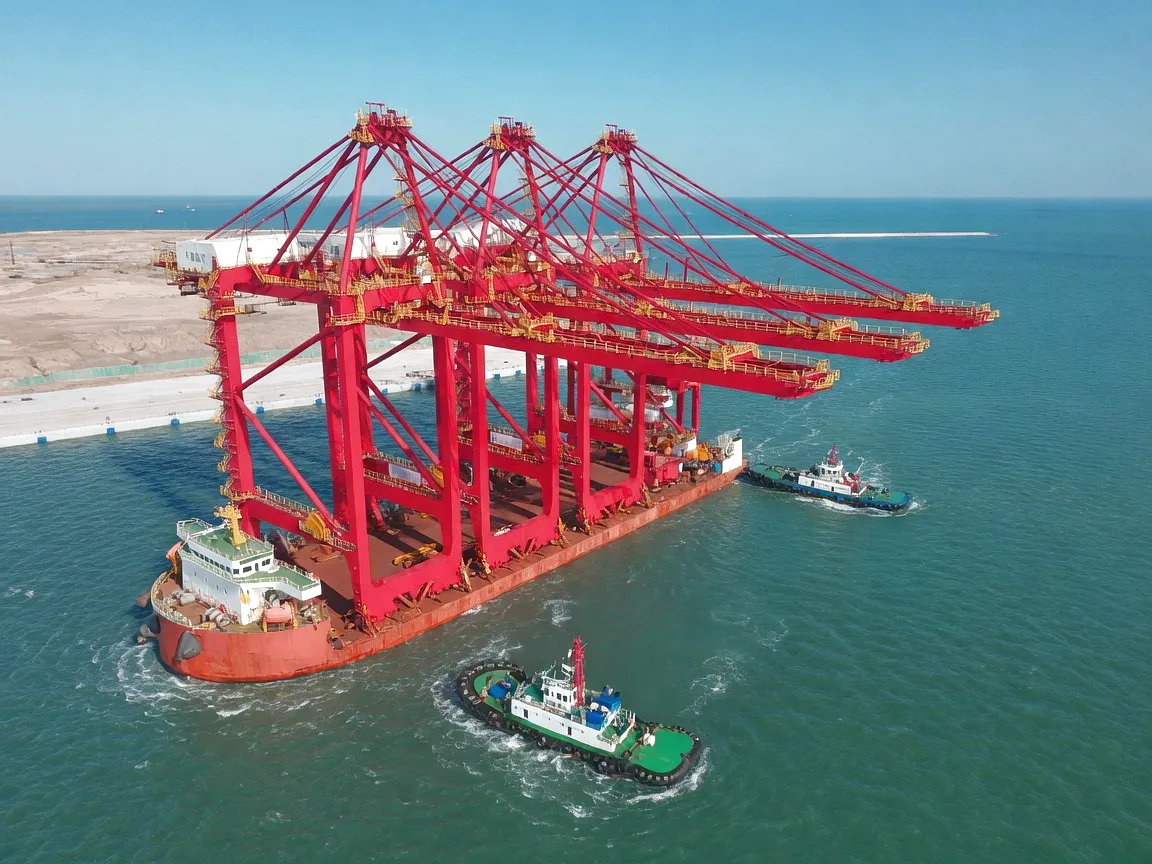
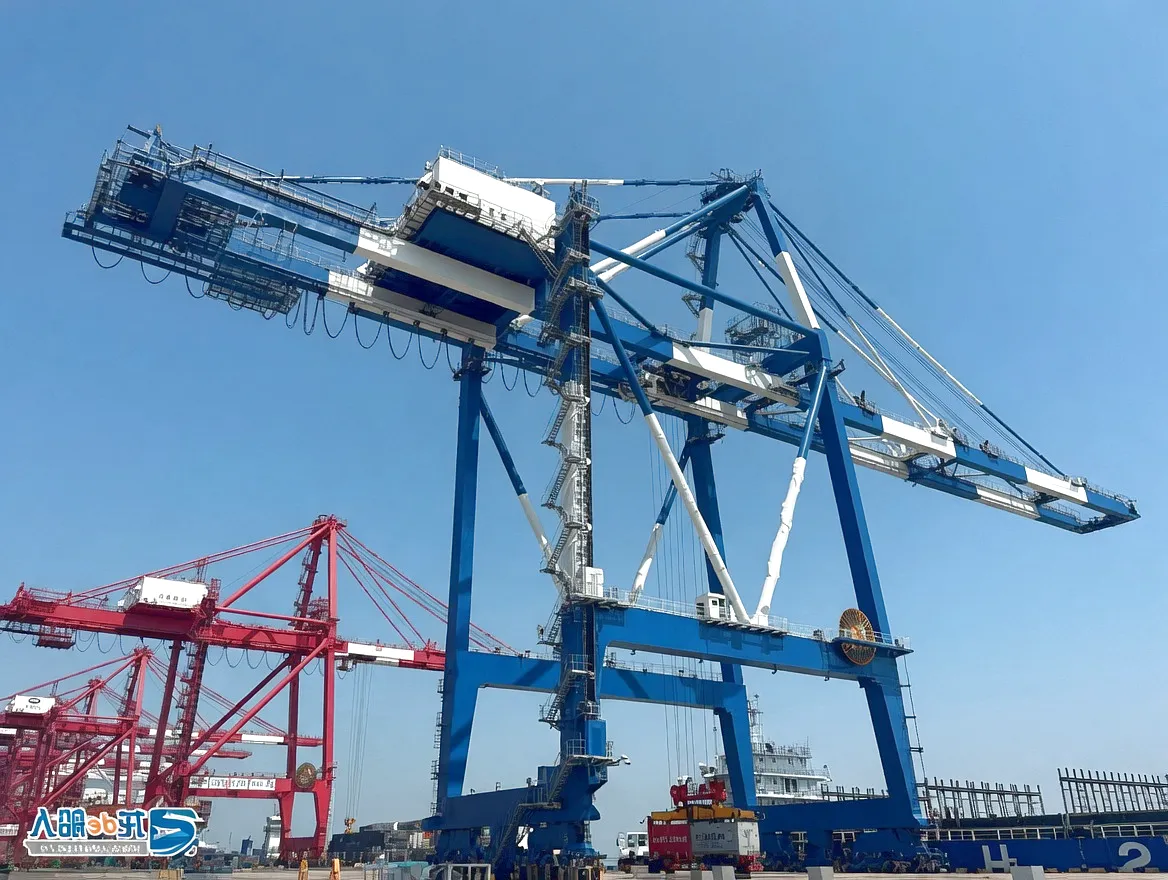
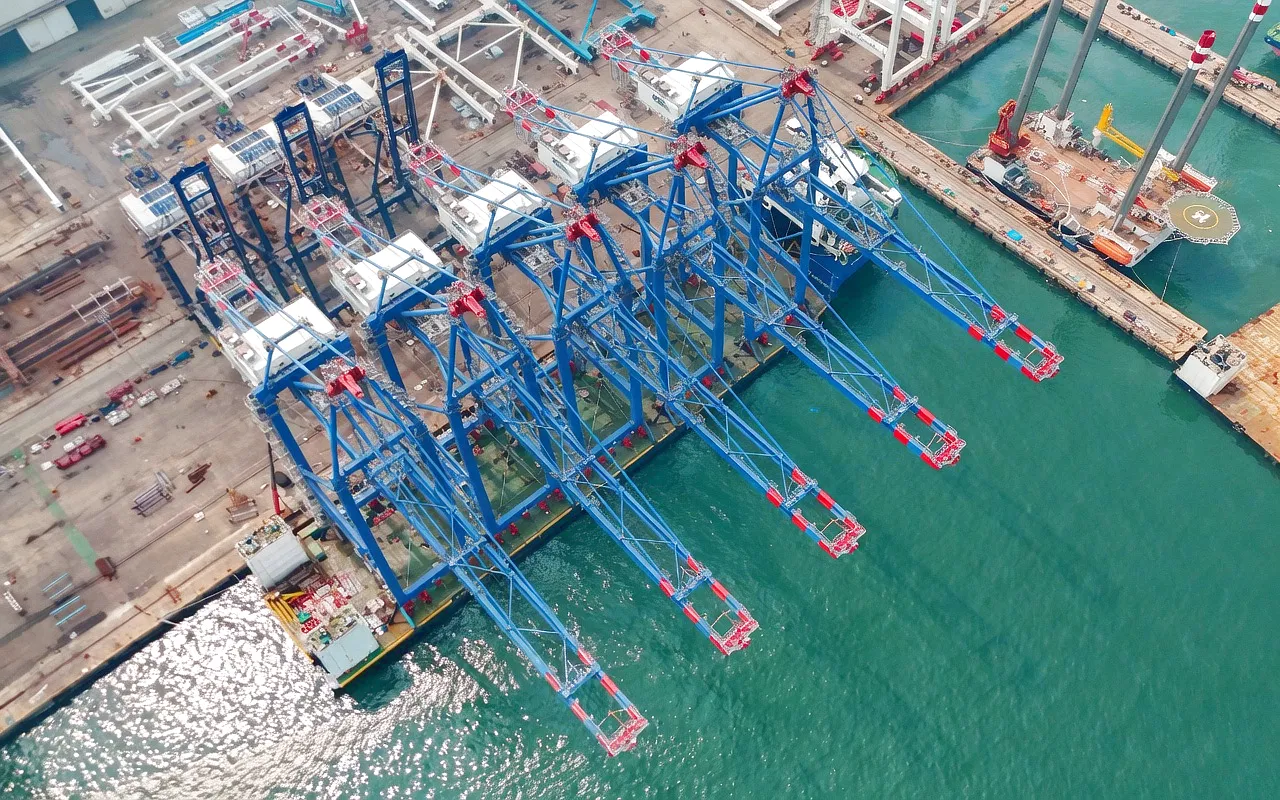
Why Coastal Operating Conditions Change Everything
Salt-spray corrosion is the number-one cause of premature coupling seal failure at UK port installations. When coupling seals deteriorate, lubricant is displaced by moisture, the tooth contact surfaces suffer abrasive wear, and torque capacity drops below rated values — sometimes without any visible external indication. Ever Power’s coastal specification couplings feature phosphated hub bores, additional corrosion-inhibiting treatment on external surfaces, and enhanced O-ring seals rated for immersive spray environments (IP55 equivalent protection on the lubrication cavity). UK port operators report that these measures extend re-greasing intervals by 40–60% compared to standard industrial-spec gear couplings installed in the same application.
Temperature cycling is a second critical factor. A crane operating from the early morning through a British winter night and into a warm afternoon may see the coupling body temperature shift by 25–30°C across a single shift. Our selection data corrects for this thermal variation in the allowable axial displacement budget, ensuring that the coupling never reaches a mechanically locked condition due to thermal expansion of the shafts.
Materials, Construction & Operating Principles
What makes a drum-tooth gear coupling the right choice for high-cycle port crane drives
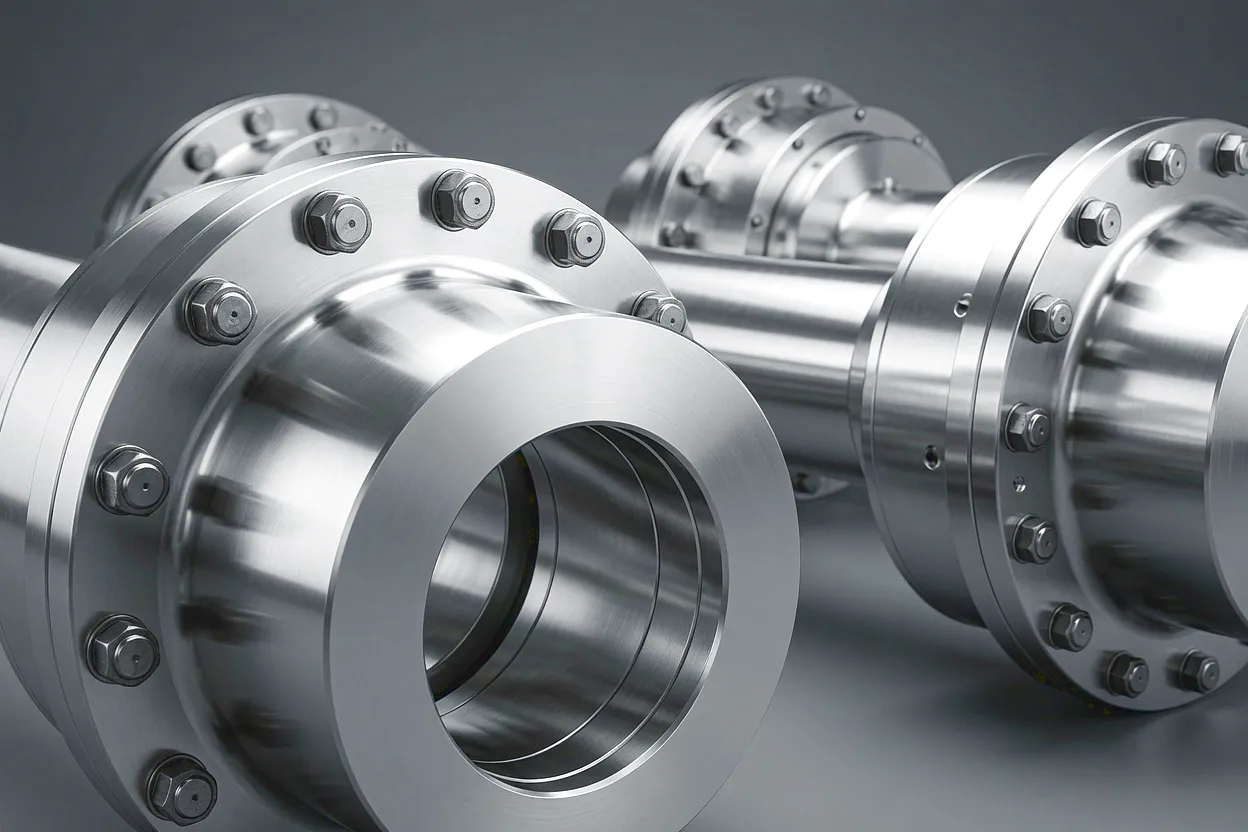
At its core, a drum-tooth (barrel-tooth) gear coupling consists of two hubs, each with an external gear tooth profile cut on a crowned (convex) form, and two outer sleeves with matching internal straight teeth. The convex tooth profile is what distinguishes the drum-tooth design from a straight-tooth coupling: when angular or axial misalignment occurs, the crowned tooth rocks smoothly in the internal gear without generating the concentrated edge-contact stress that rapidly wears straight-tooth designs. This geometrical insight, applied with modern CNC gear-grinding accuracy, is what makes our couplings reliable in the stop-start, misalignment-heavy world of container crane drives.
The hub material is 20CrMnTi alloy steel — a case-hardening steel widely used in Chinese and European drivetrain standards whose carburised tooth flanks achieve HRC 58–62 at the surface while retaining a tough, impact-resistant core. This combination is particularly valuable in hoist applications where dynamic loads reach 2–2.5× the nominal motor torque during emergency stops. The sleeve body is typically 45# carbon steel or nodular cast iron (QT600-3), selected based on the coupling size and the required service factor.
Crowned Tooth Geometry
The barrel-shaped (crowned) external tooth distributes load across the full face width at any misalignment angle up to 1.5°, preventing edge loading and dramatically extending tooth wear life compared to straight-tooth designs.
Sealed Lubrication Cavity
O-ring face seals and lip seals at each sleeve end retain grease in the tooth mesh zone, blocking moisture ingress. This is particularly important in the salt-spray environment of a quayside crane installation.
Zero Bending Moment Transmission
Unlike rigid flanged couplings, the articulating tooth mesh absorbs misalignment without generating bending moments on connected shaft bearings — directly extending bearing service life in motor and gearbox output shafts.
High Torque Density
The metal-to-metal tooth mesh in a gear coupling transmits far higher torque per unit diameter than elastomeric flexible couplings, keeping the overall coupling envelope compact in the constrained machinery room layouts typical of STS crane drive platforms.
Why Engineers Choose Ever Power Gear Couplings
Six engineering advantages that matter most in heavy port crane applications
Simultaneous Misalignment Accommodation
Handles angular, parallel, and axial misalignment concurrently — a critical capability in shore bridge structures where thermal expansion, wind deflection, and structural flex all occur at the same time.
Certified Torque Ratings with Test Reports
Every production batch is accompanied by dimensional inspection reports, material certificates (mill certs for steel), and hardness test records — documentation that UK port operators and Lloyd’s Register surveyors typically require for STS crane maintenance records.
Full Customisation on Bore and Interface
Standard catalogue bore sizes cover the majority of applications, but our machining centre capabilities mean we can match any non-standard gearbox output shaft diameter, keyway specification, or flange bolt pattern — including metric-to-imperial interface conversions for retrofit on older UK or North American-origin cranes.
Short Lead Times for UK Spares
Gear couplings in common port crane sizes — GICL10 through GICL45 and the corresponding NGCL range — are held in production inventory. For UK port operators facing unplanned downtime, we can process urgent orders with accelerated manufacturing and direct air-freight dispatch within 3–5 working days of order confirmation.
Engineered for VFD Drive Compatibility
Modern STS cranes use variable-frequency drives to deliver the precise speed and torque control required for efficient container handling. VFD drives generate torsional excitation at non-integer harmonic frequencies during acceleration ramps. Our coupling selection service includes a torsional resonance check against the drive train’s natural frequency to avoid resonance in the operating speed range.
Established UK B2B Supply Chain
Ever Power has supplied gear couplings to UK industrial and port sector customers for over a decade, navigating UK import tariff structures, CE marking documentation, and UK port authority supplier approval processes. Our UK procurement team speaks your language — both literally and in terms of the engineering standards and commercial frameworks that govern port equipment procurement in Britain.
Our Manufacturing Capabilities & Custom Design Service
End-to-end bespoke coupling engineering — from drawing review to finished part
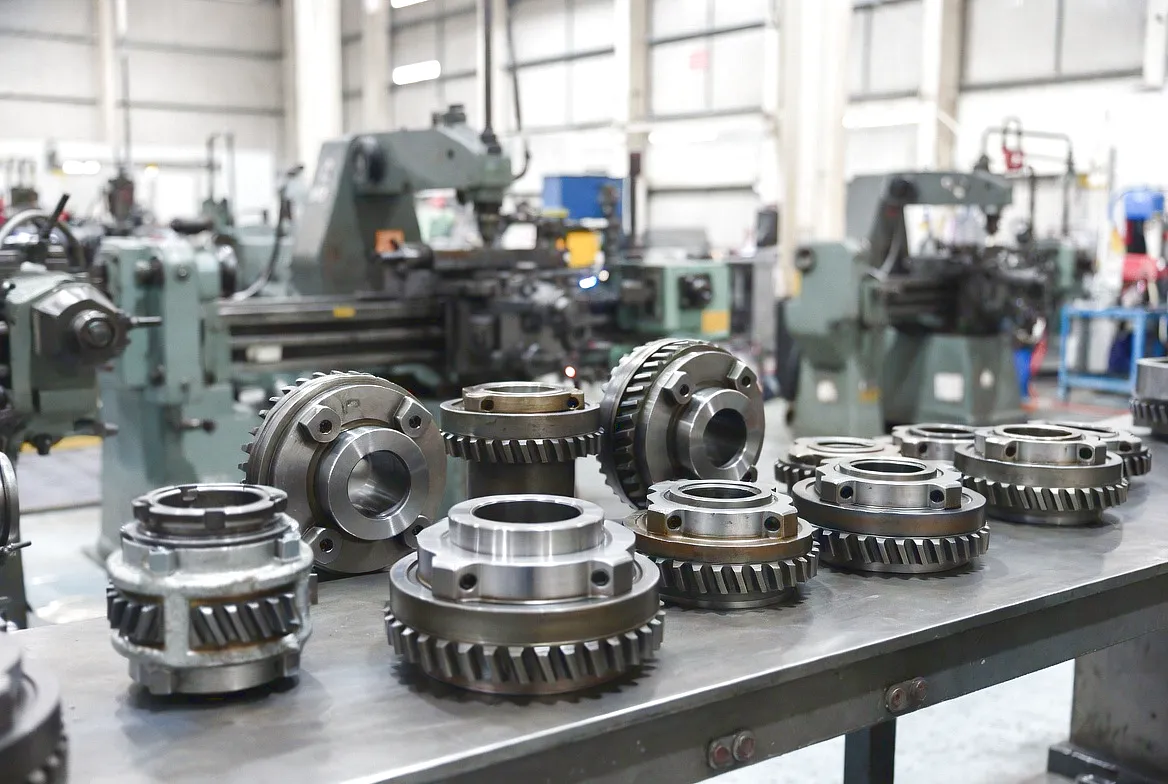
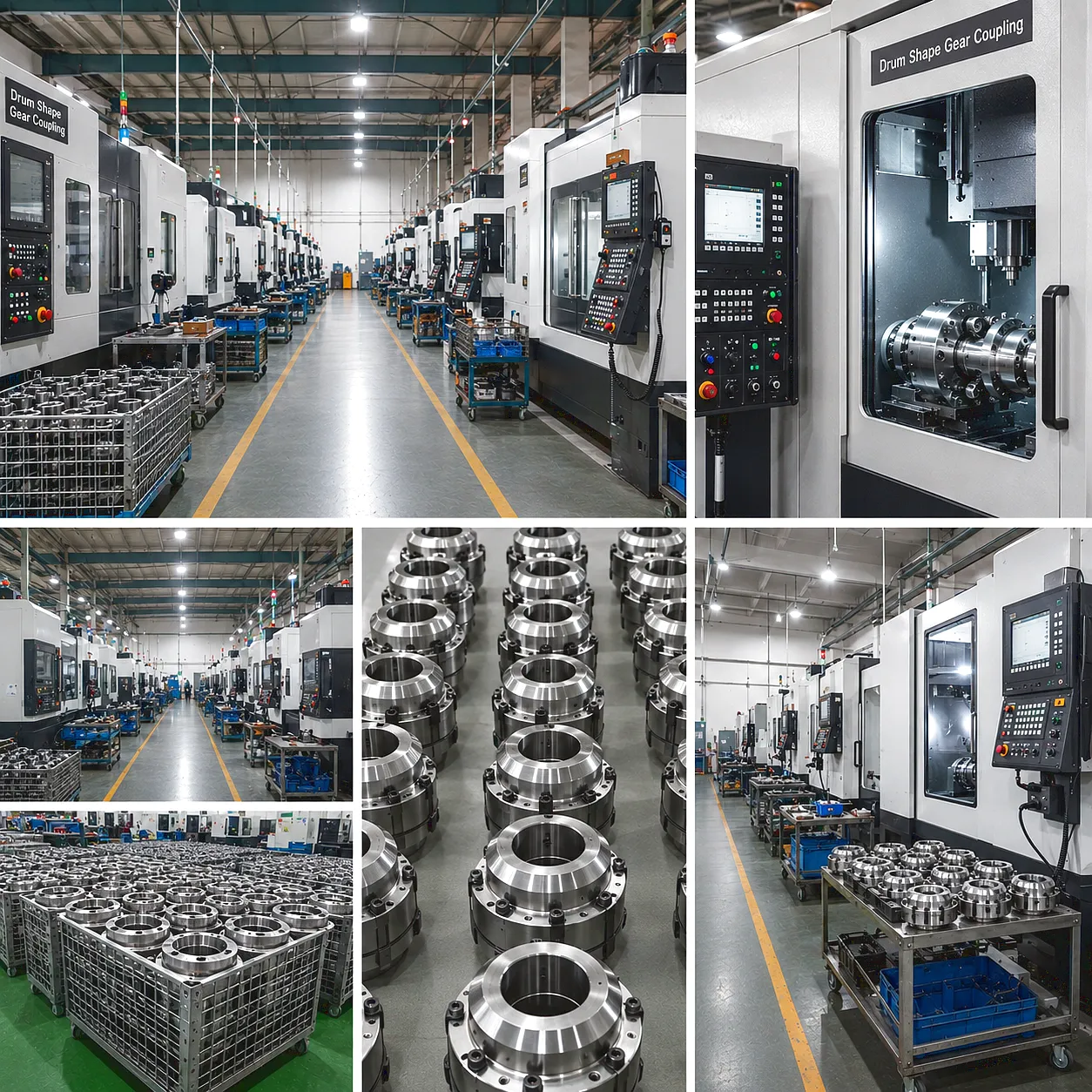
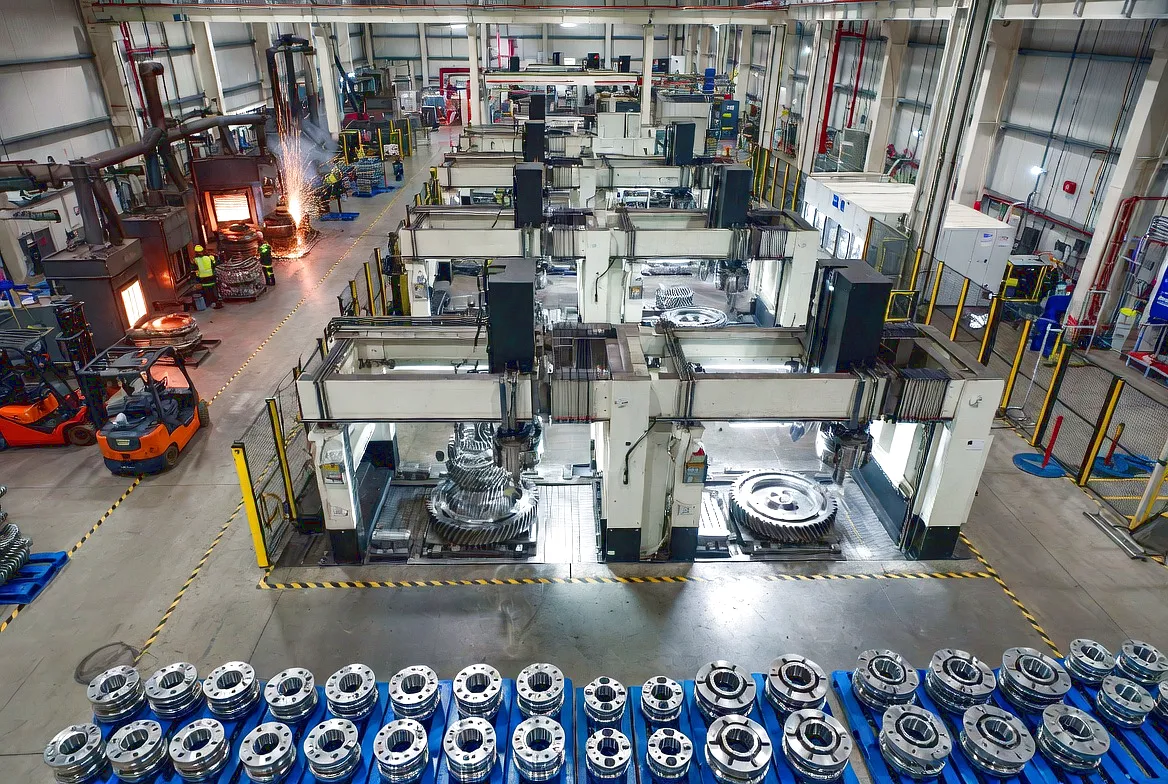
Ever Power’s manufacturing base comprises a dedicated gear coupling production line equipped with CNC gear hobbing machines, precision tooth-grinding centres, and coordinate measuring machines (CMM) with 3 μm volumetric accuracy. This infrastructure allows us to produce gear couplings to any bore size from 20 mm through to 400 mm, with tooth module and profile tailored to the specific torque and misalignment requirements of the application rather than fitted to a catalogue slot.
For shore bridge crane retrofits and upgrades, our customisation service is particularly valuable. When an OEM’s original coupling is no longer manufactured, or when a crane owner wants to upgrade from a lower-performance coupling type to a drum-tooth design, our reverse-engineering process can produce a dimensionally compatible replacement from a sample part, a drawing, or even a set of field measurements. We have produced custom couplings for ZPMC, Liebherr, Konecranes, and Noell-type STS cranes under this process, covering both the hoist and travel mechanisms.
Beyond dimensional customisation, we offer material and surface treatment upgrades including shot-peened hubs for improved fatigue life, marine-grade zinc phosphate plus epoxy primer coatings for enhanced corrosion resistance, and stainless steel fastener kits for the most demanding salt-spray environments. These options can be added individually or as a complete coastal-duty package.
| Customisation Option | Details | Lead Time Indication |
|---|---|---|
| Custom Bore Machining | Any bore diameter and keyway from technical drawing or sample | +3–5 working days |
| Brake Disc Integration | NGCL coupling with custom brake disc diameter and bolt pattern | +5–8 working days |
| Coastal Corrosion Package | Zinc phosphate + epoxy primer, upgraded O-rings, S/S fasteners | +2–3 working days |
| Non-Standard Flange Interface | Custom PCD, bolt holes, register, or spigot diameter | +5–7 working days |
| Full Reverse Engineering | From sample part, sketch, or site measurements | DFM review within 48 hrs |
Customer Success: Port of Felixstowe, UK
How a planned GICL coupling upgrade eliminated recurring hoist gearbox bearing failures
Background: A major container terminal operating twelve post-Panamax STS cranes had been experiencing repeated hoist gearbox output shaft bearing failures at an average interval of 14 months. Each failure required a crane out-of-service period of 4–6 days and a total repair cost — including bearing replacement, crane engineer time, and production loss — estimated at £38,000 per incident. Over a two-year period, this recurring problem across three of the twelve cranes represented a direct maintenance cost burden in excess of £220,000.
Root Cause Analysis: The terminal’s engineering team commissioned a drivetrain inspection and identified that the original straight-tooth gear couplings at the hoist gearbox output were generating bending moments at the shaft due to angular misalignment caused by thermal expansion during continuous crane operation. The bending moment was exceeding the bearing’s radial load limit, progressively damaging the outer race. The misalignment had increased over the years as crane structural members settled slightly on their rail pads — a normal maintenance finding that had not been compensated for during coupling selection.
Solution: Ever Power’s application team proposed a like-for-like dimensional replacement using our GICL28 drum-tooth gear coupling, which matched the original flange interface and bore dimensions exactly but substituted the straight-tooth profile for a crowned-tooth design with 1.5° angular accommodation. Customised coastal corrosion treatment was included. The three affected cranes were upgraded during scheduled maintenance windows over six months.
Outcome: Eighteen months after the last upgrade, none of the three cranes has required a gearbox bearing replacement. The terminal’s maintenance manager confirmed that the upgrade has been extended to all twelve cranes during their scheduled 5-year overhaul cycle. Estimated lifetime saving over the 20-year crane design life: in excess of £1.4 million across the fleet.
What Our Clients Say
“We’d been fighting recurring gearbox bearing failures on our hoist mechanisms for years. Switching to Ever Power’s GICL series drum-tooth couplings — with the right service factor for our hoist duty cycle — stopped the failures completely. The dimensional match to the original OEM parts was spot on, and the technical documentation satisfied our classification society requirements without any back-and-forth.”
“We needed a customised NGCL coupling with a non-standard brake disc bolt pattern for a crane upgrade project at Southampton. Ever Power turned around an engineering proposal within 48 hours and delivered the finished parts, with full material certs, inside three weeks. Lead times from other suppliers were running at 10–14 weeks. That responsiveness made the project schedule work.”
“As a crane service company working across UK and European ports, we specify gear couplings frequently. Ever Power’s application support is genuinely useful — they review our drivetrain data and recommend the correct service factor and coupling size rather than just quoting the catalogue nearest to our shaft size. That engineering support has prevented several misapplication issues that would have been expensive to fix on-site.”
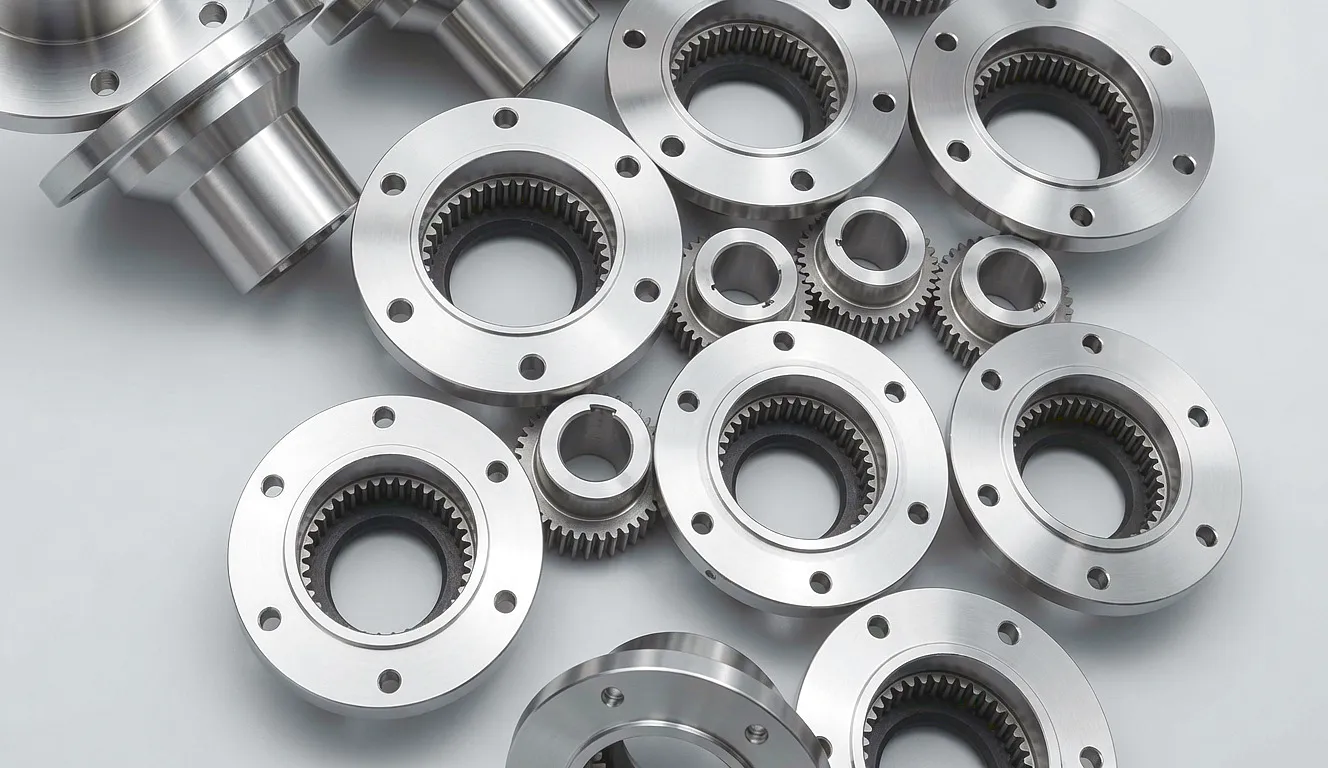
Product Range Gallery
Maintenance Intervals for Shore Bridge Gear Couplings
Practical service guidelines for UK port operators and maintenance teams
One of the practical challenges with gear couplings installed in shore bridge crane mechanisms is that the couplings are often located at height — on the crane machinery platform 30–40 metres above the quay deck — or within enclosed gearbox mounting frames that require partial disassembly to access. This makes the standard industrial maintenance practice of frequent inspection and re-greasing impractical within busy port operations. The good news is that a correctly specified and initially charged gear coupling can operate for 12–18 months between re-greasing intervals when sealed O-ring designs are used and the initial grease fill meets the manufacturer’s specification for an extreme-pressure NLGI Grade 2 lithium complex grease.
| Maintenance Task | Interval | Notes |
|---|---|---|
| Visual inspection (seals, fasteners, misalignment) | Every 3 months | Check for grease leakage, seal condition, loose bolts |
| Re-greasing (standard sealed design) | 12–18 months or 4 000 operating hours | Drain old grease; refill with EP NLGI Grade 2; check O-ring condition |
| Tooth wear check (dimensional) | Every 5 years or at major overhaul | Measure tooth thickness; replace if below 70% of new-part dimension |
| Full coupling replacement | 10–15 years depending on duty | Assess against tooth wear, seal condition, and fatigue cycle count |
| Misalignment check (laser alignment) | Every major scheduled shutdown | Correct if total indicator reading exceeds coupling specification; check after structural repairs |
Need a Gear Coupling for Your Shore Bridge Project?
Tell us your shaft dimensions, torque requirements, and operating conditions. Our engineering team will recommend the correct coupling type and size — and can provide a formal quotation including UK delivery within 24 hours.
Frequently Asked Questions
Common questions from UK port procurement teams, maintenance engineers, and crane OEM contractors
Ever Power — Gear Coupling Specialists
GICL · NGCL · NL Series · Custom Engineering · UK Supply
edit by gzl