Ever Power · Industrial Drive Solutions · United Kingdom
Gear Coupling for Elevator Traction Machines: The Hidden Component That Keeps Your Lifts Running Safely
How precision-engineered drum-type gear couplings are transforming elevator reliability, reducing downtime, and meeting the strict safety standards demanded by modern UK building regulations.
ISO 9001 Certified
UK & EU Stock
Custom OEM Available
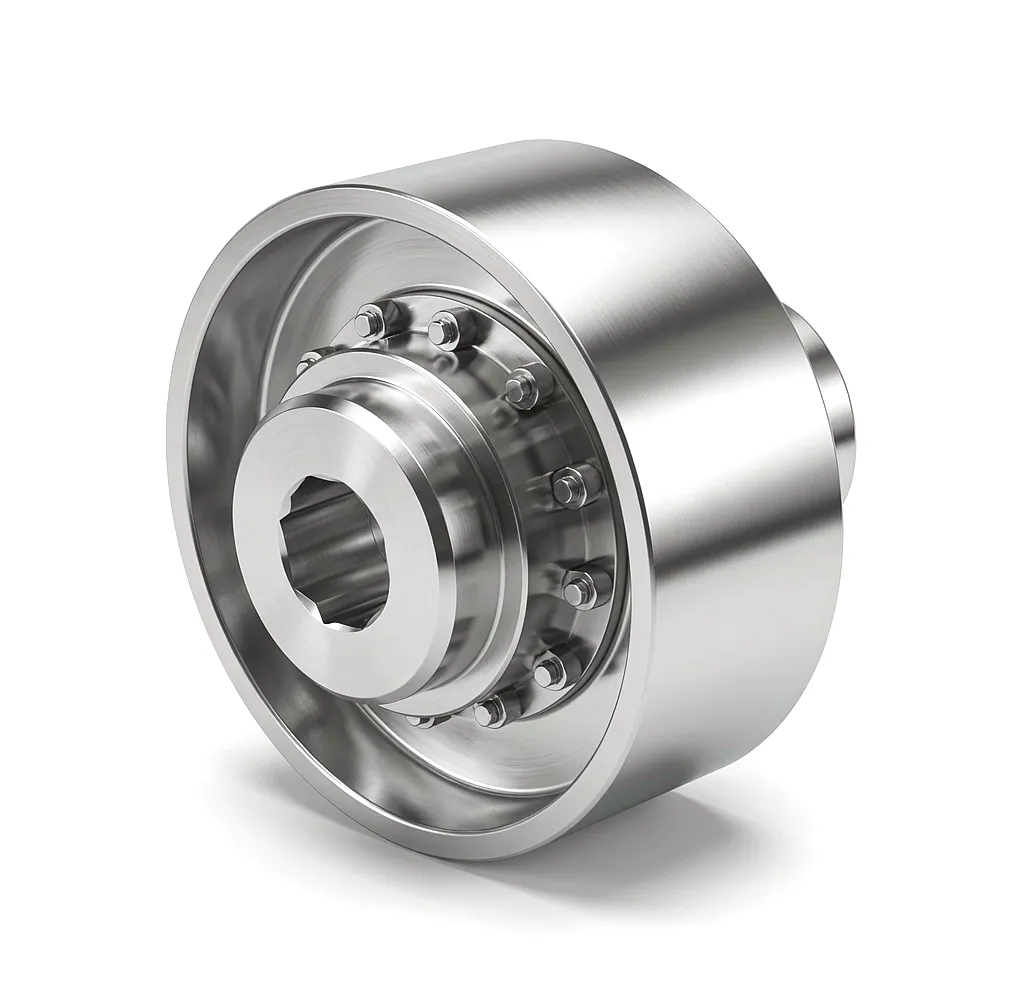
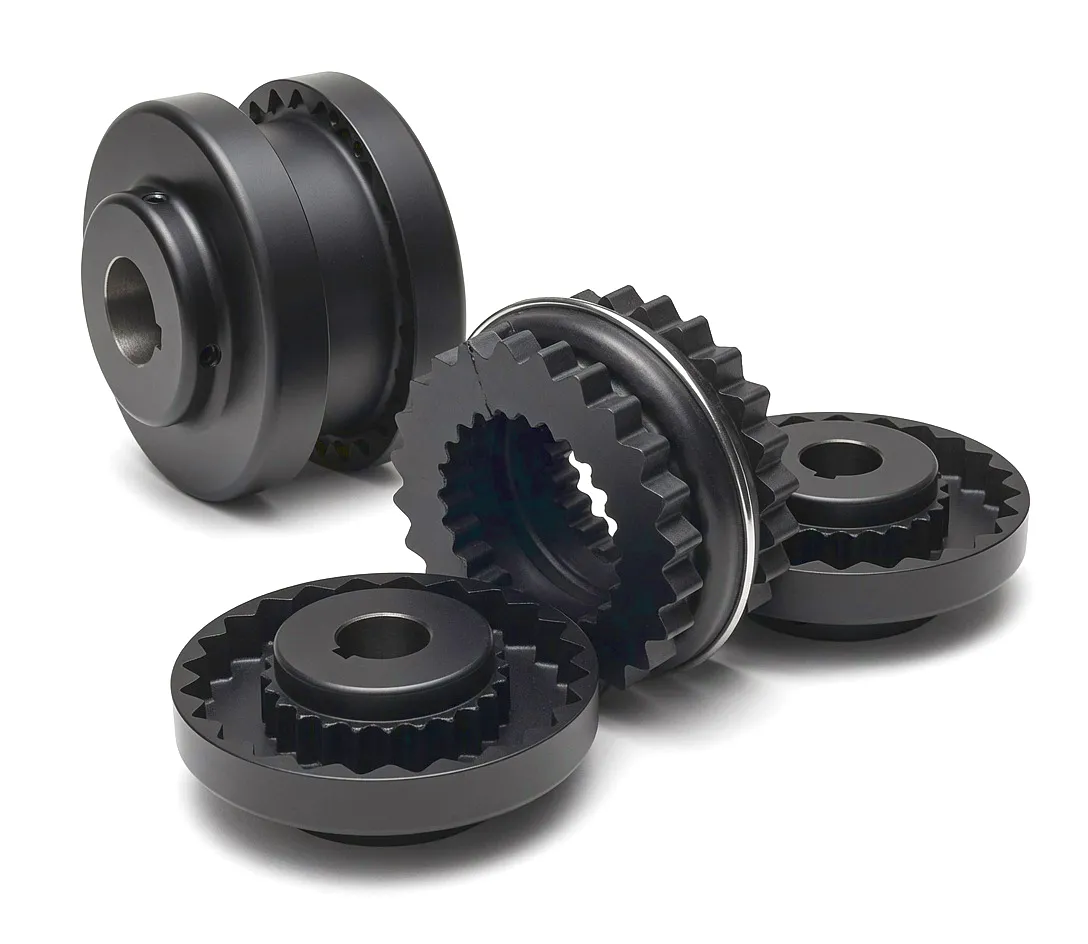
Walk into any modern commercial tower, residential block, or hospital in London, Manchester, or Birmingham, and somewhere in the machine room — or mounted directly on a frame in the shaft — a traction machine is quietly spinning, carrying people between floors hundreds of times each day. At the heart of that machine, connecting the motor shaft to the gearbox or traction sheave, sits a component most building managers have never seen: the gear coupling. It is unremarkable in size, yet its failure can ground an entire lift installation for days, trigger regulatory notices, and — in the worst scenario — compromise passenger safety. The stakes could not be higher.
Over the past two decades, elevator engineers across the UK have increasingly specified drum-type gear couplings — particularly the NGCL and GICL series — for both geared traction machines and hybrid drive configurations. The reason is straightforward: the crowned-tooth geometry of a drum gear coupling accommodates the slight angular and radial misalignments that inevitably develop over time in a real installation, absorbs shock loads during start-stop cycles, and does all of this without generating the vibration and noise that premium lift passengers have zero tolerance for. When you specify the right gear coupling for an elevator traction machine, you are not just buying a piece of steel; you are buying uptime, smooth ride quality, and engineering credibility.
This article draws on field experience and application data to explain exactly why gear couplings matter in elevator traction systems, which design features to look for, how to match the correct size to your drive parameters, and where UK engineers are finding the biggest maintenance savings. Whether you are a lift contractor sourcing components for a new installation in the City of London, an OEM designing the next generation of machine-room-less (MRL) drive units, or a facilities engineer evaluating a planned maintenance schedule at a healthcare trust, the detail here should give you the technical grounding to make a confident decision.
Understanding Elevator Traction Machine Mechanics
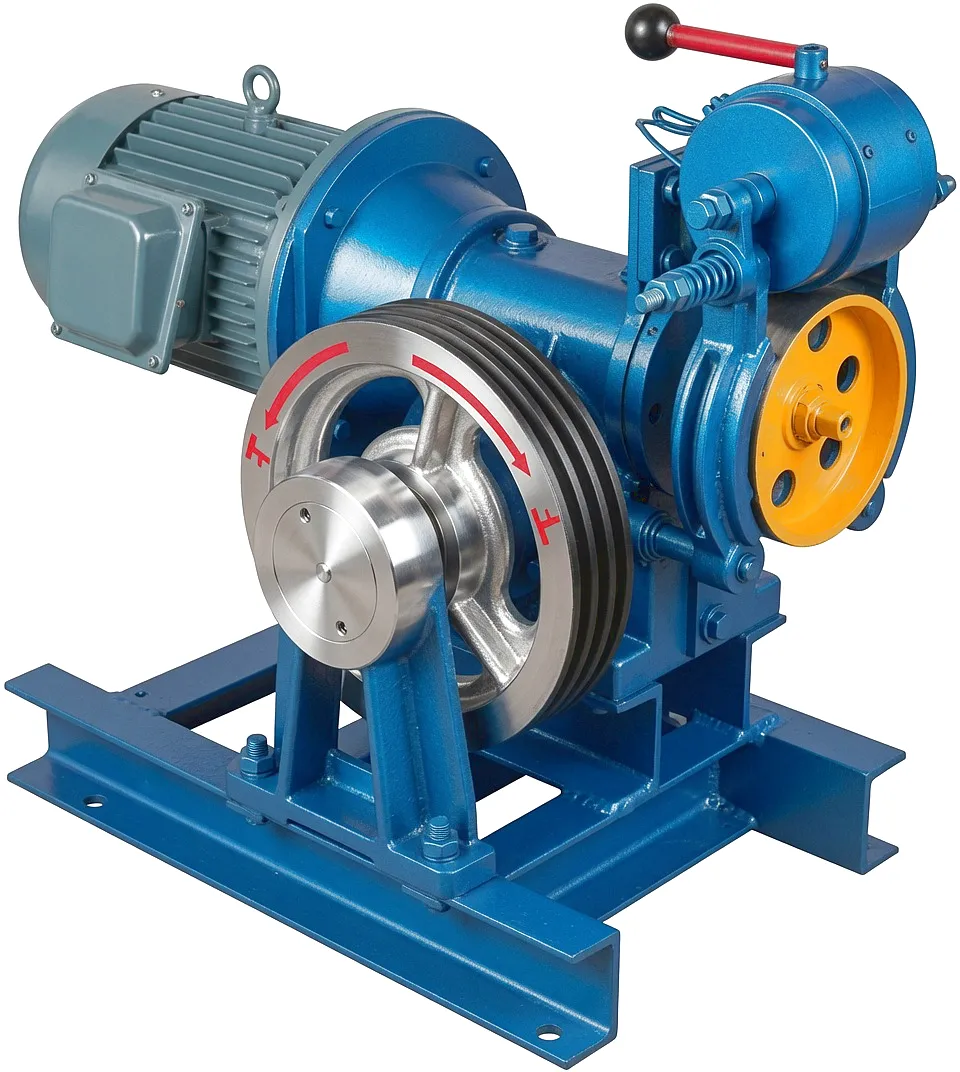
An elevator traction machine is the drive unit responsible for rotating the traction sheave — the grooved wheel that grip the suspension ropes or belts. As the sheave turns, rope friction either lifts or lowers the car and its counterweight in a balanced, energy-efficient system. The motor feeding that sheave does not run at the slow sheave speed naturally; it runs at a higher RPM suited to its electromagnetic design, and a gearing stage brings the output down to 20–200 RPM depending on the installation. That gearing stage — whether a worm-and-wheel, helical, or planetary gearbox — needs to be coupled to the motor shaft with a connector that is both torque-capable and forgiving of the alignment imperfections of real-world installation.
In a geared traction machine, the coupling sits between the motor flange and the input shaft of the reducer. In a direct-drive or MRL machine, the coupling may connect the permanent-magnet motor directly to the sheave shaft or to a small epicyclic stage. Either way, the coupling must handle significant cyclic torque: lifts do not spin at constant speed — they accelerate, cruise, and decelerate dozens of times per hour, and each start-stop event creates a momentary shock torque that can be two to three times the nominal running torque.
Gearless traction machines — driven by low-speed permanent-magnet synchronous motors — have become dominant in new UK installations thanks to their energy efficiency ratings under the Building Regulations Part L and compliance with EN 81-20/50 standards. Even these designs often incorporate a compact flexible coupling between the motor and the sheave to isolate structural vibration, protect encoder bearings from shock, and provide a controlled fail-point that is far cheaper to replace than a motor or sheave assembly. The gear coupling remains relevant precisely because no real-world shaft alignment is perfect, and the energy penalty of forcing misaligned rigid shafts against each other is enormous over a 20-year service life.
Why Drum-Type Gear Couplings Outperform the Alternatives
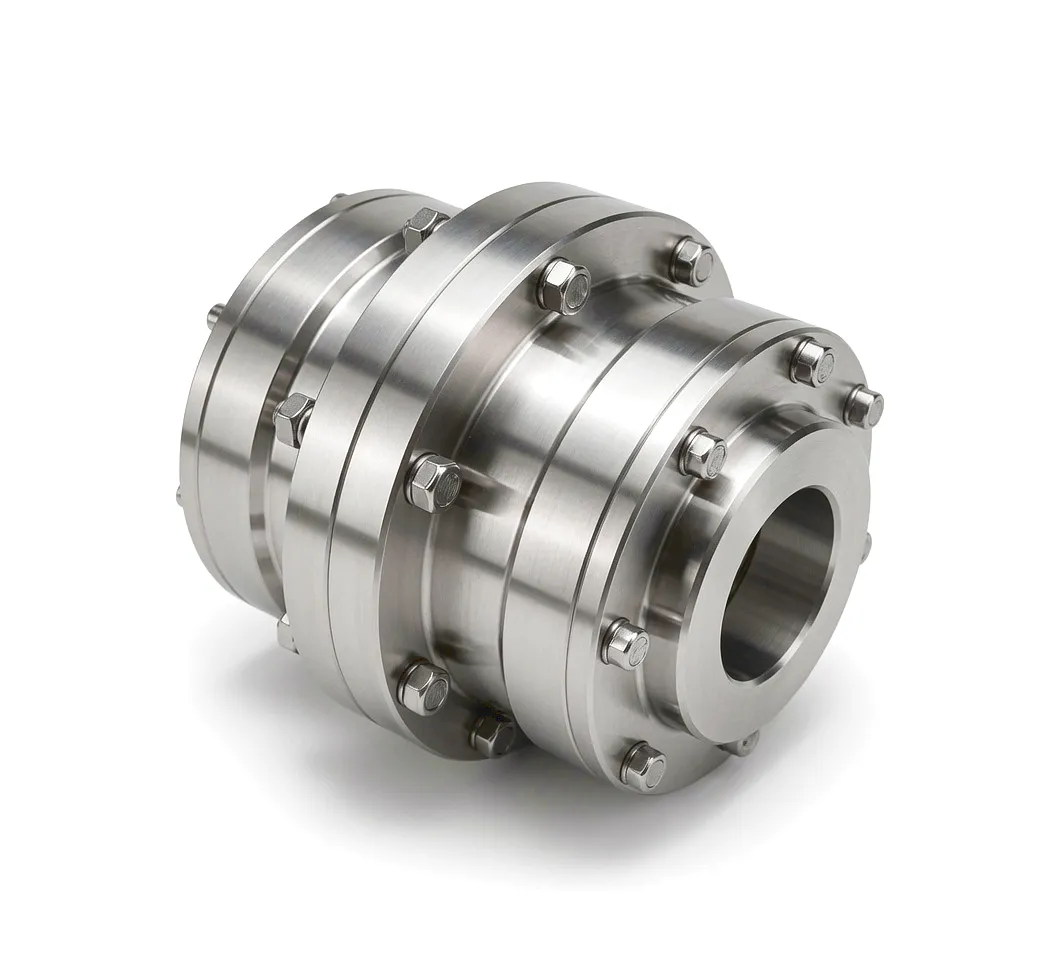
Elevator engineers have, over the years, tested jaw couplings, disc couplings, fluid couplings, and elastomeric designs in traction applications. Each has its place, but the drum-type gear coupling has emerged as the preferred choice where high torque density, long service life, and reliable misalignment tolerance are all needed simultaneously. The reason lies in the crowned-tooth geometry. Unlike a straight-tooth gear coupling — where teeth engage only on a narrow contact band, creating stress concentrations — the drum coupling’s convex tooth profile distributes load evenly across the full tooth face even when the hubs are operating at an angle. This means that the angular misalignment inherent in machine-room floor mounting, thermal expansion of the motor housing, or accumulated bearing wear does not cause the edge-loading that destroys straight-tooth designs within months.
The internal lubrication chamber — sealed with high-performance lip seals on both ends of the outer sleeve — retains grease for multi-year service intervals, which is particularly valuable in machine-room-less applications where access is constrained. Elastomeric jaw couplings, by contrast, require periodic element inspection and replacement; their rubber spiders degrade under the combination of ozone, temperature cycling, and sustained compressive loading that a busy lift environment produces. Fluid couplings, while excellent for soft-start torque limiting, add complexity, cost, and a potential hydraulic leak risk that is unwelcome in any occupied building.
Torque Density
Steel-to-steel tooth engagement gives gear couplings the highest torque-per-kilogram ratio of any flexible coupling type — critical where machine room space is restricted.
Misalignment Tolerance
Crowned teeth accommodate angular misalignment up to 1.5° and radial offset to 0.5 mm without generating bearing-damaging reaction forces or audible noise.
Low Vibration & Noise
The distributed tooth contact and internal grease damping minimise structure-borne vibration transmission to the building frame — a non-negotiable requirement under EN 81-20.
Long Service Life
Sealed lubrication systems extend re-greasing intervals to 12–24 months, matching typical planned maintenance schedules and reducing total cost of ownership significantly.
NGCL Series — Technical Parameters for Elevator Traction Applications
The NGCL drum-shape gear coupling series from Ever Power is engineered specifically for low-speed, high-torque shaft connections of the kind found in worm-gear and helical-gear traction machines. The table below covers the range most commonly specified by UK elevator OEMs and maintenance contractors. All values are nominal at 20 °C with NLGI 2 lithium-complex grease lubrication; service factors apply for shock-load environments (typically 1.5–2.0 for elevator duty). Custom bore diameters, keyway configurations, and flange drillings are available on request.
| Model | Nominal Torque (N·m) | Max Speed (rpm) | Bore Range (mm) | Angular Misalignment | Radial Offset (mm) | Weight (kg) |
|---|---|---|---|---|---|---|
| NGCL 1 | 630 | 4500 | 20 – 45 | 1.0° | 0.30 | 3.2 |
| NGCL 2 | 1250 | 4000 | 25 – 55 | 1.0° | 0.35 | 5.8 |
| NGCL 3 | 2500 | 3600 | 30 – 70 | 1.5° | 0.40 | 9.4 |
| NGCL 4 | 5000 | 3000 | 40 – 90 | 1.5° | 0.45 | 16.7 |
| NGCL 5 | 10 000 | 2500 | 50 – 110 | 1.5° | 0.50 | 28.5 |
| NGCL 6 | 20 000 | 2000 | 65 – 140 | 1.5° | 0.55 | 46.2 |
* Data represents standard product range. Custom torque ratings, bore sizes, and materials available upon request. Contact our UK technical team for project-specific sizing.
Materials, Construction & Operating Principles
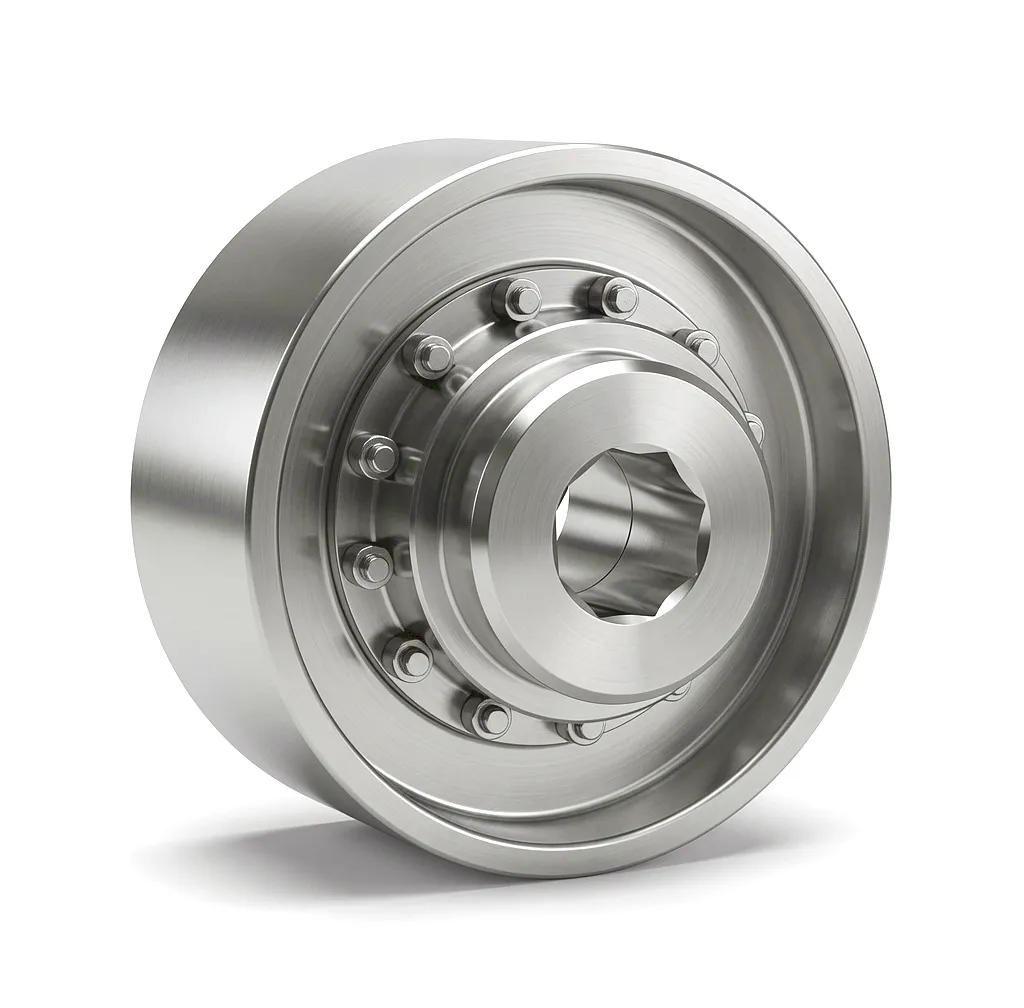
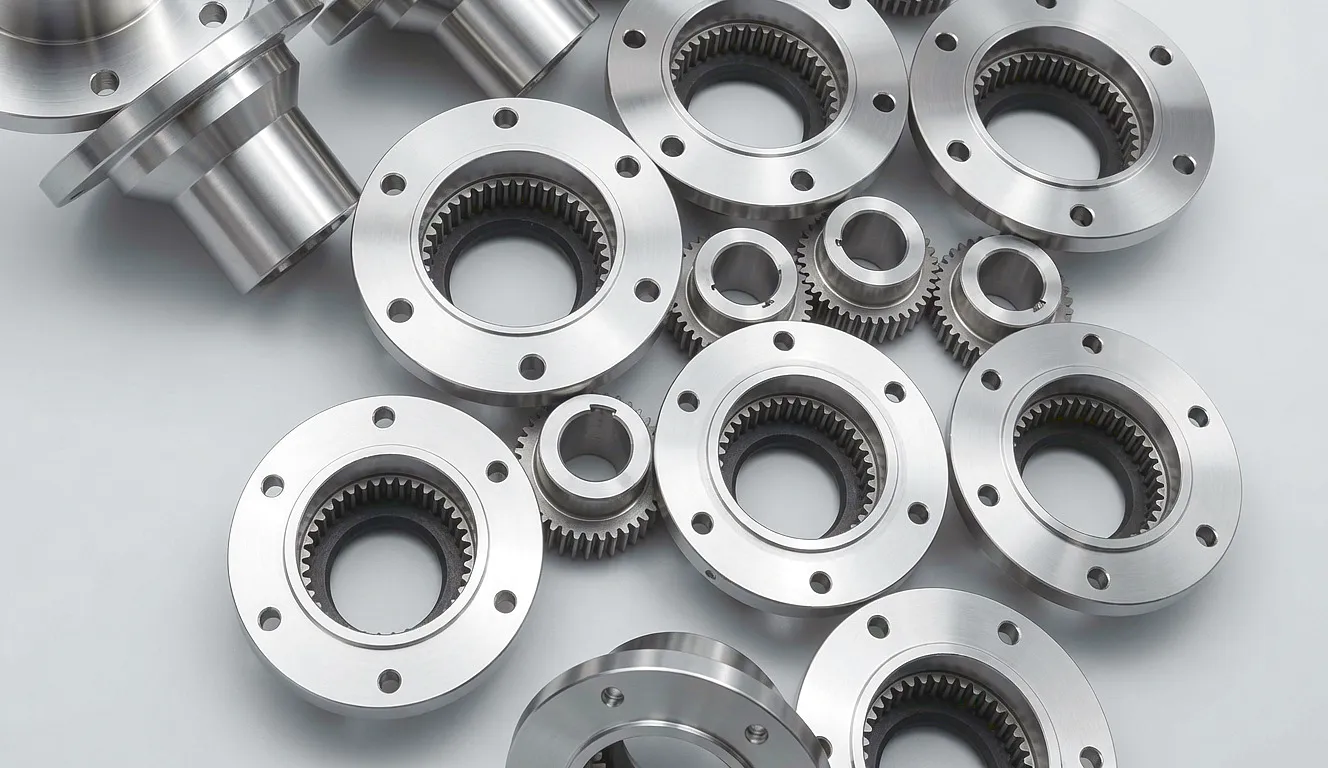
The structural integrity of any gear coupling used in an elevator traction machine begins with material selection. Ever Power NGCL series hubs are machined from 45# medium-carbon steel — forged, not cast — which delivers a yield strength exceeding 360 MPa while maintaining the machinability needed for precise crowned-tooth profiling. The outer sleeves are manufactured from 40Cr alloy steel with quench-and-temper heat treatment, bringing surface hardness to HRC 40–45. This combination ensures that tooth engagement surfaces resist the micropitting that develops under oscillating torque loads after thousands of start-stop cycles.
Internal sealing is handled by twin radial lip seals in nitrile rubber (NBR), which retain NLGI 2 lithium-complex grease and exclude the moisture and dust found even in supposedly clean machine-room environments. Bolt assemblies connecting the two outer sleeve halves are grade 8.8 high-tensile, torqued to specification and secured with nylon-insert locknuts to prevent self-loosening under vibration — a detail that matters greatly on a machine doing 50+ starts per hour in a busy office block.
Hub Material
45# Forged Steel
Yield: > 360 MPa
Sleeve Material
40Cr Alloy Steel
Hardness: HRC 40–45
Seals
NBR Lip Seals
Temp: -30 °C to +100 °C
Lubrication
NLGI 2 Li-Complex
Interval: 12–24 months
Surface Finish
Phosphated + Painted
Anti-corrosion rated
Application Scenarios: Where Gear Couplings Serve Elevator Systems
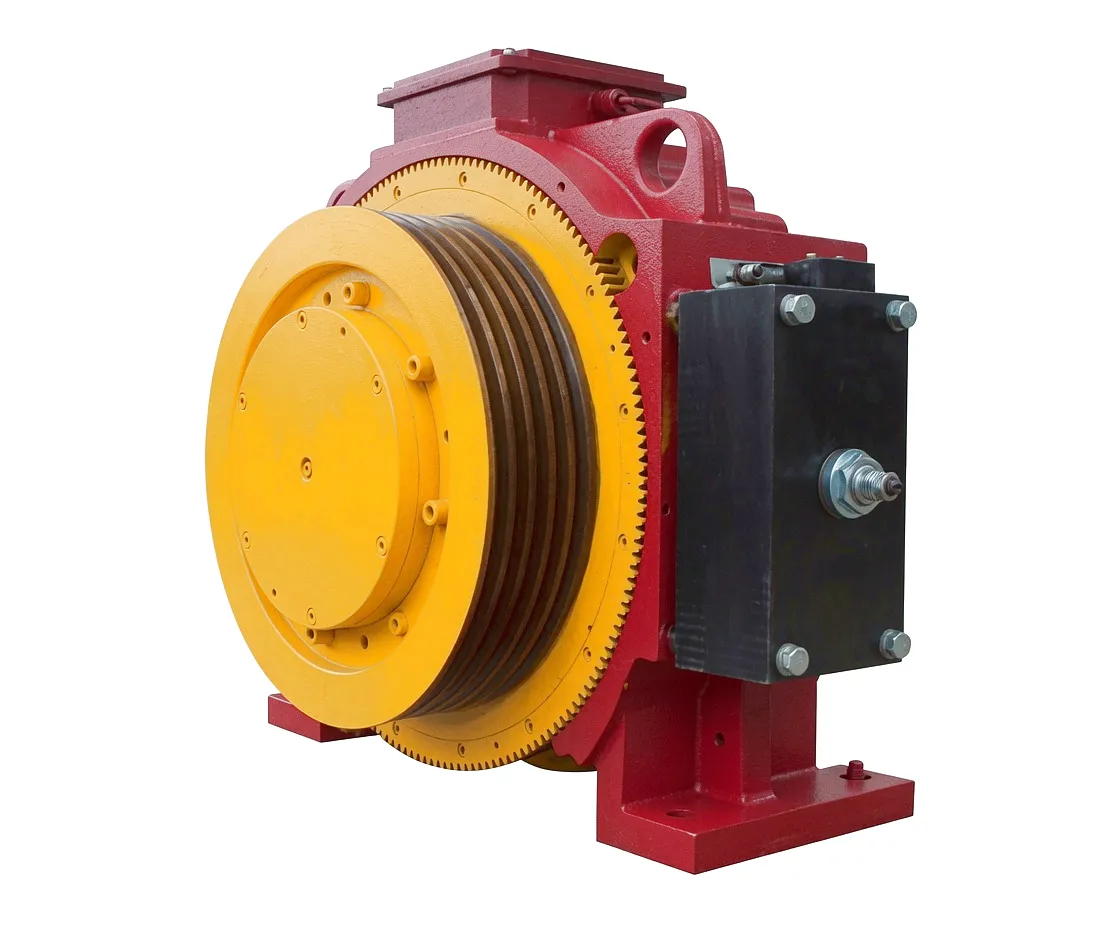
The elevator sector in the United Kingdom covers an extraordinarily wide range of traction machine types and power levels. At one end of the scale you have compact worm-gear machines driving passenger lifts in Victorian mansion blocks across Kensington and Edinburgh New Town — small units handling loads of 320 kg at 0.63 m/s with motors of perhaps 3 kW. At the other end, high-rise commercial lifts in the glass towers of Canary Wharf or the City of London carry 2000 kg payloads at speeds up to 6 m/s, driven by permanent-magnet synchronous motors of 30 kW or more. Between those extremes sit hospital lifts, goods hoists, service elevators in airports, and the escalator drive trains that are technically a different product but share many of the same coupling requirements.
For worm-gear traction machines — still widely found in UK residential and mid-rise commercial buildings because of their inherently self-locking safety characteristic — the coupling between the motor and the worm shaft sees all of the motor’s starting torque, amplified by any inertia mismatch. NGCL 1 and NGCL 2 sizes are most commonly specified here, with bore diameters matched to the IEC motor frame mounting dimension. Installation contractors have found that switching from rigid sleeve couplings to NGCL drum types in these applications reduces gearbox bearing replacement frequency by 40–60%, because the gear coupling absorbs the bending moments that would otherwise pass straight into the worm shaft bearings.
🏢 Commercial & Office Buildings
High-cycle duty — typically 150–300 starts per hour in peak periods — demands couplings that tolerate thermal cycling without fretting corrosion. NGCL series grease-sealed designs are the standard choice for Grade A office space developers across London and major UK cities.
🏥 NHS Hospitals & Healthcare
Patient transport lifts must be vibration-free and near-silent at all times. Healthcare trusts across England and Scotland specify gear couplings with vibration isolation ratings compatible with sensitive medical environments. Planned maintenance replacement at 18-month intervals aligns with NHS lifecycle management frameworks.
🏗️ Construction Hoists & Goods Lifts
Construction hoists at major UK development sites — from HS2 civil works to housing regeneration projects — are among the most demanding coupling environments. Very high shock loads, dusty conditions, and operator-driven start sequences that are far less smooth than automated passenger lift controllers. NGCL 3–5 sizes are common, with service factor 2.0 applied.
🏬 Retail & Logistics Centres
Goods lifts serving multi-level distribution centres and retail parks — particularly in the West Midlands logistics corridor and along the M25 belt — operate around the clock with heavy payload variation. The gear coupling must handle both the empty-car tare torque and the full-load condition without metal fatigue accumulation over a 10-year design life.
🏠 Residential Modernisation
UK residential blocks built between 1960 and 1990 are undergoing widespread lift modernisation programmes under housing association and local authority investment plans. Replacement of ageing drum couplings with modern NGCL units — often as part of a full drive system upgrade — is a cost-effective way to extend machine life by 10–15 years without a full machine replacement.
Key Product Advantages of Ever Power Gear Couplings
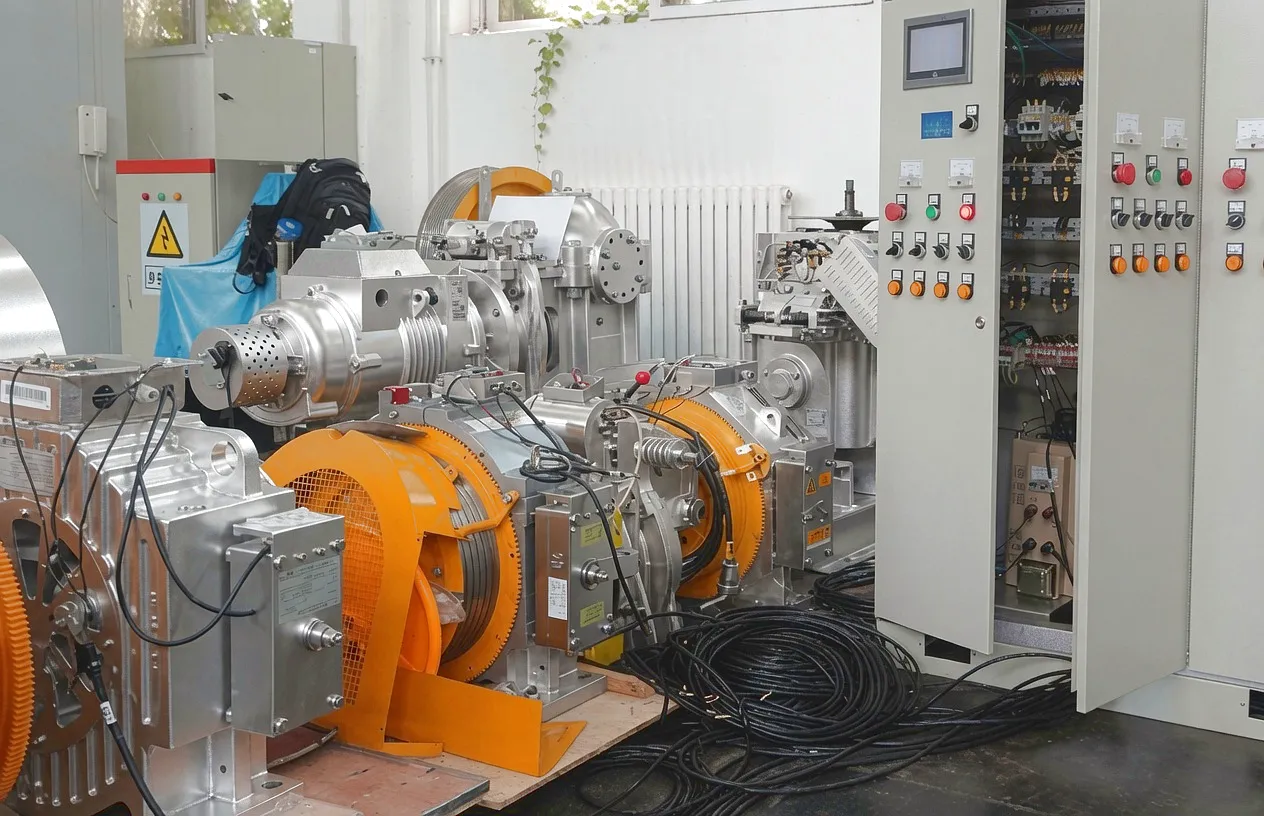
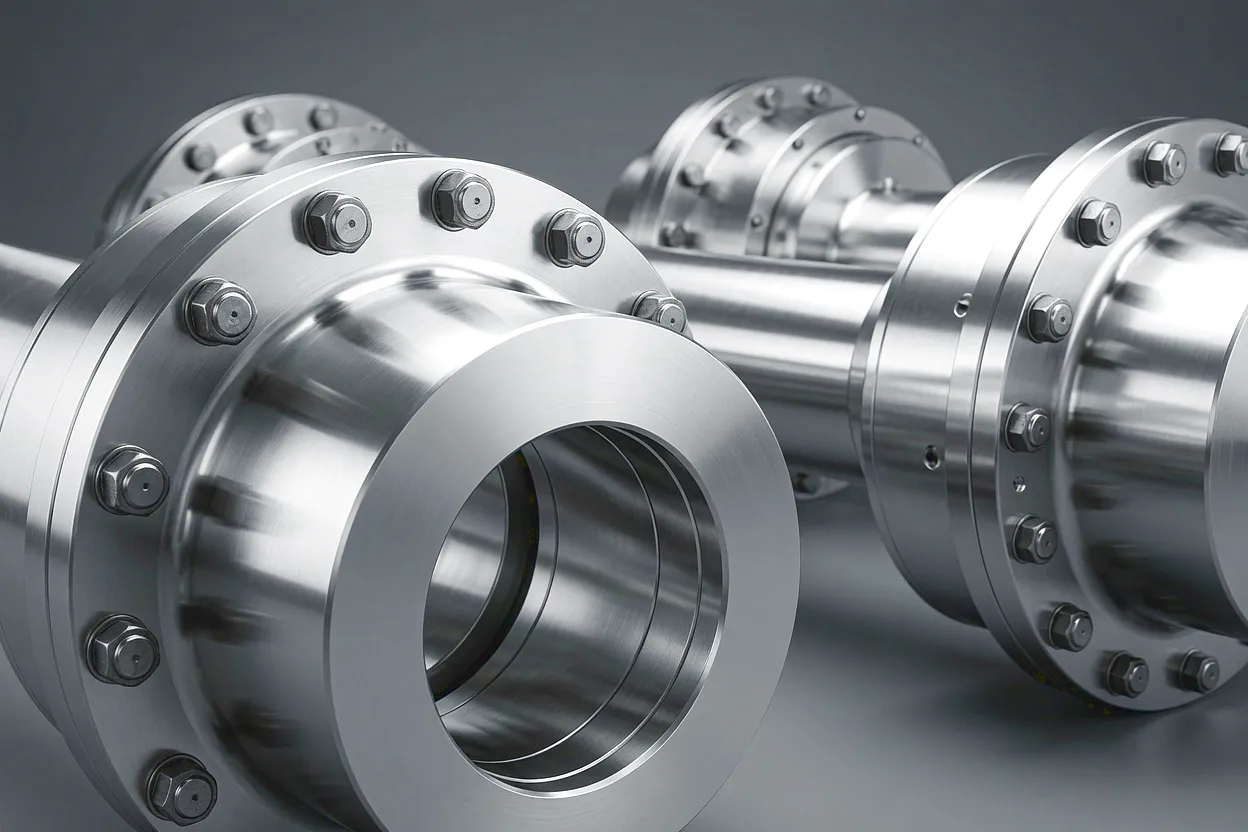
Specifying a gear coupling is not simply a matter of matching bore diameter and nominal torque. Elevator traction applications impose a combination of requirements that need to be satisfied simultaneously, and Ever Power’s engineering approach addresses each of them in a way that distinguishes its products from the commodity market. The drum-tooth geometry is generated by a CNC hobbing process with tooth form tolerances held to DIN 3960 Grade 7, which translates directly to quieter, smoother operation and more even load sharing across the tooth width. This matters when your lift is installed in a residential building and vibration complaints from tenants can result in warranty call-backs and reputational damage for the installing contractor.
Dynamic balance is another area where Ever Power products stand apart. NGCL assemblies above NGCL 3 are dynamically balanced to ISO 21940-11 Grade G6.3 as standard, and Grade G2.5 balancing is available on request for high-speed motor applications. In a machine running at 1500 rpm, even a modest residual imbalance of 10 g·mm generates measurable radial forces on adjacent bearings; over a 20-year elevator life that cumulates into significant bearing wear acceleration. The additional cost of precision balancing at the factory is recovered many times over in bearing longevity in the field.
Corrosion Resistance for UK Environments
Iron phosphate pre-treatment followed by a two-coat epoxy system means these couplings survive the damp, salt-laden machine room environments common in coastal UK locations from Aberdeen to Southampton. Standard finish meets BS 3900 adhesion and salt-spray requirements for at least 500 hours.
Drop-In Dimensional Compatibility
NGCL series dimensions are cross-compatible with GIICL and JMZ series from major European coupling manufacturers, meaning replacement during a modernisation project does not require machine re-drilling. This alone saves two to four hours of installation time per machine, a significant cost factor when a building has 20 lifts in a planned maintenance programme.
Competitive Total Cost of Ownership
Unit purchase price is only one element of cost. When you factor in service-interval extension, reduced motor bearing replacement frequency, and the downtime cost avoidance from a more reliable coupling, the 5-year TCO of an Ever Power NGCL unit is typically 30–45% lower than equivalently rated alternatives from Tier 2 suppliers — a figure that UK lift maintenance operators have validated through their own internal benchmarking.
Full Documentation Package
Every shipment is accompanied by a material certificate (EN 10204 Type 3.1), dimensional inspection report, dynamic balance certificate (where applicable), and a Declaration of Conformity referencing the applicable harmonised standards — documentation required by UK lift contractors operating under the Lifts Regulations 2016 (SI 2016/1093).
Manufacturing Capability & Custom Engineering Services
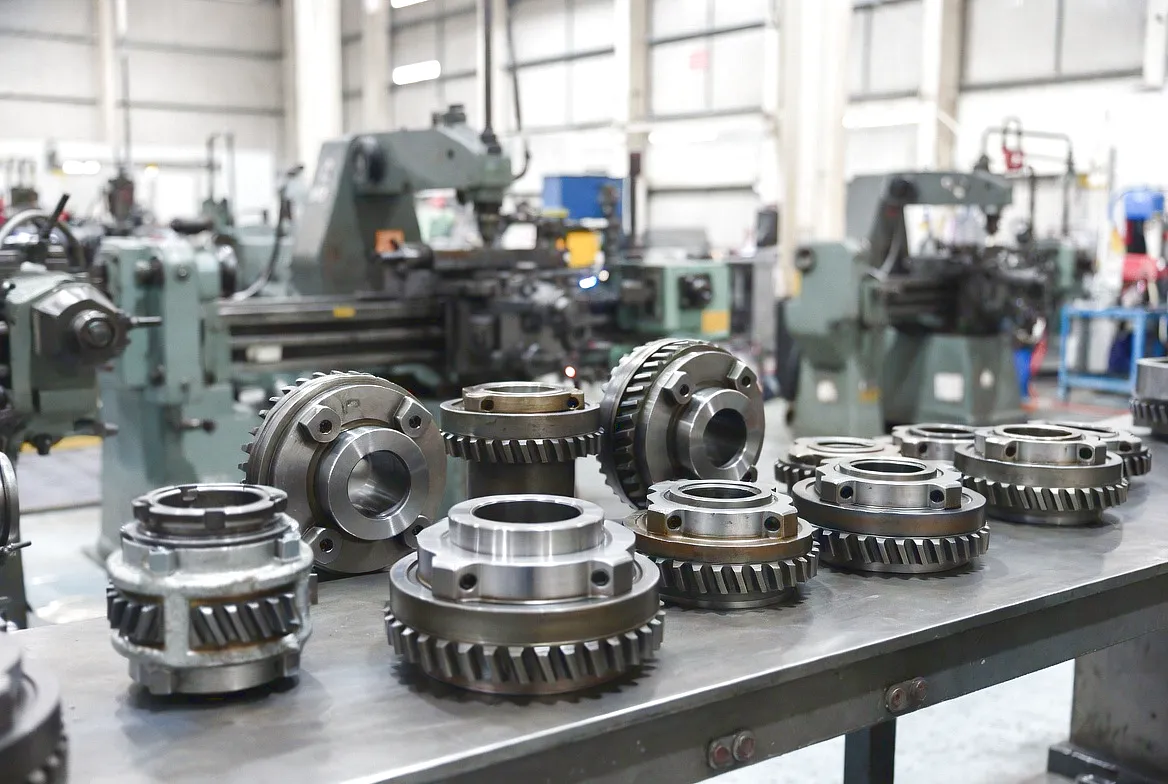
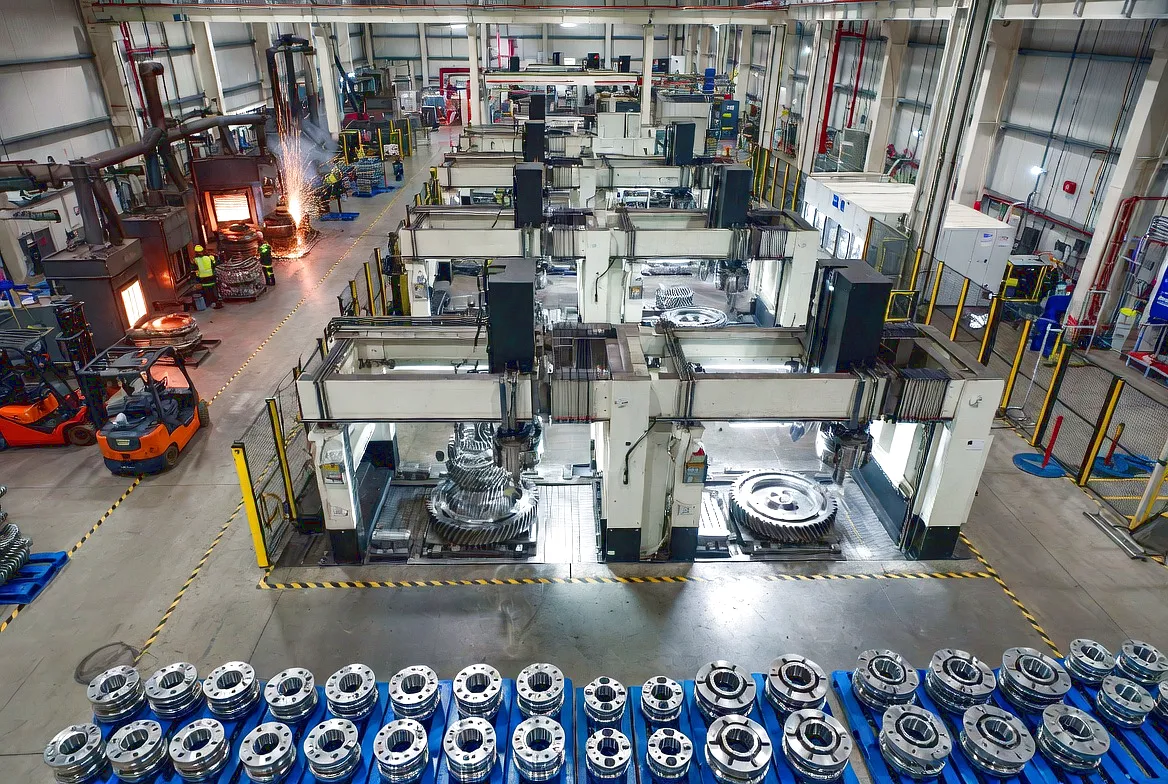
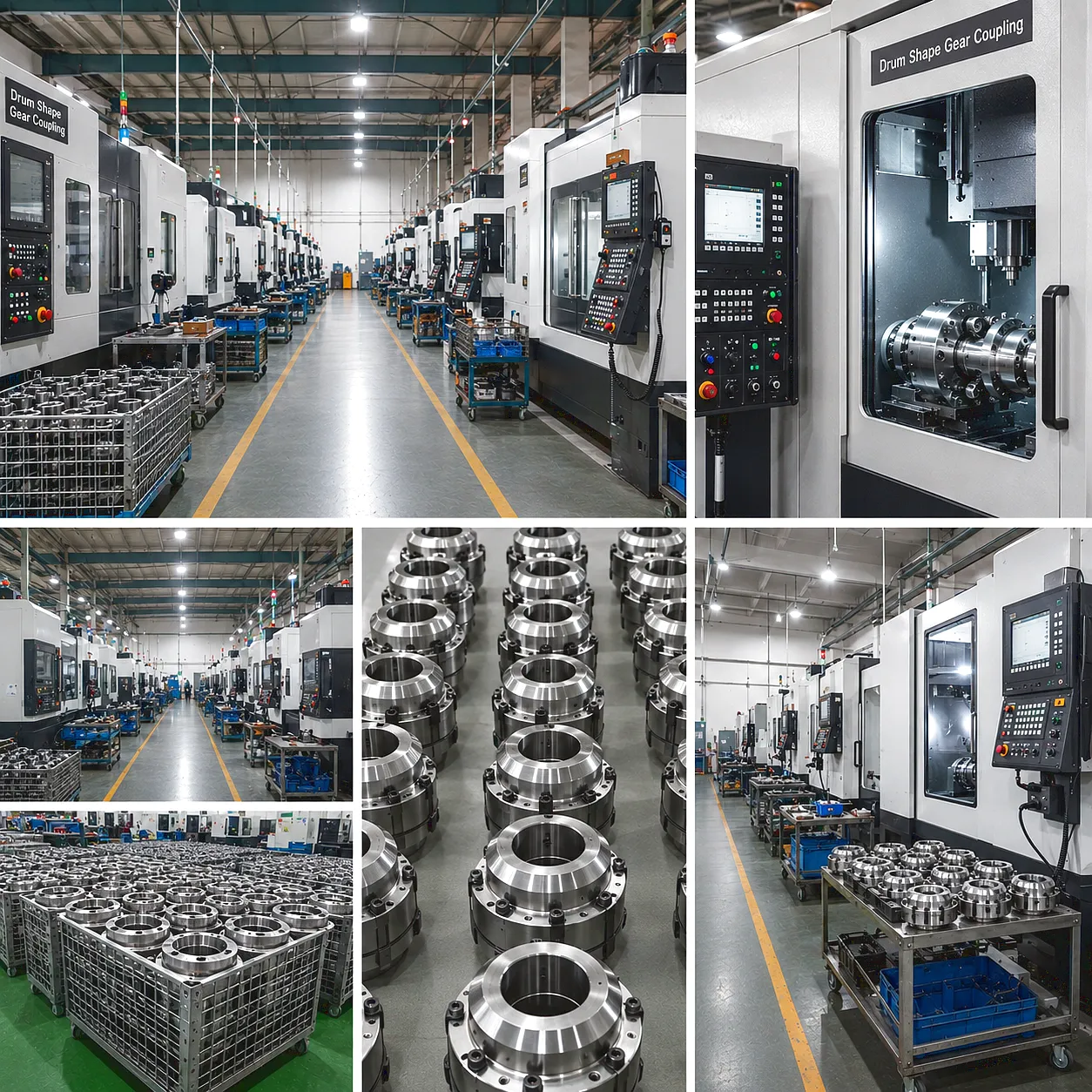
Ever Power operates a purpose-built coupling manufacturing facility equipped with multi-axis CNC turning centres, gear-hobbing machines with electronic gear correction, coordinate measuring machines (CMM), and dedicated dynamic balancing equipment. The facility holds ISO 9001:2015 certification for design, manufacture, and supply of gear couplings and related power transmission components. Production capacity exceeds 200,000 coupling assemblies annually, with the flexibility to dedicate production cells to bespoke OEM orders when demand profiles require it.
The custom engineering service is one of Ever Power’s genuine competitive strengths in the elevator sector. Lift OEMs increasingly need couplings that deviate from catalogue dimensions — whether to interface with a proprietary flange design, accommodate an unusual centre distance, incorporate a torque limiter function, or use a stainless-steel or marine-grade aluminium alloy for specialist applications. Ever Power’s application engineering team works directly with the customer’s mechanical designer to develop a coupling solution from a drawing or a sample, with lead times for bespoke prototypes typically within 15 working days from confirmed design approval.
🔧 OEM Custom Coupling Programme
✅ Custom Bore Diameters & Keyways
✅ Non-Standard Flange Drillings
✅ Modified Centre Distances
✅ Stainless Steel Construction
✅ Integrated Torque Limiters
✅ Private Label / OEM Branding
✅ 3D Drawing Review Service
✅ Sample Approval Within 15 Days
✅ Full EN 10204 Traceability
Customer Success: Real-World Results from UK Installations
Case Study: NHS Foundation Trust — Manchester, England
Reducing Lift Downtime at a Major Hospital Campus
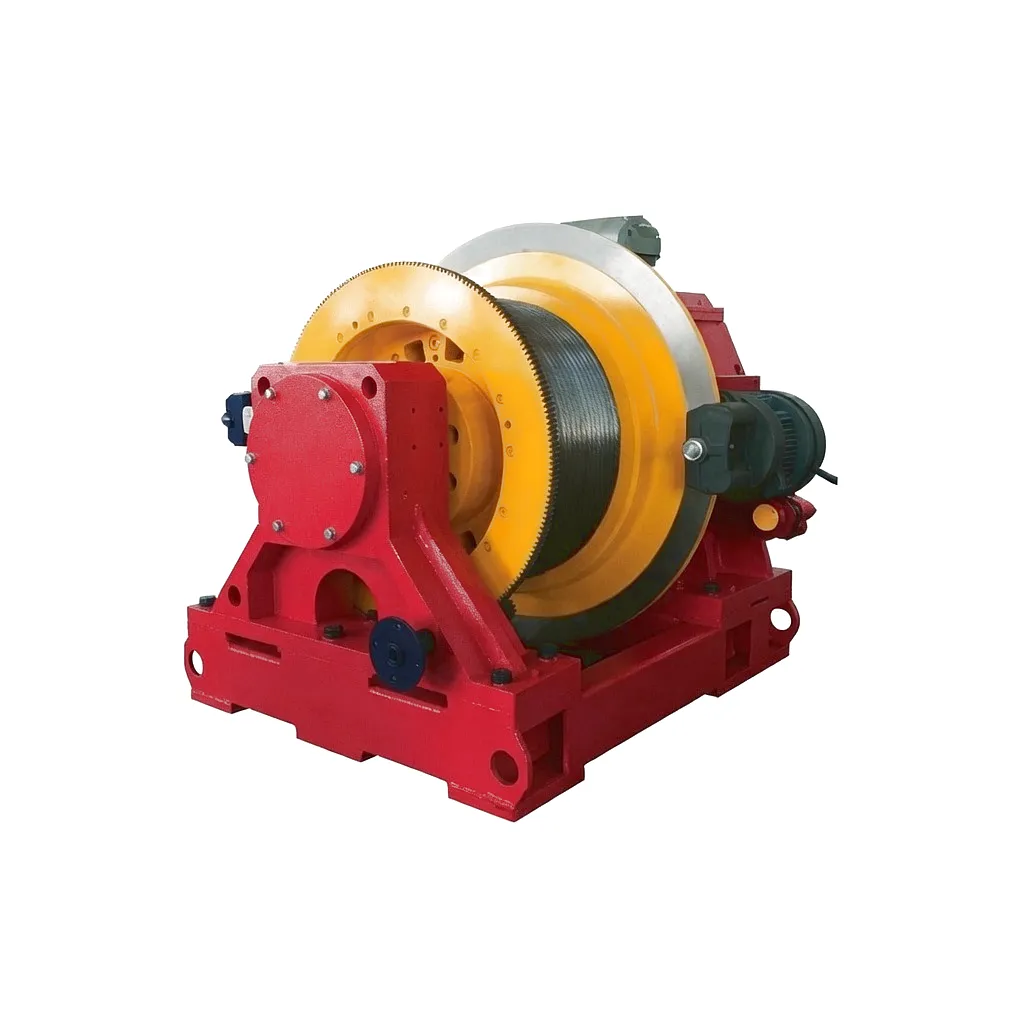
A large NHS Foundation Trust in Greater Manchester was experiencing recurring unplanned lift failures across a 12-machine fleet serving a 600-bed acute hospital. Investigation by the facilities management team identified the root cause as premature fatigue cracking of the inner gear-hub teeth in the existing straight-tooth couplings installed during a 2014 modernisation programme. With patient transport lifts going down an average of twice per month — each requiring an emergency engineer call-out — the downtime costs and patient impact were unacceptable. The Trust’s M&E contractor contacted Ever Power to evaluate whether the NGCL drum-type series could provide a longer-term solution.
After reviewing the traction machine data — 7.5 kW worm-gear units running at 960 rpm motor speed, 320 kg rated load, estimated 200 starts per hour at peak — Ever Power’s application engineers specified NGCL 2 units with 40 mm input bores and 35 mm output bores, incorporating the company’s extended-seal grease retention design for the constrained machine room dimensions. The entire fleet of 12 machines was re-coupled over two planned maintenance weekends, with no operational disruption to the hospital between events.
0
Coupling failures in 24 months post-installation
£38k
Estimated annual saving in emergency call-out costs
-62%
Reduction in motor bearing replacement frequency
What Our Clients Say
“We’ve been specifying Ever Power NGCL couplings for our hospital and healthcare contracts for three years. The lead times are consistent, the documentation pack is exactly what the NHS procurement teams need, and we have had zero warranty claims. For a lift contractor working in healthcare, that reliability record is worth its weight in gold.”
— James Hartley, Contracts Director
Precision Lift Services Ltd, Birmingham, UK
“We ordered a custom NGCL 4 coupling with a non-standard flange drilling pattern to match an older German traction machine we were modernising for a Grade II listed building in Edinburgh. The sample arrived within 12 working days, the dimensions were spot on, and the surface finish met the specification. Very impressed with the technical support throughout.”
— Fiona MacGregor, Senior Engineer
Heritage Lifts Scotland, Edinburgh, UK
“We manage over 2,000 lifts across the London commercial property portfolio and decided three years ago to standardise on Ever Power NGCL couplings as our preferred replacement part for all worm-gear traction machines. The parts availability has been excellent, the price is competitive for the quality level, and our planned maintenance costs have come down noticeably since the switch.”
— David Chen, Technical Operations Manager
Capital Lift Maintenance Ltd, London, UK
How to Select the Right Gear Coupling for Your Elevator Traction Machine
Correct coupling selection involves four sequential steps: calculating design torque from motor nameplate data and service factor, checking shaft diameter compatibility, verifying that the maximum bore size of the chosen model accommodates the shaft without compromising hub wall thickness, and confirming that the maximum coupling speed rating is not exceeded by the motor operating speed. The table below provides a quick-reference guide for typical UK elevator motor and traction combinations. Always apply the service factor appropriate to the installation type — a smooth-running VFD-controlled passenger lift in a residential building warrants a lower service factor than a manually operated goods hoist in a construction environment.
| Application Type | Typical Motor Power | Design Torque (N·m) | Service Factor | Recommended NGCL |
|---|---|---|---|---|
| Residential passenger lift (320–630 kg) | 3 – 5.5 kW | 80 – 250 | 1.5 | NGCL 1 |
| Mid-rise commercial lift (800–1000 kg, VFD) | 7.5 – 15 kW | 300 – 700 | 1.5 | NGCL 2 |
| Hospital / healthcare lift (1000–1600 kg) | 15 – 22 kW | 700 – 1500 | 1.75 | NGCL 3 |
| High-rise commercial (1600–2000 kg, 1.6 m/s) | 22 – 37 kW | 1500 – 3500 | 1.75 | NGCL 4 |
| Goods hoist / construction hoist (heavy duty) | 30 – 55 kW | 2000 – 7000 | 2.0 | NGCL 4 – 5 |
| Port / airport cargo / freight elevator | 55 – 110 kW | 5000 – 15 000 | 2.0 | NGCL 5 – 6 |
Installation Best Practices for UK Elevator Technicians
Even the best gear coupling will underperform if installed without attention to alignment and assembly procedure. The most common cause of premature gear coupling failure in elevator traction applications is not material fatigue or design deficiency — it is installation misalignment that exceeds the coupling’s rated tolerance and then compounds over time as the machine settles on its mounting frame. Achieving good initial alignment requires a systematic approach using a laser alignment tool or at minimum a calibrated dial test indicator (DTI) set.
1
Pre-Mount Hub Inspection
Check bore diameter, keyway dimensions, and tooth profile visually before press-fitting. Any burr or high spot on the bore will create fretting corrosion under the interference fit and result in eventual hub cracking. Use a calibrated plug gauge, not a vernier calliper, for bore measurement.
2
Correct Hub Fitment
Hubs should be fitted using the oil-injection or thermal induction method wherever the shaft-hub interference is greater than 0.02 mm per 100 mm of shaft diameter. Cold pressing risks cracking of smaller hubs and will introduce residual stress that reduces fatigue life under cyclic load. Heat to 100–120 °C maximum for thermal fitting.
3
Shaft Alignment Check
Aim for angular misalignment below 0.5° and radial offset below 0.2 mm during initial installation — well within the coupling’s rated tolerance but leaving the remainder as a working buffer for thermal growth and long-term settlement. Document the as-installed alignment values for inclusion in the lift safety file maintained under the Lifts Regulations 2016.
4
Grease Fill & Seal Integrity
Fill the coupling internal volume to 30–40% with recommended NLGI 2 lithium-complex grease before assembly. Over-filling causes churning energy loss and seal failure; under-filling leads to inadequate tooth film thickness. Verify both lip seals seat correctly in their grooves and show no deformation before final assembly of the outer sleeve bolts.
Frequently Asked Questions
Ready to Source the Right Gear Coupling for Your Elevator Project?
Whether you need a standard catalogue replacement or a fully customised coupling for a complex modernisation project, our UK-focused technical team is ready to assist with selection, sizing, and rapid delivery.
Typical response within 1 working day · UK stock available · Custom orders welcome
© Ever Power Industrial Drive Solutions · Gear Coupling Specialists · Serving the UK Elevator & Lift Industry · ISO 9001:2015 Certified
edit by gzl