
 Offshore oil and gas platforms represent some of the most mechanically hostile environments on Earth. Whether you are talking about a fixed jacket platform in the Southern North Sea, a jack-up rig deployed off the Shetland Islands, or a semi-submersible operating in deep Atlantic waters west of Scotland, the machinery on board faces a punishment regime that onshore equipment rarely encounters. Salt-laden air corrodes ferrous surfaces within months. Platform sway — even the subtle, rhythmic movement of a large structure responding to wave action — induces misalignment cycles in coupled shafts hundreds of thousands of times per year. Diesel generators, mud pumps, top drives, drawworks, and compressors all transfer enormous torque through their drivetrain connections, and each of those connections is only as strong as the coupling at its heart.
Gear couplings have earned a dominant position in offshore drilling applications precisely because they address the full combination of these demands. They deliver high torque density in a compact envelope, tolerate angular and parallel misalignment, and can be manufactured from materials that resist the specific corrosion chemistry of a marine environment. For UK-based operators working in the North Sea — one of the world’s most technically demanding offshore environments — specifying the right gear coupling is not a procurement detail: it is a fundamental engineering decision that affects uptime, maintenance intervals, and personnel safety.
What Makes a Gear Coupling the Right Choice for Offshore Equipment?
Mechanical Principles · Design Logic · Marine Suitability
Internal Tooth Engagement
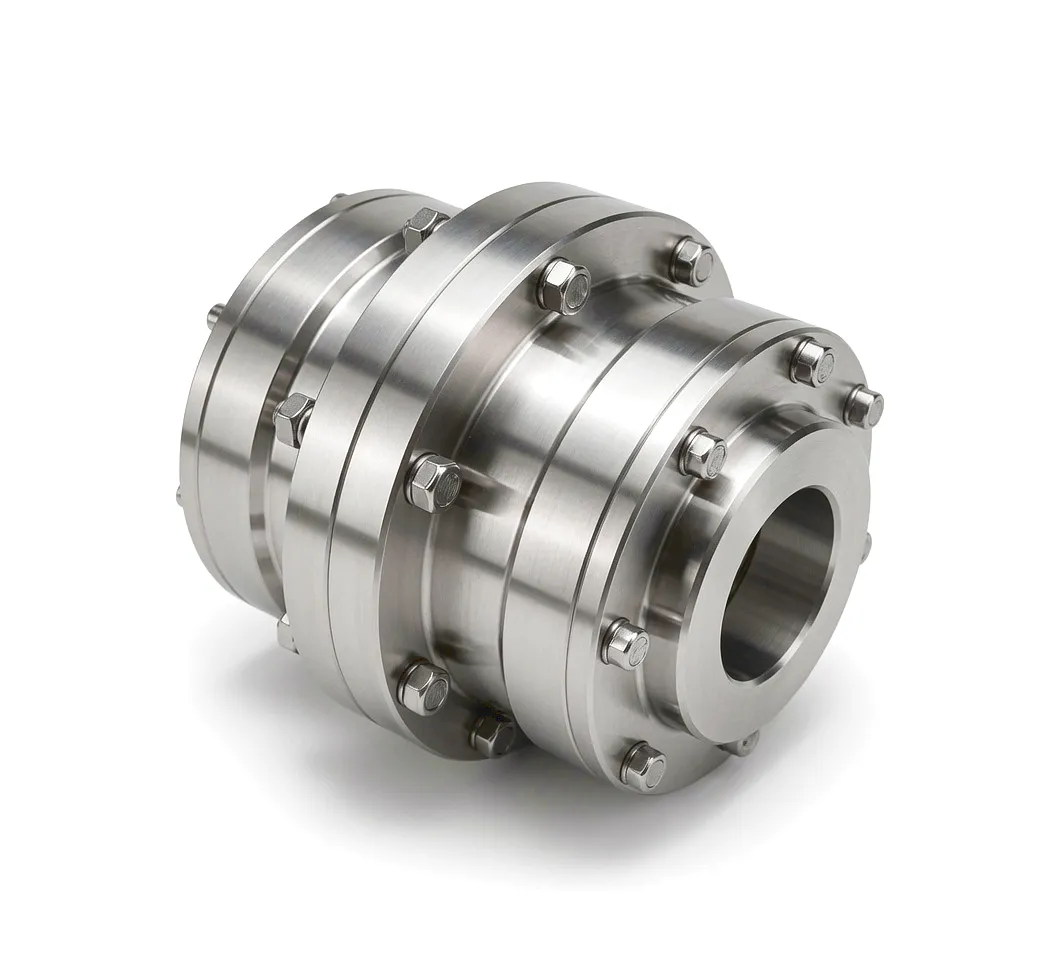
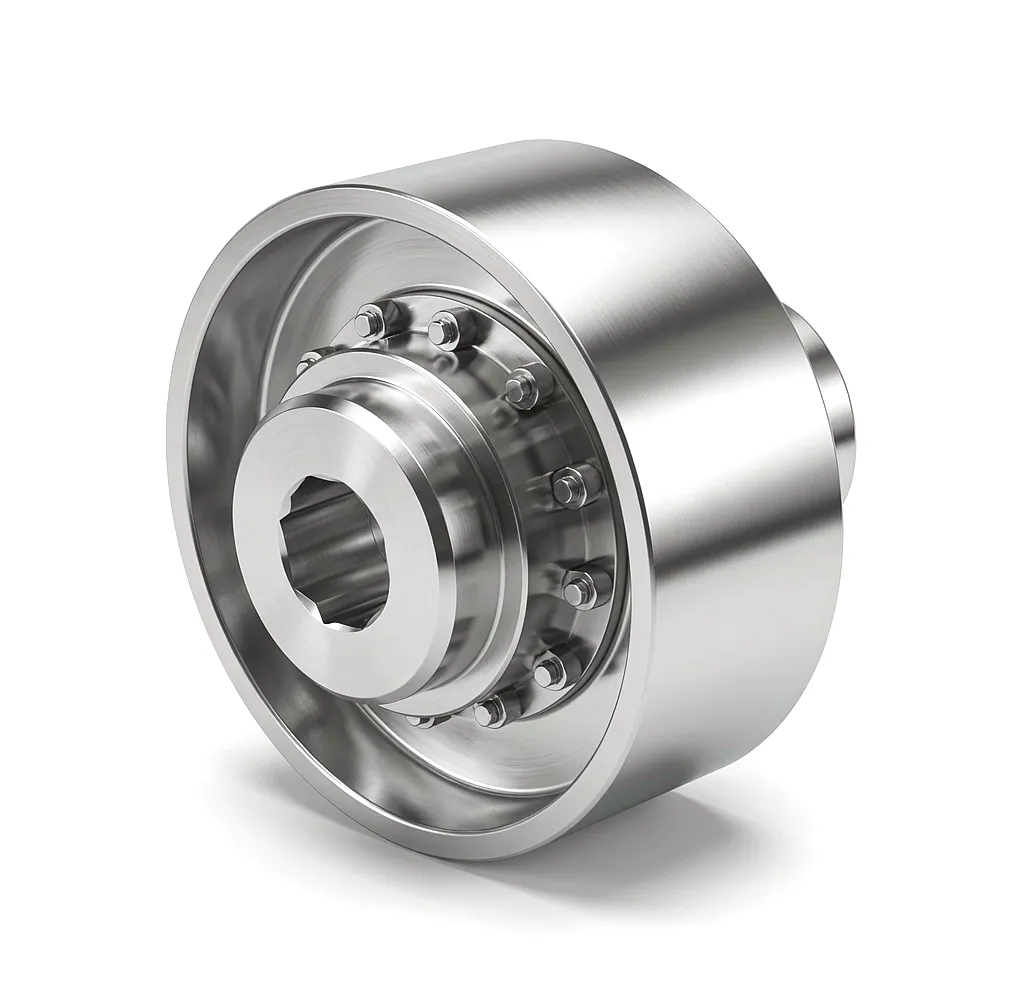
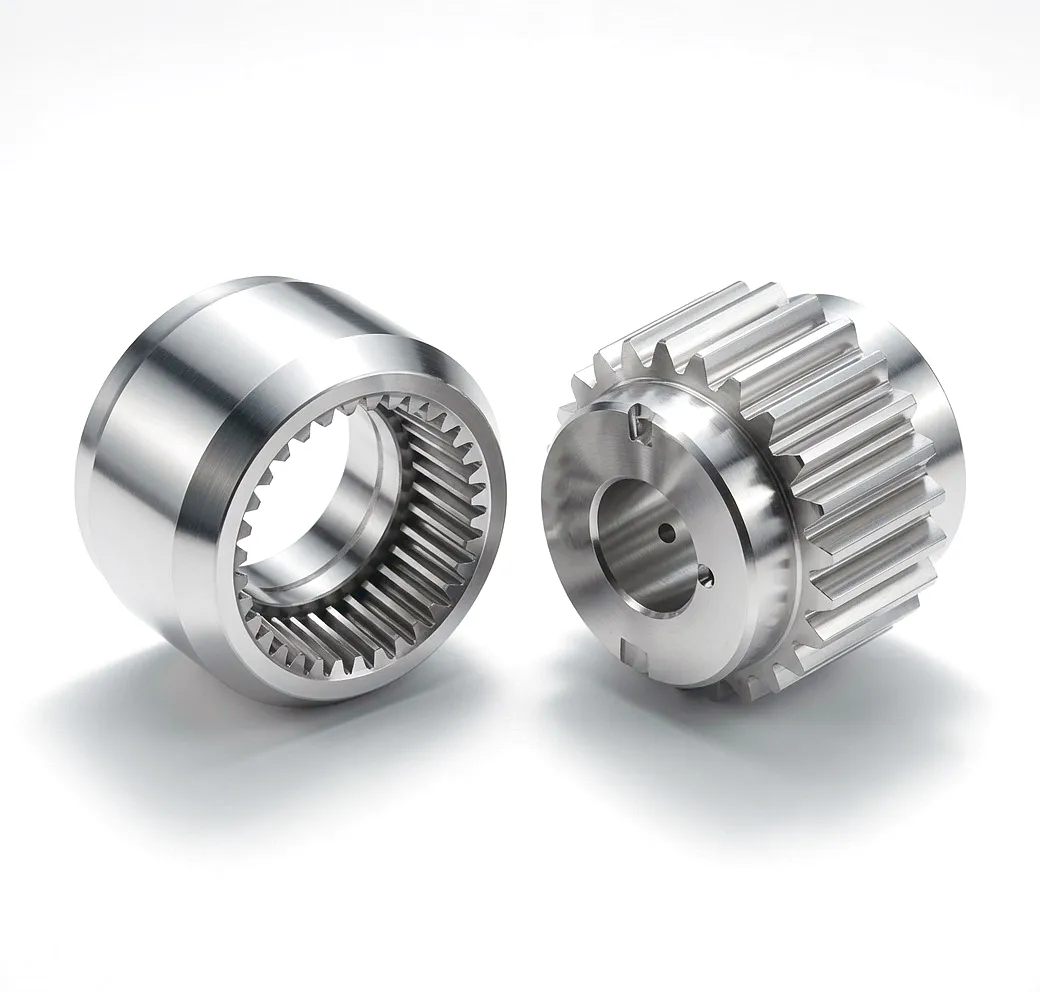
A gear coupling transmits torque through meshing external and internal gear teeth machined to extremely tight tolerances. The crowned tooth profile on the outer sleeve allows the joint to accommodate angular misalignment — typically up to 1.5° per element — and parallel offset, without transferring bending stress into the connected shaft ends. This is critical on offshore platforms, where structural deflection under wave loading continuously varies the relative alignment of coupled machinery, and where shaft-end bearing life is a controlled maintenance cost.
Drum-Shape Tooth Form
The drum-shape (barrel-form) crown on modern gear coupling teeth is a refinement that distributes contact stress more evenly across the full tooth width during misaligned operation. Flat-tooth couplings concentrat stress at the tooth edge when misalignment exists, causing fretting wear and premature failure. The drum profile eliminates this edge-loading mechanism, giving a coupling that operates reliably even when platform motion causes continuous, dynamic misalignment cycles across every working hour. For North Sea applications this distinction is not academic — it directly translates to maintenance cycle extension from months to years.
Sealed Lubrication Retention
Offshore couplings rely on grease or oil lubrication to prevent fretting corrosion at the tooth contact surfaces. The integrity of the sealing system — O-rings, labyrinth seals, or metallic lip seals depending on speed and orientation — determines whether the coupling maintains its lubricant film over the intended service interval. A leaking coupling in an offshore environment is not simply a maintenance nuisance: lubricant contamination of a marine deck represents an environmental and safety incident. Properly sealed gear couplings retain grease for intervals matching major maintenance shutdowns, reducing offshore intervention frequency significantly.
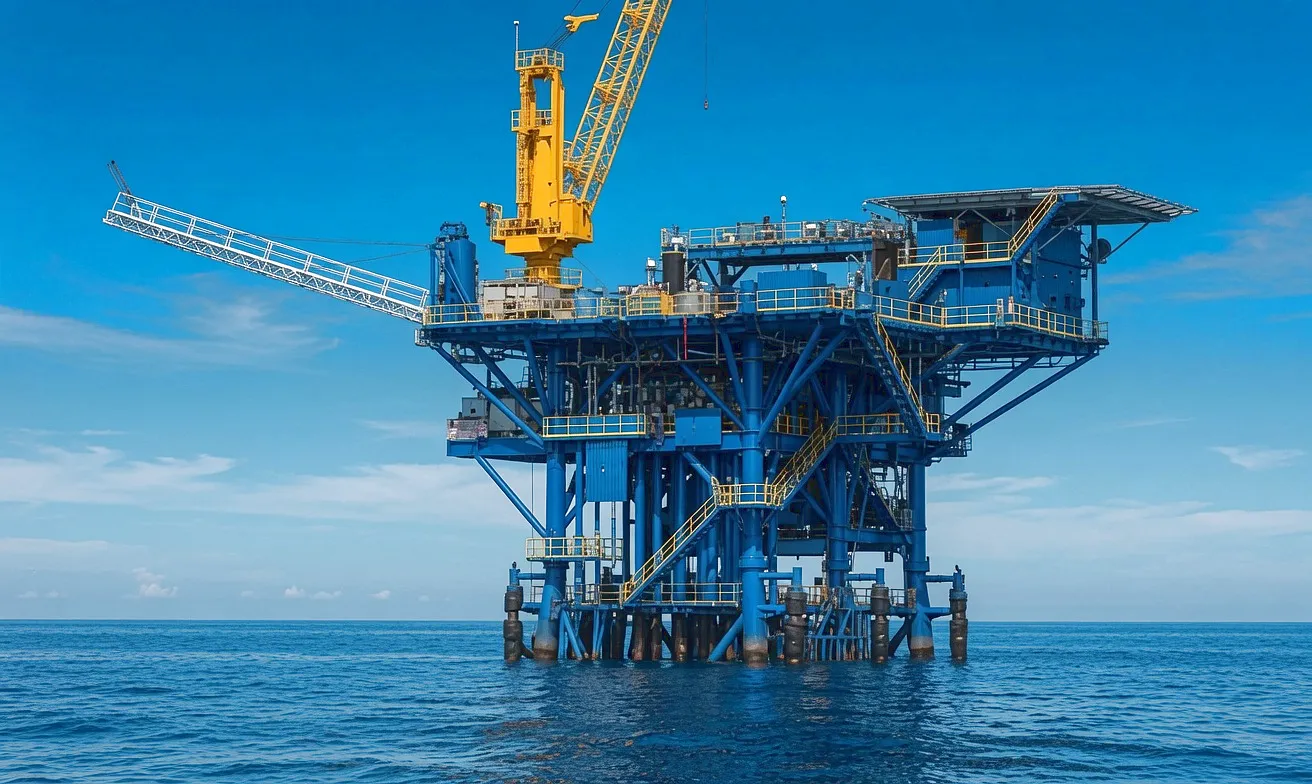
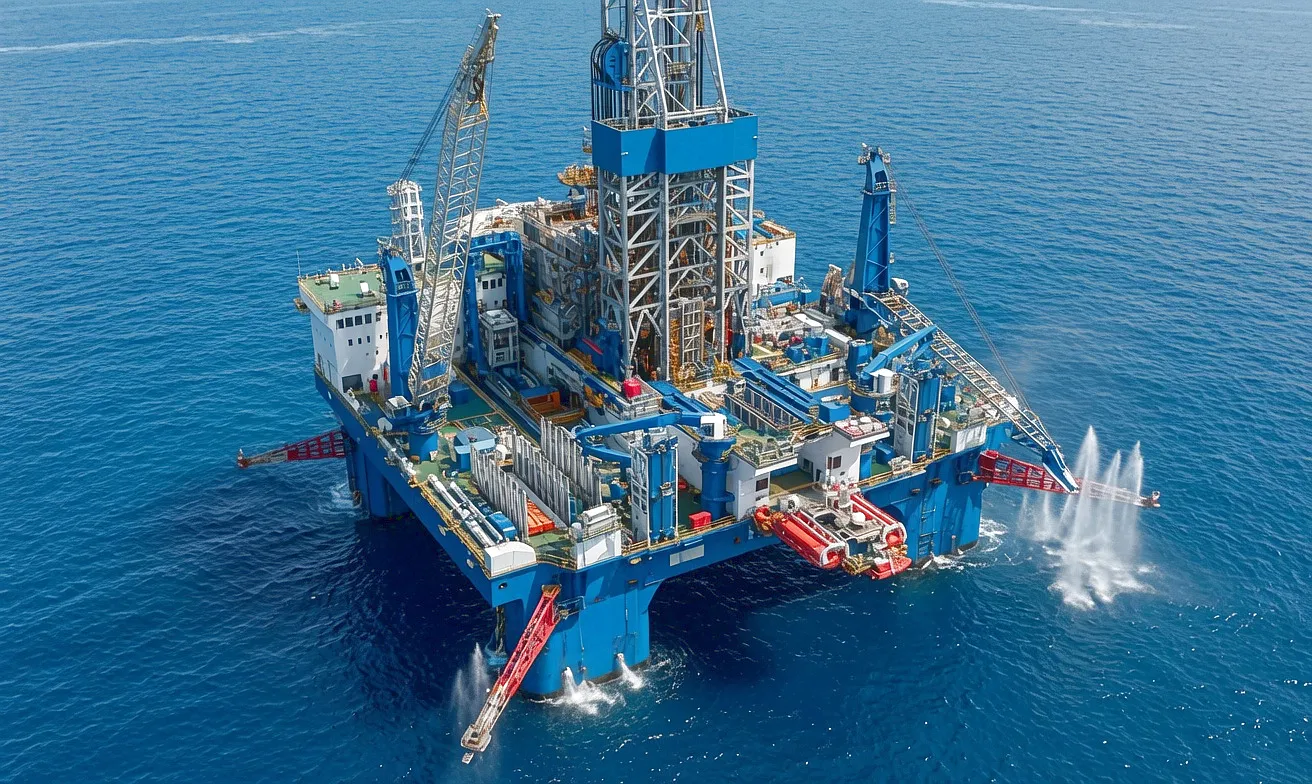
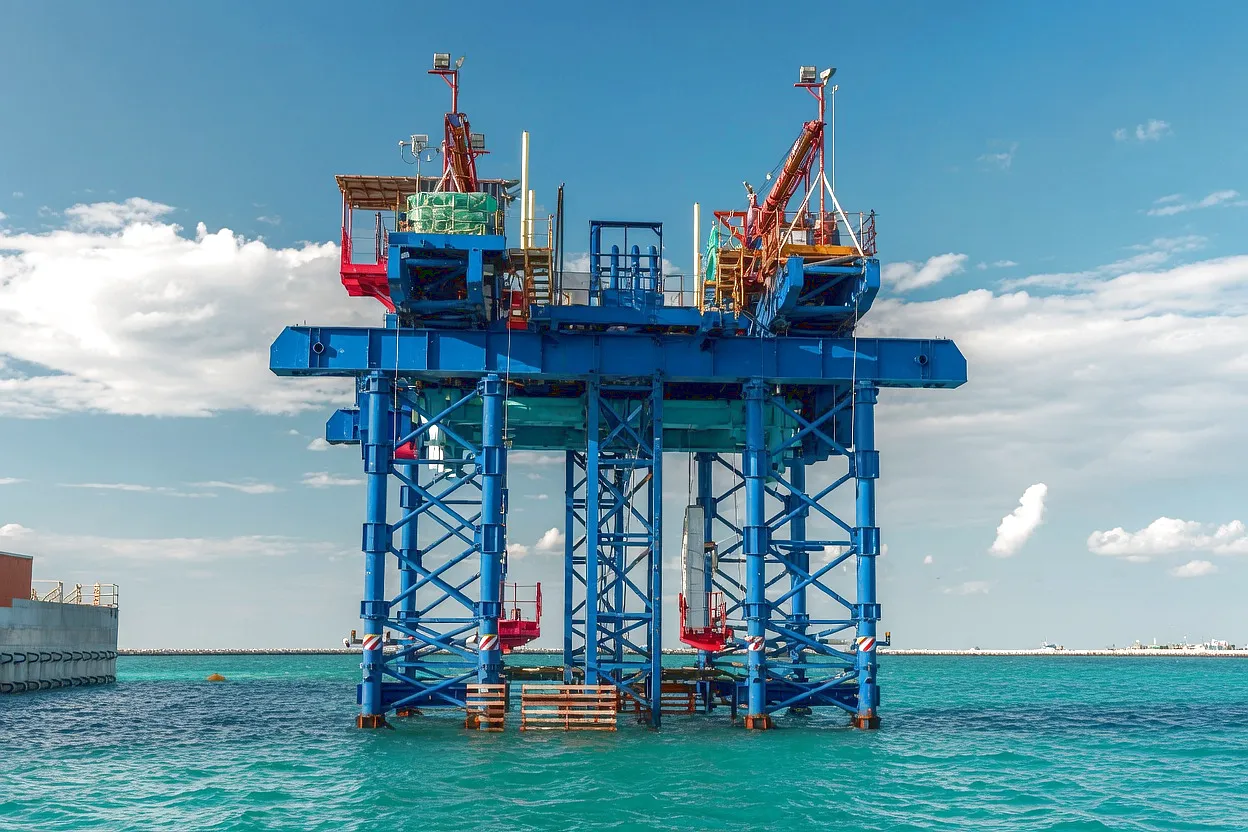

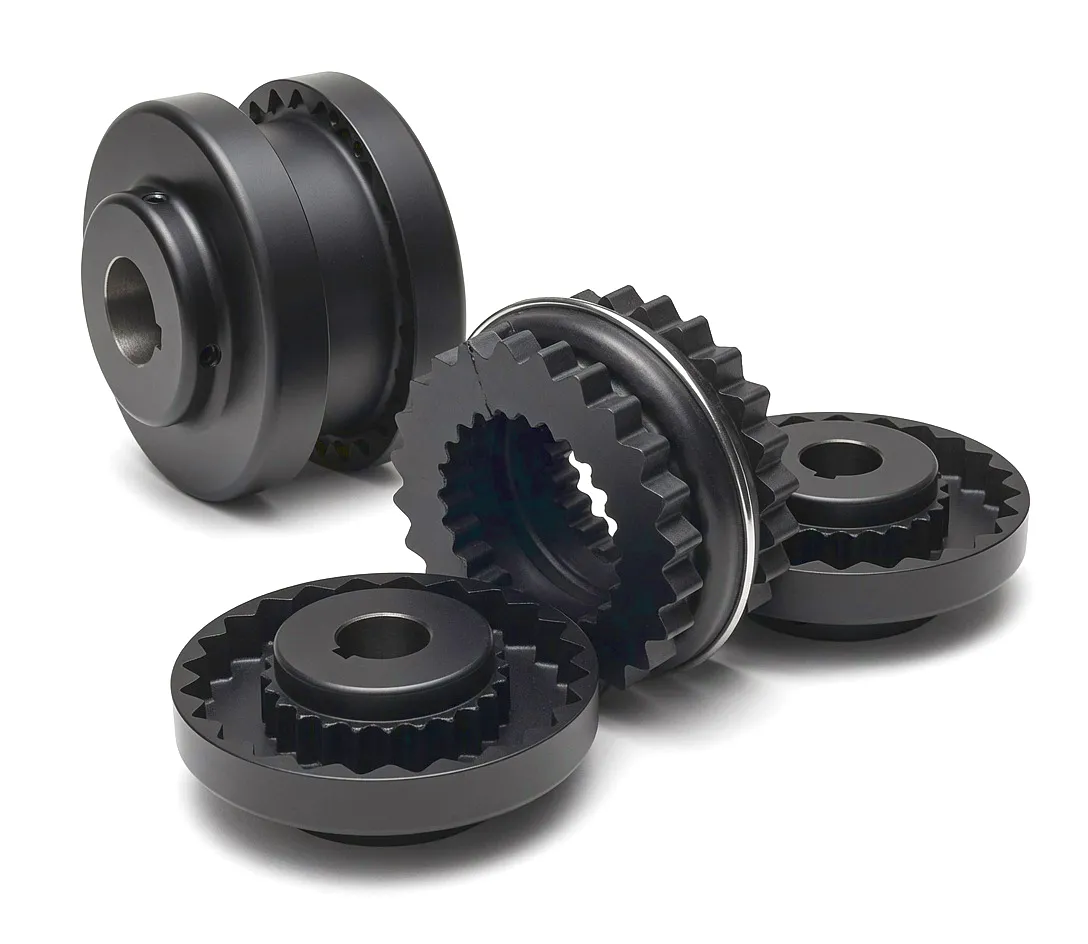
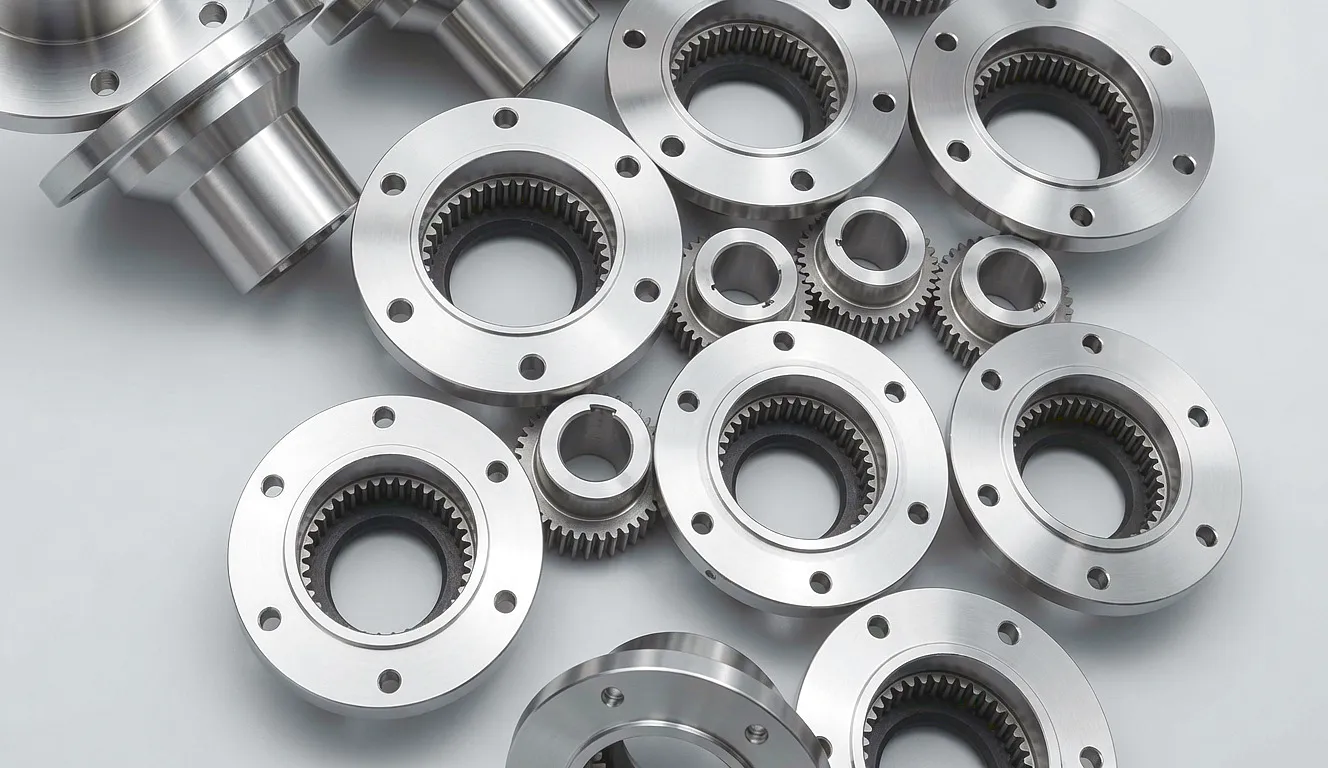
Gear couplings in active service: drilling equipment, pump drives, and compressor connections across offshore and heavy industrial sites.
Six Critical Machines on an Offshore Platform That Depend on Gear Couplings
Drilling · Power Generation · Fluid Handling · Lifting
Rotary Top Drive Connection
The top drive is the highest-torque component on a modern drilling rig. Transmitting anywhere from 30,000 to over 100,000 Nm through the kelly drive and drill string requires a coupling that can handle both sustained rated torque and the shock loads generated during bit-to-formation contact. Gear couplings manage these spikes without fatiguing, while their misalignment capacity accommodates the minor deflections introduced by crown block swing and travelling block movement under tension.
Triplex Mud Pump Drives
Triplex mud pumps maintain circulation of drilling fluid (mud) down the drill string and back up the annulus, cooling the bit, carrying cuttings to surface, and providing wellbore pressure control. The power section of a triplex pump typically involves a motor or engine driving through a gear reducer, with a gear coupling forming the high-speed or intermediate-speed connection. These couplings must survive the severe torsional pulsation generated by the three-throw crankshaft mechanism — a cyclic torque variation that elastic couplings often cannot handle without rapid degradation at the high torque levels involved.
Diesel Generator Sets
Offshore platforms are self-powered islands. Each generator set — typically diesel or gas-turbine driven — connects its prime mover to the alternator through a coupling that must absorb torsional impulses from the engine’s firing sequence. Gear couplings with appropriate torsional stiffness characteristics are widely used here. A failure in the generator coupling on a remote platform can black out drilling operations, process equipment, and life-safety systems simultaneously, creating a scenario that offshore operators in the UK’s regulatory environment are acutely committed to preventing through quality component selection.
Drawworks Drum Drive
Drawworks raise and lower the drill string during tripping operations and apply weight on bit during drilling. The motor-to-drum drivetrain must accommodate very high starting torques, frequent direction reversals, and sustained high-power operation during long tripping runs. Gear couplings in the drawworks drivetrain must be selected for peak torque capacity with a significant service factor, because a coupling failure during a tripping run can result in loss of string control — a major safety event under UKCS regulations enforced by the Health and Safety Executive (HSE).
Gas Injection Compressors
Gas compression — for injection into the reservoir, gas lift operations, or export — requires high-speed turbomachinery where shaft coupling precision is critical for vibration management. Gear couplings in compressor trains must be dynamically balanced to API 671 standards, and their mass elastic properties must be considered in the torsional analysis of the full drivetrain. Flexible disc pack couplings are sometimes used at very high speeds, but gear couplings remain the standard choice for slower, high-torque compression stages driven by electric motors or gas turbines in the intermediate range.
Platform Crane Slew and Hoist Drives
Offshore cranes handle supply boat cargo, equipment transfers, and personnel basket operations. The slew ring drives and main hoist gear trains use gear couplings to connect motor outputs to the gearbox inputs, where misalignment from thermal growth, structural flex, and installation tolerance must all be absorbed without transferring parasitic loads to the gear teeth or bearings. The consequence of a crane drivetrain failure during a lifting operation over water is severe enough that operators routinely specify premium-grade couplings with full documented material traceability and dimensional inspection reports.
Technical Performance Parameters
GICL / NGCL Drum-Shape Series — Typical Offshore Specification Range
The table below shows representative performance data for the GICL and NGCL drum-shape gear coupling series commonly specified for offshore drilling platform use in the North Sea. All ratings should be verified against the specific application load analysis, and service factor selection must account for the shock loading regime typical of the connected machine. For a complete technical datasheet or a application-specific recommendation, contact our engineering team directly.
| Parameter | GICL Series | NGCL Series | Significance for Offshore Use |
|---|---|---|---|
| Rated Torque Range | 560 – 630,000 N·m | 560 – 1,000,000 N·m | Covers full range from pump auxiliaries to top drives |
| Max Allowable Speed | Up to 4,500 rpm | Up to 4,000 rpm | Suitable for motor direct-drive and gearbox output shafts |
| Angular Misalignment Capacity | ±1.5° per element | ±1.5° per element | Accommodates platform motion and thermal growth |
| Axial Displacement | ±4 mm – ±20 mm | ±4 mm – ±25 mm | Handles thermal shaft growth in engine/turbine applications |
| Hub Material | 45# Steel / 40Cr Alloy | 45# Steel / 40Cr Alloy | High-strength, heat-treated for fatigue resistance |
| Sleeve Material | ZG310-570 Cast Steel | ZG310-570 Cast Steel | Marine-grade coating available for offshore environments |
| Surface Protection | Zinc phosphate + epoxy | Zinc phosphate + epoxy | C5-M offshore corrosion category compliance available |
| Tooth Form | Crowned (drum-shape) | Crowned (drum-shape) | Eliminates edge loading under continuous misalignment |
| Operating Temperature | -40°C to +120°C | -40°C to +120°C | North Sea winter/summer operating range fully covered |
| Bore Keyway Standard | ISO / DIN / AGMA | ISO / DIN / AGMA | Compatible with European OEM equipment as standard |
| Custom Bore / Flange | Yes — full CNC machining | Yes — full CNC machining | Drop-in replacement for legacy OEM couplings |
Why UK Offshore Engineers Choose Our Gear Couplings
Product Advantages · Engineering Confidence · Long-Term Value
Superior Torque Density
For a given outer diameter, a gear coupling transmits significantly more torque than comparable jaw or disc pack couplings. On an offshore platform where module weight and footprint are genuine engineering constraints — every kilogram above the waterline affects platform stability and structural load calculations — this density advantage means a smaller, lighter coupling delivering the same drivetrain capability.
Proven Under Shock and Torsional Loads
Gear couplings are torsionally stiff — they do not absorb shock through elastic deformation the way rubber or polyurethane couplings do. This is actually an advantage in many offshore applications where the shock load must be transmitted to a mechanical overload protection device (shear pin, torque limiter) rather than stored in the coupling element itself. The predictable stiffness also makes gear couplings straightforward to model in torsional vibration analyses.
Long Maintenance Intervals
Properly lubricated gear couplings in offshore service routinely achieve 2 to 4-year intervals between inspection and relubrication, aligning with planned turnaround shutdowns. The key is the quality of the initial grease selection, seal integrity, and the bore-to-tooth clearance specification. Our couplings are supplied with a grease specification matched to the expected operating temperature range and speed, removing this source of field installation error from the offshore maintenance team’s workload.
Full Material Traceability
UK offshore operators and their supply chain auditors consistently require full material traceability in safety-critical drivetrain components. Our NGCL and GICL couplings are manufactured with EN 10204 3.1 material certification as standard, with EN 10204 3.2 independent inspection available on request. Full dimensional inspection reports and non-destructive testing documentation can be supplied for critical applications where offshore certifying bodies require documented evidence of mechanical integrity before first operation.
OEM Drop-In Replacement Capability
One of the most practical advantages for UK offshore maintenance teams is our ability to produce exact-dimension replacements for OEM couplings on legacy equipment. Whether your drawworks uses a proprietary American manufacturer’s gear coupling or your mud pump was originally fitted with a German-sourced unit, we can machine to match any bore, keyway, hub length, sleeve OD, and flanged connection geometry, often at a fraction of the OEM spare parts cost and with a faster delivery time that reduces equipment-down-waiting periods on platform.
Corrosion Protection for Marine Environments
Standard offshore platform environments are rated to ISO 12944 corrosivity category C5-M (marine and offshore). Our couplings can be supplied with surface preparation and coating systems designed to meet this specification, including blast-cleaned substrates with zinc phosphate primer plus high-build epoxy intermediate and topcoat. For applications with direct seawater exposure or splash zone installation, additional stainless steel or hot-dip galvanized hardware can be specified for all external fasteners and seal carriers.
Material Selection for Offshore Corrosion Resistance
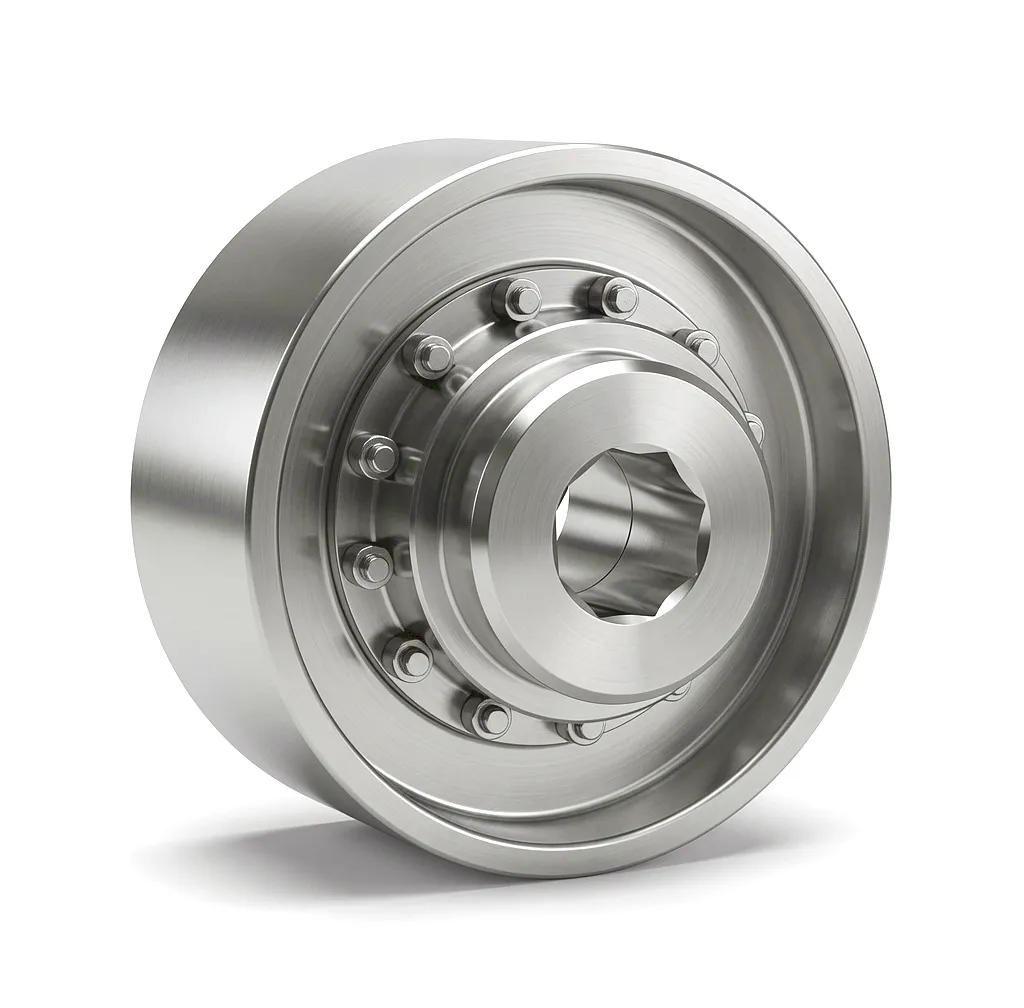 Corrosion is the defining challenge in any offshore mechanical engineering selection. The North Sea environment combines marine salt fog, humidity consistently near saturation, temperature cycling between −10°C in Scottish winter conditions and +40°C inside machinery enclosures, and the presence of hydrogen sulphide in sour gas fields. Steel gear coupling components without adequate protection lose dimensional integrity within one or two seasons of unprotected exposure.
Our coupling hubs are machined from 45# medium carbon steel or 40Cr alloy steel depending on the torque class, with induction hardening applied to tooth flanks to achieve surface hardness of HRC 50–55 while retaining a tough core microstructure. This combination resists fretting corrosion at the tooth contact interface even when the lubricant film is momentarily displaced during high-misalignment transients.
For the most demanding North Sea applications, we offer stainless steel sleeve options and nickel-based alloy bolting as upgrades, providing a corrosion performance level that aligns with the extended 5-year planned maintenance cycles that some UK floating production storage and offloading (FPSO) operators are now targeting to reduce intervention costs on remote assets.
Ever Power Manufacturing: Custom Gear Couplings Built to Your Specification
Precision CNC Machining · Custom Engineering · Volume Production
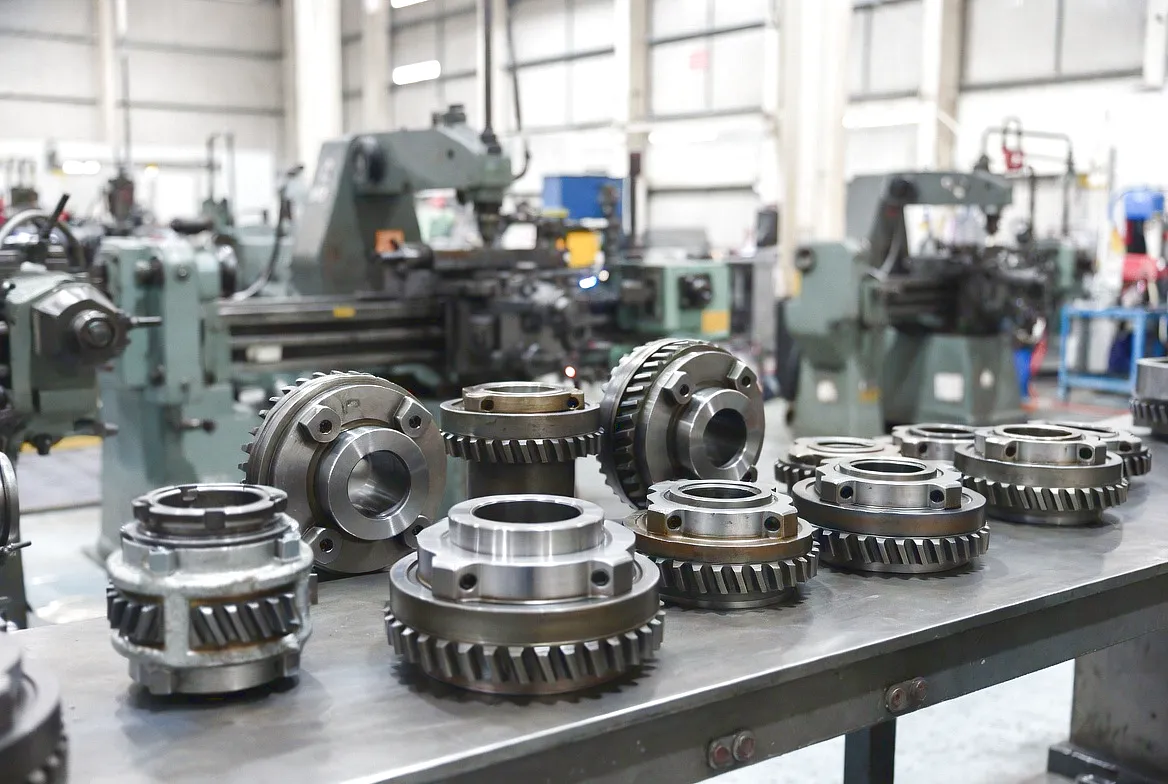 Ever Power’s manufacturing capability is one of the key reasons that maintenance engineers and procurement specialists at UK-based offshore service companies have moved significant portions of their coupling spend to us. We operate a dedicated CNC machining facility with gear-cutting capacity from module 1 to module 16, covering bore diameters from 20 mm to 600 mm and coupling outer diameters to 1,200 mm. Every gear cutting operation is conducted on CNC gear hobbing and shaping machines with on-machine probing to verify tooth form accuracy before the part leaves the cutting station.
Our custom design service goes well beyond re-machining a bore diameter. We have a full engineering team capable of performing torque capacity calculations to AGMA 9008 standards, specifying tooth module and face width for a given torque and misalignment combination, and generating complete manufacturing drawings for customer review. This service is particularly valued by UK operators who need to replace legacy couplings for which no OEM drawing exists — a common situation on North Sea assets that have been in operation for 30 or more years.
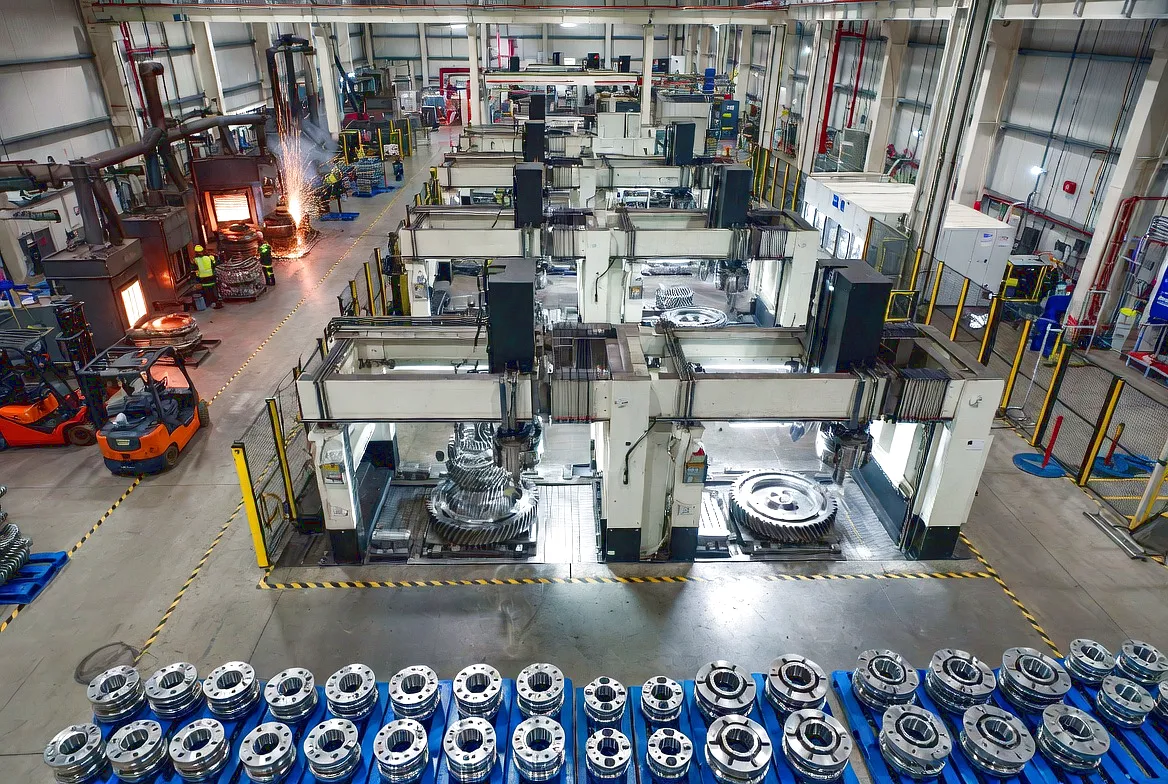 Lead times for custom couplings are typically 4–8 weeks from drawing approval to final inspection, with expedited options available for operational emergency situations. We maintain a stock of semi-finished hub and sleeve blanks in the most common torque sizes to support this rapid delivery programme, which has proved particularly valuable to offshore supply chain managers working to tight platform-ready deadlines.
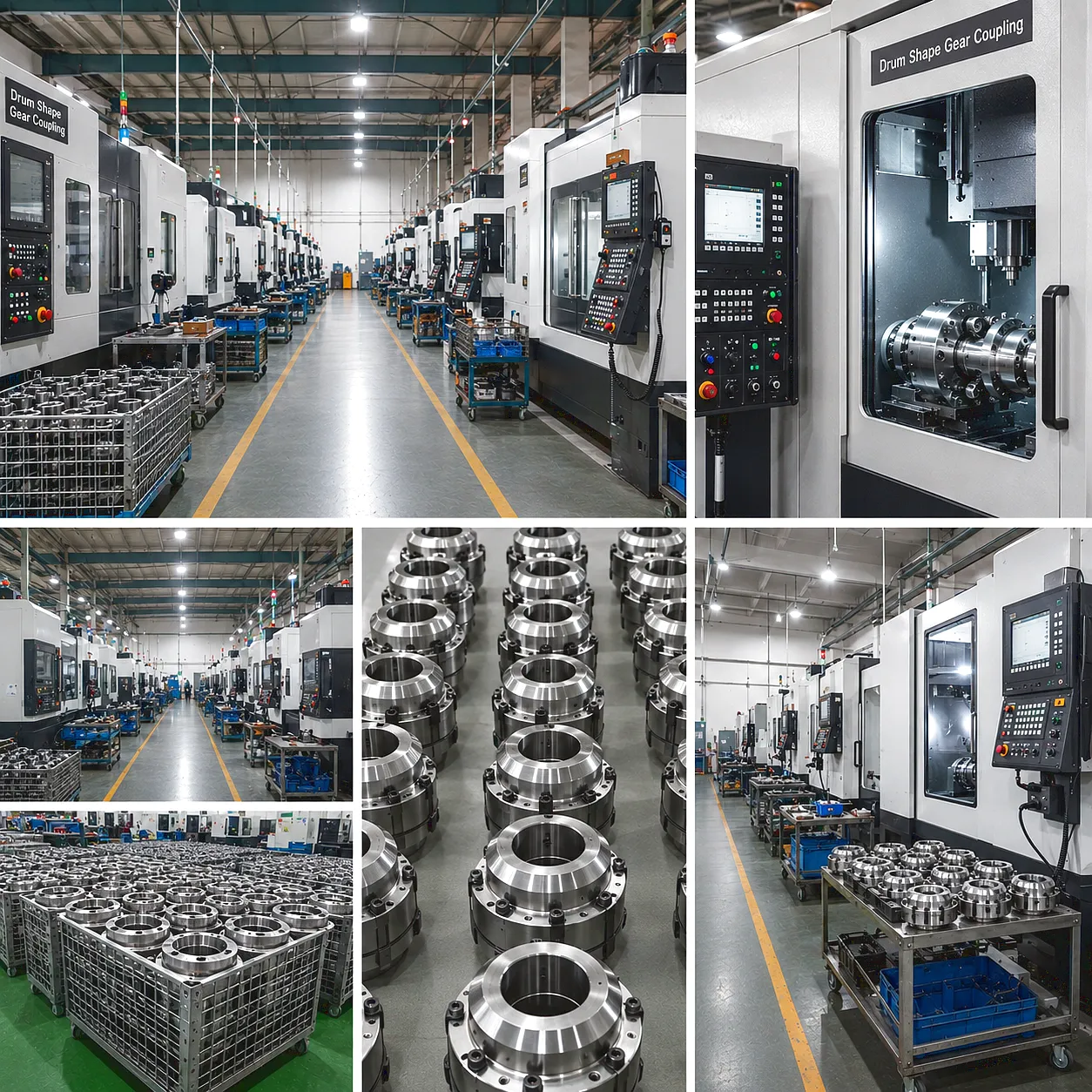
Ever Power manufacturing workshop — precision CNC gear cutting for custom offshore coupling solutions.
Customer Success: North Sea Drilling Operator Eliminates Repeated Coupling Failures
Real Application · Verified Results · UK Offshore Industry
The Problem: Two Mud Pump Couplings Failing Every 9 Months
A UK-based offshore drilling contractor operating two jackup rigs in the Scottish sector of the North Sea had been experiencing repeated premature failure of gear couplings connecting the electric motor drives to the gearboxes on their triplex mud pumps. The incumbent couplings — sourced from an aftermarket European supplier — were failing within 6 to 9 months through tooth fretting wear, accelerated by a combination of the high torsional pulsation of the triplex pump mechanism and misalignment resulting from the pump skid’s imprecise re-alignment after each pump maintenance event.
Each failure resulted in approximately 18 to 24 hours of unplanned downtime on the mud pump, requiring mobilisation of a crane, rigging crew, and mechanical team to swap the coupling assembly in what is an inherently awkward confined access area. With an operating day rate for the rig exceeding £180,000, the financial impact of each coupling failure was substantial — and the drilling programme implications of extended mud pump downtime were even more significant, since without mud circulation, drilling operations must pause completely.
The Solution: NGCL Series with Upgraded Crown Profile and Custom Grease Specification
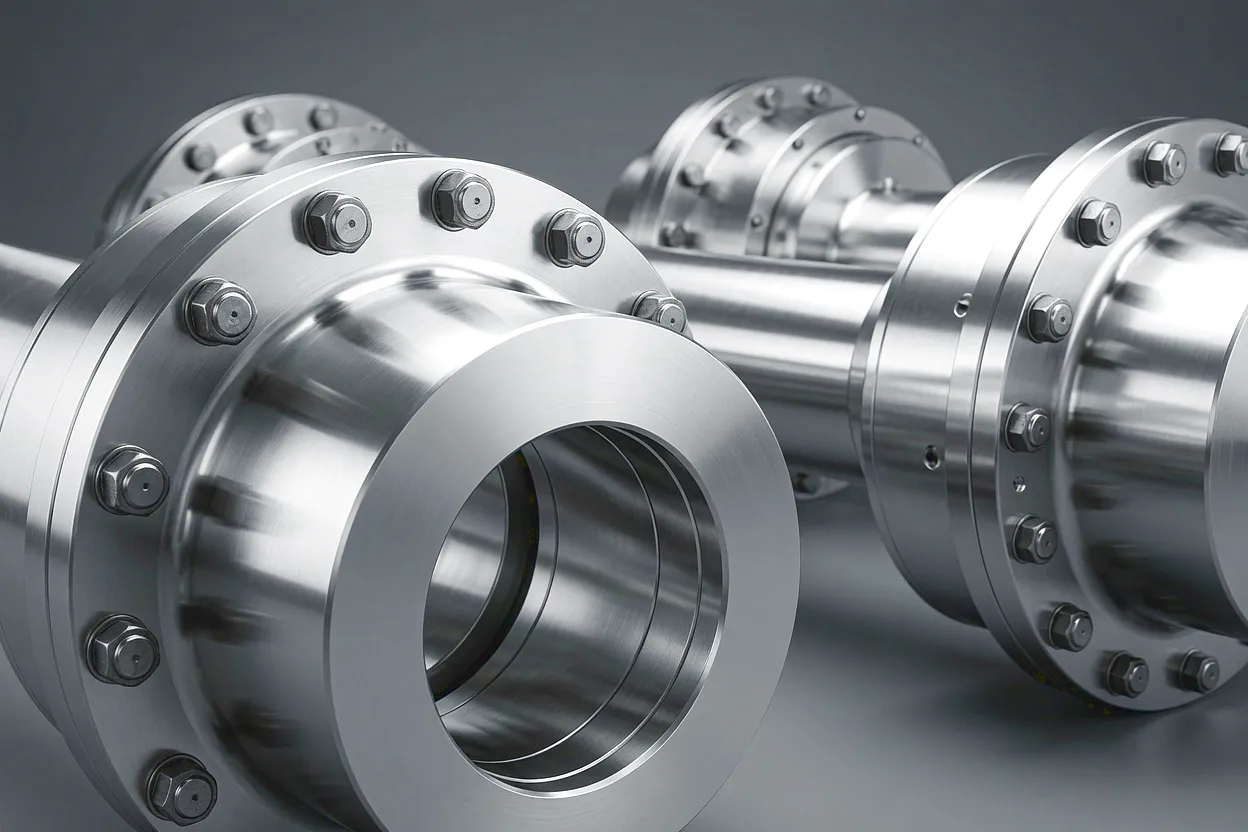 The drilling contractor’s Aberdeen-based procurement team engaged Ever Power following a recommendation from a sister company operating a drillship in the Norwegian sector that had been using our NGCL couplings on generator sets with good results. Our engineering team conducted a full review of the mud pump drivetrain, including motor-gearbox-pump torque analysis, speed range, and the torsional pulsation frequency of the triplex mechanism at various operating pressures and stroke rates.
We specified NGCL-600 couplings with a service factor of 2.2 applied to the continuous torque rating — significantly higher than the 1.5 service factor that had been used for the previous coupling selection. The crown profile was specified to the maximum misalignment capacity within the size envelope to provide the greatest possible tolerance for imperfect realignment after pump maintenance. A synthetic grease rated to −40°C to +150°C was specified and pre-packed into each coupling before shipment, with a labelled relubrication interval card attached to the sleeve to guide platform mechanics. Both rigs were fitted during the next scheduled shutdowns.
Key Selection Checklist for Offshore Gear Coupling Specification
What Our Offshore Customers Say
We’ve been specifying Ever Power NGCL couplings for our jackup mud pump gearboxes for over three years now. The service life has more than doubled compared to what we were getting from our previous supplier, and the dimensional consistency means our mechanics can swap them without any surprises. For a North Sea operation where unplanned downtime costs are brutal, that reliability is genuinely worth paying for.
We needed a custom coupling to replace a discontinued OEM unit on a 1990s-era drawworks. Ever Power reverse-engineered the original from our photos and dimensional sketch, produced full manufacturing drawings, and delivered two units with 3.1 certs in six weeks. The fit was perfect, the material certs were in order, and the price was genuinely competitive. That’s exactly the kind of engineering support that makes a supplier worth keeping on the approved list.
Our gas compression module on the North Sea fixed platform runs three motor-to-gearbox stages, all of which were fitted with Ever Power GICL couplings during the last major turnaround. We had torsional analysis data from the OEM and Ever Power confirmed their coupling met the mass-elastic requirements without any issues. Two years in, no problems. They were also happy to provide the coupling dimensional data in the format our torsional analyst needed — small thing, but it saved us a week of back-and-forth.
Frequently Asked Questions
Gear Coupling Specification · UK Offshore Applications
Ready to Specify the Right Gear Coupling for Your Offshore Platform?
Our engineering team has 18+ years of experience in offshore drilling applications. Share your equipment specifications and we’ll recommend the correct coupling, service factor, and surface protection system — and provide a fast, competitive quote.