
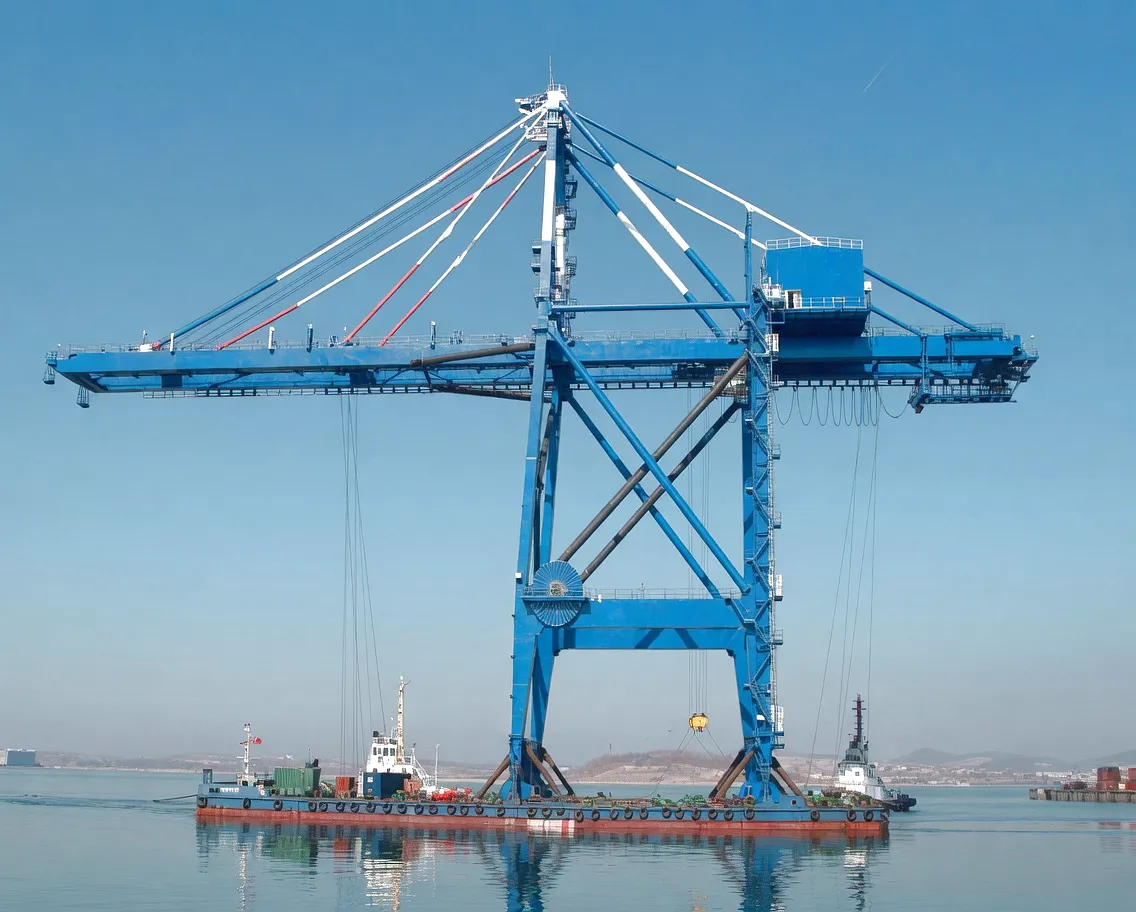
 Shore bridges — the enormous container cranes that line the quays of every major British port — are among the most mechanically demanding machines in industrial use. Each lift cycle subjects drive components to cyclic shock loads, dynamic misalignment, and continuous thermal cycling. A single unplanned shutdown at a busy terminal like DP World London Gateway or ABP Southampton can cost the operator tens of thousands of pounds per hour in vessel delays, port fees, and contractual penalties. The gear coupling is not a glamorous component, but it is the mechanical linchpin that absorbs all of that violence and keeps the drivetrain alive. Understanding which gear coupling specification is right for a shore bridge application — and why — is the difference between a drivetrain that lasts 30 years and one that requires emergency replacement every 18 months.
This guide draws on more than 18 years of field experience in gear coupling applications across port and heavy industrial environments. We cover the mechanical demands of shore bridge drives, the engineering principles behind drum-tooth gear couplings, material selection, performance parameters, and real-world installation considerations — with direct reference to the conditions found at UK and European container terminals.
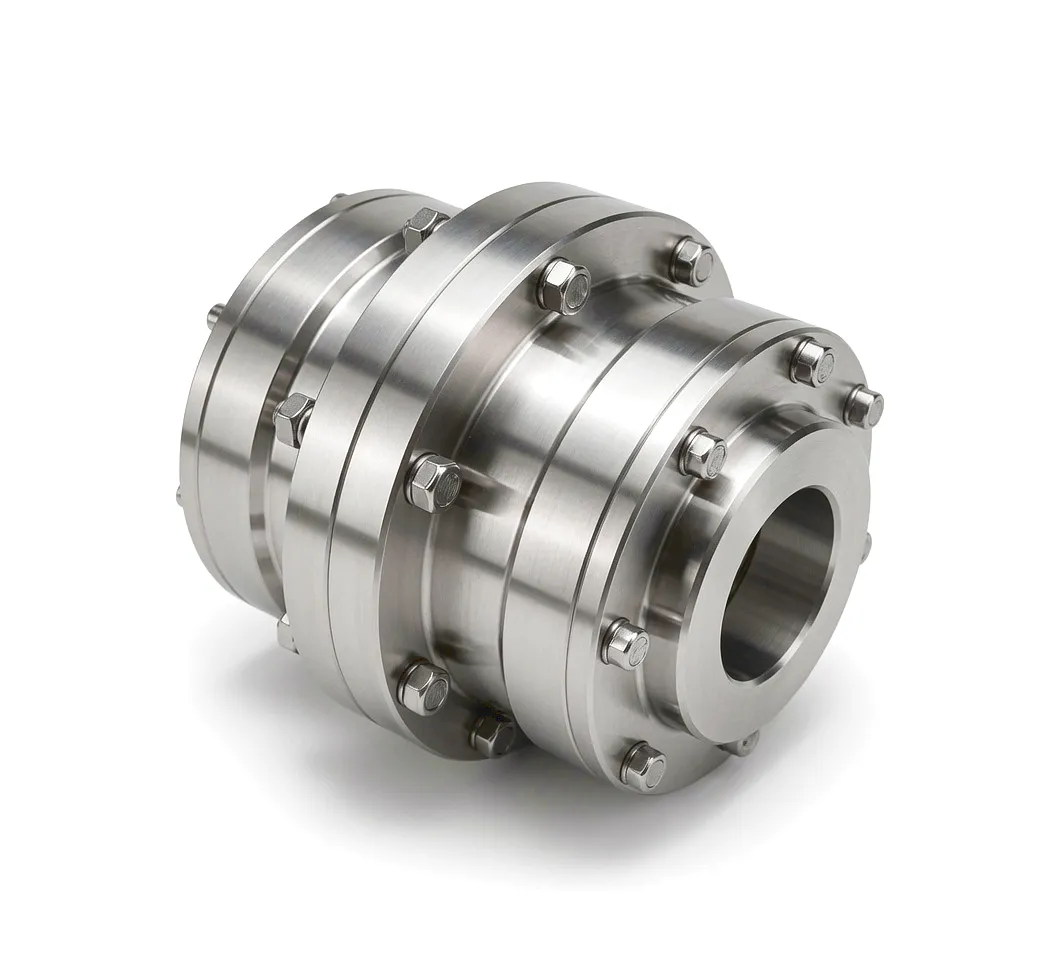
GICL & NGCL Series Drum-Tooth Gear Couplings
Engineered specifically for high-cycle, high-torque drive systems, our drum-tooth gear couplings are trusted by port operators, crane OEMs, and drivetrain engineers across the United Kingdom and mainland Europe. Every unit is manufactured to DIN 740 and ISO 14691 standards, with full material traceability and optional third-party inspection.
Why Shore Bridge Drives Destroy Ordinary Couplings
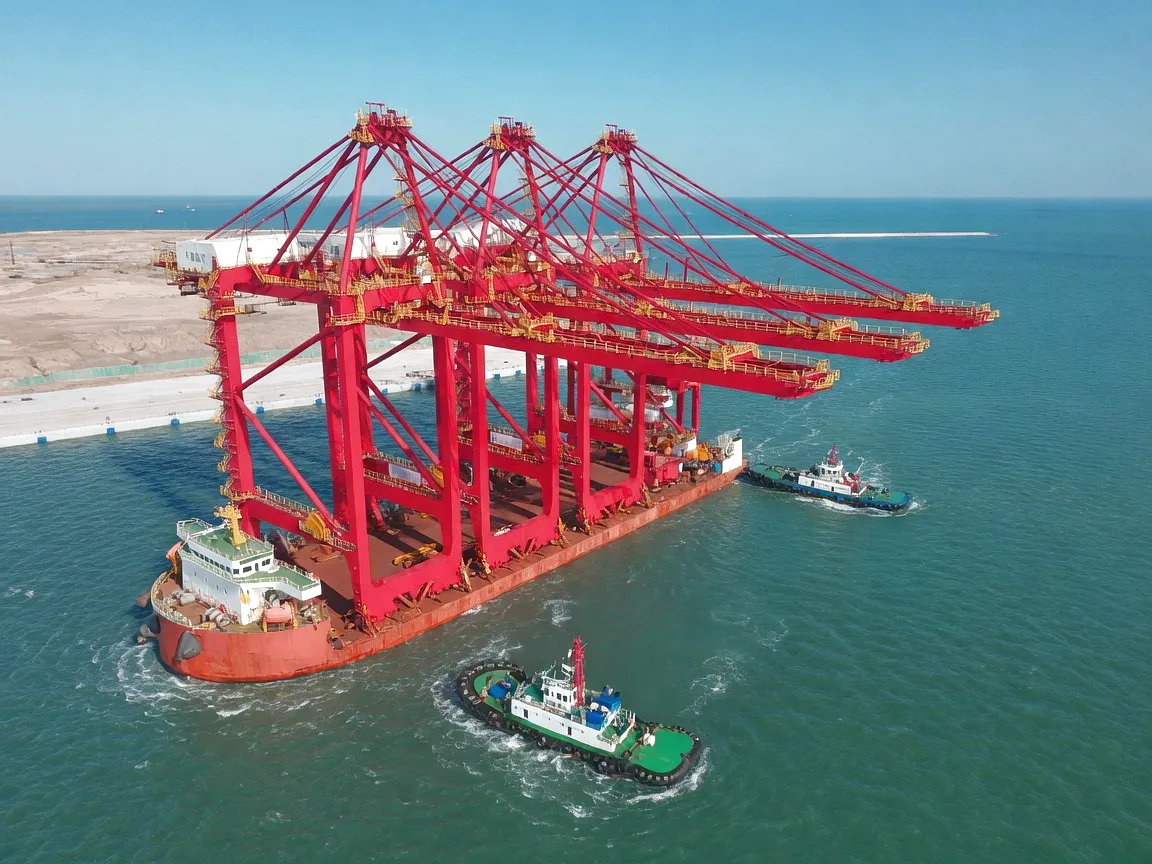
A container shore bridge crane — also called a quay crane or ship-to-shore (STS) crane — operates its hoist, trolley, and gantry drives under conditions that would be considered exceptional in almost any other industrial application. The hoist mechanism alone can lift 40–65 tonnes of container plus spreader at speeds approaching 180 m/min, reverse direction, brake, and restart dozens of times per hour, around the clock, for decades. This is not a benign duty cycle.
Three mechanical forces converge to make shore bridge gear coupling selection genuinely difficult. Peak shock torque during container engagement or emergency braking can reach four to six times the nominal running torque. Dynamic angular misalignment — caused by thermal expansion of the gantry structure, wind loading on the crane portal, and deflection under eccentric loads — is continuous and unpredictable. Finally, the marine environment introduces salt-laden air, humidity, and wide temperature swings that accelerate corrosion in gear mesh and sealing systems. A standard rigid or elastomeric coupling cannot handle this combination. The drum-tooth gear coupling was designed specifically to address it.
How a Drum-Tooth Gear Coupling Actually Works
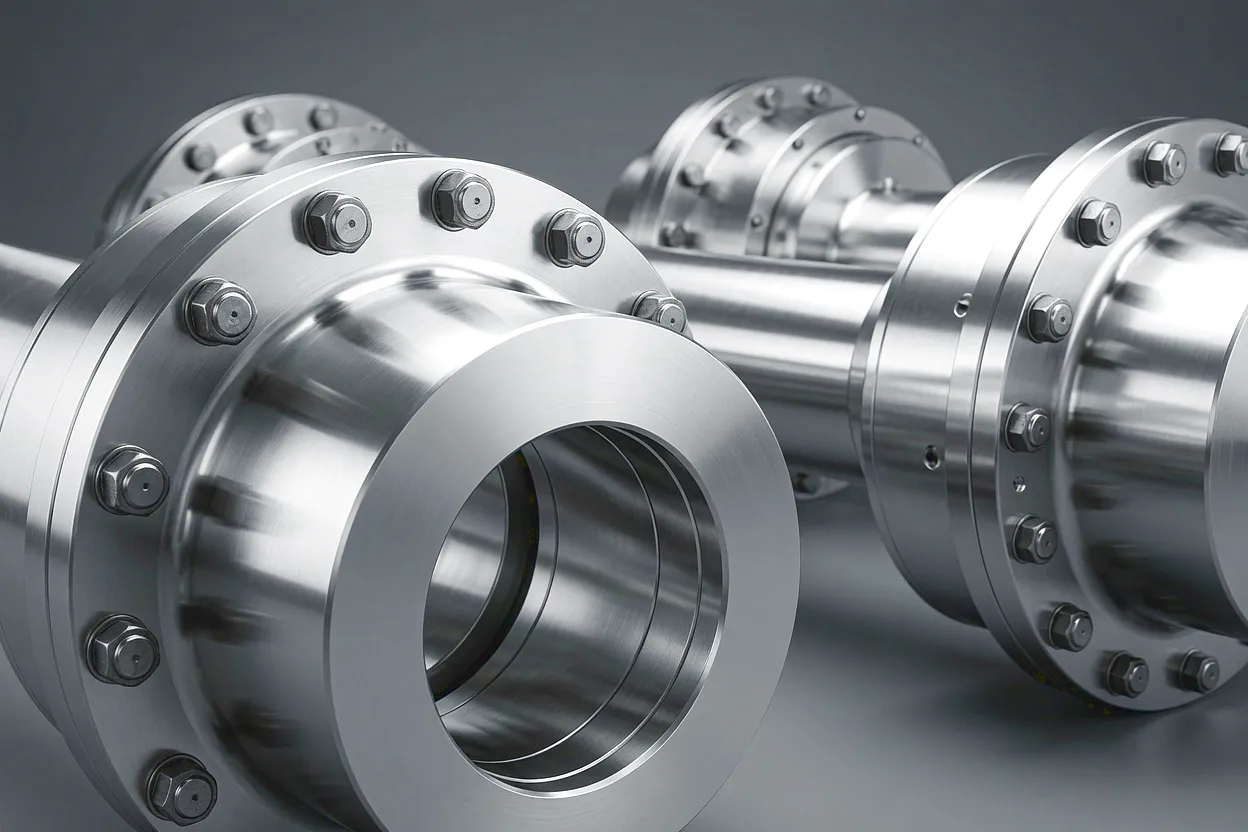
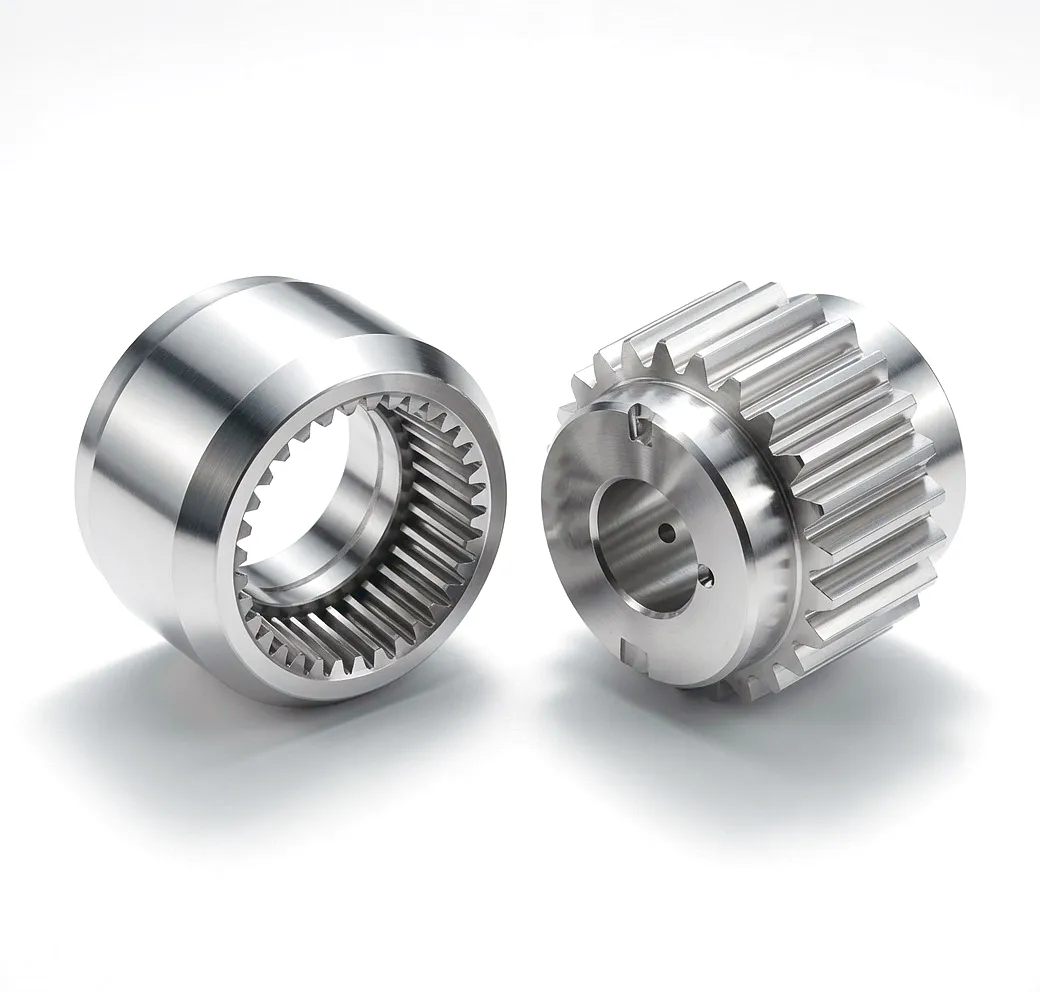
The operating principle of a drum-tooth gear coupling is elegant in its simplicity and robust in its execution. Two hubs — each carrying an external-tooth gear ring — are enclosed by a common sleeve with matching internal teeth. The teeth are not straight-sided: the outer profile of each hub tooth follows a curved, barrel-shaped (drum) arc, typically with a crowned radius precisely calculated relative to the pitch diameter and the required angular accommodation angle. This crowning is the whole key to the design’s success in applications like shore bridge cranes.
When two shafts are perfectly aligned, the load distributes evenly across all teeth in contact. But when angular misalignment occurs — as it inevitably does in any real drivetrain — the crowned tooth profile allows the hub to tilt inside the sleeve while maintaining a full, distributed tooth contact pattern rather than concentrating stress at the tooth corners. The result is a coupling that can accommodate angular misalignment of typically 1° to 1.5° per gear mesh without generating significant bending moments on connected shafts, without rubber elements to fatigue, and without sacrificing the coupling’s torque capacity.
For a shore bridge hoist drive, this means the coupling between the motor output shaft and the gearbox input can absorb the structural deflection of the crane portal — which on a post-Panamax crane can be measurable even under design loads — without transmitting bending stress into the gearbox bearings or motor shaft. In the trolley drive, where multiple drive motors operate in a mechanically linked system, the couplings accommodate the slight speed differences that arise from manufacturing tolerances and wear without generating binding or vibration. In the gantry drive, they handle the shock of starting and stopping a 1,200-tonne steel structure on its rails.
GICL vs NGCL: Choosing the Right Series
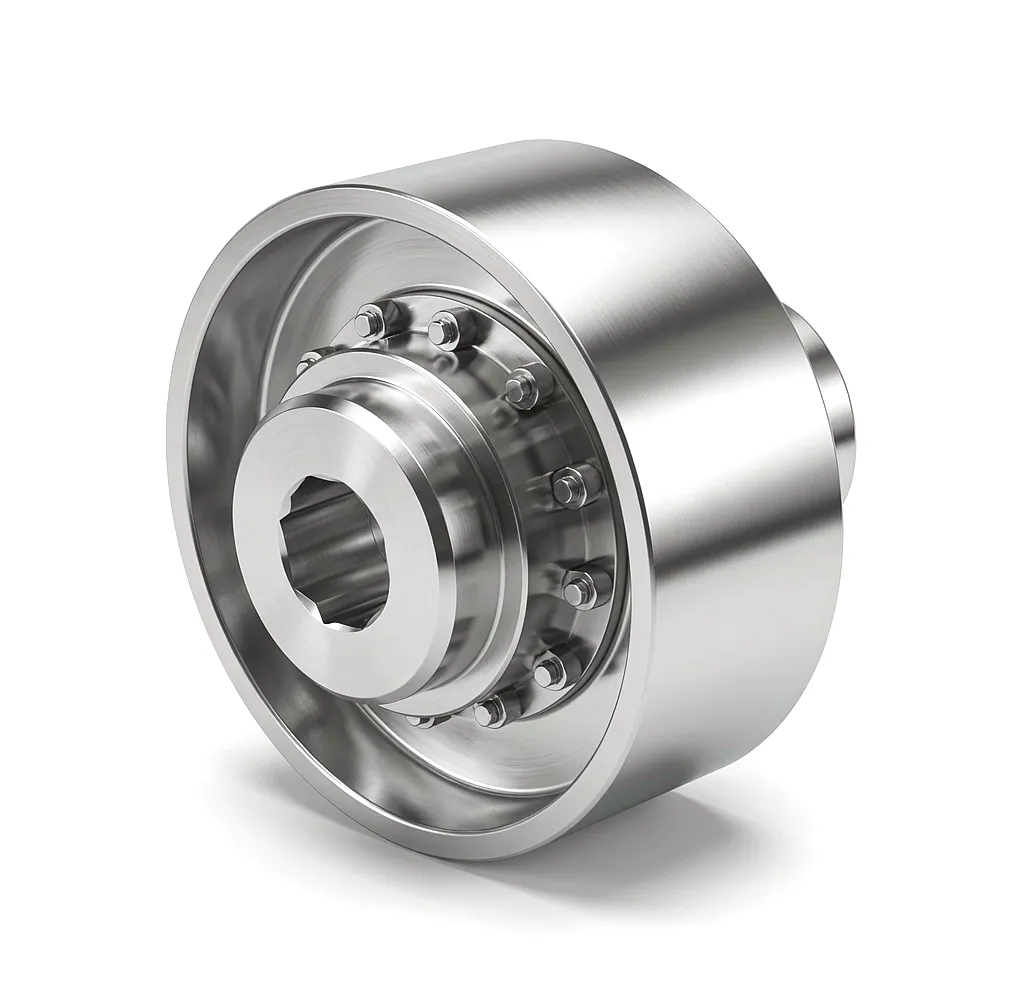
The GICL series is the standard drum-tooth coupling for moderate-duty shore bridge applications: gantry drives, trolley drives on smaller cranes, and auxiliary winches. With torque ratings from 1,000 Nm to 90,000 Nm across the size range, it covers the majority of port crane drivetrain requirements. The NGCL series adds a brake disc flange integrated into the sleeve assembly, making it the preferred solution for hoist drives on post-Panamax and super-post-Panamax STS cranes where the brake is positioned between the motor and gearbox. This eliminates a separate brake disc hub, shortens the drivetrain, and reduces the overhung load on gearbox input bearings — a significant benefit when the gearbox is a high-value long-lead-time item.
Both series are available with cast iron or forged steel hubs and sleeves, with full material certificates to EN 10204 3.1 as standard. For UK and European port operators working under Lloyd’s, DNV, or Bureau Veritas certification schemes, third-party inspection during manufacture is available on request.
Technical Performance Parameters — Shore Bridge Series
| Parameter | GICL Series | NGCL Series | Standard Reference |
|---|---|---|---|
| Nominal Torque Range | 1,000 – 90,000 Nm | 5,000 – 200,000 Nm | ISO 14691 |
| Max Angular Misalignment | 1.5° per mesh | 1.5° per mesh | DIN 740 Part 2 |
| Max Speed (rpm) | Up to 3,000 rpm | Up to 2,500 rpm | Manufacturer spec |
| Radial Offset (mm) | 0.2 – 1.5 mm | 0.2 – 1.5 mm | DIN 740 Part 2 |
| Hub Material | Cast iron GG-25 / 42CrMo4 forged steel | 42CrMo4 / 34CrNiMo6 forged steel | EN 10083 |
| Tooth Surface Hardness | HRC 50–58 (case hardened) | HRC 52–60 (case hardened) | ISO 6336 |
| Operating Temperature | -20°C to +80°C | -20°C to +80°C | Standard |
| Lubrication Type | NLGI 2 grease (sealed) | NLGI 2 grease (sealed) | IP65 seal optional |
| Brake Disc Integration | Not available | Integral (standard) | — |
| Balancing Grade | G6.3 standard / G2.5 available | G6.3 standard / G2.5 available | ISO 1940-1 |
The Three Drive Mechanisms of a Shore Bridge — and What Each One Demands
1. Hoist Drive — The Most Demanding Application
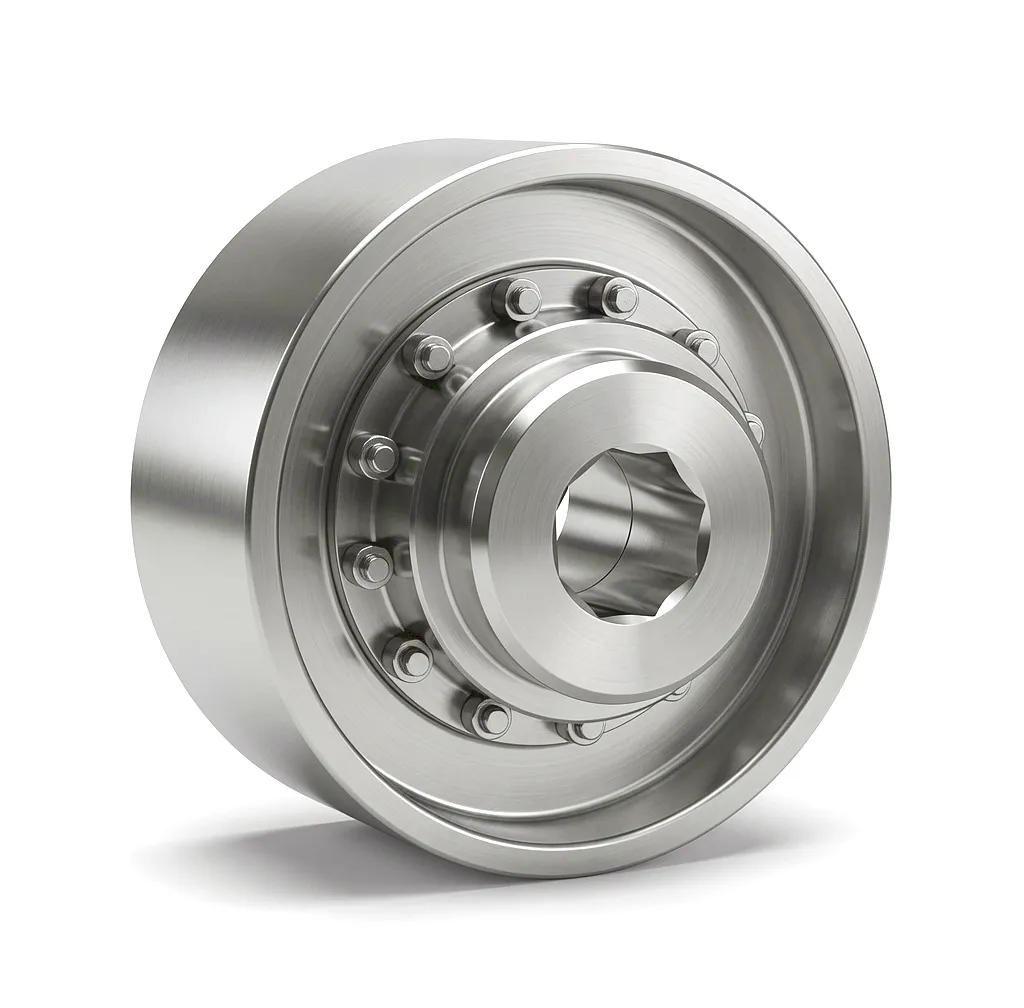 The hoist drive of a container shore bridge is the most safety-critical and mechanically demanding drivetrain on the machine. On a post-Panamax STS crane, the hoist motor can be rated at 500–800 kW, operating through a multi-stage helical gearbox to drive the drum. The gear coupling connecting the motor to the gearbox input is the first component to absorb every acceleration transient, every emergency stop, and every load impact when a spreader lands on a container stack. A NGCL series gear coupling with integrated brake disc is the standard solution for this application, offering nominal torques up to 200,000 Nm with a brake disc flange that can accommodate disc diameters up to 1,200 mm. The compact integrated design reduces drivetrain length by 180–250 mm compared with separate components, which is significant in the confined nacelle of a modern STS crane. Material selection for hoist couplings should always specify forged 42CrMo4 or 34CrNiMo6 alloy steel hubs, case-hardened gear teeth, and nitrile-sealed grease chambers — not cast iron, regardless of nominal load calculations.
2. Trolley Travel Drive — Synchronisation and Misalignment
The trolley travel mechanism moves the crane’s spreader horizontally along the boom and back-reach girder. On a twin-trolley STS crane, multiple drive motors are often linked through a mechanical shaft system to maintain synchronisation and prevent girder racking. Each shaft coupling in this system must accommodate angular and radial misalignment caused by girder deflection under the moving load and thermal changes in boom geometry. The GICL series gear coupling is well suited here, with a torque range that covers trolley drive applications on cranes from small harbour craft to the largest super-post-Panamax machines. Because the trolley drive operates at higher speeds than the hoist or gantry drives — often 500–1,500 rpm at the coupling interface — dynamic balance and the quality of tooth surface finish have a direct impact on vibration and bearing life throughout the drivetrain. We recommend specifying G2.5 balancing for all trolley drive couplings above 750 rpm.
3. Gantry Travel Drive — Low Speed, Very High Torque
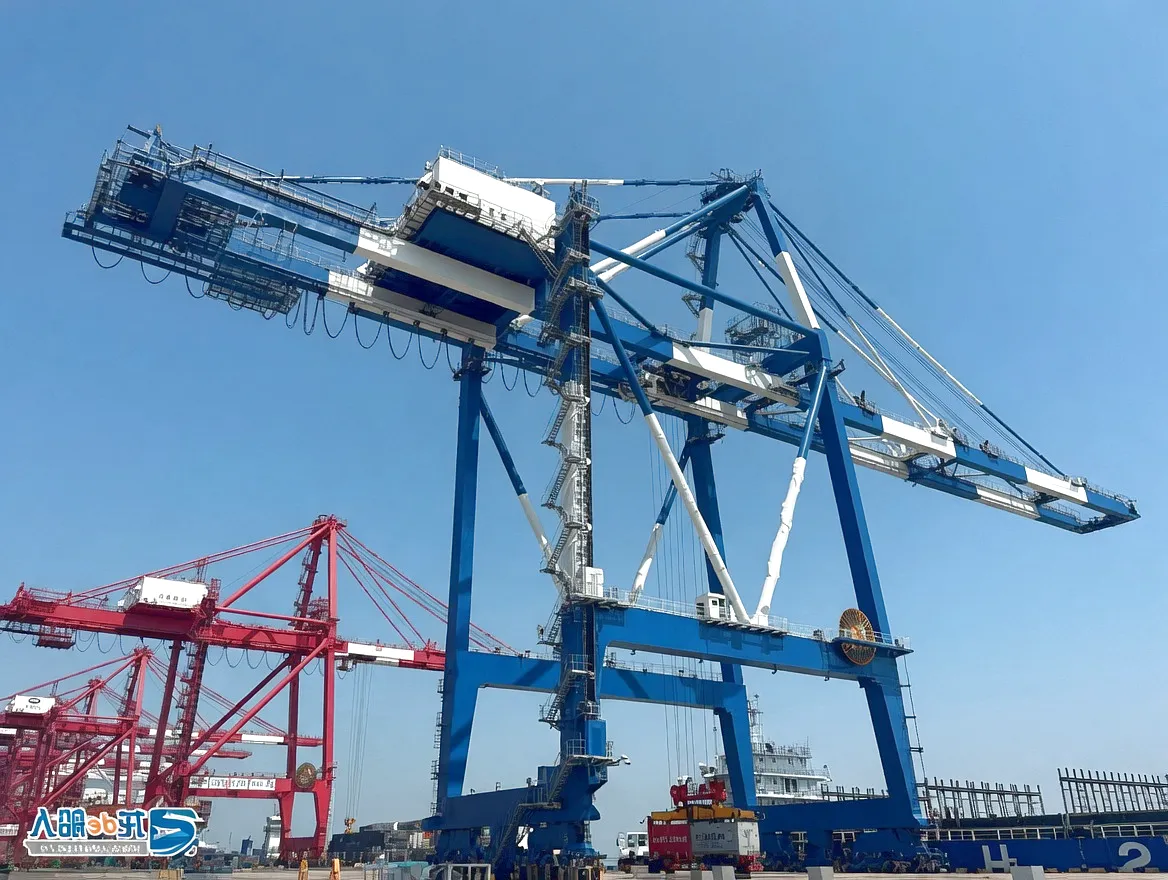 The gantry drive moves the entire crane structure along the quay rail. Starting and stopping a structure that can weigh over 1,200 tonnes — combined weight of crane plus rated load — demands peak torques that far exceed the nominal running values. The gear coupling between each gantry motor and its associated gearbox must handle these transient peaks repeatedly without fatigue. Gantry drives also impose an additional challenge: the crane sits on four rail beams, and track irregularities can cause slight structural twisting that creates angular misalignment at every drive coupling simultaneously. The crowned tooth geometry of the drum-type gear coupling handles this naturally. At the low rotational speeds typical of gantry drives — typically 30–200 rpm at the coupling — there is less concern about dynamic balance and more about the coupling’s ability to handle high torque at low speed, which favours larger coupling sizes and forged steel construction throughout.
Why Port Engineers Specify Ever Power Gear Couplings
Materials, Manufacturing, and Quality Control
Material selection for gear couplings used in port crane applications must balance several competing requirements. The hub material needs to be tough enough to absorb shock loads without brittle fracture — which eliminates ordinary grey cast iron for hoist and gantry applications — while maintaining the hardness and wear resistance needed for long gear tooth life. For shore bridge hoist couplings, we use 42CrMo4 or 34CrNiMo6 alloy steels as standard, both of which offer a yield strength above 900 MPa in the quenched-and-tempered condition combined with the impact toughness needed to survive repeated shock loading at sub-zero winter temperatures.
Gear teeth are rough-machined, then case-carburised or induction-hardened to a surface hardness of HRC 52–60 with a case depth of 1.0–2.5 mm depending on the coupling size. This combination of hard surface and tough core is what gives drum-tooth gear couplings their characteristic ability to withstand both fatigue loading and shock loading simultaneously. After heat treatment, teeth are finish-ground on CNC gear grinding machines to DIN 3963 quality grade 6 or better, which is the level required for both smooth running and accurate crowned tooth geometry.
Sleeves for port crane applications are manufactured from nodular cast iron GGG-50 or forged steel, depending on the torque rating. All gear mesh bores are manufactured to H7/k6 or H7/p6 interference fit tolerances as standard, with taper bore or keyway and setscrew arrangements available for specific drivetrain configurations. Final assembly inspection includes verification of tooth contact pattern under load using blued tooth marking, dimensional check to drawing, and static balance check before despatch.
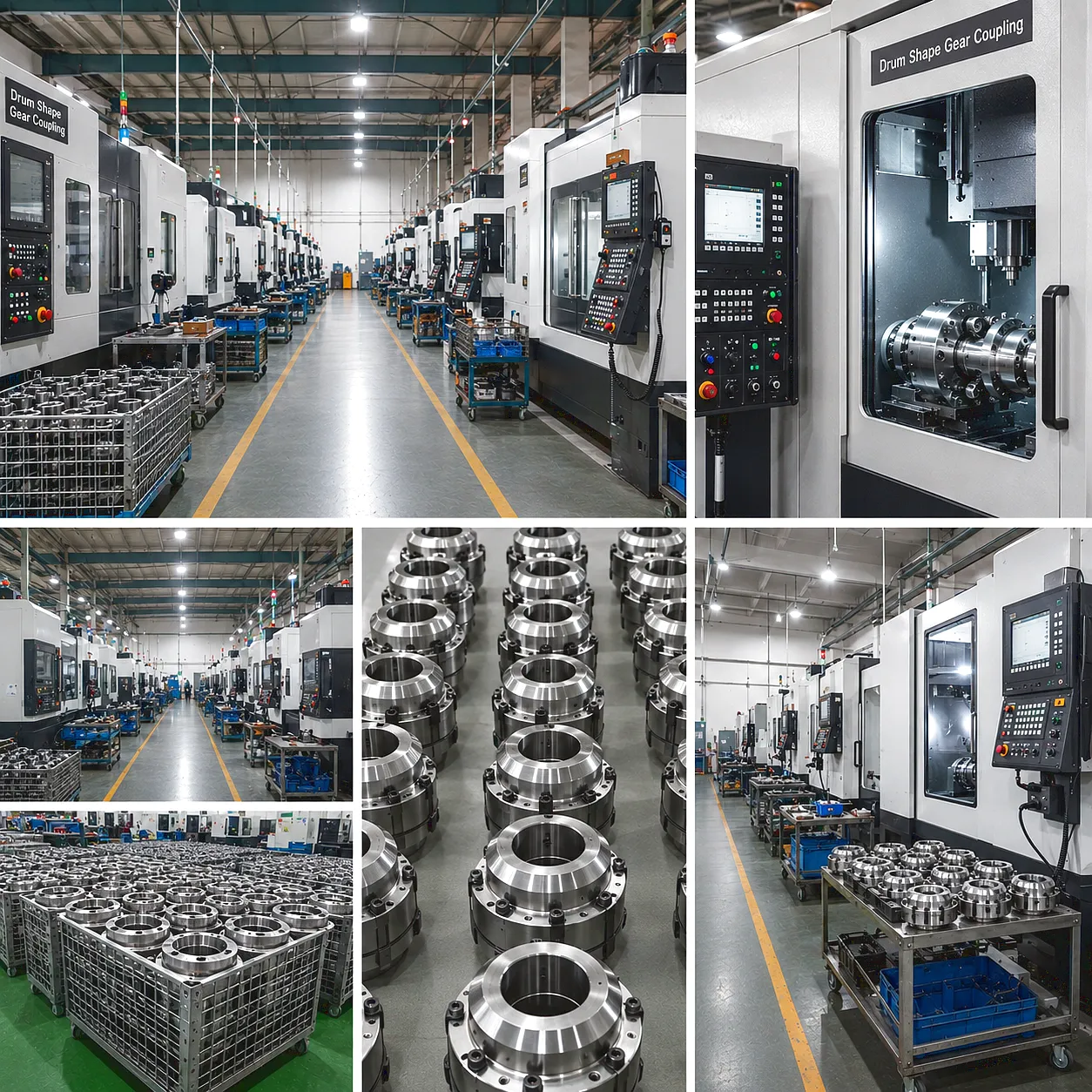
Custom Manufacturing Capability — Built to Your Drivetrain
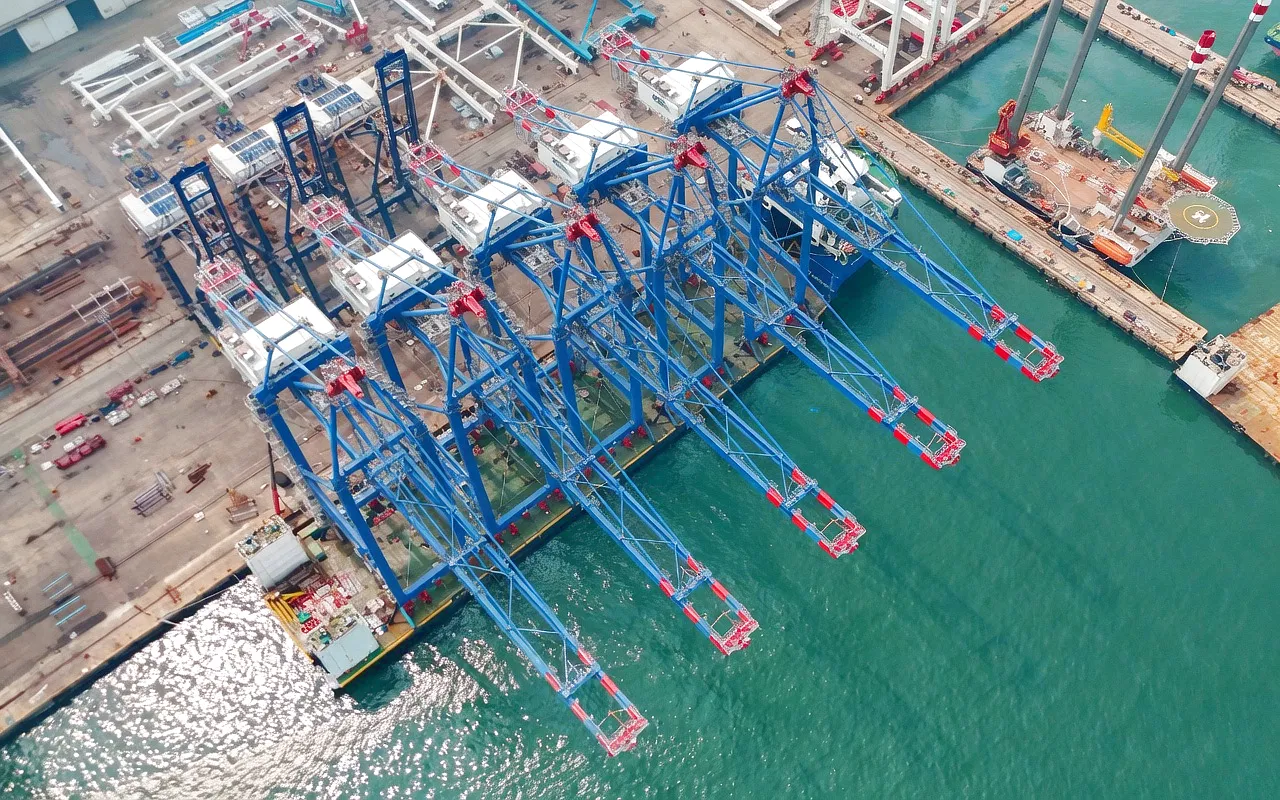
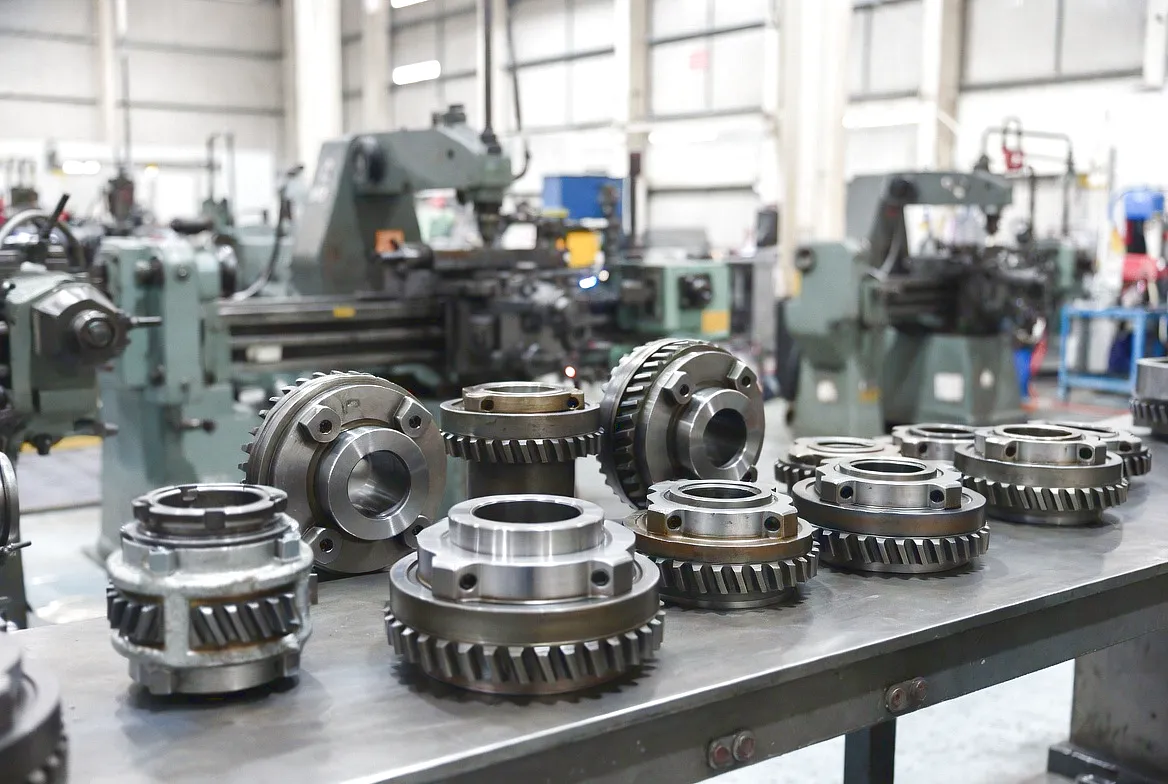
Standard catalogue sizes cover the vast majority of port crane applications, but STS crane OEMs and major port operators frequently encounter drivetrain configurations that do not fit standard size increments. Perhaps the gearbox input shaft bore is non-standard, the brake disc diameter is dictated by an existing thruster brake, or the hub-to-hub distance is fixed by a confined nacelle design. This is where our custom manufacturing capability delivers genuine value.
Our engineering team can supply non-standard bore sizes from 20 mm to 480 mm, keyway and spline configurations to DIN 6885, BS 4235, or customer drawing, modified hub lengths and flanged hub variants, custom brake disc diameters and bolt circle configurations on the NGCL series, and special tooth geometry for extreme misalignment requirements. We also produce full replacement sleeves, hubs, and seal kits as stand-alone spare parts — a service that is particularly valued by port operators who need to carry minimum stock while maintaining the ability to restore a failed unit quickly.
Lead times for custom gear couplings in standard materials are typically 4–6 weeks from approved drawing, with expedited 3-week production available for genuine port operational emergencies. All custom units are supported by full dimensional inspection records and material certificates.
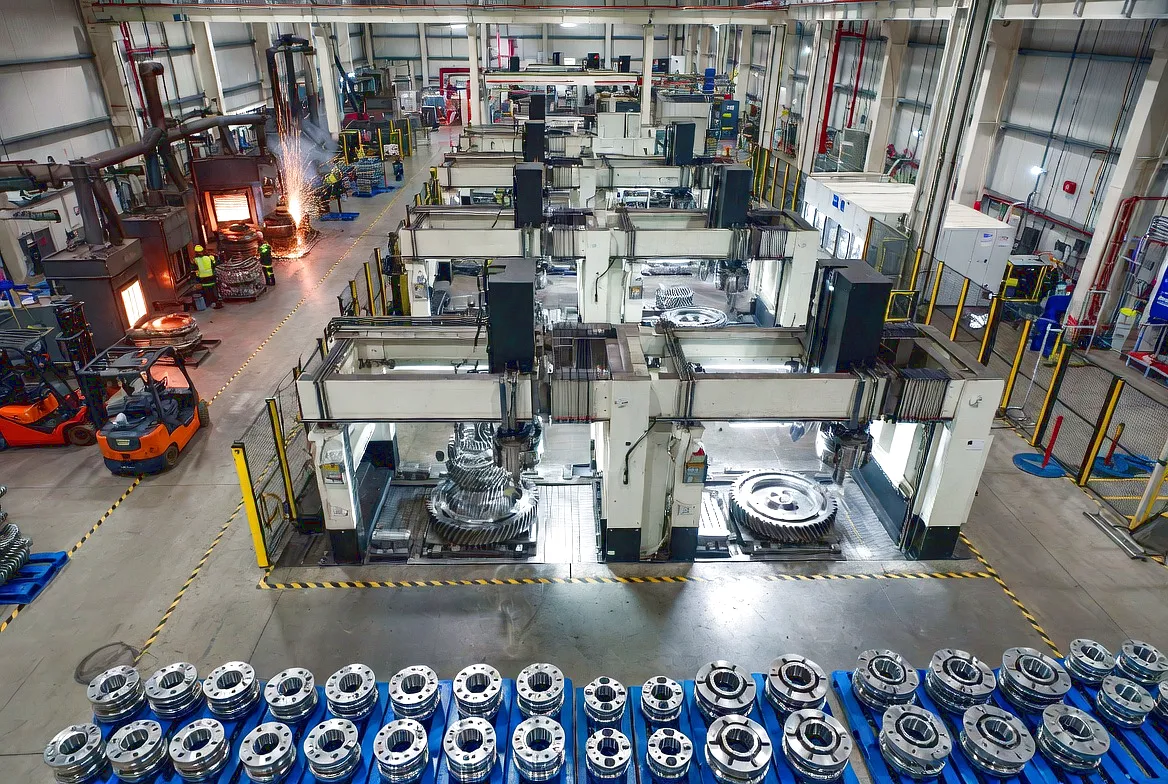
Customer Success Story — UK Container Terminal Operator
Eliminating Repeat Hoist Drive Failures at a High-Throughput UK Container Port
Background: A major UK container terminal operator was experiencing repeated hoist drive gear coupling failures on three post-Panamax STS cranes. Failures were occurring on average every 14–18 months, each requiring a crane shutdown lasting between 28 and 36 hours — time during which vessels had to wait or be re-berthed. The original couplings were sourced from a European catalogue supplier and were specified to the nominal torque of the hoist motor, with no shock load service factor applied.
Analysis: Examination of the failed units showed consistent tooth fatigue fractures initiating at the tooth root on the motor-side hub. This pattern is characteristic of under-rating for shock load service: the coupling was sized correctly for continuous running but lacked the safety margin for the repeated emergency braking events caused by the terminal’s anti-collision system triggering under high throughput conditions. The original specification had also used cast iron sleeves, which had developed fretting corrosion in the salt air environment.
Solution: We supplied NGCL series drum-tooth gear couplings in 42CrMo4 forged steel throughout, sized one step above nominal torque with a 2.2 service factor applied for Class M8 crane duty. IP65 sealed grease chambers with MoS2 grease were specified for the marine environment. Dimensional drawings were checked against the existing nacelle layout before supply, and a set of spare inner hubs was included in the initial order for in-service stock.
Result: As of the time of writing, the replacement couplings on all three cranes have been in continuous service for over 38 months without coupling-related stoppages. The terminal engineering team has reported a gear mesh wear inspection at 24 months showing tooth contact patterns consistent with new condition, with no measurable wear step at the tooth crown. The annual maintenance cost saving from eliminating unplanned stoppages has been assessed by the operator at over £180,000 per crane per year when vessel delay costs are included.
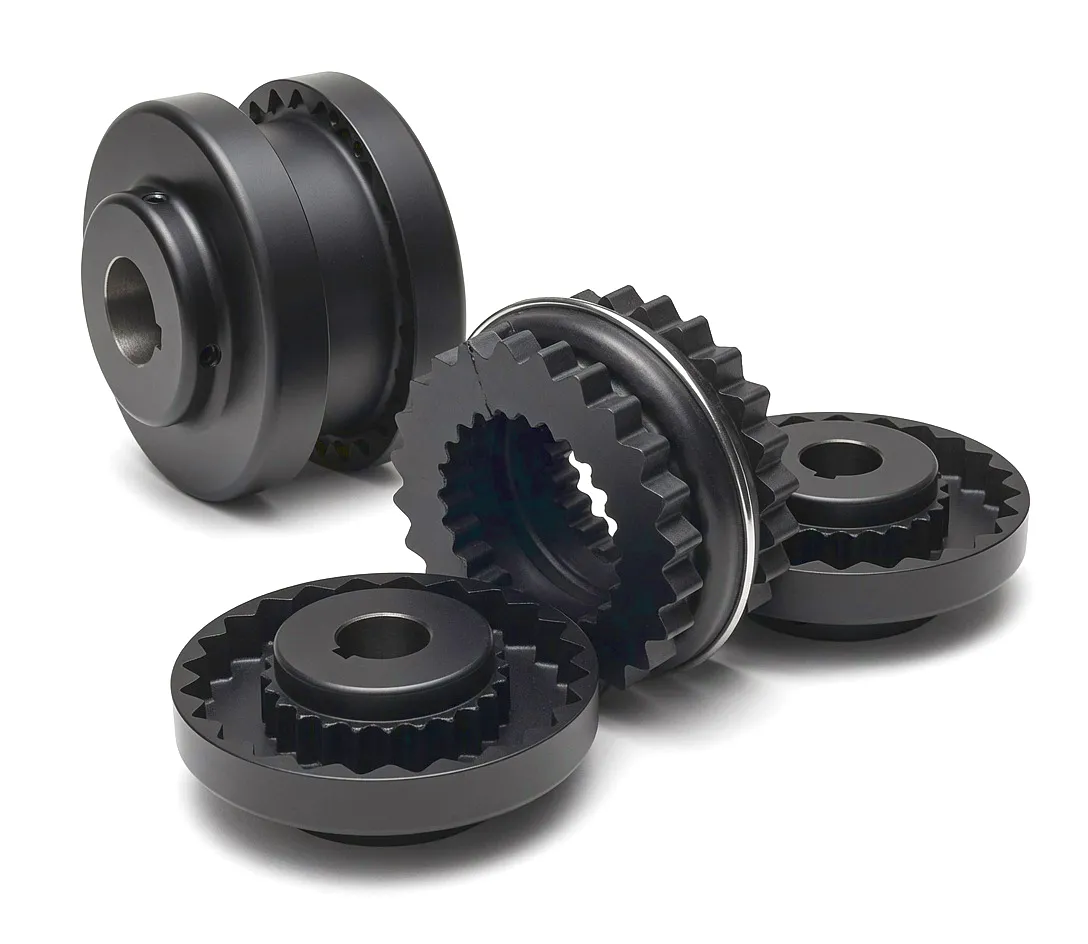
What Our Clients Say
“After two years of chasing a hoist coupling reliability problem on our quay cranes at Southampton, the NGCL units from Ever Power have simply made the problem disappear. The lead time was reasonable, the documentation package was exactly what our quality system requires, and the engineering team knew exactly what we needed without lengthy back-and-forth.”
“We needed a non-standard brake disc diameter on the NGCL hubs to match an existing Demag brake unit. Ever Power’s engineering team turned around a custom drawing within 48 hours and delivered the modified units in five weeks. That kind of response is rare from any supplier, and the finished quality is excellent.”
“We’ve been using Ever Power gear couplings on the gantry drives of our STS cranes at Tilbury for four years now. The corrosion resistance in the Thames estuary environment is noticeably better than what we were using before, and the grease access design means we can carry out scheduled lubrication without any downtime to the crane at all. Very satisfied.”
Beyond Shore Bridges — Other Port and Industrial Applications
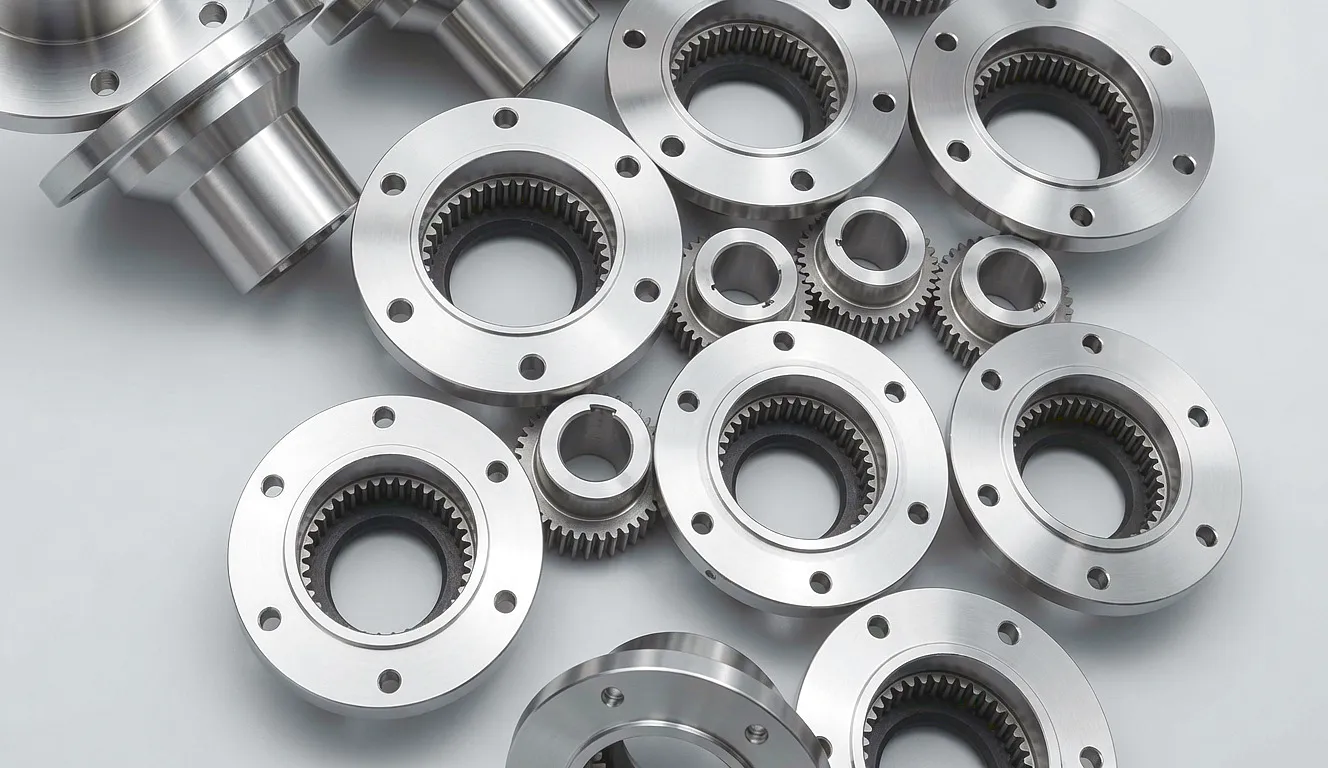
While this guide focuses specifically on gear couplings for shore bridge cranes, the same engineering principles and product range apply across a wide range of port and heavy industrial applications where high torque, shock loading, and misalignment tolerance are required simultaneously. Container terminal rubber tyre gantry (RTG) cranes and rail-mounted gantry (RMG) cranes use gear couplings in essentially the same drive configurations as STS cranes. Bulk material handling equipment at ports — grain elevators, coal stacker-reclaimers, bulk loader conveyors — involves gear couplings in drive arrangements where dust ingress and thermal cycling add to the misalignment challenge. Reach stackers and heavy forklift drive systems at distribution centres behind UK ports represent another application where the drum-tooth coupling’s compact size relative to its torque capacity gives it an advantage over alternative designs.
In the UK offshore and energy sector, gear couplings are specified for wind turbine main shaft connections, marine deck machinery, and subsea installation vessel crane drives — applications that share many of the environmental and mechanical challenges of shore bridge cranes. Paper mills, steel rolling mills, and cement plants across the UK Midlands and North of England are also significant users of drum-tooth gear couplings, where the high reliability of the design is valued in continuous-process industries where unplanned stoppages are extremely costly.
Installation, Alignment, and Maintenance on Shore Bridges
 Even the best gear coupling will fail prematurely if installed with poor shaft alignment. The most common cause of gear coupling failure in shore bridge cranes is not the coupling specification but the installation procedure — specifically, accepting alignment tolerances during initial installation that are at or near the coupling’s permissible misalignment limit. Because drum-tooth couplings can accommodate misalignment without immediate failure, there is a tendency in some maintenance teams to assume that any operating condition below the maximum permissible values is acceptable. It is not. Operating continuously at the maximum permissible misalignment significantly accelerates tooth wear, increases lubricant throw-out, and creates fretting wear in the seal contact zone.
For shore bridge hoist and gantry drive installations, initial alignment should aim to achieve less than 0.2° angular misalignment and less than 0.3 mm radial offset at the coupling, even though the coupling can accept significantly more than this. This discipline at installation pays back over the full service life of the drivetrain. Laser alignment tools, which are now widely used at major UK ports, make it straightforward to achieve these tolerances even in the confined spaces of an STS crane nacelle.
Maintenance intervals for gear couplings on shore bridge cranes should follow the crane manufacturer’s drivetrain maintenance schedule, but a practical minimum is a grease injection check every 2,000 operating hours and a full sleeve withdrawal inspection every 10,000–15,000 hours. During sleeve withdrawal inspection, look for: uneven or stepped tooth wear pattern (indicates misalignment), fretting oxide deposits between hub and shaft bore (indicates bore/key fit issue), degraded or hardened grease (indicates seal or thermal issue), and any cracking at the tooth root visible under dye-penetrant or magnetic particle inspection. A coupling showing any of these symptoms should be replaced proactively — not run to failure, which in a hoist drive could have serious consequences.
Gear Coupling vs Alternative Drive Connection Types
| Feature | Drum-Tooth Gear Coupling | Elastomeric Coupling | Rigid Flange Coupling | Disc Pack Coupling |
|---|---|---|---|---|
| Peak Torque Capacity | Very High ✓ | Moderate | Very High ✓ | High |
| Angular Misalignment | Up to 1.5° ✓ | Up to 3–5° | Nil ✗ | Up to 0.5° |
| Shock Load Tolerance | Excellent ✓ | Good (element dependent) | Good (rigid transmission) | Moderate |
| Marine Environment Suitability | Excellent (sealed) ✓ | Moderate (element degrades) | Moderate | Good |
| Brake Disc Integration | Available (NGCL) ✓ | Not standard ✗ | Not standard ✗ | Not standard ✗ |
| Maintenance Frequency | Low (greased sealed) ✓ | Medium (element replacement) | Very Low | Low |
| Typical Service Life (port crane) | 15–25 years ✓ | 3–8 years (element) | 25+ years | 8–15 years |
Ready to Specify a Gear Coupling for Your Shore Bridge?
Share your motor torque rating, shaft diameter, and application duty cycle with our team and we will provide a full specification recommendation, dimensional drawing, and formal price quotation — typically within 24 hours for standard sizes.