Gear Coupling for Elevator Traction Machine: Engineering Reliability Into Every Vertical Move
A specialist guide for lift engineers, building contractors, and OEM procurement teams across the United Kingdom — covering materials, torque performance, selection criteria, and proven field results.
Traction Drive
UK Industrial Supply
Custom Coupling
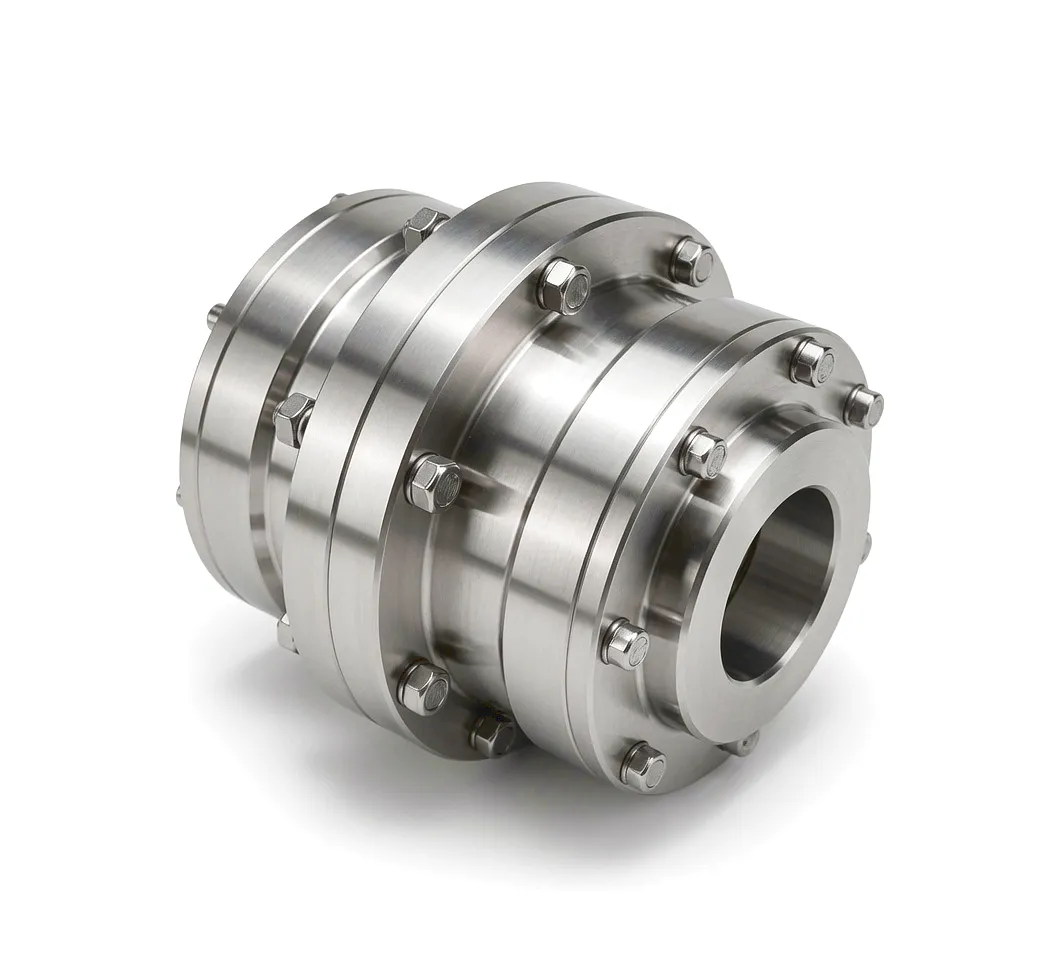 Walk into any modern high-rise in London, Manchester, Edinburgh or Birmingham and the elevator you step into owes its smooth, reliable operation to a single mechanical component most people never see: the gear coupling buried inside the traction machine room. This coupling bridges the high-speed output shaft of an electric motor and the slower input of a worm-gear or planetary-gear reduction unit — absorbing torsional shock, correcting minor shaft misalignment, and transmitting rated torque without slip under thousands of daily start-stop cycles. When that coupling fails, the lift stops. When it performs beyond specification, the entire traction system gains years of additional service life.
At Ever Power, we have been engineering and manufacturing gear couplings for demanding motion-control applications since our founding. Our drum-tooth gear couplings, nylon-sleeve flexible couplings, and NGCL / GICL series components are now specified in elevator traction systems across the UK, Europe, and Southeast Asia. This in-depth guide explains exactly why gear coupling selection matters in the elevator context — and what to look for when sourcing replacements or specifying new builds.
Get a Quote — Elevator Gear Coupling
Custom sizing · UK & international delivery · 48-hour quotation
What Exactly Is an Elevator Traction Machine — and Where Does the Coupling Sit?
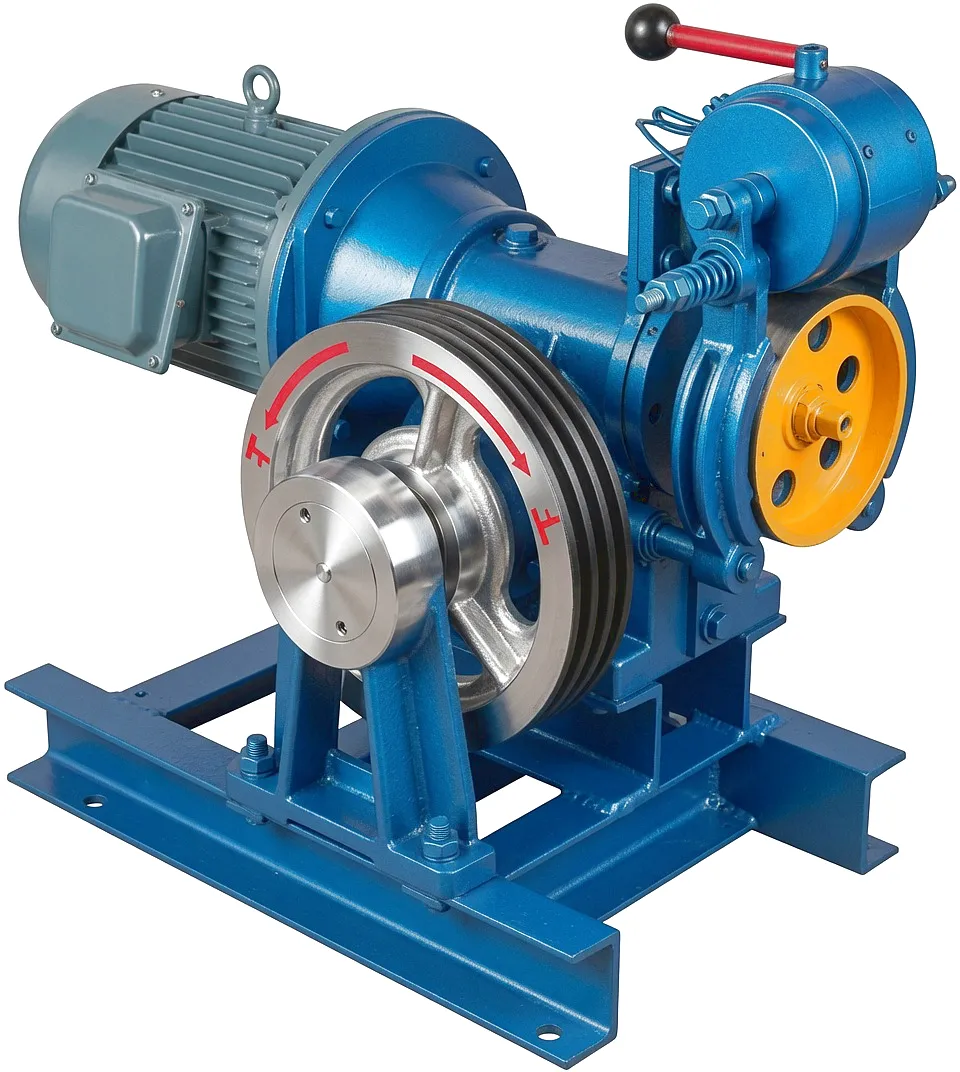 An elevator traction machine is the primary drive unit responsible for raising and lowering the lift car. The machine rotates a traction sheave — a grooved wheel — around which suspension ropes or steel belts are wrapped. Friction between the rope and sheave groove provides the traction force. Counterweights on the opposite rope end reduce the net load on the motor, keeping energy consumption manageable in a building that may run 200–600 lift journeys per day.
In geared traction machines — still widely installed in mid-rise commercial buildings, hotels, and residential towers across England, Scotland, and Wales — a motor running at 960–1,450 RPM feeds into a worm-gear or planetary reduction box that steps the speed down to 40–150 RPM at the sheave shaft. The gear coupling lives at this motor-to-gearbox interface. Its job is fundamentally mechanical but absolutely critical: it must transmit peak torque reliably (often several times the rated continuous torque during motor starting), accommodate up to 1.5° angular misalignment and 0.5 mm radial offset without transmitting bending loads to the shaft bearings, and dampen the torsional impulses that every brake-release and load-change event generates.
Gearless traction machines — driven by low-speed permanent-magnet synchronous motors (PMSM) — have grown in popularity since the late 1990s, particularly for high-rise and machine-room-less (MRL) installations. Even in gearless designs, a flexible coupling between the motor and brake disc or encoder shaft often remains in the drive train to protect the motor bearings from axial and radial loads introduced by rope tension imbalance. The engineering principles that govern gear coupling selection apply equally across both machine types.
Gear Coupling Types Used in Elevator Traction Systems
Each coupling design serves a distinct performance envelope. Understanding the difference prevents costly over- or under-specification.
GICL Drum-Tooth Gear Coupling
The drum-tooth (barrel-tooth) profile on the outer sleeve gear allows angular misalignment of up to 1.5° while maintaining full tooth contact across the face width. In elevator drives, this is the go-to choice when worm-gear housings are subject to thermal expansion causing shaft deflection. Torque range: 250 – 630,000 N·m. Material: 45# carbon steel or 40Cr alloy steel with induction-hardened tooth flanks. Available with integral brake drum flange.
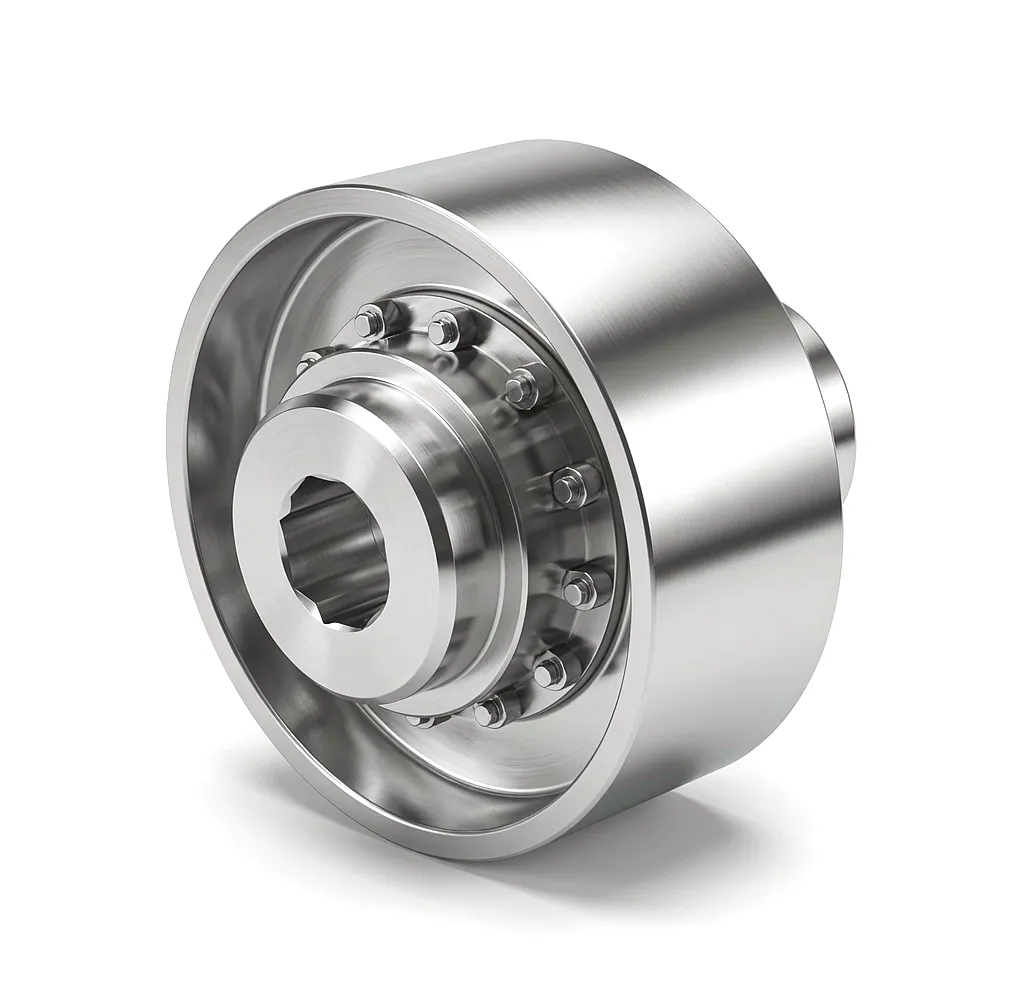
NGCL Series Drum-Tooth Coupling with Brake Wheel
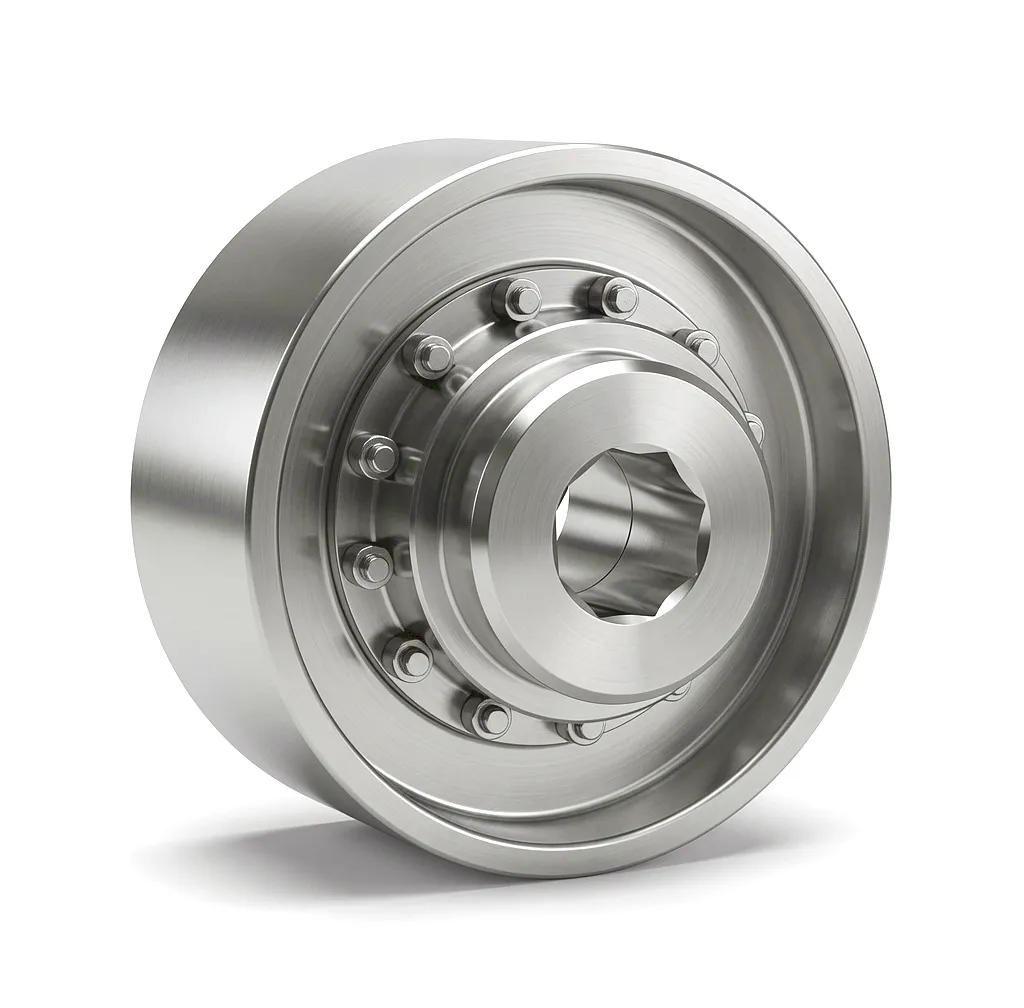
Specifically engineered for geared elevator motors, the NGCL series integrates a brake wheel directly onto the coupling half. This eliminates a discrete coupling-to-brake-disc adapter, saves axial space in compact machine rooms, and simplifies MRL installations. The integrated brake surface is finish-machined to Ra 1.6 µm for consistent friction coefficient. Standard bore range: 32–220 mm; keyway to DIN 6885.
NL Type Nylon Gear Flexible Coupling
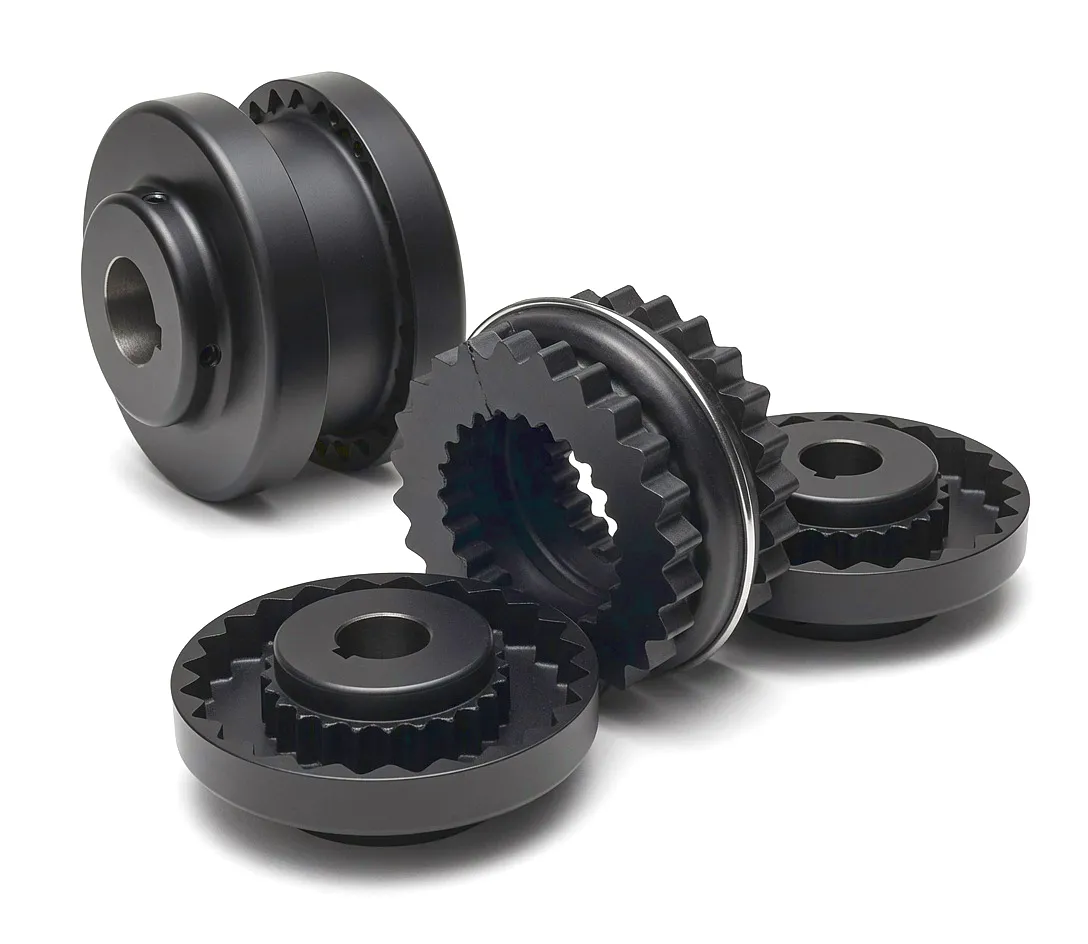
Where noise reduction is a primary concern — residential towers, boutique hotels, NHS hospitals — the NL series replaces the grease-lubricated metal tooth mesh with a polyamide (nylon) gear sleeve. The nylon element provides inherent damping of high-frequency torsional vibration, reducing airborne noise transmission into the building structure by up to 8 dB compared with an equivalent all-steel unit. No external lubrication required. Temperature range: -30 °C to +80 °C.
Rigid Flange Gear Coupling
For gearless PMSM drives where the manufacturer has guaranteed precise shaft alignment and the coupling’s sole function is torque transmission, a rigid flange gear coupling is occasionally specified. These units have zero misalignment tolerance but maximum torsional stiffness — the lack of compliance means they do nothing to protect bearings if installation alignment is imperfect, so they are only appropriate when laser-alignment verification is part of the commissioning procedure.
Technical Performance Parameters
Representative data for Ever Power elevator-series gear couplings. Custom configurations available on request.
Operating Principle, Internal Structure, and Material Science
 A gear coupling works on the principle of internal-external tooth engagement. Two inner hubs with externally cut teeth are connected by an outer sleeve that carries matching internal teeth. When the two shaft axes are perfectly aligned, torque transmits by direct gear mesh in pure shear. When misalignment exists — angular, parallel, or axial — the crowned tooth profile rolls within the sleeve bore, redistributing the contact stress evenly rather than concentrating it at tooth edges. This is the fundamental difference between a gear coupling and a jaw or disc coupling: the tooth can slide and rock while maintaining effective torque transmission.
The hub material in Ever Power’s elevator-series gear couplings is typically 45# medium-carbon steel or 40Cr alloy steel. Both grades are readily machinable to close tolerances and respond well to surface hardening. After rough machining, tooth flanks are profile-ground and then induction hardened to HRC 50–55 on the working surfaces while leaving the tooth root in a tougher, unhardened state — a deliberate gradient that prevents brittle fracture under shock loads. The outer sleeve is manufactured from ductile cast iron (QT500-7 grade) for the smaller bore sizes or steel for larger, high-speed applications where centrifugal stress becomes a design constraint.
Sealing is equally important. In a machine room environment, gear couplings are exposed to lubricant contamination, dust from brake pads, and occasional water ingress during cleaning. Ever Power fits all grease-lubricated units with nitrile rubber lip seals retained by precision-ground seal rings. The seal assembly holds grease in and contaminants out over a service interval of 5,000 operating hours or 24 months — whichever comes first. For nylon-sleeve designs, no seal is needed: the nylon material is self-lubricating and dimensionally stable across the temperature range of a typical UK machine room (5 °C in winter, up to 45 °C during summer heat-soak).
Where Gear Couplings Are Applied in the Elevator Traction System
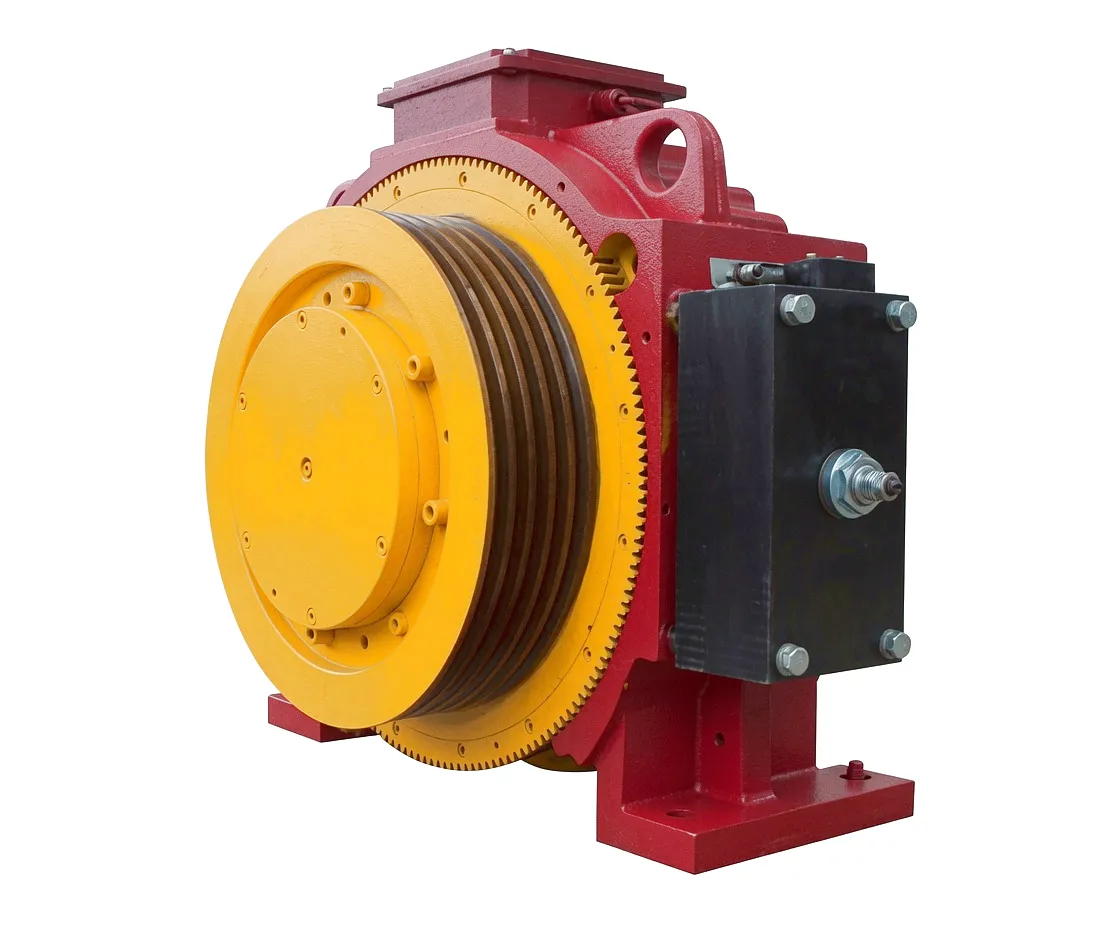
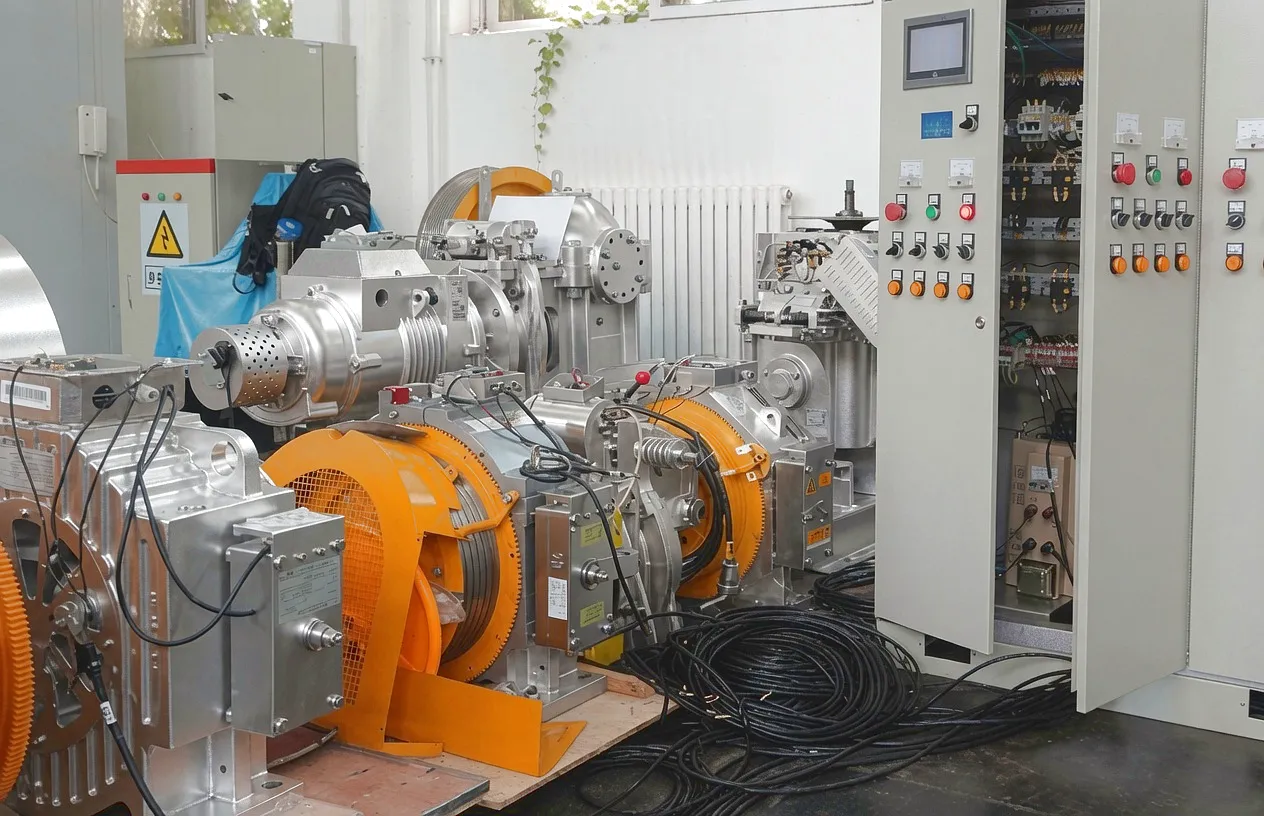
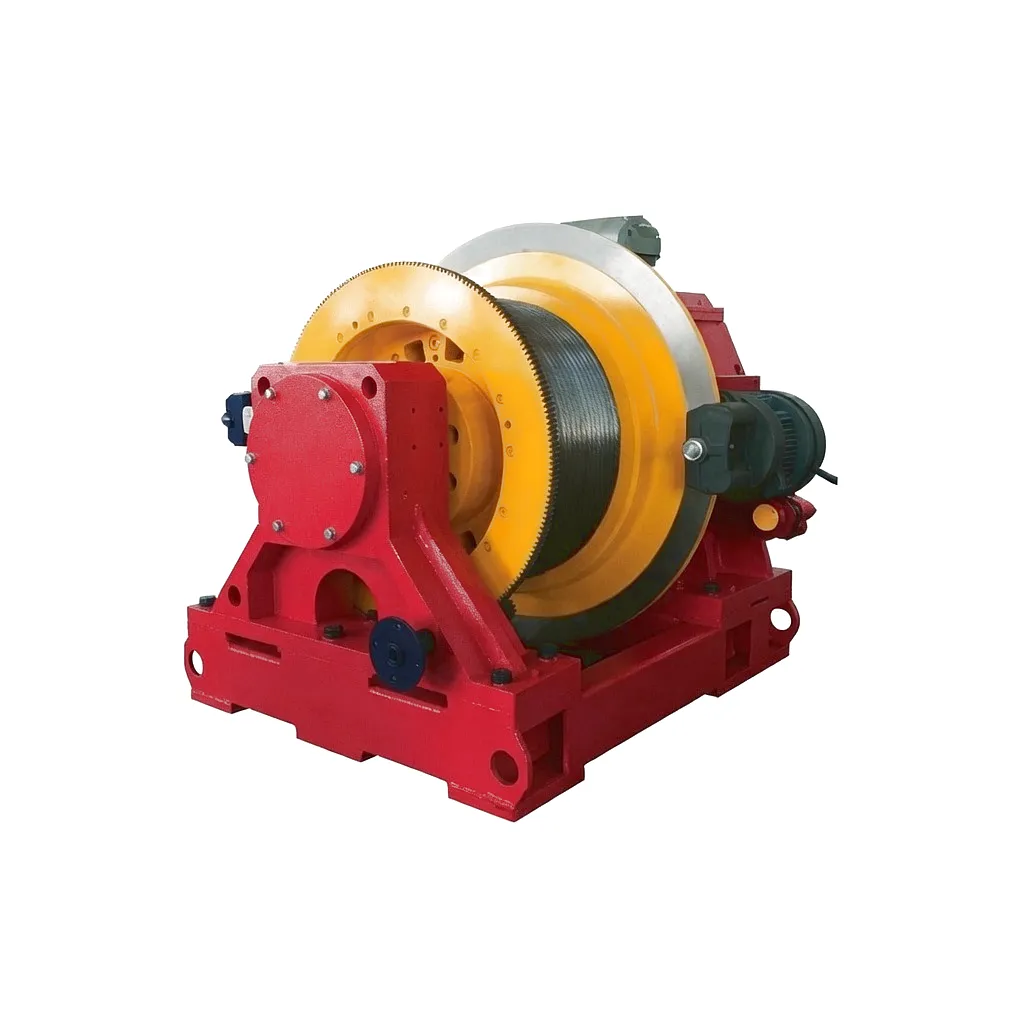
Beyond the machine room, gear couplings appear throughout the elevator ecosystem: in the hydraulic pump drives of low-rise hydraulic lifts, in the governor drive of speed-limiting systems, and in the testing benches where manufacturers in Coventry, Leeds, and Bristol run factory acceptance tests on completed traction machines before shipment. Each of these sub-applications has slightly different requirements — rotational speed, shock tolerance, environmental exposure — but the fundamental selection logic is identical: match rated torque with appropriate service factor, verify bore and keyway dimensions, confirm misalignment capability against the installed alignment tolerance, and choose a sealing arrangement suited to the operating environment.
Why Ever Power Gear Couplings Outperform in Elevator Service
Crowned Tooth Geometry
Profile-ground drum teeth distribute contact stress uniformly across the full face width even at maximum misalignment angle, eliminating the edge-loading wear that shortens the life of straight-tooth couplings in thermally dynamic machine rooms.
Zero Backlash (Optional)
For VFD-controlled drives where precise position control governs floor-levelling accuracy (±3 mm is a typical UK specification), Ever Power offers a pre-loaded zero-backlash version. Tooth clearance is removed by a spring-loaded axial pre-load on the outer sleeve, maintaining mesh contact in both rotational directions.
Shock Load Capacity
The steel tooth mesh is inherently compliant under instantaneous overloads. Ever Power’s elevator couplings are rated at 2.5× nominal torque for transient overloads — a margin that covers VFD fault trips, emergency brake applications at full load, and the occasional rope-buffer collision during overtravel testing.
Interchangeable Dimensions
GICL and NGCL bore and flange dimensions are dimensionally interchangeable with the ISO 14691 gear coupling standard. UK lift maintenance companies and OEM integrators can substitute Ever Power units for legacy brands — Bibby, KTR, Rexnord — without modifying the machine baseplate or motor adaptor plate.
Full Traceability
Every batch ships with material certificates (EN 10204 3.1), dimensional inspection reports, and dynamic balance certificates (residual imbalance G6.3 per ISO 1940). The documentation trail satisfies the audit requirements of BS EN 81-20 and the UK Lift Regulations 1997 — important for the many UK installers whose customers are NHS trusts, local authorities, and listed-building owners.
Low Lifecycle Cost
A well-maintained gear coupling in elevator service routinely achieves 80,000–120,000 operating hours before tooth wear requires replacement. With a typical elevator running 12–16 hours daily, that equates to 15–25 years of service life — longer than many of the gearboxes they connect. Split-sleeve designs allow in-situ inspection without removing the motor.
Ever Power Manufacturing: Custom Gear Coupling Service
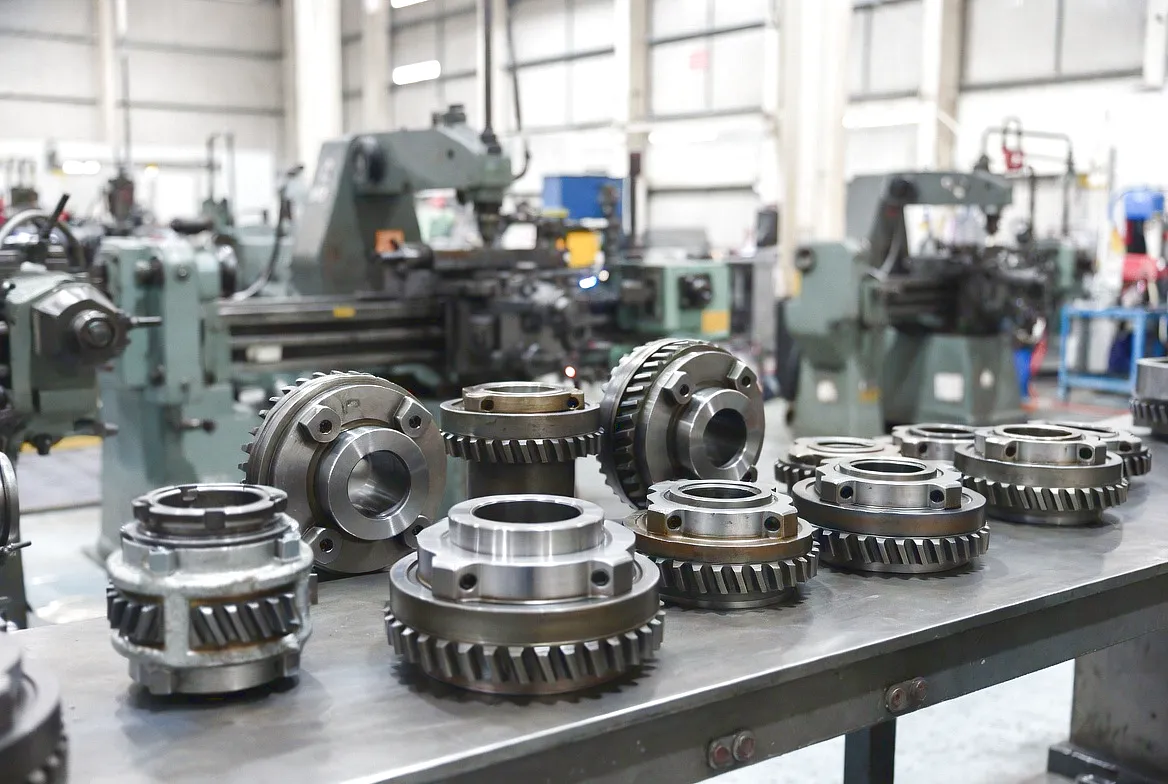
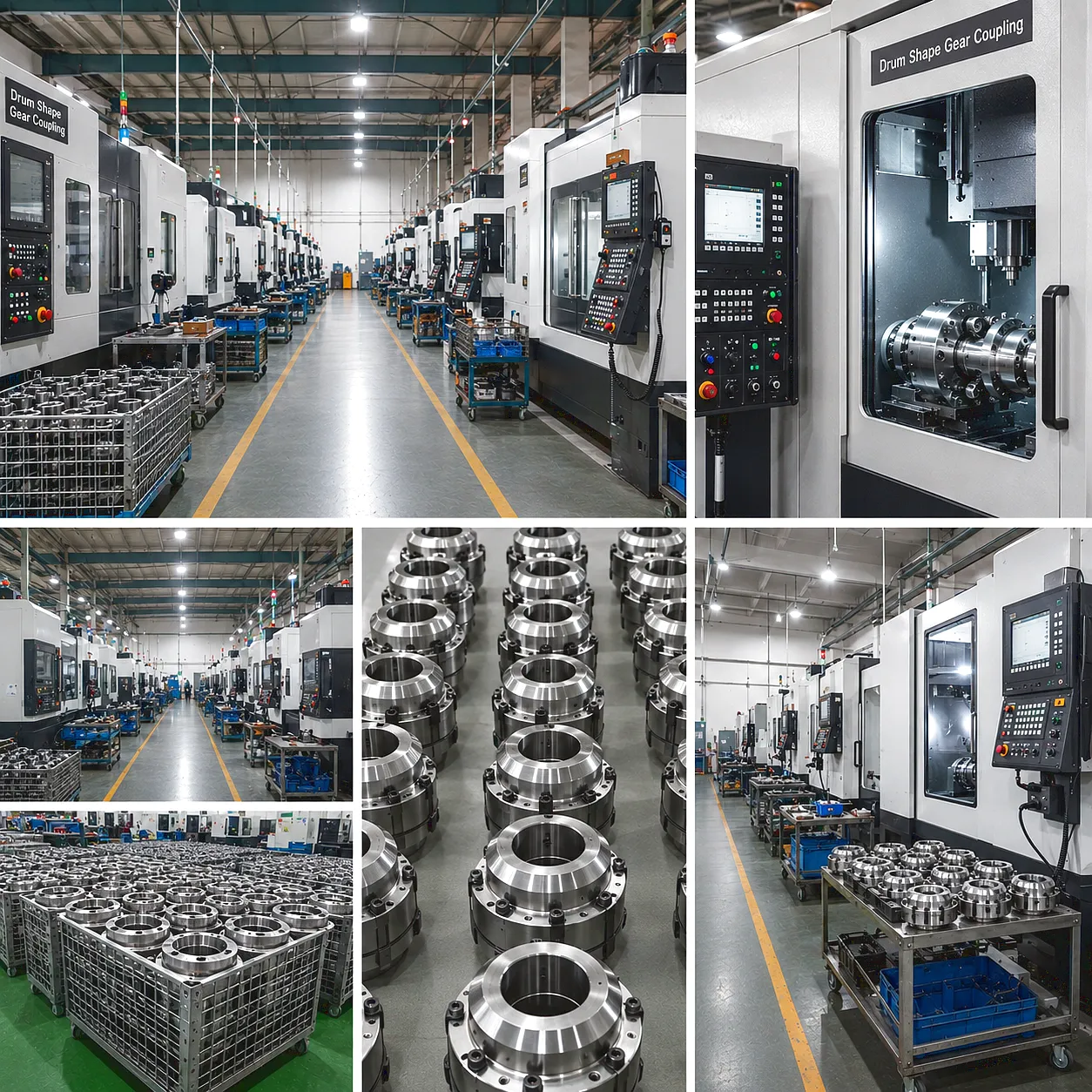 Standard catalogue sizes solve 80% of elevator replacement requirements, but the remaining 20% — obsolete machine types, non-metric bore combinations, special brake drum diameters for proprietary calipers, non-standard keyways — require genuine engineering input rather than a simple off-the-shelf ship. Ever Power operates a fully equipped manufacturing centre with CNC turning, CNC hobbing, profile grinding, and dynamic balancing, all under one roof. Our team of application engineers can design a bespoke gear coupling from a customer sketch, a broken sample, or a CAD model within three to five working days, with prototype delivery within two to three weeks from order confirmation.
UK lift companies procuring for major refurbishment projects — say, a 1980s tower block in Glasgow or a heritage office building in the City of London — often need gear couplings that match drawings which are no longer held by the original machine builder. Our reverse-engineering service uses 3D scanning and CMM measurement to recreate accurate replacement geometry, saving weeks compared to commissioning a new machine. We can match non-standard flange bolt circles, obsolete DIN spline profiles, and metric-imperial mixed bore tolerances. Minimum order for custom work is a single piece. Volume pricing applies from quantity 5 upwards.
Custom capabilities available on request:
- Non-standard bore and keyway combinations (metric, imperial, spline)
- Integral brake drum with custom friction surface diameter and width
- Special tooth module and pressure angle for OEM gearbox matching
- Stainless steel outer sleeve for food-grade or marine-environment lifts
- Reduced axial length for constrained machine room height
- ATEX-rated configurations for hazardous area installations
- Surface coating: zinc-phosphate, electroless nickel, or epoxy powder coat
Practical Selection Guide for UK Elevator Engineers
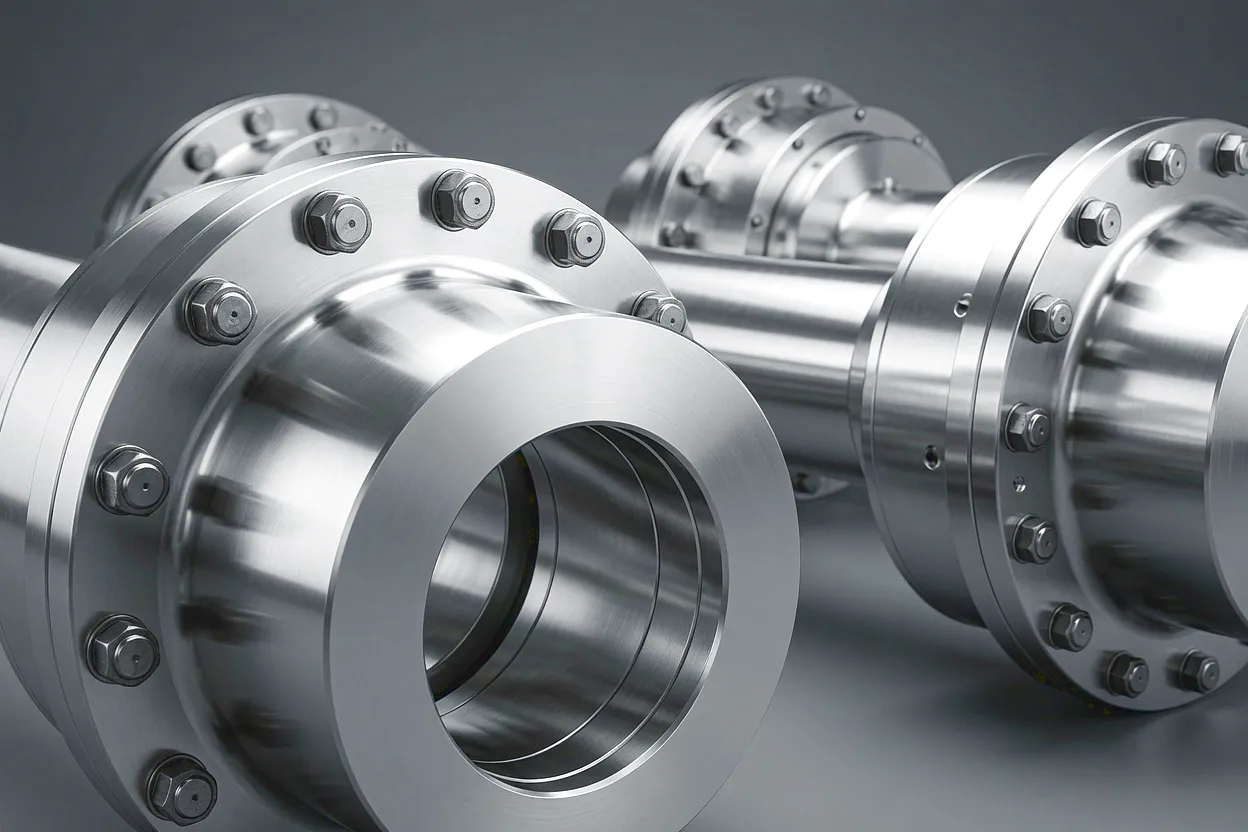 Selecting the right gear coupling for a traction machine comes down to five key parameters, each of which must be confirmed before placing an order. Power and speed define the torque envelope. Read the motor nameplate data — kW rating and synchronous speed — and calculate rated torque as T (N·m) = 9550 × P (kW) / n (RPM). Apply a service factor (Ks) that accounts for the application duty. For elevator drives with variable-frequency drives and smooth motor starting, Ks typically falls between 1.5 and 2.0. For older direct-on-line (DOL) starters that produce high inrush current and corresponding torque spikes, use Ks of 2.5 to 3.0. Multiply rated torque by Ks to get the minimum coupling rated torque — then select the first catalogue size that meets or exceeds this figure.
Bore sizes must match the actual shaft diameters at the motor output and gearbox input. These are often different on each half — for example, 65 mm motor shaft and 80 mm gearbox input. Both halves of a gear coupling can be bored to different diameters, which is a standard factory option. Keyway dimensions follow DIN 6885 Part 1 in most European equipment; confirm whether the shaft is parallel-key, Woodruff key, or interference-fit spline. Where original drawings are unavailable, measure the shaft with a calibrated digital micrometer and use a feeler gauge to measure existing keyway depth.
Calculate Design Torque
T_design = 9550 × P / n × Ks. Use Ks 1.5–2.0 for VFD, 2.5–3.0 for DOL.
Confirm Bore Sizes & Keyways
Measure motor and gearbox shaft diameters. Note keyway width and depth. Two halves can have different bores.
Assess Misalignment
Dial-gauge check or laser-alignment report. Angular > 0.5° = drum-tooth coupling. < 0.5° aligned = nylon series is viable.
Check Overall Envelope
Measure available axial length and maximum OD in the machine room. Confirm no interference with brake caliper housing.
Verify Documentation Requirements
UK lifts under BS EN 81-20 may require 3.1 material certs and balance report. Confirm before ordering.
Supplying the UK Lift Industry: Compliance, Delivery, and Support
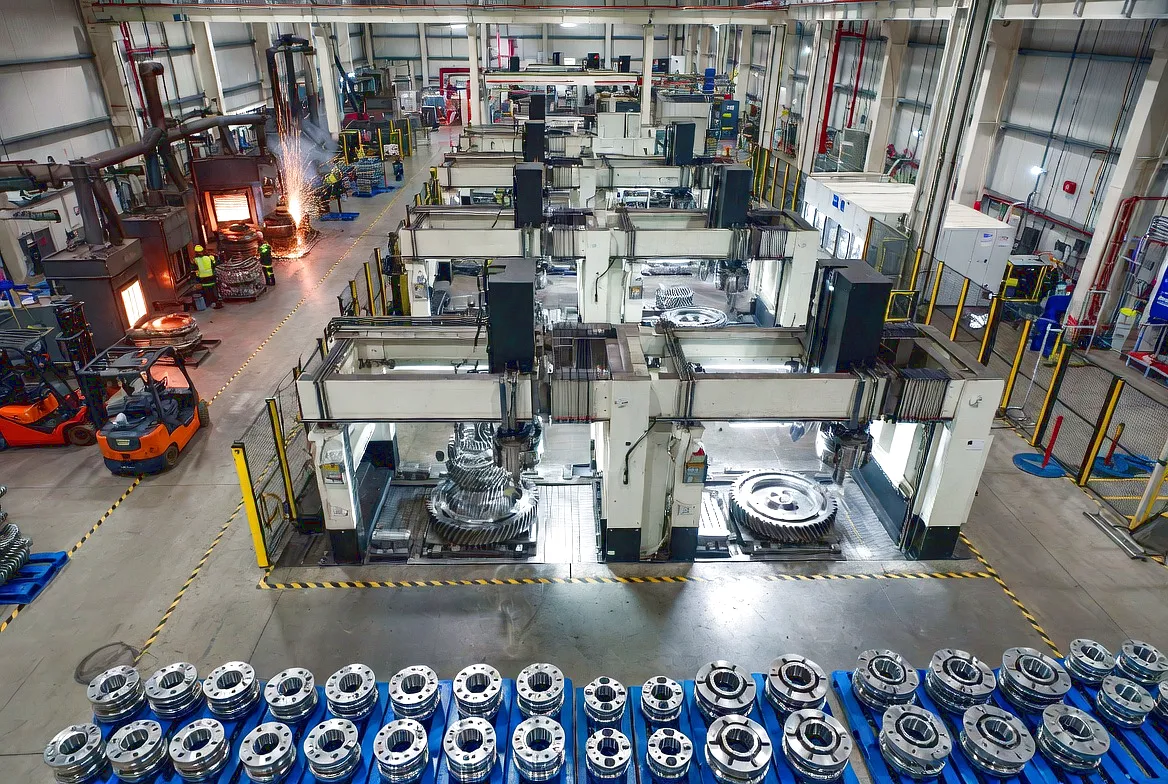
UK lift contractors and maintenance companies operate under some of the most demanding regulatory environments in Europe. The Lifting Operations and Lifting Equipment Regulations 1998 (LOLER), the Provision and Use of Work Equipment Regulations 1998 (PUWER), and the harmonised BS EN 81-20 and BS EN 81-50 standards collectively govern every mechanical component in a passenger lift installation. When a gear coupling is replaced in an existing installation, the work must be recorded, the component must be traceable to a quality system, and the installation engineer must be competent under the Lift Regulations 1997 (as amended by the UK Lift Regulations 2016). Ever Power provides all necessary documentation — material certificates, dimensional reports, dynamic balance records — as a standard part of every order, not as a chargeable extra.
Delivery logistics to UK addresses are arranged via established freight partners, with standard air-freight lead times of 7–12 working days from order confirmation for catalogue items and 18–25 working days for custom-machined parts. Express delivery (3–5 days) is available for urgent lift-out-of-service situations — which, in a busy commercial building or hospital, carry significant business disruption and potential reputational costs. We maintain a buffer stock of the most common GICL and NGCL sizes (GICL5 through GICL14, NGCL6 through NGCL12) specifically to support UK urgent-order requirements.
Customer Success: NHS Trust Vertical Transport Upgrade, Manchester
Case Study
NHS Foundation Trust — Manchester, England
Challenge: A major NHS hospital in Manchester had 14 passenger lifts serving a nine-storey main building, all fitted with geared traction machines from the late 1980s. During a planned five-year maintenance programme, the vertical transport contractor identified severe wear on the gear coupling assemblies — particularly the worm-gear input coupling halves, which had developed 0.4 mm of visible tooth backlash due to prolonged operation in a high-duty cycle environment with inadequate re-greasing intervals. Three lifts had been removed from service, creating significant bed-movement disruption during busy ward rounds. Standard replacement units from the original machine builder were on a 12-week supply lead time — unacceptable in a live hospital environment.
Solution: The contractor contacted Ever Power via our technical enquiry channel. Within 24 hours, our engineering team produced a dimensionally equivalent replacement specification for the NGCL10 coupling, matching the original bore sizes (70 mm motor side, 90 mm gearbox side), keyway dimensions, and brake drum outer diameter (350 mm). Material certifications were prepared in advance of machining. A batch of 18 complete units — 14 for immediate installation and four for maintenance stock — was despatched by air freight with a total lead time of 11 working days from initial enquiry. All lifts were returned to full service within a two-week scheduled maintenance window.
Result: Zero unplanned lift downtime in the 18 months following the coupling replacement programme. The NHS estates team reported a measurable reduction in vibration levels recorded on the gearbox housings during post-installation vibration surveys, attributable to the improved tooth geometry of the drum-crown profile. The contractor has since standardised on Ever Power NGCL couplings for all planned replacements in their NHS portfolio, covering seven hospital sites across Greater Manchester and Cheshire.
Project Snapshot
What Our Customers Say
We’ve been sourcing NGCL replacement couplings from Ever Power for three years now. The dimensional accuracy is consistently within tolerance, and the documentation package satisfies our client’s LOLER audit requirements without any extra back-and-forth. The lead time for standard sizes is genuinely impressive.
James T.
Vertical Transport Engineer, Birmingham
We had an unusual bore requirement — 95 mm motor shaft, 110 mm gearbox, both imperial keyways on a 1970s Otis machine. Ever Power’s engineering team handled it without any fuss and delivered the custom GICL coupling in under three weeks. We’ll be going back for the rest of the estate refurbishment.
Sarah M.
Procurement Manager, London Lift Services Ltd
The NL nylon gear coupling made a noticeable difference to the noise level in a residential tower in Edinburgh where acoustic complaints had been an ongoing issue. Residents on the upper floors reported that the lift was no longer audible from inside their flats after the coupling swap. I’d recommend this product to any lift company working on noise-sensitive residential projects.
Robert H.
Senior Lift Engineer, Edinburgh, Scotland
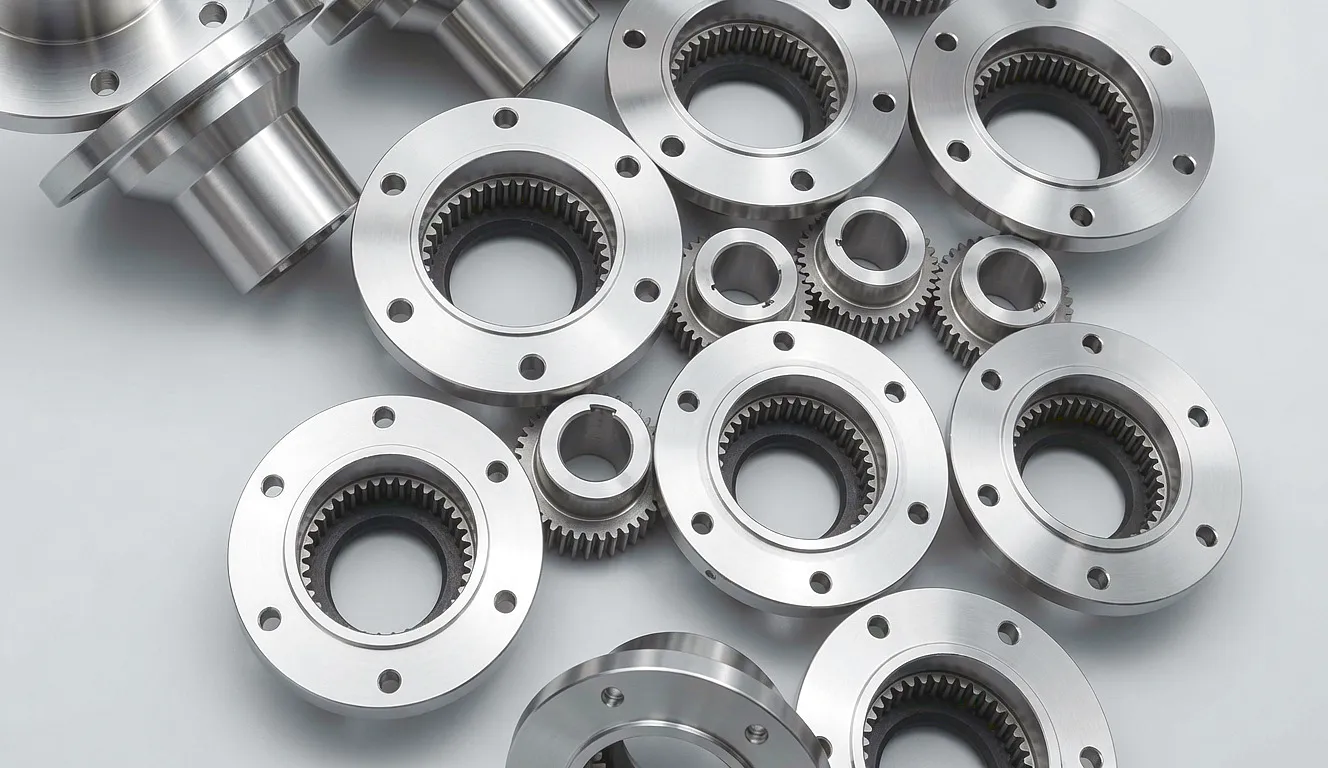
Product Gallery
Frequently Asked Questions
Common questions from lift engineers and procurement teams in the United Kingdom
Ready to Specify or Replace Your Elevator Traction Gear Coupling?
Tell us your bore sizes, torque requirement, and whether you need an integrated brake drum — and we’ll provide a full technical recommendation and price within 24–48 hours. UK enquiries are a priority.
Get a Quote — gear-coupling.top
Custom sizing · LOLER-compliant documentation · Express UK delivery available
© Ever Power Transmission — Gear Coupling for Elevator Traction Machine | United Kingdom · edit by gzl