
Why the Coupling Inside a Wind Turbine Gearbox Matters More Than Most Engineers Realise
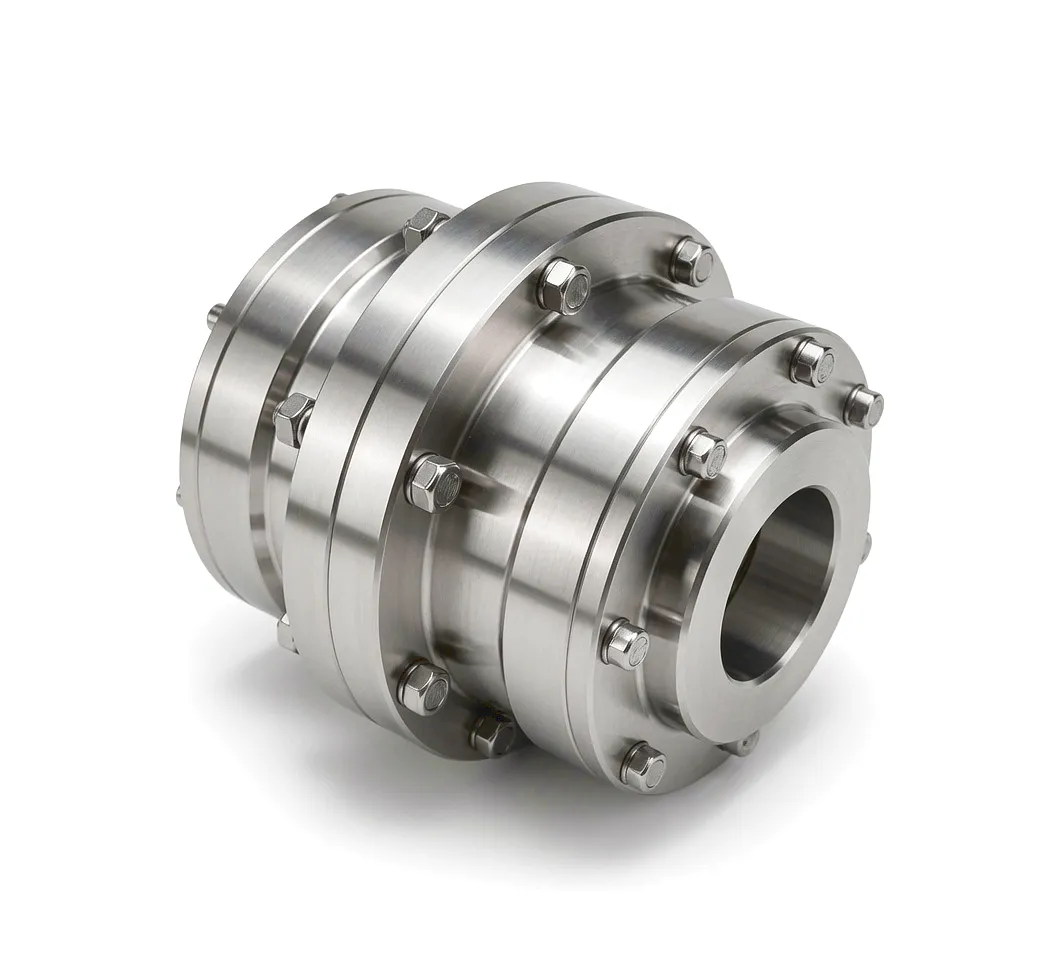 Wind energy has transformed the British electricity grid over the past two decades. The UK now ranks among the world’s leading offshore wind producers, with the North Sea hosting sprawling arrays of turbines generating multi-megawatt outputs around the clock. Behind every kilowatt-hour delivered to the National Grid sits a drivetrain engineered to survive decades of cyclical loading, salt-laden air, temperature swings from −20 °C to +50 °C, and torque surges that can exceed three times nominal load during grid fault events. At the mechanical heart of that drivetrain — particularly in doubly-fed induction generator (DFIG) and semi-direct-drive configurations — sits a component that is often overlooked in early-stage design reviews: the gear coupling connecting the main shaft to the gearbox input, and in many architectures, the gearbox output to the generator shaft.
A poorly specified coupling in this position can lead to fretting wear on adjacent bearings, accelerated tooth fatigue in the high-speed stage, unexpected downtime during peak wind periods, and costly crane lifts to replace components that are 80 metres above the ground. A correctly engineered drum-type gear coupling, by contrast, absorbs angular misalignment, dampens torsional shock loads, and transmits rated torque continuously — all while tolerating the axial float that inevitably occurs as shafts thermally expand inside an enclosed nacelle. This article examines the engineering decisions, material options, and application-specific requirements that determine whether a gear coupling performs flawlessly for 20 years or becomes an unplanned maintenance event after 18 months.
Need a gear coupling for your wind turbine or renewable energy project in the UK?
How Gear Couplings Work Inside a Wind Turbine Drivetrain
Mechanical principles explained for procurement engineers and plant operators
Torque Transmission via Crowned Teeth
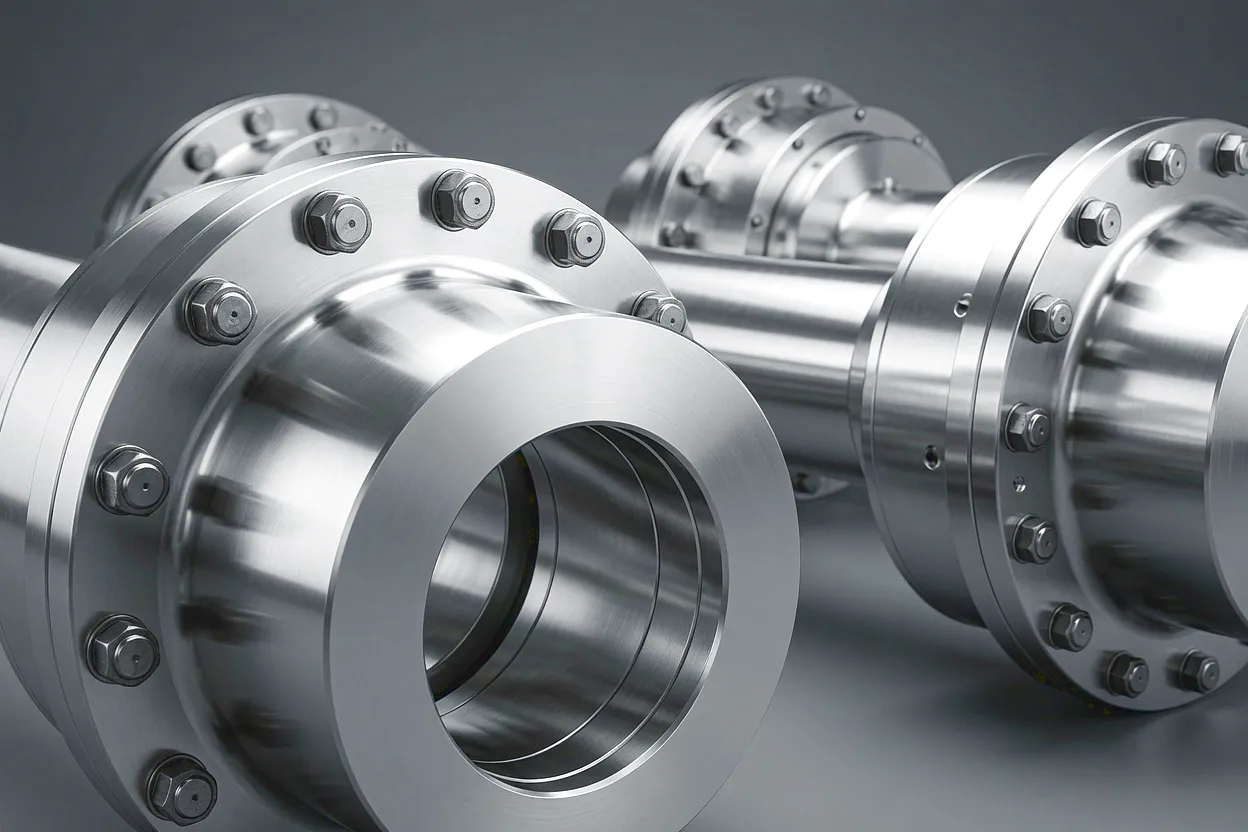
The drum-type gear coupling transmits torque through two sets of crowned external teeth on the inner sleeves meshing with internal teeth on the outer hubs. The crown profile is the defining feature — it allows the coupling to accommodate angular misalignment up to 1.5° per gear mesh while maintaining full tooth contact across the width of engagement. In wind turbine applications where main-shaft deflection under variable thrust loading is unavoidable, this crowned geometry eliminates edge loading that would otherwise fatigue teeth within a few thousand operating hours.
Torsional Flexibility and Shock Absorption
During grid fault ride-through events, a wind turbine generator can experience sudden electromagnetic braking that back-drives the shaft with a torque impulse several times higher than steady-state rated torque. The backlash inherent in gear coupling tooth geometry provides a small window of torsional freedom that buffers this impulse before it propagates into the gearbox gear train. Combined with the damping effect of the lubricant film within the tooth mesh, this makes gear couplings considerably more tolerant of shock loads than rigid flanged couplings, which transmit 100% of any transient loading directly to shaft keyways and bearing races.
Axial Float Accommodation
Temperature differentials between a cold North Sea night and a warm operating gearbox can cause shaft elongation of several millimetres. Rigid connections between gearbox and generator would translate this into destructive axial thrust loads on the generator’s main bearing. Gear couplings address this through axial float — the internal sleeve can slide axially within the outer hub by a designed amount, typically 5–25 mm depending on shaft diameter, absorbing thermal growth without transmitting axial forces to flanking bearings. This is one of the most important reasons why gear couplings remain the preferred choice over elastomeric disc or diaphragm types in the largest wind turbine classes.
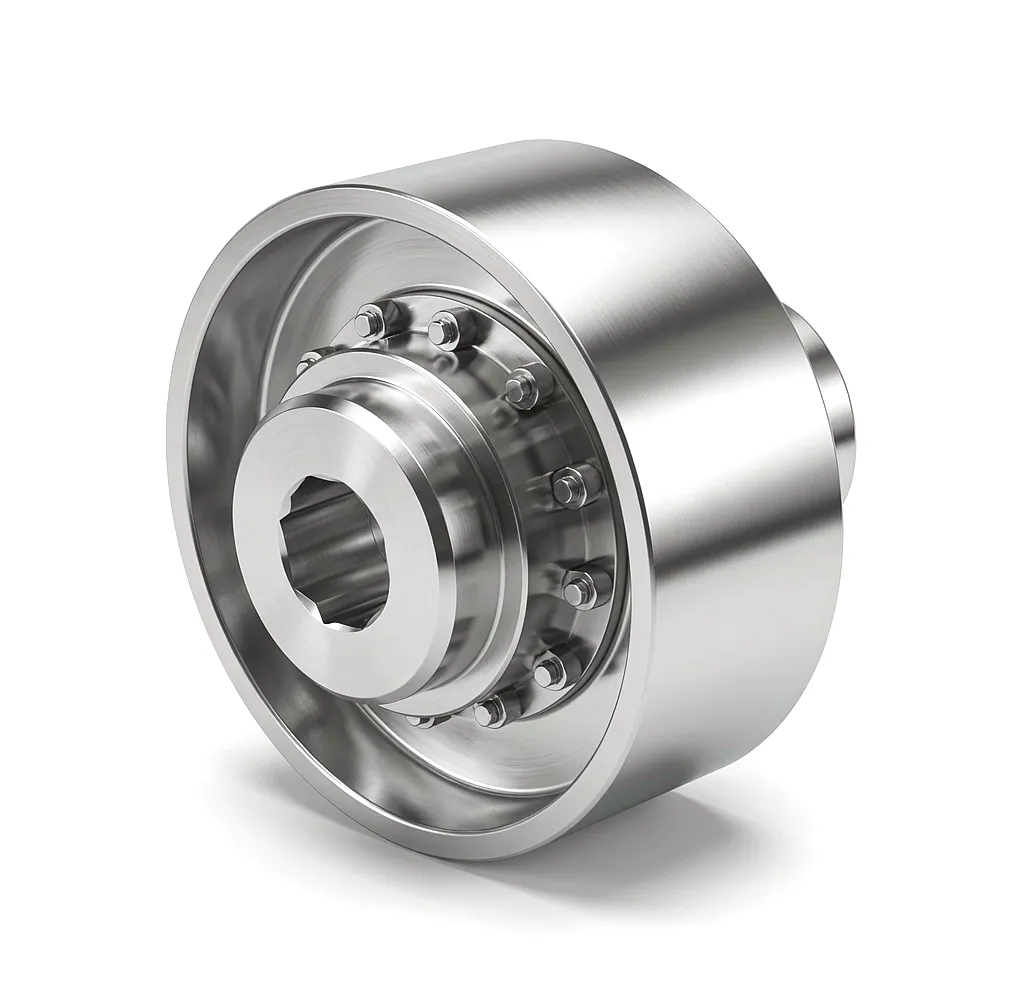 The lubrication system deserves particular attention in wind turbine deployments. A gear coupling operating inside a nacelle at 80 metres height cannot be conveniently re-greased every few weeks. Sealed drum-type couplings with lifelong synthetic grease lubrication — or units plumbed into the gearbox’s circulating oil system — are standard practice for Tier 1 wind OEMs. Synthetic lubricants formulated for wide temperature ranges (typically −40 °C to +150 °C operational) and high-speed operation ensure the grease does not channel, slump, or degrade before the next scheduled inspection interval of 12–24 months.
Material choice also shapes longevity. The tooth flanks in high-performance gear couplings are case-hardened and precision-ground to achieve surface hardness of 58–62 HRC, combined with a core toughness that resists brittle fracture during shock loads at low ambient temperatures — a scenario that is far from theoretical on a January night above the Orkney Islands.
Wind Turbine Drivetrain — Where Gear Couplings Are Installed
Key installation positions in doubly-fed and semi-direct-drive architectures
Position 1
Main Shaft to Gearbox Input
The highest torque position in the drivetrain. Coupling must handle slow-speed, large-diameter shafts with significant misalignment due to main-bearing deflection under variable aerodynamic thrust loads from the rotor hub.
Position 2
Gearbox Output to Generator Input
High-speed side: lower torque but higher rotational speed (up to 1800 rpm for standard DFIG generators). Precision balancing critical to avoid vibration that could damage generator windings. Gear coupling accommodates thermal growth between gearbox and generator housings.
Position 3
Intermediate Shaft Connections
Three-stage planetary/helical gearboxes have intermediate shaft stubs where drum-type gear couplings or half-couplings are used to connect the planet carrier output to the intermediate shaft, particularly in retrofit and repower scenarios where OEM shaft dimensions may not match exactly.
Position 4
Yaw Drive and Pitch Systems
Smaller gear couplings appear in the yaw and blade-pitch actuation systems, where compact, high-torque transmission is needed in confined spaces. Here, NL-type nylon gear couplings offer electrical isolation between the electric actuator motor and the mechanical drive, reducing the risk of circulating currents damaging motor bearings.


Technical Parameters: Drum-Type Gear Coupling for Wind Turbine Use
Representative specifications for GICL / NGCL series couplings commonly specified in wind energy drivetrains
| Parameter | GICL Series (Low-Speed) | NGCL Series (High-Speed) | NL Nylon Type |
|---|---|---|---|
| Nominal Torque Range | 250 – 710,000 N·m | 100 – 280,000 N·m | 25 – 6,300 N·m |
| Max. Rotational Speed | Up to 3,000 rpm | Up to 6,300 rpm | Up to 4,000 rpm |
| Angular Misalignment | ≤ 1.5° per mesh | ≤ 1.5° per mesh | ≤ 1° |
| Axial Float | ± 5–25 mm | ± 4–20 mm | Limited |
| Tooth Material / Hardness | Alloy steel, 58–62 HRC | Alloy steel, 58–62 HRC | PA6/PA66 nylon teeth |
| Lubrication | Sealed grease / Oil bath | Sealed grease / Oil mist | Self-lubricating |
| Operating Temperature | −40 °C to +150 °C | −40 °C to +150 °C | −30 °C to +80 °C |
| Balance Grade | G6.3 standard | G2.5 precision | G6.3 standard |
| Applicable Standard | GB/T 5272, ISO 10441 | GB/T 5272, ISO 10441 | GB/T 5272 |
Why Engineers Across the UK Wind Sector Specify Ever Power Gear Couplings
Eight reasons these couplings outperform generic catalogue products in renewable energy service
🔩 Precision Crown Tooth Profile
Each tooth is finish-ground to a certified crowned profile using CNC gear-grinding machines. This is not the same as hobbed-and-shaved production teeth found in lower-price catalogue products. The ground profile maintains correct contact geometry under misalignment, which directly reduces flank wear rates and extends the interval between overhauls.
🛡️ Premium Alloy Steel with Carburising
Standard material is 20CrMnTi alloy steel, carburised to a case depth of 0.8–1.2 mm and quenched to achieve the 58–62 HRC tooth surface hardness. The core remains at 30–40 HRC for ductility. This dual-phase structure outperforms through-hardened designs in impact resistance — critical when grid faults send torque spikes into the shaft system.
⚖️ Dynamic Balancing as Standard
All couplings for wind turbine high-speed shafts are dynamically balanced to ISO 1940-1 Grade G2.5, with balance reports traceable to each serial number. At 1,500–1,800 rpm generator speeds, even small residual imbalance generates vibration amplitudes that reduce bearing life exponentially. G2.5 balancing eliminates this risk and keeps overall drivetrain vibration below limits set by IEC 61400-4.
🌊 Sealed for Offshore Environments
Offshore nacelles face humidity above 95% RH, salt mist, and condensation cycles that rapidly degrade unsealed mechanical components. Our sealed gear couplings use dual-lip nitrile seals (Viton upgrade available) with a positive-pressure grease fill that purges contaminants from the sealing interface. External surfaces are zinc-phosphated and epoxy-primed before a marine-grade topcoat, compatible with North Sea salt spray classifications.
📐 Custom Bore and Keyway Options
Shaft dimensions in wind turbine repowering and retrofit projects rarely match catalogue bores exactly. Our machining facility accommodates custom bore diameters, keyway dimensions, spline profiles, and shrink disc interfaces on request, with tolerance classes from H7 fit to interference H6/p6. Drawings are reviewed and approved before production begins, with a dedicated project engineer assigned to each custom order.
📦 Fast Delivery to UK Ports & Depots
Standard series couplings ship from bonded UK-area freight partners, with confirmed transit times to Aberdeen, Hull, Grimsby, and Southampton — the UK’s main offshore wind operations hubs. Custom units manufactured in our certified production facility achieve 4–6 weeks lead time from drawing approval. Emergency replacement couplings for unplanned outages can be prioritised through our expedite process.
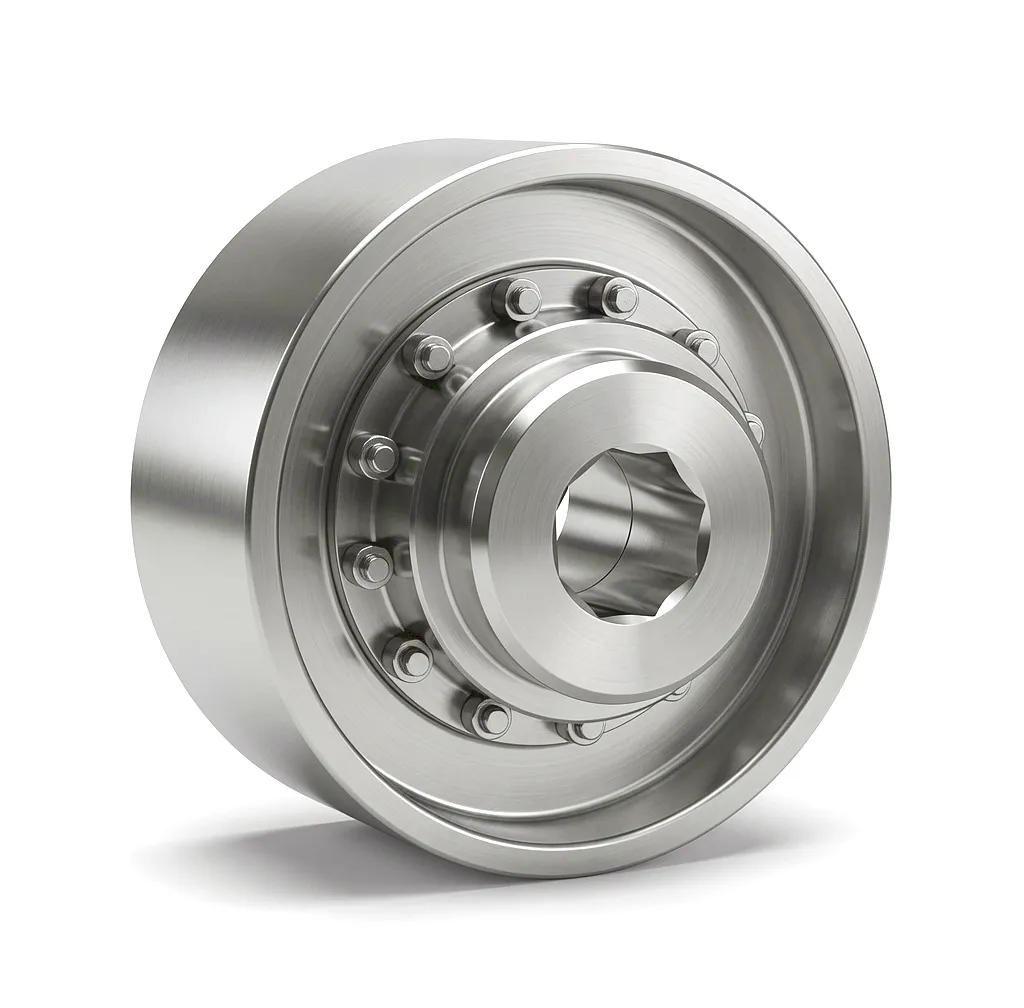 Beyond the wind energy sector, the same family of drum-type gear couplings serves a wide range of industrial applications across the United Kingdom. Steel rolling mills in South Wales and Sheffield deploy large GICL couplings on their roll stands, where they tolerate strip breakage shock loads that would shatter rigid couplings. Marine propulsion shafting aboard vessels built on the Clyde and the Tyne uses sealed, corrosion-resistant variants of the same technology. Paper machines in Northern England and Scotland run NGCL couplings between calender roll drives where vibration limits are as tight as those in wind turbines.
This breadth of domestic industrial experience means that when an Ever Power engineer recommends a gear coupling for your wind energy project, the specification draws on real-world performance data from comparable UK operating environments — not just laboratory test results. It is the kind of knowledge base that comes only from decades of installed product population across multiple demanding industries.
Customer Success Story: Offshore Wind Operator, East Anglia Coast
A real-world replacement programme demonstrating the value of correct gear coupling specification
Case Study — United Kingdom Offshore Wind
Unplanned Drivetrain Downtime Reduced by 74% After Gear Coupling Upgrade
An independent operations and maintenance contractor managing a 48-turbine offshore wind farm on the East Anglian coast was experiencing repeated unplanned shutdowns on 11 turbines within the same wind farm section. The root-cause investigation identified the original-equipment gear couplings on the high-speed shaft as the failure point — specifically, micropitting fatigue on the tooth flanks attributed to edge loading from angular misalignment that exceeded the coupling’s design tolerance.
The contractor’s engineering team contacted Ever Power’s UK technical support channel and submitted the original OEM coupling drawings, main gearbox datasheet, and SCADA-recorded torque history from the 11 affected turbines. Our applications engineering team proposed a replacement NGCL series gear coupling with an upgraded crown radius, G2.5 balance grade, extended axial float, and Viton seals rated for the local offshore salt environment. Bore dimensions were matched exactly to the existing gearbox and generator shaft diameters to allow drop-in replacement without shaft machining.
After installation during a scheduled crane maintenance window, the 11 turbines operated without drivetrain coupling faults through two complete winter seasons covering gale-force conditions exceeding 25 m/s mean wind speed. Drivetrain-related unplanned stoppages across those 11 units fell by 74% compared with the equivalent period before replacement. The O&M contractor subsequently standardised on the Ever Power NGCL coupling specification across all 48 turbines in the fleet during the next major service campaign.
Result
74%
reduction in drivetrain unplanned stoppages
Fleet
48
turbines now standardised on Ever Power couplings
Environment
North Sea Offshore
salt spray, high humidity, gale-force wind cycles

What Our Customers Are Saying
“
We had exhausted three different suppliers before finding Ever Power. The custom bore and the G2.5 balancing on the NGCL units made a measurable difference to drivetrain noise levels within the first month. The technical team understood exactly what an offshore DFIG application demanded — no educating required on our side.
— Senior Mechanical Engineer, O&M Contractor, Humberside
“
Procurement teams always ask about lead time. Ever Power delivered our custom GICL units in 22 working days from drawing sign-off, which allowed us to keep our turbine repower schedule on track. The quality documentation — material certs, balance report, dimensional inspection — was complete without chasing. That alone puts them ahead of most suppliers I have dealt with in 15 years.
— Procurement Manager, Wind Energy Developer, Edinburgh
“
We run a mixed fleet of 2 MW and 3.6 MW turbines at our Scottish Highlands onshore site. Ever Power supplied GICL couplings for the lower-speed shafts with a custom length between shaft ends that no other manufacturer was willing to accommodate without a six-month tooling charge. Competitive price, responsive communication, and zero issues after 28 months in service. Highly recommended for UK wind projects.
— Reliability Engineer, Onshore Wind Operator, Inverness
Our Manufacturing Capability — Built for Custom and Complex Requirements
Why procurement engineers trust our production facility for non-standard coupling specifications
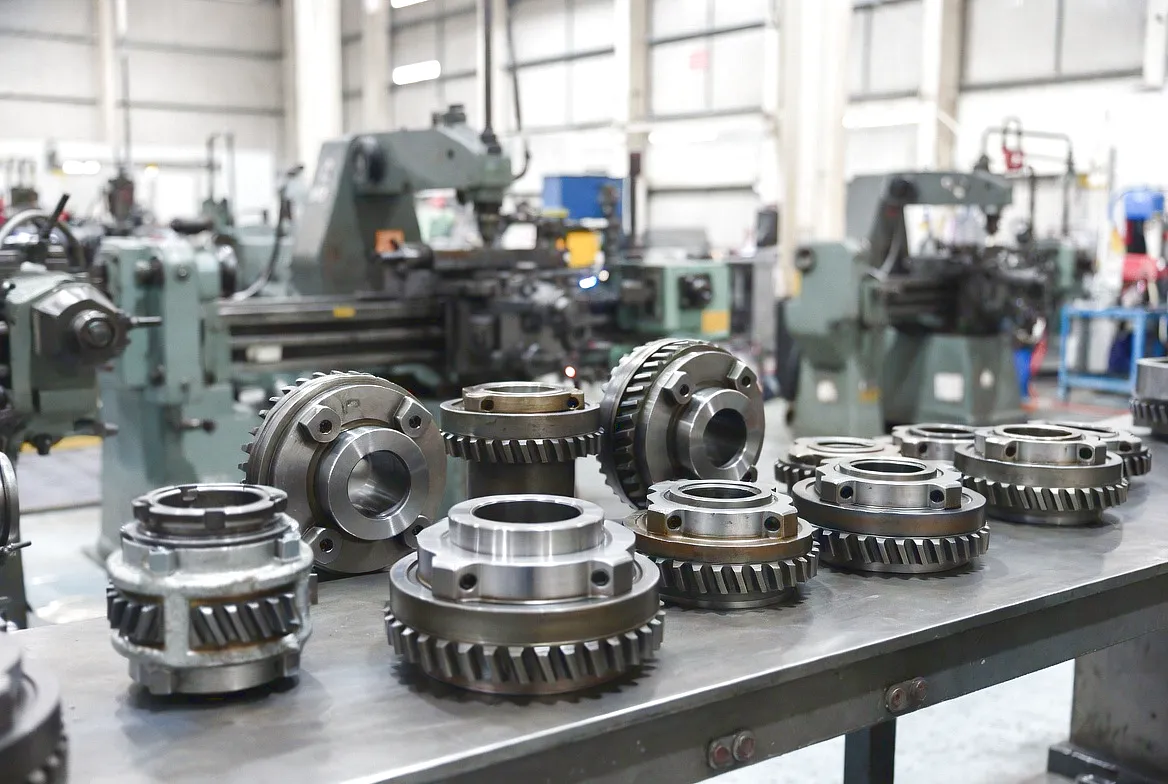 Our production facility runs a full gear coupling manufacturing process in-house, from raw alloy steel billet through heat treatment, gear grinding, balancing, sealing, and final inspection. This integrated approach is what allows us to offer customisation that purely assembly-based suppliers cannot match. Custom bore diameters, non-standard keyway positions, modified tooth profiles, alternative seal materials, and special surface treatments are handled as routine work orders, not one-off engineering projects requiring months of negotiation.
For wind turbine customers specifically, we offer a drivetrain review service where our applications team analyses your gearbox datasheets, shaft drawings, and operational torque data to recommend the optimal coupling series, size, and specification before a purchase order is placed. This upfront engineering work is provided at no charge and prevents the costly mismatch errors that occur when couplings are selected from a catalogue without application-specific analysis.
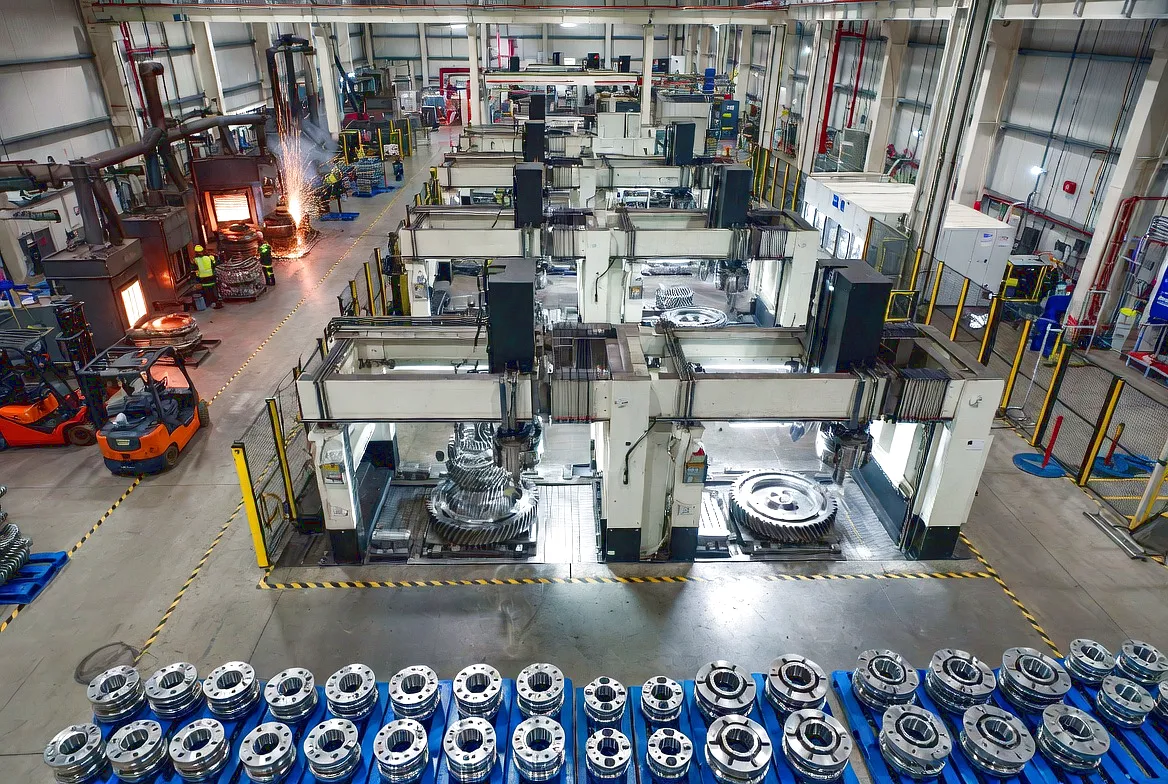 Our quality system includes incoming material certification, process control at heat treatment, dimensional inspection to DIN 3962 gear tolerances, dynamic balancing certification, and outgoing hydrostatic seal test on all closed-style couplings. Every batch ships with a documentation pack that satisfies most wind energy QA requirements on the first submission.
🔧 Custom Gear Coupling Design Service for Wind Energy OEMs and O&M Contractors
Non-Standard LBSE
Spline Interface
Shrink Disc Integration
Marine Paint Systems
Modified Crown Profile
Viton / PTFE Seals
Send us your gearbox drawings and operational parameters. Our engineering team will respond within 24 hours with a preliminary coupling recommendation and lead time estimate. No minimum order quantity applies to custom development projects.

Selecting the Right Gear Coupling for Your Wind Turbine Position
Quick-reference selection guide by drivetrain position and turbine class
| Drivetrain Position | Turbine Class | Recommended Series | Key Sizing Factor | Special Consideration |
|---|---|---|---|---|
| Main shaft → Gearbox input | 1.5–5 MW onshore | GICL Large | Peak torque × 2.5 service factor | Max misalignment from main bearing deflection |
| Main shaft → Gearbox input | 5–15 MW offshore | GICL XL Custom | Rated torque × 3.0 service factor | Viton seals, marine coating mandatory |
| Gearbox HS → Generator | Any DFIG | NGCL G2.5 | Speed × torque → rated power check | Dynamic balance critical at 1,500+ rpm |
| Yaw / pitch actuator | Any class | NL Nylon | Motor output torque × 1.5 | Electrical isolation between motor and load |
| Repower / retrofit shaft | Any class | Custom bore GICL/NGCL | Match existing shaft dimensions | Submit drawings for free engineering review |
Gear Coupling Applications Across the UK Industrial Landscape
From wind energy in Scotland and the North Sea to heavy process industries in the Midlands and Wales
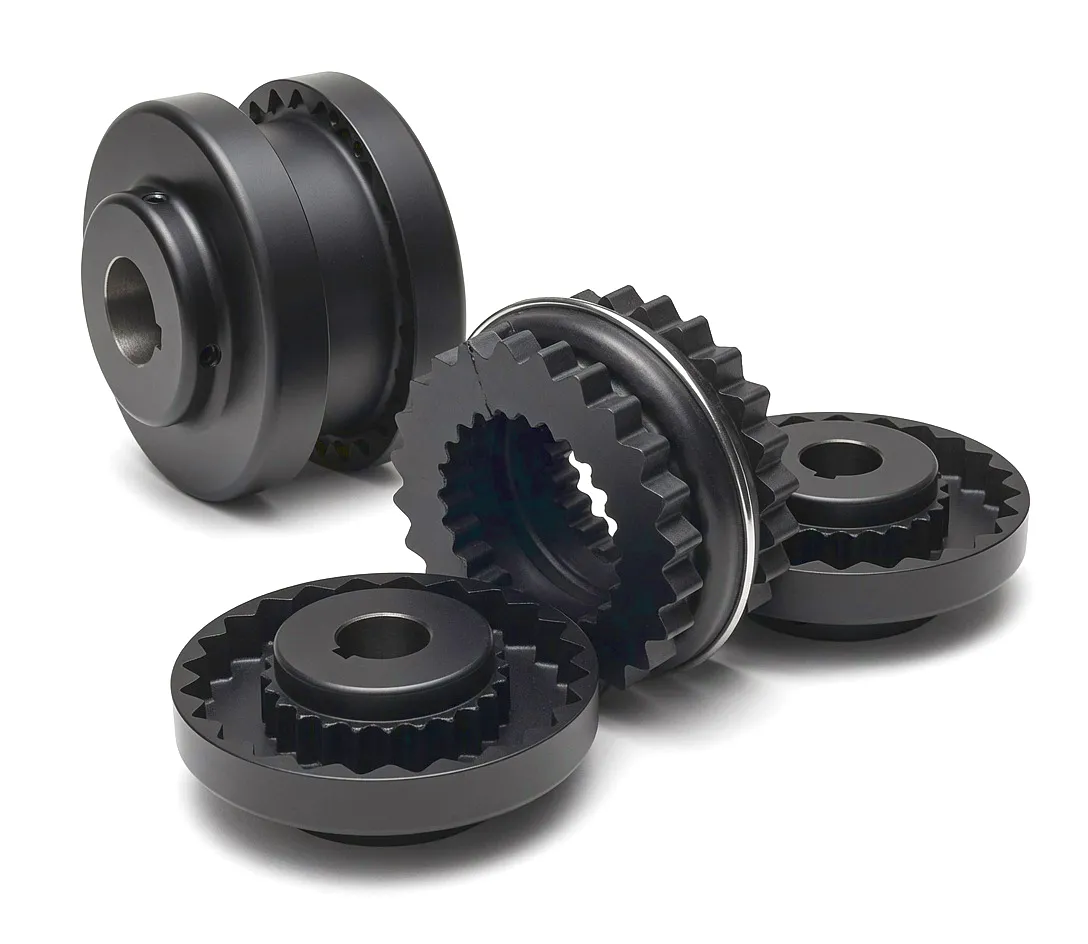 The United Kingdom’s industrial base creates demand for gear couplings across a remarkably diverse range of machinery types. Offshore wind energy — concentrated around the North Sea, the Irish Sea, and the coast of East Anglia — represents the fastest-growing segment, driven by the UK government’s target of 50 GW of offshore wind capacity by 2030. O&M contractors based in Aberdeen, Grimsby, Great Yarmouth, and Hull regularly specify replacement gear couplings for fleets ranging from early-generation 2 MW turbines to the latest 14 MW offshore giants, and many of those specifications now route through Ever Power’s technical team.
Steel production in South Yorkshire and South Wales remains a major consumer of large gear couplings for rolling mill main drives, where the coupling must tolerate torque reversal during cobble events without tooth breakage. The cement industry in the Peak District and along the South Coast uses gear couplings on kiln drives that must run continuously for years without maintenance intervention. Water utility companies across England and Wales use gear couplings on large centrifugal pump drives at water treatment and sewage pumping stations, often in damp environments where sealed coupling designs deliver a decisive service life advantage over open-type alternatives.
In each of these industries, the requirements that matter most — torque capacity, misalignment tolerance, corrosion resistance, and the ability to procure a custom replacement quickly — are the same requirements that Ever Power’s manufacturing programme is specifically designed to satisfy. Customers placing orders from Birmingham, Bristol, Glasgow, Leeds, Manchester, or any other UK location can expect consistent technical support, responsive communication, and reliable logistics through our freight network.
Maintenance Intervals and Service Life Expectations
Realistic operating life data for wind turbine gear couplings under UK conditions
Sealed Grease-Lubricated Units
Pre-filled with high-performance synthetic grease (e.g., Mobil Grease XHP 222 or equivalent), sealed drum-type gear couplings on low-speed shafts typically achieve 5–8 years between inspections when correctly sized and aligned at installation. At each scheduled turbine major service (usually every 5 years for offshore assets), the coupling seals are replaced, tooth flanks are visually inspected for micropitting or fretting corrosion, and grease is refreshed. A correctly specified and installed unit will outlive the gearbox it is mounted on.
Oil-Mist Lubricated High-Speed Units
On the high-speed shaft between gearbox and generator, couplings integrated into the gearbox oil mist lubrication circuit receive continuous fresh lubricant, which significantly extends tooth life. In this configuration, the coupling itself rarely fails before the next major gearbox overhaul at 10–12 years. The main wear mechanism is seal degradation from oil contamination of the seal lip, which is addressed by upgrading to Viton lip seals in aggressive offshore environments where nacelle temperatures fluctuate widely.
Warning Signs That Require Inspection
SCADA vibration monitoring that shows a step-change increase in drivetrain vibration amplitude (particularly at 1× or 2× shaft rotational frequency) is the most reliable early indicator of coupling tooth wear or loss of lubrication. Grease weeping past the seals onto the nacelle bedplate indicates seal failure and loss of lubricant, which accelerates tooth wear rapidly. Any audible knocking or clunking at low wind speeds — when torque is low and backlash becomes perceptible — points to advanced tooth wear that warrants immediate inspection.
Specifying a Gear Coupling for a Wind Turbine: The Five Questions That Matter
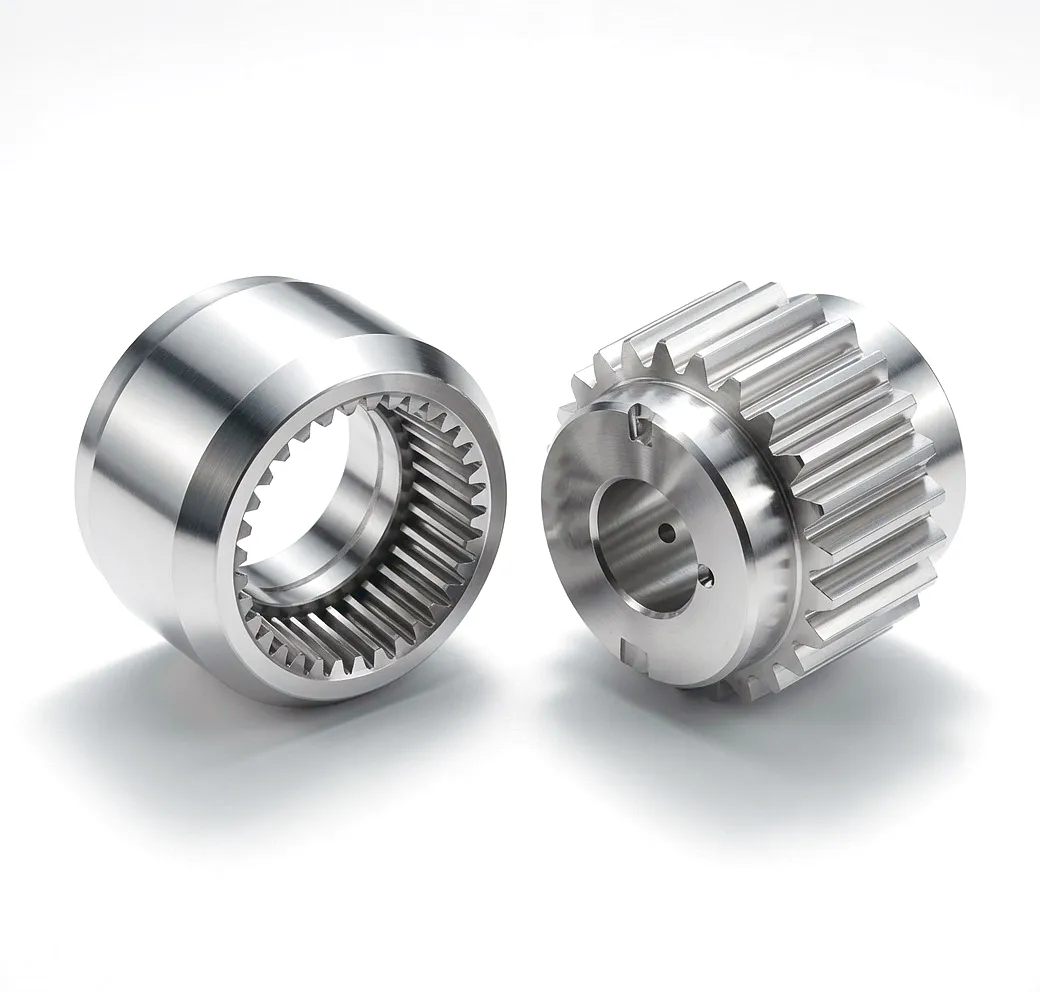 Every successful gear coupling specification starts with accurate answers to five questions. First, what is the maximum continuous torque and the peak shock torque, including the service factor mandated by the gearbox OEM? Second, what are the shaft diameters, bore fits, and keyway or spline dimensions at both ends of the coupling? Third, what is the maximum angular misalignment expected in service, including any dynamic deflection under aerodynamic loading? Fourth, what is the maximum operating speed? Fifth, what is the environment — onshore or offshore, ambient temperature range, exposure to salt or moisture, and any lubrication circuit integration?
Submit these five data points to our engineering team and we will return a complete coupling recommendation, dimensional drawing, and indicative price within one working day. This approach eliminates the risk of receiving a coupling that meets catalogue specifications but fails in your specific application because a critical parameter was not captured in the initial order. It is the kind of application engineering support that separates a long-term supplier relationship from a one-time transaction, and it is the service standard we hold ourselves to on every enquiry from across the United Kingdom and beyond.
Ready to Specify Your Gear Coupling?
Send us your gearbox specs, shaft drawings, or just a brief description of your application. Our UK-focused engineering team will respond within 24 hours with a coupling recommendation and quote.
Frequently Asked Questions
Questions from UK wind energy operators, procurement engineers, and O&M contractors
© Ever Power Industrial Transmission · Gear Coupling Specialists · United Kingdom Enquiries Welcome
gear-coupling.top · Technical enquiries responded to within 24 hours
edit by gzl