
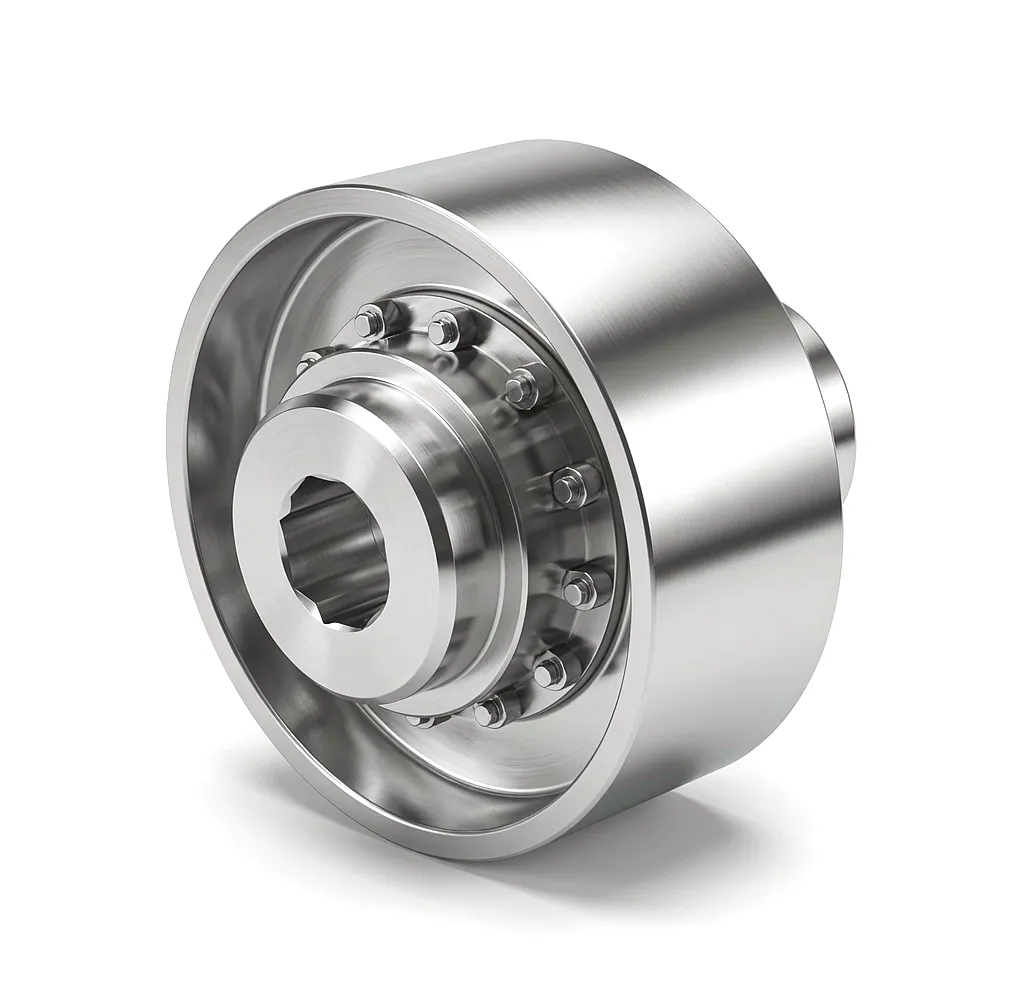
 Walk into any bulk material handling facility — a coal terminal at the Port of Tyne, a cement plant in the Midlands, or a steel mill in Sheffield — and you’ll find belt conveyors running continuously, often 24 hours a day, seven days a week. These machines are the circulatory system of heavy industry, and the coupling that sits between the motor, gearbox, and drive drum is one of the smallest yet most consequential components in the entire drivetrain.
The gear coupling has been the dominant choice for this application for good reason. Where a belt conveyor might span two kilometres, carry 5,000 tonnes of ore per hour, and endure angular misalignment caused by structural deflection under load, a well-specified gear coupling handles it without complaint. It absorbs shock loads at start-up, accommodates shaft misalignment without transmitting bending moments to the gearbox, and does so at torque densities that no other flexible coupling technology currently matches.
This guide is written for mechanical engineers, maintenance managers, and procurement specialists who are responsible for specifying, purchasing, or maintaining power transmission components on belt conveyor systems across the United Kingdom. Whether your site operates in coal mining, aggregates, port handling, power generation, or cement production, the principles and specifications covered here apply directly to your equipment.
UK & global orders welcomed. Custom specifications available. Fast response within 24 hours.
Why Belt Conveyors Create Unique Coupling Challenges
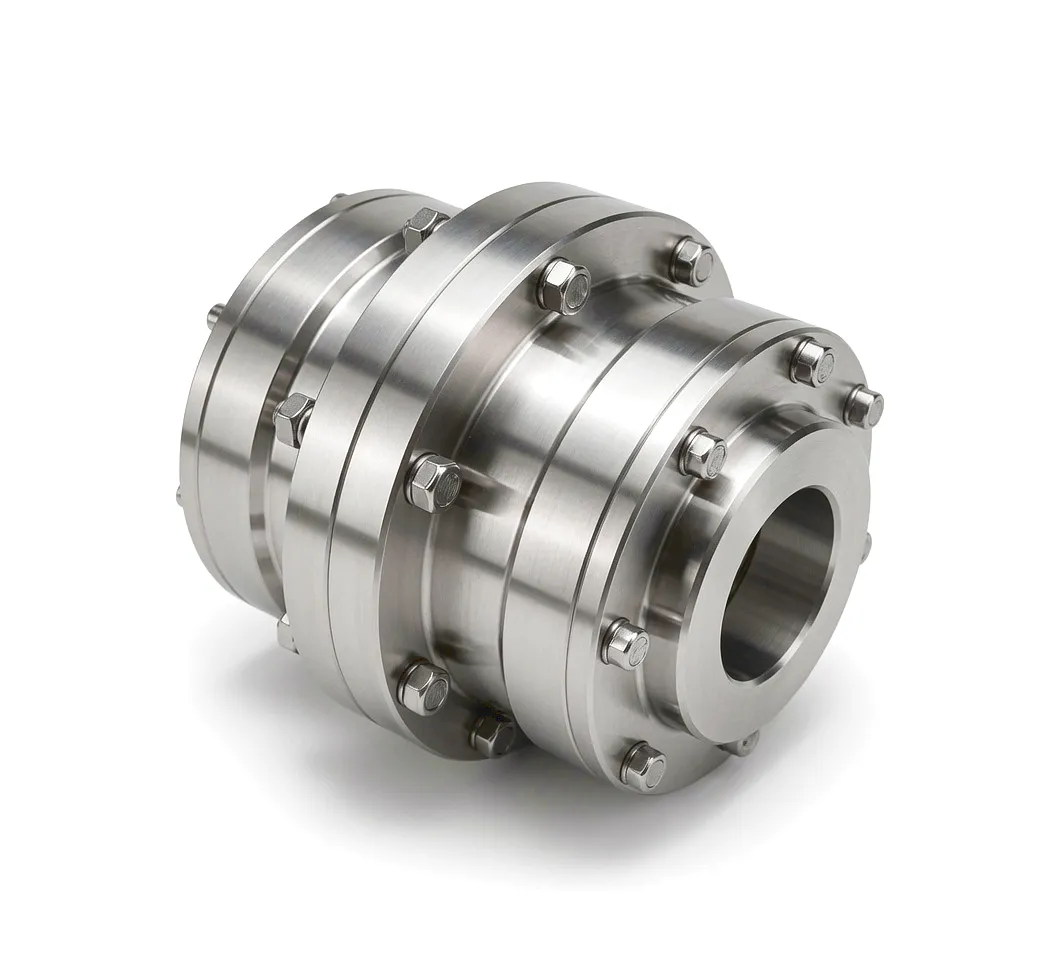 Belt conveyor drive systems operate under conditions that would rapidly destroy an under-specified coupling. The challenge isn’t simply one of transmitting rated torque — any well-made coupling can do that. The challenge is surviving the daily reality of heavy industry: start-up shock loads that can reach three to five times full-load torque, continuous structural flex on long-span conveyors that generates angular misalignment between drive shafts, thermal expansion of steel structures between winter and summer that shifts shaft centrelines by millimetres, and the occasional jam or belt slip event that reverses loading without warning.
A large belt conveyor in a UK opencast coal operation, for example, might use multiple drive units spaced along the belt path, each consisting of a high-voltage induction motor, a shaft-mounted helical gearbox, and a drive drum. Keeping those three shaft connections aligned permanently is physically impossible — the steel structure breathes with every load cycle. The gear coupling at each connection point must absorb that relative movement while continuing to transmit full power. Any coupling that transmits significant bending moments back into the gearbox bearings will cause premature bearing failure, leading to costly planned shutdowns or, worse, unplanned failures during peak production.
How a Gear Coupling Actually Works
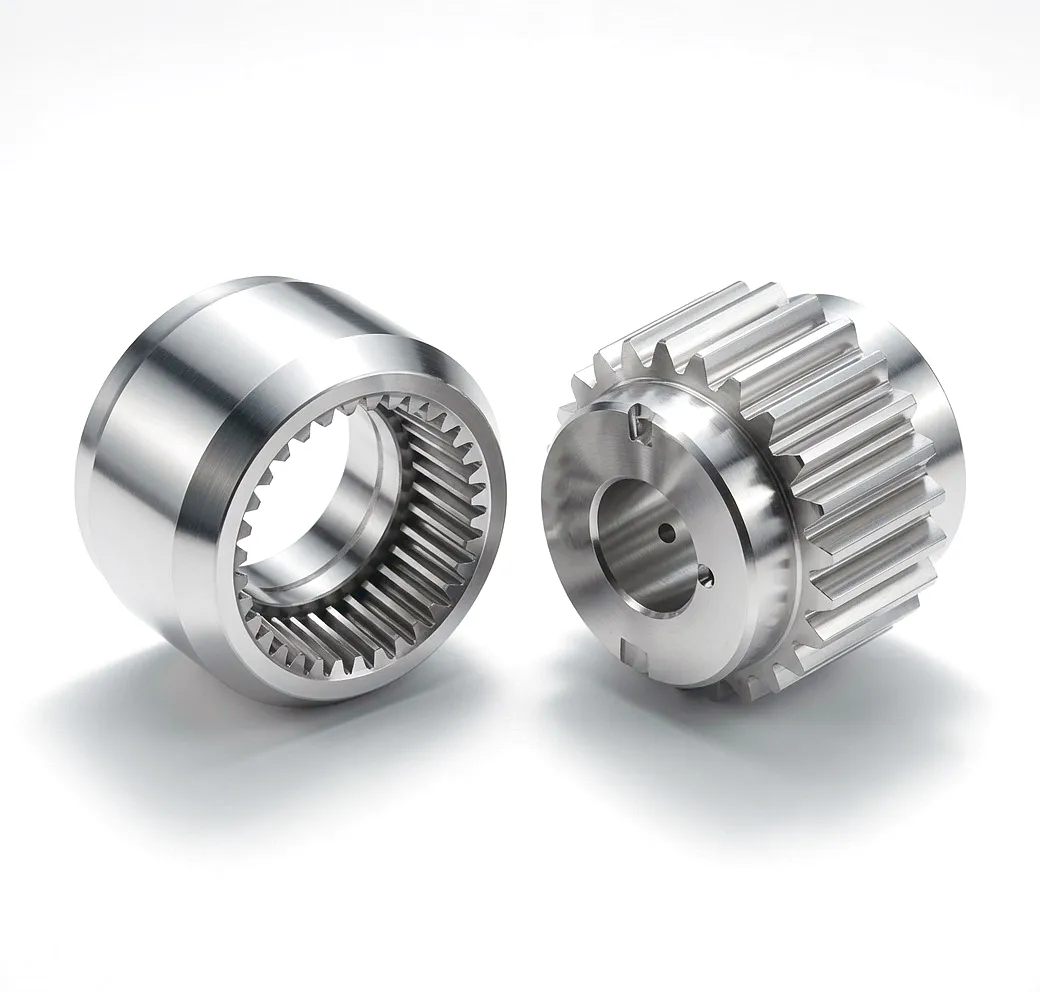
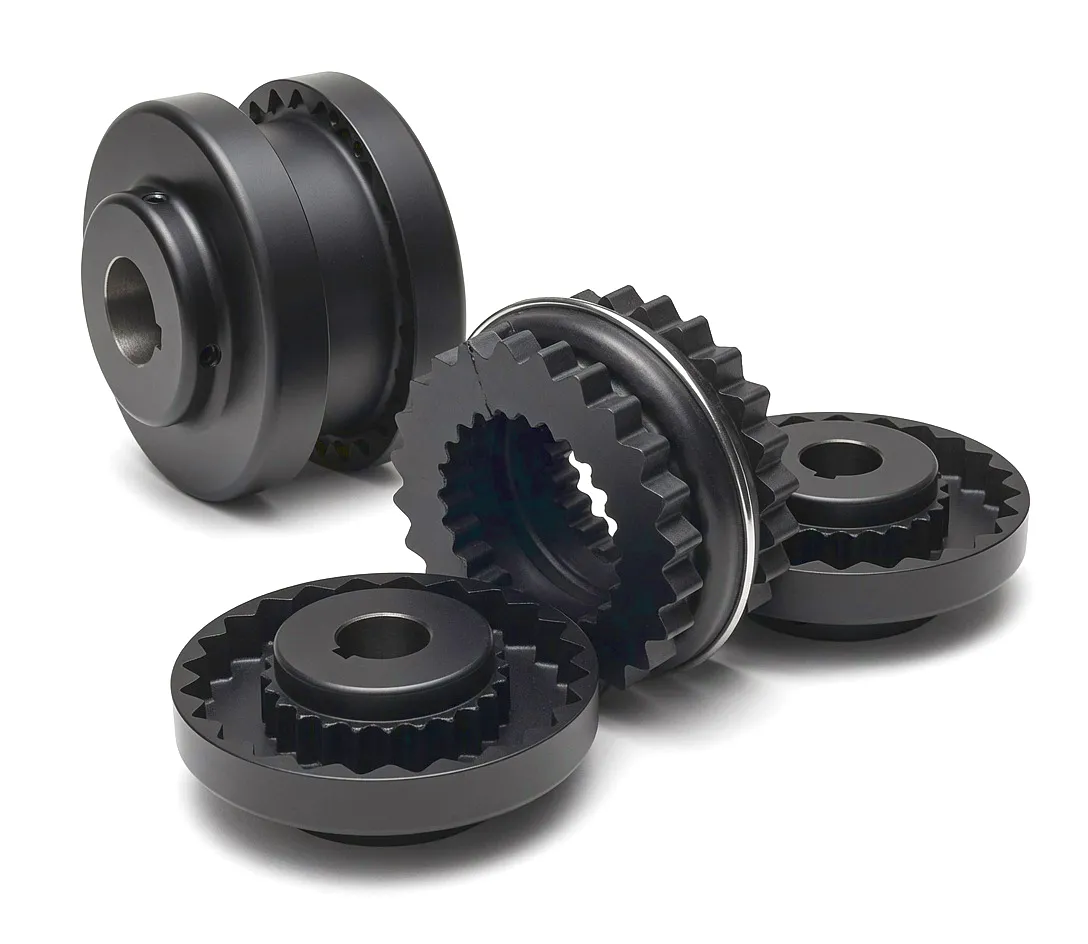
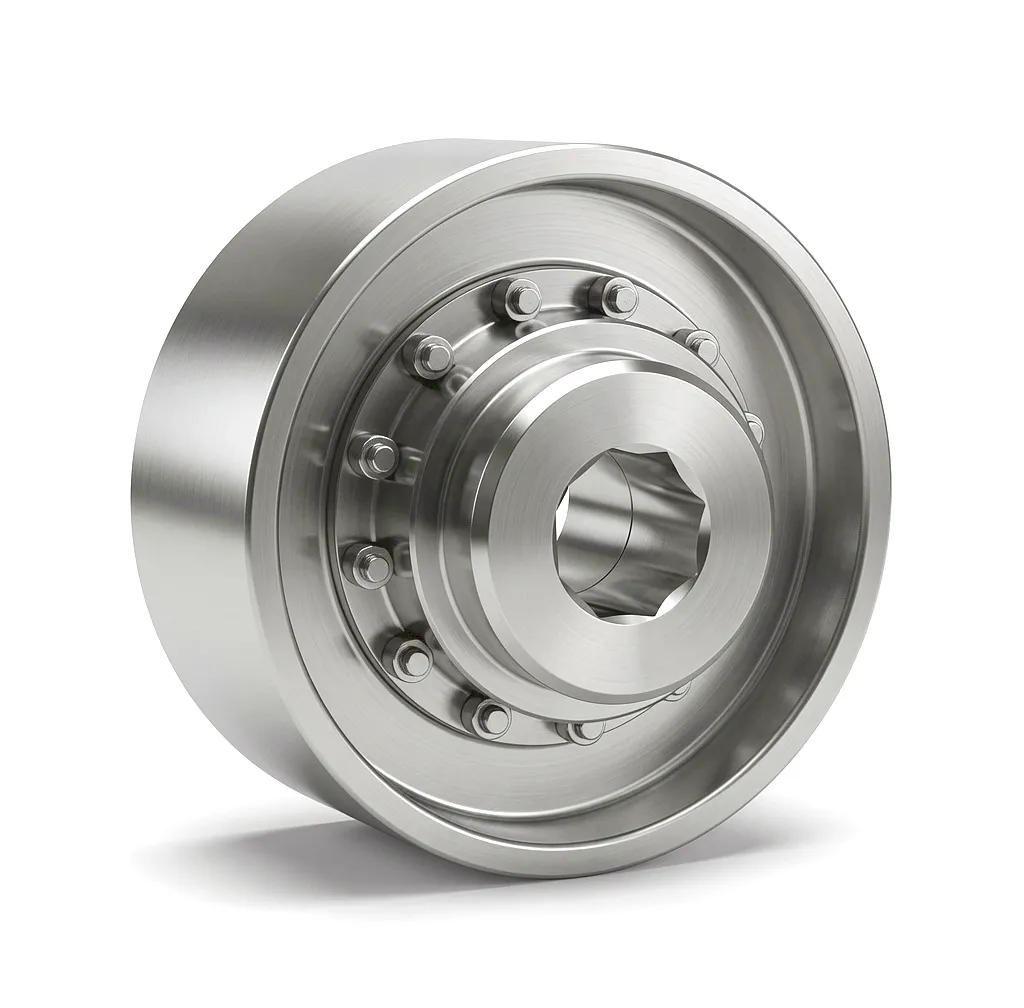
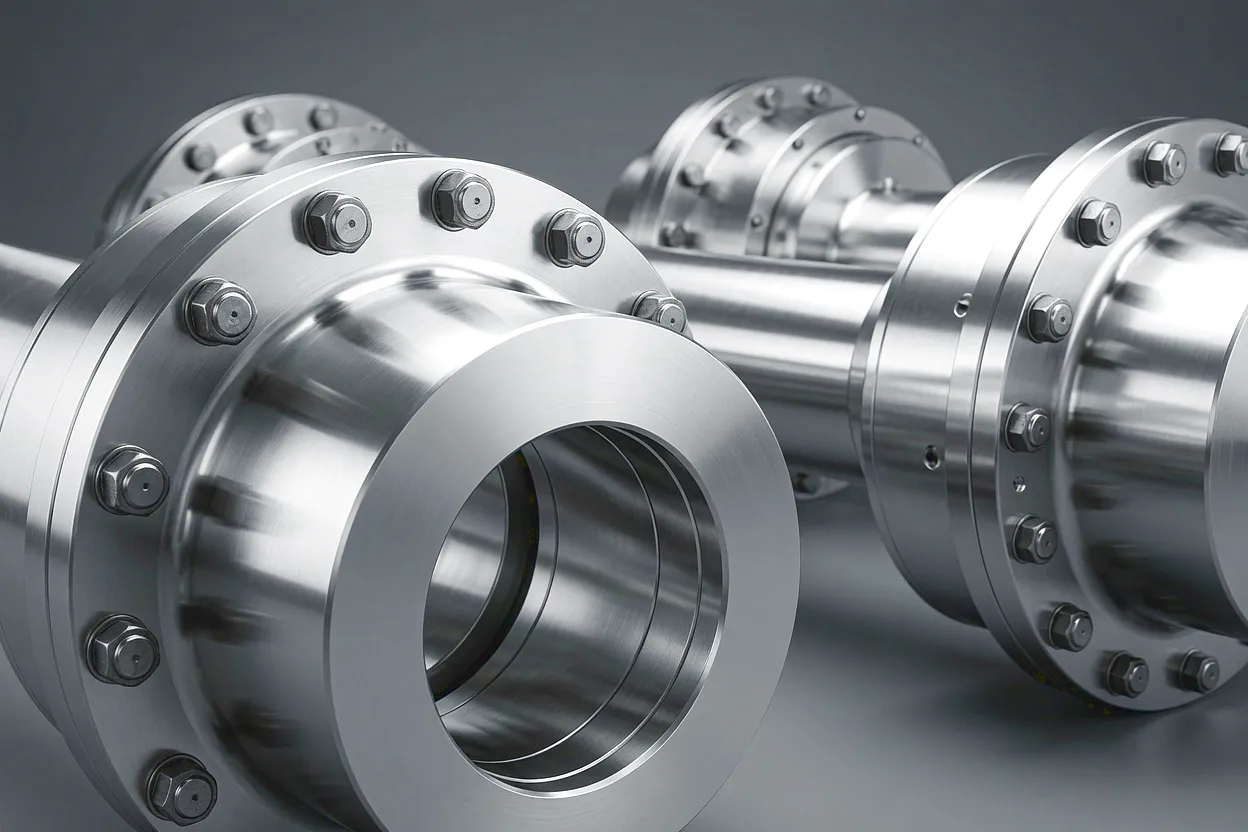 At its core, a gear coupling transmits torque through meshing internal and external teeth. The outer sleeve carries internal crowned teeth; the inner hub, which is keyed to the drive shaft, carries corresponding external teeth. Because the external teeth are crowned — meaning they’re convex rather than straight — the mesh can tolerate angular misalignment and axial displacement without generating significant radial or bending forces. The load is spread across multiple teeth simultaneously, giving the gear coupling its extraordinary torque density compared to jaw couplings, disc couplings, or even grid couplings.
Modern drum-tooth (barrel-tooth) gear couplings, such as the GICL and NGCL series widely specified in UK conveyor applications, refine this principle further. The teeth are machined with a specific crown radius that optimises the contact patch under combined angular and parallel misalignment, reducing the Hertz contact stresses that would otherwise concentrate at tooth edges. Lubrication — typically lithium-based grease packed into the coupling at assembly — forms a hydrodynamic film between the meshing surfaces, keeping wear to a minimum across service intervals that often reach 12 to 24 months.
The coupling assembly typically consists of two hubs — one mounted on the motor shaft, one on the gearbox input shaft — connected by a central spacer or floating sleeve. In belt conveyor applications, the spacer version is particularly valuable because it allows the motor or gearbox to be dismounted for maintenance without disturbing the hub on the opposite shaft. This can save many hours on a planned shutdown, since re-alignment of a shaft-mounted gearbox on a large conveyor is painstaking work.
Real-World Application Scenarios Across UK Industry
Mining & Aggregates
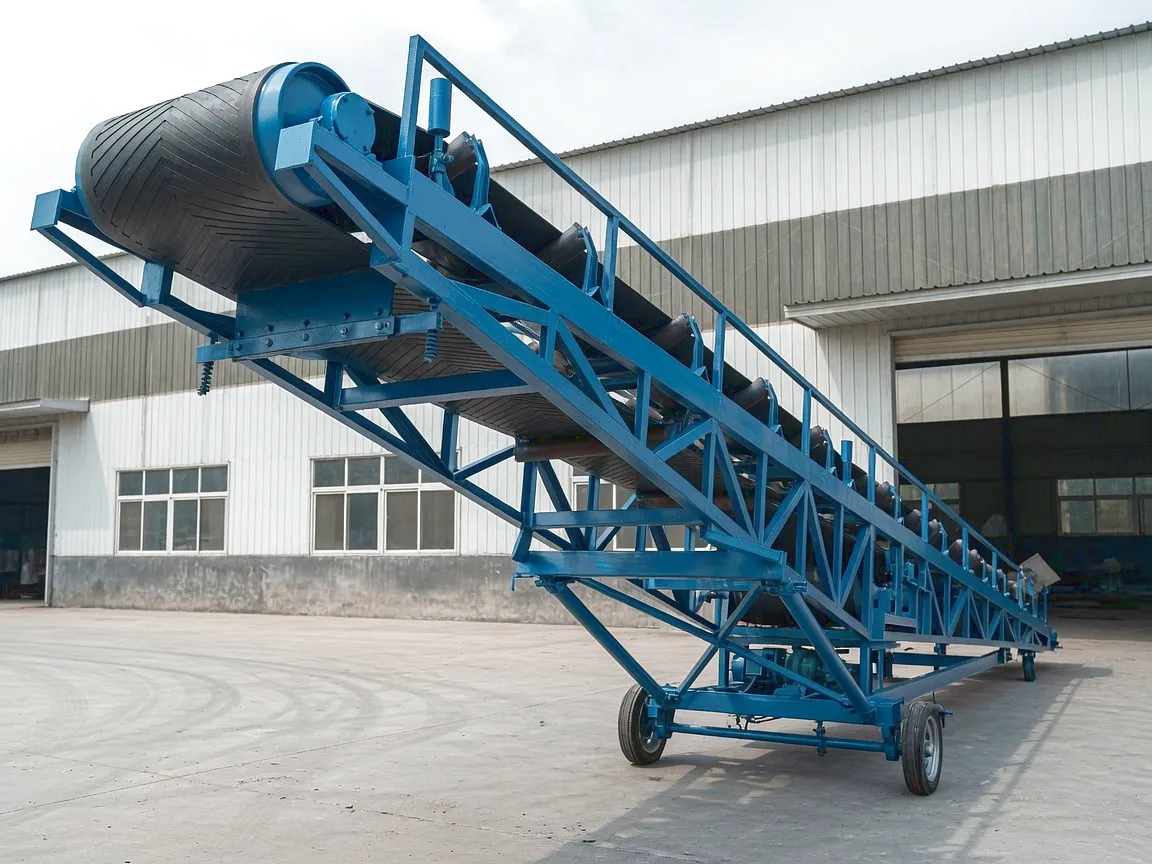
In UK quarries and opencast mines, overland belt conveyors carry crushed limestone, coal, and iron ore across distances of up to five kilometres. Drive units of 500 kW to 1,500 kW per drum are common. The gear coupling here must handle violent start-up shock when a fully loaded belt re-starts after an emergency stop, as well as the gradual misalignment that builds up as conveyor structure settles on soft ground. GICL-type drum-tooth gear couplings with torque ratings from 10,000 Nm to 80,000 Nm are standard specification for drives of this scale.
UK Port Handling & Terminals
The major UK bulk terminals — at Immingham, Grimsby, and Newport — operate high-capacity shiploaders and reclaimers that feed belt conveyor networks moving grain, coal, potash, and biomass. These conveyors run in demanding marine environments with high humidity and salt-laden air that accelerates corrosion. Gear couplings specified here need superior seal integrity to prevent lubricant contamination and, increasingly, corrosion-resistant surface treatments or stainless contact components. Throughput rates of 3,000 to 6,000 tonnes per hour place these systems among the most demanding conveyor applications anywhere in Europe.
Power Generation & Biomass
Coal-fired and biomass-fuelled power stations across the UK rely on fuel handling belt conveyors to feed boiler systems with precise throughput. Drax Power Station, for example, operates some of the longest and highest-capacity biomass belt conveyors in Europe. The gear couplings on these drives must deliver consistent performance around the clock, since any conveyor failure translates directly into reduced generating capacity. NGCL series couplings with brake wheel or gear wheel integration are particularly effective here, combining drive and braking functions in a single compact assembly.
Steel & Cement Production
Steel works in South Wales and the North East, and cement plants operating across England, use belt conveyors to transport raw materials such as iron ore, coke, limestone, and clinker at extremely high temperatures and dusty conditions. Here the gear coupling must not only transmit high torque but operate reliably when ambient temperatures near kiln zones may exceed 60°C, and when abrasive dust infiltrates every unsealed surface. Heavy-duty sealing arrangements and high-temperature grease formulations extend service intervals and protect against premature wear in these aggressive conditions.
Materials, Construction & What Makes a Quality Gear Coupling
 The difference between a gear coupling that lasts 25,000 hours and one that fails at 3,000 hours usually comes down to material specification and manufacturing precision — not design concept. In belt conveyor applications where access for maintenance is difficult and the cost of an unplanned stop is substantial, specifying quality from the outset is the economically rational choice.
Hub material in heavy-duty gear couplings for belt conveyor service is typically 45# medium carbon steel or alloy steel such as 40Cr, heat treated to surface hardness values in the range of HRC 45–55 on the tooth flanks. This hardness provides wear resistance on the tooth contact surfaces while leaving the core of the hub at sufficient toughness to absorb impact loading without brittle fracture. The outer sleeve, which carries the internal teeth and must resist hoop stresses during operation, is machined from similar material grades. Some manufacturers offer sleeves in spheroidal graphite cast iron (SG iron) for lower torque ranges where the higher damping capacity of iron is an advantage.
Surface treatment plays an underappreciated role in coupling longevity. Phosphating followed by grease-packing at assembly provides a degree of corrosion resistance adequate for indoor installations and many outdoor applications. In the marine environments found at UK port terminals, where coupling surfaces are exposed to salt spray and condensation, zinc-nickel plating or alternative protective coatings substantially extend service life between overhauls. The sealing arrangement — typically a lip seal or labyrinth seal at each hub-sleeve interface — must retain grease across the full range of misalignment while excluding water and abrasive dust. The quality of these seals is often the practical limit on lubrication interval, making it worth examining closely when comparing suppliers.
Technical Parameter Reference — GICL / NGCL Series Gear Couplings
| Model | Rated Torque (Nm) | Max Speed (RPM) | Angular Misalign. | Axial Displacement | Shaft Bore Range (mm) | Typical Application |
|---|---|---|---|---|---|---|
| GICL 1 | 250 | 4,500 | ±1°30′ | ±1.5 mm | 12 – 45 | Small conveyor, pump drive |
| GICL 5 | 2,500 | 2,800 | ±1°30′ | ±2.0 mm | 55 – 100 | Medium conveyor, fan drive |
| GICL 10 | 10,000 | 1,800 | ±1°30′ | ±2.5 mm | 90 – 180 | Large conveyor (250–500 kW) |
| NGCL 6 | 4,000 | 2,000 | ±1°30′ | ±2.5 mm | 75 – 130 | Conveyor with brake wheel |
| NGCL 10 | 16,000 | 1,400 | ±1°30′ | ±3.0 mm | 130 – 220 | High-capacity port conveyor |
| NGCL 14 | 50,000 | 900 | ±1°30′ | ±4.0 mm | 200 – 320 | Mining / steel mill (1 MW+) |
* Values shown are representative. Custom bore, keyway, and flange configurations available on request. Contact our team for certified selection sheets.
Key Advantages That Set Gear Couplings Apart
⚡ Extreme Torque Density
For a given physical envelope, gear couplings transmit more torque than any other flexible coupling type. On belt conveyors where drive pulley geometry fixes the available installation space, this is not a marginal advantage — it often determines whether a coupling solution is feasible at all.
🔗 Misalignment Tolerance
Angular misalignment up to ±1°30′ and parallel misalignment up to several millimetres are accepted without generating significant restoring forces. For long conveyor structures that flex seasonally and under load, this tolerance eliminates the continuous bearing load that would destroy a rigid coupling connection.
📈 High Mechanical Efficiency
Operating efficiency of 98.5% to 99% means that on a 1 MW conveyor drive, less than 15 kW is lost in the coupling. Over a year of continuous operation, this energy saving is meaningful — and at today’s UK industrial electricity prices, it directly reduces operating cost per tonne carried.
🛠 Long Service Intervals
With proper grease selection and seal integrity, quality gear couplings run maintenance-free for 12 to 24 months. This aligns well with typical planned maintenance cycles for bulk handling conveyors, meaning that the coupling is not a driver of additional planned downtime events beyond what the wider system requires.
🏛 Shock Load Absorption
The tooth-to-tooth contact geometry in a gear coupling provides inherent compliance under dynamic load spikes. At belt conveyor start-up — particularly where direct-on-line motor starting is used — the coupling’s ability to deflect slightly under shock torque prevents the full load spike from reaching gearbox internals, substantially reducing fatigue loading on gear teeth and bearings.
🔧 Modular Configuration
NGCL series couplings can be supplied with an integral brake wheel or gear wheel as part of the coupling outer sleeve, combining two separate components into one. This reduces overall drivetrain length, simplifies installation, and eliminates a potential shaft shoulder or keyway that could become a stress concentration point under cyclic loading.
Selecting the Right Gear Coupling for Your Belt Conveyor
 Selection begins with the drive data: rated motor power, motor shaft speed at the coupling (which is the same as input shaft speed of the gearbox), and the service factor applicable to the application. For belt conveyors, ISO 14923 and BS 3170 provide guidance on service factors that account for the start-up duty cycle, the nature of the material being carried (fine powder versus rock), and whether the conveyor operates under soft-start control or direct-on-line starting. A typical service factor for a bulk conveyor with direct-on-line starting and occasional shock loading would be in the range of 1.5 to 2.5, applied to the motor rated torque to arrive at the required coupling rated torque.
Shaft bore and keyway dimensions must be confirmed from the motor and gearbox datasheets, not assumed from nameplate ratings. It is surprisingly common for retrofits to discover that a replaced motor has a slightly different shaft diameter from its predecessor, requiring a rebored hub or a different coupling size. Specifying an oversized bore with a positive key fit — using H7/j6 or H7/k6 tolerances as appropriate for the speed and torque — avoids fretting corrosion at the hub-shaft interface that can make future removal extremely difficult.
For applications where the motor end and gearbox end are separated by a significant gap — such as where a hydraulic or electromagnetic coupling spacer is being replaced with a gear coupling, or where a brake assembly sits between the motor and gearbox — a long-spacer gear coupling with a suitable drop-out centre piece allows motor and gearbox to be decoupled without shaft movement. This is standard practice on the motor-side connection of most high-power belt conveyor drives installed in the UK market, and is strongly recommended even where it represents a small additional cost, given the maintenance time saved over the product’s service life.
Coupling Type Comparison for Belt Conveyor Duty
| Property | Gear Coupling | Disc Coupling | Jaw Coupling | Grid Coupling |
|---|---|---|---|---|
| Torque Density | ★★★★★ | ★★★★ | ★★ | ★★★ |
| Misalignment Tolerance | ★★★★★ | ★★ | ★★★ | ★★★★ |
| Shock Load Handling | ★★★★★ | ★★ | ★★★ | ★★★★★ |
| Maintenance Interval | ★★★★ | ★★★★★ | ★★★★ | ★★★ |
| Mechanical Efficiency (%) | 98.5 – 99.0 | 99.0 – 99.5 | 97.0 – 98.5 | 98.0 – 99.0 |
| Max Torque (Nm, typical heavy-duty) | 50,000+ | 25,000 | 5,000 | 12,000 |
| Requires Lubrication | Yes (grease) | No | No | Yes (grease) |
| Best Suited To | Heavy bulk handling | Precision / balanced | Light general duty | Moderate shock duty |
Customer Success Story
Case Study — UK Bulk Terminal Upgrade, North East England
Grimsby Port Biomass Terminal — Drive Reliability Improvement Programme
A major biomass terminal on the Humber Estuary was experiencing repeated failures on the motor-to-gearbox coupling of its main import conveyor — a 1,200 mm wide, 800-metre belt carrying wood pellets at 1,800 tonnes per hour. The original coupling specification, a disc coupling supplied by a European manufacturer, was failing at an average interval of 7 months due to stress corrosion cracking of the disc packs in the marine environment, combined with angular misalignment that exceeded the disc coupling’s design limits following settlement of the conveyor structure on reclaimed land.
Our engineering team reviewed the drive data: 630 kW motor, 990 RPM shaft speed, service factor of 1.8 for the direct-on-line starting regime. The recommendation was to replace the disc coupling with an NGCL-10 drum-tooth gear coupling, rated at 16,000 Nm, with a hot-dip galvanised sleeve for corrosion protection and double-lip seals suitable for the high-humidity coastal environment. A spacer arrangement was incorporated to allow motor removal without gearbox disturbance.
The gear coupling has now been in service for 26 months without any unplanned intervention. The maintenance team re-greased at 12 months during the planned annual shutdown, confirming clean grease with no evidence of moisture contamination. The terminal’s maintenance manager noted that the change eliminated what had been their most frequent unplanned conveyor stoppage cause, reducing annual conveyor downtime on this belt by an estimated 47 hours.
Project Data
Location
Humber Estuary, UK
Industry
Biomass / Port Handling
Product Supplied
NGCL-10 Gear Coupling
Previous Failure Rate
Every 7 months
Service Since Installation
26 months — no failure
What Our Clients Say
“We’ve run two of these drum-tooth gear couplings on our main reclaimer conveyor at Immingham for three years without any issues. The previous supplier’s couplings were costing us a replacement every year. These just keep going. Re-grease at the annual shutdown, that’s it.”
James H.
Mechanical Engineering Manager, Bulk Terminal — Lincolnshire, UK
“The custom bore specification was handled fast — we had non-standard shaft sizes on the gearbox input and they machined it to exact drawing within two weeks. Fitting was straightforward and the technical support when we had alignment queries was genuinely useful, not just a sales call.”
Sarah C.
Plant Engineer, Cement Manufacturer — Yorkshire, UK
“Price-wise they were competitive with the European alternatives we evaluated, and delivery on the NGCL units with the brake wheel was faster than quoted. We’ve ordered five sets now for our ore handling conveyors and haven’t had a single warranty issue. Good product, good people.”
Robert M.
Procurement Manager, Iron Ore Processing — South Wales, UK
Manufacturing Capability & Custom Engineering Services
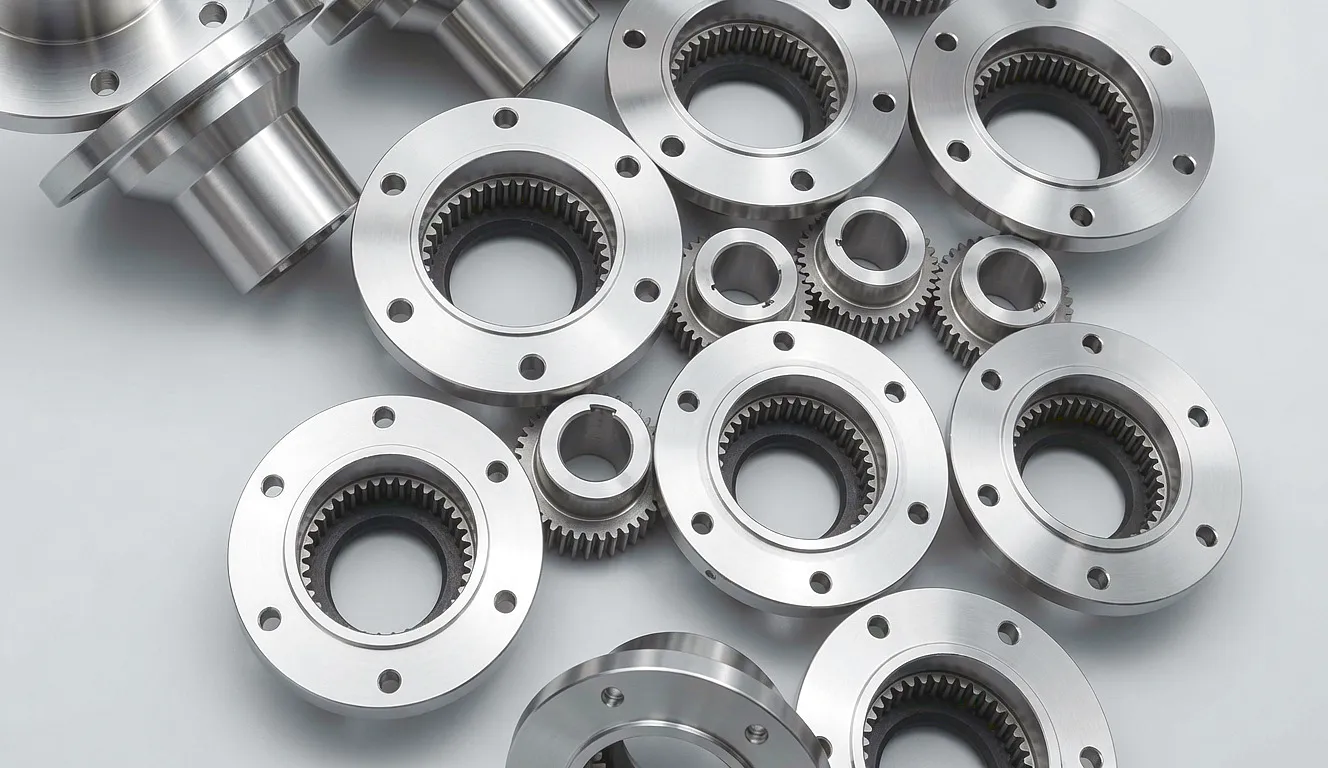
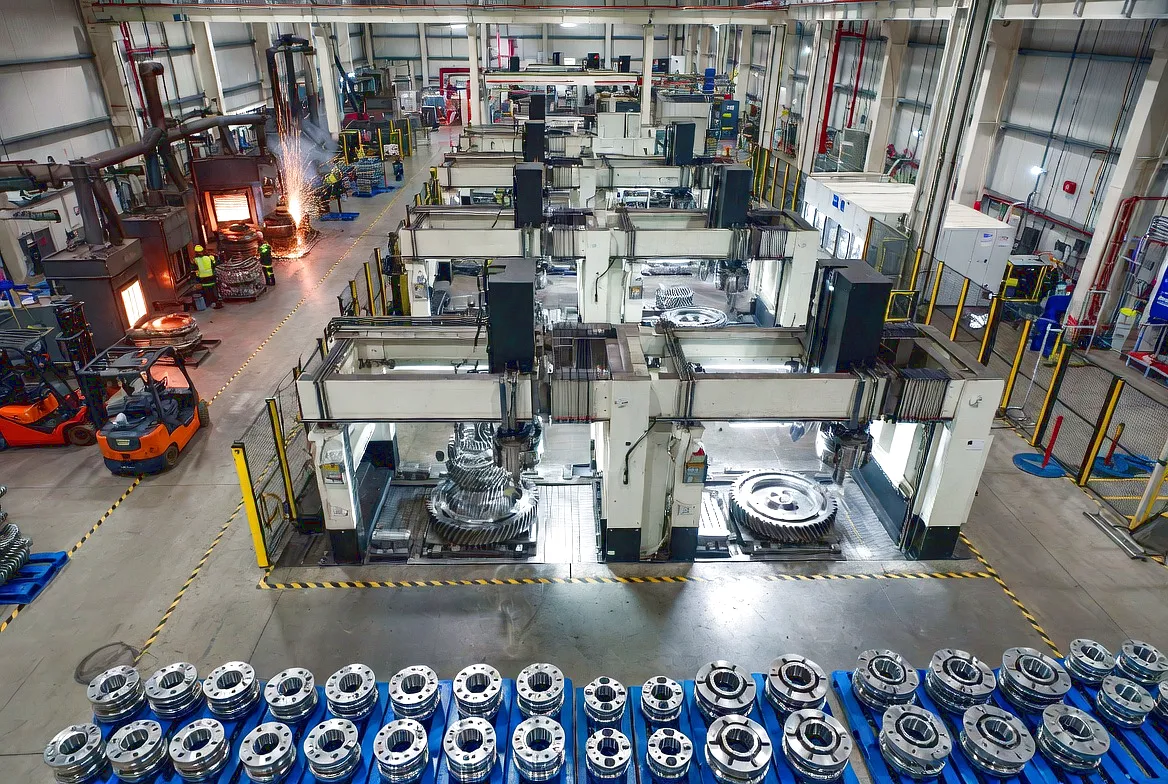
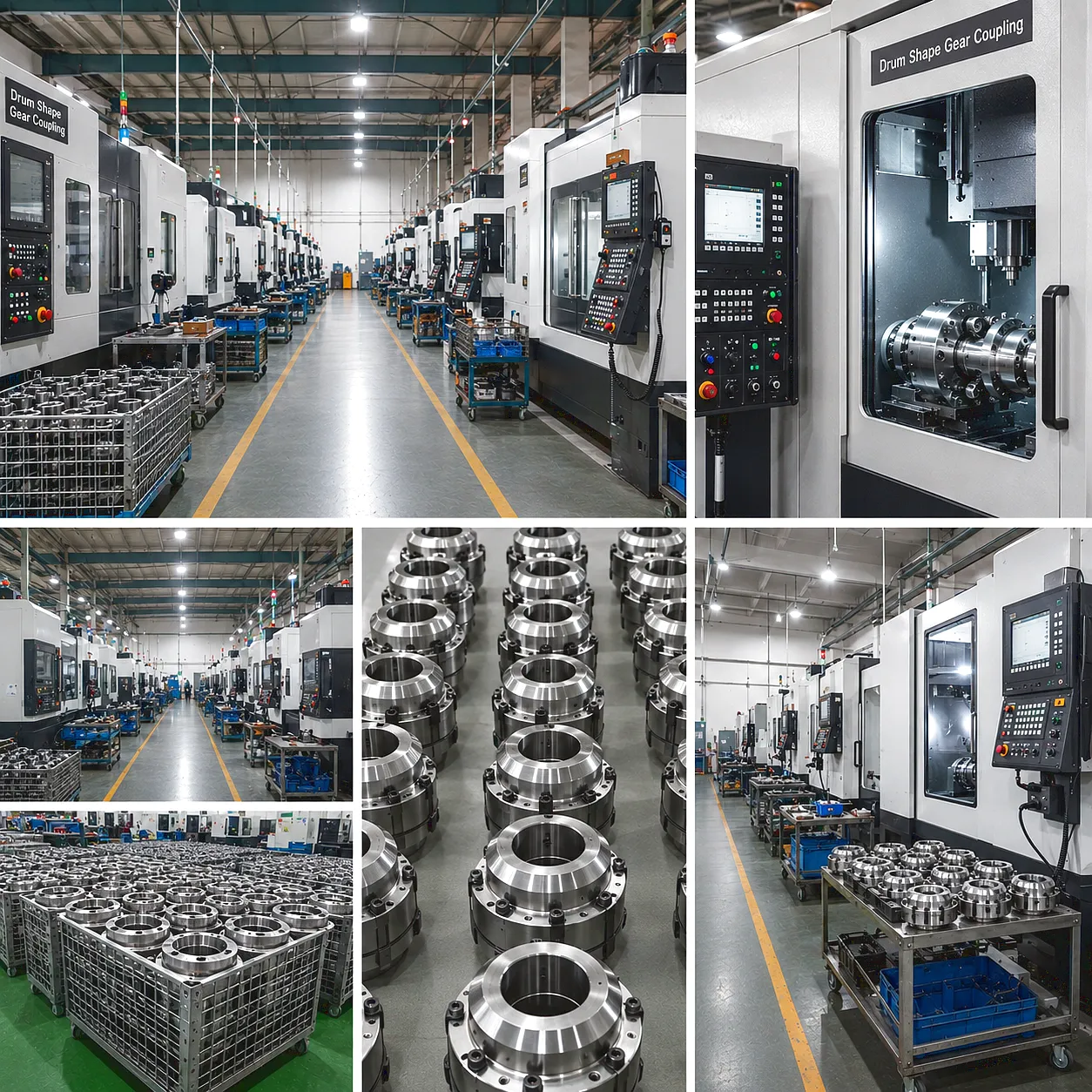
Ever Power’s gear coupling manufacturing facility operates CNC gear hobbing, grinding, and gear shaping centres capable of producing coupling hubs with module numbers from M1 to M16 and pitch circle diameters from 30 mm to over 800 mm. Every tooth profile is machined to DIN or AGMA quality grades with full CMM inspection of finished components before assembly. Our quality management system is certified to ISO 9001, and we maintain full material traceability from raw bar stock through finished coupling delivery.
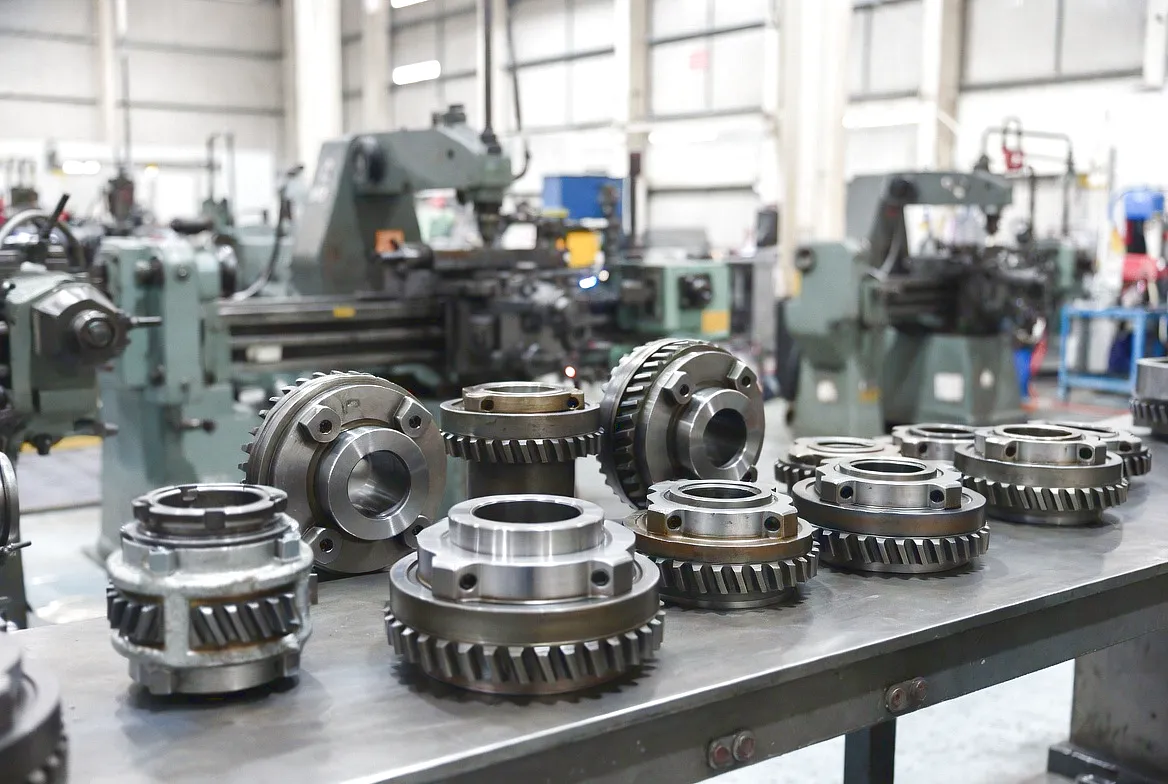
Our custom engineering service covers the full range of what a belt conveyor application might require. Non-standard bore diameters and keyway configurations are accommodated as standard — we hold blank hub forgings for all popular size ranges and machine to order. Flange-connected gear couplings, couplings with integral brake discs or brake drums, couplings designed to mate with specific gearbox output flanges from major European and Asian manufacturers, and couplings in materials other than standard carbon steel (stainless, duplex stainless, or alloy steel for high-temperature service) are all within our regular production scope.
For UK clients, we offer OEM replacement coupling programmes — where we hold engineering drawings for the incumbent coupling on your conveyor drives and can supply identical-specification replacements on a fast turnaround basis, eliminating the engineering work normally required when sourcing spares. This service is particularly valued by maintenance teams responsible for multiple drive units where standardisation of spare parts holdings is important. Lead times for standard catalogue sizes are 3 to 7 working days; custom-machined units typically 10 to 15 working days depending on complexity.
Installation, Alignment & Maintenance on Belt Conveyor Drives
Correct installation is what separates a gear coupling that delivers its design life from one that fails prematurely despite being correctly specified. Shaft alignment before hub installation is the most important step, and it is where field practice most frequently diverges from engineering recommendation. The common misconception is that because a gear coupling tolerates misalignment, precise initial alignment is unnecessary. The opposite is true: the coupling’s misalignment tolerance is a buffer against the misalignment that develops in service — settlement, thermal growth, dynamic deflection. If the coupling is installed with near-maximum misalignment already present, operational movements will routinely exceed the design limit, accelerating tooth wear and seal deterioration.
Best practice for belt conveyor applications is to align the motor-to-gearbox shafts to within 0.1 mm parallel offset and within 0.02 mm per 100 mm angular error at installation, confirmed by reverse-dial or laser alignment equipment. This leaves the full misalignment tolerance available as operational margin. Hub fitting to shaft should use the interference fit specified for the bore tolerance — medium-duty applications commonly use a light press fit achieved by heating the hub to 120 to 150°C using an induction heater, which allows clean seating without damage to keyway corners.
Grease selection deserves specific attention. Standard lithium-based multi-purpose grease is adequate for moderate-temperature indoor applications, but coupling manufacturers typically recommend an extreme-pressure gear coupling grease — containing PTFE or molybdenum disulphide additives — for heavy belt conveyor duty. These additives maintain a protective film on tooth flanks during the high-contact-stress periods at start-up when the hydrodynamic film has not yet established. For high-temperature locations such as conveyor drives adjacent to kiln or furnace areas, polyurea-based greases with temperature ratings to 180°C or above should be specified. Always fill to the volume indicated in the manufacturer’s data sheet — both under-filling and over-filling cause problems, the latter leading to seal damage from internal pressure generated by grease expansion at operating temperature.
Condition monitoring of gear couplings in service has become increasingly practical with modern vibration analysis and oil debris monitoring techniques. A gear coupling approaching the end of its service life typically generates a characteristic vibration signature at coupling tooth mesh frequency — twice shaft rotational frequency — that experienced analysts can identify from periodic vibration measurements taken at the motor or gearbox bearing housings. Scheduling coupling inspection and re-grease at the point when this signature emerges, rather than waiting for a failure, gives maintenance teams the ability to plan the work during a scheduled window rather than responding to an emergency.
Serving UK Industrial Sites — Delivery, Compliance & Support
 Belt conveyor operations across the United Kingdom work under specific regulatory and logistical constraints that influence coupling specification and sourcing. PSSR 2000 (Pressure Systems Safety Regulations) does not typically apply to gear couplings directly, but UK industrial procurement teams increasingly expect CE marking or UKCA marking on power transmission components, and supplier documentation packages that include material certificates to BS EN 10204 3.1 standard. Our standard supply package for UK clients includes CE/UKCA declaration of conformity, material test certificates, dimensional inspection reports, and assembly records — meeting the requirements of BS ISO 14691 (petroleum and natural gas industry) and ISO 14923 (industrial service) as applicable to the installation.
Delivery logistics to UK sites are well established. Standard catalogue sizes ship from our international distribution centre with DDP (Delivered Duty Paid) Incoterms available for UK mainland destinations, simplifying the procurement process for sites that do not have dedicated import handling capability. For urgent replacement requirements — where a conveyor is stopped and production is impacted — we operate an expedited manufacturing and shipping service that has achieved delivery of custom-machined gear couplings to UK sites within eight to twelve working days from receipt of confirmed order and engineering drawings.
Technical support is available from qualified application engineers who can review drive data, calculate service factors, recommend coupling specifications, and provide installation guidance for UK enquiries. Whether your site is in the Scottish Highlands, South Wales, or the East Midlands, the same quality of product and technical support applies. We regularly supply gear couplings to conveyor system integrators, OEM gearbox manufacturers with UK operations, and directly to site maintenance teams at bulk handling facilities throughout Britain.
Frequently Asked Questions
Ready to Specify or Source a Gear Coupling for Your Belt Conveyor?
Send us your motor power, shaft speed, bore diameters, and any special requirements. Our application engineers will recommend the right coupling specification and provide a competitive price, typically within 24 hours for UK enquiries.
UK mainland delivery available · Custom specifications · UKCA / CE documentation · Fast lead times
This article is written by an application engineering team with over 18 years of combined experience in gear coupling design and selection for bulk material handling belt conveyor systems. All product data, application examples, and maintenance recommendations are based on engineering practice consistent with ISO 14923, BS 3170, and major UK industrial site requirements. | edit by gzl