Product Description
Company Profile
Organization Profile
HangZhou Xihu (West Lake) Dis. Acquire Machinery Co., Ltd., is a manufacture of precision machining from metal plates, castings & closed die forgings. It is founded in 2571 yr, covers a complete spot of about 2000 sq. meters.
Around 50 individuals are used, like 4 engineers.
The business outfitted with ten oblique CZPT CNC Lathes, 35 typical CNC lathes, 6 machining centers, other milling machines and drilling devices.
The Products go over construction parts, automobile areas, medical treatment, aerospace, electronics and other fields, exported to Japan, Israel & other Asian international locations and Germany, the United States, Canada & other European and American nations.
Certificated by TS16949 top quality management system.
Gear Introduction
Principal facility and doing work variety, inspection gear as stick to
| four axles CNC Device Center | 1000mm*600mm*650mm |
| Indirect Xihu (West Lake) Dis. CNC Machine | max φ800mm max size 700mm Tolerance manage inside of .01 One particular time clamping, large precision |
| Turning-milling Compound Machining Center | max φ800mm max duration 1000mm |
| Other CNC Lathe | Total 30 sets |
| Inspection Equipment | CMM, Projector, CZPT Scale, Micrometer |
| Profiloscope, Hardness tester and so on |
Indirect Xihu (West Lake) Dis. CNC Lathe
Geared up with 10 sets of oblique CZPT CNC Lathes The greatest diameter can be 400-five hundred mm Precision can reach .01mm
Machining Heart
six sets of 4 axles machining centre, max SPEC: 1300*70mm, precision can get to .01mm
About Merchandise
High quality Management
We constantly want to be specific, so check out dimensions following every single production phase. We have senior engineers, expert CNC operator, professional good quality inspector. All this tends to make certain the final goods are high qualified.
Also can do third parity inspection accoring to customer’s reequirments, these kinds of as SGS, TUV, ICAS and so on.
Callipers/Peak guage
Thread guage
Go/ no go guage
Within micrometer
Outside the house micrometer
Micron scale
CMM
Projector
Micrometer
Profiloscope
Hardness tester
Inspection Approach
one. Before machining, the engineer will give away the technologies card for each and every approach acc. to drawing for high quality manage.
2. During the machining, the employees will check the proportions at each phase, then marked in the technologies card.
three. When machining finished, the professional testing personnel will do one hundred% retesting once again.
Packing Area
In general, the goods will be packed in bubble wrap or divided by plywoods to start with.
Then the wrapped goods will be put in the wooden circumstances (no solid wood), which is authorized for export.
Components can also be packed acc. to customer’s necessity.
| To Be Negotiated | 100 Pieces (Min. Order) |
###
| After-sales Service: | Compensate for Unqualified One |
|---|---|
| Warranty: | 1 Year |
| Condition: | New |
| Certification: | CE, ISO9001 |
| Standard: | DIN, ASTM, GOST, GB, JIS, BS |
| Customized: | Customized |
###
| Samples: | US$ 10/Piece 1 Piece(Min.Order) |
|---|
###
| Customization: | Available |
|---|
###
| 4 axles CNC Machine Center | 1000mm*600mm*650mm |
| Oblique Guide CNC Machine | max φ800mm max length 700mm Tolerance control within 0.01 One time clamping, high accuracy |
| Turning-milling Compound Machining Center | max φ800mm max length 1000mm |
| Other CNC Lathe | Total 30 sets |
| Inspection Equipment | CMM, Projector, Micron Scale, Micrometer |
| Profiloscope, Hardness tester and so on |
| To Be Negotiated | 100 Pieces (Min. Order) |
###
| After-sales Service: | Compensate for Unqualified One |
|---|---|
| Warranty: | 1 Year |
| Condition: | New |
| Certification: | CE, ISO9001 |
| Standard: | DIN, ASTM, GOST, GB, JIS, BS |
| Customized: | Customized |
###
| Samples: | US$ 10/Piece 1 Piece(Min.Order) |
|---|
###
| Customization: | Available |
|---|
###
| 4 axles CNC Machine Center | 1000mm*600mm*650mm |
| Oblique Guide CNC Machine | max φ800mm max length 700mm Tolerance control within 0.01 One time clamping, high accuracy |
| Turning-milling Compound Machining Center | max φ800mm max length 1000mm |
| Other CNC Lathe | Total 30 sets |
| Inspection Equipment | CMM, Projector, Micron Scale, Micrometer |
| Profiloscope, Hardness tester and so on |
Programming With Couplings
A coupling is a mechanical device that connects two shafts together and transmits power. Its purpose is to join rotating equipment and allows some degree of end-movement or misalignment. There are many different types of couplings. It’s important to choose the right one for your application.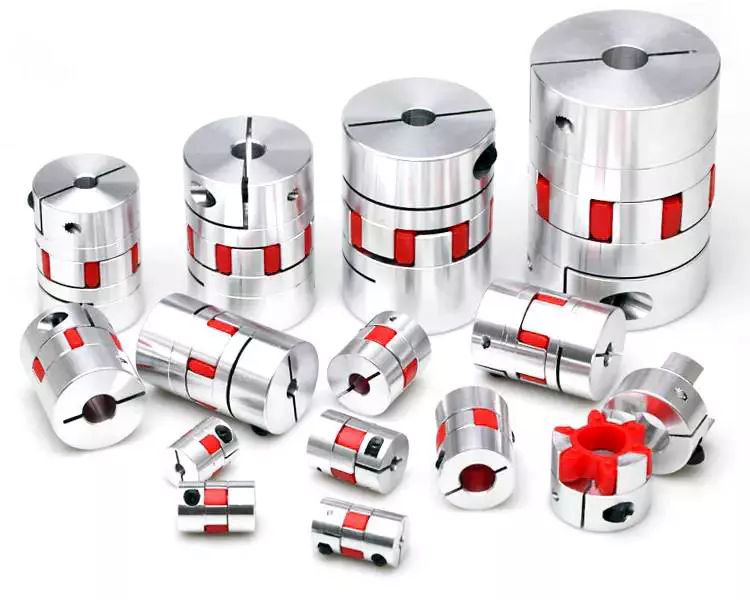
Mechanical connection between two shafts
There are many ways to achieve mechanical connection between two shafts, including the use of a coupling. One common type is the beam coupling, which is also known as a helical coupling. It is used for transmission of torque between two shafts. This type of connection accommodates axial, parallel and angular misalignments.
The hubs and shafts of a worm gear are connected together by a coupling. This mechanical connection allows one shaft to turn another without causing a mechanical failure. This type of coupling is made from sliding or rubbing parts to transfer torque. However, the coupling is not designed to withstand jerks, so it isn’t suitable for high-speed applications.
The use of a coupling is common in machinery and equipment. It helps transmit power from one drive shaft to the other, while adding mechanical flexibility. It is also useful for reducing the impact and vibration caused by misalignment. It also protects the drive shaft components from wear and tear.
A double-hook coupling can be used to provide a uniform angular velocity at the driven shaft. Another example is a double-jointed coupling. A double-jointed coupling can be used to connect shafts that are not directly intersecting. The double-jointed yoke can be used for the same purpose.
A shaft coupling is a device that maintains a strong mechanical connection between two shafts. It transfers motion from one shaft to another, at all loads and misalignments. Unlike a conventional linkage, a shaft coupling isn’t designed to allow relative motion between the two shafts. Couplings often serve several purposes in a machine, but their primary use is torque and power transmission.
Functions that control the flow of another function
One of the simplest programming constructs is a function that controls the flow of another function. A function can take an argument and return a different value, but it must be ready to return before it can pass that value to another function. To do this, you can use the goto statement and the if statement. Another way to control flow is to use a conditional statement.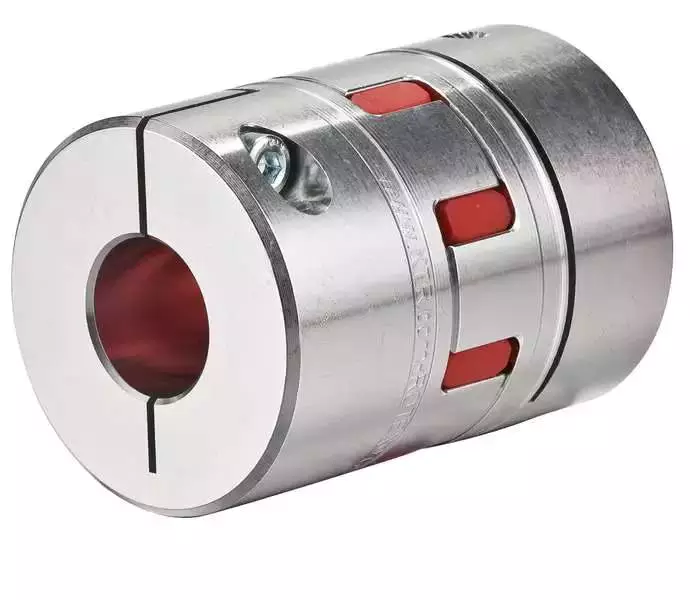
Criteria for selecting a coupling
There are several important factors to consider when choosing the right coupling. One of the most important factors is coupling stiffness, which depends on the material used and the shape. The stiffness of a coupling determines its ability to resist elastic deformation. A stiff coupling is desirable for certain types of applications, but it’s undesirable for others. Stiffness can reduce the performance of a system if there’s too much inertia. To avoid this, ensure that the coupling you choose is within the recommended limits.
The size of a coupling is also important. Different coupling types can accommodate different shaft sizes and shapes. Some couplings have special features, such as braking and shear pin protection. When choosing a coupling, you should also consider the type of driven equipment. If you need to connect a high-torque motor, for example, you’ll want to choose a gear coupling. Likewise, a high-speed machine may require a disc coupling.
Another factor to consider when selecting a coupling is the torque rating. Despite its importance, it’s often underestimated. The torque rating is defined as the torque of the coupling divided by its OD. In some cases, torque may fluctuate during a cycle, requiring a coupling with a higher torque rating.
Torsionally flexible couplings are also important to consider. Their design should be able to withstand the torque required during operation, as well as the required speed. The coupling should also have a high degree of torsional stiffness, as well as damping. Furthermore, a damping coupling can reduce the energy wasted through vibration.
The sizing of a coupling is also determined by the torque. Many engineers use torque to select the correct coupling size, but they also take into consideration torsional flexibility and torsional stiffness. For example, a shaft may be able to handle large torque without damaging the coupling, while a disk may be unable to handle large amounts of torque.
Besides torque, another important consideration in coupling selection is the cost. While a coupling may be cheaper, it may be less reliable or easier to maintain. Couplings that are difficult to service may not last as long. They may also require frequent maintenance. If that’s the case, consider purchasing a coupling with a low service factor.
There are many different types of couplings. Some require additional lubrication throughout their lifetime, while others are 100% lubrication-free. An example of a 100% lubrication-free coupling is the RBI flexible coupling from CZPT. This type of coupling can significantly reduce your total cost of ownership.
In addition to the above-mentioned benefits, elastomeric couplings are low-cost and need little maintenance. While they are often cheaper than metallic couplings, they also have excellent shock absorption and vibration dampening properties. However, they are susceptible to high temperatures. Also, they are difficult to balance as an assembly, and have limited overload torque capacity.

editor by czh 2022-11-26