
Gear Couplings › Crane Drive Applications
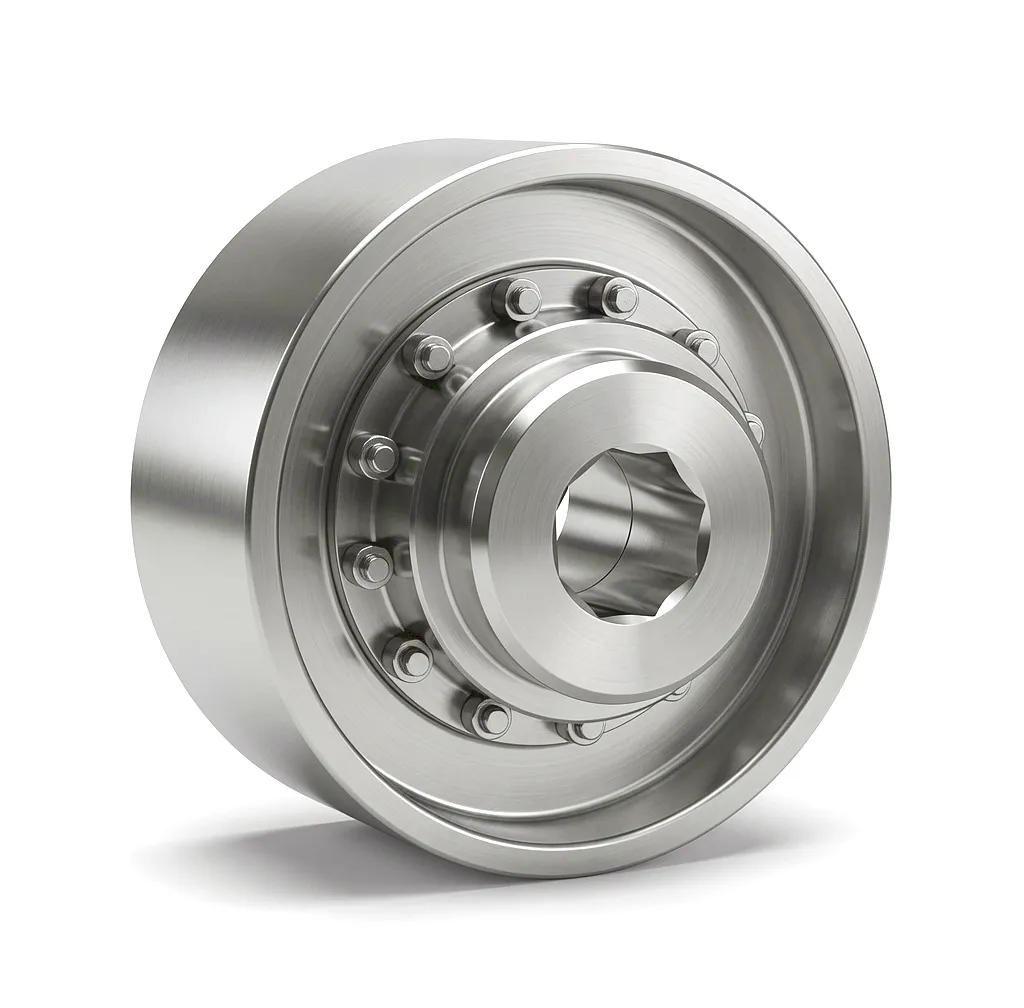 Walk into any busy port in Felixstowe, any steel mill in Sheffield, or any precast concrete plant in the East Midlands, and you’ll find cranes doing work that nothing else can. These machines lift loads measured in tens or hundreds of tonnes, cycle after cycle, in weather that ranges from damp British drizzle to sub-zero January mornings. What you probably won’t notice — but what every maintenance engineer on site thinks about — is the small mechanical component connecting motor shafts to gearboxes inside every single one of those drives. The gear coupling is that component, and its performance is the difference between a crane that runs profitably and one that sits idle waiting for a replacement part.
Crane drive systems put uniquely demanding requirements on shaft couplings. Start-stop cycling generates shock torque spikes that can reach three to five times the nominal running torque. Thermal expansion in the gearbox housing shifts shaft alignment throughout the working day. Structural flex in bridge crane girders means the two shaft ends you connected at cold startup are no longer parallel by mid-afternoon. Add outdoor exposure, vibration, and the cost consequences of unplanned downtime, and you begin to understand why a gear coupling — with its drum-tooth profile, high torque density, and inherent misalignment tolerance — has been the dominant choice for crane drive connections for decades.
EVER POWER MANUFACTURING
Ready to Find the Right Gear Coupling for Your Crane?
Our engineering team has been specifying gear couplings for crane OEMs and retrofit projects since 2006. Tell us your torque, speed, and misalignment requirements — we’ll have a full proposal back within 24 hours.
Why Crane Drives Demand More Than a Standard Coupling
THE ENGINEERING CASE
Shock Torque Absorption
Crane hoisting mechanisms start under load regularly. Peak torque during motor start can reach 4–5× the rated running torque. Drum-tooth gear couplings handle this through the crowned tooth geometry, which distributes load across a large contact zone rather than concentrating stress at tooth edges. The result is far greater fatigue life than a straight-tooth or jaw coupling of equivalent bore diameter.
Misalignment Tolerance
Bridge crane girders flex under load. Thermal gradients between motor, gearbox, and drum housings shift shaft centrelines. Gear couplings accommodate angular misalignment up to 1.5° and parallel offset of 0.5 mm without transmitting bending moments that would damage bearings. For outdoor portal cranes in the UK’s variable climate, this thermal accommodation is not optional — it is essential.
High Torque Density
Crane drive trains are space-constrained. The motor-to-gearbox gap on a compact end-carriage drive may be just 80–120 mm. Gear couplings transmit torque two to three times higher than elastomeric disc couplings of the same outer diameter. This lets engineers keep the coupling small enough to fit the envelope without over-engineering the surrounding structure.
These three properties explain why gear couplings are specified in almost every crane drive application worldwide — from the 5-tonne workshop hoists found in engineering SMEs across the West Midlands to the 600-tonne ladle cranes operating in continuous cast steelmaking plants. The physics does not change with the scale. What changes is the choice of gear coupling series, the tooth geometry, the material grade, and whether a flanged, floating-shaft, or brake-disc variant is appropriate for the specific drive layout.
Working Principle, Materials and Design Architecture
HOW DRUM-TOOTH GEAR COUPLINGS WORK
CROWN TEETH
Drum-Tooth Geometry
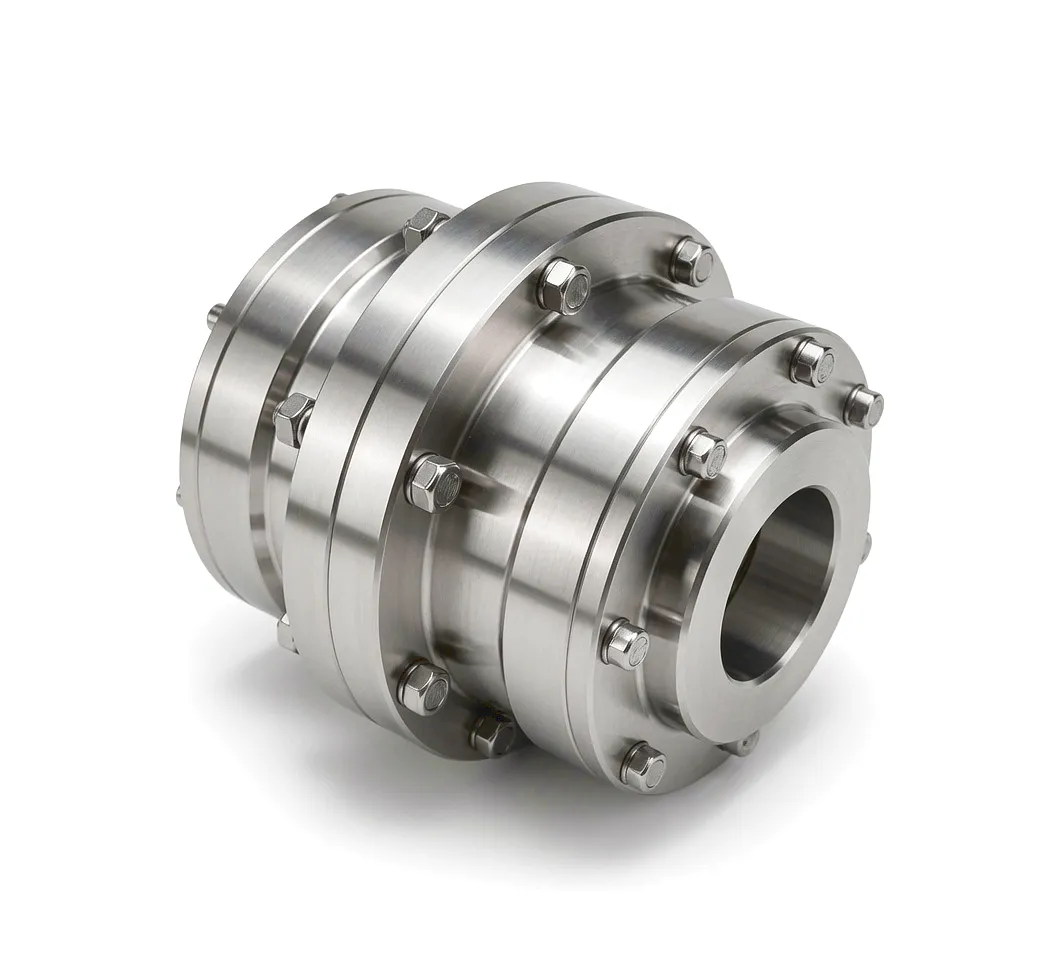
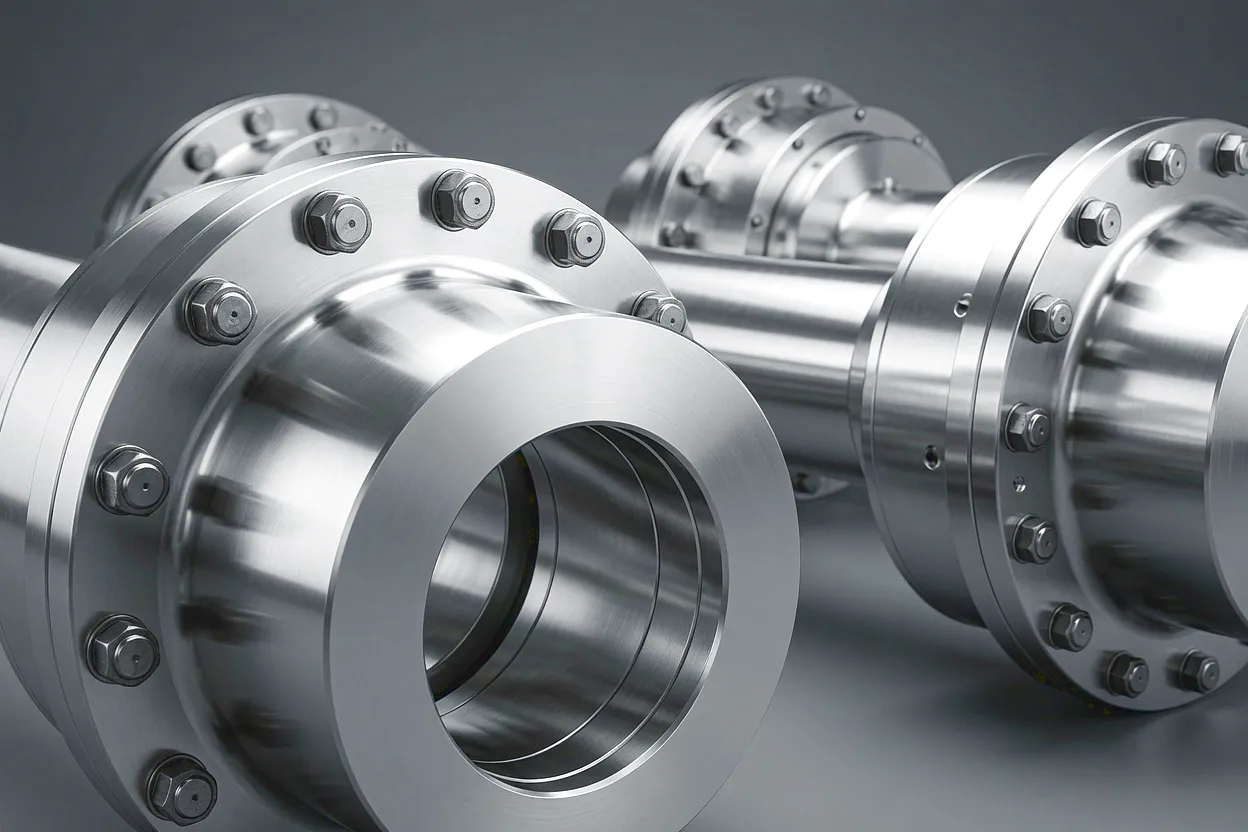
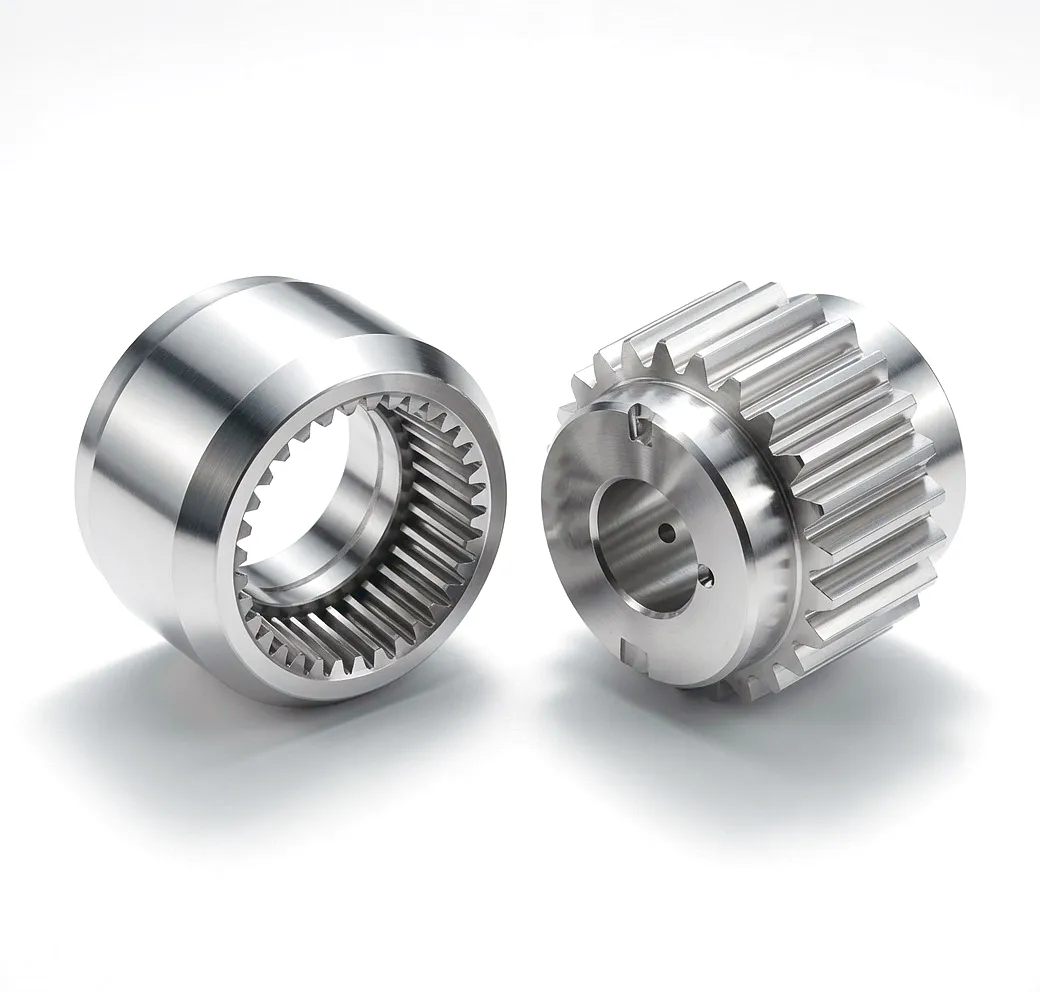
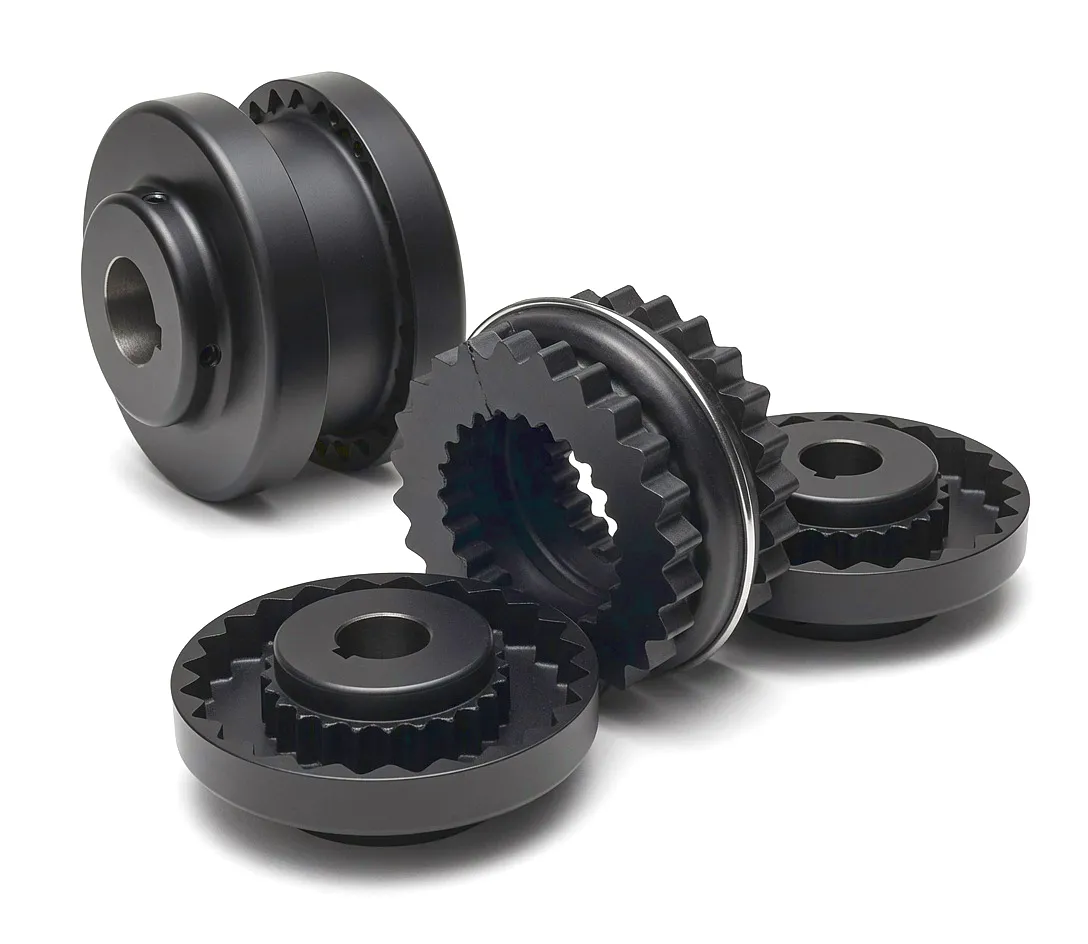
The inner sleeve teeth are machined with a convex (crowned) longitudinal profile — the “drum” shape. When the two shaft halves experience angular or parallel misalignment, the crowned teeth rock against the outer sleeve’s straight internal teeth without edge loading. This rolling contact distributes the transmitted torque across the full tooth width, eliminating the stress concentrations that cause premature fatigue failure in straight-tooth couplings operating in misaligned conditions.
MATERIALS
Alloy Steel Core
Hubs and outer sleeves are forged from 45# medium carbon steel or 40Cr alloy steel, with tooth flanks carburised and case-hardened to HRC 58–62. The case depth of 0.8–1.2 mm provides a hard wear surface while retaining a tough core that absorbs impact loading. Critical bore dimensions and tooth profiles are finish-ground after heat treatment, holding tolerances to H7/k6 for a secure, precise shaft fit. The result is a coupling that lasts 30,000+ operating hours in crane service without tooth wear reaching the service limit.
LUBRICATION
Sealed Grease System
The tooth mesh is enclosed in a grease-filled cavity sealed by lip seals at each end of the outer sleeve. NLGI 2 lithium complex grease is packed at the factory, providing a service interval of 6–12 months under normal crane operating cycles. The seals prevent contamination ingress — critical in dusty environments like aggregate terminals or cement works — while retaining lubricant under the centrifugal forces generated at higher rotational speeds. A grease nipple on each outer sleeve enables re-greasing without disassembly.
Technical Specifications — Gear Coupling Series for Crane Drives
GICL / NGCL / NL SERIES PERFORMANCE DATA
| Parameter | GICL Series | NGCL Series | NL Nylon Series |
|---|---|---|---|
| Nominal Torque Range | 160 – 355,000 N·m | 160 – 315,000 N·m | 25 – 16,000 N·m |
| Max Speed (rpm) | 3,000 | 4,000 | 6,000 |
| Angular Misalignment | up to 1.5° | up to 1.5° | up to 2° |
| Bore Range (mm) | 16 – 320 | 16 – 280 | 16 – 150 |
| Tooth Material | 40Cr Alloy Steel, HRC 58–62 | 45# Carbon Steel, HRC 55–60 | PA6 Nylon + Steel Hub |
| Operating Temperature | -30°C to +120°C | -30°C to +120°C | -20°C to +90°C |
| Protection Class | IP54 (sealed) | IP54 (sealed) | IP44 |
| Primary Crane Applications | Bridge crane, Gantry crane, Grab crane | Ladle crane, Heavy gantry, Port crane | Workshop hoist, Small EOT |
| Standard Compliance | GB/T 5843, ISO 9001:2015 | GB/T 5843, ISO 9001:2015 | GB/T 7549, ISO 9001:2015 |
Custom bore dimensions, keyway configurations, and brake disc integration available. Contact our technical team for non-standard requirements.
Gear Coupling Applications Across All Crane Types
WHERE OUR COUPLINGS OPERATE IN THE FIELD
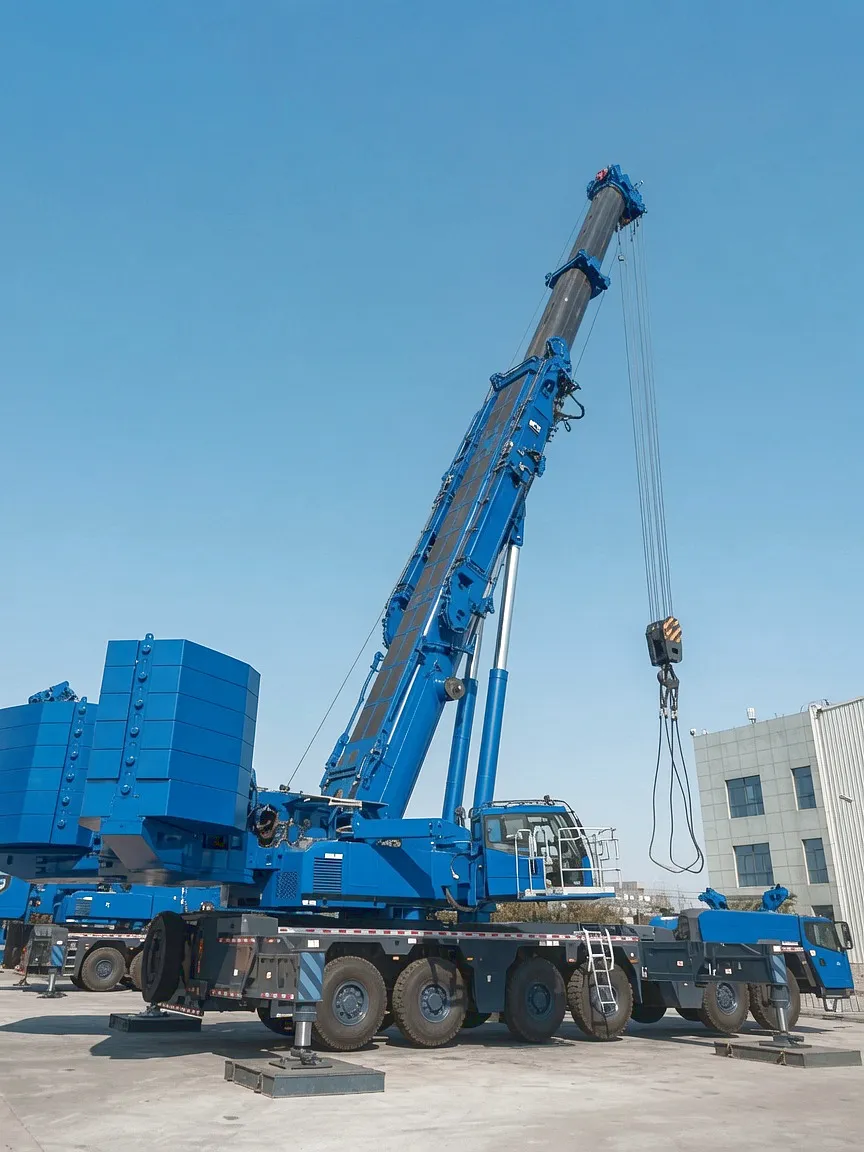
🏭 Steel Plant Ladle & Casting Cranes
Steel ladle cranes represent the most severe duty in any coupling specification exercise. Radiant heat from molten metal raises the ambient temperature around the drive system to 80–100°C, loads shift as liquid metal sloshes inside the ladle, and the cranes are required to run near-continuously during a cast cycle. The NGCL series for this application uses a high-temperature EP grease and heat-shielded outer sleeve, with a service temperature capability confirmed to 120°C continuous. We have supplied these units to secondary metallurgy operators in Rotherham and Scunthorpe — regions at the heart of UK steel production.
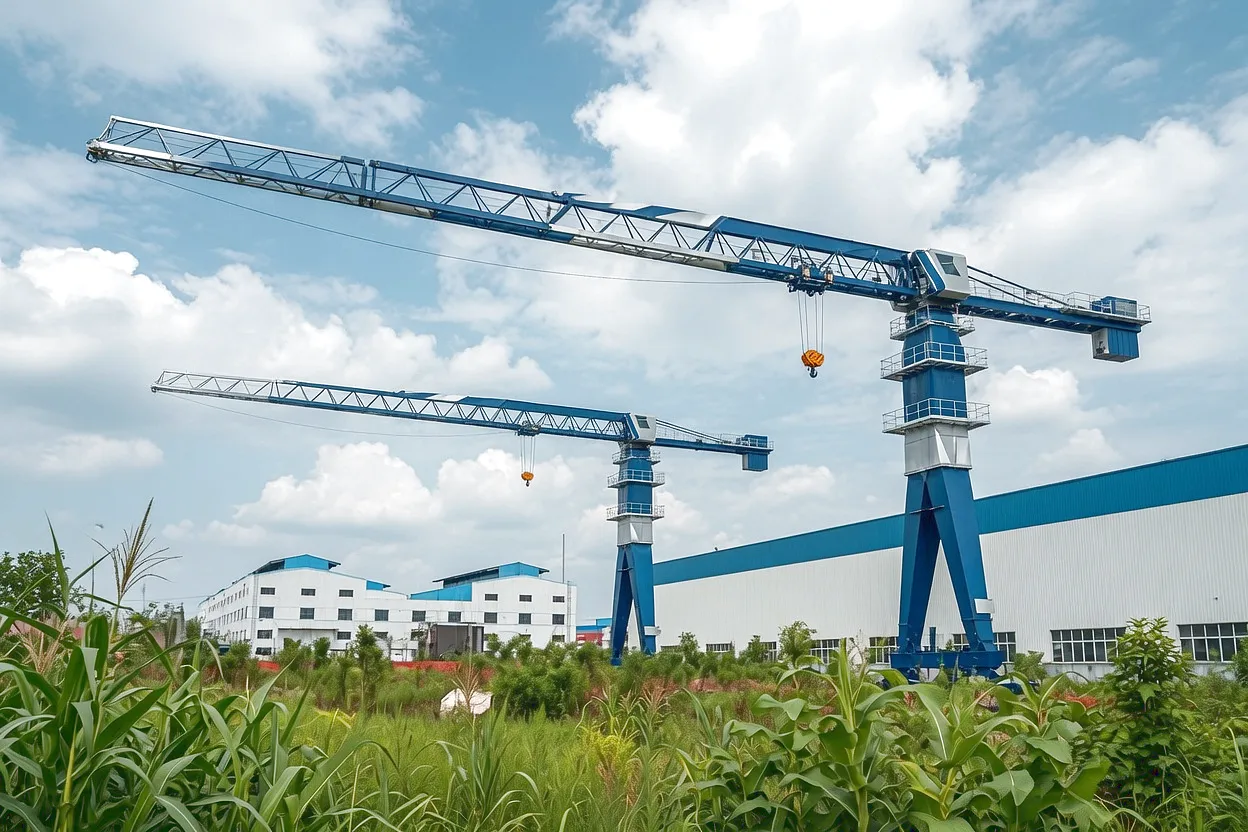
🏗️ Tower Cranes & Construction
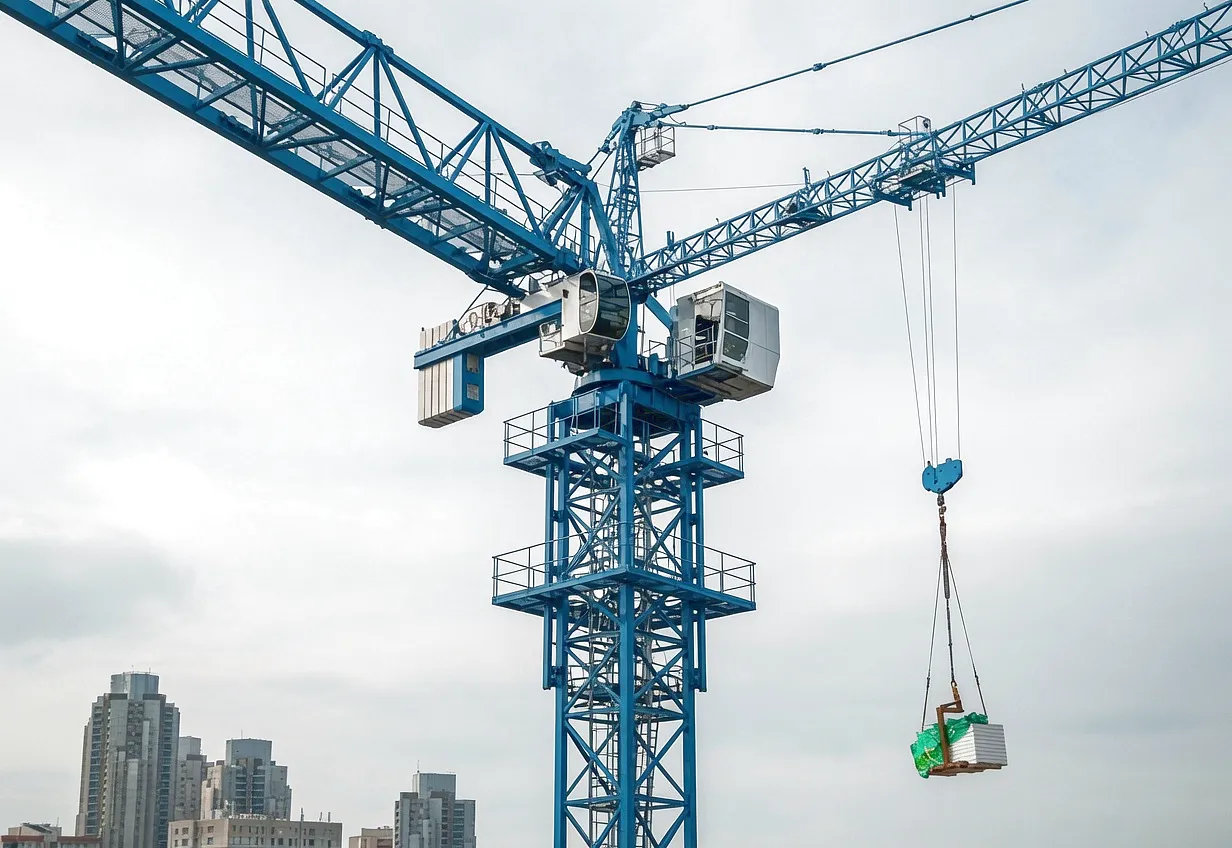
Flat-top and luffing-jib tower cranes use gear couplings in the hoist, slewing, and trolley drives. The slewing mechanism on a large luffing crane transmits torque through a gear coupling that must also accommodate the torsional compliance needed to prevent slew gear damage during emergency stops. For tower crane hoist motors, where the coupling sits exposed in the machine room at height and replacement is costly, a long-life sealed gear coupling offers a meaningful advantage over alternatives that require more frequent inspection or lubrication.
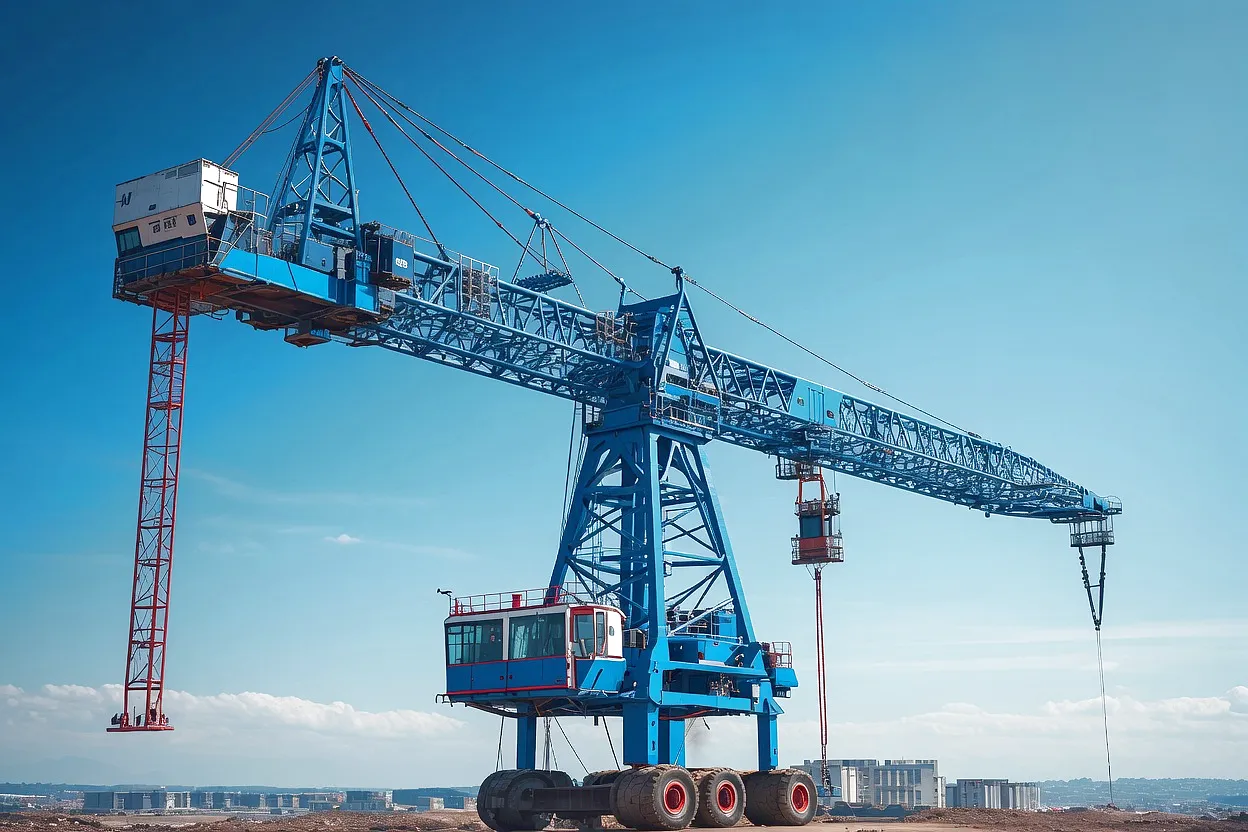
⛵ Floating Cranes & Marine Hoists
Ship-mounted cranes and offshore platform hoists present a combination of challenges that almost nothing else in coupling engineering matches: corrosive salt environment, continuous dynamic misalignment from hull or platform flex, shock loading from wave action, and very high safety criticality. Our marine-grade gear couplings for these applications are supplied with stainless steel fasteners, hot-dip galvanised outer sleeves, or optional offshore coating systems. UK-based offshore operators and marine crane OEMs along the east coast have specified our GICL marine variants in platform supply vessel crane replacements.
Seven Reasons Engineers Choose Ever Power Gear Couplings
PRODUCT ADVANTAGES
🔄
Proven Misalignment Tolerance
Accommodates up to 1.5° angular and 0.5 mm parallel offset simultaneously, protecting bearings and extending gearbox life in crane drives where thermal and structural misalignment is unavoidable.
💪
High Torque-to-Size Ratio
Transmits 2–3× more torque per unit envelope volume than elastomeric couplings. Critical for compact crane end-carriage designs where every millimetre of axial space is engineered.
⏱️
Long Service Intervals
Factory-packed grease with 6–12 month re-grease intervals. 30,000+ hour tooth life in typical crane duty. Lower total lifecycle cost than couplings requiring more frequent inspection or parts replacement.
🌡️
Wide Temperature Range
Operates reliably from -30°C in cold store warehouse cranes to +120°C in steel plant ladle service. The steel coupling body and high-temp grease option make this possible — important for the diversity of UK industrial environments.
🔧
Easy Maintenance Access
Split outer sleeve design on most series allows inspection and re-greasing without disconnecting shafts. Saves hours of downtime in cramped overhead crane end-carriages where access is already difficult.
⚙️
Brake Disc Integration
NGCL-Z and GICL-Z variants include an integral brake disc or brake drum on the outer sleeve — combining coupling and braking function in one assembly. Eliminates a separate brake-drum shaft coupling, saving weight and axial length on hoist drives.
📐
Wide Custom Configuration
Non-standard bore diameters, metric or inch keyways, flanged half-coupling variants, floating-shaft (intermediate shaft) versions for long spans, and special coatings all available. Our in-house design team works from your drawing or from motor/gearbox specifications directly.
Customer Success Case: Heavy Gantry Crane Retrofit — Humber Bulk Terminal, UK
CASE STUDY
BACKGROUND
A bulk materials handling terminal on the south bank of the Humber estuary operated a fleet of six grab unloader gantry cranes, each rated at 25 tonnes capacity, used to discharge aggregate, potash, and biomass from bulk carriers. After 12 years of service, the hoist drive couplings on four of the six cranes were showing advanced wear — a combination of misalignment-induced tooth pitting and grease contamination from the dusty environment. Crane availability had dropped below 78% due to coupling-related stoppages, and the maintenance team was performing emergency coupling replacements three to four times a year per crane.
SOLUTION
The terminal’s engineering manager contacted Ever Power following a recommendation from a UK-based industrial distributor. After reviewing the drive layout drawings and duty cycle data, our technical team recommended replacing the worn units with NGCL-5 series gear couplings featuring IP54-sealed outer sleeves, upgraded EP extreme pressure grease rated to 80°C continuous, and an oversized bore to match the gearbox shaft diameter precisely. The bore-machining tolerance was held to H7, and the keyways were cut to DIN 6885A standard as required by the gearbox manufacturer’s specification. A set of 12 complete coupling assemblies was manufactured, inspected, and dispatched within 14 working days of order confirmation.
OUTCOME
Eighteen months after the retrofit, all four cranes remained in continuous service without a single coupling-related stoppage. Crane availability rose from 78% to 96.5%. The site maintenance engineer reported that the re-grease interval of 10 months was comfortably achievable within the terminal’s scheduled quarterly maintenance window, eliminating the reactive callouts that had been generating additional labour costs. Total cost saving versus the previous 18-month period was estimated at £62,000 across the four cranes, counting avoided emergency parts, labour, and lost throughput.
KEY NUMBERS
96.5%
Crane availability after retrofit (up from 78%)
£62K
Estimated 18-month saving across 4 cranes
14 days
Order-to-dispatch lead time for custom bore units
0
Coupling-related stoppages in 18 months post-retrofit
CUSTOMER TESTIMONIALS
“We’d been through three different coupling brands in as many years on our grab crane hoists. The Ever Power NGCL units have been running without issue for over a year now. The sealed design makes an obvious difference in our dusty environment — the old couplings used to need re-greasing every two months.”
Tom Briggs
Maintenance Engineer, Bulk Terminal — East Yorkshire, UK
“We needed a coupling with an integral brake drum for a ladle crane rebuild and couldn’t find a UK stock solution at the right size. Ever Power’s team turned around a fully machined NGCL-Z custom unit in less than three weeks. The quality of the gear tooth finish was noticeably better than our previous supplier.”
Andy Marsden
Crane Maintenance Supervisor, Secondary Steel Facility — South Yorkshire, UK
“Our procurement team was sceptical about sourcing couplings internationally, but the documentation pack — material certs, dimensional inspection report, and balance check — was better than anything we’d received from European suppliers at twice the price. We’ve since standardised Ever Power as our crane coupling supplier.”
Sarah Holgate
Head of Procurement, Crane OEM — West Midlands, UK
Manufacturing Excellence and Custom Engineering Services
EVER POWER FACTORY CAPABILITY
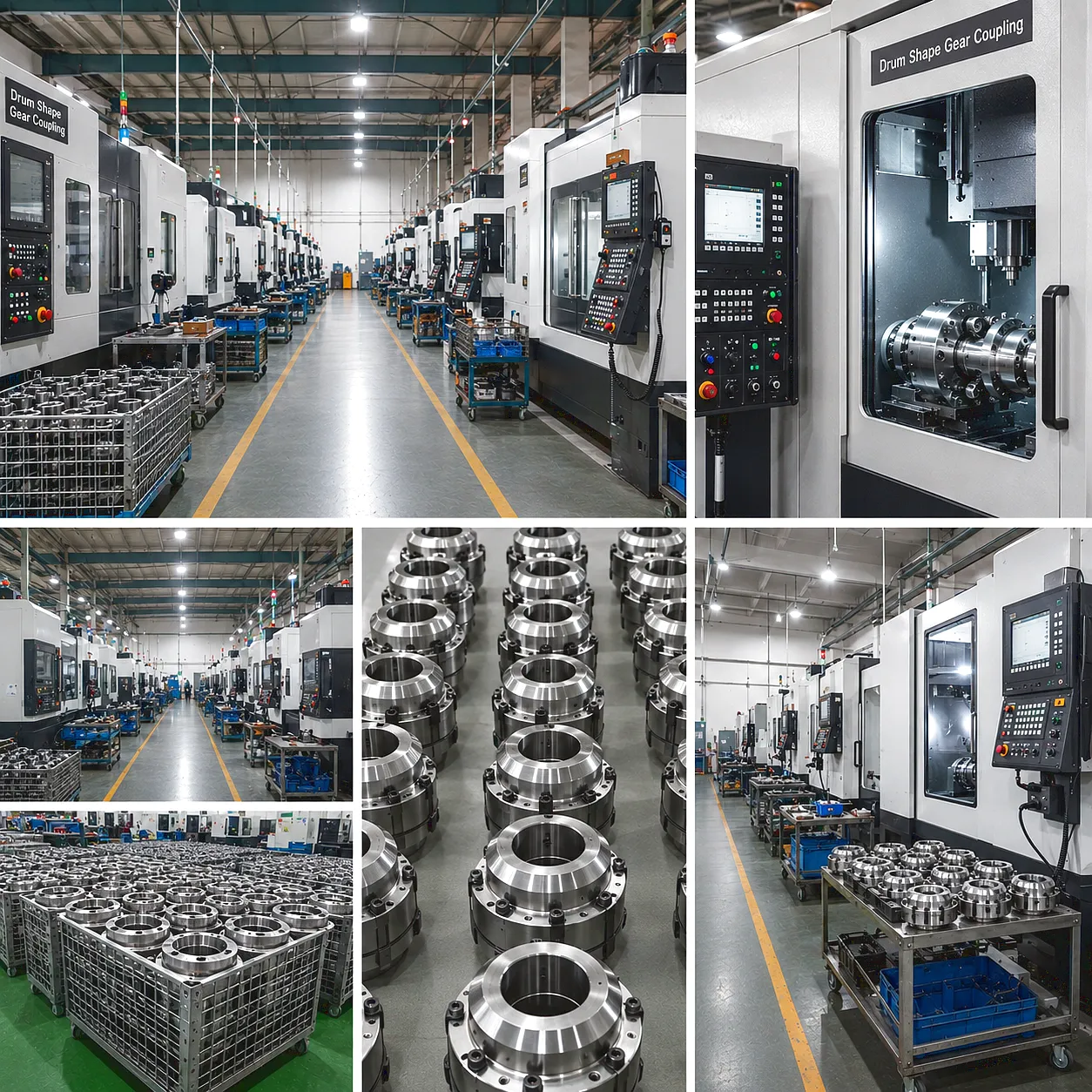
Precision CNC Machining
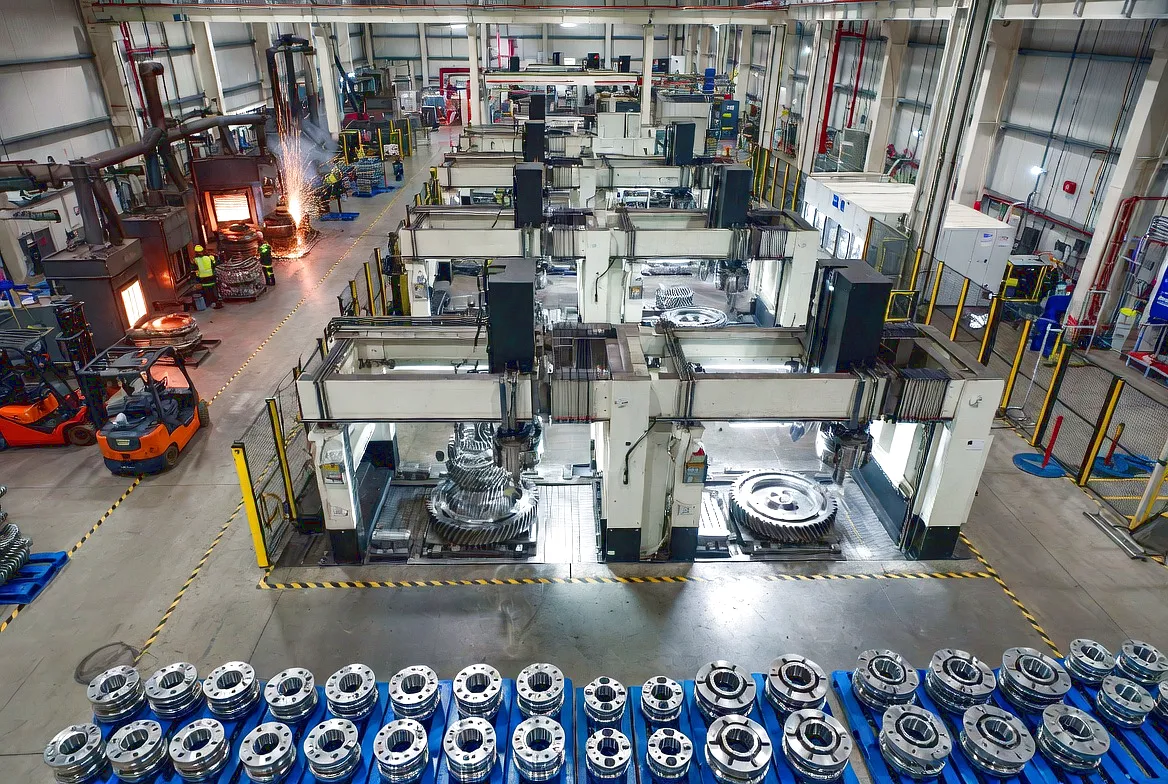
Our CNC turning and hobbing centres hold bore tolerances to IT7 as standard. Gear teeth are hobbed and then shaved or ground to achieve the crowned profile that defines drum-tooth performance. Final dimensional inspection is carried out on a coordinate measuring machine (CMM) with traceability to national standards.
Full Custom Configuration
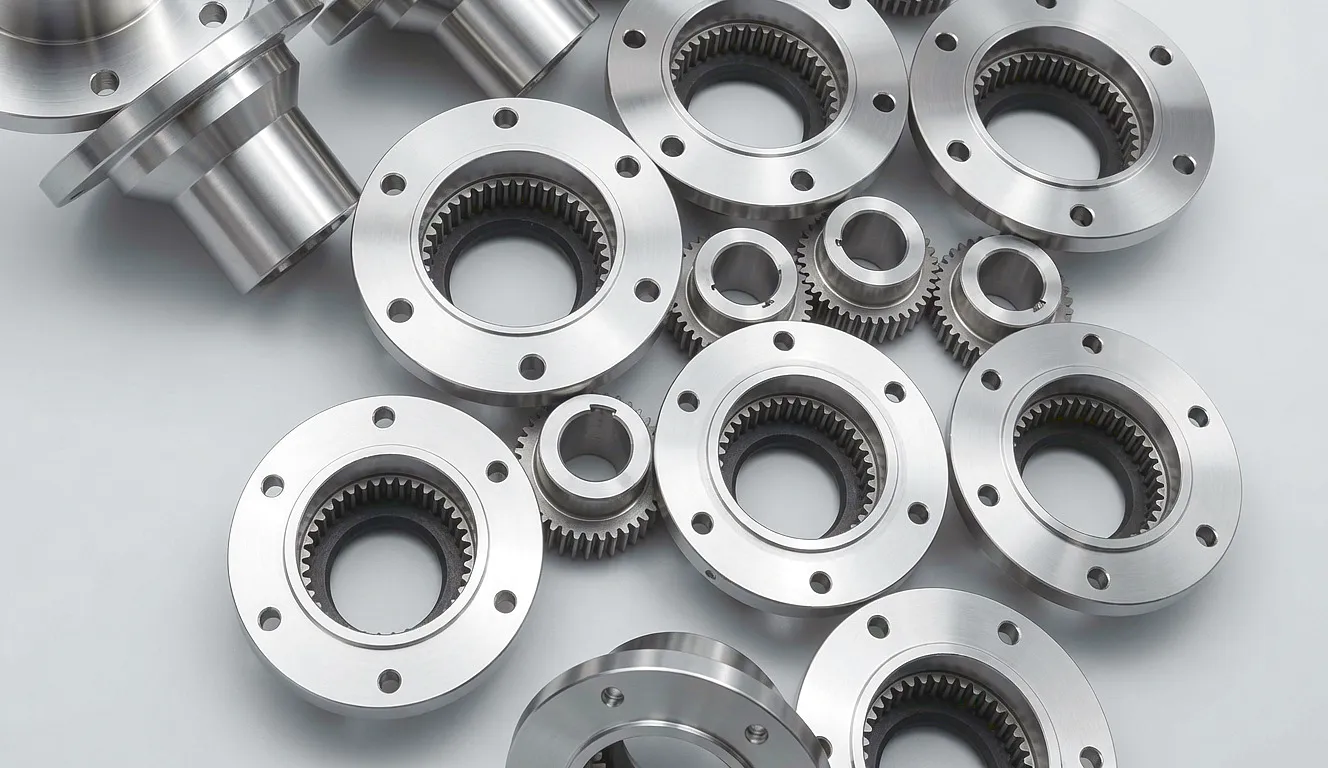
We manufacture to customer-supplied drawings or develop designs in-house from motor and gearbox specifications. Custom configurations include: special bore diameters (including metric and imperial), non-standard keyways, flanged half-couplings, floating-shaft intermediate sections, brake disc or drum integration, special coatings, and stainless steel fasteners. Minimum order: one unit. Most custom requests delivered within 15 working days.
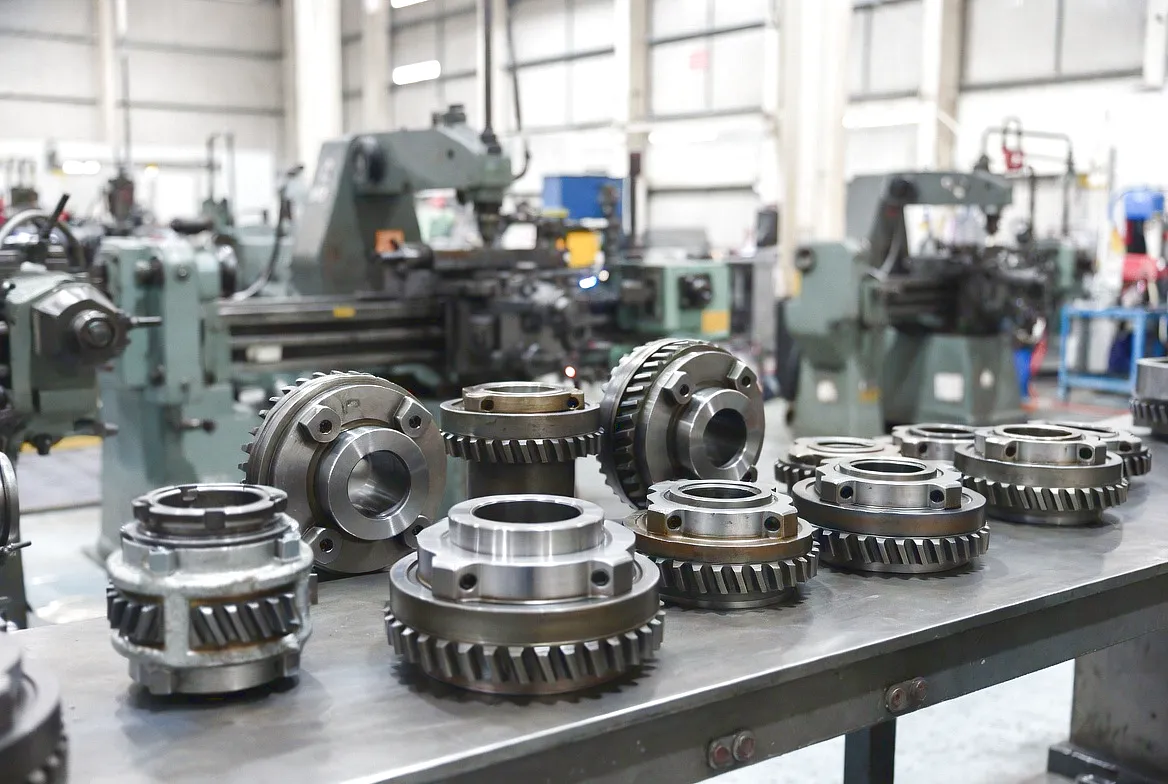
Every gear coupling that leaves our facility undergoes a multi-point quality inspection including dimensional check, tooth profile verification, hardness confirmation, and static balance check for units above 200 mm outer diameter. ISO material certificates, heat treatment records, and inspection reports are included as standard in the documentation package. For clients requiring third-party inspection, we routinely accommodate SGS, BV, and TUV witness inspection on request.
Request a Custom Gear Coupling
Send us your motor and gearbox shaft drawings, or just the shaft diameters, keyway dimensions, and torque/speed data. Our engineering team will specify the right product and quote within 24 hours.
How to Select the Right Gear Coupling for Your Crane Drive
SPECIFICATION GUIDE
Selecting the wrong gear coupling for a crane drive is one of the most reliably expensive mistakes in mechanical maintenance. Over-specifying wastes capital; under-specifying leads to early failure in service. The selection process follows four steps, and getting each one right matters.
| Step | Parameter | How to Determine | Typical Crane Range |
|---|---|---|---|
| 1 | Design Torque (Td) | Motor rated torque × service factor (KA). For crane hoists: KA = 2.0–3.5 depending on duty class and start frequency | 500 N·m – 200,000 N·m |
| 2 | Bore Diameter | Measure motor output shaft and gearbox input shaft. Both must fit the same coupling hub bore (or specify two different bore diameters per half) | 25 mm – 260 mm |
| 3 | Misalignment Values | Measure actual angular and parallel offset at cold and hot operating conditions. Add structural flex allowance for bridge crane girders (typically 0.1–0.3 mm parallel) | 0.1°–1.2° angular; 0.1–0.4 mm parallel |
| 4 | Environment & Special Needs | Confirm ambient temperature range, presence of dust/corrosion, need for brake disc integration, and any applicable standards (BS, EN, FEM crane classification) | –30°C to +120°C; IP44–IP65 |
ENGINEERING NOTE
A common specification error in UK crane maintenance is using the nominal motor power and speed to directly enter a coupling catalogue without applying the service factor. For M6–M8 duty class cranes (FEM classification), the service factor for hoist drives should not be lower than 2.5. Using a KA of 1.0 will typically select a coupling that is two to three sizes too small, leading to tooth wear within six months of operation. When in doubt, contact our engineering team — we will confirm the correct size at no charge before you place an order.
Frequently Asked Questions
GEAR COUPLING FOR CRANES — UK INDUSTRY FAQ
EVER POWER TRANSMISSION
Ready to Upgrade Your Crane Drive Couplings?
Send your shaft dimensions, torque data, or existing part number. We’ll get back with a full technical proposal in under 24 hours — no obligation, no minimum order.
© Ever Power Transmission | Gear Coupling Specialists | gear-coupling.top
edit by gzl