
Industrial Coupling Engineering • Underground Mining
Gear Coupling for Scraper Conveyor: Heavy-Duty Drive Solutions for Underground Coal Mining
A field-tested engineering guide covering specification, material selection, and proven performance data for gear couplings on armoured face conveyors — tailored for UK mining and heavy industry operations.
ISO 9001 Certified Manufacturing
UK Delivery & Support
Ever Power Engineering Team
Published June 2026 • Reading time: approx. 14 min • Reviewed by senior coupling application engineers
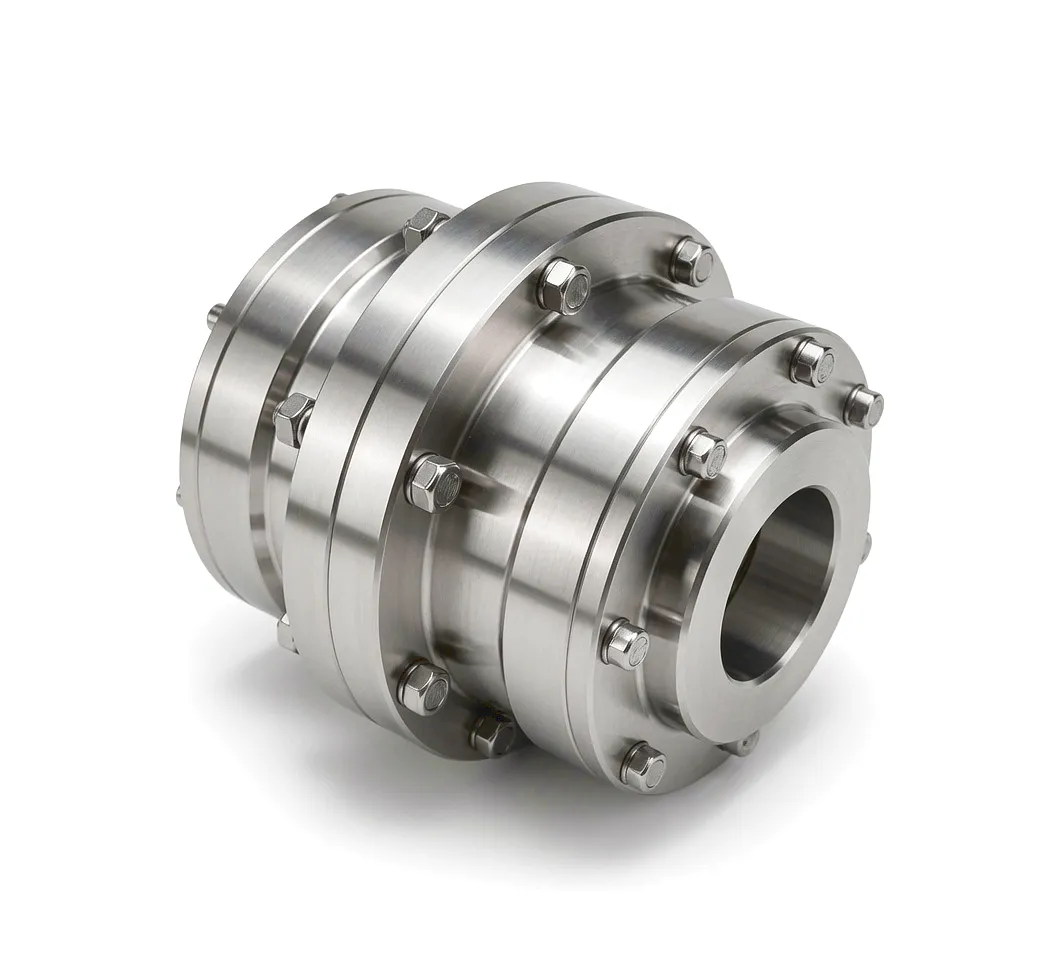 When a longwall shearer cuts through a coal seam three hundred metres below the surface, every tonne of raw material has to travel a reliable path out of the working face. The scraper conveyor — widely referred to as an armoured face conveyor (AFC) — carries that burden across faces stretching hundreds of metres long, sometimes under load peaks that change within seconds. Sitting right at the junction between the electric drive motor and the reduction gearbox, the gear coupling absorbs shock, accommodates misalignment, and transfers enormous torque without interruption. A failed coupling underground does not simply stall production; it can ground an entire longwall panel, costing tens of thousands of pounds per hour in lost output and putting maintenance crews in a hostile environment. That is why gear coupling selection for an AFC is a decision made with the same rigour as the shearer specification itself.
This article draws on more than eighteen years of field-level gear coupling application work to give you a thorough, practical picture of the engineering behind AFC drive couplings. Whether you run a longwall face in Yorkshire, a drift mine in South Wales, or a development heading anywhere across the United Kingdom, you will find the technical data, material guidance, and real-world case evidence that help you specify a gear coupling with confidence. We will also walk through Ever Power’s manufacturing capability, so you can see exactly how our bespoke coupling solutions are built to handle the punishment of underground coal mining.
Inside the Scraper Conveyor Drive System
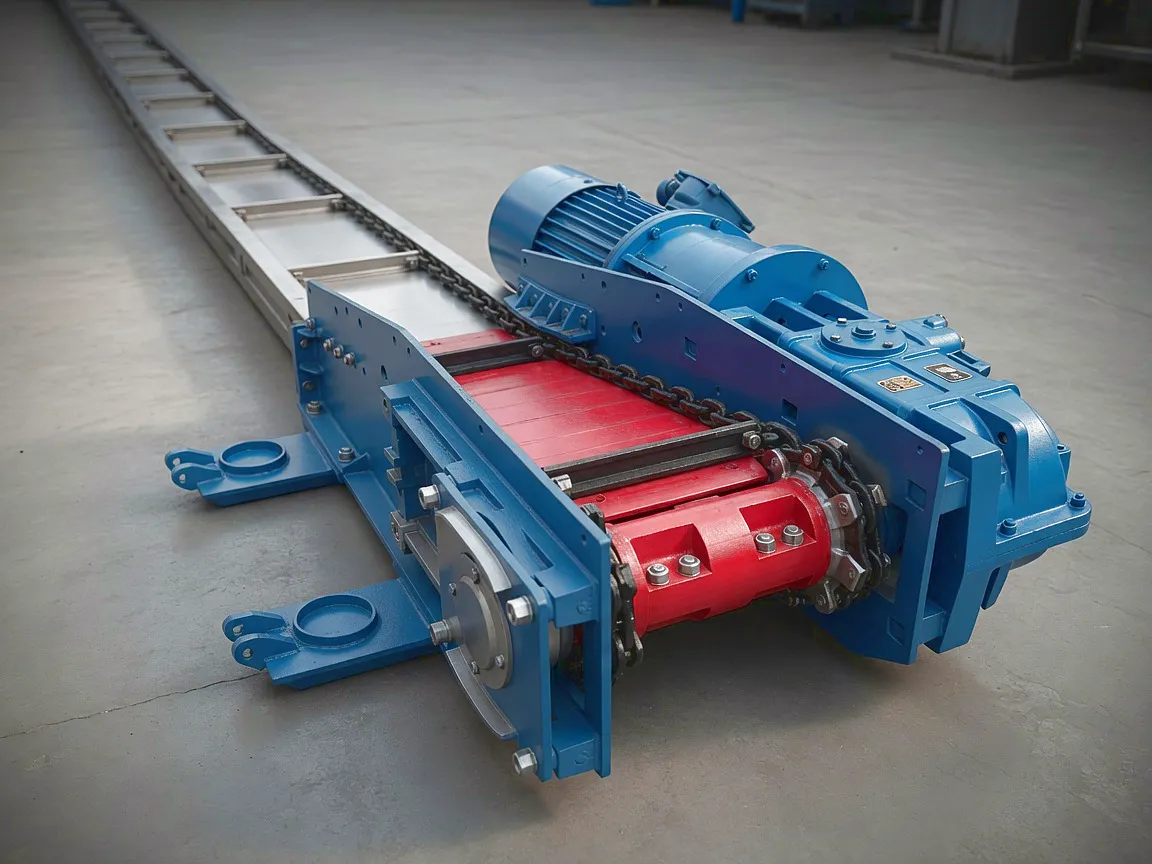
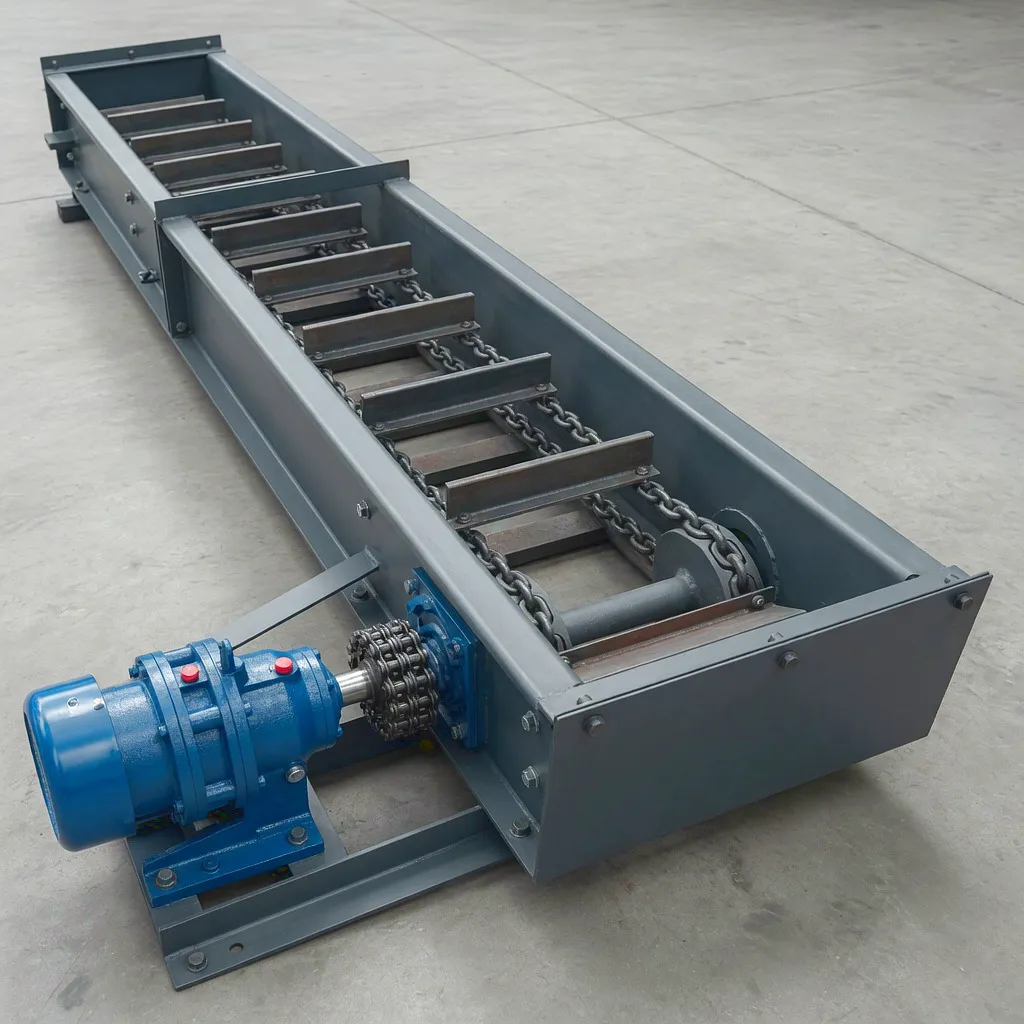
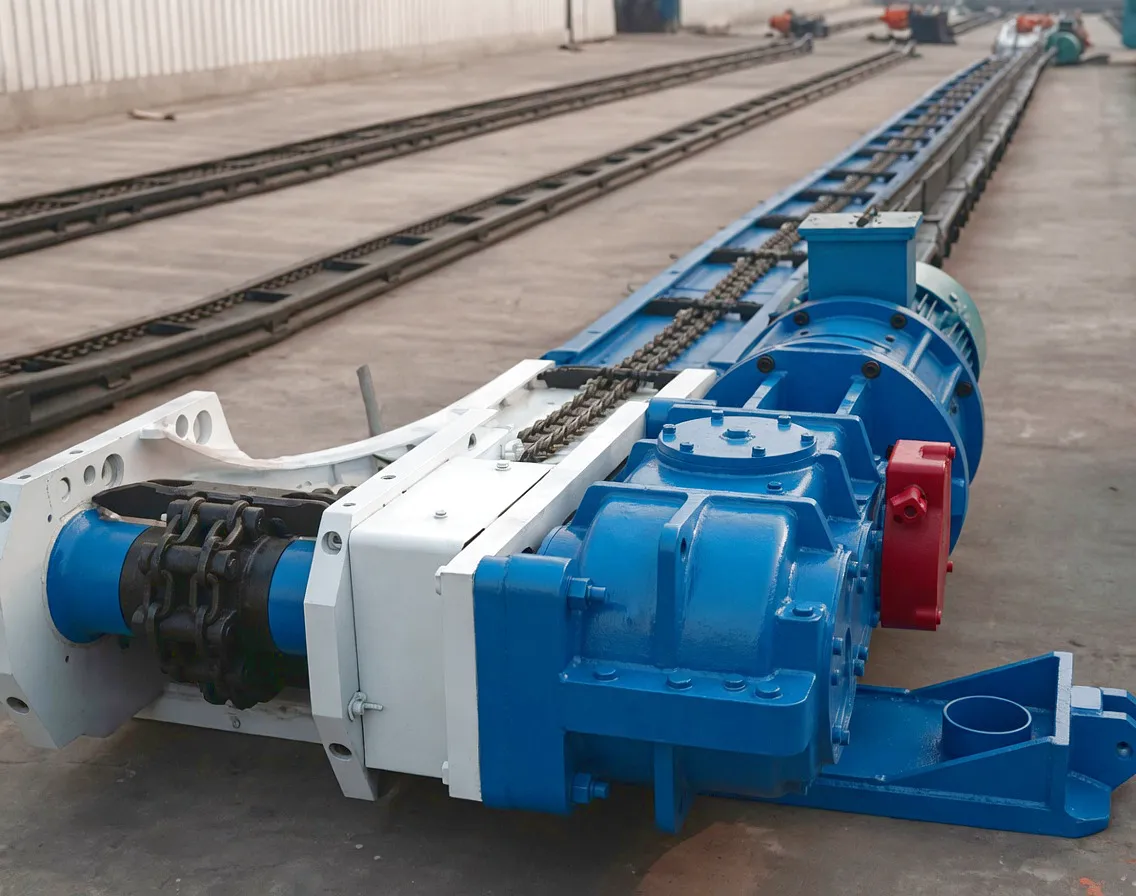
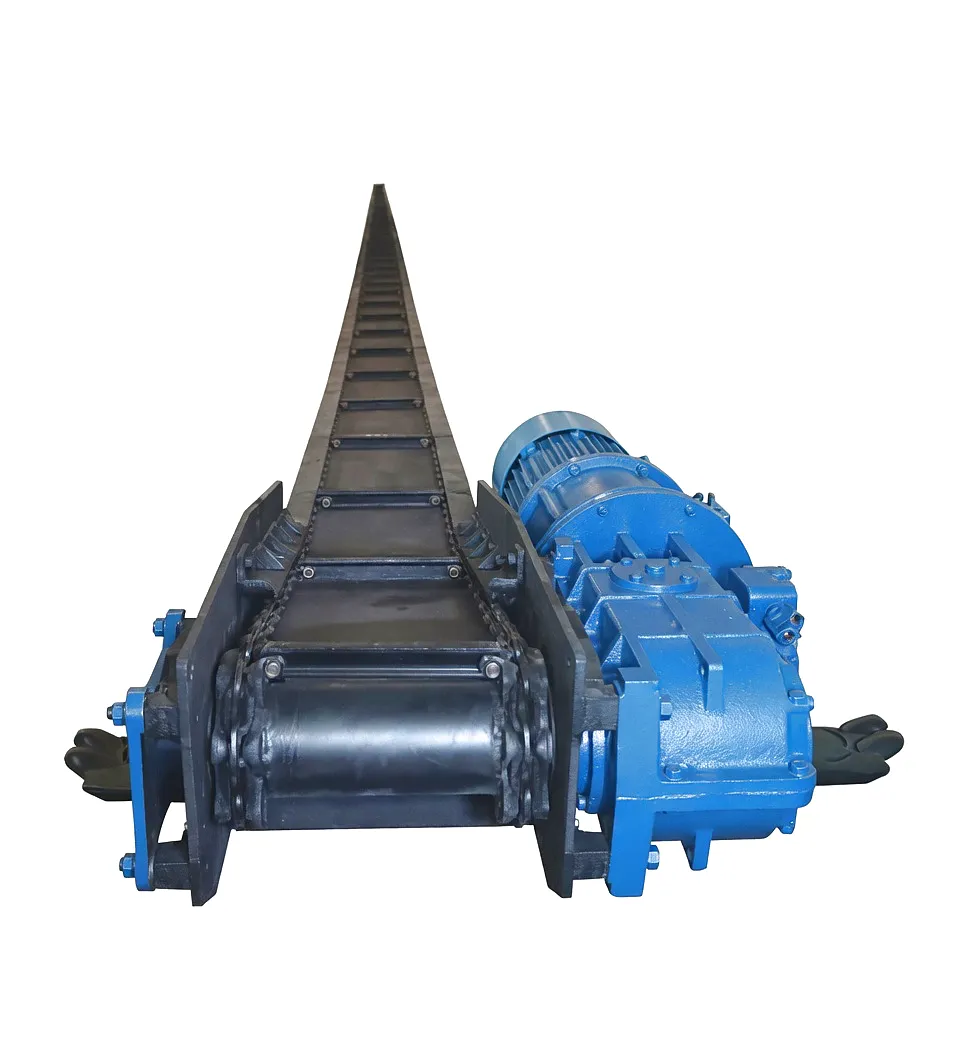 A scraper conveyor is constructed from a headframe drive unit, a tailframe drive unit, a series of interlocking middle troughs, a continuous scraper chain, and various ancillary attachments. The headframe and tailframe each house one or more electric motors that turn sprocket wheels through heavy-duty reduction gearboxes, dragging the chain along the trough floor and pushing coal toward the stage loader and crusher. On large longwall panels typical of deep mines in Nottinghamshire or the former pits of County Durham, total installed motor power can reach two thousand to three thousand kilowatts — and individual motors may each be rated anywhere from several hundred kilowatts to well above one thousand kilowatts. The gear coupling bridges the gap between the motor output shaft and the gearbox input shaft on every one of those drive stations, making the gear coupling one of the most safety-critical components in the entire AFC drivetrain.
⚡ Extreme Torque Demands
Peak torque at start-up can exceed twice the steady-state value when a stalled chain is broken free, placing sudden shock loads on the coupling that repeat throughout every production shift.
💧 Hostile Environment
Coal dust, high humidity, standing water on the pan line, and potential methane accumulation create conditions that accelerate corrosion and demand sealed, robust coupling designs.
🔧 Restricted Access
Underground headframes offer minimal working space, and any coupling replacement involves costly downtime. The coupling must be compact, easy to inspect, and quick to service without removing the motor or gearbox.
Load fluctuations on an AFC are not gentle. A block of coal jammed against a stage loader can momentarily stall one strand of the chain while the motor continues to accelerate, producing torque spikes that race through the drivetrain in milliseconds. The gear coupling’s crowned tooth profile allows small angular and axial displacements between the connected shafts, absorbing these transients without transmitting damaging bending moments to the motor bearings or the gearbox input shaft. In this sense, the coupling acts as both a torque conduit and a mechanical filter — it passes the rotational energy the system needs while damping the peaks that would otherwise shorten component life across the entire drive.
Why Gear Couplings Outperform Every Alternative on AFC Drives
An engineering comparison of coupling technologies for high-torque, high-vibration underground conveyor applications.
Mine engineers evaluating drive-train couplings for a scraper conveyor repeatedly arrive at the same conclusion: a well-designed gear coupling delivers the best combination of torque density, durability, and serviceability in the confined, dusty, and damp environment of a longwall face. Rigid couplings cannot tolerate the shaft misalignment that naturally develops as the AFC frame flexes under load, while elastomeric couplings lose their damping capacity in the temperature swings and chemical exposure found underground. Disc couplings and diaphragm types work admirably in clean surface installations, but their thin metallic elements are vulnerable to fatigue cracking once coal dust infiltrates the assembly. The gear coupling stands apart because its fundamental operating mechanism — the sliding engagement of crowned external teeth inside straight internal teeth — inherently accommodates angular, parallel, and axial misalignment while transmitting torque through a broad, hardened contact surface that resists wear over tens of thousands of operating hours.
1.5x
Higher Torque-to-Size Ratio
Compared with elastomeric or disc-type couplings of equivalent outside diameter, a gear coupling routinely transmits fifty percent more torque — a decisive advantage where underground headroom limits the maximum coupling envelope.
1.5°
Angular Misalignment per Mesh
Crown-profiled teeth allow up to 1.5 degrees of angular offset on each gear mesh, meaning the complete coupling assembly can absorb shaft deflections that would overload rigid or diaphragm alternatives in minutes.
40k+
Hours Typical Service Life
Under proper lubrication and within rated loads, a quality gear coupling on an AFC drive consistently exceeds forty thousand hours before requiring hub or sleeve replacement — translating to years of uninterrupted coal production.
≤ 5 mm
Axial Float Capability
Thermal expansion of the motor shaft during continuous heavy running is safely absorbed by the coupling’s built-in axial float, eliminating thrust loads that would otherwise damage bearings in the motor or gearbox.
The practical benefit of this performance profile is straightforward: fewer unplanned stoppages, lower spare-parts inventory, and a drive system that tolerates the inevitable foundation movements and frame deflections that occur on every active longwall face. When you factor in the relative simplicity of inspection — a trained fitter can check tooth wear through the coupling’s inspection port without dismantling the drive — the gear coupling earns its place as the preferred choice on AFC drives worldwide, and particularly across UK coal operations where safety legislation demands reliable, auditable equipment.
Working Principle and Material Engineering
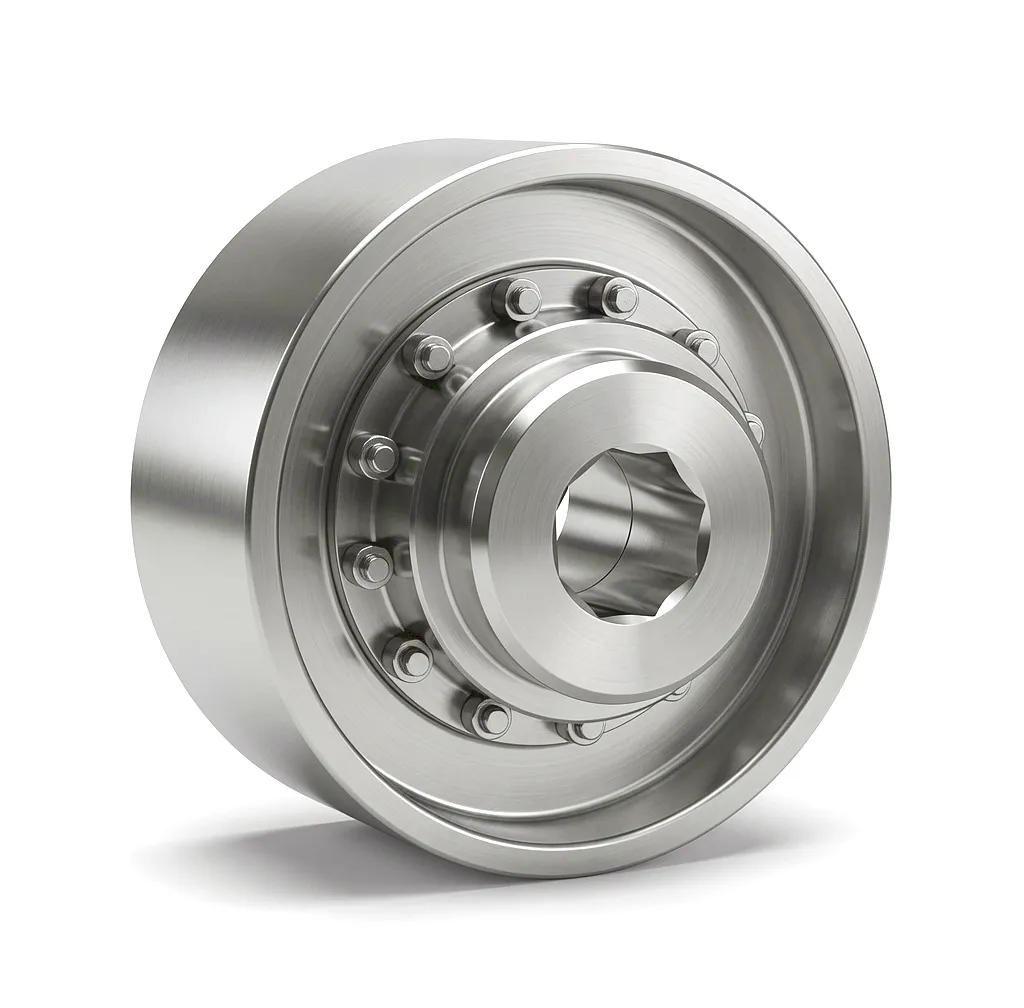
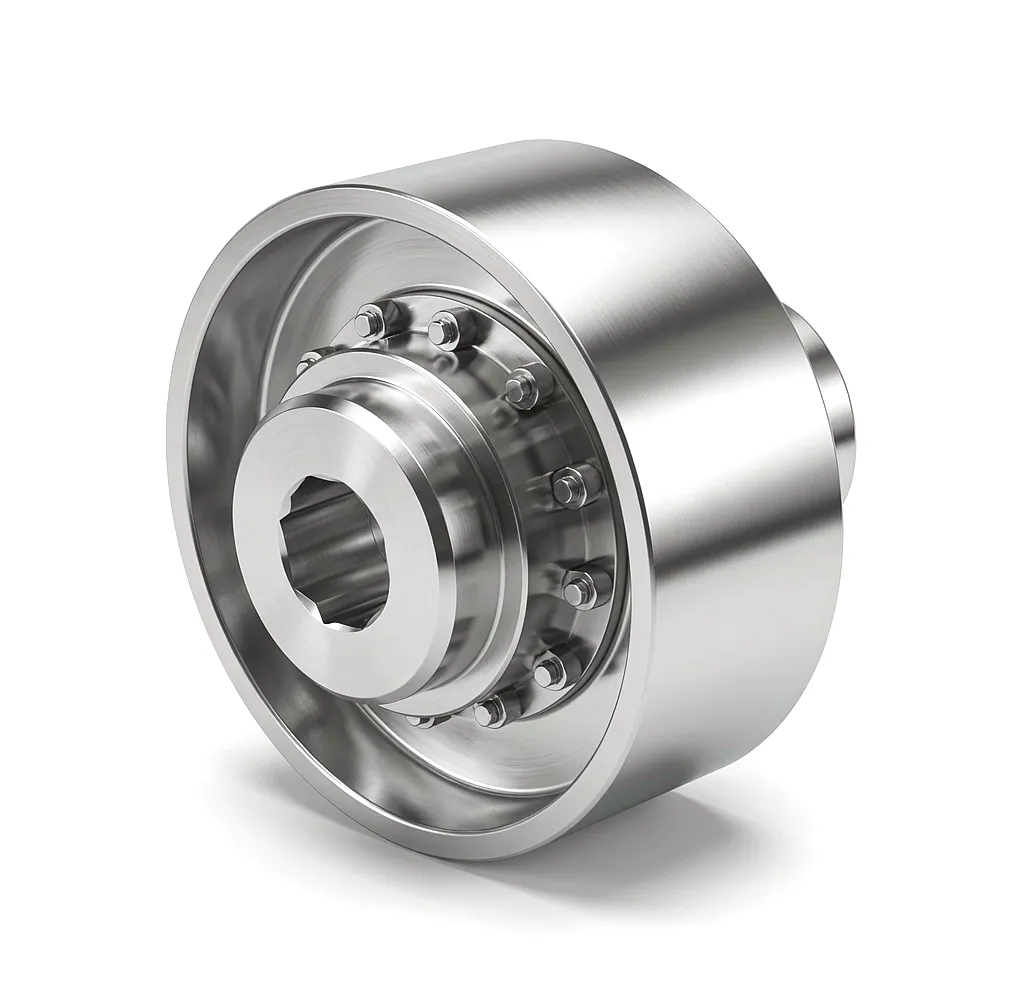
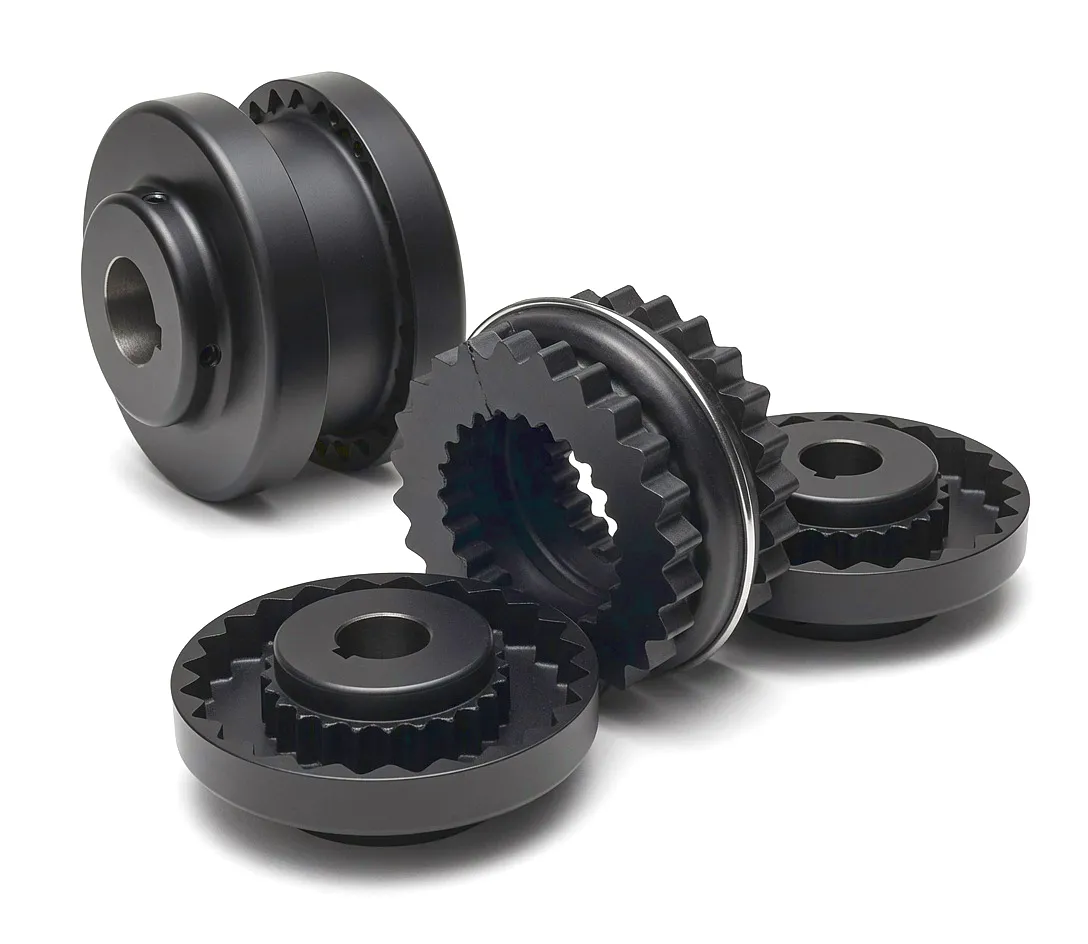
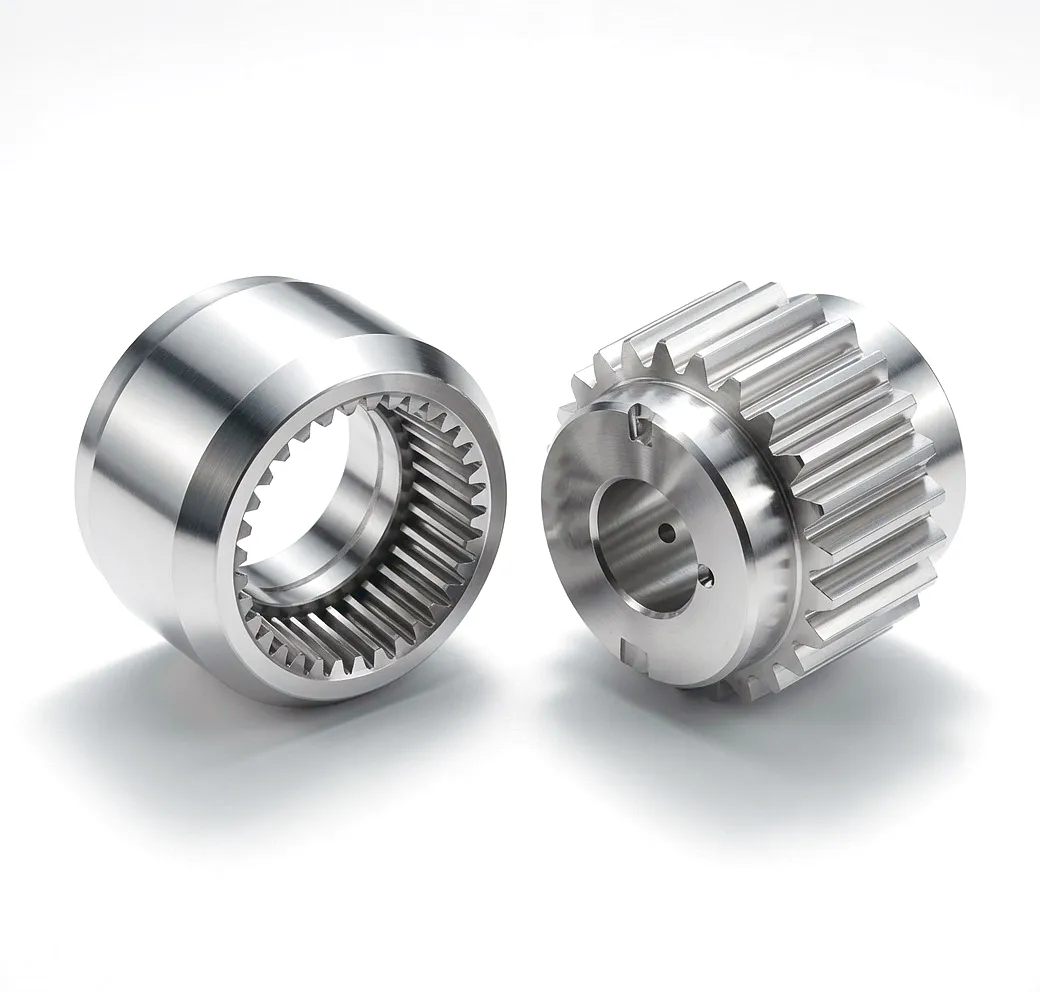 A gear coupling consists of two hubs, each keyed or interference-fitted to a shaft, and one or two outer sleeves that slide over the hubs and are bolted together at a centre flange. This fundamental gear coupling architecture has remained remarkably consistent over decades because it works. Each hub carries a set of external gear teeth machined with a convex crown profile, while the mating sleeve bore is cut with straight involute teeth. During operation, the crowned hub teeth mesh with the sleeve teeth and transfer rotational force across the full width of every engaged tooth. The crown profile is the engineering trick that makes the entire concept work: because the tooth contact point can shift along the tooth face as the shafts tilt, the coupling handles angular misalignment without generating the edge-loading that destroys straight-tooth connections. Axial displacement is similarly absorbed as the hub slides within the sleeve along the tooth axis, and a small amount of parallel offset is tolerated through the combined effect of angular freedom on both mesh planes.
Material selection is where gear coupling longevity is truly determined. For scraper conveyor duty, the gear coupling hubs are typically forged from 42CrMo alloy steel — a chromium-molybdenum grade valued for its combination of high tensile strength, good toughness at low temperatures, and excellent fatigue resistance. After rough machining, the hubs are quenched and tempered to achieve a core hardness of approximately 28–32 HRC, providing a resilient substrate under the hardened tooth surface. The gear teeth themselves receive an additional surface-hardening treatment — either carburising with 20CrMnTi or induction hardening of the 42CrMo base — to reach a working tooth surface hardness between 58 and 62 HRC. This dual-hardness arrangement is deliberate: a hard surface resists pitting and abrasive wear from lubricant contaminants, while the softer core absorbs shock without cracking.
Gear coupling sleeves are commonly cast or forged from medium-carbon steel such as ZG45 or AISI 1045, then normalised and finish-machined. In applications where weight saving matters — for instance, on high-speed drives at the surface — sleeves may be produced from ductile iron with a nodular graphite microstructure, offering reasonable strength at roughly seventy percent of the steel weight. Bolts securing the two sleeve halves at the centre flange are invariably grade 10.9 or 12.9 high-tensile fasteners, torqued to a precise specification that maintains flange face pressure throughout thermal cycling. The lubrication system — whether grease-packed for low-speed AFC duty or oil-mist for high-speed applications — must reach every tooth mesh, so the sleeve interior is often grooved or channelled to distribute lubricant evenly across the face width. A well-greased gear coupling on an AFC headframe can run for six to twelve months between re-lubrication intervals, depending on ambient temperature and contamination exposure, confirming that the gear coupling remains the lowest-maintenance torque transmission option available for this duty.
Technical Specifications & Performance Data
Representative parameters for Ever Power GICL/NGCL series gear couplings sized for AFC duty.
Values shown are typical; actual specifications are confirmed during the project engineering phase based on motor frame, gearbox interface, and site conditions.
Application Scenarios Beyond the Coal Face
While AFC drives represent the most demanding use case, gear couplings serve critical roles across a wide range of UK industries.
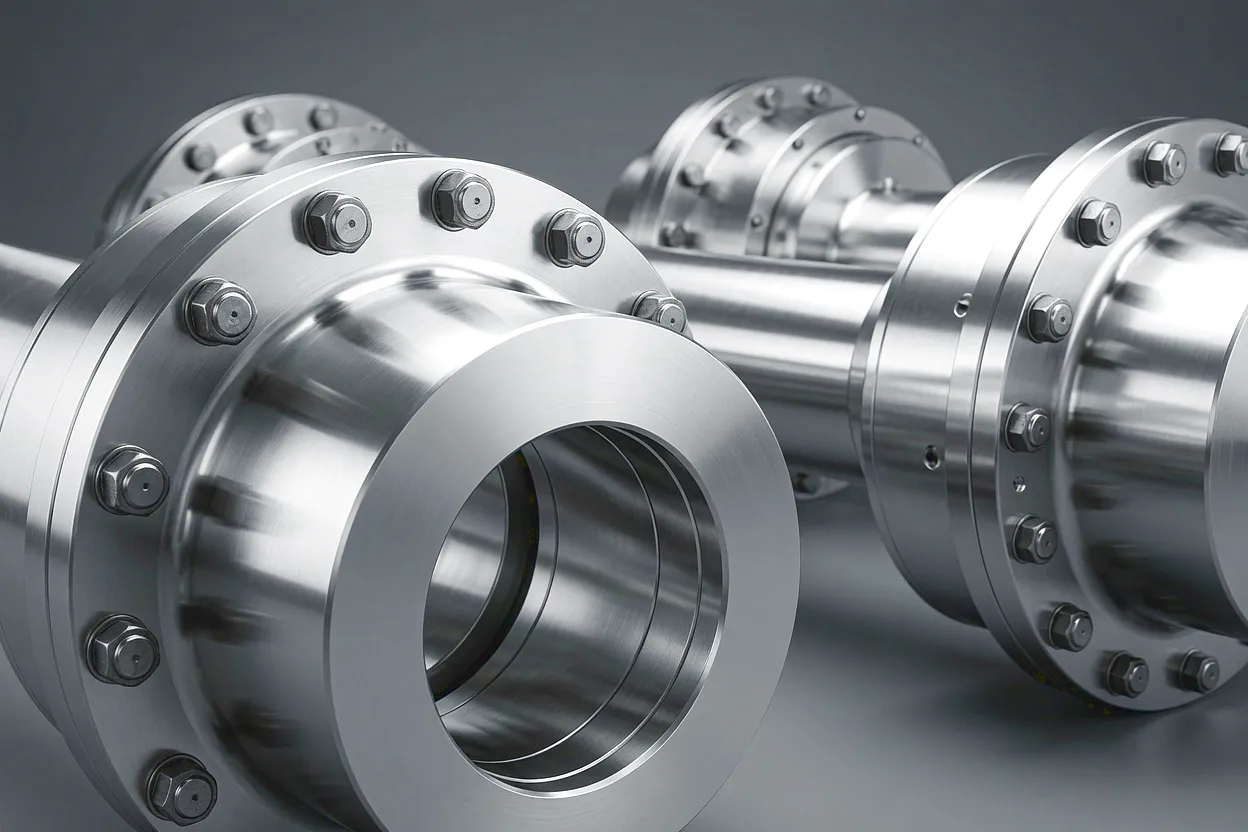
The same mechanical properties that make a gear coupling indispensable underground — high torque density, misalignment tolerance, and shock absorption — translate directly to other heavy-duty rotary drive applications. Across the United Kingdom, gear couplings are a standard drivetrain component in steel rolling mills around Sheffield and Scunthorpe, where reversing loads can swing from full forward torque to full reverse within seconds as billets pass through the roll stand. Cement plants in the Midlands and North West rely on gear couplings to connect kiln drive motors to reduction gearboxes, handling the thermal expansion that comes with ambient temperatures exceeding 80 degrees Celsius near the kiln shell. Marine propulsion systems on vessels operating from ports including Liverpool, Felixstowe, and Southampton use gear couplings between the main engine and the gearbox, where the gear coupling must tolerate hull deflections caused by wave loading. Power generation facilities — both conventional thermal stations and newer waste-to-energy plants — utilise gear couplings on boiler fan drives, generator sets, and pump stations where continuous, vibration-free operation is non-negotiable. The gear coupling’s versatility across all these sectors stems from one shared reality — no two connected shafts stay perfectly aligned for long, and a gear coupling handles that fact better than any alternative in heavy-duty service.
In the sugar refining industry — still active in locations such as the Tate & Lyle Thames Refinery — gear couplings connect cane-crushing mill drives that endure the same kind of sudden torque spikes as a coal face conveyor. Paper mills in Scotland and Northern England specify gear couplings on their calender roll drives and headbox pumps, where even a fraction of a degree of gear coupling-induced vibration can show up as a visible defect on the finished sheet. And across the water and wastewater sector managed by companies like United Utilities and Severn Trent, large gear couplings transfer power to mixer drives and pumping stations where reliability directly affects regulatory compliance. In every one of these scenarios, the gear coupling performs the same dual function: it transmits torque without amplifying vibration, and it accommodates the physical reality that no two shafts in an industrial drive are ever perfectly aligned for long.
Customer Success: Proven Underground and On the Surface
Field-verified results from three UK and European operations.
Case Study — Yorkshire, United Kingdom
Kellingley Colliery Legacy Fleet — AFC Headframe Coupling Retrofit
When a mining contractor took over rehabilitation and equipment-salvage operations at a former deep mine in the Selby coalfield, they inherited four AFC headframes fitted with outdated rigid couplings that had been causing repeated motor bearing failures. The motor-gearbox centre-to-centre distance had shifted by nearly two millimetres due to frame subsidence, and the original rigid connection was transmitting bending loads straight into the motor’s drive-end bearing. Ever Power’s engineering team conducted an on-site survey, measured the actual shaft misalignment with laser alignment instruments, and designed a drop-in GICL drum-type gear coupling that matched the existing bolt pattern and bore dimensions. Within eight weeks of the gear coupling installation, unplanned bearing replacements dropped to zero, and the contractor estimated annual maintenance savings of over twenty-eight thousand pounds per headframe. The couplings have now accumulated more than eighteen months of continuous duty without a single reported issue.
Case Study — South Wales, United Kingdom
Tower Drift Mine — Scraper Conveyor Uprating Project
A cooperative-owned drift mine in the Cynon Valley needed to increase conveyor throughput by thirty-five percent without replacing the existing gearboxes or modifying the headframe structure. The constraint was tight: the coupling had to handle a new 710 kW motor while fitting within the same 420 mm envelope as the old unit. Ever Power supplied a custom NGCL series gear coupling with widened tooth face and optimised crown radius to achieve one hundred kilonewton-metres of nominal torque in the original package size. The gear coupling installation was completed during a single planned maintenance weekend, and the mine returned to full production on Monday morning with the higher throughput target confirmed during the first shift. Over the following twelve months, gear coupling inspection reports showed tooth wear well within acceptable limits, validating the material selection and heat-treatment process for this gear coupling specification.
Case Study — North Rhine-Westphalia, Germany
RAG Deutsche Steinkohle — High-Power AFC Twin-Drive Coupling Package
For one of Europe’s largest remaining hard-coal mines, Ever Power developed a twin-drive gear coupling package for an AFC rated at 2 x 1000 kW. The coupling had to synchronise torque sharing between two motors driving a common sprocket shaft and accommodate start-up transients reaching 2.8 times nominal torque. The delivered NGCL-20 couplings incorporated specially profiled teeth with a modified crown radius calculated by finite-element analysis to distribute contact stress more evenly during peak loads. After two full production years — amounting to over fourteen thousand operating hours — tooth surface inspection revealed less than 0.08 mm of measurable wear, confirming the longevity of the carburised surface treatment and the accuracy of the initial stress modelling.
What Our Clients Say
“We had been through three coupling suppliers in five years before we tried Ever Power. Their gear coupling dropped straight into our headframe with no modifications, and we have not had a single unplanned stoppage since. The engineering support during the sizing phase was first rate.”
— Plant Engineer, Mining Contractor, Yorkshire
“What impressed us most was their willingness to customise the bore and keyway profile to match our legacy gearbox. Most suppliers quote standard sizes only, but Ever Power treated our specification as the starting point and worked from there.”
— Maintenance Manager, Cement Works, Derbyshire
“Delivery to our Southampton dockyard was two weeks ahead of schedule. The coupling balanced perfectly on the bench and ran vibration-free from day one. We have since ordered the same specification for our second vessel refit.”
— Chief Engineer, Marine Propulsion Division, Hampshire
Ever Power Manufacturing & Bespoke Coupling Solutions
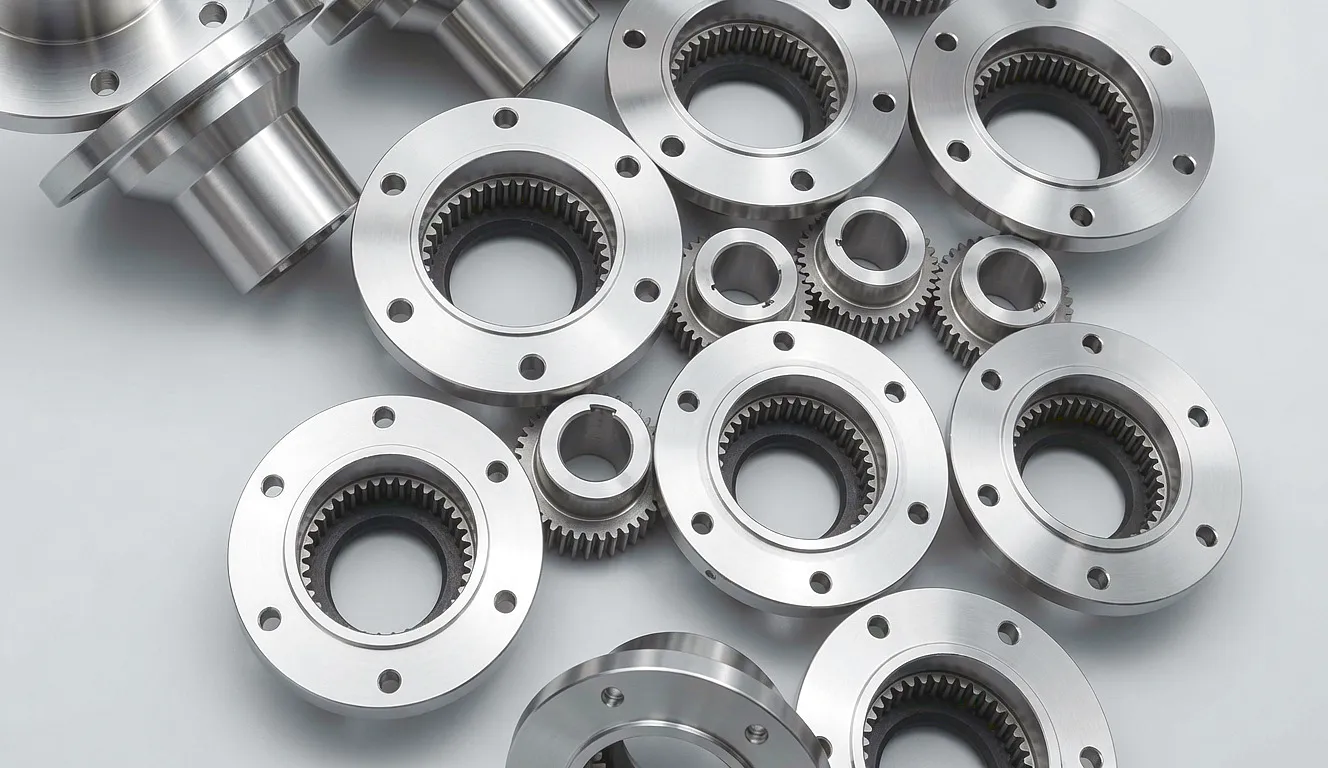
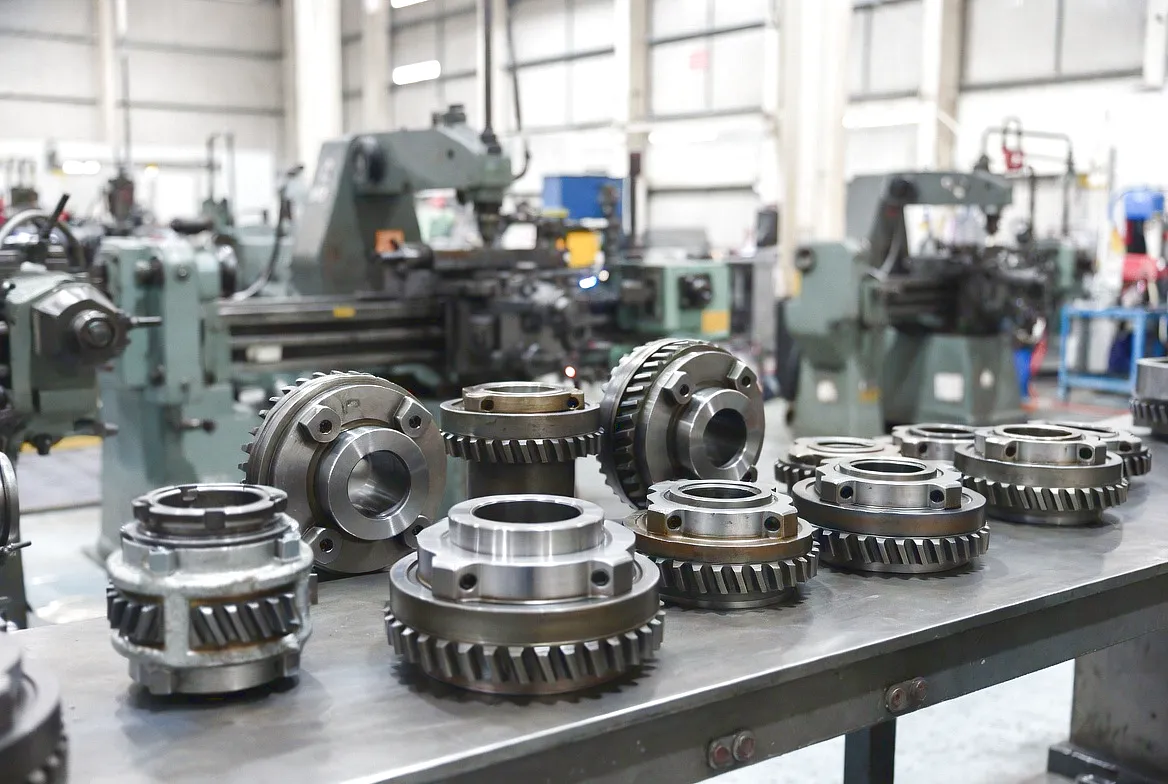
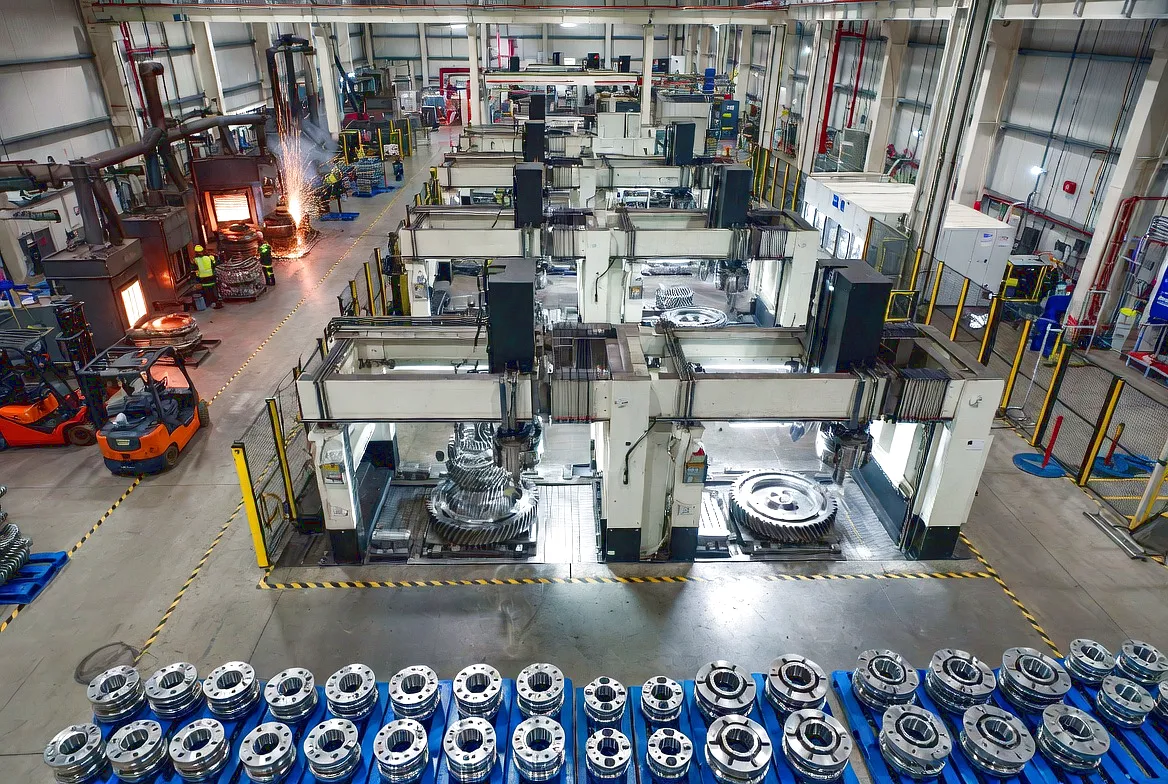
Every gear coupling that leaves our facility is manufactured from raw forging to finished assembly under one roof. Our production floor houses CNC gear-hobbing machines capable of cutting modules up to 16 mm, CNC lathes with a swing diameter of 1200 mm, and dedicated heat-treatment furnaces for both gas carburising and induction hardening. Each coupling undergoes dimensional inspection using coordinate measuring machines (CMM) with a measurement uncertainty of less than five micrometres, and torque-rated assemblies are spin-tested on our in-house balancing rig to ISO 1940 G2.5 or better before dispatch. This vertically integrated process means we control every variable — from the incoming material certificate to the final grease fill — rather than relying on a chain of subcontractors.
Our design engineering team works with clients from the earliest concept stage, not just at the point of order. If you need a gear coupling that matches an existing bolt circle on a gearbox flange built in the 1990s, or if you need a split-sleeve design for installation without moving the motor, our engineers will develop a 3D model, run finite-element stress analysis, and produce a full manufacturing drawing package before a single billet of steel is cut. This bespoke capability is the reason Ever Power couplings are running in mines, mills, and marine drives across four continents — we build what the application demands, not what the catalogue happens to list.
15+
CNC Machining Centres
ISO 9001
Certified Quality System
5 µm
CMM Measurement Precision
4
Continents Served
Serving Mining and Heavy Industry Across the United Kingdom
 The United Kingdom’s industrial landscape stretches from the deep-mine heritage of Yorkshire and Nottinghamshire to the steel-processing heartland of South Yorkshire, the cement and aggregate sector concentrated across the Midlands and North West, and the expanding waste-to-energy and biomass facilities that are replacing older coal-fired stations from Scotland to the South Coast. Ever Power maintains a dedicated UK logistics channel that delivers gear couplings, spare sleeves, hubs, and bolt sets to any site in England, Scotland, and Wales, typically within five to ten working days from order confirmation. For urgent breakdown support, we hold a strategic buffer stock of our most commonly specified GICL and NGCL gear coupling sizes, enabling dispatch within forty-eight hours to keep your production line moving.
Our technical support extends beyond the delivery van. UK-based clients receive access to our engineering team for on-site alignment surveys, coupling selection consultations, and failure analysis if a retired coupling is returned for inspection. We have supported projects ranging from single replacement couplings for a quarry in the Peak District to multi-unit supply contracts for conveyor OEMs based in the North East. Whether your operation sits in a former coalfield village or on a major industrial estate near Manchester, Birmingham, or Glasgow, Ever Power has the product range, the engineering depth, and the supply-chain reliability to keep your drives turning.
Gear Coupling vs. Alternative Technologies for AFC Duty
Practical Selection Guide: Specifying a Gear Coupling for Your Scraper Conveyor
 Getting the gear coupling specification right on paper prevents expensive corrections underground. The process begins with the motor nameplate data: rated power in kilowatts, synchronous speed, and the service factor specified by the gearbox manufacturer. From these, calculate the nominal torque transmitted through the gear coupling in normal operation. Apply a service factor — typically between 1.5 and 2.0 for scraper conveyor duty, reflecting the severe shock loading — to arrive at the design torque. This figure must sit comfortably within the gear coupling’s published nominal torque capacity, with additional margin if the motor is started under load via a fluid coupling or soft starter that limits peak torque, or if it is started direct-on-line which can produce starting torques above three times the rated value.
Shaft bore compatibility is the second critical dimension. The gear coupling hub bore must match the motor shaft diameter and the gearbox input shaft diameter — often these are different sizes, requiring hubs machined to two separate bore specifications. Keyway dimensions, tolerances, and interference-fit requirements need to follow the OEM shaft drawing precisely. If drawings are unavailable for legacy equipment, Ever Power’s engineering team can work from field measurements taken with micrometres and bore gauges, or from a physical impression of the shaft end. The gear coupling’s overall length, flange outside diameter, and bolt pattern must clear the headframe enclosure and allow access for tightening tools. On many AFC drives, this envelope check is the tightest constraint of all — and it is exactly the situation where Ever Power’s bespoke manufacturing capability proves its value, allowing us to adjust gear coupling proportions without compromising torque rating.
Frequently Asked Questions
Common questions from UK mining engineers and industrial buyers about gear couplings for scraper conveyors.
What size gear coupling do I need for a 1000 kW scraper conveyor motor used in UK underground coal mining?
For a 1000 kW motor running at 1500 rpm, the nominal shaft torque is approximately 6.37 kN·m. Applying a service factor of 1.75 for AFC conveyor duty yields a design torque around 11.1 kN·m. A GICL-9 or equivalent drum-type gear coupling typically covers this range with ample margin. The exact size depends on shaft diameters, envelope constraints, and the gearbox interface — our engineering team can confirm the correct model once you share the motor and gearbox datasheets.
How much does a custom gear coupling for underground coal mining equipment cost when delivered to the United Kingdom?
Pricing depends on the coupling size, material grade, heat treatment, and any non-standard machining such as special bores or flanges. For AFC-class gear couplings in the 20 to 200 kN·m torque range, budgetary pricing typically falls between £1,200 and £8,500 per coupling delivered DDP to a UK address. Contact us at gear-coupling.top with your technical requirements for a firm quotation — we usually return pricing within two working days.
Where can I find a reliable gear coupling supplier for AFC conveyor drives near Yorkshire or Nottinghamshire?
Ever Power supplies gear couplings to mining and industrial clients across Yorkshire, Nottinghamshire, and the wider United Kingdom through a direct logistics channel. We hold buffer stock of popular GICL and NGCL models for fast turnaround and provide engineering support throughout the selection and installation process. Reach out via gear-coupling.top to discuss your AFC coupling requirement with our team.
Which type of gear coupling provides the best shock absorption for high-torque scraper conveyor drive systems?
Drum-type (crowned-tooth) gear couplings are the preferred choice for high-torque AFC drives because their convex tooth profile distributes load across the full face width during misalignment, preventing the stress concentrations that cause premature failure in straight-tooth or rigid connections. The GICL and NGCL drum-shape series from Ever Power are specifically designed for this application and have been field-proven on drives rated up to 2 x 1000 kW.
How often should gear couplings be inspected and replaced on longwall mining face conveyors in the UK?
Best practice calls for a visual inspection of the coupling through the inspection port every three months, checking for grease leakage, unusual vibration, or discolouration that might indicate overheating. A full dimensional inspection — measuring tooth backlash and hub runout — should be carried out annually or whenever the gearbox is opened for maintenance. Under rated conditions, a quality gear coupling typically exceeds 40,000 hours before requiring hub or sleeve renewal.
Can Ever Power supply ATEX-compliant gear couplings suitable for underground UK coal mines with methane risk?
Yes. Ever Power manufactures gear couplings that meet the material and design requirements for use in potentially explosive atmospheres. The coupling itself is a passive mechanical component (no electrical or ignition source), but we ensure that all surface finishes, fastener specifications, and material certifications conform to the standards required by UK mine safety regulations and the relevant ATEX directive categories. Full documentation is supplied with every order destined for underground service.
What is the typical lead time for a bespoke gear coupling order delivered to a UK mining site?
Standard-range gear couplings held in buffer stock can ship within 48 hours. Bespoke couplings — those with custom bore sizes, non-standard flange patterns, or special material requirements — typically require four to six weeks from drawing approval to DDP delivery in the UK. For planned shutdowns with known dates, we recommend placing orders at least eight weeks ahead to allow for any revision cycles during the engineering phase.
How do I request a quotation for a drum-type gear coupling for my scraper conveyor drive system?
Send an enquiry to gear-coupling.top with the following details: motor power and speed, gearbox input shaft diameter and keyway dimensions, available envelope (length and OD clearance), and the application duty (e.g. AFC headframe, tailframe, or stage loader). Our engineering team will return a technical proposal and budgetary price within two working days. If drawings are available, attaching them speeds the process considerably.
Ready to Specify the Right Gear Coupling for Your AFC Drive?
Share your motor data, gearbox interface dimensions, and site conditions — and our coupling engineers will deliver a fully specified proposal, complete with 3D models and material certifications.
Or email us directly at gear-coupling.top — response within 48 hours guaranteed.
This article is published by Ever Power, a manufacturer of industrial gear couplings serving mining, steel, cement, marine, and power generation clients worldwide. All technical data represents typical values and is subject to confirmation during the project engineering phase. © 2026 Ever Power. All rights reserved. edit by gzl