
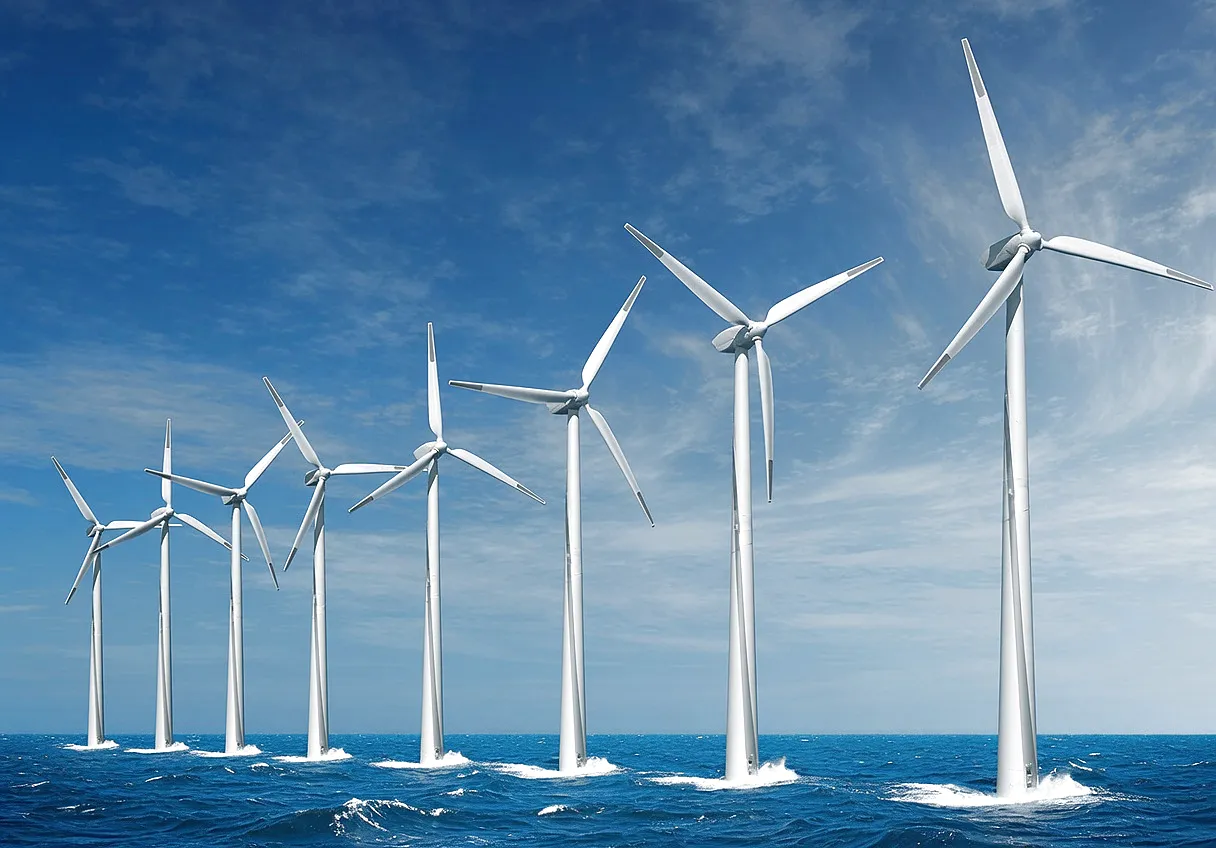
 Wind power now accounts for a significant portion of the United Kingdom’s electricity generation, with both onshore and offshore installations expanding year on year. Behind the sweeping blades and towering nacelles lies a sophisticated mechanical drivetrain, and at one of its most critical junctions sits the gear coupling — a component that must withstand relentless cyclic loading, misalignment, thermal expansion, and the unpredictable torque surges that characterise variable-speed wind conditions. When this component is correctly specified and precisely manufactured, a wind turbine can operate for years between major maintenance intervals. When it is not, the consequences range from vibration-induced bearing wear to catastrophic gearbox failure, with repair costs that can run into hundreds of thousands of pounds per turbine.
Ever Power has been supplying engineered gear couplings to wind energy projects, heavy industrial plants, and OEM manufacturers across the UK and Europe for more than 18 years. Our products are designed around the real demands that wind turbine drivetrains place on mechanical connections — not just theoretical load ratings from a catalogue page.
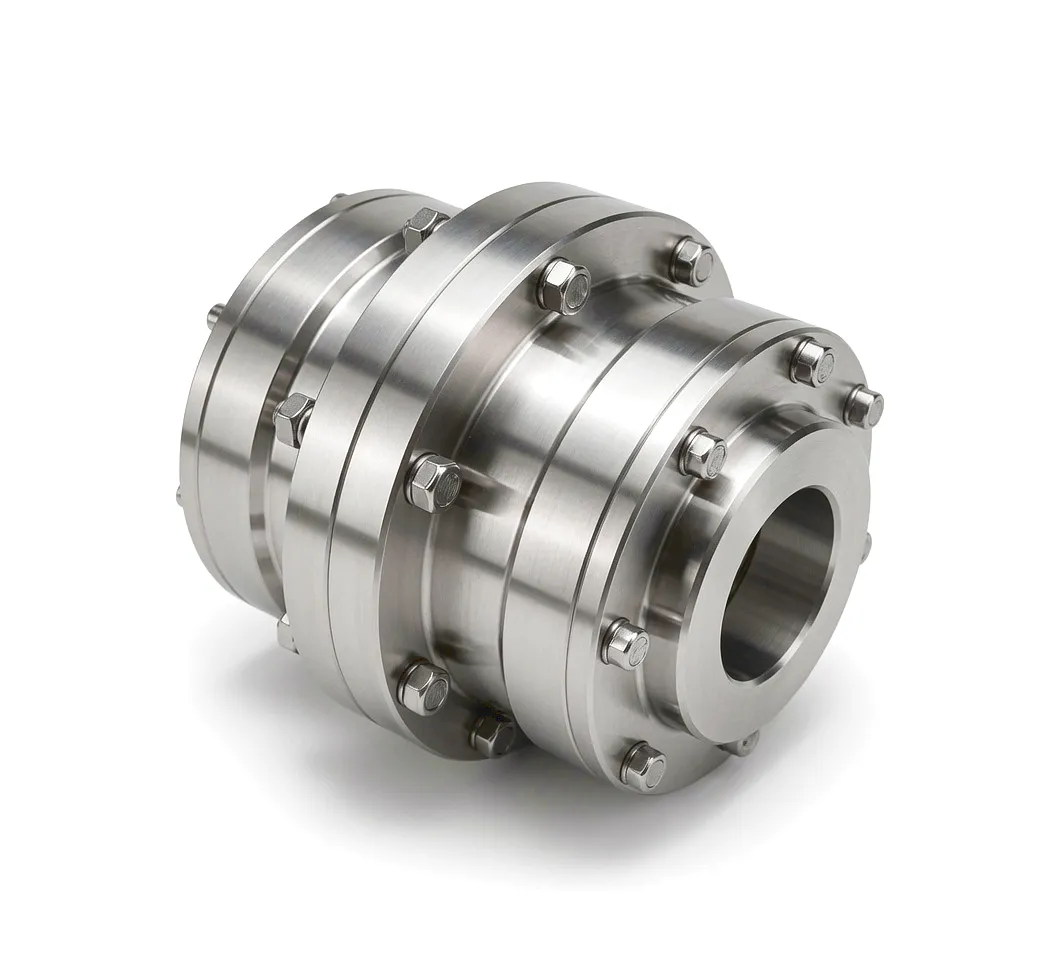
GICL & NGCL Series Drum-Shape Gear Couplings
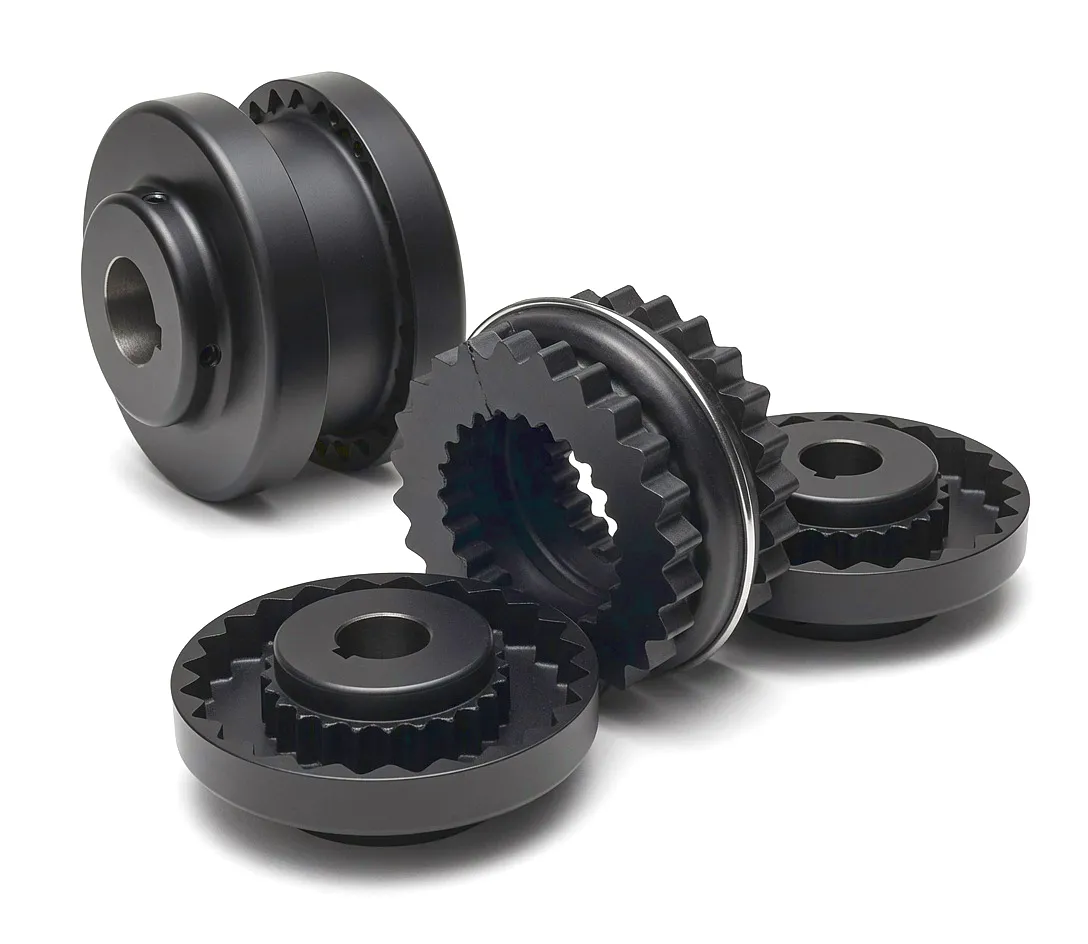
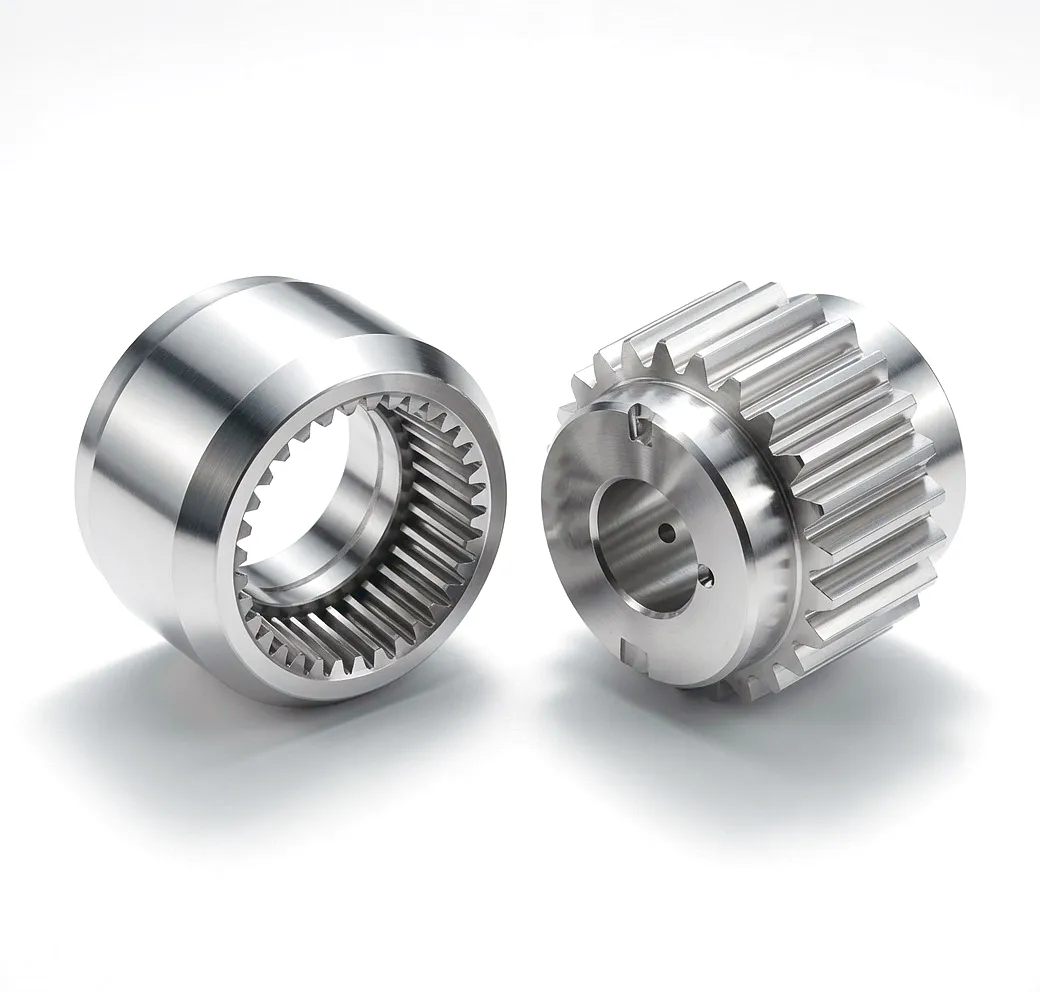
Our flagship drum-tooth (crowned-tooth) gear couplings are engineered specifically for high-torque, high-misalignment environments. The barrel-shaped tooth profile distributes load across the full tooth face even under angular displacement, dramatically reducing edge loading and prolonging service life in the turbulent drivetrain conditions found inside wind turbine nacelles.
Why Wind Turbines Demand More From a Gear Coupling
Variable Torque Loading
Wind speed fluctuates constantly. The drivetrain experiences sudden torque spikes as gusts hit the rotor blades, requiring a gear coupling with sufficient torsional compliance and a high dynamic overload capacity — typically 2.5× the nominal rated torque — to absorb shock loads without damage to the gearbox or generator.
Shaft Misalignment
Thermal expansion of the nacelle structure, dynamic rotor bending, and the inevitable small errors in field alignment during installation all produce angular and parallel shaft misalignment. A drum-tooth gear coupling accommodates angular misalignment up to 1.5° and axial displacement without generating harmful reaction forces in connected bearings.
Harsh Offshore Environment
Offshore installations in the North Sea and Irish Sea expose components to salt spray, humidity, and temperature cycling between -20°C and +60°C. Material selection — alloy steel hubs, stainless sealing components, and food-grade or marine-grade lubrication — is not optional; it is the foundation of long service intervals between vessel-based maintenance visits.
High Rotational Speed Range
The high-speed shaft between the gearbox output and the generator can rotate at 1,500–1,800 rpm in a 50 Hz grid-connected machine. At these speeds, even minor unbalance creates vibration that degrades bearing life. Precision-balanced gear coupling assemblies with tight manufacturing tolerances are essential to meet ISO 1940 balance grades.

How a Gear Coupling Works Inside a Wind Turbine Drivetrain
In a geared wind turbine — the dominant configuration for multi-megawatt onshore machines and the standard for the majority of offshore installations using doubly-fed induction generator (DFIG) or semi-direct drive architectures — the drivetrain follows a clear mechanical sequence. Wind energy captured by the rotor blades rotates the low-speed shaft (LSS) at roughly 5–20 rpm with enormous torque values that can exceed 5,000 kNm on a 5 MW machine. This shaft feeds into the main gearbox, which steps up the speed by a ratio of 70:1 to 100:1. The output of the gearbox — the high-speed shaft (HSS) — then connects to the generator through the gear coupling.
The gear coupling at the HSS position performs two simultaneous functions. It transmits rotational torque with minimal torsional losses — a properly lubricated crowned-tooth gear coupling achieves mechanical efficiency above 99.5% — while simultaneously compensating for the misalignment between the gearbox output flange and the generator drive-end bearing housing. This misalignment is not a sign of poor installation; it is an engineering inevitability caused by the structural deflection of the nacelle bedplate under rotor thrust loads, which can reach several MN in strong winds.
In direct-drive wind turbines, there is no gearbox, and the rotor connects directly to a large-diameter permanent magnet generator. In this architecture, gear couplings are used elsewhere in the system — in pitch drive mechanisms, yaw drive systems, and ancillary hydraulic pump drives — where their misalignment tolerance and compactness provide clear advantages over other coupling types.
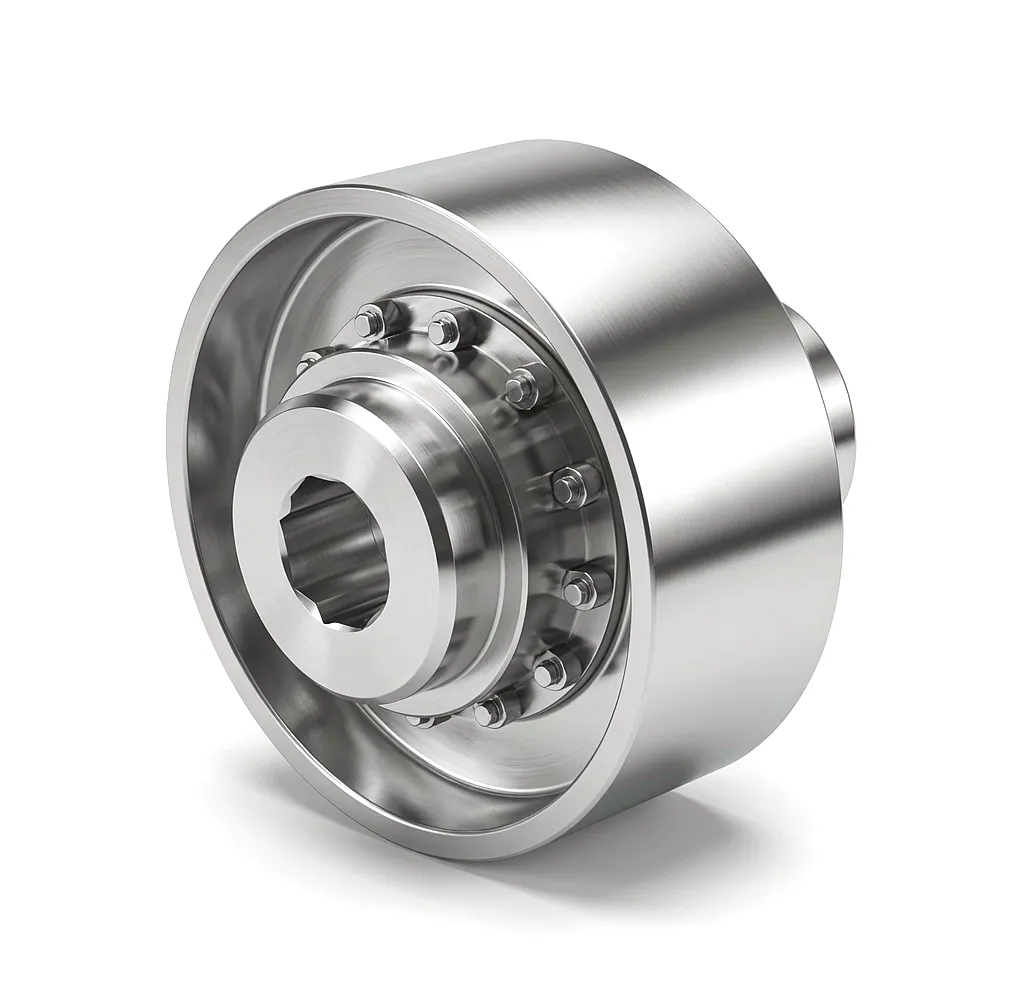
In a 3 MW turbine operating at 1,500 rpm on the HSS, the gear coupling handles approximately 19 kNm of torque. Our NGCL-series couplings in this range weigh under 65 kg and achieve balance grades of G6.3 or better — critical for minimising generator bearing loads at rated speed.
Technical Performance Parameters
The table below covers the primary GICL and NGCL drum-tooth gear coupling series used in wind turbine high-speed shaft applications. Custom specifications beyond these ranges are available upon request.
| Parameter | GICL-4 | GICL-7 | NGCL-5 | NGCL-8 | NGCL-11 |
|---|---|---|---|---|---|
| Rated Torque (kNm) | 3.15 | 16.0 | 6.3 | 25.0 | 80.0 |
| Peak Overload Torque (×Rated) | 2.5× | 2.5× | 2.5× | 2.5× | 2.5× |
| Max Speed (rpm) | 3,150 | 1,800 | 2,500 | 1,600 | 1,000 |
| Angular Misalignment (°) | 1.5° | 1.5° | 1.5° | 1.5° | 1.5° |
| Axial Displacement (mm) | ±3 | ±5 | ±4 | ±6 | ±8 |
| Operating Temp. Range (°C) | -30 ~ +80 | -30 ~ +80 | -30 ~ +80 | -30 ~ +80 | -30 ~ +80 |
| Mechanical Efficiency | >99.5% | >99.5% | >99.5% | >99.5% | >99.5% |
| Balance Grade (ISO 1940) | G6.3 | G6.3 | G6.3 | G6.3 | G6.3 |
| Hub Material | 42CrMo4 | 42CrMo4 | 42CrMo4 | 42CrMo4 | 42CrMo4 |
* Custom torque ratings, shaft bore diameters, keyway profiles, and surface treatments available. Contact our engineering team for project-specific selection.
Materials, Construction & Design Principles
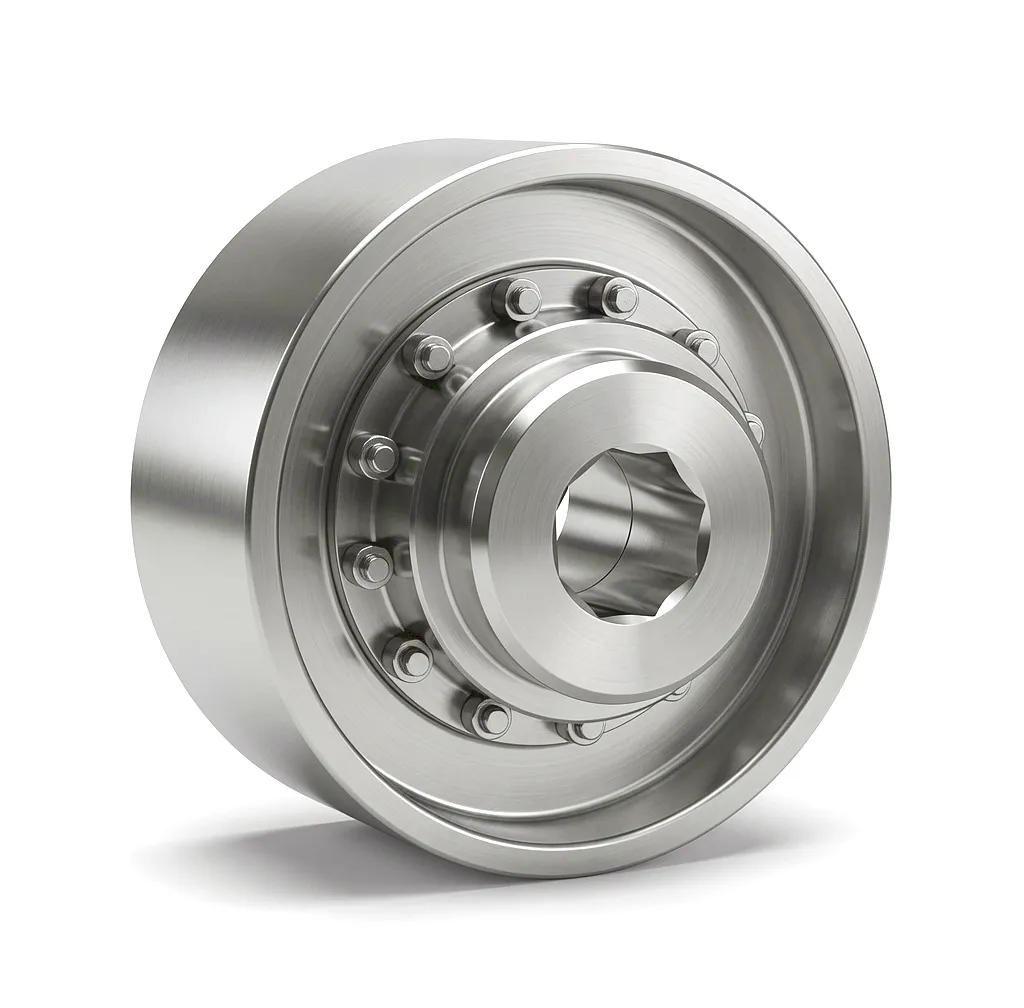
The performance of a gear coupling in a wind turbine drivetrain ultimately comes down to three things: the geometry of the tooth profile, the quality of the material, and the precision of the manufacturing process. Our GICL and NGCL series are built around a crowned (drum-shaped) tooth geometry where the outer diameter of each tooth is barrelled rather than straight-sided. This deceptively simple modification transforms how load is distributed: instead of concentrating stress at the tooth edges when misalignment occurs, the crowned profile rolls the contact zone smoothly towards the centre, reducing peak contact pressure by up to 40% compared to a standard straight-tooth coupling under the same misalignment conditions.
Hub material is 42CrMo4 alloy steel, through-hardened to 280–320 HB. This grade offers a tensile strength of approximately 1,000 MPa combined with genuine fatigue resistance — a critical property when you consider that a gear coupling in a 3 MW turbine will complete over 500 million load cycles during a 20-year design life. The outer sleeve is manufactured from 35CrMo quenched and tempered steel, with tooth flanks induction-hardened to HRC 50–58 for optimal wear resistance. All critical dimensions — bore diameter, keyway width, tooth profile — are machined to IT6 tolerance class, and 100% of production runs are inspected for dimensional accuracy and balance grade before despatch.
For offshore and coastal onshore installations across the British Isles, we offer optional stainless steel fasteners throughout, Xylan-coated outer sleeves for corrosion resistance, and compatibility with Kluber Lubrication wind turbine greases — all specified to meet or exceed the requirements of IEC 61400-4 (Design requirements for wind turbine gearboxes).
Key Material Highlights
Where Gear Couplings Are Used in Wind Energy Systems
High-Speed Shaft (HSS) Connection
The primary application: connecting gearbox output to the generator. The coupling must handle the full rated torque at 1,500–1,800 rpm with a continuous misalignment tolerance of 0.5–1.0° and accommodate sudden torque reversal during emergency braking events.
Yaw Drive Systems
Yaw drives rotate the entire nacelle to track wind direction. Multiple electric motors drive pinion gears through gear couplings that must accommodate the angular and positional tolerances of a nacelle yaw ring with diameters exceeding 3 metres, while transmitting intermittent high-torque yaw commands in all weather.
Pitch Control Drives
Individual blade pitch is controlled by electric or hydraulic drives. In electric pitch systems, a servo motor drives the pitch ring gear through a compact gear coupling that must respond within milliseconds to pitch angle corrections, requiring zero backlash and high torsional stiffness in a very confined nacelle hub space.
Hydraulic Pump Drives
Many wind turbines use hydraulic systems for brake actuation, blade pitch in fail-safe mode, and rotor lock. Hydraulic pumps driven directly from the main or intermediate shaft use small-diameter gear couplings to accommodate the positional tolerance between the pump input and shaft mounting flange while maintaining consistent flow output.


Why Engineers Specify Our Gear Couplings
Crowned-Tooth Geometry Reduces Edge Loading
The barrel profile of the drum tooth is not cosmetic. Under 1° of angular misalignment, a crowned tooth reduces maximum contact pressure by 35–42% versus a straight tooth of identical module. In wind turbine terms, this translates to longer re-lubrication intervals — extending from 6 months to 24 months in many UK installations — and measurably lower wear rates over the turbine’s 20-year design life.
High Torque Density in a Compact Envelope
Nacelle space is expensive. Every kilogram added to the nacelle increases the mass at the top of the tower, demanding a more robust yaw bearing and tower structure. Our gear couplings achieve a rated torque density of up to 80 kNm per 65 kg of coupling weight — among the highest available in the wind turbine coupling market — enabling engineers to meet torque requirements without compromising nacelle weight budgets.
Sealed-for-Life Options Reduce Maintenance Cost
Offshore turbine maintenance requires vessel charter at costs exceeding £30,000 per day. Our sealed-for-life gear coupling options, filled with long-life polyurea-based grease compatible with leading wind turbine lubricants, eliminate the need for scheduled re-lubrication for up to 5 years under standard loading conditions — directly cutting maintenance vessel call-out frequency on UK offshore wind farms.
Wide Bore Range for Retrofit and OEM Supply
Whether you are an OEM specifying couplings for a new turbine design or an operator retrofitting an ageing drivetrain with a newer coupling assembly, our standard bore range covers 20 mm to 320 mm in 5 mm increments, with keyways to DIN 6885 and hydraulic-fit (shrink disc) options for rapid nacelle installation. Custom bore profiles, including spline connections to DIN 5480, are machined in-house.
Our Manufacturing Capability & Customisation Service
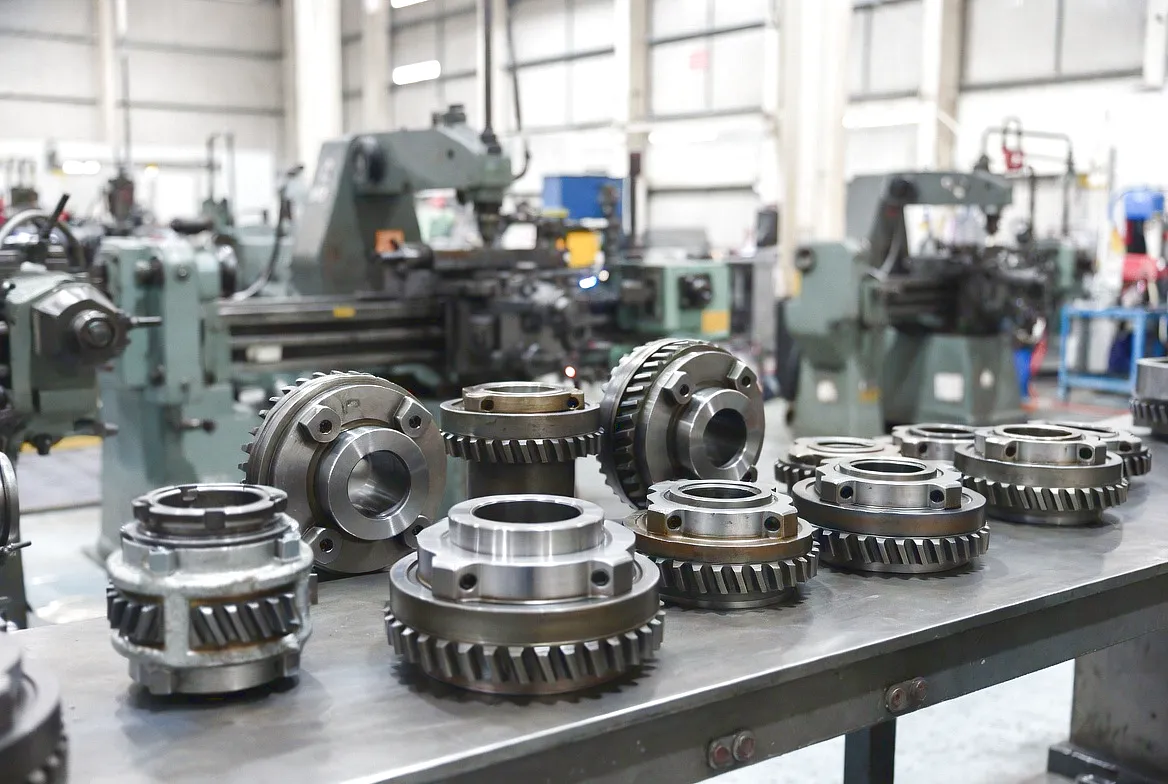
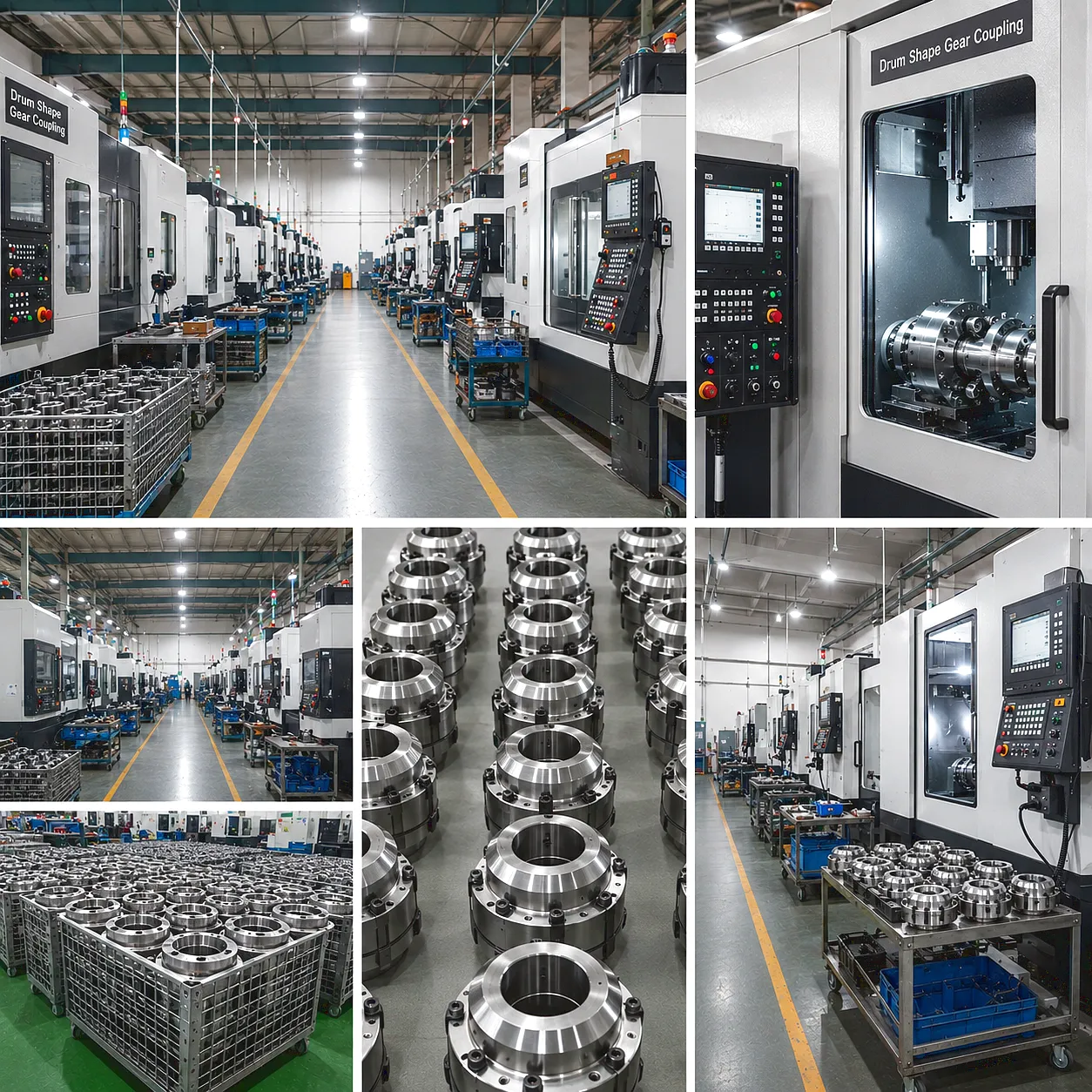
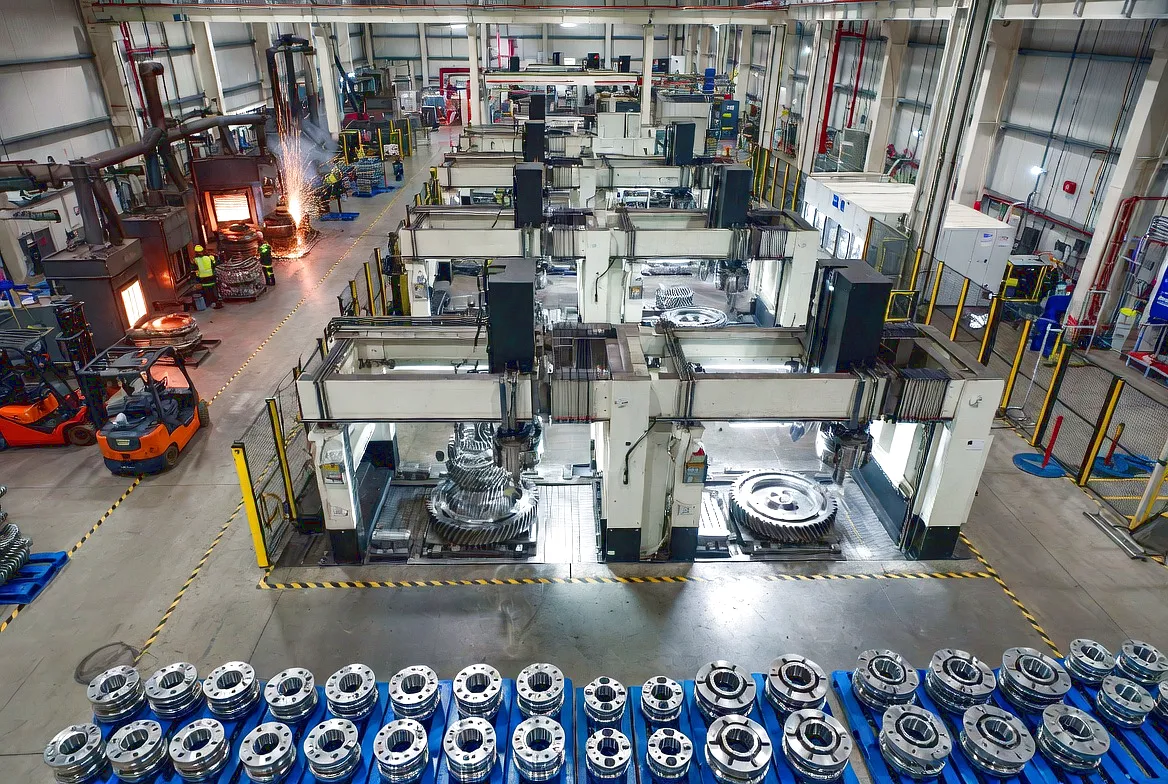
Ever Power operates a vertically integrated manufacturing facility with over 15,000 m² of production floor space. Every step in the manufacturing process — from bar stock selection through hobbing, heat treatment, grinding, tooth flank finishing, balancing, and final assembly — takes place under one roof, giving us complete control over quality at each stage. This is not common in the coupling supply chain; many competitors source subcomponents from multiple suppliers and assemble to order. Our integrated model means consistent dimensional accuracy, traceable material certifications, and dramatically shorter lead times for urgent orders.
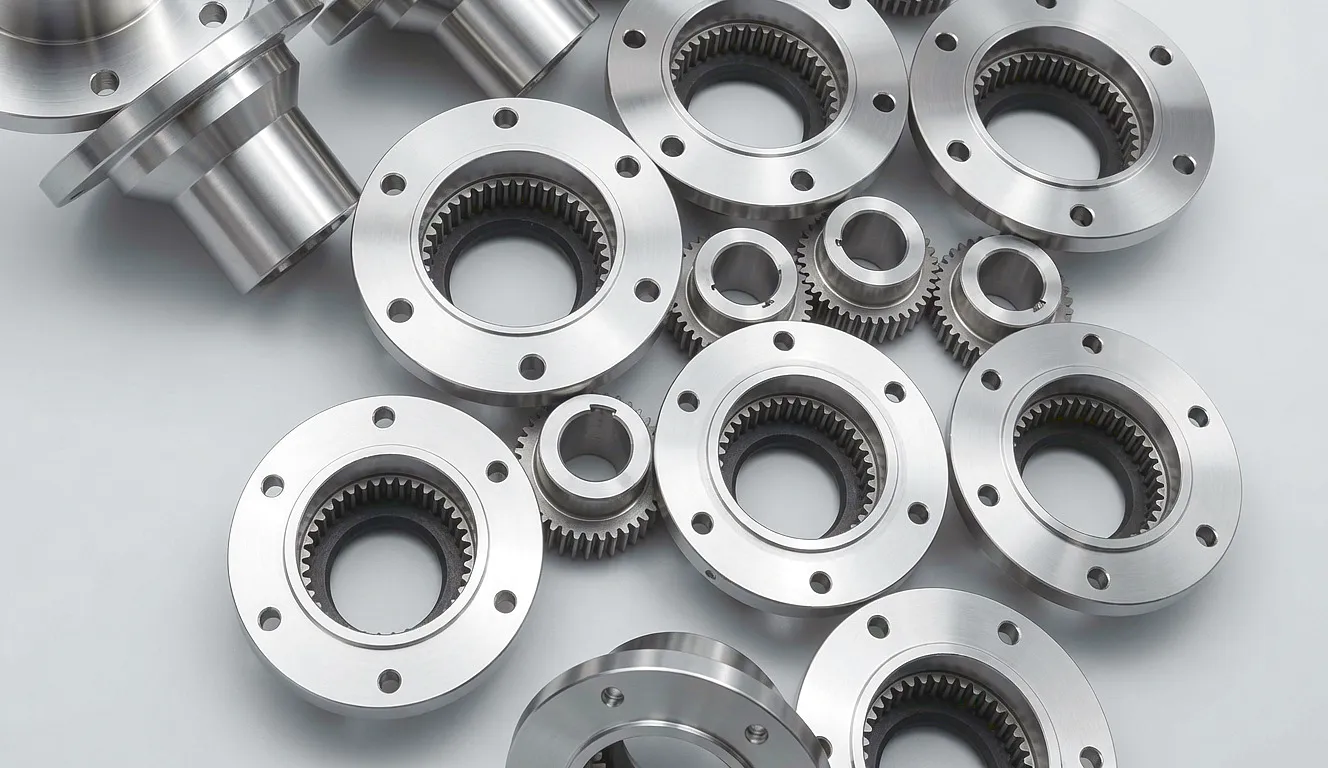
Our engineering team has deep experience in custom gear coupling design for wind turbine OEMs and independent power producers (IPPs). We can design and manufacture couplings to customer-supplied drawings, reverse-engineer existing worn components from physical samples, modify standard catalogue products to non-standard bore and keyway specifications, and supply full material certificates, balancing reports, and dimensional inspection records. We can also supply couplings pre-assembled with shrink discs, torque limiters, or brake disc flanges for fully integrated drivetrain sub-assemblies.
Customer Success: Offshore Wind, North Sea UK
Reducing High-Speed Shaft Coupling Failures on a 54-Turbine North Sea Array
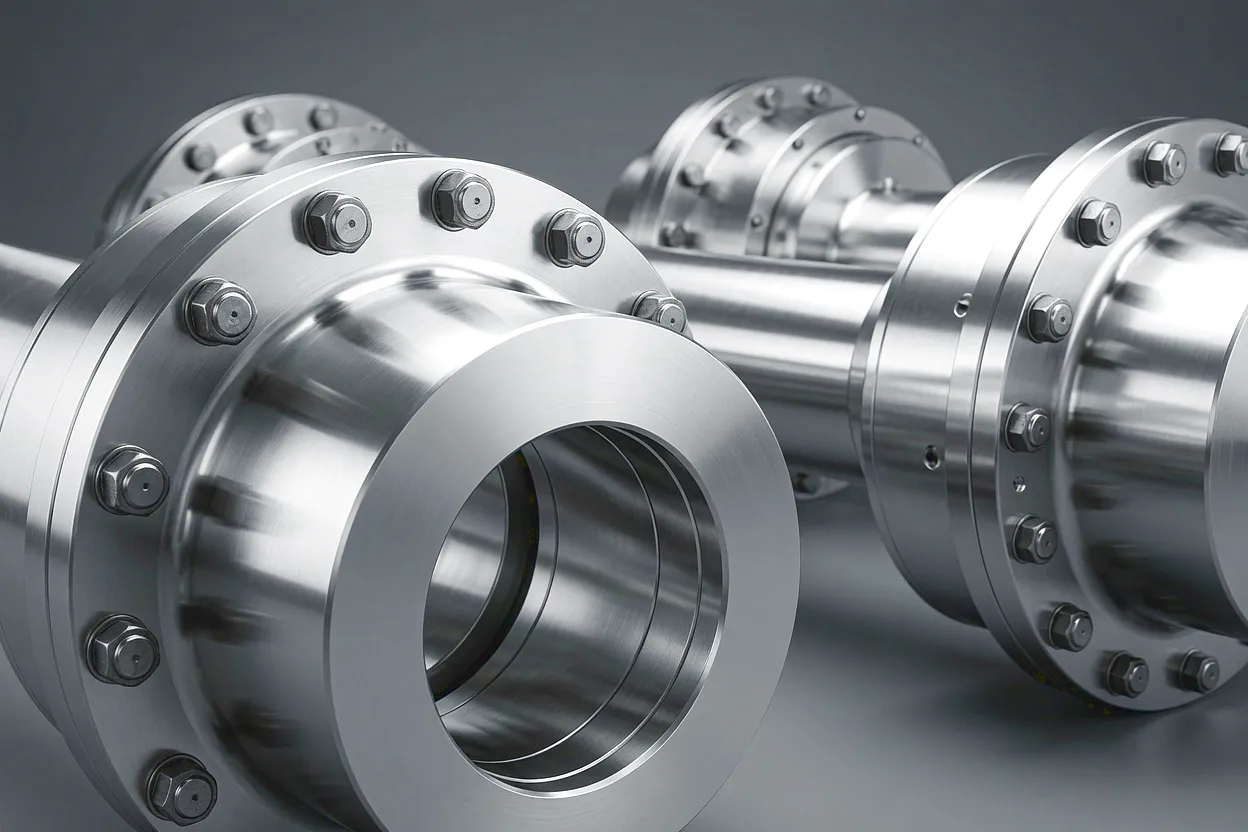
An independent power producer (IPP) operating a 54-turbine offshore wind farm in the North Sea had been experiencing repeated gear coupling failures on the high-speed shaft of a fleet of 2.3 MW turbines using a competitor’s straight-tooth design. Over a 3-year period, 11 coupling replacements were required across the fleet, with each replacement requiring a crew transfer vessel (CTV) deployment costing upwards of £45,000 per event in vessel, technician, and lost production costs. Total unplanned maintenance expenditure attributed to coupling failure exceeded £495,000.
The IPP’s operations team contacted Ever Power and provided full dimensional drawings, gearbox datasheet, and 3 years of operational load data. Our engineers analysed the data and identified that the original straight-tooth couplings were experiencing edge-loading failure due to a consistent 0.9° angular misalignment — within the manufacturer’s stated tolerance, but incompatible with the straight tooth geometry under the cyclic loading profile of the site’s typical wind shear pattern.
We supplied drop-in NGCL-7 drum-tooth gear couplings with matching flanges, shrink disc mounting, and sealed-for-life lubrication — all to the existing shaft interface dimensions, requiring no gearbox or generator modifications. The retrofit was completed across all 54 turbines during the following planned O&M campaign. Over the subsequent 28 months of operation, zero coupling failures were recorded. The IPP estimates the gear coupling upgrade has delivered a net saving of over £380,000 in avoided unplanned maintenance costs, not including the production availability improvement from eliminating unplanned outages.
Outcome Summary
Also Available
NL-Type Nylon Gear Flexible Coupling
For pitch drive and yaw motor applications requiring electrical isolation between motor shaft and gearbox, our NL-type nylon gear coupling provides the same misalignment tolerance as the steel NGCL series while breaking the electrical continuity path between motor and structure — important for protecting motor bearings from induced current damage in variable frequency drive (VFD) applications.
What Our Customers Say
We’ve been using Ever Power NGCL couplings on our Scottish onshore wind portfolio for three years. The lead time on custom bore sizes is genuinely impressive — we had 8 non-standard units delivered in under 6 weeks, and every one was dimensionally perfect on first fit. The technical support when we were doing our drivetrain uprate was excellent.
James M.
Senior Drivetrain Engineer, Scottish Wind IPP
As a gearbox remanufacturing business in Yorkshire, we source gear couplings for rebuilt turbine gearboxes from several suppliers. Ever Power consistently delivers the tightest tolerances and the most complete documentation — material certs, balance records, dimensional reports — which matters enormously when our customers need to demonstrate compliance to their turbine owners or insurers.
Sarah K.
Technical Director, Yorkshire Gearbox Remanufacturing Ltd
Price and delivery are good, but what really sets Ever Power apart is the willingness to engage technically before the order is placed. When we were designing the drive system for a tidal energy demonstration project in Orkney, they spent real time helping us understand the misalignment characteristics of our particular installation — that kind of pre-sales engineering support is rare.
Rob B.
Lead Engineer, Orkney Marine Energy Solutions
Gear Couplings Across the UK Wind Energy Landscape
The United Kingdom operates one of the largest installed wind energy fleets in the world, with capacity spread across a diverse range of sites and conditions. Onshore wind farms in Scotland — where approximately 65% of UK onshore capacity is installed — operate in extreme weather conditions including sub-zero winter temperatures, frequent precipitation, and high wind turbulence intensities that create particularly demanding cyclic loading profiles. Gear couplings in these environments need to reliably seal grease against water ingress at very low temperatures, while also withstanding the high dynamic torque variations created by turbulent wind flow over complex Highland terrain.
In Wales and northern England, the wind energy fleet is more mixed — older 850 kW and 1.5 MW machines operating alongside newer 3–4 MW repowered units. Drivetrain component availability for older turbine models is a genuine challenge for operators in this region; Ever Power manufactures gear couplings to match obsolete designs, providing replacement components that extend operational life and defer the capex of full repowering for operators managing tight asset management budgets.
England’s offshore wind sector — centred on the Round 3 zones of the North Sea and Irish Sea, with major projects off the coasts of East Anglia, Yorkshire, and Lincolnshire — operates some of the world’s largest individual turbines. Supply chain reliability for these projects is critical: a missing gear coupling can delay an installation vessel at a day-rate of £200,000 or more. Ever Power maintains buffer stock on the highest-demand offshore coupling sizes for UK-based operators, with despatch capability within 48 hours for in-stock items.
UK Regional Supply
Selecting the Right Gear Coupling for Your Wind Turbine
Coupling selection for wind turbine applications is not a simple torque lookup exercise. The process begins with the application position — high-speed shaft, intermediate shaft, yaw drive, pitch drive, or ancillary — since each has a different speed range, torque level, misalignment characteristic, and maintenance access constraint. For HSS applications, the design torque is typically the gearbox output torque at rated power multiplied by a service factor that accounts for start-stop cycles, emergency braking events, and the dynamic overload factor for the turbine class. IEC 61400-4 provides the framework for these calculations, and our engineering team can assist with service factor selection for specific turbine models and operating regimes.
| Application Position | Typical Speed | Key Requirement | Recommended Series |
|---|---|---|---|
| High-Speed Shaft (HSS) | 1,500–1,800 rpm | High torque density, balance G6.3 | NGCL-5 to NGCL-8 |
| Intermediate Shaft | 200–600 rpm | High torque, long service life | GICL-7 to GICL-10 |
| Yaw Drive Motor | 50–300 rpm | Compact, high overload capacity | GICL-4 to GICL-6 |
| Pitch Drive Motor | 100–500 rpm | Elec. isolation, zero backlash | NL-Type Nylon Series |
| Hydraulic Pump Drive | 500–1,500 rpm | Compact, sealed, corrosion-resistant | GICL-3 to GICL-5 |
For new turbine designs or major drivetrain overhauls, we recommend providing our engineering team with the full gearbox output specification, generator data sheet, bedplate stiffness data if available, and the site wind class. With this information, we can provide a fully documented coupling selection with safety factor calculations, anticipated service life estimates, and recommended re-lubrication schedules — all at no charge as part of our pre-sales technical service for qualified B2B customers.
Ready to Specify the Right Gear Coupling for Your Wind Project?
Send us your application data — turbine model, gearbox rating, shaft dimensions, or existing coupling reference — and our engineering team will respond with a technically detailed recommendation and commercial quote within 24 hours.
Frequently Asked Questions
Ever Power · Gear Coupling Specialists · Supplying the UK Wind Energy Sector
edit by gzl