
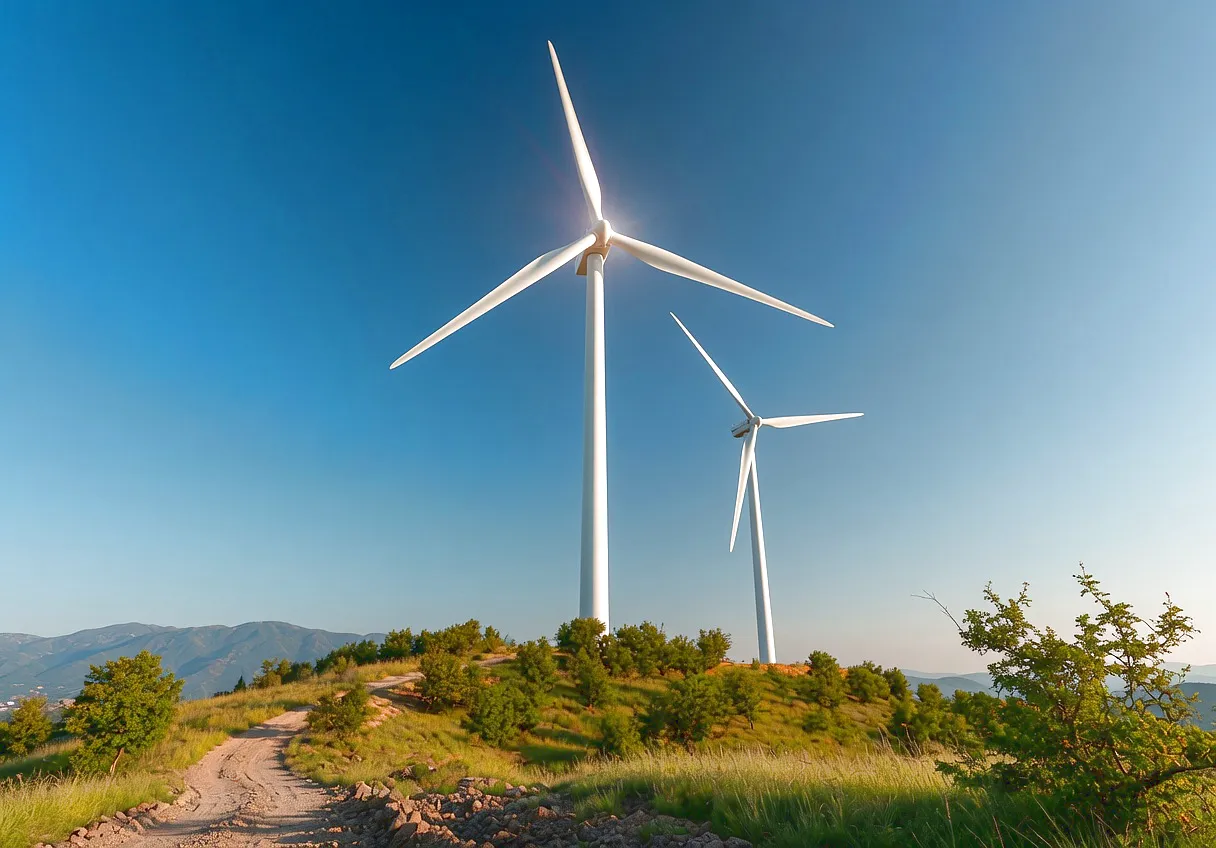
 Wind energy has transformed the British electricity landscape. The United Kingdom is home to some of the world’s most powerful offshore wind farms — Hornsea One, Dogger Bank, and the expanding East Anglia Array — while onshore sites in Scotland, Yorkshire, and Wales continue to push installed capacity higher every year. Behind that reliable electricity generation sits an often-overlooked mechanical hero: the gear coupling embedded deep inside every turbine’s drivetrain. Without it, the enormous torque spikes generated when wind gusts from 8 m/s to 25 m/s in seconds would destroy gearbox shafts, bearings, and generators within months of commissioning.
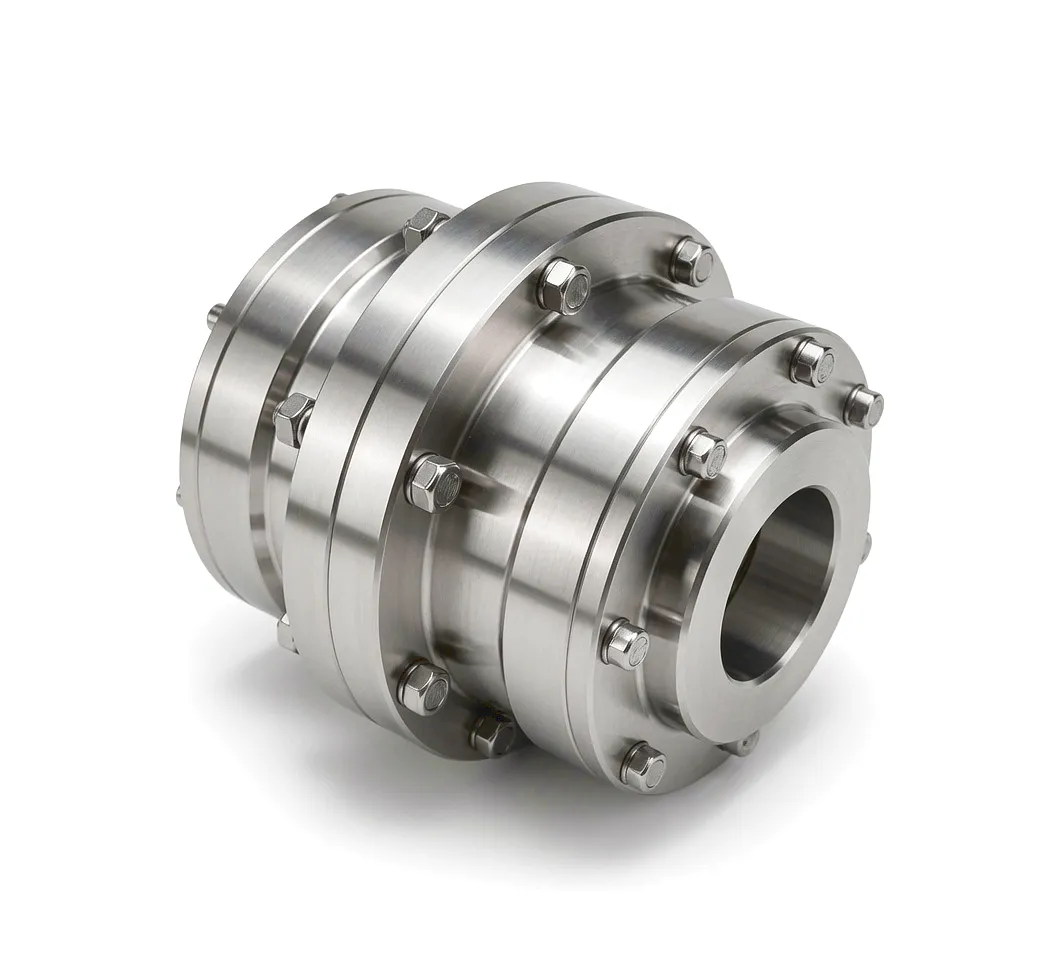
A gear coupling is a mechanical transmission component that connects two rotating shafts and transmits torque while tolerating a degree of angular, parallel, and axial misalignment. In a wind turbine’s gearbox stage — whether a conventional three-stage planetary/helical design in a doubly-fed induction generator (DFIG) machine, or the compact compound gearbox in a medium-speed permanent-magnet generator (PMG) — the drum-type gear coupling sits at the critical interface between the low-speed shaft coming off the main bearing and the first planetary stage. Its job is both mechanical and protective: transfer torque reliably while absorbing the shock loads and slight shaft deflections that are simply unavoidable in a structure sitting atop a 100-metre steel tower swaying in the wind.
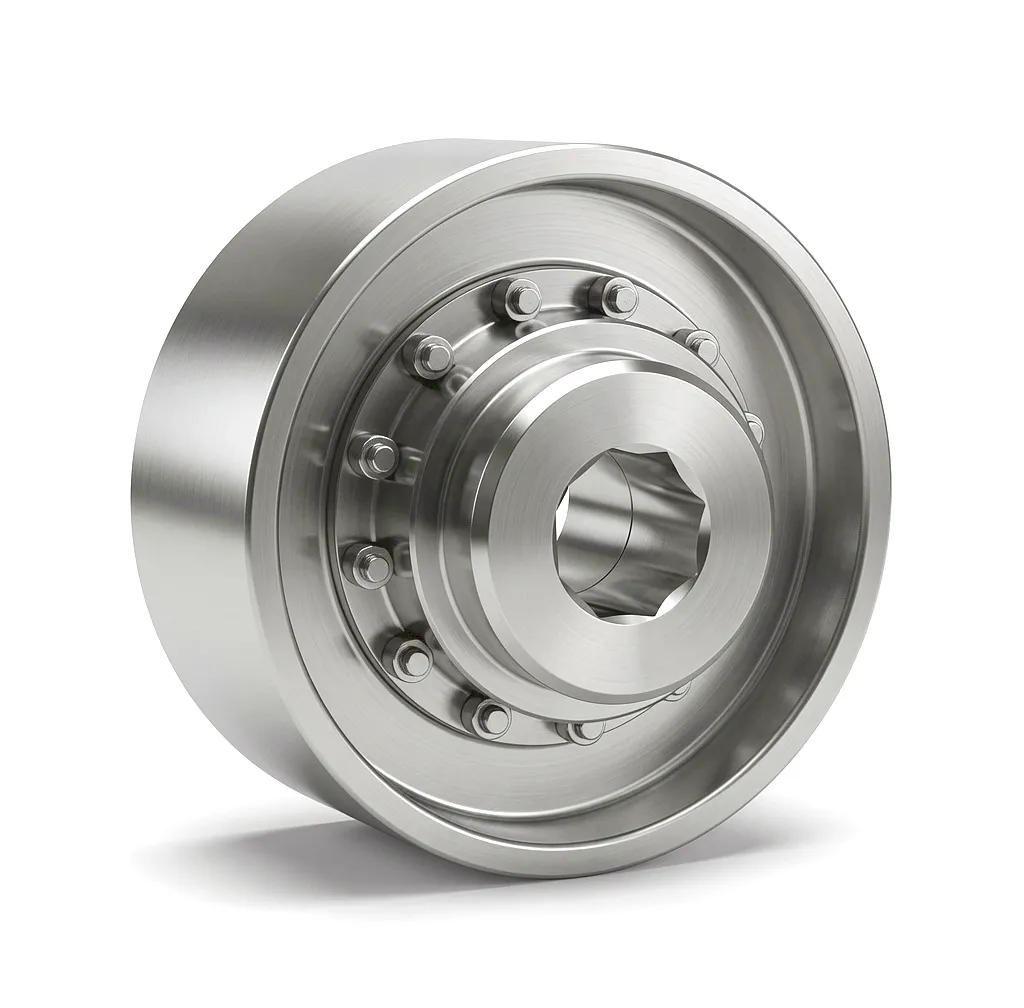
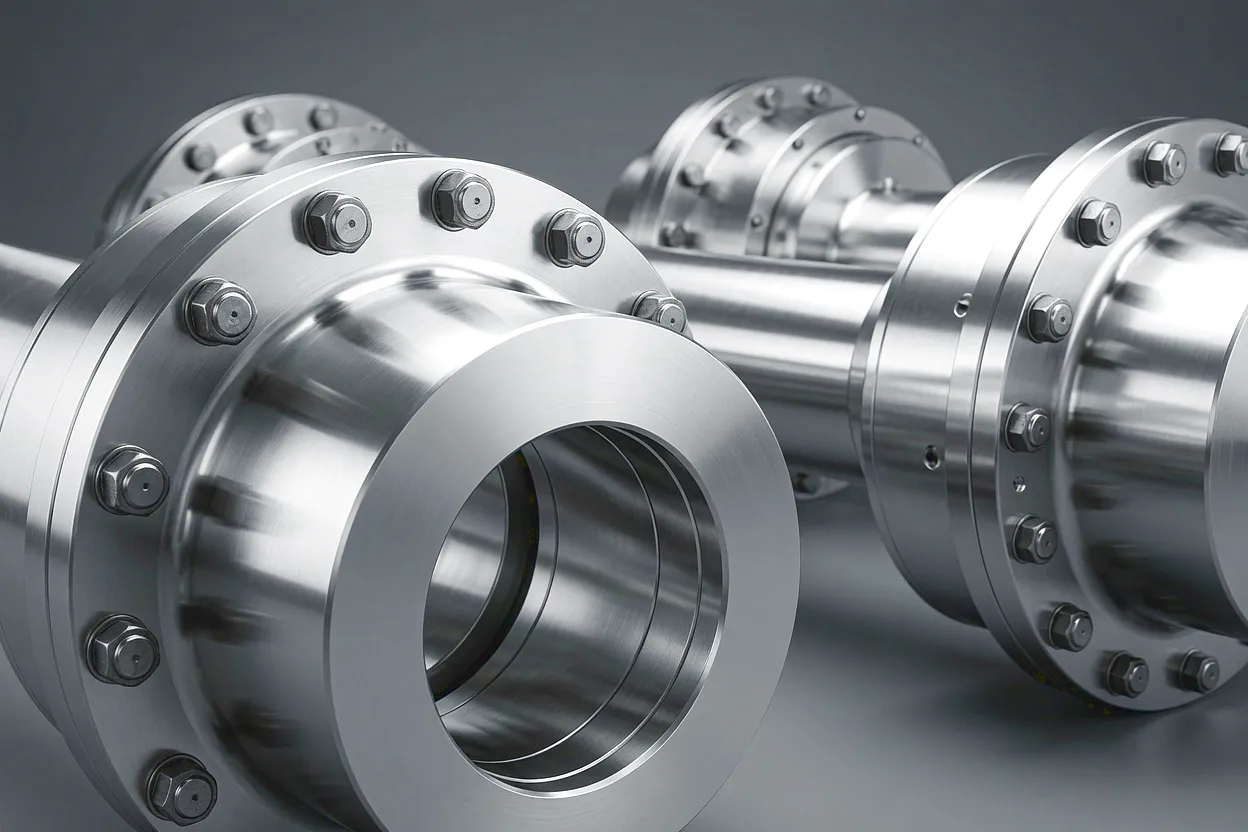
Ever Power GICL drum-type gear coupling — designed for high-torque wind turbine gearbox interfaces
How a Gear Coupling Works in a Wind Turbine Drivetrain
Principle, Structure & Load Path
 Wind turbine drivetrains come in three dominant configurations: the traditional high-speed geared drivetrain with a three-stage gearbox stepping up from ~18 rpm at the rotor to ~1,500 rpm at the generator; the medium-speed or semi-direct drive with a single- or two-stage gearbox and a PMG spinning at 200–600 rpm; and the fully direct-drive concept where the rotor shaft is coupled directly to a large-diameter low-speed generator. The gear coupling is most critical in the first two configurations, placed at the coupling interface between the main shaft and the gearbox input, and occasionally between the gearbox output and the generator input shaft.
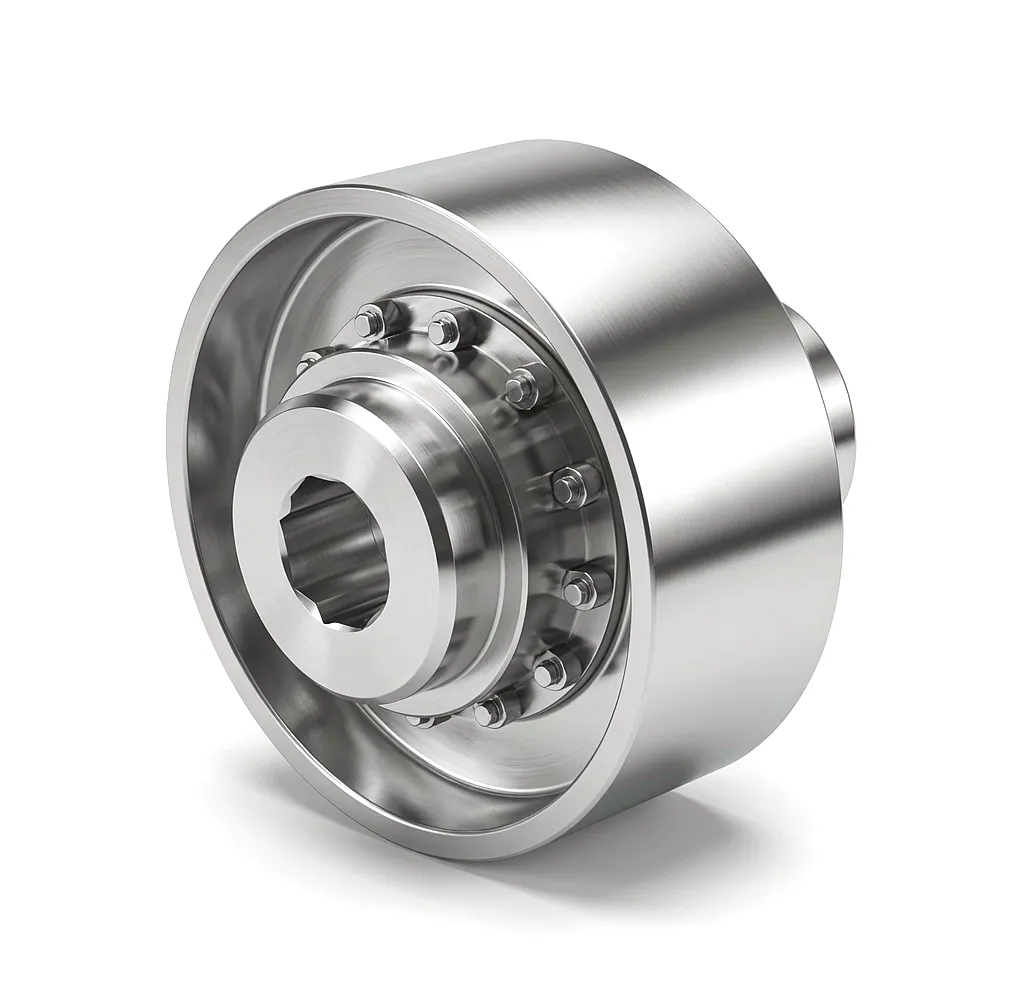
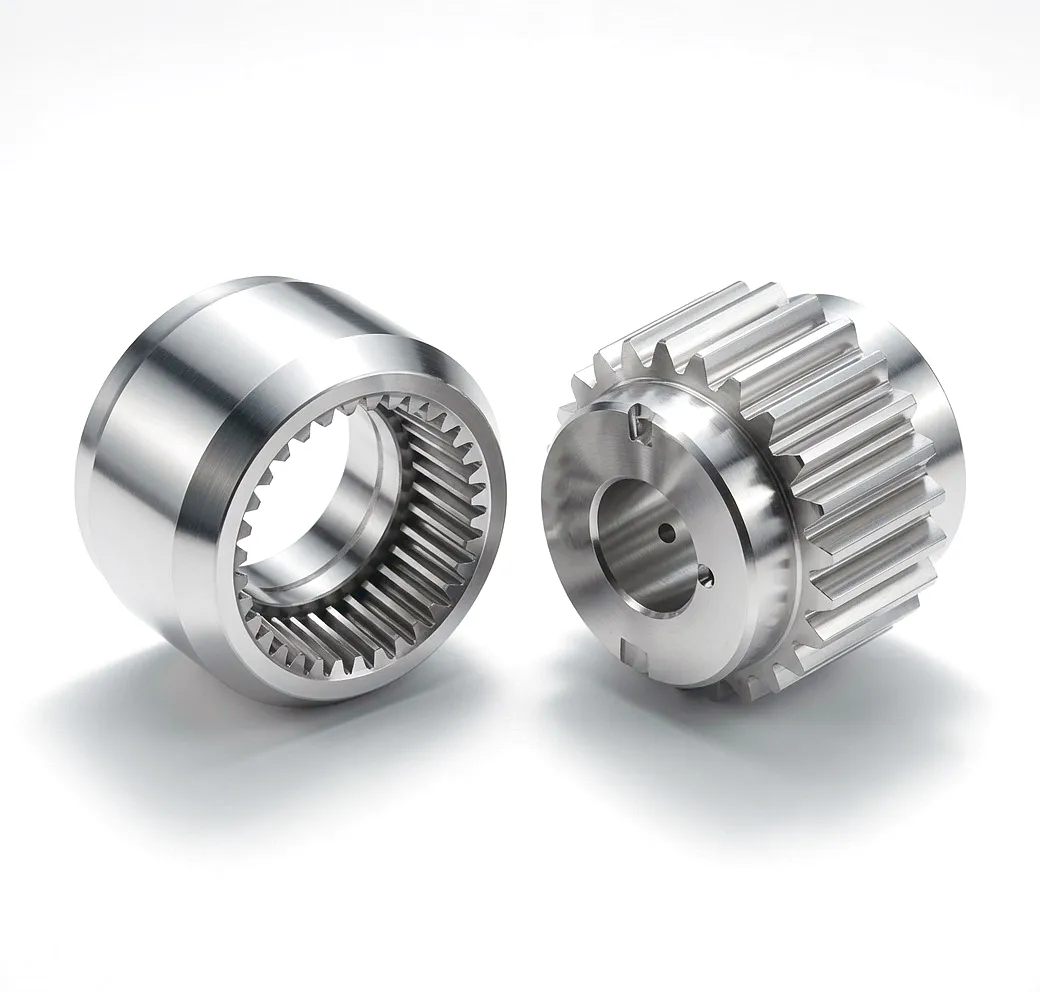
The operating principle of a drum-type (crowned-tooth) gear coupling is elegantly simple. Two inner hubs, each machined with external involute teeth, mesh with the internal teeth of an outer sleeve (also called a flange sleeve). The teeth are crowned — the tooth flanks are given a barrel-like convex profile rather than a straight profile — so that when the hubs are slightly misaligned (angular, parallel, or combined), the crowned teeth rock smoothly against the sleeve teeth without creating stress concentrations at the tooth edges. Torque flows through metal-to-metal tooth contact at very high contact stress, which is why a properly lubricated gear coupling can transmit two to four times the torque per unit mass compared with rubber-element flexible couplings of equivalent outer diameter. In a wind turbine, where the main shaft might be 300–600 mm in diameter and the transmitted torque at rated power can exceed 3–5 MN·m on a 5 MW machine, that torque density advantage is decisive.
Technical Performance Parameters
Ever Power Drum-Type Gear Coupling — Wind & Heavy Industrial Series
| Parameter | GICL Series | NGCL Series | NL Nylon Series |
|---|---|---|---|
| Nominal Torque (T_n) | 1,000 – 2,000,000 N·m | 500 – 1,500,000 N·m | 50 – 50,000 N·m |
| Max Operating Speed | Up to 4,500 rpm | Up to 3,600 rpm | Up to 6,000 rpm |
| Angular Misalignment | Up to 1.5° | Up to 1.5° | Up to 2° |
| Radial Misalignment | 0.2 – 2.0 mm | 0.2 – 1.8 mm | 0.3 – 2.5 mm |
| Hub Material | 42CrMo / 45 Steel | 42CrMo Alloy Steel | Cast Iron + Nylon Sleeve |
| Lubrication | Oil-bath / Grease | Oil-bath / Grease | Grease / Dry-Run |
| Operating Temperature | -40°C to +120°C | -40°C to +120°C | -30°C to +80°C |
| Surface Treatment | Phosphating / Spray Paint | Quenched & Tempered | Zinc Plated / Painted |
* Custom bore sizes, keyways, flanges, and torque ratings available on request. Contact our UK technical team for a full datasheet.
Why Wind Engineers Choose Ever Power Gear Couplings
Seven Technical Advantages That Matter at 100 Metres
Exceptional Torque Density
Drum-tooth gear couplings transmit torque through direct steel-to-steel tooth contact at very high Hertzian contact stress, achieving two to four times the torque-per-kilogram ratio of elastomeric couplings. On a 5 MW turbine where the main shaft torque can exceed 4.2 MN·m at rated wind speed, that density advantage translates directly into a lighter, more compact drivetrain and reduced nacelle mass — critical when every kilogram at hub height costs money in tower steel and foundation concrete.
Crowned-Tooth Misalignment Compensation
The crown radius machined onto each external tooth flank allows up to 1.5° of angular misalignment and 2.0 mm of radial offset without creating bending moments on shaft bearings. In a wind turbine nacelle where main frame deflection under aerodynamic loading causes the main shaft and gearbox input to be continually misaligned by small amounts, this compensation capacity prevents the cyclic bearing overloads that otherwise accelerate fatigue failure and force expensive mid-life gearbox replacements.
Shock Load Absorption
Grid faults, emergency stops, and sudden wind gusts create transient torque spikes that can reach two to three times the nominal rated torque in a fraction of a second. Ever Power gear couplings are designed with service factor ratings up to KA = 2.0, and the tooth backlash inherent in the design provides a brief angular softening during the initial transient, smoothing the shock that would otherwise be transmitted directly to the gearbox planet carriers and bearings. This shock-absorbing characteristic is one reason well-specified gear couplings can significantly extend gearbox overhaul intervals.
Wide Temperature Range
British and North Sea offshore turbines experience ambient temperatures from -20°C in Scottish winter storms down to the nacelle’s operating envelope. The GICL and NGCL series are rated for continuous operation from -40°C to +120°C. The 42CrMo alloy steel used for hubs retains its toughness at sub-zero temperatures without the brittle fracture risk seen in plain carbon grades, and the oil-bath or grease lubrication system is formulated to maintain adequate film thickness even during cold start conditions in winter.
Compact Flange Design for Nacelle Integration
Nacelle space is at a premium. The GICL series adopts a flanged sleeve design that bolt-connects directly to the gearbox input flange using high-strength bolts. This eliminates the need for intermediate adaptor flanges, shortens the overall shaft spacing between main bearing and gearbox, and reduces the bending moment at the main bearing. Bore sizes from 40 mm to 600 mm are available as standard, with custom bores, keyway profiles, interference-fit tolerances, and flange-bolt-circle diameters available on request from Ever Power’s engineering team.
Long Service Life & Low Maintenance
When correctly lubricated and installed within alignment tolerances, a drum-type gear coupling on a wind turbine drivetrain can realistically achieve 80,000–120,000 operating hours before the first tooth-wear inspection is required. Lubrication intervals on sealed grease-lubricated units are typically 4,000–6,000 hours, well within standard turbine annual service schedules. The sealed cartridge design used on NGCL units also prevents ingress of the salt spray that offshore environments impose, protecting the tooth contact surfaces from corrosion pitting that would otherwise accelerate wear.
Material Quality & Certification
Every gear coupling leaving Ever Power’s production floor is manufactured from material batches with full material test reports (MTRs) traceable to melt heat number. Hubs are forged from 42CrMo4 or 45# steel bar, quenched and tempered to HB 260–310, and gear teeth are hobbed and then shaved or ground to achieve DIN 6 gear quality or better. Critical dimensions — bore tolerance, flange face runout, tooth profile — are checked on a coordinate measuring machine (CMM) before dispatch. For UK and European customers, full compliance documentation including dimensional inspection reports and hardness certificates is supplied as standard.
Application Scenarios in Wind Energy Systems
Where Gear Couplings Fit — And Why It Matters
In a geared wind turbine — the dominant configuration for turbines in the 2–6 MW class — the drivetrain load path runs from the rotor hub through the main shaft, through one or more gear coupling connections, through a three-stage planetary/helical gearbox, and then into the generator. The gear coupling appears at two distinct interfaces. The first is at the low-speed shaft interface between the main bearing housing and the gearbox input flange. Here the coupling is typically a large-diameter flanged gear coupling of GICL or NGCL type, transmitting the full rotor torque (potentially 3–5 MN·m on a large offshore machine) while absorbing the slight shaft deflections caused by uneven aerodynamic loading across the rotor disc. The second location is at the high-speed shaft between the gearbox output and the generator input. Here the coupling transmits a much smaller torque at much higher speed, and its primary function shifts from shock absorption to misalignment compensation, since generator shaft and gearbox output shaft alignment tolerances at this speed demand sub-millimetre precision.
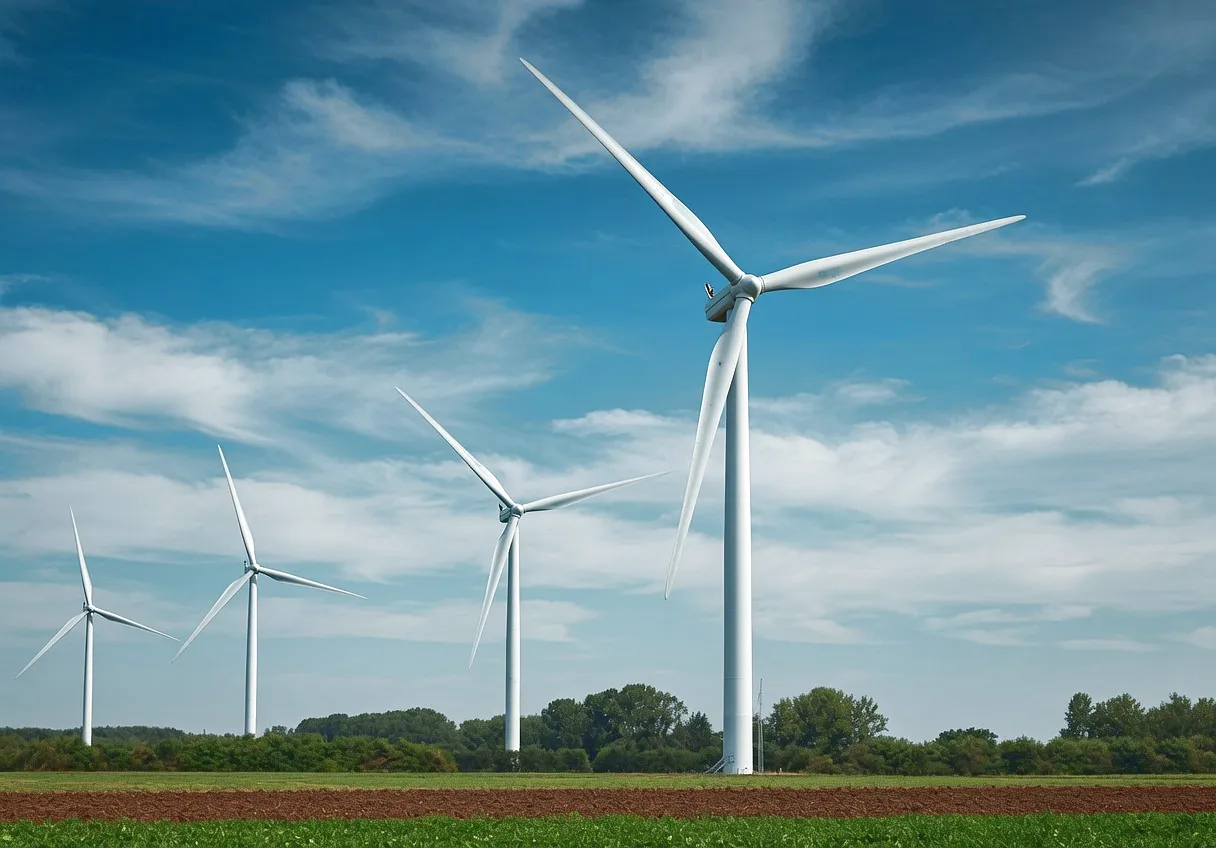
Main shaft gear coupling interface — geared drivetrain
High-speed shaft generator coupling — 3-stage gearbox output
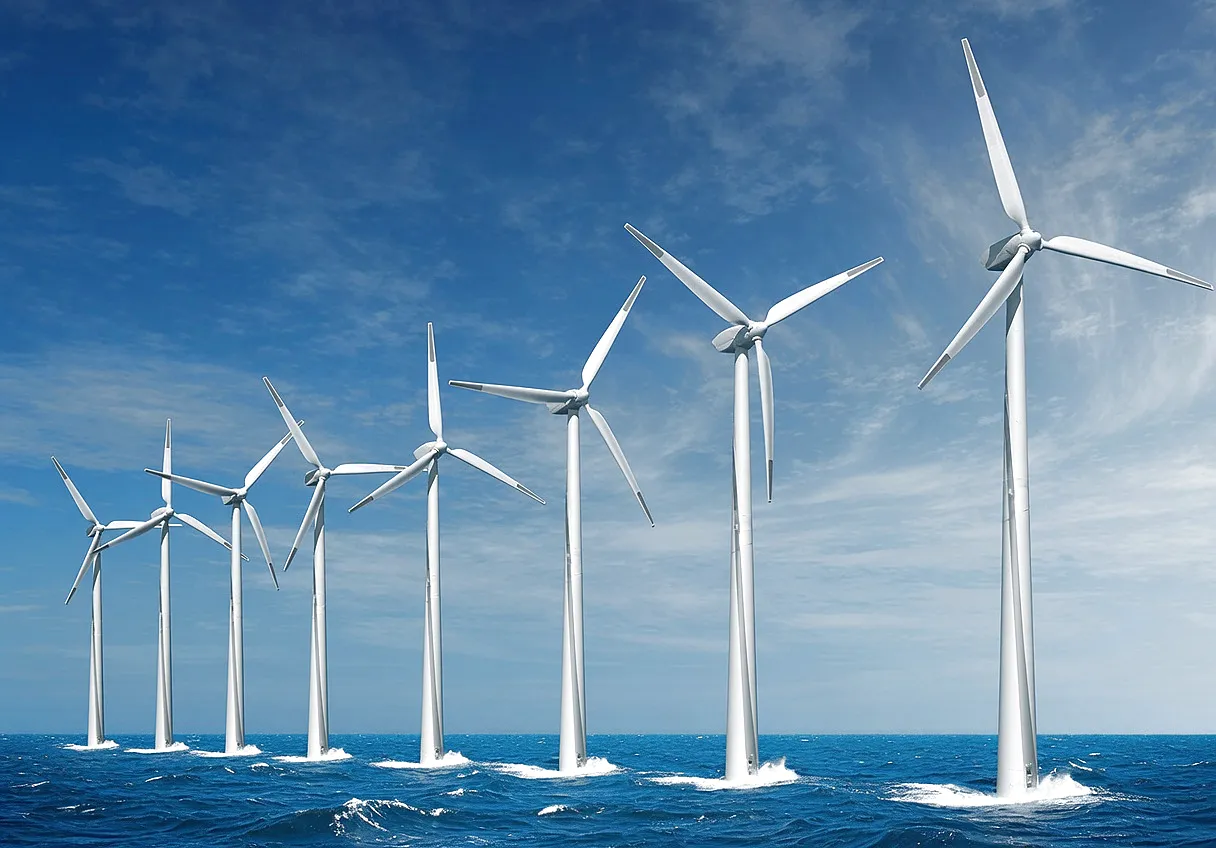
Offshore North Sea wind turbine drivetrain integration
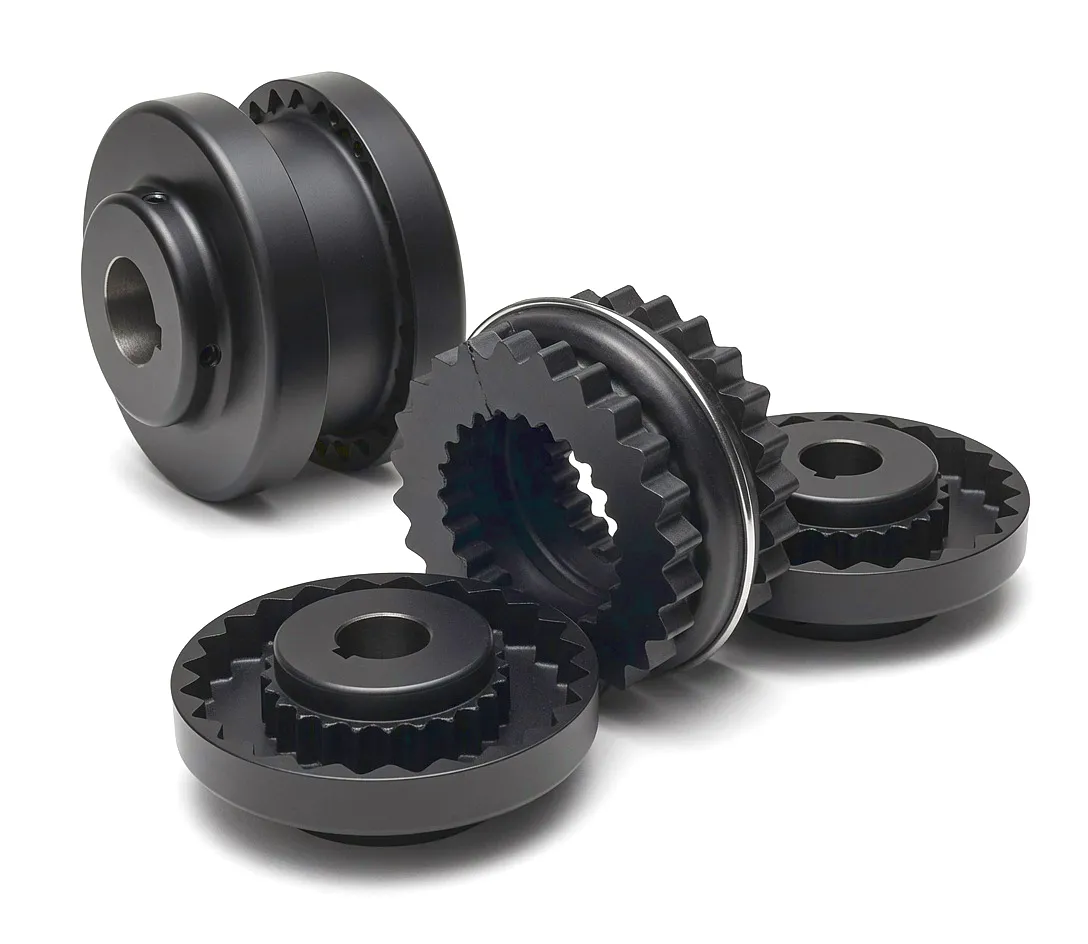
Beyond the main wind turbine drivetrain, gear couplings from the Ever Power range are used in ancillary wind farm equipment. Pitch drive gearboxes — the electric actuator systems that rotate the blades to control rotor speed and manage extreme wind loads — use smaller NL-type nylon gear couplings that provide electrical isolation as well as misalignment compensation, preventing stray currents from being conducted into the blade bearing. Yaw drive systems, which rotate the entire nacelle to face into wind, similarly use gear couplings between the yaw motor gearbox and the ring gear drive pinion. Hydraulic pump drives in older hydraulic-pitch machines, and cooling fan drives for transformer and converter units, also employ gear couplings throughout.
The medium-speed semi-direct drive architecture — gaining popularity with turbine designers targeting the 6–15 MW offshore market — uses a single-stage or two-stage gearbox that steps the rotor speed up from approximately 8–12 rpm to 200–600 rpm, driving a compact permanent magnet generator. In this configuration the gear coupling at the main shaft interface must handle even higher shock factors because the gearbox provides less overall ratio and therefore less inertia smoothing between the rotor and generator. Ever Power GICL couplings with high service factors of KA = 1.75–2.0 are specifically recommended for this architecture.
Ever Power Manufacturing & Custom Engineering
Precision From Billet to Boxed — Fully Tailored to Your Drivetrain
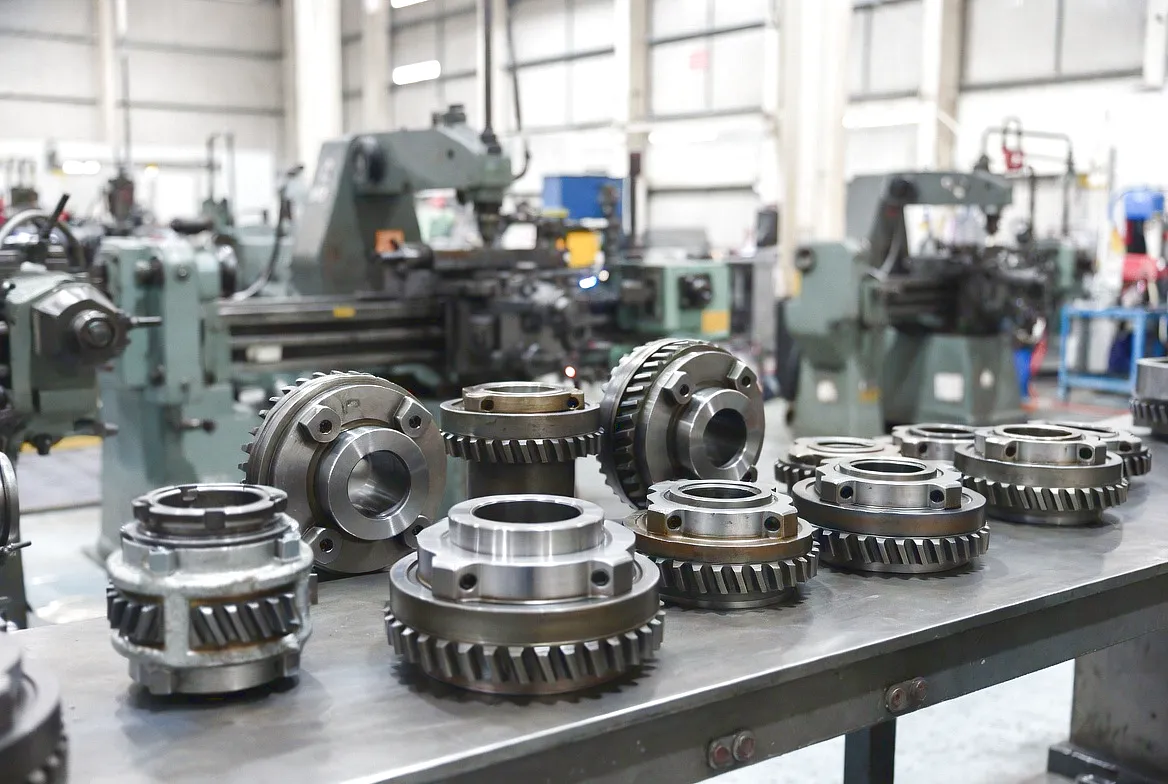 Ever Power operates a purpose-built manufacturing facility equipped with CNC gear hobbing and shaving centres, vertical turning lathes, and a CMM inspection room. Our production capacity exceeds 15,000 gear coupling assemblies per year, with a dedicated engineering team able to turn around custom designs — from initial drawing review to finished prototype — within six to eight weeks for most configurations.
What sets us apart is not just capacity but engineering depth. When a UK offshore wind OEM approached us needing a main shaft gear coupling for a prototype 8 MW turbine with a non-standard bore diameter of 445 mm, an interference fit of H7/r6, and a specific flange bolt-circle pattern to match their proprietary gearbox housing, our engineering team modelled the coupling in FEA, reviewed the load spectrum supplied by the customer’s drivetrain simulation team, and specified a GICL-equivalent coupling with crown radius and tooth module selected for that exact peak torque, service factor, and misalignment envelope. The delivered parts met all dimensional requirements on first inspection with zero rework — a reflection of our machining precision and process discipline.
Custom Bore & Keyway
Bore sizes from 10 mm to 600 mm. Straight, taper, or spline bores. DIN 6885 keyways, custom profiles on request.
Non-Standard Flange Patterns
Custom bolt circle diameter, number of bolts, and flange thickness to match any gearbox housing drawing or customer standard.
Material Upgrades
Stainless steel, high-alloy tool steel, or special low-temperature Charpy-tested grades available for offshore and arctic environments.
Full Inspection & Documentation
CMM dimensional report, material test certificate, hardness test, and torque test data sheet supplied with every custom order.
Material Selection & Series Guide for Wind Applications
Matching the Coupling to the Turbine Architecture
 Selecting the correct gear coupling for a wind turbine drivetrain is not simply a matter of matching the rated torque. Wind turbine loads are highly stochastic — the torque load varies continuously with wind speed, turbulence intensity, and control system state. IEC 61400-1 specifies design load cases that include extreme turbulence, extreme operating gusts, and grid fault conditions, and the coupling must be sized to survive the peak torques associated with each of these events without plastic deformation of the tooth flanks or hub bores.
The primary material choice for wind-grade gear coupling hubs is 42CrMo4 (equivalent to BS EN ISO 683-17 grade 42CrMo4). This chromium-molybdenum alloy steel achieves excellent fatigue strength after quench-and-temper heat treatment — typically 0.2% proof stress of 650–900 MPa depending on section size — while retaining good toughness at sub-zero temperatures. Gear teeth are finished by hobbing followed by shaving or profile grinding to achieve involute tooth form error below 8 microns, which is necessary to control the stress distribution at tooth contact and prevent premature pitting fatigue on the tooth flanks.
Customer Success Story
UK Offshore Wind OEM — North Sea Project, 2024
⚡ Hornsea Array Gearbox Coupling Replacement Programme
Client: A UK-based offshore wind operations & maintenance contractor managing a 300+ turbine array in the North Sea off the Yorkshire coast.
Challenge: After 7 years of operation, wear inspection during a planned 10-year overhaul found the original main shaft gear couplings on 34 turbines showing unacceptable tooth wear and minor pitting — likely due to slight under-specification of service factor in the original OEM design. The client needed a reliable replacement coupling that could match the existing bore and flange dimensions but with a higher torque rating and improved surface hardness to extend service life beyond the remaining turbine design life of 15 years.
Ever Power Solution: We supplied 34 custom GICL-type main shaft couplings machined to match the customer’s gearbox input flange bolt-circle and existing main shaft bore diameter with interference fit H7/s6. The replacement couplings were manufactured from 42CrMo4 at a specification upgrade to HB 300–320 Rockwell hardness on the tooth contact surfaces, and crown radius was adjusted to provide 25% greater misalignment capacity than the original design — addressing the root cause of accelerated wear identified in the failure analysis.
Outcome: All 34 couplings were installed during the scheduled overhaul windows with no dimensional rework required on site. Two-year post-installation inspection confirmed zero measurable tooth wear — a dramatic improvement over the original design. The client’s maintenance team estimated the replacement programme saved the equivalent of 2.1 turbine-years of unplanned downtime over the projected remaining life of the array.
“Ever Power delivered exactly what we specified, on time, with full CMM reports. The couplings went in first time without modification — something we definitely can’t say about the previous supplier. Two years of trouble-free operation confirms we made the right call.”
— Senior Mechanical Engineer, Offshore O&M Contractor, Yorkshire, England
“We compared three suppliers for our Scottish onshore wind farm upgrade project. Ever Power offered the clearest technical documentation, the shortest lead time on custom flanges, and competitive pricing for the volume we needed. The gear couplings have been running for 14 months without any issue.”
— Procurement Manager, Renewable Energy Developer, Edinburgh, Scotland
“Our prototype 6.5 MW test turbine required a coupling with a very specific bore and crown profile that none of the standard catalogue items could provide. Ever Power’s engineering team reviewed our load spectrum, came back with a calculation note, and delivered a bespoke coupling within seven weeks. The testing programme has gone to plan.”
— Drivetrain Engineer, Wind Turbine OEM R&D Centre, Bristol, England

Serving the UK Wind Energy Supply Chain
From Scotland to East Anglia — Ever Power Delivers
 The United Kingdom’s commitment to achieving clean power by 2030 — with an installed offshore wind target exceeding 50 GW by that date — means the British wind energy supply chain is in one of the most sustained periods of procurement and component sourcing in its history. OEMs, tier-one gearbox manufacturers, operations and maintenance contractors, and independent power producers active in the UK market all need reliable access to precision mechanical components. Ever Power has been supporting UK customers directly for over a decade, shipping to ports in Hull, Teesside, Aberdeen, and Great Yarmouth — the main logistical hubs for North Sea offshore operations — and to inland service facilities in Yorkshire, Lancashire, and the East Midlands.
For UK buyers, three things consistently matter most when sourcing gear couplings for wind applications: dimensional accuracy (because couplings that need site modification cause expensive delays when crews are on day-rate at height), material traceability (because UK offshore wind operators increasingly require compliance with DNV, Lloyd’s, or RINA inspection standards), and delivery lead time (because unplanned turbine downtime during peak winter wind season represents significant lost generation revenue). Ever Power addresses all three: we hold standard series stock for fast dispatch, we supply full MTR and inspection documentation as standard, and our custom engineering team can confirm dimensional specifications within 48 hours of receiving a customer drawing.
Whether your project is a retrofit on an ageing North Sea installation, a new build at a Scottish offshore array, a repowering project in Wales, or a drivetrain prototype being developed at a UK engineering centre, Ever Power can supply, customise, and document gear couplings to the exact specification your application demands. Reach out to our technical sales team for a detailed conversation about your requirements — no obligation, just engineering expertise.
Frequently Asked Questions
Gear Coupling for Wind Turbine Applications — UK Industry Q&A
What is the best type of gear coupling to use for a wind turbine main shaft gearbox interface in a UK offshore installation?
For UK offshore wind turbine main shaft to gearbox input connections, the GICL drum-type flanged gear coupling is most widely recommended. It provides the highest torque density, accepts up to 1.5° of angular misalignment — necessary in a nacelle that flexes under aerodynamic loading — and the flanged sleeve design allows direct bolt connection to the gearbox input flange without intermediate adaptor components. A service factor of KA = 1.75–2.0 should be applied when sizing for offshore turbines, accounting for grid fault torque spikes and extreme operating gust load cases defined under IEC 61400-1.
How much does a custom gear coupling for a wind turbine drivetrain application cost, and where can I get a quote from a UK supplier?
The price of a custom gear coupling for a wind turbine application varies significantly depending on bore diameter, rated torque, material specification, surface treatment, and documentation requirements. Standard catalogue units for smaller turbine auxiliaries (pitch drives, yaw drives) typically cost less than bespoke main shaft couplings for multi-megawatt machines. Ever Power provides detailed quotations — including full dimensional specification, material grade, heat treatment, and documentation pack — typically within 48–72 hours of receiving a customer drawing or enquiry. You can request a quote directly by emailing gear-coupling.top.
How long does a gear coupling last on a North Sea offshore wind turbine, and when should I plan for inspection or replacement?
A correctly specified and lubricated drum-type gear coupling on a wind turbine drivetrain can typically achieve 80,000–120,000 operating hours before a first detailed tooth-wear inspection is warranted — broadly equivalent to 9–14 years of continuous operation. For North Sea offshore turbines, where access for inspection is constrained by weather windows and day-rate vessel costs, it is advisable to align coupling inspection with the scheduled 5-year or 10-year major overhaul programme. Tooth pitting, measurable backlash increase beyond the original tolerance band, or visible fretting corrosion on the hub bore are the primary indicators that replacement should be planned.
Which gear coupling series is most suitable for the pitch drive gearbox of a wind turbine, and does it provide electrical isolation between the motor and blade bearing?
For wind turbine pitch drive motor-to-gearbox connections, the NL-type nylon gear flexible coupling is strongly recommended. The nylon sleeve element provides inherent electrical isolation, preventing stray inverter-generated currents from being conducted through the pitch drive gearbox shaft into the blade bearing — a well-documented source of premature bearing race fluting failure in electric pitch systems. The nylon material also allows a limited dry-run capability in the event of lubrication depletion, reducing the risk of a catastrophic pitch lock during an emergency feathering event.
Can Ever Power supply gear couplings with full material traceability certificates to satisfy DNV or Lloyd’s Register requirements on UK offshore wind projects?
Yes. Ever Power provides full material test reports traceable to melt heat number as standard on all wind-grade gear coupling orders. These include chemical composition analysis, mechanical property test results (tensile strength, yield strength, elongation, Charpy impact at specified test temperature), hardness records, and dimensional inspection reports from our CMM facility. For projects where third-party certification body review is required — including DNV-GL, Lloyd’s Register, Bureau Veritas, and TÜV — we can arrange for the inspection and certification review to be conducted at our facility by an approved surveyor, and the resulting certificate is issued directly by the certification body.
What is the typical lead time when ordering custom gear couplings for a Scottish onshore wind farm repowering project, and what information should I provide with the enquiry?
For custom gear couplings — non-standard bore, custom flange, or upgraded material specification — the typical manufacturing lead time is six to eight weeks from drawing approval and order confirmation. If the coupling matches one of our standard catalogue series with only a bore machining modification, lead time can reduce to three to four weeks. To obtain an accurate lead time and price, the most useful information to provide with your initial enquiry includes: a dimensional drawing or sketch showing bore diameter and tolerance, flange bolt-circle diameter, overall shaft spacing, and any keyway or spline specification; the rated torque and peak torque (or the turbine model and gearbox model if known); and the required documentation pack. Our engineering team will respond with a formal proposal within 48 hours.
Ready to specify a gear coupling for your wind turbine project?
Send us your drawing, load data, or just your turbine model number — our engineering team will handle the rest.
© Ever Power Industrial Drive Solutions. All technical data indicative — contact our engineering team for application-specific specification. Supplying UK wind energy customers from Scotland to East Anglia.
edit by gzl